A long short story that can’t be tamed – I always wanted to rescue a damsel in distress – 1

One

It was not the practicality of the place, where many, many passengers began or ended their journey, whether to or from a holiday or place of work or something else.

It was not the fact many people worked there, in the cafe, as ticket sellers or collectors, as station assistants helping with the mail, parcels or other types of freight, or just there to assist passengers.

For me, it was a reminder of an ending, an end to the life I once knew and had hoped would last forever.

It was where I said bon-voyage to a very special person, hoping as the train pulled out of the station it was not a goodbye.

Three months later I received a text message that said, basically, she was not coming back, that she had met someone special.

Oddly enough I was at the very same station when I received that fateful text and after a hour’s contemplation, and a sudden realization that I had mentally prepared myself for the inevitable, and in fact had talked about it with her sister Emily, not three days before.

She had told me then she had received a very strange email from Cecile, almost as if it hadn’t been written by her, a prelude to that of not returning home.  She, too, had received a message similar to mine.

We thought it odd, but it was not out of character for her, and although it raised concerns with her parents Emily, and I, thought no more of it.

Not till nearly three months later when both Emily and I received another text, from a blocked number somewhere in England that simply said, “help cee”.

‘Cee’ was a name she had shared with Emily and I and would never necessarily give to anyone else to use, not unless she was very close to them.  Not even her parents could use it.  I had considered it was miss-sent, that it was for her ‘new’ friend and not me.

Not until there was a knock on the door of my apartment, and found Emily, and a packed bag, on my doorstep.

“Something is very wrong,” she said without preamble, then barged past, one of her suitcase wheels running over my foot.

I closed the door and leaned against it.  “What are you talking about?”

“You would have got the same message.  She would not use Cee to anyone other than us.”

She flopped down on the best seat in the room, looking tired and exasperated.

“I thought it was miss-sent.  A new boyfriend that’s keeping her there, surely she would accord him the same privilege.”

“You’re joking.  How long did it take you, before she told you?”

I’d known her since grade school, but it was not until we graduated from university, she accorded that privilege.  But she was right.

“OK.  So why did you come here?  If she’s in trouble, there’s not much I can do from here.”

She dug into a voluminous handbag, pulled out an envelope, and waved it in the air.  “We’re going to London.  Tonight.  Pack a bag.  Your passport is current, and I’ve got all the necessary documentation sorted.  You know my dad; he just made a few calls.”

I thought about it for a minute or two.  London was a large city and the odds of picking up her trail after so long was remote, even if we received the message in the last 24 hours, nor did it mean it emanated from London, but could be from anywhere.  Obviously, she knew something I didn’t.

“You know where that message came from?”

“Yes.  When that message was sent, it was near where she was living.  Dad has been talking to the police over there and said she was not home when they called.  It’s the first place we’re going once we get there.”  Then, a second later, she said, “don’t just stand there, get packing.”

It was like an expression I’d heard often, going from one extreme to the other.

When we left it was the middle of summer and coming down from a high of 42 degrees Celsius, to when we landed at just after 6 am to a temperature that was below zero.  We felt the first force of it going up the gangway, then delayed the full force of the weather until we got off the underground at Wimbledon.

Early morning on a workday people were flooding into the station on their way to work, only to discover delays.  We’d seen the snow come, first in a trickle and then a steady downpour that only eased off when we arrived.

It stopped just as we came out of the station onto Wimbledon Hill Road, and from there it was a short walk to Worple Road.  At least, if it held off long enough, we would get to her flat just cold, not wet and cold.  To be honest, the snow was a novelty for us, because where we lived, it didn’t snow.  We had to go to the mountains a few hundred miles away for that privilege.

But the fact it wasn’t snowing didn’t make it any more pleasant.  If anything, the exertion needed to traverse the icy pathways and nearly slipping over several times made it worse.   Emily wasn’t impressed that she had to carry her case instead of being able to drag it, and it certainly didn’t improve her temper.

For the distance, about a half-mile, it took longer than expected because of the weather and the state of the path.  Added to that, it just started to snow again, lightly at least, but we made it, went inside, and shook off the snow on the ground floor foyer, then went up the stairs to the third floor.

Her flat was 3c and overlooked the main road.

Emily opened the door and we both stood back as the door swung open.

It was not what we expected.

©  Charles Heath  2024

Memories of the conversations with my cat – 51

As some may be aware, but many are not, Chester, my faithful writing assistant, mouse catcher, and general pain in the neck, passed away some years ago.

Recently, I was running a series based on his adventures, under the title of Past Conversations with my cat.

For those who have not had the chance to read about all of his exploits, I will run the series again from Episode 1

These are the memories of our time together…

20151129_000912

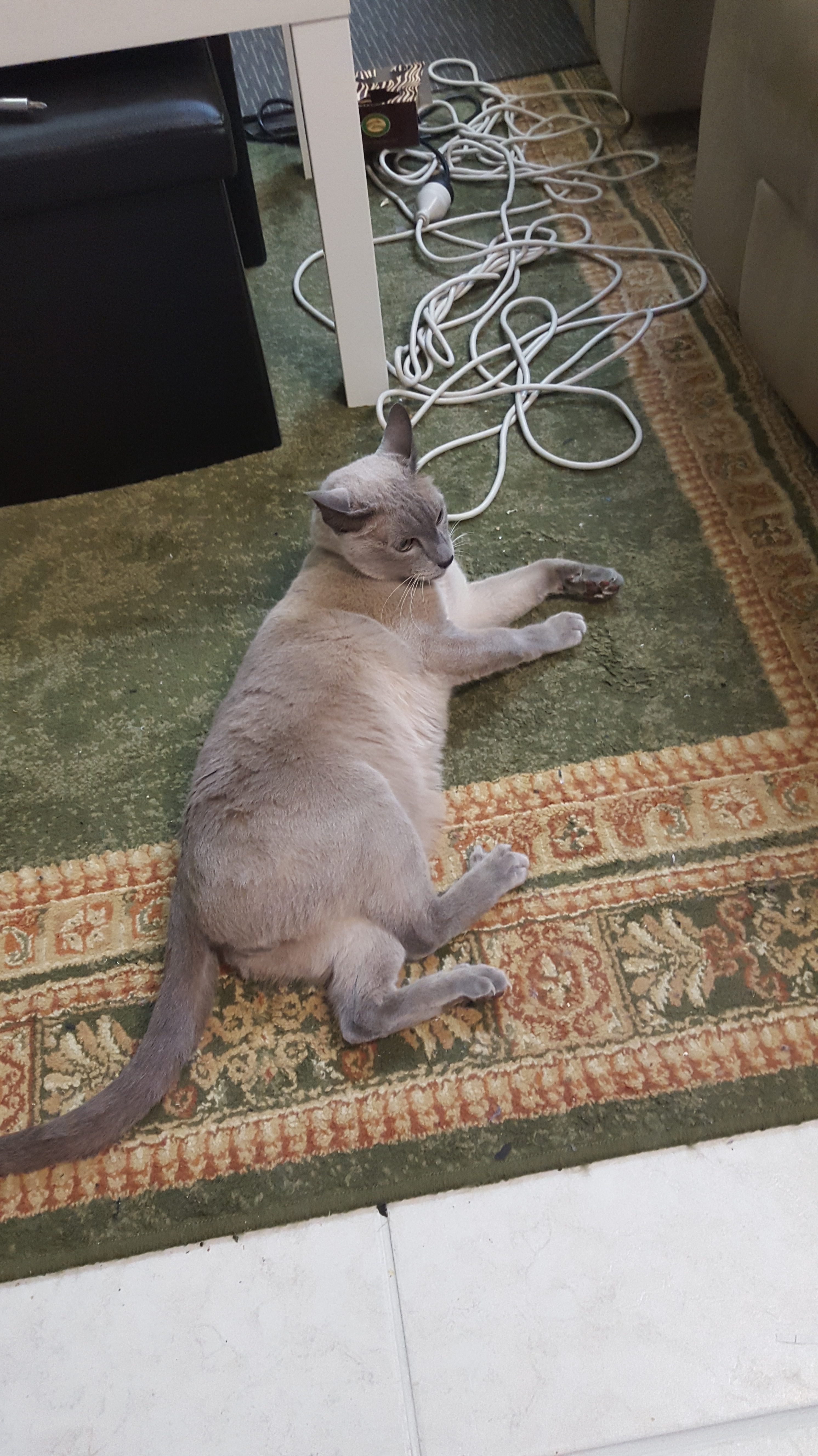
This is Chester. Our standoff continues.

I can tell he’s not happy because when he’s going down the passage and I’m going in the opposite direction, he changes sides.

Instead of coming over to see what food he’s getting, he waits in another room. That is fine by me because it takes a little longer to find out he’s not in an eating mood.

And come to think of it, he no longer climbs up on the table when we’re having fish. I’ve told him more than once that eating off someone else’s plate is just not good manners.

Perhaps I should not be so concerned that he’s not talking to me, because he’s almost become the cat I’ve always wanted.

What’s that expression, cut your nose off to spite your face?

But it isn’t going to last. This morning, when I went down to the library, which is just a fancy name for my writing room, he was sitting on top of my closed laptop.

I never used to close it, but the last time I cleaned it I found cat hair, an allegation he vehemently denied and tried to tell me it was the dog we used to have.

I didn’t bother telling him the laptop is new, and the dog’s been gone for 12 years.

I ask him to move.

He yawns and makes himself more comfortable.

He still hasn’t realised that all I have to do is pick him up and move him, which I do.

I sit down to start work, he jumps up on the table and gives me that ‘I dare you to do that again’ look, and I stare back with the ‘do you really want to do this’ look.

Fifteen minutes later…

The cinema of my dreams – Was it just another surveillance job – Episode 17

As we all know, writing by the seat of your pants is almost the same as flying by the seat of your pants, a hazardous occupation.

As it happens, I like writing this way because like the reader, I don’t know what to expect next.

And equally, at times, you can write your self into a corner, much like painting, and then have to go back, make a few changes and//or repairs and then move forward.

It’s part of the writing process, only in this case, the changes occur before you’ve finished the novel, if you finish.  Quite often a lot of writers get only so far, then the manuscript hits the bottom drawer, to be brought out on a distant rainy day.

Or your cat has mocked your writing ability one too many times.

Therefore, we’re winding back to Episode 16, and moving forward once again, from there.

Why didn’t it surprise me that Nobbin was playing all ends against the middle if that was the expression?  What really bothered was that he wasn’t prepared to tell me the truth or trust me to help find the missing information.  But he had known I might become interested and do some investigating of my own.

Perhaps Nobbin feared Severin might track me down, as he had, and if I had found the USB, run the list of losing it to his foe.

Nor was it a surprise that someone else, namely Severin, was after the information, and he would have access to everything Nobbin did, and he was equally disadvantaged.  It was either Severin or one of his agents, that was caught in O’Connell’s flat and found ‘Josephine’ there.

I didn’t believe her name was Josephine, or that she lived in the flat next door.  And I didn’t think Severin had found anything going by the way the flat had been turned over, and the fact it looked like no one had lived there.

Having now dealt with both men, I was still on the fence about who was on the right side and who was on the wrong side, or whether they were both of questionable character.  What made it difficult to understand was how Severin could run an operation inside the organisation.  Surely someone knew about it, or from a high level, sanctioned it?

Knowing I would not be interrupted this time, I went back up to the third floor, and into O’Connell’s flat, a simple job since the front door was still unlocked.  The girl had assumed it was no value to them which told me she had already searched the place before being attacked.

Just in case anyone was likely to return, or there was another party interested in O’Connell, I locked the door from the inside.  At least no one had yet crashed through the door, smashing the lock and timber.

I stood in the middle of the main room, and did a slow 360-degree turn, looking at everything intently.  The thing with searches like this, it was more likely the object of any search was hidden in plain sight.  The usual places, such as the freezer, sections of fridges, stashed in bottles or packets in the pantry, under beds, inside mattresses, pillows, or under blankets, or with a form of glue on the inside of televisions or computers would prove fruitless.

We were taught to hide things such as USB sticks where they would be least expected to be found, such as a toy on a keyring, tossed in a bowl of pens, pins, clips, or other small insignificant items that all looked uninteresting.

My first thought was in the pocket of a coat in the closet, but all his clothes were strewn over the floor in the bedroom showing signs of being turned out.  Perhaps the searcher or searchers had thought like me.

There was no keyring in the kitchen or the bedroom, no was there any sort of stand inside the door, a place to put mail, and other items such as keys.  If there were any, they would have been on him when Severin had him killed.  I had not found, not felt, any in his pockets, not unusual for an agent in the field.  If you were captured or killed, you wanted nothing on you that could identify you or what you were doing.

Next I thought, a hidden compartment.  I was not going to predict he had a safe in the flat, but just in case, I did search thoroughly where one might be located.  The cheap watercolour on the wall hid nothing but some discoloured wallpaper.

I checked all the skirting boards, and inside walls of the robes, but there was nothing.  I also checked the robes thoroughly for false backs, or sides, or compartments hidden in the roof.  The floor was made from wood, so I checked to see if there were any loose boards, but in the end, considered that was a ruse used only in the movies and on television.

An hour later, I was no wiser as to where it could be, if at all, in the flat, but, looking around, it was certainly now a little more organised because in checking everything in case the previous searchers had missed anything, I’d put everything neatly in stacks.

And, no, there was nothing under the bed.  The previous searchers had thought of that too.

But, in one corner of the main room, there was a desk that had been completely turned out, papers were strewn everywhere.  There had been a computer, now missing, because there was a cable running from the printer, and a power cable in the wall, both running into thin air.

The papers yielded nothing of interest, other than he was researching a holiday to Russia and Poland. 

For two.

A break.  There was a significant other.  I made a more serious search of the papers that I’d gathered up off the floor and found a shred of a quickly torn up piece of paper, of which only this piece remained.  A name:  Jan, scribbled on it, with half another word ‘ord’.

Did this Jan also live in this block?  Did she work at the same place?  There were a hundred variations of that theme, but it was a start.  He might have trusted the USB to her safekeeping without telling her what it was, and it was possible she didn’t know he was dead.

I’d noticed that O’Connell’s death had been reported as a John Doe on the wrong end of an alleged mugging, the small dismissive paragraph on page seven reported the body was missing when police went to investigate a pool of blood in an alley, along with several other crimes of which police were seeking further information.  That alley hadn’t any CCTV cameras, so Severin knew he could easily shoot O’Connell without anyone knowing it was him.

There was nothing else of interest in the documents, other than the holiday, if it was a holiday, was to be in a month’s time.

My work was done.  I had a lead.  It was time to leave.

Except for one small problem.  Someone was knocking on the door.

© Charles Heath 2019-2022

“Sunday in New York”, a romantic adventure that’s not a walk in the park!

“Sunday in New York” is ultimately a story about trust, and what happens when a marriage is stretched to its limits.

When Harry Steele attends a lunch with his manager, Barclay, to discuss a promotion that any junior executive would accept in a heartbeat, it is the fact his wife, Alison, who previously professed her reservations about Barclay, also agreed to attend, that casts a small element of doubt in his mind.

From that moment, his life, in the company, in deciding what to do, his marriage, his very life, spirals out of control.

There is no one big factor that can prove Harry’s worst fears, that his marriage is over, just a number of small, interconnecting events, when piled on top of each other, points to a cataclysmic end to everything he had believed in.

Trust is lost firstly in his best friend and mentor, Andy, who only hints of impending disaster, Sasha, a woman whom he saved, and who appears to have motives of her own, and then in his wife, Alison, as he discovered piece by piece damning evidence she is about to leave him for another man.

Can we trust what we see with our eyes or trust what we hear?

Haven’t we all jumped to conclusions at least once in our lives?

Can Alison, a woman whose self-belief and confidence is about to be put to the ultimate test, find a way of proving their relationship is as strong as it has ever been?

As they say in the classics, read on!

Purchase:

http://tinyurl.com/Amazon-SundayInNewYork

“Echoes From The Past”, the past doesn’t necessarily stay there


What happens when your past finally catches up with you?

Christmas is just around the corner, a time to be with family. For Will Mason, an orphan since he was fourteen, it is a time for reflection on what his life could have been, and what it could be.

Until a chance encounter brings back to life the reasons for his twenty years of self-imposed exile from a life only normal people could have. From that moment Will’s life slowly starts to unravel and it’s obvious to him it’s time to move on.

This time, however, there is more at stake.

Will has broken his number one rule, don’t get involved.

With his nemesis, Eddie Jamieson, suddenly within reach, and a blossoming relationship with an office colleague, Maria, about to change everything, Will has to make a choice. Quietly leave, or finally, make a stand.

But as Will soon discovers, when other people are involved there is going to be terrible consequences no matter what choice he makes.

https://amzn.to/2CYKxu4

newechocover5rs

An excerpt from “What Sets Us Apart”, a mystery with a twist

See the excerpt from the story below, just a taste of what’s in store…

http://amzn.to/2Eryfth

whatsetscover

McCallister was old school, a man who would most likely fit in perfectly campaigning on the battlefields of Europe during the Second World War. He’d been like a fish out of water in the army, post-Falklands, and while he retired a hero, he still felt he’d more to give.

He’d applied and was accepted as head of a SWAT team, and, watching him now as he and his men disembarked from the truck in almost military precision, a look passed between Annette, the police liaison officer, and I that said she’d seen it all before. I know I had.

There was a one in four chance his team would be selected for this operation, and she had been hoping it would be one of the other three. While waiting for them to arrive she filled me in on the various teams. His was the least co-operative, and the more likely to make ad-hoc decisions rather than adhere to the plan, or any orders that may come from the officer in charge.

This, she said quite bluntly, was going to end badly.

I still had no idea why Prendergast instructed me to attend the scene of what looked to be a normal domestic operation, but as the nominated expert in the field in these types of situations, it was fairly clear he wasn’t taking any chances. It was always a matter of opinion between us, and generally I lost.

In this case, it was an anonymous report identifying what the authorities believed were explosives in one of the dockside sheds where explosives were not supposed to be.

The only reason why the report was given any credence was the man, while not identifying himself by name, said he’d been an explosive expert once and recognized the boxes. That could mean anything, but the Chief Constable was a cautious man.

With his men settled and preparing their weapons, McCallister came over to the command post, not much more than the SUV my liaison and I arrived in, with weapons, bulletproof vests, and rolls of tape to cordon off the area afterward. We both had coffee, steaming in the cold early morning air. Dawn was slowly approaching and although rain had been forecast it had yet to arrive.

A man by the name of Benson was in charge. He too had groaned when he saw McCallister.

“A fine morning for it.” McCallister was the only enthusiastic one here.

He didn’t say what ‘it’ was, but I thought it might eventually be mayhem.

“Let’s hope the rain stays away. It’s going to be difficult enough without it,” Benson said, rubbing his hands together. We had been waiting for the SWAT team to arrive, and another team to take up their position under the wharf, and who was in the final stages of securing their position.

While we were waiting we drew up the plan. I’d go in first to check on what we were dealing with, and what type of explosives. The SWAT team, in the meantime, were to ensure all the exits to the shed were covered. When I gave the signal, they were to enter and secure the building. We were not expecting anyone inside or out, and no movement had been detected in the last hour since our arrival and deployment.

“What’s the current situation?”

“I’ve got eyes on the building, and a team coming in from the waterside, underneath. Its slow progress, but they’re nearly there. Once they’re in place, we’re sending McKenzie in.”

He looked in my direction.

“With due respect sir, shouldn’t it be one of us?” McCallister glared at me with the contempt that only a decorated military officer could.

“No. I have orders from above, much higher than I care to argue with, so, McCallister, no gung-ho heroics for the moment. Just be ready to move on my command, and make sure you have three teams at the exit points, ready to secure the building.”

McCallister opened his mouth, no doubt to question those orders, but instead closed it again. “Yes sir,” he muttered and turned away heading back to his men.

“You’re not going to have much time before he storms the battlements,” Benson quietly said to me, a hint of exasperation in his tone. “I’m dreading the paperwork.”

It was exactly what my liaison officer said when she saw McCallister arriving.

The water team sent their ‘in position’ signal, and we were ready to go.

In the hour or so we’d been on site nothing had stirred, no arrivals, no departures, and no sign anyone was inside, but that didn’t mean we were alone. Nor did it mean I was going to walk in and see immediately what was going on. If it was a cache of explosives then it was possible the building was booby-trapped in any number of ways, there could be sentries or guards, and they had eyes on us, or it might be a false alarm.

I was hoping for the latter.

I put on the bulletproof vest, thinking it was a poor substitute for full battle armor against an exploding bomb, but we were still treating this as a ‘suspected’ case. I noticed my liaison officer was pulling on her bulletproof vest too.

“You don’t have to go. This is my party, not yours,” I said.

“The Chief Constable told me to stick to you like glue, sir.”

I looked at Benson. “Talk some sense into her please, this is not a kindergarten outing.”

He shrugged. Seeing McCallister had taken all the fight out of him. “Orders are orders. If that’s what the Chief Constable requested …”

Madness. I glared at her, and she gave me a wan smile. “Stay behind me then, and don’t do anything stupid.”

“Believe me, I won’t be.” She pulled out and checked her weapon, chambering the first round. It made a reassuring sound.

Suited up, weapons readied, a last sip of the coffee in a stomach that was already churning from nerves and tension, I looked at the target, one hundred yards distant and thought it was going to be the longest hundred yards I’d ever traversed. At least for this week.

A swirling mist rolled in and caused a slight change in plans.

Because the front of the buildings was constantly illuminated by large overhead arc lamps, my intention had been to approach the building from the rear where there was less light and more cover. Despite the lack of movement, if there were explosives in that building, there’d be ‘enemy’ surveillance somewhere, and, after making that assumption, I believed it was going to be easier and less noticeable to use the darkness as a cover.

It was a result of the consultation, and studying the plans of the warehouse, plans that showed three entrances, the main front hangar type doors, a side entrance for truck entry and exit and a small door in the rear, at the end of an internal passage leading to several offices. I also assumed it was the exit used when smokers needed a break. Our entry would be by the rear door or failing that, the side entrance where a door was built into the larger sliding doors. In both cases, the locks would not present a problem.

The change in the weather made the approach shorter, and given the density of the mist now turning into a fog, we were able to approach by the front, hugging the walls, and moving quickly while there was cover. I could feel the dampness of the mist and shivered more than once.

It was nerves more than the cold.

I could also feel rather than see the presence of Annette behind me, and once felt her breath on my neck when we stopped for a quick reconnaissance.

It was the same for McCallister’s men. I could feel them following us, quickly and quietly, and expected, if I turned around, to see him breathing down my neck too.

It added to the tension.

My plan was still to enter by the back door.

We slipped up the alley between the two sheds to the rear corner and stopped. I heard a noise coming from the rear of the building, and the light tap on the shoulder told me Annette had heard it too. I put my hand up to signal her to wait, and as a swirl of mist rolled in, I slipped around the corner heading towards where I’d last seen the glow of a cigarette.

The mist cleared, and we saw each other at the same time. He was a bearded man in battle fatigues, not the average dockside security guard.

He was quick, but my slight element of surprise was his undoing, and he was down and unconscious in less than a few seconds with barely a sound beyond the body hitting the ground. Zip ties secured his hands and legs, and tape his mouth. Annette joined me a minute after securing him.

A glance at the body then me, “I can see why they, whoever they are, sent you.”

She’d asked who I worked for, and I didn’t answer. It was best she didn’t know.

“Stay behind me,” I said, more urgency in my tone. If there was one, there’d be another.

Luck was with us so far. A man outside smoking meant no booby traps on the back door, and quite possibly there’d be none inside. But it indicated there were more men inside, and if so, it appeared they were very well trained. If that were the case, they would be formidable opponents.

The fear factor increased exponentially.

I slowly opened the door and looked in. A pale light shone from within the warehouse itself, one that was not bright enough to be detected from outside. None of the offices had lights on, so it was possible they were vacant. I realized then they had blacked out the windows. Why hadn’t someone checked this?

Once inside, the door closed behind us, progress was slow and careful. She remained directly behind me, gun ready to shoot anything that moved. I had a momentary thought for McCallister and his men, securing the perimeter.

At the end of the corridor, the extent of the warehouse stretched before us. The pale lighting made it seem like a vast empty cavern, except for a long trestle table along one side, and, behind it, stacks of wooden crates, some opened. It looked like a production line.

To get to the table from where we were was a ten-yard walk in the open. There was no cover. If we stuck to the walls, there was equally no cover and a longer walk.

We needed a distraction.

As if on cue, the two main entrances disintegrated into flying shrapnel accompanied by a deafening explosion that momentarily disoriented both Annette and I. Through the smoke and dust kicked up I saw three men appear from behind the wooden crates, each with what looked like machine guns, spraying bullets in the direction of the incoming SWAT members.

They never had a chance, cut down before they made ten steps into the building.

By the time I’d recovered, my head heavy, eyes watering and ears still ringing, I took several steps towards them, managing to take down two of the gunmen but not the third.

I heard a voice, Annette’s I think, yell out, “Oh, God, he’s got a trigger,” just before another explosion, though all I remember in that split second was a bright flash, the intense heat, something very heavy smashing into my chest knocking the wind out of me, and then the sensation of flying, just before I hit the wall.

I spent four weeks in an induced coma, three months being stitched back together and another six learning to do all those basic actions everyone took for granted. It was twelve months almost to the day when I was released from the hospital, physically, except for a few alterations required after being hit by shrapnel, looking the same as I always had.

But mentally? The document I’d signed on release said it all, ‘not fit for active duty; discharged’.

It was in the name of David Cheney. For all intents and purposes, Alistair McKenzie was killed in that warehouse, and for the first time ever, an agent left the Department, the first to retire alive.

I was not sure I liked the idea of making history.

© Charles Heath 2016-2020
Harry Walthenson, Private Detective – the second case – A case of finding the “Flying Dutchman”

What starts as a search for a missing husband soon develops into an unbelievable story of treachery, lies, and incredible riches.

It was meant to remain buried long enough for the dust to settle on what was once an unpalatable truth, when enough time had passed, and those who had been willing to wait could reap the rewards.

The problem was, no one knew where that treasure was hidden or the location of the logbook that held the secret.

At stake, billions of dollars’ worth of stolen Nazi loot brought to the United States in an anonymous tramp steamer and hidden in a specially constructed vault under a specifically owned plot of land on the once docklands of New York.

It may have remained hidden and unknown to only a few, if it had not been for a mere obscure detail being overheard …

… by our intrepid, newly minted private detective, Harry Walthenson …

… and it would have remained buried.

Now, through a series of unrelated events, or are they, that well-kept secret is out there, and Harry will not stop until the whole truth is uncovered.

Even if it almost costs him his life.  Again.

A long short story that can’t be tamed – I never wanted to be an eyewitness – 10

Ten

Fabio at one end, Amy and guards at the other, I’m in the control room, and Benito just walked in.  Was this Amy’s master plan?  Scare the living hell out of Fabio?  Had she told Benito about Gabrielle?

A dozen unanswered questions were going through my mind, but the one at the top of the pile was, what was she doing?  The answer I least wanted to believe; was that she had been working with Benito all along.

And if that was the case, and if Benito was in a forgiving mood with his son-in-law, then I might be in trouble.  My mind cast over the events leading up to getting to this place, and I could see at least three instances where it could be said she was working for Benito, or even Fabio if I wanted to go down that rabbit hole.

I watched Fabio’s expression change from incredulous to fear.

Maybe I was not the target.  Yet.

Just in case it was true, I deemed it time to leave.  There was nothing more I could do.

I opened the door and stopped.  Outside was a guard with a gun, pointer directly at me.

“What are you doing,” I asked.

Dumb question, I knew instantly what was happening.

“I’ve come to escort you to the meeting.”

Of course, what was I thinking? 

“Who’s this?”  Benito saw me being escorted to where Amy was standing.

“Another mess your stupid son-in-law caused that I had to clean up.  This was not part of the deal.  I’m not here to clean up Fabio shooting up the city.  I had the witness situation sorted.  Whose idea was to send in the corrupt cops?”

So, she was on the take.  For whom though?

Benito glared at his son-in-law.  “First you kill a man in front of a witness, then you directly disobey orders.”

“You wanted me gone.  Angelina said so.”

“You’re a moron.  I told you a year ago you’d have one chance to prove yourself capable of running this family’s operations.  Five times you’ve screwed up.  Five.”

“I can’t help you anymore,” Amy said.  “This last screwup, it’s blown my cover.”

“Just hand over the witness, and I’ll make sure you retire comfortably, Sorrento, Capri, Tuscany, you name it.”  Benito’s tone was convincing.

“No.  You broke our agreement.  I’d rather take my chances.  You need to deal with Fabio now, before it’s too late.  So far, the DA’s only interested in him, not so much because of the witness, but because one of your corrupt cops lived long enough to name Fabio, and only Fabio, is the instigator of the hit.  And just to make matters worse, Fabio never gave up Gabrielle as he promised.  He’s been two-timing Angelina the whole time he’s been married to her.”

I could see that was the final nail in the coffin.  Benito held out his hand and one of his henchmen handed him a silenced gun.

“You said…”

Fabio didn’t speak.  There was nothing to say.

Benito aimed and shot Fabio.  Fabio didn’t try to avoid the bullet or plead for his life.

“Problem solved,” Benito said.  “We’re done.  I suggest you disappear before I change my mind and set the dogs on you.”

A nod of the head and he was gone.

Amy glared at me.  “Don’t say anything.”

She went back towards the control room, and, after looking at the body on the floor, and looking back into the darkness where Benito had retreated, I had to wonder just what happened.

The fact I was still alive was probably a miracle.  With Fabio dead, I was no longer useful for either the state or Benito.  Still, that being so, I didn’t feel safe.  With Benito still out there, both Amy and I were always going to have targets on our back.

I got back to the control room to find Amy on her cell phone.

“You got them?”

“And tell me you got a recording of the conversation?”

“Good.  I’ll let the others go and see you in the office.  Yes.  I’ll bring him.”

She disconnected the call and saw me.

“You’re wondering what just happened?”

I was still at the point where I was totally gobsmacked and losing all trust in the one person I had placed all my trust and my life.  “You could say that?”

“I’m sorry, but it was necessary.  This is the result of three years of undercover work, and it was nearly all brought undone by that attempt on your life.  I hadn’t bargained on Benito bribing some of his police on the payroll to kill you.  I told him I’d take care of it, but it appears he didn’t trust me.  The thing is, the last few times I spoke to him, he was not as forthcoming.  I think he knew my true status which meant this was the only chance I had to get Fabio.”

“What was the plan?”

“Break him out, pretending it was under the orders of his father-in-law, then use Gabrielle against Angelina, hoping Angelina would turn on him, threatening to tell her father of his infidelity unless he confessed to the murder, and, of course, exonerate you.”

“She didn’t, did she?”

“No.  She was threatening to kill Gabrielle and her child.”

“Then you called Benito.”

“He wasn’t part of the original plan, but a thought did occur to me, tell him about Fabio’s girlfriend and watch the father punish the son in law.”

“Did you think he’d simply shoot him?”

“No, but Benito is as much a loose cannon as Fabio.  We thought Benito retiring was the end of an era.  It wasn’t.  That he shot Fabio kills two birds with one stone.  Benito is now in custody with physical evidence that we can use to put him in jail for the rest of his life.”

“And the family crime operation?”

“Destroying itself as we speak.”

“Except if you let Gabrielle go, she will take it over.  I saw the newspaper article on the family dynamic.  Benito wasn’t the only boss, not Fabio.  It suggested that his faith in Fabio had waned to the point where Gabrielle was running several day-to-day operations.  If she does take over, that will leave both of us in an invidious position.”

“Only if I let her go.  Perhaps we should put her in jail too.”

“She hasn’t done anything.”

“That we can prove.  But you’re right.  I had been banking on her cooperation, but that hasn’t been the case.”

She shrugged.  “No matter.  You’re free now, with no case to answer.  I’d disappear though, just in case.”

“I can’t get witness protection?”

“Maybe.  I’ll ask.  Either way, go home. Your job is done.”

She seemed distracted, and there was nothing more to be gained in further discussion.  I was beginning to understand that no good deed goes unpunished, that trying to do good didn’t always work out the way I thought it would, and now, I had left myself in mortal danger.

I couldn’t go home, as she said, I couldn’t go anywhere.  It was not as if I had the most fulfilling life before all of this began, so ideally, I could disappear, but I would need help/

I was not going to let her just walk away.

“Hey,” I yelled out.  “Asking is not good enough.  You will get me into witness protection, and the sooner the better.”

“Fine.”  She stopped and waited until I caught up.  “Where would you like to go?”

I hadn’t thought about it, but it opened many possibilities.

“Montana?”

She shrugged.  “I can’t see you on a horse.” 

Together, we returned to the control room, each facing an uncertain future.

©  Charles Heath  2024

The cinema of my dreams – Was it just another surveillance job – Episode 16

As we all know, writing by the seat of your pants is almost the same as flying by the seat of your pants, a hazardous occupation.

As it happens, I like writing this way because like the reader, I don’t know what to expect next.

And equally, at times, you can write your self into a corner, much like painting, and then have to go back, make a few changes and//or repairs and then move forward.

It’s part of the writing process, only in this case, the changes occur before you’ve finished the novel if you finish.  Quite often a lot of writers get only so far, then the manuscript hits the bottom drawer, to be brought out on a distant rainy day.

Or your cat has mocked your writing ability one too many times.

Therefore, we’re winding back to Episode 16, and moving forward once again, from there.

O’Connor seemed to be more affluent than I because he was living in a flat located in an upmarket building.  Getting into the ground floor required a passkey, one I suspect might also be needed to get in the front door of his flat, but I’d worry about that later.

My first problem was that front door, and it was not until a tradesman exited that I took the opportunity to appear to arrive at the same time, pretending to find my card, and brushing past him as he was exiting.  He ignored me, his hands full, being in a hurry.

It took a day and a half of watching the building, waiting for an opportunity.  His flat was on the third floor and although there was an elevator, I took the stairs, hoping that I wouldn’t run into anyone.

Quickly and quietly, and thankfully without seeing another resident, I came out into the passageway, and it was about ten steps to his front door.  Number 37.  Not far away, in one direction, the end of the passage, and numbers 38, 39, and 40.  In the other, four more flats and the end of the corridor.  Windows at either end, perhaps an escape route.  I would not use the elevator if I had to leave in a hurry.

There were two elevators and one staircase.  Both elevators were stationary on the ground floor.

I knocked lightly on the door to number 37.

No answer.

I knocked a little harder on the door.  It was quite solid, and I had to wonder if the knocking sound penetrated the solid wood.

I checked the lock.  Simple to open.  We’d been given instruction by a master locksmith, and I’d brought my tools.

I waited a minute, checked to see if the elevators were still on the ground floor, then picked the lock and was inside within a minute.

Silence.

I felt along the wall for a light switch, usually by the door, and found it, and flicked it on.  The sudden light was almost blinding, but then my eyes adjusted.

Trashed, much the same as my flat.

But, with a difference.

A woman was stretched out on the floor, unmoving.  I could see, from where I was standing, she had been hit on the back of the head and could see the wound, and a trickle of blood through her hair.

Five steps to reach her, I reached down to check for a pulse.

Yes, she was alive.

I shook her gently.  She didn’t react.  I shook her a little more roughly and she stirred, then, as expected, lashed out.

I caught her hands, saying, “I just found you.  I’m not your enemy.”

Of course, considering I was a stranger in what could be her flat without permission, I was not surprised she continued to struggle until I tried being reassuring.  Then she stopped and asked, “Who are you?”

“A friend of O’Connor.  I worked with him.  Something happened to him at work and he said if that happened, I was to come here.  He didn’t say anything about you, though.”

“I live here, in the flat next door.  I heard a noise and came to investigate.  That’s all I remember.”

I helped her up into a sitting position, and, holding her head in her hands, looked around.  “Did you do this?”

“No.  Just got here.  But it’s the same at my place.  The people who did this are looking for something.  By the look of it, they didn’t find it here either.”

“I’ll get a damp cloth for your head.  It doesn’t look serious but there might be a slight concussion that might need attention.”

She felt the back of her head, and, when she touched the wound, gasped, “It hurts though.”

I stood and went over to the kitchenette.  O’Connor was not much of a cook, the benches looked new, and there was nothing out.  I looked in a draw near the sink and found a cloth, still with the price tag on it.  So were several utensils in the drawer.  I ran it under the water, then went back to her, now off the floor and sitting on one of the two chairs.  I handed her the wet cloth and she put it against the injured part of her head.

I made a mental note, it didn’t look like O’Connor had been here long, if at all.  Something was not right here, and if that was the case, I should take care when saying anything to this woman.

“Who are you again?” she asked.

“I worked with him.  My name is irrelevant.  It’s unlikely that he mentioned me to you, or anyone.  It’s the nature of our work.”

“Why should I believe you?  You could be my attacker.”

“If that were the case, why would I still be here trying to be helpful.”

A good question that elicited a curious expression.

“What do you do, what did Oliver do?”

Alarm bells were going off.  Oliver was not O’Connor’s first name.

“Nothing very interesting, I can assure you, and definitely nothing that would warrant this happening.  If it had only been me, I would have not thought any more of it, but since we worked together, and this has also happened to him, it seems we are mixed up in something bad.”

“Where is he, by the way?”

“I was hoping you could tell me.  If you live next door and know him well enough to be here, he might have told you.”

“No.  He never spoke about work.”

She was trying to stand so I helped her up and held on when it looked like she was about to collapse.  Last time I had a knock to the head, I had dizziness for a minute of two.  Her knock had been a lot harder.”

“Are you alright?”  She didn’t look it.

“I will be, I’m sure.”

I let her go, and she took several steps, then gave me a rather hard look.  “Why are you here again?”

“Trying to find my friend.”

“How did you get in here?”

Rather than make her disorientated, the knock must have sharpened her senses.  Time to test a theory. 

“I think we should call the police now, and report the break-in.”

I pulled out my phone.

“Look, I don’t want to get mixed up in this.  You go, and I report this when I get back home.  And, if you find him, tell him Josephine is looking for him.”

As I thought.  She was not able to explain to the authorities why she was in this flat, as I’m sure she believed I couldn’t either.

She started walking towards the door.  My staying any longer would raise her suspicions about me, and any search I was going to do would have to wait.  I opened the door, she walked out, and I followed shutting the door after me.

I left her standing outside the door and headed for the stairs.  A last glance back showed her still where I left her.  I went down to the first landing, then stopped.  It was part of the training, to treat everyone as suspicious.

Then I heard her voice, as she passed the top of the staircase, on her way back to her flat.  “He was here, looking for the files.  No, he’s gone.”  A minute’s silence, then “On my way.”

Another minute, I heard the elevator car arrive on the third floor.

I quickly ran down the stairs to the ground floor and waited at the door until she came out of the elevator, heading for the door.

Then as she passed through the front door, I came out into the foyer just in time to see a car stop out the front, and a familiar face out through the rear window.

Nobbin.

© Charles Heath 2019-2022

‘The Devil You Don’t’ – A beta reader’s view

It could be said that of all the women one could meet, whether contrived or by sheer luck, what are the odds it would turn out to be the woman who was being paid a very large sum to kill you.

John Pennington is a man who may be lucky in business, but not so lucky in love. He has just broken up with Phillipa Sternhaven, the woman he thought was the one, but relatives and circumstances, and perhaps because she was a ‘princess’, may also have contributed to the end result.

So, what do you do when you are heartbroken?

That is a story that slowly unfolds, from the first meeting with his nemesis on Lake Geneva, all the way to a hotel room in Sorrento, where he learns the shattering truth.

What should have been solace after disappointment, turns out to be something else entirely, and from that point, everything goes to hell in a handbasket.

He suddenly realizes his so-called friend Sebastian has not exactly told him the truth about a small job he asked him to do, the woman he is falling in love with is not quite who she says she is, and he is caught in the middle of a war between two men who consider people becoming collateral damage as part of their business.

The story paints the characters cleverly displaying all their flaws and weaknesses. The locations add to the story at times taking me back down memory lane, especially to Venice where, in those back streets I confess it’s not all that hard to get lost.

All in all a thoroughly entertaining story with, for once, a satisfying end.

Available on Amazon here: https://amzn.to/2Xyh1ow