An excerpt from “One Last Look”: Charlotte is no ordinary girl

This is currently available at Amazon here:  http://amzn.to/2CqUBcz

…

I’d read about out-of-body experiences, and like everyone else, thought it was nonsense.  Some people claimed to see themselves in the operating theatre, medical staff frantically trying to revive them, and being surrounded by white light.

I was definitely looking down, but it wasn’t me I was looking at.

It was two children, a boy and a girl, with their parents, in a park.

The boy was Alan.  He was about six or seven.  The girl was Louise, and she was five years old.  She had long red hair and looked the image of her mother.

I remember it now, it was Louise’s birthday and we went down to Bournemouth to visit our Grandmother, and it was the last time we were all together as a family.

We were flying homemade kites our father had made for us, and after we lay there looking up at the sky, making animals out of the clouds.  I saw an elephant, Louise saw a giraffe.

We were so happy then.

Before the tragedy.

When I looked again ten years had passed and we were living in hell.  Louise and I had become very adept at survival in a world we really didn’t understand, surrounded by people who wanted to crush our souls.

It was not a life a normal child had, our foster parents never quite the sort of people who were adequately equipped for two broken-hearted children.  They tried their best, but their best was not good enough.

Every day it was a battle, to avoid the Bannister’s and Archie in particular, every day he made advances towards Louise and every day she fended him off.

Until one day she couldn’t.

Now I was sitting in the hospital, holding Louise’s hand.  She was in a coma, and the doctors didn’t think she would wake from it.  The damage done to her was too severe.

The doctors were wrong.

She woke, briefly, to name her five assailants.  It was enough to have them arrested.  It was not enough to have them convicted.

Justice would have to be served by other means.

I was outside the Bannister’s home.

I’d made my way there without really thinking, after watching Louise die.  It was like being on autopilot, and I had no control over what I was doing.  I had murder in mind.  It was why I was holding an iron bar.

Skulking in the shadows.  It was not very different from the way the Bannister’s operated.

I waited till Archie came out.  I knew he eventually would.  The police had taken him to the station for questioning, and then let him go.  I didn’t understand why, nor did I care.

I followed him up the towpath, waiting till he stopped to light a cigarette, then came out of the shadows.

“Wotcha got there Alan?” he asked when he saw me.  He knew what it was, and what it was for.

It was the first time I’d seen the fear in his eyes.  He was alone.

“Justice.”

“For that slut of a sister of yours.  I had nuffing to do with it.”

“She said otherwise, Archie.”

“She never said nuffing, you just made it up.”  An attempt at bluster, but there was no confidence in his voice.

I held up the pipe.  It had blood on it.  Willy’s blood.  “She may or may not have Archie, but Willy didn’t make it up.  He sang like a bird.  That’s his blood, probably brains on the pipe too, Archie, and yours will be there soon enough.”

“He dunnit, not me.  Lyin’ bastard would say anything to save his own skin.”  Definitely scared now, he was looking to run away.

“No, Archie.  He didn’t.  I’m coming for you.  All of you Bannisters.  And everyone who touched my sister.”

It was the recurring nightmare I had for years afterwards.

I closed my eyes and tried to shut out the thoughts, the images of Louise, the phone call, the visit to the hospital and being there when she succumbed to her injuries.  Those were the very worst few hours of my life.

She had asked me to come to the railway station and walk home with her, and I was running late.  If I had left when I was supposed to, it would never have happened and for years afterwards, I blamed myself for her death.

If only I’d not been late…

When the police finally caught the rapists, I’d known all along who they’d be; antagonists from school, the ring leader, Archie Bannister, a spurned boyfriend, a boy whose parents, ubiquitously known to all as ‘the Bannister’s, dealt in violence and crime and who owned the neighbourhood.  The sins of the father had been very definitely passed onto the son.

At school, I used to be the whipping boy, Archie, a few grades ahead of me, made a point of belting me and a few of the other boys, to make sure the rest did as they were told.  He liked Louise, but she had no time for a bully like him, even when he promised he would ‘protect’ me.

I knew the gang members, the boys who tow-kowed to save getting beaten up, and after the police couldn’t get enough information to prosecute them because everyone was too afraid to speak out, I went after Willy.  There was always a weak link in a group, and he was it.

He worked in a factory, did long hours on a Wednesday and came home after dark alone.  It was a half mile walk, through a park.  The night I approached him, I smashed the lights and left it in darkness.  He nearly changed his mind and went the long way home.

He didn’t.

It took an hour and a half to get the names.  At first, when he saw me, he laughed.  He said I would be next, and that was four words more than he knew he should have said.

When I found him alone the next morning I showed him the iron bar and told him he was on the list.  I didn’t kill him then, he could wait his turn, and worry about what was going to happen to him.

When the police came to visit me shortly after that encounter, no doubt at the behest of the Bannister’s, the neighbourhood closed ranks and gave me an ironclad alibi.  The Bannister’s then came to visit me and threatened me.  I told them their days were numbered and showed them the door.

At the trial, he and his friends got off on a technicality.  The police had failed to do their job properly, but it was not the police, but a single policeman, corrupted by the Bannisters.

Archie could help but rub it in my face.  He was invincible.

Joe Collins took 12 bullets and six hours to bleed out.  He apologized, he pleaded, he cried, he begged.  I didn’t care.

Barry Mills, a strong lad with a mind to hurting people, Archie’s enforcer, almost got the better of me.  I had to hit him more times than I wanted to, and in the end, I had to be satisfied that he died a short but agonizing death.

I revisited Willy in the hospital.  He’d recovered enough to recognize me, and why I’d come.  Suffocation was too good for him.

David Williams, second in command of the gang, was as tough and nasty as the Bannisters.  His family were forging a partnership with the Bannister’s to make them even more powerful.  Outwardly David was a pleasant sort of chap, affable, polite, and well mannered.  A lot of people didn’t believe he could be like, or working with, the Bannisters.

He and I met in the pub.  We got along like old friends.  He said Willy had just named anyone he could think of, and that he was innocent of any charges.  We shook hands and parted as friends.

Three hours later he was sitting in a chair in the middle of a disused factory, blindfolded and scared.  I sat and watched him, listened to him, first threatening me, and then finally pleading with me.  He’d guessed who it was that had kidnapped him.

When it was dark, I took the blindfold off and shone a very bright light in his eyes.  I asked him if the violence he had visited upon my sister was worth it.  He told me he was just a spectator.

I’d read the coroner’s report.  They all had a turn.  He was a liar.

He took nineteen bullets to die.

Then came Archie.

The same factory only this time there were four seats.  Anna Bannister, brothel owner, Spike Bannister, head of the family, Emily Bannister, sister, and who had nothing to do with their criminal activities.  She just had the misfortune of sharing their name.

Archie’s father told me how he was going to destroy me, and everyone I knew.

A well-placed bullet between the eyes shut him up.

Archie’s mother cursed me.  I let her suffer for an hour before I put her out of her misery.

Archie remained stony-faced until I came to Emily.  The death of his parents meant he would become head of the family.  I guess their deaths meant as little to him as they did me.

He was a little more worried about his sister.

I told him it was confession time.

He told her it was little more than a forced confession and he had done nothing to deserve my retribution.

I shrugged and shot her, and we both watched her fall to the ground screaming in agony.  I told him if he wanted her to live, he had to genuinely confess to his crimes.  This time he did, it all poured out of him.

I went over to Emily.  He watched in horror as I untied her bindings and pulled her up off the floor, suffering only from a small wound in her arm.  Without saying a word she took the gun and walked over to stand behind him.

“Louise was my friend, Archie.  My friend.”

Then she shot him.  Six times.

To me, after saying what looked like a prayer, she said, “Killing them all will not bring her back, Alan, and I doubt she would approve of any of this.  May God have mercy on your soul.”

Now I was in jail.  I’d spent three hours detailing the deaths of the five boys, everything I’d done; a full confession.  Without my sister, my life was nothing.  I didn’t want to go back to the foster parents; I doubt they’d take back a murderer.

They were not allowed to.

For a month I lived in a small cell, in solitary, no visitors.  I believed I was in the queue to be executed, and I had mentally prepared myself for the end.

Then I was told I had a visitor, and I was expecting a priest.

Instead, it was a man called McTavish. Short, wiry, and with an accent that I could barely understand.

“You’ve been a bad boy, Alan.”

When I saw it was not the priest I told the jailers not to let him in, I didn’t want to speak to anyone.  They ignored me.  I’d expected he was a psychiatrist, come to see whether I should be shipped off to the asylum.

I was beginning to think I was going mad.

I ignored him.

“I am the difference between you living or dying Alan, it’s as simple as that.  You’d be a wise man to listen to what I have to offer.”

Death sounded good.  I told him to go away.

He didn’t.  Persistent bugger.

I was handcuffed to the table.  The prison officers thought I was dangerous.  Five, plus two, murders, I guess they had a right to think that.  McTavish sat opposite me, ignoring my request to leave.

“Why’d you do it?”

“You know why.”  Maybe if I spoke he’d go away.

“Your sister.  By all accounts, the scum that did for her deserved what they got.”

“It was murder just the same.  No difference between scum and proper people.”

“You like killing?”

“No-one does.”

“No, I dare say you’re right.  But you’re different, Alan.  As clean and merciless killing I’ve ever seen.  We can use a man like you.”

“We?”

“A group of individuals who clean up the scum.”

I looked up to see his expression, one of benevolence, totally out of character for a man like him.  It looked like I didn’t have a choice.

Trained, cleared, and ready to go.

I hadn’t realized there were so many people who were, for all intents and purposes, invisible.  People that came and went, in malls, in hotels, trains, buses, airports, everywhere, people no one gave a second glance.

People like me.

In a mall, I became a shopper.

In a hotel, I was just another guest heading to his room.

On a bus or a train, I was just another commuter.

At the airport, I became a pilot.  I didn’t need to know how to fly; everyone just accepted a pilot in a pilot suit was just what he looked like.

I had a passkey.

I had the correct documents to get me onto the plane.

That walk down the air bridge was the longest of my life.  Waiting for the call from the gate, waiting for one of the air bridge staff to challenge me, stepping onto the plane.

Two pilots and a steward.  A team.  On the plane early before the rest of the crew.  A group that was committing a crime, had committed a number of crimes and thought they’d got away with it.

Until the judge, the jury and their executioner arrived.

Me.

Quick, clean, merciless.  Done.

I was now an operational field agent.

I was older now, and I could see in the mirror I was starting to go grey at the sides.  It was far too early in my life for this, but I expect it had something to do with my employment.

I didn’t recognize the man who looked back at me.

It was certainly not Alan McKenzie, nor was there any part of that fifteen-year-old who had made the decision to exact revenge.

Given a choice; I would not have gone down this path.

Or so I kept telling myself each time a little more of my soul was sold to the devil.

I was Barry Gamble.

I was Lenny Buckman.

I was Jimmy Hosen.

I was anyone but the person I wanted to be.

That’s what I told Louise, standing in front of her grave, and trying to apologize for all the harm, all the people I’d killed for that one rash decision.  If she was still alive she would be horrified, and ashamed.

Head bowed, tears streamed down my face.

God had gone on holiday and wasn’t there to hand out any forgiveness.  Not that day.  Not any day.

New York, New Years Eve.

I was at the end of a long tour, dragged out of a holiday and back into the fray, chasing down another scumbag.  They were scumbags, and I’d become an automaton hunting them down and dispatching them to what McTavish called a better place.

This time I failed.

A few drinks to blot out the failure, a blonde woman who pushed my buttons, a room in a hotel, any hotel, it was like being on the merry-go-round, round and round and round…

Her name was Silvia or Sandra, or someone I’d met before, but couldn’t quite place her.  It could be an enemy agent for all I knew or all I cared right then.

I was done.

I’d had enough.

I gave her the gun.

I begged her to kill me.

She didn’t.

Instead, I simply cried, letting the pent up emotion loose after being suppressed for so long, and she stayed with me, holding me close, and saying I was safe, that she knew exactly how I felt.

How could she?  No one could know what I’d been through.

I remembered her name after she had gone.

Amanda.

I remembered she had an imperfection in her right eye.

Someone else had the same imperfection.

I couldn’t remember who that was.

Not then.

I had a dingy flat in Kensington, a place that I rarely stayed in if I could help it.  After five-star hotel rooms, it made me feel shabby.

The end of another mission, I was on my way home, the underground, a bus, and then a walk.

It was late.

People were spilling out of the pub after the last drinks.  Most in good spirits, others slightly more boisterous.

A loud-mouthed chap bumped into me, the sort who had one too many, and was ready to take on all comers.

He turned on me, “Watch where you’re going, you fool.”

Two of his friends dragged him away.  He shrugged them off, squared up.

I punched him hard, in the stomach, and he fell backwards onto the ground.  I looked at his two friends.  “Take him home before someone makes mincemeat out of him.”

They grabbed his arms, lifted him off the ground and took him away.

Out of the corner of my eye, I could see a woman, early thirties, quite attractive, but very, very drunk.  She staggered from the bar, bumped into me, and finished up sitting on the side of the road.

I looked around to see where her friends were.  The exodus from the pub was over and the few nearby were leaving to go home.

She was alone, drunk, and by the look of her, unable to move.

I sat beside her.  “Where are your friends?”

“Dunno.”

“You need help?”

She looked up, and sideways at me.  She didn’t look the sort who would get in this state.  Or maybe she was, I was a terrible judge of women.

“Who are you?” she asked.

“Nobody.”  I was exactly how I felt.

“Well Mr Nobody, I’m drunk, and I don’t care.  Just leave me here to rot.”

She put her head back between her knees, and it looked to me she was trying to stop the spinning sensation in her head.

Been there before, and it’s not a good feeling.

“Where are your friends?” I asked again.

“Got none.”

“Perhaps I should take you home.”

“I have no home.”

“You don’t look like a homeless person.  If I’m not mistaken, those shoes are worth more than my weekly salary.”  I’d seen them advertised, in the airline magazine, don’t ask me why the ad caught my attention.

She lifted her head and looked at me again.  “You a smart fucking arse are you?”

“I have my moments.”

“Have them somewhere else.”

She rested her head against my shoulder.  We were the only two left in the street, and suddenly in darkness when the proprietor turned off the outside lights.

“Take me home,” she said suddenly.

“Where is your place?”

“Don’t have one.  Take me to your place.”

“You won’t like it.”

“I’m drunk.  What’s not to like until tomorrow.”

I helped her to her feet.  “You have a name?”

“Charlotte.”

The wedding was in a small church.  We had been away for a weekend in the country, somewhere in the Cotswolds, and found this idyllic spot.  Graves going back to the dawn of time, a beautiful garden tended by the vicar and his wife, an astonishing vista over hills and down dales.

On a spring afternoon with the sun, the flowers, and the peacefulness of the country.

I had two people at the wedding, the best man, Bradley, and my boss, Watkins.

Charlotte had her sisters Melissa and Isobel, and Isobel’s husband Giovanni, and their daughter Felicity.

And one more person who was as mysterious as she was attractive, a rather interesting combination as she was well over retirement age.  She arrived late and left early.

Aunt Agatha.

She looked me up and down with what I’d call a withering look.  “There’s more to you than meets the eye,” she said enigmatically.

“Likewise I’m sure,” I said.  It earned me an elbow in the ribs from Charlotte.  It was clear she feared this woman.

“Why did you come,” Charlotte asked.

“You know why.”

Agatha looked at me.  “I like you.  Take care of my granddaughter.  You do not want me for an enemy.”

OK, now she officially scared me.

She thrust a cheque into my hand, smiled, and left.

“Who is she,” I asked after we watched her depart.

“Certainly not my fairy godmother.”

Charlotte never mentioned her again.

Zurich in summer, not exactly my favourite place.

Instead of going to visit her sister Isobel, we stayed at a hotel in Beethovenstrasse and Isobel and Felicity came to us.  Her husband was not with her this time.

Felicity was three or four and looked very much like her mother.  She also looked very much like Charlotte, and I’d remarked on it once before and it received a sharp rebuke.

We’d been twice before, and rather than talk to her sister, Charlotte spent her time with Felicity, and they were, together, like old friends.  For so few visits they had a remarkable rapport.

I had not broached the subject of children with Charlotte, not after one such discussion where she had said she had no desire to be a mother.  It had not been a subject before and wasn’t once since.

Perhaps like all Aunts, she liked the idea of playing with a child for a while and then give it back.

Felicity was curious as to who I was, but never ventured too close.  I believed a child could sense the evil in adults and had seen through my facade of friendliness.  We were never close.

But…

This time, when observing the two together, something quite out of left field popped into my head.  It was not possible, not by any stretch of the imagination, but I thought she looked like my mother.

And Charlotte had seen me looking in their direction.  “You seem distracted,” she said.

“I was just remembering my mother.  Odd moment, haven’t done so for a very long time.”

“Why now?”  I think she had a look of concern on her face.

“Her birthday, I guess,” I said, the first excuse I could think of.

Another look and I was wrong.  She looked like Isobel or Charlotte, or if I wanted to believe it possible, Melissa too.

I was crying, tears streaming down my face.

I was in pain, searing pain from my lower back stretching down into my legs, and I was barely able to breathe.

It was like coming up for air.

It was like Snow White bringing Prince Charming back to life.  I could feel what I thought was a gentle kiss and tears dropping on my cheeks, and when I opened my eyes, I saw Charlotte slowly lifting her head, a hand gently stroking the hair off my forehead.

And in a very soft voice, she said, “Hi.”

I could not speak, but I think I smiled.  It was the girl with the imperfection in her right eye.  Everything fell into place, and I knew, in that instant that we were irrevocably meant to be together.

“Welcome back.”

© Charles Heath 2016-2019
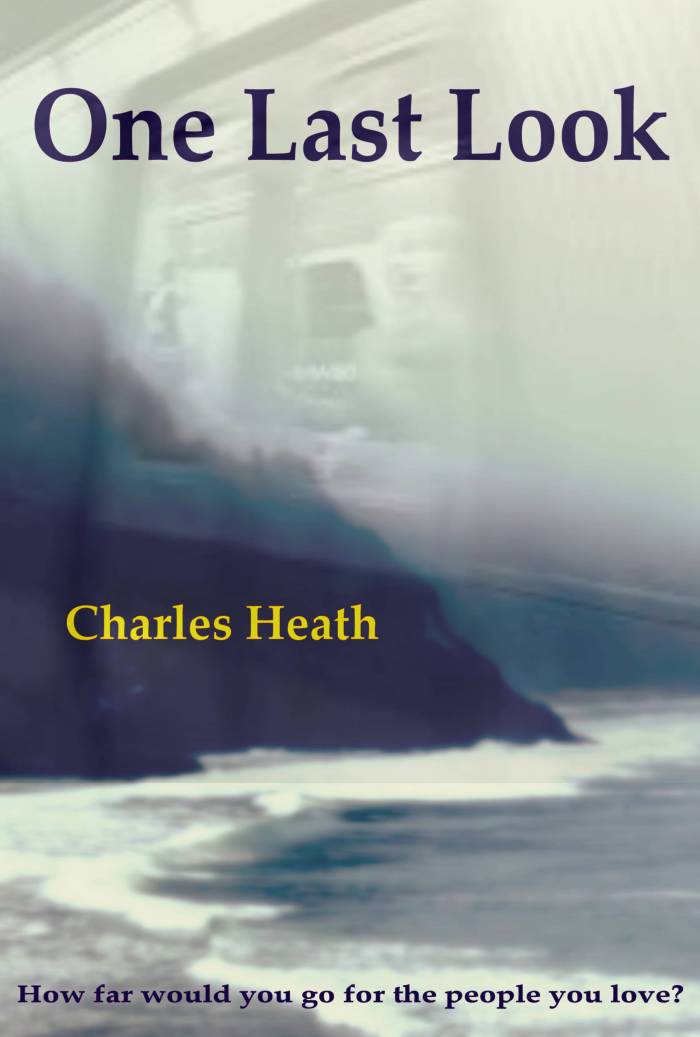
onelastlookcoverfinal2

A score to settle – The Editor’s draft – Day 17

I have the story, the editor is asking for it, and I’m putting the final touches to it

…

We’re now coming up to the start of the revolution and although the first parries by the rebels, so-called by the ruling junta because it sounds better than revolutionaries, or dissidents, will fail, it’s not because of bad management, but events they could not have foreseen.

That lethargy and periods of self-doubt have lifted like a fog, and the story is now taking shape.

Perhaps I had to get to the interesting part. Sometimes the setting of the scene and providing an introduction to the characters can be energy-draining because as the reader, it can take almost too long to get going.

Perhaps I should make a mental note of that so that in the second draft, I can remove the boring bits and get to the real story sooner.

I cannot wait for tomorrow and almost had to resist the temptation of not stopping for sleep, just in case the words stopped flowing. There are times, I have discovered, that in taking that break, the idea and word flow stops, and conjures up something like writer’s block.

Let’s hope tomorrow is the same as today.

…

Today’s word count: 2,742 words, for the running total of 43,196.

An excerpt from “If Only” – a work in progress

Investigation of crimes doesn’t always go according to plan, nor does the perpetrator get either found or punished.

That was particularly true in my case.  The murderer was incredibly careful in not leaving any evidence behind, to the extent that the police could not rule out whether it was a male or a female.

At one stage the police thought I had murdered my own wife though how I could be on a train at the time of the murder was beyond me.  I had witnesses and a cast-iron alibi.

The officer in charge was Detective First Grade Gabrielle Walters.  She came to me on the day after the murder seeking answers to the usual questions like, when was the last time you saw your wife, did you argue, the neighbors reckon there were heated discussions the day before.

Routine was the word she used.

Her fellow detective was a surly piece of work whose intention was to get answers or, more likely, a confession by any or all means possible.  I could sense the raging violence within him.  Fortunately, common sense prevailed.

Over the course of the next few weeks, once I’d been cleared of committing the crime, Gabrielle made a point of keeping me informed of the progress.

After three months the updates were more sporadic, and when, for lack of progress, it became a cold case, communication ceased.

But it was not the last I saw of Gabrielle.

The shock of finding Vanessa was more devastating than the fact she was now gone, and those images lived on in the same nightmare that came to visit me every night when I closed my eyes.

For months I was barely functioning, to the extent I had all but lost my job, and quite a few friends, particularly those who were more attached to Vanessa rather than me.

They didn’t understand how it could affect me so much, and since it had not happened to them, my tart replies of ‘you wouldn’t understand’ were met with equally short retorts.  Some questioned my sanity, even, for a time, so did I.

No one, it seemed, could understand what it was like, no one except Gabrielle.

She was by her own admission, damaged goods, having been the victim of a similar incident, a boyfriend who turned out to be an awfully bad boy.  Her story varied only in she had been made to witness his execution.  Her nightmare, in reliving that moment in time, was how she was still alive and, to this day, had no idea why she’d been spared.

It was a story she told me one night, some months after the investigation had been scaled down.  I was still looking for the bottom of a bottle and an emotional mess.  Perhaps it struck a resonance with her; she’d been there and managed to come out the other side.

What happened become our secret, a once-only night together that meant a great deal to me, and by mutual agreement, it was not spoken of again.  It was as if she knew exactly what was required to set me on the path to recovery.

And it had.

Since then, we saw each about once a month in a cafe.   I had been surprised to hear from her again shortly after that eventful night when she called to set it up, ostensibly for her to provide me with any updates on the case, but perhaps we had, after that unspoken night, formed a closer bond than either of us wanted to admit.

We generally talked for hours over wine, then dinner and coffee.  It took a while for me to realize that all she had was her work, personal relationships were nigh on impossible in a job that left little or no spare time for anything else.

She’d always said that if I had any questions or problems about the case, or if there was anything that might come to me that might be relevant, even after all this time, all I had to do was call her.

I wondered if this text message was in that category.  I was certain it would interest the police and I had no doubt they could trace the message’s origin, but there was that tiny degree of doubt, about whether or not I could trust her to tell me what the message meant.

I reached for the phone then put it back down again.  I’d think about it and decide tomorrow.

© Charles Heath 2018-2020

Surely there’s a better way… – a short story

Surely there’s a better way…

…

When you have secrets, sometimes it’s very hard to hide them from others.

It was something Henry had to do since the day he could speak. The fact that his parents had been murdered because of their profession, something his grandfather told him was akin to ‘working for the government’. The fact that he was from a very wealthy and influential family. The fact he was heir to a fortune. The fact he was anything other than just another boy, who grew up to be just another man.

His whole life, to this point, had been ‘managed’ so that no one, other than a selected few chosen by his grandfather, knew who he was, or what he represented. And more to the point, he had been told to just live his life like any other of his age.

Yes, he went to a private school, but it wasn’t an exclusive one, yes he went to university, but he had got into Oxford on his own merit, and, yes, he was smart, smart enough to create his own business, and make a handsome income from it. And no, he never drew upon the stipend he had been granted by his parents will, so it just gathered dust in the bank.

Henry was an only child, and to a certain extent, introverted. It was a shyness that his grandfather knew existed in his son, Henry’s father. It could be an asset or it could be a liability. With Henry’s father, it had been an asset, a means by which many had misunderstood him. It might even serve him well for the next phase of his life.

Today, Henry was meeting his grandfather at Speaker’s Corner at Hyde Park, and an unusual meeting place because in the past it had always been at his grandfather’s club. At his grandfather’s request, he had undertaken a three-year program, one that his father had, and his father before him, and a pre-requisite for a profession that would be explained to him.

And it was all because Henry said he was bored. The business he’d built could run without him, his attempts at relationships with various girls and women hadn’t quite achieved what he was looking for, even though he had no idea what he was looking for, and, quite frankly, he told his grandfather, he needed something more exciting.

It was, he’d been told, the way of the MacCallisters. Ever since the British tried to put down the Scots.

Henry was listening to a rather animated man preaching the word of the Lord, but he was not sure what Lord that was. Anything he quoted from the bible resembled nothing he had read and remembered. Perhaps the man was on drugs.

Two or three people stopped, listened for a minute or two, shook their heads, some even laughed, and moved on.

“It’s the last bastion of freedom of speech, though I can say this man is not about to gather an army of insurrectionists any time soon. Let’s walk.”

His grandfather was getting old, and walking was getting more and more difficult. More scotch was needed, he had told Henry, to ward of the evils of arthritis. And, he added, ‘I should have had a less devil may care attitude when he was younger.’

It was a slow amble to the serpentine, which, being a bright sunny day, if not a little chilly, was alive with people.

He waited until his grandfather spoke. One lesson he had learned, speak when you’re spoken to, and if you’ve got nothing to say, best to remain silent.

“I have found a job you might like to have a go at. Nothing difficult, mind you, but a perhaps, at times, hard work. I think you’d be good at it.”

“Is that meant to be a hint, and I have to guess?”

“I think you’re smart enough to know what it might be yourself, young Henry.”

I think I did too. Everything I’d been doing over the last three years led me to believe I’d been training to walk in my father’s footsteps. It was with the Army, and I had imagined my father had been a soldier, though I’d never seen him in a uniform. But my Grandfather had said he worked for the government, so I wondered if that might be some sort of policeman, or some sort of internal agent, like MI6. It had not been boring, and the exercises had been ‘interesting’, but no one had said what the end result of this training might be; in fact no one had said who they were.

“Something hush, hush as the saying goes.”

We had gone about fifty yards and reached a cross path. As we did, a youngish woman dressed in leather appeared and walked towards us.

“I’d like you to meet a friend of mine, Henry. Her name is Marion, though I suggest you don’t call her that.”

She smiled. “Call me Mary. There’s only one person in the whole world that would dare call me that, and he’s standing here. Your grandfather has spoken a lot about you.”

Henry’s first impression; she had been to the training school he had. He could see it in her manner, and in the way she scanned the area, even though it didn’t look like she was. He’d been doing it himself, and he had seen her earlier. What made her stand out, she didn’t have a bag like all the other women.

“I hope it was good, not bad.”

“You have no bad traits?”

“Everyone had bad traits. You’ll just have to get to know me if you want to know what they are.”

“Well,” my grandfather said, “enough chit chat. Mary has a task, and she needs a little help. I thought you might want to join her.”

“Doing what?”

“She’ll explain it on the way. When it’s done, come and see me.” With that, a hug from Mary, and a handshake from his grandson, he turned and walked back the way they had come earlier.
“So,” Henry asked, “What’s the job?”

“I have to pick up a computer.”

“That doesn’t sound like something you would need help with.” In fact, if he was right in his assessment of her, he was the last person she needed, if at all. She looked to him as if she could handle anything.

“It’s one of those just in case situations.”

They walked a circuitous route back to Park Lane and crossed both roads, up Deanery Street, left where Tilney Street veered off, and then a short distance to Deanery Mews. Henry noted this was an area with a lot of expensive real estate, and scattered Embassies. If he was not mistaken, the Dorchester Hotel wasn’t far away.

Walking down the mews seemed to Henry to be walking into a trap. When he looked back towards Deanery Street he thought he saw two men position themselves, not quick enough to prevent him from getting a glimpse of them.

“You do realize that getting back out of here could be a problem.”

“It’s why I asked for help. Just in case.”

No visible sign of fear, or of what the consequences might be if this went south. Perhaps his grandfather had considered this a test. But what sort of test?

They reached the end, and, just around the corner, a van was parked with what Henry assumed was the driver, standing by the open driver’s door, smoking a cigarette.

Mary stopped about ten feet away from him. “Have you got the package?”

He reached inside the car and lifted up a computer case. There didn’t necessarily have to be a computer in it. I looked up and around. It was a good place for a meeting. No witnesses. But there were CCTV cameras. I wondered if they were working.

The man tossed the bag back in the car. “Have you got the money?”

She held up her phone. “Just need the bank account details.”

“OK. Just step over here and let’s get this done.”

She moved closer, and in a flash, he had grabbed her, holding her by the neck with a gun to her head. The two men Henry thought he’d seen at the top of the mews were now within sight, and both had guns trained on him. A trap, indeed.

“What do you want?” Henry asked.

“Tell your boss the price just doubled. Two million. You’ve got five minutes.”

I shook my head, not to clear the cobwebs, but to calm down and think rationally.

Talk first. “Surely there’s a better way to do this. You don’t need to hold a gun to her head.”

I held my hands out just to show I wasn’t a threat.

“No, probably not.” He released his grip and lowered the gun.

A very, very bad mistake.

—-

© Charles Heath 2020-2021

The cinema of my dreams – It all started in Venice – Episode 19

An interview with Jaime Meyers

…

I went in and closed the door, leaning against it.  She glared at me, for a moment not recognising who it was, then the expression changed.

And it gave me a tell.

“You’re supposed to be in Venice,” she said, with a hint of amusement in her tone.

“You’re not supposed to be in here, and yet here you are.”

“It’s all part of a witch hunt.  We’ve been down this road before, and like the last time, and the time before that, they’ve got nothing on me.  They know it and you should know it too, but if you’re retired, why are you here?”

“Your new best friend forever, Larry.  You know he wants me dead.”

“He says you killed his brother, but he’s never said anything about killing you, just getting justice for his brother.  Through the legal system.”

“Of course he would say that.  I assure you I had nothing to do with his brother’s death but that’s another story.”  I crossed to the chair and sat down taking a moment to look at her.

Drugs, alcohol and stress had taken the shine off what had once been a stunningly beautiful young woman.  The loss of her father and betrayal of her husband had taken their toll.

“If that’s the case perhaps you should tell me what happened so I can make up my own mind.  After all, there are always two sides to a story.”

I shook my head.  “That would be a pointless exercise.  Let’s talk about you instead, and the reason why you’re sitting in that chair.  Larry.  Until you took up with him, we had no idea who you were or what you were doing and had no reason to find out.  Larry, on the other hand, well, he’s shoulder deep in a shit pile of criminal activity, and my old boss, when I used to work for him, is very interested in everyone who even looks sideways at him.  So, bottom line, you’re only here because of him, and because of him I know everything there is to know about.”

“So you say, but there’s nothing to know.  Never was, and Larry is just a friend who’s going through a rough patch.”

“If you mean losing out on a fifty-million pound inheritance because he killed his brother is a rough patch, then your right.”

“I don’t know anything about that.  All I know is his wife is being difficult.”

“That’s the same line all married men use.”

Her expression sharpened conveying annoyance.  “It’s not that sort of relationship.” 

“Not what his wife is telling his mother back in Sorrento.  And that’s saying something considering how much Brenda hates his mother.”

A change in expression.  Another tell, a nerve hit.

“How do I know this?”  I asked the question for her.  “Simple, and perhaps I will give you a side of the story.  His mother crossed paths with one of my investigations back when I worked in intelligence as an analyst and I got to know her quite well.  As a favourable, knowing I was in a position to help, she asked me to watch over his brother, her youngest son.”

I could see the question before she could ask it.

“Before you tell me I didn’t do a very good job, I was at the handoff Larry sent him to that went bad, one he was told would be a simple briefcase exchange, and ended up having to defend him in what became an impossible situation.”

“What was in the briefcases?”

An odd question but I could see from the furrowed brow that she had seized on a significant detail.

“I don’t know and didn’t ask.  In my position, it was better not to know, but you can guess.  I’m sure you are aware of Larry’s interests.”

She didn’t say, but she knew.  My guess had been drugs on one side and money on the other.  It was anything but a simple job and my reasoning was Larry tried to keep it low-key using a lesser-known courier without backup, and someone found out.  With drugs and cask on that scale, it was too much of a temptation to pass up.

“Anyway, he was shot, not fatally, I patched him up, he called Larry and I stayed with him until Larry arrived, but left before Larry saw me, for obvious reasons.  If you talk to his mother she will verify everything I said.  She was still talking to him after I left and up to the point where he could see Larry coming.  After that. He was DOA at the hospital.  You can draw your own conclusions but 50 million is a great incentive to use a particular situation to get rid of a problem.”

“An interesting story, as you say, but I’m not likely to be asking anyone anything because I’m just not interested, in you or him.”

“As I said before, a pointless exercise.  But, interested or not, you will be helping us with our problem with Larry and his explosives.”

“‘I know nothing about that.”

“Well, let’s talk about something you do know about.  Emily Broadhurst, or to Wendy, Aunt May.”

The look on that fraction a second was both malevolent and fearful.

“I don’t know what you’re talking about.”

I shrugged.  “I thought you might say that.”  I took out my cell phone and dialled one of the two numbers displayed.  “Let’s bring them in and have a chat, see what they have to say.”  A voice answered on the other end.  “George.  Bring them in.”

“Stop.”  She glared at her lawyer.  “Give us the room.”

“I strongly suggest…”

“Give me the room.  Your objection is noted.”

Her lawyer reluctantly got up and left the room.  She glared at the policewoman standing by the door.

“Pretend she’s not here,” I said.  “She has to be here for your safety and is the very soul of discretion.”  I looked up at the camera.  “This is not to be recorded or observed, so camera off.”  I waited until the red light below the camera went off.

I could see she was about to say something, more than likely regrettable, but understandable.

“Let me say this before you say something you will regret.  You’ve been lying to me.  I don’t ask questions I don’t have answers to.  Because you started working with Larry, we went the extra mile on your life and operations.  You were there when the crates were delivered, as was Larry himself and he told you what was in there.  So, where there’s one lie, what is there you can say that cannot be taken with a grain of salt.”

“Be that as it may…”

“No.  You are the head of a criminal organisation.  It might be dressed up very cleverly to look like something else, but we have a very clear view of what goes on.  To be honest, we don’t care.  You’re not the focus of my ex-bosses obsession.  And, believe me when I tell you, I don’t like being Larry’s target.”

“Then make him disappear.”

“Unfortunately, despite what you and others might think, we did not unilaterally kill people for no reason, and, even if I still worked for that organisation, I wasn’t able to make people disappear.  The paperwork would be horrendous, along with endless external, internal and government reviews.”

“Then what do you want me to do?  I’m not an informer, nor will I become an informant.”  Spoken by a person who still thought they had a choice.

“You’re going to do what you negotiate with the police, who, despite your endless denials, are aware of the truth.  So, first things first, you are going to ignore Larry, and not proceed with any of the arrangements you may have agreed with him..  You can do that with plausible deniability, telling him leaving C4 in your warehouse was not an act of good faith since the police now want your hide for it.  Once again I will reiterate, I’m not interested in you, and nor is my ex-boss, so you are in a unique position to use whatever knowledge you have as leverage for your freedom.”

“And the matter you brought up?”

“Will never see the light of day, or be mentioned by anyone ever again.  Unless you break our agreement.  I used to have the best investigative team on the planet, and they can find anyone or anything, so if you’re thinking of running, don’t.  My ex-boss will have no hesitation in destroying you and your organisation.”

“And yet you say you work for no one.”

“Haven’t for years.  I retired and hope to stay that way, but my wife died, and Larry decided to come after me.  At the moment I don’t have much to live for, so if you want to get in my bad books, believe me you’ll not live to regret it.  When I walk out of this room, don’t get in my sights.”

“And why should I take you at your word?”

“I swear it on my wife’s grave.  Good enough?”

It seemed it was.

© Charles Heath 2022

A score to settle – The Editor’s draft – Day 18

I have the story, the editor is asking for it, and I’m putting the final touches to it

…

There’s only so long you can keep the real world out.

That notion that you can write for as long as you want is a myth. Aside from the fact you have to stop for coffee breaks, meals, and sleep, all entirely optional, there are other factors that come into play.

Family.

Just to name one, there is still my usual job of picking up my granddaughter from school as and when required.

And this impinging on the world that you have created for yourself, in that writing bubble that is November, it doesn’t take much to crack it, even just a little.

So, here I am, sitting in the queue waiting with the hundreds of others who have decided public transport is way too unsafe, health-wise in this world of COVID scares, that we should pick them up and deliver them safely to their homes.

My phone then becomes the principal instrument in my office, the equivalent of a computer with writing software and a cloud directory where I can work on any part of the manuscript, in the office or anywhere in the world, but today, from my car.

Toll back 40 years, and this wasn’t possible, except if you had a writing pad and a pen or pencil. Such a messy and time-consuming way of writing, but it was all we had back then, other than a typewriter that could not be used in a car.

How times have changed, and for the better.

…

Today’s word count: 2,238 words, for the running total of 45,434.

The cinema of my dreams – I never wanted to go to Africa – Episode 19

Our hero knows he’s in serious trouble.

The problem is, there are familiar faces and a question of who is a friend and who is foe made all the more difficult because of the enemy, if it was the enemy, simply because it didn’t look or sound or act like the enemy.

Now, it appears, his problems stem from another operation he participated in.

…

It didn’t take much effort to come to the only viable explanation of why a buried operation had been brought back to life.

Colonel Bamfield.

And it didn’t take much more effort to realise that operation had been one of his, not that any of us knew that at the time, but for whatever reason, it had gone badly and now he was looking for answers.

Answers to what though?

It was a simple extraction; two operatives had their cover blown and were in hiding.  A seven-man team in two choppers, get in, collect them, and get out.  Seven men were overkill, but they were important operatives with vital intelligence.

I was a last minute addition to the team, replacing one of the sergeants who had been injured in an accident.  It was a tight-knit team and I was not made to feel welcome.  It was the usual fate of outsiders and it didn’t bother me.

It was their leader that did.  Lieutenant Treen.  But that came later, all it was, at first, was a sense of unease with his informal manner of command, and somewhat edgy disposition.

When I landed at the airfield, I was met by the other Sergeant, Mason, and taken to the briefing, which had been delayed until my arrival.  Treen was there, pacing up and down like a caged tiger.  It was apparent there were still some details still being worked on.  Being so close to wheels up, I was not surprised at the tension among the group.

A Captain, a man named Worsefell, conducted the briefing, and it was patchy.  Not the worst I’d been to, but it appeared the situation on the ground had changed considerably in the last 12 hours, necessitating a change in plans.

 The operative had managed to get cover in an old abandoned building.  That was fine until a group of enemy soldiers arrived and set up camp in the field not 100 yards from their position.  Now, it was not possible to leave without being seen, day or night.

We now had to either distract or remove the enemy soldiers, an enemy we had no numbers or how heavily armed they were because our source on the ground had gone quiet.  To me, it was possible the source had been captured, and if that was the case, it was also possible the enemy knew we were coming.  But according to the Captain, this particular source had gone quiet before, in similar circumstances, so my suggestion was ignored.

Instead, the consensus was to go in and make an assessment on the ground.  It meant we had to land further away, and have a long journey by foot with all the problems that might involve, and then return.  That was the plan.  The Captain had left it in Treen’s hands.

And Treen was not one to back away from a fight, not even when it was clear to everyone in that room, with or without the necessary intelligence, that the odds were stacked against success.

I looked at Lallo who was waiting for an answer.  “I guess the brass didn’t know what to do with me, sir.”

My use of the word sir was noted.

“Be that as it may, I have a few questions about that operation.”

“I’m afraid it’s classified, and I’m under oath not to speak about it.”

Lallo took out a piece of folded paper from the inside pocket of his uniform jacket unfolded it and passed it to me.

From the very General who had ordered my silence.

…

© Charles Heath 2019-2022

An excerpt from “Betrayal” – a work in progress

It could have been anywhere in the world, she thought, but it wasn’t.  It was in a city where if anything were to go wrong…

She sighed and came away from the window and looked around the room.  It was quite large and expensively furnished.  It was one of several she had been visiting in the last three months.

Quite elegant too, as the hotel had its origins dating back to before the revolution in 1917.  At least, currently, there would not be a team of KGB agents somewhere in the basement monitoring everything that happened in the room.

There was no such thing as the KGB anymore, though there was an FSB, but such organisations were of no interest to her.

She was here to meet with Vladimir.

She smiled to herself when she thought of him, such an interesting man whose command of English was as good as her command of Russian, though she had not told him of that ability.

All he knew of her was that she was American, worked in the Embassy as a clerk, nothing important, whose life both at work and at home was boring.  Not that she had blurted that out the first they met, or even the second.

That first time, at a function in the Embassy, was a chance meeting, a catching of his eye as he looked around the room, looking, as he had told her later, for someone who might not be as boring as the function itself.

It was a celebration, honouring one of the Embassy officials on his service in Moscow, and the fact he was returning home after 10 years.  She had been there once, and still hadn’t met all the staff.

They had talked, Vladimir knew a great deal about England, having been stationed there for a year or two, and had politely asked questions about where she lived, her family, and of course what her role was, all questions she fended off with an air of disinterested interest.

It fascinated him, as she knew it would, a sort of mental sparring as one would do with swords if this was a fencing match.

They had said they might or might not meet again when the party was over, but she suspected there would be another opportunity.  She knew the signs of a man who was interested in her, and Vladimir was interested.

The second time came in the form of an invitation to an art gallery, and a viewing of the works of a prominent Russian artist, an invitation she politely declined.  After all, invitations issued to Embassy staff held all sorts of connotations, or so she was told by the Security officer when she told him.

Then, it went quiet for a month.  There was a party at the American embassy and along with several other staff members, she was invited.  She had not expected to meet Vladimir, but it was a pleasant surprise when she saw him, on the other side of the room, talking to several military men.

A pleasant afternoon ensued.

And it was no surprise that they kept running into each other at the various events on the diplomatic schedule.

By the fifth meeting, they were like old friends.  She had broached the subject of being involved in a plutonic relationship with him with the head of security at the embassy.  Normally for a member of her rank, it would not be allowed, but in this instance it was.

She did not work in any sensitive areas, and, as the security officer had said, she might just happen upon something that might be useful.  In that regard, she was to keep her eyes and ears open and file a report each time she met him.

After that discussion, she got the impression her superiors considered Vladimir more than just a casual visitor on the diplomatic circuit.  She also formed the impression that he might consider her an ‘asset’, a word that had been used at the meeting with security and the ambassador.

It was where the word ‘spy’ popped into her head and sent a tingle down her spine.  She was not a spy, but the thought of it, well, it would be fascinating to see what happened.

A Russian friend.  That’s what she would call him.

And over time, that relationship blossomed, until, after a visit to the ballet, late and snowing, he invited her to his apartment not far from the ballet venue.  It was like treading on thin ice, but after champagne and an introduction to caviar, she felt like a giddy schoolgirl.

Even so, she had made him promise that he remain on his best behaviour.  It could have been very easy to fall under the spell of a perfect evening, but he promised, showed her to a separate bedroom, and after a brief kiss, their first, she did not see him until the next morning.

So, it began.

It was an interesting report she filed after that encounter, one where she had expected to be reprimanded.

She wasn’t.

It wasn’t until six weeks had passed when he asked her if she would like to take a trip to the country.  It would involve staying in a hotel, that they would have separate rooms.  When she reported the invitation, no objection was raised, only a caution; keep her wits about her.

Perhaps, she had thought, they were looking forward to a more extensive report.  After all, her reports on the places, and the people, and the conversations she overheard, were no doubt entertaining reading for some.

But this visit was where the nature of the relationship changed, and it was one that she did not immediately report.  She had realised at some point before the weekend away, that she had feelings for him, and it was not that he was pushing her in that direction or manipulating her in any way.

It was just one of those moments where, after a grand dinner, a lot of champagne, and delightful company, things happen.  Standing at the door to her room, a lingering kiss, not intentional on her part, and it just happened.

And for not one moment did she believe she had been compromised, but for some reason she had not reported that subtle change in the relationship to the powers that be, and so far, no one had any inkling.

She took off her coat and placed it carefully of the back of one of the ornate chairs in the room.  She stopped for a moment to look at a framed photograph on the wall, one representing Red Square.

Then, after a minute or two, she went to the mini bar and took out the bottle of champagne that had been left there for them, a treat arranged by Vladimir for each encounter.

There were two champagne flutes set aside on the bar, next to a bowl of fruit.  She picked up the apple and thought how Eve must have felt in the garden of Eden, and the temptation.

Later perhaps, after…

She smiled at the thought and put the apple back.

A glance at her watch told her it was time for his arrival.  It was if anything, the one trait she didn’t like, and that was his punctuality.  A glance at the clock on the room wall was a minute slow.

The doorbell to the room rang, right on the appointed time.

She put the bottle down and walked over to the door.

A smile on her face, she opened the door.

It was not Vladimir.  It was her worst nightmare.

…

© Charles Heath 2020

A score to settle – The Editor’s draft – Day 18

I have the story, the editor is asking for it, and I’m putting the final touches to it

…

There’s only so long you can keep the real world out.

That notion that you can write for as long as you want is a myth. Aside from the fact you have to stop for coffee breaks, meals, and sleep, all entirely optional, there are other factors that come into play.

Family.

Just to name one, there is still my usual job of picking up my granddaughter from school as and when required.

And this impinging on the world that you have created for yourself, in that writing bubble that is November, it doesn’t take much to crack it, even just a little.

So, here I am, sitting in the queue waiting with the hundreds of others who have decided public transport is way too unsafe, health-wise in this world of COVID scares, that we should pick them up and deliver them safely to their homes.

My phone then becomes the principal instrument in my office, the equivalent of a computer with writing software and a cloud directory where I can work on any part of the manuscript, in the office or anywhere in the world, but today, from my car.

Toll back 40 years, and this wasn’t possible, except if you had a writing pad and a pen or pencil. Such a messy and time-consuming way of writing, but it was all we had back then, other than a typewriter that could not be used in a car.

How times have changed, and for the better.

…

Today’s word count: 2,238 words, for the running total of 45,434.

Skeletons in the closet, and doppelgangers

A story called “Mistaken Identity”

…

How many of us have skeletons in the closet that we know nothing about? The skeletons we know about generally stay there, but those we do not, well, they have a habit of coming out of left field when we least expect it.

In this case, when you see your photo on a TV screen with the accompanying text that says you are wanted by every law enforcement agency in Europe, you’re in a state of shock, only to be compounded by those same police, armed and menacing, kicking the door down.

I’d been thinking about this premise for a while after I discovered my mother had a boyfriend before she married my father, a boyfriend who was, by all accounts, the man who was the love of her life.

Then, in terms of coming up with an idea for a story, what if she had a child by him that we didn’t know about, which might mean I had a half brother or sister I knew nothing about. It’s not an uncommon occurrence from what I’ve been researching.

There are many ways of putting a spin on this story.

Then, in the back of my mind, I remembered a story an acquaintance at work was once telling us over morning tea, that a friend of a friend had a mother who had a twin sister and that each of the sisters had a son by the same father, without each knowing of the father’s actions, both growing up without the other having any knowledge of their half brother, only to meet by accident on the other side of the world.

It was an encounter that in the scheme of things might never have happened, and each would have remained oblivious of the other.

For one sister, the relationship was over before she discovered she was pregnant, and therefore had not told the man he was a father. It was no surprise the relationship foundered when she discovered he was also having a relationship with her sister, a discovery that caused her to cut all ties with both of them and never speak to either from that day.

It’s a story with more twists and turns than a country lane!

And a great idea for a story.

That story is called ‘Mistaken Identity’.