My disdain for some reporters, and reporting these days

It is sometimes quite trashy and that’s saying something!

Having been a journalist in a previous lifetime, and one that always believed that the truth mattered, it didn’t take long to realize that journalists should never let the truth get in the way of a good story.

Newspapers, and all other forms of media, will only write what they believe will sell, or what they think the public wants to read. The truth, sadly, is not the first thing on the reader’s mind, only that someone is to blame for something they have no control over, and it doesn’t matter who.

And the more outlandish the situation, the more the public will buy into it.

This, I guess, is why we like reading about celebrities and royalty, not for the good they might do, but the fact they stumble and make mistakes, and that somehow makes us feel better about ourselves.

Similarly, if the media can beat up a subject, like the corona-virus, and make it worse than it is, then people will lap up the continuing saga, as it relates to them, and will take one of two stances, that they believe the horror of it, and do as they’re asked, or disbelieve it because nothing can be that bad, and ignore it and the consequences of disobedience. knowing the government will not press too hard against the non-compliers simply because of democracy issues it will stir up.

That is, then the media will get a hold of this angle and push it, and people will start to think disobedience is a good thing, not a bad one.

So, our problems of trying to get a fair and balanced look at what the coronavirus is all about is nigh on impossible. We are continuously bombarded with both right and wrong information, and the trouble is, both sides are very plausibly supported by facts.

And that’s the next problem we have in reporting. We can get facts to prove anything we want. It’s called the use and abuse of statistics and was an interesting part of the journalism degree I studied for. We were told all about statistics, good and bad, and using them to prove the veracity of our piece.

I remember writing a piece for the tutor extolling the virtues of a particular person who was probably the worst human since Vlad the Impaler, using only the facts that suited my narrative. I also remember the bollocking he gave me for doing so but had to acknowledge that sometimes that would happen.

The integrity of reporting only went as far as the editor, and if the editor hated something, you had to hate it too. This is infamously covered in various texts where newspaper publishers pick sides and can influence elections, and governments. It still happens.

So, the bottom line is, when I’m reading an article in the media, I always take it with a grain of salt, and do my own fact-checking, remembering, of course, not just to fact check to prove the bias one way of the other, but then get a sense of balance.

We have state elections coming up where I live, but it does not sink to the personal sniping level as it does in the US, we haven’t sunk that low yet, but we haven’t got past the sniping about all the wrongs and failed promises of the government of the day, or the endless tirade against the opposition and how bad a job they did when they were previously in government.

You can see, no one is talking about what they’re going to do for us, no one is telling us what their policies are. It’s simply schoolyard tit for tat garbage speak. What happened to the town hall meeting, a long and winding speech encompassing the policies, what the government plans to do for its people in the next three years, and then genuinely answering questions?

Perhaps we should ban campaigning, and just get each party to write a book about what they intend to do, and keep them away from the papers, the TV, and any other form of media, in other words, don’t let them speak!

And don’t get me started about the drivel they speak in the parliament. Five-year-olds could do a better job.

OK, rant over.
My disdain for some reporters, and reporting these days

It is sometimes quite trashy and that’s saying something!

Having been a journalist in a previous lifetime, and one that always believed that the truth mattered, it didn’t take long to realize that journalists should never let the truth get in the way of a good story.

Newspapers, and all other forms of media, will only write what they believe will sell, or what they think the public wants to read. The truth, sadly, is not the first thing on the reader’s mind, only that someone is to blame for something they have no control over, and it doesn’t matter who.

And the more outlandish the situation, the more the public will buy into it.

This, I guess, is why we like reading about celebrities and royalty, not for the good they might do, but the fact they stumble and make mistakes, and that somehow makes us feel better about ourselves.

Similarly, if the media can beat up a subject, like the corona-virus, and make it worse than it is, then people will lap up the continuing saga, as it relates to them, and will take one of two stances, that they believe the horror of it, and do as they’re asked, or disbelieve it because nothing can be that bad, and ignore it and the consequences of disobedience. knowing the government will not press too hard against the non-compliers simply because of democracy issues it will stir up.

That is, then the media will get a hold of this angle and push it, and people will start to think disobedience is a good thing, not a bad one.

So, our problems of trying to get a fair and balanced look at what the coronavirus is all about is nigh on impossible. We are continuously bombarded with both right and wrong information, and the trouble is, both sides are very plausibly supported by facts.

And that’s the next problem we have in reporting. We can get facts to prove anything we want. It’s called the use and abuse of statistics and was an interesting part of the journalism degree I studied for. We were told all about statistics, good and bad, and using them to prove the veracity of our piece.

I remember writing a piece for the tutor extolling the virtues of a particular person who was probably the worst human since Vlad the Impaler, using only the facts that suited my narrative. I also remember the bollocking he gave me for doing so but had to acknowledge that sometimes that would happen.

The integrity of reporting only went as far as the editor, and if the editor hated something, you had to hate it too. This is infamously covered in various texts where newspaper publishers pick sides and can influence elections, and governments. It still happens.

So, the bottom line is, when I’m reading an article in the media, I always take it with a grain of salt, and do my own fact-checking, remembering, of course, not just to fact check to prove the bias one way of the other, but then get a sense of balance.

We have state elections coming up where I live, but it does not sink to the personal sniping level as it does in the US, we haven’t sunk that low yet, but we haven’t got past the sniping about all the wrongs and failed promises of the government of the day, or the endless tirade against the opposition and how bad a job they did when they were previously in government.

You can see, no one is talking about what they’re going to do for us, no one is telling us what their policies are. It’s simply schoolyard tit for tat garbage speak. What happened to the town hall meeting, a long and winding speech encompassing the policies, what the government plans to do for its people in the next three years, and then genuinely answering questions?

Perhaps we should ban campaigning, and just get each party to write a book about what they intend to do, and keep them away from the papers, the TV, and any other form of media, in other words, don’t let them speak!

And don’t get me started about the drivel they speak in the parliament. Five-year-olds could do a better job.

OK, rant over.

Briarpatch: Another of those quirky USA network shows

I’m still reeling from the car bomb that exploded across the screen in the first few minutes, leaving not only two rather lowly tenants but the viewers shocked.

It’s an event that brings the older sister of the victim, both apparently a rent collector and a policewoman, of the bombing to a place called San Bonifacio, Texas, far from the suburbia she’s used to.

Two points to note, only small planes land at the airport, the town is deep in the heart of Texas, and it is very, very hot, even at night. How do we know this, there is always a sign showing the temperature in degrees Fahrenheit. And was it the perpetual sweaty faces that didn’t give it away.

This is a slow burner, and has, for now, a recurrent theme of zoo animals on the loose, and, in particular, a tiger.

There is also a plate of uneaten food outside the room next to said sister’s room. It’s significance, in one respect, is at the end.

But, as I said, it’s slow to play out the nuances.

The sister is a senatorial investigator, though she doesn’t elaborate. This means she will get to kick some butt, and the first, a visiting senator who is also, well, a friend of sorts.

The Chief of Detectives and a Captain in charge of the investigation don’t seem to know very much, especially as to who had killed her, and the question has to be asked, does he really want to?

And no one can say how the dead sister came to be so wealthy, or where she really lived.

We meet a few old acquaintances, and there it sizzles in the late-night Texan heat till the end.

Yep, another running theme, someone getting blown up in a car bomb.

Let’s hope it doesn’t happen every week, or by the end of the series, San Bonifacio, Texas will become just another ghost town.

Have you ever…

Started to write a post, get so far, and another theme or idea slips in, and demands to be written first?

I’m on this nostalgia kick, simply because when I turned on the TV to catch up with the latest COVID news, it was on a channel that shows old movies.

In case you don’t realize it, I love old movies, not just those from Hollywood, but also from Britain.

What was on?

An American in Paris.

Well, it had to be one of my favorites, even though I’m not a great fan of Gene Kelly, the sheer majesty of the music more than makes up for the story in between.

Could it be said, then, this was from the golden years of Hollywood? Such bright and cheerful movies such as Singing in the Rain, and An American in Paris, perhaps exemplify the Hollywood musical.

Years before, Fred Astaire and Ginger Rogers were the quintessential musical stars, followed by the likes of Judy Garland and Deanna Durbin, and later Bing Crosby and Frank Sinatra. A couple of musicals, in particular, comes to mind, firstly the Wizard of Oz and then High Society.

Moving forward to more modern times, several stand out in the1960s, My Fair Lady and Sound of Music. By this time theatergoers were dining on the superb talents of Rogers and Hammerstein, and Learner and Lowe. Of the former, musicals such as Carousel, South Pacific, and The King and I were on my list of favorites.

Even later still in the 1970s, there is Funny Girl, and Hello Dolly, which has a connection to the past with its director, none other than, yes, Gene Kelly.

But it seems once the 60s had passed the notion of the Hollywood blockbuster musical had gone, and we were left with clip shows like That’s Entertainment, put together while Gene Kelly and Fred Astaire were still alive. We still had the film versions of more recent stage plays, but the lustre had, somehow, gone.

Perhaps it will return, who knows, after all, everything old is usually new again, it just takes time to go full circle.

Star Wars, Star Wars, and more Star Wars

To get ourselves into the mood to go and see the final episode of Star Wars, the rise of Skywalker, we sat down and watched all of the previous eight episodes.

Despite the fact our viewing of Star Wars, like everyone else, started with Episode Four, many, many years ago, this time around we started with Episode One.

Now, when this second set of three episodes started, we didn’t go to the cinema to see them. I think at the time, we’d heard a lot of negative comments about them, centered around a character called Jar Jar Binks, and that was enough.

I did hear sometime later some fans had created a version of the movie with that character completely edited out. I’m still yet to find it.

But, this time we started with One, and it didn’t take long to get tired of Binks, and his appearances were a perfect time to get coffee, drinks or a snack.

It was also interesting to see the origins of ObiOne Kenobi, who had been an older version called Ben Kenobi in Four. And we got to see the Clone Wars, another myth in Four brought to reality in Two and Three.

Lets hope, in reality, we never come to see the likes of robots fighting wars on the scale these movies present.

Additionally, we got to see, in the first three, the birth of Leia and Luke, how they came to be separated, and how they finished up where they were at the start of Four. It was just a shame Padme never lived to see them.

The first three episodes were hard work in the viewing, but they filled in the back story for the next three, how Anakin Skywalker became Darth Vader, and how the Senate Leader, who was secretly a Sith, became the charred looking, gravelly-voiced Emperor.

But after seeing the first two of the third series, something became obvious. Jedi were not born Jedi, they were just ordinary people who had that life force that gave them their powers running strong in their being. Annikin was one. Rae is another. I’m not sure about Ben Solo who had one Jedi parent. That was never fully explained.

That should mean, despite all this rambling by the Emperor and others that the Jedi are extinct, that’s completely and utterly wrong. It’s a large universe and there have to be many, many candidates.

This means that Star Wars could run forever.

A bit like Yoda, really. Interesting that he can still move mountains even after death. I guess a Jedi doesn’t die, well not in the sense that we do. But, then, how could you kill off a cute character like Yoda?

So, eight down, we have only one to go. It should run to the formula. The good Jedi faces off against the bad Jedi and good triumphs over evil. Planets are destroyed by Deathstars, Deathstars are destroyed by single fighters, and we have the awards ceremony at the end with much singing and dancing.

I’ll let you know once I’ve seen it. I will not be reading a recap of the movie before going.

Briarpatch: Another of those quirky USA network shows

I’m still reeling from the car bomb that exploded across the screen in the first few minutes, leaving not only two rather lowly tenants but the viewers shocked.

It’s an event that brings the older sister of the victim, both apparently a rent collector and a policewoman, of the bombing to a place called San Bonifacio, Texas, far from the suburbia she’s used to.

Two points to note, only small planes land at the airport, the town is deep in the heart of Texas, and it is very, very hot, even at night. How do we know this, there is always a sign showing the temperature in degrees Fahrenheit. And was it the perpetual sweaty faces that didn’t give it away.

This is a slow burner, and has, for now, a recurrent theme of zoo animals on the loose, and, in particular, a tiger.

There is also a plate of uneaten food outside the room next to said sister’s room. It’s significance, in one respect, is at the end.

But, as I said, it’s slow to play out the nuances.

The sister is a senatorial investigator, though she doesn’t elaborate. This means she will get to kick some butt, and the first, a visiting senator who is also, well, a friend of sorts.

The Chief of Detectives and a Captain in charge of the investigation don’t seem to know very much, especially as to who had killed her, and the question has to be asked, does he really want to?

And no one can say how the dead sister came to be so wealthy, or where she really lived.

We meet a few old acquaintances, and there it sizzles in the late-night Texan heat till the end.

Yep, another running theme, someone getting blown up in a car bomb.

Let’s hope it doesn’t happen every week, or by the end of the series, San Bonifacio, Texas will become just another ghost town.

Have you ever…

Started to write a post, get so far, and another theme or idea slips in, and demands to be written first?

I’m on this nostalgia kick, simply because when I turned on the TV to catch up with the latest COVID news, it was on a channel that shows old movies.

In case you don’t realize it, I love old movies, not just those from Hollywood, but also from Britain.

What was on?

An American in Paris.

Well, it had to be one of my favorites, even though I’m not a great fan of Gene Kelly, the sheer majesty of the music more than makes up for the story in between.

Could it be said, then, this was from the golden years of Hollywood? Such bright and cheerful movies such as Singing in the Rain, and An American in Paris, perhaps exemplify the Hollywood musical.

Years before, Fred Astaire and Ginger Rogers were the quintessential musical stars, followed by the likes of Judy Garland and Deanna Durbin, and later Bing Crosby and Frank Sinatra. A couple of musicals, in particular, comes to mind, firstly the Wizard of Oz and then High Society.

Moving forward to more modern times, several stand out in the1960s, My Fair Lady and Sound of Music. By this time theatergoers were dining on the superb talents of Rogers and Hammerstein, and Learner and Lowe. Of the former, musicals such as Carousel, South Pacific, and The King and I were on my list of favorites.

Even later still in the 1970s, there is Funny Girl, and Hello Dolly, which has a connection to the past with its director, none other than, yes, Gene Kelly.

But it seems once the 60s had passed the notion of the Hollywood blockbuster musical had gone, and we were left with clip shows like That’s Entertainment, put together while Gene Kelly and Fred Astaire were still alive. We still had the film versions of more recent stage plays, but the lustre had, somehow, gone.

Perhaps it will return, who knows, after all, everything old is usually new again, it just takes time to go full circle.

Star Wars, Star Wars, and more Star Wars

To get ourselves into the mood to go and see the final episode of Star Wars, the rise of Skywalker, we sat down and watched all of the previous eight episodes.

Despite the fact our viewing of Star Wars, like everyone else, started with Episode Four, many, many years ago, this time around we started with Episode One.

Now, when this second set of three episodes started, we didn’t go to the cinema to see them. I think at the time, we’d heard a lot of negative comments about them, centered around a character called Jar Jar Binks, and that was enough.

I did hear sometime later some fans had created a version of the movie with that character completely edited out. I’m still yet to find it.

But, this time we started with One, and it didn’t take long to get tired of Binks, and his appearances were a perfect time to get coffee, drinks or a snack.

It was also interesting to see the origins of ObiOne Kenobi, who had been an older version called Ben Kenobi in Four. And we got to see the Clone Wars, another myth in Four brought to reality in Two and Three.

Lets hope, in reality, we never come to see the likes of robots fighting wars on the scale these movies present.

Additionally, we got to see, in the first three, the birth of Leia and Luke, how they came to be separated, and how they finished up where they were at the start of Four. It was just a shame Padme never lived to see them.

The first three episodes were hard work in the viewing, but they filled in the back story for the next three, how Anakin Skywalker became Darth Vader, and how the Senate Leader, who was secretly a Sith, became the charred looking, gravelly-voiced Emperor.

But after seeing the first two of the third series, something became obvious. Jedi were not born Jedi, they were just ordinary people who had that life force that gave them their powers running strong in their being. Annikin was one. Rae is another. I’m not sure about Ben Solo who had one Jedi parent. That was never fully explained.

That should mean, despite all this rambling by the Emperor and others that the Jedi are extinct, that’s completely and utterly wrong. It’s a large universe and there have to be many, many candidates.

This means that Star Wars could run forever.

A bit like Yoda, really. Interesting that he can still move mountains even after death. I guess a Jedi doesn’t die, well not in the sense that we do. But, then, how could you kill off a cute character like Yoda?

So, eight down, we have only one to go. It should run to the formula. The good Jedi faces off against the bad Jedi and good triumphs over evil. Planets are destroyed by Deathstars, Deathstars are destroyed by single fighters, and we have the awards ceremony at the end with much singing and dancing.

I’ll let you know once I’ve seen it. I will not be reading a recap of the movie before going.

Memories of the conversations with my cat – 94

As some may be aware, but many not, Chester, my faithful writing assistant, mice catcher, and general pain in the neck, passed away some months ago.

Recently I was running a series based on his adventures, under the title of Past Conversations with my cat.

For those who have not had the chance to read about all of his exploits I will run the series again from Episode 1

These are the memories of our time together…

20160921_071506

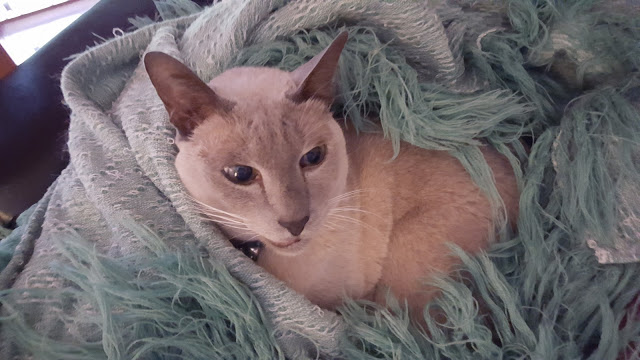
This is Chester.

We are in the middle of a philosophical debate.

No, it’s not about whether the world is flat, though sometimes I think he has that notion, as well as all humans are basically stupid.

I’ve been thinking about the pandemic and how it might meld into a plotline for a story.

Chester is not happy that I should use China as the country with global ambitions, after using the term ‘global domination’ and got a very silky retort.

He doesn’t seem to think that by causing a pandemic, making each of the G20 nations basically launch themselves into insolvency in order to maintain some semblance of economic stability, that China, who miraculously recovers, becomes the nation who saves the world?

It sounded quite good in my head.

Particularly when you see nations like the USA, the only other country that could tackle China as a ‘savior’ state, is going slowly down the gurgler.   Or so it seems, and it’s only a matter of time before something gives.

Chester and I now have mandatory viewing every morning, the Donald Trump show, where we lay bets as to whom he’s going to fire or lambast.

Chester thought the Doctor was gone for all money on Monday.

My money was on the reporter, who wouldn’t stop asking questions.

But today, it might be about Joe Biden and the Democrats, and the ramping up of the Republican’s political campaign.  Who said the COVID briefings had to be about that mundane virus?

Still, it’s back to the drawing board.  The overall plot is good, creating a virus that brings almost every nation to its knees, and one that rises out of the ashes to ‘save the world’.  It’s like you don’t need bullets and arms to fight a war, just a hell of a sneaky virus; you know, infecting people when you don’t know you’ve got it and infecting others.

Hang on, Chester’s calling.  It’s time for the Donald Trump show.

Memories of the conversations with my cat – 94

As some may be aware, but many not, Chester, my faithful writing assistant, mice catcher, and general pain in the neck, passed away some months ago.

Recently I was running a series based on his adventures, under the title of Past Conversations with my cat.

For those who have not had the chance to read about all of his exploits I will run the series again from Episode 1

These are the memories of our time together…

20160921_071506

This is Chester.

We are in the middle of a philosophical debate.

No, it’s not about whether the world is flat, though sometimes I think he has that notion, as well as all humans are basically stupid.

I’ve been thinking about the pandemic and how it might meld into a plotline for a story.

Chester is not happy that I should use China as the country with global ambitions, after using the term ‘global domination’ and got a very silky retort.

He doesn’t seem to think that by causing a pandemic, making each of the G20 nations basically launch themselves into insolvency in order to maintain some semblance of economic stability, that China, who miraculously recovers, becomes the nation who saves the world?

It sounded quite good in my head.

Particularly when you see nations like the USA, the only other country that could tackle China as a ‘savior’ state, is going slowly down the gurgler.   Or so it seems, and it’s only a matter of time before something gives.

Chester and I now have mandatory viewing every morning, the Donald Trump show, where we lay bets as to whom he’s going to fire or lambast.

Chester thought the Doctor was gone for all money on Monday.

My money was on the reporter, who wouldn’t stop asking questions.

But today, it might be about Joe Biden and the Democrats, and the ramping up of the Republican’s political campaign.  Who said the COVID briefings had to be about that mundane virus?

Still, it’s back to the drawing board.  The overall plot is good, creating a virus that brings almost every nation to its knees, and one that rises out of the ashes to ‘save the world’.  It’s like you don’t need bullets and arms to fight a war, just a hell of a sneaky virus; you know, infecting people when you don’t know you’ve got it and infecting others.

Hang on, Chester’s calling.  It’s time for the Donald Trump show.