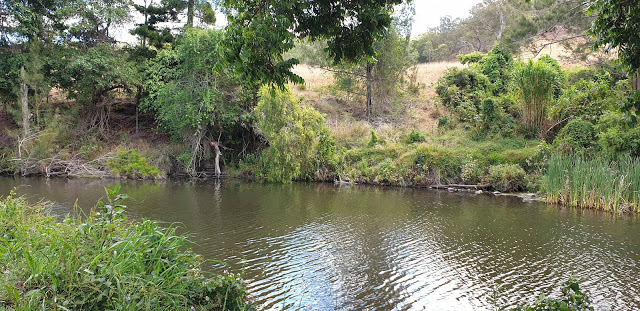
O’Reilly’s Canungra Valley Vineyards located on Lamington National Park Road, Canungra, Queensland, is a 15-acre vineyard with the 163-year-old historic homestead ‘Killowen’ set up with dining rooms and long verandahs, and extensive grounds that are next to the Canungra creek where it is possible to find Platypus and turtles while partaking in a picnic.
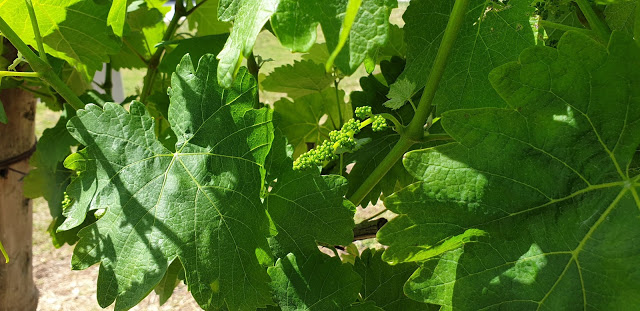
There are about 6,000 vines of the (white) Semillon, Verdelho and (red) Chambourcin, Shiraz and Petit Vedot varieties.
We visited there in December when the vines were just starting to produce fruit.
That fruit is usually harvested in February and then turned into wine. The setting for picnics is, on a warm Summer’s day is idyllic, where you can wade in the creek, or go looking for a platypus. We did not see one there the day we visited but did spend some time sitting beside the creek.
Or to be more precise, the homestead at what is now O’Reilly’s vineyard, where there is a pleasant lawn out back running down to the river for picnics, an alpaca farm next door, and the homestead plays host to functions and wine tastings
My interest was that we had assumed there was a restaurant, and we were going to have lunch. There might be one, but not the day we visited, it was just cafe food or a picnic available.
I was more interested in the old homestead because it was a fine example of the homesteads built in the ‘outback’.
…
Today we are having lunch in the Platypus room, in the O’Reilly’s vineyard farmhouse, which, if you close your eyes and let your imagination run free, could see it as the master bedroom of a homestead.
Certainly, the building is old, made completely of timber, inside and out, with the traditional high ceilings to keep the heat at bay.
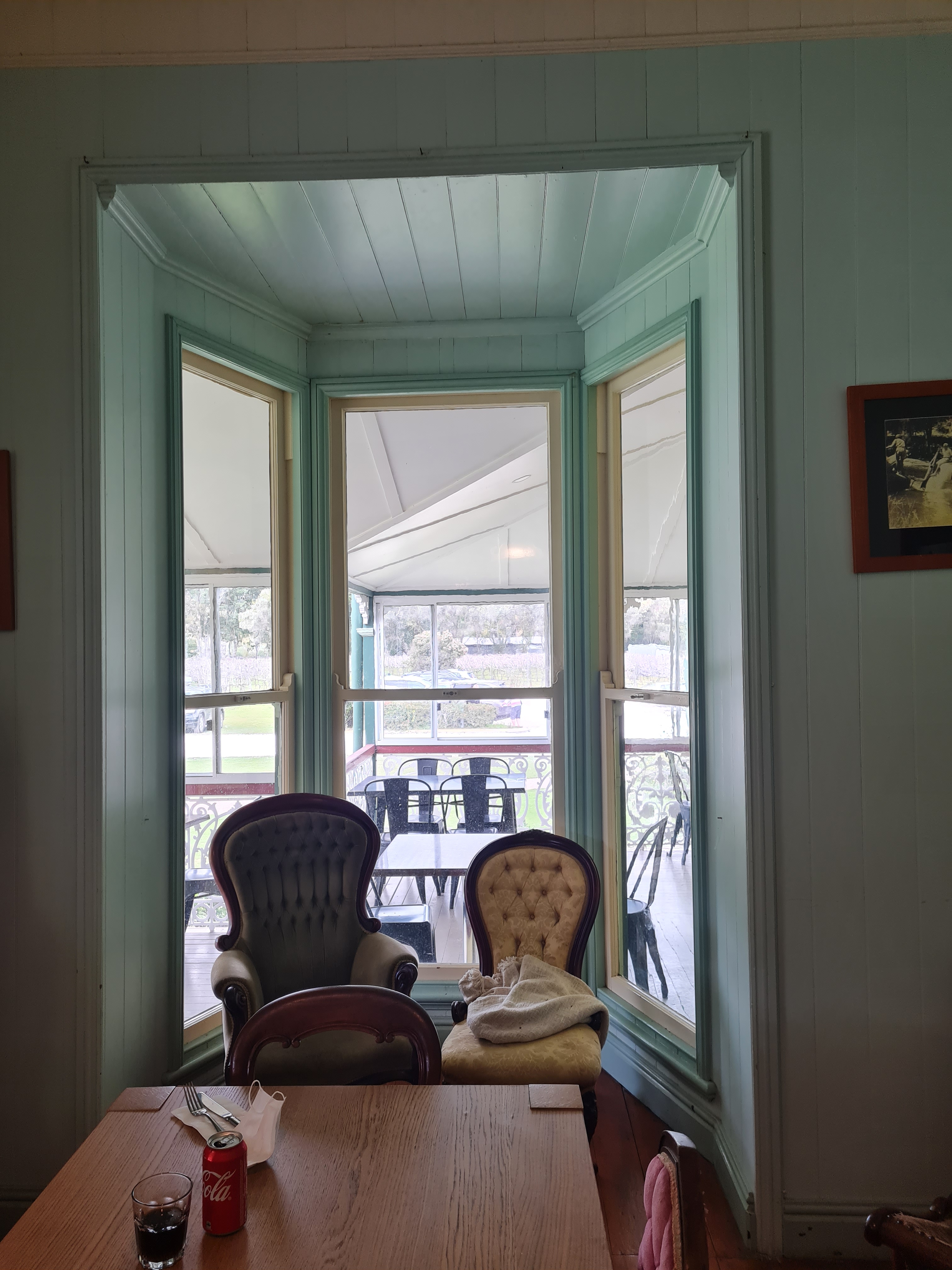
At one end, a large bay window, which would be ideal to sit and view the outside, past the sweeping verandah. There is a small lawn and a rotunda, but beyond that what might have been extended gardens, is the vineyard.
The homestead is in an ideal position midway between the main road and the river, has the traditional surrounding verandah, and shows signs of being extended on almost all sides.
On the other side of the wide corridor that leads you to the bar, and, coincidentally, down the centre of the house, is a smaller bedroom, also used as a dining room, and ubiquitously named the library.
It may be small but it does have a fireplace, which the assumed master bedroom does not, but now I’m thinking that room might have been the morning room.
Behind the room, we’re in is another bedroom, or perhaps this might be the master because it does have a fireplace and is quite large. And a name, the Ambassador room. Now it serves as the pickup place for picnic baskets.
There is another room on the opposite side of the corridor called the Drawing Room but is not open to the public. But, going into the room with the fireplace adjacent to it, you can sell the aroma of pizzas, so it’s probably an extension of the kitchen, and, walking around the outside that side of the house proves it to be the case.
After all, they do catering for weddings and need a very large food preparation area which I discovered runs down the whole of that side of the house.
At the end of the corridor I’d the bar and spare space, and running off that and behind that is where there is a large dining area, perhaps prior to COVID, the restaurant.
It’s not hard to imagine that area as a very large entertaining area, either for very large dinner parties, or dancing.
As for the food, it’s either a picnic basket or pizzas. We chose the latter, not realising the bases were not homemade, but bought in.
The toppings however were both plentiful and tasty. It could have been hotter, because it was a cold day, and it was cold in the room.
As for something to do other than taste the wine, and buy a few bottles, you can get up close to the vines, which, at this time of the year gave been pruned back and look quite dead, look at or walk an alpaca, even feed it, or all of them, or go down to the river and see if you can spot a Platypus.
Perhaps next time we’ll have a picnic down by the river.
Or to be more precise, the homestead at what is now O’Reilly’s vineyard, where there is a pleasant lawn out back running down to the river for picnics, an alpaca farm next door, and the homestead plays host to functions and wine tastings
My interest was that we had assumed there was a restaurant, and we were going to have lunch. There might be one, but not the day we visited, it was just cafe food or a picnic available.
I was more interested in the old homestead because it was a fine example of the homesteads built in the ‘outback’.
…
Today we are having lunch in the Platypus room, in the O’Reilly’s vineyard farmhouse, which, if you close your eyes and let your imagination run free, could see it as the master bedroom of a homestead.
Certainly, the building is old, made completely of timber, inside and out, with the traditional high ceilings to keep the heat at bay.
At one end, a large bay window, which would be ideal to sit and view the outside, past the sweeping verandah. There is a small lawn and a rotunda, but beyond that what might have been extended gardens, is the vineyard.
The homestead is in an ideal position midway between the main road and the river, has the traditional surrounding verandah, and shows signs of being extended on almost all sides.
On the other side of the wide corridor that leads you to the bar, and, coincidentally, down the centre of the house, is a smaller bedroom, also used as a dining room, and ubiquitously named the library.
It may be small but it does have a fireplace, which the assumed master bedroom does not, but now I’m thinking that room might have been the morning room.
Behind the room, we’re in is another bedroom, or perhaps this might be the master because it does have a fireplace and is quite large. And a name, the Ambassador room. Now it serves as the pickup place for picnic baskets.
There is another room on the opposite side of the corridor called the Drawing Room but is not open to the public. But, going into the room with the fireplace adjacent to it, you can sell the aroma of pizzas, so it’s probably an extension of the kitchen, and, walking around the outside that side of the house proves it to be the case.
After all, they do catering for weddings and need a very large food preparation area which I discovered runs down the whole of that side of the house.
At the end of the corridor I’d the bar and spare space, and running off that and behind that is where there is a large dining area, perhaps prior to COVID, the restaurant.
It’s not hard to imagine that area as a very large entertaining area, either for very large dinner parties, or dancing.
As for the food, it’s either a picnic basket or pizzas. We chose the latter, not realising the bases were not homemade, but bought in.
The toppings however were both plentiful and tasty. It could have been hotter, because it was a cold day, and it was cold in the room.
As for something to do other than taste the wine, and buy a few bottles, you can get up close to the vines, which, at this time of the year gave been pruned back and look quite dead, look at or walk an alpaca, even feed it, or all of them, or go down to the river and see if you can spot a Platypus.
Perhaps next time we’ll have a picnic down by the river.
Today we have been delving into the past in a way that makes history interesting.
Also, it’s another way to get young children to take an interest in the past, seeing that is often very difficult to part them from their iPad, smartphones and computer games.
It is part of a weekend devoted to history.
First up is a ride on an old steam train, the engine dating back to the 1950s, as are some of the carriages. Now, for someone like me who is only two years younger, it doesn’t seem that old, but to them, it’s a relic.
And for the youngest of our granddaughters who tells me that this will be her first ride on a train, any train, it’s going to be vastly different from her next ride on a train.
I don’t think it went faster than about 30, whether that’s miles an hour or kilometres, so we had time to take in the bushland, the river crossings and the smell of the coal-generated smoke.
And the biggest treat was for them to climb up into the engine cabin to see who drives it, and how it all works.
I try to tell them this is a far cry from the 300kph bullet trains in China that we recently travelled on. This ride was rattly, noisy, and we were barely able to sit still, whereas on the bullet trains you hardly knew you were moving and was so smooth and silent you didn’t know you were moving until you looked out the window.
Tomorrow we’re going to a historical township, built out of digging for gold in the area. It will be of significance to the elder granddaughter as she is working on a project on Eureka, where there was a watershed between the miners and the authorities.
History, in my opinion, cannot be taught entirely by books, there must be visual and active participation in simulated events for them to get a better understanding. That, and then writing about it in the way historical fiction often brings moments in history alive.
As part of a day tour by Very Tuscany Tours, we came to this quiet corner of Tuscany to have a look at an Italian winery, especially the Sangiovese grapes, and the Chianti produced here.
And what better way to sample the wine than to have a long leisurely lunch with matched wines. A very, very long lunch.
But first, a wander through the gardens to hone the appetite:
And a photo I recognize from many taken of the same building:
Then a tour of the wine cellar:
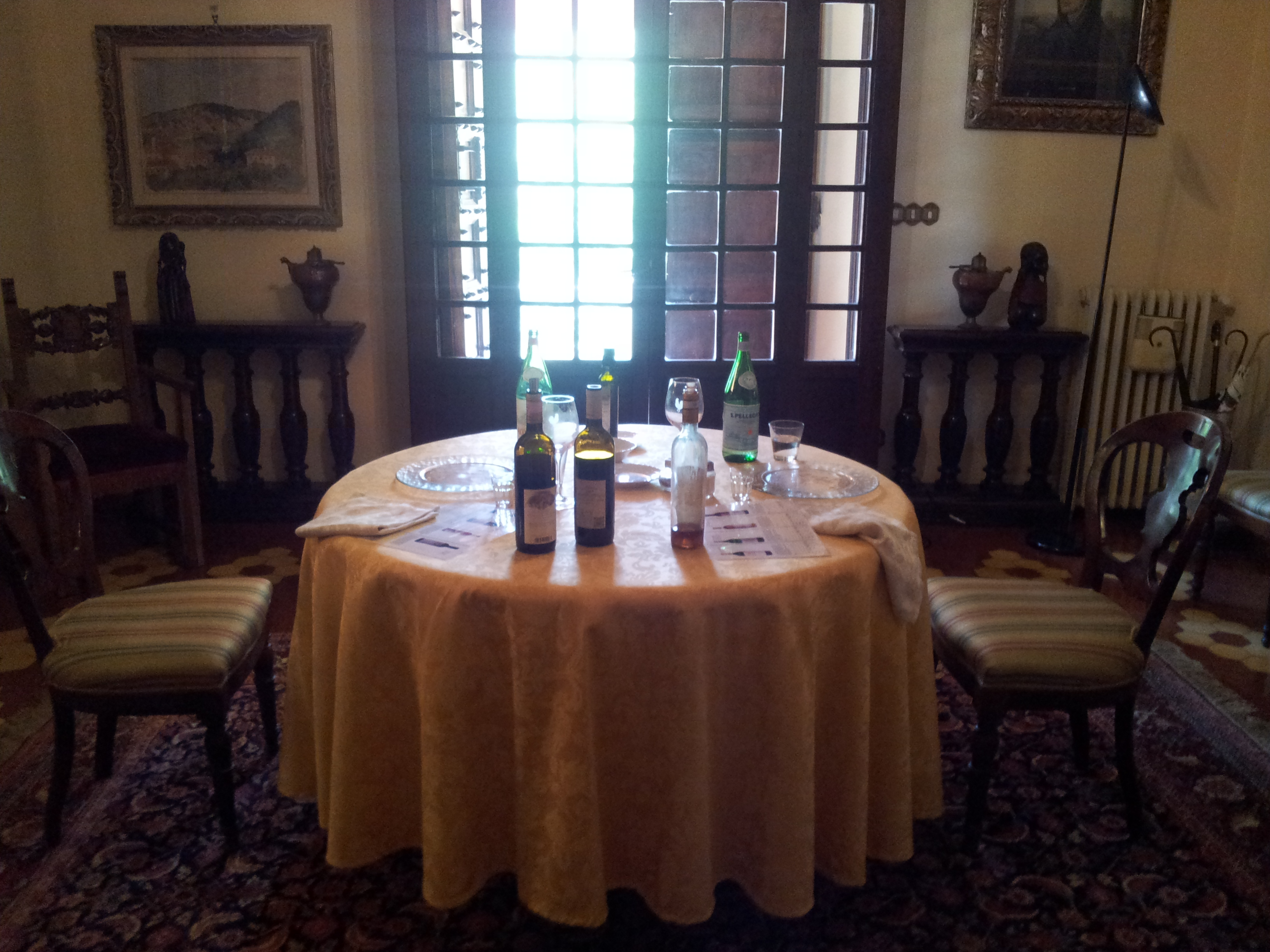
Then on to the most incredible and exquisite lunch and wine we have had. It was the highlight of our stay in Tuscany. Of course, we had our own private dining room:
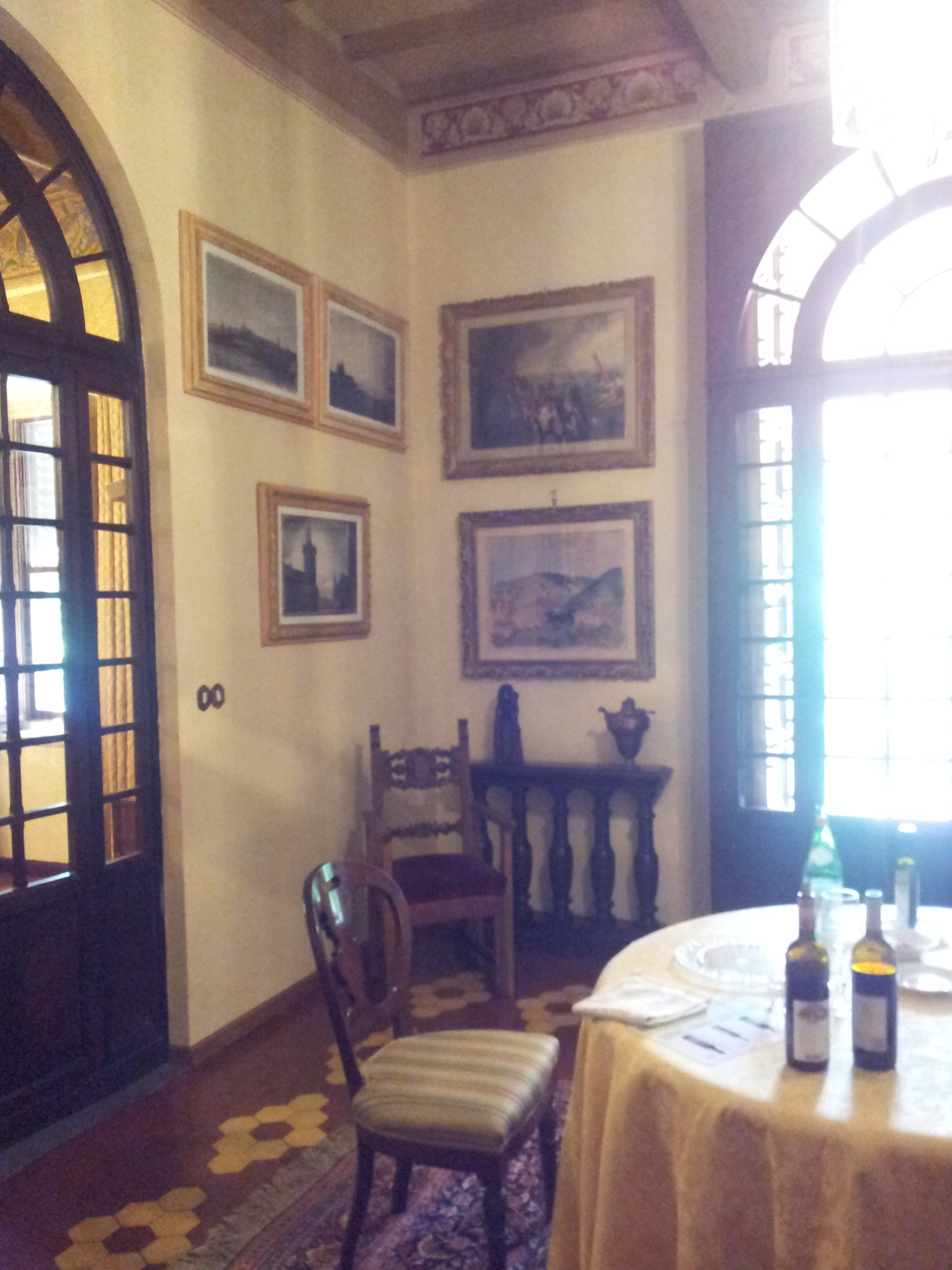
And time to study the paintings and prints on the walls while we finished with coffee and a dessert wine.
And of course, more wine, just so we could remember the occasion.
As part of a day tour by Very Tuscany Tours, we came to this quiet corner of Tuscany to have a look at an Italian winery, especially the Sangiovese grapes, and the Chianti produced here.
And what better way to sample the wine than to have a long leisurely lunch with matched wines. A very, very long lunch.
But first, a wander through the gardens to hone the appetite:
And a photo I recognize from many taken of the same building:
Then a tour of the wine cellar:
Then on to the most incredible and exquisite lunch and wine we have had. It was the highlight of our stay in Tuscany. Of course, we had our own private dining room:
And time to study the paintings and prints on the walls while we finished with coffee and a dessert wine.
And of course, more wine, just so we could remember the occasion.
Hohensalzburg Castle sits atop the Festungsberg, accessed by a cable car.
The castle itself dominates the Salzburg skyline.
Below is a view down into Salzburg from the castle walls.
We had lunch at a café, the Salzburg Fortress Café, that overlooked the countryside. This was where we were introduced to Mozart Gold Chocolate Cream added to our coffee.
The square below featured in the Sound of Music.
Among the more interesting objects to be seen, the gun below shows what some of the castle’s armaments might have been. These cannons, in the ‘Firing Gallery’ date back to the thirty years war in the early 1600’s.
Hohensalzburg Castle sits atop the Festungsberg, accessed by a cable car.
The castle itself dominates the Salzburg skyline.
Below is a view down into Salzburg from the castle walls.
We had lunch at a café, the Salzburg Fortress Café, that overlooked the countryside. This was where we were introduced to Mozart Gold Chocolate Cream added to our coffee.
The square below featured in the Sound of Music.
Among the more interesting objects to be seen, the gun below shows what some of the castle’s armaments might have been. These cannons, in the ‘Firing Gallery’ date back to the thirty years war in the early 1600’s.
Along with My Fair Lady, another of my favorite musicals was Sound of Music and having seen it a number of times over the years, it had conjured up a number of images of Salzburg in my mind, and with them a desire to go there. We had been to Salzburg once before, an overnight train stop between Vienna and Innsbruck, an afterthought, but what we saw then was reason enough to come back later and spend several days.
A pity then the day we arrived, and for much of our stay, it rained. But, like hardened travelers, very little stops us from doing anything, and particularly sightseeing.
We stayed at the Crowne Plaza – The Pitter in a very well-appointed room. Breakfast included, it was a great way to start the day. The afternoon we arrived we went for a short walk to the old city passing through the Mirabelle gardens with the Pegasus Fountain, Rose Garden, and Dwarves Garden. Later we discovered that the archway had been used in part of the filming of Sound of Music.
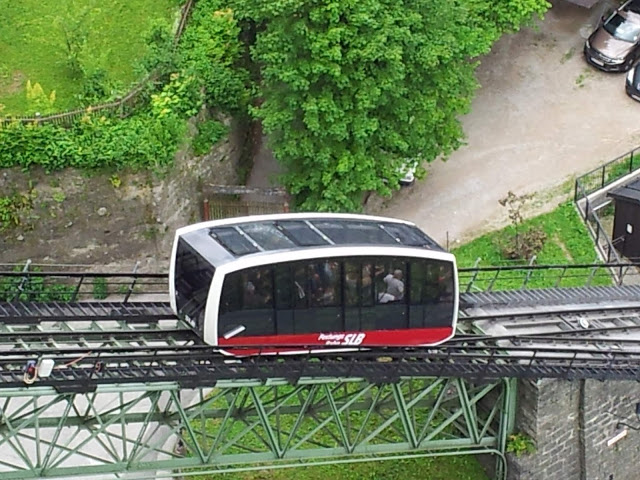
We took the Festungsbahn funicular railway up to the Fortress Hohensalzburg, dating back to 1077, and the largest fortress still standing in Europe. We spent a pleasant afternoon wandering through the rooms and exhibits and then had lunch at a café, the Salzburg Fortress Café, that overlooked the countryside. This was where we were introduced to Mozart Gold Chocolate Cream added to our coffee.
It led us to search for the product which we eventually found in a confectionary store, Holzemayr in the Alter Markt. Not only sis we find the Gold liqueur there was also a dark chocolate variety as well. We bought a whole box to bring back with us, as well as a number of other chocolates including Victor Schmidt Austrian Mozart Balls, a delicious chocolate and marzipan combination.
With another afternoon to spare we visited the Salzburg Residence which previously housed Salzburg’s ruling prince-archbishops. We visited the reception rooms and living quarters, as well as the Gallery. It is as ornate as any of the palaces in Austria, resplendent with furnishings and paintings. After that, the visit to Mozart’s birthplace was something of an anticlimax.
But, what we were in Salzburg for, the Sound of Music tour, and the places we visited:
The Mirabelle gardens, where Maria sang Do Re Mi in front of the gates to the gardens. We spent some time here before and after the tour, and also has a look inside the Mirabelle Palace, which is not open to the public as it is the city administrative offices.
Leopoldskron Palace where the boating scene was filmed as well as exteriors. They were not allowed to film inside the place and were only allowed to use the exterior. An interesting tidbit of information, one of the children nearly drowned.
Heilbrunn palace is now home to the gazebo where Rolf and Leisl sang their song, ‘16 going on 17’. The interesting part of this was the fact the Gazebo used to film the scene was much larger than the actual Gazebo on display.
The walkway from the fortress back to the old city passes Nonnberg Abbey where Maria was a novice, and where the opening scenes were filmed. A number of scenes were filmed here, including the song ‘Maria’ in the courtyard. The tour only showed the exterior of the Abbey.
Salzburg lake district where panorama and picnic scenes were filmed. Even on the dullest of days, during which throughout our tour in continually rained, the scenery was still magnificent.
Mondsee church, where the wedding scenes were filmed. It was surprising just how small the church really is. It was also a stop to have afternoon tea or some ‘famous’ apple strudel.
Needless to say, we watched Sound of Music straight after the tour and managed to pick out all of the places we had been to. The only downside to the tour, singing along to the songs. I’m sorry, but I do not sing, and some of those that were, well, I say no more.








 Thrills, Spills, and just a dash of Romance