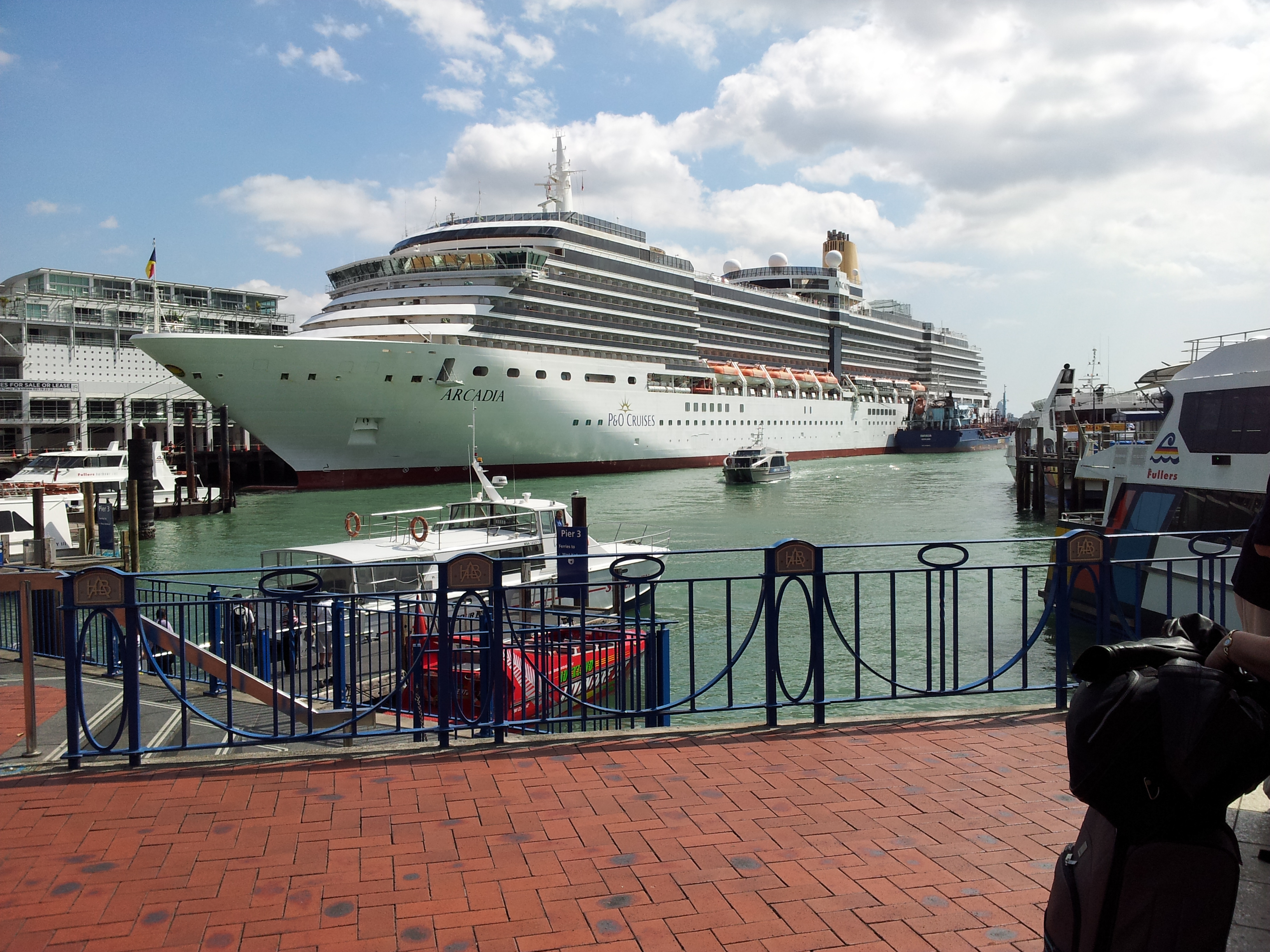
We were staying at the Hilton and advised there would be a large cruise liner berthing next to the hotel. There was the Arcadia.
This is the view from the other side of the hotel. Where our room was, we could almost walk onto the aft end of the ship.
We were also told this was a rather extraordinary day because there were two cruise ships in the port. particularly because it was near the end of the cruising season.
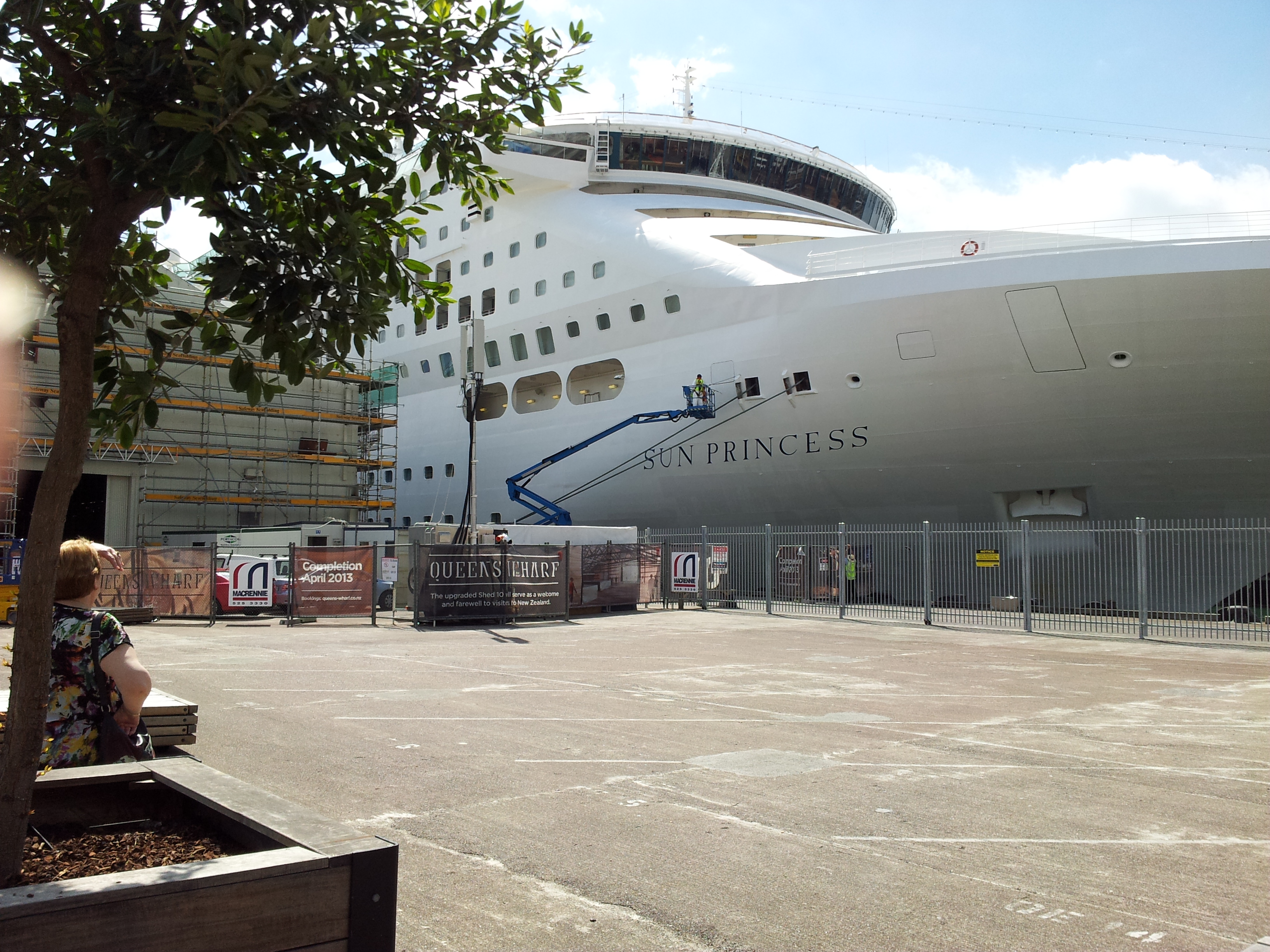
The other ship was two berths along, the Sun Princess.
Not as big as the Arcadia, up close it was still very impressive.
We were staying at the Hilton and advised there would be a large cruise liner berthing next to the hotel. There was the Arcadia.
This is the view from the other side of the hotel. Where our room was, we could almost walk onto the aft end of the ship.
We were also told this was a rather extraordinary day because there were two cruise ships in the port. particularly because it was near the end of the cruising season.
The other ship was two berths along, the Sun Princess.
Not as big as the Arcadia, up close it was still very impressive.
Or in other words, going up the mountain to O’Reilly’s Rainforest Retreat.
…
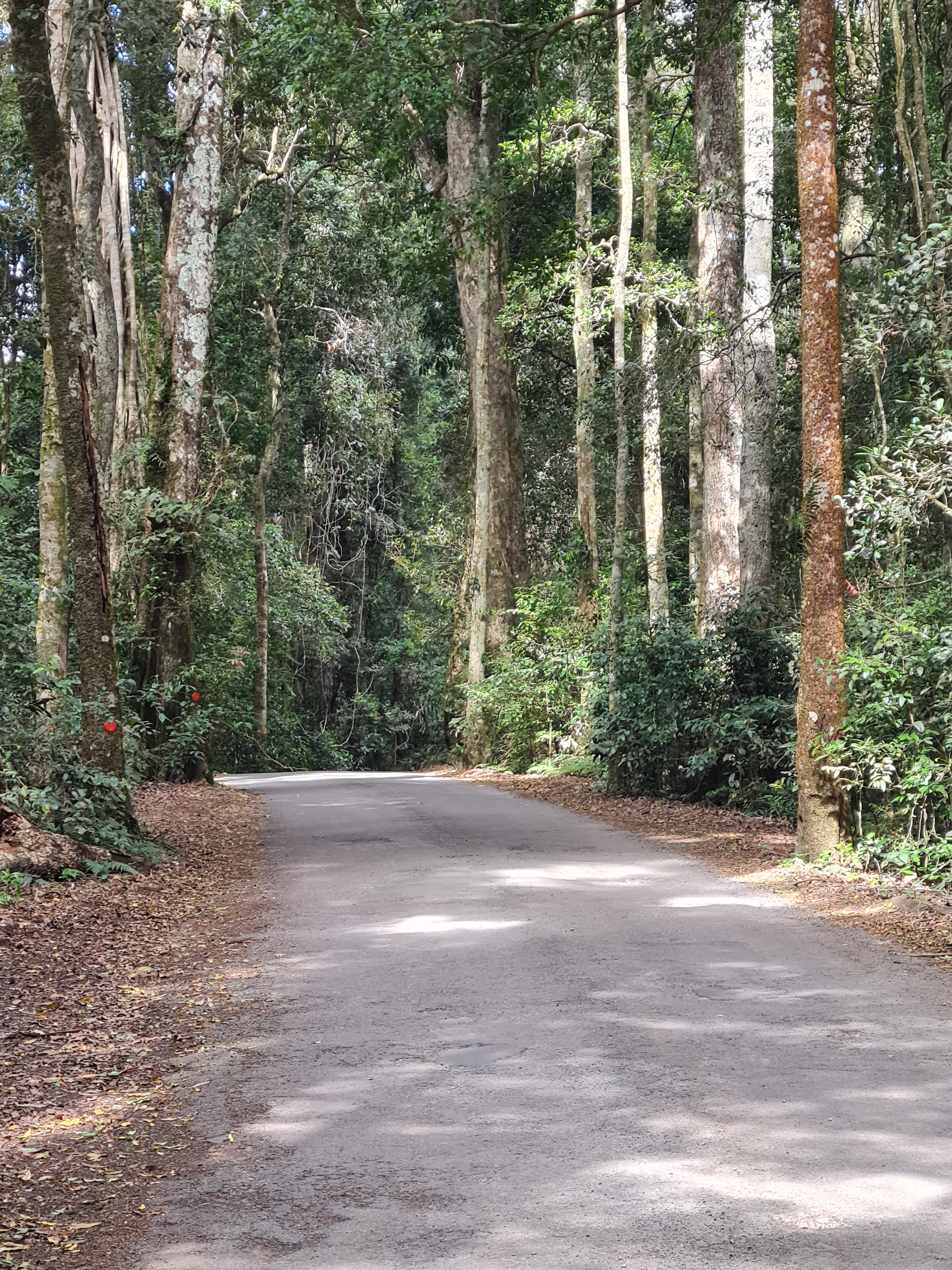
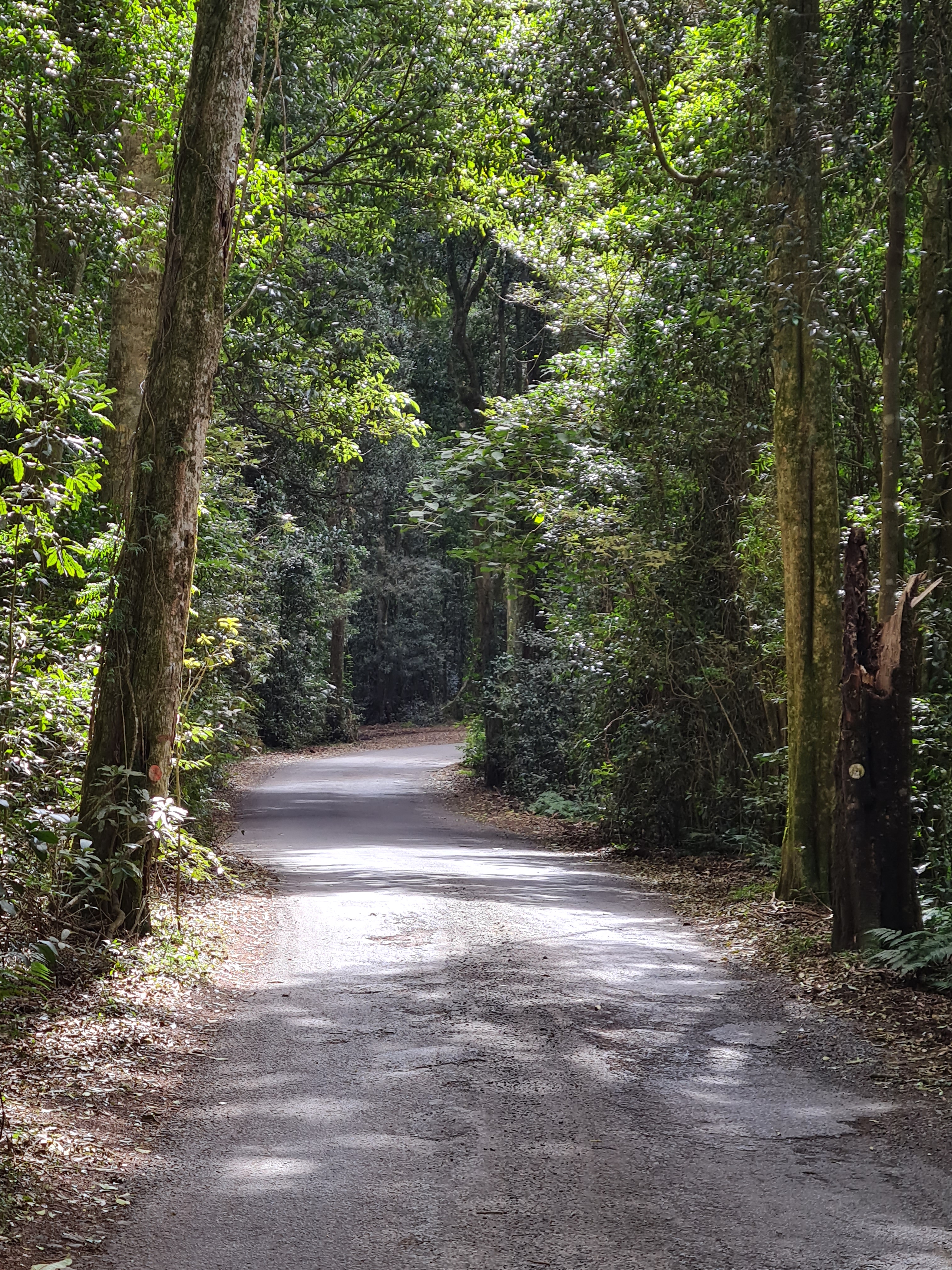
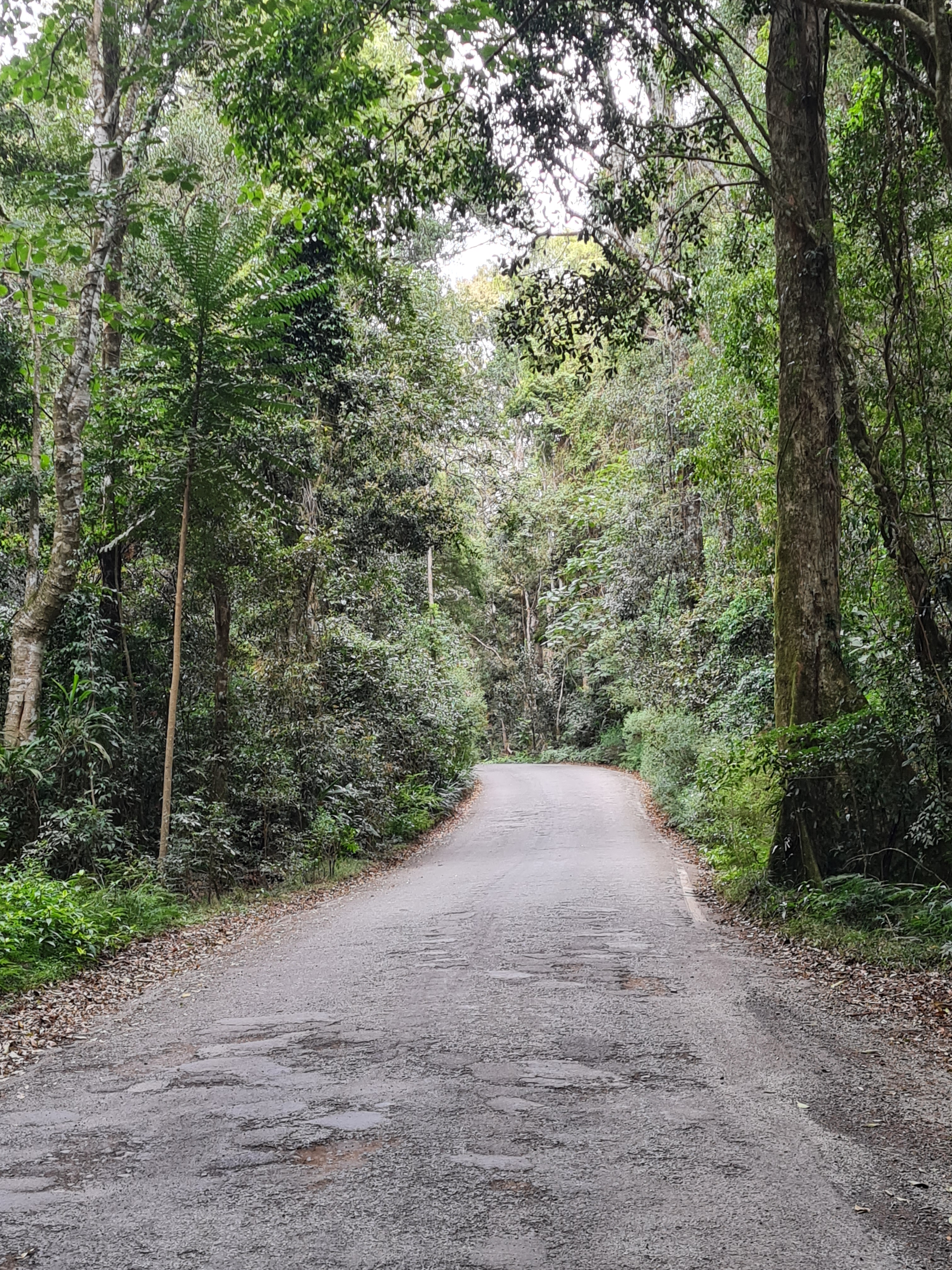
The road, from the turn off the Greenlee cottages, Is narrow, winding, and not one you can go faster than 40kph. Buses and trucks are restricted to 20kph, but as you get further into the mountains, it’s difficult to see how they can get along the road at all.
It’s difficult enough in a mid-size SUV.
At times the road is so narrow that you wonder how trucks and buses could get between the trees, because the close you get to the guest house, the narrower the road. And, at times, the car has to scrape by the overhanging branches, especially when having to make way for oncoming traffic.
The road in places is definitely not wide enough for two cars, but there are a lot of points where you can pull off to the side to let them pass.
It is tarred, but being in the middle of a dense tropical forest, it’s pitted and rutted, and very uneven. There is not one moment where can relax, or tale your eyes off the road, as some of us do, to take in the surrounding scenery.
But, whilst most of it looks the same, it’s certainly not boring, and every now and then you break out of the darkness into a clearing. And, sometimes a house.
Yes, people do live on the side of a mountain, and, just to be clear, their view, every morning, from the back verandah must be spectacular
At the end of the three quarters of an hour drive we emerge onto a mountain top, and what is O’Reilly’s guest house, though after a more investigative look around, the guests stay in motel like rooms. Those were the rooms we could see, but apparently there are villas that are part of the rainforest, but we did not get to see them.
That would be where I would stay, if I was going to stay up here.
There is an old wooden structure, but if this is the original guest house, it doesn’t look like people stay there any more.
But, it’s not the accommodation the people come here for, it’s the endless bush walks. Of course, there’s other stuff there, but I suspect for most people, it’s more about communing with nature, discovering the wildlife, and taking in the fresh country air.
Oh, and a plane, like one that had crashed nearby, with an interesting story to go with it.
We went into the souvenir story and whilst the prices are higher than I expected, there’s a wide variety of items that are worthy of being a reminder of the place.
We also went into the cafe, a large cavernous space that was a reminder of the chalet style building in alpine areas, made completely of wood. I was expecting it to be older than it was, but certainly, it was more atmospheric than the modern cafes. The food, though expensive, was good, and the coffee excellent.
It was a pity that we could not do more walking that day, but it was a pleasant interlude, and a place I would go back to.
Or in other words, going up the mountain to O’Reilly’s Rainforest Retreat.
…
The road, from the turn off the Greenlee cottages, Is narrow, winding, and not one you can go faster than 40kph. Buses and trucks are restricted to 20kph, but as you get further into the mountains, it’s difficult to see how they can get along the road at all.
It’s difficult enough in a mid-size SUV.
At times the road is so narrow that you wonder how trucks and buses could get between the trees, because the close you get to the guest house, the narrower the road. And, at times, the car has to scrape by the overhanging branches, especially when having to make way for oncoming traffic.
The road in places is definitely not wide enough for two cars, but there are a lot of points where you can pull off to the side to let them pass.
It is tarred, but being in the middle of a dense tropical forest, it’s pitted and rutted, and very uneven. There is not one moment where can relax, or tale your eyes off the road, as some of us do, to take in the surrounding scenery.
But, whilst most of it looks the same, it’s certainly not boring, and every now and then you break out of the darkness into a clearing. And, sometimes a house.
Yes, people do live on the side of a mountain, and, just to be clear, their view, every morning, from the back verandah must be spectacular
At the end of the three quarters of an hour drive we emerge onto a mountain top, and what is O’Reilly’s guest house, though after a more investigative look around, the guests stay in motel like rooms. Those were the rooms we could see, but apparently there are villas that are part of the rainforest, but we did not get to see them.
That would be where I would stay, if I was going to stay up here.
There is an old wooden structure, but if this is the original guest house, it doesn’t look like people stay there any more.
But, it’s not the accommodation the people come here for, it’s the endless bush walks. Of course, there’s other stuff there, but I suspect for most people, it’s more about communing with nature, discovering the wildlife, and taking in the fresh country air.
Oh, and a plane, like one that had crashed nearby, with an interesting story to go with it.
We went into the souvenir story and whilst the prices are higher than I expected, there’s a wide variety of items that are worthy of being a reminder of the place.
We also went into the cafe, a large cavernous space that was a reminder of the chalet style building in alpine areas, made completely of wood. I was expecting it to be older than it was, but certainly, it was more atmospheric than the modern cafes. The food, though expensive, was good, and the coffee excellent.
It was a pity that we could not do more walking that day, but it was a pleasant interlude, and a place I would go back to.
Or to be more precise, the homestead at what is now O’Reilly’s vineyard, where there is a pleasant lawn out back running down to the river for picnics, an alpaca farm next door, and the homestead plays host to functions, and wine tastings.
My interest was that we had assumed there was a restaraunt, and we were going to have lunch. There might be one, but not the day we visited, it was just cafe food or a picnic available.
I was more interested in the old homestead, because it was a fine example of the homesteads built in the ‘outback’.
…
Today we are having lunch in the Platypus room, in the O’Reilly’s vineyard farmhouse, which, if you close your eyes and let your imagination run free, could see it as the master bedroom of a homestead.
Certainly the building is old, made completely of timber, inside and out, with the traditional high ceilings to keep the heat at bay.
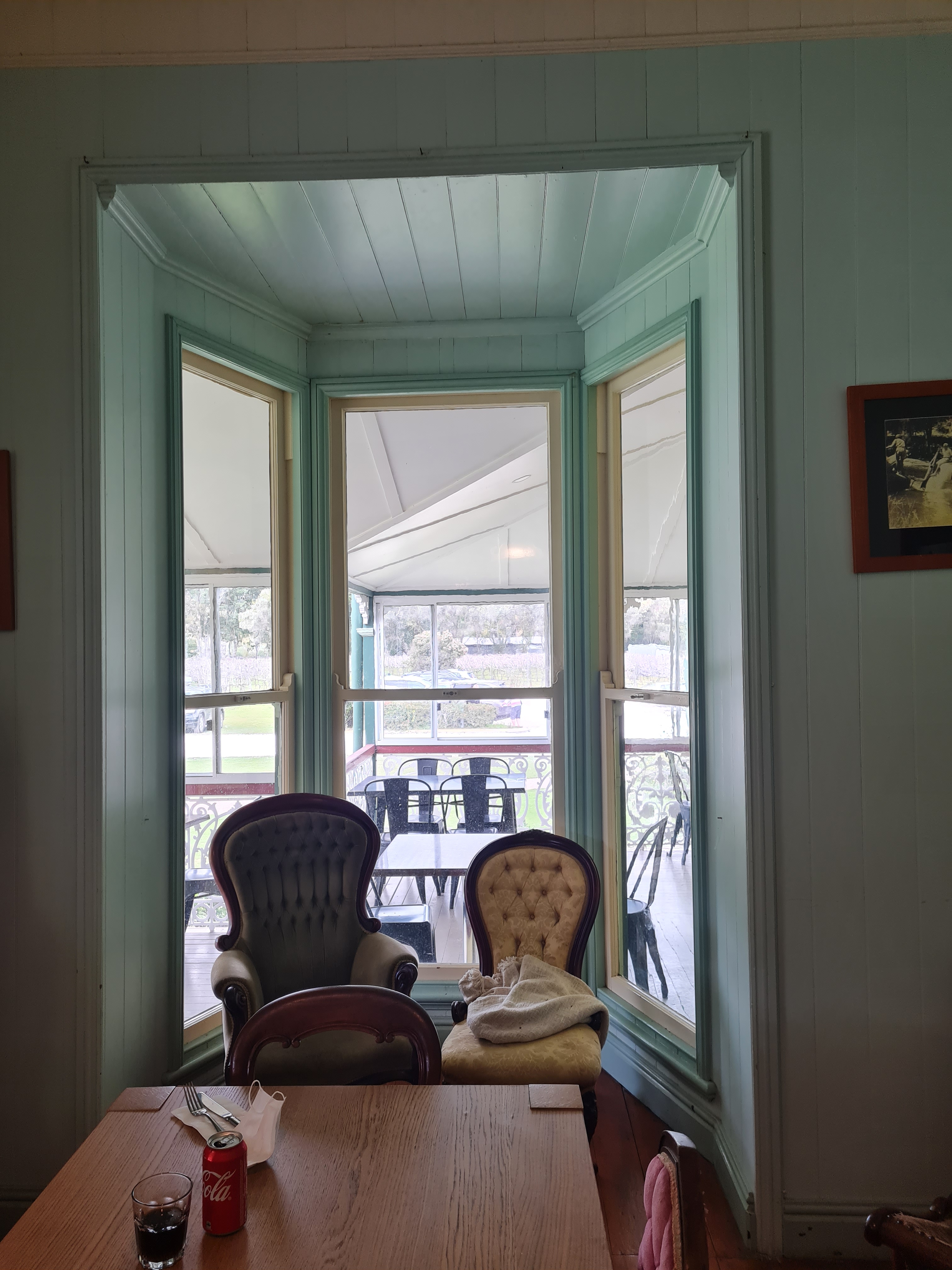
At one end, a large bay window, which would be ideal to sir and view the outside, past the sweeping verandah. There is a small lawn and a rotunda, but beyond that what might have been extended gardens, is the vineyard.
The homestead is in an ideal position midway between the main road and the river, has the traditional surrounding verandah, and shows signs of being extended on almost all sides.
On the other side of the wide corridor that leads you to the bar, and, coincidentally, down the centre of the house, is a smaller bedroom, also used as a dining room, and ubiquitously named the library.
It may be small but it does have a fireplace. Which the assumed master bedroom does not, but now I’m thinking that room might have been the morning room.
Behind the room we’re in is another bedroom, or perhaps this might be the master, because it does have a fireplace and is quite large. And a name, the Ambassador room. Now it serves as the pick up place for picnic baskets.
There is another room on the opposite side of the corridor called the Drawing Room, but is not open to the public. But, going into the room with the fireplace adjacent to it, you can sell the aroma of pizzas, so it’s probably an extension of the kitchen, and, walking around the outside that side of the house proves it to be case.
After all, they do catering for weddings and need a very large food preparation area which I discovered runs down the whole of that side of the house.
At the end of the corridor I’d the bar and spare space, and running off that and behind that is where there is a large dining area, perhaps prior to COVID, the restaurant.
It’s not hard to imagine that area as a very large entertaining area, either for very large dinner parties, or dancing.
As for the food, it’s either a picnic basket, or pizzas. We chose the latter, not realising the bases were not home made, but bought in.
The toppings however were both plentiful and tasty. It could have been hotter, because it was a cold day, and it was cold in the room.
As for something to do other than taste the wine, and buy a few bottles, you can get up close to the vines, which, at this time of the year gave been pruned back and look quite dead, look at or walk an alpaca, even feed it, or all of them, or go down to the river and see if you can spot a Platypus.
Perhaps next time we’ll have a picnic down by the river.
Or to be more precise, the homestead at what is now O’Reilly’s vineyard, where there is a pleasant lawn out back running down to the river for picnics, an alpaca farm next door, and the homestead plays host to functions, and wine tastings.
My interest was that we had assumed there was a restaraunt, and we were going to have lunch. There might be one, but not the day we visited, it was just cafe food or a picnic available.
I was more interested in the old homestead, because it was a fine example of the homesteads built in the ‘outback’.
…
Today we are having lunch in the Platypus room, in the O’Reilly’s vineyard farmhouse, which, if you close your eyes and let your imagination run free, could see it as the master bedroom of a homestead.
Certainly the building is old, made completely of timber, inside and out, with the traditional high ceilings to keep the heat at bay.
At one end, a large bay window, which would be ideal to sir and view the outside, past the sweeping verandah. There is a small lawn and a rotunda, but beyond that what might have been extended gardens, is the vineyard.
The homestead is in an ideal position midway between the main road and the river, has the traditional surrounding verandah, and shows signs of being extended on almost all sides.
On the other side of the wide corridor that leads you to the bar, and, coincidentally, down the centre of the house, is a smaller bedroom, also used as a dining room, and ubiquitously named the library.
It may be small but it does have a fireplace. Which the assumed master bedroom does not, but now I’m thinking that room might have been the morning room.
Behind the room we’re in is another bedroom, or perhaps this might be the master, because it does have a fireplace and is quite large. And a name, the Ambassador room. Now it serves as the pick up place for picnic baskets.
There is another room on the opposite side of the corridor called the Drawing Room, but is not open to the public. But, going into the room with the fireplace adjacent to it, you can sell the aroma of pizzas, so it’s probably an extension of the kitchen, and, walking around the outside that side of the house proves it to be case.
After all, they do catering for weddings and need a very large food preparation area which I discovered runs down the whole of that side of the house.
At the end of the corridor I’d the bar and spare space, and running off that and behind that is where there is a large dining area, perhaps prior to COVID, the restaurant.
It’s not hard to imagine that area as a very large entertaining area, either for very large dinner parties, or dancing.
As for the food, it’s either a picnic basket, or pizzas. We chose the latter, not realising the bases were not home made, but bought in.
The toppings however were both plentiful and tasty. It could have been hotter, because it was a cold day, and it was cold in the room.
As for something to do other than taste the wine, and buy a few bottles, you can get up close to the vines, which, at this time of the year gave been pruned back and look quite dead, look at or walk an alpaca, even feed it, or all of them, or go down to the river and see if you can spot a Platypus.
Perhaps next time we’ll have a picnic down by the river.
Along with My Fair Lady, another of my favorite musicals was Sound of Music and having seen it a number of times over the years, it had conjured up a number of images of Salzburg in my mind, and with them a desire to go there. We had been to Salzburg once before, an overnight train stop between Vienna and Innsbruck, an afterthought, but what we saw then was reason enough to come back later and spend several days.
A pity then the day we arrived, and for much of our stay, it rained. But, like hardened travelers, very little stops us from doing anything, and particularly sightseeing.
We stayed at the Crowne Plaza – The Pitter in a very well appointed room. Breakfast included, it was a great way to start the day.
The afternoon we arrived we went for a short walk to the old city passing through the Mirabelle gardens with the Pegasus Fountain, Rose Garden, and Dwarves Garden. Later we discovered that the archway had been used in part of the filming of Sound of Music.
We took the Festungsbahn funicular railway up to the Fortress Hohensalzburg, dating back to 1077, and the largest fortress still standing in Europe. We spent a pleasant afternoon wandering through the rooms and exhibits and then had lunch at a café, the Salzburg Fortress Café, that overlooked the countryside. This was where we were introduced to Mozart Gold Chocolate Cream added to our coffee.
It led us to search for the product which we eventually found in a confectionery store, Holzemayr in the Alter Markt. Not only sis we find the Gold liqueur there was also a dark chocolate variety as well. We bought a whole box to bring back with us, as well as a number of other chocolates including Victor Schmidt Austrian Mozart Balls, a delicious chocolate and marzipan combination.
With another afternoon to spare we visited the Salzburg Residence which previously housed Salzburg’s ruling prince-archbishops. We visited the reception rooms and living quarters, as well as the Gallery. It is as ornate as any of the palaces in Austria, resplendent with furnishings and paintings. After that, the visit to Mozart’s birthplace was something of an anticlimax.
But, what we were in Salzburg for, the Sound of music tour, and the places we visited:
The Mirabelle gardens, where Maria sang Do Re Mi in front of the gates to the gardens. We spent some time here before and after the tour, and also has a look inside the Mirabelle Palace, which is not open to the public as it is the city administrative offices.
Leopoldskron Palace where the boating scene was filmed as well as exteriors. They were not allowed to film inside the place and were only allowed to use the exterior. An interesting tidbit of information, one of the children nearly drowned.
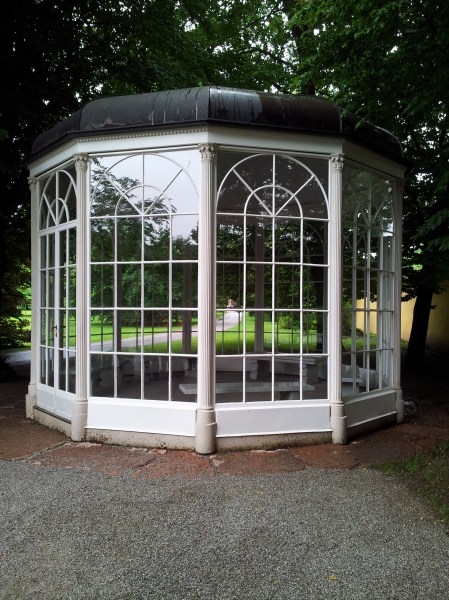
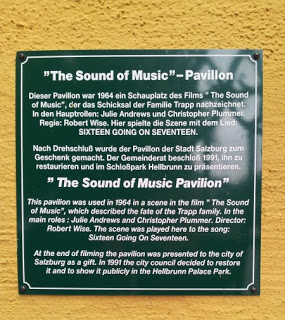
Heilbrunn palace is now home to the gazebo where Rolf and Liesl sang their song, ‘16 going on 17’. The interesting part of this was the fact the Gazebo used to film the scene was much larger than the actual Gazebo on display.
The walkway from the fortress back to the old city passes Nonnberg Abbey where Maria was a novice, and where the opening scenes were filmed. A number of scenes were filmed here, including the song ‘Maria’ in the courtyard. The tour only showed the exterior of the Abbey.
Salzburg lake district where panorama and picnic scenes were filmed. Even on the dullest of days, during which throughout our tour in continually rained, the scenery was still magnificent.
Mondsee church, where the wedding scenes were filmed. It was surprising just how small the church really is. It was also a stop to have afternoon tea or some ‘famous’ apple strudel.
Needless to say, we watched Sound of Music straight after the tour and managed to pick out all of the places we had been to.
The only downside to the tour, singing along to the songs. I’m sorry, but I do not sing, and some of those that were, well, I say no more.
Along with My Fair Lady, another of my favorite musicals was Sound of Music and having seen it a number of times over the years, it had conjured up a number of images of Salzburg in my mind, and with them a desire to go there. We had been to Salzburg once before, an overnight train stop between Vienna and Innsbruck, an afterthought, but what we saw then was reason enough to come back later and spend several days.
A pity then the day we arrived, and for much of our stay, it rained. But, like hardened travelers, very little stops us from doing anything, and particularly sightseeing.
We stayed at the Crowne Plaza – The Pitter in a very well appointed room. Breakfast included, it was a great way to start the day.
The afternoon we arrived we went for a short walk to the old city passing through the Mirabelle gardens with the Pegasus Fountain, Rose Garden, and Dwarves Garden. Later we discovered that the archway had been used in part of the filming of Sound of Music.
We took the Festungsbahn funicular railway up to the Fortress Hohensalzburg, dating back to 1077, and the largest fortress still standing in Europe. We spent a pleasant afternoon wandering through the rooms and exhibits and then had lunch at a café, the Salzburg Fortress Café, that overlooked the countryside. This was where we were introduced to Mozart Gold Chocolate Cream added to our coffee.
It led us to search for the product which we eventually found in a confectionery store, Holzemayr in the Alter Markt. Not only sis we find the Gold liqueur there was also a dark chocolate variety as well. We bought a whole box to bring back with us, as well as a number of other chocolates including Victor Schmidt Austrian Mozart Balls, a delicious chocolate and marzipan combination.
With another afternoon to spare we visited the Salzburg Residence which previously housed Salzburg’s ruling prince-archbishops. We visited the reception rooms and living quarters, as well as the Gallery. It is as ornate as any of the palaces in Austria, resplendent with furnishings and paintings. After that, the visit to Mozart’s birthplace was something of an anticlimax.
But, what we were in Salzburg for, the Sound of music tour, and the places we visited:
The Mirabelle gardens, where Maria sang Do Re Mi in front of the gates to the gardens. We spent some time here before and after the tour, and also has a look inside the Mirabelle Palace, which is not open to the public as it is the city administrative offices.
Leopoldskron Palace where the boating scene was filmed as well as exteriors. They were not allowed to film inside the place and were only allowed to use the exterior. An interesting tidbit of information, one of the children nearly drowned.
Heilbrunn palace is now home to the gazebo where Rolf and Liesl sang their song, ‘16 going on 17’. The interesting part of this was the fact the Gazebo used to film the scene was much larger than the actual Gazebo on display.
The walkway from the fortress back to the old city passes Nonnberg Abbey where Maria was a novice, and where the opening scenes were filmed. A number of scenes were filmed here, including the song ‘Maria’ in the courtyard. The tour only showed the exterior of the Abbey.
Salzburg lake district where panorama and picnic scenes were filmed. Even on the dullest of days, during which throughout our tour in continually rained, the scenery was still magnificent.
Mondsee church, where the wedding scenes were filmed. It was surprising just how small the church really is. It was also a stop to have afternoon tea or some ‘famous’ apple strudel.
Needless to say, we watched Sound of Music straight after the tour and managed to pick out all of the places we had been to.
The only downside to the tour, singing along to the songs. I’m sorry, but I do not sing, and some of those that were, well, I say no more.
The Yu Gardens (or Yuyuan Gardens) are located at No. 137, Anren Street, Huangpu District, very close to the Old City God Temple, in the northeast of the Old City of Shanghai at Huangpu.
Yu Garden was first built in 1559 during the Ming Dynasty by Pan Yunduan and finished approximately 1577, created specifically as a private garden of the Pan family for Pan Yunduan’s parents to enjoy in their old age.
Yu Garden occupies an area of 5 acres, and is divided into six general areas:
-Sansui Hall which includes the Grand Rockery was originally used to entertain guests,
-Wanhua Chamber is a delicate building surrounded by derious cloisters,
-Dianchun Hall, built in 1820, includes Treasury Hall and the Hall of Harmony,
-Huijing Hall which includes Jade Water Corridor.
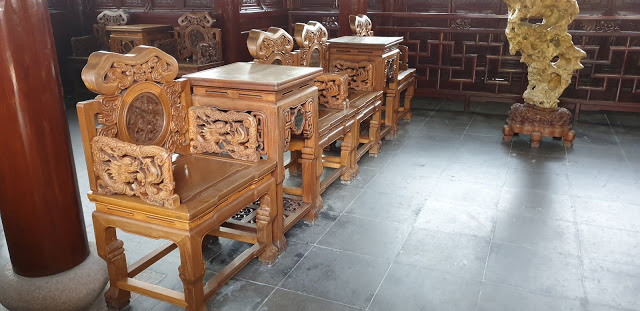
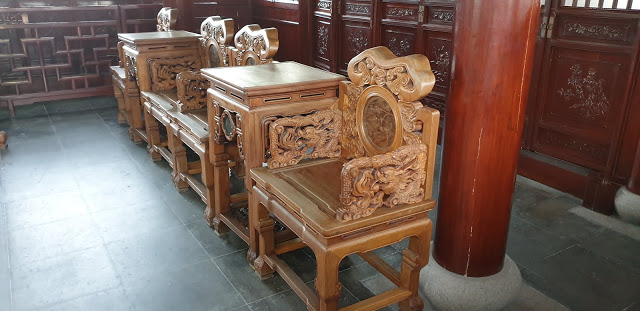
-Yuhua Hall which is furnished with rosewood pieces from the Ming Dynasty, and,
-The Inner Garden with rockeries, ponds, pavilions, and towers; first laid out in 1709. As the quietest part of Yu Gardens, it includes the Hall of Serenity and the Acting and Singing Stage.
The Mid-Lake Pavilion Teahouse, within the gardens, is the oldest teahouse in Shanghai.
A centerpiece of the gardens is the Exquisite Jade Rock, a 5-ton boulder that was originally meant for the Huizong Emperor (Northern Song Dynasty from 1100-1126 AD) but was salvaged from the Huangpu River after the boat carrying it had sunk.
These gardens house a lot of buildings that seemed to be a perfect blend of the old and the new, and if it was up to me, I’d keep the old. Both the building and the gardens they are set in are like an oasis in the middle of an industrial complex, and perhaps impractical for the number of people living in Shanghai.
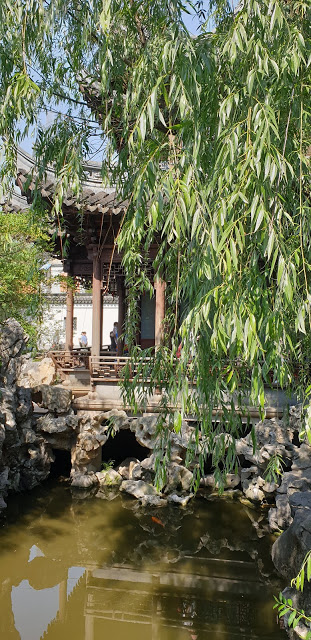
All of the ponds had a lot of fish in them
It was a pleasant afternoon, for both a stroll through the gardens
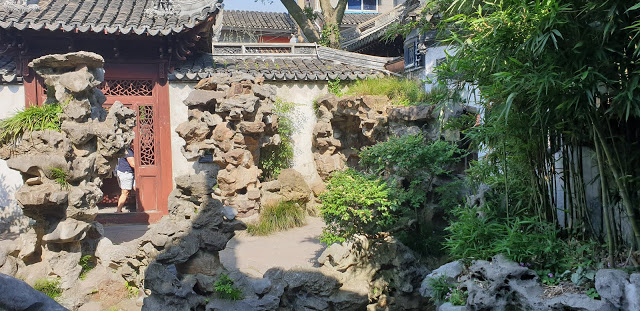
In and out of the rockery on narrow pathways
And to look inside the buildings that were sparsely furnished
There was even an area set aside for entertainment.
The Yu Gardens (or Yuyuan Gardens) are located at No. 137, Anren Street, Huangpu District, very close to the Old City God Temple, in the northeast of the Old City of Shanghai at Huangpu.
Yu Garden was first built in 1559 during the Ming Dynasty by Pan Yunduan and finished approximately 1577, created specifically as a private garden of the Pan family for Pan Yunduan’s parents to enjoy in their old age.
Yu Garden occupies an area of 5 acres, and is divided into six general areas:
-Sansui Hall which includes the Grand Rockery was originally used to entertain guests,
-Wanhua Chamber is a delicate building surrounded by derious cloisters,
-Dianchun Hall, built in 1820, includes Treasury Hall and the Hall of Harmony,
-Huijing Hall which includes Jade Water Corridor.
-Yuhua Hall which is furnished with rosewood pieces from the Ming Dynasty, and,
-The Inner Garden with rockeries, ponds, pavilions, and towers; first laid out in 1709. As the quietest part of Yu Gardens, it includes the Hall of Serenity and the Acting and Singing Stage.
The Mid-Lake Pavilion Teahouse, within the gardens, is the oldest teahouse in Shanghai.
A centerpiece of the gardens is the Exquisite Jade Rock, a 5-ton boulder that was originally meant for the Huizong Emperor (Northern Song Dynasty from 1100-1126 AD) but was salvaged from the Huangpu River after the boat carrying it had sunk.
These gardens house a lot of buildings that seemed to be a perfect blend of the old and the new, and if it was up to me, I’d keep the old. Both the building and the gardens they are set in are like an oasis in the middle of an industrial complex, and perhaps impractical for the number of people living in Shanghai.
All of the ponds had a lot of fish in them
It was a pleasant afternoon, for both a stroll through the gardens
In and out of the rockery on narrow pathways
And to look inside the buildings that were sparsely furnished
There was even an area set aside for entertainment.