When we first planned to stay in Tuscany for a few days, we wanted to be in a central area. We had thought of staying in Florence and making daily treks, but the tour operator we selected told us it would be better if we stayed closer to Arezzo.
We picked Greve in Chianti, and a place called Antico Pastificio, we booked a standard apartment with two bedrooms, and it was about as authentic Italian you could get. The building we stayed in was the yellow pasta factory, and the apartment named ‘Iris’.
It was only steps away from the main square, shops, restaurants, and at the opposite end, the quaint ringing of church bells at various times during the day.
Gaining access was through a very narrow arch which required some deft driving and then up the road. There were villas and two large apartment blocks.
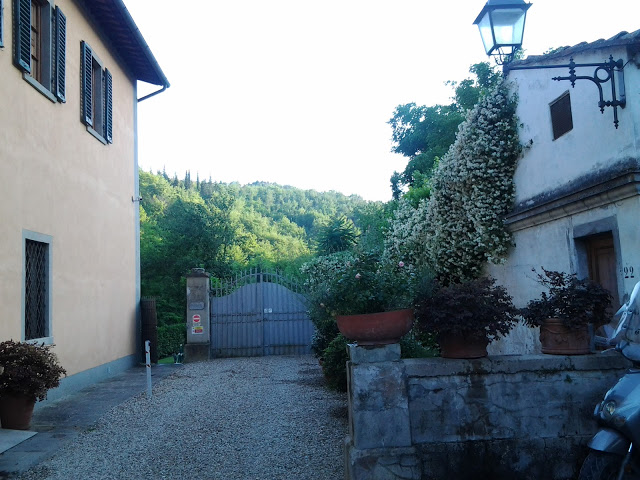
You can just see the archway at the end of the road. This was the entrance to our room,
along a passage and up the stairs, turning left at the top.
Going straight ahead through the gate to the car park,
and access to the grounds behind the buildings.
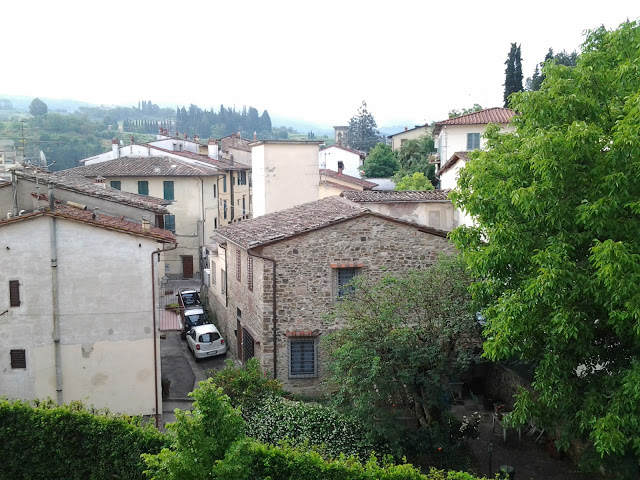
This was the view from the lounge/living room. The days were hot, and on several evenings it rained, breaking the heat and making the evenings sitting by the window cool and refreshing.
And the last view is looking towards the town piazza and the church
Located at the bottom of Lake Taupo, in New Zealand, staying here would make more sense if you were here for the fishing, and, well, the skiing or the hiking, or just a relaxing half hour in the thermal pools.
I saw a sign somewhere that said that Taurangi was New Zealand’s premier fishing spot. I might have got the wrong, but it seems to me they’re right. On the other side of town, heading towards Taupo, there’s a lodge that puts up fly fishermen, and where you can see a number of them in an adjacent river trying their luck.
It’s what I would be doing if I had the patience.
But Taurangi is a rather central place to stay, located at the southernmost point of the lake. From there it is not far from the snowfields of Whakapapa and Turoa. Equally, at different times of the year, those ski fields become walking or hiking tracks, and the opportunity to look into a dormant volcano, Ruapehu.
It is basically surrounded by hills and mountains on three sides and a lake on the other. Most mornings, and certainly everyone is different, there is a remarkable sunrise, particularly from where we were staying on the lake, where it could be cloudy, clear, or just cold and refreshing, with a kaleidoscope of colors from the rising sun.
I don’t think I’ve been there to see two days the same.
However, Taurangi, on most days we’ve visited, is even more desolate than Taupo, both on the main street and the central mall. The same couldn’t be said for the precinct where New World, the local supermarket, a Z petrol station can be found. There it is somewhat more lively. The fact there’s a few more shops and a restaurant might help traffic flow.
There is also a mini golf course, and in the middle of winter, it is a bleak place to be, especially in the threatening rain, and the wind. It had also seen better days and in parts, in need of a spruce up, but it’s winter, and there are no crowds, so I guess it will wait till the Spring.
In the mall, there’s the expected bank, newsagent, gift shop and post office combined, and a number of other gift shops/galleries. But the best place is the café which I’ve never seen empty and has an extended range of pies pastries and cakes, along with the fast food staples of chips and chicken. Oh, and you can also get a decent cup of coffee there.
There are two other coffee shops but we found this one the first time we came, we were given a warm welcome and assistance, and have never thought to go anywhere else, despite two known change of owners.
But despite all these reasons why someone might want to stay there, we don’t.
We have a timeshare, and there’s a timeshare in Pukaki called Oreti Village. That’s where we stay.
This is something you don’t see every day of the week, or once in a lifetime, perhaps.
We arrived at the Hilton Auckland hotel somewhere between one and two in the morning after arriving from Australia by plane around midnight.
Sometimes there is a benefit in arriving late, and, of course, being a very high tier HHonors guest, where the room you book is upgraded.
This stay we got one hell of a surprise.
We got to spend the night in the Presidential Suite.
The lounge and extra bathroom.
Looking towards the private bathroom.
A bathroom fit for a King and a Queen
And the royal bed
There was a note to say that we should keep the blinds closed for privacy and that a ship would be arriving in the port, but I did not expect it to be literally fifty feet from our balcony.
Queenstown Gardens are not far from the center of Queenstown. They are just down the hill from where we usually stay at Queenstown Mews.
More often than not we approach the Gardens from the lakeside during our morning walk from the apartment to the coffee shop. You can walk alongside the lake, or walk through the Gardens, which, whether in summer or winter, is a very picturesque walk.
There’s a bowling club, and I’m afraid I will never be that sort of person to take it up (not enough patience) and an Ice Arena, where, in winter I have heard players practicing ice hockey.
I’m sure, at times, ice skating can also be done.
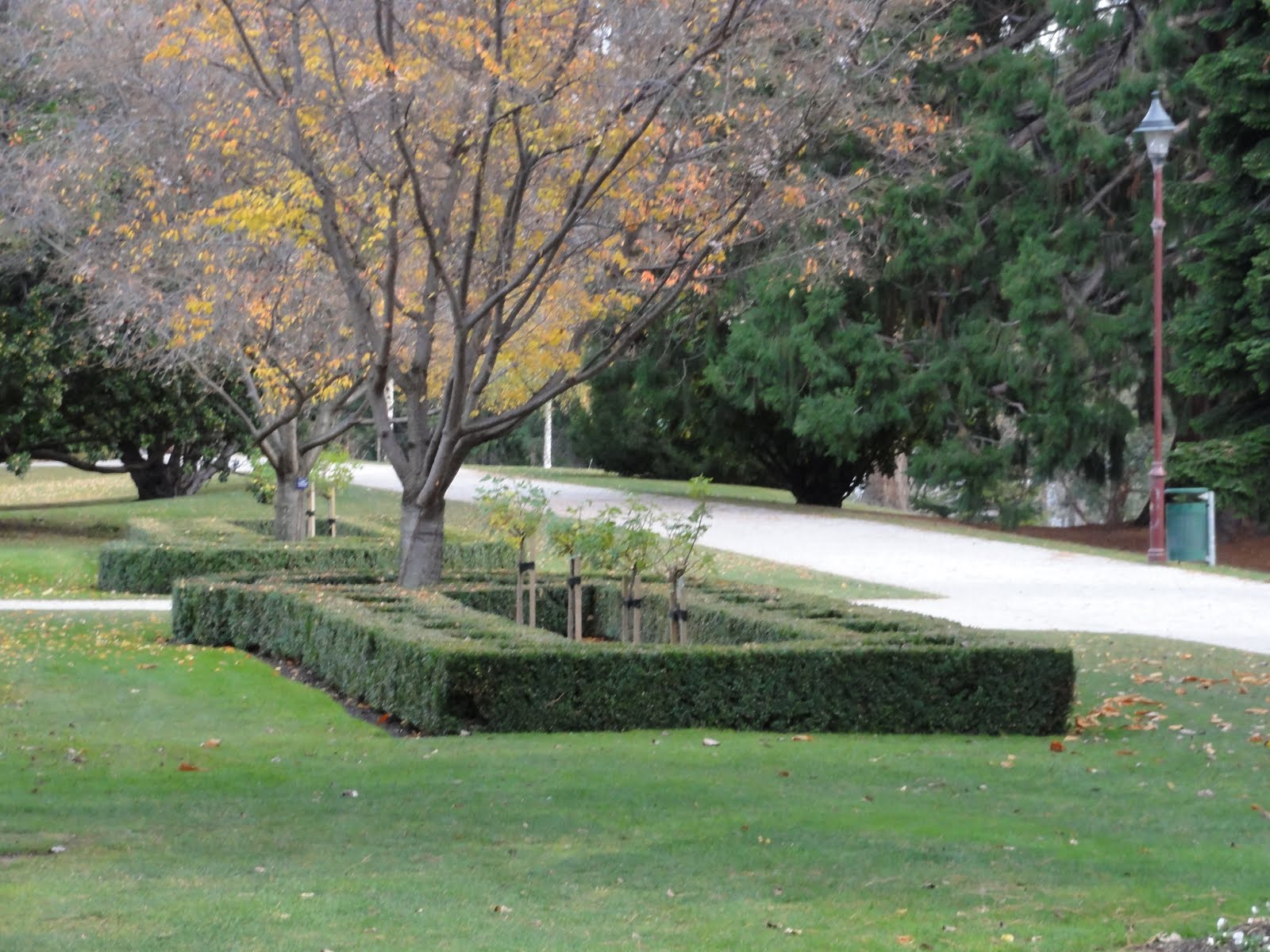
There is a stone bridge to walk across, and in Autumn/Winter the trees can add a splash of color.
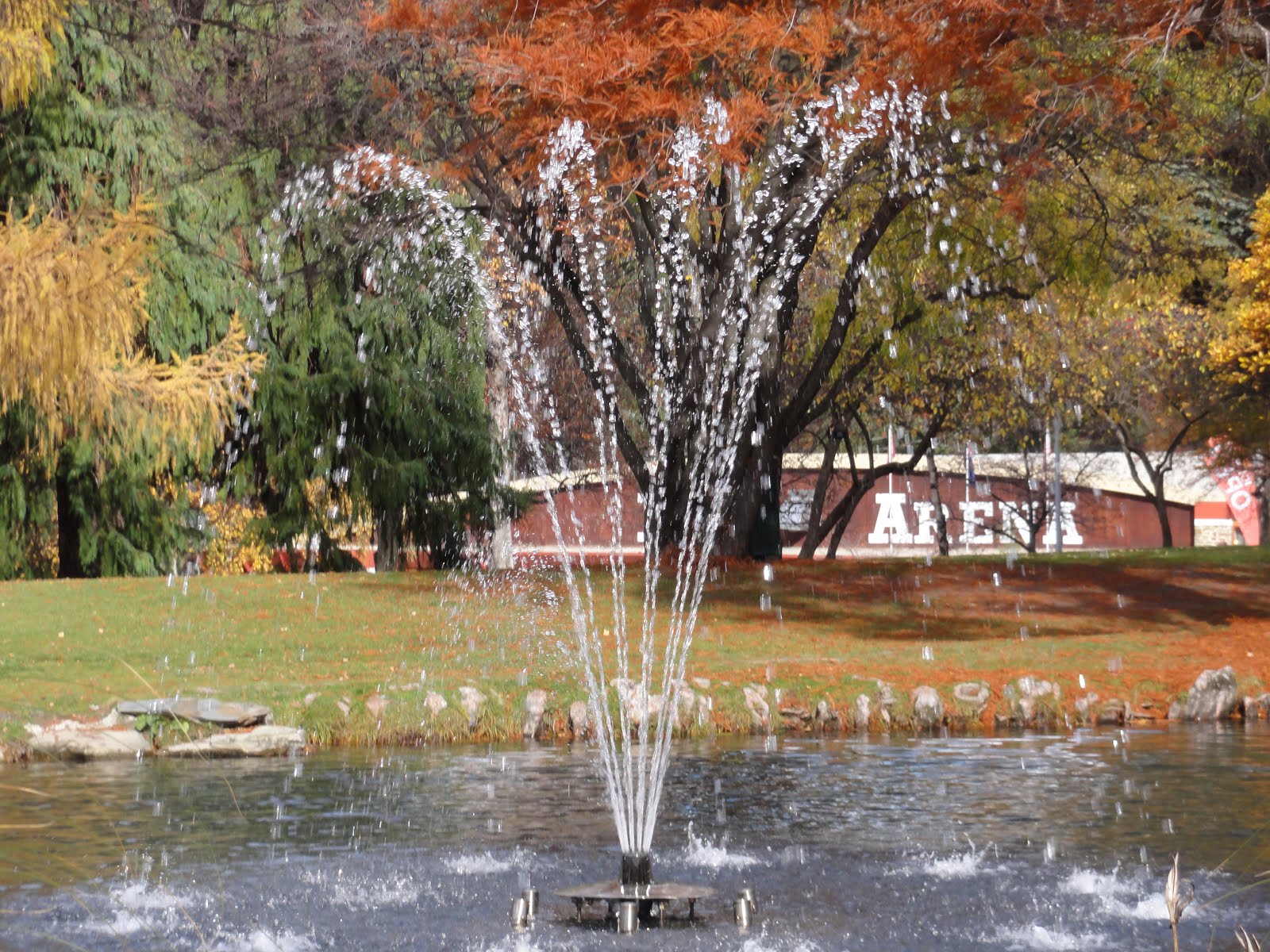
There is a large water feature with fountain, and plenty of seating around the edge of the lake, to sit and absorb the tranquility, or to have a picnic.
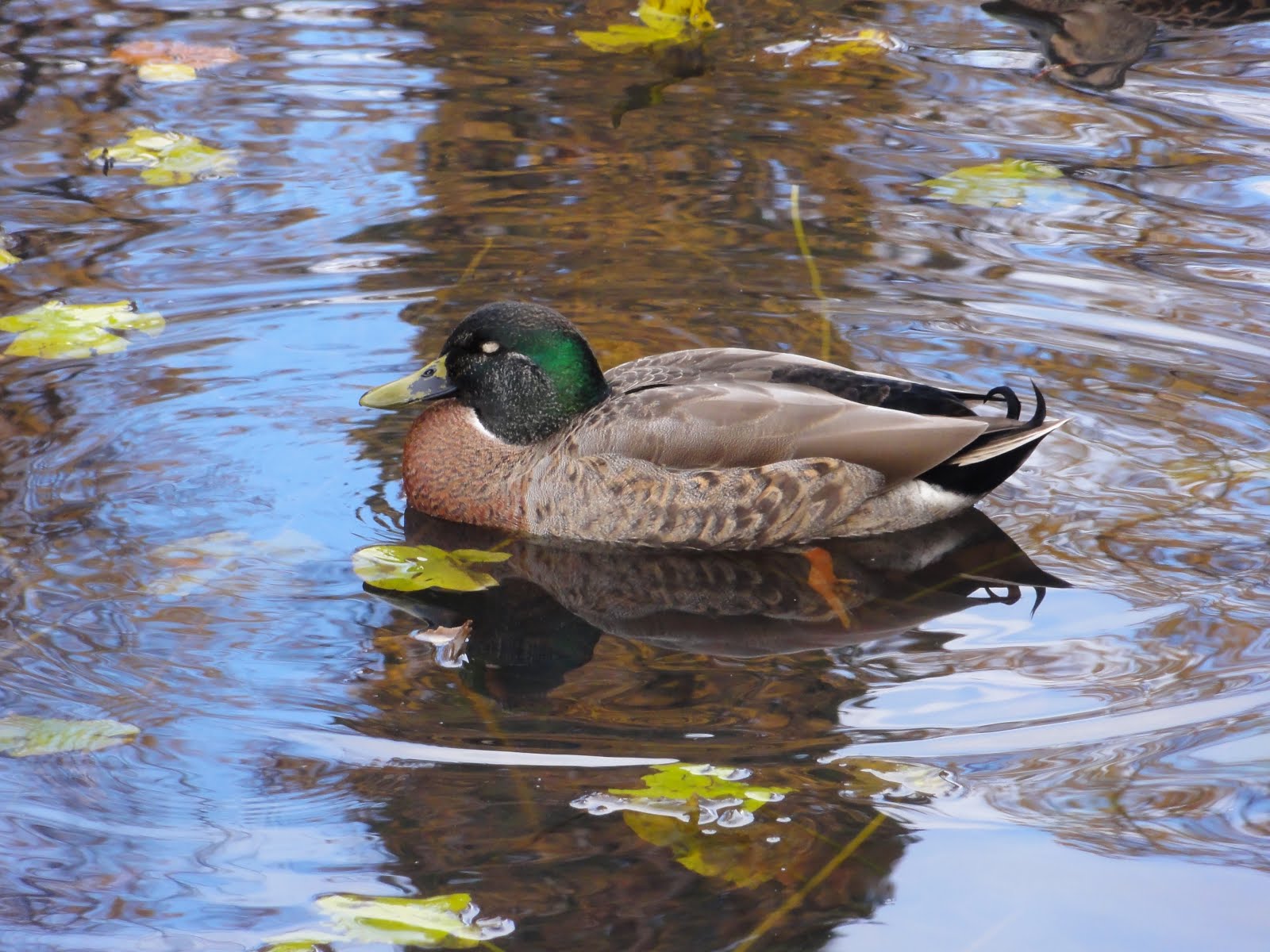
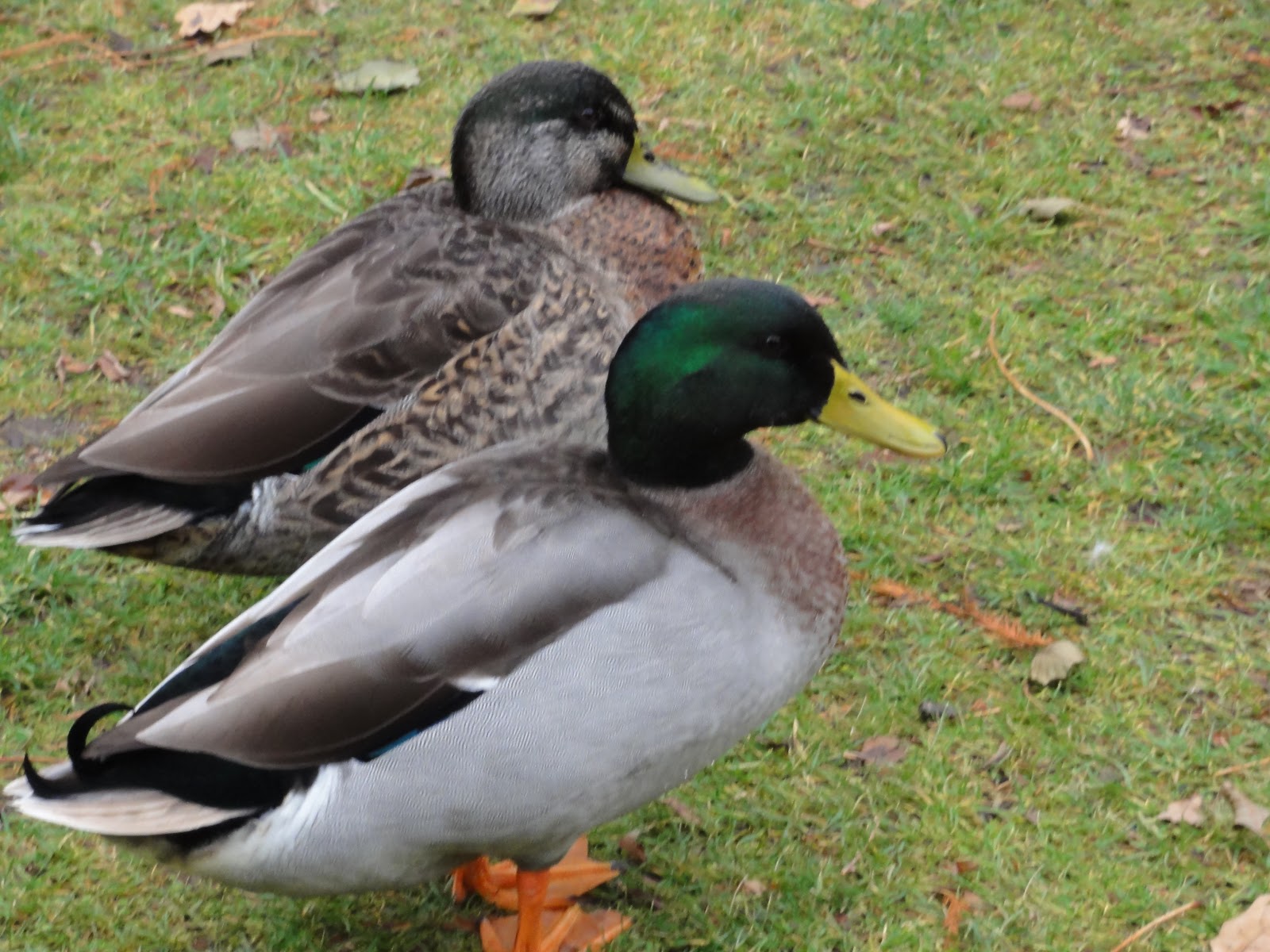
There are ducks in the pond
and out of the pond
and plenty of grassed areas with flower beds which are more colorful in summer. I have also seen the lawns covered in snow, and the fir trees that line the lake side of the gardens hang heavy with icicles.
It was a relic from the past, put back together by a dedicated group of volunteers who had not wanted the last vestiges of the past to disappear.
Train enthusiasts, the called themselves.
They’d put together a steam locomotive, five carriages, a restaurant car, and the conductor’s car. The original train might have been twice to three times as long, but these days, the tourist market rarely filled the train.
I was one of a group who made it their mission to visit and rate every vintage train, not only in this country, but all over the world. It was a sad state of affairs when I first began, with locomotives and carriages dropping out of the system due to lack of funds, but more disheartening, the lack of government assistance in keeping it’s heritage alive.
It seemed money was short, and there were better things to spend it on, like two brand new 737-800 jets just to ferry the prime minister and government officials around. Just think of what that quarter of a billion dollars could have bought in heritage.
But it is what it is.
What I had before me was one of the most recent restorations to check out, and on first glance, it was remarkable just how lifelike and true to age it was.
Of course, I was of an age that could remember the old railway carriages, what were called red rattlers because of the ill fitting windows that went up and down, allow fresh air, or in days gone by, smoke from the locomotive hauling the train. I had not travelled during the last glorious years of steam, but the carriages had lived on briefly before the advent of the sterile aluminum tin cans with uncomfortably hard seats.
These carriages were built for comfort, and my first experience had been a five hour trip from Melbourne to Wangaratta, in Victoria, on my way to Mt Buffalo Chalet, a guesthouse owned by the Railways.
That too had been a remarkable old chalet style guest house with a room and all the dining included. I always left after the week having put on weight. Breakfast, morning tea, lunch, afternoon tea, and dinner, every day, and high tea on Sunday.
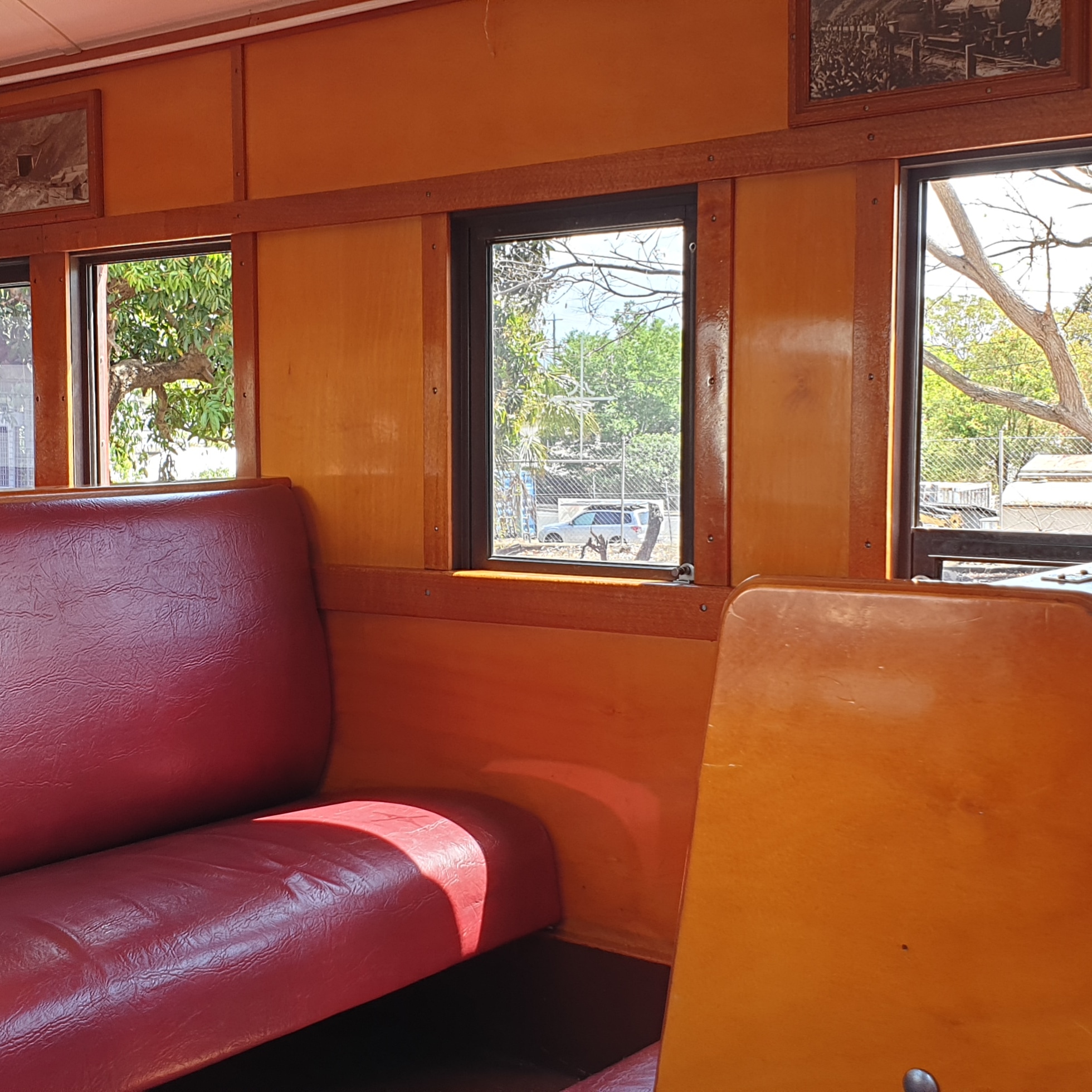
But this carriage, the polished wood that had shellac rather than varnish, highlighting the timber’s grain, the leather seats with generous padding, the curved ceilings with hanging lights, windows the could be opened and closed, allowing fresh air to circulate.
There was also a carriage with the passageway, and five or six separate compartments, each sitting six passengers. I remembered these well, having quite often ridden in one to work for some years when the country trains still ran.
It was always remarkable how a sight or a scent could trigger such memories.
For this carriage on this train, it used to ply the Gympie to Brooloo branch line from about 1915 onwards.
That was the history. It only went as far as Amamoor these days, it was still long enough to capture the sensation of riding the rails back in what is always referred to as the good old days, even if they were not.
Oreti village, Pukawa Bay, North Island, New Zealand
On the southern tip of Lake Taupo
Our first morning there, a Saturday. Winter. Cold. And a beautiful sunrise.
This was taken from the balcony, overlooking the lake.
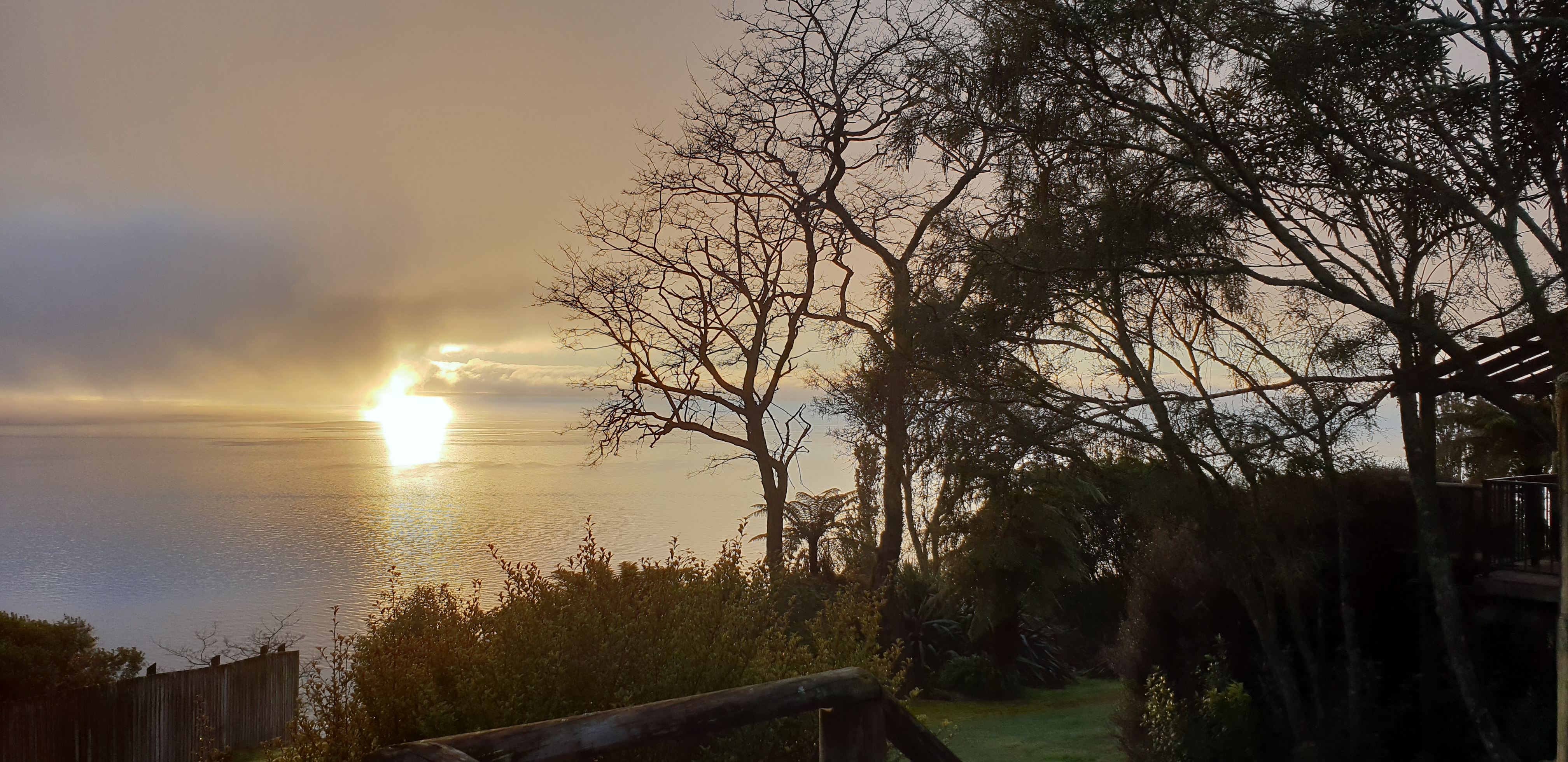
The sun is just creeping up over the horizon
It gradually gets lighter, and then the sun breaks free of the low cloud
It lights up the balcony
And the trees just beyond, a cascade of colorful ferns.
It looks like its going to be a fine day, our first for this trip, and we will be heading to the mountains to see snow, for the first time for two of our granddaughters.
It was a relic from the past, put back together by a dedicated group of volunteers who had not wanted the last vestiges of the past to disappear.
Train enthusiasts, the called themselves.
They’d put together a steam locomotive, five carriages, a restaurant car, and the conductor’s car. The original train might have been twice to three times as long, but these days, the tourist market rarely filled the train.
I was one of a group who made it their mission to visit and rate every vintage train, not only in this country, but all over the world. It was a sad state of affairs when I first began, with locomotives and carriages dropping out of the system due to lack of funds, but more disheartening, the lack of government assistance in keeping it’s heritage alive.
It seemed money was short, and there were better things to spend it on, like two brand new 737-800 jets just to ferry the prime minister and government officials around. Just think of what that quarter of a billion dollars could have bought in heritage.
But it is what it is.
What I had before me was one of the most recent restorations to check out, and on first glance, it was remarkable just how lifelike and true to age it was.
Of course, I was of an age that could remember the old railway carriages, what were called red rattlers because of the ill fitting windows that went up and down, allow fresh air, or in days gone by, smoke from the locomotive hauling the train. I had not travelled during the last glorious years of steam, but the carriages had lived on briefly before the advent of the sterile aluminum tin cans with uncomfortably hard seats.
These carriages were built for comfort, and my first experience had been a five hour trip from Melbourne to Wangaratta, in Victoria, on my way to Mt Buffalo Chalet, a guesthouse owned by the Railways.
That too had been a remarkable old chalet style guest house with a room and all the dining included. I always left after the week having put on weight. Breakfast, morning tea, lunch, afternoon tea, and dinner, every day, and high tea on Sunday.
But this carriage, the polished wood that had shellac rather than varnish, highlighting the timber’s grain, the leather seats with generous padding, the curved ceilings with hanging lights, windows the could be opened and closed, allowing fresh air to circulate.
There was also a carriage with the passageway, and five or six separate compartments, each sitting six passengers. I remembered these well, having quite often ridden in one to work for some years when the country trains still ran.
It was always remarkable how a sight or a scent could trigger such memories.
For this carriage on this train, it used to ply the Gympie to Brooloo branch line from about 1915 onwards.
That was the history. It only went as far as Amamoor these days, it was still long enough to capture the sensation of riding the rails back in what is always referred to as the good old days, even if they were not.
Queenstown Gardens are not far from the center of Queenstown. They are just down the hill from where we usually stay at Queenstown Mews.
More often than not we approach the Gardens from the lakeside during our morning walk from the apartment to the coffee shop. You can walk alongside the lake, or walk through the Gardens, which, whether in summer or winter, is a very picturesque walk.
There’s a bowling club, and I’m afraid I will never be that sort of person to take it up (not enough patience) and an Ice Arena, where, in winter I have heard players practicing ice hockey.
I’m sure, at times, ice skating can also be done.
There is a stone bridge to walk across, and in Autumn/Winter the trees can add a splash of color.
There is a large water feature with fountain, and plenty of seating around the edge of the lake, to sit and absorb the tranquility, or to have a picnic.
There are ducks in the pond
and out of the pond
and plenty of grassed areas with flower beds which are more colorful in summer. I have also seen the lawns covered in snow, and the fir trees that line the lake side of the gardens hang heavy with icicles.
Oreti village, Pukawa Bay, North Island, New Zealand
On the southern tip of Lake Taupo
Our first morning there, a Saturday. Winter. Cold. And a beautiful sunrise.
This was taken from the balcony, overlooking the lake.
The sun is just creeping up over the horizon
It gradually gets lighter, and then the sun breaks free of the low cloud
It lights up the balcony
And the trees just beyond, a cascade of colorful ferns.
It looks like its going to be a fine day, our first for this trip, and we will be heading to the mountains to see snow, for the first time for two of our granddaughters.