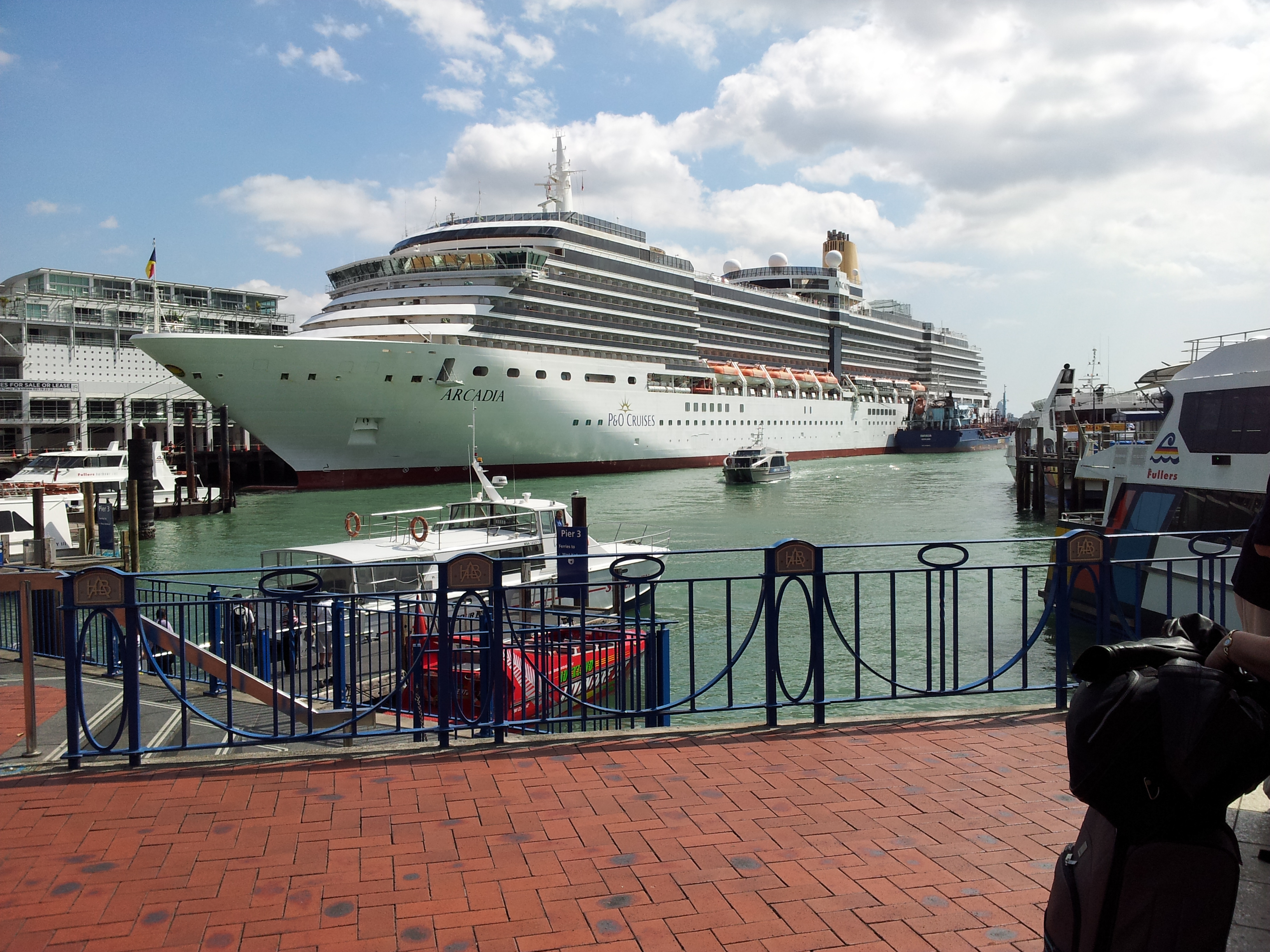
We were staying at the Hilton and advised there would be a large cruise liner berthing next to the hotel. There was the Arcadia.
This is the view from the other side of the hotel. Where our room was, we could almost walk onto the aft end of the ship.
We were also told this was a rather extraordinary day because there were two cruise ships in the port. particularly because it was near the end of the cruising season.
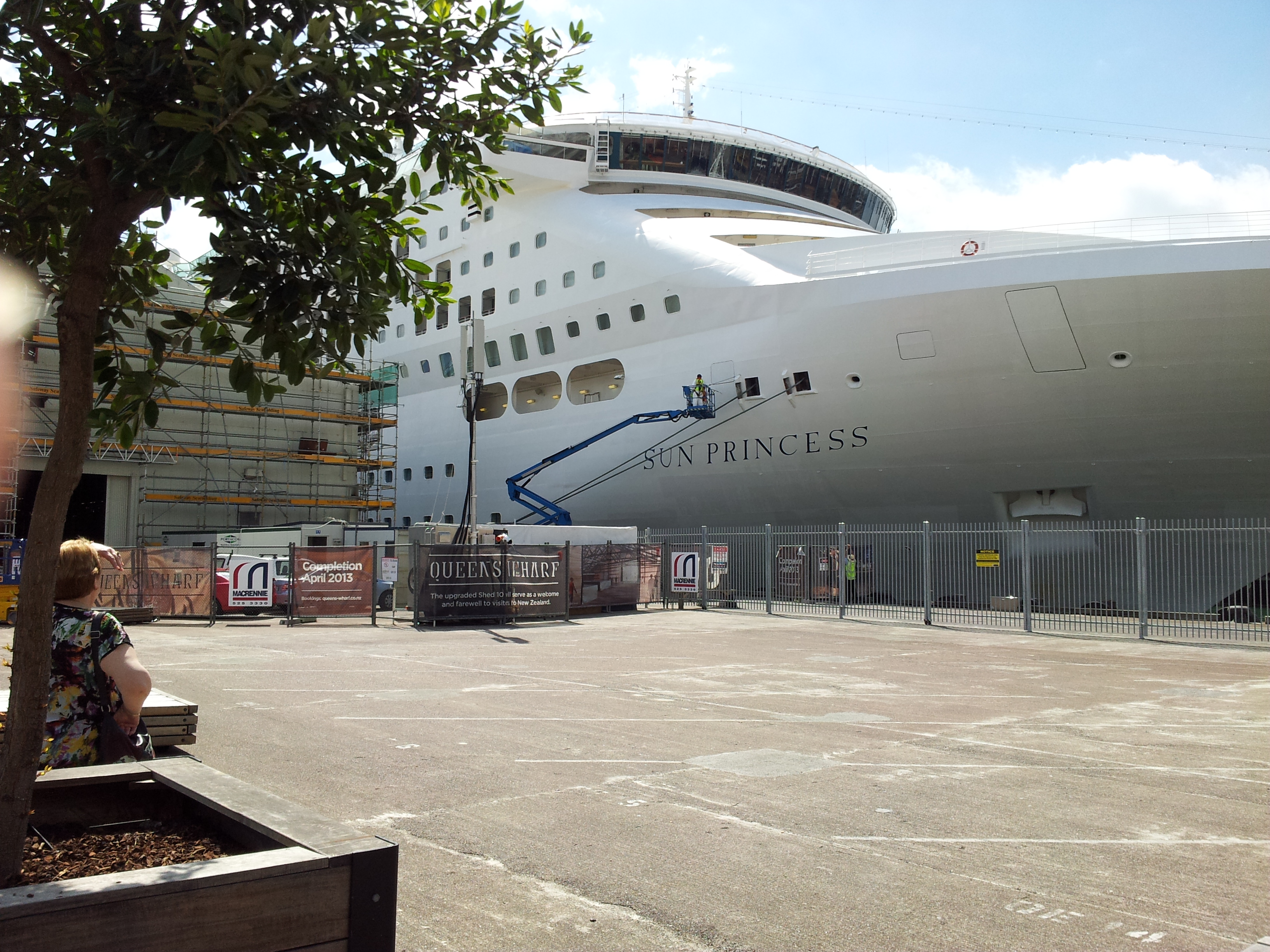
The other ship was two berths along, the Sun Princess.
Not as big as the Arcadia, up close it was still very impressive.
Although the main reason for its existence is to follow Friday, in some cases, it is the first day of the weekend.
Once upon a time, Saturday used to be a working day, you know, those days when we worked a 48-hour week. Then it became a 44-hour week, and we only worked in the morning.
As time progressed, we started working 40 hour weeks and had both Saturday and Sunday off. Sunday, of course, was always a non-starter. The church made sure you were able to go to church on Sunday.
As time progressed, weekends started to begin on a Friday, with the day in question being granted by employers as a Rostered Day Off, provided you made up the time during the preceding two-week period.
Now it seems the standing joke is we should work weekends and have the week off. Odd, it hasn’t quite caught on yet.
But, as usual, I digress…
After a week that got out of control, Saturday was supposed to pull it back into some sort of shape. In a sense, it happened. I looked at that list of things I had to do, picked one and got on with it.
PI Walthenson is now about to get a second case, as intimated at the end of his first, involving not only the search for his missing father, but also the search for those who kidnapped him.
That done, I moved onto the helicopter story, otherwise titled ‘What happens after writing an action-packed start’, and I have been researching and making notes for the third section of this story, starting at episode 31, and it looks like we’re going back to Africa, and the remoter part of the Democratic Republic of Congo to rescue the two agents he failed to the first time.
And it is NaNoWriMo time, and I have to keep the writing project going, a story that has now been tentatively renamed to Betrayal. Very spy-ish, isn’t it?
With that, there is the upkeep of the blog. I never thought maintaining material for a blog would be so hard.
But…
Now I can say last week wasn’t a total disaster.
And, tomorrow the Maple Leafs are playing. Can’t wait.
Although the main reason for its existence is to follow Friday, in some cases, it is the first day of the weekend.
Once upon a time, Saturday used to be a working day, you know, those days when we worked a 48-hour week. Then it became a 44-hour week, and we only worked in the morning.
As time progressed, we started working 40 hour weeks and had both Saturday and Sunday off. Sunday, of course, was always a non-starter. The church made sure you were able to go to church on Sunday.
As time progressed, weekends started to begin on a Friday, with the day in question being granted by employers as a Rostered Day Off, provided you made up the time during the preceding two-week period.
Now it seems the standing joke is we should work weekends and have the week off. Odd, it hasn’t quite caught on yet.
But, as usual, I digress…
After a week that got out of control, Saturday was supposed to pull it back into some sort of shape. In a sense, it happened. I looked at that list of things I had to do, picked one and got on with it.
PI Walthenson is now about to get a second case, as intimated at the end of his first, involving not only the search for his missing father, but also the search for those who kidnapped him.
That done, I moved onto the helicopter story, otherwise titled ‘What happens after writing an action-packed start’, and I have been researching and making notes for the third section of this story, starting at episode 31, and it looks like we’re going back to Africa, and the remoter part of the Democratic Republic of Congo to rescue the two agents he failed to the first time.
And it is NaNoWriMo time, and I have to keep the writing project going, a story that has now been tentatively renamed to Betrayal. Very spy-ish, isn’t it?
With that, there is the upkeep of the blog. I never thought maintaining material for a blog would be so hard.
But…
Now I can say last week wasn’t a total disaster.
And, tomorrow the Maple Leafs are playing. Can’t wait.
I have a passion for visiting transport museums, to see old trains, planes, buses, cars, even ships if it’s possible.
This has led to taking a number of voyages on the TSS Earnslaw in Queenstown, New Zealand.
Many, many, many years ago on Puffing Billy, a steam train in the Dandenongs, Victoria, Australia.
The steam train in Kingston, New Zealand, before it was closed down, but hopefully it will reopen sometime in the future.
The London Transport Museum in London England, which had a lot of buses.
The Workshops Railway Museum in Ipswich, Queensland, where once the many steam engines were built and maintained, and now had only a handful of engines remaining.
However, in the quest for finding and experiencing old transportation methods, we came across the Mary Valley Rattler, which runs out of Gympie, Queensland, Australia.
The ride begins in Gympie at the old Gympie Railway station, and as can be seen below, is one of the relics of the past, and, nothing like the new more modern stations. Thankfully.
If you’re going to have a vintage train, then you have to have a vintage station.
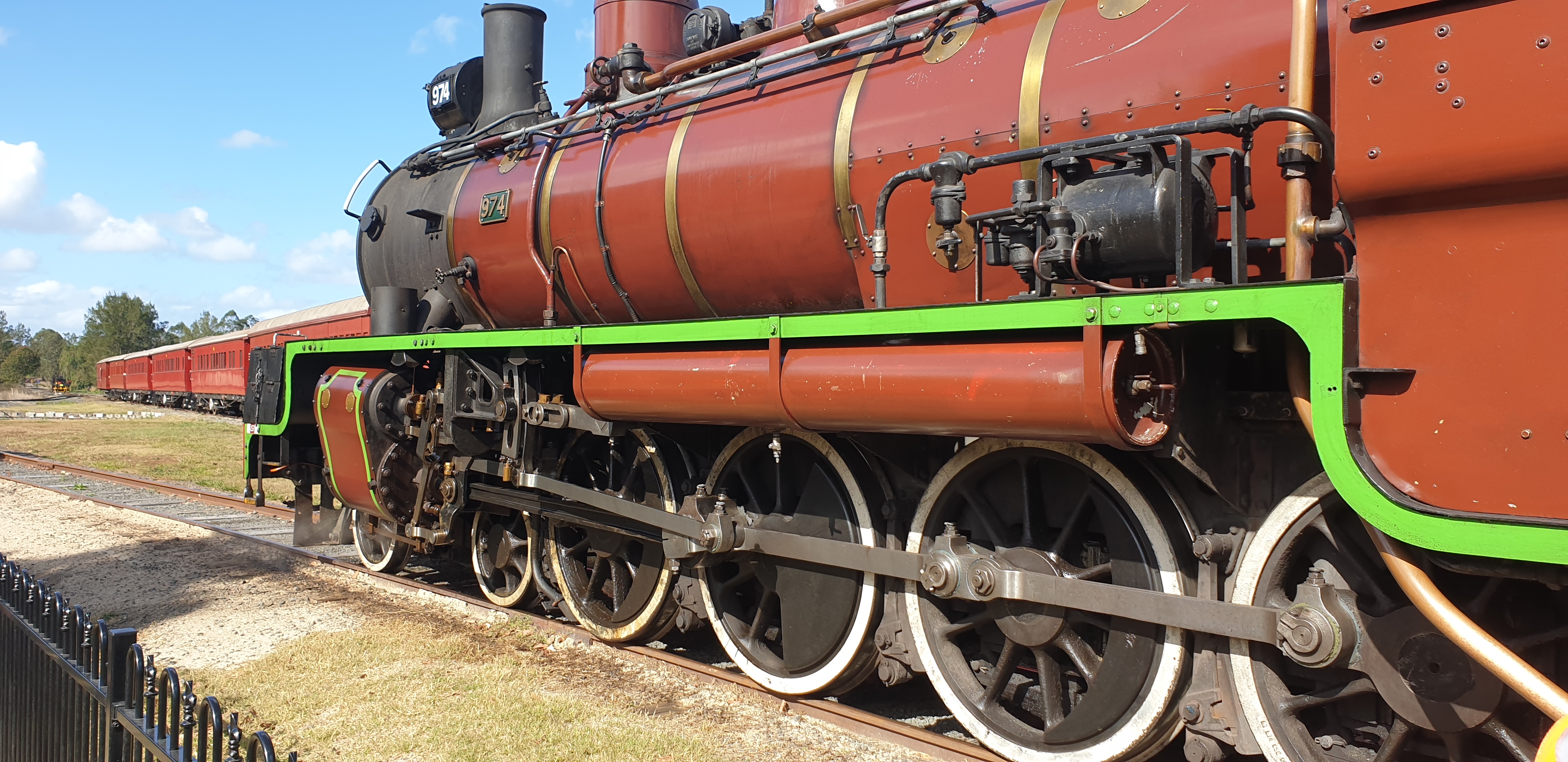
The Class of engine, seen below, is the C17, a superheated upgrade to the C16 it was based on, and first run in 1903. This particular engine was built in 1951, although the first of its type was seen in 1920 and the last of 227 made in 1953. It was the most popular of the steam engines used by Queensland Railways.
The C designation meant it had four driving axels and 17 was the diameter of the cylinder, 17 inches. It is also known as a 4-8-0 steam locomotive and nicknamed one of the “Brown Bombers” because of its livery, brown with green and red trimming.
Also, this engine was built in Maryborough, not far from Gympie by Walkers Limited, one of 138.
This photo was taken as the train returned from Amamoor, a trip that takes up to an hour.
The locomotive is detached from the carriages, then driven to the huge turntable to turn around for the return journey to Amamoor.
This is the locomotive heading down to the water station, and then taking on water. After that, it will switch lines, and reverse back to reconnect the carriages for the trip to Amamoor.
The carriages are completely restored and are extremely comfortable. It brings back, for me, many memories of riding in older trains in Melbourne when I was a child.
The trains, then, were called Red Rattlers.
This is the locomotive climbing one of the hilly parts of the line before crossing over the Mary River on a trestle bridge.
This is the engine at Amamoor near the picnic area where young children and excited parents and grandparents can get on the locomotive itself and look inside where the driver sits.
And, no, I didn’t volunteer to shovel coal.
This particular locomotive spent most of its working life between Townsville and Mount Isa and was based in Cloncurry, Charters Towers, and Townsville, before being sent, at the end of its useful days in the late 1960s, to the Ipswich Railway Workshops.
We have stayed in two different types of accommodation in Coffs Harbour, New South Wales, Australia, as a timeshare owner who can trade their week for a week anywhere in the world.
Both are resorts, but different sorts of resorts. The first was a typical RCI resort, where everything is laid back and relaxing, with all the amenities one can expect from a resort.
The other, this one, the Wyndham in Coffs Harbour, is very different, and you notice it when you walk in the front door. You are virtually assaulted by hard-nosed timeshare sales staff who really don’t take no for an answer, and then when you finally escape, ring you every day to make an appointment.
I left the phone off the hook.
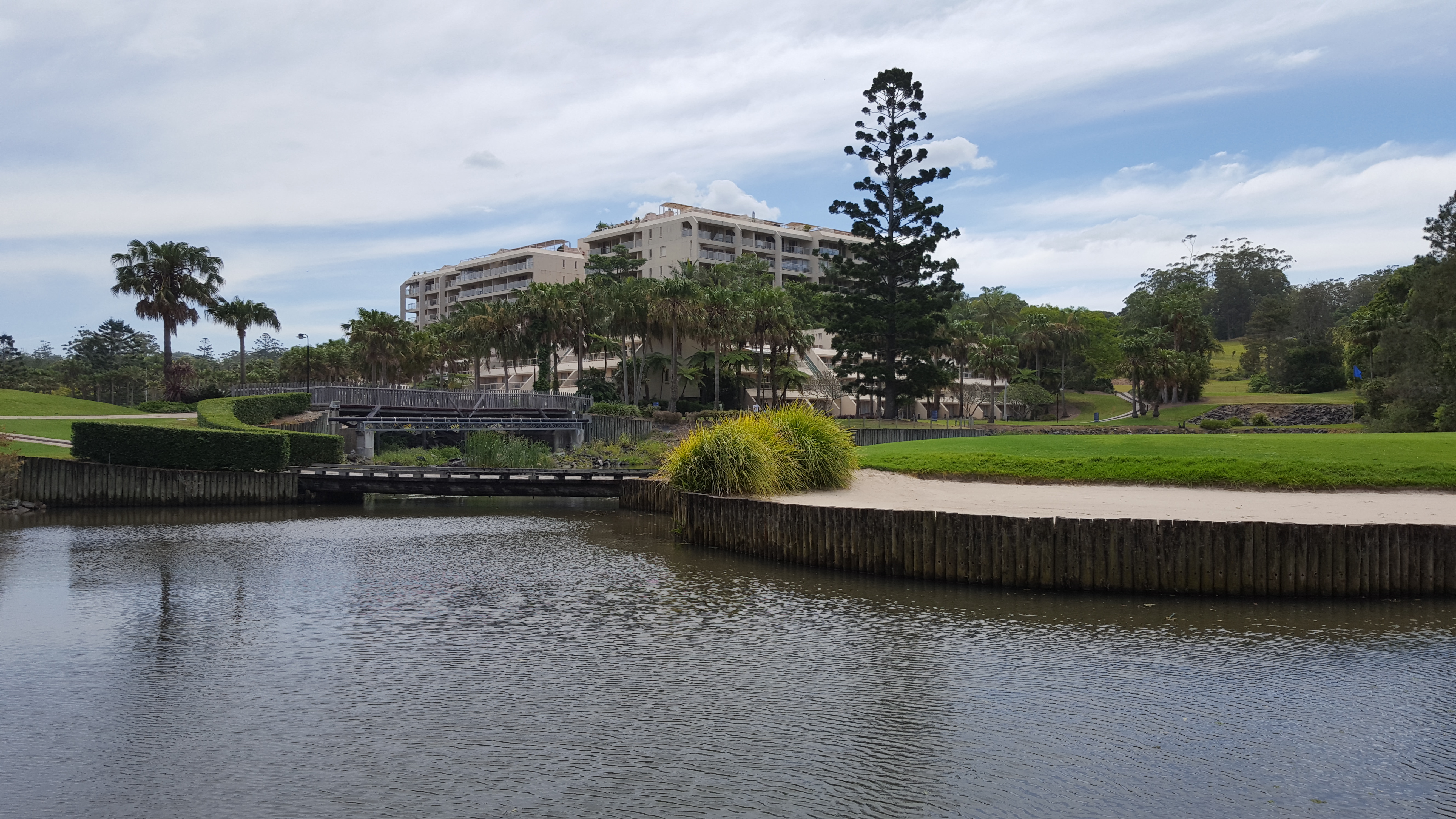
Aside from that, the place is excellent, the accommodation very good, and the situation one of the best with what could be called a private beach. There are also a number of bushwalks that cater to old people like me.
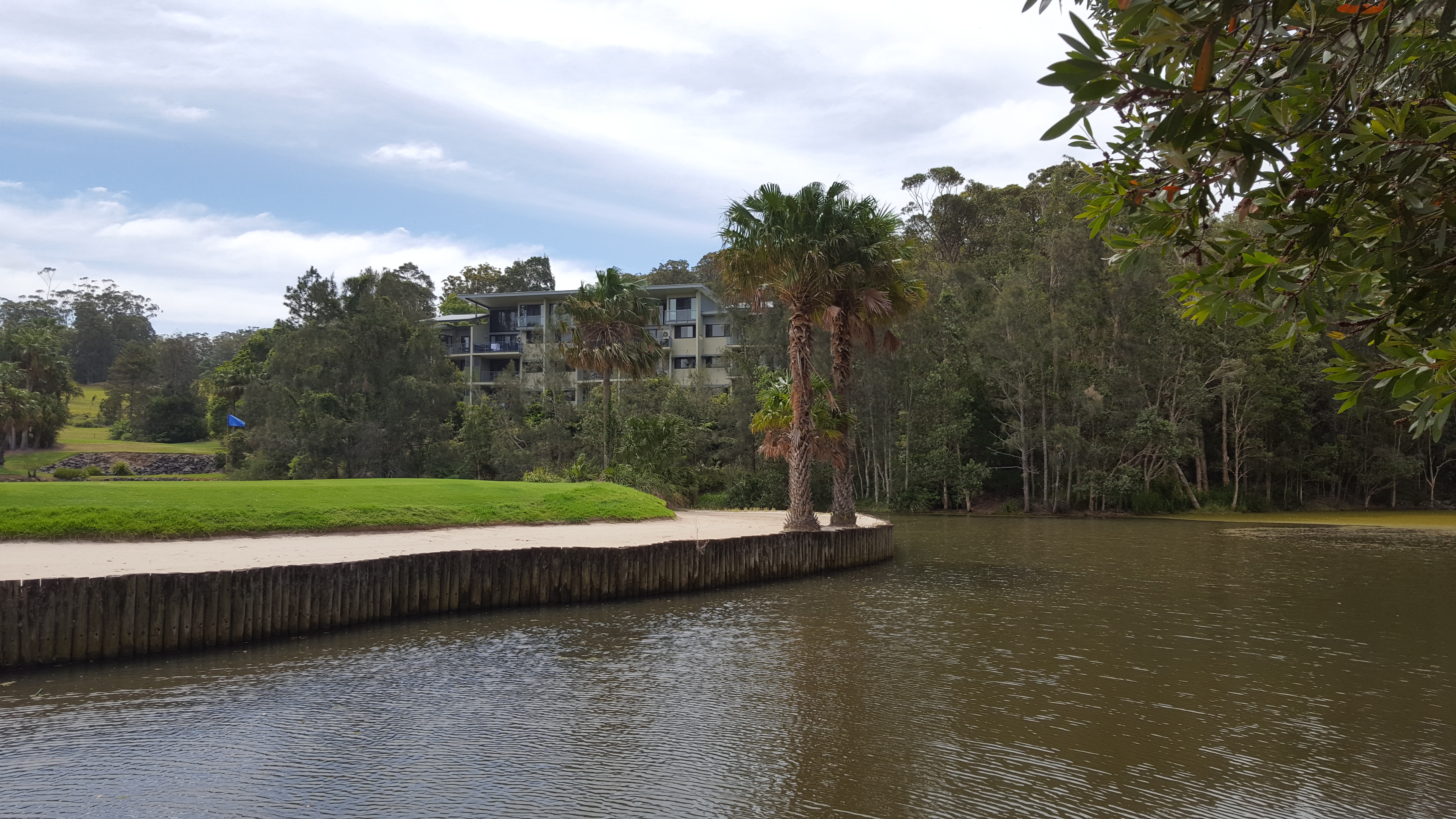
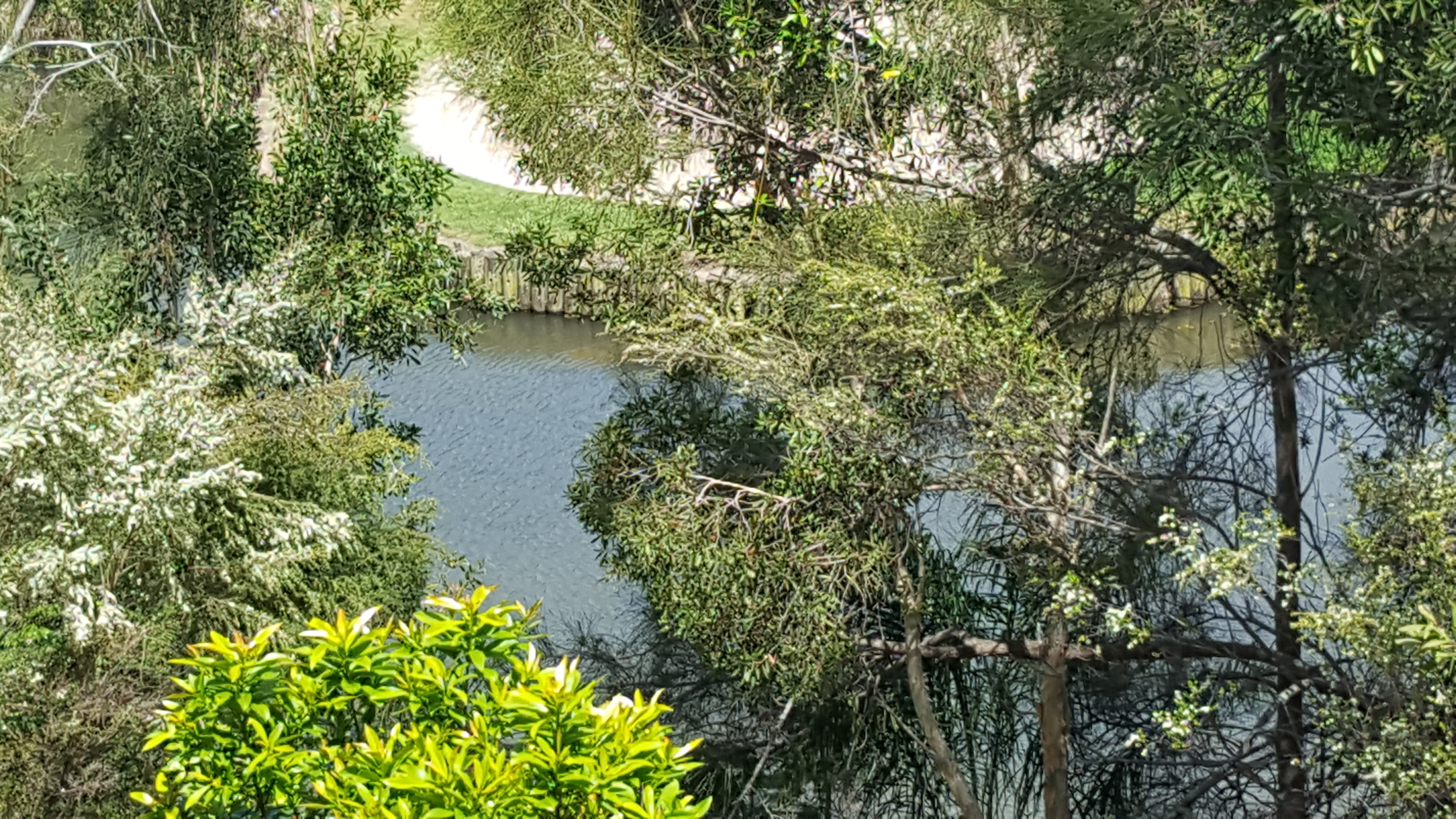
As you can see, lakes and greenery, and even a putting green.
And in places, they try very hard to hide the ugly multi-story buildings in amongst the trees
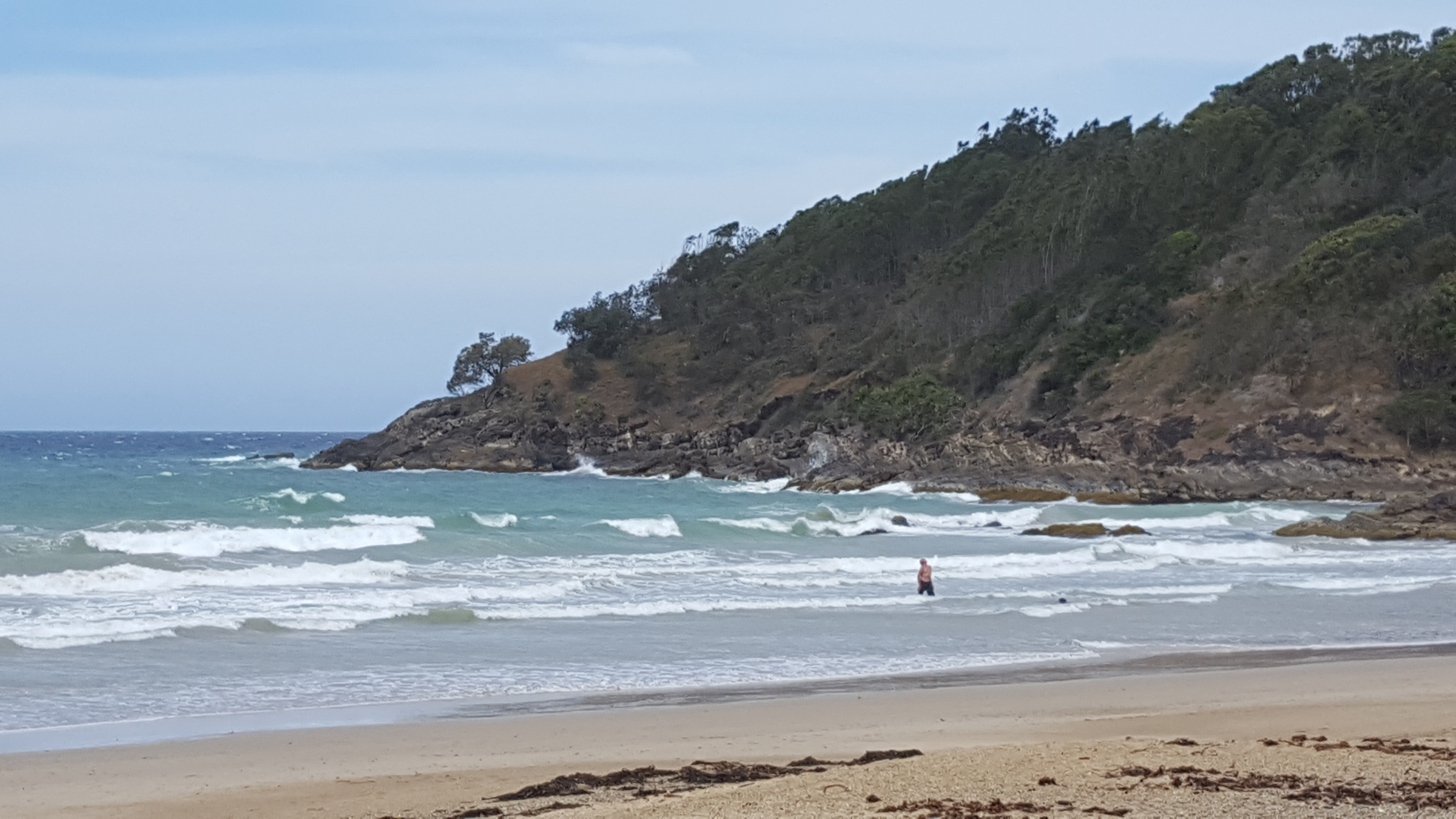
It is only a short walk to the ‘private beach’ and it is sufficiently long enough for a morning walk before breakfast. You could even try to catch some fish for breakfast, though I’m not sure if anyone actually caught anything
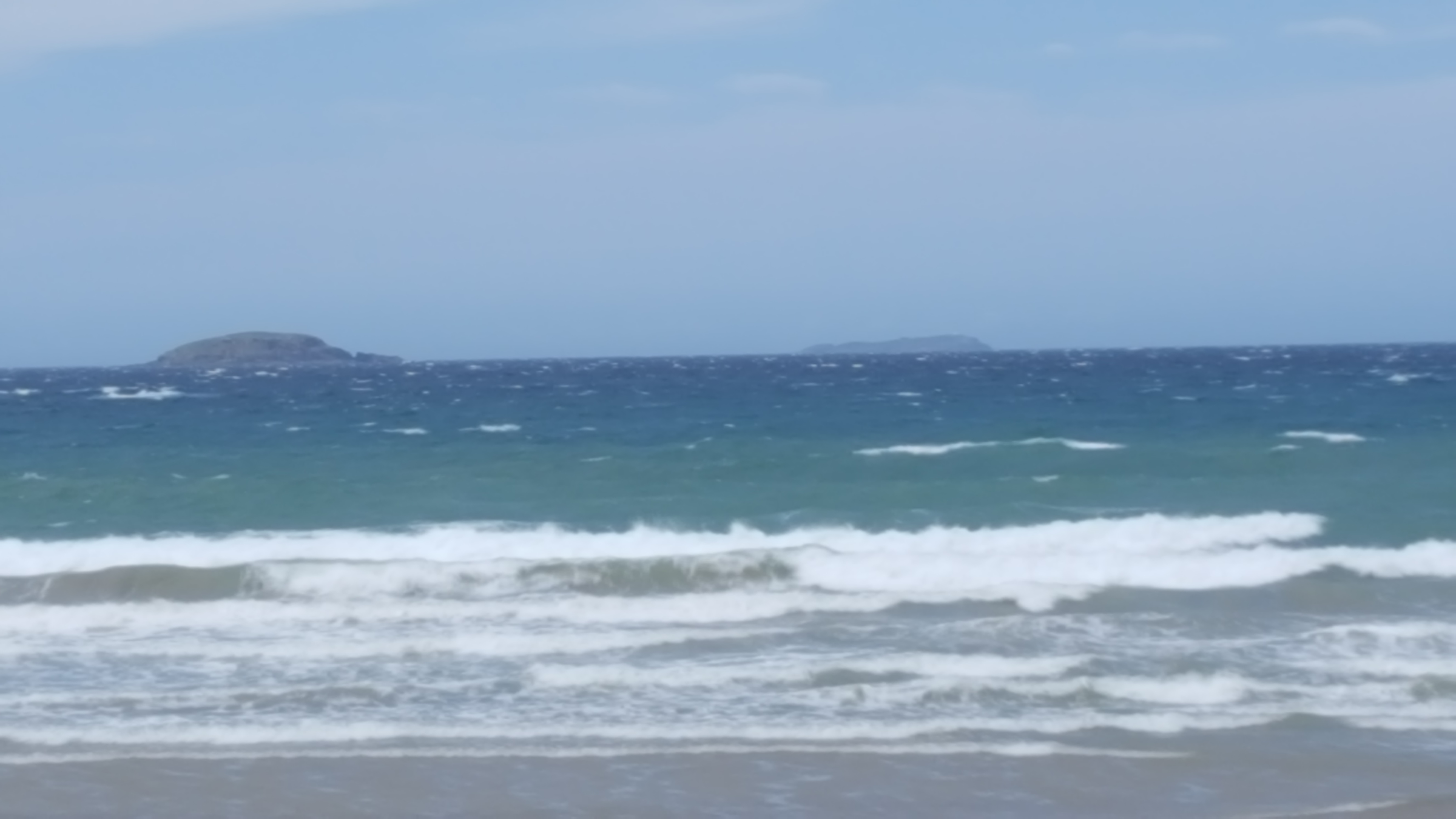
Or you can just stare out to sea
And, back in the room, this is the view we had from our verandah
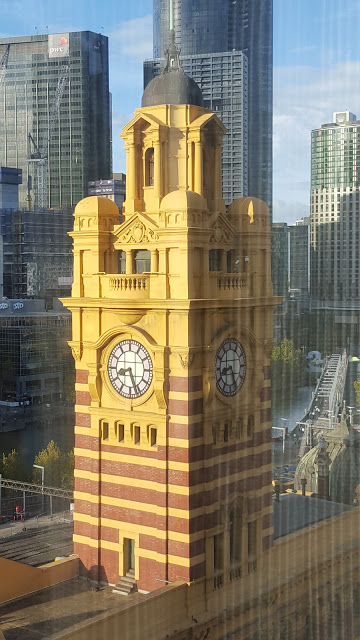
This is the famous clock tower of the Flinders Street Station (the main train station for suburban trains) in Melbourne.
We were staying in a hotel (The Doubletree) directly opposite the station and our room overlooked the station and the clock tower. I took photos of it during the day:
and this one, at night. It came out better than I thought it would.
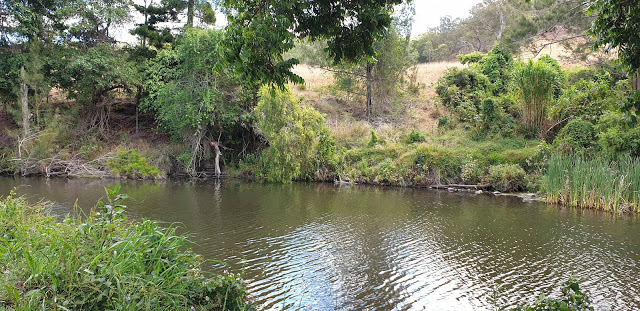
O’Reilly’s Canungra Valley Vineyards located on Lamington National Park Road, Canungra, Queensland, is a 15-acre vineyard with the 163-year-old historic homestead ‘Killowen’ set up with dining rooms and long verandahs, and extensive grounds that are next to the Canungra creek where it is possible to find Platypus and turtles while partaking in a picnic.
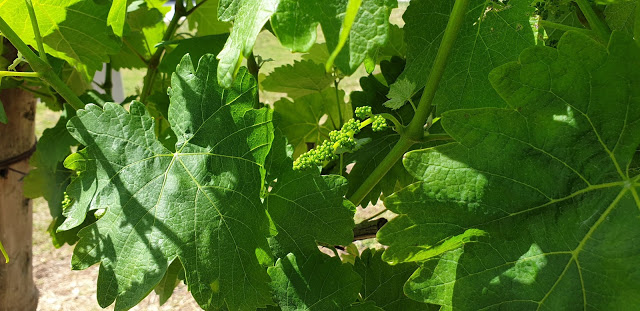
There are about 6,000 vines of the (white) Semillon, Verdelho and (red) Chambourcin, Shiraz and Petit Vedot varieties.
We visited there in December when the vines were just starting to produce fruit.
That fruit is usually harvested in February and then turned into wine. The setting for picnics is, on a warm Summer’s day is idyllic, where you can wade in the creek, or go looking for a platypus. We did not see one there the day we visited but did spend some time sitting beside the creek.
O’Reilly’s Canungra Valley Vineyards located on Lamington National Park Road, Canungra, Queensland, is a 15-acre vineyard with the 163-year-old historic homestead ‘Killowen’ set up with dining rooms and long verandahs, and extensive grounds that are next to the Canungra creek where it is possible to find Platypus and turtles while partaking in a picnic.
There are about 6,000 vines of the (white) Semillon, Verdelho and (red) Chambourcin, Shiraz and Petit Vedot varieties.
We visited there in December when the vines were just starting to produce fruit.
That fruit is usually harvested in February and then turned into wine. The setting for picnics is, on a warm Summer’s day is idyllic, where you can wade in the creek, or go looking for a platypus. We did not see one there the day we visited but did spend some time sitting beside the creek.