Today we have been delving into the past in a way that makes history interesting.
Also, it’s another way to get young children to take an interest in the past, seeing that is often very difficult to part them from their ipads, smartphones and computer games.
It is part of a weekend devoted to history.
First up is a ride on an old steam train, the engine dating back to the 1950s, as are some of the carriages. Now, for someone like me who is only two years younger, it doesn’t seem that old, but to them, it’s a relic.
And for the youngest of our granddaughters who tells me that this will be her first ride on a train, any train, it’s going to be vastly different from her next ride on a train.
I don’t think it went faster than about 30, whether that’s miles an hour or kilometres, so we had time to take in the bushland, the river crossings and the smell of the coal-generated smoke.
And the biggest treat was for them to climb up into the engine cabin to see who drives it, and how it all works.
I try to tell them this is a far cry from the 300kph bullet trains in China that we recently travelled on. This ride was rattly, noisy, and we were barely able to sit still, whereas on the bullet trains you hardly knew you were moving and was so smooth and silent you didn’t know you were moving until you looked out the window.
Tomorrow we’re going to a historical township, built out of digging for gold in the area. It will be of significance to the elder granddaughter as she is working on a project on Eureka, where there was a watershed between the miners and the authorities.
History, in my opinion, cannot be taught entirely by books, there must be visual and active participation in simulated events for them to get a better understanding. That, and then writing about it in the way historical fiction often brings moments in history alive.
We have stayed in two different types of accommodation in Coffs Harbour, New South Wales, Australia, as a timeshare owner who can trade their week for a week anywhere in the world.
Both are resorts, but different sorts of resorts. The first was a typical RCI resort, where everything is laid back and relaxing, with all the amenities one can expect from a resort.
The other, this one, the Wyndham in Coffs Harbour, is very different, and you notice it when you walk in the front door. You are virtually assaulted by hard-nosed timeshare sales staff who really don’t take no for an answer, and then when you finally escape, ring you every day to make an appointment.
I left the phone off the hook.
Aside from that, the place is excellent, the accommodation very good, and the situation one of the best with what could be called a private beach. There are also a number of bushwalks that cater to old people like me.
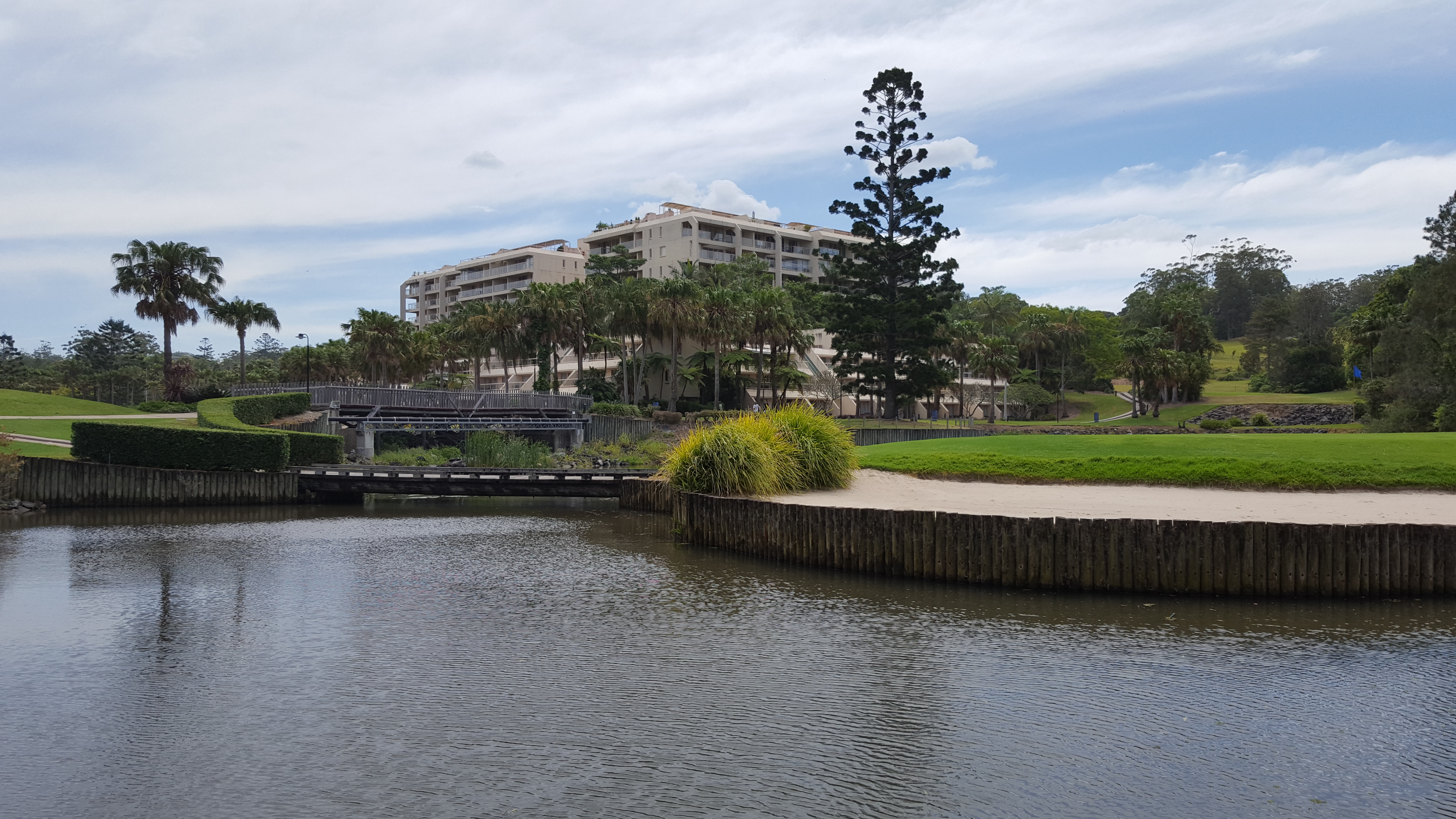
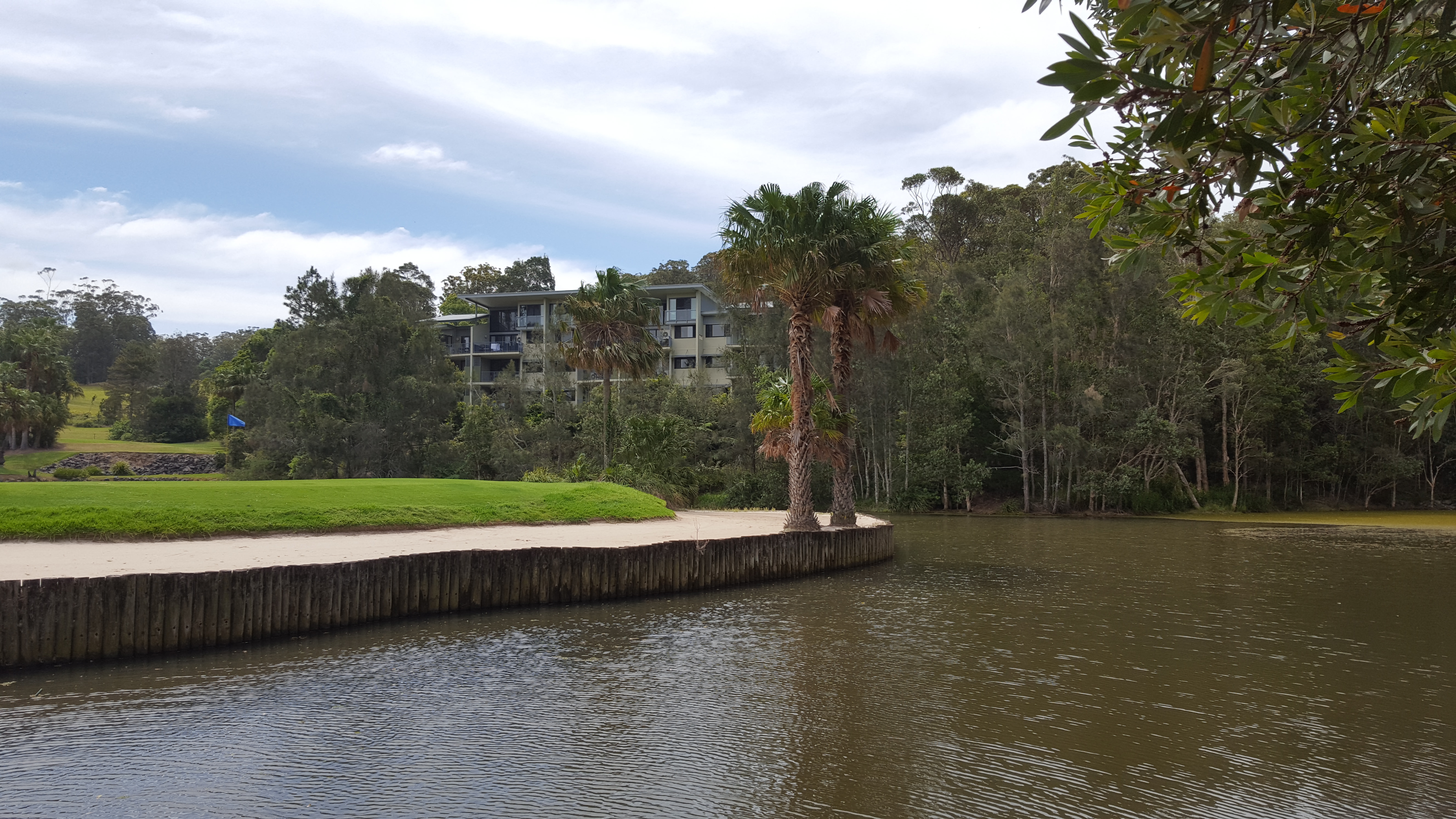
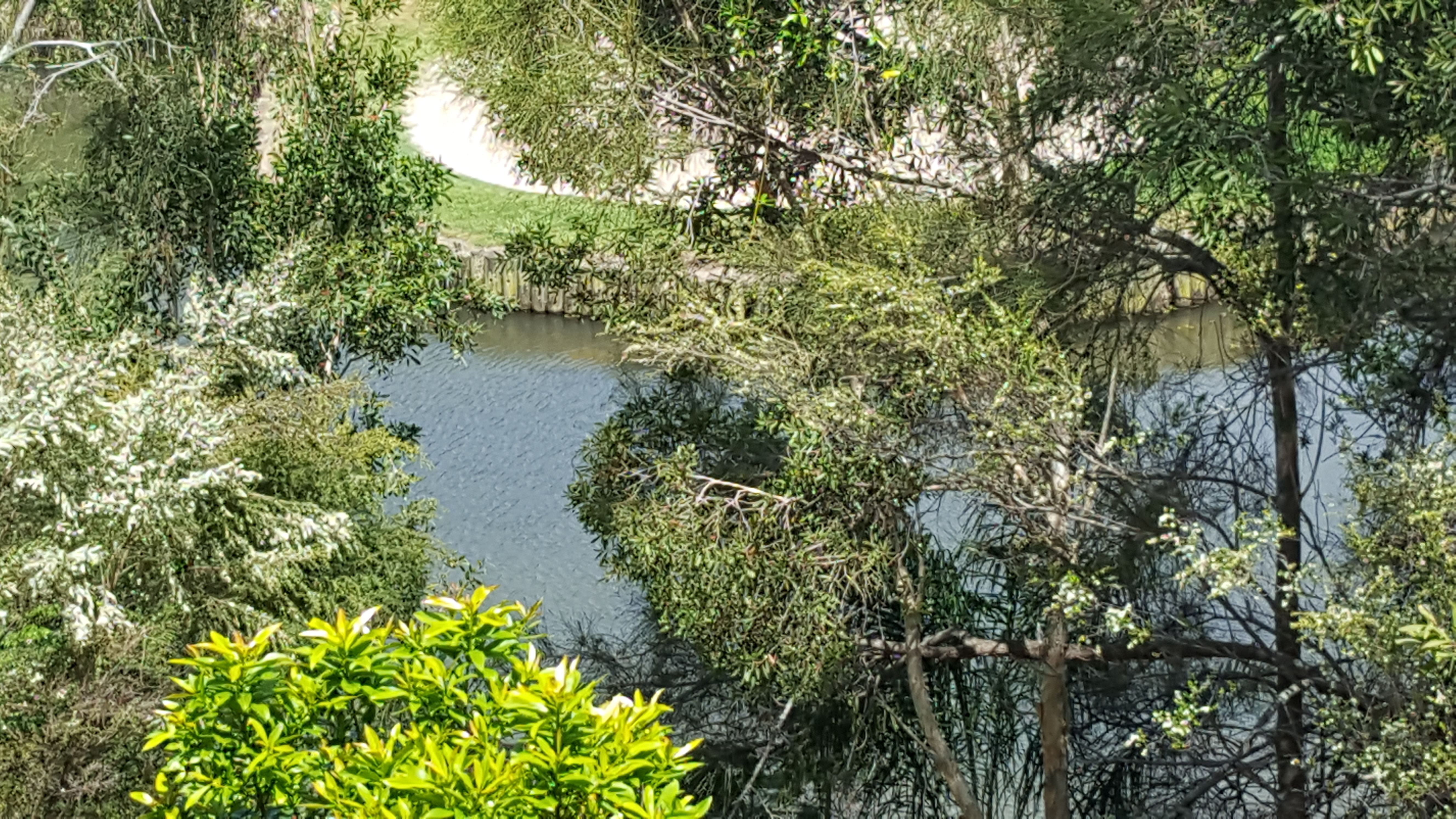
As you can see, lakes and greenery, and even a putting green.
And in places, they try very hard to hide the ugly multi-story buildings in amongst the trees
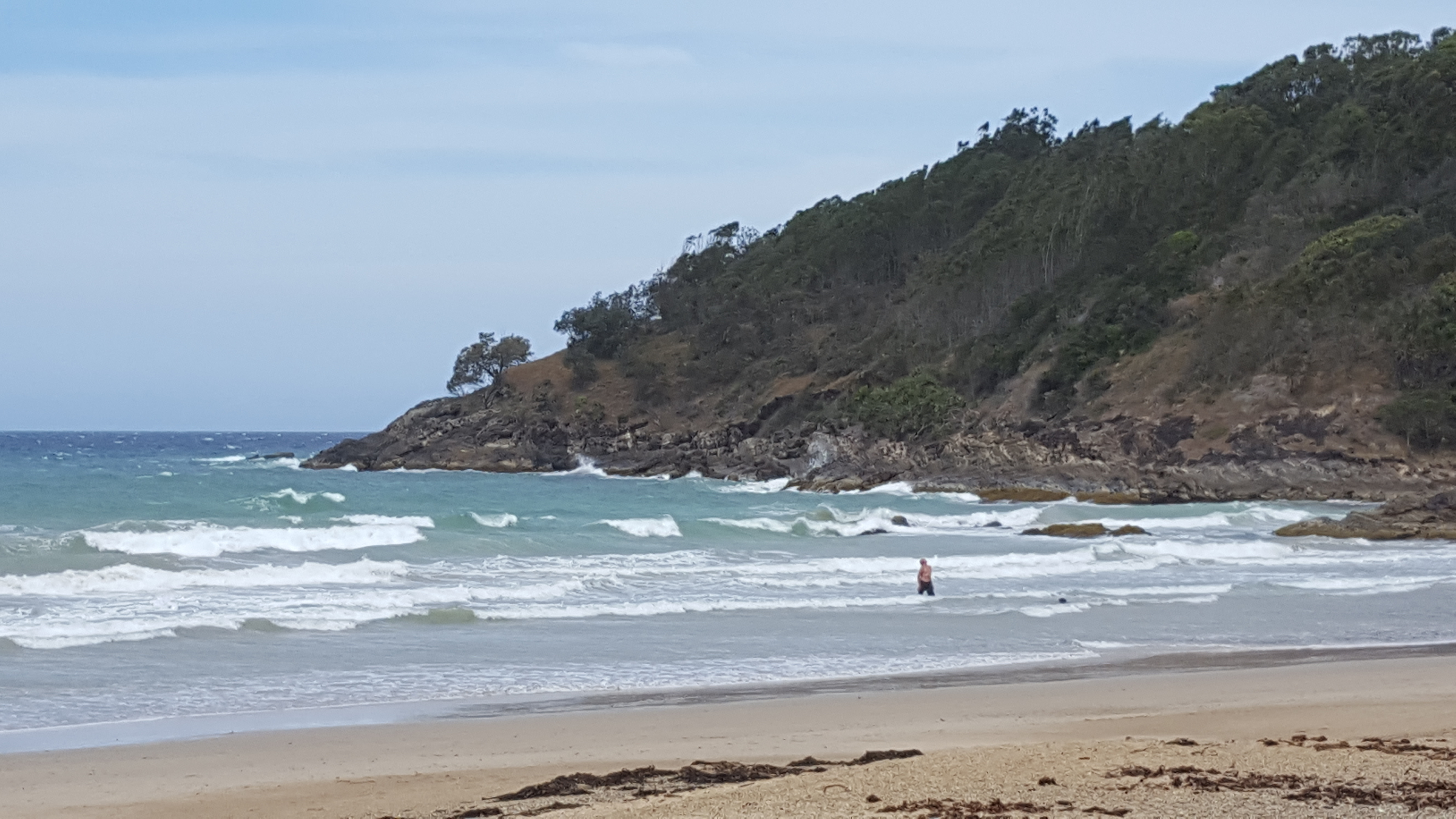
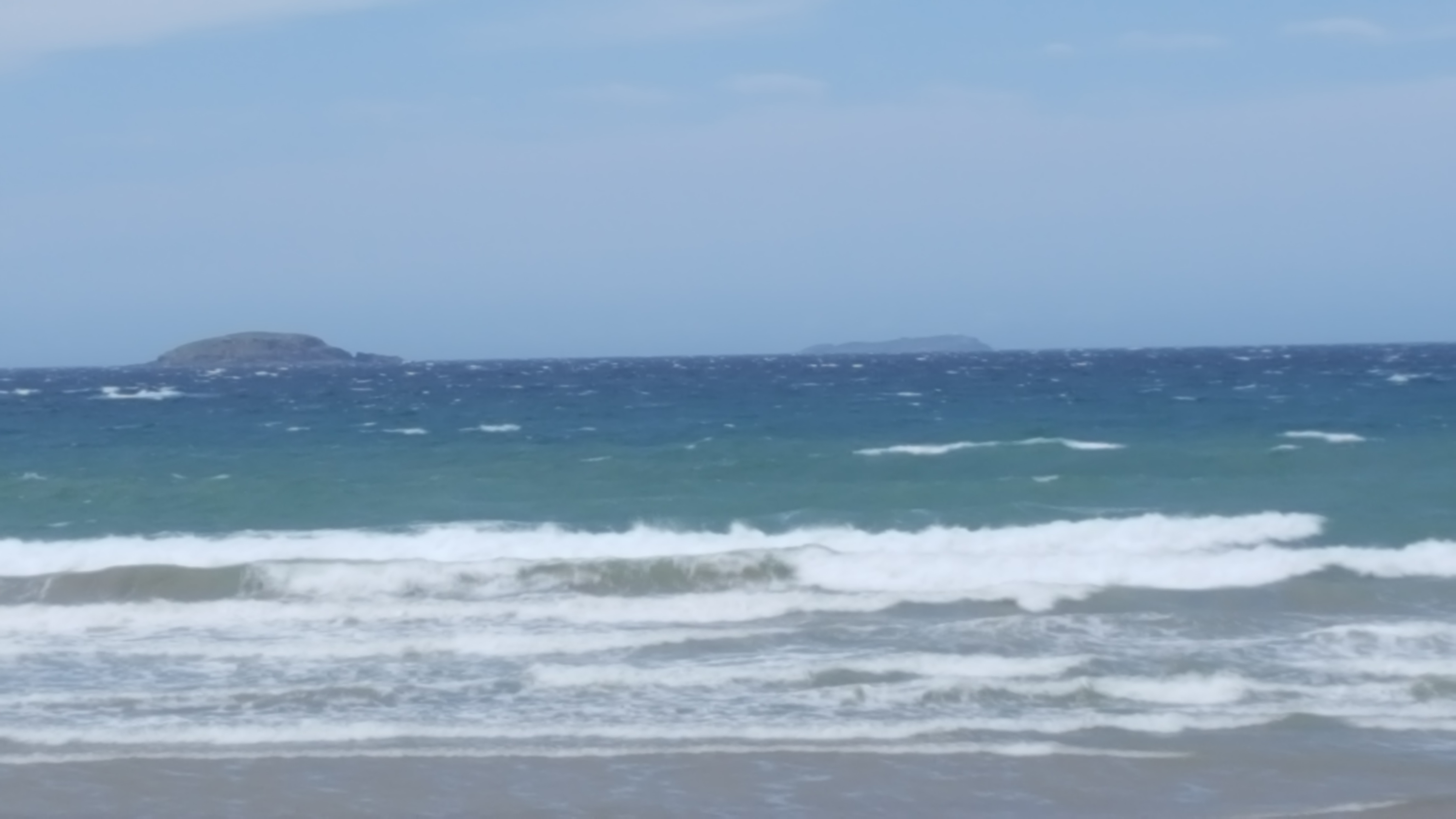
It is only a short walk to the ‘private beach’ and it is sufficiently long enough for a morning walk before breakfast. You could even try to catch some fish for breakfast, though I’m not sure if anyone actually caught anything
Or you can just stare out to sea
And, back in the room, this is the view we had from our verandah
It was a relic from the past, put back together by a dedicated group of volunteers who had not wanted the last vestiges of the past to disappear.
Train enthusiasts, the called themselves.
They’d put together a steam locomotive, five carriages, a restaurant car, and the conductor’s car. The original train might have been twice to three times as long, but these days, the tourist market rarely filled the train.
I was one of a group who made it their mission to visit and rate every vintage train, not only in this country, but all over the world. It was a sad state of affairs when I first began, with locomotives and carriages dropping out of the system due to lack of funds, but more disheartening, the lack of government assistance in keeping it’s heritage alive.
It seemed money was short, and there were better things to spend it on, like two brand new 737-800 jets just to ferry the prime minister and government officials around. Just think of what that quarter of a billion dollars could have bought in heritage.
But it is what it is.
What I had before me was one of the most recent restorations to check out, and on first glance, it was remarkable just how lifelike and true to age it was.
Of course, I was of an age that could remember the old railway carriages, what were called red rattlers because of the ill fitting windows that went up and down, allow fresh air, or in days gone by, smoke from the locomotive hauling the train. I had not travelled during the last glorious years of steam, but the carriages had lived on briefly before the advent of the sterile aluminum tin cans with uncomfortably hard seats.
These carriages were built for comfort, and my first experience had been a five hour trip from Melbourne to Wangaratta, in Victoria, on my way to Mt Buffalo Chalet, a guesthouse owned by the Railways.
That too had been a remarkable old chalet style guest house with a room and all the dining included. I always left after the week having put on weight. Breakfast, morning tea, lunch, afternoon tea, and dinner, every day, and high tea on Sunday.
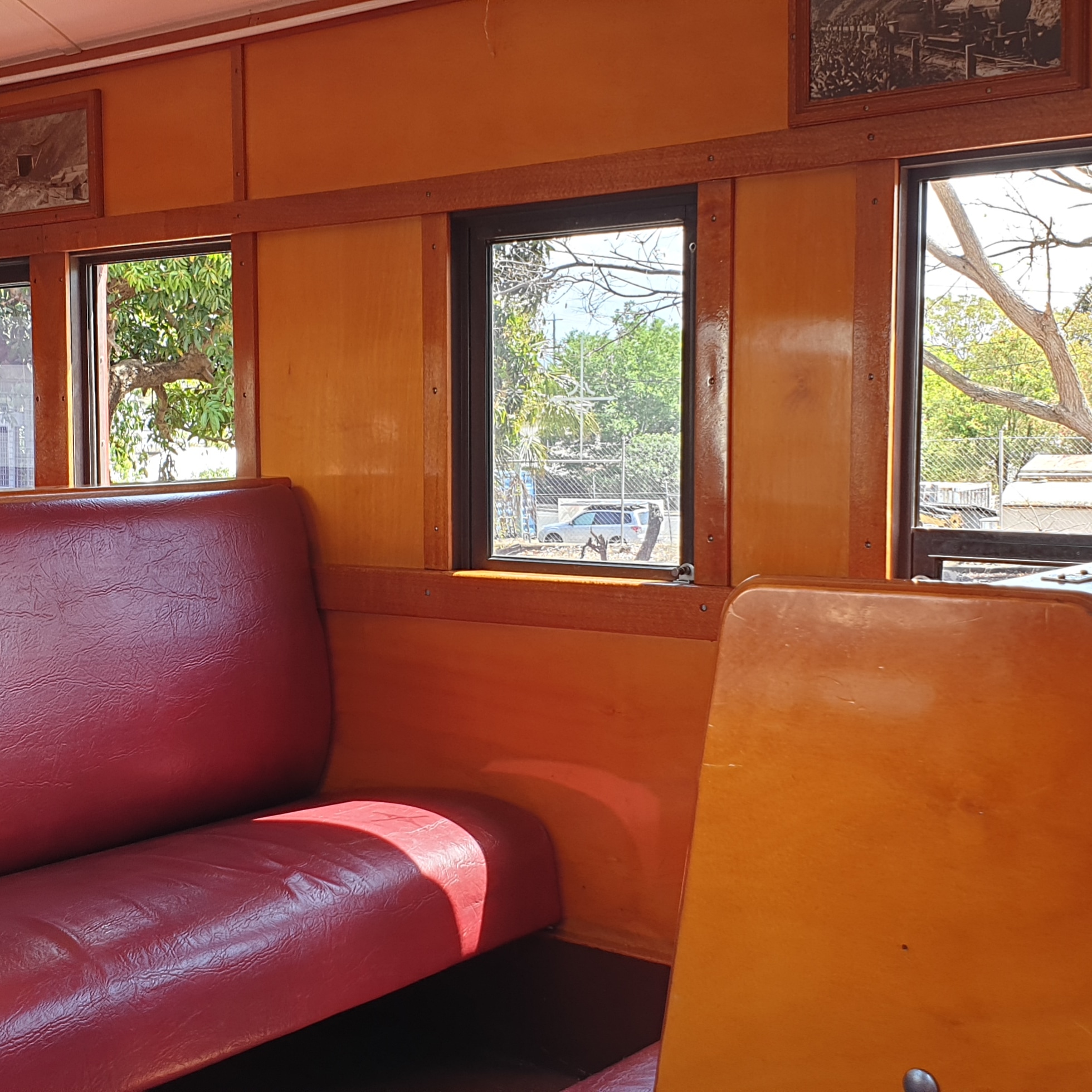
But this carriage, the polished wood that had shellac rather than varnish, highlighting the timber’s grain, the leather seats with generous padding, the curved ceilings with hanging lights, windows the could be opened and closed, allowing fresh air to circulate.
There was also a carriage with the passageway, and five or six separate compartments, each sitting six passengers. I remembered these well, having quite often ridden in one to work for some years when the country trains still ran.
It was always remarkable how a sight or a scent could trigger such memories.
For this carriage on this train, it used to ply the Gympie to Brooloo branch line from about 1915 onwards.
That was the history. It only went as far as Amamoor these days, it was still long enough to capture the sensation of riding the rails back in what is always referred to as the good old days, even if they were not.
Down here, on the other side of the world, the one where Christmas day never sees snow and the temperature sometimes hovers around 38 degrees centigrade, we have neither the Hallmark nor the Lifetime channels.
OK, I can see that’s going to stop a lot of our American friends from moving here when things get a little too dangerous back home, ergo politics and guns, but there are other ways.
And having discovered how to get these movies, we’ve been watching a lot of Hallmark Movies and Mysteries, with an occasional side dish of Lifetime.
Romantic movies are good. Some might say they are soppy, but you know what? No violence, no guns, murders but only in mysteries, and endless happy endings.
I like a happy ending.
Of course, these romances fit a certain storyline as do the Christmas stories, the latter blending a romance and another element that reinforces the notion that Christmas is good.
But whatever the circumstances, I’m trying to convince myself that’s the case because a lot of the time we’re dealing with broken families, dead partners leaving still mourning children, people who work so hard they have no life, or worse, don’t have time to go home and share the joys of Christmas with family.
Oh, and then there are those who don’t want to go home for any number of reasons. I know if I had a choice I would not have gone home to see my parents, but that’s a whole other story.
And despite all of the trials and tribulations, and the obligatory misinterpretation, by the end, through a complicated series of manoeuvres and plot holes, either the broken family or the broken heart is mended.
How much more good feeling can you want in what is called the festive season?
Well, for me, it is the endless wide shots of rural America under a blanket of snow, the very epitome of a Christmas card scene. It’s the snow laying all about as you walk along people-filled streets, the Christmas decorations, both in the streets and in the houses, and they go all out to fill the house and every room with an abundance of decorations.
They have real trees, bought from a Christmas tree lot or farm, and not just any tree, one that fits the 50-foot ceilings that almost require a scissor lift to get the decorations on. And a tree in every room. We have a five feet tall artificial ‘lifelike’ tree that would not pass the movie test.
The only let down if it could be called that, is the fact that these movies are sometimes made in summer, and the town locations are dressed. And in all, I seriously doubt the falling snow is real, after all, no one can make it snow on cue.
So, now it’s time to take all if those movie experiences and write my own Christmas story. I’ll let you know how it goes.
We have stayed in two different types of accommodation in Coffs Harbour, New South Wales, Australia, as a timeshare owner who can trade their week for a week anywhere in the world.
Both are resorts, but different sorts of resorts. The first was a typical RCI resort, where everything is laid back and relaxing, with all the amenities one can expect from a resort.
The other, this one, the Wyndham in Coffs Harbour, is very different, and you notice it when you walk in the front door. You are virtually assaulted by hard-nosed timeshare sales staff who really don’t take no for an answer, and then when you finally escape, ring you every day to make an appointment.
I left the phone off the hook.
Aside from that, the place is excellent, the accommodation very good, and the situation one of the best with what could be called a private beach. There are also a number of bushwalks that cater to old people like me.
As you can see, lakes and greenery, and even a putting green.
And in places, they try very hard to hide the ugly multi-story buildings in amongst the trees
It is only a short walk to the ‘private beach’ and it is sufficiently long enough for a morning walk before breakfast. You could even try to catch some fish for breakfast, though I’m not sure if anyone actually caught anything
Or you can just stare out to sea
And, back in the room, this is the view we had from our verandah
It was a relic from the past, put back together by a dedicated group of volunteers who had not wanted the last vestiges of the past to disappear.
Train enthusiasts, the called themselves.
They’d put together a steam locomotive, five carriages, a restaurant car, and the conductor’s car. The original train might have been twice to three times as long, but these days, the tourist market rarely filled the train.
I was one of a group who made it their mission to visit and rate every vintage train, not only in this country, but all over the world. It was a sad state of affairs when I first began, with locomotives and carriages dropping out of the system due to lack of funds, but more disheartening, the lack of government assistance in keeping it’s heritage alive.
It seemed money was short, and there were better things to spend it on, like two brand new 737-800 jets just to ferry the prime minister and government officials around. Just think of what that quarter of a billion dollars could have bought in heritage.
But it is what it is.
What I had before me was one of the most recent restorations to check out, and on first glance, it was remarkable just how lifelike and true to age it was.
Of course, I was of an age that could remember the old railway carriages, what were called red rattlers because of the ill fitting windows that went up and down, allow fresh air, or in days gone by, smoke from the locomotive hauling the train. I had not travelled during the last glorious years of steam, but the carriages had lived on briefly before the advent of the sterile aluminum tin cans with uncomfortably hard seats.
These carriages were built for comfort, and my first experience had been a five hour trip from Melbourne to Wangaratta, in Victoria, on my way to Mt Buffalo Chalet, a guesthouse owned by the Railways.
That too had been a remarkable old chalet style guest house with a room and all the dining included. I always left after the week having put on weight. Breakfast, morning tea, lunch, afternoon tea, and dinner, every day, and high tea on Sunday.
But this carriage, the polished wood that had shellac rather than varnish, highlighting the timber’s grain, the leather seats with generous padding, the curved ceilings with hanging lights, windows the could be opened and closed, allowing fresh air to circulate.
There was also a carriage with the passageway, and five or six separate compartments, each sitting six passengers. I remembered these well, having quite often ridden in one to work for some years when the country trains still ran.
It was always remarkable how a sight or a scent could trigger such memories.
For this carriage on this train, it used to ply the Gympie to Brooloo branch line from about 1915 onwards.
That was the history. It only went as far as Amamoor these days, it was still long enough to capture the sensation of riding the rails back in what is always referred to as the good old days, even if they were not.
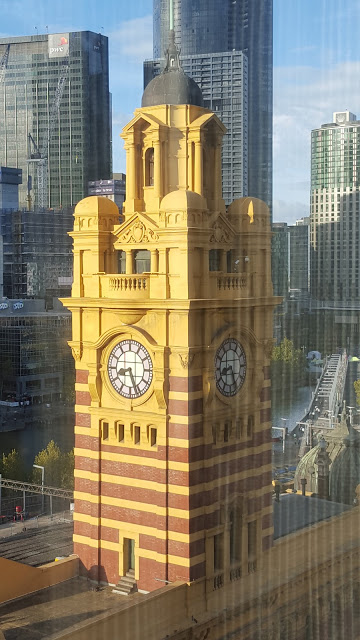
This is the famous clock tower of the Flinders Street Station (the main train station for suburban trains) in Melbourne.
We were staying in a hotel (The Doubletree) directly opposite to the station and our room overlooked the station and the clock tower. I took photos of it during the day:
and this one, at night. It came out better than I thought it would.
Could there be a worse time to do the one thing that drives you bonkers?
Perhaps there is, but never a time when so many people are wandering aimlessly around looking for stuff that no one really needs.
And in the process, trash the shelves, and leave the store in such a mess that anyone who thinks shopping in the afternoon is a good idea, is left with little more than a dumpster dive.
Christmas shoppers are a very distinctive breed. First identified but the stultified manner in which they shuffle along the mall walkways, stopping to look vacantly at the wares in the windows, unable to figure out whether the sizes would fit their victims, sorry, giftees.
Or whether the sheer unadulterated inappropriateness would work, because we all know many of the gifts we receive are unwanted and even if they had a degree of acceptability, it was the wrong size, the wrong colour, for a different age group, or needs batteries.
It’s called grandparents revenge.
As for parents gifting their children as a surprise, well it’s a well-known fact they don’t have a clue about the younger generation and what they want.
We made a conscious decision years ago to only buy what the children wanted, no surprises, unfortunately, but never getting it wrong makes it worthwhile.
Of course, what the children want is something else and it took us a while to realise they were using us to buy stuff their parents had strictly banned. Yes, interesting lesson learned.
It only proved how desperately out of touch each generation is with the one below, and worse for those two generations adrift.
Two items of special note, are the number of parents who go shopping with their children, and the level of blackmail used to get their best behaviour, that overused phrase, ‘misbehave and you’re getting nothing for Christmas’ flogged mercilessly to death.
The other is the number of unwilling spouses who would prefer to mind six rotten little kids than brave the dumpster shelves, or worse, the endless racks of clothes that would be more suited to cleaning the house rather than being worn.
I say this out of experience, because in my day girls’ clothing did not have large chinks of material missing or whole swaths of exposed skin
I’ll be leaving the Christmas shopping to someone else from now on.
This is the famous clock tower of the Flinders Street Station (the main train station for suburban trains) in Melbourne.
We were staying in a hotel (The Doubletree) directly opposite to the station and our room overlooked the station and the clock tower. I took photos of it during the day:
and this one, at night. It came out better than I thought it would.