Searching for locations: A bus tour of Philadelphia, USA

The Philadelphia Bus Tour, what we did see

To start with, we first joined this tour at stop number 6.

We had to find it first and that meant some pedestrian navigation, which took us first to the City Hall, a rather imposing structure, which we found later had a profound effect on Philadelphia sports teams.

According to the map, stop number 6 is Reading Terminal Market, Convention Centre, on 12th street on Filbert.  This was where we bought the tickets and boarded the bus that had a rather interesting guide aboard.

His favorite says was “And we’re good to go.”

Soon we would discover that his commentary was more orientated towards a younger audience, not that it bothered us.

Given the time restraints, we had, this was always going to be about looking and learning.

Stop number 7

City hall, Love Park.

This we had seen on our walk from where we left the car at the Free Library, near the Swann Memorial Fountain in Logan Park, the landmark that Rebecca had remembered from her last visit to Philadelphia.  Of course, then, it was not quite so frozen.

Love park, of course, was only notable to us in that it had a sculpture in place with the word Love rather stylized.  Apart from that, you’d hardly know it as a park

The city hall, well, that was something else, and when we looked at it, before going on the tour, it was a rather magnificent stone edifice.
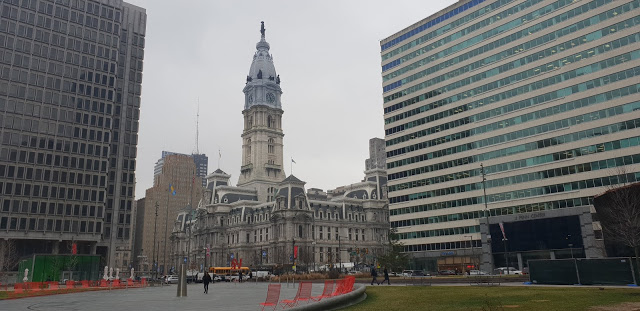
After, well the guide filled us in, tallest building, highest and largest monument on William Penn, you get the gist.  37 feet tall, when eclipsed, the Philly sports teams all suffered slumps of one kind or another, until the problem was rectified.  Interesting story.

Stop number 8

18th Street and the Benjamin Franklin Parkway, or Logan Circle

This is the location of the Cathedral Basilica of Saints Peter and Paul.  A place where the Pope decided to give an audience and sent the city into a spin.

The same church has very high windows for the reason in the early days there was a problem with people wanting to throw Molotov cocktails through the windows.  A bit hard when they’re so high up.

Benjamin Franklin Parkway, of course, is interesting in itself as an avenue, not only for all of the flags of many nations of those who chose to live in Philadelphia.  We found ours, the one for Australia

This was also the stop where we needed to get off once the tour was finished, and time to head to the car, and go home, but that’s another story.

Stop number 10

Is that the stature of the Thinker, made famous, at least for me, from the old Dobie Gillis episodes, of God knows how many years ago?

Or, maybe it’s just the Rodin Museum on Benjamin Franklin Parkway.

There’s a whole story to go with that Statue and the fact it is one of many all over the world.

This one was made in France, cast in 1919 in Bronze, and is approximately 200cm x 130 cm by 140cm.

Stop number 11

Eastern State Penitentiary.  NW corner of 22nd Street and Fairmont Avenue.

This had a rather interesting story attached to it and had something to do with ghosts, but I wasn’t listening properly to the guide’s monologue.

But, later research shows, the fact it was once the most famous and expensive prison in the world.  Many also think it is haunted and is a favorite for visiting paranormal visitors.

Built around 1829, it was the first prison to have separate cells for prisoners.  It held, at various times, the likes of Al Capone and Willie Sutt

Stop number 18

The Philadelphia Museum of art, where we stop for a few minutes and look at the steps which were immortalized in the movie Rocky, yes he ran god knows how far to end up on the top of these steps.

Sorry, but I’m not that fit that I would attempt walking up them.  The view is just fine from inside the bus.  Of course, they might consider cleaning the windows a little so the view was clearer, but because it’s basically Perspex and scratched so that might not be possible.

Stop number 17

Back at Logan Circle, or Square if you prefer, but on the other side, closer to the Franklin Institute.  Benjamin Franklin’s name is used a lot in this city.

After that, it’s a blur, the Academy of Music, the University of the Arts, Pennsylvania Hospital, South Street, Vietnam Veterans Memorial, the USS Olympia, Penn’s Landing, and past the National Liberty Museum.  I’m sure somewhere in that blur was the intention of seeing the Liberty Bell, but I think I heard that it was not on show, and only a replica could be seen.

So much for the getting as an opportunity to see the real liberty bell, crack and all..

We get off and stop number 27, or Number 1, I was not quite sure.

What were we after?  The definitive Philly Cheese Steak.

In a word: Green

Of course, it is a colour, one used for traffic lights, grass, and a lot of different shades.

It’s made up of blue and yellow, adjusting the amounts of each to get the shade you want.

I once had a dark green suit.

I don’t have any green emeralds.

When you get a green light, it means to go ahead, or just go, in traffic, or for the starting of a project

And a green run on the ski fields denotes the easiest run – just about my level!

Green with envy, yes, though I’m not sure why they picked green for envy

In England especially, green is a patch of grassy land, usually in the middle of a village

A green worker is one that is new to the job, and usually gets all the rotten jobs

Then there is the biggest money-spinner of all time: going green, which means eco-friendly.

I have only one question, why is it to go ‘green’ is to charge far more than normal

Oh, and by the way, political parties that are eco-centric are usually called the greens

And, these are the same people who chain themselves to trees, deterring bulldozers

The blue sea is really green, believe it or not!

Searching for locations: The Mary Valley Rattler, Gympie, Queensland, Australia

I have a passion for visiting transport museums, to see old trains, planes, buses, cars, even ships if it’s possible.

This has led to taking a number of voyages on the TSS Earnslaw in Queenstown, New Zealand.

Many, many, many years ago on Puffing Billy, a steam train in the Dandenongs, Victoria, Australia.

The steam train in Kingston, New Zealand, before it was closed down, but hopefully it will reopen sometime in the future.

The London Transport Museum in London England, which had a lot of buses.

The Workshops Railway Museum in Ipswich, Queensland, where once the many steam engines were built and maintained, and now had only a handful of engines remaining.

However, in the quest for finding and experiencing old transportation methods, we came across the Mary Valley Rattler, which runs out of Gympie, Queensland, Australia.

The ride begins in Gympie at the old Gympie Railway station, and as can be seen below, is one of the relics of the past, and, nothing like the new more modern stations.  Thankfully.

If you’re going to have a vintage train, then you have to have a vintage station.

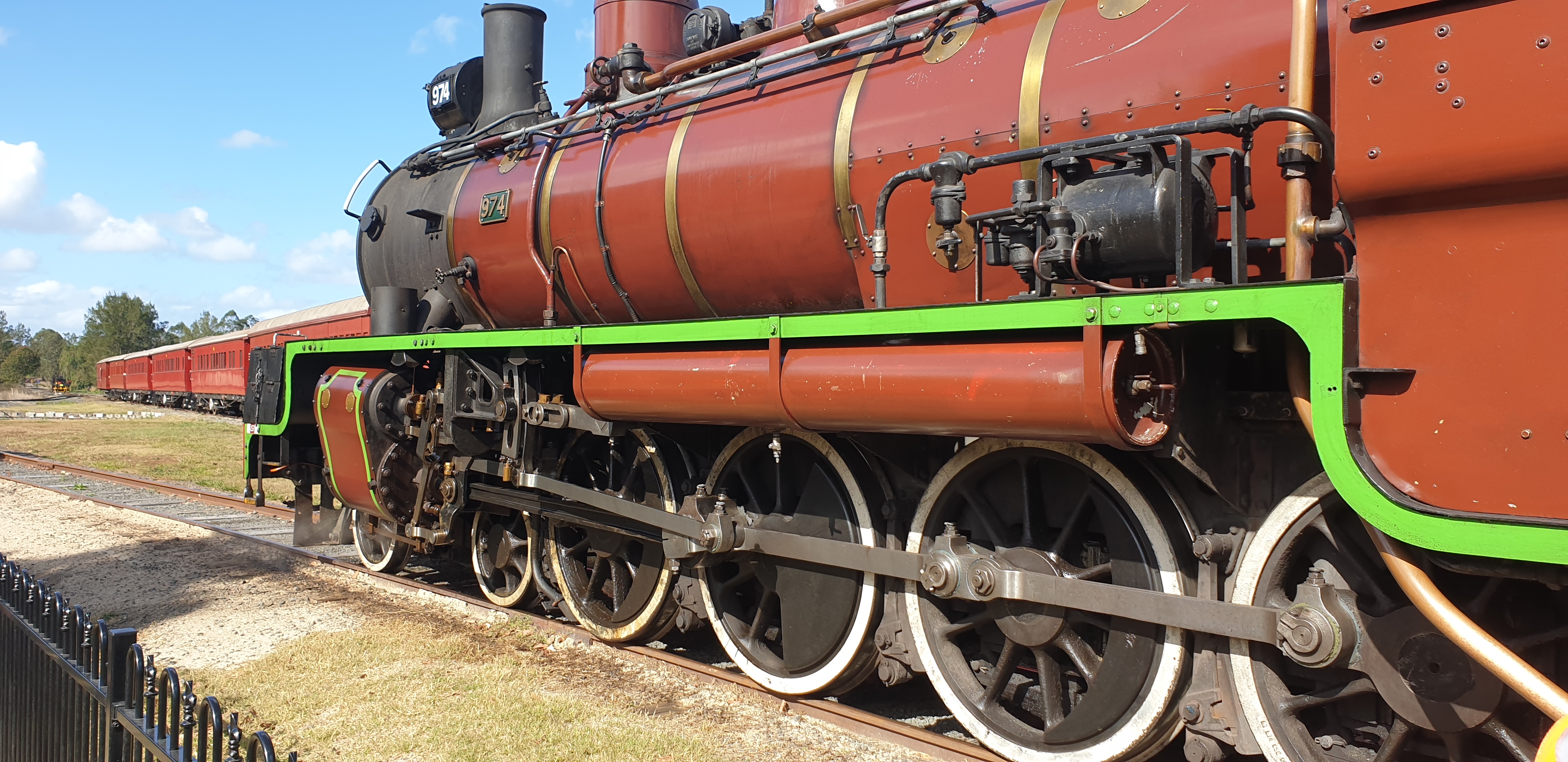
The Class of engine, seen below, is the C17, a superheated upgrade to the C16 it was based on, and first run in 1903.  This particular engine was built in 1951, although the first of its type was seen in  1920 and the last of 227 made in 1953.  It was the most popular of the steam engines used by Queensland Railways.

The C designation meant it had four driving axels and 17 was the diameter of the cylinder, 17 inches.  It is also known as a 4-8-0 steam locomotive
 and nicknamed one of the “Brown Bombers” because of its livery, brown with green and red trimming.

Also, this engine was built in Maryborough, not far from Gympie by Walkers Limited, one of 138.

This photo was taken as the train returned from Amamoor, a trip that takes up to an hour.

The locomotive is detached from the carriages, then driven to the huge turntable to turn around for the return journey to Amamoor.

This is the locomotive heading down to the water station, and then taking on water.  After that, it will switch lines, and reverse back to reconnect the carriages for the trip to Amamoor.

The carriages are completely restored and are extremely comfortable.  It brings back, for me, many memories of riding in older trains in Melbourne when I was a child.

The trains, then, were called Red Rattlers.

This is the locomotive climbing one of the hilly parts of the line before crossing over the Mary River on a trestle bridge.

This is the engine at Amamoor near the picnic area where young children and excited parents and grandparents can get on the locomotive itself and look inside where the driver sits.

And, no, I didn’t volunteer to shovel coal.

This particular locomotive spent most of its working life between Townsville and Mount Isa and was based in Cloncurry, Charters Towers, and Townsville, before being sent, at the end of its useful days in the late 1960s, to the Ipswich Railway Workshops.

In a word: Deal

Deal or no deal.  That was a game show on TV once, involving briefcases.

Then, if you win…

It’s a big deal!

Or, of course, it is if you get in on the ground floor, which is to say, you’re one of the original investors, it becomes a great deal; it’s meaning, taking part in a financial transaction.

The word ‘deal’ along with big, great, tremendous, and once in a lifetime, feature prominently, but if you are like me by the time you invest the pyramid is about to collapse!

Then you’re in a great deal of trouble, meaning a lot of trouble — at the time, it feels catastrophic.

Or you’re working impossibly long hours to enrich the others above you, it a good deal of effort on your part for no reward.

Or deal with a problem, which is to say cope with or control, though if it’s a problem child, good luck with that.

But enough of the depressing descriptions,

When you play a card game, the first thing to happen is to deal the cards.

The second is to ask yourself if the dealer is dealing from the bottom of the deck, even if it looks like the top.

My father called these dealers ‘card sharps’.

Then there is a piece of wood commonly called deal, usually thin and square though not always so; it can also be a plank of pine or fir.

Searching for locations: The Mary Valley Rattler, Gympie, Queensland, Australia

I have a passion for visiting transport museums, to see old trains, planes, buses, cars, even ships if it’s possible.

This has led to taking a number of voyages on the TSS Earnslaw in Queenstown, New Zealand.

Many, many, many years ago on Puffing Billy, a steam train in the Dandenongs, Victoria, Australia.

The steam train in Kingston, New Zealand, before it was closed down, but hopefully it will reopen sometime in the future.

The London Transport Museum in London England, which had a lot of buses.

The Workshops Railway Museum in Ipswich, Queensland, where once the many steam engines were built and maintained, and now had only a handful of engines remaining.

However, in the quest for finding and experiencing old transportation methods, we came across the Mary Valley Rattler, which runs out of Gympie, Queensland, Australia.

The ride begins in Gympie at the old Gympie Railway station, and as can be seen below, is one of the relics of the past, and, nothing like the new more modern stations.  Thankfully.

If you’re going to have a vintage train, then you have to have a vintage station.

The Class of engine, seen below, is the C17, a superheated upgrade to the C16 it was based on, and first run in 1903.  This particular engine was built in 1951, although the first of its type was seen in  1920 and the last of 227 made in 1953.  It was the most popular of the steam engines used by Queensland Railways.

The C designation meant it had four driving axels and 17 was the diameter of the cylinder, 17 inches.  It is also known as a 4-8-0 steam locomotive
 and nicknamed one of the “Brown Bombers” because of its livery, brown with green and red trimming.

Also, this engine was built in Maryborough, not far from Gympie by Walkers Limited, one of 138.

This photo was taken as the train returned from Amamoor, a trip that takes up to an hour.

The locomotive is detached from the carriages, then driven to the huge turntable to turn around for the return journey to Amamoor.

This is the locomotive heading down to the water station, and then taking on water.  After that, it will switch lines, and reverse back to reconnect the carriages for the trip to Amamoor.

The carriages are completely restored and are extremely comfortable.  It brings back, for me, many memories of riding in older trains in Melbourne when I was a child.

The trains, then, were called Red Rattlers.

This is the locomotive climbing one of the hilly parts of the line before crossing over the Mary River on a trestle bridge.

This is the engine at Amamoor near the picnic area where young children and excited parents and grandparents can get on the locomotive itself and look inside where the driver sits.

And, no, I didn’t volunteer to shovel coal.

This particular locomotive spent most of its working life between Townsville and Mount Isa and was based in Cloncurry, Charters Towers, and Townsville, before being sent, at the end of its useful days in the late 1960s, to the Ipswich Railway Workshops.

In a word: Deal

Deal or no deal.  That was a game show on TV once, involving briefcases.

Then, if you win…

It’s a big deal!

Or, of course, it is if you get in on the ground floor, which is to say, you’re one of the original investors, it becomes a great deal; it’s meaning, taking part in a financial transaction.

The word ‘deal’ along with big, great, tremendous, and once in a lifetime, feature prominently, but if you are like me by the time you invest the pyramid is about to collapse!

Then you’re in a great deal of trouble, meaning a lot of trouble — at the time, it feels catastrophic.

Or you’re working impossibly long hours to enrich the others above you, it a good deal of effort on your part for no reward.

Or deal with a problem, which is to say cope with or control, though if it’s a problem child, good luck with that.

But enough of the depressing descriptions,

When you play a card game, the first thing to happen is to deal the cards.

The second is to ask yourself if the dealer is dealing from the bottom of the deck, even if it looks like the top.

My father called these dealers ‘card sharps’.

Then there is a piece of wood commonly called deal, usually thin and square though not always so; it can also be a plank of pine or fir.

Searching for locations: The Kingston Flyer, Kingston, New Zealand

The Kingston Flyer was a vintage train that ran about 14km to Fairlight from Kingston, at the southern end of Lake Wakatipu, and back.

This tourist service was suspended in December 2012 because of locomotive issues.

However, before that, we managed to go on one of the tours, and it was a memorable trip.  Trying to drink a cup of tea from the restaurant car was very difficult, given how much the carriages moved around on the tracks.

The original Kingston Flyer ran between Kingston, Gore, Invercargill, and sometimes Dunedin, from the 1890s through to 1957.

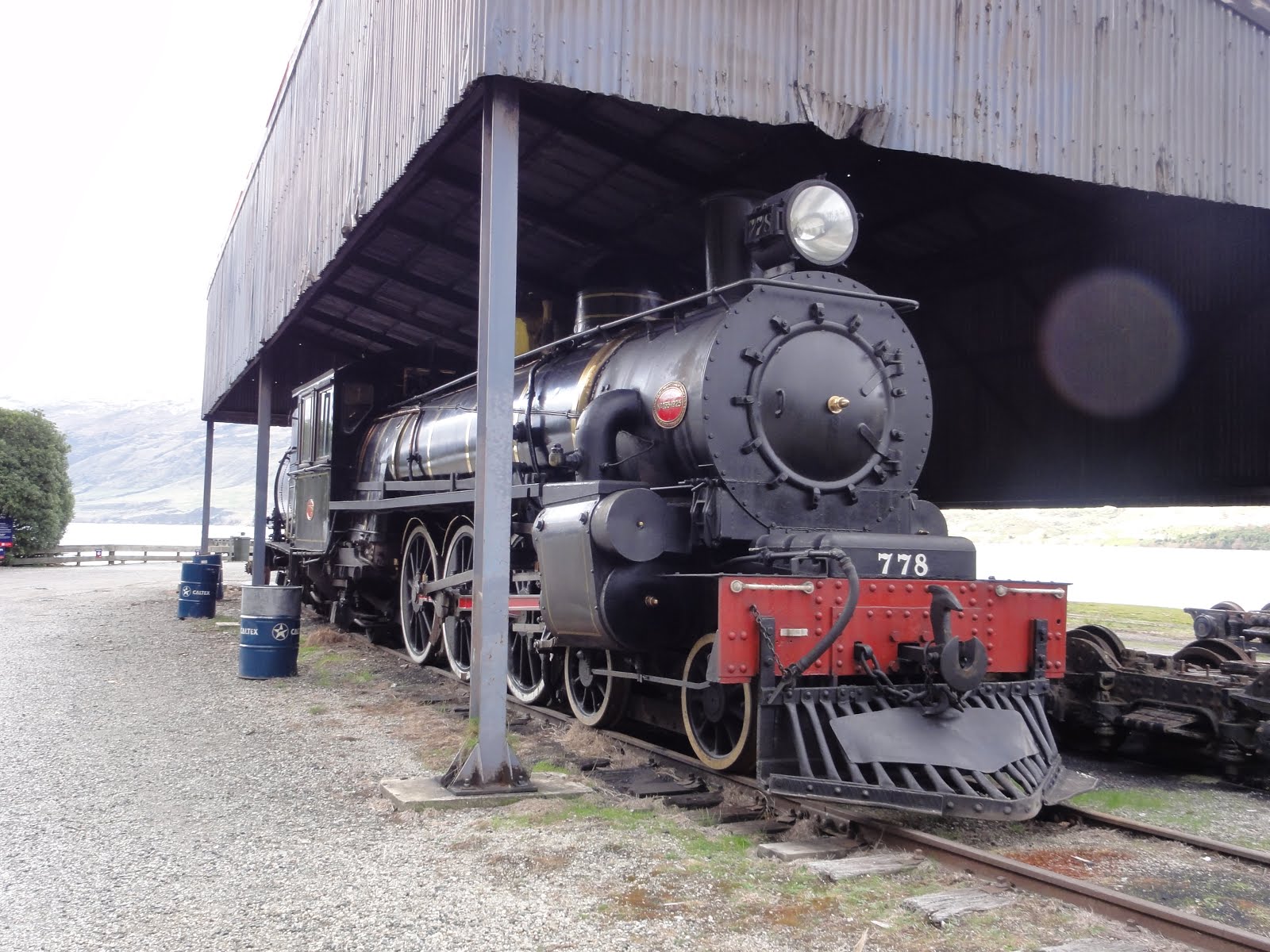
There are two steam locomotives used for the Kingston Flyer service, the AB778 starting service in 1925, and the AB795 which started service in 1927.

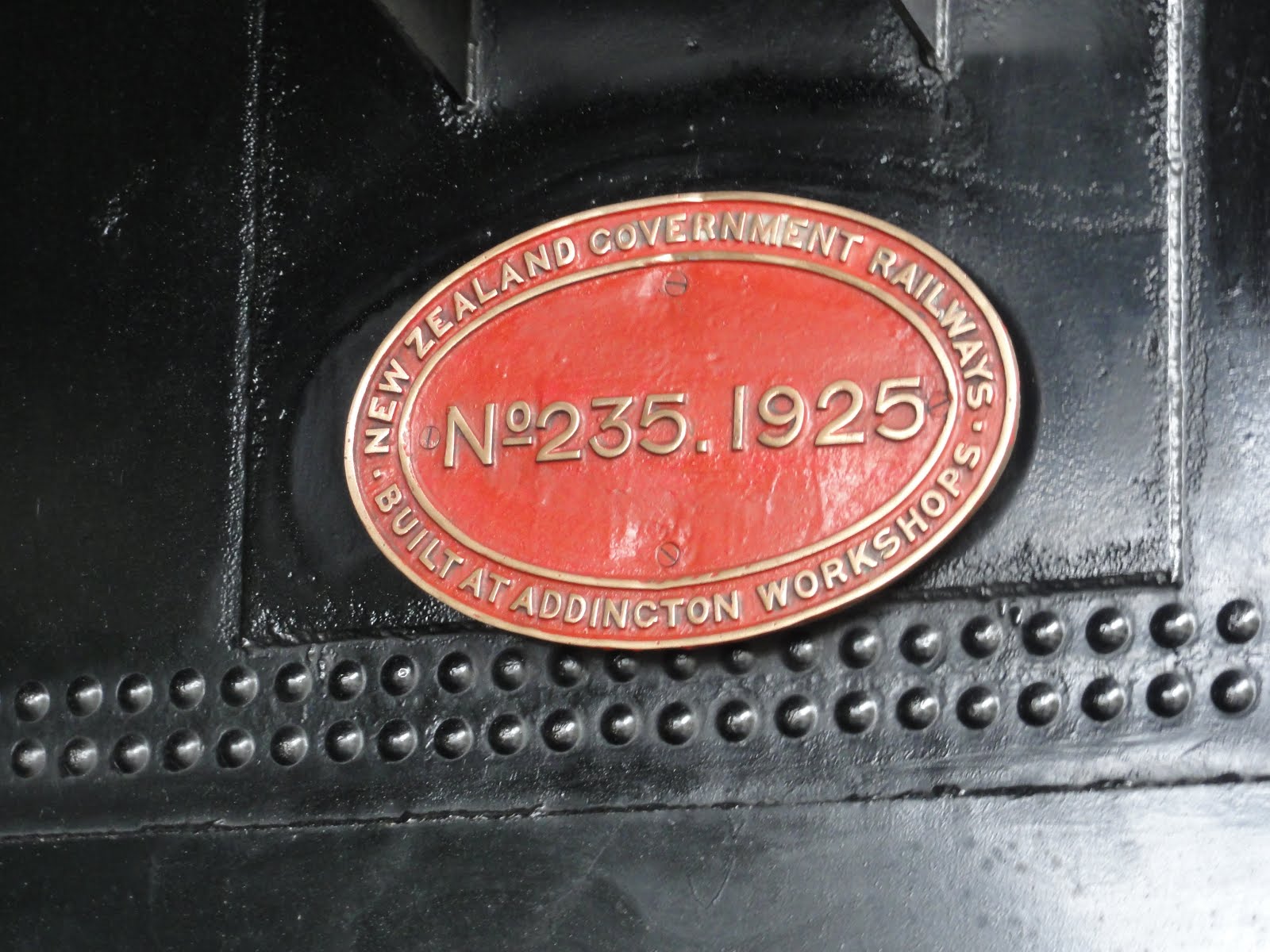
The AB class locomotive was a 4-6-2 Pacific steam locomotive with a Vanderbilt tender, of which 141 were built between 1915 and 1927 some of which by New Zealand Railways Addington Workshops.

No 235 is the builder’s number for the AB778

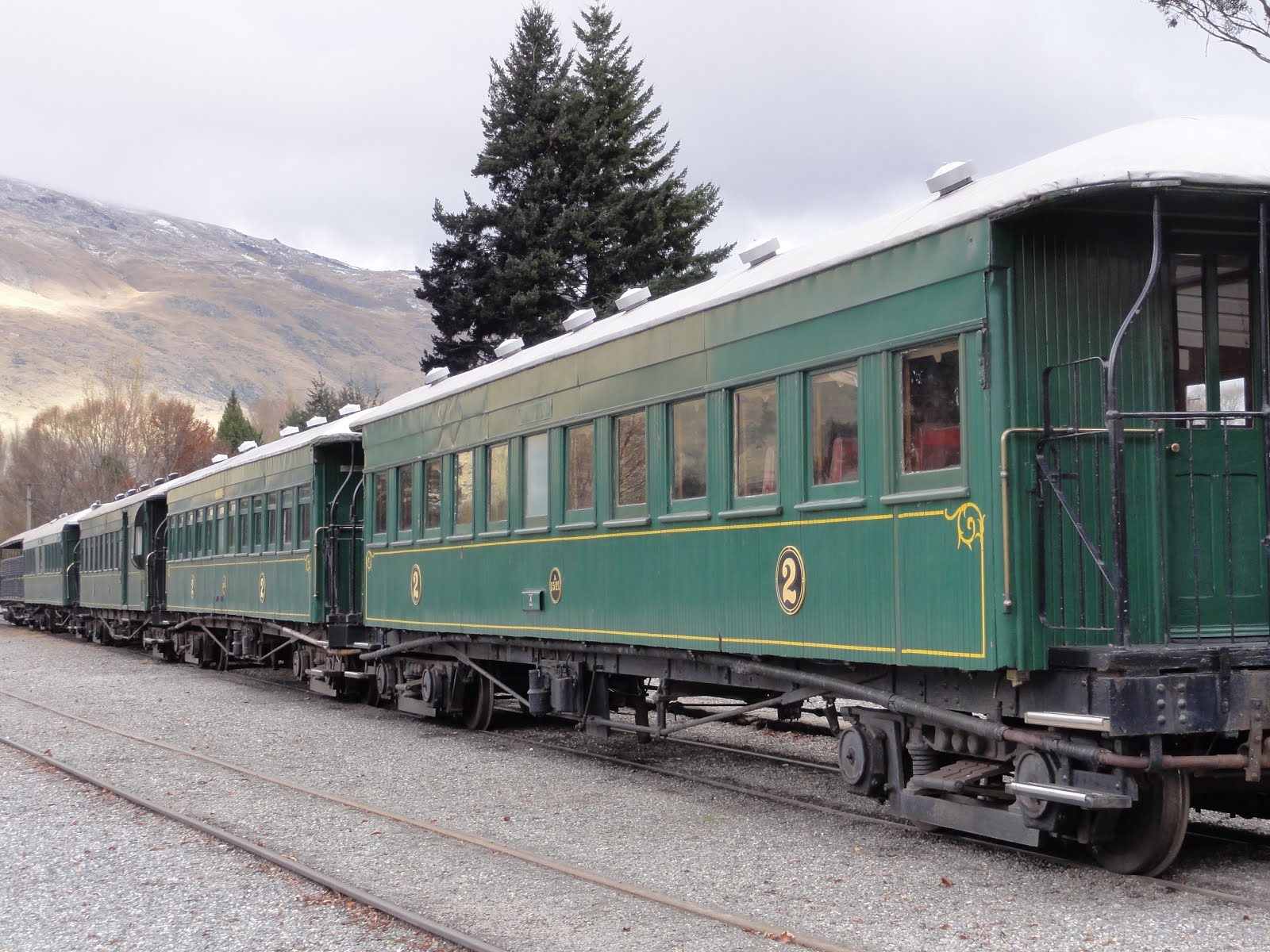
There were seven wooden bodied passenger carriages, three passenger coaches, one passenger/refreshments carriage and two car/vans.  The is also a Birdcage gallery coach.  Each of the rolling stock was built between 1900 and 1923.  They were built at either of Addington, Petone, or Hillside.

I suspect the 2 on the side means second class

The passenger coach we traveled in was very comfortable.

This is one of the guard’s vans, and for transporting cargo.

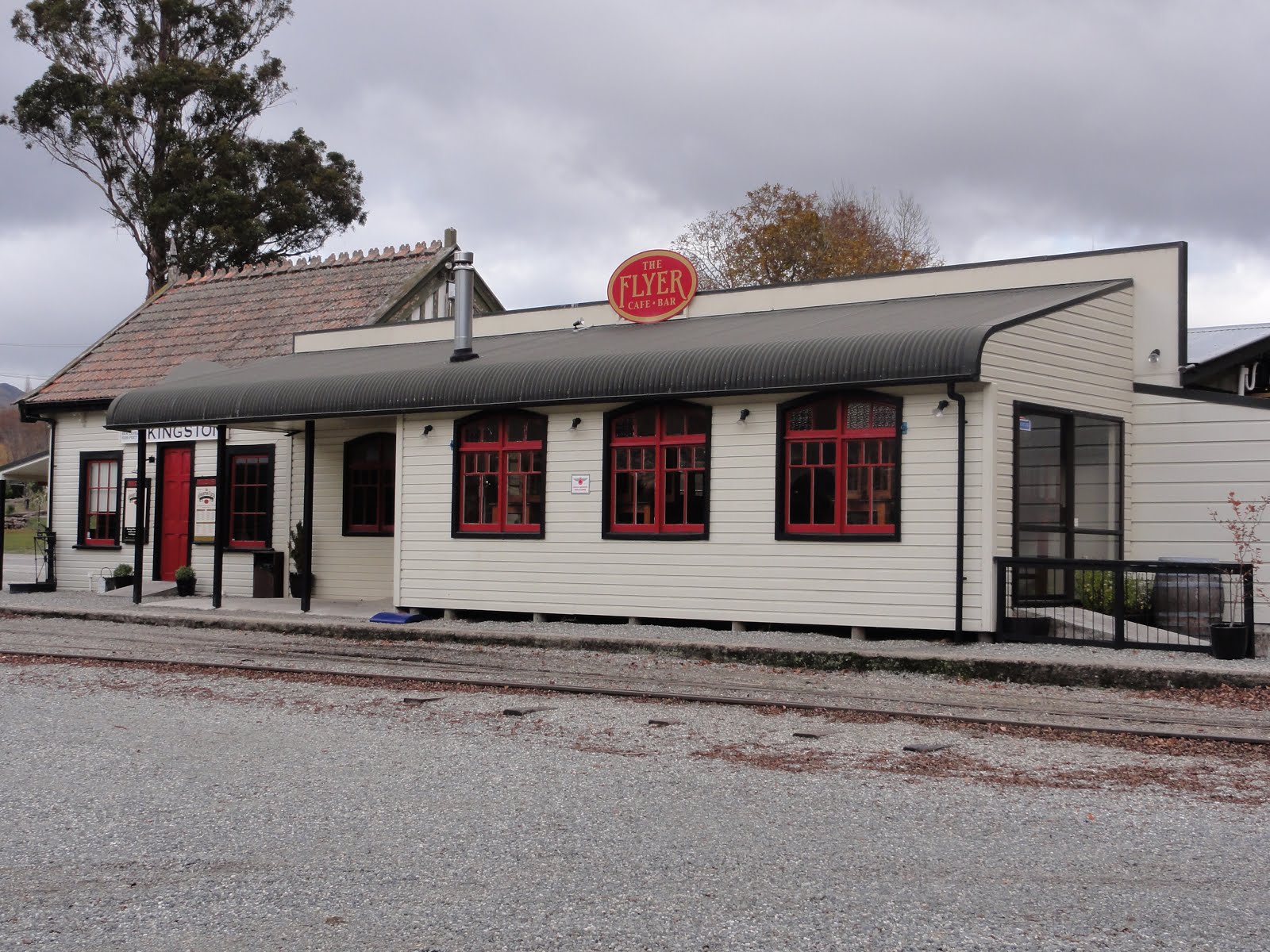
The Kingston Railway Station

and cafe.

A poster sign advertising the Kingston Flyer

The running times for the tourist services, when it was running.

Searching for locations: The Kingston Flyer, Kingston, New Zealand

The Kingston Flyer was a vintage train that ran about 14km to Fairlight from Kingston, at the southern end of Lake Wakatipu, and back.

This tourist service was suspended in December 2012 because of locomotive issues.

However, before that, we managed to go on one of the tours, and it was a memorable trip.  Trying to drink a cup of tea from the restaurant car was very difficult, given how much the carriages moved around on the tracks.

The original Kingston Flyer ran between Kingston, Gore, Invercargill, and sometimes Dunedin, from the 1890s through to 1957.

There are two steam locomotives used for the Kingston Flyer service, the AB778 starting service in 1925, and the AB795 which started service in 1927.

The AB class locomotive was a 4-6-2 Pacific steam locomotive with a Vanderbilt tender, of which 141 were built between 1915 and 1927 some of which by New Zealand Railways Addington Workshops.

No 235 is the builder’s number for the AB778

There were seven wooden bodied passenger carriages, three passenger coaches, one passenger/refreshments carriage and two car/vans.  The is also a Birdcage gallery coach.  Each of the rolling stock was built between 1900 and 1923.  They were built at either of Addington, Petone, or Hillside.

I suspect the 2 on the side means second class

The passenger coach we traveled in was very comfortable.

This is one of the guard’s vans, and for transporting cargo.

The Kingston Railway Station

and cafe.

A poster sign advertising the Kingston Flyer

The running times for the tourist services, when it was running.

Searching for locations: Aratiatia Dam, Taupo, New Zealand

Aratiatia Dam water release, Taupo

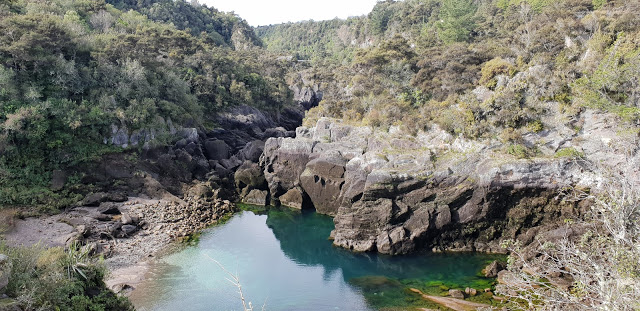
The Aratiatia Dam, rapids, and hydroelectric power station are located on the Waikato River, New Zealand’s longest river.  It is about 16km from Taupo, and 6km from Huka falls, and there is a walking track, for the fit, of course, between the two water attractions.

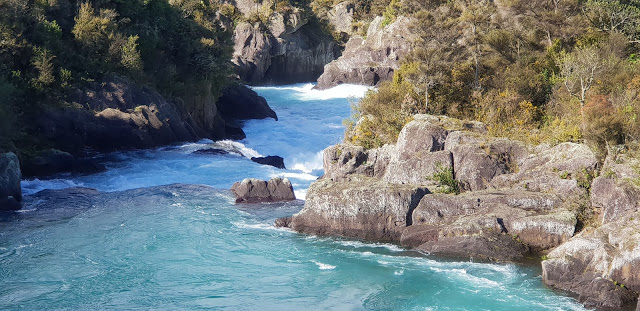
This happens three or four times every day, depending on the season, and lasts about 15 minutes.  Water is released at the rate of about 80,000 liters a second, so it is quite a lot of water being sent through the rapids.

There are a number of viewing points, the most popular being from the bridge, where I took these photos, and 5 minutes down the walking track to the ridgeline where you can get an overview of the river.

This is looking towards the rapids, as the catchment leading to the rapids starts to fill

The pool is almost full and the excess is starting its journey towards the rapids

Now full, the rapids are at capacity as up to 80,000 liters a second are heading down a 28-meter drop heading towards the hydroelectric power station.

And once full at the bottom, there is a jet boat ride available for a closer view of the water, and a few thrills to go with it.

It’s been an interesting day

Today we have been delving into the past in a way that makes history interesting.

Also, it’s another way to get young children to take an interest in the past, seeing that is often very difficult to part them from their ipads, smartphones and computer games.

It is part of a weekend devoted to history.

First up is a ride on an old steam train, the engine dating back to the 1950s, as are some of the carriages. Now, for someone like me who is only two years younger, it doesn’t seem that old, but to them, it’s a relic.

And for the youngest of our granddaughters who tells me that this will be her first ride on a train, any train, it’s going to be vastly different from her next ride on a train.

I don’t think it went faster than about 30, whether that’s miles an hour or kilometres, so we had time to take in the bushland, the river crossings and the smell of the coal-generated smoke.

And the biggest treat was for them to climb up into the engine cabin to see who drives it, and how it all works.

I try to tell them this is a far cry from the 300kph bullet trains in China that we recently travelled on. This ride was rattly, noisy, and we were barely able to sit still, whereas on the bullet trains you hardly knew you were moving and was so smooth and silent you didn’t know you were moving until you looked out the window.

Tomorrow we’re going to a historical township, built out of digging for gold in the area. It will be of significance to the elder granddaughter as she is working on a project on Eureka, where there was a watershed between the miners and the authorities.

History, in my opinion, cannot be taught entirely by books, there must be visual and active participation in simulated events for them to get a better understanding. That, and then writing about it in the way historical fiction often brings moments in history alive.

We are all looking forward to tomorrow!