Travelling after a pandemic: Destination Hobart – 1

Hobart in June – Winter – Day 1 – Saturday

…

Overnight the rain began and hasn’t stopped.  It is cold, and the heater in the room is not quite adequate for the space it has to heat up.  Fortunately, the bed has electric blankets, and it was warm, lying wake listening to the raindrops.  That warmth makes it difficult to get out of bed, but this is a holiday, and we have to get motivated.

We have a balcony, and from there the bleakness of the early morning is stark, but at least the rain is light if not a fine mist.

Worse, it alternates between this fine mist and a short downpour, which means the umbrella goes up and down until you give up.  Later, the rain is not heavy, and just tolerable.

We head off to the Salamanca markets, happening only on Saturday morning.  Unable to walk long distances, we drive, about four minutes from our apartment, but miss a turn, it takes 10, then and 5 to assess the parking situation which, in the end, was the easiest part of this expedition.

The hardest part, walking among the very large crowd of people defying the rain and cold.  I can tolerate large crowds but today, they seem to want to stop suddenly, and just stand and talk in the middle of the walkways making it difficult to impossible to maintain any sort of continuity.

There were hundreds of stalls, the most predominant, micro distillers for some odd reason, selling expensive spirits for about $90 a 700ml bottle, which I regard as overly expensive.  My son has made Bourbon some years ago and it cost him about $10 for 4.5 liters, so it must be a lucrative sideline, even after you’ve added the excise.

There were a great many food stands, and choices, one of which was a curly potato skewer, which was interesting to say the least.  On a meat pie quest, we found a stand that sold pies, but they were warming a new batch, and the waiting line was about 50 or 60 people long.

I went back a half-hour later and they had sold out.  They must be one of the highlights of the market to be so in demand, and that people would stand in the cold and rain just to get one.

Having been defeated by aches and pains, the cold and rain, as well as the large crowd, and the absence of anything we wanted, it was fortunate that time had expired on our parking space.

We had contemplated finding a restaurant to have lunch, deciding it was time to have a proper meal rather than a snack, there didn’t seem to be any places open, and the cafes were packed.

This sparked off an odyssey to find a decent restaurant.

After leaving the markets, we find a road that follows the coastline.  Aside from houses either side, and at one point a marina and the Wrest Point casino, which was not a place we intended to visit, the further we went, the less chance it seemed of finding what we were looking for.

But we did find a tourist attraction, a shot tower, and a museum.
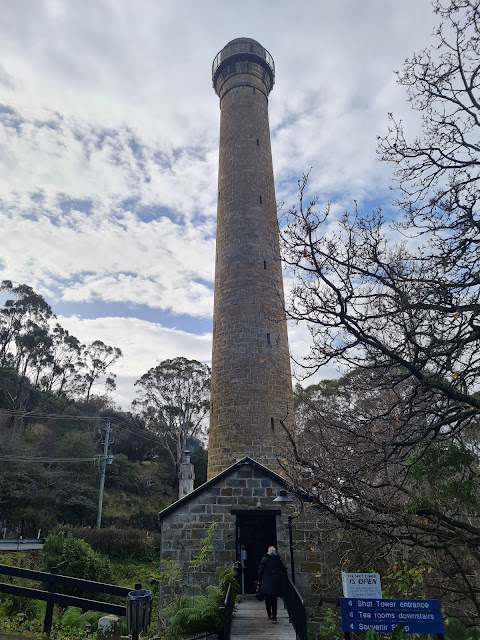
And a tea room that had afternoon tea.  Not exactly what we were looking for.  That said, and feeling like going any further would not fix the search parameters, I go to Google maps and search for restaurants near us.

There’s a Vietnamese restaurant, 6.1 km back the way we came, and being the best choice out of five or six others, we go.

And here’s the thing, it’s just around the corner from where we’re staying.  Go figure.

 But, there is a twist, we drive past one of the hotels that were recommended to us back at the apartments, so we go there, the Hotel Doctor Syntax.  We figure we’re more likely to get the vegetable component there than the other place.
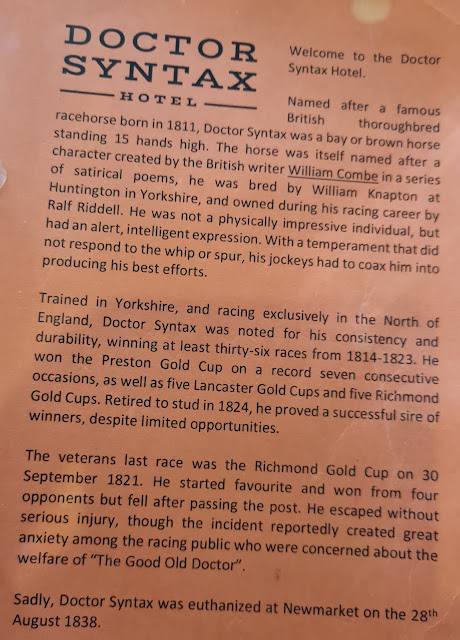
It turns out to be a master stroke, getting steak, pork belly, roast potatoes, gravy, asparagus, and seafood on the side.  All having generous servings as one would expect from a hotel bistro.

The food must be great because they were full and had to turn people away.  We were very lucky to get the last table but one, and that one didn’t last very long.

After a long, leisurely lunch surrounded by warmth and atmosphere, we had one more stop.  Coffee and cake at Daci and Daci, a café recommended to us.
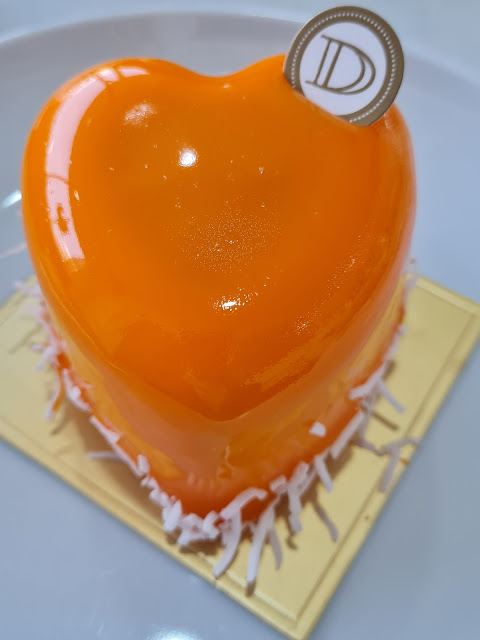
It was worth the experience, although it took some fortitude to fit it in after such a large lunch.  I suspect before we go back for a second visit, yes, it was that good, we will make sure we are less full of lunch first.  The cake I had was delicious but very filling.  The coffee?  Excellent.

Travelling after a pandemic: Destination Hobart – 1

Hobart in June – Winter – Day 1 – Saturday

…

Overnight the rain began and hasn’t stopped.  It is cold, and the heater in the room is not quite adequate for the space it has to heat up.  Fortunately, the bed has electric blankets, and it was warm, lying wake listening to the raindrops.  That warmth makes it difficult to get out of bed, but this is a holiday, and we have to get motivated.

We have a balcony, and from there the bleakness of the early morning is stark, but at least the rain is light if not a fine mist.

Worse, it alternates between this fine mist and a short downpour, which means the umbrella goes up and down until you give up.  Later, the rain is not heavy, and just tolerable.

We head off to the Salamanca markets, happening only on Saturday morning.  Unable to walk long distances, we drive, about four minutes from our apartment, but miss a turn, it takes 10, then and 5 to assess the parking situation which, in the end, was the easiest part of this expedition.

The hardest part, walking among the very large crowd of people defying the rain and cold.  I can tolerate large crowds but today, they seem to want to stop suddenly, and just stand and talk in the middle of the walkways making it difficult to impossible to maintain any sort of continuity.

There were hundreds of stalls, the most predominant, micro distillers for some odd reason, selling expensive spirits for about $90 a 700ml bottle, which I regard as overly expensive.  My son has made Bourbon some years ago and it cost him about $10 for 4.5 liters, so it must be a lucrative sideline, even after you’ve added the excise.

There were a great many food stands, and choices, one of which was a curly potato skewer, which was interesting to say the least.  On a meat pie quest, we found a stand that sold pies, but they were warming a new batch, and the waiting line was about 50 or 60 people long.

I went back a half-hour later and they had sold out.  They must be one of the highlights of the market to be so in demand, and that people would stand in the cold and rain just to get one.

Having been defeated by aches and pains, the cold and rain, as well as the large crowd, and the absence of anything we wanted, it was fortunate that time had expired on our parking space.

We had contemplated finding a restaurant to have lunch, deciding it was time to have a proper meal rather than a snack, there didn’t seem to be any places open, and the cafes were packed.

This sparked off an odyssey to find a decent restaurant.

After leaving the markets, we find a road that follows the coastline.  Aside from houses either side, and at one point a marina and the Wrest Point casino, which was not a place we intended to visit, the further we went, the less chance it seemed of finding what we were looking for.

But we did find a tourist attraction, a shot tower, and a museum.

And a tea room that had afternoon tea.  Not exactly what we were looking for.  That said, and feeling like going any further would not fix the search parameters, I go to Google maps and search for restaurants near us.

There’s a Vietnamese restaurant, 6.1 km back the way we came, and being the best choice out of five or six others, we go.

And here’s the thing, it’s just around the corner from where we’re staying.  Go figure.

 But, there is a twist, we drive past one of the hotels that were recommended to us back at the apartments, so we go there, the Hotel Doctor Syntax.  We figure we’re more likely to get the vegetable component there than the other place.

It turns out to be a master stroke, getting steak, pork belly, roast potatoes, gravy, asparagus, and seafood on the side.  All having generous servings as one would expect from a hotel bistro.

The food must be great because they were full and had to turn people away.  We were very lucky to get the last table but one, and that one didn’t last very long.

After a long, leisurely lunch surrounded by warmth and atmosphere, we had one more stop.  Coffee and cake at Daci and Daci, a café recommended to us.

It was worth the experience, although it took some fortitude to fit it in after such a large lunch.  I suspect before we go back for a second visit, yes, it was that good, we will make sure we are less full of lunch first.  The cake I had was delicious but very filling.  The coffee?  Excellent.

Searching for locations: The Mary Valley Rattler, Gympie, Queensland, Australia

I have a passion for visiting transport museums, to see old trains, planes, buses, cars, even ships if it’s possible.

This has led to taking a number of voyages on the TSS Earnslaw in Queenstown, New Zealand.

Many, many, many years ago on Puffing Billy, a steam train in the Dandenongs, Victoria, Australia.

The steam train in Kingston, New Zealand, before it was closed down, but hopefully it will reopen sometime in the future.

The London Transport Museum in London England, which had a lot of buses.

The Workshops Railway Museum in Ipswich, Queensland, where once the many steam engines were built and maintained, and now had only a handful of engines remaining.

However, in the quest for finding and experiencing old transportation methods, we came across the Mary Valley Rattler, which runs out of Gympie, Queensland, Australia.

The ride begins in Gympie at the old Gympie Railway station, and as can be seen below, is one of the relics of the past, and, nothing like the new more modern stations.  Thankfully.

If you’re going to have a vintage train, then you have to have a vintage station.

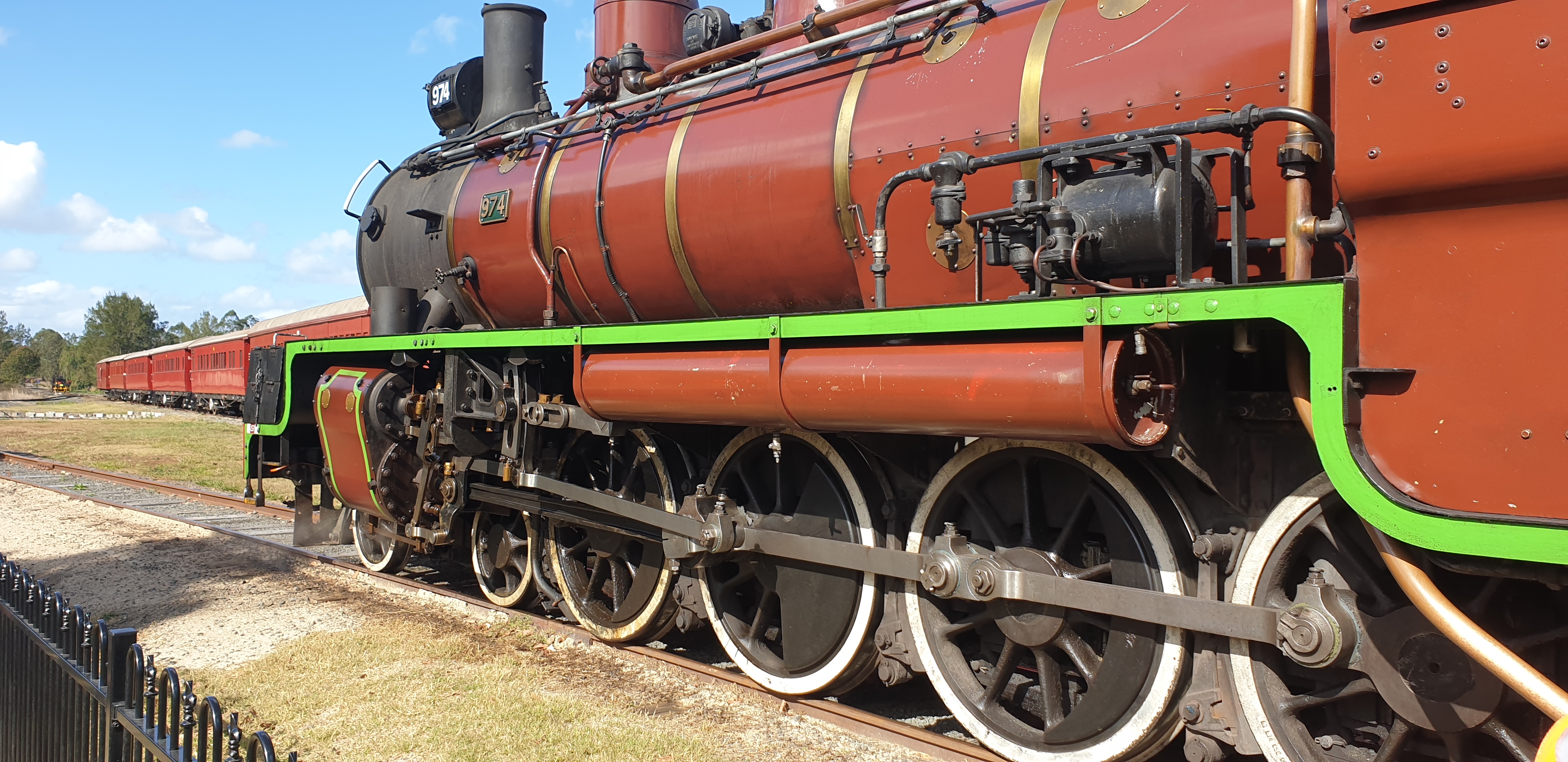
The Class of engine, seen below, is the C17, a superheated upgrade to the C16 it was based on, and first run in 1903.  This particular engine was built in 1951, although the first of its type was seen in  1920 and the last of 227 made in 1953.  It was the most popular of the steam engines used by Queensland Railways.

The C designation meant it had four driving axels and 17 was the diameter of the cylinder, 17 inches.  It is also known as a 4-8-0 steam locomotive
 and nicknamed one of the “Brown Bombers” because of its livery, brown with green and red trimming.

Also, this engine was built in Maryborough, not far from Gympie by Walkers Limited, one of 138.

This photo was taken as the train returned from Amamoor, a trip that takes up to an hour.

The locomotive is detached from the carriages, then driven to the huge turntable to turn around for the return journey to Amamoor.

This is the locomotive heading down to the water station, and then taking on water.  After that, it will switch lines, and reverse back to reconnect the carriages for the trip to Amamoor.

The carriages are completely restored and are extremely comfortable.  It brings back, for me, many memories of riding in older trains in Melbourne when I was a child.

The trains, then, were called Red Rattlers.

This is the locomotive climbing one of the hilly parts of the line before crossing over the Mary River on a trestle bridge.

This is the engine at Amamoor near the picnic area where young children and excited parents and grandparents can get on the locomotive itself and look inside where the driver sits.

And, no, I didn’t volunteer to shovel coal.

This particular locomotive spent most of its working life between Townsville and Mount Isa and was based in Cloncurry, Charters Towers, and Townsville, before being sent, at the end of its useful days in the late 1960s, to the Ipswich Railway Workshops.

Trying to get off, or is that on, the merry-go-round

Self-published authors are fully aware that perhaps the easiest part of the writing journey is the actual writing.  Well, compared to the marketing aspect I believe it is.

I have read a lot of articles, suggestions and tips and tricks to market the book to the reading public.  It is, to say the least, a lot harder to market eBooks than perhaps their hard or paper-covered relatives.

This is despite the millions of eReaders out there.

Then there is that other fickle part of the publishing cycle, the need for reviews.

Proper reviews of course.

As we are learning, reviews can be bought, and in more ways than one.  What happened to finding writers of the same genre and offering to buy one copy and write a review in return for a buy one copy and write a review.

I’ve noticed that all the current best selling novelists do the same for their fellow novelists though I guess when you get to be a best-seller, you might not have to buy a copy, so I can only dream of attaining such lofty heights in the publishing world.

But until I reach such rarefied air, I guess I have to figure out how to appeal to my fellow writers, and, of course, hope that my work is good enough.

It might be a start in getting through that difficult cycle, more reviews means more sales, etc.  And getting those first sales and reviews  …

Therein lies the conundrum.  It is a question of paying for advertising or working it out for ourselves.  I guess if I were to get more sales, I could afford the advertising … yes, back on the merry-go-round!

And yet, the harder the road, the more I enjoy what I do.  It is exhilarating while writing, it is a joy to finish the first draft, it is an accomplishment when it is published, but when you sell that first book, well, there is no other feeling like it.

I am inspired.

Now as for that advertisement and where to post it…

Searching for locations: The Mary Valley Rattler, Gympie, Queensland, Australia

I have a passion for visiting transport museums, to see old trains, planes, buses, cars, even ships if it’s possible.

This has led to taking a number of voyages on the TSS Earnslaw in Queenstown, New Zealand.

Many, many, many years ago on Puffing Billy, a steam train in the Dandenongs, Victoria, Australia.

The steam train in Kingston, New Zealand, before it was closed down, but hopefully it will reopen sometime in the future.

The London Transport Museum in London England, which had a lot of buses.

The Workshops Railway Museum in Ipswich, Queensland, where once the many steam engines were built and maintained, and now had only a handful of engines remaining.

However, in the quest for finding and experiencing old transportation methods, we came across the Mary Valley Rattler, which runs out of Gympie, Queensland, Australia.

The ride begins in Gympie at the old Gympie Railway station, and as can be seen below, is one of the relics of the past, and, nothing like the new more modern stations.  Thankfully.

If you’re going to have a vintage train, then you have to have a vintage station.

The Class of engine, seen below, is the C17, a superheated upgrade to the C16 it was based on, and first run in 1903.  This particular engine was built in 1951, although the first of its type was seen in  1920 and the last of 227 made in 1953.  It was the most popular of the steam engines used by Queensland Railways.

The C designation meant it had four driving axels and 17 was the diameter of the cylinder, 17 inches.  It is also known as a 4-8-0 steam locomotive
 and nicknamed one of the “Brown Bombers” because of its livery, brown with green and red trimming.

Also, this engine was built in Maryborough, not far from Gympie by Walkers Limited, one of 138.

This photo was taken as the train returned from Amamoor, a trip that takes up to an hour.

The locomotive is detached from the carriages, then driven to the huge turntable to turn around for the return journey to Amamoor.

This is the locomotive heading down to the water station, and then taking on water.  After that, it will switch lines, and reverse back to reconnect the carriages for the trip to Amamoor.

The carriages are completely restored and are extremely comfortable.  It brings back, for me, many memories of riding in older trains in Melbourne when I was a child.

The trains, then, were called Red Rattlers.

This is the locomotive climbing one of the hilly parts of the line before crossing over the Mary River on a trestle bridge.

This is the engine at Amamoor near the picnic area where young children and excited parents and grandparents can get on the locomotive itself and look inside where the driver sits.

And, no, I didn’t volunteer to shovel coal.

This particular locomotive spent most of its working life between Townsville and Mount Isa and was based in Cloncurry, Charters Towers, and Townsville, before being sent, at the end of its useful days in the late 1960s, to the Ipswich Railway Workshops.

Searching for locations: Brisbane botanical gardens, Australia

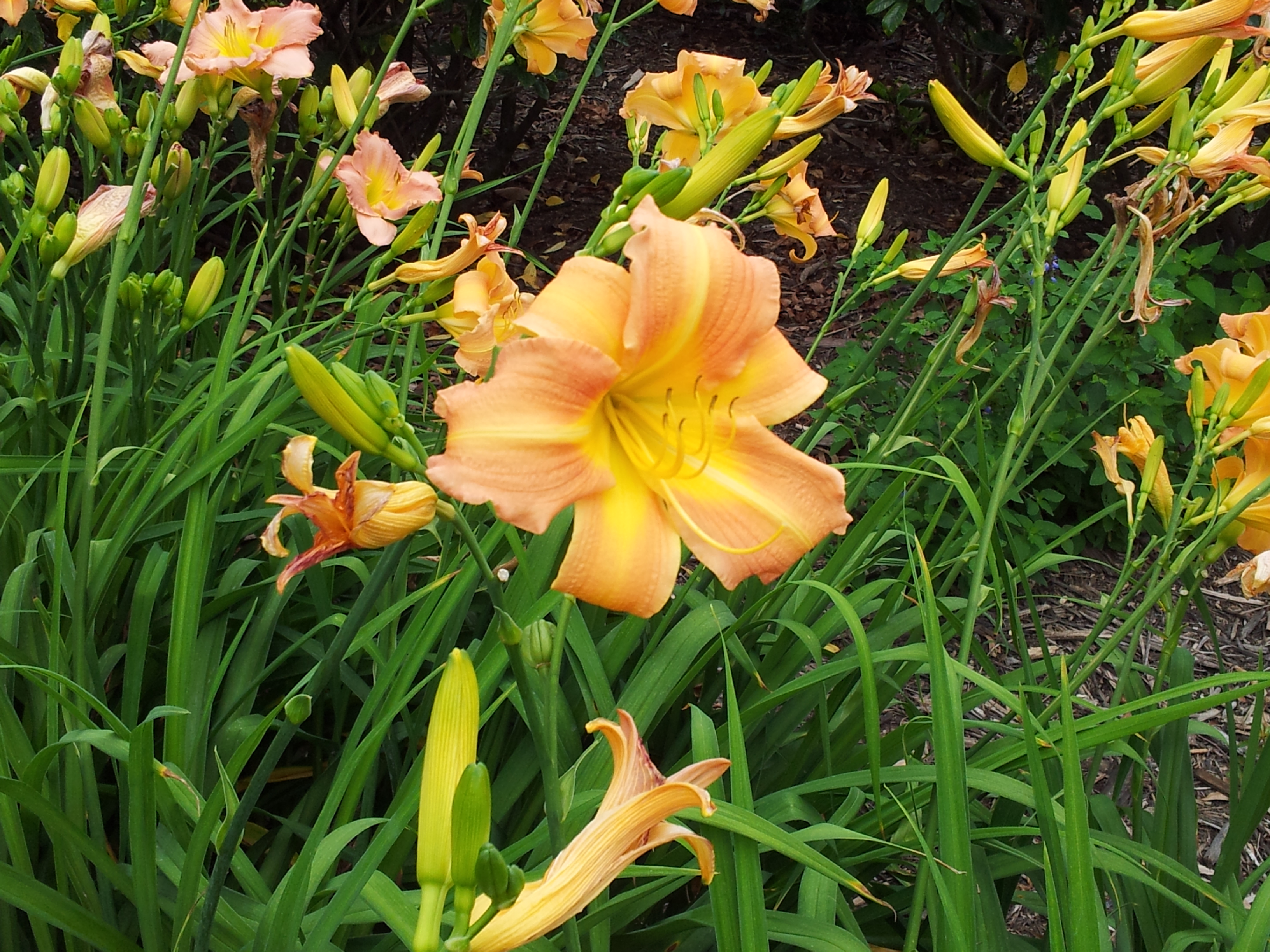
The flowers were out in full bloom the day we took the grandchildren for ‘a walk in the park’.

2011-10-29-12-13-31
2011-10-29-12-14-24
2011-10-29-12-14-01

Of particular interest was the Japanese garden with a trail with rocks,and mini waterfalls

2011-10-29-12-27-02

And as a fitting end to the day, a chance to feed a family of ducks

2011-10-29-13-15-41

Searching for locations: Brisbane botanical gardens, Australia

The flowers were out in full bloom the day we took the grandchildren for ‘a walk in the park’.

2011-10-29-12-13-31
2011-10-29-12-14-24
2011-10-29-12-14-01

Of particular interest was the Japanese garden with a trail with rocks,and mini waterfalls

2011-10-29-12-27-02

And as a fitting end to the day, a chance to feed a family of ducks

2011-10-29-13-15-41

Trying to get off, or is that on, the merry-go-round

Self-published authors are fully aware that perhaps the easiest part of the writing journey is the actual writing.  Well, compared to the marketing aspect I believe it is.

I have read a lot of articles, suggestions and tips and tricks to market the book to the reading public.  It is, to say the least, a lot harder to market eBooks than perhaps their hard or paper-covered relatives.

This is despite the millions of eReaders out there.

Then there is that other fickle part of the publishing cycle, the need for reviews.

Proper reviews of course.

As we are learning, reviews can be bought, and in more ways than one.  What happened to finding writers of the same genre and offering to buy one copy and write a review in return for a buy one copy and write a review.

I’ve noticed that all the current best selling novelists do the same for their fellow novelists though I guess when you get to be a best-seller, you might not have to buy a copy, so I can only dream of attaining such lofty heights in the publishing world.

But until I reach such rarefied air, I guess I have to figure out how to appeal to my fellow writers, and, of course, hope that my work is good enough.

It might be a start in getting through that difficult cycle, more reviews means more sales, etc.  And getting those first sales and reviews  …

Therein lies the conundrum.  It is a question of paying for advertising or working it out for ourselves.  I guess if I were to get more sales, I could afford the advertising … yes, back on the merry-go-round!

And yet, the harder the road, the more I enjoy what I do.  It is exhilarating while writing, it is a joy to finish the first draft, it is an accomplishment when it is published, but when you sell that first book, well, there is no other feeling like it.

I am inspired.

Now as for that advertisement and where to post it…

Let’s talk history

What happened yesterday is history, but that’s not necessarily how we view what is history and what isn’t.

Similarly what is and what isn’t history is usually decided on by academics, because history texts that are used in schools are not written by ‘the man in the street’ authors. They’re usually university types who specialise in a particular field, or specialise section of history.

Even then one doubts that what is written is not a consensus of a panel.

So, when we talk about re-writing history, that takes a very brave bunch of people who want to buck the norm.

Our history, that which was taught when I went to school,. about our own country, Australia, started in 1770. Some brave soul tried to say it began earlier than that, before Captain Cook and the British arrived, out up a flag pole, and declared it belonged to Britain, like in 1606 when the Dutch explorer Willem Janszoon landed on the Cape York peninsula, only it wasn’t called that then.

And he might have been as surprised as Captain Cook that there were people here to observe their arrival. Yes, people had been living in this country for tens of thousands of years before the Europeans arrived.

But that was not what we were taught. No, Captain Cook, 1770, the a fleet of ships in 1788, and off we run as a new country, and a dumping ground for Britain’s convicts. Our history starts there, and then meanders through time, dividing the country up into states, having famous explorers like Burke and Wills, and Blaxland, Wentworth, and Lawson, Hume and Hovell.

And we commemorate all these people and those who were in charge over the years, with names of states, cities, rivers, mountains, everything under the sun. You’ve only got to glance at the list of hundreds of these forefathers and explorers to see just how many places in this country were named after them.

No heed was taken of what they may have been called before because no one really understood the languages of the first people who lived here. And they never seem to rate as a matter of study for us children back then.

Now, as people have begun to realise our history goes way, way back, and that there should be a nod to those inhabitants, they are considering re-writing some of our history to incorporate these people. And change the names of places to their original. A famous instance of recent renaming is of Ayers Rock, now called Uluru.

Even then, Australian History didn’t rate very highly, and I have to say, as a child at school 50 odd years ago, I learned more about the British Empire/Commonwealth, and about the English kings and queens, than we did about our own Governor Generals, Prime Ministers and State Premiers.

Could I tell you the name of our first Prime Minister? No. I can say when Australia became Australia, yes. 1901. Can I tell you the first King of England? Yes, William the Conqueror in 1066. There were kings before that but they only ruled of parts of England.

But over the years since I have read the odd book of Australian History but for some reason it never quite seems as colourful or as interesting as that of England or Scotland, or even some of the European countries.

Now, since I’ve been reading about what’s happening in the United States I have begin to take an interest in American history, and it, too, seems to suffer the same problems we have with ours, a bunch of academics decided what it was, and what it would not include, and then there is this thing called the 1619 project.

Wow, that seems to have stirred up a hornet’s nest.

Can’t wait to see what happens next.

Searching for locations: Coffs Harbour, New South Wales, Australia, and resorts Wyndham style

We have stayed in two different types of accommodation in Coffs Harbour, New South Wales, Australia, as a timeshare owner who can trade their week for a week anywhere in the world.

Both are resorts, but different sorts of resorts.  The first was a typical RCI resort, where everything is laid back and relaxing, with all the amenities one can expect from a resort.

The other, this one, the Wyndham in Coffs Harbour, is very different, and you notice it when you walk in the front door.  You are virtually assaulted by hard-nosed timeshare sales staff who really don’t take no for an answer, and then when you finally escape, ring you every day to make an appointment.

I left the phone off the hook.

Aside from that, the place is excellent, the accommodation very good, and the situation one of the best with what could be called a private beach.  There are also a number of bushwalks that cater to old people like me.

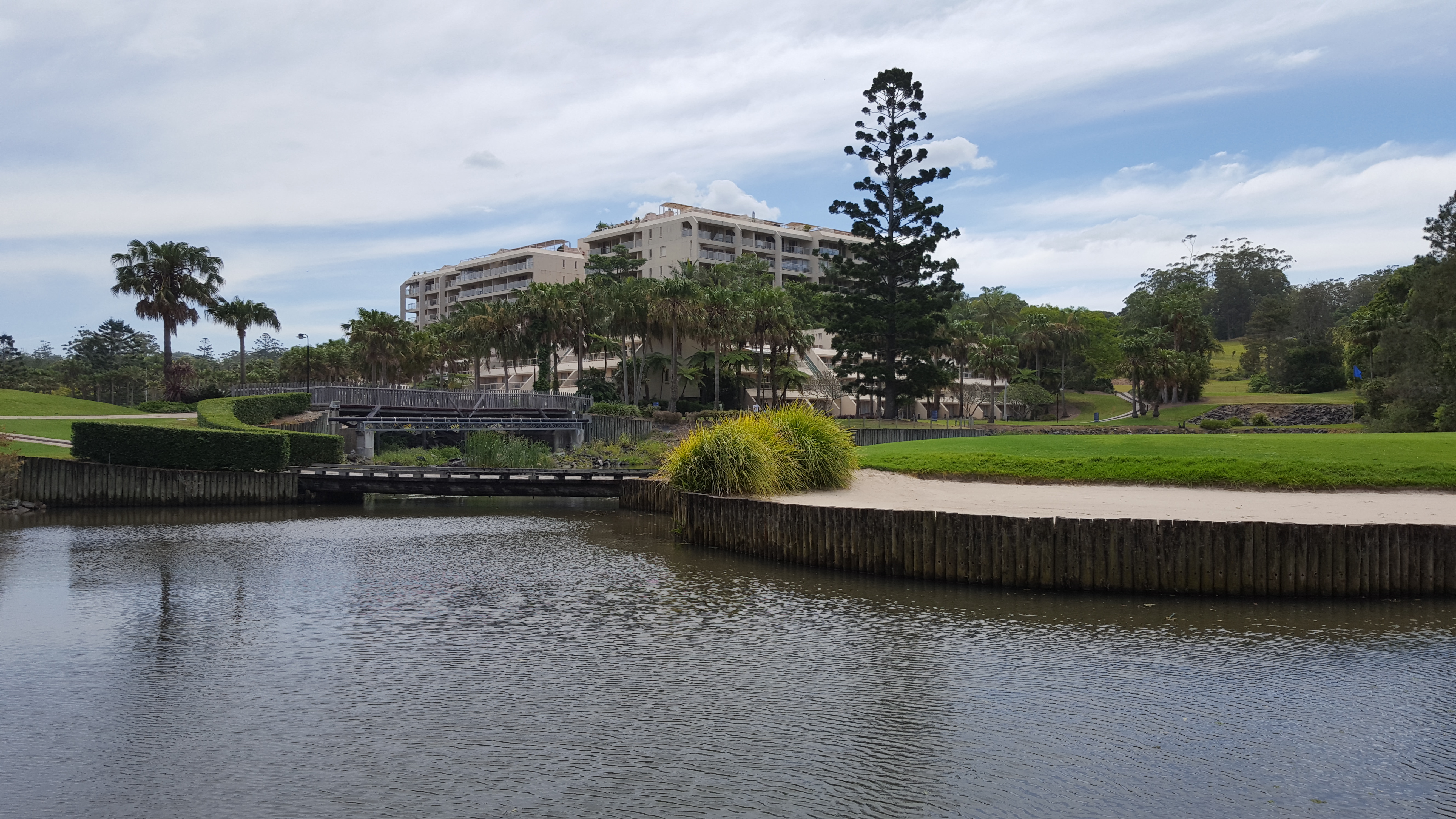
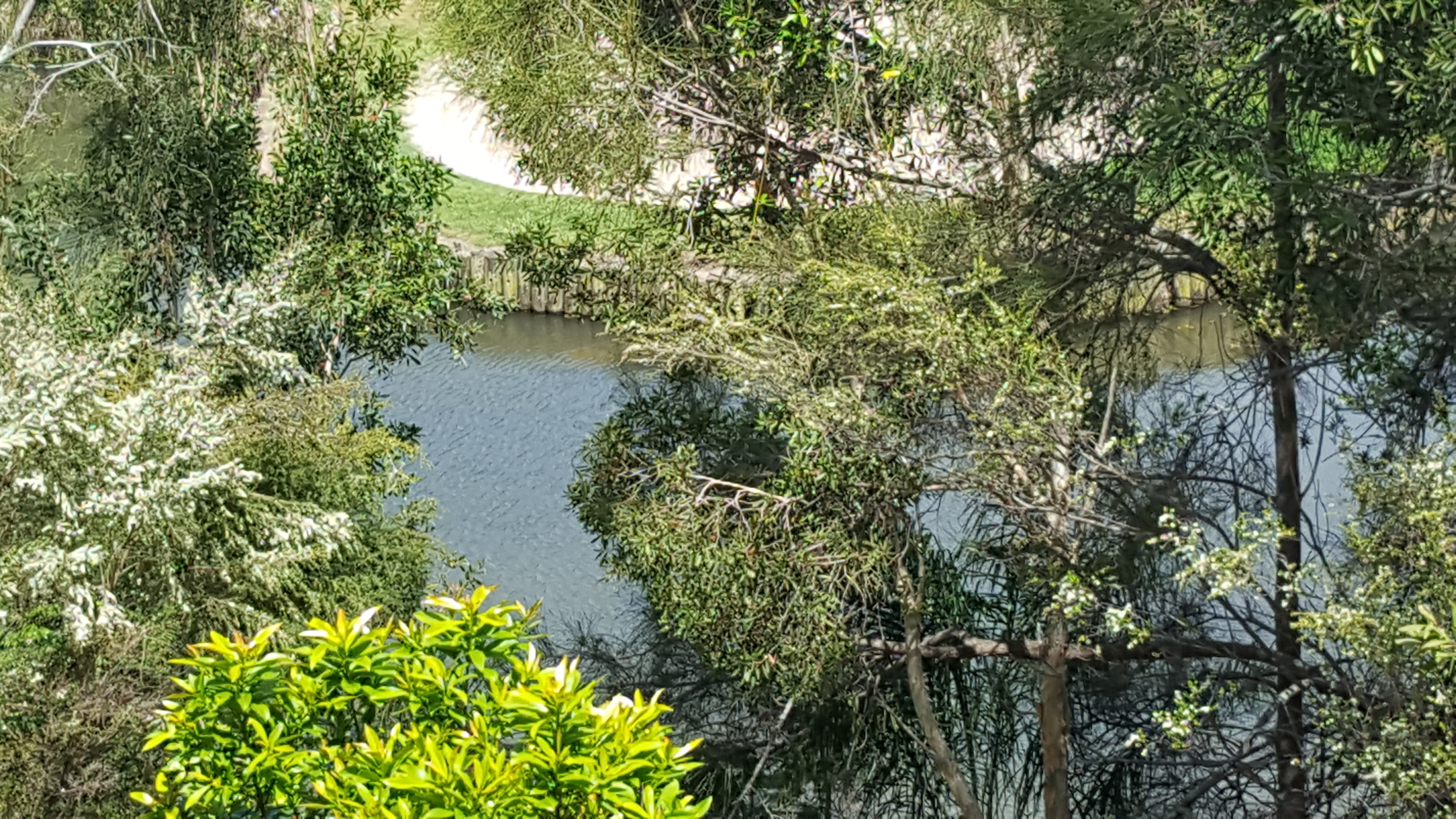
As you can see, lakes and greenery, and even a putting green.

20161030_141653

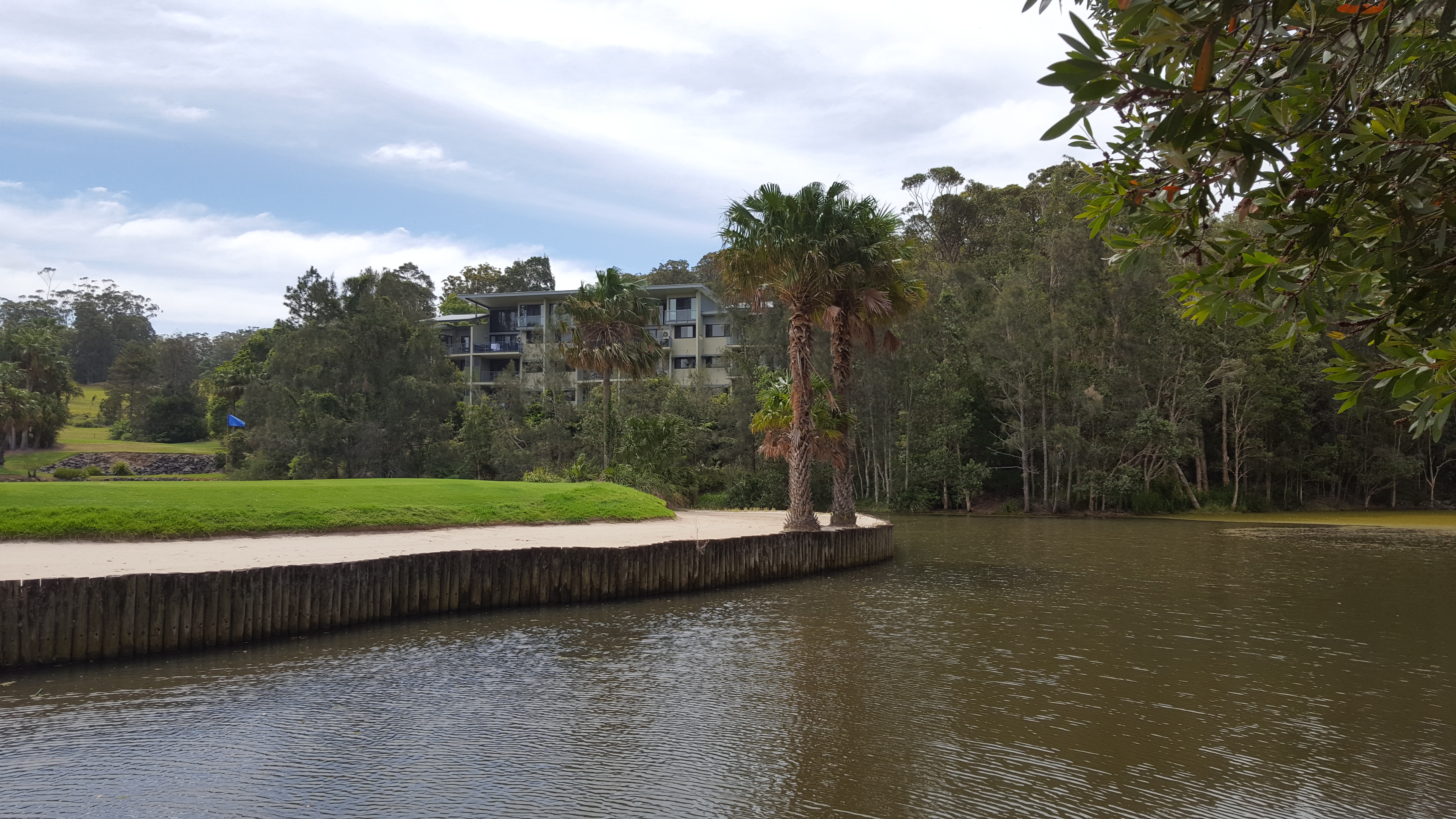
And in places, they try very hard to hide the ugly multi-story buildings in amongst the trees

20161030_141706

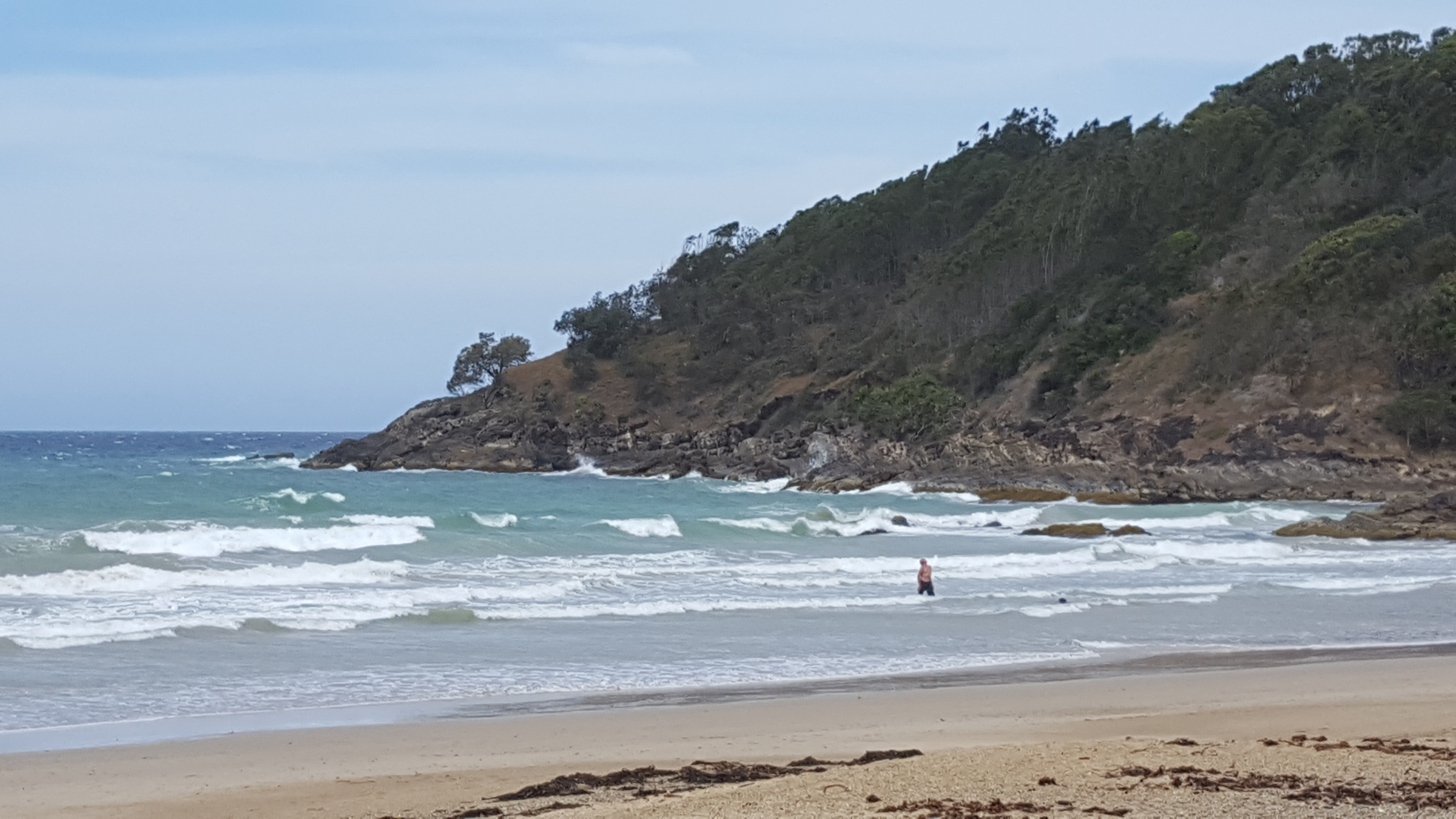
It is only a short walk to the ‘private beach’ and it is sufficiently long enough for a morning walk before breakfast.  You could even try to catch some fish for breakfast, though I’m not sure if anyone actually caught anything

20161030_142237

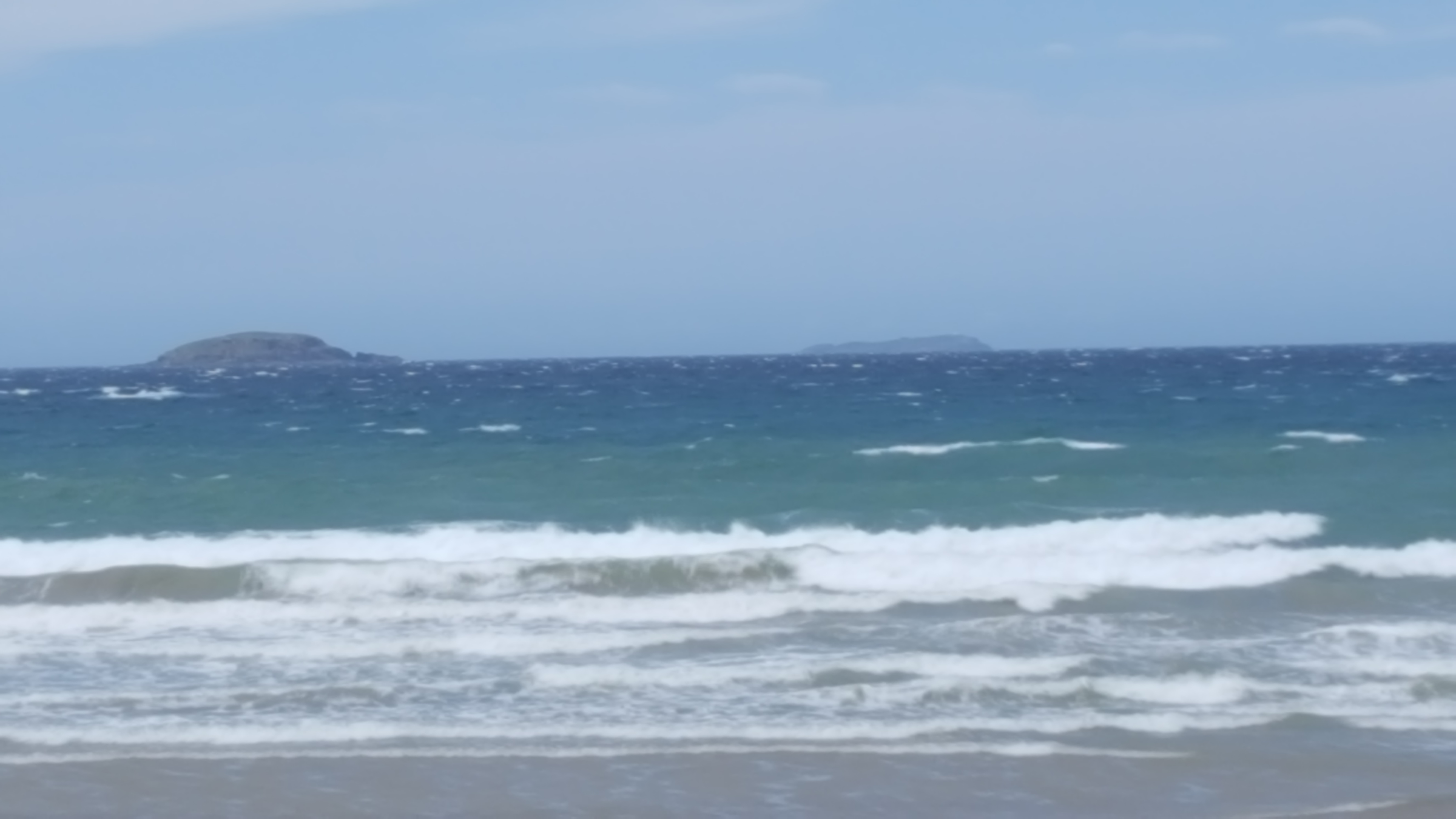
Or you can just stare out to sea

20161030_142225

And, back in the room, this is the view we had from our verandah

20161030_134910 - Copy