A score to settle – The Editor’s draft – Day 9

I have the story, the editor is asking for it, and I’m putting the final touches to it

It’s time for two events to happen. The first is a possible chance meeting with a woman in a bar, which, in ordinary circumstances, might just be a chance meeting in a bar, but for an agent, it’s always something else.

The second, Teresa finally arrives on our main character’s doorstep, uninvited and unwelcome.

I’ve been looking at photos of various places in the Middle East, and I was hoping to go with a vibe similar to Cairo in Egypt, but there seems to be a lot of what I’m looking for in countries like Oman and Jordan, like below

Nizwa City, City, Beautiful, Old Town, Architecture

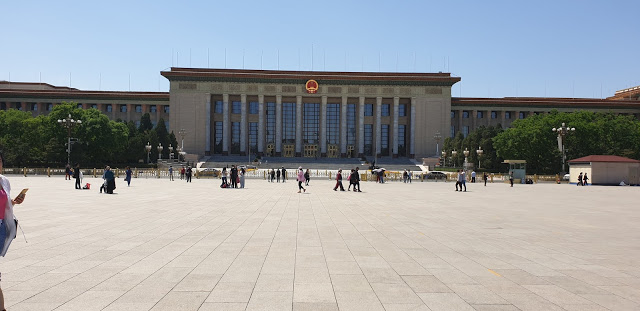
This scenery gives me the elements of the story, being near the mountains, there’s a large square that can be used for military parades, and buildings I’d expect to find in the location of the story.

It’s a pity we still cannot travel, at least not like we used to.

Today’s word count: 1,288 words, for a running total of 19,764.

Let’s talk history

What happened yesterday is history, but that’s not necessarily how we view what is history and what isn’t.

Similarly what is and what isn’t history is usually decided on by academics, because history texts that are used in schools are not written by ‘the man in the street’ authors. They’re usually university types who specialise in a particular field, or specialise section of history.

Even then one doubts that what is written is not a consensus of a panel.

So, when we talk about re-writing history, that takes a very brave bunch of people who want to buck the norm.

Our history, that which was taught when I went to school,. about our own country, Australia, started in 1770. Some brave soul tried to say it began earlier than that, before Captain Cook and the British arrived, out up a flag pole, and declared it belonged to Britain, like in 1606 when the Dutch explorer Willem Janszoon landed on the Cape York peninsula, only it wasn’t called that then.

And he might have been as surprised as Captain Cook that there were people here to observe their arrival. Yes, people had been living in this country for tens of thousands of years before the Europeans arrived.

But that was not what we were taught. No, Captain Cook, 1770, the a fleet of ships in 1788, and off we run as a new country, and a dumping ground for Britain’s convicts. Our history starts there, and then meanders through time, dividing the country up into states, having famous explorers like Burke and Wills, and Blaxland, Wentworth, and Lawson, Hume and Hovell.

And we commemorate all these people and those who were in charge over the years, with names of states, cities, rivers, mountains, everything under the sun. You’ve only got to glance at the list of hundreds of these forefathers and explorers to see just how many places in this country were named after them.

No heed was taken of what they may have been called before because no one really understood the languages of the first people who lived here. And they never seem to rate as a matter of study for us children back then.

Now, as people have begun to realise our history goes way, way back, and that there should be a nod to those inhabitants, they are considering re-writing some of our history to incorporate these people. And change the names of places to their original. A famous instance of recent renaming is of Ayers Rock, now called Uluru.

Even then, Australian History didn’t rate very highly, and I have to say, as a child at school 50 odd years ago, I learned more about the British Empire/Commonwealth, and about the English kings and queens, than we did about our own Governor Generals, Prime Ministers and State Premiers.

Could I tell you the name of our first Prime Minister? No. I can say when Australia became Australia, yes. 1901. Can I tell you the first King of England? Yes, William the Conqueror in 1066. There were kings before that but they only ruled of parts of England.

But over the years since I have read the odd book of Australian History but for some reason it never quite seems as colourful or as interesting as that of England or Scotland, or even some of the European countries.

Now, since I’ve been reading about what’s happening in the United States I have begin to take an interest in American history, and it, too, seems to suffer the same problems we have with ours, a bunch of academics decided what it was, and what it would not include, and then there is this thing called the 1619 project.

Wow, that seems to have stirred up a hornet’s nest.

Can’t wait to see what happens next.

A score to settle – The Editor’s draft – Day 8

I have the story, the editor is asking for it, and I’m putting the final touches to it

Back to the revolution.

How easy is it to find out who’s driving the revolutionary forces?

It’s not as if the leader is going to stand up and make a proclamation, and in turn, bring down the country’s internal security forces.

Of course, the leader of those forces has a name, General Ramos, and is as ruthless and murderous as he tries to be urbane and charming, the very definition of a wolf on sheep’s clothing.

Equally, he and Delacrat often butt heads, but Ramos knows that having an honest man in charge of the police not only makes him very careful in what he does but says a lot about the image the military in running the country wants to project to the outside world.

So does Delacrat know there’s a plot afoot, and equally, what will be his reaction? Will he be sympathetic, or ruthless in hunting down the ringleaders?

Another facet of the revolution is going to be where Amanda, the keynote speaker our main character has been sent to protect, stands, because it’s likely she knows something about the plans for the revolution, and more importantly, those who are in charge of the rebel forces. Another factor in this dynamic is that Amanda and he have a history, so his job of remaining invisible in the background, a key element in doing his job, is going to be impossible.

That, for the moment, will be how this part of the story will unfold over the coming days.

Today’s word count: 2,385 words, for a running total of 18,476.

Searching for locations: Oreti Village – No two sunrises are the same – 1

Oreti village, Pukawa Bay, North Island, New Zealand

On the southern tip of Lake Taupo

Our first morning there, a Saturday.  Winter.  Cold.  And a beautiful sunrise.

20180812_073230

This was taken from the balcony, overlooking the lake.

The sun is just creeping up over the horizon

20180812_073241

It gradually gets lighter, and then the sun breaks free of the low cloud

It lights up the balcony

20180811_074651

And the trees just beyond, a cascade of colorful ferns.

20180811_074622

It looks like its going to be a fine day, our first for this trip, and we will be heading to the mountains to see snow, for the first time for two of our granddaughters.

A score to settle – The Editor’s draft – Day 7

I have the story, the editor is asking for it, and I’m putting the final touches to it

Starting a project with half the plan and a sense of where the story is going to go sometimes leaves you in much the same position as painting yourself into a corner.

I’ve been there a few times, which is why I prefer to start the story with no firm ending in sight, and ad-lib.

Yes, at the end of this story, I want the revulsion to succeed, but like all good intentions, sometimes it doesn’t quite work out that way.

Taking on a military dictatorship no matter how benevolent its leader tries to portray it, and themselves, you may discover the intelligence you’re working with is not quite the case.

So, I need to invent a little background, more for me, so that I can get my head around what will be needed.

For instance, this country, in northern Africa, was once one of several old French colonies, among those that were once British, or German. These countries were poor, and had leaders backed by their colonial masters and as Colonialism became a yolk rather than a benefit, the country’s citizens found themselves inducted into the military as a means of giving the country employment and stability.

That in turn emboldened the military leaders to eventually oust the government propped up by the colonial masters and run the country themselves, usually because vested interests need a ‘friendly and corrupt regime to continue exploiting the country and its people.

Until the people fight back. Sometimes that ’cause’ centres itself on one person, or a group of people, and quite often these people can disappear, or be assassinated.

In this case, the county’s most outspoken critic has disappeared, and his deputy finds himself in a rather invidious position of working in the shadows and using suspect means to get a message across.

That means is going to be a human rights conference. There is a plan of sorts, but it’s not known whose involved among the delegates attending from many counties, or who the various intelligence services have on the ground.

Our main character and his assistant are but two of many, and their mission, like others, is overtly one thing, but why they’re really there, that’s for Delacrat to find out, because he knows he’s right in the middle of what could only be described as a nest of vipers.

More on this tomorrow

Today’s word count: 2,678 words, for a running total of 16,091.

Let’s talk history

What happened yesterday is history, but that’s not necessarily how we view what is history and what isn’t.

Similarly what is and what isn’t history is usually decided on by academics, because history texts that are used in schools are not written by ‘the man in the street’ authors. They’re usually university types who specialise in a particular field, or specialise section of history.

Even then one doubts that what is written is not a consensus of a panel.

So, when we talk about re-writing history, that takes a very brave bunch of people who want to buck the norm.

Our history, that which was taught when I went to school,. about our own country, Australia, started in 1770. Some brave soul tried to say it began earlier than that, before Captain Cook and the British arrived, out up a flag pole, and declared it belonged to Britain, like in 1606 when the Dutch explorer Willem Janszoon landed on the Cape York peninsula, only it wasn’t called that then.

And he might have been as surprised as Captain Cook that there were people here to observe their arrival. Yes, people had been living in this country for tens of thousands of years before the Europeans arrived.

But that was not what we were taught. No, Captain Cook, 1770, the a fleet of ships in 1788, and off we run as a new country, and a dumping ground for Britain’s convicts. Our history starts there, and then meanders through time, dividing the country up into states, having famous explorers like Burke and Wills, and Blaxland, Wentworth, and Lawson, Hume and Hovell.

And we commemorate all these people and those who were in charge over the years, with names of states, cities, rivers, mountains, everything under the sun. You’ve only got to glance at the list of hundreds of these forefathers and explorers to see just how many places in this country were named after them.

No heed was taken of what they may have been called before because no one really understood the languages of the first people who lived here. And they never seem to rate as a matter of study for us children back then.

Now, as people have begun to realise our history goes way, way back, and that there should be a nod to those inhabitants, they are considering re-writing some of our history to incorporate these people. And change the names of places to their original. A famous instance of recent renaming is of Ayers Rock, now called Uluru.

Even then, Australian History didn’t rate very highly, and I have to say, as a child at school 50 odd years ago, I learned more about the British Empire/Commonwealth, and about the English kings and queens, than we did about our own Governor Generals, Prime Ministers and State Premiers.

Could I tell you the name of our first Prime Minister? No. I can say when Australia became Australia, yes. 1901. Can I tell you the first King of England? Yes, William the Conqueror in 1066. There were kings before that but they only ruled of parts of England.

But over the years since I have read the odd book of Australian History but for some reason it never quite seems as colourful or as interesting as that of England or Scotland, or even some of the European countries.

Now, since I’ve been reading about what’s happening in the United States I have begin to take an interest in American history, and it, too, seems to suffer the same problems we have with ours, a bunch of academics decided what it was, and what it would not include, and then there is this thing called the 1619 project.

Wow, that seems to have stirred up a hornet’s nest.

Can’t wait to see what happens next.

A score to settle – The Editor’s draft – Day 8

I have the story, the editor is asking for it, and I’m putting the final touches to it

Back to the revolution.

How easy is it to find out who’s driving the revolutionary forces?

It’s not as if the leader is going to stand up and make a proclamation, and in turn, bring down the country’s internal security forces.

Of course, the leader of those forces has a name, General Ramos, and is as ruthless and murderous as he tries to be urbane and charming, the very definition of a wolf on sheep’s clothing.

Equally, he and Delacrat often butt heads, but Ramos knows that having an honest man in charge of the police not only makes him very careful in what he does but says a lot about the image the military in running the country wants to project to the outside world.

So does Delacrat know there’s a plot afoot, and equally, what will be his reaction? Will he be sympathetic, or ruthless in hunting down the ringleaders?

Another facet of the revolution is going to be where Amanda, the keynote speaker our main character has been sent to protect, stands, because it’s likely she knows something about the plans for the revolution, and more importantly, those who are in charge of the rebel forces. Another factor in this dynamic is that Amanda and he have a history, so his job of remaining invisible in the background, a key element in doing his job, is going to be impossible.

That, for the moment, will be how this part of the story will unfold over the coming days.

Today’s word count: 2,385 words, for a running total of 18,476.

Searching for locations: Oreti Village – No two sunrises are the same – 1

Oreti village, Pukawa Bay, North Island, New Zealand

On the southern tip of Lake Taupo

Our first morning there, a Saturday.  Winter.  Cold.  And a beautiful sunrise.

20180812_073230

This was taken from the balcony, overlooking the lake.

The sun is just creeping up over the horizon

20180812_073241

It gradually gets lighter, and then the sun breaks free of the low cloud

It lights up the balcony

20180811_074651

And the trees just beyond, a cascade of colorful ferns.

20180811_074622

It looks like its going to be a fine day, our first for this trip, and we will be heading to the mountains to see snow, for the first time for two of our granddaughters.

A score to settle – The Editor’s draft – Day 8

I have the story, the editor is asking for it, and I’m putting the final touches to it

Back to the revolution.

How easy is it to find out who’s driving the revolutionary forces?

It’s not as if the leader is going to stand up and make a proclamation, and in turn, bring down the country’s internal security forces.

Of course, the leader of those forces has a name, General Ramos, and is as ruthless and murderous as he tries to be urbane and charming, the very definition of a wolf on sheep’s clothing.

Equally, he and Delacrat often butt heads, but Ramos knows that having an honest man in charge of the police not only makes him very careful in what he does but says a lot about the image the military in running the country wants to project to the outside world.

So does Delacrat know there’s a plot afoot, and equally, what will be his reaction? Will he be sympathetic, or ruthless in hunting down the ringleaders?

Another facet of the revolution is going to be where Amanda, the keynote speaker our main character has been sent to protect, stands, because it’s likely she knows something about the plans for the revolution, and more importantly, those who are in charge of the rebel forces. Another factor in this dynamic is that Amanda and he have a history, so his job of remaining invisible in the background, a key element in doing his job, is going to be impossible.

That, for the moment, will be how this part of the story will unfold over the coming days.

Today’s word count: 2,385 words, for a running total of 18,476.

In a word: arm

Like leg, arm is a word that is mostly associated with a body part.

Like being legless, another description for being drunk, being rendered ‘armless’ means you are no threat, in a rather awful but funny way by saying it.

I guess we all have a dash of ‘sick’ humour in all of us.

However, arm can also be used to describe a part of a structure too.

It could also describe the arm of an ‘armchair’.

But…

Arm also means to give people weapons like guns, usually from an armoury.

I’m guessing that a whole lot of people with arms is an army!

You can also say that taking those weapons away would be to disarm them.

It might take the long arm of the law to do it, too.

And to disarm someone doesn’t necessarily mean to take away their arms, but to ‘charm’ them with your wit and humour.

An arm can also be a river or streams tributary, so I could say instead of staying on the main river, I’ll take the ‘named’ arm, but just remember, sometimes this can be dangerous, getting off the main route.

On a boat, there is a yardarm, and this was once used to hang seamen who committed serious crimes such as mutiny.

A call to arms was to declare war,

And lastly, an arm of the defence services could be any one of Army, Navy, Marines or Airforce.

Just steer clear of the Navy for the aforementioned reasons.