The writer’s toolbox

Travelling is always a good source of material to add to the writing store.

Writers collect anecdotes, descriptions of their fellow travellers, more the idiosyncrasies than an actual physical description, and of the experience, though it is all the better if it turns out to be really, really bad than good.

This equally applies to experiences in hotels, with hire cars, tourist spots and especially fellow travellers.

Start with the airline. This can make or break the start of a holiday and could be the difference between a great start or a horrid one.

We can usually accept the sardine arrangements, the lack of legroom, being within earshot of a screaming baby, or put up with the constant kicking in the back of the seat by the wretched uncontrollable child sitting behind you.

It’s having the person in front fully reclining their seat in your face that gets your goat. For an hour and a half or eight hours, it is still the biggest bone of contention when flying.

We are taking one airline down to Melbourne the one that makes a big deal out of the full service it provides, and another airline back, formerly a low-cost airline but now trying to match its so-called full-service rival.

The flight down is smooth, and the food reasonably good. The landing, even though the pilot was battling sharp crosswinds, was very heavy and left us in no doubt we had reached terra firma again. I’ve been on worse.

Hire cars are a rich field to pick over and I’ve read some interesting experiences involving even the best. So far I’ve not had a problem. I pre-booked as far in advance as possible to get a small fuel-efficient vehicle. Sometimes we are upgraded and while they think they are doing you a favour it is not necessarily the case, especially when you finish up with a large car that barely fits small provincial French roads one lane wide. It does happen.

There is also the waiting time at the car rental desk, particularly when it’s the rental company you picked, while other company desks are empty. You also quickly discover that most of the people in the queue didn’t think of pre-booking a car, which to my mind is expecting trouble with it being the peak holiday period.

We had to wait in a long queue after taking a chance it would be less crowded at the pick-up point than the desk in the airport terminal. It was no surprise to discover that a lot of other travellers had the same thought.

Hotels can also be one of the major letdowns of a holiday. If you are going to use a travel agent to pick a hotel for you, make sure you check as much as you can because no matter how it is described, seeing it, in reality, is always completely different than the pictures in a brochure and sometimes on the Internet. It requires research and a good look at TripAdvisor. Or word of mouth by someone you know and trust who has stayed there.

Take, for instance, staying in a five-star hotel the usual stomping ground of the rich and famous, it is always interesting to see how the less privileged fare. Where hotel staff are supposed to treat each guess equally it is not always the case. Certainly, if you’re flashing money around, the staff will be happy to take it though you may not necessarily get what you’re expecting.

We are lucky to be in the highest loyalty level and this accords us a number of privileges; this time working in our favour but it is not always the case. Privilege can sometimes count for nothing. It often depends on the humour of the front desk clerk and woe betide you if you get the receptionist from hell. Been there, done that, more than once.

Then there is the room. There is such a wide variety of rooms available even if the hotel site or brochure had representative pictures the odds are you can still get a room that is nothing like you’re expecting or were promised.

Believe me, there are rooms with a view, overlooking pigeon coops or air-conditioning vents.

A bone of contention often can be the location of the hotel and sometimes parking facilities not the least of which is the cost.  Valet parking; forget it.

We are reasonably near transport if we could walk, the km to the nearest bus or tram stop is a long long way when you can’t walk and that’s when the hotel starts to feel like a prison. Taxis may be cheap but when you have to use them three or four times a day it all adds up.

Be wary when a hotel says it is close to public transport. While that may be true in London, anywhere else especially in Europe you could find yourself in the middle of nowhere. Its when you discover your travel agent didn’t exactly lie but it is why that weekly rate was so cheap. In the end, the sum of the taxi fares and the accommodation turns out to be dearer than if you stayed at the Savoy.

So airline, hire car and hotel aside those front line experiences are fodder for the travel blogger, these people who are also known as road warriors.

I wondered why until we started travelling and discovered the incredible highs and lows, of flying, yes there are good and bad airlines and the bad are not confined to the low cost, of rental cars and of hotels. There is a very large gulf between five stars and three and sometimes three can be very generous. And of course, l now have a list of hotels l would never stay in again, the names of which might surprise you.

Unfortunately, my travel exploits are sometimes as boring as the day is long, but even then, there’s at least one calamity to deal with.

Our airport experiences are all without incident, although from time to time the sight of police or soldiers patrolling with guns can be disconcerting.

We have also experienced the odd problem in London at Heathrow firstly trying to get hep from the designated help staff and then to find the check-in desk of an airline apparently no one available knew existed.

That was momentarily exciting after phone calls were not answered and internet contact was not possible. Not until a little footwork found the agents desk and the misunderstanding was sorted out.

By the way, the airline itself was a pleasure to fly on, the staff pleasant and most of all we arrived just before the airport closed.

On the way home, only a flight stands between us and getting home. After days sometimes weeks it is that moment we all look forward to sleeping on our own beds making our own food and getting to the gym to work off those extra kilos put on by delicious hotel food or local fare where calorie counting is not part of the dining experience.

Of course, getting to the airport from the hotel can be an experience in itself whether by taxi perhaps the taxi driver from hell who knows only two speeds fast and stop and is also, unfortunately, colour blind.

Or whether you have arranged for a transfer only to discover it’s not coming because the company went out of business or you changed hotels and someone forgot to tell them.

Or the travel agent made a mistake or forgot to confirm the booking.

Oh yes, it happens.

We have a hire car and will be returning it t the same place. Let’s hope the signage at the airport makes it easy to find the rental place. In London we had a hell of a time trying to find it; good thing we were hours earlier than we should be.

And just because the sign says rental returns for the lane you’re in it doesn’t necessarily follow it’s the right lane. Then as you miss the exit, and get stuck on the one-way road system, all of a sudden you have left the airport and you’re heading back to the city.

If you’re running late …

But if everything goes to plan you get to the airport with time to spare.

We manage to arrive early at the airport. Rather than wait three hours for our flight we decide to try and get on an earlier departure. This will depend on our ticket type and whether there are seats available, preferably together.

We line up in the service queue, which by its very description means you have a long wait as service is mostly between difficult to impossible depending on the request.

We wait for twenty minutes. There’s a long queue behind us. Our request is taken care of quickly and efficiently making it almost seamless, certainly painless. I’m sure our request was one of the very few easy ones the staff will get.

Today it seems it is our lucky day. The transfer to an earlier flight is free and there are two seats available together. All we have to do is alert the pick-up driver at our destination we are going to be an hour earlier. Done.

Checking in bags is usually the bane of the traveller’s existence.

No matter which airport in whatever country you are departing from the only difference is the length of the queue; from incredibly long with a half-hour wait to the head of the line to up to an hour. Our queue is 15 to 20 minutes.

One assumes this is why intending passengers are asked to go to the airport two hours ahead of their fight. There are times of the day where the queues are horrendous, and that not only applies to Heathrow.

And if you are late, just panic.

And if your bags are overweight be prepared to have your credit card hammered.

Especially if you’re flying Air France from Venice to Paris. Domestically in Australia, it’s not so bad.

Now its time to relax. There is an hour before we have to be at the gate so just enough time to get coffee and a doughnut.

And be horrified at what shops charge for simple items like sandwiches. I think $10 is very expensive. But if you’re hungry and forgot to eat before getting to the airport then be prepared to pay more than you usually would for the same fare.

It’s also time to observe our fellow passengers, and there is always the one who has a last-minute dash for a plane that is just about to leave, passengers with panic-stricken looks.

We all know what happens if you miss the flight even as you’re downing that last cocktail in the airline lounge while thinking, yes they’ll hold the flight for me!

Apparently not because airlines want to keep their ‘on-time’ record.

Even so, there’s still three more calls for the missing passengers and then nothing. If they missed the plane there their problems are just beginning. It’s the same feeling you have when your name is called out before the flight starts loading.

Only once have we been called up and given an upgrade, and once in the US to be told we could take another flight because our flight was overbooked. Business-class was greatly appreciated and was worth the extra hour we had to wait.

The next bottleneck is the scanners and sometimes the queue here is very long and moving slowly because the scanners are set to pick up belts and shoes so people are scattered everywhere getting redressed and putting shoes on. Today being a weekday the queue is not so bad.

Loading is painless and reasonably organized except when the passengers in high numbered rows try to board by the front door instead of the rear door and clash midway in the plane. After they untangle themselves and get to their seats we’re ready to go.

This flight still has a manual safety demonstration which most people ignored but is slightly better than the video demonstration. Let’s hope we don’t go down over the water.

I’ve charted my path to the emergency exit and l have quite a few people before me. I guess there’s more than one way to be last off the plane.

Sometimes you get to pick who you get to sit next to, especially if you are travelling with your partner which this time l am, but in a three-seat arrangement, you have no control over who takes that third seat.

We are lucky this time because it will not become a tight squeeze but unfortunately, our fellow traveller has a cold and in a confined space for several hours it could turn out to be a problem.

The flight is smooth, the snacks edible, but there is no liquor service like the full-service rival but that might be a good thing.

No air rage on this flight.

Time flies, pardon the pun, and we have arrived. Even though it took forever for the baggage to be delivered we still got home early.

Until the next time, we fly.


Searching for locations: Old Shanghai, China

The old Shanghai refers to a small area of Shanghai that used to be walled in and remained that way until about 1912 when all but a small section of the wall was demolished.  With the advent of the concessions, Old Shanghai became the administrative center until later when it became a shopping complex.

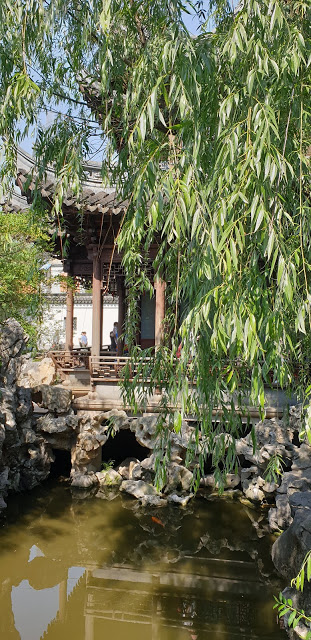
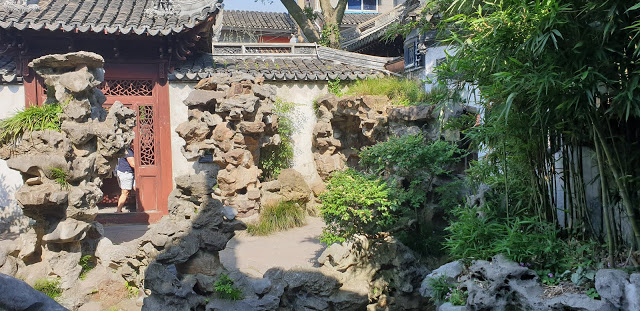
Now it has many restored historical buildings as well as new buildings in a somewhat traditional style that has become one of Shanghai’s main tourist attractions, housing many shops and restaurants.

The “Old Town” is not exclusively old, as you still have a chance to take in the atmosphere if you wander into the quaint side streets.

But, on first viewing walking down the street towards the complex, I’m not sure I’d go as far as to say this is in reality old Shanghai, except for what appears to be a true representation of it architecturally. 

The buildings, which are shops and restaurants, are set out symmetrically, with streets, alleyways, and squares which may prove that it was specially built for the tourists, and no mechanized traffic.

Anyway…

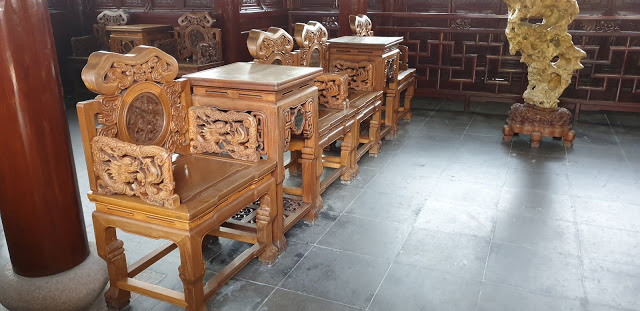
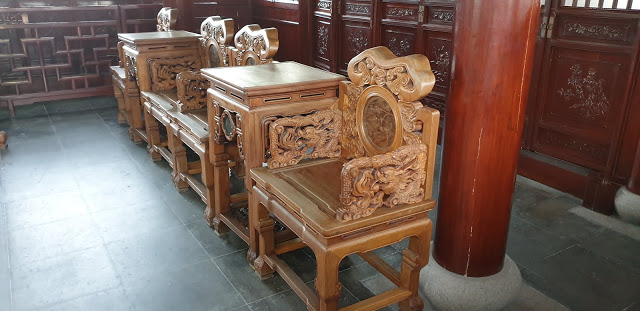
The buildings are magnificent, and a photographer’s delight, and you’d finish up having hundreds of photos by the time you leave.  All the buildings are exquisite representations of traditional Chinese architecture. 

As for buying stuff, remember if you’re not Chinese you have the sucker tourist stamp on your forehead, so be prepared to walk away if the vendors will not bargain.  

Nothing here is worth the price tag and in our group discounts like from 130 RMB to 50 RMB and from 1 for 1,200 to 2 for 950 RMB are common.

Here common t-shirts that we can get for 3 dollars back home start at 150 RMB which is roughly 35 dollars.  It’s that kind of market.

We end up is a tea room, on the third floor of the meeting point below, and discover all the tour guides sitting around a table counting money, and I have to say it’s the most $50 notes I’ve ever seen in one place.  
It is, we were told, where they discussed ‘strategy’.

Searching for locations: Auckland, New Zealand, a rare day for the port

We were staying at the Hilton and advised there would be a large cruise liner berthing next to the hotel.  There was the Arcadia.

2013-03-08 11.51.48

This is the view from the other side of the hotel.  Where our room was, we could almost walk onto the aft end of the ship.

We were also told this was a rather extraordinary day because there were two cruise ships in the port. particularly because it was near the end of the cruising season.

The other ship was two berths along, the Sun Princess.

2013-03-08 11.56.17

Not as big as the Arcadia, up close it was still very impressive.

The writer’s toolbox

Travelling is always a good source of material to add to the writing store.

Writers collect anecdotes, descriptions of their fellow travellers, more the idiosyncrasies than an actual physical description, and of the experience, though it is all the better if it turns out to be really, really bad than good.

This equally applies to experiences in hotels, with hire cars, tourist spots and especially fellow travellers.

Start with the airline. This can make or break the start of a holiday and could be the difference between a great start or a horrid one.

We can usually accept the sardine arrangements, the lack of legroom, being within earshot of a screaming baby, or put up with the constant kicking in the back of the seat by the wretched uncontrollable child sitting behind you.

It’s having the person in front fully reclining their seat in your face that gets your goat. For an hour and a half or eight hours, it is still the biggest bone of contention when flying.

We are taking one airline down to Melbourne the one that makes a big deal out of the full service it provides, and another airline back, formerly a low-cost airline but now trying to match its so-called full-service rival.

The flight down is smooth, and the food reasonably good. The landing, even though the pilot was battling sharp crosswinds, was very heavy and left us in no doubt we had reached terra firma again. I’ve been on worse.

Hire cars are a rich field to pick over and I’ve read some interesting experiences involving even the best. So far I’ve not had a problem. I pre-booked as far in advance as possible to get a small fuel-efficient vehicle. Sometimes we are upgraded and while they think they are doing you a favour it is not necessarily the case, especially when you finish up with a large car that barely fits small provincial French roads one lane wide. It does happen.

There is also the waiting time at the car rental desk, particularly when it’s the rental company you picked, while other company desks are empty. You also quickly discover that most of the people in the queue didn’t think of pre-booking a car, which to my mind is expecting trouble with it being the peak holiday period.

We had to wait in a long queue after taking a chance it would be less crowded at the pick-up point than the desk in the airport terminal. It was no surprise to discover that a lot of other travellers had the same thought.

Hotels can also be one of the major letdowns of a holiday. If you are going to use a travel agent to pick a hotel for you, make sure you check as much as you can because no matter how it is described, seeing it, in reality, is always completely different than the pictures in a brochure and sometimes on the Internet. It requires research and a good look at TripAdvisor. Or word of mouth by someone you know and trust who has stayed there.

Take, for instance, staying in a five-star hotel the usual stomping ground of the rich and famous, it is always interesting to see how the less privileged fare. Where hotel staff are supposed to treat each guess equally it is not always the case. Certainly, if you’re flashing money around, the staff will be happy to take it though you may not necessarily get what you’re expecting.

We are lucky to be in the highest loyalty level and this accords us a number of privileges; this time working in our favour but it is not always the case. Privilege can sometimes count for nothing. It often depends on the humour of the front desk clerk and woe betide you if you get the receptionist from hell. Been there, done that, more than once.

Then there is the room. There is such a wide variety of rooms available even if the hotel site or brochure had representative pictures the odds are you can still get a room that is nothing like you’re expecting or were promised.

Believe me, there are rooms with a view, overlooking pigeon coops or air-conditioning vents.

A bone of contention often can be the location of the hotel and sometimes parking facilities not the least of which is the cost.  Valet parking; forget it.

We are reasonably near transport if we could walk, the km to the nearest bus or tram stop is a long long way when you can’t walk and that’s when the hotel starts to feel like a prison. Taxis may be cheap but when you have to use them three or four times a day it all adds up.

Be wary when a hotel says it is close to public transport. While that may be true in London, anywhere else especially in Europe you could find yourself in the middle of nowhere. Its when you discover your travel agent didn’t exactly lie but it is why that weekly rate was so cheap. In the end, the sum of the taxi fares and the accommodation turns out to be dearer than if you stayed at the Savoy.

So airline, hire car and hotel aside those front line experiences are fodder for the travel blogger, these people who are also known as road warriors.

I wondered why until we started travelling and discovered the incredible highs and lows, of flying, yes there are good and bad airlines and the bad are not confined to the low cost, of rental cars and of hotels. There is a very large gulf between five stars and three and sometimes three can be very generous. And of course, l now have a list of hotels l would never stay in again, the names of which might surprise you.

Unfortunately, my travel exploits are sometimes as boring as the day is long, but even then, there’s at least one calamity to deal with.

Our airport experiences are all without incident, although from time to time the sight of police or soldiers patrolling with guns can be disconcerting.

We have also experienced the odd problem in London at Heathrow firstly trying to get hep from the designated help staff and then to find the check-in desk of an airline apparently no one available knew existed.

That was momentarily exciting after phone calls were not answered and internet contact was not possible. Not until a little footwork found the agents desk and the misunderstanding was sorted out.

By the way, the airline itself was a pleasure to fly on, the staff pleasant and most of all we arrived just before the airport closed.

On the way home, only a flight stands between us and getting home. After days sometimes weeks it is that moment we all look forward to sleeping on our own beds making our own food and getting to the gym to work off those extra kilos put on by delicious hotel food or local fare where calorie counting is not part of the dining experience.

Of course, getting to the airport from the hotel can be an experience in itself whether by taxi perhaps the taxi driver from hell who knows only two speeds fast and stop and is also, unfortunately, colour blind.

Or whether you have arranged for a transfer only to discover it’s not coming because the company went out of business or you changed hotels and someone forgot to tell them.

Or the travel agent made a mistake or forgot to confirm the booking.

Oh yes, it happens.

We have a hire car and will be returning it t the same place. Let’s hope the signage at the airport makes it easy to find the rental place. In London we had a hell of a time trying to find it; good thing we were hours earlier than we should be.

And just because the sign says rental returns for the lane you’re in it doesn’t necessarily follow it’s the right lane. Then as you miss the exit, and get stuck on the one-way road system, all of a sudden you have left the airport and you’re heading back to the city.

If you’re running late …

But if everything goes to plan you get to the airport with time to spare.

We manage to arrive early at the airport. Rather than wait three hours for our flight we decide to try and get on an earlier departure. This will depend on our ticket type and whether there are seats available, preferably together.

We line up in the service queue, which by its very description means you have a long wait as service is mostly between difficult to impossible depending on the request.

We wait for twenty minutes. There’s a long queue behind us. Our request is taken care of quickly and efficiently making it almost seamless, certainly painless. I’m sure our request was one of the very few easy ones the staff will get.

Today it seems it is our lucky day. The transfer to an earlier flight is free and there are two seats available together. All we have to do is alert the pick-up driver at our destination we are going to be an hour earlier. Done.

Checking in bags is usually the bane of the traveller’s existence.

No matter which airport in whatever country you are departing from the only difference is the length of the queue; from incredibly long with a half-hour wait to the head of the line to up to an hour. Our queue is 15 to 20 minutes.

One assumes this is why intending passengers are asked to go to the airport two hours ahead of their fight. There are times of the day where the queues are horrendous, and that not only applies to Heathrow.

And if you are late, just panic.

And if your bags are overweight be prepared to have your credit card hammered.

Especially if you’re flying Air France from Venice to Paris. Domestically in Australia, it’s not so bad.

Now its time to relax. There is an hour before we have to be at the gate so just enough time to get coffee and a doughnut.

And be horrified at what shops charge for simple items like sandwiches. I think $10 is very expensive. But if you’re hungry and forgot to eat before getting to the airport then be prepared to pay more than you usually would for the same fare.

It’s also time to observe our fellow passengers, and there is always the one who has a last-minute dash for a plane that is just about to leave, passengers with panic-stricken looks.

We all know what happens if you miss the flight even as you’re downing that last cocktail in the airline lounge while thinking, yes they’ll hold the flight for me!

Apparently not because airlines want to keep their ‘on-time’ record.

Even so, there’s still three more calls for the missing passengers and then nothing. If they missed the plane there their problems are just beginning. It’s the same feeling you have when your name is called out before the flight starts loading.

Only once have we been called up and given an upgrade, and once in the US to be told we could take another flight because our flight was overbooked. Business-class was greatly appreciated and was worth the extra hour we had to wait.

The next bottleneck is the scanners and sometimes the queue here is very long and moving slowly because the scanners are set to pick up belts and shoes so people are scattered everywhere getting redressed and putting shoes on. Today being a weekday the queue is not so bad.

Loading is painless and reasonably organized except when the passengers in high numbered rows try to board by the front door instead of the rear door and clash midway in the plane. After they untangle themselves and get to their seats we’re ready to go.

This flight still has a manual safety demonstration which most people ignored but is slightly better than the video demonstration. Let’s hope we don’t go down over the water.

I’ve charted my path to the emergency exit and l have quite a few people before me. I guess there’s more than one way to be last off the plane.

Sometimes you get to pick who you get to sit next to, especially if you are travelling with your partner which this time l am, but in a three-seat arrangement, you have no control over who takes that third seat.

We are lucky this time because it will not become a tight squeeze but unfortunately, our fellow traveller has a cold and in a confined space for several hours it could turn out to be a problem.

The flight is smooth, the snacks edible, but there is no liquor service like the full-service rival but that might be a good thing.

No air rage on this flight.

Time flies, pardon the pun, and we have arrived. Even though it took forever for the baggage to be delivered we still got home early.

Until the next time, we fly.


Searching for locations – Coramba – Lowanna, New South Wales, Australia

Once a bustling railway

When You pick up a document that describes tourist attractions in Coffs Harbour, there’s one about the Orara Valley, and what caught my eye was firstly the Lowanna Railway Station.

To get there, you pass through Coramba, which has a railway line running through it, but any attempt to find the railway station will be met with disappointment.

But …

That’s not the railway story, that is the Glenreagh to Dorrigo line, first mooted in 1906, but not getting started until 1910, then halted because of the First World War and not completed until December 1924, and ran until October 1972.

However, back to Coramba…

The North Coast railway (the primary rail route in the Mid North Coast and Northern Rivers regions of New South Wales) passes through Coramba, which had a now-closed railway station from 1922.  An attempt to find the station took us to a private residence, which obviously was once the station.

And then to the right historic station, in Lowanna…

Lowanna was the largest of the intermediate stations. It was an attended station, with a crossing loop and siding. Most of the timber was loaded at this location. 

Opened  23-Dec-1924 and Closed 20-Sep-1975

What we were really looking for was the Lowanna Railway Station, which, when we put it in the GPS almost got us lost.  We eventually found the refurbished station, and a rather run down platform, and rail tracks.

Lowanna was on the Dorrigo branch and lies on the north coast of NSW.  It branches off the North Coast Line at Glenreagh and climbs up to the Dorrigo Plateau.

The Dorrigo area was settled in the early 1900s by pastoralists and tree fellers. Due to the steep terrain, it was decided to build a railway to allow products to be brought to nearby port towns. Several routes were surveyed, with the route from Glenreagh eventually chosen. The line climbs 664m over a length of 69km.

Apart from the endpoints of Dorrigo and Glenreagh, the station on this line was very small, often consisting of a short platform with a small shelter. The major traffic on this line was timber.

Searching for locations – Coramba – Lowanna, New South Wales, Australia

Once a bustling railway

When You pick up a document that describes tourist attractions in Coffs Harbour, there’s one about the Orara Valley, and what caught my eye was firstly the Lowanna Railway Station.

To get there, you pass through Coramba, which has a railway line running through it, but any attempt to find the railway station will be met with disappointment.

But …

That’s not the railway story, that is the Glenreagh to Dorrigo line, first mooted in 1906, but not getting started until 1910, then halted because of the First World War and not completed until December 1924, and ran until October 1972.

However, back to Coramba…

The North Coast railway (the primary rail route in the Mid North Coast and Northern Rivers regions of New South Wales) passes through Coramba, which had a now-closed railway station from 1922.  An attempt to find the station took us to a private residence, which obviously was once the station.

And then to the right historic station, in Lowanna…

Lowanna was the largest of the intermediate stations. It was an attended station, with a crossing loop and siding. Most of the timber was loaded at this location. 

Opened  23-Dec-1924 and Closed 20-Sep-1975

What we were really looking for was the Lowanna Railway Station, which, when we put it in the GPS almost got us lost.  We eventually found the refurbished station, and a rather run down platform, and rail tracks.

Lowanna was on the Dorrigo branch and lies on the north coast of NSW.  It branches off the North Coast Line at Glenreagh and climbs up to the Dorrigo Plateau.

The Dorrigo area was settled in the early 1900s by pastoralists and tree fellers. Due to the steep terrain, it was decided to build a railway to allow products to be brought to nearby port towns. Several routes were surveyed, with the route from Glenreagh eventually chosen. The line climbs 664m over a length of 69km.

Apart from the endpoints of Dorrigo and Glenreagh, the station on this line was very small, often consisting of a short platform with a small shelter. The major traffic on this line was timber.

Searching for locations: The Bund, Shanghai, China

The Bund

The architecture along the Bund or Waitan is a living museum of the colonial history of the 1800s.  The area centers on a section of Zhongshan Road within the former Shanghai International Settlement.

The word bund means an embankment or an embanked quay.   It was initially a British settlement; later the British and American settlements were combined in the International Settlement.

The Bund is a mile-long stretch of waterfront promenade along the Huangpu River. There are 52 buildings of various architectural styles, including Gothic, baroque, and neoclassical styles. The area is often referred to as “the museum of buildings”.

Building styles include Romanesque Revival, Gothic Revival, Renaissance Revival, Baroque Revival, Neo-Classical or Beaux-Arts, as well as a number in Art Deco style.

Having seen these buildings initially the night before, mostly lit up, our viewing this morning was from the land side, and particularly interesting in that the colonial architecture was really fascinating considering their location, but not surprising given Shanghai’s history.  A lot of these buildings would be more at home in London, that out in the far east.

The Bund waterfront is about two kilometers long and impossible to cover in the time allowed for this part of the tour.

There was just enough time to get photos of the waterfront and the old buildings.

Some of these buildings had odd shapes, like one on the far right that looks like a bottle opener.

And, for some odd reason, a bull.

On the other side of the water, the sights that had been quite colorful the night before, were equally impressive though somewhat diminished by the haze.

Searching for locations – Coramba – Lowanna, New South Wales, Australia

Once a bustling railway

When You pick up a document that describes tourist attractions in Coffs Harbour, there’s one about the Orara Valley, and what caught my eye was firstly the Lowanna Railway Station.

To get there, you pass through Coramba, which has a railway line running through it, but any attempt to find the railway station will be met with disappointment.

But …

That’s not the railway story, that is the Glenreagh to Dorrigo line, first mooted in 1906, but not getting started until 1910, then halted because of the First World War and not completed until December 1924, and ran until October 1972.

However, back to Coramba…

The North Coast railway (the primary rail route in the Mid North Coast and Northern Rivers regions of New South Wales) passes through Coramba, which had a now-closed railway station from 1922.  An attempt to find the station took us to a private residence, which obviously was once the station.

And then to the right historic station, in Lowanna…

Lowanna was the largest of the intermediate stations. It was an attended station, with a crossing loop and siding. Most of the timber was loaded at this location. 

Opened  23-Dec-1924 and Closed 20-Sep-1975

What we were really looking for was the Lowanna Railway Station, which, when we put it in the GPS almost got us lost.  We eventually found the refurbished station, and a rather run down platform, and rail tracks.

Lowanna was on the Dorrigo branch and lies on the north coast of NSW.  It branches off the North Coast Line at Glenreagh and climbs up to the Dorrigo Plateau.

The Dorrigo area was settled in the early 1900s by pastoralists and tree fellers. Due to the steep terrain, it was decided to build a railway to allow products to be brought to nearby port towns. Several routes were surveyed, with the route from Glenreagh eventually chosen. The line climbs 664m over a length of 69km.

Apart from the endpoints of Dorrigo and Glenreagh, the station on this line was very small, often consisting of a short platform with a small shelter. The major traffic on this line was timber.

Searching for locations: Old Shanghai, China

The old Shanghai refers to a small area of Shanghai that used to be walled in and remained that way until about 1912 when all but a small section of the wall was demolished.  With the advent of the concessions, Old Shanghai became the administrative center until later when it became a shopping complex.

Now it has many restored historical buildings as well as new buildings in a somewhat traditional style that has become one of Shanghai’s main tourist attractions, housing many shops and restaurants.

The “Old Town” is not exclusively old, as you still have a chance to take in the atmosphere if you wander into the quaint side streets.

But, on first viewing walking down the street towards the complex, I’m not sure I’d go as far as to say this is in reality old Shanghai, except for what appears to be a true representation of it architecturally. 

The buildings, which are shops and restaurants, are set out symmetrically, with streets, alleyways, and squares which may prove that it was specially built for the tourists, and no mechanized traffic.

Anyway…

The buildings are magnificent, and a photographer’s delight, and you’d finish up having hundreds of photos by the time you leave.  All the buildings are exquisite representations of traditional Chinese architecture. 

As for buying stuff, remember if you’re not Chinese you have the sucker tourist stamp on your forehead, so be prepared to walk away if the vendors will not bargain.  

Nothing here is worth the price tag and in our group discounts like from 130 RMB to 50 RMB and from 1 for 1,200 to 2 for 950 RMB are common.

Here common t-shirts that we can get for 3 dollars back home start at 150 RMB which is roughly 35 dollars.  It’s that kind of market.

We end up is a tea room, on the third floor of the meeting point below, and discover all the tour guides sitting around a table counting money, and I have to say it’s the most $50 notes I’ve ever seen in one place.  
It is, we were told, where they discussed ‘strategy’.

Searching for locations: Old Shanghai, China

The old Shanghai refers to a small area of Shanghai that used to be walled in and remained that way until about 1912 when all but a small section of the wall was demolished.  With the advent of the concessions, Old Shanghai became the administrative center until later when it became a shopping complex.

Now it has many restored historical buildings as well as new buildings in a somewhat traditional style that has become one of Shanghai’s main tourist attractions, housing many shops and restaurants.

The “Old Town” is not exclusively old, as you still have a chance to take in the atmosphere if you wander into the quaint side streets.

But, on first viewing walking down the street towards the complex, I’m not sure I’d go as far as to say this is in reality old Shanghai, except for what appears to be a true representation of it architecturally. 

The buildings, which are shops and restaurants, are set out symmetrically, with streets, alleyways, and squares which may prove that it was specially built for the tourists, and no mechanized traffic.

Anyway…

The buildings are magnificent, and a photographer’s delight, and you’d finish up having hundreds of photos by the time you leave.  All the buildings are exquisite representations of traditional Chinese architecture. 

As for buying stuff, remember if you’re not Chinese you have the sucker tourist stamp on your forehead, so be prepared to walk away if the vendors will not bargain.  

Nothing here is worth the price tag and in our group discounts like from 130 RMB to 50 RMB and from 1 for 1,200 to 2 for 950 RMB are common.

Here common t-shirts that we can get for 3 dollars back home start at 150 RMB which is roughly 35 dollars.  It’s that kind of market.

We end up is a tea room, on the third floor of the meeting point below, and discover all the tour guides sitting around a table counting money, and I have to say it’s the most $50 notes I’ve ever seen in one place.  
It is, we were told, where they discussed ‘strategy’.