Searching for locations: The Bund, Shanghai, China

The Bund

The architecture along the Bund or Waitan is a living museum of the colonial history of the 1800s.  The area centers on a section of Zhongshan Road within the former Shanghai International Settlement.

The word bund means an embankment or an embanked quay.   It was initially a British settlement; later the British and American settlements were combined in the International Settlement.

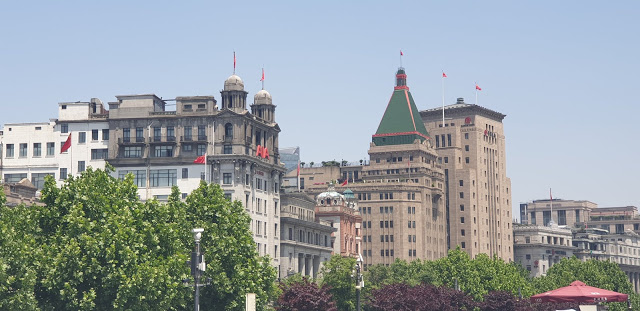
The Bund is a mile-long stretch of waterfront promenade along the Huangpu River. There are 52 buildings of various architectural styles, including Gothic, baroque, and neoclassical styles. The area is often referred to as “the museum of buildings”.

Building styles include Romanesque Revival, Gothic Revival, Renaissance Revival, Baroque Revival, Neo-Classical or Beaux-Arts, as well as a number in Art Deco style.

Having seen these buildings initially the night before, mostly lit up, our viewing this morning was from the land side, and particularly interesting in that the colonial architecture was really fascinating considering their location, but not surprising given Shanghai’s history.  A lot of these buildings would be more at home in London, that out in the far east.

The Bund waterfront is about two kilometers long and impossible to cover in the time allowed for this part of the tour.

There was just enough time to get photos of the waterfront and the old buildings.

Some of these buildings had odd shapes, like one on the far right that looks like a bottle opener.

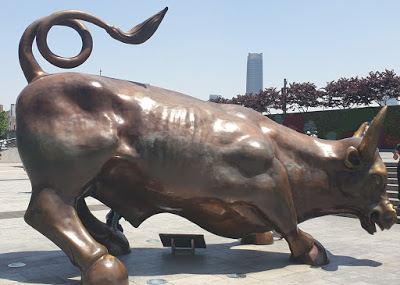
And, for some odd reason, a bull.

On the other side of the water, the sights that had been quite colorful the night before, were equally impressive though somewhat diminished by the haze.

Trying to get off, or is that on, the merry-go-round

Self-published authors are fully aware that perhaps the easiest part of the writing journey is the actual writing.  Well, compared to the marketing aspect I believe it is.

I have read a lot of articles, suggestions and tips and tricks to market the book to the reading public.  It is, to say the least, a lot harder to market eBooks than perhaps their hard or paper-covered relatives.

This is despite the millions of eReaders out there.

Then there is that other fickle part of the publishing cycle, the need for reviews.

Proper reviews of course.

As we are learning, reviews can be bought, and in more ways than one.  What happened to finding writers of the same genre and offering to buy one copy and write a review in return for a buy one copy and write a review.

I’ve noticed that all the current best selling novelists do the same for their fellow novelists though I guess when you get to be a best-seller, you might not have to buy a copy, so I can only dream of attaining such lofty heights in the publishing world.

But until I reach such rarefied air, I guess I have to figure out how to appeal to my fellow writers, and, of course, hope that my work is good enough.

It might be a start in getting through that difficult cycle, more reviews means more sales, etc.  And getting those first sales and reviews  …

Therein lies the conundrum.  It is a question of paying for advertising or working it out for ourselves.  I guess if I were to get more sales, I could afford the advertising … yes, back on the merry-go-round!

And yet, the harder the road, the more I enjoy what I do.  It is exhilarating while writing, it is a joy to finish the first draft, it is an accomplishment when it is published, but when you sell that first book, well, there is no other feeling like it.

I am inspired.

Now as for that advertisement and where to post it…

Searching for locations: The Maglev (Magnetic Levitation) Train, Shanghai, China

So, the first treat for the day is the high-speed magnetic train, something we only learned about after arriving in China and was not on any of the pre-tour documentation.

The train line connects Shanghai Pudong International Airport and Longyang Road Station (in the outskirts of central Pudong).  It is the oldest commercial maglev still in operation, and the first commercial high-speed maglev with cruising speed of 431 km/h (268 mph).  At full speed, the journey takes 7 minutes and 20 seconds to complete the distance of about 30 km.

Construction of the line began on March 1, 2001 and public services commenced on 1 January 2004.  It was built by a joint venture of Siemens and ThyssenKrupp from Kassel, Germany.

But, like visiting anything from a hotel, first we have to drive to the station and because we are leaving at 8, its peak hour traffic, and it takes 1 hour 10 minutes to get there.

The train also has a practical use and that is to take passengers from Shanghai to Pudong international airport as well as for those train enthusiasts, which is what we are.

On the train, it has the same sleek look as the bullet trains, but it is completely different, and you are able to see from the front of the train to the back.

Reputed to travel at 431 kph we take a seat and it is not long before the doors shut, and a loud humming noise is soon replaced by what sounds like an engine, then we start moving.  It sounds just like a normal train, and is a lot noisier than a normal bullet train.

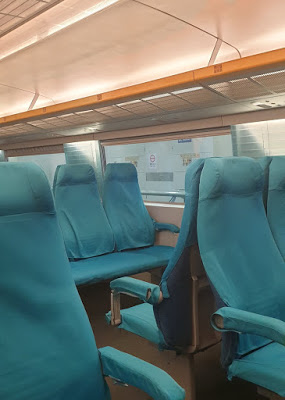
Seating on the train was nothing special, as one might expect

It didn’t take long before it hits the advertised speed of 431 kph.  This is not sustained for very long, because the distance is on 40 odd kilometers, and the whole trip takes about 7 minutes.

We go to the airport, and then we come back.  Is it worth the price, yes.  If you are a train enthusiast.

Searching for locations: The Bund, Shanghai, China

The Bund

The architecture along the Bund or Waitan is a living museum of the colonial history of the 1800s.  The area centers on a section of Zhongshan Road within the former Shanghai International Settlement.

The word bund means an embankment or an embanked quay.   It was initially a British settlement; later the British and American settlements were combined in the International Settlement.

The Bund is a mile-long stretch of waterfront promenade along the Huangpu River. There are 52 buildings of various architectural styles, including Gothic, baroque, and neoclassical styles. The area is often referred to as “the museum of buildings”.

Building styles include Romanesque Revival, Gothic Revival, Renaissance Revival, Baroque Revival, Neo-Classical or Beaux-Arts, as well as a number in Art Deco style.

Having seen these buildings initially the night before, mostly lit up, our viewing this morning was from the land side, and particularly interesting in that the colonial architecture was really fascinating considering their location, but not surprising given Shanghai’s history.  A lot of these buildings would be more at home in London, that out in the far east.

The Bund waterfront is about two kilometers long and impossible to cover in the time allowed for this part of the tour.

There was just enough time to get photos of the waterfront and the old buildings.

Some of these buildings had odd shapes, like one on the far right that looks like a bottle opener.

And, for some odd reason, a bull.

On the other side of the water, the sights that had been quite colorful the night before, were equally impressive though somewhat diminished by the haze.

Trying to get off, or is that on, the merry-go-round

Self-published authors are fully aware that perhaps the easiest part of the writing journey is the actual writing.  Well, compared to the marketing aspect I believe it is.

I have read a lot of articles, suggestions and tips and tricks to market the book to the reading public.  It is, to say the least, a lot harder to market eBooks than perhaps their hard or paper-covered relatives.

This is despite the millions of eReaders out there.

Then there is that other fickle part of the publishing cycle, the need for reviews.

Proper reviews of course.

As we are learning, reviews can be bought, and in more ways than one.  What happened to finding writers of the same genre and offering to buy one copy and write a review in return for a buy one copy and write a review.

I’ve noticed that all the current best selling novelists do the same for their fellow novelists though I guess when you get to be a best-seller, you might not have to buy a copy, so I can only dream of attaining such lofty heights in the publishing world.

But until I reach such rarefied air, I guess I have to figure out how to appeal to my fellow writers, and, of course, hope that my work is good enough.

It might be a start in getting through that difficult cycle, more reviews means more sales, etc.  And getting those first sales and reviews  …

Therein lies the conundrum.  It is a question of paying for advertising or working it out for ourselves.  I guess if I were to get more sales, I could afford the advertising … yes, back on the merry-go-round!

And yet, the harder the road, the more I enjoy what I do.  It is exhilarating while writing, it is a joy to finish the first draft, it is an accomplishment when it is published, but when you sell that first book, well, there is no other feeling like it.

I am inspired.

Now as for that advertisement and where to post it…

Searching for locations: The Yu Gardens, Shanghai, China

The Yu Gardens or Yuyuan Gardens

The Yu Gardens (or Yuyuan Gardens) are located at No. 137, Anren Street, Huangpu District, very close to the Old City God Temple, in the northeast of the Old City of Shanghai at Huangpu.

Yu Garden was first built in 1559 during the Ming Dynasty by Pan Yunduan and finished approximately 1577, created specifically as a private garden of the Pan family for Pan Yunduan’s parents to enjoy in their old age.

Yu Garden occupies an area of 5 acres, and is divided into six general areas:

  -Sansui Hall which includes the Grand Rockery was originally used to entertain guests,

  -Wanhua Chamber is a delicate building surrounded by derious cloisters,

  -Dianchun Hall, built in 1820, includes Treasury Hall and the Hall of Harmony,

  -Huijing Hall which includes Jade Water Corridor.

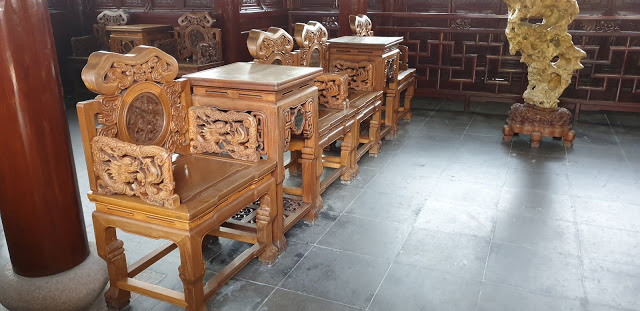
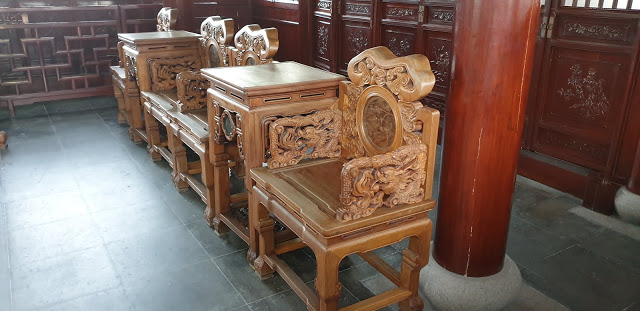
  -Yuhua Hall which is furnished with rosewood pieces from the Ming Dynasty, and,

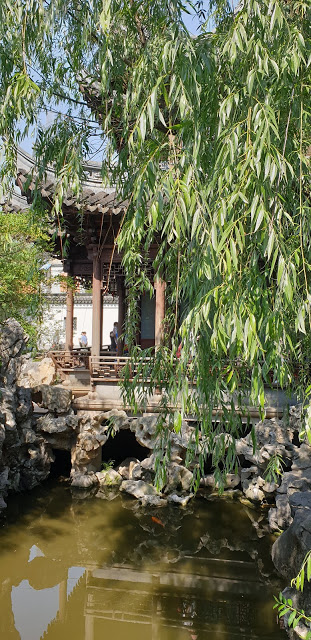
  -The Inner Garden with rockeries, ponds, pavilions, and towers; first laid out in 1709.  As the quietest part of Yu Gardens, it includes the Hall of Serenity and the Acting and Singing Stage.

The Mid-Lake Pavilion Teahouse, within the gardens, is the oldest teahouse in Shanghai.

A centerpiece of the gardens is the Exquisite Jade Rock, a 5-ton boulder that was originally meant for the Huizong Emperor (Northern Song Dynasty from 1100-1126 AD) but was salvaged from the Huangpu River after the boat carrying it had sunk.

These gardens house a lot of buildings that seemed to be a perfect blend of the old and the new, and if it was up to me, I’d keep the old.  Both the building and the gardens they are set in are like an oasis in the middle of an industrial complex, and perhaps impractical for the number of people living in Shanghai.

All of the ponds had a lot of fish in them

It was a pleasant afternoon, for both a stroll through the gardens

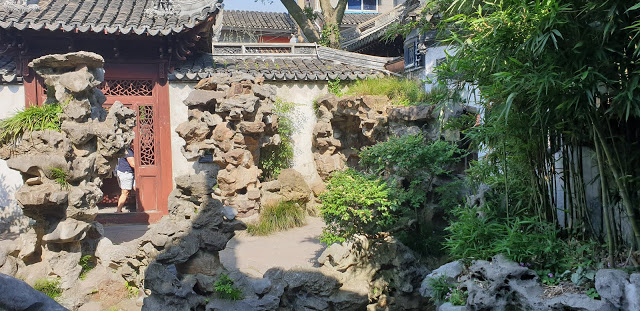
In and out of the rockery on narrow pathways

And to look inside the buildings that were sparsely furnished

There was even an area set aside for entertainment.

Searching for locations: The Yu Gardens, Shanghai, China

The Yu Gardens or Yuyuan Gardens

The Yu Gardens (or Yuyuan Gardens) are located at No. 137, Anren Street, Huangpu District, very close to the Old City God Temple, in the northeast of the Old City of Shanghai at Huangpu.

Yu Garden was first built in 1559 during the Ming Dynasty by Pan Yunduan and finished approximately 1577, created specifically as a private garden of the Pan family for Pan Yunduan’s parents to enjoy in their old age.

Yu Garden occupies an area of 5 acres, and is divided into six general areas:

  -Sansui Hall which includes the Grand Rockery was originally used to entertain guests,

  -Wanhua Chamber is a delicate building surrounded by derious cloisters,

  -Dianchun Hall, built in 1820, includes Treasury Hall and the Hall of Harmony,

  -Huijing Hall which includes Jade Water Corridor.

  -Yuhua Hall which is furnished with rosewood pieces from the Ming Dynasty, and,

  -The Inner Garden with rockeries, ponds, pavilions, and towers; first laid out in 1709.  As the quietest part of Yu Gardens, it includes the Hall of Serenity and the Acting and Singing Stage.

The Mid-Lake Pavilion Teahouse, within the gardens, is the oldest teahouse in Shanghai.

A centerpiece of the gardens is the Exquisite Jade Rock, a 5-ton boulder that was originally meant for the Huizong Emperor (Northern Song Dynasty from 1100-1126 AD) but was salvaged from the Huangpu River after the boat carrying it had sunk.

These gardens house a lot of buildings that seemed to be a perfect blend of the old and the new, and if it was up to me, I’d keep the old.  Both the building and the gardens they are set in are like an oasis in the middle of an industrial complex, and perhaps impractical for the number of people living in Shanghai.

All of the ponds had a lot of fish in them

It was a pleasant afternoon, for both a stroll through the gardens

In and out of the rockery on narrow pathways

And to look inside the buildings that were sparsely furnished

There was even an area set aside for entertainment.

Let’s talk history

What happened yesterday is history, but that’s not necessarily how we view what is history and what isn’t.

Similarly what is and what isn’t history is usually decided on by academics, because history texts that are used in schools are not written by ‘the man in the street’ authors. They’re usually university types who specialise in a particular field, or specialise section of history.

Even then one doubts that what is written is not a consensus of a panel.

So, when we talk about re-writing history, that takes a very brave bunch of people who want to buck the norm.

Our history, that which was taught when I went to school,. about our own country, Australia, started in 1770. Some brave soul tried to say it began earlier than that, before Captain Cook and the British arrived, out up a flag pole, and declared it belonged to Britain, like in 1606 when the Dutch explorer Willem Janszoon landed on the Cape York peninsula, only it wasn’t called that then.

And he might have been as surprised as Captain Cook that there were people here to observe their arrival. Yes, people had been living in this country for tens of thousands of years before the Europeans arrived.

But that was not what we were taught. No, Captain Cook, 1770, the a fleet of ships in 1788, and off we run as a new country, and a dumping ground for Britain’s convicts. Our history starts there, and then meanders through time, dividing the country up into states, having famous explorers like Burke and Wills, and Blaxland, Wentworth, and Lawson, Hume and Hovell.

And we commemorate all these people and those who were in charge over the years, with names of states, cities, rivers, mountains, everything under the sun. You’ve only got to glance at the list of hundreds of these forefathers and explorers to see just how many places in this country were named after them.

No heed was taken of what they may have been called before because no one really understood the languages of the first people who lived here. And they never seem to rate as a matter of study for us children back then.

Now, as people have begun to realise our history goes way, way back, and that there should be a nod to those inhabitants, they are considering re-writing some of our history to incorporate these people. And change the names of places to their original. A famous instance of recent renaming is of Ayers Rock, now called Uluru.

Even then, Australian History didn’t rate very highly, and I have to say, as a child at school 50 odd years ago, I learned more about the British Empire/Commonwealth, and about the English kings and queens, than we did about our own Governor Generals, Prime Ministers and State Premiers.

Could I tell you the name of our first Prime Minister? No. I can say when Australia became Australia, yes. 1901. Can I tell you the first King of England? Yes, William the Conqueror in 1066. There were kings before that but they only ruled of parts of England.

But over the years since I have read the odd book of Australian History but for some reason it never quite seems as colourful or as interesting as that of England or Scotland, or even some of the European countries.

Now, since I’ve been reading about what’s happening in the United States I have begin to take an interest in American history, and it, too, seems to suffer the same problems we have with ours, a bunch of academics decided what it was, and what it would not include, and then there is this thing called the 1619 project.

Wow, that seems to have stirred up a hornet’s nest.

Can’t wait to see what happens next.

Searching for locations: Shanghai, China, by night.

When we arrive at the embarkation site we find at least 100 buses all lined up and parked, and literally thousands of Chinese and other Asians streaming through the turnstiles to get on another boat leaving earlier than ours.

Buses were just literally arriving one after the other stopping near where we were standing with a dozen or so other groups waiting patiently, and with people were everywhere it could only be described as organized chaos.

Someone obviously knew where everyone was supposed to go, and when it was our turn, we joined the queue.  There were a lot of people in front of us, and a lot more behind, so I had to wonder just how big the boat was.

We soon found out.

And it was amusing to watch people running, yes, they were actually running, to get to the third level, or found available seating.  Being around the first to board, we had no trouble finding a seat on the second level.

I was not quite sure what the name of the boat was, but it had 3 decks and VIP rooms and it was huge, with marble staircases, the sort you could make a grand entrance on.  The last such ornate marble staircase we had seen was in a hotel in Hong Kong, and that was some staircase.

But who has marble staircases in a boat?

We’re going out across the water as far as the Bund and then turn around and come back about 30 to 40 minutes.   By the time everyone was on board, there was no room left on the third level, no seats on the second level nor standing room at the end of the second level where the stairs up to the third level were.

No one wanted to pay the extra to go into the VIP lounge.

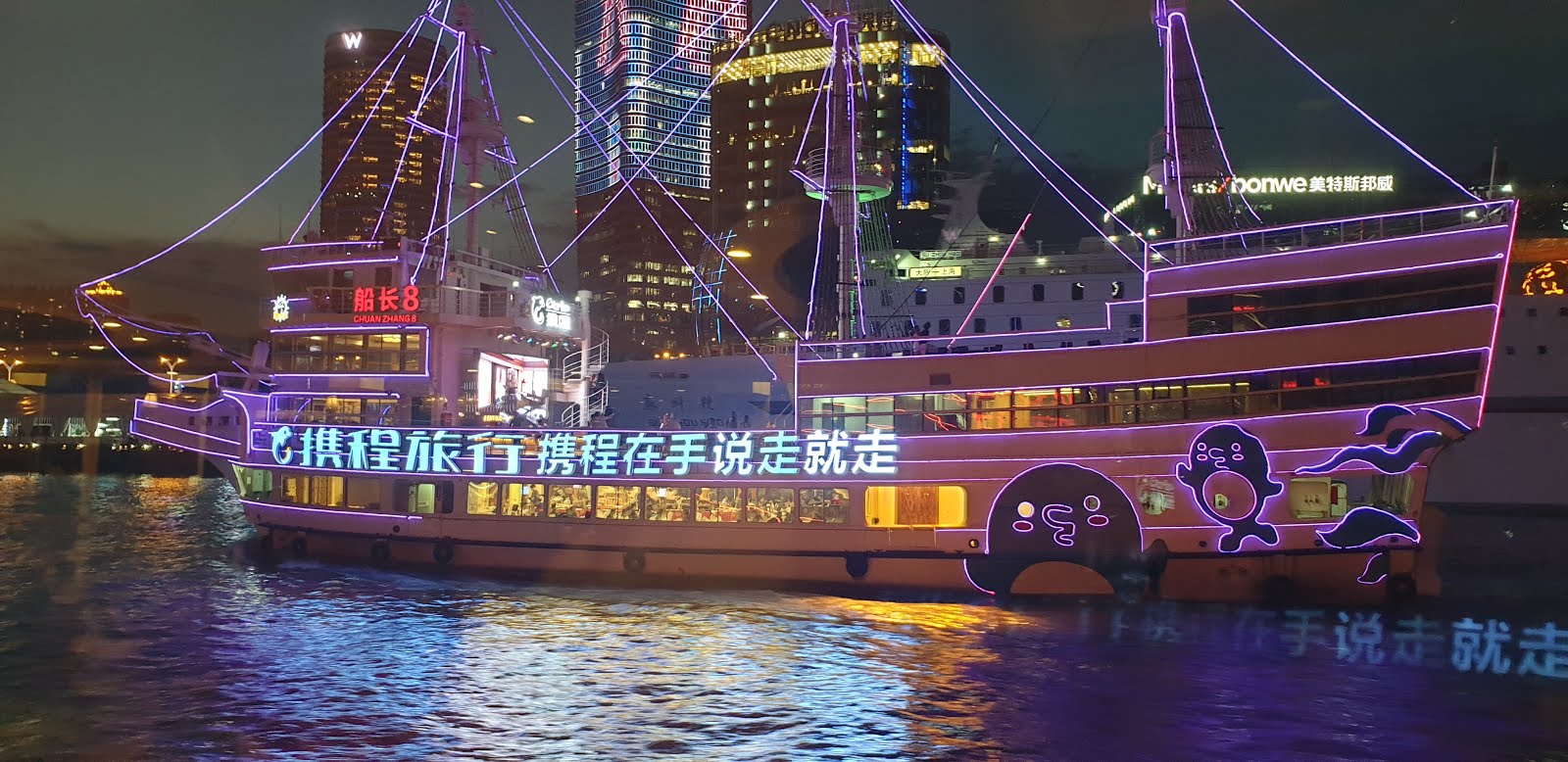
We were sitting by very large windows where it was warm enough watching the steady procession of the colored lights of other vessels, and outside the buildings.

It was quite spectacular, as were some of the other boats going out on the harbor.

All the buildings of the Bund were lit up

And along that part of the Bund was a number of old English style buildings made from sandstone, and very impressive to say the least.

On the other side of the harbour were the more modern buildings, including the communications tower, a rather impressive structure.

I had to go to the rear of the vessel to get a photo, a very difficult proposition given here was no space on the railing, not even on the stairs going up or down.  It was just luck I managed to get some photos between passengers heads.

And, another view of that communications tower:

There was no doubt this was one of the most colourful night-time boat tours I’ve ever been on.  Certainly, when we saw the same buildings the following day, they were not half as spectacular in daylight.

I never did get up to the third level to see what the view was like.

Searching for locations: The Yu Gardens, Shanghai, China

The Yu Gardens or Yuyuan Gardens

The Yu Gardens (or Yuyuan Gardens) are located at No. 137, Anren Street, Huangpu District, very close to the Old City God Temple, in the northeast of the Old City of Shanghai at Huangpu.

Yu Garden was first built in 1559 during the Ming Dynasty by Pan Yunduan and finished approximately 1577, created specifically as a private garden of the Pan family for Pan Yunduan’s parents to enjoy in their old age.

Yu Garden occupies an area of 5 acres, and is divided into six general areas:

  -Sansui Hall which includes the Grand Rockery was originally used to entertain guests,

  -Wanhua Chamber is a delicate building surrounded by derious cloisters,

  -Dianchun Hall, built in 1820, includes Treasury Hall and the Hall of Harmony,

  -Huijing Hall which includes Jade Water Corridor.

  -Yuhua Hall which is furnished with rosewood pieces from the Ming Dynasty, and,

  -The Inner Garden with rockeries, ponds, pavilions, and towers; first laid out in 1709.  As the quietest part of Yu Gardens, it includes the Hall of Serenity and the Acting and Singing Stage.

The Mid-Lake Pavilion Teahouse, within the gardens, is the oldest teahouse in Shanghai.

A centerpiece of the gardens is the Exquisite Jade Rock, a 5-ton boulder that was originally meant for the Huizong Emperor (Northern Song Dynasty from 1100-1126 AD) but was salvaged from the Huangpu River after the boat carrying it had sunk.

These gardens house a lot of buildings that seemed to be a perfect blend of the old and the new, and if it was up to me, I’d keep the old.  Both the building and the gardens they are set in are like an oasis in the middle of an industrial complex, and perhaps impractical for the number of people living in Shanghai.

All of the ponds had a lot of fish in them

It was a pleasant afternoon, for both a stroll through the gardens

In and out of the rockery on narrow pathways

And to look inside the buildings that were sparsely furnished

There was even an area set aside for entertainment.