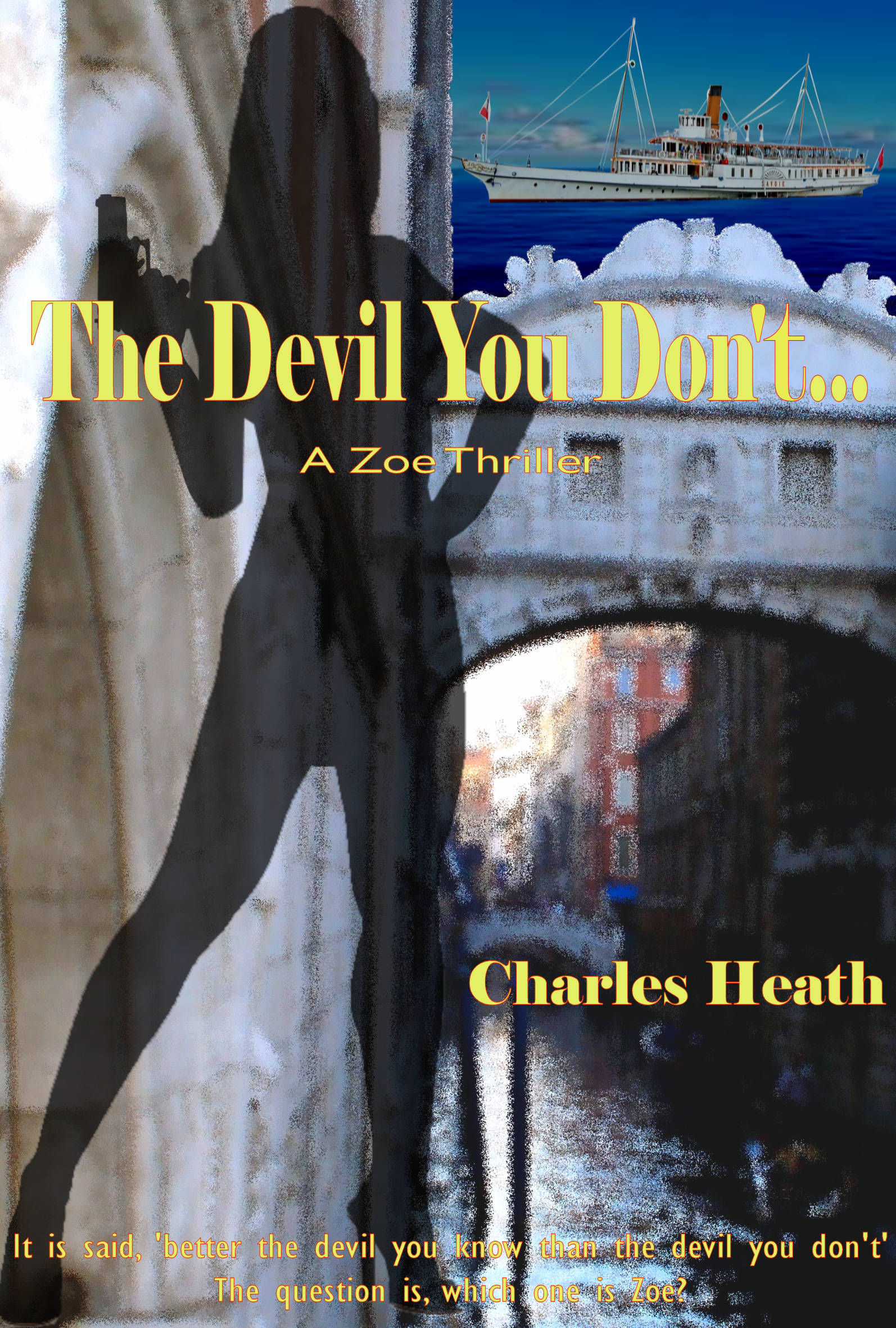
Mistaken Identity – The Editor’s Draft – Day 28

I have been working on the story, the editor is asking for a second draft after making suggested changes – and I’m now working on it

Whilst it seems that it’s highly possible to write 50,000 words in 30 days, it’s not necessarily as easy to write a whole book.

Well, at least for some of us.

If the book is going to be about 50,000 words, which you have planned, then I guess it’s possible. It might end up having about 70 to 90,000 words, and be edited back to 50,000, but in the interim, this story is not going to end at the prescribed time.

Of course, that might not be the outcome I had at the start of the project, but that doesn’t mean that I’m not chuffed that nearly all of it is done.

There’s two days to go, it’s not going to finish, but I will have a good idea where it’s going.

However, right at this very minute, I’m not sure how it is going to end, good or bad, for some of the characters.

Today’s effort amounts to 1,988 words, for a total, so far, of 66,331.

More tomorrow.

Searching for locations: Florence, Italy

Florence is littered with endless statues, and we managed to see quite a few,

If those statues came to life I wonder what they might tell us?

Like castles on the shores of the Rhine, there are only so many statues you can take photos of.  Below are some of those I thought significant

2013-06-17 09.16.14

Michelangelo’s David directs his warning gaze at someone else.

2013-06-17 09.16.24

The impressive muscles of Baccio Bandinelli’s Hercules from 1533. The worked-out demi-god is pulling the hair of Cacus, who will be clubbed and strangled.

2013-06-17 09.17.13

Achilles with Polyxena in arm, stepping over her brother’s body

2013-06-17 09.18.08

Menelaus supporting the body of Patroclus, in the Loggia dei Lan

2013-06-17 09.18.28

Statue of Hercules killing the Centaur by Giambologna in Loggia dei Lanzi. Piazza della Signoria.

On the back of the Loggia there are six marble female statues, probably coming from the Trajan’s Foro in Rome, discovered in 1541 and brought to Florence in 1789

Where is that glamorous life of an Author?

I’m currently sitting in my car waiting to pick the grandchildren up from school wondering where that dream of the glamorous life of an author went.

Can it be said that any author leads a glamorous life, except for maybe J K Rowling, James Patterson, and a handful of others?

That dream is of course only a dream.  I did not start this writing caper to become rich and famous or live a glamorous life.  I started It, and it continues in the same vein, that I have a lot of stories in my head that I want to get on paper.

If anyone else wants to read them, then that’s a bonus.  If I happen to make enough money, rather than live high on the hog, an expression my father often used to describe the rich, I would happily invest in programs that get young people reading more.

It also strikes me that it would be difficult to write a literary novel in the vein of Jane Austen or the Bronte sisters, to name a few because modern-day life has no real meaning like it did then.

Instant news, instant communications, and the rest of the country, as well as the world, do close, we can go anywhere, and communicate instantly.  In the days of classic literature, the protagonist’s exchange of letters, and the arduous traveling to another part of the same country would be enough to generate a chapter, or the visit itself could generate several.

But those tales of life were always about people of means, not the ordinary people.  Stories that have the minutiae of daily life do not appeal.  No one wants to read about their lives, they want to be transported to another world where there is no such inanity like cooking, cleaning, washing, and picking up children.

I’m using this time to write another episode or chapter, or, in this case, a blog post.

As any parent will tell you, it is the calm before the storm.

The cinema of my dreams – Was it just another surveillance job – Episode 15

I’m back home and this story has been sitting on a back burner for a few months, waiting for some more to be written.

The trouble is, there are also other stories to write, and I’m not very good at prioritising.

But, here we are, a few minutes opened up and it didn’t take long to get back into the groove.

Was I working for a ghost?


The question that was foremost in my mind was whether I should call Nobbin, and let him know that I’d met Severin and that his ‘information’ was on a USB.

When I’d mentioned the fact O’Connor said the evidence was somewhere, I knew this evidence was on a USB and could be in one of the hiding places O’Connor had set up with Nobbin.  If not, then it had to be somewhere else, somewhere only O’Connor would know about.

Somehow, I got the impression O’Connor had not trusted either side.  Yes, he was about to tell me where the evidence was, but if that was the case, it meant it was not anywhere where anyone else would know about.

Severin should have curbed his desire for execution a little, and taken O’Connor into custody, and then interrogated him.  It made me wonder, briefly, why Severin would want him dead.  In cases like that, it was because Severin didn’t want O’Connor to talk to me, or anyone else.

Still, he could have tranquilized O’Connor.  I would not have known the difference.

That meant I had to find out more information on O’Connor.

Of course, in just saying that out loud, over a half-full glass of scotch, just to steady the nerves after seeing Severin again, made it sound almost like a running joke.

As if I would be able to find someone who was, for all intents and purposes, a ghost.  That was how we were supposed to be, ghosts, to everyone we knew, including family.  We could no longer talk to anyone because they might become a target used as leverage against us.

That part of my training had been the scariest.  I didn’t have any friends, not real friends anyway, and no family, other than a half-brother who hated me.  I had toyed with the idea of meeting him, after I’d completed the training, just to see if anyone would try to use him as leverage, and then tell them he meant nothing to me.

It was an idea, I doubt if I could do it in reality.  But the thought of it gave me some measure of revenge for all the bullying he had inflicted on me when I was young.  Perhaps that was why I took this job, to prove I was nothing like the person he considered me to be.

Enough of the delving into the shadowy past.

I had a problem that needed solving.  How to find O’Connor.

After a long night of fitful sleep, I woke the next morning with the shreds of a plan.  I’d go into the office and use their computer system to look for him.  Of course, I didn’t expect that there would be any information available to an agent with my security clearance, which was basically to get in and out of the front door and log on to the computer to fill out reports and a timesheet.

It was a surprise, after what Nobbin had said about my employment, that my pass got me in the door.  It did, but I had no doubt somewhere it had register my name in a log somewhere.  I figured I had about half an hour before someone came checking up on me.

The same went for the computer system.  There was a bank of about a dozen computers in a room where the agents could do information searches, and private work, such as reports.  Three others were occupied, and none of those using them looked up when I entered the room.

Not a surprise.  We were taught to keep to ourselves and say nothing about the missions we were attached to anyone else.  In our line of work, secrets were paramount.  We were to become consummate liars because we could never tell anyone the truth about what we did.  If we wanted a cover story, we were to say we were international confidential couriers of documents for legal institutions.

It sounded interesting, but it was quite boring, or at least that was how I described it if anyone asked.

So, ignoring the others, I logged in and found I was still on the employee list.  And, I still had the same level of access I had before.

I ran a search on the name O’Connor.

It came back with five documents, the first of which was his personnel record.  First name, Donald.  A date of birth that made him 27 years old, and an address, in Putney.  I wrote it down.  Marital status, single.  Status, deceased.  Section worked for:  Eight.

There were supposedly eight sections, and the one I worked for was Seven.  Out of interest, I brought up my records.  It was how Severin had found me because my address was on file.  But more interesting was my status, transferred, and my section, three.  Was Nobbin’s section three?

I would ask if I got an opportunity to.

The other four documents were reports, most of which were redacted, or marked restricted.  Or above my pay grade, whatever that was.

But, at least one thing was clear, I had not been fired, just transferred.  I guess I would have to call Nobbin after all.  After I visited O’Connor’s last known residence.

I wasn’t holding my breath expecting to find anything.


© Charles Heath 2019

An excerpt from “Strangers We’ve Become” – Coming Soon

I wandered back to my villa.

It was in darkness.  I was sure I had left several lights on, especially over the door so I could see to unlock it.

I looked up and saw the globe was broken.

Instant alert.

I went to the first hiding spot for the gun, and it wasn’t there.  I went to the backup and it wasn’t there either.  Someone had found my carefully hidden stash of weapons and removed them.

Who?

There were four hiding spots and all were empty.  Someone had removed the weapons.  That could only mean one possibility.

I had a visitor, not necessarily here for a social call.

But, of course, being the well-trained agent I’d once been and not one to be caught unawares, I crossed over to my neighbor and relieved him of a weapon that, if found, would require a lot of explaining.

Suitably armed, it was time to return the surprise.

There were three entrances to the villa, the front door, the back door, and a rather strange escape hatch.  One of the more interesting attractions of the villa I’d rented was its heritage.  It was built in the late 1700s, by a man who was, by all accounts, a thief.  It had a hidden underground room which had been in the past a vault but was now a wine cellar, and it had an escape hatch by which the man could come and go undetected, particularly if there was a mob outside the door baying for his blood.

It now gave me the means to enter the villa without my visitors being alerted, unless, of course, they were near the vicinity of the doorway inside the villa, but that possibility was unlikely.  It was not where anyone could anticipate or expect a doorway to be.

The secret entrance was at the rear of the villa behind a large copse, two camouflaged wooden doors built into the ground.  I move aside some of the branches that covered them and lifted one side.  After I’d discovered the doors and rusty hinges, I’d oiled and cleaned them, and cleared the passageway of cobwebs and fallen rocks.  It had a mildew smell, but nothing would get rid of that.  I’d left torches at either end so I could see.

I closed the door after me, and went quietly down the steps, enveloped in darkness till I switched on the torch.  I traversed the short passage which turned ninety degrees about halfway to the door at the other end.  I carried the key to this door on the keyring, found it and opened the door.  It too had been oiled and swung open soundlessly.

I stepped in the darkness and closed the door.

I was on the lower level under the kitchen, now the wine cellar, the ‘door’ doubling as a set of shelves which had very little on them, less to fall and alert anyone in the villa.

Silence, an eerie silence.

I took the steps up to the kitchen, stopping when my head was level with the floor, checking to see if anyone was waiting.  There wasn’t.  It seemed to me to be an unlikely spot for an ambush.

I’d already considered the possibility of someone coming after me, especially because it had been Bespalov I’d killed, and I was sure he had friends, all equally as mad as he was.  Equally, I’d also considered it nigh on impossible for anyone to find out it was me who killed him because the only people who knew that were Prendergast, Alisha, a few others in the Department, and Susan.

That raised the question of who told them where I was.

If I was the man I used to be, my first suspect would be Susan.  The departure this morning, and now this was too coincidental.  But I was not that man.

Or was I?

I reached the start of the passageway that led from the kitchen to the front door and peered into the semi-darkness.  My eyes had got used to the dark, and it was no longer an inky void.  Fragments of light leaked in around the door from outside and through the edge of the window curtains where they didn’t fit properly.  A bone of contention upstairs in the morning, when first light shone and invariably woke me up hours before I wanted to.

Still nothing.

I took a moment to consider how I would approach the visitor’s job.  I would get a plan of the villa in my head, all entrances, where a target could be led to or attacked where there would be no escape.

Coming in the front door.  If I was not expecting anything, I’d just open the door and walk-in.  One shot would be all that was required.

Contract complete.

I sidled quietly up the passage staying close to the wall, edging closer to the front door.  There was an alcove where the shooter could be waiting.  It was an ideal spot to wait.

Crunch.

I stepped on some nutshells.

Not my nutshells.

I felt it before I heard it.  The bullet with my name on it.

And how the shooter missed, from point-blank range, and hit me in the arm, I had no idea.  I fired off two shots before a second shot from the shooter went wide and hit the door with a loud thwack.

I saw a red dot wavering as it honed in on me and I fell to the floor, stretching out, looking up where the origin of the light was coming and pulled the trigger three times, evenly spaced, and a second later I heard the sound of a body falling down the stairs and stopping at the bottom, not very far from me.

Two assassins.

I’d not expected that.

The assassin by the door was dead, a lucky shot on my part.  The second was still breathing.

I checked the body for any weapons and found a second gun and two knives.  Armed to the teeth!

I pulled off the balaclava; a man, early thirties, definitely Italian.  I was expecting a Russian.

I slapped his face, waking him up.  Blood was leaking from several slashes on his face when his head had hit the stairs on the way down.  The awkward angle of his arms and legs told me there were broken bones, probably a lot worse internally.  He was not long for this earth.

“Who employed you?”

He looked at me with dead eyes, a pursed mouth, perhaps a smile.  “Not today my friend.  You have made a very bad enemy.”  He coughed and blood poured out of his mouth.  “There will be more …”

Friends of Bespalov, no doubt.

I would have to leave.  Two unexplainable bodies, I’d have a hard time explaining my way out of this mess.  I dragged the two bodies into the lounge, clearing the passageway just in case someone had heard anything.

Just in case anyone was outside at the time, I sat in the dark, at the foot of the stairs, and tried to breathe normally.  I was trying not to connect dots that led back to Susan, but the coincidence was worrying me.

A half-hour passed and I hadn’t moved.  Deep in thought, I’d forgotten about being shot, unaware that blood was running down my arm and dripping onto the floor.

Until I heard a knock on my front door.

Two thoughts, it was either the police, alerted by the neighbors, or it was the second wave, though why would they be knocking on the door?

I stood, and immediately felt a stabbing pain in my arm.  I took out a handkerchief and turned it into a makeshift tourniquet, then wrapped a kitchen towel around the wound.

If it was the police, this was going to be a difficult situation.  Holding the gun behind my back, I opened the door a fraction and looked out.

No police, just Maria.  I hoped she was not part of the next ‘wave’.

“You left your phone behind on the table.  I thought you might be looking for it.”  She held it out in front of her.

When I didn’t open the door any further, she looked at me quizzically, and then asked, “Is anything wrong?”

I was going to thank her for returning the phone, but I heard her breathe in sharply, and add, breathlessly, “You’re bleeding.”

I looked at my arm and realized it was visible through the door, and not only that, the towel was soaked in blood.

“You need to go away now.”

Should I tell her the truth?  It was probably too late, and if she was any sort of law-abiding citizen she would go straight to the police.

She showed no signs of leaving, just an unnerving curiosity.  “What happened?”

I ran through several explanations, but none seemed plausible.  I went with the truth.  “My past caught up with me.”

“You need someone to fix that before you pass out from blood loss.  It doesn’t look good.”

“I can fix it.  You need to leave.  It is not safe to be here with me.”

The pain in my arm was not getting any better, and the blood was starting to run down my arm again as the tourniquet loosened.  She was right, I needed it fixed sooner rather than later.

I opened the door and let her in.  It was a mistake, a huge mistake, and I would have to deal with the consequences.  Once inside, she turned on the light and saw the pool of blood just inside the door and the trail leading to the lounge.  She followed the trail and turned into the lounge, turned on the light, and no doubt saw the two dead men.

I expected her to scream.  She didn’t.

She gave me a good hard look, perhaps trying to see if I was dangerous.  Killing people wasn’t something you looked the other way about.  She would have to go to the police.

“What happened here?”

“I came home from the cafe and two men were waiting for me.  I used to work for the Government, but no longer.  I suspect these men were here to repay a debt.  I was lucky.”

“Not so much, looking at your arm.”

She came closer and inspected it.

“Sit down.”

She found another towel and wrapped it around the wound, retightening the tourniquet to stem the bleeding.

“Do you have medical supplies?”

I nodded.  “Upstairs.”  I had a medical kit, and on the road, I usually made my own running repairs.  Another old habit I hadn’t quite shaken off yet.

She went upstairs, rummaged, and then came back.  I wondered briefly what she would think of the unmade bed though I was not sure why it might interest her.

She helped me remove my shirt, and then cleaned the wound.  Fortunately, she didn’t have to remove a bullet.  It was a clean wound but it would require stitches.

When she’d finished she said, “Your friend said one day this might happen.”

No prizes for guessing who that friend was, and it didn’t please me that she had involved Maria.

“Alisha?”

“She didn’t tell me her name, but I think she cares a lot about you.  She said trouble has a way of finding you, gave me a phone and said to call her if something like this happened.”

“That was wrong of her to do that.”

“Perhaps, perhaps not.  Will you call her?”

“Yes.  I can’t stay here now.  You should go now.  Hopefully, by the time I leave in the morning, no one will ever know what happened here, especially you.”

She smiled.  “As you say, I was never here.”

© Charles Heath 2018-2022

strangerscover9

“Sunday in New York”, a romantic adventure that’s not a walk in the park!

“Sunday in New York” is ultimately a story about trust, and what happens when a marriage is stretched to its limits.

When Harry Steele attends a lunch with his manager, Barclay, to discuss a promotion that any junior executive would accept in a heartbeat, it is the fact his wife, Alison, who previously professed her reservations about Barclay, also agreed to attend, that casts a small element of doubt in his mind.

From that moment, his life, in the company, in deciding what to do, his marriage, his very life, spirals out of control.

There is no one big factor that can prove Harry’s worst fears, that his marriage is over, just a number of small, interconnecting events, when piled on top of each other, points to a cataclysmic end to everything he had believed in.

Trust is lost firstly in his best friend and mentor, Andy, who only hints of impending disaster, Sasha, a woman whom he saved, and who appears to have motives of her own, and then in his wife, Alison, as he discovered piece by piece damning evidence she is about to leave him for another man.

Can we trust what we see with our eyes or trust what we hear?

Haven’t we all jumped to conclusions at least once in our lives?

Can Alison, a woman whose self-belief and confidence is about to be put to the ultimate test, find a way of proving their relationship is as strong as it has ever been?

As they say in the classics, read on!

Purchase:

http://tinyurl.com/Amazon-SundayInNewYork

Mistaken Identity – The Editor’s Draft – Day 27

I have been working on the story, the editor is asking for a second draft after making suggested changes – and I’m now working on it

I want a high-octane ending, and I’ve been trying to visualise it in my mind.

I’m sure it’s a lot like how a director of a movie sees the end product and then tries to translate that onto the screen.

I can see it in my head, but it’s not translating onto paper.

I’d also like to write it like that so the reader can almost be sitting in the front-row seat as it all unfolds,

But in a matter of weeks, our once happy travel agent has gone from dispensing advice to others on how to have a good holiday, to a man caught in the middle of the storm.

People he’s only read about in papers and books had been appearing out of left field forcing him into making decisions he never thought he would have to.

He’s discovered his parents were not exactly the people he thought they were.

He’s discovered people can appear to be anything other than who they really are.

And he’s discovered he has the strength to overcome adversity.

Going back to the travel agency is going to be as boring as hell for him now.

Today’s effort amounts to 2,267 words, for a total, so far, of 64,343.

More tomorrow.

‘What Sets Us Apart’ – A beta readers view

There’s something to be said for a story that starts like a James Bond movie, throwing you straight in the deep end, a perfect way of getting to know the main character, David, or is that Alistair?

A retired spy, well not so much a spy as a retired errand boy, David’s rather wry description of his talents, and a woman that most men would give their left arm for, not exactly the ideal couple, but there is a spark in a meeting that may or may not have been a set up.

But as the story progressed, the question I kept asking myself was why he’d bother.

And, page after unrelenting page, you find out.

Susan is exactly the sort of woman the pique his interest.  Then, inexplicably, she disappears.  That might have been the end to it, but Prendergast, that shadowy enigma, David’s ex boss who loves playing games with real people, gives him an ultimatum, find her or come back to work.

Nothing like an offer that’s a double edged sword!

A dragon for a mother, a sister he didn’t know about, Susan’s BFF who is not what she seems or a friend indeed, and Susan’s father who, up till David meets her, couldn’t be less interested, his nemesis proves to be the impossible dream, and he’s always just that one step behind.

When the rollercoaster finally came to a halt, and I could start breathing again, it was an ending that was completely unexpected.

I’ve been told there’s a sequel in the works.

Bring it on!

The book can be purchased here:  http://amzn.to/2Eryfth

Writing about writing a book – Day 5 continues – Those annoying people called characters

Whilst it is always an idea to sit down and write and keep going, not worrying too much about the narrative, there’s always the problem of ideas about characters, and relationships that come back and need to be addressed.

I have issues with Jennifer in that we will need to know something about her, and need a little backstory.

Jennifer is the second most important character in this novel and one that has more talents than what my main character, or anyone else for that matter, thinks she has.  Of course, that is deliberate on her part for a number of reasons that will be introduced at the appropriate time.

But, at the start, all we will have to work with, is the introduction provided by the narrator.

It may go something like this:


Jennifer Pennington Smythe was, as you might expect, very English, very reserved, and very private.  She was the definitive ‘don’t judge a book by its cover’, and I was guilty, at first, of suspecting she had once been a schoolmistress due to the severity of dress, demeanor, and expression.

HR had sent her to me when I’d requested an IT Specialist, though of what particular discipline it was never divulged, neither by HR nor by her.  She arrived one morning, told me she was to ‘help resolve our technical difficulties’, moved into an office that had been used as a storeroom, and worked hard to prove her worthiness in the role.

My first attempt at conversation was rebuffed, the second met with a very cold stare.  Everyone, including me, learned very quickly that any other topic of conversation than work would be ignored.  At the time it suited me, there was trouble in paradise and I didn’t want anything more on my plate to deal with.


So, what is this trouble?

There are three distinct stages of this relationship between the two most important characters, and it is the actions of one of the protagonists that brings them together.  This particular protagonist, of course, is the main character’s wife, a woman that is on the periphery for the period the novel covers, but a little background will be needed at some point before we reach this part of the narrative.

This now means that I will have to put together a back story for Bill and his ex-wife Ellen, not too much yet but enough to explain the next part of the evolving relationship between Bill and Jennifer.


I’m sure this topic is going to raise it’s head again and again…

The cinema of my dreams – I always wanted to write a war story – Episode 34

For a story that was conceived during those long boring hours flying in a steel cocoon, striving to keep away the thoughts that the plane and everyone in it could just simply disappear as planes have in the past, it has come a long way.

Whilst I have always had a fascination with what happened during the second world war, not the battles or fighting, but in the more obscure events that took place, I decided to pen my own little sidebar to what was a long and bitter war.

And, so, it continues…


We gathered up what food there was to take with us.  There were no weapons left behind.  Leonardo had assumed correctly we would have used them if they’d been left there.

Carlo had changed slowly into an automaton, and I guess if I could read his mind, I’d know exactly what he was thinking.  Enrico had attached himself to Carlo, and I knew Carlo would look after him.

When I said that the burials would have to wait, Carlo agreed.

We had a short discussion on what we would be doing next, and in the first instance, we would be going back to the other soldiers and the church.  There, with both of our knowledge of the castle, its entrances, secret or otherwise, and the internal passageways which I knew Wallace and the others there were not too familiar with, we would formulate a plan to go in and pick them off one by one.

It seemed a good plan when we first talked about it, but on the way back to the church, and I had time to consider how it would work, it seemed we would only get an advantage once, and we would have to kill or capture as many as we could in the first raid.

Then it was going to be difficult.

Unless Carlo knew of more places we could enter the castle without being seen or heard.

I only knew of three.

And the first post we had to hit, and silence, the radio room.


My war had not been as start or as terrifying as most of those whom I’d known or worked with.  My part was more selective, finding and eliminating spies, informers, and enemy cells on home territory.  

Sometimes that would extend into enemy territory, particularly France where, as one who could speak French fluently, I found myself working with the resistance, using intelligence gathered by a network of spies we had, not only in France but in all parts of enemy territory.  That also meant, sometimes, accompanying weapons and other supplies into enemy territory.

It hadn’t included anything like what I’d just seen back at the underground cavern.

I’d been told, often, about the enemy executing whole villages, and large groups as retaliation for resistance operations that killed German soldiers, and particularly officers, but I’d not seen it first-hand.

Now I had.

I’d been told, along with the others who had been at the training camp way back at the start of the war, that we would inevitably see atrocities.  Those instructors, men who had survived the first war, were speaking from experience.  We were told it would make us angry.  It had.  I had this immediate thought of doing as much damage as I could to the perpetrators of that massacre.

But we had also been told that we had to harness that anger, and use it to drive our actions, bot in a reckless manner, but with a measured calm and with planning.  Blind rage, which had been predicted, would only get us killed.

I had left the cavern at the blind rage stage, but the walk to the church wore some of that off, and I began to piece together the seeds of a plan to get our revenge.  We were only a small group, but even so, we could work more efficiently than those at the castle. 

Leonardo was not going to tell Wallace that he hadn’t captured or killed me in his ambush, but it might make Wallace think that my ability to retaliate would be weakened.  Leonardo would know that Carlo and I were still alive.  He would not know about Blinky and his men.

It would be interesting to see if Wallace would commit any of his men to hunt us down, send Leonardo back out to finish the job, or just wait until Meyer turned up.  His contact in Gaole would know about the castle’s change of allegiance, but he would not know that Martina was not going to be there to greet them when they arrived in the village.

That was several days away.  We would have to be there, but it was going to be dangerous unless we found a way to neutralize the castle.  So far, in my head, we’d neutralized the radio and got as far as the dungeons before meeting enemy resistance.

The same had happened in the next six scenarios, after playing out the last we had arrived back at the church.


Chiara was resting as comfortably as the Sergeant could make her.

He had made a more thorough assessment of her injuries, and aside for the severe beating, she had sustained a few cracked ribs and several broken fingers.  The broken fingers were a surprise.  The sergeant had reset them as best he could.

Other than that, she would recover physically.  Mentally, he said, would be something else.  She was lucky, he said, her torturer was an amateur, and Italian.  Had it been the German Gestapo, she would be dead.

She was lucid and I told her we would make Leonardo pay for what he’d done.  I thought it best not to tell her about what had happened back at the cavern.  She had enough on her conscience without adding the senseless deaths of the villagers.

Then we had a meeting, where I asked Carlo to draw a plan of the castle and the places where we could breach their defenses and give us an element of surprise.

He had one that I hadn’t known about, one that might give us a fighting chance.

© Charles Heath 2020