Writing about writing a book – Day 30

I’m having fun with chapter one.

Can you reach a point where you are never satisfied with what you’ve written?

What more can I say?

Looking at the mess constituting my room and my life, slob may have been an appropriate description.  I considered myself old, overweight though not necessarily fat, hair graying at the edges, and few wrinkles around the eyes, there were no real pluses in my description.

Some said I had a kindly face, but perhaps I had the look of a paternalistic grandfather.  There were several men in the office who were the same age and had grandchildren.  And some who had children at a time when they should be planning for retirement, not parenthood.

World-weary and perpetually tired, I’d passed the mid-life crisis, wondering what it was that affected other men my age.  Twenty-odd years later, I was still wondering.

I used to think I’d missed a lot in half a lifetime.

Now, I didn’t know what to think.

Did I deserve pity?  No.

Did I deserve sympathy?  No!

The only person who could get me out of the rut was myself.  For years I’d traded on Ellen’s good nature.  She deserved better, left me, and was now happier in the arms of a man who I wanted to believe treated her far better than I.  She had told me so herself, and judging by her manner, it had to be true.  Only recently had she got her smile back, the one that lit her face up, one that infectiously spread happiness to anyone near her.

There were reasons why I became the person I was now.  Some might say they were valid.  In the cold, hard light of dawn, I could see it was time I stopped using my past as a crutch and got on with the business of living.

Perhaps today would be the first day of the rest of my life.

I took the bus rather than drove.  At that hour of the morning, the traffic would be bad, and there would be no parking spaces left.  And I was using public transport more and more, have become accustomed to the convenience.  Time to read the paper, or a good book, or just dream about a different life.

This morning I thought about Ellen.  I hadn’t for a while, but that might have been fueled by the arrival of the divorce papers she wanted me to sign.  I’d had my time to be angry, and disappointed, she’d said, and she was right.  It was time to move on.

And she had stuck by me through thick and thin, coming back from overseas service a basket case after nine months in a POW camp, after a war that was more horrible than anyone could imagine.  Two mental breakdowns, periods of indolence and lassitude, leaving her to bring up the girls on her own.  I had not been a great father, and much less a husband.

I remembered that argument word for word.

I could see the looks of pain in the girl’s faces.

I remembered the hug, the kiss on the cheek, the tears.  It had not been out of hate, but a necessity.  For her and the children.  Until I found some lasting peace, they were better off at arm’s length.  Away from the arguing, the silences, the absences.

And disappointment.

After she left I tried to get my life in order.  Drugs, professional help, alcohol, meditation, then work.

Over ten years ago, it took a year, perhaps a little more before sanity returned.

She did not.

By then I knew she had found someone else, a mystery man, whom neither she would tell me who, and the girls honestly didn’t know.  She’d promised that much, any new man in her life would not get to meet the girls.  And she would tell me, and then when she was ready.

Then, suddenly, the children were no longer children but young adults and out in the world on their own, and I had become more a banker than a father, an observer rather than a participant, and it was as if we were more like ships passing in the night.  And overnight, the ships had sailed to the other side of the world.

My own fault, of course, and a bit late now to change history.  I could see Ellen’s influence over them, her prejudices and dislikes, and their contempt, like their mother, for me, simmering beneath the surface but in fairness to them, I really hadn’t been much of a help as a parent should be.

And now I was getting my life back in order, perhaps I could try and make it up to them, and that first meeting, with them and Ellen, nearly a month ago, had been a step in the right direction.  They’d agreed to see me again, without her, during the holidays, which had now arrived.  All I had to do was make the call and get on a plane.

This mess I was heading into, it would not take long.  I pulled out my phone and after searching for a travel agent near where I worked, I made an appointment to see about going overseas.

She had spoken to me about the divorce papers several days ago, alternately pleading with, and then abusing, me.  There had been some very strong language in the conversation, words I’d thought her incapable of using, but I confess, finally, I didn’t really know her all that well anymore.

Since then I had been calling her to arrange a meeting.  She had not yet replied.  With some distance to go before I reached the office, I tried calling her again.  I was almost glad when she didn’t answer.

I never realized just how hard it was to revise and re-write, and how much time it takes.

Perhaps that’s why first novels take so long to write!

© Charles Heath 2016-2025

The cinema of my dreams – Was it just another surveillance job – Episode 10

I’m back home and this story has been sitting on a back burner for a few months, waiting for some more to be written.

The trouble is, there are also other stories to write, and I’m not very good at prioritising.

But, here we are, a few minutes opened up and it didn’t take long to get back into the groove.

An interrogation continues


“So, take it from the top, give me a detailed rundown on the operation, from the briefing to coming here.”

That was an interesting request.  My usual report would not go into so much detail, and I had been compiling it on the go because if left until the end, crucial details were always omitted.

And, with the explosion, a lot of details had been mislaid in my mind, with more important or over-arching problems, getting a more prominent place in my memory.  It was a valuable lesson learned on reporting, we’d received from a man who most of my classmates thought odd, to the point of paranoid.

“I received the text message the night before to report to the midtown office for the briefing.  The code word was Chancellor and it was recognised at the security station.  If it was bogus I would not have made it in the building.”

“You go there for all your briefings?”

“Yes.”

“Same team?”

“For the previous five, yes.  This last one, a different team.  “One of us asked what happened to the previous team and we were told that it was none of our business.  We were given orders and sent out into the field to do a job.  That job, we were reminded, was not to ask irrelevant questions.”

“The leader told you that?”

“In no uncertain terms.”

“Go on.”

“We were given a photograph of the man that I have just given to you.  No mention was made of what he had done to warrant surveillance, only that we were to not lose him and to note everything he did.

“We were told where he might be found at a particular time, and a particular place, information that was correct.”

“Your team members?”

“Fiona Davis, Jack Venables, Walter Arbon, and me.”

“I take it you had the target under surveillance, ready to hand off to the next team member?”

“Before the explosion, yes, it was my leg.”

“You’re referring to the explosion in Church Street?”

“Yes.  I’d just past it when there was an explosion, and I was caught in the aftermath, and narrowly avoided the shrapnel raining down.  Others were not so lucky.”

“That’s where you lost him?”

“He was in front of me, thus avoiding the fallout.  It took a minute or so to get my bearings, and even then it was very hazy with the dust and carnage around me, but I did manage to see him in the distance heading towards the next person’s tag point.”

“You didn’t resume surveillance?”

“Couldn’t.  Too disoriented.  I put out an alert on the comms, but no one answered, not straight away.”

“You didn’t suspect anything?”

“Not then.,  I put it down to a malfunction from the blast.”

“You said ‘not straight away’?”

“About five minutes had passed when a voice came in my ear, asking for an update.  I didn’t think much about it at the time, because of the temporary disorientation, but it was about the time for the next team to take over.  There were two rolling teams of four.”

“Why did you think it odd?”

“Because they would know about the explosion.  Everyone within a mile radius would.  But at the time I simply said I was caught up in the aftermath and that the target was last seen heading towards the takeover point.  Then I was told the target was sighted.”

“I assume you then considered your role had ended?”

“Yes.  I’d been told to follow the advice of the medical staff on site.”

“Which was?”

“Go to the hospital for a check-up.”

“But you didn’t.”

“No.  I was heading away from the blast site when I saw the target again.  I stopped, watched, got out of sight, and waited.  He was coming back in my direction.”

“Was that an expected scenario, that he might backtrack?”

“No.  In the briefing we were told it was possible he would be moving from the point where we found him, to another for a clandestine meeting, away from the blast site.”

What did you do then?”

“Checked the position of the next member of the surveillance team. C I found him, and he was dead.  I made an assumption that the other two may have suffered a similar fate, and resumed surveillance on the target.”

“Did you report it?”

“Over the comms, yes.”

“What happened?”

“Nothing, no one answered.”

“Not even the director?”

“No.”

She made a note, crossed it out and wrote another with an underline.  A thick black line repeatedly, expressing her anger.

“You maintained surveillance?”

“Yes.”

“Until?”

“I’d cornered him in an alley, near a railway station.  I suspected he might head for it.  He’s seen me, and nearly dispatched me in the same manner as the others.  Luckily it was only a scratch.”

It was more than that and required 12 stitches but they didn’t need to know that.

“Then, Severin arrived, and out of nowhere, he was shot dead.”

“Did you speak to him?”

“Only to ask what he had done with the other members of my team.  He never answered.”

“Did you report that you’d caught him?”

“No.  Didn’t have to.  Severin arrived just after I had.”

“And that’s all of it?”

“In my report.  Yes.  When I get to write it, but I’ll need my phone.  It has the relevant details, except for the last part where I’d found him.”

“No name?”

“No.”

“You didn’t know he was one of ours?”

“No.  That fact only came to my attention when he told me.  When you’re given a target, you don’t ask what the relevance is, or what he’s done.  I’m sure you’re fully aware of the current practices and procedures.”

That last sentence slipped out, and by the look on her face, wasn’t well received.  I’d forgotten the golden rule.  Stick to the facts.  No embellishment, no emotion.

She made another note, closed the book, and got up.  “I’d like you to stay, just for the time being while we sort through the details.”

Then she left.


© Charles Heath 2019

A photograph from the inspirational bin – 5

I found this:

The innocuous explanation for this photo is that I took it at my grand daughter’s little athletics competition, now most sensibly being held on Friday evenings.

For those who don’t know how the weather can be in Brisbane, Queensland, it is generally hot, particularly from November when temperatures are between 35 and 40 degrees centigrade.

But not only is it hot but humidity, the real problem, is around 100 percent.

So at the moment we have reasonably cool evenings, ideal conditions for the young athletes.

But, where a photo could be innocuous there can a more interesting, if not sinister description.

Lurking in the back of my mind, and perhaps a lot of others, that there might be an unidentified flying object somewhere in the sky.

Of course, there might not be any, but it doesn’t mean that we stop looking, or assume, sometimes that a moving light in the sky isn’t a UFO.

And its been said that humans are quite arrogant in thinking that we are the only people in the universe.

Personally, I don’t think we are, and I keep an eye on the sky every time I’m out at night, perhaps the most likely time we might see one.

The only issue I might have is that if I am that lucky to see one, or that it lands nearby, what I would do when confronted by an alien.

And, yes, there’s definitely a story in that.

Writing about writing a book – Day 29

It is hard sometimes to keep the lid on what might be called justification of your position in a company where there are many naysayers and little support from those who are supposed to be working together towards a single conclusion.

Not work against you, or have their own agenda, not only to further their career on the back of your mistakes but take the credit for all your hard work.

Every company has them.

I’ve worked in a few where this has happened, but the deciding factor of whether they’re successful or not is when they have to stand on their own two feet when the source of their reputed good work suddenly is unavailable, and the shit hits the proverbial fan.

What is it called?  Art imitates life.

Benton is the proverbial leader who takes credit, but when it comes to the crunch, can’t pull the rabbit out of the hat.

I guess in writing this little piece, I was subconsciously getting back at someone from a real, but now distant, past.

Perhaps there might be a little more about one of the places I worked cropping up from time to time.

It’s not so much writing about what you know, but writing about what happened, and what you might have wanted to happen.  Invariably it never did, because these credit takers are a cunning lot, and sometimes lay the foundations for getting out from under when there is a disaster.

Unfortunately, I’ve been there too.

It’s called cutting your nose off to spite your face.

Be that as it may, I let this little vent run and see where it goes.

It was my responsibility since I’d recommended it and then won the support of management over his objections, and following that it had become a point of continual contention, a petty war neither of us was going to win.

I tried to keep the joy out of my voice.  He’d also vetoed my recommendation for a full-time network engineer as my alternative, making my job become single-point sensitive.  There was no one to replace me if anything went wrong.

“Sounds like you’re having fun.”  I had to work hard to keep the amusement out of my tone.

“Fun nothing.”  His tone was reaching that exasperation point.  “There is no one else.”

“Why did you approve my holiday if I can’t have one?” I’d stretch his patience just a little more.

“You promised me the network was stable.”

“It is, and has been for the last six months.  I’ve said so in my last six-monthly reports.  You have been reading them, haven’t you?”

Silence.  It said all I needed to know.

I had a choice sentence to deliver, but an ignominious thought popped into my head.  He could probably use this against me, and would if I gave him the opportunity.  Perhaps I should shelve my differences with him for this morning.

Aside from that, there was a shooting, and we didn’t get one of those every day.  Not that it would probably amount to very much.  During the previous week, the office grapevine had been working overtime on the rumour Richardson was having a relationship with one of the ladies in the Accounts department.  It was just the sort of scandal the data entry staff thrived on.

A shooting and a network failure.  I didn’t know which was worse.  Perhaps if it was Benton they’d shot, there might be some justice…

I decided not to argue with him.  “Give me an hour.”

“Half.  Aitchison wants to see you.”

Werner Aitchison was head of Internal Security and a man who took his job seriously.  Enough, that is, to annoy my staff, and me.  He was ex-military intelligence, so ‘they’ said, but he appeared to me like a man out of his depth in this new age of communications.  Computers had proliferated in our company over the last few years, and the technology to go with them spiralling out of control.

We dealt in billions via financial transactions processed on computers, computers which, we were told often enough, were insecure, and easily taken control of outside their environment.  Aitchison was paranoid, and rightly so, but he had a strange way of going about his business.  He and I had butted heads on many occasions, and we may have had our disagreements, but we were good friends and colleagues outside work.

Just in case Benton was accusing me, I said, as sincerely as I could, “I didn’t do it.”

“Of that, I have no doubt.  He has requested a meeting with you at 10 am.  You will be there.”

“I said I would come in to look at the problem.  I didn’t say I was staying.”

“Let me know when you get in.”  That was it.  No ifs.  No buts.  Just a simple, ‘Let me know…’

I seriously considered ignoring him, but somewhere within me, there was that odd sense of loyalty.  Not to Benton, not to the Company, but to someone else, the man who had given me the job in the first place, who had given me every opportunity.

I was doing it for him and would tell him.

When I found out who it was!

© Charles Heath 2016-2025

An excerpt from “If Only” – a work in progress

Investigation of crimes doesn’t always go according to plan, nor does the perpetrator get either found or punished.

That was particularly true in my case.  The murderer was incredibly careful in not leaving any evidence behind, to the extent that the police could not rule out whether it was a male or a female.

At one stage the police thought I had murdered my own wife though how I could be on a train at the time of the murder was beyond me.  I had witnesses and a cast-iron alibi.

The officer in charge was Detective First Grade Gabrielle Walters.  She came to me on the day after the murder seeking answers to the usual questions like, when was the last time you saw your wife, did you argue, the neighbors reckon there were heated discussions the day before.

Routine was the word she used.

Her fellow detective was a surly piece of work whose intention was to get answers or, more likely, a confession by any or all means possible.  I could sense the raging violence within him.  Fortunately, common sense prevailed.

Over the course of the next few weeks, once I’d been cleared of committing the crime, Gabrielle made a point of keeping me informed of the progress.

After three months the updates were more sporadic, and when, for lack of progress, it became a cold case, communication ceased.

But it was not the last I saw of Gabrielle.

The shock of finding Vanessa was more devastating than the fact she was now gone, and those images lived on in the same nightmare that came to visit me every night when I closed my eyes.

For months I was barely functioning, to the extent I had all but lost my job, and quite a few friends, particularly those who were more attached to Vanessa rather than me.

They didn’t understand how it could affect me so much, and since it had not happened to them, my tart replies of ‘you wouldn’t understand’ were met with equally short retorts.  Some questioned my sanity, even, for a time, so did I.

No one, it seemed, could understand what it was like, no one except Gabrielle.

She was by her own admission, damaged goods, having been the victim of a similar incident, a boyfriend who turned out to be an awfully bad boy.  Her story varied only in she had been made to witness his execution.  Her nightmare, in reliving that moment in time, was how she was still alive and, to this day, had no idea why she’d been spared.

It was a story she told me one night, some months after the investigation had been scaled down.  I was still looking for the bottom of a bottle and an emotional mess.  Perhaps it struck a resonance with her; she’d been there and managed to come out the other side.

What happened become our secret, a once-only night together that meant a great deal to me, and by mutual agreement, it was not spoken of again.  It was as if she knew exactly what was required to set me on the path to recovery.

And it had.

Since then, we saw each about once a month in a cafe.   I had been surprised to hear from her again shortly after that eventful night when she called to set it up, ostensibly for her to provide me with any updates on the case, but perhaps we had, after that unspoken night, formed a closer bond than either of us wanted to admit.

We generally talked for hours over wine, then dinner and coffee.  It took a while for me to realize that all she had was her work, personal relationships were nigh on impossible in a job that left little or no spare time for anything else.

She’d always said that if I had any questions or problems about the case, or if there was anything that might come to me that might be relevant, even after all this time, all I had to do was call her.

I wondered if this text message was in that category.  I was certain it would interest the police and I had no doubt they could trace the message’s origin, but there was that tiny degree of doubt, about whether or not I could trust her to tell me what the message meant.

I reached for the phone then put it back down again.  I’d think about it and decide tomorrow.

© Charles Heath 2018-2020

‘What Sets Us Apart’ – A beta readers view

There’s something to be said for a story that starts like a James Bond movie, throwing you straight in the deep end, a perfect way of getting to know the main character, David, or is that Alistair?

A retired spy, well not so much a spy as a retired errand boy, David’s rather wry description of his talents, and a woman that most men would give their left arm for, not exactly the ideal couple, but there is a spark in a meeting that may or may not have been a setup.

But as the story progressed, the question I kept asking myself was why he’d bother.

And, page after unrelenting page, you find out.

Susan is exactly the sort of woman to pique his interest.  Then, inexplicably, she disappears.  That might have been the end to it, but Prendergast, that shadowy enigma, David’s ex-boss who loves playing games with real people, gives him an ultimatum, find her or come back to work.

Nothing like an offer that’s a double-edged sword!

A dragon for a mother, a sister he didn’t know about, Susan’s BFF who is not what she seems or a friend indeed, and Susan’s father who, up till David meets her, couldn’t be less interested, his nemesis proves to be the impossible dream, and he’s always just that one step behind.

When the rollercoaster finally came to a halt, and I could start breathing again, it was an ending that was completely unexpected.

I’ve been told there’s a sequel in the works.

Bring it on!

The book can be purchased here:  http://amzn.to/2Eryfth

Writing about writing a book – Day 29

It is hard sometimes to keep the lid on what might be called justification of your position in a company where there are many naysayers and little support from those who are supposed to be working together towards a single conclusion.

Not work against you, or have their own agenda, not only to further their career on the back of your mistakes but take the credit for all your hard work.

Every company has them.

I’ve worked in a few where this has happened, but the deciding factor of whether they’re successful or not is when they have to stand on their own two feet when the source of their reputed good work suddenly is unavailable, and the shit hits the proverbial fan.

What is it called?  Art imitates life.

Benton is the proverbial leader who takes credit, but when it comes to the crunch, can’t pull the rabbit out of the hat.

I guess in writing this little piece, I was subconsciously getting back at someone from a real, but now distant, past.

Perhaps there might be a little more about one of the places I worked cropping up from time to time.

It’s not so much writing about what you know, but writing about what happened, and what you might have wanted to happen.  Invariably it never did, because these credit takers are a cunning lot, and sometimes lay the foundations for getting out from under when there is a disaster.

Unfortunately, I’ve been there too.

It’s called cutting your nose off to spite your face.

Be that as it may, I let this little vent run and see where it goes.

It was my responsibility since I’d recommended it and then won the support of management over his objections, and following that it had become a point of continual contention, a petty war neither of us was going to win.

I tried to keep the joy out of my voice.  He’d also vetoed my recommendation for a full-time network engineer as my alternative, making my job become single-point sensitive.  There was no one to replace me if anything went wrong.

“Sounds like you’re having fun.”  I had to work hard to keep the amusement out of my tone.

“Fun nothing.”  His tone was reaching that exasperation point.  “There is no one else.”

“Why did you approve my holiday if I can’t have one?” I’d stretch his patience just a little more.

“You promised me the network was stable.”

“It is, and has been for the last six months.  I’ve said so in my last six-monthly reports.  You have been reading them, haven’t you?”

Silence.  It said all I needed to know.

I had a choice sentence to deliver, but an ignominious thought popped into my head.  He could probably use this against me, and would if I gave him the opportunity.  Perhaps I should shelve my differences with him for this morning.

Aside from that, there was a shooting, and we didn’t get one of those every day.  Not that it would probably amount to very much.  During the previous week, the office grapevine had been working overtime on the rumour Richardson was having a relationship with one of the ladies in the Accounts department.  It was just the sort of scandal the data entry staff thrived on.

A shooting and a network failure.  I didn’t know which was worse.  Perhaps if it was Benton they’d shot, there might be some justice…

I decided not to argue with him.  “Give me an hour.”

“Half.  Aitchison wants to see you.”

Werner Aitchison was head of Internal Security and a man who took his job seriously.  Enough, that is, to annoy my staff, and me.  He was ex-military intelligence, so ‘they’ said, but he appeared to me like a man out of his depth in this new age of communications.  Computers had proliferated in our company over the last few years, and the technology to go with them spiralling out of control.

We dealt in billions via financial transactions processed on computers, computers which, we were told often enough, were insecure, and easily taken control of outside their environment.  Aitchison was paranoid, and rightly so, but he had a strange way of going about his business.  He and I had butted heads on many occasions, and we may have had our disagreements, but we were good friends and colleagues outside work.

Just in case Benton was accusing me, I said, as sincerely as I could, “I didn’t do it.”

“Of that, I have no doubt.  He has requested a meeting with you at 10 am.  You will be there.”

“I said I would come in to look at the problem.  I didn’t say I was staying.”

“Let me know when you get in.”  That was it.  No ifs.  No buts.  Just a simple, ‘Let me know…’

I seriously considered ignoring him, but somewhere within me, there was that odd sense of loyalty.  Not to Benton, not to the Company, but to someone else, the man who had given me the job in the first place, who had given me every opportunity.

I was doing it for him and would tell him.

When I found out who it was!

© Charles Heath 2016-2025

The story behind the story: A Case of Working With the Jones Brothers

To write a private detective serial has always been one of the items at the top of my to-do list, though trying to write novels and a serial, as well as a blog, and maintain a social media presence, well, you get the idea.

But I made it happen, from a bunch of episodes I wrote a long, long time ago, used these to start it, and then continue on, then as now, never having much of an idea where it was going to end up, or how long it would take to tell the story.

That, I think is the joy of ad hoc writing, even you, as the author, have as much idea of where it’s going as the reader does.

It’s basically been in the mill since 1990, and although I finished it last year, it looks like the beginning to end will have taken exactly 30 years.  Had you asked me 30 years ago if I’d ever get it finished, the answer would be maybe?

My private detective, Harry Walthenson

I’d like to say he’s from that great literary mold of Sam Spade, or Mickey Spillane, or Phillip Marlow, but he’s not.

But, I’ve watched Humphrey Bogart play Sam Spade with much interest, and modelled Harry and his office on it.  Similarly, I’ve watched Robert Micham play Phillip Marlow with great panache, if not detachment, and added a bit of him to the mix.

Other characters come into play, and all of them, no matter what period they’re from, always seem larger than life.  I’m not above stealing a little of Mary Astor, Peter Lorre or Sidney Greenstreet, to breathe life into beguiling women and dangerous men alike.

Then there’s the title, like

The Case of the Unintentional Mummy – this has so many meanings in so many contexts, though I imagine that back in Hollywood in the ’30s and ’40s, this would be excellent fodder for Abbott and Costello

The Case of the Three-Legged Dog – Yes, I suspect there may be a few real-life dogs with three legs, but this plot would involve something more sinister.  And if made out of plaster, yes, they’re always something else inside.

But for mine, to begin with, it was “The Case of the …”, because I had no idea what the case was going to be about, well, I did, but not specifically.

Then I liked the idea of calling it “The Case of the Brother’s Revenge” because I began to have a notion there was a brother no one knew about, but that’s stuff for other stories, not mine, so then went the way of the others.

Now it’s called ‘A Case of Working With the Jones Brothers’, finished the first three drafts, and at the editor for the last.

I have high hopes of publishing it in early 2021.  It even has a cover.

PIWalthJones1

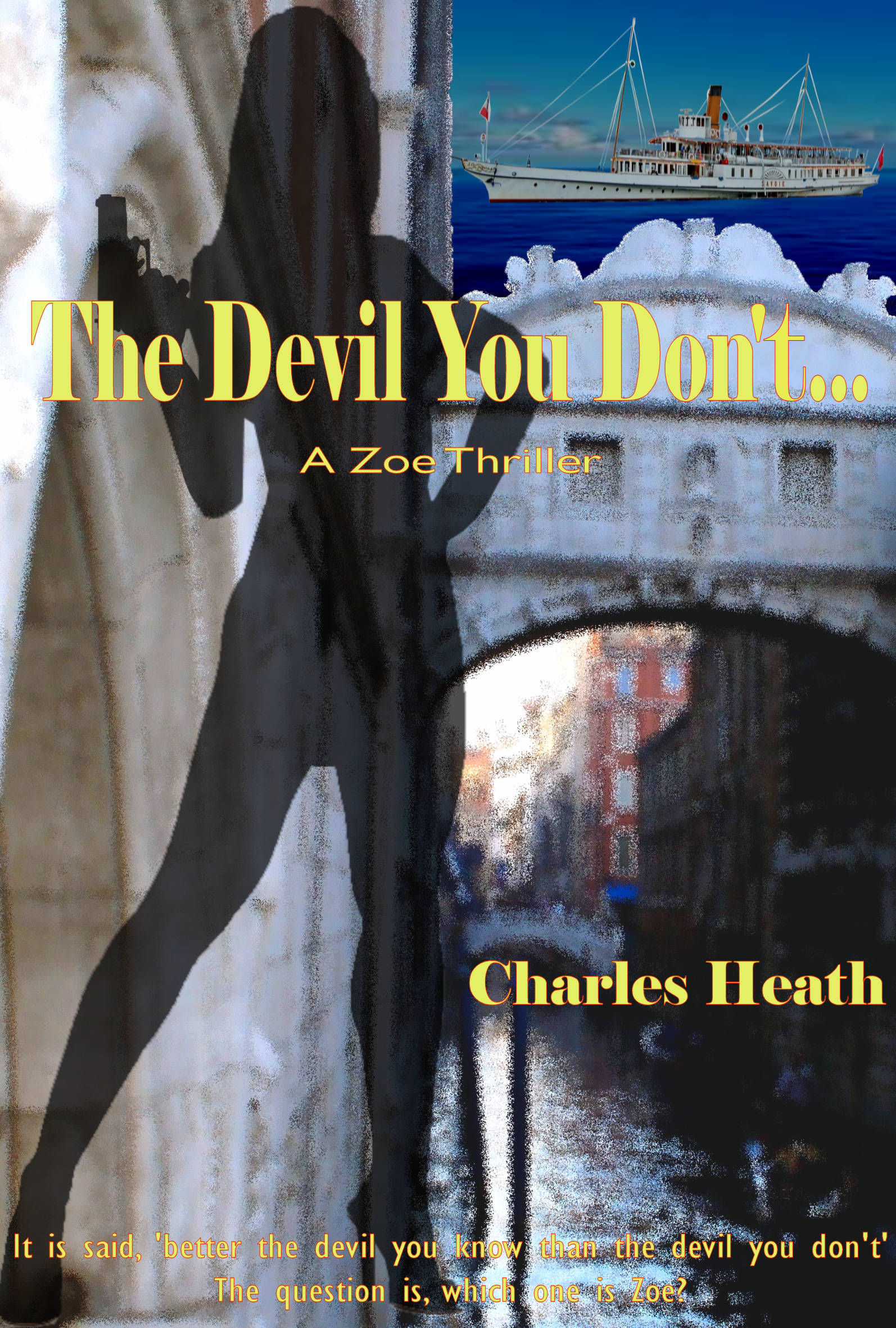
An excerpt from “The Devil You Don’t”

Available on Amazon Kindle here:  https://amzn.to/2Xyh1ow

By the time I returned to the Savoie, the rain had finally stopped, and there was a streak of blue sky to offer some hope the day would improve.

The ship was not crowded, the possibility of bad weather perhaps holding back potential passengers.  Of those I saw, a number of them would be aboard for the lunch by Phillippe Chevrier.  I thought about it, but the Concierge had told me about several restaurants in Yvoire and had given me a hand-drawn map of the village.  I think he came from the area because he spoke with the pride and knowledge of a resident.

I was looking down from the upper deck observing the last of the boarding passengers when I saw a woman, notable for her red coat and matching shoes, making a last-minute dash to get on board just before the gangway was removed.  In fact, her ungainly manner of boarding had also captured a few of the other passenger’s attention.  Now they would have something else to talk about, other than the possibility of further rain.

I saw her smile at the deckhand, but he did not smile back.  He was not impressed with her bravado, perhaps because of possible injury.  He looked at her ticket then nodded dismissively, and went back to his duties in getting the ship underway.  I was going to check the departure time, but I, like the other passengers, had my attention diverted to the woman in red.

From what I could see there was something about her.  It struck me when the light caught her as she turned to look down the deck, giving me a perfect profile.  I was going to say she looked foreign, but here, as in almost anywhere in Europe, that described just about everyone.  Perhaps I was just comparing her to Phillipa, so definitively British, whereas this woman was very definitely not.

She was perhaps in her 30’s, slim or perhaps the word I’d use was lissom, and had the look and manner of a model.  I say that because Phillipa had dragged me to most of the showings, whether in Milan, Rome, New York, London, or Paris.  The clothes were familiar, and in the back of my mind, I had a feeling I’d seen her before.

Or perhaps, to me, all models looked the same.

She looked up in my direction, and before I could divert my eyes, she locked on.  I could feel her gaze boring into me, and then it was gone as if she had been looking straight through me.  I remained out on deck as the ship got underway, watching her disappear inside the cabin.  My curiosity was piqued, so I decided to keep an eye out for her.

I could feel the coolness of the air as the ship picked up speed, not that it was going to be very fast.  With stops, the trip would take nearly two hours to get to my destination.  It would turn back almost immediately, but I was going to stay until the evening when it returned at about half eight.  It would give me enough time to sample the local fare, and take a tour of the medieval village.

Few other passengers ventured out on the deck, most staying inside or going to lunch.  After a short time, I came back down to the main deck and headed forward.  I wanted to clear my head by concentrating on the movement of the vessel through the water, breathing in the crisp, clean air, and let the peacefulness of the surroundings envelope me.

It didn’t work.

I knew it wouldn’t be long before I started thinking about why things hadn’t worked, and what part I played in it.  And the usual question that came to mind when something didn’t work out.  What was wrong with me?

I usually blamed it on my upbringing.

I had one of those so-called privileged lives, a nanny till I was old enough to go to boarding school, then sent to the best schools in the land.  There I learned everything I needed to be the son of a Duke, or, as my father called it in one of his lighter moments, nobility in waiting.

Had this been five or six hundred years ago, I would need to have sword and jousting skills, or if it had been a few hundred years later a keen military mind.  If nothing else I could ride a horse, and go on hunts, or did until they became not the thing to do.

I learned six languages, and everything I needed to become a diplomat in the far-flung British Empire, except the Empire had become the Commonwealth, and then, when no-one was looking, Britain’s influence in the world finally disappeared.  I was a man without a cause, without a vocation, and no place to go.

Computers were the new vogue and I had an aptitude for programming.  I guess that went hand in hand with mathematics, which although I hated the subject, I excelled in.  Both I and another noble outcast used to toss ideas around in school, but when it came to the end of our education, he chose to enter the public service, and I took a few of those ideas we had mulled over and turned them into a company.

About a year ago, I was made an offer I couldn’t refuse.  There were so many zeroes on the end of it I just said yes, put the money into a very grateful bank, and was still trying to come to terms with it.

Sadly, I still had no idea what I was going to do with the rest of my life.  My parents had asked me to come back home and help manage the estate, and I did for a few weeks.  It was as long as it took for my parents to drive me insane.

Back in the city, I spent a few months looking for a mundane job, but there were very few that suited the qualifications I had, and the rest, I think I intimidated the interviewer simply because of who I was.  In that time I’d also featured on the cover of the Economist, and through my well-meaning accountant, started involving myself with various charities, earning the title ‘philanthropist’.

And despite all of this exposure, even making one of those ubiquitous ‘eligible bachelor’ lists, I still could not find ‘the one’, the woman I wanted to spend the rest of my life with.  Phillipa seemed to fit the bill, but in time she proved to be a troubled soul with ‘Daddy’ issues.  I knew that in building a relationship compromise was necessary, but with her, in the end, everything was a compromise and what had happened was always going to be the end result.

It was perhaps a by-product of the whole nobility thing.  There was a certain expectation I had to fulfill, to my peers, contemporaries, parents and family, and those who either liked or hated what it represented.  The problem was, I didn’t feel like I belonged.  Not like my friend from schooldays, and now obscure acquaintance, Sebastian.  He had been elevated to his Dukedom early when his father died when he was in his twenties.  He had managed to fade from the limelight and was rarely mentioned either in the papers or the gossip columns.  He was one of the lucky ones.

I had managed to keep a similarly low profile until I met Phillipa.  From that moment, my obscurity disappeared.  It was, I could see now, part of a plan put in place by Phillipa’s father, a man who hogged the limelight with his daughter, to raise the profile of the family name and through it their businesses.  He was nothing if not the consummate self-advertisement.

Perhaps I was supposed to be the last piece of the puzzle, the attachment to the establishment, that link with a class of people he would not normally get in the front door.  There was nothing refined about him or his family, and more than once I’d noticed my contemporaries cringe at the mention of his name, or any reference of my association with him.

Yet could I truthfully say I really wanted to go back to the obscurity I had before Phillipa?  For all her faults, there were times when she had been fun to be with, particularly when I first met her when she had a certain air of unpredictability.  That had slowly disappeared as she became part of her father’s plan for the future.  She just failed to see how much he was using her.

Or perhaps, over time, I had become cynical.

I thought about calling her.  It was one of those moments of weakness when I felt alone, more alone than usual.

I diverted my attention back to my surroundings and the shoreline.  Out of the corner of my eye, I could see the woman in the red coat, making a move.  The red coat was like a beacon, a sort of fire engine red.  It was not the sort of coat most of the women I knew would wear, but on her, it looked terrific.  In fact, her sublime beauty was the one other attribute that was distinctly noticeable, along with the fact her hair was short, rather than long, and jet black.

I had to wrench my attention away from her.

A few minutes later several other passengers came out of the cabin for a walk around the deck, perhaps to get some exercise, perhaps checking up on me, or perhaps I was being paranoid.  I waited till they passed on their way forward, and I turned and headed aft.

I watched the wake sluicing out from under the stern for a few minutes, before retracing my steps to the front of the ship and there I stood against the railing, watching the bow carve its way through the water.  It was almost mesmerizing.  There, I emptied my mind of thoughts about Phillipa, and thoughts about the woman in the red coat.

Until a female voice behind me said, “Having a bad day?”

I started, caught by surprise, and slowly turned.  The woman in the red coat had somehow got very close me without my realizing it.  How did she do that?  I was so surprised I couldn’t answer immediately.

“I do hope you are not contemplating jumping.  I hear the water is very cold.”

Closer up, I could see what I’d missed when I saw her on the main deck.  There was a slight hint of Chinese, or Oriental, in her particularly around the eyes, and of her hair which was jet black.  An ancestor twice or more removed had left their mark, not in a dominant way, but more subtle, and easily missed except from a very short distance away, like now.

Other than that, she was quite possibly Eastern European, perhaps Russian, though that covered a lot of territory.  The incongruity of it was that she spoke with an American accent, and fluent enough for me to believe English was her first language.

Usually, I could ‘read’ people, but she was a clean slate.  Her expression was one of amusement, but with cold eyes.  My first thought, then, was to be careful.

“No.  Not yet.”  I coughed to clear my throat because I could hardly speak.  And blushed, because that was what I did when confronted by a woman, beautiful or otherwise.

The amusement gave way to a hint of a smile that brightened her demeanor as a little warmth reached her eyes.  “So that’s a maybe.  Should I change into my lifesaving gear, just in case?”

It conjured up a rather interesting image in my mind until I reluctantly dismissed it.

“Perhaps I should move away from the edge,” I said, moving sideways until I was back on the main deck, a few feet further away.  Her eyes had followed me, and when I stopped she turned to face me again.  She did not move closer.

I realized then she had removed her beret and it was in her left side coat pocket.  “Thanks for your concern …?”

“Zoe.”

“Thanks for your concern, Zoe.  By the way, my name is John.”

She smiled again, perhaps in an attempt to put me at ease.  “I saw you earlier, you looked so sad, I thought …”

“I might throw myself overboard?”

“An idiotic notion I admit, but it is better to be safe than sorry.”

Then she tilted her head to one side then the other, looking intently at me.  “You seem to be familiar.  Do I know you?”

I tried to think of where I may have seen her before, but all I could remember was what I’d thought earlier when I first saw her; she was a model and had been at one of the showings.  If she was, it would be more likely she would remember Phillipa, not me.  Phillipa always had to sit in the front row.

“Probably not.”  I also didn’t mention the fact she may have seen my picture in the society pages of several tabloid newspapers because she didn’t look the sort of woman who needed a daily dose of the comings and goings, and, more often than not, scandal associated with so-called celebrities.

She gave me a look, one that told me she had just realized who I was.  “Yes, I remember now.  You made the front cover of the Economist.  You sold your company for a small fortune.”

Of course.  She was not the first who had recognized me from that cover.  It had raised my profile considerably, but not the Sternhaven’s.  That article had not mentioned Phillipa or her family.  I suspect Grandmother had something to do with that, and it was, now I thought about it, another nail in the coffin that was my relationship with Phillipa.

“I wouldn’t say it was a fortune, small or otherwise, just fortunate.”  Each time, I found myself playing down the wealth aspect of the business deal.

“Perhaps then, as the journalist wrote, you were lucky.  It is not, I think, a good time for internet-based companies.”

The latter statement was an interesting fact, one she read in the Financial Times which had made that exact comment recently.

“But I am boring you.”  She smiled again.  “I should be minding my own business and leaving you to your thoughts.  I am sorry.”

She turned to leave and took a few steps towards the main cabin.

“You’re not boring me,” I said, thinking I was letting my paranoia get the better of me.  It had been Sebastian on learning of my good fortune, who had warned me against ‘a certain element here and abroad’ whose sole aim would be to separate me from my money.  He was not very subtle when he described their methods.

But I knew he was right.  I should have let her walk away.

She stopped and turned around.  “You seem nothing like the man I read about in the Economist.”

A sudden and awful thought popped into my head.  Those words were part of a very familiar opening gambit.  “Are you a reporter?”

I was not sure if she looked surprised, or amused.  “Do I look like one?”

I silently cursed myself for speaking before thinking, and then immediately ignored my own admonishment.  “People rarely look like what they are.”

I saw the subtle shake of the head and expected her to take her leave.  Instead she astonished me.

“I fear we have got off on the wrong foot.  To be honest, I’m not usually this forward, but you seemed like you needed cheering up when probably the opposite is true.  Aside from the fact this excursion was probably a bad idea.  And,” she added with a little shrug, “perhaps I talk too much.”

I was not sure what I thought of her after that extraordinary admission. It was not something I would do, but it was an interesting way to approach someone and have them ignoring their natural instinct.  I would let Sebastian whisper in my ear for a little longer and see where this was going.

“Oddly enough, I was thinking the same thing.  I was supposed to be traveling with my prospective bride.  I think you can imagine how that turned out.”

“She’s not here?”

“No.”

“She’s in the cabin?”  Her eyes strayed in that direction for a moment then came back to me.  She seemed surprised I might be traveling with someone.

“No.  She is back in England, and the wedding is off.  So is the relationship.  She dumped me by text.”

OK, why was I sharing this humiliating piece of information with her?  I still couldn’t be sure she was not a reporter.

She motioned to an empty seat, back from the edge.  No walking the plank today.  She moved towards it and sat down.  She showed no signs of being cold, nor interested in the breeze upsetting her hair.  Phillipa would be having a tantrum about now, being kept outside, and freaking out over what the breeze might be doing to her appearance.

I wondered, if only for a few seconds if she used this approach with anyone else.  I guess I was a little different, a seemingly rich businessman alone on a ferry on Lake Geneva, contemplating the way his life had gone so completely off track.

She watched as I sat at the other end of the bench, leaving about a yard between us.  After I leaned back and made myself as comfortable as I could, she said, “I have also experienced something similar, though not by text message.  It is difficult, the first few days.”

“I saw it coming.”

“I did not.”  She frowned, a sort of lifeless expression taking over, perhaps brought on by the memory of what had happened to her.  “But it is done, and I moved on.  Was she the love of your life?”

OK, that was unexpected.

When I didn’t answer, she said, “I am sorry.  Sometimes I ask personal questions without realizing what I’m doing.  It is none of my business.”  She shivered.  “Perhaps we should go back inside.”

She stood, and held out her hand.  Should I take it and be drawn into her web?  I thought of Sebastian.  What would he do in this situation?

I took her hand in mine and let her pull me gently to my feet.  “Wise choice,” she said, looking up at the sky.

It just started to rain.

© Charles Heath 2015-2023

newdevilcvr6

The cinema of my dreams – It all started in Venice – Episode 7

A new team member

I had gone over a number of different ways I could run into Juliet, but most seemed staged, and I got the impression from her most recent conversation with Larry, that she was not silly.

In fact, in my mind, a second meeting, coincidental or not, would send up a red flag.  This was where spycraft bordered on Hollywood, we needed to set the stage, and for that, we needed extras.

And that meant a phone call to Alfie.  I told him what I needed, and he asked for 24 hours to set it up, and true to his word, I was in the arrival hall of Venice Airport, waiting for the newest member of the team.

Cecilia Walker was an aspiring actress, an ideal cover for her so-called part-time profession as an agent at large.  We all had cover stories, with both personal and legitimate reasons for being in places that we’d not normally be expected to be.  And in her case, she was never the same person twice, quite literally the master of disguise.

For Cecilia, there was a film festival in Venice she would be attending.  Timing in this case was everything.

As for me, I had a background in archaeology and journalism and was actually employed to write articles for a number of publications, a job I kept up after I left the service, along with the idea of writing a book, which became the object of a long-standing joke between Violetta and I.

One day I would finish it

But ironically, Cecilia had the perfect cover, being able to slip into any role without having to work too hard on the finer details. 

Alfie had sent a photo of her, and even though I did spend a few moments wondering if I might recognize her from some part she may have played, it didn’t stir up any recollection.  Of course, there was always a vast difference between studio poses and real life, and the woman that came out of the gate was quite different from the one I was expecting.

Although the few paparazzi that were loitering in the terminal just in case a celebrity did suddenly arrive, didn’t recognize her, that might be due to the fact she was dressed casually and had changed both hairstyle and color, and, as I had learned from the woman I’d spent a lot of time with, nuances in make-up could make all the difference.

But there was one photographer that was interested, perhaps he had seen her before, and I waited until she had spoken to him before wandering over.  She had scanned the gate area, both to familiarise herself with the layout and people there, as well as locate me, all without looking like she was doing anything other than immediately disembarking the plane.

It showed experience, and preparedness, not her first, as they say, rodeo.

She had been tracking me the whole time, so once I was in her direct line of sight, anyone observing us would assume we were old friends.

There was a hug before words were spoken, the sort that made me realize what I had been missing for some time, warm personal contact.

“You haven’t aged a bit,” she said, a smile lingering.

“It’s the wine, excellent preservative.  You, on the other hand, have grown up.” 

The script called for old friends who hadn’t seen each other for a year or so.

She performed a pirouette and then burst into giggles.  “Sorry, it’s just when I did that for one of my grandmothers, she said I was acting like a tart.”

“Grandmothers can be like that,” I said, remembering Violetta used to use the same word for her sister’s grandchildren.

“My house is a renovator’s disaster at the moment, so we’re staying in a quaint hotel on the edge of the main Canal, and some interesting restaurants.”

Alfie had booked us adjoining rooms on the same floor as Juliet, which, when she learned I would be staying there too, would give me the surprise element I was looking for.

“I am so looking forward to this week.  If we get the time, you’ll have to show me everything.”

In that short distance from the airport terminal to the water taxi berths, there was time enough to discover what had exactly been missing in my life since Violetta had died.

Yes, there was a period of mourning, a period where there had been no point in getting out of bed, a period where I felt completely lost without the one person who made my life make sense.

But in those few short minutes, there it was again, and with it the belief that perhaps there was someone else out there who could fill that gap, but never replace her because there would never be anyone else like her.  Cecilia was not the one, but she was part of the process.

I had to remember, also, she was a consummate actress, that she was playing a role, and it was totally believable.

Once we were on the water taxi and away from prying eyes and ears, I had to ask, “how did you end up on Rodby’s roster, especially in light of how good an actor you are?”

“You think so, why thank you.  But the duality, accidentally.  I got caught in the crossfire, and thinking at the time, someone had changed the script and forgot to tell me, sort of kicked some ass.  Delusions of becoming a female version of Liam Neeson.  Instead, I was offered a recurring female James Bond, in real life.”

Good to know I could depend on her in a scrap.

“This might not come to that, in fact, it might be quite boring.”

She smiled.  “A free trip to Venice, a film festival pass to everything, working with a legend, what’s not to like?”

What had Alfie told her?  Legend I was not, perhaps slightly more successful than the average agent, but I was just doing my job until I didn’t want to do it anymore.  How many of us could say we preferred to sacrifice everything for the love of the one?

“I assume you are up to speed with what’s required of you in the first instance?”

“A role is a role, Evan, and I love a good role.  This woman you’re supposed to be cozying up to, and the guy using her, it’s almost like a plotline in a B grade movie.”

I hadn’t thought of it like that, but now that she mentioned it, it felt a bit like exactly that.

“Should I make her jealous?”

“It’s not like that, or at least that’s the impression I got when I ran into her.  Depends on what Larry’s intentions are.  Chances are when we get to the hotel we might see her again, and you might get an idea.  I’m not the best person reading women’s minds.”

“No man ever is.  We have to have that element of surprise to keep you interested, but if I was in her position, and I saw you with a woman like me, and I was supposed to get close to you for whatever reason, I might be forced into making a move I didn’t want to.  The fact she’s here with you in her sights generally means one thing.”

The question was, how desperate would she be?  That would depend on the motivation, or what leverage he had.  Pushing the envelope might, as Cecilia said force her hand.

So much for a softly, softly approach.

And it might force Larry’s hand as well

“So, is it your first time in Venice?”

“No, I used to come here when younger with my mother who was I guess a Venetian.  After she died, not so much.”

“No other baggage?”  It had surprised me she had only one carrying bag.

It was always excess baggage when traveling anywhere with my ex.

“Only emotional.  I was told to pack light, anything I needed you’d get for me.” 

The accompanying wicked smile was enough.  I’d have to make sure the expense account was big enough.

After a pleasant forty-five-minute grand tour of the canals going the long way to the berths not far from St Mark’s Square, we jumped off as soon as the taxi came alongside.

The hotel wasn’t far from the bronze equestrian monument to Victor Emmanuel II statue, which she took a moment to look at, almost causing several strollers to walk into her.

That element of careless tourist didn’t make her stand-up as much as if she had purposefully walked from the berth to the hotel, a small detail in a studied persona, the role of an extra perhaps in a film.

It was the part of the day, for late summer that I liked the best, and in a week or so, the weather would slowly get colder until Christmas, and winter, was upon us.

Then, she did the complete 360-degree turn just taking it all in.  “Some things never change, I remember all of this.”

Perhaps living off and on for so long here had made me a little immune to the charm of the place, but it was hard not to get caught up in the moment.

“Your hotel awaits.”

For a few seconds the reality of the situation faded into the background, and I could push all the nastiness of Larry and his machinations aside, but then the reality came back, I remembered who I was and what I’d been, and how important it was not to lose sight of the objective.

It had not been easy while Violetta was still alive, nor was hiding the real truth of my past from her.  Yes, I had told her a version of my precious life, and the possible dangers it could present, which was why she suggested we live in a number of different places, never the same in a single location, but with Venice, it had been different.  It had a profound effect on her, and it was where she chose to spend her last days.

It had not held the same effect on me. Not since she passed, and I had been looking to leave, find somewhere new, and different to stay, more so since I learned of Larry’s plans.

Now it just made me angry.

“I’m sorry,” she said, suddenly next to me, “do we need to be someplace?”

“What, no, sorry.”

“You looked annoyed, I hope not with me.”

“No, never.  Just thinking about Larry. And Juliet, I guess I’m lamenting the nuisance the pair of them are in intruding on my solitude.  Something to note, you don’t ever get the luxury of retirement in this business, except in death.”

“Then let’s hope it doesn’t happen.”

© Charles Heath 2022