The cinema of my dreams – Was it just another surveillance job – Episode 43

I’m back home and this story has been sitting on the back burner for a few months, waiting for some more to be written.

The trouble is, there are also other stories to write, and I’m not very good at prioritizing.

But, here we are, a few minutes opened up and it didn’t take long to get back into the groove.

Chasing leads, maybe

—–

“You left a paper trail, a car registration form at the flat in Bromley.”

I saw him shake his head. “I thought I’d removed any evidence.”

“Good thing then, that I found it, and not Severin who was next through the door.”

He nodded towards Jennifer. “What’s she doing here, she was one of your surveillance team.”

“She came with me. The department threw her out, I found her and asked her if she wanted to find out what was going on. Apparently, she did. Everyone can put their guns down now. We are, believe it or not, all friends here.”

Jennifer put her gun back in a pocket I hadn’t seen before.

Adam lowered his, but it was still ready to shoot if either of us made the wrong move. The old woman’s aim hadn’t changed; she was still intent on shooting me if I moved.

“Mother, give it up.”

A few seconds later she lowered the weapon, but it was still ready. To fire if I moved.

“Can we sit,” I asked. Having a gun aimed at you tended to make you feel week in the knees. I was.

There were three chairs in front of the fireplace, this room also having a fire ready but not lit, and one chair by the writing-table. We sat in the three chairs, the old woman over by the table. She put the rifle down on the desktop, within easy reach.

“My first question,” I said, “has to be, how are you still alive?”

“You left when Severin’s crew arrived to clean up. He left at the same time. Luckily. Then two of Dobbin’s agents arrived and cleaned up the cleaners, as it were, and took me to a safe place where it was discovered my injuries were not fatal.”

“You were hit by a sniper, that’s hard to believe he, or she, aimed to miss.”

“They didn’t. I think I moved slightly because of you, so I have you to thank for my life. Something else to remember, Dobbin doesn’t know I’m here, and I think the only link was that registration certificate. No one actually knows me by Adam Quigley, except, of course, my mother.

“And the USB everyone is after?”

A few seconds of silence, then, “It’s missing.”

“Were you the only one who knew where it was?”

“No, but as far as I’m aware, that person is dead, killed by the explosion you witnessed. We were due to meet there, just before the explosion which is why I was heading there.”

“You walked past it, as I recall.”

“Standard procedure. I walk past, check to see if the contact is there, then come back a few minutes later. I was running late, just got past when it went up. We would have both been in there, and dead.”

“And the USB gone with it?”

“Yes. My friend had it with him at the time. I was going there to pick it up.”

“No copies?” It was too much to expect there would be, even if it was worth more than life itself.

“No. That sort of information needs to be in as few places as possible.”

“You knew what it was about?”

“Yes.”

“And…”

“It’s above all our pay grades. But something I can tell you; I know why your Severin and Maury wanted it back.”

“It was theirs?”

“Yes. They originally stole it. I stole it from them and trying to return it to whom it belonged.”

“Nobbin?”

“God, no. I’ve since discovered he’s as crooked as all the rest. But now that it’s gone, it doesn’t matter who the owner of the information is. Just staying one step ahead of the jackals, that’s the job in hand.”

——-

© Charles Heath 2020-2021

A photograph from the inspirational bin – 39

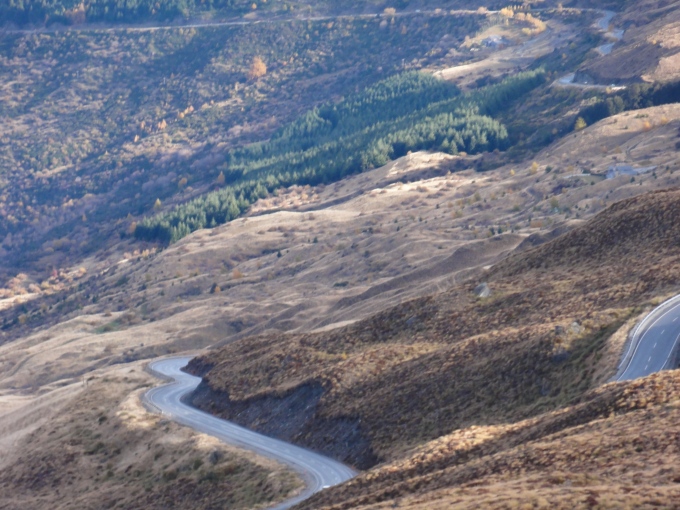
This is what we saw driving along the Coquihalla Highway in Canada, a rather infamous stretch of road featured on the Discovery Channel, and yes, we saw a number of cars and trucks off the side of the road, and not in a good way

The road was iced over in place, and driving was difficult, but on the plus side the scenery was spectacular, and it was hard not to be distracted when driving.

But, inspiration for a story? It might go something like this:

Arty was adamant that he knew the best where man in the business.

That might gave been true if he was in the middle of the city where there were endless tests and turns that could be used to lost chasing police vehicles.

But that didn’t apply to the open road, and one that was think with ice and snow, even if it had recently been cleared.

But that wasn’t as bad as the fact that we had got free of the city, lost the pursuing cars, changed vehicles, and got away free.

All he had to fo was follow the road.

Except Arty had a temper, and getting stuck behind an old van going ever so slowly on the road, caused him to first blast them with horn, then start doing dangerous accelations up behind them, and then attempt to overtake on a bend in the road.

That might not have been so bad if there had not been an oncoming car, but there was.

Even that might not have been so bad if the car had not been a police vehicle.

But the real kicker: Arty lost control of the car and we went sailing off the edge of the road into a ravine, landing on soft ice which after a minute started cracking and then gave way.

The last place I wanted to be was to be sinking into a freezing cold river, but there we were, all frantically trying to get out.

Fortunately, I did, but not before I was soaking wet, and almost frozen. The rest didn’t make it.

An excerpt from “The Devil You Don’t”

Available on Amazon Kindle here:  https://amzn.to/2Xyh1ow

By the time I returned to the Savoie, the rain had finally stopped, and there was a streak of blue sky to offer some hope the day would improve.

The ship was not crowded, the possibility of bad weather perhaps holding back potential passengers.  Of those I saw, a number of them would be aboard for the lunch by Phillippe Chevrier.  I thought about it, but the Concierge had told me about several restaurants in Yvoire and had given me a hand-drawn map of the village.  I think he came from the area because he spoke with the pride and knowledge of a resident.

I was looking down from the upper deck observing the last of the boarding passengers when I saw a woman, notable for her red coat and matching shoes, making a last-minute dash to get on board just before the gangway was removed.  In fact, her ungainly manner of boarding had also captured a few of the other passenger’s attention.  Now they would have something else to talk about, other than the possibility of further rain.

I saw her smile at the deckhand, but he did not smile back.  He was not impressed with her bravado, perhaps because of possible injury.  He looked at her ticket then nodded dismissively, and went back to his duties in getting the ship underway.  I was going to check the departure time, but I, like the other passengers, had my attention diverted to the woman in red.

From what I could see there was something about her.  It struck me when the light caught her as she turned to look down the deck, giving me a perfect profile.  I was going to say she looked foreign, but here, as in almost anywhere in Europe, that described just about everyone.  Perhaps I was just comparing her to Phillipa, so definitively British, whereas this woman was very definitely not.

She was perhaps in her 30’s, slim or perhaps the word I’d use was lissom, and had the look and manner of a model.  I say that because Phillipa had dragged me to most of the showings, whether in Milan, Rome, New York, London, or Paris.  The clothes were familiar, and in the back of my mind, I had a feeling I’d seen her before.

Or perhaps, to me, all models looked the same.

She looked up in my direction, and before I could divert my eyes, she locked on.  I could feel her gaze boring into me, and then it was gone as if she had been looking straight through me.  I remained out on deck as the ship got underway, watching her disappear inside the cabin.  My curiosity was piqued, so I decided to keep an eye out for her.

I could feel the coolness of the air as the ship picked up speed, not that it was going to be very fast.  With stops, the trip would take nearly two hours to get to my destination.  It would turn back almost immediately, but I was going to stay until the evening when it returned at about half eight.  It would give me enough time to sample the local fare, and take a tour of the medieval village.

Few other passengers ventured out on the deck, most staying inside or going to lunch.  After a short time, I came back down to the main deck and headed forward.  I wanted to clear my head by concentrating on the movement of the vessel through the water, breathing in the crisp, clean air, and let the peacefulness of the surroundings envelope me.

It didn’t work.

I knew it wouldn’t be long before I started thinking about why things hadn’t worked, and what part I played in it.  And the usual question that came to mind when something didn’t work out.  What was wrong with me?

I usually blamed it on my upbringing.

I had one of those so-called privileged lives, a nanny till I was old enough to go to boarding school, then sent to the best schools in the land.  There I learned everything I needed to be the son of a Duke, or, as my father called it in one of his lighter moments, nobility in waiting.

Had this been five or six hundred years ago, I would need to have sword and jousting skills, or if it had been a few hundred years later a keen military mind.  If nothing else I could ride a horse, and go on hunts, or did until they became not the thing to do.

I learned six languages, and everything I needed to become a diplomat in the far-flung British Empire, except the Empire had become the Commonwealth, and then, when no-one was looking, Britain’s influence in the world finally disappeared.  I was a man without a cause, without a vocation, and no place to go.

Computers were the new vogue and I had an aptitude for programming.  I guess that went hand in hand with mathematics, which although I hated the subject, I excelled in.  Both I and another noble outcast used to toss ideas around in school, but when it came to the end of our education, he chose to enter the public service, and I took a few of those ideas we had mulled over and turned them into a company.

About a year ago, I was made an offer I couldn’t refuse.  There were so many zeroes on the end of it I just said yes, put the money into a very grateful bank, and was still trying to come to terms with it.

Sadly, I still had no idea what I was going to do with the rest of my life.  My parents had asked me to come back home and help manage the estate, and I did for a few weeks.  It was as long as it took for my parents to drive me insane.

Back in the city, I spent a few months looking for a mundane job, but there were very few that suited the qualifications I had, and the rest, I think I intimidated the interviewer simply because of who I was.  In that time I’d also featured on the cover of the Economist, and through my well-meaning accountant, started involving myself with various charities, earning the title ‘philanthropist’.

And despite all of this exposure, even making one of those ubiquitous ‘eligible bachelor’ lists, I still could not find ‘the one’, the woman I wanted to spend the rest of my life with.  Phillipa seemed to fit the bill, but in time she proved to be a troubled soul with ‘Daddy’ issues.  I knew that in building a relationship compromise was necessary, but with her, in the end, everything was a compromise and what had happened was always going to be the end result.

It was perhaps a by-product of the whole nobility thing.  There was a certain expectation I had to fulfill, to my peers, contemporaries, parents and family, and those who either liked or hated what it represented.  The problem was, I didn’t feel like I belonged.  Not like my friend from schooldays, and now obscure acquaintance, Sebastian.  He had been elevated to his Dukedom early when his father died when he was in his twenties.  He had managed to fade from the limelight and was rarely mentioned either in the papers or the gossip columns.  He was one of the lucky ones.

I had managed to keep a similarly low profile until I met Phillipa.  From that moment, my obscurity disappeared.  It was, I could see now, part of a plan put in place by Phillipa’s father, a man who hogged the limelight with his daughter, to raise the profile of the family name and through it their businesses.  He was nothing if not the consummate self-advertisement.

Perhaps I was supposed to be the last piece of the puzzle, the attachment to the establishment, that link with a class of people he would not normally get in the front door.  There was nothing refined about him or his family, and more than once I’d noticed my contemporaries cringe at the mention of his name, or any reference of my association with him.

Yet could I truthfully say I really wanted to go back to the obscurity I had before Phillipa?  For all her faults, there were times when she had been fun to be with, particularly when I first met her when she had a certain air of unpredictability.  That had slowly disappeared as she became part of her father’s plan for the future.  She just failed to see how much he was using her.

Or perhaps, over time, I had become cynical.

I thought about calling her.  It was one of those moments of weakness when I felt alone, more alone than usual.

I diverted my attention back to my surroundings and the shoreline.  Out of the corner of my eye, I could see the woman in the red coat, making a move.  The red coat was like a beacon, a sort of fire engine red.  It was not the sort of coat most of the women I knew would wear, but on her, it looked terrific.  In fact, her sublime beauty was the one other attribute that was distinctly noticeable, along with the fact her hair was short, rather than long, and jet black.

I had to wrench my attention away from her.

A few minutes later several other passengers came out of the cabin for a walk around the deck, perhaps to get some exercise, perhaps checking up on me, or perhaps I was being paranoid.  I waited till they passed on their way forward, and I turned and headed aft.

I watched the wake sluicing out from under the stern for a few minutes, before retracing my steps to the front of the ship and there I stood against the railing, watching the bow carve its way through the water.  It was almost mesmerizing.  There, I emptied my mind of thoughts about Phillipa, and thoughts about the woman in the red coat.

Until a female voice behind me said, “Having a bad day?”

I started, caught by surprise, and slowly turned.  The woman in the red coat had somehow got very close me without my realizing it.  How did she do that?  I was so surprised I couldn’t answer immediately.

“I do hope you are not contemplating jumping.  I hear the water is very cold.”

Closer up, I could see what I’d missed when I saw her on the main deck.  There was a slight hint of Chinese, or Oriental, in her particularly around the eyes, and of her hair which was jet black.  An ancestor twice or more removed had left their mark, not in a dominant way, but more subtle, and easily missed except from a very short distance away, like now.

Other than that, she was quite possibly Eastern European, perhaps Russian, though that covered a lot of territory.  The incongruity of it was that she spoke with an American accent, and fluent enough for me to believe English was her first language.

Usually, I could ‘read’ people, but she was a clean slate.  Her expression was one of amusement, but with cold eyes.  My first thought, then, was to be careful.

“No.  Not yet.”  I coughed to clear my throat because I could hardly speak.  And blushed, because that was what I did when confronted by a woman, beautiful or otherwise.

The amusement gave way to a hint of a smile that brightened her demeanor as a little warmth reached her eyes.  “So that’s a maybe.  Should I change into my lifesaving gear, just in case?”

It conjured up a rather interesting image in my mind until I reluctantly dismissed it.

“Perhaps I should move away from the edge,” I said, moving sideways until I was back on the main deck, a few feet further away.  Her eyes had followed me, and when I stopped she turned to face me again.  She did not move closer.

I realized then she had removed her beret and it was in her left side coat pocket.  “Thanks for your concern …?”

“Zoe.”

“Thanks for your concern, Zoe.  By the way, my name is John.”

She smiled again, perhaps in an attempt to put me at ease.  “I saw you earlier, you looked so sad, I thought …”

“I might throw myself overboard?”

“An idiotic notion I admit, but it is better to be safe than sorry.”

Then she tilted her head to one side then the other, looking intently at me.  “You seem to be familiar.  Do I know you?”

I tried to think of where I may have seen her before, but all I could remember was what I’d thought earlier when I first saw her; she was a model and had been at one of the showings.  If she was, it would be more likely she would remember Phillipa, not me.  Phillipa always had to sit in the front row.

“Probably not.”  I also didn’t mention the fact she may have seen my picture in the society pages of several tabloid newspapers because she didn’t look the sort of woman who needed a daily dose of the comings and goings, and, more often than not, scandal associated with so-called celebrities.

She gave me a look, one that told me she had just realized who I was.  “Yes, I remember now.  You made the front cover of the Economist.  You sold your company for a small fortune.”

Of course.  She was not the first who had recognized me from that cover.  It had raised my profile considerably, but not the Sternhaven’s.  That article had not mentioned Phillipa or her family.  I suspect Grandmother had something to do with that, and it was, now I thought about it, another nail in the coffin that was my relationship with Phillipa.

“I wouldn’t say it was a fortune, small or otherwise, just fortunate.”  Each time, I found myself playing down the wealth aspect of the business deal.

“Perhaps then, as the journalist wrote, you were lucky.  It is not, I think, a good time for internet-based companies.”

The latter statement was an interesting fact, one she read in the Financial Times which had made that exact comment recently.

“But I am boring you.”  She smiled again.  “I should be minding my own business and leaving you to your thoughts.  I am sorry.”

She turned to leave and took a few steps towards the main cabin.

“You’re not boring me,” I said, thinking I was letting my paranoia get the better of me.  It had been Sebastian on learning of my good fortune, who had warned me against ‘a certain element here and abroad’ whose sole aim would be to separate me from my money.  He was not very subtle when he described their methods.

But I knew he was right.  I should have let her walk away.

She stopped and turned around.  “You seem nothing like the man I read about in the Economist.”

A sudden and awful thought popped into my head.  Those words were part of a very familiar opening gambit.  “Are you a reporter?”

I was not sure if she looked surprised, or amused.  “Do I look like one?”

I silently cursed myself for speaking before thinking, and then immediately ignored my own admonishment.  “People rarely look like what they are.”

I saw the subtle shake of the head and expected her to take her leave.  Instead she astonished me.

“I fear we have got off on the wrong foot.  To be honest, I’m not usually this forward, but you seemed like you needed cheering up when probably the opposite is true.  Aside from the fact this excursion was probably a bad idea.  And,” she added with a little shrug, “perhaps I talk too much.”

I was not sure what I thought of her after that extraordinary admission. It was not something I would do, but it was an interesting way to approach someone and have them ignoring their natural instinct.  I would let Sebastian whisper in my ear for a little longer and see where this was going.

“Oddly enough, I was thinking the same thing.  I was supposed to be traveling with my prospective bride.  I think you can imagine how that turned out.”

“She’s not here?”

“No.”

“She’s in the cabin?”  Her eyes strayed in that direction for a moment then came back to me.  She seemed surprised I might be traveling with someone.

“No.  She is back in England, and the wedding is off.  So is the relationship.  She dumped me by text.”

OK, why was I sharing this humiliating piece of information with her?  I still couldn’t be sure she was not a reporter.

She motioned to an empty seat, back from the edge.  No walking the plank today.  She moved towards it and sat down.  She showed no signs of being cold, nor interested in the breeze upsetting her hair.  Phillipa would be having a tantrum about now, being kept outside, and freaking out over what the breeze might be doing to her appearance.

I wondered, if only for a few seconds if she used this approach with anyone else.  I guess I was a little different, a seemingly rich businessman alone on a ferry on Lake Geneva, contemplating the way his life had gone so completely off track.

She watched as I sat at the other end of the bench, leaving about a yard between us.  After I leaned back and made myself as comfortable as I could, she said, “I have also experienced something similar, though not by text message.  It is difficult, the first few days.”

“I saw it coming.”

“I did not.”  She frowned, a sort of lifeless expression taking over, perhaps brought on by the memory of what had happened to her.  “But it is done, and I moved on.  Was she the love of your life?”

OK, that was unexpected.

When I didn’t answer, she said, “I am sorry.  Sometimes I ask personal questions without realizing what I’m doing.  It is none of my business.”  She shivered.  “Perhaps we should go back inside.”

She stood, and held out her hand.  Should I take it and be drawn into her web?  I thought of Sebastian.  What would he do in this situation?

I took her hand in mine and let her pull me gently to my feet.  “Wise choice,” she said, looking up at the sky.

It just started to rain.

© Charles Heath 2015-2023

newdevilcvr6

“The Things We Do For Love”

Would you give up everything to be with the one you love?

Is love the metaphorical equivalent to ‘walking the plank’; a dive into uncharted waters?

For Henry, the only romance he was interested in was a life at sea, and when away from it, he strived to find sanctuary from his family and perhaps life itself.  It takes him to a small village by the sea, a place he never expected to find another just like him, Michelle, whom he soon discovers is as mysterious as she is beautiful.

Henry had long since given up the notion of finding romance, and Michelle couldn’t get involved for reasons she could never explain, but in the end, both acknowledge that something happened the moment they first met.  

Plans were made, plans were revised, and hopes were shattered.

A chance encounter causes Michelle’s past to catch up with her, and whatever hope she had of having a normal life with Henry, or anyone else, is gone.  To keep him alive she has to destroy her blossoming relationship, an act that breaks her heart and shatters his.

But can love conquer all?

It takes a few words of encouragement from an unlikely source to send Henry and his friend Radly on an odyssey into the darkest corners of the red-light district in a race against time to find and rescue the woman he finally realizes is the love of his life.

The cover, at the moment, looks like this:

lovecoverfinal1

Is love the metaphorical equivalent to ‘walking the plank’; a dive into uncharted waters?

For Henry, the only romance he was interested in was a life at sea, and when away from it, he strived to find sanctuary from his family and perhaps life itself.  It takes him to a small village by the sea, s place he never expected to find another just like him, Michelle, whom he soon discovers is as mysterious as she is beautiful.

Henry had long since given up the notion of finding romance, and Michelle couldn’t get involved for reasons she could never explain, but in the end, both acknowledge that something happened the moment they first met.  

Plans were made, plans were revised, and hopes were shattered.

A chance encounter causes Michelle’s past to catch up with her, and whatever hope she had of having a normal life with Henry, or anyone else, is gone.  To keep him alive she has to destroy her blossoming relationship, an act that breaks her heart and shatters his.

But can love conquer all?

It takes a few words of encouragement from an unlikely source to send Henry and his friend Radly on an odyssey into the darkest corners of the red-light district in a race against time to find and rescue the woman he finally realizes is the love of his life.

The cover, at the moment, looks like this:

lovecoverfinal1

“One Last Look”, nothing is what it seems

A single event can have enormous consequences.

A single event driven by fate, after Ben told his wife Charlotte he would be late home one night, he left early, and by chance discovers his wife having dinner in their favourite restaurant with another man.

A single event where it could be said Ben was in the wrong place at the wrong time.

Who was this man? Why was she having dinner with him?

A simple truth to explain the single event was all Ben required. Instead, Charlotte told him a lie.

A single event that forces Ben to question everything he thought he knew about his wife, and the people who are around her.

After a near-death experience and forced retirement into a world he is unfamiliar with, Ben finds himself once again drawn back into that life of lies, violence, and intrigue.

From London to a small village in Tuscany, little by little Ben discovers who the woman he married is, and the real reason why fate had brought them together.

It is available on Amazon here:  http://amzn.to/2CqUBcz

The cinema of my dreams – It continued in London – Episode 40

Safe in an anonymous hotel

There was no time for an explanation, picking up on the urgency in my tone.  They gathered up a few belongings because I added they couldn’t come back, and, after Cecelia and I tossed the work phones on the kitchen bench, we headed down the stairs to the basement.

By the time the call with Alfie ended, I realized that we were just supposed to find her, Rodby had a whole other team on standby ready to ‘extract’ her.  And, if I was not mistaken, it would be against her will if she didn’t want to go with them.  It was why she greeted us with a gun, she knew what might happen.

Perhaps she knew the Rodby’s better than I did.

Like certain parts of London various groups of building basements were used by the defence forces and government offices, and the one Juliet was staying in might have been one because the basement was connected to another and another, and it felt like it had once been offices, given the green walls, arrows and exit signs, and overhead lighting.

At the end, we came out into a narrow alley between buildings and not far from that, Russell Square underground.  Just before descending, Cecilia gave me a new phone.  She had brought another two burner phones, acting on instinct, or perhaps knowing how much of a maverick I was.  Or she had simply changed roles, and become a maverick of her own.

We took the train to the one place I thought, for the moment, to be the safest.  Heathrow airport, and on the way, Cecelia booked two rooms at the hotel nearest to the underground station.  Five more people, some with bags would not look out of place.  But just Cecelia and I checked in with other IDs, and took a room each, and the others wandered up after us.

Almost an hour and a half later we were sitting in the room Cecelia booked for her and me, both with a second bedroom, but this one had a dining area.  She smiled at me when I realised there were two rooms.

“Now, I’m going to assume that you will trust me to a certain degree, and when I say I have no idea what is going on, except that it has to do with the Burkhardt family, there’s an inheritance that needs to be claimed in a few days, and there’s someone trying to assassinate Juliet, who appears to be a direct descendant of the count and an eligible heir.”

I looked at Vittoria, who was still very confused with the turn of events, and probably evaluating whether I could be trusted or not.  “I now believe you are Juliet’s mother.”  Now that mother and daughter were sitting side by side, the similarities between them.

Vittoria and the countess were sharing another pizza that Celecia had ordered up through room service, along with several bottles of red wine.  Juliet went over to the kitchenette, opened one, and poured five glasses.

It was not a bad wine, perhaps an Italian Sangiovese.

Juliet remained standing and looked at her mother.  “Even I’m confused at the moment.  When do you and the countess become friends?”

“We have been for quite some time, particularly after I realised she had nothing to do with my banishment.  That was the count, at the behest of his mother, who has been the true villain in both our lives.”  

Vittoria looked at her daughter, “I’ve come to realize the threats against all of us are the work of that vile woman.  This is the third or fourth attempt on your life, I’ve been attacked twice, and now the countess just escaped from what I perceive to be a threat, instigated by her.”

“Are you saying my old friend is working with her?  I hardly think she knows who the old woman is.  And assuming that she doesn’t, what other reason would she have to do with what just happened.”  She looked at me, “You came to the opera with us, so you must know her.”

“Not because I was a friend of the family, I’m not.  I think now I was asked along for a very specific reason, one she might not have been privy to, but that her husband, my old employer, was.  And my experience over the years is that nothing to do with him is ever straightforward.”

“Are you one of his people now?”  The way she said it, it sounded like she considered me a hatchet man.

“No, not exactly, nor is Cecelia.  We just do this and that from time to time.  I thought I was in retirement, Cecelia is in between acting roles, and he simply asked us to find you.”

“Then if you were seeking the countess, how did you know about me, and turn up at the conference hall, coincidentally when an assassin tried to kill me?”  Juliet made a good argument.

“I may have done a little research.  The countesses feud with Vittoria, and the uncovering of photographs, one of which had the teen version of you with your mother, Vittoria, at the Chateau in Sorrento, the same Chateau where the countess resides.  Sometimes we get lucky.  I was surprised though Juliet, given your history.  I didn’t bring them, and, by the way, I was the one who nearly got shot and killed.”

I could see Vittoria shaking her head.  “If you can make the distinction, then others can too.  Neither of us are now safe.  At least I can discount orange ribbon girl.  I knew she was tailing me, and I thought I lost her.”

Cecelia smiled.  “You wish.  Top of my class for surveillance.

I thought I would add a little spice to the conversation, “Why did you give the impression you’ve been trying to kill the countess?”

That brought a look of consternation from both.  The countess answered, “Only for the sake of appearances, and to keep the rest of the family away from the idea that we had joined forces, which is the only way we’re going to keep them from realizing we know more about them than they think we do.”

“But not enough to stop them from trying to stop both of you and now all three of you, from claiming the inheritance?”

“It is actually all of the business.  The Count held all the shares.  It was his, passed down from his father, and all he had to do with the rest of the family members was give them jobs.  That ownership would be passed to me, or any children of ours if there were any.  We could not, but he told me on his death bed there was one.”

“Juliet.”

“Whose mother was the woman he wanted to marry but was not allowed to, but whom he had got pregnant and promised to look after.  Nobility and their secrets.  But he also told his brother, Alessandro, who in turn told the mother, who really is a nasty piece of work.  She made it perfectly clear to me before I came to London that it would be for the best if I did not attend the signing of the inheritance papers in a few days’ time.  If I chose not to, I would be given a house to live in and a large sum of money for my helpfulness.  It is the reason I got away from the hotel the night of the opera, because I believe Alessandro had arranged for me to be kidnapped, or worse.”

“Who would get the assets, if not you?” I asked.

“As per the provisions of the will, Alessandro who is the next male heir, who had arrived at the hotel and was waiting in my room to see me.  I understand it would not be good business for the company to be run by a woman.  Especially one without any experience and had been sent to make sure it didn’t happen.”

“That story about a bitter rival?”

“It was always Alessandro.  I had first met him, and we had one date before I was swept up by the Count and taken away from him.  He never forgave me for passing him over.  He had always expected his older brother would marry for love and let him take over the business.”

“And you suspected he was there to remove you when he knew that with the girl the count had confessed existed with a stronger claim?  I doubt that was why he was there.  You are not a threat to them.  Not according to the terms of the will.”

The countess glared at me.  “How do you know this?”

“Let’s just say I know.”  I turned back to Vittoria.  “Why were you trying to get close to Alessandro, surely he knew you were his brother’s former lover?”

“To be honest, I have no idea.  Perhaps I have changed since those early days.  I was surprised she didn’t recognise me from the time I spent with the Count.  It was mostly to find out what they were planning, but he wasn’t that interested in me, or would he talk about the family.  Perhaps he knew I had a romantic attachment to his brother all those years ago, though at times he seemed too stupid to know what day it was.  He couldn’t run the business; if you want an opinion, it is the old woman who wants it and nothing ever stands in her way.  She is ruthless.  I wouldn’t be surprised if she killed the count.  And now she is after my beautiful daughter.”

“Well, we can’t let that happen.”

The whole story was a tangled web of deceit and lies, just the sort of stuff that really old families like the Burkehardt’s were.  And typically the old women were the matriarchs that kept everything going.

But I wasn’t so sure Alessandro was as stupid as Vittoria made out.

“How do you two know each other?”  Vittoria’s gaze went from me back to Juliet.

Juliet answered.  “He was injured and spent time in hospital.  I was there working on rehabilitation programmes, and I drew the short straw.  We spent a lot of time together, it went on for a little after he was discharged, and then my world exploded.  We ran into each other recently when I got into some trouble with an old acquaintance who used my stepbrother as leverage.  Evan got him freed and sorted the problem.  We didn’t get back together.”

“And yet you speak so fondly of him?”

I hoped Vittoria was not one of those match-making mothers.

“He saved my brother, and me.  That’s it.”

And to prevent any more discussion, I said, “We need to formulate a plan that gets you to Italy as soon as possible but not by conventional means.  Rodby is already all over the trains, planes, and ferries.”

“What other way is there?”

“Where there’s a will there’s a way.  I’ll let you know tomorrow.”

© Charles Heath 2023

The cinema of my dreams – It continued in London – Episode 39

That was a surprise

Cecelia leaned against the door to close it.  I was about three steps in front of her.  Juliet had moved to stand behind the two women, each standing to the side and back far enough that if they were not deadly accurate, if they pulled the trigger, the bullets could go anywhere.

I put my hands out.  No point looking threatening.

“Well,” I said, “This is about as good as it gets.”

The countess looked at me.  “How so?”

“My brief.”  I nodded towards Cecelia.  “Our brief was to find you.  We’ve found you.  That’s it.  We can go back to our lives now.  You have no idea how much that pleases me.”

“And me,” Cecelia added.  “I much preferred working in Venice.  Why couldn’t you have gone to Venice, or Paris, or Athens?  It’s time to go.”  She put her hand on the door handle and started to open the door.

Vittoria was watching us the whole time, and her expression was getting more incredulous.  “Not so fast.  What are you talking about?”

“Vittoria, I presume,” I said to her.  “You might want to put the guns down.  We’re not here to hurt you, or take you away, or do anything, other than find you so I can tell my boss everything’s fine.  Well, not you exactly, but the countess.”

“How do you know I want to be found,” the countess said, a look of surprise on her face also.

“That makes things a bit difficult now that we have.  I must tell Mrs Rodby because she’s adamant something’s happened to you.”

I could hear the door close again and Cecelia took her hand off the handle.  She might be a little confused but knew well enough to run with me.  I wasn’t expecting the countess or guns.  Nor had there been any pushback from Juliet against us coming to her flat, and she had to know her mother was waiting.  Perhaps she didn’t know about the countess.

“She can be a busybody.”  The countess sighed.

I felt a vibration in my pocket, the organisation’s standard-issued cell phone, supposedly untraceable.  Supposedly.  “Just give me a second.”

I pulled it out and swiped the screen.  Alfie.  ‘Is she there?’

So much for being untraceable.  That being the case, I had the impression he could not hear anything, so we had a slight advantage, though he would be nearby, and he would know we had met up with Juliet.  I typed in, ‘Hold your horses, outside the door!!!’.  I hoped he got the inference, that barging through doors could be dangerous.

And it alerted me to a new problem.  Rodby didn’t trust me to tell him, and that meant he had been hiding something from us.

“Alfie?” Cecelia asked.

“He knows we’re here.”

“How?”

“How, exactly.”

“Damn.  You sure know how to give a girl a good time.”  She pulled out her cell phone and was about the dismantle it when she saw me shake my head.

“What is…” the countess started to say.

I put my finger up to my lips as a sign for her not to talk.

I called him.  “Something else Rodby forgot to tell me about, you becoming our shadow.”

“What can I say, Rodby knows you sometimes go off book, and this is Juliet.”

“Does he think I still have a thing for her?  After Venice?  The man has rocks in his head.  You might want to remind him the next time you speak to him that I didn’t want to go on this rabbit hunt in the first place.  My life was fine without a countess in it.”

The expressions on all three of the women’s faces were past incredulous, wondering what was going on.

“Is she there?”

“I’ll ask Cecelia, she just got back.  She thought she saw both Juliet and the countess, but it’s dark and the lighting in the building isn’t that great.  I’m in the flat now, and I’m sure the countess was here.  I remember her perfume”.

Cecelia chimed in.  “They got away.  It was the countess.  She’s fine though I don’t know why they would run from us.  What are you not telling us.”

When I didn’t hear a response, I saw that he had hung up.

The countess lowered her weapon and turned to Vittoria.  “Lower the gun.  He’s not here to cause problems.”

“You know who he is?”  She lowered the weapon but not so far that she couldn’t use it if I became a threat.  She’d been around guns which made it a curious skill for a once servant girl.

“Yes.  He escorted me to the opera.  I suspected you might be one of Rodby’s agents.”

“Ex.  He seems to think I want to do this search and rescue instead of retiring.  He’s wrong.  Retirement suits me.  Right now, I’m, missing out on salmon fishing in Scotland.  Oh, and going on a whiskey trail.   But for the moment that’s the least of our concerns.”  I looked at Juliet.  “Do you have another way out of this place?”

“What do you think. You’re not the only one who thrives on paranoia.”

“Then we needed to be gone five minutes ago.”

© Charles Heath 2023

The cinema of my dreams – Was it just another surveillance job – Episode 42

I’m back home and this story has been sitting on the back burner for a few months, waiting for some more to be written.

The trouble is, there are also other stories to write, and I’m not very good at prioritizing.

But, here we are, a few minutes opened up and it didn’t take long to get back into the groove.

Chasing leads, maybe

A second later the light came on and I was temporarily blinded.

The woman had to be on the other side of the door, and coming into the room, I must have passed her. Her voice sounded quite old, so it must be the mother.

“Turn around, slowly.

I did. By that time my eyes had readjusted, and I could see a woman, still dressed, with what looked to be an Enfield WW1 rifle. Just as dangerous now as it was then, particularly at this close range.

“Mrs Quigley, I presume,” I asked. Remain polite and conversational and keep her from getting nervous.

“Who are you?”

“Sam Jackson.”

“Is that your real name?”

“Why would you presume to think it wasn’t?”

“You’re breaking into my house which means you’re a criminal, and criminals by nature are also liars. Why would I think you any different to the rest?”

Good question. “I knew your son.”

“Which one?”

“Adam.”

“He’s not here. He hasn’t been around since he gallivanted off overseas a few years back.”

“I saw him only a few days ago, in London. Not gallivanting, by the way, but with feet firmly planted on the ground.”

“He’s not here.”

“Do you know where he is?”

She didn’t know he was dead, and I didn’t think it was my business to tell her. That was Dobbin’s job, and I was surprised he hadn’t. Or, I only had her word for it he hadn’t.

“Are you hard of hearing.” Get into the middle of the room.”

I moved slowly into the middle, watching her edge slowly towards the writing desk while keeping the gun aimed at me. If I tried to run for it, and if she was any sort of shot, I’d be dead before I got three, possibly four paces. If I could get a shred of surprise.

I hadn’t seen the phone on the desk, and watched her pick up the receiver, and, with the same hand, started dialing a number.

“Put it down.” Another voice, another woman, coming from the doorway.

Jennifer.

With a gun in hand, pointed at the woman.

“What if I shoot him, or you?”

“You’ll be dead before either scenario happens. Just put it down. I’m not here to shoot anyone if I can help it.”

Of course, this was just like one of those scenes out of a comedic spy film. Guns pointing in all directions.

And, true to form, a click, and a voice. “You put your weapon down.”

He appeared out of the shadows and had the gun pointed straight at Jennifer’s head at very short range.

Adam Quigley, aka O’Connell, and very much alive.

Jennifer dropped her gun, but Adam didn’t take his gun off her.

“Hello Sam. How did you find me?”

© Charles Heath 2020-2021

A photograph from the inspirational bin – 38

This is one of those images that could be anywhere.

So, here’s the problem:

Ethan was reluctant to agree to go to the stag night, knowing firstly, that the others going were a bit too unruly when they had too many drinks and, secondly, that they had to agree to not know where they were being taken by the bus, and thirdly, anything they saw or did had to remain completely confidential.

That was particularly the case when it came to the ‘stag’.

In that case, Ethan knew exactly what this night was going to be, hours of unrelenting debauchery.

And, since Ethan was the stag’s brother, and he was the best man, there was no way he could wriggle his way out of this one.

On top of that, Ethan had to promise the bride-to-be that he would not let her husband-to-be go too far. That statement, of course, was like a box full of hand grenades. He didn’t ask for a definition of too far.

So, seven sober, respectable, hard-working junior executives in suits that were worth more than Ethan’s annual salary boarded the bus.

What happened from that moment the bus drove off until Ethan’s brother’s body was found floating face down in the river behind the resort, handcuffed to a naked girl in a rubber dinghy, barely alive from an overdose, was anyone’s guess, and Ethan’s worst nightmare.

Especially when he was the last one to see his brother, and the girl, alive.

And, no, this is not based on a real-life experience, though in recurring nightmares I’m the one floating face down in the river.

An excerpt from “Mistaken Identity” – a work in progress

The odds of any one of us having a doppelganger are quite high. Whether or not you got to meet him or her, or be confronted by them was significantly lower. Except of course, unless you are a celebrity.

It was a phenomenon remarkable only for the fact, at times, certain high-profile people, notorious or not, had doubles if only to put off enemies or the general public. Sometimes we see people in the street, people who look like someone we knew, and made the mistake of approaching them like a long lost friend, only to discover an embarrassed individual desperately trying to get away for what they perceive is a stalker or worse.

And then sometimes it is a picture that looms up on a TV screen, an almost exact likeness of you. At first, you are fascinated, and then according to the circumstances, and narrative that is attached to that picture, either flattered or horrified.

For me one turned to the other when I saw an almost likeness of me flash up on the screen when I turned the TV on in my room. What looked to be my photo, with only minor differences, was in the corner of the screen, the newsreader speaking in rapid Italian, so fast I could only translate every second or third word.

But the one word I did recognize was murder. The photo of the man up on the screen was the subject of an extensive manhunt. The crime, the murder of a woman in the very same hotel I was staying, and it was being played out live several floors above me. The gist of the story, the woman had been seen with, and staying with the man who was my double, and, less than an hour ago, the body had been discovered by a chambermaid.

The killer, the announcer said, was believed to be still in the hotel because the woman had died shortly before she had been discovered.

I watched, at first fascinated at what I was seeing. I guess I should have been horrified, but at that moment it didn’t register that I might be mistaken for that man.

Not until another five minutes had passed, and I was watching the police in full riot gear, with a camera crew following behind, coming up a passage towards a room. Live action of the arrest of the suspected killer the breathless commentator said.

Then, suddenly, there was a pounding on the door. On the TV screen, plain to see, was the number of my room.
I looked through the peephole and saw an army of police officers. It didn’t take much to realize what had happened. The hotel staff identified me as the man in the photograph on the TV and called the police.

Horrified wasn’t what I was feeling right then.

It was fear.

My last memory was the door crashing open, the wood splintering, and men rushing into the room, screaming at me, waving guns, and when I put my hands up to defend myself, I heard a gunshot.

And in one very confused and probably near-death experience, I thought I saw my mother and thought what was she doing in Rome?

I was the archetypal nobody.

I lived in a small flat, I drove a nondescript car, had an average job in a low profile travel agency, was single, and currently not involved in a relationship, no children, and according to my workmates, no life.

They were wrong. I was one of those people who preferred their own company, I had a cat, and travelled whenever I could. And I did have a ‘thing’ for Rosalie, one of the reasons why I stayed at the travel agency. I didn’t expect anything to come of it, but one could always hope.

I was both pleased and excited to be going to the conference. It was my first, and the glimpse I had seen of it had whetted my appetite for more information about the nuances of my profession.

Some would say that a travel agent wasn’t much of a job, but to me, it was every bit as demanding as being an accountant or a lawyer. You were providing a customer with a service, and arguably more people needed a travel agent than a lawyer. At least that was what I told myself, as I watched more and more people start using the internet, and our relevance slowly dissipating.

This conference was about countering that trend.

The trip over had been uneventful. I was met at the airport and taken to the hotel where the conference was being held with a number of other delegates who had arrived on the same plane. I had mingled with a number of other delegates at the pre conference get together, including one whose name was Maryanne.

She was an unusual young woman, not the sort that I usually met, because she was the one who was usually surrounded by all the boys, the life of the party. In normal circumstances, I would not have introduced myself to her, but she had approached me. Why did I think that may have been significant? All of this ran through my mind, culminating in the last event on the highlight reel, the door bursting open, men rushing into my room, and then one of the policemen opened fire.

I replayed that last scene again, trying to see the face of my assailant, but it was just a sea of men in battle dress, bullet proof vests and helmets, accompanied by screaming and yelling, some of which I identified as “Get on the floor”.

Then came the shot.

Why ask me to get on the floor if all they were going to do was shoot me. I was putting my hands up at the time, in surrender, not reaching for a weapon.

Then I saw the face again, hovering in the background like a ghost. My mother. Only the hair was different, and her clothes, and then the image was going, perhaps a figment of my imagination brought on by pain killing drugs. I tried to imagine the scene again, but this time it played out, without the image of my mother.

I opened my eyes took stock of my surroundings. What I felt in that exact moment couldn’t be described. I should most likely be dead, the result of a gunshot wound. I guess I should be thankful the shooter hadn’t aimed at anything vital, but that was the only item on the plus side.

I was in a hospital room with a policeman by the door. He was reading a newspaper, and sitting uncomfortably on a small chair. He gave me a quick glance when he heard me move slightly, but didn’t acknowledge me with either a nod, or a greeting, just went back to the paper.

If I still had a police guard, then I was still considered a suspect. What was interesting was that I was not handcuffed to the bed. Perhaps that only happened in TV shows. Or maybe they knew I couldn’t run because my injuries were too serious. Or the guard would shoot me long before my feet hit the floor. I knew the police well enough now to know they would shoot first and ask questions later.

On the physical side, I had a large bandage over the top left corner of my chest, extending over my shoulder. A little poking and prodding determined the bullet had hit somewhere between the top of my rib cage and my shoulder. Nothing vital there, but my arm might be somewhat useless for a while, depending on what the bullet hit on the way in, or through.

It didn’t feel like there were any broken or damaged bones.

That was the good news.

On the other side of the ledger, my mental state, there was only one word that could describe it. Terrified. I was looking at a murder charge and jail time, a lot of it. Murder usually had a long time in jail attached to it.

Whatever had happened, I didn’t do it. I know I didn’t do it, but I had to try and explain this to people who had already made up their minds. I searched my mind for evidence. It was there, but in the confused state brought on by the medication, all I could think about was jail, and the sort of company I was going to have.

I think death would have been preferable.

Half an hour later, maybe longer, I was drifting in an out of consciousness, a nurse, or what I thought was a nurse, came into the room. The guard stood, checked her ID card, and then stood by the door.

She came over and stood beside the bed. “How are you?” she asked, first in Italian, and when I pretended I didn’t understand, she asked the same question in accented English.

“Alive, I guess,” I said. “No one has come and told what my condition is yet. You are my first visitor. Can you tell me?”

“Of course. You are very lucky to be alive. You will be fine and make a full recovery. The doctors here are excellent at their work.”

“What happens now?”

“I check you, and then you have a another visitor. He is from the British Embassy I think. But he will have to wait until I have finished my examination.”

I realized then she was a doctor, not a nurse.

My second visitor was a man, dressed in a suit the sort of which I associated with the British Civil Service.  He was not very old which told me he was probably a recent graduate on his first posting, the junior officer who drew the short straw.

The guard checked his ID but again did not leave the room, sitting back down and going back to his newspaper.

My visitor introduced himself as Alex Jordan from the British Embassy in Rome and that he had been asked by the Ambassador to sort out what he labelled a tricky mess.

For starters, it was good to see that someone cared about what happened to me.  But, equally, I knew the mantra, get into trouble overseas, and there is not much we can do to help you.  So, after that lengthy introduction, I had to wonder why he was here.

I said, “They think I am an international criminal by the name of Jacob Westerbury, whose picture looks just like me, and apparently for them it is an open and shut case.”  I could still hear the fragments of the yelling as the police burst through the door, at the same time telling me to get on the floor with my hands over my head.

“It’s not.  They know they’ve got the wrong man, which is why I’m here.  There is the issue of what had been described as excessive force, and the fact you were shot had made it an all-round embarrassment for them.”

“Then why are you here?  Shouldn’t they be here apologizing?”

“That is why you have another visitor.  I only took precedence because I insisted I speak with you first.  I have come, basically to ask you for a favour.  This situation has afforded us with an opportunity.  We would like you to sign the official document which basically indemnifies them against any legal proceedings.”

Curious.  What sort of opportunity was he talking about?  Was this a matter than could get difficult and I could be charged by the Italian Government, even if I wasn’t guilty, or was it one of those hush hush type deals, you do this for us, we’ll help you out with that.  “What sort of opportunity?”

“We want to get our hands on Jacob Westerbury as much as they do.  They’ve made a mistake, and we’d like to use that to get custody of him if or when he is arrested in this country.  I’m sure you would also like this man brought into custody as soon as possible so you will stop being confused with him.  I can only imagine what it was like to be arrested in the manner you were.  And I would not blame you if you wanted to get some compensation for what they’ve done.  But.  There are bigger issues in play here, and you would be doing this for your country.”

I wondered what would happen if I didn’t agree to his proposal.  I had to ask, “What if I don’t?”

His expression didn’t change.  “I’m sure you are a sensible man Mr Pargeter, who is more than willing to help his country whenever he can.  They have agreed to take care of all your hospital expenses, and refund the cost of the Conference, and travel.  I’m sure I could also get them to pay for a few days at Capri, or Sorrento if you like, before you go home.  What do you say?”

There was only one thing I could say.  Wasn’t it treason if you went against your country’s wishes?

“I’m not an unreasonable man, Alex.  Go do your deal, and I’ll sign the papers.”

“Good man.”

After Alex left, the doctor came back to announce the arrival of a woman, by the way she had announced herself, the publicity officer from the Italian police. When she came into the room, she was not dressed in a uniform.

The doctor left after giving a brief report to the civilian at the door. I understood the gist of it, “The patient has recovered excellently and the wounds are healing as expected. There is no cause for concern.”

That was a relief.

While the doctor was speaking to the civilian, I speculated on who she might be. She was young, not more than thirty, conservatively dressed so an official of some kind, but not necessarily with the police. Did they have prosecutors? I was unfamiliar with the Italian legal system.

She had long wavy black hair and the sort of sultry looks of an Italian movie star, and her presence made me more curious than fearful though I couldn’t say why.

The woman then spoke to the guard, and he reluctantly got up and left the room, closing the door behind him.
She checked the door, and then came back towards me, standing at the end of the bed. Now alone, she said, “A few questions before we begin.” Her English was only slightly accented. “Your name is Jack Pargeter?”

I nodded. “Yes.”

“You are in Rome to attend the Travel Agents Conference at the Hilton Hotel?”

“Yes.”

“You attended a preconference introduction on the evening of the 25th, after arriving from London at approximately 4:25 pm.”

“About that time, yes. I know it was about five when the bus came to collect me, and several others, to take us to the hotel.”

She smiled. It was then I noticed she was reading from a small notepad.

“It was ten past five to be precise. The driver had been held up in traffic. We have a number of witnesses who saw you on the plane, on the bus, at the hotel, and with the aid of closed circuit TV we have established you are not the criminal Jacob Westerbury.”

She put her note book back in her bag and then said, “My name is Vicenza Andretti and I am with the prosecutor’s office. I am here to formally apologize for the situation that can only be described as a case of mistaken identity. I assure you it is not the habit of our police officers to shoot people unless they have a very strong reason for doing so. I understand that in the confusion of the arrest one of our officers accidentally discharged his weapon. We are undergoing a very thorough investigation into the circumstances of this event.”

I was not sure why, but between the time I had spoken to the embassy official and now, something about letting them off so easily was bugging me. I could see why they had sent her. It would be difficult to be angry or annoyed with her.

But I was annoyed.

“Do you often send a whole squad of trigger happy riot police to arrest a single man?” It came out harsher than I intended.

“My men believed they were dealing with a dangerous criminal.”

“Do I look like a dangerous criminal?” And then I realized if it was mistaken identity, the answer would be yes.

She saw the look on my face, and said quietly, “I think you know the answer to that question, Mr. Pargeter.”

“Well, it was overkill.”

“As I said, we are very sorry for the circumstances you now find yourself in. You must understand that we honestly believed we were dealing with an armed and dangerous murderer, and we were acting within our mandate. My department will cover your medical expenses, and any other amounts for the inconvenience this has caused you. I believe you were attending a conference at your hotel. I am very sorry but given the medical circumstances you have, you will have to remain here for a few more days.”

“I guess, then, I should thank you for not killing me.”

Her expression told me that was not the best thing I could have said in the circumstances.

“I mean, I should thank you for the hospital and the care. But a question or two of my own. May I?”

She nodded.

“Did you catch this Jacob Westerbury character?”

“No. In the confusion created by your arrest he escaped. Once we realized we had made a mistake and reviewed the close circuit TV, we tracked him leaving by a rear exit.”

“Are you sure it was one of your men who shot me?”

I watched as her expression changed, to one of surprise.

“You don’t think it was one of my men?”

“Oddly enough no. But don’t ask me why.”

“It is very interesting that you should say that, because in our initial investigation, it appeared none of our officer’s weapons had been discharged. A forensic investigation into the bullet tells us it was one that is used in our weapons, but…”

I could see their dilemma.

“Have you any enemies that would want to shoot you Mr Pargeter?”

That was absurd because I had no enemies, at least none that I knew of, much less anyone who would want me dead.

“Not that I’m aware of.”

“Then it is strange, and will perhaps remain a mystery. I will let you know if anything more is revealed in our investigation.”

She took an envelope out of her briefcase and opened it, pulling out several sheets of paper.

I knew what it was. A verbal apology was one thing, but a signed waiver would cover them legally. They had sent a pretty girl to charm me. Perhaps using anyone else it would not have worked. There was potential for a huge litigation payout here, and someone more ruthless would jump at the chance of making a few million out of the Italian Government.

“We need a signature on this document,” she said.

“Absolving you of any wrong doing?”

“I have apologized. We will take whatever measures are required for your comfort after this event. We are accepting responsibility for our actions, and are being reasonable.”

They were. I took the pen from her and signed the documents.

“You couldn’t add dinner with you on that list of benefits?” No harm in asking.

“I am unfortunately unavailable.”

I smiled. “It wasn’t a request for a date, just dinner. You can tell me about Rome, as only a resident can. Please.”

She looked me up and down, searching for the ulterior motive. When she couldn’t find one, she said, “We shall see once the hospital discharges you in a few days.”

“Then I’ll pencil you in?”

She looked at me quizzically. “What is this pencil me in?”

“It’s an English colloquialism. It means maybe. As when you write something in pencil, it is easy to erase it.”

A momentary frown, then recognition and a smile. “I shall remember that. Thank-you for your time and co-operation Mr. Pargeter. Good morning.”

© Charles Heath 2015-2021