NaNoWriMo 2021 – Day 30 + 2

This image has an empty alt attribute; its file name is NaNoWriMo-WriterBadge-851-2x.png

A score to settle

…

I’ve taken some time to work on a few other projects, working through the notes with ideas and getting them into some semblance of a timeline.

It seems taking time away from some of them has helped in getting a better idea of where I’m heading with them.

It seems as though I had hit an impasse on several of the stories in progress, and a lesson could be learned.  I just have to realize I’ve hit a roadblock, which sometimes isn’t readily discernable because when it happens we tend to deny we need to walk away, and reset the creative juices

As for my NaNoWriMo project, I finally understand what was bugging me for the last few days – I need to make a timeline for the revolution, and figure out where everyone is going to be, and what their role is.

Yes, there is no substitute for proper planning. After all, if this was a real revolution, it would fall apart very quickly if there was no coordination.

It just brings home the magnitude of the exercise, and it will take a few days to pull it all together. It just may be the first revolution planned using Microsoft Project.

…

Today’s word count: 0 words, for the running total of 87,901.

“Strangers We’ve Become”, a sequel to “What Sets Us Apart”

Stranger’s We’ve Become, a sequel to What Sets Us Apart.

The blurb:

Is she or isn’t she, that is the question!

Susan has returned to David, but he is having difficulty dealing with the changes. Her time in captivity has changed her markedly, so much so that David decides to give her some time and space to re-adjust back into normal life.

But doubts about whether he chose the real Susan remain.

In the meantime, David has to deal with Susan’s new security chief, the discovery of her rebuilding a palace in Russia, evidence of an affair, and several attempts on his life. And, once again, David is drawn into another of Predergast’s games, one that could ultimately prove fatal.

From being reunited with the enigmatic Alisha, a strange visit to Susan’s country estate, to Russia and back, to a rescue mission in Nigeria, David soon discovers those whom he thought he could trust each has their own agenda, one that apparently doesn’t include him.

The Cover:

strangerscover9

Coming soon


That helicopter story that kept me awake – Episode 41

Our hero knows he’s in serious trouble.

The problem is, there are familiar faces and a question of who is a friend and who is foe made all the more difficult because of the enemy, if it was the enemy, simply because it didn’t look or sound or act like the enemy.

Now, it appears, his problems stem from another operation he participated in, and because of it, he has now been roped into what might be called a suicide mission.

“That was far too bloody easy.”  I heard Monroe’s voice come over the radio, not long after we left the camp.

“It was a bit easier than I thought.  But I did make it quite clear if we didn’t all leave in one piece we’d reduce his camp to rubble with everyone in it.”

“He knows the territory.  Something’s waiting for us out here.”

Something indeed.

Back at the camp, not only had the commander’s men search for the hidden weapons, and, when everyone checked, were still there, they had also taken off the crates with the film equipment.  I was not sure what the commander was intending to do with the equipment, but what disappointed me was the fact we hadn’t taken the time to rescue the rocket launcher.

Now the commander had it.

If he bothered to search the crates properly.  I suspect he was yet to do so.  What we had rescued and successfully hidden were the C4 explosives and detonators.  They might come in useful at the airstrip.

Just before we reached the fork in the road, where we would be turning left to head towards the airfield, and surprisingly had not run into any of the commander’s men, we stopped and let Monroe and Shurl out to make a sweep towards the airstrip, not too far away.

I also called up Mobley to see how he was.

The Colonel answered.  “Everything is under control now.”

I didn’t like the sound of that.  “What happened?”

“The kidnappers send out a team to intercept us on the way to the airstrip.  It wasn’t a stretch to imagine they would know what we were planning because they’d know we would not be retracing out steps to Uganda.  Got them before they got a shot off.  I suspect there are Government troops at the airstrip, it’s too important to let anything happen to rich foreigners coming to see their wildlife reserve.  There are several troop carriers, and we’ve seen a few men on the outskirts patrolling.  There’s several at the gate if you could call it that.”

“Is there a plane there?”

“As it happens there is.  A grand old DC3.  It’s not a charter plane, so I’m guessing it belongs to an overentitled American big game hunter or the photographic variety.  At least I’m hoping that’s the case.”

“What do you recommend?”

“Not to storm the field.  You’re going to have to find another means of getting here, preferably without any fanfare.”

My first choice was to go in and get out, with as little firefight as possible, particularly in case they started shooting at the plane.  If I was reading between the lines properly, the Colonel was telling me there were more troops there than we could handle quickly and quietly.

“Very good.  Can you get sight on just how many troops are there, and if you can see who’s in charge?”

“Will try.”

Monroe had been standing next to me during the exchange.

“Three in place, two more on the perimeter, if we can cover as many as possible, you might be able to take the rest from the inside.”

Secreting the weapons again, maybe.  It was a possibility, but going in with hidden weapons, and then found by the guards at the gate, who would be more efficient and careful searchers than the kidnappers, it would create hostility and itchy trigger fingers.

“No.  We have to find some way of letting them feel as though they have complete control of the situation.  They know we’re coming; the commander would have told them.”  The only reason why he was still the cat who ate the canary.  He might even have told them he had some men waiting as the first line of defense.

The airstrip commander would then know we were armed and relatively dangerous.

It was time for yet another dangerous gambit.

I picked up the radio.  “Colonel?”

A second later, “Sergeant?”

“Whatever happens in the next twenty minutes or so, just ignore it.  It’s not much of a plan, but it will get us onto the field.”

“And then?”

“Hopefully some divine intervention.”

Monroe looked skeptical.  “You’re going to just drive up to the gate and surrender?”

“Not exactly.  It won’t be fait accompli until we reach the terminal, or hanger, or whatever the commander has set up as headquarters.  They’ll have most of our weapons, yes.  But they won’t have all of us.”

“No.  But they’ll know we have a sniper, so one of you are going to have to allow yourself to be captured, just to ease their minds.”

“Leaving one of us and Mobley and the Ugandans.  Can we trust them?”

“I hope so, otherwise this could go badly.  But, today, I’m an optimist.  We’ve got this far.”

Trying to show more confidence in the plan that I had.  It was always a worry when you had to trust people you didn’t know.  That had been the problem the last time.  At least this time we had managed to get the hostages.  It was always going to be a problem getting them out.

Monroe gave me one of her special, you’re a fool, looks.  “I hope you know what you’re doing.”  She then nodded in Shurl’s direction and they disappeared into the bush again.

I gestured to Davies to come over.

“Did you find out what sort of plane it is?”

“Hopefully.  The Colonel tells me there’s a DC3 off the airstrip.  I assume you can fly one.”

She smiled, the first time since this operation had started.  “Sure can.  I spent three summers putting one back together.  My dad has a sort of airplane museum.  A DC3, a DC4, and a Lancaster, a very sorry looking Lancaster at that.  Shouldn’t be a problem.”

“Then try to not get shot.”

“Do my very best not to.”

Once again, it was time to go.  Going into the unknown was getting to be the norm, but hopefully, this would be the last time.  I didn’t consider it wise to advise the hostages, they had their own problems to worry about.

© Charles Heath 2020

‘What Sets Us Apart’ – A beta readers view

There’s something to be said for a story that starts like a James Bond movie, throwing you straight in the deep end, a perfect way of getting to know the main character, David, or is that Alistair?

A retired spy, well not so much a spy as a retired errand boy, David’s rather wry description of his talents, and a woman that most men would give their left arm for, not exactly the ideal couple, but there is a spark in a meeting that may or may not have been a set up.

But as the story progressed, the question I kept asking myself was why he’d bother.

And, page after unrelenting page, you find out.

Susan is exactly the sort of woman the pique his interest. Then, inexplicably, she disappears. That might have been the end to it, but Prendergast, that shadowy enigma, David’s ex boss who loves playing games with real people, gives him an ultimatum, find her or come back to work.

Nothing like an offer that’s a double edged sword!

A dragon for a mother, a sister he didn’t know about, Susan’s BFF who is not what she seems or a friend indeed, and Susan’s father who, up till David meets her, couldn’t be less interested, his nemesis proves to be the impossible dream, and he’s always just that one step behind.

When the rollercoaster finally came to a halt, and I could start breathing again, it was an ending that was completely unexpected.

I’ve been told there’s a sequel in the works.

Bring it on!

…

The book can be purchased here: http://amzn.to/2Eryfth

…

“Long time, no see…” – short story


You can pick your friends but you can’t pick your relatives.

So sayeth my sister, who for years refused to acknowledge I was her brother.

The point is, as I was trying to tell Nancy, the woman who had agreed to marry me, “my family has long been ashamed of me because I refused to become a doctor.”

“That’s no excuse, in fact, that’s the most ridiculous thing I’ve ever heard.”

To most people, it would. I agreed with her. But then, her family had not had a forebear who stood shoulder to shoulder with George Washington at the Siege of Yorktown.

It was a statement my mother had often pulled out of nowhere at dinner parties, and sometimes in general conversation, just to impress. I thought of trotting out as another example of ridiculous statements, but thought better of it.

It was a situation I had not bargained for, and probably why it took so long to find someone to share the rest of my life with.

Perhaps I hadn’t quite thought through what would happen once I asked the question, and it was a yes.

It was not as if Nancy and I hadn’t taken the long road with our relationship. She had been burned a few times, and I always had my family in the back of my mind as the biggest obstacle.

In fact, I always had considered it insurmountable, and because of that, rarely made a commitment. But Nancy was different. She was very forgiving and had the sort of temperament saints were blessed with.

Her family sounded like very reasonable people who lived upstate out of Yonkers on a farm she simply said had been in the family forever.

She didn’t have big city aspirations, was not impressed by wealth, travel, large houses, or a resume a mile long with achievements. It was everything I didn’t have and didn’t want, and my job as storeman and fork life driver was one where I could go to work and leave it there.

Nancy, on the other hand, was a checkout clerk at a large supermarket, with no aspirations to be a boss or run the place. She had a run-in with a tractor early on in life and could manage a lot of the farming basics.

Her parents sent her to the big city to learn a different trade, but she just wasn’t interested. She was a country girl and would never change.

We met when she was attending the same pre-wedding party that I was, both with different partners at the time, and both of whom were more party animals than we were.

A week later we ran into each other in the same bar, and it grew from there, and after a rather interesting six months or so, we had ended up making the ultimate commitment.

…

“I guess, now, we have to tell our parents,” she said, stating what was to her, the obvious.

Such a simple statement with so many connotations. I had deliberately steered the conversation away from all of them, and so, at this point in time, she knew I had parents, grandparents, and three other siblings. And that they lived on the other side of the country.

Asked why I had moved so far away, I told her that I’d failed to meet their expectations and preferred to be as far away as possible. My brothers more than made up for my failings, so it was not necessary I stay there.

It was only recently I’d told her those expectations were of me following the family tradition into medicine. It was when I told her my father was a pre-eminent thoracic heart surgeon, my brothers top of whatever field they’d chosen, and my sister, a well-regarded general practitioner.

When she asked in what way I’d failed, I said it was not in the education because like all Foresdale’s, we were always top of the class, and as much as I tried to fail, the teachers knew better.

I just refused to go to University. Instead, I tried to disappear, but my father had the best private detective at his disposal. It took a very long, loud, screaming match to sever that tie, get disinherited, and leave to make my own way in the world.

Perhaps, I said, it would be best to just say I was an orphan.

That, of course, to Nancy, was not an option. She came from practical people who always found a solution to any problem, and they had had a few really difficult ones over the years.

But, for the first time, there was a look of perplexment on her face. Maybe she was thinking that she should have asked more probing questions about my family before agreeing to be my wife.

“I think I can safely say that your parents will be more approachable than mine. Those expectations on me will also fall on you.”

And having said it aloud, it sounded so much more like a threat. The problem was, I knew what there were like, living in that rarefied air where the upper classes lived.

I might be a forklift driving storeman, but I was still a Foresdale, and my match had to be commensurate to the family values.

“Then we’re just going to have to go visit them and lower those expectations. I’m not afraid of them.”

No, I expect she was not. I’d seen her deal with all types of miscreants at the checkout counter, rich and poor alike. She had the sort of gumption I always had wanted but was too much of a coward to confront the problem.

Perhaps now, it would be the perfect opportunity.

“We should go next week. I’ve got some vacation days owing, and I’m sure the boss will let you go if you tell him the reason.”

Practical as ever. Confront the beast and get it over with.

“Sure. I’ll talk to the boss, arrange the tickers, and let someone know we’re coming. But I will not be staying at the house. That way if it gets too intense, we can leave.”

I saw her shrug. I’m not sure she agreed that was a good idea, but I didn’t want to see them corner her the way they had a habit of doing when any of us children brought anyone home. I did once, and never again.

“It will be fine.”

Famous last words.

…

I had the phone number of my sister Erica, stored on my phone, not that I’d ever intended to call her. It was there because she had called me, I had made the mistake of giving it to her when I left because she asked me for it.

I hadn’t spoken to her since I left home all those years ago, nearly ten by my reckoning, and perhaps it was a testament to my father that not one of them had called, or even reached out.

Being cut off literally meant that. But it was not something that irked me. I was glad not to see them. I could easily keep up with them in the newspapers and magazines, such was their visibility.

I was surprised Nancy hadn’t made the association.

I don’t know how long it was that I stared at that number, finger hovering over the green button. My first concern was whether I’d remain civil, or how long it would take before I disconnected the call.

Then, courage summoned, I pressed the button.

An anticlimax might occur if there was no answer, or the number had been disconnected, but such was not the case. It rang.

Almost for the full number of rings before a familiar voice answered. “Good morning, this is Erica speaking.”

If only I’d learned to answer a phone properly like that.

“It’s Perry.” Damn, I hated that name, and once I left home, I adopted my middle name, James.

“Now that’s a blast from the past. Never expected to hear from you again.”

“Believe me, if I had my way, you wouldn’t, but there’s a person who insists she meets the family. I tried to talk her out of it, but she’s a force to be reckoned with.”

“Good for her. I always knew you’d meet a sensible girl who wouldn’t put up with your nonsense. I’m assuming you asked her to marry you?”

“I’m beginning to wonder if I should have just outright lied and said I was an orphan.”

“Yes, and how would that have worked when we finally ran you to ground. Besides, your father has known where you’ve been hiding all along. You are still a Foresdale, and that will never change.”

“Even when I’ve been ex-communicated from the family.”

“That’s only your assumption. Everyone here might have expected you to change your minds somewhat earlier, but we never doubted you would return. Now, just who is this Nancy, and who does she belong to?”

…

© Charles Heath 2021

Writing about writing a book – Day 23

I’ve been thinking a lot about Bill’s service, and the characters he meets along the way, some of whom shape the man he became, others he remained friends with after he was discharged, and those that were killed.

Several have a direct bearing in the main story, for instance, Brainless, a rather ubiquitous nickname, given to him because of his actions, that is to say, he acts without thinking, sometimes when in great peril, a man who never quite recovered, but is, for all intents and purposes Bill’s friend and someone he feels responsible to look after, perhaps because of how many times he saved Bill from death, or worse.

There is also Manilow, but we’ll save him for later.

So, this is where ‘Brainless’ get’s his introduction:


It was the first time I’d been hit by a bullet, and it hurt.  It was a steep learning curve, realizing you have been hit, and then the brain going into overdrive to tell you first it going to hurt like hell, and then begin to assess the damage, running every scenario from ‘it’s a flesh wound’ to ‘Oh God, I’m going to die’.

At least, that was what had happened to me for my first time.

Seconds, or minutes, or hours later, a man who doubled as a Medic came scrabbling over to me and looked at the wound.  A silly thought, how did he know I’d been shot?  Had I screamed?  He made a quick assessment, told me I’d live, and dressed it as good and as quickly as he could.

There were other casualties.

I lasted until I was brought into a clearing some miles further on, after the enemy had been killed, or had retreated, and loaded onto a helicopter.  There I was told everything would be OK and then the lights went out.


My first visit to a mobile army hospital, after being hit, was a novelty.  It was nothing like a real hospital.  Nor was the staff.  It took a different sort of medical personnel to man a front-line hospital where you were just as likely to become a casualty yourself.

The doctor was quite jovial about the whole matter saying I would be back out again in no time, not exactly a prospect I was looking forward to.  It was almost a mend job without anesthetic and the memory of it remained with me for some time.  Facilities were not primitive, but they just appeared that way.

I was one of the less needy casualties that day.  After being stitched up, a nurse took me to a bed in a ward with a mixture of serious and not so seriously wounded.

The nurse, whose name was Wendy, had the same sense of humor I had.  She insisted we be on first name terms from the start.  How she kept her humor was a mystery, for most noticeable was her tired look as if she had been doing the same thing for too long.

The bed was comfortable, the temperature bearable, and the food edible.  Being, and remaining, injured had its good points.

I slept well the first night.  I presumed the injection she’d given me was to ensure I had a restful sleep.  It was long overdue and much needed.

The next morning the numbers had thinned.  Two men had died, several others returned to duty.  To my left was a sad and distant private, who, from time to time, would start moaning.  He’d been in the middle of a mortar attack and was both deaf and had serious psychological problems.

To my right, there was a large man who barely fit in the bed.  He was a perpetually unhappy person, with only minor injuries, a bullet wound to his upper leg.  Nothing serious, he said, and just wanted to leave as soon as possible.  Brainless, the nurse called him.  Always wanted to get back to the war and kill some more of the enemy.  An obsession, she said.

He was staring morosely at the ceiling when I woke.  It took a few minutes to regain full consciousness, a sign I’d been in a drugged sleep.

“What are you in for?” he asked.

“Leg wound.  Nothing serious.”  You?”

“Leg.  Bastards snuck up on me.  And the useless rearguard didn’t do his job properly.”

“Landmine?”

“Sniper.”

I’d seen both.  Tread in the wrong place, and you didn’t do it again.  Sniper’s fire came from almost anywhere, taking out soldiers and civilians indiscriminately.  You could never hear the bullet, just feel it.

“Mongrel,” I said with feeling.

“Yours?”

“Probably the same.  I didn’t see it coming.  I hate it when you can’t see the bastards.  There ought to be some law they send you a message first.  Give you a chance….”

“Chap other side killed himself.  Had enough.  It was written all over his face.  What kind of sooks are we bringing over here?”

“National service,” I said quietly.

“You?” he asked.

I could feel his contempt for ‘Nashos’ and to be glad I was not one.  “I believe I volunteered.”

He didn’t ask what I meant, and even if he had, I probably would have made up a lie.  I hardly thought if I said my father in law hated me that much he would send me here, would make any sense, particularly to this man beside me.

He snorted.  “More the fool you, then.”


We were both released on the same day.  His unit had suffered major casualties, and the story he gave me in the hospital was not quite true.  He’d gone down trying to save what men he could in an ambush.  Heroics came to mind, but his selfless actions were much more than that.  Without a unit, he joined ours.

Wendy remained in my mind for some time after that visit.  When I returned the next time, my injuries being more serious, I enquired as to her whereabouts, only to discover she was dead too, a victim of her own hand, simply because she could not cope with the death, mutilation, and waste.

There was no doubt it affected all of us in different ways.  Some didn’t like the idea of going back out into the jungle and found their own peace.  Others, like Wendy, needed something more, but all too often, no-one recognized what the solution was until it was too late.


Now that I have paved the way, I must get back to the main story and write the part where Brainless enters the picture.


© Charles Heath 2016-2020

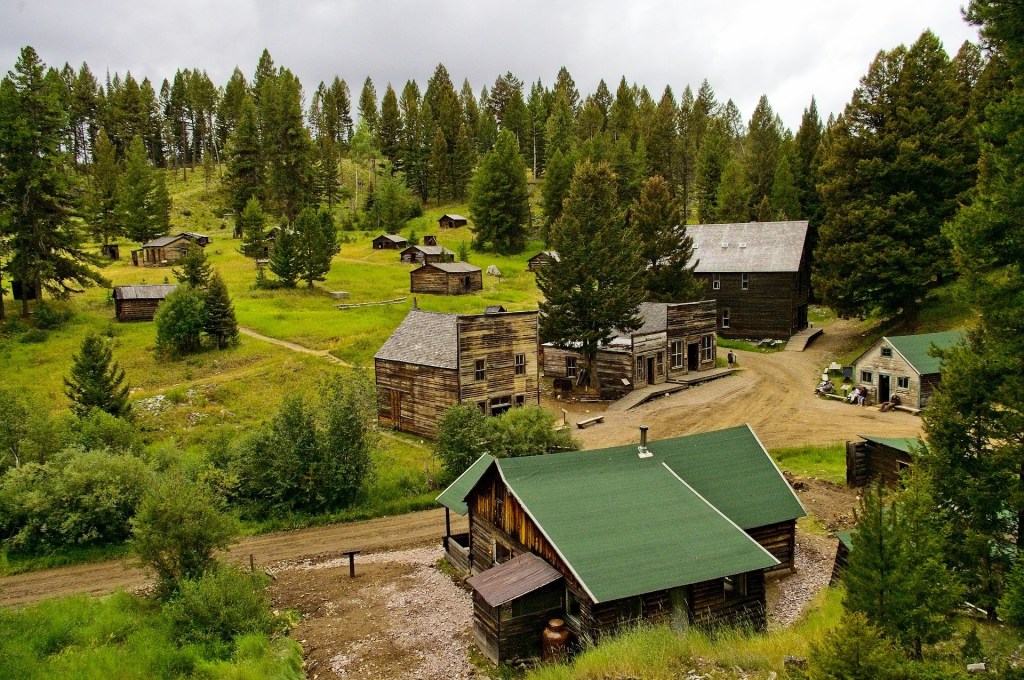
And I found this photograph…

Because despite all the self warnings, and trepidation…

…I crossed that bridge and found this:

Yes, we went back in time, and when I pulled over, and got out of the car the first thing that crossed my mind, I was either in an old gold mining town, or it was a mid way settlement to somewhere else.

Of course, it was deserted.

So, next thought was that this was a ghost town. But, the fact it’s late in the afternoon and everything looks as though it’s locked up, this might also quite easily be a tourist attraction, done for the day.

But, it was off the main road, down a track that led to what I thought might have been a settlement.

I go for a walk and look at some of the buildings. They have been kept in good order, but are showing signs of age, and no sign of modernisation.

Does this mean I’ve gone back in time?

“Hey?”

I hear a voice behind me, that of a man, and turn around.

He’s about 80 wearing well worn clothes and a raggedy beard, wrinkled eyes and leathery skin. A miner? A cowboy? Someone who lived here, like perhaps the last remaining resident.

“Who are you?” he askes stopping about 20 feet away. He looks annoyed, or maybe that was his perpetual angry face.

“A visitor?”

“From?”

“Back east.”

A knowing look crosses his face. “City slicker eh?”

Language right out of an old Hollywood western. Any minute now I might see John Wayne or a troop of Union soldiers.

“Perhaps.” I had no idea why I used the expression, back east.

“Then you’d better go back. No place for the likes of people like you. Last fellow that came from the city got run out of town.”

Friendly town then. A sideways glance showed movement, and another man along side one of the buildings, with a rifle, pointed straight at me.

“I guess I’m not welcome. I’m leaving. You might tell that to the man with the gun on me.”

“He knows.”

I turned, and walked slowly and steadily back to where I thought I left the car. Instead there was a saddled horse tied to a fence.

That’s when I had a very bad feeling…

…

© Charles Heath 2020-2021

An excerpt from “Mistaken Identity” – a work in progress

The odds of any one of us having a doppelganger are quite high. Whether or not you got to meet him or her, or be confronted by them was significantly lower. Except of course, unless you are a celebrity.

It was a phenomenon remarkable only for the fact, at times, certain high profile people, notorious or not, had doubles if only to put off enemies or the general public. Sometimes we see people in the street, people who look like someone we knew, and made the mistake of approaching them like a long lost friend, only to discover an embarrassed individual desperately trying to get away for what they perceive is a stalker or worse.

And then sometimes in is a picture that looms up on a TV screen, an almost exact likeness of you. At first you are fascinated, and then according to the circumstances, and narrative that is attached to that picture, either flattered or horrified.

For me one turned to the other when I saw an almost likeness of me flash up on the screen when I turned the TV on in my room. What looked to be my photo, with only minor differences, was in the corner of the screen, the news reader speaking in rapid Italian, so fast I could only translate every second or third word.

But the one word I did recognize was murder. The photo of the man up on the screen was the subject of an extensive manhunt. The crime, murder of woman in the very same hotel I was staying, and it was being played out live several floors above me. The gist of the story, the woman had been seen with, and staying with the man who was my double, and, less than an hour ago, the body had been discovered by a chambermaid.

The killer, the announcer said, was believed to be still in the hotel because the woman had died shortly before she had been discovered.

I watched, at first fascinated at that I was seeing. I guess I should have been horrified, but at that moment it didn’t register that I might be mistaken for that man.

Not until an another five minutes had passed, and I was watching the police in full riot gear, with a camera crew following behind, coming up a passage towards a room. Live action of the arrest of the suspected killer the breathless commentator said.

Then, suddenly, there was a pounding on the door. On the TV screen, plain to see, was the number of my room.
I looked through the peep hole and saw an army of police officers. It didn’t take much to realize what had happened. The hotel staff had identified me as the man in the photograph on the TV and called the police.

Horrified wasn’t what I was feeling right then.

It was fear.

My last memory was the door crashing open, the wood splintering, and men rushing into the room, screaming at me, waving guns, and when I put my hands up to defend myself, I heard a gunshot.

And in one very confused and probably near death experience, I thought I saw my mother, and thinking what was she doing in Rome?

…

I was the archetypal nobody.

I lived in a small flat, I drove a nondescript car, had an average job in a low profile travel agency, was single, and currently not involved in a relationship, no children, and according to my workmates, no life.

They were wrong. I was one of those people who preferred their own company, I had a cat, and travelled whenever I could. And I did have a ‘thing’ for Rosalie, one of the reasons why I stayed at the travel agency. I didn’t expect anything to come of it, but one could always hope.

I was both pleased and excited to be going to the conference. It was my first, and the glimpse I had seen of it had whetted my appetite for more information about the nuances of my profession.

Some would say that a travel agent wasn’t much of a job, but to me, it was every bit as demanding as being an accountant or a lawyer. You were providing a customer with a service, and arguably more people needed a travel agent than a lawyer. At least that was what I told myself, as I watched more and more people start using the internet, and our relevance slowly dissipating.

This conference was about countering that trend.

The trip over had been uneventful. I was met at the airport and taken to the hotel where the conference was being held with a number of other delegates who had arrived on the same plane. I had mingled with a number of other delegates at the pre conference get together, including one whose name was Maryanne.

She was an unusual young woman, not the sort that I usually met, because she was the one who was usually surrounded by all the boys, the life of the party. In normal circumstances, I would not have introduced myself to her, but she had approached me. Why did I think that may have been significant? All of this ran through my mind, culminating in the last event on the highlight reel, the door bursting open, men rushing into my room, and then one of the policemen opened fire.

I replayed that last scene again, trying to see the face of my assailant, but it was just a sea of men in battle dress, bullet proof vests and helmets, accompanied by screaming and yelling, some of which I identified as “Get on the floor”.

Then came the shot.

Why ask me to get on the floor if all they were going to do was shoot me. I was putting my hands up at the time, in surrender, not reaching for a weapon.

Then I saw the face again, hovering in the background like a ghost. My mother. Only the hair was different, and her clothes, and then the image was going, perhaps a figment of my imagination brought on by pain killing drugs. I tried to imagine the scene again, but this time it played out, without the image of my mother.

I opened my eyes took stock of my surroundings. What I felt in that exact moment couldn’t be described. I should most likely be dead, the result of a gunshot wound. I guess I should be thankful the shooter hadn’t aimed at anything vital, but that was the only item on the plus side.

I was in a hospital room with a policeman by the door. He was reading a newspaper, and sitting uncomfortably on a small chair. He gave me a quick glance when he heard me move slightly, but didn’t acknowledge me with either a nod, or a greeting, just went back to the paper.

If I still had a police guard, then I was still considered a suspect. What was interesting was that I was not handcuffed to the bed. Perhaps that only happened in TV shows. Or maybe they knew I couldn’t run because my injuries were too serious. Or the guard would shoot me long before my feet hit the floor. I knew the police well enough now to know they would shoot first and ask questions later.

On the physical side, I had a large bandage over the top left corner of my chest, extending over my shoulder. A little poking and prodding determined the bullet had hit somewhere between the top of my rib cage and my shoulder. Nothing vital there, but my arm might be somewhat useless for a while, depending on what the bullet hit on the way in, or through.

It didn’t feel like there were any broken or damaged bones.

That was the good news.

On the other side of the ledger, my mental state, there was only one word that could describe it. Terrified. I was looking at a murder charge and jail time, a lot of it. Murder usually had a long time in jail attached to it.

Whatever had happened, I didn’t do it. I know I didn’t do it, but I had to try and explain this to people who had already made up their minds. I searched my mind for evidence. It was there, but in the confused state brought on by the medication, all I could think about was jail, and the sort of company I was going to have.

I think death would have been preferable.

…

Half an hour later, maybe longer, I was drifting in an out of consciousness, a nurse, or what I thought was a nurse, came into the room. The guard stood, checked her ID card, and then stood by the door.

She came over and stood beside the bed. “How are you?” she asked, first in Italian, and when I pretended I didn’t understand, she asked the same question in accented English.

“Alive, I guess,” I said. “No one has come and told what my condition is yet. You are my first visitor. Can you tell me?”

“Of course. You are very lucky to be alive. You will be fine and make a full recovery. The doctors here are excellent at their work.”

“What happens now?”

“I check you, and then you have a another visitor. He is from the British Embassy I think. But he will have to wait until I have finished my examination.”

I realized then she was a doctor, not a nurse.

…

My second visitor was a man, dressed in a suit the sort of which I associated with the British Civil Service.  He was not very old which told me he was probably a recent graduate on his first posting, the junior officer who drew the short straw.

The guard checked his ID but again did not leave the room, sitting back down and going back to his newspaper.

My visitor introduced himself as Alex Jordan from the British Embassy in Rome and that he had been asked by the Ambassador to sort out what he labelled a tricky mess.

For starters, it was good to see that someone cared about what happened to me.  But, equally, I knew the mantra, get into trouble overseas, and there is not much we can do to help you.  So, after that lengthy introduction, I had to wonder why he was here.

I said, “They think I am an international criminal by the name of Jacob Westerbury, whose picture looks just like me, and apparently for them it is an open and shut case.”  I could still hear the fragments of the yelling as the police burst through the door, at the same time telling me to get on the floor with my hands over my head.

“It’s not.  They know they’ve got the wrong man, which is why I’m here.  There is the issue of what had been described as excessive force, and the fact you were shot had made it an all-round embarrassment for them.”

“Then why are you here?  Shouldn’t they be here apologizing?”

“That is why you have another visitor.  I only took precedence because I insisted I speak with you first.  I have come, basically to ask you for a favour.  This situation has afforded us with an opportunity.  We would like you to sign the official document which basically indemnifies them against any legal proceedings.”

Curious.  What sort of opportunity was he talking about?  Was this a matter than could get difficult and I could be charged by the Italian Government, even if I wasn’t guilty, or was it one of those hush hush type deals, you do this for us, we’ll help you out with that.  “What sort of opportunity?”

“We want to get our hands on Jacob Westerbury as much as they do.  They’ve made a mistake, and we’d like to use that to get custody of him if or when he is arrested in this country.  I’m sure you would also like this man brought into custody as soon as possible so you will stop being confused with him.  I can only imagine what it was like to be arrested in the manner you were.  And I would not blame you if you wanted to get some compensation for what they’ve done.  But.  There are bigger issues in play here, and you would be doing this for your country.”

I wondered what would happen if I didn’t agree to his proposal.  I had to ask, “What if I don’t?”

His expression didn’t change.  “I’m sure you are a sensible man Mr Pargeter, who is more than willing to help his country whenever he can.  They have agreed to take care of all your hospital expenses, and refund the cost of the Conference, and travel.  I’m sure I could also get them to pay for a few days at Capri, or Sorrento if you like, before you go home.  What do you say?”

There was only one thing I could say.  Wasn’t it treason if you went against your country’s wishes?

“I’m not an unreasonable man, Alex.  Go do your deal, and I’ll sign the papers.”

“Good man.”

…

After Alex left, the doctor came back to announce the arrival of a woman, by the way she had announced herself, the publicity officer from the Italian police. When she came into the room, she was not dressed in a uniform.

The doctor left after giving a brief report to the civilian at the door. I understood the gist of it, “The patient has recovered excellently and the wounds are healing as expected. There is no cause for concern.”

That was a relief.

While the doctor was speaking to the civilian, I speculated on who she might be. She was young, not more than thirty, conservatively dressed so an official of some kind, but not necessarily with the police. Did they have prosecutors? I was unfamiliar with the Italian legal system.

She had long wavy black hair and the sort of sultry looks of an Italian movie star, and her presence made me more curious than fearful though I couldn’t say why.

The woman then spoke to the guard, and he reluctantly got up and left the room, closing the door behind him.
She checked the door, and then came back towards me, standing at the end of the bed. Now alone, she said, “A few questions before we begin.” Her English was only slightly accented. “Your name is Jack Pargeter?”

I nodded. “Yes.”

“You are in Rome to attend the Travel Agents Conference at the Hilton Hotel?”

“Yes.”

“You attended a preconference introduction on the evening of the 25th, after arriving from London at approximately 4:25 pm.”

“About that time, yes. I know it was about five when the bus came to collect me, and several others, to take us to the hotel.”

She smiled. It was then I noticed she was reading from a small notepad.

“It was ten past five to be precise. The driver had been held up in traffic. We have a number of witnesses who saw you on the plane, on the bus, at the hotel, and with the aid of closed circuit TV we have established you are not the criminal Jacob Westerbury.”

She put her note book back in her bag and then said, “My name is Vicenza Andretti and I am with the prosecutor’s office. I am here to formally apologize for the situation that can only be described as a case of mistaken identity. I assure you it is not the habit of our police officers to shoot people unless they have a very strong reason for doing so. I understand that in the confusion of the arrest one of our officers accidentally discharged his weapon. We are undergoing a very thorough investigation into the circumstances of this event.”

I was not sure why, but between the time I had spoken to the embassy official and now, something about letting them off so easily was bugging me. I could see why they had sent her. It would be difficult to be angry or annoyed with her.

But I was annoyed.

“Do you often send a whole squad of trigger happy riot police to arrest a single man?” It came out harsher than I intended.

“My men believed they were dealing with a dangerous criminal.”

“Do I look like a dangerous criminal?” And then I realized if it was mistaken identity, the answer would be yes.

She saw the look on my face, and said quietly, “I think you know the answer to that question, Mr. Pargeter.”

“Well, it was overkill.”

“As I said, we are very sorry for the circumstances you now find yourself in. You must understand that we honestly believed we were dealing with an armed and dangerous murderer, and we were acting within our mandate. My department will cover your medical expenses, and any other amounts for the inconvenience this has caused you. I believe you were attending a conference at your hotel. I am very sorry but given the medical circumstances you have, you will have to remain here for a few more days.”

“I guess, then, I should thank you for not killing me.”

Her expression told me that was not the best thing I could have said in the circumstances.

“I mean, I should thank you for the hospital and the care. But a question or two of my own. May I?”

She nodded.

“Did you catch this Jacob Westerbury character?”

“No. In the confusion created by your arrest he escaped. Once we realized we had made a mistake and reviewed the close circuit TV, we tracked him leaving by a rear exit.”

“Are you sure it was one of your men who shot me?”

I watched as her expression changed, to one of surprise.

“You don’t think it was one of my men?”

“Oddly enough no. But don’t ask me why.”

“It is very interesting that you should say that, because in our initial investigation, it appeared none of our officer’s weapons had been discharged. A forensic investigation into the bullet tells us it was one that is used in our weapons, but…”

I could see their dilemma.

“Have you any enemies that would want to shoot you Mr Pargeter?”

That was absurd because I had no enemies, at least none that I knew of, much less anyone who would want me dead.

“Not that I’m aware of.”

“Then it is strange, and will perhaps remain a mystery. I will let you know if anything more is revealed in our investigation.”

She took an envelope out of her briefcase and opened it, pulling out several sheets of paper.

I knew what it was. A verbal apology was one thing, but a signed waiver would cover them legally. They had sent a pretty girl to charm me. Perhaps using anyone else it would not have worked. There was potential for a huge litigation payout here, and someone more ruthless would jump at the chance of making a few million out of the Italian Government.

“We need a signature on this document,” she said.

“Absolving you of any wrong doing?”

“I have apologized. We will take whatever measures are required for your comfort after this event. We are accepting responsibility for our actions, and are being reasonable.”

They were. I took the pen from her and signed the documents.

“You couldn’t add dinner with you on that list of benefits?” No harm in asking.

“I am unfortunately unavailable.”

I smiled. “It wasn’t a request for a date, just dinner. You can tell me about Rome, as only a resident can. Please.”

She looked me up and down, searching for the ulterior motive. When she couldn’t find one, she said, “We shall see once the hospital discharges you in a few days.”

“Then I’ll pencil you in?”

She looked at me quizzically. “What is this pencil me in?”

“It’s an English colloquialism. It means maybe. As when you write something in pencil, it is easy to erase it.”

A momentary frown, then recognition and a smile. “I shall remember that. Thank-you for your time and co-operation Mr. Pargeter. Good morning.”

…

© Charles Heath 2015-2021

That helicopter story that kept me awake – Episode 40

Our hero knows he’s in serious trouble.

The problem is, there are familiar faces and a question of who is a friend and who is foe made all the more difficult because of the enemy, if it was the enemy, simply because it didn’t look or sound or act like the enemy.

Now, it appears, his problems stem from another operation he participated in, and because of it, he has now been roped into what might be called a suicide mission.


I left the others out the front of the hut in Barnes charge, except for Williamson who stayed inside, feigning illness.  If everything went according to plan, a sketchy plan at best, Monroe would slip the diamonds to Williamson, and then melt back into the bush, heading back towards the fork in the road heading to the airstrip.  She would then report on what troops were between us and our objective.

I signaled for Davies to join me.

The commander and the man who’d reported to him earlier strode across the compound to a smaller building that might pass as a jail.  There was a guard out the front who jumped up and snapped to attention when the commander came up the steps.

“Open the door.”

The guard fumbled with a ring of keys, found the one for the door, and unlocked it.

The commander looked at me.  “You may speak to them for five minutes.”

“Alone.  You have my word we’ll not try anything.”

He nodded at the guard.  “Bottom of the steps.  Don’t let them out of your sight.”  To me, he pointed to another building about 50 yards away, “I’ll be there, don’t keep me waiting.”

We waited for him to come down the steps and start striding to his office, then went up the stairs, and I knocked on the door.  “My name is James, and I’m here with Davies to take you home.  We’re coming in.”

I opened the door slowly pulling it towards me, and the odor that came out of the room was that of people who had not been allowed to wash for several days, if not longer.  Once the door was fully open and the interior lit, I could see two stretchers and two men sitting up, struggling with the light in their eyes.

At least they were able to sit up.

Our information was they had been captive now for about seven months, and, looking at them, they didn’t seem to appear to badly off.  They showed signs of weight loss, and pallid skin, but not to the point of being maltreated or starved.

“Who did you say you were?”  The man on the left was about 50ish, grey thinning hair, and I suspect once a lot bulkier than he was now.  There was an air of brashness about him, but that would have been beaten out of him long ago.  Now he was just a shell of his former self.

“Sgt James, and Lieutenant Davies.  Part of the rescue team sent to bring you home.  A Colonel Bamfield sent us.”

“You took your time.”

Th either man spoke.  Younger, a military type, perhaps the other man’s bodyguard.  He had a few scars, so I expect he had offered some resistance and paid for it with the butt of a gun or two.

“We tried once, but it failed.  There were not the people who had been holding you at the time though, were they?”

“No.  If that was an attempt, they were the people who came to ‘rescue’ us, only it was a means for them to use us for ransom.  It’s taken them a while to find the right people.  Bamfield you say?  Who is he?”

“Runs the military’s operations that the military doesn’t want to acknowledge.  We’re here, but we’re not here if you know what I mean.”

The older man shook his head.  “It doesn’t matter.  What happens now?”

“I go and have another chat with the commander.  We exchange gifts, and we leave.”

“You do realize that’s not going to happen,” the military type said with a degree of despondency.

“How so?”

“There are about 50 men here, possibly more, all armed, and all waiting for you to arrive.  I expect they’ll take the ransom and then kill all of us.”

“Yes, I had thought that might be the case.  But, don’t worry.  We have a few tricks up our sleeve.  So, gather your belongings, if you have any, and wait for us to come back and get you.”

“Are you going to drive out of here?”  The military man spoke again.

“A short distance, yes.  There’s an airstrip not far from here, so all we have to do is get there, and we’re halfway home.”

“There’ll be government troops there.  It’s used for people coming in to visit the national park and they provide local security.  Boroko knows the Captain in charge there, and they have an arrangement.  He’ll know what your options are, and you’ll just be walking into a trap.”

That had always been a possibility, but Bamfield wouldn’t send us there unless there was a chance we could use it for our escape.  But, what the man was saying was just another wrinkle in a plan that had lots of wrinkles.

“Provided you get a mile from this place before being attacked.”

“All very interesting points,” I said.  “But, like I said, pack your stuff and let me worry about the details.  Feel free to take in some fresh air while we’re gone.  It won’t be long.”

“I’ll stay,” Davies said.

“OK.”

I took a last look at the two, both now struggling to their feet.  They might not be in as good a condition as the commander had said.  As long as they could cover about half a mile at best, everything would be fine.

I walked slowly back to the hut where Williamson had just emerged, and I went over to him.

He handed me a package that hardly made a dent in my pocket.  It was probably the reason why diamonds were used, small, and easily transportable.  Gold bars would have been a different, and far more difficult, proposition.

From there, I walked more briskly to the commander’s hut and as I approached he came out.

“Everything in order?”

“It is.”

I pulled the package out of my pocket and handed it to him.  “You can check the contents while I wait here.”

A smile, like a cat who swallowed the canary.  A nod to a soldier standing behind me, I could hear the weapon being trained on me.

“I guess this is where…”

A second later the soldier crumpled to the ground, a bloody mess where his head had just been.  A second raised his gun and suffered the same result.

“Call off your dogs’ commander.  I’m sure we both don’t want to see people die needlessly.”

Two hands for a signal to lower weapons.

“Your missing people.”

“Out there, strategically placed.  Excellent marksmen too.  At the moment they’re showing restraint.  It’s up to you how long that lasts.”

He motioned to the guard at the prisoner’s hut to take them to the cars, “Join them, Sargeant James, I’ll be along when I’ve checked the diamonds.”

By the time the two men had joined the rest of the team at the cars, the commander had come out of his office and was walking towards us.

“Three cars, we’ll keep the other.  I assume you’re heading towards the airstrip.”

“It’s one of our options.  I hear the government had a platoon of soldiers there under the command of a Captain.  You might want to warn him we’re coming.  You might also want to warn whoever you have in the field between here and there we’re coming.”

“I can’t guarantee your safety once you leave the compound.  If there is anyone out there, it will not be my men.  We have an agreement remember.”

“Good.”  

While we were talking the others had got themselves into the cars and started the engines.  Time was of the essence.

We walked down to the barrier, and once again he ordered his guards to remove it.

Once they had the cars drove past and then the last car stopped just the other side, waiting for me.

“I wish you good luck, Sargeant James.”

“Let’s hope the atmospherics don’t interfere with my call to my people.  I’d hate to see this place destroyed because of a misunderstanding.”

I hadn’t seen Jacobi since just after we arrived, and he had headed straight to the commander’s hut.  No doubt they had a lot to talk about.

I got in the car, and we drove off.

I was half expecting a hail of bullets, but all I could see was the two guards replacing the barrier and the commander standing behind it, arms crossed, still looking like the cat who swallowed the canary.


© Charles Heath 2020

“Long time, no see…” – short story


You can pick your friends but you can’t pick your relatives.

So sayeth my sister, who for years refused to acknowledge I was her brother.

The point is, as I was trying to tell Nancy, the woman who had agreed to marry me, “my family has long been ashamed of me because I refused to become a doctor.”

“That’s no excuse, in fact, that’s the most ridiculous thing I’ve ever heard.”

To most people, it would. I agreed with her. But then, her family had not had a forebear who stood shoulder to shoulder with George Washington at the Siege of Yorktown.

It was a statement my mother had often pulled out of nowhere at dinner parties, and sometimes in general conversation, just to impress. I thought of trotting out as another example of ridiculous statements, but thought better of it.

It was a situation I had not bargained for, and probably why it took so long to find someone to share the rest of my life with.

Perhaps I hadn’t quite thought through what would happen once I asked the question, and it was a yes.

It was not as if Nancy and I hadn’t taken the long road with our relationship. She had been burned a few times, and I always had my family in the back of my mind as the biggest obstacle.

In fact, I always had considered it insurmountable, and because of that, rarely made a commitment. But Nancy was different. She was very forgiving and had the sort of temperament saints were blessed with.

Her family sounded like very reasonable people who lived upstate out of Yonkers on a farm she simply said had been in the family forever.

She didn’t have big city aspirations, was not impressed by wealth, travel, large houses, or a resume a mile long with achievements. It was everything I didn’t have and didn’t want, and my job as storeman and fork life driver was one where I could go to work and leave it there.

Nancy, on the other hand, was a checkout clerk at a large supermarket, with no aspirations to be a boss or run the place. She had a run-in with a tractor early on in life and could manage a lot of the farming basics.

Her parents sent her to the big city to learn a different trade, but she just wasn’t interested. She was a country girl and would never change.

We met when she was attending the same pre-wedding party that I was, both with different partners at the time, and both of whom were more party animals than we were.

A week later we ran into each other in the same bar, and it grew from there, and after a rather interesting six months or so, we had ended up making the ultimate commitment.

…

“I guess, now, we have to tell our parents,” she said, stating what was to her, the obvious.

Such a simple statement with so many connotations. I had deliberately steered the conversation away from all of them, and so, at this point in time, she knew I had parents, grandparents, and three other siblings. And that they lived on the other side of the country.

Asked why I had moved so far away, I told her that I’d failed to meet their expectations and preferred to be as far away as possible. My brothers more than made up for my failings, so it was not necessary I stay there.

It was only recently I’d told her those expectations were of me following the family tradition into medicine. It was when I told her my father was a pre-eminent thoracic heart surgeon, my brothers top of whatever field they’d chosen, and my sister, a well-regarded general practitioner.

When she asked in what way I’d failed, I said it was not in the education because like all Foresdale’s, we were always top of the class, and as much as I tried to fail, the teachers knew better.

I just refused to go to University. Instead, I tried to disappear, but my father had the best private detective at his disposal. It took a very long, loud, screaming match to sever that tie, get disinherited, and leave to make my own way in the world.

Perhaps, I said, it would be best to just say I was an orphan.

That, of course, to Nancy, was not an option. She came from practical people who always found a solution to any problem, and they had had a few really difficult ones over the years.

But, for the first time, there was a look of perplexment on her face. Maybe she was thinking that she should have asked more probing questions about my family before agreeing to be my wife.

“I think I can safely say that your parents will be more approachable than mine. Those expectations on me will also fall on you.”

And having said it aloud, it sounded so much more like a threat. The problem was, I knew what there were like, living in that rarefied air where the upper classes lived.

I might be a forklift driving storeman, but I was still a Foresdale, and my match had to be commensurate to the family values.

“Then we’re just going to have to go visit them and lower those expectations. I’m not afraid of them.”

No, I expect she was not. I’d seen her deal with all types of miscreants at the checkout counter, rich and poor alike. She had the sort of gumption I always had wanted but was too much of a coward to confront the problem.

Perhaps now, it would be the perfect opportunity.

“We should go next week. I’ve got some vacation days owing, and I’m sure the boss will let you go if you tell him the reason.”

Practical as ever. Confront the beast and get it over with.

“Sure. I’ll talk to the boss, arrange the tickers, and let someone know we’re coming. But I will not be staying at the house. That way if it gets too intense, we can leave.”

I saw her shrug. I’m not sure she agreed that was a good idea, but I didn’t want to see them corner her the way they had a habit of doing when any of us children brought anyone home. I did once, and never again.

“It will be fine.”

Famous last words.

…

I had the phone number of my sister Erica, stored on my phone, not that I’d ever intended to call her. It was there because she had called me, I had made the mistake of giving it to her when I left because she asked me for it.

I hadn’t spoken to her since I left home all those years ago, nearly ten by my reckoning, and perhaps it was a testament to my father that not one of them had called, or even reached out.

Being cut off literally meant that. But it was not something that irked me. I was glad not to see them. I could easily keep up with them in the newspapers and magazines, such was their visibility.

I was surprised Nancy hadn’t made the association.

I don’t know how long it was that I stared at that number, finger hovering over the green button. My first concern was whether I’d remain civil, or how long it would take before I disconnected the call.

Then, courage summoned, I pressed the button.

An anticlimax might occur if there was no answer, or the number had been disconnected, but such was not the case. It rang.

Almost for the full number of rings before a familiar voice answered. “Good morning, this is Erica speaking.”

If only I’d learned to answer a phone properly like that.

“It’s Perry.” Damn, I hated that name, and once I left home, I adopted my middle name, James.

“Now that’s a blast from the past. Never expected to hear from you again.”

“Believe me, if I had my way, you wouldn’t, but there’s a person who insists she meets the family. I tried to talk her out of it, but she’s a force to be reckoned with.”

“Good for her. I always knew you’d meet a sensible girl who wouldn’t put up with your nonsense. I’m assuming you asked her to marry you?”

“I’m beginning to wonder if I should have just outright lied and said I was an orphan.”

“Yes, and how would that have worked when we finally ran you to ground. Besides, your father has known where you’ve been hiding all along. You are still a Foresdale, and that will never change.”

“Even when I’ve been ex-communicated from the family.”

“That’s only your assumption. Everyone here might have expected you to change your minds somewhat earlier, but we never doubted you would return. Now, just who is this Nancy, and who does she belong to?”

…

© Charles Heath 2021