A photograph from the inspiration file – 7

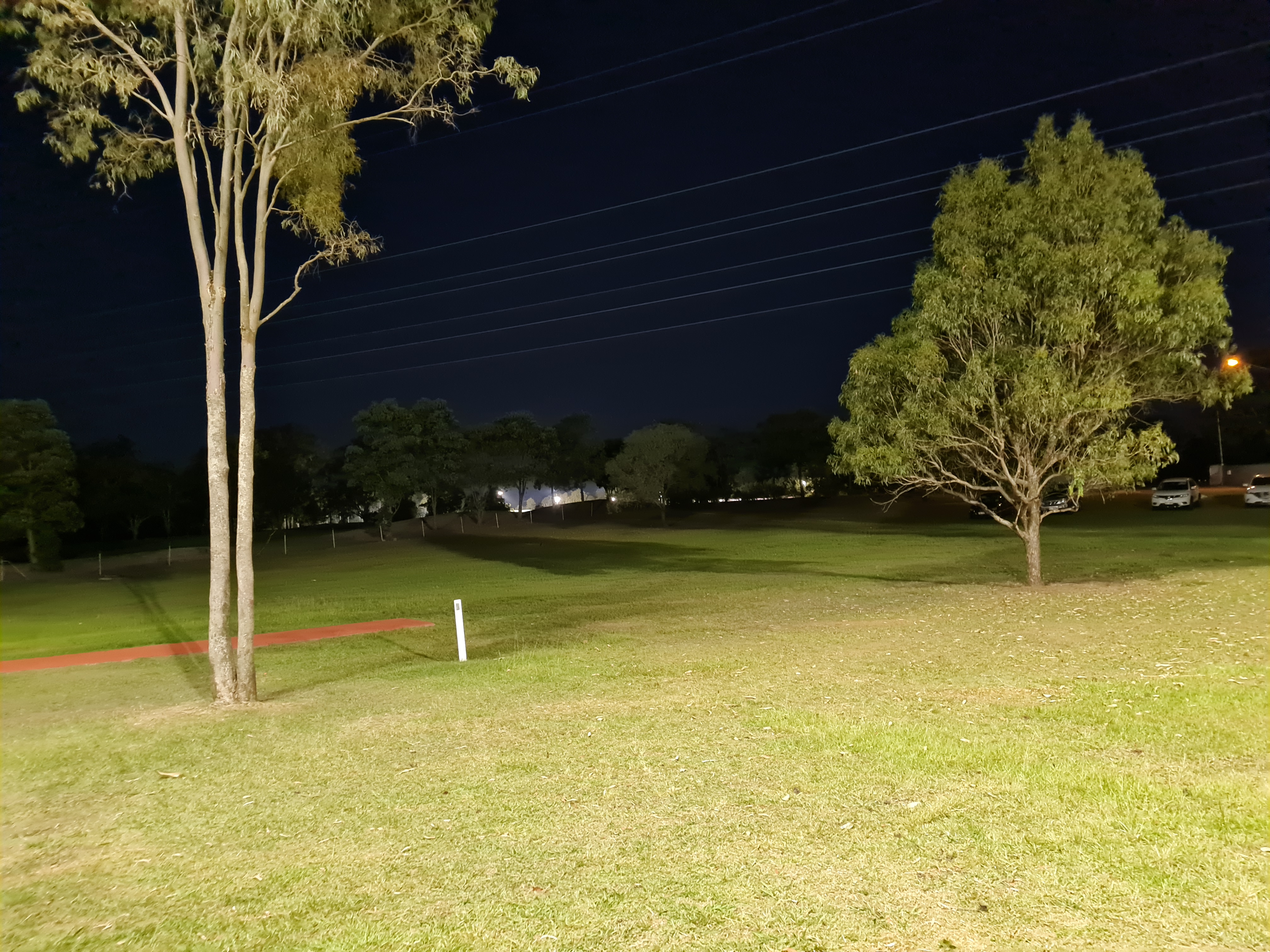
There is always something strange about certain photographs that is not evident when you take them.

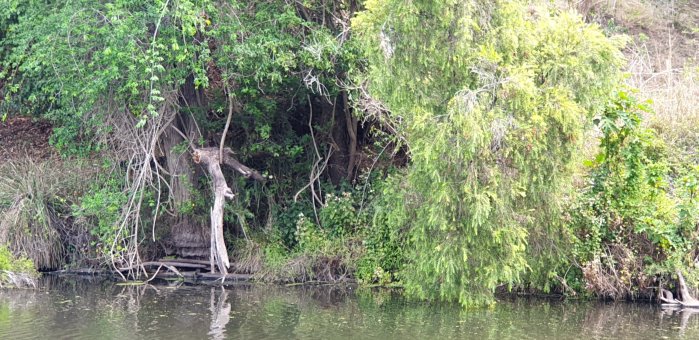
For instance, the photograph above.

While this might look like some vegetation by the side of a river or stream, its that are of blackness behind what looks like steps up from the water level that adds a level of intrigue or mystery.

For instance:

…

We had spent two weeks slowly going upriver looking for a needle in a haystack. It was an apt description, because there had been quite a large number of likely spots, all of which after investigation, came to nothing.

I mean, the description Professor Bates had given is was as hazy as day is long in these parts.

His recollection: that it was what looked like a cave behind lush undergrowth, with steps fashioned out of stone.

It was all the more confuse. Because when we found him, he was drifting on a rough hewn and constructed raft, half dead from dehydration. We were told he’d been on the raft for nearly a week.

That meant the cave could be anywhere between where we found him at the 10 mile mark, and 200 miles further on based on river flow.

We were currently at the 150 mile mark and the river was losing depth and width, and soon there would not be enough water to continue in the boat.

It was dusk and too dark to continue. We’d been enthusiastic those first days, continuing on in the dark, on shifts, using the arc lamps.

Then after a week, having lights on made us target practise, and after sever brushes with death, and the loss of all the bulbs being shot out, we got the message.

There was the odd marauder during the day, but we had the width of the river for safety.  Now that had gone too, and we had lookouts posted, but seeing into the dense jungle was difficult.

But we got through another night with no activity, and come morning, what looked like the entrance to a cave was not fifteen feet from us.

All we had to was row over and check.

…

© Charles Heath 2020-2021

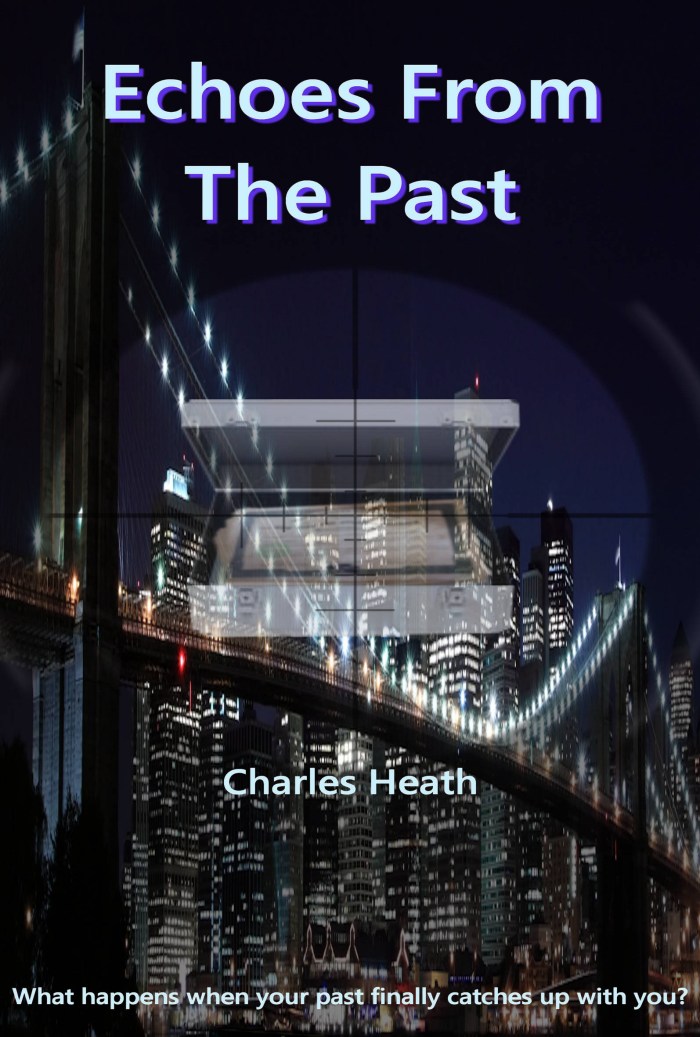
An excerpt from “Echoes from the Past”

Available on Amazon Kindle here:  https://amzn.to/2CYKxu4

…

With my attention elsewhere, I walked into a man who was hurrying in the opposite direction.  He was a big man with a scar running down the left side of his face from eye socket to mouth, and who was also wearing a black shirt with a red tie.

That was all I remembered as my heart almost stopped.

He apologized as he stepped to one side, the same way I stepped, as I also muttered an apology.

I kept my eyes down.  He was not the sort of man I wanted to recognize later in a lineup.  I stepped to the other side and so did he.  It was one of those situations.  Finally getting out of sync, he kept going in his direction, and I towards the bus, which was now pulling away from the curb.

Getting my breath back, I just stood riveted to the spot watching it join the traffic.  I looked back over my shoulder, but the man I’d run into had gone.  I shrugged and looked at my watch.  It would be a few minutes before the next bus arrived.

Wait, or walk?  I could also go by subway, but it was a long walk to the station.  What the hell, I needed the exercise.

At the first intersection, the ‘Walk’ sign had just flashed to ‘Don’t Walk’.  I thought I’d save a few minutes by not waiting for the next green light.  As I stepped onto the road, I heard the screeching of tires.

A yellow car stopped inches from me.

It was a high powered sports car, perhaps a Lamborghini.  I knew what they looked like because Marcus Bartleby owned one, as did every other junior executive in the city with a rich father.

Everyone stopped to look at me, then the car.  It was that sort of car.  I could see the driver through the windscreen shaking his fist, and I could see he was yelling too, but I couldn’t hear him.  I stepped back onto the sidewalk, and he drove on.  The moment had passed and everyone went back to their business.

My heart rate hadn’t come down from the last encounter.   Now it was approaching cardiac arrest, so I took a few minutes and several sets of lights to regain composure.

At the next intersection, I waited for the green light, and then a few seconds more, just to be sure.  I was no longer in a hurry.

At the next, I heard what sounded like a gunshot.  A few people looked around, worried expressions on their faces, but when it happened again, I saw it was an old car backfiring.  I also saw another yellow car, much the same as the one before, stopped on the side of the road.  I thought nothing of it, other than it was the second yellow car I’d seen.

At the next intersection, I realized I was subconsciously heading towards Harry’s new bar.   It was somewhere on 6th Avenue, so I continued walking in what I thought was the right direction.

I don’t know why I looked behind me at the next intersection, but I did.  There was another yellow car on the side of the road, not far from me.  It, too, looked the same as the original Lamborghini, and I was starting to think it was not a coincidence.

Moments after crossing the road, I heard the roar of a sports car engine and saw the yellow car accelerate past me.  As it passed by, I saw there were two people in it, and the blurry image of the passenger; a large man with a red tie.

Now my imagination was playing tricks.

It could not be the same man.  He was going in a different direction.

In the few minutes I’d been standing on the pavement, it had started to snow; early for this time of year, and marking the start of what could be a long cold winter.  I shuddered, and it was not necessarily because of the temperature.

I looked up and saw a neon light advertising a bar, coincidentally the one Harry had ‘found’ and, looking once in the direction of the departing yellow car, I decided to go in.  I would have a few drinks and then leave by the back door if it had one.

Just in case.

© Charles Heath 2015-2020

newechocover5rs

Inspiration, maybe – Volume 1

50 photographs, 50 stories, of which there is one of the 50 below.

They all start with –

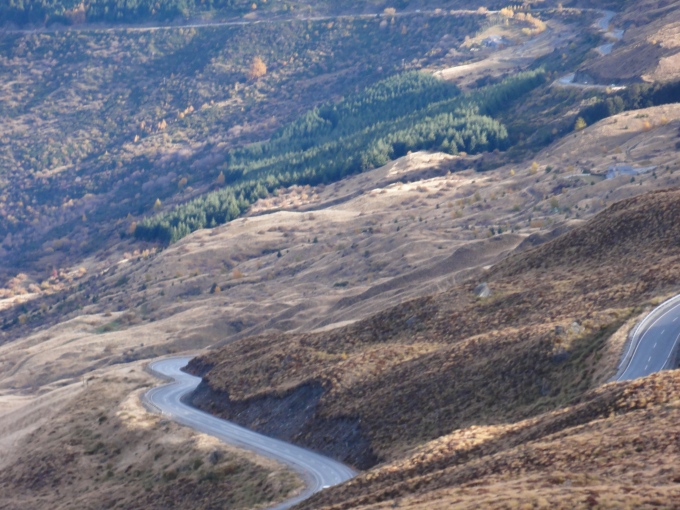
A picture paints … well, as many words as you like.  For instance:

lookingdownfromcoronetpeak

And the story:

It was once said that a desperate man has everything to lose.

The man I was chasing was desperate, but I, on the other hand, was more desperate to catch him.

He’d left a trail of dead people from one end of the island to the other.

The team had put in a lot of effort to locate him, and now his capture was imminent.  We were following the car he was in, from a discrete distance, and, at the appropriate time, we would catch up, pull him over, and make the arrest.

There was nowhere for him to go.

The road led to a dead-end, and the only way off the mountain was back down the road were now on.  Which was why I was somewhat surprised when we discovered where he was.

Where was he going?

“Damn,” I heard Alan mutter.  He was driving, being careful not to get too close, but not far enough away to lose sight of him.

“What?”

“I think he’s made us.”

“How?”

“Dumb bad luck, I’m guessing.  Or he expected we’d follow him up the mountain.  He’s just sped up.”

“How far away?”

“A half-mile.  We should see him higher up when we turn the next corner.”

It took an eternity to get there, and when we did, Alan was right, only he was further on than we thought.”

“Step on it.  Let’s catch him up before he gets to the top.”

Easy to say, not so easy to do.  The road was treacherous, and in places just gravel, and there were no guard rails to stop a three thousand footfall down the mountainside.

Good thing then I had the foresight to have three agents on the hill for just such a scenario.

Ten minutes later, we were in sight of the car, still moving quickly, but we were going slightly faster.  We’d catch up just short of the summit car park.

Or so we thought.

Coming quickly around another corner we almost slammed into the car we’d been chasing.

“What the hell…” Aland muttered.

I was out of the car, and over to see if he was in it, but I knew that it was only a slender possibility.  The car was empty, and no indication where he went.

Certainly not up the road.  It was relatively straightforward for the next mile, at which we would have reached the summit.  Up the mountainside from here, or down.

I looked up.  Nothing.

Alan yelled out, “He’s not going down, not that I can see, but if he did, there’s hardly a foothold and that’s a long fall.”

Then where did he go?

Then a man looking very much like our quarry came out from behind a rock embedded just a short distance up the hill.

“Sorry,” he said quite calmly.  “Had to go if you know what I mean.”

I’d lost him.

It was as simple as that.

I had been led a merry chase up the hill, and all the time he was getting away in a different direction.

I’d fallen for the oldest trick in the book, letting my desperation blind me to the disguise that anyone else would see through in an instant.

It was a lonely sight, looking down that road, knowing that I had to go all that way down again, only this time, without having to throw caution to the wind.

“Maybe next time,” Alan said.

“We’ll get him.  It’s just a matter of time.”

© Charles Heath 2019-2021

Find this and other stories in “Inspiration, maybe”  available soon.

InspirationMaybe1v1

Writing about writing a book – Day 34

So it seems that Aitchison, the latest addition to the story, has reservations about what’s is or isn’t going on.  Aitchison is in charge of the security, not only the computer systems, but for everyone, and, of course, the first person the police would go and see.

It’s also time to bring in the CEO, a rather elusive character, but one who will have a great deal to do with our main character for a lot of different reasons.  But, for now, all the reader needs to know is that he exists,  and is very elusive for one particular reason.

Halligan is just another incidental character, significant only because he is also dead, and where there are multiple deaths, there had to be a conspiracy.  Aitchison, of course, is not what he seems, not that we know that yet, but for now, is a man with a problem.


I looked Aitchison directly in the eye, so he would not think I was lying. “Since the last debacle, I rarely see Halligan, and, when I do, I can assure you the last thing he wants to do is ask for favors. My last visit was to set up a laptop on his desk, not connected to the network. Does the CEO know anything about this?”

The CEO was almost the equivalent of the invisible man. No one could remember seeing him in the office, or when he visited the last time and was rumored to be at his Nevada ranch most of the time where he had an office. I remember setting up video conferencing for him a year or so ago, but I don’t think it had even been used.
But Aitchison was one of a few who had met him personally.

“I put a call in. He’s at a retreat with the American management team, going through some team-building exercises. I’m waiting for his call, but I think I can safely say he will deny everything, and plead innocence.”

“Has the staff members been questioned?”

“Yes. No one had anything constructive to add. But one other interesting bit of information that did come out of that briefing with the Chief Inspector was that Halligan also attempted to log onto this other network. That’s why I asked you about Halligan.”

Something was not right. Halligan was dumb when it came to computers, and only wanted a computer, not connected to the network. Of course, he needed a networked desktop for email, and sourcing documents, and perhaps the peek at a porn site through the internet, but that was the extent of his involvement. His knowledge of networking was solely based on the background papers I wrote for him when he needed information for meetings and conferences. He even had trouble logging into the network at times, because he kept forgetting his password.

I kept that to myself. Aitchison was probably not interested in anything that would refute his belief of what the situation entailed. He was partially wrong, but that was driven by fear.

“What had Halligan have to say about all of this?”

It was an innocent question, but it drew the sharpest reaction and given a sudden ashen look on his face, the catalyst of his fear. The mere mention of questioning Halligan had caused him to turn white.

“He’s dead too, and conveniently cannot answer any questions. The doctor said it was a heart attack.”

“Dead? Where, when?”

“Early this morning, at home. Apparently, his wife is away, overseas visiting relatives, and neither we nor the police have been able to contact her. I only found out when I tried to call him this morning after the news about Richardson broke, and the police answered the phone.”

He poured a splash of whiskey into the glass and drank it down. If it was to settle his nerves it wasn’t working.

“And you don’t think it was a heart attack?”

“Too convenient, far too convenient, especially so soon after the Richardson thing, and in the light of this other network logon episode. The very two people who allegedly knew about this network both dying of innocent causes? Something is going on here, and we have to get to the bottom of it, before the police, Interpol or any forensic experts, if that’s what they are.”

He poured himself another liberal drink from the bottle and offered me one. I declined. Too early, and my nerves were not yet getting the better of me.

A shiver ran down my spine. I was beginning to buy into his paranoia. It was beginning to look like anyone associated with this secret network found themselves on some sort of hit list. No wonder Aitchison was jumpy. He’d obviously come to the same conclusion I did. He’d been making inquiries, and it might be enough to have his name added to the list.

Telling me about it might just be enough to add my name to that same list. I looked at the whiskey bottle and the glass. It might be time for a nerve steadying drink.

Aitchison was still talking, and I just caught what he was saying, “… it’s your network. People will be asking questions.”

If he was trying to scare me, it was working.

He continued, “The police were rather skeptical when I said we didn’t know the network was in place. I’m to be interviewed next. You shouldn’t be far behind. Forewarned is forearmed.”

He turned to look out at the city. The view was magnificent, despite the wintry weather.
After a minute, he said, “At least there is one irrefutable fact. Richardson was in the wrong place at the wrong time. It’s the only explanation. I don’t believe he was trying to log into anything, but he was the victim of a random key combination or a glitch in the power supply to the system. You’ve seen it happen yourself when the power goes down momentarily and just enough time elapses to trick the computer into thinking it has to log in again. There was a brief power outage last night, during the storm. It might be worth investigating that event, and the effect on our systems.”

That was not a bad assessment, and one I hadn’t thought of.

“Then, there is something else, the Chief Inspector mentioned in passing, and that was one of the employees claims his building pass card had been stolen. Again, convenient, but the police are questioning him, but according to building security, that pass was used last night.”

“The person who killed Richardson?”

“If you put two and two together and get four. The police aren’t saying much, but that’s the inference I’d draw?”

“And the person with the missing card?”

“A janitor, or maintenance worker, not one of our people. He probably has a police record as long as his arm. You should go. And just a thought. If it was a desktop system connected to the in-house network, then one of our servers had to be used as a gateway. Tell me you installed those special log files when I asked you to last week?”

I had been in two minds about implementing that particular request because in part it when against the privacy regulations we had to adhere to.  After reading the relevant legislation and taking to a consulting security company who had advised we were well within our rights to do so, in the end, I did. And it had given several positive results immediately after its implementation, proving beneficial in tracking down people using the network incorrectly. I’m glad he remembered it. In the panic, it slipped my mind.
“Of course! How do you think I tracked down the troublemaker in Distribution?”

“Good. Start the investigation as soon as you bet back to the floor, but be careful to make sure no one knows about it, or what you are doing. People connected with this seem to be suffering from terminal health problems.”

I stood. I was not sure if I felt suitably inspired.

“I’ll let you know what I find.”

© Charles Heath 2015-2020

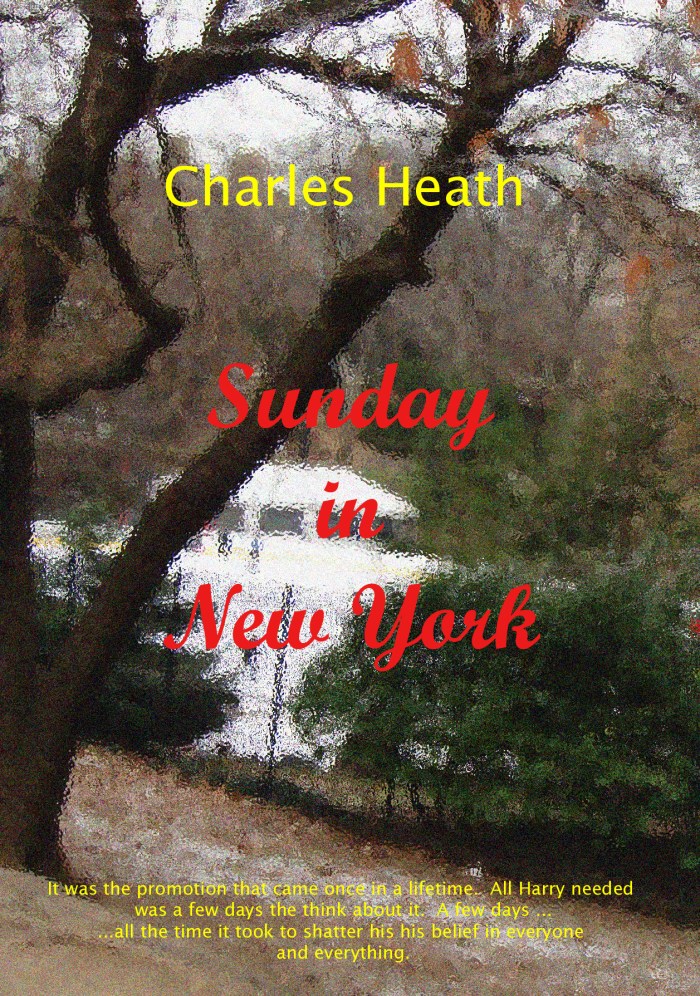
“Sunday in New York”, a romantic adventure that’s not a walk in the park!

“Sunday in New York” is ultimately a story about trust, and what happens when a marriage is stretched to its limits.

When Harry Steele attends a lunch with his manager, Barclay, to discuss a promotion that any junior executive would accept in a heartbeat, it is the fact his wife, Alison, who previously professed her reservations about Barclay, also agreed to attend, that casts a small element of doubt in his mind.

From that moment, his life, in the company, in deciding what to do, his marriage, his very life, spirals out of control.

There is no one big factor that can prove Harry’s worst fears, that his marriage is over, just a number of small, interconnecting events, when piled on top of each other, points to a cataclysmic end to everything he had believed in.

Trust is lost firstly in his best friend and mentor, Andy, who only hints of impending disaster, Sasha, a woman whom he saved, and who appears to have motives of her own, and then in his wife, Alison, as he discovered piece by piece damning evidence she is about to leave him for another man.

Can we trust what we see with our eyes or trust what we hear?

Haven’t we all jumped to conclusions at least once in our lives?

Can Alison, a woman whose self-belief and confidence is about to be put to the ultimate test, find a way of proving their relationship is as strong as it has ever been?

As they say in the classics, read on!

Purchase:

http://tinyurl.com/Amazon-SundayInNewYork

A photograph from the inspiration file – 8

A picture can paint a thousand words, or more, or less, but…

…

The interesting thing about a place in the dark, in the distance, and behind a chain wire fence usually means something. Especially when there are mysterious lights involved.

We were at a night sports event, watching over a thousand screaming and yelling kids from five to eighteen pretending to compete in a variety of athletic events.

I was there to nominally to support my granddaughter in her endeavours, but right at that moment, on the far side of the track, what I was really there to see was what was behind the wire fence

“Are you watching, Poppy?”

Well, at that moment I wasn’t, but I did turn just in time to see her clear a meter high high jump and execute an elegent backflip, a result no doubt of the ballet training she had since the age of four. Seven years later those lessons had transformed into a high jumper with a great future.

Except, she couldn’t really care less. It was more about the parents and athletic organisers expectations, than hers. I was there, she told me in a secretive tone, to tell everyone to back off.

if you think spying was a dangerous occupation, then let me tell you trying to navigate a safe path between child and parents, and then the rest of the word, forget it.

So, with my trusty phone camera, slightly modified, I was pretending to take pictures of surrounding trees in the high density lighting for the athletics oval, whilst zooming in on the real target.

And, about to take the money shot, I could feel a tugging on the side of my jacket.

I looked down to see the petulant face of a child not happy.

“You said you were coming to see me perform.”

I had. I looked over at the woman the boss had assigned as my ‘date’, Nancy, and whom I’d introduced as a long time friend who deigned to suffer my invitation so she could meet the girl I was always talking about.

“Yes, Poppy,” she said with an evil undertone. “You said you wanted to see her high jumps. You’d better get over there, while I take some pictures of the trees for you.”

“Why do you want pictures of dumb old trees?” That was a question I would have asked myself, and I didn’t quite have an answer for it.

Nancy did. “Because he’s odd like that. It’s one of the quirks I like about him.” She took the camera out of my hand and shooed us off.

And, heading back to the high jump, she asked, “What’s a quirk?”

“Just ask your father later. He knows all about quirks.”

…

© Charles Heath 2021

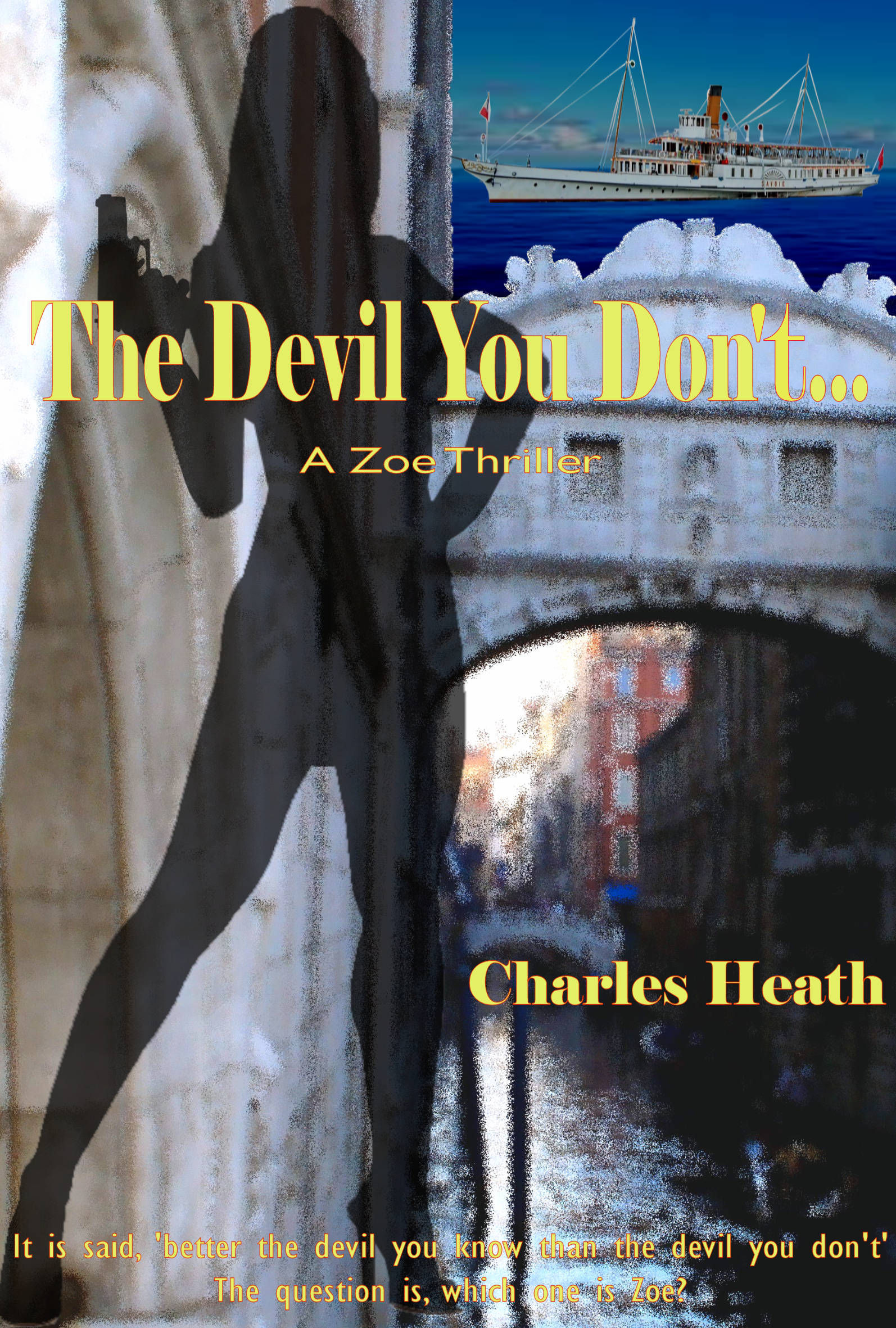
‘The Devil You Don’t’ – A beta reader’s view

It could be said that of all the women one could meet, whether contrived or by sheer luck, what are the odds it would turn out to be the woman who was being paid a very large sum to kill you.

John Pennington is a man who may be lucky in business, but not so lucky in love. He has just broken up with Phillipa Sternhaven, the woman he thought was the one, but relatives and circumstances, and perhaps because she was a ‘princess’, may also have contributed to the end result.

So, what do you do when you are heartbroken?

That is a story that slowly unfolds, from the first meeting with his nemesis on Lake Geneva, all the way to a hotel room in Sorrento, where he learns the shattering truth.

What should have been solace after disappointment, turns out to be something else entirely, and from that point, everything goes to hell in a handbasket.

He suddenly realizes his so-called friend Sebastian has not exactly told him the truth about a small job he asked him to do, the woman he is falling in love with is not quite who she says she is, and he is caught in the middle of a war between two men who consider people becoming collateral damage as part of their business.

The story paints the characters cleverly displaying all their flaws and weaknesses. The locations add to the story at times taking me back down memory lane, especially to Venice where, in those back streets I confess it’s not all that hard to get lost.

All in all a thoroughly entertaining story with, for once, a satisfying end.

…

Available on Amazon here: https://amzn.to/2Xyh1ow

…

An excerpt from “The Things We Do For Love”; In love, Henry was all at sea!

In the distance he could hear the dinner bell ringing and roused himself.  Feeling the dampness of the pillow, and fearing the ravages of pent up emotion, he considered not going down but thought it best not to upset Mrs. Mac, especially after he said he would be dining.

In the event, he wished he had reneged, especially when he discovered he was not the only guest staying at the hotel.

Whilst he’d been reminiscing, another guest, a young lady, had arrived.  He’d heard her and Mrs. Mac coming up the stairs, and then shown to a room on the same floor, perhaps at the other end of the passage.

Henry caught his first glimpse of her when she appeared at the door to the dining room, waiting for Mrs. Mac to show her to a table.

She was about mid-twenties, slim, long brown hair, and the grace and elegance of a woman associated with countless fashion magazines.  She was, he thought, stunningly beautiful with not a hair out of place, and make-up flawlessly applied.  Her clothes were black, simple, elegant, and expensive, the sort an heiress or wife of a millionaire might condescend to wear to a lesser occasion than dinner.

Then there was her expression; cold, forbidding, almost frightening in its intensity.  And her eyes, piercingly blue and yet laced with pain.  Dracula’s daughter was his immediate description of her.

All in all, he considered, the only thing they had in common was, like him, she seemed totally out of place.

Mrs. Mac came out of the kitchen, wiping her hands on her apron.  She was, she informed him earlier, chef, waitress, hotelier, barmaid, and cleaner all rolled into one.  Coming up to the new arrival she said, “Ah, Miss Andrews, I’m glad you decided to have dinner.  Would you like to sit with Mr. Henshaw, or would you like to have a table of your own?”

Henry could feel her icy stare as she sized up his appeal as a dining companion, making the hair on the back on his neck stand up.  He purposely didn’t look back.  In his estimation, his appeal rating was minus six.  Out of a thousand!

“If Mr. Henshaw doesn’t mind….”  She looked at him, leaving the query in mid-air.

He didn’t mind and said so.  Perhaps he’d underestimated his rating.

“Good.”  Mrs. Mac promptly ushered her over.  Henry stood, made sure she was seated properly and sat.

“Thank you.  You are most kind.”  The way she said it suggested snobbish overtones.

“I try to be when I can.”  It was supposed to nullify her sarcastic tone but made him sound a little silly, and when she gave him another of her icy glares, he regretted it.

Mrs. Mac quickly intervened, asking, “Would you care for the soup?”

They did, and, after writing the order on her pad, she gave them each a look, imperceptibly shook her head, and returned to the kitchen.

Before Michelle spoke to him again, she had another quick look at him, trying to fathom who and what he might be.  There was something about him.

His eyes, they mirrored the same sadness she felt, and, yes, there was something else, that it looked like he had been crying?  There was a tinge of redness.

Perhaps, she thought, he was here for the same reason she was.

No.  That wasn’t possible.

Then she said, without thinking, “Do you have any particular reason for coming here?”  Seconds later she realized she’s spoken it out loud, had hadn’t meant to actually ask, it just came out.

It took him by surprise, obviously not the first question he was expecting her to ask of him.

“No, other than it is as far from civilization, and home, as I could get.”

At least we agree on that, she thought.

It was obvious he was running away from something as well.

Given the isolation of the village and lack of geographic hospitality, it was, from her point of view, ideal.  All she had to do was avoid him, and that wouldn’t be difficult.

After getting through this evening first.

“Yes,” she agreed.  “It is that.”

A few seconds passed, and she thought she could feel his eyes on her and wasn’t going to look up.

Until he asked, “What’s your reason?”

Slight abrupt in manner, perhaps as a result of her question, and the manner in which she asked it.

She looked up.  “Rest.  And have some time to myself.”

She hoped he would notice the emphasis she had placed on the word ‘herself’ and take due note.  No doubt, she thought,  she had completely different ideas of what constituted a holiday than he, not that she had actually said she was here for a holiday.

Mrs. Mac arrived at a fortuitous moment to save them from further conversation.


Over the entree, she wondered if she had made a mistake coming to the hotel.  Of course, there had been no possible way she could know than anyone else might have booked the same hotel, but realized it was foolish to think she might end up in it by herself.

Was that what she was expecting?

Not a mistake then, but an unfortunate set of circumstances, which could be overcome by being sensible.

Yet, there he was, and it made her curious, not that he was a man, by himself, in the middle of nowhere, hiding like she was, but for very different reasons.

On discreet observance whilst they ate, she gained the impression his air of light-heartedness was forced and he had no sense of humor.

This feeling was engendered by his looks, unruly dark hair, and permanent frown.  And then there was his abysmal taste in clothes on a tall, lanky frame.  They were quality but totally unsuited to the wearer.

Rebellion was written all over him.

The only other thought crossing her mind, and rather incongruously, was he could do with a decent feed.  In that respect, she knew now from the mountain of food in front of her, he had come to the right place.

“Mr. Henshaw?”

He looked up.  “Henshaw is too formal.  Henry sounds much better,” he said, with a slight hint of gruffness.

“Then my name is Michelle.”

Mrs. Mac came in to take their order for the only main course, gather up the entree dishes, then return to the kitchen.

“Staying long?” she asked.

“About three weeks.  Yourself?”

“About the same.”

The conversation dried up.

Neither looked at the other, rather at the walls, out the window, towards the kitchen, anywhere.  It was, she thought, almost unbearably awkward.


Mrs. Mac returned with a large tray with dishes on it, setting it down on the table next to theirs.

“Not as good as the usual cook,” she said, serving up the dinner expertly, “but it comes a good second, even if I do say so myself.  Care for some wine?”

Henry looked at Michelle.  “What do you think?”

“I’m used to my dining companions making the decision.”

You would, he thought.  He couldn’t help but notice the cutting edge of her tone.  Then, to Mrs. Mac, he named a particular White Burgundy he liked and she bustled off.

“I hope you like it,” he said, acknowledging her previous comment with a smile that had nothing to do with humor.

“Yes, so do I.”

Both made a start on the main course, a concoction of chicken and vegetables that were delicious, Henry thought, when compared to the bland food he received at home and sometimes aboard my ship.

It was five minutes before Mrs. Mac returned with the bottle and two glasses.  After opening it and pouring the drinks, she left them alone again.

Henry resumed the conversation.  “How did you arrive?  I came by train.”

“By car.”

“Did you drive yourself?”

And he thought, a few seconds later, that was a silly question, otherwise she would not be alone, and certainly not sitting at this table. With him.

“After a fashion.”

He could see that she was formulating a retort in her mind, then changed it, instead, smiling for the first time, and it served to lighten the atmosphere.

And in doing so, it showed him she had another more pleasant side despite the fact she was trying not to look happy.

“My father reckons I’m just another of ‘those’ women drivers,” she added.

“Whatever for?”

“The first and only time he came with me I had an accident.  I ran up the back of another car.  Of course, it didn’t matter to him the other driver was driving like a startled rabbit.”

“It doesn’t help,” he agreed.

“Do you drive?”

“Mostly people up the wall.”  His attempt at humor failed.  “Actually,” he added quickly, “I’ve got a very old Morris that manages to get me where I’m going.”

The apple pie and cream for dessert came and went and the rapport between them improved as the wine disappeared and the coffee came.  Both had found, after getting to know each other better, their first impressions were not necessarily correct.

“Enjoy the food?” Mrs. Mac asked, suddenly reappearing.

“Beautifully cooked and delicious to eat,” Michelle said, and Henry endorsed her remarks.

“Ah, it does my heart good to hear such genuine compliments,” she said, smiling.  She collected the last of the dishes and disappeared yet again.

“What do you do for a living,” Michelle asked in an off-hand manner.

He had a feeling she was not particularly interested and it was just making conversation.

“I’m a purser.”

“A what?”

“A purser.  I work on a ship doing the paperwork, that sort of thing.”

“I see.”

“And you?”

“I was a model.”

“Was?”

“Until I had an accident, a rather bad one.”

“Oh, I’m sorry.”

So that explained the odd feeling he had about her.

As the evening had worn on, he began to think there might be something wrong, seriously wrong with her because she didn’t look too well.  Even the carefully applied makeup, from close up, didn’t hide the very pale, and tired look, or the sunken, dark ringed eyes.

“I try not to think about it, but it doesn’t necessarily work.  I’ve come here for peace and quiet, away from doctors and parents.”

“Then you will not have to worry about me annoying you.  I’m one of those fall-asleep-reading-a-book types.”

Perhaps it would be like ships passing in the night and then smiled to himself about the analogy.

Dinner now over, they separated.

Henry went back to the lounge to read a few pages of his book before going to bed, and Michelle went up to her room to retire for the night.

But try as he might, he was unable to read, his mind dwelling on the unusual, yet the compellingly mysterious person he would be sharing the hotel with.

Overlaying that original blurred image of her standing in the doorway was another of her haunting expressions that had, he finally conceded, taken his breath away, and a look that had sent more than one tingle down his spine.

She may not have thought much of him, but she had certainly made an impression on him.


© Charles Heath 2015-2020

lovecoverfinal1

My cell phone is going off

I’m back to writing, sitting at the desk, pad in front of me, pen in hand.

The only thing lacking, an idea.

It’s 9:03 am, too early to start on a six-pack.

To be honest, the last thing I needed was a distraction, and, having forgotten to put my cell phone on silent, it starts buzzing, indicating there are new messages, or notifications from all those social media sites like Twitter, Facebook, WordPress, Blogger…

Then the advice from all the so-called marketing gurus starts to swirl around in my head, and instead of writing, I’m now fretting over my social media presence.

The more I read the more it bothers me that if I don’t have the right social media presence if I do not start to build an email list, all of my efforts in writing a book will come to naught.

That’s when I start trawling the internet for information on marketing and found a plethora of people offering any amount of advice for anything between a ‘small amount’ to a rather large amount that gives comprehensive coverage of most social media platforms for periods of a day, a week or a month. 

I move on to the people who offer advice for a cost on how to build a following, how to build a web presence, how to get a thousand Twitter followers, how to get thousands of email followers before the launch.

The trouble is I’m writing a novel, not a nonfiction book, or have some marvelous 30-page ebook on how to do something, for free just to drive people to my site.

I’m a novelist, not a handyman so those ideas while good is not going to help me.

Yet another problem to wrestle with along with actually creating a product to sell in the first place.

Except I’m supposed to be writing for the love of it without the premeditated idea of writing for gain or getting rich quick.

What am I missing here?

So should l be writing short stories and offering them for free to drive people to my site?  These would have to be genre-specific so it needs time and effort and fit into a convenient size story that will highlight or showcase my talent.

Some time ago I created a website on one of those so-called free sites, but it’s rather basic and not great. Of course, if I want it to be better, all I have to do is hand over a great wad of money I don’t have to make it better. So much for free!

I don’t think I will have a good night’s sleep again with all of these social media problems I’m having.

Oh well, back to the book.  It’s time to have a nightmare of a different sort!

Writing about writing a book – Day 33

So, it seems there’s going to be a few problems at work.  People are dying and no one really knows why.

Perhaps it has something to do with the computer systems and the network.  In the time this novel is set, networking personal computers was in its infancy and a veritable rabbit hole to go down.

We need to throw in a bit more background and involve others, but to what extent should these other people have influence over the storyline?

This is why there are puzzling aspects of Richardson’s death, and why is Aitchison so interested?

Says Aitchison…

…

“I knew the man better than most.  But even if he was going through a bad patch, and he was a little down, he would not have killed himself, not the way it was presented in his office.  The gun was in the wrong hand, his left hand.  He was ambidextrous to a certain point, left-handed in some cases, right-handed in others.  I knew for a fact he could only shoot with his right hand.  Same as golf.  But most people here would have seen him use only his left hand.”

I let his words sink in for a moment.  How could he possibly know what hand Richardson used for what purpose?  Perhaps golf because it was open to Company employees of any level, but shooting?

It came out of my mouth before I could stop it.  “How …”

“..do I know about his shooting hand?  I ran into him once at the range.  I used to shoot a few skeets back in the day.  Eyesight has gone to pot these days, so it’s been a while.”  The last part was related more for his own benefit.

Good enough answer.  I didn’t know Aitchison was a shooter.  The office grapevine wasn’t as extensively knowledgeable as it purported to be.

“Then is it possible someone here killed him?”

“Like the woman he was supposedly having an affair or her jealous husband?”  He laughed, and it wasn’t a particularly nice one.  “The mystery woman he was spending time with was his daughter.  He asked me to get her a job, but not to let on that he knew her.  Didn’t want her to think he was meddling in her affairs, and that anyone else would see it as favors from the executive to certain employees.”

Aitchison’s voice shook, and he poured another drink to try and steady his nerves.  He was agitated, I could see that.  And he had evidence that the police would need to help solve this crime.  Yet, by the way, he was talking; I don’t think he believed any of what he had just told me would be deemed as relevant.

And I was yet to see a reason why this would affect him so.

“Have you told the police this?

“Yes, but the detective they sent this morning wasn’t interested.”

Perhaps he was writing more into it than there was.  I didn’t know what to say and tried to look noncommittal.  Then he looked at me with a piercing stare, like the thought had just occurred to him.  “You two clashed, heatedly at times.  Did you do this?

Perhaps not quite the question I was expecting from him or anyone.

I was innocent, but I had one of those faces when someone puts a question to you rather abruptly, that reddened, either with embarrassment or guilt.  I had very little control over it.

But to be accused of murder?

I had an alibi; I was home alone in bed trying to sleep.  OK.  It was shaky but the truth.

“No.  Why would I?”

If I was going to kill anyone in this place, it would be Benton, or even Kowalski, another thorn in my side.  Richardson was not on the list, and never would be.  He was just old and pedantic, set in his ways.  He clashed with everyone at one time or another.  In my case, he was just cranky because I replaced his pen and paper accounting with a new application on that computer he refused to use.

He nodded to himself.  “I thought not, but I had to ask.”

He stood and went over to the window and looked out.  Taking time, I guessed, to collect his thoughts.  He remained there with his back to me for a few minutes.  It didn’t seem to be a long time.

Then he said, quietly, “It appears there’s something else going on, something that none of us in the Executive know anything about.”

I was not sure I liked the sound of that or the fact he was telling me.  This was not something I should be privy to.  But that still didn’t stop me from asking, “Like what for instance?”

“The existence of another network.”

“What do you mean?”  Another network?  There was only one.  I had seen it installed, and went through the teething process of getting it up and running, as every bit as hard as bringing a new baby into the world.

I would know if there was another network.  Wouldn’t I?

“Apparently there is supposedly another network of computers running in this office.  I have only the word of a policeman by the name of Chief Inspector Gator, a computer expert, and a consultant from Interpol.  How the hell did this information get to Interpol, of all people?”

I couldn’t tell him.  This was news to me.

“What evidence have they got that this ‘other network’ exists?”

“Intercepted telephone calls reporting a connection error to a network system by the name of Starburst.  There was a log entry on Richardson’s computer referring to it, about the time of a power failure last night.  The computer expert is down in the server room now looking for this other network.”

He swiveled around and looked down at me with a thunderous expression.  “You didn’t set anything up for Halligan, did you?”

“No.”

I was surprised he asked.  We had a discussion some months ago about the fact most of the AGM’s came directly to me to sort out their computer issues.  Halligan was the worst of all of them, using his position to browbeat me into doing work that could only be described as off-book.  Whilst strictly speaking, as AGM – Information Technology, Halligan was quite within his purview to make such requests; it was the security aspects that had to be signed off on before executing such requests.  It added a new level of pain to the approvals process and had made Halligan an enemy of both Aitchison and myself, even though I had nothing to do with it.

The problem was, like all members of the Executive, Halligan was his own worst enemy.  Each of their areas of responsibility was like fiefdoms, and none of them like the others to encroach on their territory.  Halligan’s was the only area that had a shared responsibility with security.  Soon after the new arrangements were put in place, and the fact I had been left off the list of people to be informed, Halligan had asked me to do some work, and not aware of any change in procedure, did it.

Then, playing the usual game of one-upmanship, Halligan told the Executive of the new initiative and left a smoldering Aitchison in his wake.  In the end, all it did was cause me trouble, a severe reprimand, and no apology for being left off the distribution list informing of the new arrangements.

It was still a raw nerve and he had touched it.

…

© Charles Heath 2015-2021