An excerpt from “Betrayal” – a work in progress

It could have been anywhere in the world, she thought, but it wasn’t.  It was in a city where if anything were to go wrong…

She sighed and came away from the window and looked around the room.  It was quite large and expensively furnished.  It was one of several she had been visiting in the last three months.

Quite elegant too, as the hotel had its origins dating back to before the revolution in 1917.  At least, currently, there would not be a team of KGB agents somewhere in the basement monitoring everything that happened in the room.

There was no such thing as the KGB anymore, though there was an FSB, but such organisations were of no interest to her.

She was here to meet with Vladimir.

She smiled to herself when she thought of him, such an interesting man whose command of English was as good as her command of Russian, though she had not told him of that ability.

All her knew of her was that she was American, worked in the Embassy as a clerk, nothing important, who life both at work and at home was boring.  Not that she had blurted that out the first tie she met, or even the second.

That first time, at a function in the Embassy, was a chance meeting, a catching of his eye as he looked around the room, looking, as he had told her later, for someone who might not be as boring as the function itself.

It was a celebration, honouring one of the Embassy officials on his service in Moscow, and the fact he was returning home after 10 years.  She had been there one, and still hadn’t met all the staff.

They had talked, Vladimir knew a great deal about England, having been stationed there for a year or two, and had politely asked questions about where she lived, her family, and of course what her role was, all questions she fended off with an air of disinterested interest.

It fascinated him, as she knew it would, a sort of mental sparring as one would do with swords, if this was a fencing match.

They had said they might or might not meet again when the party was over, but she suspected there would be another opportunity.  She knew the signs of a man who was interested in her, and Vladimir was interested.

The second time came in the form of an invitation to an art gallery, and a viewing of the works of a prominent Russian artist, an invitation she politely declined.  After all, invitations issued to Embassy staff held all sorts of connotations, or so she was told by the Security officer when she told him.

Then, it went quiet for a month.  There was a party at the American embassy and along with several other staff members, she was invited.  She had not expected to meet Vladimir, but it was a pleasant surprise when she saw him, on the other side of the room, talking to several military men.

A pleasant afternoon ensued.

And it was no surprise that they kept running into each other at the various events on the diplomatic schedule.

By the fifth meeting, they were like old friends.  She had broached the subject of being involved in a plutonic relationship with him with the head of security at the embassy.  Normally for a member of her rank it would not be allowed, but in this instance it was.

She did not work in any sensitive areas, and, as the security officer had said, she might just happen upon something that might be useful.  In that regard, she was to keep her eyes and ears open, and file a report each time she met him.

After that discussion she got the impression her superiors considered Vladimir more than just a casual visitor on the diplomatic circuit.  She also formed the impression the he might consider her an ‘asset’, a word that had been used at the meeting with security and the ambassador.

It was where the word ‘spy’ popped into her head and sent a tingle down her spine.  She was not a spy, but the thought of it, well, it would be fascinating to see what happened.

A Russian friend.  That’s what she would call him.

And over time, that relationship blossomed, until, after a visit to the ballet, late and snowing, he invited her to his apartment not far from the ballet venue.  It was like treading on thin ice, but after champagne and an introduction to caviar, she felt like a giddy schoolgirl.

Even so, she had made him promise that he remain on his best behaviour.  It could have been very easy to fall under the spell of a perfect evening, but he promised, showed her to a separate bedroom, and after a brief kiss, their first, she did not see him until the next morning.

So, it began.

It was an interesting report she filed after that encounter, one where she had expected to be reprimanded.

She wasn’t.

It wasn’t until six weeks had passed when he asked her if she would like to take a trip to the country.  It would involve staying in a hotel, that they would have separate rooms.  When she reported the invitation, no objection was raised, only a caution; keep her wits about her.

Perhaps, she had thought, they were looking forward to a more extensive report.  After all, her reports on the places, and the people, and the conversations she overheard, were no doubt entertaining reading for some.

But this visit was where the nature of the relationship changed, and it was one that she did not immediately report.  She had realised at some point before the weekend away, that she had feelings for him, and it was not that he was pushing her in that direction or manipulating her in any way.

It was just one of those moments where, after a grand dinner, a lot of champagne, and delightful company, things happen.  Standing at the door to her room, a lingering kiss, not intentional on her part, and it just happened.

And for not one moment did she believe she had been compromised, but for some reason she had not reported that subtle change in the relationship to the powers that be, and so far, no one had any inkling.

She took off her coat and placed it carefully of the back of one of the ornate chairs in the room.  She stopped for a moment to look at a framed photograph on the wall, one representing Red Square.

Then, after a minute or two, she went to the mini bar and took out the bottle of champagne that had been left there for them, a treat arranged by Vladimir for each encounter.

There were two champagne flutes set aside on the bar, next to a bowl of fruit.  She picked up the apple and thought how Eve must have felt in the garden of Eden, and the temptation.

Later perhaps, after…

She smiled at the thought and put the apple back.

A glance at her watch told her it was time for his arrival.  It was if anything, the one trait she didn’t like, and that was his punctuality.  A glance at the clock on the room wall was a minute slow.

The doorbell to the room rang, right on the appointed time.

She put the bottle down and walked over to the door.

A smile on her face, she opened the door.

It was not Vladimir.  It was her worst nightmare.

…

© Charles Heath 2020

The cinema of my dreams – It’s a treasure hunt – Episode 18

Here’s the thing…

Every time I close my eyes, I see something different.

I’d like to think the cinema of my dreams is playing a double feature but it’s a bit like a comedy cartoon night on Fox.

But these dreams are nothing to laugh about.

Once again there’s a new instalment of an old feature, and we’re back on the treasure hunt.


The pier had been moving gently up and down in response to a passing speed boat that had flouted the minimum speed law, like most of the speed boat owners.

On board the boat, the movement was more pronounced, and it was a bad time to remember that I get seasick, even standing on the pier.  My stomach was suddenly queasy.

Boggs was standing by the hatch that led down below.  It was locked with a big padlock so there was no way we were getting below.  Along the side of the boat was a raised section with windows, but there were curtained off, and the material was faded and looked dirty.

Boggs walked along the narrow walkway to the bow and tried the hatch in the middle of the foredeck.

I noticed the boat was tied to the pier fore and aft with some think rope and funny looking knots.  I don’t think I’d make a very good sailor.  I looked up to the top of the mast and it made me feel dizzy.  It was a long way up.

Behind me was an area where people could seat, and further back a large wheel which I assumed was how the boat was steered.  I could just see Rico standing behind it, captain’s hat on, looking all business-like.

“There’s nothing to see here,” I said, turning back towards Boggs, who was now coming along the other side of the cabin.  One slip and he’d be in the ocean.  I looked over the side and it didn’t look very deep.  I could even see some small fish swimming near the pylon that was covered below the waterline with seaweed.

Boggs stopped at the last window, then knelt down and peered in.

“What do you see?”

“There’s someone in there?”

“Rico?”

“No.  I saw him leave earlier.  Someone else.”

“You know who it is?”

“No.  Never seen him before.  A guy in a suit.  Not the sort of person I’d expect Rico to know, or have as a friend.”

“What’s he doing?”

Boggs changed his position to get a better look.  “He’s just sitting…oh my God, there’s blood.”

“Where?”

I moved quickly over to where Boggs was crouched.  “Give us a look?”  Curiosity was overtaking concern.

“Oh my God, oh my God,” Boggs said over and over.

I pulled out my phone and dialled 911.  When they asked me who I wanted, I said Police.  Then I looked over at the fishing shop and saw Rico and his friends coming back.

“Boggs.”

He ignored me, trying to get a better view.

“Boggs.  It’s Rico.”

Then the policeman answered, “What’s the nature of your emergency?”

“Dead man on a boat, Eden’s Landing, Pier 5, a boat called ‘Freedom Runner’.  And you’d better hurry.”

“Why?”

“Because the owners coming and he doesn’t look happy.”

Then to Boggs, “We got to get the hell out of here, now.”

But, by that time, there was nowhere to go.  Rico had seen us and was all but running to cut off our escape.


© Charles Heath 2019

Motive, means, and opportunity – Motive

I’m working on a novella which may boringly be called “Motive, Means and Opportunity” where I will present a chunk of information from which you if you want to, can become the armchair detective.

Here’s the first part, the so-called Motive


So, here’s the thing…

I said it.  Not once, in the heat of the moment, but more than once, to several different people.  I wanted James Burgman dead.

Why?

Because I knew he was the man sleeping with my wife, Wendy.

I’d long suspected she was having an affair, you know the signs, not where you expect her to be, making excuses where none were necessary if she was doing what she said she was, and disappearing for hours without an explanation.

And I knew James Burgman was an old boyfriend, a discovery that was made quite by accident.  In fact, I followed her one night, not because I was suspicious, but worried for her safety.

That was where I saw her meet him with more than just a friendly handshake.

I had to say it made me feel gutted.

But would I kill him?

It was not worth the problems it would cause me to do so, and, when push came to shove, neither of them were worth it.  I knew, even if he was out of the way, she would not stay with me. 

That train had left the station about a year ago when our only son had been killed in a senseless road accident.


© Charles Heath 2019-2020

I always wanted to see the planets – Episode 10

Now, that was unexpected…

…

Like everyone who was in that artificially silent environment that was the flight deck of a shuttle, unexpected sounds caused unexpected results.

The Engineer cursed.

The Pilot, Myrtle, hesitated for a moment, as if not quite sure what to do, highlighting the fact she had not been in such a situation before, but quickly recovered, and brought up the incoming object on screen.

Note to self: amend the training program to allow for random objects to come out of nowhere.

We all looked at the object. Myrtle should have been taking us into the freighter, but had got overawed by the not easily identifiable ship approaching.

“Our ship will take care of the problem,” I said. “Take us into the freighter.”

As if surprised that she should be asked to do so, she realised it was not her job to be staring at the screen, and muttered, “Oh, yes,” before resuming our passage.

Another note to self: Proper command structures and language should be used at all times.

A minute or so later we were in the cargo bay and the cargo doors were closing. Once closed and the atmosphere adjusted, the deck would become a hive of activity.

There was still a static picture of the craft on the screen, and it was one I’d seen before, an old vessel that dated back over a hundred years. I’d seen it in a space museum on the moon.

I was tempted to ask the Captain what was happening, but knew that to interrupt would not be worth the reprimand.

The engineer had seen one before too. “You don’t see those craft very often, if at all. Or this far out in space. They only had a limited trave distance, didn’t they?”

“Unless someone had been tinkering.” Several had been built as exploration ships, but the majority were freighters, used to build the outer colonies on the nearest planets.

A new drive would enable it to travel to the outer rim of our galaxy, but not much further if there were no readily available fuel supplies. Those that were available were tightly regulated by space command.

Cargo doors closed, deck pressurised, suddenly the whole deck was alive with people and machinery, our people meeting with the freighter crew and arranging for the cargo for Venus to be loaded. Myrtle was to stay with the shuttle, monitoring the loading.

I went down the ramp and was greeted by the first officer of the freighter, a chap I’d once served with, Jacko Miles. Jacko loved being in space, but no longer interested in the machinations of Space Command. The simple life of a freighter first officer was all he desired.

Except his face, right now, had the visual lines of worry.

“What happened?” We were past the usual introductions, and general bonhomie.

“Stopped, boarded, and a crate removed.”

“What was in the crate?”

“No one is saying, but whatever it was, it must have been important to attack us for it.”

My private communicator vibrated in my pocket. The captain was calling, and didn’t want anyone else listening in.

“Just give me a moment,” I said taking the communicator out of my pocket and answering the call. “Yes sir?”

“We have a problem.”

And in that moment, I had to agree with him. Jacko now had his hands in the air, and behind him were two people with handheld weapons trained on him, and me.

…

© Charles Heath 2021

My disdain for some reporters, and reporting these days

It is sometimes quite trashy and that’s saying something!

Having been a journalist in a previous lifetime, and one that always believed that the truth mattered, it didn’t take long to realize that journalists should never let the truth get in the way of a good story.

Newspapers, and all other forms of media, will only write what they believe will sell, or what they think the public wants to read. The truth, sadly, is not the first thing on the reader’s mind, only that someone is to blame for something they have no control over, and it doesn’t matter who.

And the more outlandish the situation, the more the public will buy into it.

This, I guess, is why we like reading about celebrities and royalty, not for the good they might do, but the fact they stumble and make mistakes, and that somehow makes us feel better about ourselves.

Similarly, if the media can beat up a subject, like the corona-virus, and make it worse than it is, then people will lap up the continuing saga, as it relates to them, and will take one of two stances, that they believe the horror of it, and do as they’re asked, or disbelieve it because nothing can be that bad, and ignore it and the consequences of disobedience. knowing the government will not press too hard against the non-compliers simply because of democracy issues it will stir up.

That is, then the media will get a hold of this angle and push it, and people will start to think disobedience is a good thing, not a bad one.

So, our problems of trying to get a fair and balanced look at what the coronavirus is all about is nigh on impossible. We are continuously bombarded with both right and wrong information, and the trouble is, both sides are very plausibly supported by facts.

And that’s the next problem we have in reporting. We can get facts to prove anything we want. It’s called the use and abuse of statistics and was an interesting part of the journalism degree I studied for. We were told all about statistics, good and bad, and using them to prove the veracity of our piece.

I remember writing a piece for the tutor extolling the virtues of a particular person who was probably the worst human since Vlad the Impaler, using only the facts that suited my narrative. I also remember the bollocking he gave me for doing so but had to acknowledge that sometimes that would happen.

The integrity of reporting only went as far as the editor, and if the editor hated something, you had to hate it too. This is infamously covered in various texts where newspaper publishers pick sides and can influence elections, and governments. It still happens.

So, the bottom line is, when I’m reading an article in the media, I always take it with a grain of salt, and do my own fact-checking, remembering, of course, not just to fact check to prove the bias one way of the other, but then get a sense of balance.

We have state elections coming up where I live, but it does not sink to the personal sniping level as it does in the US, we haven’t sunk that low yet, but we haven’t got past the sniping about all the wrongs and failed promises of the government of the day, or the endless tirade against the opposition and how bad a job they did when they were previously in government.

You can see, no one is talking about what they’re going to do for us, no one is telling us what their policies are. It’s simply schoolyard tit for tat garbage speak. What happened to the town hall meeting, a long and winding speech encompassing the policies, what the government plans to do for its people in the next three years, and then genuinely answering questions?

Perhaps we should ban campaigning, and just get each party to write a book about what they intend to do, and keep them away from the papers, the TV, and any other form of media, in other words, don’t let them speak!

And don’t get me started about the drivel they speak in the parliament. Five-year-olds could do a better job.

OK, rant over.

An excerpt from “Mistaken Identity” – a work in progress

The odds of any one of us having a doppelganger are quite high. Whether or not you got to meet him or her, or be confronted by them was significantly lower. Except of course, unless you are a celebrity.

It was a phenomenon remarkable only for the fact, at times, certain high profile people, notorious or not, had doubles if only to put off enemies or the general public. Sometimes we see people in the street, people who look like someone we knew, and made the mistake of approaching them like a long lost friend, only to discover an embarrassed individual desperately trying to get away for what they perceive is a stalker or worse.

And then sometimes in is a picture that looms up on a TV screen, an almost exact likeness of you. At first you are fascinated, and then according to the circumstances, and narrative that is attached to that picture, either flattered or horrified.

For me one turned to the other when I saw an almost likeness of me flash up on the screen when I turned the TV on in my room. What looked to be my photo, with only minor differences, was in the corner of the screen, the news reader speaking in rapid Italian, so fast I could only translate every second or third word.

But the one word I did recognize was murder. The photo of the man up on the screen was the subject of an extensive manhunt. The crime, murder of woman in the very same hotel I was staying, and it was being played out live several floors above me. The gist of the story, the woman had been seen with, and staying with the man who was my double, and, less than an hour ago, the body had been discovered by a chambermaid.

The killer, the announcer said, was believed to be still in the hotel because the woman had died shortly before she had been discovered.

I watched, at first fascinated at that I was seeing. I guess I should have been horrified, but at that moment it didn’t register that I might be mistaken for that man.

Not until an another five minutes had passed, and I was watching the police in full riot gear, with a camera crew following behind, coming up a passage towards a room. Live action of the arrest of the suspected killer the breathless commentator said.

Then, suddenly, there was a pounding on the door. On the TV screen, plain to see, was the number of my room.
I looked through the peep hole and saw an army of police officers. It didn’t take much to realize what had happened. The hotel staff had identified me as the man in the photograph on the TV and called the police.

Horrified wasn’t what I was feeling right then.

It was fear.

My last memory was the door crashing open, the wood splintering, and men rushing into the room, screaming at me, waving guns, and when I put my hands up to defend myself, I heard a gunshot.

And in one very confused and probably near death experience, I thought I saw my mother, and thinking what was she doing in Rome?

…

I was the archetypal nobody.

I lived in a small flat, I drove a nondescript car, had an average job in a low profile travel agency, was single, and currently not involved in a relationship, no children, and according to my workmates, no life.

They were wrong. I was one of those people who preferred their own company, I had a cat, and travelled whenever I could. And I did have a ‘thing’ for Rosalie, one of the reasons why I stayed at the travel agency. I didn’t expect anything to come of it, but one could always hope.

I was both pleased and excited to be going to the conference. It was my first, and the glimpse I had seen of it had whetted my appetite for more information about the nuances of my profession.

Some would say that a travel agent wasn’t much of a job, but to me, it was every bit as demanding as being an accountant or a lawyer. You were providing a customer with a service, and arguably more people needed a travel agent than a lawyer. At least that was what I told myself, as I watched more and more people start using the internet, and our relevance slowly dissipating.

This conference was about countering that trend.

The trip over had been uneventful. I was met at the airport and taken to the hotel where the conference was being held with a number of other delegates who had arrived on the same plane. I had mingled with a number of other delegates at the pre conference get together, including one whose name was Maryanne.

She was an unusual young woman, not the sort that I usually met, because she was the one who was usually surrounded by all the boys, the life of the party. In normal circumstances, I would not have introduced myself to her, but she had approached me. Why did I think that may have been significant? All of this ran through my mind, culminating in the last event on the highlight reel, the door bursting open, men rushing into my room, and then one of the policemen opened fire.

I replayed that last scene again, trying to see the face of my assailant, but it was just a sea of men in battle dress, bullet proof vests and helmets, accompanied by screaming and yelling, some of which I identified as “Get on the floor”.

Then came the shot.

Why ask me to get on the floor if all they were going to do was shoot me. I was putting my hands up at the time, in surrender, not reaching for a weapon.

Then I saw the face again, hovering in the background like a ghost. My mother. Only the hair was different, and her clothes, and then the image was going, perhaps a figment of my imagination brought on by pain killing drugs. I tried to imagine the scene again, but this time it played out, without the image of my mother.

I opened my eyes took stock of my surroundings. What I felt in that exact moment couldn’t be described. I should most likely be dead, the result of a gunshot wound. I guess I should be thankful the shooter hadn’t aimed at anything vital, but that was the only item on the plus side.

I was in a hospital room with a policeman by the door. He was reading a newspaper, and sitting uncomfortably on a small chair. He gave me a quick glance when he heard me move slightly, but didn’t acknowledge me with either a nod, or a greeting, just went back to the paper.

If I still had a police guard, then I was still considered a suspect. What was interesting was that I was not handcuffed to the bed. Perhaps that only happened in TV shows. Or maybe they knew I couldn’t run because my injuries were too serious. Or the guard would shoot me long before my feet hit the floor. I knew the police well enough now to know they would shoot first and ask questions later.

On the physical side, I had a large bandage over the top left corner of my chest, extending over my shoulder. A little poking and prodding determined the bullet had hit somewhere between the top of my rib cage and my shoulder. Nothing vital there, but my arm might be somewhat useless for a while, depending on what the bullet hit on the way in, or through.

It didn’t feel like there were any broken or damaged bones.

That was the good news.

On the other side of the ledger, my mental state, there was only one word that could describe it. Terrified. I was looking at a murder charge and jail time, a lot of it. Murder usually had a long time in jail attached to it.

Whatever had happened, I didn’t do it. I know I didn’t do it, but I had to try and explain this to people who had already made up their minds. I searched my mind for evidence. It was there, but in the confused state brought on by the medication, all I could think about was jail, and the sort of company I was going to have.

I think death would have been preferable.

…

Half an hour later, maybe longer, I was drifting in an out of consciousness, a nurse, or what I thought was a nurse, came into the room. The guard stood, checked her ID card, and then stood by the door.

She came over and stood beside the bed. “How are you?” she asked, first in Italian, and when I pretended I didn’t understand, she asked the same question in accented English.

“Alive, I guess,” I said. “No one has come and told what my condition is yet. You are my first visitor. Can you tell me?”

“Of course. You are very lucky to be alive. You will be fine and make a full recovery. The doctors here are excellent at their work.”

“What happens now?”

“I check you, and then you have a another visitor. He is from the British Embassy I think. But he will have to wait until I have finished my examination.”

I realized then she was a doctor, not a nurse.

…

My second visitor was a man, dressed in a suit the sort of which I associated with the British Civil Service.  He was not very old which told me he was probably a recent graduate on his first posting, the junior officer who drew the short straw.

The guard checked his ID but again did not leave the room, sitting back down and going back to his newspaper.

My visitor introduced himself as Alex Jordan from the British Embassy in Rome and that he had been asked by the Ambassador to sort out what he labelled a tricky mess.

For starters, it was good to see that someone cared about what happened to me.  But, equally, I knew the mantra, get into trouble overseas, and there is not much we can do to help you.  So, after that lengthy introduction, I had to wonder why he was here.

I said, “They think I am an international criminal by the name of Jacob Westerbury, whose picture looks just like me, and apparently for them it is an open and shut case.”  I could still hear the fragments of the yelling as the police burst through the door, at the same time telling me to get on the floor with my hands over my head.

“It’s not.  They know they’ve got the wrong man, which is why I’m here.  There is the issue of what had been described as excessive force, and the fact you were shot had made it an all-round embarrassment for them.”

“Then why are you here?  Shouldn’t they be here apologizing?”

“That is why you have another visitor.  I only took precedence because I insisted I speak with you first.  I have come, basically to ask you for a favour.  This situation has afforded us with an opportunity.  We would like you to sign the official document which basically indemnifies them against any legal proceedings.”

Curious.  What sort of opportunity was he talking about?  Was this a matter than could get difficult and I could be charged by the Italian Government, even if I wasn’t guilty, or was it one of those hush hush type deals, you do this for us, we’ll help you out with that.  “What sort of opportunity?”

“We want to get our hands on Jacob Westerbury as much as they do.  They’ve made a mistake, and we’d like to use that to get custody of him if or when he is arrested in this country.  I’m sure you would also like this man brought into custody as soon as possible so you will stop being confused with him.  I can only imagine what it was like to be arrested in the manner you were.  And I would not blame you if you wanted to get some compensation for what they’ve done.  But.  There are bigger issues in play here, and you would be doing this for your country.”

I wondered what would happen if I didn’t agree to his proposal.  I had to ask, “What if I don’t?”

His expression didn’t change.  “I’m sure you are a sensible man Mr Pargeter, who is more than willing to help his country whenever he can.  They have agreed to take care of all your hospital expenses, and refund the cost of the Conference, and travel.  I’m sure I could also get them to pay for a few days at Capri, or Sorrento if you like, before you go home.  What do you say?”

There was only one thing I could say.  Wasn’t it treason if you went against your country’s wishes?

“I’m not an unreasonable man, Alex.  Go do your deal, and I’ll sign the papers.”

“Good man.”

…

After Alex left, the doctor came back to announce the arrival of a woman, by the way she had announced herself, the publicity officer from the Italian police. When she came into the room, she was not dressed in a uniform.

The doctor left after giving a brief report to the civilian at the door. I understood the gist of it, “The patient has recovered excellently and the wounds are healing as expected. There is no cause for concern.”

That was a relief.

While the doctor was speaking to the civilian, I speculated on who she might be. She was young, not more than thirty, conservatively dressed so an official of some kind, but not necessarily with the police. Did they have prosecutors? I was unfamiliar with the Italian legal system.

She had long wavy black hair and the sort of sultry looks of an Italian movie star, and her presence made me more curious than fearful though I couldn’t say why.

The woman then spoke to the guard, and he reluctantly got up and left the room, closing the door behind him.
She checked the door, and then came back towards me, standing at the end of the bed. Now alone, she said, “A few questions before we begin.” Her English was only slightly accented. “Your name is Jack Pargeter?”

I nodded. “Yes.”

“You are in Rome to attend the Travel Agents Conference at the Hilton Hotel?”

“Yes.”

“You attended a preconference introduction on the evening of the 25th, after arriving from London at approximately 4:25 pm.”

“About that time, yes. I know it was about five when the bus came to collect me, and several others, to take us to the hotel.”

She smiled. It was then I noticed she was reading from a small notepad.

“It was ten past five to be precise. The driver had been held up in traffic. We have a number of witnesses who saw you on the plane, on the bus, at the hotel, and with the aid of closed circuit TV we have established you are not the criminal Jacob Westerbury.”

She put her note book back in her bag and then said, “My name is Vicenza Andretti and I am with the prosecutor’s office. I am here to formally apologize for the situation that can only be described as a case of mistaken identity. I assure you it is not the habit of our police officers to shoot people unless they have a very strong reason for doing so. I understand that in the confusion of the arrest one of our officers accidentally discharged his weapon. We are undergoing a very thorough investigation into the circumstances of this event.”

I was not sure why, but between the time I had spoken to the embassy official and now, something about letting them off so easily was bugging me. I could see why they had sent her. It would be difficult to be angry or annoyed with her.

But I was annoyed.

“Do you often send a whole squad of trigger happy riot police to arrest a single man?” It came out harsher than I intended.

“My men believed they were dealing with a dangerous criminal.”

“Do I look like a dangerous criminal?” And then I realized if it was mistaken identity, the answer would be yes.

She saw the look on my face, and said quietly, “I think you know the answer to that question, Mr. Pargeter.”

“Well, it was overkill.”

“As I said, we are very sorry for the circumstances you now find yourself in. You must understand that we honestly believed we were dealing with an armed and dangerous murderer, and we were acting within our mandate. My department will cover your medical expenses, and any other amounts for the inconvenience this has caused you. I believe you were attending a conference at your hotel. I am very sorry but given the medical circumstances you have, you will have to remain here for a few more days.”

“I guess, then, I should thank you for not killing me.”

Her expression told me that was not the best thing I could have said in the circumstances.

“I mean, I should thank you for the hospital and the care. But a question or two of my own. May I?”

She nodded.

“Did you catch this Jacob Westerbury character?”

“No. In the confusion created by your arrest he escaped. Once we realized we had made a mistake and reviewed the close circuit TV, we tracked him leaving by a rear exit.”

“Are you sure it was one of your men who shot me?”

I watched as her expression changed, to one of surprise.

“You don’t think it was one of my men?”

“Oddly enough no. But don’t ask me why.”

“It is very interesting that you should say that, because in our initial investigation, it appeared none of our officer’s weapons had been discharged. A forensic investigation into the bullet tells us it was one that is used in our weapons, but…”

I could see their dilemma.

“Have you any enemies that would want to shoot you Mr Pargeter?”

That was absurd because I had no enemies, at least none that I knew of, much less anyone who would want me dead.

“Not that I’m aware of.”

“Then it is strange, and will perhaps remain a mystery. I will let you know if anything more is revealed in our investigation.”

She took an envelope out of her briefcase and opened it, pulling out several sheets of paper.

I knew what it was. A verbal apology was one thing, but a signed waiver would cover them legally. They had sent a pretty girl to charm me. Perhaps using anyone else it would not have worked. There was potential for a huge litigation payout here, and someone more ruthless would jump at the chance of making a few million out of the Italian Government.

“We need a signature on this document,” she said.

“Absolving you of any wrong doing?”

“I have apologized. We will take whatever measures are required for your comfort after this event. We are accepting responsibility for our actions, and are being reasonable.”

They were. I took the pen from her and signed the documents.

“You couldn’t add dinner with you on that list of benefits?” No harm in asking.

“I am unfortunately unavailable.”

I smiled. “It wasn’t a request for a date, just dinner. You can tell me about Rome, as only a resident can. Please.”

She looked me up and down, searching for the ulterior motive. When she couldn’t find one, she said, “We shall see once the hospital discharges you in a few days.”

“Then I’ll pencil you in?”

She looked at me quizzically. “What is this pencil me in?”

“It’s an English colloquialism. It means maybe. As when you write something in pencil, it is easy to erase it.”

A momentary frown, then recognition and a smile. “I shall remember that. Thank-you for your time and co-operation Mr. Pargeter. Good morning.”

…

© Charles Heath 2015-2021

A photograph from the inspirational bin – 22

I found this…


So near and yet so far.

What I found was the moon out in the late afternoon, a phenomenon that might happen on a regular basis, but this one of the few times I’ve seen it.

And it reminds me of something I was told a long time ago. Shoot for the moon. I never quite understood what the person meant, not until a long time later when I realised that I was being told nothing was impossible.

Had I ever achieved the impossible?

The thing is, each of us define what is possible and what is impossible ourselves, and is therefore different for every person. If you tell yourself it is impossible, then it requires a mind shift to get past that barrier.

But, the question still remains the same, did I achieve the impossible?

I never thought I’d write a book, or have it published. Some would say I still haven’t achieved that goal because I self published it on Amazon.

I think I achieved what I set out to do.

I never thought I’d get a university degree, but people had faith in me, and yes, I got it in the end.

I never thought, when I was younger, I would be a father, and sometimes I wonder whether it was worth it, but having grandchildren dispelled any perceived disappointment.

And what is on the impossible list now?

Not a lot. At my age, I don’t think it’s possible I will travel to the moon, nor afford to skirt the edge of space, as much as it would be amazing to look back at the planet.

I don’t think I’ll ever become a CEO, but then I don’t want to. Too much responsibility.

What’s left that is achievable?

Tracing my family history, and going back to where my ancestors came from, and, hopefully finding someone who was ‘famous’.

The cinema of my dreams – It’s a treasure hunt – Episode 19

Here’s the thing…

Every time I close my eyes, I see something different.

I’d like to think the cinema of my dreams is playing a double feature but it’s a bit like a comedy cartoon night on Fox.

But these dreams are nothing to laugh about.

Once again there’s a new instalment of an old feature, and we’re back on the treasure hunt.

And the perils of writing on the fly often leads to back revisions to aid moving forward, and this is one of those occasions.  A few revisions were required.


Short of jumping over the side, there was no way we were getting away.  And judging from the expression on Rico’s face, now very plain to see halfway along the pier, he was not happy to see us.

Boggs stepped off the deck and joined me on the pier, just as Rico made it to where we were standing, just as it started in a gentle up and down motion with the water, churned up by a passing speed boat, but it was fear rather than the pier’s motions making me feel sick.

The sound of another boat caused me to glance in the opposite direction, out towards the sandbar, where I could see another large boat coming in our direction very quickly, and by the shape of it, quite possibly a police launch or the coast guard. 

Rico had seen it too.  “What have you done?”

“I called the police,” I said, trying to act braver than I felt.  Even with the police on their way, Rico could still do something we’d all regret.

“Why?”

Movement by the fishing store caught my eye, and I saw it was two of the men who’d left the boat with Rico earlier, retreating.  They’d seen the situation and were retreating.  A police car with its siren blaring and lights flashing just stopped at the entrance to the pier and two officers were getting out, guns in hand.

Those men would getaway.  Rico had seen them too and looked relieved.  Odd for a man about to find himself in a lot of trouble.

Boggs blurted out, “There’s a dead body in the cabin.”

Rico shook his head.  “That’s not possible.  I’ve been gone for an hour and it isn’t possible he put himself there.”

He looked around to see the officers coming from the land side of the pier.  There was no escape for him, or for us, but this could still end up a sticky situation for us if Rico decided to shoot his way out.  Boggs said he owned a gun, and if it was not on him, it might be in the boat.

Rico climbed on board and then moved to the hatch.  He lifted the hatch cover and folded it back to show an opening into the cabin.  It hadn’t been locked; it just looked like it was.  Just as the officers made it to the boat, he stepped in, then down into the cabin.

A minute later, when he came up  Rico looked visibly shaken like he’d seen a ghost.

The police launch had arrived just off the stern, kicking up the water and causing the boat and pier to rock violently, two men at either end ready to secure their boat to ours.  The land-based officers also arrived, somewhat out of breath, to join Boggs and I on the pier.

I recognised the officer who appeared to be in charge, a man called Johnson, the police chief’s deputy.  He was known to shoot first and ask questions later.  What worried me the most, he had his gun drawn and ready to shoot.

He looked at me, Rico, Boggs, then back to me.  “What’s this all about?”

“There’s a body in the cabin,” Boggs said before I could say a word, still sounding very frightened, but whether it was the body in the cabin, Rico’s fury at his meddling or the fact the police were involved was hard to say.

He switched his glare to Rico.  “That true?”

Rico nodded.  “I don’t know where it came from, but it wasn’t there an hour ago.”  A last look back at the cabin, he stepped off the boat onto the pier.

The seaman aboard the police launch slipped a rope over the bollard at the rear of our boat and then jumped on board to secure it.  Another seaman did the same at the bow.  Two more jumped on board, one covering Rico and the other going into the cabin.

When he came back up on deck he was talking into his cell phone.

I think Rico had a lot of explaining to do.


© Charles Heath 2019

I always wanted to see the planets – Episode 9

What’s the worst that could happen?

…

Captains invariably hated the word ‘problem’. I did too, because it conjured up so many different scenarios, each more scarier than the last, and maginified exponentially because we were in space.

We took a closer look, and it was the sort of damage if it was back on Earth, one would associate with weapons fire, lasers to be exact.

Yes, in the 24th century we had ray guns, handheld, and ship bound.

The only problem was, only the cruise class vessels, like the one I was now on, were allowed to have them, and using them, well, the paperwork alone could keep a complement of 20 working day and night for a month.

Test them, yes, less paperwork, use them, no. There had never been a reason to.

But someone had, and on a freighter, which only meant one possibility, that whatever the freighter had been carrying, had been worth violating a thousand regulations and rules.

And bring their ship and selves out into the light.

It was, of course, Space Command’s worst nightmare realised, that the ideal of space exploration as a united effort by everyone, had a member who had decided against unity.

Unless, of course, the improbably had happened, there was life outside our solar system, and we were dealing with a new planet, or people.

Except I would not expect them to use something as conventional as a laser.

Myrtle had put us very close to the damaged area and taken a number of photographs, and the engineer had analysed the damaged area.

Then, cleared to enter the freighter, she took us up to the cargo doors and waited as we watched them open.

It was the same time the engineer’s hand held computer started beeping.

And a warning light on the console in front of Myrtle started flashing, accompanied by a warning klaxon.

Another vessel had just entered our proximity zone.

…

© Charles Heath 2021

Inspiration, maybe – Volume 1

50 photographs, 50 stories, of which there is one of the 50 below.

They all start with –

A picture paints … well, as many words as you like.  For instance:

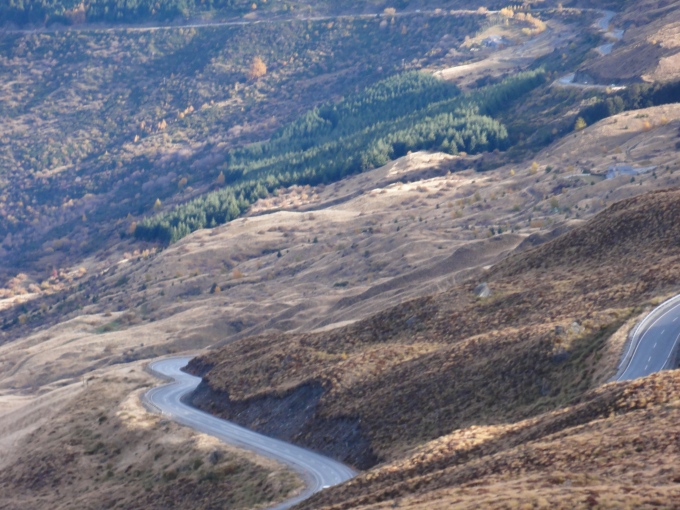
lookingdownfromcoronetpeak

And the story:

It was once said that a desperate man has everything to lose.

The man I was chasing was desperate, but I, on the other hand, was more desperate to catch him.

He’d left a trail of dead people from one end of the island to the other.

The team had put in a lot of effort to locate him, and now his capture was imminent.  We were following the car he was in, from a discrete distance, and, at the appropriate time, we would catch up, pull him over, and make the arrest.

There was nowhere for him to go.

The road led to a dead-end, and the only way off the mountain was back down the road were now on.  Which was why I was somewhat surprised when we discovered where he was.

Where was he going?

“Damn,” I heard Alan mutter.  He was driving, being careful not to get too close, but not far enough away to lose sight of him.

“What?”

“I think he’s made us.”

“How?”

“Dumb bad luck, I’m guessing.  Or he expected we’d follow him up the mountain.  He’s just sped up.”

“How far away?”

“A half-mile.  We should see him higher up when we turn the next corner.”

It took an eternity to get there, and when we did, Alan was right, only he was further on than we thought.”

“Step on it.  Let’s catch him up before he gets to the top.”

Easy to say, not so easy to do.  The road was treacherous, and in places just gravel, and there were no guard rails to stop a three thousand footfall down the mountainside.

Good thing then I had the foresight to have three agents on the hill for just such a scenario.

Ten minutes later, we were in sight of the car, still moving quickly, but we were going slightly faster.  We’d catch up just short of the summit car park.

Or so we thought.

Coming quickly around another corner we almost slammed into the car we’d been chasing.

“What the hell…” Aland muttered.

I was out of the car, and over to see if he was in it, but I knew that it was only a slender possibility.  The car was empty, and no indication where he went.

Certainly not up the road.  It was relatively straightforward for the next mile, at which we would have reached the summit.  Up the mountainside from here, or down.

I looked up.  Nothing.

Alan yelled out, “He’s not going down, not that I can see, but if he did, there’s hardly a foothold and that’s a long fall.”

Then where did he go?

Then a man looking very much like our quarry came out from behind a rock embedded just a short distance up the hill.

“Sorry,” he said quite calmly.  “Had to go if you know what I mean.”

I’d lost him.

It was as simple as that.

I had been led a merry chase up the hill, and all the time he was getting away in a different direction.

I’d fallen for the oldest trick in the book, letting my desperation blind me to the disguise that anyone else would see through in an instant.

It was a lonely sight, looking down that road, knowing that I had to go all that way down again, only this time, without having to throw caution to the wind.

“Maybe next time,” Alan said.

“We’ll get him.  It’s just a matter of time.”

© Charles Heath 2019-2021

Find this and other stories in “Inspiration, maybe”  available soon.

InspirationMaybe1v1