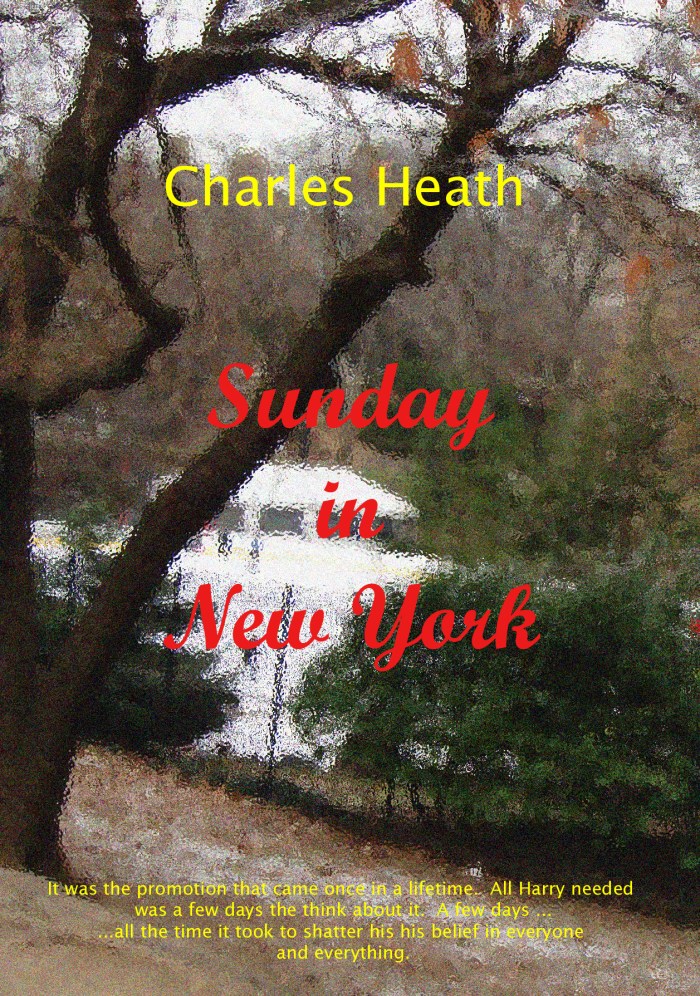
“Sunday in New York”, a romantic adventure that’s not a walk in the park!

“Sunday in New York” is ultimately a story about trust, and what happens when a marriage is stretched to its limits.

When Harry Steele attends a lunch with his manager, Barclay, to discuss a promotion that any junior executive would accept in a heartbeat, it is the fact his wife, Alison, who previously professed her reservations about Barclay, also agreed to attend, that casts a small element of doubt in his mind.

From that moment, his life, in the company, in deciding what to do, his marriage, his very life, spirals out of control.

There is no one big factor that can prove Harry’s worst fears, that his marriage is over, just a number of small, interconnecting events, when piled on top of each other, points to a cataclysmic end to everything he had believed in.

Trust is lost firstly in his best friend and mentor, Andy, who only hints of impending disaster, Sasha, a woman whom he saved, and who appears to have motives of her own, and then in his wife, Alison, as he discovered piece by piece damning evidence she is about to leave him for another man.

Can we trust what we see with our eyes or trust what we hear?

Haven’t we all jumped to conclusions at least once in our lives?

Can Alison, a woman whose self-belief and confidence is about to be put to the ultimate test, find a way of proving their relationship is as strong as it has ever been?

As they say in the classics, read on!

Purchase:

http://tinyurl.com/Amazon-SundayInNewYork

The A to Z Challenge – L is for “Last boat to nowhere”

I had, literally, just witnessed the end of the world on the large screen TV.

Live and on CNN.

There had been skirmishes, Russia looking to take back its satellite countries and restore the USSR, and NATO posturing when the leaders of the countries asked for help and received none.  Everyone knew what would happen if they did.  War.

But, the playing field changed when Russia set it sights on Poland.

Rollback 83 years, the last time a country rolled into Poland.  What happened?  War.

This time, threats, empty it seemed for a month, and then, yes, we were plunged back into War.

This time, however, everything was different.  Yes, wars were once predominantly waged with men and machines.  That type of warfare changed when Germany introduced the VI Rocket bombs, a means of remotely bombing selective targets.  Hit and miss maybe, but it worked.  Last time we had an atomic bomb, or two as it happened.

This time, we had guided missiles, with nuclear warheads, not a hundred, but thousands, deployed all around the world, aimed at selected targets, not necessarily military targets, but civilians.

There were some who thought they could negotiate a peace settlement.

And, in the middle of that, someone pressed the button.  You know that infamous button that sends a nuclear weapon on its way.

We all saw it launch, live.

We all saw it land, dodging every defence system in its path, with devastating effect, as the camera melted, and everything just went black.  Not one, but all over the world.

It was estimated that the whole world lost a third of its population in four hours, vaporised by missile strikes, and another third would be dead within a month from proximity radiation.  The remaining third, when the dust settled, and those who were not in the direct line of fire, well, the weather would soon decimate them.

Us.

We all thought nuclear weapons were just a deterrent.

Now, well, it was too late to think about anything.  We were, as I just heard on the TV, all going to die from the fallout.  It was only a matter of time before it reached us.  Then, according to the expert, we would all end up with radiation poisoning and die.

I was fortunate enough to live on one of the most southern parts of Australia, a small town by the name of Cockle Creek, Tasmania.  Even though I had never heard of it until overwhelmed by the loss of my wife, I wanted to hide from the world, and Cockle Creek was just the place.

Now, for a while, it was going to be a haven.

Before the storm clouds arrived.

I switched off the TV, and most likely wouldn’t be turning it back on.  There wasn’t going to be any good news, and I really didn’t want to know how long we had left.  I put several bottles of red wine, some cheese, bread, and meat into a bag, and headed down to the beach.

It was part of a secluded part of the shore that backed onto a half dozen houses, and on rare occasions, the neighbours appeared, spoke briefly and went about their business.  People in my street were at best recluses, at worst hermits, all of us running away from something.

It wasn’t long before Angie appeared, at the end of her evening run.  I’d met her several times, and knew a little of her history, once married to a cheating bastard, once had a good job but because of him had to leave, now no longer interested in anything.

I understood her.

She stopped.  I expected a wave as she passed by.

“Max.”

“Angie.  How are you?”

“Usual.  See the news?”

“Hard to miss it.”

“Not a lot to look forward to?”

“I came here to spend my last days in peace, there’s just fewer of them, I guess.”

“Pragmatic.”

“Realistic.

She came over and sat beside me.  For some odd reason, I’d packed two glasses.  Had I a premonition she would drop by?

“Red?”

“Why not?”

We sat there and drank wine, first from one bottle, then starting on the next.  We didn’t say anything, there wasn’t anything to say.

“Would you believe me if I said I was once a scientist?  There’s a more specific name, but the scientist will do?”

“Why wouldn’t I?”

“M\y dad refused to believe a woman could be that smart.  My husband was a bit like that, never liked the idea that I might be smarter than him.”

“Some men feel threatened.”

“Would you?”

“My wife was far smarter than I was, but I loved her because she was her, not the smart part.  That was just a small part of who she was.  And she didn’t care if I was a dustman.”

“Were you?”

“No.  I owned a bookshop, served coffee, and talked to strange people all day.”

“Lots of dusty books then?”

I had no idea if she was joking or just commenting, but it didn’t matter.  It was amusing to think of it like that.

“Lots.  So, what branch of science was it?”

“Snow science.”

OK, so my poker face wasn’t quite working, and it wasn’t hard to guess what I was thinking.

“Look it up, it’s real.”

“No internet anymore.  Kind of got nuked along with a lot of other stuff.  But, despite the scepticism I suspect there is such a thing, and, if I remember right, is that something to do with the study of snow and ice movement, possible for the prediction of similar events?”

“It had a lot to do with predicting storms, and how snow affected water supplies.  There’s a whole lot more, but it’s rather irrelevant now.  Like me.”

“Like all of us, I think, though if you’re feeling irrelevant, come and see me and I’ll try to think of a way to change that.”

“Could you?”

“Probably not.  But I know how you feel.  That’s why I’m here.”

Another few glasses of wine, enough time to consider what she said, and how to make sense of it, before she said, “My last job was for an eccentric billionaire.  I never told anyone because it was the craziest two years of my life.”

“Why bring it up?”

“It doesn’t matter anymore.  Turns out he wasn’t batshit crazy after all.

”OK, I’ll bite.  Why was he crazy?”

“Because he built a huge city like complex under the ice in Antarctica.  He said that man would destroy the earth sooner rather than later, and he wasn’t going to hang around and watch them do it.  Space travel was too difficult, so he did the next best thing.  A haven for 5,000 specially selected people.  I was his snow and ice expert.”

“It’s all melting.”

“Deep in the ice.  There are a few thousand years before it all dissipates, and even then, it’s below ground.  We anticipated every scenario.”

“Bet you didn’t think of aliens with excavators.”

“Now you’re mocking me.”

I shook my head.  “No.  Ivan Rostov, an oligarch.  Strange man, stranger idea, bet rich enough not to care what the world thought of him.  You knew Ivan?”

“Slept with him once.  Bit of a disappointment.”

“Sorry to hear that.  Before or after your husband strayed.”

“After.  I have principles.”

“You should be there, with him.”

“Wasn’t open for business.  When I left, just before I came here, it was in the last stages of being shut up until when it would be needed.  I guess that’s about now.  But I don’t work for him, and he doesn’t need me, and I don’t think I could stay there anyway.  How long do you think people would have to stay there?”

“From what I’ve been reading, between 5,000 and 25,000 years, but that’s very extreme and assumes plutonium has been used.  A substantial amount of the northern hemisphere has been rendered radioactive, and if Chernobyl is anything to go by, a long time.  People wouldn’t see daylight in this lifetime.”

“Sounds like fun then.  You up for a home-cooked meal.  Long time since I’ve entertained, seems like there might not be many more opportunities.”

“Why not?”

Sitting opposite a woman who I had probably seen a dozen times in a year, and spoke to here, albeit briefly, on three of those occasions, I felt remarkably at ease in her company.

Perhaps it was the fact we were all living on borrowed time, perhaps in those circumstances, we had let a lot of our guard down.  Whatever it was, sitting there, enjoying the moment, I felt as though I’d known her all my life.

An odd ringing sound broke the silence that had settled on us.

She got up.  “Excuse me for a moment.”

She went into another room, the ringing stopped and I could hear her muffled voice.  A minute later she returned with a device that looked like a satellite phone in her hand.

She put it on the table and sat down.  “You’re on speakerphone.  Now, tell me what you just said again.”

A male voice, relatively old if I was to guess, and authoritative.

“We are just packing, and tomorrow we will be going to nowhere.  I’m sorry I haven’t been as communicative in recent times, so much to do, so little time, but, as you are aware, the world has finally gone to hell in a handbasket, and we’re getting everything ready.  I’d like you to come.  After all, it’s as much your pet as it was mine.”

“Tempting offer, but I don’t think we’ll ever see daylight again.”

“That maybe so, or maybe not.  We have no idea how mother nature is going to handle this swipe, but that’s in the future.  Staying outside is simply a death sentence, and you’re too good for that.”

I looked at her, the look conveying the unspoken quester, ‘Is that your former boss?”

She nodded, a sign to me at least, that she could read minds.  Perhaps then not a good thing.

“I have a friend here, if he wanted to, could I bring him as my plus one?”

“Certainly.”

“I need time to think about it.  Can I call you back?”

“Any time.  As I say we leave tomorrow and will be there in a week.  I’ll be dropping in anyway, whatever you decide.”

“Ok.  Thanks.”

She disconnected the call.

“Nowhere?”

We gave New Eden and name that people would never quite understand.  We used to say, we’re going nowhere, when we were going to the building site.  It was how we kept it secret.”

”You should go.  Life is precious and you should hang on to it for as long as possible.”

“What about you?”

“I’m sure there are other more important people you could take.”

“There are none that I care about.  Not anymore.  Why do you think I’m here, alone, and never leave?”

I shrugged.

“You don’t know me.”

“I know enough.  There’s no obligation on your part to be anything but a friend.  If I go, I need to have at least one person there I know.”

“Won’t all the people who built it be there?”

“I never got to know any of them.  Didn’t want to.  But with you, after one afternoon, I feel as though I want, I need to know more about you.  You are perhaps what some would call a kindred spirit.  I know it doesn’t make any sense, but these are strange times, are they not?”

I smiled.  They were.  And oddly enough, I felt the same about her.

“Perhaps if we both take the week to think about it?”

She nodded.  “Dinner at yours tomorrow?”

“Afternoon wine, same time, same place?”

A nod and a nod.

I saw the superyacht arrive and drop anchor about a mile offshore, and then, after a half-hour of activity on the rear deck, the launching of a tender, which then headed slowly towards our section of the beach.

It was a no brainer, in the end, we got along so well, why would I want it to end?  So we had to live in a bunker for 50,000 years.  It would be with her, and that’s all I cared about.

She took my hand in hers.  “So, are you ready to catch the last boat to nowhere?”


© Charles Heath 2022

NaNoWriMo – April 2022 – Day 14

First Dig Two Graves, the second Zoe thriller.

…

We’re still in Bratislava with Zoe making a few repairs, having been injured in the getaway from the hotel, where bullets were flying around indiscriminately.

In a nondescript hotel near a railway station, the favorite accommodation for assassins, maybe, there’s enough time for John to get the message Zoe is not happy with him bringing along a hit squad.

And, they’re on the news, that is to say they know who it is that’s on the news, the blurry figures are too indistinct for anyone else to identify them. It was disconcerting to be called criminals fleeing the scene of a crime.

Back in London, Sebastian is about to have a set to with Worthington, who has decided Sebastian is too close and might compromise his black op, so he’s sending him to Paris.

It’s here we learn that Sebastian has both Isobel and Rupert locked up in the cells in the basement, awaiting interrogation, and Worthington orders him to send them home.

Of course, Sebastian is not going to so anything of the sort.

He knows they know where John is, and by implication, where Zoe is, and wants to know.

In the first edit, I suspect I will have to mention Sebastian ‘arresting’ Rupert and Isobel just to keep continuity, and no unfathomable surprises later on.

…

Today’s writing, with Worthington getting his ducks in a row, 1,445 words, for a total of 41,162.

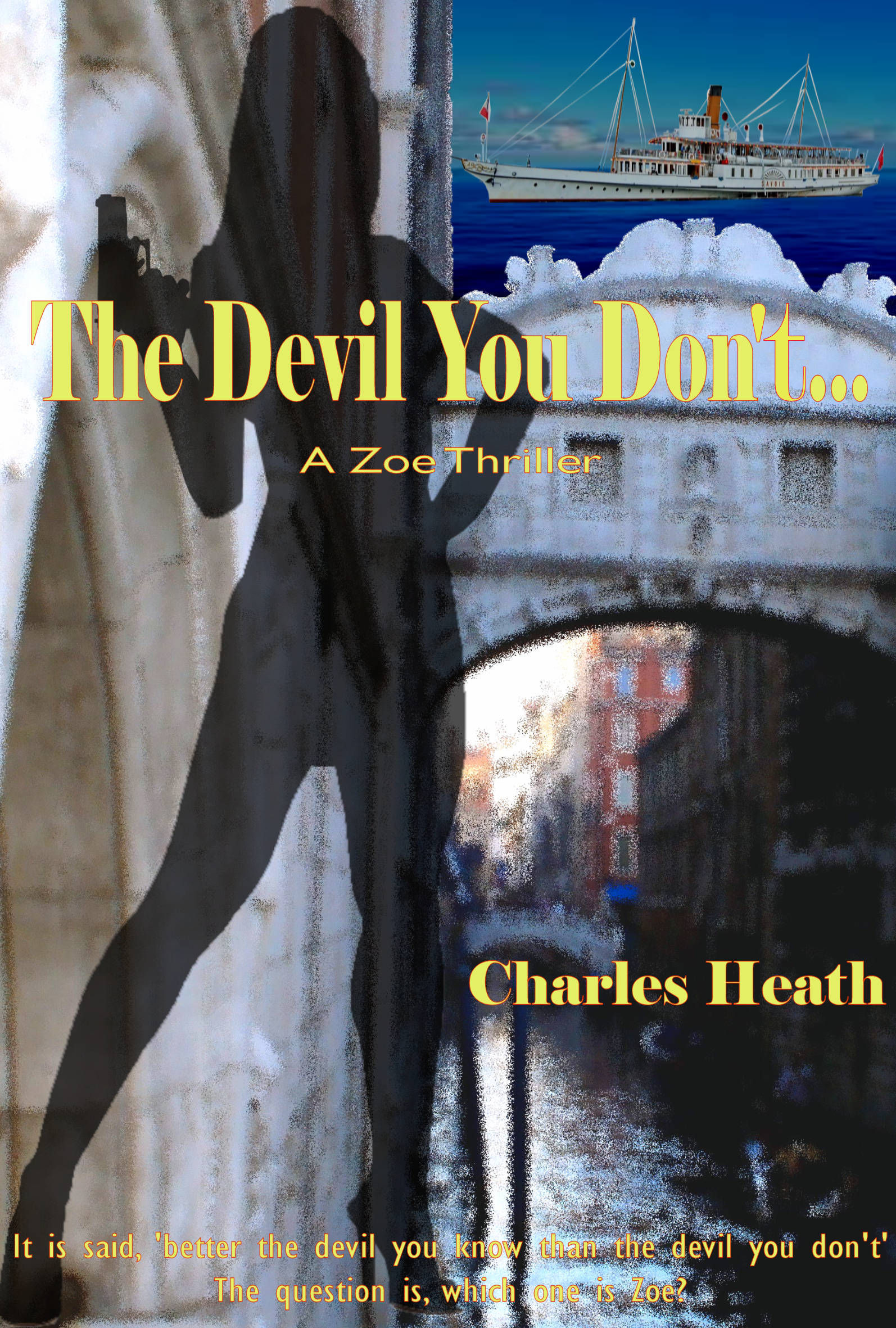
“The Devil You Don’t” – A beta readers view

It could be said that of all the women one could meet, whether contrived or by sheer luck, what are the odds it would turn out to be the woman who was being paid a very large sum to kill you.

John Pennington is a man who may be lucky in business, but not so lucky in love. He has just broken up with Phillipa Sternhaven, the woman he thought was the one, but relatives and circumstances, and perhaps because she was a ‘princess’, may also have contributed to the end result.

So, what do you do when you are heartbroken?

That is a story that slowly unfolds, from the first meeting with his nemesis on Lake Geneva, all the way to a hotel room in Sorrento, where he learns the shattering truth.

What should have been a high turns out to be something else entirely, and from that point every thing goes to hell in a handbasket.

He suddenly realises his so-called friend Sebastian has not exactly told him the truth about a small job he asked him to do, the woman he is falling in love with is not quite who she says she is, and he is caught in the middle of a war between two men who consider people becoming collateral damage as part of their business.

The story paints the characters cleverly displaying all their flaws and weaknesses. The locations add to the story at times taking me back down memory lane, especially to Venice where in those back streets I confess it’s not all that hard to get lost.

All in all a thoroughly entertaining story with, for once, a satisfying end.

…

Available on Amazon here: https://amzn.to/2Xyh1ow

…

An excerpt from “Mistaken Identity” – a work in progress

The odds of any one of us having a doppelganger are quite high. Whether or not you got to meet him or her, or be confronted by them was significantly lower. Except of course, unless you are a celebrity.

It was a phenomenon remarkable only for the fact, at times, certain high profile people, notorious or not, had doubles if only to put off enemies or the general public. Sometimes we see people in the street, people who look like someone we knew, and made the mistake of approaching them like a long lost friend, only to discover an embarrassed individual desperately trying to get away for what they perceive is a stalker or worse.

And then sometimes in is a picture that looms up on a TV screen, an almost exact likeness of you. At first you are fascinated, and then according to the circumstances, and narrative that is attached to that picture, either flattered or horrified.

For me one turned to the other when I saw an almost likeness of me flash up on the screen when I turned the TV on in my room. What looked to be my photo, with only minor differences, was in the corner of the screen, the news reader speaking in rapid Italian, so fast I could only translate every second or third word.

But the one word I did recognize was murder. The photo of the man up on the screen was the subject of an extensive manhunt. The crime, murder of woman in the very same hotel I was staying, and it was being played out live several floors above me. The gist of the story, the woman had been seen with, and staying with the man who was my double, and, less than an hour ago, the body had been discovered by a chambermaid.

The killer, the announcer said, was believed to be still in the hotel because the woman had died shortly before she had been discovered.

I watched, at first fascinated at that I was seeing. I guess I should have been horrified, but at that moment it didn’t register that I might be mistaken for that man.

Not until an another five minutes had passed, and I was watching the police in full riot gear, with a camera crew following behind, coming up a passage towards a room. Live action of the arrest of the suspected killer the breathless commentator said.

Then, suddenly, there was a pounding on the door. On the TV screen, plain to see, was the number of my room.
I looked through the peep hole and saw an army of police officers. It didn’t take much to realize what had happened. The hotel staff had identified me as the man in the photograph on the TV and called the police.

Horrified wasn’t what I was feeling right then.

It was fear.

My last memory was the door crashing open, the wood splintering, and men rushing into the room, screaming at me, waving guns, and when I put my hands up to defend myself, I heard a gunshot.

And in one very confused and probably near death experience, I thought I saw my mother, and thinking what was she doing in Rome?

…

I was the archetypal nobody.

I lived in a small flat, I drove a nondescript car, had an average job in a low profile travel agency, was single, and currently not involved in a relationship, no children, and according to my workmates, no life.

They were wrong. I was one of those people who preferred their own company, I had a cat, and travelled whenever I could. And I did have a ‘thing’ for Rosalie, one of the reasons why I stayed at the travel agency. I didn’t expect anything to come of it, but one could always hope.

I was both pleased and excited to be going to the conference. It was my first, and the glimpse I had seen of it had whetted my appetite for more information about the nuances of my profession.

Some would say that a travel agent wasn’t much of a job, but to me, it was every bit as demanding as being an accountant or a lawyer. You were providing a customer with a service, and arguably more people needed a travel agent than a lawyer. At least that was what I told myself, as I watched more and more people start using the internet, and our relevance slowly dissipating.

This conference was about countering that trend.

The trip over had been uneventful. I was met at the airport and taken to the hotel where the conference was being held with a number of other delegates who had arrived on the same plane. I had mingled with a number of other delegates at the pre conference get together, including one whose name was Maryanne.

She was an unusual young woman, not the sort that I usually met, because she was the one who was usually surrounded by all the boys, the life of the party. In normal circumstances, I would not have introduced myself to her, but she had approached me. Why did I think that may have been significant? All of this ran through my mind, culminating in the last event on the highlight reel, the door bursting open, men rushing into my room, and then one of the policemen opened fire.

I replayed that last scene again, trying to see the face of my assailant, but it was just a sea of men in battle dress, bullet proof vests and helmets, accompanied by screaming and yelling, some of which I identified as “Get on the floor”.

Then came the shot.

Why ask me to get on the floor if all they were going to do was shoot me. I was putting my hands up at the time, in surrender, not reaching for a weapon.

Then I saw the face again, hovering in the background like a ghost. My mother. Only the hair was different, and her clothes, and then the image was going, perhaps a figment of my imagination brought on by pain killing drugs. I tried to imagine the scene again, but this time it played out, without the image of my mother.

I opened my eyes took stock of my surroundings. What I felt in that exact moment couldn’t be described. I should most likely be dead, the result of a gunshot wound. I guess I should be thankful the shooter hadn’t aimed at anything vital, but that was the only item on the plus side.

I was in a hospital room with a policeman by the door. He was reading a newspaper, and sitting uncomfortably on a small chair. He gave me a quick glance when he heard me move slightly, but didn’t acknowledge me with either a nod, or a greeting, just went back to the paper.

If I still had a police guard, then I was still considered a suspect. What was interesting was that I was not handcuffed to the bed. Perhaps that only happened in TV shows. Or maybe they knew I couldn’t run because my injuries were too serious. Or the guard would shoot me long before my feet hit the floor. I knew the police well enough now to know they would shoot first and ask questions later.

On the physical side, I had a large bandage over the top left corner of my chest, extending over my shoulder. A little poking and prodding determined the bullet had hit somewhere between the top of my rib cage and my shoulder. Nothing vital there, but my arm might be somewhat useless for a while, depending on what the bullet hit on the way in, or through.

It didn’t feel like there were any broken or damaged bones.

That was the good news.

On the other side of the ledger, my mental state, there was only one word that could describe it. Terrified. I was looking at a murder charge and jail time, a lot of it. Murder usually had a long time in jail attached to it.

Whatever had happened, I didn’t do it. I know I didn’t do it, but I had to try and explain this to people who had already made up their minds. I searched my mind for evidence. It was there, but in the confused state brought on by the medication, all I could think about was jail, and the sort of company I was going to have.

I think death would have been preferable.

…

Half an hour later, maybe longer, I was drifting in an out of consciousness, a nurse, or what I thought was a nurse, came into the room. The guard stood, checked her ID card, and then stood by the door.

She came over and stood beside the bed. “How are you?” she asked, first in Italian, and when I pretended I didn’t understand, she asked the same question in accented English.

“Alive, I guess,” I said. “No one has come and told what my condition is yet. You are my first visitor. Can you tell me?”

“Of course. You are very lucky to be alive. You will be fine and make a full recovery. The doctors here are excellent at their work.”

“What happens now?”

“I check you, and then you have a another visitor. He is from the British Embassy I think. But he will have to wait until I have finished my examination.”

I realized then she was a doctor, not a nurse.

…

My second visitor was a man, dressed in a suit the sort of which I associated with the British Civil Service.  He was not very old which told me he was probably a recent graduate on his first posting, the junior officer who drew the short straw.

The guard checked his ID but again did not leave the room, sitting back down and going back to his newspaper.

My visitor introduced himself as Alex Jordan from the British Embassy in Rome and that he had been asked by the Ambassador to sort out what he labelled a tricky mess.

For starters, it was good to see that someone cared about what happened to me.  But, equally, I knew the mantra, get into trouble overseas, and there is not much we can do to help you.  So, after that lengthy introduction, I had to wonder why he was here.

I said, “They think I am an international criminal by the name of Jacob Westerbury, whose picture looks just like me, and apparently for them it is an open and shut case.”  I could still hear the fragments of the yelling as the police burst through the door, at the same time telling me to get on the floor with my hands over my head.

“It’s not.  They know they’ve got the wrong man, which is why I’m here.  There is the issue of what had been described as excessive force, and the fact you were shot had made it an all-round embarrassment for them.”

“Then why are you here?  Shouldn’t they be here apologizing?”

“That is why you have another visitor.  I only took precedence because I insisted I speak with you first.  I have come, basically to ask you for a favour.  This situation has afforded us with an opportunity.  We would like you to sign the official document which basically indemnifies them against any legal proceedings.”

Curious.  What sort of opportunity was he talking about?  Was this a matter than could get difficult and I could be charged by the Italian Government, even if I wasn’t guilty, or was it one of those hush hush type deals, you do this for us, we’ll help you out with that.  “What sort of opportunity?”

“We want to get our hands on Jacob Westerbury as much as they do.  They’ve made a mistake, and we’d like to use that to get custody of him if or when he is arrested in this country.  I’m sure you would also like this man brought into custody as soon as possible so you will stop being confused with him.  I can only imagine what it was like to be arrested in the manner you were.  And I would not blame you if you wanted to get some compensation for what they’ve done.  But.  There are bigger issues in play here, and you would be doing this for your country.”

I wondered what would happen if I didn’t agree to his proposal.  I had to ask, “What if I don’t?”

His expression didn’t change.  “I’m sure you are a sensible man Mr Pargeter, who is more than willing to help his country whenever he can.  They have agreed to take care of all your hospital expenses, and refund the cost of the Conference, and travel.  I’m sure I could also get them to pay for a few days at Capri, or Sorrento if you like, before you go home.  What do you say?”

There was only one thing I could say.  Wasn’t it treason if you went against your country’s wishes?

“I’m not an unreasonable man, Alex.  Go do your deal, and I’ll sign the papers.”

“Good man.”

…

After Alex left, the doctor came back to announce the arrival of a woman, by the way she had announced herself, the publicity officer from the Italian police. When she came into the room, she was not dressed in a uniform.

The doctor left after giving a brief report to the civilian at the door. I understood the gist of it, “The patient has recovered excellently and the wounds are healing as expected. There is no cause for concern.”

That was a relief.

While the doctor was speaking to the civilian, I speculated on who she might be. She was young, not more than thirty, conservatively dressed so an official of some kind, but not necessarily with the police. Did they have prosecutors? I was unfamiliar with the Italian legal system.

She had long wavy black hair and the sort of sultry looks of an Italian movie star, and her presence made me more curious than fearful though I couldn’t say why.

The woman then spoke to the guard, and he reluctantly got up and left the room, closing the door behind him.
She checked the door, and then came back towards me, standing at the end of the bed. Now alone, she said, “A few questions before we begin.” Her English was only slightly accented. “Your name is Jack Pargeter?”

I nodded. “Yes.”

“You are in Rome to attend the Travel Agents Conference at the Hilton Hotel?”

“Yes.”

“You attended a preconference introduction on the evening of the 25th, after arriving from London at approximately 4:25 pm.”

“About that time, yes. I know it was about five when the bus came to collect me, and several others, to take us to the hotel.”

She smiled. It was then I noticed she was reading from a small notepad.

“It was ten past five to be precise. The driver had been held up in traffic. We have a number of witnesses who saw you on the plane, on the bus, at the hotel, and with the aid of closed circuit TV we have established you are not the criminal Jacob Westerbury.”

She put her note book back in her bag and then said, “My name is Vicenza Andretti and I am with the prosecutor’s office. I am here to formally apologize for the situation that can only be described as a case of mistaken identity. I assure you it is not the habit of our police officers to shoot people unless they have a very strong reason for doing so. I understand that in the confusion of the arrest one of our officers accidentally discharged his weapon. We are undergoing a very thorough investigation into the circumstances of this event.”

I was not sure why, but between the time I had spoken to the embassy official and now, something about letting them off so easily was bugging me. I could see why they had sent her. It would be difficult to be angry or annoyed with her.

But I was annoyed.

“Do you often send a whole squad of trigger happy riot police to arrest a single man?” It came out harsher than I intended.

“My men believed they were dealing with a dangerous criminal.”

“Do I look like a dangerous criminal?” And then I realized if it was mistaken identity, the answer would be yes.

She saw the look on my face, and said quietly, “I think you know the answer to that question, Mr. Pargeter.”

“Well, it was overkill.”

“As I said, we are very sorry for the circumstances you now find yourself in. You must understand that we honestly believed we were dealing with an armed and dangerous murderer, and we were acting within our mandate. My department will cover your medical expenses, and any other amounts for the inconvenience this has caused you. I believe you were attending a conference at your hotel. I am very sorry but given the medical circumstances you have, you will have to remain here for a few more days.”

“I guess, then, I should thank you for not killing me.”

Her expression told me that was not the best thing I could have said in the circumstances.

“I mean, I should thank you for the hospital and the care. But a question or two of my own. May I?”

She nodded.

“Did you catch this Jacob Westerbury character?”

“No. In the confusion created by your arrest he escaped. Once we realized we had made a mistake and reviewed the close circuit TV, we tracked him leaving by a rear exit.”

“Are you sure it was one of your men who shot me?”

I watched as her expression changed, to one of surprise.

“You don’t think it was one of my men?”

“Oddly enough no. But don’t ask me why.”

“It is very interesting that you should say that, because in our initial investigation, it appeared none of our officer’s weapons had been discharged. A forensic investigation into the bullet tells us it was one that is used in our weapons, but…”

I could see their dilemma.

“Have you any enemies that would want to shoot you Mr Pargeter?”

That was absurd because I had no enemies, at least none that I knew of, much less anyone who would want me dead.

“Not that I’m aware of.”

“Then it is strange, and will perhaps remain a mystery. I will let you know if anything more is revealed in our investigation.”

She took an envelope out of her briefcase and opened it, pulling out several sheets of paper.

I knew what it was. A verbal apology was one thing, but a signed waiver would cover them legally. They had sent a pretty girl to charm me. Perhaps using anyone else it would not have worked. There was potential for a huge litigation payout here, and someone more ruthless would jump at the chance of making a few million out of the Italian Government.

“We need a signature on this document,” she said.

“Absolving you of any wrong doing?”

“I have apologized. We will take whatever measures are required for your comfort after this event. We are accepting responsibility for our actions, and are being reasonable.”

They were. I took the pen from her and signed the documents.

“You couldn’t add dinner with you on that list of benefits?” No harm in asking.

“I am unfortunately unavailable.”

I smiled. “It wasn’t a request for a date, just dinner. You can tell me about Rome, as only a resident can. Please.”

She looked me up and down, searching for the ulterior motive. When she couldn’t find one, she said, “We shall see once the hospital discharges you in a few days.”

“Then I’ll pencil you in?”

She looked at me quizzically. “What is this pencil me in?”

“It’s an English colloquialism. It means maybe. As when you write something in pencil, it is easy to erase it.”

A momentary frown, then recognition and a smile. “I shall remember that. Thank-you for your time and co-operation Mr. Pargeter. Good morning.”

…

© Charles Heath 2015-2021
Can I help you? – A short story

I had once said that Grand Central Station, in New York, was large enough you could get lost in it.  Especially if you were from out of town.

I know, I was from out of town, and though I didn’t quite get lost, back then I had to ask directions to go where I needed to.

It was also an awe-inspiring place, and whenever I had a spare moment, usually at lunchtime, I would go there and just soak in the atmosphere. It was large enough to make a list of places to visit, or find, or get a photograph from some of the more obscure places.

Today, I was just there to work off a temper. Things had gone badly at work, and even though I hadn’t done anything wrong, I still felt bad about it.

I came in the 42nd street entrance and went up to the balcony that overlooked the main concourse. A steady stream of people was coming and going, most purposefully, a few were loitering, and several police officers were attempting to move on a vagrant. It was not the first time.

But one person caught my eye, a young woman who had made a circuit of the hall, looked at nearly every destination board, and appeared to be confused. It was the same as I had felt when I first arrived.

Perhaps I could help.

The problem was, a man approaching a woman from out of left field would have a very creepy vibe to it, so it was probably best left alone.

Another half-hour of watching the world go by, I had finally got past the bad mood and headed back to work. I did a wide sweep of the main concourse, perhaps more for the exercise than anything else, and had reached the clock in the center of the concourse when someone turned suddenly and I crashed into them.

Not badly, like ending up on the floor, but enough for a minor jolt. Of course, it was my fault because I was in another world at that particular moment.

“Oh, I am sorry.” A woman’s voice, very apologetic.

I was momentarily annoyed, then, when I saw who it was, it passed. It was the lost woman I’d seen earlier.

“No. Not your fault, but mine entirely. I have a habit of wandering around with my mind elsewhere.”

Was it fate that we should meet like this?

I noticed she was looking around, much the same as she had before.

“Can I help you?”

“Perhaps you can. There’s supposed to be a bar that dates back to the prohibition era here somewhere. Campbell’s Apartment, or something like that. I was going to ask…”

“Sure. It’s not that hard to find if you know where it is. I’ll take you.”

It made for a good story, especially when I related it to the grandchildren, because the punch line was, “and that’s how I met your grandmother.”


© Charles Heath 2020-2021

Writing about writing a book – Day 33

So, it seems there’s going to be a few problems at work.  People are dying and no one really knows why.

Perhaps it has something to do with the computer systems and the network.  In the time this novel is set, networking personal computers was in its infancy and a veritable rabbit hole to go down.

We need to throw in a bit more background and involve others, but to what extent should these other people have influence over the storyline?

This is why there are puzzling aspects of Richardson’s death, and why is Aitchison so interested?

Says Aitchison…

…

“I knew the man better than most.  But even if he was going through a bad patch, and he was a little down, he would not have killed himself, not the way it was presented in his office.  The gun was in the wrong hand, his left hand.  He was ambidextrous to a certain point, left-handed in some cases, right-handed in others.  I knew for a fact he could only shoot with his right hand.  Same as golf.  But most people here would have seen him use only his left hand.”

I let his words sink in for a moment.  How could he possibly know what hand Richardson used for what purpose?  Perhaps golf because it was open to Company employees of any level, but shooting?

It came out of my mouth before I could stop it.  “How …”

“..do I know about his shooting hand?  I ran into him once at the range.  I used to shoot a few skeets back in the day.  Eyesight has gone to pot these days, so it’s been a while.”  The last part was related more for his own benefit.

Good enough answer.  I didn’t know Aitchison was a shooter.  The office grapevine wasn’t as extensively knowledgeable as it purported to be.

“Then is it possible someone here killed him?”

“Like the woman he was supposedly having an affair or her jealous husband?”  He laughed, and it wasn’t a particularly nice one.  “The mystery woman he was spending time with was his daughter.  He asked me to get her a job, but not to let on that he knew her.  Didn’t want her to think he was meddling in her affairs, and that anyone else would see it as favors from the executive to certain employees.”

Aitchison’s voice shook, and he poured another drink to try and steady his nerves.  He was agitated, I could see that.  And he had evidence that the police would need to help solve this crime.  Yet, by the way, he was talking; I don’t think he believed any of what he had just told me would be deemed as relevant.

And I was yet to see a reason why this would affect him so.

“Have you told the police this?

“Yes, but the detective they sent this morning wasn’t interested.”

Perhaps he was writing more into it than there was.  I didn’t know what to say and tried to look noncommittal.  Then he looked at me with a piercing stare, like the thought had just occurred to him.  “You two clashed, heatedly at times.  Did you do this?

Perhaps not quite the question I was expecting from him or anyone.

I was innocent, but I had one of those faces when someone puts a question to you rather abruptly, that reddened, either with embarrassment or guilt.  I had very little control over it.

But to be accused of murder?

I had an alibi; I was home alone in bed trying to sleep.  OK.  It was shaky but the truth.

“No.  Why would I?”

If I was going to kill anyone in this place, it would be Benton, or even Kowalski, another thorn in my side.  Richardson was not on the list, and never would be.  He was just old and pedantic, set in his ways.  He clashed with everyone at one time or another.  In my case, he was just cranky because I replaced his pen and paper accounting with a new application on that computer he refused to use.

He nodded to himself.  “I thought not, but I had to ask.”

He stood and went over to the window and looked out.  Taking time, I guessed, to collect his thoughts.  He remained there with his back to me for a few minutes.  It didn’t seem to be a long time.

Then he said, quietly, “It appears there’s something else going on, something that none of us in the Executive know anything about.”

I was not sure I liked the sound of that or the fact he was telling me.  This was not something I should be privy to.  But that still didn’t stop me from asking, “Like what for instance?”

“The existence of another network.”

“What do you mean?”  Another network?  There was only one.  I had seen it installed, and went through the teething process of getting it up and running, as every bit as hard as bringing a new baby into the world.

I would know if there was another network.  Wouldn’t I?

“Apparently there is supposedly another network of computers running in this office.  I have only the word of a policeman by the name of Chief Inspector Gator, a computer expert, and a consultant from Interpol.  How the hell did this information get to Interpol, of all people?”

I couldn’t tell him.  This was news to me.

“What evidence have they got that this ‘other network’ exists?”

“Intercepted telephone calls reporting a connection error to a network system by the name of Starburst.  There was a log entry on Richardson’s computer referring to it, about the time of a power failure last night.  The computer expert is down in the server room now looking for this other network.”

He swiveled around and looked down at me with a thunderous expression.  “You didn’t set anything up for Halligan, did you?”

“No.”

I was surprised he asked.  We had a discussion some months ago about the fact most of the AGM’s came directly to me to sort out their computer issues.  Halligan was the worst of all of them, using his position to browbeat me into doing work that could only be described as off-book.  Whilst strictly speaking, as AGM – Information Technology, Halligan was quite within his purview to make such requests; it was the security aspects that had to be signed off on before executing such requests.  It added a new level of pain to the approvals process and had made Halligan an enemy of both Aitchison and myself, even though I had nothing to do with it.

The problem was, like all members of the Executive, Halligan was his own worst enemy.  Each of their areas of responsibility was like fiefdoms, and none of them like the others to encroach on their territory.  Halligan’s was the only area that had a shared responsibility with security.  Soon after the new arrangements were put in place, and the fact I had been left off the list of people to be informed, Halligan had asked me to do some work, and not aware of any change in procedure, did it.

Then, playing the usual game of one-upmanship, Halligan told the Executive of the new initiative and left a smoldering Aitchison in his wake.  In the end, all it did was cause me trouble, a severe reprimand, and no apology for being left off the distribution list informing of the new arrangements.

It was still a raw nerve and he had touched it.

…

© Charles Heath 2015-2021

Searching for Locations: Waitomo caves house, North Island, New Zealand

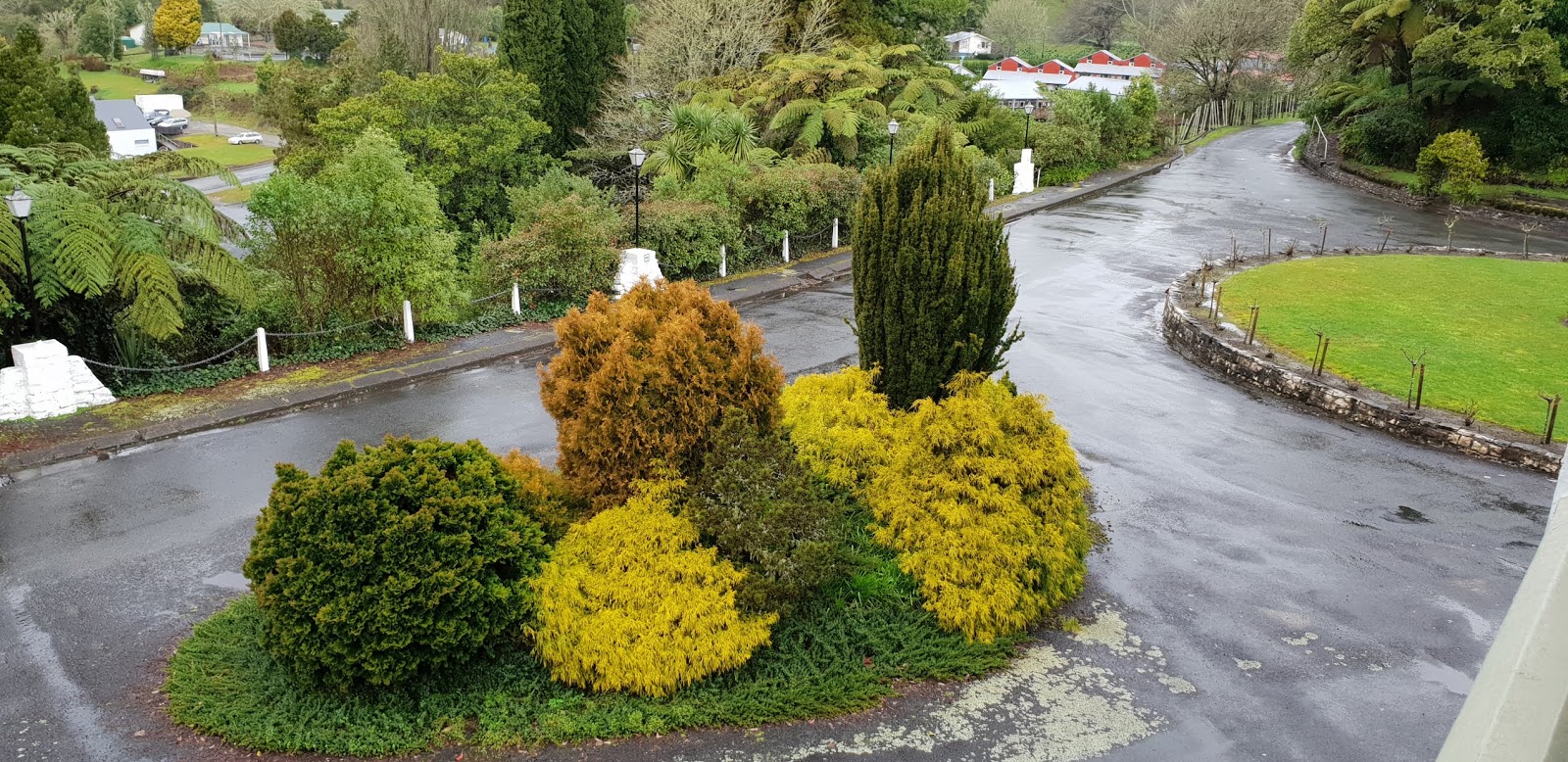
A relatively unassuming lane leads to what could be described as a grand hotel, called Waitomo Caves Hotel.

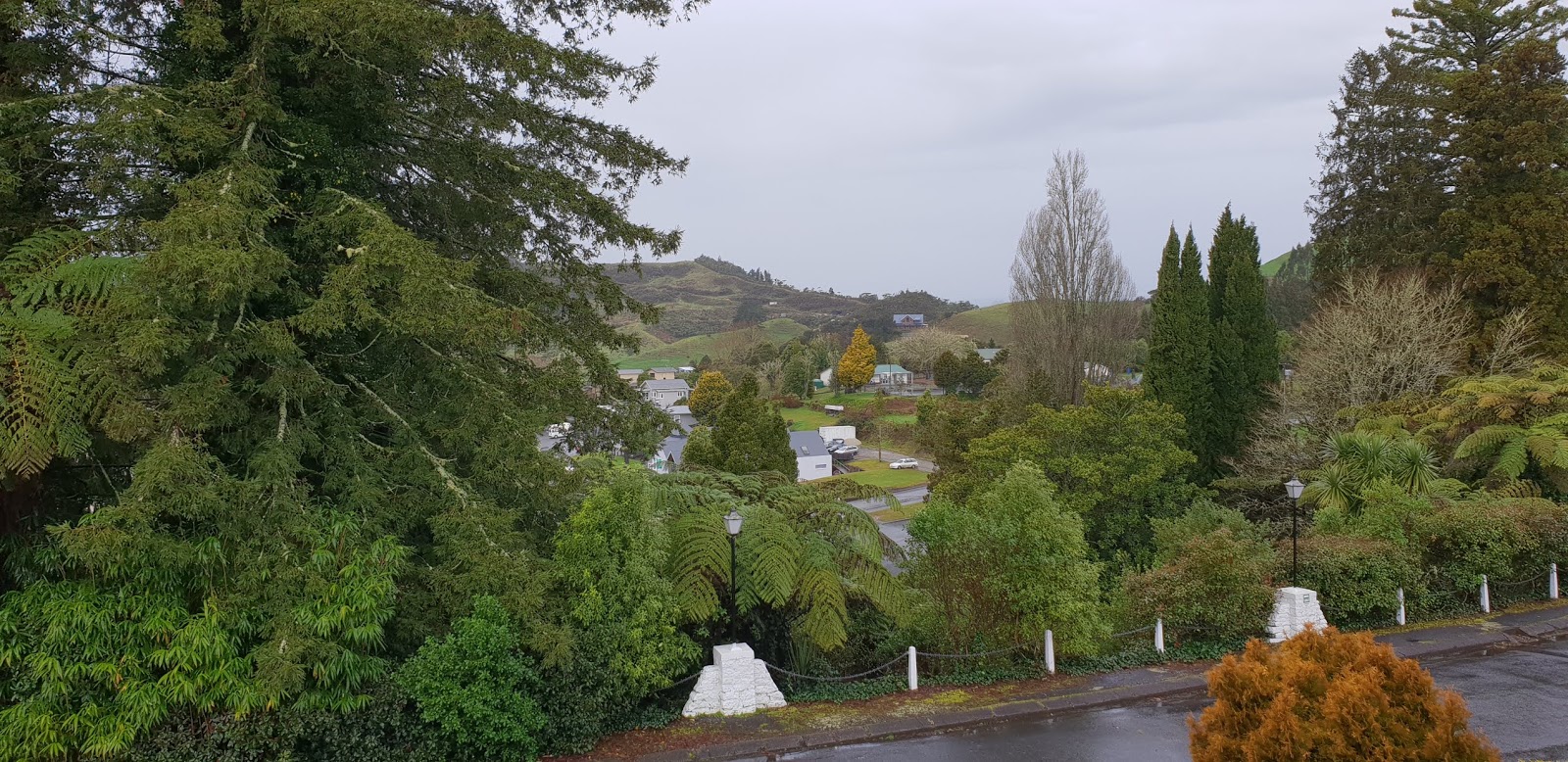
The original hotel was built in 1908, and it was later extended in 1928.  Part of it is ‘Victorian’, based on an eastern Europe mountain chalet, and part of it is ‘Art Deco’, the concrete wing, and a feature, if it could be called that, is none of the four corners are the same.

Views from the balcony show part of the surrounding gardens
 

and the town of Waitomo in the distance.
 

In gloomy weather, it does look rather spooky, and I suspect there may be a ghost or two lurking somewhere in the buildings.


But…
 

This a a very interesting, and the words of one of my younger grand daughters, a very creepy place. It would make an excellent base for paranormal activity, and there could very well be ghosts walking the corridors of this hotel.

It has the long darkish passageways that lead in all directions and to almost hidden rooms, a creepy nighttime aspect, and the creaky woodwork.

I know when we were exploring, it was easy to lose your bearings, if not get lost, trying to find certain places, and once found, hard to find your way back.

All in all, it was one of the best stays in a very old place going through the throes of modernisation.

And looking at it from the outside at night, I’ll leave you with that thought…

The cinema of my dreams – Was it just another surveillance job – Episode 49

I’m back home and this story has been sitting on the back burner for a few months, waiting for some more to be written.

The trouble is, there are also other stories to write, and I’m not very good at prioritizing.

But, here we are, a few minutes opened up and it didn’t take long to get back into the groove.

Chasing leads, maybe


Needing to know more about Severin, aka David Westcott trumped talking to Jan.  As it stood, it was difficult to know where her allegiances lay, with Dobbin, her handler, or someone else.

I hailed a cab and headed back to the office.  I wanted to spend some time on the computer, hoping I had enough clearance to poke around in the departmental records, in particular personnel.

Just as the taxi dropped me outside the anonymous sandstone building, my phone rang.  I doubt it would be Severin again.

“Where are you?”

Jan.

“I do actually have a life, despite what you or Dobbin might think.  I’m not sure I really want to have anything to do with you after what I saw you people do to Maury.  Aside from the fact that you told me he had found the tracker and disposed of it.  Once you start telling lies, there’s no going back.”

“I had nothing to do with that.”

“You were holding him for the interrogation squad.  That makes you complicit.  It also makes me very wary about what Dobbin will do to me if he thinks I know anything, which I don’t.”

“As far as I’m aware, all we have to do is find O’Connell.”

“And what?  Torture him too if he doesn’t fess up?  I know he doesn’t have it.  I had him under surveillance the whole time.  I frisked him after he was shot.  What do you know that I don’t?”

“No more than you.”

“Not if you’re suggesting that he’s alive.”  This was an interesting conversation, especially after O’Connell himself told me that Dobbin’s cleaners had come and rescued him, which meant Dobbin definitely knew he was still alive.

The question was, how many lies was she going to tell me.

“You know where O’Connell had his real residence.  When were you going to share that piece in information?”

Silence, then, “How?”

“I saw you there.”

“But…”

I knew what she was going to say, when was I going to share.  When I came back, not intending to find a dead body in the hotel room.

“Had you been in the room when I got back, we were going to have a frank conversation about who you’re working for, but I’ve just had that conversation with Dobbin himself.  No doubt he called you right after he dropped me off.

“He’s not happy.”

“Then that’s on him not trusting people.  You want to have a good hard look at what your options are when we next meet.  I’ll admit I haven’t been doing this very long, but one thing I have learned, is not to trust anyone.

“I suggest we meet up later tonight.  Bear in mind that it will be in an open space for obvious reasons, and quite frankly, I’m not sure how Dobbin thinks this collaboration is going to work.  I’ll text you the place and time.”

It might have been a little unfair to take my concerns about Dobbin out on her.  I’m not sure what I had expected would happen when I took this job on, certainly, the instructors had emphasized that being an agent was very dangerous to our health and that we could, ultimately, trust no one, even those closest to us.  Our world by its very nature was one of mistrust, lies, and deceit, that we would eventually not know who we really were and be doing things we never thought we could.

O’Connell was in the same situation, most likely because people were trying to kill him.  It was a small detail that stuck in the back of my mind.

If Severin and Maury wanted O’Connell alive, and that definitely was the end result of the surveillance operation, to allow the drop then to corral him, why would they have sanctioned his execution in the alley?

In fact, how could they know he would end up in that alley.

The only conclusion I could come up with, Dobbin had put a tracker on him, one that he didn’t know about, and also had surveillance on O’Connell.  It made sense because I was sure there were people in that area that didn’t look like they belonged.

So, a tracker on the USB was being tacked by an unidentified as yet party who no doubt wanted the information themselves, not Severin, and not Dobbin.

I shrugged.  I’m sure there would be more questions before the day was out.

…

© Charles Heath 2020-2022

The A to Z Challenge – M is for – “Murder at the mansion”

My great grandfather used to say the mark of a man was not how wealthy or wise he was, but by how much respect he garnered.

Well, my great grandfather was wealthy, wise, and also respected … by everyone but his children.

It was an interesting tale, oft-told by my father over the dinner table, when we, his children, would bemoan the fact that he was too hard on us.

Like my great grandfather, our father had also made something of himself, took every opportunity afforded him, and made it a success.

Yes, there were failures, like how our mother couldn’t handle the success and virtually abandoned us because of him, like our first stepmother, who hated children, and for a while, virtually turned him against us, setbacks that were eventually overcome.

To the outside world, we always said everything turned out all right, but the reality of it was completely the opposite.  Appearances were just that, appearances.

My eldest brother, John, was out the door as soon as he could escape, and into the military, and from that moment we never really saw him.

Then there was me, Toby, with a name I hated, stuck at home to weather the endless storms, and to look after my youngest sister Ginny, who really didn’t have a care in the world.

I don’t think I ever got to have a childhood.

And lastly, my younger sister, Melanie, the tearaway tomboy troublemaker, a devil in disguise, that was responsible for ten nannies in twelve years.

We were as disparate and different as any group of siblings could get, and that was all because of how, in the end, our father finished up exactly like the man he often disparaged, our great grandfather.

Wealthy, yes, wise, the jury was still out in that one, and respected, yes, by everyone but his children.

And, now, I was looking at the body of the man I called my father, sprawled out on the floor, and it was quite plain to see he was dead.

There was no mistaking the bullet hole in his head, Or the puddle of blood emanating from the back of his head.

Someone, obviously, hated him more than we did.

…

I was surprisingly calm in the face of such a calamity, faring better than Ginny, who was the first to discover him.

She was once subject to bouts of hysteria, and that it had not happened in these circumstances was, in a sense disconcerting.  She had reason to hate him more than the rest of us, the reasons for which I had only learned the night before.

She was sitting on the floor, not ten feet from the body, staring at what she had described as the devil incarnate.  She had every reason to kill him, in fact, I had wanted to myself when she told me.

And when confronted him and demanded to know the truth, he had laughed at me, telling me that it was just a figment of her imagination.

I had to call the police, but before that, I needed to have a clear idea of where everyone was. 

It was a weekend where, for the first time in twenty years, all four siblings were home.  It was ostensibly for an announcement regarding the family, read how my father was going to bequeath his worldly possessions in the event of his death.

And I suspect, to tell us about the fact he was dying, the running battle he had with cancer finally getting a stranglehold in his body, and that he had about six weeks to three months left.

Not that he had said anything, I had received an anonymous email from his doctor telling me, that he didn’t believe we should not be kept in the dark.  But it was not the news I’d shared with the others, hoping the man himself would.

That secret had died with him.

John and Melanie had both yet to put in an appearance.  It had been a late night, and we had all ended up in John’s room, drinking shots of whiskey and talking about how different our lives had been, and how it had been too long apart.

I’d been very drunk at the end and barely made it back to my room before collapsing on the bed.  I had no idea what happened to the others.

Ginny didn’t drink, or so she said, but the few drinks she had, had no effect on her.  She had Bern in a dark mood and no wonder.  She had left all of us in utter silence, devastated at the revelation our father was a monster, the reason why our mother left, unable to do anything to stop him.

She should have taken Ginny with her, but she didn’t, probably saving Melanie from a similar fate.

Threats against his life flew thick and fast, and the once made by John actuary sent a shiver down my spine.  He was the only one experienced in killing, and I could totally believe he could kill in cold blood and not even blink.

Had he?

“Fuck!”

Great timing.  John just walked into the room, still in his pajamas and looking disheveled, as if he had just fought off a pack of bears.

“This your doing?”

“What?  No.  Saying and doing are two different things, Toby.”  He looked down at Ginny.  “Ask her, she had more reason than any of us.”

I was going to, but she seemed in a catatonic state.

“No.  I did not, and believe me, I’ve wanted to for many years.”

Ginny, obviously not in a catatonic state.

“Have you called the police,” he asked.

“Not yet.”

“Good.  Let’s think about this first.  Any sign of a breaking?”

I checked the French windows behind the desk and they were intact and locked.  The room, other than the body on the floor was as it always was.

Not a book or paper out of place.  The desk was clear.  Usually, there was a computer and cell phone on it.

“His laptop is missing.  A robbery gone bad?”

“Robbers don’t usually carry guns, let alone be able to shoot so accurately.”  He was standing over the body making strange body movements, then, “whoever shot him was behind the desk.  He must have heard something and came to investigate.”

If it was any time up to the fifty shots of whiskey, we would have heard a gun going off.

“Silencer?” I said.

“I’m a light sleeper, so I would have heard it.  Others too. It screams premeditation.  Robbers don’t bring guns with suppressors.  If it was a case of being caught unawares, that shot could have gone anywhere.  No, whoever was in her was looking for, maybe found, something, and may have made enough noise to get his attention with the intention of killing him.”

“Holy Mary mother of God!”

Melanie just arrived, riveted to the spot, just inside the door.

“I take it you didn’t do it?” John said to her.

“Me?  You have to be joking.  I wouldn’t know what end of the gun to use.”

Not true, I thought, Melanie was in the gun club at her exclusive school and won various awards for pistol shooting, and we’ll as an expert clay pigeon shooter to boot.  But it was school days, a long time ago.

I looked at her pointedly, and I think she realized what my glare implied.

“I think it’s time we called the police,” I said.

“Can’t we just dig a hole and bring him out there somewhere and pretend he’s gone away?”

“A thought, but not practical, unless one of us did it and we need to hide the evidence.  Anyone going to own up?”

No one spoke.

“Good.  Just remember from this point on, if you have any deep dark secrets, they won’t be for much longer.  We will be the prime suspects.  Leaving isn’t an option.”

“Let the chips fall where they may.  At least the bastard got what he deserved.

I pulled out my phone.

“Last chance.”

John was looking resolute.  Melanie was in a state of shock.  Ginnie went back to being almost catatonic.  I don’t know what I felt, sad, maybe, but with all that had come before, perhaps a sense of relief.

I dialled the number.

“Daisy.  No, I’m alright.  We have a bit of a problem here.  Someone has shot and killed my father.  I think you’d better get here.”

“Right.  Don’t touch anything and keep the scene clear.  I’ll be there as soon as possible.”

I disconnected the call and put the phone back in my pocket. 

At that same moment, I had a great overwhelming feeling that one of them did it.  I couldn’t see how anyone from the outside could or would.

As John said, let the child fall where they may.

“OK.  Daisy wants us out of the room.  Let’s go.”  I said, helping Ginnie up from the floor

“Daisy?  She that girl you were pining over back in elementary school?” John muttered.

“Married her too.  Deputy sheriff now, so be a good boy.  And don’t think our relationship will make this any easier.”

As I closed the door to the office and turned the key in the lock, I could hear the sirens in the distance.

The die, as the saying goes, was cast.


© Charles Heath 2022