**Please don’t assume that you have to, nor would I ever expect you to, read any or all of these books. You don’t.**
Everyone, it seems, will publish what they call the top 100 books that you should read. Some are voted on, some belong to the opinion of the editor of the book review section of a newspaper, and, as you know, there are a lot of newspapers, a lot of editors, and a lot of opinions.
I’m not a newspaper, I’m not an editor, but I have a list, based on personal experience, and many, many years of reading.
It’s in no particular order.
The Life and Opinions of Tristram Shandy, Gentleman by Laurence Sterne. Don’t ask me why but I found this an interesting slice of life in England in the 1700s
Vanity Fair by William Thackeray. I met a direct descendant of him in England on a research visit which fuelled an interest in the book. Another large tome recently brought to life by the mini-series on television.
The Moonstone by Wilkie Collins. Arguably the first detective novel, it was fuel for the imagination of any budding detective novel author. He also wrote The Woman in White.
Middlemarch by George Eliot, a remarkable novel, and famous for the fact it was written by a woman who thought it was best to use a male name in order to get recognition.
Any of the Sherlock Holmes stories by Arthur Conan Doyle
New Grub Street by George Gissing, very, very gritty
The Thirty-Nine Steps by John Buchan, another of those incredibly well-written spy stories
A Passage to India by E.M. Forster, a novel that brings up the subject of the British Empire
The Great Gatsby by F. Scott Fitgerald, a story from the jazz age and the mysterious Jay Gatsby whom no one could figure out
The Maltese Falcon by Dashiell Hammett, one of the few books that opened up the world of the Private Detective, and fostered a brilliant movie with Humprey Bogart as Sam Spade.
The Big Sleep by Raymond Chandler, the author who introduced us to Philip Marlowe, with two definitive characterizations by Humprey Bogart and Robert Mitchum
The Grapes of Wrath by John Steinbeck, the classic about a family in the Great Depression, and my first introduction to Henry Fonda in the movie version of the book
To Kill a Mockingbird by Harper Lee. I had to read this when I was at school and probably a time when I didn’t understand it’s importance. Seeing the film with Gregory Peck much later helped.
Catch 22 by Joseph Heller. A friend recommended this and after I read it, I wondered what the hell it was about. Only now do I understand it’s anti-war undertones
Far from the Madding Crowd by Thomas Hardy was the novel that introduced me to Hardy
Rural Rides by William Cobbett is a slice of life in the southern English countryside in the 1800s
Pride and Prejudice by Jane Austen, the first book of hers I read and found it fascinating. Of course, when Mr. Darcy was brought to life in the television series, it found a whole new generation of readers
Great Expectations by Charles Dickens, the remarkable story of Pip, Miss Havisham, and the mysterious benefactor
Fahrenheit 451 by Ray Bradbury, apparently the temperature that paper burns, but this is more about Guy Montag and the saving of books rather than burning them
Madame Bovary by Gustave Flaubert, probably the most depressing novel I’ve ever read, about a woman married to a mediocre doctor and seeks to escape to a fantasy world that leads to disappointment and devastating consequences
Every time I close my eyes, I see something different.
I’d like to think the cinema of my dreams is playing a double feature but it’s a bit like a comedy cartoon night on Fox.
But these dreams are nothing to laugh about.
Once again there’s a new installment of an old feature, and we’re back on the treasure hunt.
The expression of Boggs’s face told me he was down here for a reason, and that assumption was proved correct when he started walking towards the middle of the first row of carpark.
He stopped at a pylon, surrounded by concrete blocks, tiles and broken bricks that looked like they’d been deliberately piled there. Light on, he went around the back and emerged with a coil of rope.
I knew then what his intention was.
“You not going down there. That’s too dangerous.”
“It was, once. Not anymore.” He tied one end to the pylon and then unraveled it as he approached me, then three the remainder over the edge.
I watched it fall, reaching the bottom, conveniently over a rock. The section that was over the side was knotted at intervals. Anti-slip knots. He had come prepared. OR had come earlier to prepare for this.
“You’ve been here before.”
“Several times. I was looking for a way to get down to below the second level carpark and would have found this wall had those overzealous security guards not come down at the wrong moment. Aside from that, I had to wait to do this with you, just in case there was a problem.”
“What sort of a problem?”
I think his definition of a problem was a lot different from mine. This whole scenario was a problem. Was he thinking we could get down, take a look at whatever he was looking for, then get back up again?
“The guards might come back while I’m down there. I might need you to pull me back up. I don’t know, anything could go wrong.”
“And yet you still intend to do it?”
“Of course.”
He had a second rope, thinner, that I hadn’t seen till the other went over the side. He tied that around his waist, pulled on it a few times to check the strength of the knot, then looked over the side.
To me, 30 feet looked like 30 miles.
“Wish me luck.”
I simply shook my head and took the rope when he handed it to me, then, after a minute. Perhaps saying a silent prayer, he went over the side, hanging grimly onto the rope.
“Keep your phone handy. I may have to call you.”
Then he was gone. It took a minute for me to gather the courage to look over the side again, and by that time, he was almost to the rock. Two more knots, I saw his feet touch down. There was no moss on it, and it looked worn smooth from a lot of water over a long period.
He looked up at me. “It’s like a huge cave.” Phone in hand, he disappeared under the carpark floor.
A closer look at the gap he had just walked through looked like it once had a wall there, but it had been broken away, leaving only the skeleton of reinforcing steel under to floor lip. There were also traces of the reinforcement anchors drilled into the rock below. It was obvious the force of the water had built up like flooding into a dam, and if the pressure was too much, the dam wall broke.
Well, that was never meant to be a dam, just a retaining wall for filling upon which the bottom carpark was built.
I think we could now positively identify this site as one of the two rivers that had existed back when the pirates worked this part of the coast.
Boggs was gone for about half an hour, so I found a spot to sit down and wait. He signaled me by yanking on the rope.
I stood up by the edge and pulled the rope in as he came back up, then, after a few minutes, he clambered over the side.
“We have to get going,” he said. “I think we can safely say this is the first of the rivers.”
He untied the rope around his waist, pulled the knotted rope up, coiled them and put them back behind the pylon.
As we headed back up to the mall level, he said, “I took some pictures of the body in the water. It looked like someone had tossed a mannequin in there, perhaps back before they sealed off the parking area. That’s only been there for a few years, judging by the rust on the latch, and hinges.”
“And down in the cave-like area?”
“The river, now only a stream, but running water none the less. Where it goes from there to the ocean, is not necessarily a requirement to discover. I thought it fed the marina pool directly, but it doesn’t. They actually have a pump house and pumped the water into the pool which is why it had to be treated to keep it clean.”
So that was the odd smell that came from it. It had been a constant battle to keep the water clean and fresh and keep the fish in it from dying. There had also seemed like a child screaming at the sight of a dead fish floating among the water lilies.
Approaching the pond we both heard what sounded like a brick dropping on the floor, and turned to look behind us. It was like peering into the gloom of a foggy night.
Boggs shrugged. “Must be a ghost.” Then he kept on walking.
I might have agreed with him, by back at the stairs where we had just come from, I thought I saw a splash of bright yellow move very quickly out of sight. It could have been my imagination, but I also thought I saw a light for a second before it was extinguished.
Ghosts didn’t carry lights. Someone else was down here, perhaps kids exploring. Despite the hazard signs, that meant little to kids who had nothing better to do.
I waited for a minute so so, until Boggs flashed his light in my direction, and asked, “You coming?”
There was no more movement, so it had to be my overactive imagination at work again.
“Yep, coming.” I ran to catch up.
We quickly passed the pond and overgrown garden and made it back to the hole in the wall, with an hour to spare before I had to get to the warehouse and start my shift.
“Did you find what you’re looking for?”
“Yes. We’re on the right track. Next, we have to find the other river.”
We made it back to the bikes and headed back towards the town. On the way, we were overtaken by a van with Benderby Security Services on the side of it, going too fast, and nearly knocked both Boggs and me off our bikes.
In the struggle to stay on the bike, I happened to see the man on the passenger side. It was one of the two men who had been down by the pond, earlier. If there were any bodies down there, they belonged to Benderby. Good to know.
Don’t get me wrong, I loved my brothers and sister, but I can now only take them in small doses.
You know how it is growing up, always fighting for your own space, having to live with their idiosyncrasies, getting blamed for stuff you never did.
I never got to have a room of my own, always sharing with the other middle brother, James, whereas the eldest brother had his own room, and by necessity, our youngest sister.
They too got the first-class education where James and I were shuffled off to trade school, which James always said was a hop, step and jump from prison.
Coincidentally, James and I were the first to leave home as soon as it was possible. WE had to earn a living and pay rent, whereas the other two were being nurtured through school, and life.
It was the school of hard knocks for us.
…
Over the years we all drifted in and out of each other’s lives. We also drifted, at one time or another all over the world, and later, all over the country.
Because of this, only seminal events brought us back together, and even then, those moments were few and fleeting, and not looked upon with fondness. We were not the typical family.
When the time came for each to marry, at varying times of our lives, each would be there at the event. Keeping up with each other was a task for social media, and there we learned of children, divorces, affairs, and disasters.
But there was one defining event that finally shook up our collective trees of life; the death of our parents. Whilst none of the children were particularly close, it seemed to fall upon Janine, the daughter, to look after them.
And, when they were killed unexpectedly in a car crash, it was she who delivered the bad news, and issue the invitation to return home for the funerals.
It was sad, yes, but not as much as it should be for a child. For me, I had spent years hating them for perceived wrongs perpetrated, not getting the same treatment as eldest and youngest siblings, not getting the financial support when requested, and not getting a visit, even if it was only once a year.
So, when I read about their deaths, it saddened me, but I hadn’t seen them for a half dozen years, and had almost forgotten they existed. Yes, I should have made more of an effort to go see them, introduce them to their grandchildren, but I didn’t.
…
It was a completely different situation with Sally’s parents. There were a close-knit family who, whilst also had the monetary and space constraints as we had, and with more members of the family to contend with, they seemed to make it work without fear or favouritism.
She had only recently met each of my siblings in person, simply because of the fact we were getting older, and reasons for coming together more urgent, well, for the others, anyway. And that Sally had put her foot down and demanded we make an effort to see them.
“So, you are going to the funeral, all of us this time I hope.” I had just shown her the missive sent by my sister, Janine, proclaiming the sad news, not being surprised yet again at the coldness that ran between the members of my family.
She had been disappointed at my indifference, even when I explained the circumstances, and how that coldness had begun and festered throughout our lives. For one who had never been in that situation, it was hard to explain, or understand. Not when comparing it to her own situation.
“If you want.” I was going to make the excuse that my work would not allow the time off, but that would only be because of me, not them. I had used it before, and Sally had realised eventually what I was doing. It wouldn’t work this time.
“We should. They were, after all, your parents, and like it or not, they did give you your start in life. I’ve no doubt they did the best they could.”
Sally always saw the best in people, though with my parents, they did leave her somewhat perplexed at times. The same went for Jeremy, the eldest brother, and his indifference. He was our father reincarnated, and his wife, Lucy, was very much like our mother, perpetually suffering from disdain.
“You had to be there,” was all I would say in my defence.
It was a statement I used often to explain away their indifference. I wanted to believe they had done the best they could, but they could have done better. I hesitate to use the word selfish, but they had been, putting their needs before us.
Even in death, I could still feel the resentment.
“Do you want me to make the arrangements?” She always did, and if she had not, perhaps she might never meet my parents, or my brothers and sister.
“That might be best. You know what I’m like.”
I didn’t hear her reply, but I knew what it would be. A frown and muttering under her breath. She knew what I was like, and still married me, much to the disdain of my eldest brother, Jeremy, who had said to her, a day before the wedding, she still had time to change her mind.
He hadn’t endeared himself that day, or any of the days since.
…
For Alison and Ben, the two children that were never going to be anything like my siblings, it was an adventure. We rarely travelled far from home for holidays. Preferring to spend it with Sally’s parents at their summer house, big enough to fit everyone, what I would have called a boarding house. It was near a lake and was the closest thing to a summer camp as I would get.
Going over in the plane, Sally had banished me to an aisle seat one row behind them. I suspect that was to give me some mental preparation time, but more likely to consider the lecture she’d given me at the airport about me being more proactive in being nice to my family.
It was time to stop playing the forgotten child routine, and to start behaving like I had a family and simply accept them despite their idiosyncrasies. She was right, of course, as she always was, and todays, of all days, it made me wonder what is was she saw in me.
Off the plane, the first surprise was waiting in arrivals. Sally. Holding a sign much like a chauffeur would. Apparently, she had arranged transport. The second surprise was Sally and Janine together, like they were old friends. I was guessing Sally and Janine had had long conversations over the funeral arrangements.
She also liked Janine, even though she lived in a different world. Janine had never married, had a job that paid squillions of dollars, and lived in a mansion, one my children described as a castle, it had so many rooms.
Then, after the hugs, and the smiles, she saw me, the wet blanket.
“Tom.”
“Janine.”
“You can give me a hug you know.”
I could feel Sally’s eyes burning a hole in me. Hug it was. It was a first, and oddly, rather than consider it was waste of time, it gave me a strange set of emotions.
Then the moment passed.
“You look well.”
“That you can thank Sally for. Left to my own devices, I’d probably be a basket case now.”
“Who’s to say you not, still.” Sally gave me the critical eye, and it was a warning shot across the bows. Behave or else.
We followed Janine out of the terminal building to a parking lot where limousines were parked. She had got us a stretched limousine. Wherever we were going, it was going to be in style.
Sally told me at some point that when she had suggested we stay in a hotel, Janine would not hear of it. She said she lived in what was tantamount to a mausoleum, and there was plenty of room for us. And the rest of the family.
It seemed that she had been very successful in inventing something that everyone needed, and, when she described it, it made sense. Holding the patent and licensing people to manufacture it had made her very wealthy indeed.
Somehow, I’d missed that aspect of her life, though my impression of her, with her education and cleverness, she earned squillions. I was practically right.
What was also explained to me, because I had remarked on how well Sally and Janine got along, and that couldn’t have developed in the last few days while arranging thw funeral visit, it transpired the two had met once of twice when Sally was over this side of the country for seminars, and the two regularly emailed each other.
No sense, Sally said, for her to shun my sister as I had.
Once it might had annoyed me that she would do something like that, but it made sense that Sally would want to know Janine, at the very least, better despite how I painted her. She may have tried with the other two, but I knew Jeremy would strike out the first time she spoke to him, and James was hard enough for anyone to find, let alone his family. I’d tried, and he had disappeared. Not even Janine knew, at that moment in time, where he was.
Jeremy, unfortunately, we would see later.
It was also apparent that once we reached the mausoleum, that I was supposed to go and have a chat with Janine, family stuff she said, and Sally was happy to move into, and unpack, then get the cook to make the children a meal.
…
We went into a room that Janine called her office.
It was a large wood panelled room with a lot of shelving and a huge number of books. My only remark, that she could not have read them all. It was a little churlish and elicited a grimace.
Janine was not going to put up with my nonsense and was well aware of my attitude from discussions with Sally. It led to her first statement, soon after we sat in very comfortable leather chairs, in front of a window that looked out over a rose garden.
I was counting staff by then, a housekeeper, a cook, a young woman who was there as a waitress, a maid who showed Sally and the children to their rooms upstairs, and outside two gardeners. It was no surprise then the limousine was hers, and the man who drove it, ger chauffeur.
She lived a very different lifestyle than I did.
“I can see that look on your face where you are judging me, and you shouldn’t. You might think you were badly done by, but I’ll let you into a secret, you got the better deal. Not that I’ll defend Jeremy, but in my case, I had a hell of a lot of expectation dumped on my shoulders. You got to swan off and live your life without a care in the world, and I can see you have made all the right decisions, and got everything I could only have hoped for. I have no husband, nor boyfriend, and any I did didn’t last long because my focus was on work and success, instead of happiness. So, yes I have a big house and a lot of money, and people running around doing my bidding, but I have no one to share it with, and no one to pass it onto.”
“Yet.” It was a noble speech, and I’m sure she felt the loneliness of it all. I was going to say she had a choice, just as I had, but somehow it didn’t seem appropriate.
Certainly, I didn’t feel the same way about her as I had before I came of this odyssey, and that in itself may for some be something of a revelation. That hug she had given me at the airport, and the feelings it conveys almost confused me, and most likely would have frightened me if I had not had Sally.
For some reason, now, it was going to be impossible to have the same feelings, or feelings of resentment, I once had.
“There are things you need to know, Tom. The first is that I am not long for this earth. I have about a year, two at the most, the news of which I received about an hour after the police called to tell my our parents had been killed in a car crash.”
“I’m sorry to hear that.”
It was bad news for anyone to learn, but on top of the news of our parents, I couldn’t imagine what that was like.
“The second is that our mother had been diagnosed with the same condition, about two years ago, and didn’t tell anyone. Maybe she thought she was protecting me from the possibility it would happen to me, but we both know she was selfish and inconsiderate at the best of times. Believe me when I tell you we had some incredible rows over the years. And no, I was not a daddy’s girl so I got no support or help in dealing with her truculence.”
I could just imagine our mother giving Janine hell. And in that same thought, how sad it was to have saddled Janine with all of that responsibility. I knew Jeremy hadn’t been any sort of help in regard to both parents, and James was not to be found. I really had no excuse, and I had to admit that some of my father’s selfishness had rubbed off on me too.
“You should have told me, or told Sally to tell me.”
“You would not have been in a receptive frame of mind, not then. But now, I can see you’ve turned a corner, just being here. You could have declined to come, I know now of the hurt our mother and father in particular had inflicted on both you and James, because in their declining years, they eventually turned on both Jeremy and I. Jeremy didn’t cope very well, and did what you did, just went away, leaving me to deal with it. I’m not blaming you, not do I blame you for leaving, I truly understand why. It’s just a pity we didn’t have conversation years ago, because now we’re going to miss on so much in the little time we do have.”
The pity of it was there was nothing I could do now to get that back. But going forward, I was not sure what I could do to make it up to her. And I said as much, and it sounded a lot better in my head than out loud.
“Well, there is something you can do. It’s a funny story, though I believe you will not get a laugh out of it. The third thing is that I am the executor of their wills. Against my advice, and probably something our mother was not fully cognisant of, was a desire for my father to take her on one last road trip. The doctors had decreed due to her worsening condition she would have to go into managed care. He took her to Las Vegas, of all places. The thing is the day they left, mother decided to play this jackpot poker machine, and won the jackpot. I didn’t discover this until the Casino rang me, though how they got my phone number is still a mystery, to tell they hadn’t cashed the check. They were on the road out of Vegas when a truck hit them head on. It wasn’t really an accident, according to the police. They said the truck driver said our father had driven straight at him. I have no reason to disbelieve him.
“He deliberately wanted them both to die?”
“Yes. He had said more than once that he didn’t want to live without her, so I think it was his plan to spend a few days together while she was still cognizant, and then end it. I have no doubt she knew what he was planning to do, and had agreed it was the best way to end the pain and suffering.”
It certainly sounded something he would do. They never regarded the feelings of anyone else in any of the decisions they made. I was going to make a comment, but it seemed moot. They were dead now, and they had gone out on their own terms.
“The truck driver?” I had to spare a thought for him, because they would not have.
“Relatively unharmed, just shaken. And the shock that someone would do that. I met him and apologised, but it seemed not enough recompense for the suffering they caused him. Anyway, I asked the police if they had found a check in the remnants of the car, but given the state of it, it was not surprising they didn’t so I asked the casino to cancel it and write a new one.”
She reached out and picked up a folder on the table between he chairs, and took out a slip of paper and handed it to me.
A check made out to our parents.
For eighty-seven million dollars, and change.
I looked at her, quite literally astonished. “This is ridiculous.”
“What it is, is a sign from the heavens that will give me an opportunity I might not have been granted otherwise. I want you to come home, and spend the last months of my life here with me, and make up for the time we have lost. I know both you and Sally have jobs back home, but that check, your share of it, will make the decision a little easier to make.”
“Does Sally know about this?”
“Only that I’m going to die sooner rather than later, and that she was waiting until you came here before talking to you about what to do. She said it would be better coming from me, not her, because of how things are in the family. I’ll be honest with you, Tom, I was prepared to come to you to plead my case before our parents did what they did because there’s no one else I would want to spend what precious little time I have left.”
I knew now why I’d felt such intense feelings earlier at the airport. It had been a sixth sense, that something was terribly wrong. And she was right, what time she had should be spent with family, those values I had come to terms with being with Sally. It was the right thing to do, but it was not wholly my decision. There were ramifications of uprooting our lives back home, including the sacrifices Sally would have to make.
“Have you told Jeremy?”
“God, no. He’d be a total ass about it, saying I was trying to steal the limelight and making it all about me. We can tell him when it’s too late for him to make any comment at all.”
“And James?”
“We’ll find him. I have resources available that you can only imagine exist.”
I believed her.
“Then I guess I should go and find Sally and see what she has to say about it. And I guess I should apologise for being such an ass all these years.”
“No need. In a way I envy you, always have.”
“You have no reason to. I never made anything of myself, not like you have.”
“You’re wrong if you think that. You have an amazing partner, two beautiful children, and you have provided for them, and look after them in a manner in which I can only dream about. It’s not about money, or possessions, or anything like what you see I have, because when it comes down to it, all that matters is the people around you. That, unfortunately, was the legacy our parents gave us and it was wrong.”
She stood, “Let us not dwell on the past, but brace ourselves for the impending crash landing of the one and only Jeremy. I have some very good champagne chilling at the bar, and we’re going to need fortification, if not Dutch courage before the monster arrives.”
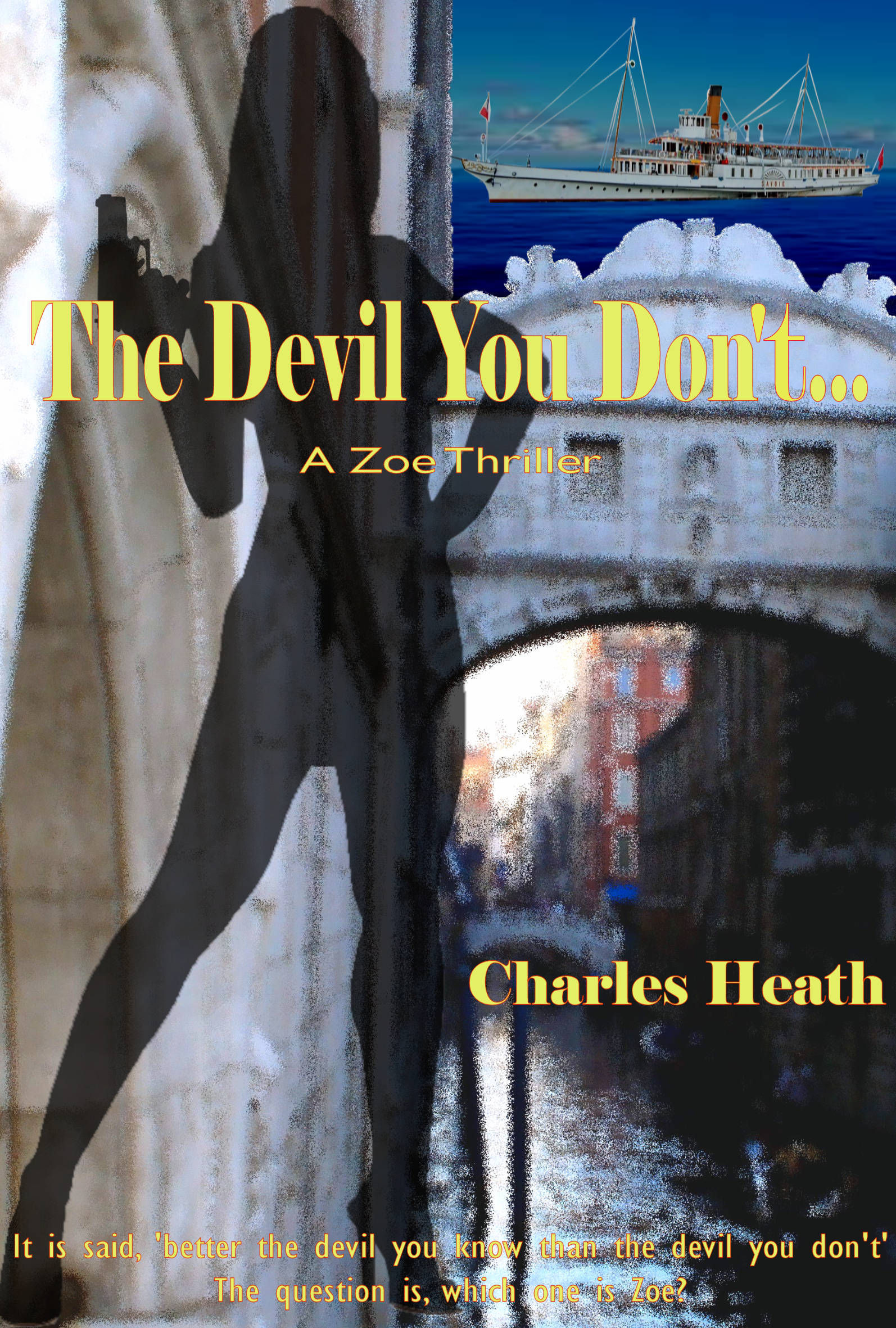
It could be said that of all the women one could meet, whether contrived or by sheer luck, what are the odds it would turn out to be the woman who was being paid a very large sum to kill you.
John Pennington is a man who may be lucky in business, but not so lucky in love. He has just broken up with Phillipa Sternhaven, the woman he thought was the one, but relatives and circumstances, and perhaps because she was a ‘princess’, may also have contributed to the end result.
So, what do you do when you are heartbroken?
That is a story that slowly unfolds, from the first meeting with his nemesis on Lake Geneva, all the way to a hotel room in Sorrento, where he learns the shattering truth.
What should have been a high turns out to be something else entirely, and from that point every thing goes to hell in a handbasket.
He suddenly realises his so-called friend Sebastian has not exactly told him the truth about a small job he asked him to do, the woman he is falling in love with is not quite who she says she is, and he is caught in the middle of a war between two men who consider people becoming collateral damage as part of their business.
The story paints the characters cleverly displaying all their flaws and weaknesses. The locations add to the story at times taking me back down memory lane, especially to Venice where in those back streets I confess it’s not all that hard to get lost.
All in all a thoroughly entertaining story with, for once, a satisfying end.
The odds of any one of us having a doppelganger are quite high. Whether or not you got to meet him or her, or be confronted by them was significantly lower. Except of course, unless you are a celebrity.
It was a phenomenon remarkable only for the fact, at times, certain high profile people, notorious or not, had doubles if only to put off enemies or the general public. Sometimes we see people in the street, people who look like someone we knew, and made the mistake of approaching them like a long lost friend, only to discover an embarrassed individual desperately trying to get away for what they perceive is a stalker or worse.
And then sometimes in is a picture that looms up on a TV screen, an almost exact likeness of you. At first you are fascinated, and then according to the circumstances, and narrative that is attached to that picture, either flattered or horrified.
For me one turned to the other when I saw an almost likeness of me flash up on the screen when I turned the TV on in my room. What looked to be my photo, with only minor differences, was in the corner of the screen, the news reader speaking in rapid Italian, so fast I could only translate every second or third word.
But the one word I did recognize was murder. The photo of the man up on the screen was the subject of an extensive manhunt. The crime, murder of woman in the very same hotel I was staying, and it was being played out live several floors above me. The gist of the story, the woman had been seen with, and staying with the man who was my double, and, less than an hour ago, the body had been discovered by a chambermaid.
The killer, the announcer said, was believed to be still in the hotel because the woman had died shortly before she had been discovered.
I watched, at first fascinated at that I was seeing. I guess I should have been horrified, but at that moment it didn’t register that I might be mistaken for that man.
Not until an another five minutes had passed, and I was watching the police in full riot gear, with a camera crew following behind, coming up a passage towards a room. Live action of the arrest of the suspected killer the breathless commentator said.
Then, suddenly, there was a pounding on the door. On the TV screen, plain to see, was the number of my room. I looked through the peep hole and saw an army of police officers. It didn’t take much to realize what had happened. The hotel staff had identified me as the man in the photograph on the TV and called the police.
Horrified wasn’t what I was feeling right then.
It was fear.
My last memory was the door crashing open, the wood splintering, and men rushing into the room, screaming at me, waving guns, and when I put my hands up to defend myself, I heard a gunshot.
And in one very confused and probably near death experience, I thought I saw my mother, and thinking what was she doing in Rome?
…
I was the archetypal nobody.
I lived in a small flat, I drove a nondescript car, had an average job in a low profile travel agency, was single, and currently not involved in a relationship, no children, and according to my workmates, no life.
They were wrong. I was one of those people who preferred their own company, I had a cat, and travelled whenever I could. And I did have a ‘thing’ for Rosalie, one of the reasons why I stayed at the travel agency. I didn’t expect anything to come of it, but one could always hope.
I was both pleased and excited to be going to the conference. It was my first, and the glimpse I had seen of it had whetted my appetite for more information about the nuances of my profession.
Some would say that a travel agent wasn’t much of a job, but to me, it was every bit as demanding as being an accountant or a lawyer. You were providing a customer with a service, and arguably more people needed a travel agent than a lawyer. At least that was what I told myself, as I watched more and more people start using the internet, and our relevance slowly dissipating.
This conference was about countering that trend.
The trip over had been uneventful. I was met at the airport and taken to the hotel where the conference was being held with a number of other delegates who had arrived on the same plane. I had mingled with a number of other delegates at the pre conference get together, including one whose name was Maryanne.
She was an unusual young woman, not the sort that I usually met, because she was the one who was usually surrounded by all the boys, the life of the party. In normal circumstances, I would not have introduced myself to her, but she had approached me. Why did I think that may have been significant? All of this ran through my mind, culminating in the last event on the highlight reel, the door bursting open, men rushing into my room, and then one of the policemen opened fire.
I replayed that last scene again, trying to see the face of my assailant, but it was just a sea of men in battle dress, bullet proof vests and helmets, accompanied by screaming and yelling, some of which I identified as “Get on the floor”.
Then came the shot.
Why ask me to get on the floor if all they were going to do was shoot me. I was putting my hands up at the time, in surrender, not reaching for a weapon.
Then I saw the face again, hovering in the background like a ghost. My mother. Only the hair was different, and her clothes, and then the image was going, perhaps a figment of my imagination brought on by pain killing drugs. I tried to imagine the scene again, but this time it played out, without the image of my mother.
I opened my eyes took stock of my surroundings. What I felt in that exact moment couldn’t be described. I should most likely be dead, the result of a gunshot wound. I guess I should be thankful the shooter hadn’t aimed at anything vital, but that was the only item on the plus side.
I was in a hospital room with a policeman by the door. He was reading a newspaper, and sitting uncomfortably on a small chair. He gave me a quick glance when he heard me move slightly, but didn’t acknowledge me with either a nod, or a greeting, just went back to the paper.
If I still had a police guard, then I was still considered a suspect. What was interesting was that I was not handcuffed to the bed. Perhaps that only happened in TV shows. Or maybe they knew I couldn’t run because my injuries were too serious. Or the guard would shoot me long before my feet hit the floor. I knew the police well enough now to know they would shoot first and ask questions later.
On the physical side, I had a large bandage over the top left corner of my chest, extending over my shoulder. A little poking and prodding determined the bullet had hit somewhere between the top of my rib cage and my shoulder. Nothing vital there, but my arm might be somewhat useless for a while, depending on what the bullet hit on the way in, or through.
It didn’t feel like there were any broken or damaged bones.
That was the good news.
On the other side of the ledger, my mental state, there was only one word that could describe it. Terrified. I was looking at a murder charge and jail time, a lot of it. Murder usually had a long time in jail attached to it.
Whatever had happened, I didn’t do it. I know I didn’t do it, but I had to try and explain this to people who had already made up their minds. I searched my mind for evidence. It was there, but in the confused state brought on by the medication, all I could think about was jail, and the sort of company I was going to have.
I think death would have been preferable.
…
Half an hour later, maybe longer, I was drifting in an out of consciousness, a nurse, or what I thought was a nurse, came into the room. The guard stood, checked her ID card, and then stood by the door.
She came over and stood beside the bed. “How are you?” she asked, first in Italian, and when I pretended I didn’t understand, she asked the same question in accented English.
“Alive, I guess,” I said. “No one has come and told what my condition is yet. You are my first visitor. Can you tell me?”
“Of course. You are very lucky to be alive. You will be fine and make a full recovery. The doctors here are excellent at their work.”
“What happens now?”
“I check you, and then you have a another visitor. He is from the British Embassy I think. But he will have to wait until I have finished my examination.”
I realized then she was a doctor, not a nurse.
…
My second visitor was a man, dressed in a suit the sort of which I associated with the British Civil Service. He was not very old which told me he was probably a recent graduate on his first posting, the junior officer who drew the short straw.
The guard checked his ID but again did not leave the room, sitting back down and going back to his newspaper.
My visitor introduced himself as Alex Jordan from the British Embassy in Rome and that he had been asked by the Ambassador to sort out what he labelled a tricky mess.
For starters, it was good to see that someone cared about what happened to me. But, equally, I knew the mantra, get into trouble overseas, and there is not much we can do to help you. So, after that lengthy introduction, I had to wonder why he was here.
I said, “They think I am an international criminal by the name of Jacob Westerbury, whose picture looks just like me, and apparently for them it is an open and shut case.” I could still hear the fragments of the yelling as the police burst through the door, at the same time telling me to get on the floor with my hands over my head.
“It’s not. They know they’ve got the wrong man, which is why I’m here. There is the issue of what had been described as excessive force, and the fact you were shot had made it an all-round embarrassment for them.”
“Then why are you here? Shouldn’t they be here apologizing?”
“That is why you have another visitor. I only took precedence because I insisted I speak with you first. I have come, basically to ask you for a favour. This situation has afforded us with an opportunity. We would like you to sign the official document which basically indemnifies them against any legal proceedings.”
Curious. What sort of opportunity was he talking about? Was this a matter than could get difficult and I could be charged by the Italian Government, even if I wasn’t guilty, or was it one of those hush hush type deals, you do this for us, we’ll help you out with that. “What sort of opportunity?”
“We want to get our hands on Jacob Westerbury as much as they do. They’ve made a mistake, and we’d like to use that to get custody of him if or when he is arrested in this country. I’m sure you would also like this man brought into custody as soon as possible so you will stop being confused with him. I can only imagine what it was like to be arrested in the manner you were. And I would not blame you if you wanted to get some compensation for what they’ve done. But. There are bigger issues in play here, and you would be doing this for your country.”
I wondered what would happen if I didn’t agree to his proposal. I had to ask, “What if I don’t?”
His expression didn’t change. “I’m sure you are a sensible man Mr Pargeter, who is more than willing to help his country whenever he can. They have agreed to take care of all your hospital expenses, and refund the cost of the Conference, and travel. I’m sure I could also get them to pay for a few days at Capri, or Sorrento if you like, before you go home. What do you say?”
There was only one thing I could say. Wasn’t it treason if you went against your country’s wishes?
“I’m not an unreasonable man, Alex. Go do your deal, and I’ll sign the papers.”
“Good man.”
…
After Alex left, the doctor came back to announce the arrival of a woman, by the way she had announced herself, the publicity officer from the Italian police. When she came into the room, she was not dressed in a uniform.
The doctor left after giving a brief report to the civilian at the door. I understood the gist of it, “The patient has recovered excellently and the wounds are healing as expected. There is no cause for concern.”
That was a relief.
While the doctor was speaking to the civilian, I speculated on who she might be. She was young, not more than thirty, conservatively dressed so an official of some kind, but not necessarily with the police. Did they have prosecutors? I was unfamiliar with the Italian legal system.
She had long wavy black hair and the sort of sultry looks of an Italian movie star, and her presence made me more curious than fearful though I couldn’t say why.
The woman then spoke to the guard, and he reluctantly got up and left the room, closing the door behind him. She checked the door, and then came back towards me, standing at the end of the bed. Now alone, she said, “A few questions before we begin.” Her English was only slightly accented. “Your name is Jack Pargeter?”
I nodded. “Yes.”
“You are in Rome to attend the Travel Agents Conference at the Hilton Hotel?”
“Yes.”
“You attended a preconference introduction on the evening of the 25th, after arriving from London at approximately 4:25 pm.”
“About that time, yes. I know it was about five when the bus came to collect me, and several others, to take us to the hotel.”
She smiled. It was then I noticed she was reading from a small notepad.
“It was ten past five to be precise. The driver had been held up in traffic. We have a number of witnesses who saw you on the plane, on the bus, at the hotel, and with the aid of closed circuit TV we have established you are not the criminal Jacob Westerbury.”
She put her note book back in her bag and then said, “My name is Vicenza Andretti and I am with the prosecutor’s office. I am here to formally apologize for the situation that can only be described as a case of mistaken identity. I assure you it is not the habit of our police officers to shoot people unless they have a very strong reason for doing so. I understand that in the confusion of the arrest one of our officers accidentally discharged his weapon. We are undergoing a very thorough investigation into the circumstances of this event.”
I was not sure why, but between the time I had spoken to the embassy official and now, something about letting them off so easily was bugging me. I could see why they had sent her. It would be difficult to be angry or annoyed with her.
But I was annoyed.
“Do you often send a whole squad of trigger happy riot police to arrest a single man?” It came out harsher than I intended.
“My men believed they were dealing with a dangerous criminal.”
“Do I look like a dangerous criminal?” And then I realized if it was mistaken identity, the answer would be yes.
She saw the look on my face, and said quietly, “I think you know the answer to that question, Mr. Pargeter.”
“Well, it was overkill.”
“As I said, we are very sorry for the circumstances you now find yourself in. You must understand that we honestly believed we were dealing with an armed and dangerous murderer, and we were acting within our mandate. My department will cover your medical expenses, and any other amounts for the inconvenience this has caused you. I believe you were attending a conference at your hotel. I am very sorry but given the medical circumstances you have, you will have to remain here for a few more days.”
“I guess, then, I should thank you for not killing me.”
Her expression told me that was not the best thing I could have said in the circumstances.
“I mean, I should thank you for the hospital and the care. But a question or two of my own. May I?”
She nodded.
“Did you catch this Jacob Westerbury character?”
“No. In the confusion created by your arrest he escaped. Once we realized we had made a mistake and reviewed the close circuit TV, we tracked him leaving by a rear exit.”
“Are you sure it was one of your men who shot me?”
I watched as her expression changed, to one of surprise.
“You don’t think it was one of my men?”
“Oddly enough no. But don’t ask me why.”
“It is very interesting that you should say that, because in our initial investigation, it appeared none of our officer’s weapons had been discharged. A forensic investigation into the bullet tells us it was one that is used in our weapons, but…”
I could see their dilemma.
“Have you any enemies that would want to shoot you Mr Pargeter?”
That was absurd because I had no enemies, at least none that I knew of, much less anyone who would want me dead.
“Not that I’m aware of.”
“Then it is strange, and will perhaps remain a mystery. I will let you know if anything more is revealed in our investigation.”
She took an envelope out of her briefcase and opened it, pulling out several sheets of paper.
I knew what it was. A verbal apology was one thing, but a signed waiver would cover them legally. They had sent a pretty girl to charm me. Perhaps using anyone else it would not have worked. There was potential for a huge litigation payout here, and someone more ruthless would jump at the chance of making a few million out of the Italian Government.
“We need a signature on this document,” she said.
“Absolving you of any wrong doing?”
“I have apologized. We will take whatever measures are required for your comfort after this event. We are accepting responsibility for our actions, and are being reasonable.”
They were. I took the pen from her and signed the documents.
“You couldn’t add dinner with you on that list of benefits?” No harm in asking.
“I am unfortunately unavailable.”
I smiled. “It wasn’t a request for a date, just dinner. You can tell me about Rome, as only a resident can. Please.”
She looked me up and down, searching for the ulterior motive. When she couldn’t find one, she said, “We shall see once the hospital discharges you in a few days.”
“Then I’ll pencil you in?”
She looked at me quizzically. “What is this pencil me in?”
“It’s an English colloquialism. It means maybe. As when you write something in pencil, it is easy to erase it.”
A momentary frown, then recognition and a smile. “I shall remember that. Thank-you for your time and co-operation Mr. Pargeter. Good morning.”
In the distance he could hear the dinner bell ringing and roused himself. Feeling the dampness of the pillow, and fearing the ravages of pent up emotion, he considered not going down but thought it best not to upset Mrs. Mac, especially after he said he would be dining.
In the event, he wished he had reneged, especially when he discovered he was not the only guest staying at the hotel.
Whilst he’d been reminiscing, another guest, a young lady, had arrived. He’d heard her and Mrs. Mac coming up the stairs, and then shown to a room on the same floor, perhaps at the other end of the passage.
Henry caught his first glimpse of her when she appeared at the door to the dining room, waiting for Mrs. Mac to show her to a table.
She was about mid-twenties, slim, long brown hair, and the grace and elegance of a woman associated with countless fashion magazines. She was, he thought, stunningly beautiful with not a hair out of place, and make-up flawlessly applied. Her clothes were black, simple, elegant, and expensive, the sort an heiress or wife of a millionaire might condescend to wear to a lesser occasion than dinner.
Then there was her expression; cold, forbidding, almost frightening in its intensity. And her eyes, piercingly blue and yet laced with pain. Dracula’s daughter was his immediate description of her.
All in all, he considered, the only thing they had in common was, like him, she seemed totally out of place.
Mrs. Mac came out of the kitchen, wiping her hands on her apron. She was, she informed him earlier, chef, waitress, hotelier, barmaid, and cleaner all rolled into one. Coming up to the new arrival she said, “Ah, Miss Andrews, I’m glad you decided to have dinner. Would you like to sit with Mr. Henshaw, or would you like to have a table of your own?”
Henry could feel her icy stare as she sized up his appeal as a dining companion, making the hair on the back on his neck stand up. He purposely didn’t look back. In his estimation, his appeal rating was minus six. Out of a thousand!
“If Mr. Henshaw doesn’t mind….” She looked at him, leaving the query in mid-air.
He didn’t mind and said so. Perhaps he’d underestimated his rating.
“Good.” Mrs. Mac promptly ushered her over. Henry stood, made sure she was seated properly and sat.
“Thank you. You are most kind.” The way she said it suggested snobbish overtones.
“I try to be when I can.” It was supposed to nullify her sarcastic tone but made him sound a little silly, and when she gave him another of her icy glares, he regretted it.
Mrs. Mac quickly intervened, asking, “Would you care for the soup?”
They did, and, after writing the order on her pad, she gave them each a look, imperceptibly shook her head, and returned to the kitchen.
Before Michelle spoke to him again, she had another quick look at him, trying to fathom who and what he might be. There was something about him.
His eyes, they mirrored the same sadness she felt, and, yes, there was something else, that it looked like he had been crying? There was a tinge of redness.
Perhaps, she thought, he was here for the same reason she was.
No. That wasn’t possible.
Then she said, without thinking, “Do you have any particular reason for coming here?” Seconds later she realized she’s spoken it out loud, had hadn’t meant to actually ask, it just came out.
It took him by surprise, obviously not the first question he was expecting her to ask of him.
“No, other than it is as far from civilization, and home, as I could get.”
At least we agree on that, she thought.
It was obvious he was running away from something as well.
Given the isolation of the village and lack of geographic hospitality, it was, from her point of view, ideal. All she had to do was avoid him, and that wouldn’t be difficult.
After getting through this evening first.
“Yes,” she agreed. “It is that.”
A few seconds passed, and she thought she could feel his eyes on her and wasn’t going to look up.
Until he asked, “What’s your reason?”
Slight abrupt in manner, perhaps as a result of her question, and the manner in which she asked it.
She looked up. “Rest. And have some time to myself.”
She hoped he would notice the emphasis she had placed on the word ‘herself’ and take due note. No doubt, she thought, she had completely different ideas of what constituted a holiday than he, not that she had actually said she was here for a holiday.
Mrs. Mac arrived at a fortuitous moment to save them from further conversation.
Over the entree, she wondered if she had made a mistake coming to the hotel. Of course, there had been no possible way she could know than anyone else might have booked the same hotel, but realized it was foolish to think she might end up in it by herself.
Was that what she was expecting?
Not a mistake then, but an unfortunate set of circumstances, which could be overcome by being sensible.
Yet, there he was, and it made her curious, not that he was a man, by himself, in the middle of nowhere, hiding like she was, but for very different reasons.
On discreet observance whilst they ate, she gained the impression his air of light-heartedness was forced and he had no sense of humor.
This feeling was engendered by his looks, unruly dark hair, and permanent frown. And then there was his abysmal taste in clothes on a tall, lanky frame. They were quality but totally unsuited to the wearer.
Rebellion was written all over him.
The only other thought crossing her mind, and rather incongruously, was he could do with a decent feed. In that respect, she knew now from the mountain of food in front of her, he had come to the right place.
“Mr. Henshaw?”
He looked up. “Henshaw is too formal. Henry sounds much better,” he said, with a slight hint of gruffness.
“Then my name is Michelle.”
Mrs. Mac came in to take their order for the only main course, gather up the entree dishes, then return to the kitchen.
“Staying long?” she asked.
“About three weeks. Yourself?”
“About the same.”
The conversation dried up.
Neither looked at the other, rather at the walls, out the window, towards the kitchen, anywhere. It was, she thought, almost unbearably awkward.
Mrs. Mac returned with a large tray with dishes on it, setting it down on the table next to theirs.
“Not as good as the usual cook,” she said, serving up the dinner expertly, “but it comes a good second, even if I do say so myself. Care for some wine?”
Henry looked at Michelle. “What do you think?”
“I’m used to my dining companions making the decision.”
You would, he thought. He couldn’t help but notice the cutting edge of her tone. Then, to Mrs. Mac, he named a particular White Burgundy he liked and she bustled off.
“I hope you like it,” he said, acknowledging her previous comment with a smile that had nothing to do with humor.
“Yes, so do I.”
Both made a start on the main course, a concoction of chicken and vegetables that were delicious, Henry thought, when compared to the bland food he received at home and sometimes aboard my ship.
It was five minutes before Mrs. Mac returned with the bottle and two glasses. After opening it and pouring the drinks, she left them alone again.
Henry resumed the conversation. “How did you arrive? I came by train.”
“By car.”
“Did you drive yourself?”
And he thought, a few seconds later, that was a silly question, otherwise she would not be alone, and certainly not sitting at this table. With him.
“After a fashion.”
He could see that she was formulating a retort in her mind, then changed it, instead, smiling for the first time, and it served to lighten the atmosphere.
And in doing so, it showed him she had another more pleasant side despite the fact she was trying not to look happy.
“My father reckons I’m just another of ‘those’ women drivers,” she added.
“Whatever for?”
“The first and only time he came with me I had an accident. I ran up the back of another car. Of course, it didn’t matter to him the other driver was driving like a startled rabbit.”
“It doesn’t help,” he agreed.
“Do you drive?”
“Mostly people up the wall.” His attempt at humor failed. “Actually,” he added quickly, “I’ve got a very old Morris that manages to get me where I’m going.”
The apple pie and cream for dessert came and went and the rapport between them improved as the wine disappeared and the coffee came. Both had found, after getting to know each other better, their first impressions were not necessarily correct.
“Enjoy the food?” Mrs. Mac asked, suddenly reappearing.
“Beautifully cooked and delicious to eat,” Michelle said, and Henry endorsed her remarks.
“Ah, it does my heart good to hear such genuine compliments,” she said, smiling. She collected the last of the dishes and disappeared yet again.
“What do you do for a living,” Michelle asked in an off-hand manner.
He had a feeling she was not particularly interested and it was just making conversation.
“I’m a purser.”
“A what?”
“A purser. I work on a ship doing the paperwork, that sort of thing.”
“I see.”
“And you?”
“I was a model.”
“Was?”
“Until I had an accident, a rather bad one.”
“Oh, I’m sorry.”
So that explained the odd feeling he had about her.
As the evening had worn on, he began to think there might be something wrong, seriously wrong with her because she didn’t look too well. Even the carefully applied makeup, from close up, didn’t hide the very pale, and tired look, or the sunken, dark ringed eyes.
“I try not to think about it, but it doesn’t necessarily work. I’ve come here for peace and quiet, away from doctors and parents.”
“Then you will not have to worry about me annoying you. I’m one of those fall-asleep-reading-a-book types.”
Perhaps it would be like ships passing in the night and then smiled to himself about the analogy.
Dinner now over, they separated.
Henry went back to the lounge to read a few pages of his book before going to bed, and Michelle went up to her room to retire for the night.
But try as he might, he was unable to read, his mind dwelling on the unusual, yet the compellingly mysterious person he would be sharing the hotel with.
Overlaying that original blurred image of her standing in the doorway was another of her haunting expressions that had, he finally conceded, taken his breath away, and a look that had sent more than one tingle down his spine.
She may not have thought much of him, but she had certainly made an impression on him.
For a story that was conceived during those long boring hours flying in a steel cocoon, striving to keep away the thoughts that the plane and everyone in it could just simply disappear as planes have in the past, it has come a long way.
Whilst I have always had a fascination with what happened during the second world war, not the battles or fighting, but in the more obscure events that took place, I decided to pen my own little sidebar to what was a long and bitter war.
And, so, it continues…
It was about a mile by foot to the old church. Carlo was waiting for us, and then led the way because I wasn’t sure where it was, even though I’d been there once, and hadn’t really been taking any notice.
It was enough time to ask Blinky a few questions about how things were going because he would have a better overall view of the war being involved in the operational side of things. Thompson’s group of which I was a part, only had our part in a much larger war effort involving a number of covert operations.
It wasn’t going well, not that he put it in so many words, and it looked like it was going to drag on a while longer. Beyond that, he was not saying anything more. Perhaps he didn’t know, or perhaps he thought the trees had ears.
I know, loose lips sink ships.
Carlo was indifferent, though I could see he was not happy about Leonardo not turning up so we could kill him and his men. For me, I had an awfully bad feeling we had missed something, and the end result of it was not going to be good.
And that feeling of foreboding only increased the closer we got to the church ruins.
Blinky was shocked to learn that the Germans would destroy a church and kill the priest. I guess a lot of people would be if they knew.
When we were about 50 yards from the entrance, I saw one of Blinky’s men show his face, behind a gun raised just in case we were not friends. When he saw Blinky with us, he lowered the gun and stepped out of the shadows so we could see him.
Closer again, I could see the soldier was looking quite distraught.
“What’s the matter?” Blinky asked him.
“When we got here, we went inside the church. God, it was awful. There’s a woman in there, and…”
A woman?
I almost ran, and at the end, lying on the ground was a woman, with the Sergeant trying to do what he could.
Carlo bustled past and was first to her side.
“Chiara,” he said hoarsely.
Chiara? What was she doing here? How did she get here? What had happened?
I joined Carlo on the other side. She was awake but in a terrible state. Whoever inflicted punishment on her had been very brutal. The sergeant had managed to cover her broken body with the remnants of her clothes and had tried to clean away some of the blood.
She had been beaten severely and she had the sort of wounds I’d seen before, a result of both fists and weapons. Torture used to extract information, and, with a sinking feeling, I knew exactly what information Leonardo would be after.
And equally, I knew there would be no point getting to the underground hideout. All I could hope for was that some, if not all who had been taken there for their safety, had escaped. But, without forewarning…
She looked from Carlo to me.
“What happened,” I asked.
“Leonardo. I went out to collect one of the family members and ran into Leonardo and his men.
They brought me here, and…” It was spoken haltingly, as each breath, each word, brought on new and sharp pain. She was having trouble breathing, and the blood coming out her mouth told me it was possible she had broken ribs and a punctured lung.
I hoped not, but it was a forlorn hope. There was little we would be able to do for her, and moving her, and finding proper medical help was going to be almost impossible.
At the end of that first speech, I saw her shudder, and then moan as waves of pain passed through her.
The Sargent had a field medical kit and had taken out a syringe which I assumed had morphine. She was going to need it.
“This should take away the pain,” he said to no one in particular, then administered it.
For a moment I thought it had rendered her unconscious, but a minute or so later she opened her eyes again. Glassy, but there was a shred of relief in them.
“You’re going to have to move her to somewhere better than this. There’s a lot of damage, and it’s going to be difficult.” The Sargent knew he was fighting a losing battle.
I got the impression it wasn’t the worst he’d seen.
I felt her hand touch mine, and she said, softly, “Tell Martina I’m sorry.”
“For what?”
“I’m not the brave person she thinks I am. I couldn’t withstand the torture. I tried, I tried very hard, but I couldn’t stop myself…” Again, it was in dispersed with wheezing, breathlessness, and bouts of pain when she tried to breathe in. I almost couldn’t quite understand her, because her English was not as good as Martina’s.
It confirmed my worst fear, that Leonardo knew where Martina and the others were hiding.
I jumped up. “Blinky, stay here, do what you can for her. Carlo…”
He was up and heading for the exit. He heard, and he knew what it meant.
Blinky took my place, and said, “Go. We’ll be here when you get back.”
For a big man, Carlo was fast, and it took until we’d almost reached the underground entrance before I caught up with him.
In a day of going over old ground and making it new again, I have revisited Zoe’s residence in Paris at the time John called, and found it empty, except for some kid who was all ‘get lost or suffer the consequences.’
Who is he? We flesh that story out, and how it relates to Zoe and those early days in the story.
Similarly, I’m not happy still with how Worthington discovers Zoe, and this is going to need some more work, and definitely a rewrite.
In fact, I might have to revisit his whole appearance in the story and make it a little less bombastic and a little more subdued seething anger.
The whole Marseilles episode is good, it’s just the end and this discovery of who is behind Zoe’s abduction that needs a little work. This is where we sow the enigmatic sees of Romanov and his purpose for wanting Zoe if it is not revenge like it is assumed.
Similarly, that whole thing with the Russian Minister and Anton needs a lot more work because there appears to be a connection between him and Romanov, but there’s not. This is just Olga leaning on her connections to get a result.
Then Zoe takes off to find Romanov, or is it those seeking revenge, it’s not quite clear, and leaves John to contemplate his future. Perhaps a piece here between them that sets the tone for the relationship over the coming months would be good, and the trigger that sets John off on a quest to find her.
His excuses at the moment are wishy-washy at best.
Phew!!! Never knew self-criticism could be so harsh!
…
Today’s writing, with Zoe languishing in a dungeon waiting for a white knight, 0 words, for a total of 8,871.
Every time I close my eyes, I see something different.
I’d like to think the cinema of my dreams is playing a double feature but it’s a bit like a comedy cartoon night on Fox.
But these dreams are nothing to laugh about.
Once again there’s a new installment of an old feature, and we’re back on the treasure hunt.
The passage heading towards the marina was littered with fallen rocks, timber beams, and roofing material. Much of the damage was in this wing, where the marina had started falling apart.
It was a problem with the foundations. A long and costly investigation had found that the marinas foundations had been inadequately built on a shifting base, made worse by the seasonal water flow.
It was interesting to learn that the event that caused the start of the problems had not occurred in a hundred years, but had been noted in an early newspaper report, and only that it was a phenomenon,
No one at the time had any interest in building there, and it was understood when the navy built its marina, there was no mention of anything untoward happening that would preclude the construction.
And, over the life of the project, nothing had happened. It was why, when the mall was being touted, no one really knew anything about flooding because it hadn’t happened in living memory. That only came later, after the damage was done.
We reached the end of the passageway and found the stairs leading up to the walkway around the marina was closed off. Someone had pulled a board away and we could peer through the crack.
There was daylight beyond, and we could see the large cracks in the staircase, and along the walls either side. There were two sets of stairs up both at the end of a mall passageway, and, in between, there were steps down into the carpark. To one side of that was an elevator lobby, but the elevators would not be working.
But, just out of curiosity, I pressed the button. The light came on, but nothing happened, and, a second later, it went out again.
I looked up, but Boggs had not moved from the top of the stairs.
These steps were not blocked by a barricade, but there would be some difficulty stepping over masonry that had fallen from the roof, which now had a gaping crack and a few pieces of concrete missing. I could see the steel reinforcing and it was rusting.
A few years, all of it would eventually come down.
“You sure this is safe,” I asked.
“Been here a few times. I reckon it hasn’t changed much in years.”
He was looking at the map again, and I peered over his shoulder. The stairs were there but looking down we could only see as far as the landing. There were cracked and broken tiles everywhere, and the handrail had been bent severely out of shape by a boulder now wedged in the rail.
Boggs put the map in his back pocket and said, “Follow me.” He started walking slowly down the stairs, flashing his cell phone light ahead so we could see if there were any hazards.
At the landing, we looked further down the stairs, and these were cleaner. Also, the wall which kept the marina out had a crack in it, and it was damp which meant water was seeping in. The smell was of mold, and I wondered if that could be good for our health.
I followed him down to the first level of the carpark. In the distance, looking back towards the front entrance of the mall, way in the distance was the slatted entrance gates, light seeping in through the cracks.
Between us and those gates were several cars, crushed by a huge concrete beam that had fallen on them. I remembered, then, that there had been a husband and wife in one of the cars at the time and they’d been killed. Their children had been luckier, the youngest had to go to the restroom, and that minute delay had saved them.
Still, it would not be good seeing your parents killed in front of your eyes.
“This place is giving me the creeps,” I said and shuddered.
They said there were ghosts, and I now believed them.
“What are we looking for?: I asked.
“Evidence of the underground river.”
“That would be long gone by now, since they built this lot over it, and some of it falling into it.”
“We shall see.”
He then went down the next flight of steps to the bottom carpark, and I followed. There was less debris on this level, but it was much darker down here, and with only Boggs’ cell phone light, we couldn’t see much else.
“That’s strange,” Boggs said, having taken a dozen or so steps to the right.
“What is?” I wondered what his definition of the word strange was.
“There’s supposed to be an open section here where the wall fell away, pushed by the water flow last time it flooded. The report said that a section here wasn’t anchored properly with formwork, hence the ease in which it was moved.”
I looked at the wall. It seemed to be still intact to me.
Boggs pulled out a pocketknife and tapped it against the surface.
The false concrete chipped and fell away, and a closer inspection showed stippled plaster over plywood, very damp plywood. Boggs extracted a knife and worked on the wall, clearing a foot square, the damp plaster easily peeling away.
A false wall, one that no one would think twice about if they were not looking for it.
Boggs then scraped sideways until the blade hit metal, then he scraped around it until a gate-type bolt was exposed. It didn’t have a lock. It was rusted shut, so Boggs found a rock and hit it a few times, shaking it loose. He opened it, then tugged on it.
Was he expecting a door to open?
“Give us some help here.”
We both pulled on it, and it gave way, showering us in plaster pieces. At least we weren’t smothered in dust.
As it opened, light flooded in, almost blinding me.
I let Boggs open it the rest of the way while my eyes adjusted.
Then I tentatively looked out.
From where we were standing, we could see the two levels of the marina walkway, broken away at this end above the doorway, and a big hole in the side wall of what was the marina pool. We could see, and smell the seawater, and beyond, the ocean.
Looking down, there was a sheer drop of about 30 feet, and under us, there was an opening. At that 30 feet was flowing water, and through the water, I thought I could see clothes.
“Is that a body down there?”
It looked like one.
“No. Don’t think so. Someone probably threw a clothed dummy down there for fun, once when this was open. I’d say it was closed up to make the place safer. Anyway, we’ll soon find out. We’re going down to have a look.”