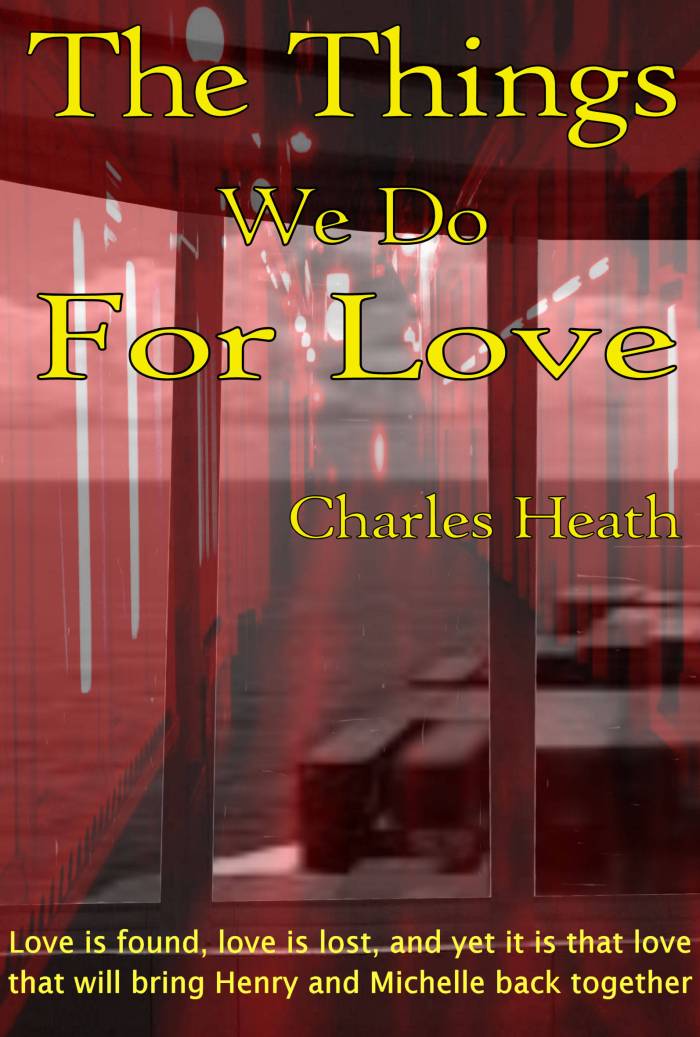
An excerpt from “The Things We Do For Love”; In love, Henry was all at sea!

In the distance he could hear the dinner bell ringing and roused himself.  Feeling the dampness of the pillow, and fearing the ravages of pent up emotion, he considered not going down but thought it best not to upset Mrs. Mac, especially after he said he would be dining.

In the event, he wished he had reneged, especially when he discovered he was not the only guest staying at the hotel.

Whilst he’d been reminiscing, another guest, a young lady, had arrived.  He’d heard her and Mrs. Mac coming up the stairs, and then shown to a room on the same floor, perhaps at the other end of the passage.

Henry caught his first glimpse of her when she appeared at the door to the dining room, waiting for Mrs. Mac to show her to a table.

She was about mid-twenties, slim, long brown hair, and the grace and elegance of a woman associated with countless fashion magazines.  She was, he thought, stunningly beautiful with not a hair out of place, and make-up flawlessly applied.  Her clothes were black, simple, elegant, and expensive, the sort an heiress or wife of a millionaire might condescend to wear to a lesser occasion than dinner.

Then there was her expression; cold, forbidding, almost frightening in its intensity.  And her eyes, piercingly blue and yet laced with pain.  Dracula’s daughter was his immediate description of her.

All in all, he considered, the only thing they had in common was, like him, she seemed totally out of place.

Mrs. Mac came out of the kitchen, wiping her hands on her apron.  She was, she informed him earlier, chef, waitress, hotelier, barmaid, and cleaner all rolled into one.  Coming up to the new arrival she said, “Ah, Miss Andrews, I’m glad you decided to have dinner.  Would you like to sit with Mr. Henshaw, or would you like to have a table of your own?”

Henry could feel her icy stare as she sized up his appeal as a dining companion, making the hair on the back on his neck stand up.  He purposely didn’t look back.  In his estimation, his appeal rating was minus six.  Out of a thousand!

“If Mr. Henshaw doesn’t mind….”  She looked at him, leaving the query in mid-air.

He didn’t mind and said so.  Perhaps he’d underestimated his rating.

“Good.”  Mrs. Mac promptly ushered her over.  Henry stood, made sure she was seated properly and sat.

“Thank you.  You are most kind.”  The way she said it suggested snobbish overtones.

“I try to be when I can.”  It was supposed to nullify her sarcastic tone but made him sound a little silly, and when she gave him another of her icy glares, he regretted it.

Mrs. Mac quickly intervened, asking, “Would you care for the soup?”

They did, and, after writing the order on her pad, she gave them each a look, imperceptibly shook her head, and returned to the kitchen.

Before Michelle spoke to him again, she had another quick look at him, trying to fathom who and what he might be.  There was something about him.

His eyes, they mirrored the same sadness she felt, and, yes, there was something else, that it looked like he had been crying?  There was a tinge of redness.

Perhaps, she thought, he was here for the same reason she was.

No.  That wasn’t possible.

Then she said, without thinking, “Do you have any particular reason for coming here?”  Seconds later she realized she’s spoken it out loud, had hadn’t meant to actually ask, it just came out.

It took him by surprise, obviously not the first question he was expecting her to ask of him.

“No, other than it is as far from civilization, and home, as I could get.”

At least we agree on that, she thought.

It was obvious he was running away from something as well.

Given the isolation of the village and lack of geographic hospitality, it was, from her point of view, ideal.  All she had to do was avoid him, and that wouldn’t be difficult.

After getting through this evening first.

“Yes,” she agreed.  “It is that.”

A few seconds passed, and she thought she could feel his eyes on her and wasn’t going to look up.

Until he asked, “What’s your reason?”

Slight abrupt in manner, perhaps as a result of her question, and the manner in which she asked it.

She looked up.  “Rest.  And have some time to myself.”

She hoped he would notice the emphasis she had placed on the word ‘herself’ and take due note.  No doubt, she thought,  she had completely different ideas of what constituted a holiday than he, not that she had actually said she was here for a holiday.

Mrs. Mac arrived at a fortuitous moment to save them from further conversation.


Over the entree, she wondered if she had made a mistake coming to the hotel.  Of course, there had been no possible way she could know than anyone else might have booked the same hotel, but realized it was foolish to think she might end up in it by herself.

Was that what she was expecting?

Not a mistake then, but an unfortunate set of circumstances, which could be overcome by being sensible.

Yet, there he was, and it made her curious, not that he was a man, by himself, in the middle of nowhere, hiding like she was, but for very different reasons.

On discreet observance whilst they ate, she gained the impression his air of light-heartedness was forced and he had no sense of humor.

This feeling was engendered by his looks, unruly dark hair, and permanent frown.  And then there was his abysmal taste in clothes on a tall, lanky frame.  They were quality but totally unsuited to the wearer.

Rebellion was written all over him.

The only other thought crossing her mind, and rather incongruously, was he could do with a decent feed.  In that respect, she knew now from the mountain of food in front of her, he had come to the right place.

“Mr. Henshaw?”

He looked up.  “Henshaw is too formal.  Henry sounds much better,” he said, with a slight hint of gruffness.

“Then my name is Michelle.”

Mrs. Mac came in to take their order for the only main course, gather up the entree dishes, then return to the kitchen.

“Staying long?” she asked.

“About three weeks.  Yourself?”

“About the same.”

The conversation dried up.

Neither looked at the other, rather at the walls, out the window, towards the kitchen, anywhere.  It was, she thought, almost unbearably awkward.


Mrs. Mac returned with a large tray with dishes on it, setting it down on the table next to theirs.

“Not as good as the usual cook,” she said, serving up the dinner expertly, “but it comes a good second, even if I do say so myself.  Care for some wine?”

Henry looked at Michelle.  “What do you think?”

“I’m used to my dining companions making the decision.”

You would, he thought.  He couldn’t help but notice the cutting edge of her tone.  Then, to Mrs. Mac, he named a particular White Burgundy he liked and she bustled off.

“I hope you like it,” he said, acknowledging her previous comment with a smile that had nothing to do with humor.

“Yes, so do I.”

Both made a start on the main course, a concoction of chicken and vegetables that were delicious, Henry thought, when compared to the bland food he received at home and sometimes aboard my ship.

It was five minutes before Mrs. Mac returned with the bottle and two glasses.  After opening it and pouring the drinks, she left them alone again.

Henry resumed the conversation.  “How did you arrive?  I came by train.”

“By car.”

“Did you drive yourself?”

And he thought, a few seconds later, that was a silly question, otherwise she would not be alone, and certainly not sitting at this table. With him.

“After a fashion.”

He could see that she was formulating a retort in her mind, then changed it, instead, smiling for the first time, and it served to lighten the atmosphere.

And in doing so, it showed him she had another more pleasant side despite the fact she was trying not to look happy.

“My father reckons I’m just another of ‘those’ women drivers,” she added.

“Whatever for?”

“The first and only time he came with me I had an accident.  I ran up the back of another car.  Of course, it didn’t matter to him the other driver was driving like a startled rabbit.”

“It doesn’t help,” he agreed.

“Do you drive?”

“Mostly people up the wall.”  His attempt at humor failed.  “Actually,” he added quickly, “I’ve got a very old Morris that manages to get me where I’m going.”

The apple pie and cream for dessert came and went and the rapport between them improved as the wine disappeared and the coffee came.  Both had found, after getting to know each other better, their first impressions were not necessarily correct.

“Enjoy the food?” Mrs. Mac asked, suddenly reappearing.

“Beautifully cooked and delicious to eat,” Michelle said, and Henry endorsed her remarks.

“Ah, it does my heart good to hear such genuine compliments,” she said, smiling.  She collected the last of the dishes and disappeared yet again.

“What do you do for a living,” Michelle asked in an off-hand manner.

He had a feeling she was not particularly interested and it was just making conversation.

“I’m a purser.”

“A what?”

“A purser.  I work on a ship doing the paperwork, that sort of thing.”

“I see.”

“And you?”

“I was a model.”

“Was?”

“Until I had an accident, a rather bad one.”

“Oh, I’m sorry.”

So that explained the odd feeling he had about her.

As the evening had worn on, he began to think there might be something wrong, seriously wrong with her because she didn’t look too well.  Even the carefully applied makeup, from close up, didn’t hide the very pale, and tired look, or the sunken, dark ringed eyes.

“I try not to think about it, but it doesn’t necessarily work.  I’ve come here for peace and quiet, away from doctors and parents.”

“Then you will not have to worry about me annoying you.  I’m one of those fall-asleep-reading-a-book types.”

Perhaps it would be like ships passing in the night and then smiled to himself about the analogy.

Dinner now over, they separated.

Henry went back to the lounge to read a few pages of his book before going to bed, and Michelle went up to her room to retire for the night.

But try as he might, he was unable to read, his mind dwelling on the unusual, yet the compellingly mysterious person he would be sharing the hotel with.

Overlaying that original blurred image of her standing in the doorway was another of her haunting expressions that had, he finally conceded, taken his breath away, and a look that had sent more than one tingle down his spine.

She may not have thought much of him, but she had certainly made an impression on him.


© Charles Heath 2015-2020
lovecoverfinal1

The A to Z Challenge – Y is for “You’ve got it all wrong…”


How often do we make a judgment call simply on what we see?

I knew what I saw, and it looked exactly like a situation that, if you asked any ten others who witnessed it, they would agree with me.

And then there would always be one that wouldn’t.

The prosecution had made a very good case, the defense counsel had woven a brilliant tale from start to finish, and he delivered in an almost persuading tone, with the subliminal message, the defendant was not guilty.

I felt sorry for the prosecution because his delivery had been halting, filled with ums and ers and in the end, everyone, from the judge down, wanted it to end.

As for the jury, it was an odd assortment of characters, a lawyer, a builder, a plumber, a housewife, two sales staff, two clerks, a janitor, two retirees, and a motor mechanic.  I thought it would be the lawyer who would be the problem.

The trial had lasted 22 days, and over that time I noticed that groups would form, and discuss aspects of the case, each of the groups forming a different opinion.  Sometimes, the dynamics of the groups changed as more evidence and testimony was revealed.

But, I think on those first few days, opinions were made, and judgment was passed.

In my opinion, based on looking at the defendant, it could be said that she didn’t look like a murderer, nor did she seem capable of committing such a heinous act.   Having said that, as a throwaway first assumption, the lawyer nixed it in a second.  Knowing something of how these trials worked, he said there would have been a lot of careful grooming, dress down, but not to drab, look demure, not aggressive, and speak in a modulated tone, like everyday conversation.

In other words, he was basically telling us she was giving an academy award performance.

I certainly looked at her in a different light after that, but the fact remained, for some of us, that initial assessment said not guilty.

A few days before we had to deliberate, a very damning piece of video was tendered and we all watched as the defendant was shown talking to her alleged accomplice, the victim’s current girlfriend, and passing an enveloped which the defense claimed was the payoff for helping her dispose of her husband.

It seemed odd to me that someone had known she would be in that bar, perfectly placed under the CCTV camera, both women so easily recognizable.  Of course, the woman in question could not be found, and the inference was that she might also be one of the defendant’s victims.

Several people were called by the defense to assert a line of defense that the husband was a cruel man, who had treated his wife very badly indeed, to the extent her best friend remarked that she had turned up for work on several occasions with the results of what looked like a beating, and another, an ER nurse, had confirmed the defendant had visited the hospital on several occasions with lacerations consistent with what was considered spousal abuse.

Those photographs were quite confronting, but a question had to be asked, why had she not gone to the police with that evidence and let them deal with the husband.

The fact she hadn’t was one weakness in her defense.  The thing there was why the defense introduced such testimony because, to me, it confused the issue by pushing the jury into thinking she had killed him, but in mitigating circumstances.  Was she looking for a verdict of justifiable homicide?

From day two, after the lawyer had told us about how lawyers schooled their clients, I watched her carefully, when sitting beside her lawyer, or when on the stand.  There were interesting actions she made when certain events occurred, like brushing a stray lock of hair back behind her ear, like teasing it out with a slight shake of the head, in a subtle but obvious show of displeasure.  Like smoothing out the invisible wrinkles in her clothes, perfectly fitting and obviously made for her, but understated in a sense that she would stand out in a crown but not ostentatiously so.  It was almost a ritual when she came in at the start, and when she took the stand, preparing herself.

Perfectionist, maybe.  Or trying to convey a certain picture.  Certainly, in the early days before the trial began, the media had a field day with the case, whipped into an even bigger frenzy when the police finally arrested the wife for the murder of her husband.  Almost all of them said he had it coming, with page after page of revelations about a man who could not have done half the things he was accused of.

The trial by newspaper done, I suspect it was hard to find 12 unbiased men and women who could be trusted to make the right decision.  I knew 100 would be jurors had been called up.

Now, in the jury room for the third day, trying to reach a verdict, it was the lawyer trying to wrap it up.  He had a job to go back to.  So did everyone else, for that matter.

“So, in essence, we are all agreed, that she is not guilty.”

It had been an interesting change in his position on the morning of day three of our deliberation.  Before that, he wanted to hang her from the nearest yardarm.  Interestingly enough, that morning, after he had given us his reasons for changing his mind, it would have been unanimous, and over.

The thing is, I didn’t like the way he changed sides so easily or for the reasons he spoke of.

So, in that vote, I changed my decision to guilty, and watch a group of people who had been friendly suddenly become enemies.

But at that moment, that other ten didn’t interest me, it was the expression on the lawyer’s face.  He hadn’t expected the vote to go that way.  It was like he had been goading everyone into voting not guilty and weathering the storm because of his stance.  Had it been staged, had we been led down this path, and then all of a sudden, the verdict he wanted being reached?

I had to find out.

I watched the eleven raise their hands to vote not guilty.  I did not.  And immediately felt the looks of every one of those eleven on me.

“Why?” he asked.

By this time he had taken the lead, and the others had let him.  Now I suspect they would let him do the talking.

“You’ve got it all wrong.  The reasons are the same.  There are two sides to that tale you came up with this morning.  The problem I have is from being adamant she was guilty, and as you said, without a shadow of a doubt, now all of a sudden you’re having doubts.”

“So, you don’t think she’s guilty, you’re just voting that way because you suspect my motives?”

“What I think is irrelevant right now.  You need to convince me that you truly think she’s not guilty.  What is it you saw, or heard, or know that changed your mind.  It certainly had nothing to do with that so-called video in the bar being staged.  It has nothing to do with the fact they can’t find that woman so they can either verify or dispel the accusations being made she was an accomplice.   It had nothing to do with the fact you think she might have been goaded into it and was left with no other option.  In that case, it might well be a case of manslaughter rather than murder.  Is that what you’re trying to suggest?”

“I think given the evidence, or lack of concrete evidence against her, she is not guilty.”

“But given everything you have said, it seems to me you think she had some crime to answer for.”

“Hasn’t she suffered enough?”

“That might well be the case, but it doesn’t give you an excuse to murder., and there’s certainly no forensic evidence that she was defending herself against an attack at the time.  She should have taken her case to the police and have it investigated.  She chose not to, for reasons that were never fully explained.”

“And didn’t we hear that the husband had links to various police that might have made such an investigation a waste of time.  This was a woman trapped in a bad situation with no way out.”

It was a long way from where we, as jurors, were at the beginning of our deliberations.  The first vote at the end of the first day was four voted not guilty and eight voted guilty.  In the following days, a lot of arguments changed the decisions of those seven to vote not guilty, when they believed, in their own minds the defendant was guilty.

In my mind, the first instinct was usually correct.  Over time that decision was only changed because of expediency, not necessarily for the right reasons.  My first instinct was that she was, in fact, not guilty for all the reasons the lawyer cited.

“Look,” he said.  “We’ve been here for three days.  It’s an open and shut case.  Let’s vote.”

We did with the same result.  Eleven for not guilty and one against.

A hung jury.  I wasn’t going to be moved on my position, and so it went back to the court.  It was declared a mistrial and the defendant was returned to custody and a new trial was to be scheduled.

I was reading the paper’s version of events, and speculation on the result.  Several of the jurors had featured in the discussion, but none were willing to talk about the result or who was responsible for the hung jury, only that one juror had not agreed with the majority.  In some states, it was argued, it only required a majority, but in this and other states, quite rightly, it needed a unanimous decision to confer the death sentence.

Justice, it seemed to the writer of the piece, had prevailed.

They also believed that the plight of women trapped in marriages to violent men was a matter that should be looked at and that such women should be treated better in the eyes of the law.  It was not a position that I disagreed with.  What I disagreed with was the notion of jury tampering.

It was, apparently, the fifth time that a case such as this had a similar track record, that the deliberations of the jury had swung from an initial guilty verdict to not guilty at the hands of a single juror.  In each of the five cases, the circumstances were similar, the wife had endured violence by her husband, and then, in odd circumstances, the husband had finished up dead.

Someone had discerned a pattern, and this had been a test case.  In each of the other four cases, a not guilty verdict had been handed down by a jury that had also started with a majority guilty verdict, only to be worn down by a single juror with an agenda.  To get the defendant a not guilty verdict.

My job was to find out which juror it was that was there to change minds.  Then it was a case of finding links between him and four other jurors who were equally instrumental in obtaining a not guilty verdict.  In each of the five cases, there was irrefutable evidence that the defendant was, in fact, guilty of the charge, and the expectation was the legal system would prosecute them.

And then, in each of the cases, a weak prosecutor was selected, and a particular juror was selected by that prosecutor.  From there, the trail led back to a particular assistant District Attorney who had overseen each of the five cases.  The fact was, justice was not served, and four out of the five defendants had escaped justice.

Until now.

…

© Charles heath 2020-2021

‘Sunday in New York’ – A beta reader’s view

I’m not a fan of romance novels but …

There was something about this one that resonated with me.

This is a novel about a world generally ruled by perception, and how people perceive what they see, what they are told, and what they want to believe.

I’ve been guilty of it myself as I’m sure we all gave one time or another.

For the the main characters Harry and Alison there is others issues driving their relationship.

For Alison, it is a loss of self worth through losing her job and from losing her mother and, in a sense, her sister.

For Harry it is the fact he has a beautiful and desirable wife, and his belief she is the object of other men’s desires, and one in particular, his immediate superior.

Between observation, the less than honest motives of his friends, a lot of jumping to conclusions based on very little fact, and you have the basis of one very interesting story.

When it all come to a head, Alison finds herself in a desperate situation, she realises only the truth will save their marriage.

But is it all the truth?

What would we do in similar circumstances?

Rarely does a book have me so enthralled that I could not put it down until I knew the result. They might be considered two people who should have known better, but as is often the case, they had to get past what they both thought was the truth.

And the moral of this story, if it could be said there is one, nothing is ever what it seems.

…

Available on Amazon here: amzn.to/2H7ALs8

…

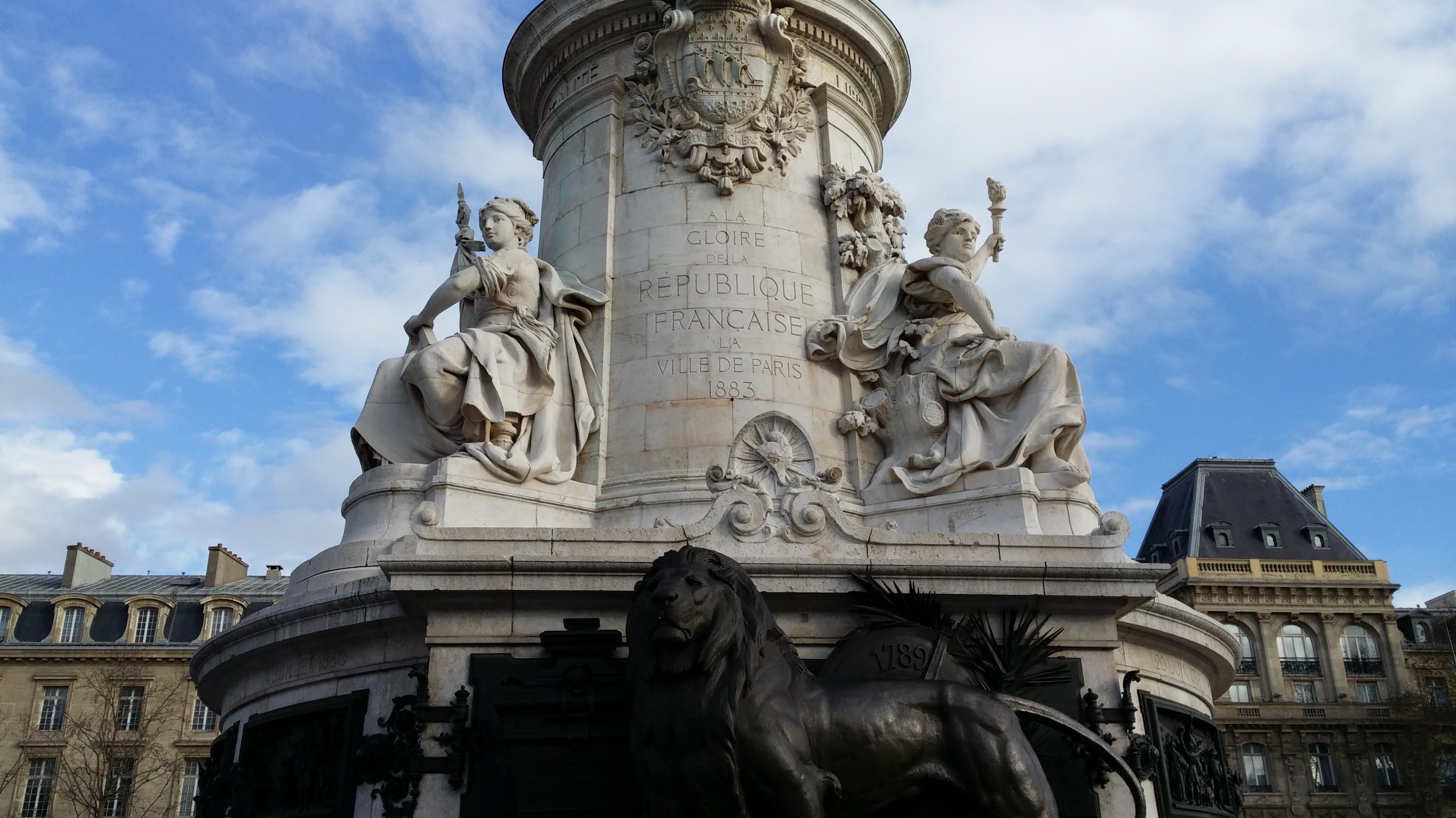
Searching for locations: Paris, France: Place de la Republique

Whilst a rather important place for the French, for us visitors, it has a convenient hotel located just behind the square, and an underground, or Metro station, underneath.

2014-01-07 11.43.05

Added to that was equally convenient cafes, one of which, The Cafe Republique, we had dinner every night.  The service and food were excellent, and we had no problems with the language barriers.

At the top of the monument is a bronze statue of Marianne, said to be the personification of France.

2014-01-07 11.43.41

Surrounding Marianne is three more statues, representing liberty, equality, and fraternity.

2014-01-07 11.43.32

At the base is a lion guarding what is said to be a ballot box.

An excerpt from “Betrayal” – a work in progress

It could have been anywhere in the world, she thought, but it wasn’t.  It was in a city where if anything were to go wrong…

She sighed and came away from the window and looked around the room.  It was quite large and expensively furnished.  It was one of several she had been visiting in the last three months.

Quite elegant too, as the hotel had its origins dating back to before the revolution in 1917.  At least, currently, there would not be a team of KGB agents somewhere in the basement monitoring everything that happened in the room.

There was no such thing as the KGB anymore, though there was an FSB, but such organisations were of no interest to her.

She was here to meet with Vladimir.

She smiled to herself when she thought of him, such an interesting man whose command of English was as good as her command of Russian, though she had not told him of that ability.

All her knew of her was that she was American, worked in the Embassy as a clerk, nothing important, who life both at work and at home was boring.  Not that she had blurted that out the first tie she met, or even the second.

That first time, at a function in the Embassy, was a chance meeting, a catching of his eye as he looked around the room, looking, as he had told her later, for someone who might not be as boring as the function itself.

It was a celebration, honouring one of the Embassy officials on his service in Moscow, and the fact he was returning home after 10 years.  She had been there one, and still hadn’t met all the staff.

They had talked, Vladimir knew a great deal about England, having been stationed there for a year or two, and had politely asked questions about where she lived, her family, and of course what her role was, all questions she fended off with an air of disinterested interest.

It fascinated him, as she knew it would, a sort of mental sparring as one would do with swords, if this was a fencing match.

They had said they might or might not meet again when the party was over, but she suspected there would be another opportunity.  She knew the signs of a man who was interested in her, and Vladimir was interested.

The second time came in the form of an invitation to an art gallery, and a viewing of the works of a prominent Russian artist, an invitation she politely declined.  After all, invitations issued to Embassy staff held all sorts of connotations, or so she was told by the Security officer when she told him.

Then, it went quiet for a month.  There was a party at the American embassy and along with several other staff members, she was invited.  She had not expected to meet Vladimir, but it was a pleasant surprise when she saw him, on the other side of the room, talking to several military men.

A pleasant afternoon ensued.

And it was no surprise that they kept running into each other at the various events on the diplomatic schedule.

By the fifth meeting, they were like old friends.  She had broached the subject of being involved in a plutonic relationship with him with the head of security at the embassy.  Normally for a member of her rank it would not be allowed, but in this instance it was.

She did not work in any sensitive areas, and, as the security officer had said, she might just happen upon something that might be useful.  In that regard, she was to keep her eyes and ears open, and file a report each time she met him.

After that discussion she got the impression her superiors considered Vladimir more than just a casual visitor on the diplomatic circuit.  She also formed the impression the he might consider her an ‘asset’, a word that had been used at the meeting with security and the ambassador.

It was where the word ‘spy’ popped into her head and sent a tingle down her spine.  She was not a spy, but the thought of it, well, it would be fascinating to see what happened.

A Russian friend.  That’s what she would call him.

And over time, that relationship blossomed, until, after a visit to the ballet, late and snowing, he invited her to his apartment not far from the ballet venue.  It was like treading on thin ice, but after champagne and an introduction to caviar, she felt like a giddy schoolgirl.

Even so, she had made him promise that he remain on his best behaviour.  It could have been very easy to fall under the spell of a perfect evening, but he promised, showed her to a separate bedroom, and after a brief kiss, their first, she did not see him until the next morning.

So, it began.

It was an interesting report she filed after that encounter, one where she had expected to be reprimanded.

She wasn’t.

It wasn’t until six weeks had passed when he asked her if she would like to take a trip to the country.  It would involve staying in a hotel, that they would have separate rooms.  When she reported the invitation, no objection was raised, only a caution; keep her wits about her.

Perhaps, she had thought, they were looking forward to a more extensive report.  After all, her reports on the places, and the people, and the conversations she overheard, were no doubt entertaining reading for some.

But this visit was where the nature of the relationship changed, and it was one that she did not immediately report.  She had realised at some point before the weekend away, that she had feelings for him, and it was not that he was pushing her in that direction or manipulating her in any way.

It was just one of those moments where, after a grand dinner, a lot of champagne, and delightful company, things happen.  Standing at the door to her room, a lingering kiss, not intentional on her part, and it just happened.

And for not one moment did she believe she had been compromised, but for some reason she had not reported that subtle change in the relationship to the powers that be, and so far, no one had any inkling.

She took off her coat and placed it carefully of the back of one of the ornate chairs in the room.  She stopped for a moment to look at a framed photograph on the wall, one representing Red Square.

Then, after a minute or two, she went to the mini bar and took out the bottle of champagne that had been left there for them, a treat arranged by Vladimir for each encounter.

There were two champagne flutes set aside on the bar, next to a bowl of fruit.  She picked up the apple and thought how Eve must have felt in the garden of Eden, and the temptation.

Later perhaps, after…

She smiled at the thought and put the apple back.

A glance at her watch told her it was time for his arrival.  It was if anything, the one trait she didn’t like, and that was his punctuality.  A glance at the clock on the room wall was a minute slow.

The doorbell to the room rang, right on the appointed time.

She put the bottle down and walked over to the door.

A smile on her face, she opened the door.

It was not Vladimir.  It was her worst nightmare.

…

© Charles Heath 2020

Short story writing – don’t try this at home! – Part 3

Where is this story going to start?

Let’s forget about the what and the who and the when for the moment, and figure out the location.

After all, we couldn’t make a movie unless we have somewhere to shoot it.  Those places are called locations, and before a film begins someone has to go out and find locations.

Sometimes it’s easy, because you know where the story is based.

New York, London, Singapore, Moscow.

It’s more likely it will be somewhere you’ve been, or where you live.

I live in Brisbane, in Australia.  Not a lot of people overseas know of it.  Oddly enough before I moved here over 30 years ago, it was just a name on a map.

But the point is, now that I’m here I could write a story based in Brisbane.  Or as easily, in Melbourne, where I also used to live.

Or I could select a place I’ve travelled to, perhaps not once, but a few times, and each time taking photographs and notes about that place, thinking one day I could used it as a location.

I have, and I do.  It’s one of the reasons why I like to travel.  I’m always on the lookout for someplace new.

Several of my books are based in New York, several in London, and various parts of the story find the characters in places like Paris, Rome, Florence, Tuscany, Hong Kong, Singapore, and Moscow.

Then, sometimes when my knowledge is lacking in some of the finer points of the city, Google maps, and Google itself are there to fill in the gaps.  I have virtually driven down streets in London, especially near Kew Gardens and in Knightsbridge, checking locations.

Suffice to say, I know some parts of London like the back of my hand, and recently, before COVID, visited and did a spot check just to be sure.

With COVID 19 causing havoc with travel plans, virtual travel is all I can do at present.

Then there’s building, like houses, apartments, any sort of building which may require some knowledge.

I guess what I’m saying is that there’s more to locations than just saying something is there, it had to fit the area.  Yes, the story is a work of fiction, but sometimes it’s better to have an idea of what’s there, or readers will be disappointed.

Especially if they live in that city, town, village, house or tent.

I actually use the real estate advertisements in a city of town where I want to have a house, because it gives you a map, exterior views, how to get there, and best of all what it looks like inside.

Still can’t afford that $12,000,000 apartment in New York, but the views, there were to die for.

But I, as always, digress…

Now it’s starting to sound like a lot of hard work.

It is.

Even if you go down the ‘pantser’ road, there’s still lot of research to be done.

More confusion tomorrow.

Inspiration, maybe – Volume 1

50 photographs, 50 stories, of which there is one of the 50 below.

They all start with –

A picture paints … well, as many words as you like.  For instance:

lookingdownfromcoronetpeak

And the story:

It was once said that a desperate man has everything to lose.

The man I was chasing was desperate, but I, on the other hand, was more desperate to catch him.

He’d left a trail of dead people from one end of the island to the other.

The team had put in a lot of effort to locate him, and now his capture was imminent.  We were following the car he was in, from a discrete distance, and, at the appropriate time, we would catch up, pull him over, and make the arrest.

There was nowhere for him to go.

The road led to a dead-end, and the only way off the mountain was back down the road were now on.  Which was why I was somewhat surprised when we discovered where he was.

Where was he going?

“Damn,” I heard Alan mutter.  He was driving, being careful not to get too close, but not far enough away to lose sight of him.

“What?”

“I think he’s made us.”

“How?”

“Dumb bad luck, I’m guessing.  Or he expected we’d follow him up the mountain.  He’s just sped up.”

“How far away?”

“A half-mile.  We should see him higher up when we turn the next corner.”

It took an eternity to get there, and when we did, Alan was right, only he was further on than we thought.”

“Step on it.  Let’s catch him up before he gets to the top.”

Easy to say, not so easy to do.  The road was treacherous, and in places just gravel, and there were no guard rails to stop a three thousand footfall down the mountainside.

Good thing then I had the foresight to have three agents on the hill for just such a scenario.

Ten minutes later, we were in sight of the car, still moving quickly, but we were going slightly faster.  We’d catch up just short of the summit car park.

Or so we thought.

Coming quickly around another corner we almost slammed into the car we’d been chasing.

“What the hell…” Aland muttered.

I was out of the car, and over to see if he was in it, but I knew that it was only a slender possibility.  The car was empty, and no indication where he went.

Certainly not up the road.  It was relatively straightforward for the next mile, at which we would have reached the summit.  Up the mountainside from here, or down.

I looked up.  Nothing.

Alan yelled out, “He’s not going down, not that I can see, but if he did, there’s hardly a foothold and that’s a long fall.”

Then where did he go?

Then a man looking very much like our quarry came out from behind a rock embedded just a short distance up the hill.

“Sorry,” he said quite calmly.  “Had to go if you know what I mean.”

I’d lost him.

It was as simple as that.

I had been led a merry chase up the hill, and all the time he was getting away in a different direction.

I’d fallen for the oldest trick in the book, letting my desperation blind me to the disguise that anyone else would see through in an instant.

It was a lonely sight, looking down that road, knowing that I had to go all that way down again, only this time, without having to throw caution to the wind.

“Maybe next time,” Alan said.

“We’ll get him.  It’s just a matter of time.”

© Charles Heath 2019-2021

Find this and other stories in “Inspiration, maybe”  available soon.

InspirationMaybe1v1

The cinema of my dreams – I always wanted to write a war story – Episode 38

For a story that was conceived during those long boring hours flying in a steel cocoon, striving to keep away the thoughts that the plane and everyone in it could just simply disappear as planes have in the past, it has come a long way.

Whilst I have always had a fascination with what happened during the second world war, not the battles or fighting, but in the more obscure events that took place, I decided to pen my own little sidebar to what was a long and bitter war.

And, so, it continues…

…

It didn’t surprise Johannesen there were about twenty prisoners down in the dungeons, though he was surprised to find that the dungeon area was quite large, and in several sections. The fact they smelled of wine told him that once, the cells were used at storage areas for bottles of wine.

Several of the cells that were furthest from the downstairs entrance, and recently boarded over caused several overzealous resistance fighters of Leonardo’s to start smashing walls looking for it.

Johannsen tried not to think about Leonardo. He was the very worst of men, a pig even by German standards.

Martina had been put in a cell not far from Leonardo’s wine cache. There was purpose in that, he could get drunk and then take it out of the woman who had made him look stupid. Come to think of it, he thought, it wouldn’t be too hard for a ten-year-old to do that.

The cell door was locked, but Johannsen had a key. He had meticulously gone through all the keyrings and loose keys that had been found and those that didn’t have an immediate use had been stored in the dungeon guardroom.

Matching keys to locks had been one of his secret tasks, under the disguise of being given the job by Wallace to match keys to locks for them. There were a few short in the end, keys to rooms, and cells that seem to serve no purpose. One had become Johannessen’s hideaway.

It was part of a plan he had been formulating, one where he could take prisoners and hide them. Of course, it wouldn’t work for the moment because the prisoners had to be moved on as soon as possible, and staying in the castle, even if the others didn’t know where they were, would invite a microscopic search. It would need Atherton’s knowledge of the castle, and whether there was another escape route they could use.

It was another of his works in progress, one that was highly likely to fail.

He stood back from the door and looked at the crumpled heap on the floor that was once the leader of the resistance. Leonardo had interrogated her before bringing her back, half-dead, to the castle, and in doing so had made it impossible for anyone to interrogate her further. Had that been the reason why Leonardo had bashed her senseless?

He saw a hand move by her side, and a low groan.

He spoke quietly, in English, “Are you able to come closer to the door?” He knelt down, trying to get a better look at her injuries. Abrasions, and bruising. Swollen eyes, possible broken nose, blood spatter everywhere on her clothing which remarkably was relatively intact. He had suspected Leonardo of doing a lot worse and may still have.

She lifted her head slightly, “Who are you?”

“I could be a friend.”

She laughed, then coughed, and blood came out of her mouth. Broken ribs possibly, and a punctured lung. She might be too injured to move.

“There are no friends in this place, just Tedeschi.” She lowered her head and closed her eyes. Her breathing was irregular and shallow. Definitely broken ribs, he thought. And not likely to survive another interrogation. Not if Jackerby was going to conduct it.

“I’d like to help you if I can.”

“Everyone in here, we’re beyond help. You know that because you’re one of them.”

“Some of us care what happens to people.”

She pushed hard to move around slightly to face him, laying her head on the side to face him. “Which one are you?”

“Johannsen.”

“Yes, Johannesen. Atherton mentioned you. As untrustworthy as the rest. But for me, I’m all but dead, but I’ll humor you. Get me out of here and away from that bastardo Leonardo, and I might believe you.”

Atherton. This might be an opportunity to find out how he could get in contact with him, knowing of course, she wasn’t going to tell him where Atherton was.

“If you want to get away from here, we need Atherton. He’s the only one who knows this place inside out.”

He could see her shaking her head, as painful as that might be.

“He’s not.”

“Then is there anyone who does?”

“There is.”

“Who?”

Again she laughed and it sounded like the death rattle of her last breath. “You think I’m that far gone that I would tell you anything?”

“If you want to escape, I can only get you so far.”

“There is no escape. Believe me. If there was, I would be gone. Save your trickery and lies for someone who might be gullible enough to believe you. I’m quite prepared to die, the fact I’ve lived this long is what some would call a miracle.”

With that she turned away, coughed, and went silent. She wasn’t dead, but death wasn’t far away.

When Johannesen reluctantly left the cell, he only made it to the turn towards the steps up when he ran into Jackerby.

Had Jackerby been somewhere near and overheard their conversation.

“You have a rather interesting interrogation technique,” Jackerby said.

Johannesen groaned inwardly. He had heard.

“Sometimes it’s better to try and infuse hope in the subject rather than resignation. I was trying to get her to tell me where Atherton is.”

“And did she?”

“What do you think. After what Leonardo did, she’s not likely to tell us anything. I’m sure if we had taken a different approach…”

“Yes, softly softly. Doesn’t work. Just leave the heavy lifting to us, and don’t bother coming down to revisit the prisoners. Otherwise, I might believe you really are trying to help them escape.”

…

© Charles Heath 2020-2021

Searching for locations: The Lingering Gardens, Suzhou, China

The Lingering Garden

These gardens are very tightly put together and are interspersed with buildings that you can go in and look at as distinct from just looking in from the outside.

There are lots of paths that wind around interspersed with rocks which may or may not be sculpted, and equally interspersed with trees, bushes, and small plants.  In the middle is a lake which usually has lotus plants in bloom, but they are not in season.

The gardens were built around a small lake that was filled with fish of all sizes and colours

The buildings were also a contrast for those built for the men

and those for the women

In the middle of the garden was a significant rock pillar

surrounded by certain areas of the garden that had smaller rock formations


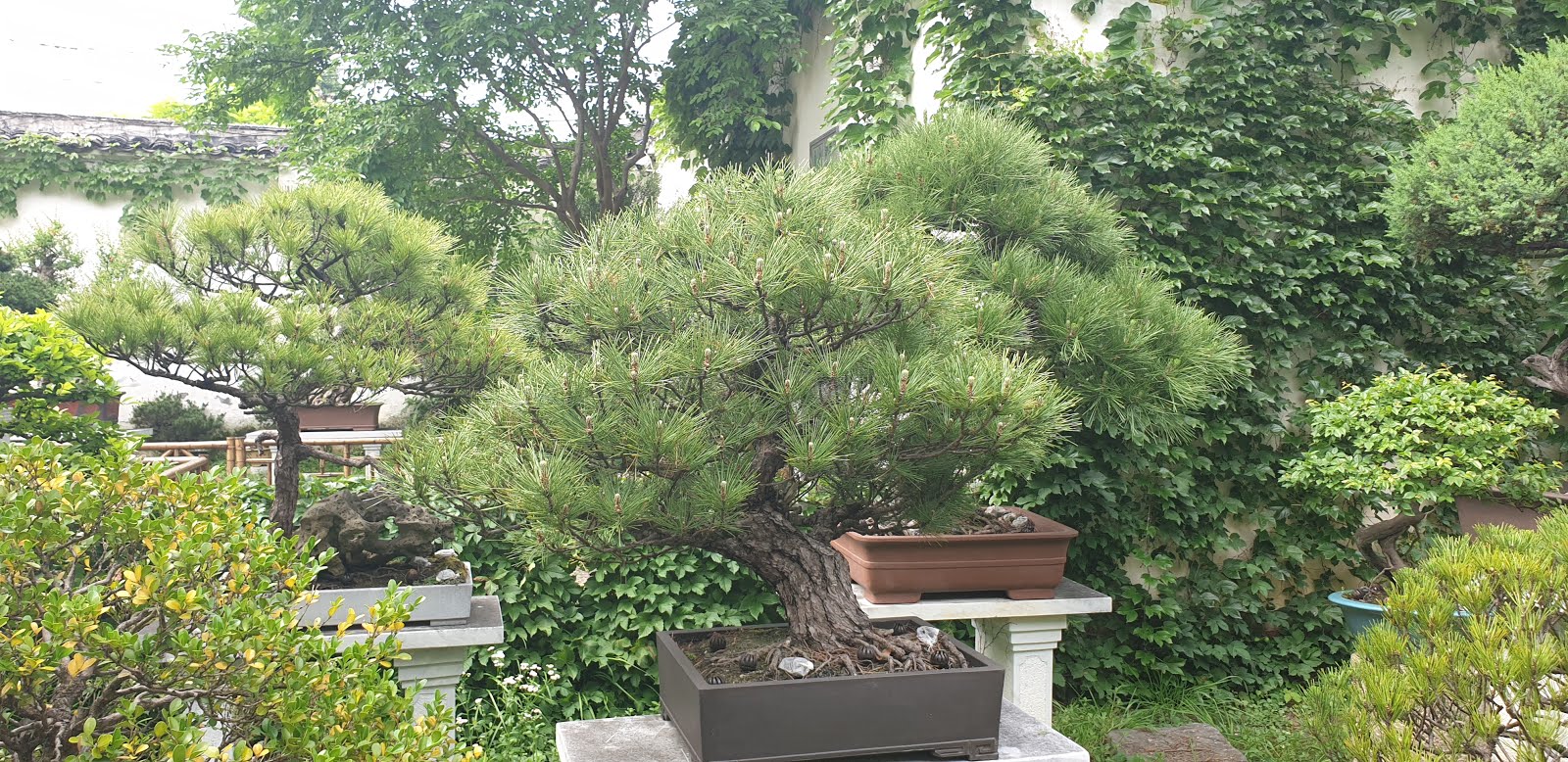
At the end of the garden is a large collection of bonsai trees, some of which are quite exquisite.

The cinema of my dreams – I always wanted to go on a treasure hunt – Episode 46

Here’s the thing…

Every time I close my eyes, I see something different.

I’d like to think the cinema of my dreams is playing a double feature but it’s a bit like a comedy cartoon night on Fox.

But these dreams are nothing to laugh about.

Once again there’s a new installment of an old feature, and we’re back on the treasure hunt.

…

Aside from working on what I was going to tell my mother, and Boggs for that matter, where I’d been all night, the last thing I could say was that I spent the night with Nadia.

It had a curious ring to it when I said to myself, I slept with Nadia.  Most people would take it the wrong way, but, by a quirk of fate, it was true.  I guess that little gem of truth would have to stay locked away in my head.

One the other hand, if I told my mother I was out doing reconnaissance work for Boggs, she would get very angry, messing around in Boggs’ fantasies.  She had no time for people who didn’t want to get a job, and work hard for a living.

At least I’d gone up in her estimation when I started working for the Benderby’s.

But the reconnaissance line would work with Boggs, and all I had to do was come up with a plausible set of circumstances he would believe.  At the moment, all I had was Alex going to the mall, and that I waited to see when he came out.  The question I would pose, what was he doing in there for four or five hours.

All I had to do was hope Alex had been out of town and Boggs hadn’t seen him.  Always a chance of coming unstuck.  Perhaps I should just not volunteer anything.

As for my mother, I couldn’t say I was working overtime for Benderby.  She was likely to call him and tell him off for making me work so hard. 

I was still no further advanced on that point when I got to the library. 

It was a familiar place for me, and I had spent a lot of my time there escaping the real world, and of course, being able to keep away from Alex and Vince.

The librarian, Gwen, had been there for a hundred years or more, or so they said, and she should have retired about 20 years ago.

Pity the poor mayor who got the job of telling her to leave.  Three had tried, and three had failed.  The current incumbent was smarter than that.  He just hired an assistant and told her that she had no problems handing over the reins when she was ready.

That woman, Winifred Pankhurst, no relation to the suffragette, was quiet, polite but firm in doing her duties and dealing with the public.  She and I had butted heads a few times, especially when Gwen wasn’t in, but today was not going to be one of those days.

I could see Gwen in her office, and headed straight there, under Winnie’s watchful eye.  And no, I didn’t dare call her Winnie.  Her name, she said, was Miss Pankhurst thank you very much.

Gwen looked up as I knocked on the door, and she smiled.

“Long time no see.”

It had been several weeks.  The job and everything else had made it less of a priority to get there,

“New job, crazy hours.  Never thought I’d become a working stiff.”

“About time.  All that talent being wasted.”

I came in and sat down opposite her.

“How are you?”

“Getting old.”

For her to admit that was a worry.  She was, last time I checked, somewhere between 93 and 95.  She never quite told anyone her actual date of birth, not even the Mayor’s office who employed her.  And she didn’t look a day over 80.  Good, clean living she said.

“Isn’t that inevitable?”

“For some of us.  Now, enough of being maudlin, what can I do for you?”

“What makes you think I want something?”

“That expression.  A cat’s curiosity.”

She could still see through me.  The only other people who could was my English teacher in the final year at school and my mother.

“What do you know about the Ormiston’s.”

A change in expression on her face told me it was not a surprise I was asking.  Alex’s thug had been here earlier, had someone else?

“They’re popular this week.  Young Elmer was in here a few days ago asking the same question.  I suspect he was working for Alex Benderby.”

The way she said his name, it was with the usual venom used for him.  She had a run in with Benderby a long time ago, and she’d never forgotten.  Or ever will.  That’s why Alex would never get anything from her about anything.

“He was.”

“Is this in relation to the treasure you and that lad Boggs are searching for?”

Of course, she’d know who and what was going on in this town.  No one could keep a secret from her.  Or her extensive network of old ladies in the knitting club.

“Boggs seems to think he had some idea of where it might be, though I’m not so sure.  I just go along for the ride, it balances out the depressive life we have to live living here.”

“Oh, come now.  It’s not all that bad.”

“Perhaps not, now that I have a job.  What can you tell me, if there’s anything to tell?”

“Ormiston was as bad if not worse than the Boggs, father and son alike.  He had the treasure bug too.  Obsessed.  In the end drove away his wife and family, eventually ran out of money after mounting six different search operations, and then, when that happened, sold the land to the Navy.  Quite an extensive area, about 100 square miles or so, from the coast back to the fault line.  Used to be a lake, once, now it’s just a dustbowl.”

A fault line?  This was something Boggs didn’t know about, and it could be significant.  But just how significant?

…

© Charles Heath 2020