An excerpt from “Sunday in New York”

Now available on Amazon at:  https://amzn.to/2H7ALs8


Williams’ Restaurant, East 65th Street, New York, Saturday, 8:00 p.m.


We met the Blaine’s at Williams’, a rather upmarket restaurant that the Blaine’s frequently visited, and had recommended.

Of course, during the taxi ride there, Alison reminded me that with my new job, we would be able to go to many more places like Williams’.  It was, at worst, more emotional blackmail, because as far as Alison was concerned, we were well on our way to posh restaurants, the Trump Tower Apartments, and the trappings of the ‘executive set’.

It would be a miracle if I didn’t strangle Elaine before the night was over.  It was she who had filled Alison’s head with all this stuff and nonsense.

Aside from the half frown half-smile, Alison was looking stunning.  It was months since she had last dressed up, and she was especially wearing the dress I’d bought her for our 5th anniversary that cost a month’s salary.  On her, it was worth it, and I would have paid more if I had to.  She had adored it, and me, for a week or so after.

For tonight, I think I was close to getting back on that pedestal.

She had the looks and figure to draw attention, the sort movie stars got on the red carpet, and when we walked into the restaurant, I swear there were at least five seconds silence, and many more gasps.

Even I had a sudden loss of breath earlier in the evening when she came out of the dressing room.  Once more I was reminded of how lucky I was that she had agreed to marry me.  Amid all those self-doubts, I couldn’t believe she had loved me when there were so many others ‘out there’ who were more appealing.

Elaine was out of her seat and came over just as the Head Waiter hovered into sight.  She personally escorted Alison to the table, allowing me to follow like the Queen’s consort, while she and Alison basked in the admiring glances of the other patrons.

More than once I heard the muted question, “Who is she?”

Jimmy stood, we shook hands, and then we sat together.  It was not the usual boy, girl, boy, girl seating arrangement.  Jimmy and I on one side and Elaine and Alison on the other.

The battle lines were drawn.

Jimmy was looking fashionable, with the permanent blade one beard, unkempt hair, and designer dinner suit that looked like he’d slept in it.  Alison insisted I wear a tuxedo, and I looked like the proverbial penguin or just a thinner version of Alfred Hitchcock.

The bow tie had been slightly crooked, but just before we stepped out she had straightened it.  And took the moment to look deeply into my soul.  It was one of those moments when words were not necessary.

Then it was gone.

I relived it briefly as I sat and she looked at me.  A penetrating look that told me to ‘behave’.

When we were settled, Elaine said, in that breathless, enthusiastic manner of hers when she was excited, “So, Harry, you are finally moving up.”  It was not a question, but a statement.

I was not sure what she meant by ‘finally’ but I accepted it with good grace.  Sometimes Elaine was prone to using figures of speech I didn’t understand.  I guessed she was talking about the new job.  “It was supposed to be a secret.”

She smiled widely.  “There are no secrets between Al and I, are there Al?”

I looked at ‘Al’ and saw a brief look of consternation.

I was not sure Alison liked the idea of being called Al.  I tried it once and was admonished.  But it was interesting her ‘best friend forever’ was allowed that distinction when I was not.  It was, perhaps, another indicator of how far I’d slipped in her estimation.

Perhaps, I thought, it was a necessary evil.  As I understood it, the Blaine’s were our mentors at the Trump Tower, because they didn’t just let ‘anyone’ in.  I didn’t ask if the Blaine’s thought we were just ‘anyone’ before I got the job offer.

And then there was that look between Alison and Elaine, quickly stolen before Alison realized I was looking at both of them.  I was out of my depth, in a place I didn’t belong, with people I didn’t understand.  And yet, apparently, Alison did.  I must have missed the memo.

“No,” Alison said softly, stealing a glance in my direction, “No secrets between friends.”

No secrets.  Her look conveyed something else entirely.

The waiter brought champagne, Krug, and poured glasses for each of us.  It was not the cheap stuff, and I was glad I brought a couple of thousand dollars with me.  We were going to need it.

Then, a toast.

To a new job and a new life.

“When did you decide?”  Elaine was effusive at the best of times, but with the champagne, it was worse.

Alison had a strange expression on her face.  It was obvious she had told Elaine it was a done deal, even before I’d made up my mind.  Perhaps she’d assumed I might be ‘refreshingly honest’ in front of Elaine, but it could also mean she didn’t really care what I might say or do.

Instead of consternation, she looked happy, and I realized it would be churlish, even silly if I made a scene.  I knew what I wanted to say.  I also knew that it would serve little purpose provoking Elaine, or upsetting Alison.  This was not the time or the place.  Alison had been looking forward to coming here, and I was not going to spoil it.

Instead, I said, smiling, “When I woke up this morning and found Alison missing.  If she had been there, I would not have noticed the water stain on the roof above our bed, and decide there and then how much I hated the place.” I used my reassuring smile, the one I used with the customers when all hell was breaking loose, and the forest fire was out of control.  “It’s the little things.  They all add up until one day …”  I shrugged.  “I guess that one day was today.”

I saw an incredulous look pass between Elaine and Alison, a non-verbal question; perhaps, is he for real?  Or; I told you he’d come around.

I had no idea the two were so close.

“How quaint,” Elaine said, which just about summed up her feelings towards me.  I think, at that moment, I lost some brownie points.  It was all I could come up with at short notice.

“Yes,” I added, with a little more emphasis than I wanted.  “Alison was off to get some study in with one of her friends.”

“Weren’t the two of you off to the Hamptons, a weekend with some friends?” Jimmy piped up, and immediately got the ‘shut up you fool’ look, that cut that line of conversation dead.  Someone forgot to feed Jimmy his lines.

It was followed by the condescending smile from Elaine, and “I need to powder my nose.  Care to join me, Al?”

A frown, then a forced smile for her new best friend.  “Yes.”

I watched them leave the table and head in the direction of the restroom, looking like they were in earnest conversation.  I thought ‘Al’ looked annoyed, but I could be wrong.

I had to say Jimmy looked more surprised than I did.

There was that odd moment of silence between us, Jimmy still smarting from his death stare, and for me, the Alison and Elaine show.  I was quite literally gob-smacked.

I drained my champagne glass gathering some courage and turned to him.  “By the way, we were going to have a weekend away, but this legal tutorial thing came up.  You know Alison is doing her law degree.”

He looked startled when he realized I had spoken.  He was looking intently at a woman several tables over from us, one who’d obviously forgotten some basic garments when getting dressed.  Or perhaps it was deliberate.  She’d definitely had some enhancements done.

He dragged his eyes back to me.  “Yes.  Elaine said something or other about it.  But I thought she said the tutor was out of town and it had been postponed until next week.  Perhaps I got it wrong.  I usually do.”

“Perhaps I’ve got it wrong.”  I shrugged, as the dark thoughts started swirling in my head again.  “This week or next, what does it matter?”

Of course, it mattered to me, and I digested what he said with a sinking heart.  It showed there was another problem between Alison and me; it was possible she was now telling me lies.  If what he said was true and I had no reason to doubt him, where was she going tomorrow morning, and had she really been with a friend studying today?

We poured some more champagne, had a drink, then he asked, “This promotion thing, what’s it worth?”

“Trouble, I suspect.  Definitely more money, but less time at home.”

“Oh,” raised eyebrows.  Obviously, the women had not talked about the job in front of him, or, at least, not all the details.  “You sure you want to do that?”

At last the voice of reason.  “Me?  No.”

“Yet you accepted the job.”

I sucked in a breath or two while I considered whether I could trust him.  Even if I couldn’t, I could see my ship was sinking, so it wouldn’t matter what I told him, or what Elaine might find out from him.  “Jimmy, between you and me I haven’t as yet decided one way or another.  To be honest, I won’t know until I go up to Barclay’s office and he asks me the question.”

“Barclay?”

“My boss.”

“Elaine’s doing a job for a Barclay that recently moved in the tower a block down from us.  I thought I recognized the name.”

“How did Elaine get the job?”

“Oh, Alison put him onto her.”

“When?”

“A couple of months ago.  Why?”

I shrugged and tried to keep a straight face, while my insides were churning up like the wake of a supertanker.  I felt sick, faint, and wanting to die all at the same moment.  “Perhaps she said something about it, but it didn’t connect at the time.  Too busy with work I expect.  I think I seriously need to get away for a while.”

I could hardly breathe, my throat was constricted and I knew I had to keep it together.  I could see Elaine and Alison coming back, so I had to calm down.  I sucked in some deep breaths, and put my ‘manage a complete and utter disaster’ look on my face.

And I had to change the subject, quickly, so I said, “Jimmy, Elaine told Alison, who told me, you were something of a guru of the cause and effects of the global economic meltdown.  Now, I have a couple of friends who have been expounding this theory …”

Like flicking a switch, I launched into the well-worn practice of ‘running a distraction’, like at work when we needed to keep the customer from discovering the truth.  It was one of the things I was good at, taking over a conversation and pushing it in a different direction.  It was salvaging a good result from an utter disaster, and if ever there was a time that it was required, it was right here, right now.

When Alison sat down and looked at me, she knew something had happened between Jimmy and I.  I might have looked pale or red-faced, or angry or disappointed, it didn’t matter.  If that didn’t seal the deal for her, the fact I took over the dining engagement did.  She knew well enough the only time I did that was when everything was about to go to hell in a handbasket.  She’d seen me in action before and had been suitably astonished.

But I got into gear, kept the champagne flowing and steered the conversation, as much as one could from a seasoned professional like Elaine, and, I think, in Jimmy’s eyes, he saw the battle lines and knew who took the crown on points.  Neither Elaine nor Jimmy suspected anything, and if the truth be told, I had improved my stocks with Elaine.  She was at times both surprised and interested, even willing to take a back seat.

Alison, on the other hand, tried poking around the edges, and, once when Elaine and Jimmy had got up to have a cigarette outside, questioned me directly.  I chose to ignore her, and pretend nothing had happened, instead of telling her how much I was enjoying the evening.

She had her ‘secrets’.  I had mine.

At the end of the evening, when I got up to go to the bathroom, I was physically sick from the pent up tension and the implications of what Jimmy had told me.  It took a while for me to pull myself together; so long, in fact, Jimmy came looking for me.  I told him I’d drunk too much champagne, and he seemed satisfied with that excuse.  When I returned, both Alison and Elaine noticed how pale I was but neither made any comment.

It was a sad way to end what was supposed to be a delightful evening, which to a large degree it was for the other three.  But I had achieved what I set out to do, and that was to play them at their own game, watching the deception, once I knew there was a deception, as warily as a cat watches its prey.

I had also discovered Jimmy’s real calling; a professor of economics at the same University Alison was doing her law degree.  It was no surprise in the end, on a night where surprises abounded, that the world could really be that small.

We parted in the early hours of the morning, a taxi whisking us back to the Lower East Side, another taking the Blaine’s back to the Upper West Side.  But, in our case, as Alison reminded me, it would not be for much longer.  She showed concern for my health, asked me what was wrong.  It took all the courage I could muster to tell her it was most likely something I ate and the champagne, and that I would be fine in the morning.

She could see quite plainly it was anything other than what I told her, but she didn’t pursue it.  Perhaps she just didn’t care what I was playing at.

And yet, after everything that had happened, once inside our ‘palace’, the events of the evening were discarded, like her clothing, and she again reminded me of what we had together in the early years before the problems had set in.

It left me confused and lost.

I couldn’t sleep because my mind had now gone down that irreversible path that told me I was losing her, that she had found someone else, and that our marriage was in its last death throes.

And now I knew it had something to do with Barclay.


© Charles Heath 2015-2020
Sunday In New York


The cinema of my dreams – Was it just another surveillance job – Episode 50

I’m back home and this story has been sitting on the back burner for a few months, waiting for some more to be written.

The trouble is, there are also other stories to write, and I’m not very good at prioritizing.

But, here we are, a few minutes opened up and it didn’t take long to get back into the groove.

Chasing leads, maybe


Just because you have a security card with your name on it doesn’t mean you are cleared.  Yesterday, maybe, but today?  Anything can happen in 24 hours, much like the political landscape.

When I walked in the front entrance and up to the scanning gate, I was just another employee coming into work.  I ran my card through the scanning device, and the light turned red.

It failed.

In the time it took for me to scan it a second time, a security guard had arrived from the front desk, and a soldier, armed and ready was standing behind me.

I didn’t doubt for one minute he would shoot me if I tried to run.

“What seems to be the problem?”  The security guard was polite but firm.

“My card that scanned the last time and worked, doesn’t seem to work now.”

I could read his expression, ‘you just got fired, and are trying to get back in.”

“Let me try.”

I gave him the card, he looked at it, no doubt to see if there was any damage, then tried it.”

“Have you any other means of identification?”

Now, here’s the thing.  This was the office full of spies and support staff all of whom could be using assumed names, different guises, or just plain secretive with their private information.  Luckily I had a driver’s license with the name on the card, but not much else.

I thought about telling him about the place he was guarding, but I doubted he would listen.

He looked at both, then handed back the license. 

“Come with me over to the counter and we’ll see if we can sort this out.”

It was not a request, nor was I unaccompanied.  I now had a soldier permanently attached to me.

When we all arrived at the desk, he joined another guard behind.

“Who is your immediate superior?”

It was a toss-up between Dobbin and Monica.  Since Dobbin spent a lot of time in his car or appeared to, I said it was Monica.

I watched him search slowly through the phone list until he found her number, then called her.

He had his back to me when they spoke, but it wasn’t for long; after a minute, perhaps two, he replaced the receiver and turned back.

“Ms. Shrive will be down in about five minutes.”  He pointed to a row of chairs against the wall, remnants from the last world war.  “If you would like to wait over there, sir.”

He didn’t hand back my card.

The wait was more like a half-hour, but I had become engrossed in an old copy of Country Life, and an article that made me consider retiring to the country in an old thatch cottage beside a babbling brook somewhere in the Cotswolds.

Until I read the price. 

The arrival of Monica came at a fortuitous moment.  Coming to the desk.

“Nnn, I was hoping you would drop by sooner rather than later.”

“My card doesn’t work.”

“Oh, that’s because we revoked it.”  She held out another in her hand.  “We’ve replaced it with one with better access, or as we say jokingly, you’ve moved up in the pay grade scale.”

I took the card and went to put it in my pocket.

“You need to register your presence, so I’m afraid you’ll have to go out and come back in again.”

I did as she asked, this time greeted by the friendly green light.  The soldier seemed disappointed that I was not free of his attention.  The security guard on the desk had alt=ready forgotten I existed.

“Come.”

I followed Monica to the antiquated elevator, we stepped in, closed the door and she pressed a button for the third and fourth floors.  It seemed creakier than usual this time.

“I’m assuming you have come in to use the computer resources?”

“Yes.”

“Good thing then we upgraded your access level.”

“And is there someone who manages access to CCTV footage?”

“Yes.  Same floor, four.  Her name is Amelia Enders.  Tell her what you need, and she’ll find it.  I assume it will have something to do with the surveillance exercise of yours.”

How could she guess, or had she been already investigating?”

“Come and see me when you’re finished.  I live on the third floor.  Literally.”

The elevator stopped on the third floor with a creak and a thump.

A smile and she headed off down the passage.

If I wasn’t mistaken, she had that cat who ate the canary look, and it worried me.

…

© Charles Heath 2020-2022

Searching for Locations: Waitomo caves house, North Island, New Zealand

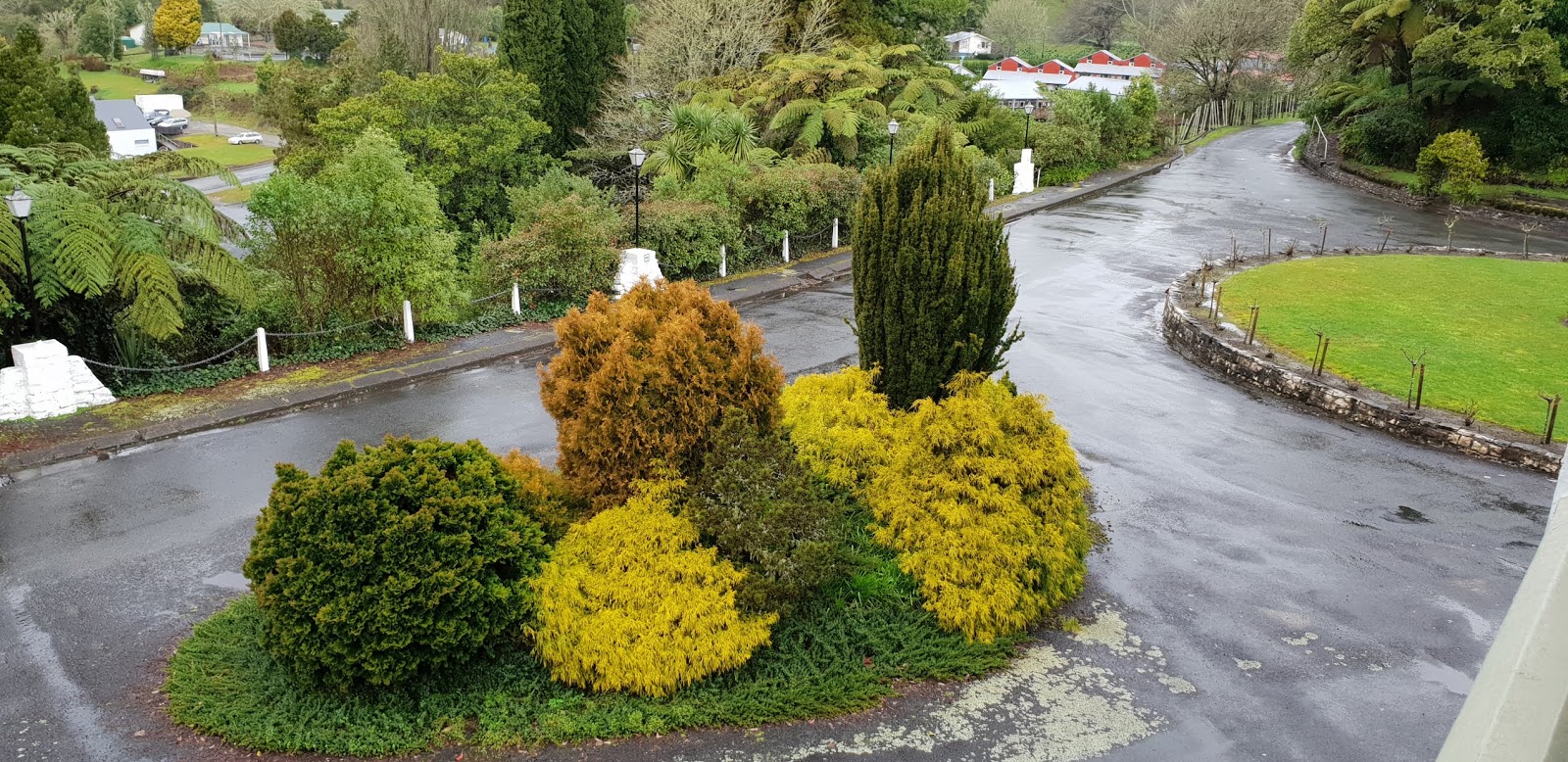
A relatively unassuming lane leads to what could be described as a grand hotel, called Waitomo Caves Hotel.

The original hotel was built in 1908, and it was later extended in 1928.  Part of it is ‘Victorian’, based on an eastern Europe mountain chalet, and part of it is ‘Art Deco’, the concrete wing, and a feature, if it could be called that, is none of the four corners are the same.

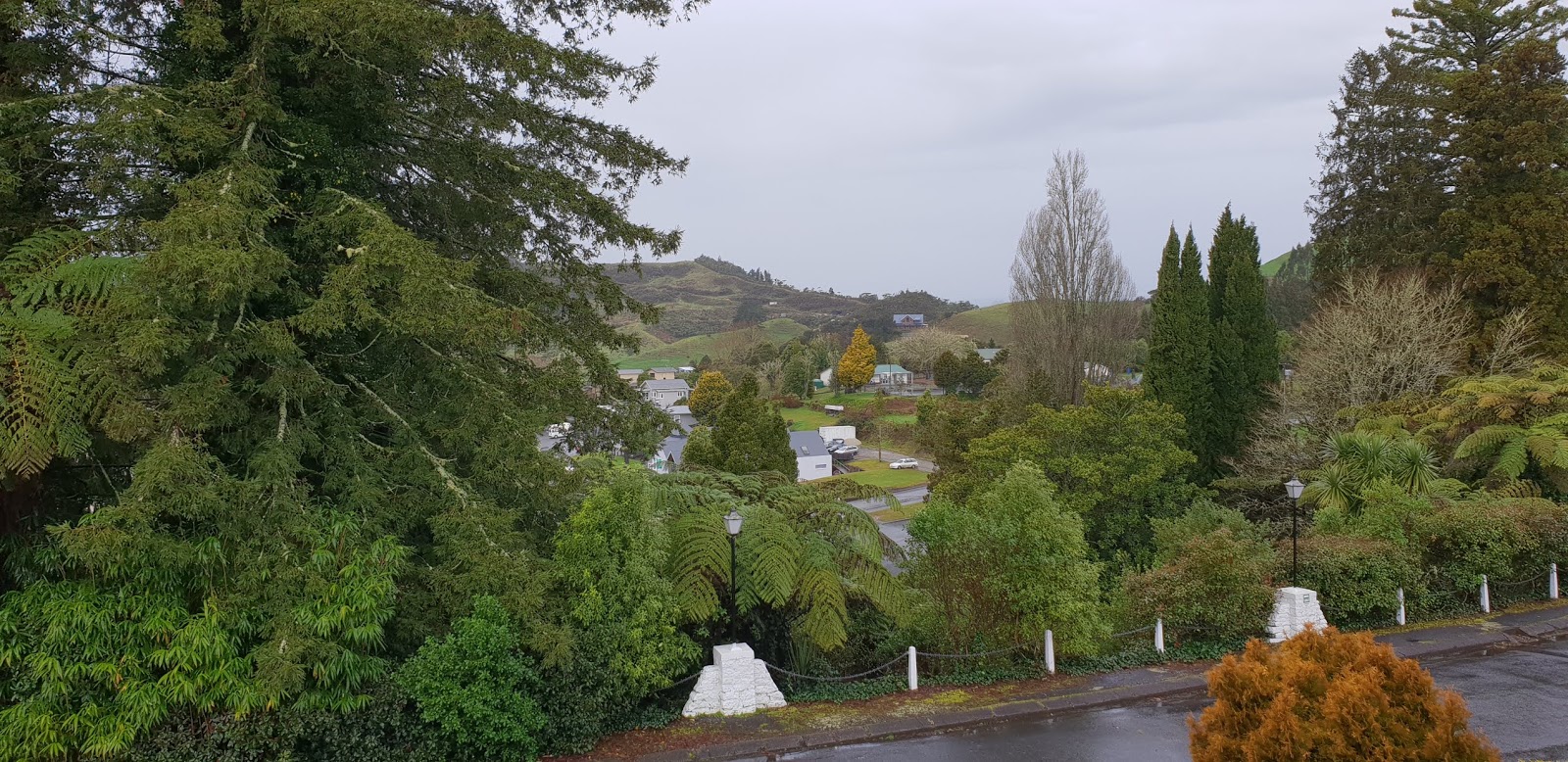
Views from the balcony show part of the surrounding gardens
 

and the town of Waitomo in the distance.
 

In gloomy weather, it does look rather spooky, and I suspect there may be a ghost or two lurking somewhere in the buildings.


But…
 

This a a very interesting, and the words of one of my younger grand daughters, a very creepy place. It would make an excellent base for paranormal activity, and there could very well be ghosts walking the corridors of this hotel.

It has the long darkish passageways that lead in all directions and to almost hidden rooms, a creepy nighttime aspect, and the creaky woodwork.

I know when we were exploring, it was easy to lose your bearings, if not get lost, trying to find certain places, and once found, hard to find your way back.

All in all, it was one of the best stays in a very old place going through the throes of modernisation.

And looking at it from the outside at night, I’ll leave you with that thought…

Writing about writing a book – Day 31

I’ve been toiling away in the attic putting the pieces together, and continuing to get the story written.

This means I’ve almost got Chapter 2 somewhere near the first draft, or maybe second. I didn’t expect it would take this long, but most authors, I suppose, take a year, or more, to write a book.

It’s been hot in the attic and making it hard to think let alone write, but it is a good background for the steamy jungles of Southeast Asia, and it has given me a few more ideas for the background sequences.

I’ll share one or two of those next.

In the meantime, so far so good.

The following is the first musings of what Chapter 2 might read like:

The first sign of anything amiss was the three police cars outside the building, parked awkwardly on the plaza in front of the building. Their lights were still flashing, and several policemen were standing near them, talking.

As I went through the front revolving door I could see several uniformed and plainclothes police in the lobby. Two were by the door, perhaps to prevent someone from leaving, one on the desk with two of the building security guards, and another near the elevator lobby.

Temporary barriers had been erected, funneling everyone through a narrow gap, where building security was checking ID cards and building passes, both of which I handed to one of the guards. These men were new, I hadn’t seen them before, and, when I took a closer look, saw they were from a different security company.

I guess with the shooting of Richardson, our management had decided the existing building security was not good enough. These new men looked a lot tougher if the number of visible tattoos on each were anything to go by, the sort of men I’d call mercenaries or ex-soldiers.

One of them gave me a good look, at my face to see if it was the same as that looking back at him on the ID card. It was not a good photo of me, and it was no surprise he was having difficulty. I’d cut my hear, I was wearing glasses, and I have the makings of a three-day beard.

I had not intended to shave while I was on holiday, and, given the urgent nature of the recall, had no time to do so before coming into the office. Benton could have warned me of the new security arrangements, but it did not surprise me he didn’t.

He called over a friend, not by turning and motioning to him, but talking into his collar communication device. It was rather pointless, the man he spoke to was no more than 20 feet away. He checked me versus the ID photo and let me pass. Perhaps his eyesight was better.

In the elevator heading up to my floor, 18, I had a few moments to consider the implications. New security meant trouble. It had happened once before, and it caused all manner of trouble for me and my staff. We had been locked out of the server room then.

The elevator jerked to a stop, and the doors opened. Everything looked quiet. I could not see any police or security personnel. But waiting for me in the lobby was Benton’s personal assistant, waiting to tell me that Benton had been dragged off to an emergency meeting, one, she said, that involved share prices or stock exchange announcements. I could not make sense of what she was saying, because his hysteria had become hers. The events of the morning so far had traumatized both of them.

I smiled, trying to be my usual charming self, and then wrote a message on a scrap of paper, and gave it to her to give to him when he returned from wherever he had gone. I was quite sure it was not a meeting. She reminded me Aitchison was still waiting to see me, and then walked off.

I turned and pressed the ‘up’ button, and the doors to the elevator car I’d stepped out of opened. I stepped in, pressed the button for 59, and the doors closed. Once again I was alone with my thoughts in an elevator. I had just enough time to realize that the investigation into Richardson must be more serious than first thought if the police were still here in numbers.

I thought I might visit the 17th floor after seeing Aitchison, and see what was happening. A decision was still pending when the doors opened, and I stepped out into ‘Fantasyland’.
It was the unofficial nickname we mortals from the lower floors called the Executive levels. They were the top three in the 60 story building. The mortals lived on levels 17 through 22.

This level housed all the Assistant General Managers. We had six. Aitchison was the AGM – Security. Goldstein, who was waiting in the lobby for an elevator, was the AGM – Administration. He was a surly chap near the age of retirement and spent more time on holiday than in the office. Preparing for retirement some said. Others were less charitable.

He nodded in my direction as we passed, I came out of the elevator car, he went in. The doors closed behind me and I let the silence envelop me.

© Charles Heath 2016-2021

An excerpt from “The Devil You Don’t”

Available on Amazon Kindle here:  https://amzn.to/2Xyh1ow


By the time I returned to the Savoie, the rain had finally stopped, and there was a streak of blue sky to offer some hope the day would improve.

The ship was not crowded, the possibility of bad weather perhaps holding back potential passengers.  Of those I saw, a number of them would be aboard for the lunch by Phillippe Chevrier.  I thought about it, but the Concierge had told me about several restaurants in Yvoire and had given me a hand-drawn map of the village.  I think he came from the area because he spoke with the pride and knowledge of a resident.

I was looking down from the upper deck observing the last of the boarding passengers when I saw a woman, notable for her red coat and matching shoes, making a last-minute dash to get on board just before the gangway was removed.  In fact, her ungainly manner of boarding had also captured a few of the other passenger’s attention.  Now they would have something else to talk about, other than the possibility of further rain.

I saw her smile at the deckhand, but he did not smile back.  He was not impressed with her bravado, perhaps because of possible injury.  He looked at her ticket then nodded dismissively, and went back to his duties in getting the ship underway.  I was going to check the departure time, but I, like the other passengers, had my attention diverted to the woman in red.

From what I could see there was something about her.  It struck me when the light caught her as she turned to look down the deck, giving me a perfect profile.  I was going to say she looked foreign, but here, as in almost anywhere in Europe, that described just about everyone.  Perhaps I was just comparing her to Phillipa, so definitively British, whereas this woman was very definitely not.

She was perhaps in her 30’s, slim or perhaps the word I’d use was lissom, and had the look and manner of a model.  I say that because Phillipa had dragged me to most of the showings, whether in Milan, Rome, New York, London, or Paris.  The clothes were familiar, and in the back of my mind, I had a feeling I’d seen her before.

Or perhaps, to me, all models looked the same.

She looked up in my direction, and before I could divert my eyes, she locked on.  I could feel her gaze boring into me, and then it was gone as if she had been looking straight through me.  I remained out on deck as the ship got underway, watching her disappear inside the cabin.  My curiosity was piqued, so I decided to keep an eye out for her.

I could feel the coolness of the air as the ship picked up speed, not that it was going to be very fast.  With stops, the trip would take nearly two hours to get to my destination.  It would turn back almost immediately, but I was going to stay until the evening when it returned at about half eight.  It would give me enough time to sample the local fare, and take a tour of the medieval village.

Few other passengers ventured out on the deck, most staying inside or going to lunch.  After a short time, I came back down to the main deck and headed forward.  I wanted to clear my head by concentrating on the movement of the vessel through the water, breathing in the crisp, clean air, and let the peacefulness of the surroundings envelope me.

It didn’t work.

I knew it wouldn’t be long before I started thinking about why things hadn’t worked, and what part I played in it.  And the usual question that came to mind when something didn’t work out.  What was wrong with me?

I usually blamed it on my upbringing.

I had one of those so-called privileged lives, a nanny till I was old enough to go to boarding school, then sent to the best schools in the land.  There I learned everything I needed to be the son of a Duke, or, as my father called it in one of his lighter moments, nobility in waiting.

Had this been five or six hundred years ago, I would need to have sword and jousting skills, or if it had been a few hundred years later a keen military mind.  If nothing else I could ride a horse, and go on hunts, or did until they became not the thing to do.

I learned six languages, and everything I needed to become a diplomat in the far-flung British Empire, except the Empire had become the Commonwealth, and then, when no-one was looking, Britain’s influence in the world finally disappeared.  I was a man without a cause, without a vocation, and no place to go.

Computers were the new vogue and I had an aptitude for programming.  I guess that went hand in hand with mathematics, which although I hated the subject, I excelled in.  Both I and another noble outcast used to toss ideas around in school, but when it came to the end of our education, he chose to enter the public service, and I took a few of those ideas we had mulled over and turned them into a company.

About a year ago, I was made an offer I couldn’t refuse.  There were so many zeroes on the end of it I just said yes, put the money into a very grateful bank, and was still trying to come to terms with it.

Sadly, I still had no idea what I was going to do with the rest of my life.  My parents had asked me to come back home and help manage the estate, and I did for a few weeks.  It was as long as it took for my parents to drive me insane.

Back in the city, I spent a few months looking for a mundane job, but there were very few that suited the qualifications I had, and the rest, I think I intimidated the interviewer simply because of who I was.  In that time I’d also featured on the cover of the Economist, and through my well-meaning accountant, started involving myself with various charities, earning the title ‘philanthropist’.

And despite all of this exposure, even making one of those ubiquitous ‘eligible bachelor’ lists, I still could not find ‘the one’, the woman I wanted to spend the rest of my life with.  Phillipa seemed to fit the bill, but in time she proved to be a troubled soul with ‘Daddy’ issues.  I knew that in building a relationship compromise was necessary, but with her, in the end, everything was a compromise and what had happened was always going to be the end result.

It was perhaps a by-product of the whole nobility thing.  There was a certain expectation I had to fulfill, to my peers, contemporaries, parents and family, and those who either liked or hated what it represented.  The problem was, I didn’t feel like I belonged.  Not like my friend from schooldays, and now obscure acquaintance, Sebastian.  He had been elevated to his Dukedom early when his father died when he was in his twenties.  He had managed to fade from the limelight and was rarely mentioned either in the papers or the gossip columns.  He was one of the lucky ones.

I had managed to keep a similarly low profile until I met Phillipa.  From that moment, my obscurity disappeared.  It was, I could see now, part of a plan put in place by Phillipa’s father, a man who hogged the limelight with his daughter, to raise the profile of the family name and through it their businesses.  He was nothing if not the consummate self-advertisement.

Perhaps I was supposed to be the last piece of the puzzle, the attachment to the establishment, that link with a class of people he would not normally get in the front door.  There was nothing refined about him or his family, and more than once I’d noticed my contemporaries cringe at the mention of his name, or any reference of my association with him.

Yet could I truthfully say I really wanted to go back to the obscurity I had before Phillipa?  For all her faults, there were times when she had been fun to be with, particularly when I first met her when she had a certain air of unpredictability.  That had slowly disappeared as she became part of her father’s plan for the future.  She just failed to see how much he was using her.

Or perhaps, over time, I had become cynical.

I thought about calling her.  It was one of those moments of weakness when I felt alone, more alone than usual.

I diverted my attention back to my surroundings and the shoreline.  Out of the corner of my eye, I could see the woman in the red coat, making a move.  The red coat was like a beacon, a sort of fire engine red.  It was not the sort of coat most of the women I knew would wear, but on her, it looked terrific.  In fact, her sublime beauty was the one other attribute that was distinctly noticeable, along with the fact her hair was short, rather than long, and jet black.

I had to wrench my attention away from her.

A few minutes later several other passengers came out of the cabin for a walk around the deck, perhaps to get some exercise, perhaps checking up on me, or perhaps I was being paranoid.  I waited till they passed on their way forward, and I turned and headed aft.

I watched the wake sluicing out from under the stern for a few minutes, before retracing my steps to the front of the ship and there I stood against the railing, watching the bow carve its way through the water.  It was almost mesmerizing.  There, I emptied my mind of thoughts about Phillipa, and thoughts about the woman in the red coat.

Until a female voice behind me said, “Having a bad day?”

I started, caught by surprise, and slowly turned.  The woman in the red coat had somehow got very close me without my realizing it.  How did she do that?  I was so surprised I couldn’t answer immediately.

“I do hope you are not contemplating jumping.  I hear the water is very cold.”

Closer up, I could see what I’d missed when I saw her on the main deck.  There was a slight hint of Chinese, or Oriental, in her particularly around the eyes, and of her hair which was jet black.  An ancestor twice or more removed had left their mark, not in a dominant way, but more subtle, and easily missed except from a very short distance away, like now.

Other than that, she was quite possibly Eastern European, perhaps Russian, though that covered a lot of territory.  The incongruity of it was that she spoke with an American accent, and fluent enough for me to believe English was her first language.

Usually, I could ‘read’ people, but she was a clean slate.  Her expression was one of amusement, but with cold eyes.  My first thought, then, was to be careful.

“No.  Not yet.”  I coughed to clear my throat because I could hardly speak.  And blushed, because that was what I did when confronted by a woman, beautiful or otherwise.

The amusement gave way to a hint of a smile that brightened her demeanor as a little warmth reached her eyes.  “So that’s a maybe.  Should I change into my lifesaving gear, just in case?”

It conjured up a rather interesting image in my mind until I reluctantly dismissed it.

“Perhaps I should move away from the edge,” I said, moving sideways until I was back on the main deck, a few feet further away.  Her eyes had followed me, and when I stopped she turned to face me again.  She did not move closer.

I realized then she had removed her beret and it was in her left side coat pocket.  “Thanks for your concern …?”

“Zoe.”

“Thanks for your concern, Zoe.  By the way, my name is John.”

She smiled again, perhaps in an attempt to put me at ease.  “I saw you earlier, you looked so sad, I thought …”

“I might throw myself overboard?”

“An idiotic notion I admit, but it is better to be safe than sorry.”

Then she tilted her head to one side then the other, looking intently at me.  “You seem to be familiar.  Do I know you?”

I tried to think of where I may have seen her before, but all I could remember was what I’d thought earlier when I first saw her; she was a model and had been at one of the showings.  If she was, it would be more likely she would remember Phillipa, not me.  Phillipa always had to sit in the front row.

“Probably not.”  I also didn’t mention the fact she may have seen my picture in the society pages of several tabloid newspapers because she didn’t look the sort of woman who needed a daily dose of the comings and goings, and, more often than not, scandal associated with so-called celebrities.

She gave me a look, one that told me she had just realized who I was.  “Yes, I remember now.  You made the front cover of the Economist.  You sold your company for a small fortune.”

Of course.  She was not the first who had recognized me from that cover.  It had raised my profile considerably, but not the Sternhaven’s.  That article had not mentioned Phillipa or her family.  I suspect Grandmother had something to do with that, and it was, now I thought about it, another nail in the coffin that was my relationship with Phillipa.

“I wouldn’t say it was a fortune, small or otherwise, just fortunate.”  Each time, I found myself playing down the wealth aspect of the business deal.

“Perhaps then, as the journalist wrote, you were lucky.  It is not, I think, a good time for internet-based companies.”

The latter statement was an interesting fact, one she read in the Financial Times which had made that exact comment recently.

“But I am boring you.”  She smiled again.  “I should be minding my own business and leaving you to your thoughts.  I am sorry.”

She turned to leave and took a few steps towards the main cabin.

“You’re not boring me,” I said, thinking I was letting my paranoia get the better of me.  It had been Sebastian on learning of my good fortune, who had warned me against ‘a certain element here and abroad’ whose sole aim would be to separate me from my money.  He was not very subtle when he described their methods.

But I knew he was right.  I should have let her walk away.

She stopped and turned around.  “You seem nothing like the man I read about in the Economist.”

A sudden and awful thought popped into my head.  Those words were part of a very familiar opening gambit.  “Are you a reporter?”

I was not sure if she looked surprised, or amused.  “Do I look like one?”

I silently cursed myself for speaking before thinking, and then immediately ignored my own admonishment.  “People rarely look like what they are.”

I saw the subtle shake of the head and expected her to take her leave.  Instead she astonished me.

“I fear we have got off on the wrong foot.  To be honest, I’m not usually this forward, but you seemed like you needed cheering up when probably the opposite is true.  Aside from the fact this excursion was probably a bad idea.  And,” she added with a little shrug, “perhaps I talk too much.”

I was not sure what I thought of her after that extraordinary admission. It was not something I would do, but it was an interesting way to approach someone and have them ignoring their natural instinct.  I would let Sebastian whisper in my ear for a little longer and see where this was going.

“Oddly enough, I was thinking the same thing.  I was supposed to be traveling with my prospective bride.  I think you can imagine how that turned out.”

“She’s not here?”

“No.”

“She’s in the cabin?”  Her eyes strayed in that direction for a moment then came back to me.  She seemed surprised I might be traveling with someone.

“No.  She is back in England, and the wedding is off.  So is the relationship.  She dumped me by text.”

OK, why was I sharing this humiliating piece of information with her?  I still couldn’t be sure she was not a reporter.

She motioned to an empty seat, back from the edge.  No walking the plank today.  She moved towards it and sat down.  She showed no signs of being cold, nor interested in the breeze upsetting her hair.  Phillipa would be having a tantrum about now, being kept outside, and freaking out over what the breeze might be doing to her appearance.

I wondered, if only for a few seconds if she used this approach with anyone else.  I guess I was a little different, a seemingly rich businessman alone on a ferry on Lake Geneva, contemplating the way his life had gone so completely off track.

She watched as I sat at the other end of the bench, leaving about a yard between us.  After I leaned back and made myself as comfortable as I could, she said, “I have also experienced something similar, though not by text message.  It is difficult, the first few days.”

“I saw it coming.”

“I did not.”  She frowned, a sort of lifeless expression taking over, perhaps brought on by the memory of what had happened to her.  “But it is done, and I moved on.  Was she the love of your life?”

OK, that was unexpected.

When I didn’t answer, she said, “I am sorry.  Sometimes I ask personal questions without realizing what I’m doing.  It is none of my business.”  She shivered.  “Perhaps we should go back inside.”

She stood, and held out her hand.  Should I take it and be drawn into her web?  I thought of Sebastian.  What would he do in this situation?

I took her hand in mine and let her pull me gently to my feet.  “Wise choice,” she said, looking up at the sky.

It just started to rain.


© Charles Heath 2015-2020

newdevilcvr6

Endless flight – a short story

It had been billed as the longest commercial flight in the world.  London to Sydney.

Previous times it had been flown, it was devoid of passengers and cargo, except for a few reporters and airline staff; not more than about 20.

The plane, state of the art, was capable of flying twenty-one hours straight.  We would only need Nineteen and a half.  It was the first flight of its kind, and we were the first to participate in what was being touted as history-making.

I was on board only because I’d won a competition.  To be honest, I couldn’t believe my luck.

I guess it was the same for the other 287 of us on board.  With baggage and cargo included, oh, and not forgetting fuel, I guess our biggest concern was getting off the ground.

It wasn’t long before that fear had been dispelled, though for a moment more than one of us thought we might not get into the air.  There were collective sighs of relief when we finally lurched into the air.

Once the seat belt sign went off, the First Officer spoke to the passengers, more or less telling us we were going to make history and to sit back and enjoy the in-flight service.

I guess it was ironic that as someone who didn’t like flying I was in this plane.  The thing is, I didn’t expect to win the competition.  But, I was on board for the experience and was going to make the most of it.  I’d brought half a dozen crossword books.

I woke from an uneasy sleep about two hours before I e plane was due to land.  The cabin lights had come on, and breakfast was about to be served.

Everyone else was in varying states of awareness.  Some hadn’t slept at all, which was what usually happened to me, and they looked like I felt.  Bleary-eyed and half awake.

I looked at the flight path in the headrest in front of me, and it said we had about an hour and fifty minutes, and from the outset, precisely on time.  We’d had headwinds and tailwinds but neither had any lasting effect on our arrival time.

Something else did.  After breakfast had been cleared away, and we were all getting ready for the last hour of the flight, word came through from the flight deck that we had to go into a holding pattern due to a problem on the ground.

The first question on everyone’s mind, did we have enough fuel.  The Captain, this time, allayed that fear.

But, I was sitting over the wing where I could see the engine.  I was not an expert but I thought I’d heard a murmur, the sort an engine made where the fuel supply was running out.

Perhaps not.  Perhaps it was my overwrought imagination after not enough proper sleep.

Another half-hour passed, and I could feel a change in the plane’s flight.  I was now listening and waiting and interpreting.  The Captain said the problem was resolved and we were cleared to land.

That’s when the engine outside my window stuttered, if only for a fraction of a second.

Fortunately, we were well into our descent, and I could see the ground below.  Now, going through some low cloud, the ride became bumpy, and I was sure it was covering the more frequent stuttering of the engine, and once, I was not the only one to hear it.

As the wheels went down and clunked into place, I think the engine stopped, though I couldn’t be sure, because there was little or no change in the plane’s flight other than a slight change in the plane’s speed but not its rate of descent, and none of us would have been any wiser had the pilot, in his usual calm manner, not told us there was a small problem with one of the engines but there was no problem with landing, and we would be on the ground in ten minutes.

In fact, the landing was, as any other I’d been on, flawless, even though I was sure I heard a slight stutter in the other ending, but by that time we were on the ground.

The only difference between this and any other landing was the accompaniment of several emergency services trucks, and the fact we were not going to a gate.  Instead, we were taken to a bay not far from the runways, and then calmly taken off the plane.

From the ground, just before being loaded onto a bus, I could see the plane, and it looked the same as it had any other time.

What did bother me was several words spoken by what looked to be an engineer.  He said, “That plane was literally flying on vapor.  What you’re seeing is 228 of the luckiest people in the world.”

If ever there was an excuse to buy a lottery ticket…

© Charles Heath 2020-2021

An excerpt from “If Only” – a work in progress

Investigation of crimes doesn’t always go according to plan, nor does the perpetrator get either found or punished.

That was particularly true in my case.  The murderer was incredibly careful in not leaving any evidence behind, to the extent that the police could not rule out whether it was a male or a female.

At one stage the police thought I had murdered my own wife though how I could be on a train at the time of the murder was beyond me.  I had witnesses and a cast-iron alibi.

The officer in charge was Detective First Grade Gabrielle Walters.  She came to me on the day after the murder seeking answers to the usual questions like, when was the last time you saw your wife, did you argue, the neighbors reckon there were heated discussions the day before.

Routine was the word she used.

Her Sargeant was a surly piece of work whose intention was to get answers or, more likely, a confession by any or all means possible.  I could sense the raging violence within him.  Fortunately, common sense prevailed.

Over the course of the next few weeks, once I’d been cleared of committing the crime, Gabrielle made a point of keeping me informed of the progress.

After three months the updates were more sporadic, and when, for lack of progress, it became a cold case, communication ceased.

But it was not the last I saw of Gabrielle.

The shock of finding Vanessa was more devastating than the fact she was now gone, and those images lived on in the same nightmare that came to visit me every night when I closed my eyes.

For months I was barely functioning, to the extent I had all but lost my job, and quite a few friends, particularly those who were more attached to Vanessa rather than me.

They didn’t understand how it could affect me so much, and since it had not happened to them, my tart replies of ‘you wouldn’t understand’ were met with equally short retorts.  Some questioned my sanity, even, for a time, so did I.

No one, it seemed, could understand what it was like, no one except Gabrielle.

She was by her own admission, damaged goods, having been the victim of a similar incident, a boyfriend who turned out to be an awfully bad boy.  Her story varied only in she had been made to witness his execution.  Her nightmare, in reliving that moment in time, was how she was still alive and, to this day, had no idea why she’d been spared.

It was a story she told me one night, some months after the investigation had been scaled down.  I was still looking for the bottom of a bottle and an emotional mess.  Perhaps it struck a resonance with her; she’d been there and managed to come out the other side.

What happened become our secret, a once-only night together that meant a great deal to me, and by mutual agreement, it was not spoken of again.  It was as if she knew exactly what was required to set me on the path to recovery.

And it had.

Since then, we saw each about once a month in a cafe.   I had been surprised to hear from her again shortly after that eventful night when she called to set it up, ostensibly for her to provide me with any updates on the case, but perhaps we had, after that unspoken night, formed a closer bond than either of us wanted to admit.

We generally talked for hours over wine, then dinner and coffee.  It took a while for me to realize that all she had was her work, personal relationships were nigh on impossible in a job that left little or no spare time for anything else.

She’d always said that if I had any questions or problems about the case, or if there was anything that might come to me that might be relevant, even after all this time, all I had to do was call her.

I wondered if this text message was in that category.  I was certain it would interest the police and I had no doubt they could trace the message’s origin, but there was that tiny degree of doubt, about whether or not I could trust her to tell me what the message meant.

I reached for the phone then put it back down again.  I’d think about it and decide tomorrow.

© Charles Heath 2018-2020

The cinema of my dreams – Was it just another surveillance job – Episode 49

I’m back home and this story has been sitting on the back burner for a few months, waiting for some more to be written.

The trouble is, there are also other stories to write, and I’m not very good at prioritizing.

But, here we are, a few minutes opened up and it didn’t take long to get back into the groove.

Chasing leads, maybe


Needing to know more about Severin, aka David Westcott trumped talking to Jan.  As it stood, it was difficult to know where her allegiances lay, with Dobbin, her handler, or someone else.

I hailed a cab and headed back to the office.  I wanted to spend some time on the computer, hoping I had enough clearance to poke around in the departmental records, in particular personnel.

Just as the taxi dropped me outside the anonymous sandstone building, my phone rang.  I doubt it would be Severin again.

“Where are you?”

Jan.

“I do actually have a life, despite what you or Dobbin might think.  I’m not sure I really want to have anything to do with you after what I saw you people do to Maury.  Aside from the fact that you told me he had found the tracker and disposed of it.  Once you start telling lies, there’s no going back.”

“I had nothing to do with that.”

“You were holding him for the interrogation squad.  That makes you complicit.  It also makes me very wary about what Dobbin will do to me if he thinks I know anything, which I don’t.”

“As far as I’m aware, all we have to do is find O’Connell.”

“And what?  Torture him too if he doesn’t fess up?  I know he doesn’t have it.  I had him under surveillance the whole time.  I frisked him after he was shot.  What do you know that I don’t?”

“No more than you.”

“Not if you’re suggesting that he’s alive.”  This was an interesting conversation, especially after O’Connell himself told me that Dobbin’s cleaners had come and rescued him, which meant Dobbin definitely knew he was still alive.

The question was, how many lies was she going to tell me.

“You know where O’Connell had his real residence.  When were you going to share that piece in information?”

Silence, then, “How?”

“I saw you there.”

“But…”

I knew what she was going to say, when was I going to share.  When I came back, not intending to find a dead body in the hotel room.

“Had you been in the room when I got back, we were going to have a frank conversation about who you’re working for, but I’ve just had that conversation with Dobbin himself.  No doubt he called you right after he dropped me off.

“He’s not happy.”

“Then that’s on him not trusting people.  You want to have a good hard look at what your options are when we next meet.  I’ll admit I haven’t been doing this very long, but one thing I have learned, is not to trust anyone.

“I suggest we meet up later tonight.  Bear in mind that it will be in an open space for obvious reasons, and quite frankly, I’m not sure how Dobbin thinks this collaboration is going to work.  I’ll text you the place and time.”

It might have been a little unfair to take my concerns about Dobbin out on her.  I’m not sure what I had expected would happen when I took this job on, certainly, the instructors had emphasized that being an agent was very dangerous to our health and that we could, ultimately, trust no one, even those closest to us.  Our world by its very nature was one of mistrust, lies, and deceit, that we would eventually not know who we really were and be doing things we never thought we could.

O’Connell was in the same situation, most likely because people were trying to kill him.  It was a small detail that stuck in the back of my mind.

If Severin and Maury wanted O’Connell alive, and that definitely was the end result of the surveillance operation, to allow the drop then to corral him, why would they have sanctioned his execution in the alley?

In fact, how could they know he would end up in that alley.

The only conclusion I could come up with, Dobbin had put a tracker on him, one that he didn’t know about, and also had surveillance on O’Connell.  It made sense because I was sure there were people in that area that didn’t look like they belonged.

So, a tracker on the USB was being tacked by an unidentified as yet party who no doubt wanted the information themselves, not Severin, and not Dobbin.

I shrugged.  I’m sure there would be more questions before the day was out.

…

© Charles Heath 2020-2022

“Trouble in Store” – Short stories my way: Revisiting the first section

First drafts are always a little messy.  The words spill out onto the page, and it’s rare that any or all of them are perfect.  Sometimes you get lucky, but most of the time you don’t.

That’s why there’s revision, or by the more dreaded name, editing.

Editing conjures up a lot of different images in my mind, from completely re-writing, to cutting the mss down in size.  Or where you discover the main character’s name has changed from Bill to Fred after a bad night.

Usually, though, as stories progress, they go through a number of rewrites, and sometimes because of what follows.  It depends on how long a period the story is written.  Some of mine take days, others quite a lot longer.

This is the rewrite of the first section of the short story I’m undertaking, adding some new details:


Jack was staring down the barrel of a gun.

He had gone down to the corner shop to get a pack of cigarettes.

He had to hustle because he knew the shopkeeper, Alphonse, liked to close at 11:00 pm sharp.  His momentum propelled him through the door, causing the customer warning bell to ring loudly as the door bashed into it, and before the sound had died away, he knew he was in trouble.

It took a second, perhaps three, to sum up the situation. 

Young girl, about 16 or 17, scared, looking sideways at a man on the ground, then Alphonse, and then Jack.  He recognized the gun, a Luger, German, relic of WW2, perhaps her father’s souvenir, now pointing at him then Alphonse, then back to him.

Jack to another second or two to consider if he could disarm her.  No, the distance was too great.  He put his hands out where she could see them.  No sudden movements, try to remain calm, his heart rate up to the point of cardiac arrest.

Pointing with the gun, she said, “Come in, close the door, and move towards the counter.”

Everything but her hand steady as a rock.  The only telltale sign of stress, the beads of perspiration on her brow.  It was 40 degrees Fahrenheit in the shop.

Jack shivered, and then did as he was told.  She was in the unpredictable category.

“What’s wrong with your friend?”  Jack tried the friendly approach, as he took several slow steps sideways towards the counter.

The shopkeeper, Alphonse, seemed calmer than usual, or the exact opposite spoke instead, “I suspect he’s an addict, looking for a score.  At the end of his tether, my guess, and came to the wrong place.”

Wrong time, wrong place, in more ways than one Jack thought, now realizing he had walked into a very dangerous situation.  She didn’t look like a user.  The boy on the ground, he did, and he looked like he was going through the beginnings of withdrawal.

 “Simmo said you sell shit.  You wanna live, ante up.”  She was glaring at Alphonse. 

The language, Jack thought, was not her own, she had been to a better class of school, a good girl going through a bad boy phase. Caught in a situation she was not equipped to deal with.


© Charles Heath 2016-2020

Writing about writing a book – Day 29

It is hard sometimes to keep the lid on what might be called justification of your position in a company where there are many naysayers, and little support from those who are supposed to be working together towards a single conclusion.

Not work against you, or to have their own agenda, not only in furthering their career on the back of your mistakes but take the credit for all your hard work.

Every company has them.

I’ve worked in a few where this has happened, but the deciding factor of whether they’re successful or not is when they have to stand on their own two feet when the source of their reputed good work suddenly is unavailable, and the shit hits the proverbial fan.

What is it called?  Art imitates life.

Benton is the proverbial leader who takes credit, but when it comes to the crunch, can’t pull the rabbit out of the hat.

I guess in writing this little piece, I was subconsciously getting back at someone from a real, but now distant, past.

Perhaps there might be a little more about one of the places I worked cropping up from time to time.

It’s not so much writing about what you know, but writing about what happened, and what you might have wanted to happen.  Invariably it never did, because these credit takers are a cunning lot, and sometimes lay the foundations for getting out from under when there is a disaster.

Unfortunately, I’ve been there too.

It’s called cutting your nose off to spite your face.

Be that as it may, I let this little vent run and see where it goes.

It was my responsibility since I’d recommended it and then won the support of management over his objections, and following that it had become a point of continual contention, a petty war neither of us was going to win.

I tried to keep the joy out of my voice.  He’d also vetoed my recommendation for a full-time network engineer as my alternative, making my job become single point sensitive.  There was no one to replace me if anything went wrong.

“Sounds like you’re having fun.”  I had to work hard to keep the amusement out of my tone.

“Fun nothing.”  His tone was reaching that exasperation point.  “There is no one else.”

“Why did you approve my holiday if I can’t have one?” I’d stretch his patience just a little more.

“You promised me the network was stable.”

“It is, and has been for the last six months.  I’ve said so in my last six-monthly reports.  You have been reading them, haven’t you?”

Silence.  It said all I needed to know.

I had a choice sentence to deliver, but an ignominious thought popped into my head.  He could probably use this against me, and would if I gave him the opportunity.  Perhaps I should shelve my differences with him for this morning.

Aside from that, there was a shooting, and we didn’t get one of those every day.  Not that it would probably amount to very much.  During the previous week, the office grapevine had been working overtime on the rumor Richardson was having a relationship with one of the ladies in the Accounts department.  It was just the sort of scandal the data entry staff thrived on.

A shooting and a network failure.  I didn’t know which was worse.  Perhaps if it was Benton they’d shot, there might be some justice…

I decided not to argue with him.  “Give me an hour.”

“Half.  Aitchison wants to see you.”

Werner Aitchison was head of Internal Security and a man who took his job seriously.  Enough, that is, to annoy my staff, and me.  He was ex-military intelligence, so ‘they’ said, but he appeared to me like a man out of his depth in this new age of communications.  Computers had proliferated in our company over the last few years, and the technology to go with them spiraling out of control.

We dealt in billions via financial transactions processed on computers, computers which, we were told often enough, was insecure, and easily taken control of outside their environment.  Aitchison was paranoid, and rightly so, but he had a strange way of going about his business.  He and I had butted heads on many occasions, and we may have had our disagreements, but we were good friends and colleagues outside work.

Just in case Benton was accusing me, I said, as sincerely as I could, “I didn’t do it.”

“Of that, I have no doubt.  He has requested a meeting with you at 10 am.  You will be there.”

“I said I would come in to look at the problem.  I didn’t say I was staying.”

“Let me know when you get in.”  That was it.  No ifs.  No buts.  Just a simple, ‘Let me know…’

I seriously considered ignoring him, but somewhere within me, there was that odd sense of loyalty.  Not to Benton, not to the Company, but to someone else, the man who had given me the job in the first place, who had given me every opportunity.

I was doing it for him and would tell him.

When I found out who it was!

© Charles Heath 2016-2021