A to Z – April – 2026 – F

F is for – Five Words

I’d heard about the show, one with a funny title that when people asked, they couldn’t quite get it exactly right, but close enough to “This was your life”.

I thought it was about dead people, odd, because I knew it was impossible to interview dead people, though those days, someone told me, anything was possible on television.

Then I thought it was about people almost at the end of their life, as a celebration of a celebrity, or someone famous.

It was a surprise to learn it was about ordinary people.

Like me.  You couldn’t find anyone more ordinary, or as several people told me, utterly forgettable.

That hurt, but in a sense, they were right.

Which made me wonder just how it was that I received a letter in the mail telling me I had been selected for an episode.

Of course, I thought someone was playing a hoax, and rang them, expecting to be laughed at, but no.  I was being asked to go on the show.

I have no idea why I agreed.

When I arrived at the studio, I was taken to an office where the executive producer told me what was going to happen: sign some papers to say I was not going to divulge details of the show before it was broadcast, and what my five words were.

They were different for each participant.

Today, they were recording five episodes.  I was going to be the last.

My words were Good, Afraid, Trouble, Look and Quiet.  I had plenty of time to think about them in relation to my story.

And that was the odd thing … I actually had a story.

“So,” the host said, in that mesmerising voice of hers that had both the audience and the participants entranced, “Tell us what the word Good means to you.”

Of course, it wasn’t just the word good, it was a better word that meant the same thing.

“It wasn’t just a good day, it was a fantastic, unbelievable day.”

I remembered it well, that last day of high school, when it was, in a lot of cases, the last time I would see my fellow classmates.

Most of them I never wanted to see again, because that final year had been marked by more lows than highs, culminating in my date for the Prom falling ill, and so I didn’t go.  Then I discovered she lied, went with my so-called best friend, and made last week unbearable.

So much so, I headed straight for the railway station and intended to hide at my grandmother’s house on the other side of the country.

The day started badly, arguing with my parents, arguing with my siblings, getting into three separate scuffles at school, then coming home and throwing a few things into a backpack and leaving before I saw anyone at home.

Every step from the house to the railway depot was a reminder of each betrayal, so by the time I sat in the waiting room, an hour before the train was due, I was mentally and physically exhausted.

I expected someone from home would come and try to persuade me to stay.

They didn’t.

Perhaps that was the final betrayal.  The fact that not one of my own family cared whether I stayed or left.

Very few people took the train.  Most people leaving town went to the airport and got a plane.  There was a bus, but it took forever to get anywhere, and the train was an acceptable alternative.

I was the only one leaving town by train.

Until I wasn’t.

Five students in that final year shared my disposition, in that we preferred to study, get good grades and then go to college.  The other three left a week before, gaining admission to an Ivy League university.

I hadn’t applied.

The other person was Alison Breton. 

She was one of those people who no one gave a second look at, or so much as a first.  She was clever, and all the boys didn’t like girls who were smarter than they.

She was also plain, or so it appeared, which caused most of the boys to point out her faults, such as how she presented herself.  Unlike the other girls who dressed to impress, wore make-up and looked stunning, even if it was an objectifying description, she preferred to be different.

I thought she was brave.

We barely spoke, though we were in the same study group with the three Ivy Leaguers.  Two of them were keen on her, but she was not the dating sort.  Or so they said.

Ten minutes before the train arrived, another person came and sat in the waiting room.

Alison Breton.

I ignored her for five whole minutes.  I mean, what could I say to her?

It was when the host mentioned the second word, “afraid.”

It was part of the truth and summed up how I felt about her.  I was afraid of her.  Afraid, or more to the point, literally terrified.

I had imagined many times what I would say to her, fabricating long, I thought, interesting conversations.

And if I let my imagination stretch a little further, I might have to admit I liked her, perhaps more than I should, but could and would never admit it.  One humiliation by a girl in a lifetime was enough, and my completely shattered ego couldn’t take another rejection.

Five whole minutes before she said, “So you’re leaving this dump too?”

It was obvious I was, though the dump was harsh.

And then words came out that were not my own.  “What’s your excuse?”

I knew the moment I tried to speak to her that it would be over.  Maryanne, the betrayer, was different.  I could speak to her, and because of that, I thought she was the one.

She smiled.  “Probably the same as yours.  James told me he loved me, but he didn’t.  Apparently, I’m the subject of a bet.”

I’d heard a rumour and couldn’t believe it.  Or perhaps I could.  Small town, small-minded boys, one ambition, to have what they couldn’t.

“Best get out of town then.”  My solution to the problem wasn’t a one-size-fits-all all.

But it was a response to the host dropping the word trouble.  And then looked and was quiet.  It seemed they were all intertwining in the narrative that was unfolding.

“That doesn’t explain your desire to leave, other than the Maryanne humiliation.  I guess a month away from here might make it go away.”

“It won’t.  I have brothers who will never let me forget.  You grow up in this place, no one forgets the trouble, or more appropriately, your legacy.”

“It’s always us quiet kids, eh, the ones who don’t make a fuss, who are studious and respectful, who don’t want to be noticed.  No matter how we look or feel.  I tried to be invisible.”

“It made you stand out more than the Maryannes.  I was just fodder for girls like her, pandering to the mores of the football team, and you know what they were like.”

Being smart didn’t make us immune to being hurt or hoping against hope that we had a chance.

We both heard the sound of the horn in the distance, a warning that the train was approaching the railway crossing, about two or three miles outside of town.

The train, like always, was running late.

She stood.  “Where are you going?”

“San Francisco.  My grandmother.  She has a large house and many unusual friends.  She was an actress once, when Hollywood was going through its black and white phase.”

“I’m going there too.  My mother’s sister, though I suspect she isn’t.  Maybe we can pretend we’re brother and sister, to be safe.”

I shrugged.  Why not?  Once we got there, I’d probably never see her again.

“Except,” Alison said, holding my hand, and talking to the host with that whimsical expression she had when telling others the story of how we met, “we talked and talked and fell in love, got married, have five amazing children, twelve equally amazing grandchildren, and just lived our lives.  Nothing special, and yet to us, very, very special.”

And then, surprisingly, our time was up.  I had expected it would take half the time allotted.  Instead, it was two hours later, and no one, not any of us, had noticed.

©  Charles Heath  2025-2026

“Bloody hell…” – a short story

The cell phone’s insistent and shrill ring dragged my mind away from the crossword, and after a fairly mild curse, I picked it up.

Sidney, my brother.  Odd he was calling me at this hour of the night.

“What,” I barked into the microphone.

“That’s no way to speak to your baby brother.”  His smooth tones rarely reached a screaming point, which was often the reason why mine did.

And who calls the younger brother ‘baby’ brother these days?

“What do you want?”

A hesitation.  He was in trouble again; I could feel it.

“Can you come down to the bar?  I seem to have left my wallet at home.”  Sheepish, and just enough to stop me from yelling at him.  It was not the first time, nor would it be the last.

“I told you the last time was the last time.”

“Just this once, please?”

I shook my head.  That was probably my biggest fault, giving in to him.  After our mother had died, and our father had to work, it was left to me to bring him up.  He was going to be the death of me yet.  “Where?”

“The usual place.”

I was surprised because the last I’d heard they’d banned him from going in there.  It was only a twenty-minute walk from my apartment, but, late at night, and in winter, there was snow in the air.  And the odd snowflake falling, a prelude to much worse.

About a hundred yards from the bar I had a shiver go down my spine.  I’d not had that for a long time, not since school, and the trouble with Wiley, the school bully.  Wiley had graduated to the local thug, done a few stints in jail, and last I heard he had been sent down for a few years for an assault.

I stopped and took a moment.  Perhaps karma was trying to tell me something.

I shrugged.  Just in my imagination.  I reached the door, took a moment then went in.  He was standing by the bat looking a little apprehensive.  He was in more trouble than just not paying his bar bill.

Close up I could see the fear in his expression.  “Bloody hell, Sid, what have you done now?”

“A problem that he insists his older brother would be happy to pay for.”

I knew that voice and felt instant dread.

Wiley.

In the flesh, and not looking very happy at all.

© Charles Heath 2020-2021

Inspiration, maybe – Volume 1

50 photographs, 50 stories, of which there is one of the 50 below.

They all start with –

A picture paints … well, as many words as you like.  For instance:

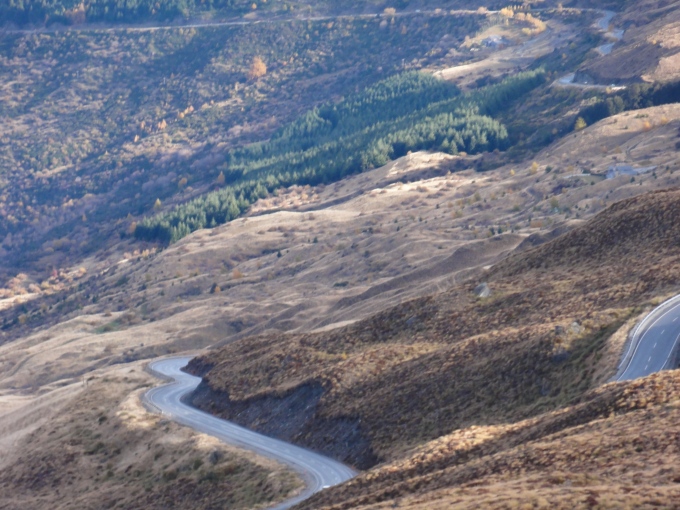
lookingdownfromcoronetpeak

And the story:

It was once said that a desperate man has everything to lose.

The man I was chasing was desperate, but I, on the other hand, was more desperate to catch him.

He’d left a trail of dead people from one end of the island to the other.

The team had put in a lot of effort to locate him, and now his capture was imminent.  We were following the car he was in, from a discreet distance, and, at the appropriate time, we would catch up, pull him over, and make the arrest.

There was nowhere for him to go.

The road led to a dead-end, and the only way off the mountain was back down the road we were now on.  Which was why I was somewhat surprised when we discovered where he was.

Where was he going?

“Damn,” I heard Alan mutter.  He was driving, being careful not to get too close, but not far enough away to lose sight of him.

“What?”

“I think he’s made us.”

“How?”

“Dumb bad luck, I’m guessing.  Or he expected we’d follow him up the mountain.  He’s just sped up.”

“How far away?”

“A half-mile.  We should see him higher up when we turn the next corner.”

It took an eternity to get there, and when we did, Alan was right, only he was further on than we thought.”

“Step on it.  Let’s catch him up before he gets to the top.”

Easy to say, not so easy to do.  The road was treacherous, and in places, just gravel, and there were no guard rails to stop a three-thousand-foot fall down the mountainside.

Good thing then, I had the foresight to have three agents on the hill for just such a scenario.

Ten minutes later, we were in sight of the car, still moving quickly, but we were going slightly faster.  We’d catch up just short of the summit car park.

Or so we thought.

Coming quickly around another corner, we almost slammed into the car we’d been chasing.

“What the hell…” Aland muttered.

I was out of the car and over to see if he was in it, but I knew that it was only a slender possibility.  The car was empty, and no indication of where he had gone.

Certainly not up the road.  It was relatively straightforward for the next mile, at which we would have reached the summit.  Up the mountainside from here, or down.

I looked up.  Nothing.

Alan yelled out, “He’s not going down, not that I can see, but if he did, there’s hardly a foothold and that’s a long fall.”

Then where did he go?

Then a man looking very much like our quarry came out from behind a rock embedded just a short distance up the hill.

“Sorry,” he said quite calmly.  “Had to go if you know what I mean.”

I’d lost him.

It was as simple as that.

I had been led a merry chase up the hill, and all the time he was getting away in a different direction.

I’d fallen for the oldest trick in the book, letting my desperation blind me to the disguise that anyone else would see through in an instant.

It was a lonely sight, looking down that road, knowing that I had to go all that way down again, only this time, without having to throw caution to the wind.

“Maybe next time,” Alan said.

“We’ll get him.  It’s just a matter of time.”

© Charles Heath 2019-2026

Find this and other stories in “Inspiration, maybe”, available soon.

InspirationMaybe1v1

A to Z – April – 2026 – F

F is for – Five Words

I’d heard about the show, one with a funny title that when people asked, they couldn’t quite get it exactly right, but close enough to “This was your life”.

I thought it was about dead people, odd, because I knew it was impossible to interview dead people, though those days, someone told me, anything was possible on television.

Then I thought it was about people almost at the end of their life, as a celebration of a celebrity, or someone famous.

It was a surprise to learn it was about ordinary people.

Like me.  You couldn’t find anyone more ordinary, or as several people told me, utterly forgettable.

That hurt, but in a sense, they were right.

Which made me wonder just how it was that I received a letter in the mail telling me I had been selected for an episode.

Of course, I thought someone was playing a hoax, and rang them, expecting to be laughed at, but no.  I was being asked to go on the show.

I have no idea why I agreed.

When I arrived at the studio, I was taken to an office where the executive producer told me what was going to happen: sign some papers to say I was not going to divulge details of the show before it was broadcast, and what my five words were.

They were different for each participant.

Today, they were recording five episodes.  I was going to be the last.

My words were Good, Afraid, Trouble, Look and Quiet.  I had plenty of time to think about them in relation to my story.

And that was the odd thing … I actually had a story.

“So,” the host said, in that mesmerising voice of hers that had both the audience and the participants entranced, “Tell us what the word Good means to you.”

Of course, it wasn’t just the word good, it was a better word that meant the same thing.

“It wasn’t just a good day, it was a fantastic, unbelievable day.”

I remembered it well, that last day of high school, when it was, in a lot of cases, the last time I would see my fellow classmates.

Most of them I never wanted to see again, because that final year had been marked by more lows than highs, culminating in my date for the Prom falling ill, and so I didn’t go.  Then I discovered she lied, went with my so-called best friend, and made last week unbearable.

So much so, I headed straight for the railway station and intended to hide at my grandmother’s house on the other side of the country.

The day started badly, arguing with my parents, arguing with my siblings, getting into three separate scuffles at school, then coming home and throwing a few things into a backpack and leaving before I saw anyone at home.

Every step from the house to the railway depot was a reminder of each betrayal, so by the time I sat in the waiting room, an hour before the train was due, I was mentally and physically exhausted.

I expected someone from home would come and try to persuade me to stay.

They didn’t.

Perhaps that was the final betrayal.  The fact that not one of my own family cared whether I stayed or left.

Very few people took the train.  Most people leaving town went to the airport and got a plane.  There was a bus, but it took forever to get anywhere, and the train was an acceptable alternative.

I was the only one leaving town by train.

Until I wasn’t.

Five students in that final year shared my disposition, in that we preferred to study, get good grades and then go to college.  The other three left a week before, gaining admission to an Ivy League university.

I hadn’t applied.

The other person was Alison Breton. 

She was one of those people who no one gave a second look at, or so much as a first.  She was clever, and all the boys didn’t like girls who were smarter than they.

She was also plain, or so it appeared, which caused most of the boys to point out her faults, such as how she presented herself.  Unlike the other girls who dressed to impress, wore make-up and looked stunning, even if it was an objectifying description, she preferred to be different.

I thought she was brave.

We barely spoke, though we were in the same study group with the three Ivy Leaguers.  Two of them were keen on her, but she was not the dating sort.  Or so they said.

Ten minutes before the train arrived, another person came and sat in the waiting room.

Alison Breton.

I ignored her for five whole minutes.  I mean, what could I say to her?

It was when the host mentioned the second word, “afraid.”

It was part of the truth and summed up how I felt about her.  I was afraid of her.  Afraid, or more to the point, literally terrified.

I had imagined many times what I would say to her, fabricating long, I thought, interesting conversations.

And if I let my imagination stretch a little further, I might have to admit I liked her, perhaps more than I should, but could and would never admit it.  One humiliation by a girl in a lifetime was enough, and my completely shattered ego couldn’t take another rejection.

Five whole minutes before she said, “So you’re leaving this dump too?”

It was obvious I was, though the dump was harsh.

And then words came out that were not my own.  “What’s your excuse?”

I knew the moment I tried to speak to her that it would be over.  Maryanne, the betrayer, was different.  I could speak to her, and because of that, I thought she was the one.

She smiled.  “Probably the same as yours.  James told me he loved me, but he didn’t.  Apparently, I’m the subject of a bet.”

I’d heard a rumour and couldn’t believe it.  Or perhaps I could.  Small town, small-minded boys, one ambition, to have what they couldn’t.

“Best get out of town then.”  My solution to the problem wasn’t a one-size-fits-all all.

But it was a response to the host dropping the word trouble.  And then looked and was quiet.  It seemed they were all intertwining in the narrative that was unfolding.

“That doesn’t explain your desire to leave, other than the Maryanne humiliation.  I guess a month away from here might make it go away.”

“It won’t.  I have brothers who will never let me forget.  You grow up in this place, no one forgets the trouble, or more appropriately, your legacy.”

“It’s always us quiet kids, eh, the ones who don’t make a fuss, who are studious and respectful, who don’t want to be noticed.  No matter how we look or feel.  I tried to be invisible.”

“It made you stand out more than the Maryannes.  I was just fodder for girls like her, pandering to the mores of the football team, and you know what they were like.”

Being smart didn’t make us immune to being hurt or hoping against hope that we had a chance.

We both heard the sound of the horn in the distance, a warning that the train was approaching the railway crossing, about two or three miles outside of town.

The train, like always, was running late.

She stood.  “Where are you going?”

“San Francisco.  My grandmother.  She has a large house and many unusual friends.  She was an actress once, when Hollywood was going through its black and white phase.”

“I’m going there too.  My mother’s sister, though I suspect she isn’t.  Maybe we can pretend we’re brother and sister, to be safe.”

I shrugged.  Why not?  Once we got there, I’d probably never see her again.

“Except,” Alison said, holding my hand, and talking to the host with that whimsical expression she had when telling others the story of how we met, “we talked and talked and fell in love, got married, have five amazing children, twelve equally amazing grandchildren, and just lived our lives.  Nothing special, and yet to us, very, very special.”

And then, surprisingly, our time was up.  I had expected it would take half the time allotted.  Instead, it was two hours later, and no one, not any of us, had noticed.

©  Charles Heath  2025-2026

First Dig Two Graves

A sequel to “The Devil You Don’t”

Revenge is a dish best served cold – or preferably so when everything goes right

Of course, it rarely does, as Alistair, Zoe’s handler, discovers to his peril. Enter a wildcard, John, and whatever Alistair’s plan for dealing with Zoe was dies with him.

It leaves Zoe in completely unfamiliar territory.

John’s idyllic romance with a woman who is utterly out of his comfort zone is on borrowed time. She is still trying to reconcile her ambivalence after being so indifferent for so long.

They agree to take a break, during which she disappears. John, thinking she has left without saying goodbye, refuses to accept the inevitable and calls on an old friend for help in finding her.

After the mayhem and being briefly reunited, she recognises an inevitable truth: there is a price to pay for taking out Alistair; she must leave and find them first, and he would be wise to keep a low profile.

But keeping a low profile just isn’t possible, and enlisting another friend, a private detective and his sister, a deft computer hacker, they track her to the border between Austria and Hungary.

What John doesn’t realise is that another enemy is tracking him to find her too. It could have been a grand tour of Europe. Instead, it becomes a race against time before enemies old and new converge for what will be an inevitable showdown.

An excerpt from “Strangers We’ve Become” – Coming Soon

I wandered back to my villa.

It was in darkness.  I was sure I had left several lights on, especially over the door so I could see to unlock it.

I looked up and saw the globe was broken.

Instant alert.

I went to the first hiding spot for the gun, and it wasn’t there.  I went to the backup and it wasn’t there either.  Someone had found my carefully hidden stash of weapons and removed them.

Who?

There were four hiding spots and all were empty.  Someone had removed the weapons.  That could only mean one possibility.

I had a visitor, not necessarily here for a social call.

But, of course, being the well-trained agent I’d once been and not one to be caught unawares, I crossed over to my neighbor and relieved him of a weapon that, if found, would require a lot of explaining.

Suitably armed, it was time to return the surprise.

There were three entrances to the villa, the front door, the back door, and a rather strange escape hatch.  One of the more interesting attractions of the villa I’d rented was its heritage.  It was built in the late 1700s, by a man who was, by all accounts, a thief.  It had a hidden underground room which had been in the past a vault but was now a wine cellar, and it had an escape hatch by which the man could come and go undetected, particularly if there was a mob outside the door baying for his blood.

It now gave me the means to enter the villa without my visitors being alerted, unless, of course, they were near the vicinity of the doorway inside the villa, but that possibility was unlikely.  It was not where anyone could anticipate or expect a doorway to be.

The secret entrance was at the rear of the villa behind a large copse, two camouflaged wooden doors built into the ground.  I move aside some of the branches that covered them and lifted one side.  After I’d discovered the doors and rusty hinges, I’d oiled and cleaned them, and cleared the passageway of cobwebs and fallen rocks.  It had a mildew smell, but nothing would get rid of that.  I’d left torches at either end so I could see.

I closed the door after me, and went quietly down the steps, enveloped in darkness till I switched on the torch.  I traversed the short passage which turned ninety degrees about halfway to the door at the other end.  I carried the key to this door on the keyring, found it and opened the door.  It too had been oiled and swung open soundlessly.

I stepped in the darkness and closed the door.

I was on the lower level under the kitchen, now the wine cellar, the ‘door’ doubling as a set of shelves which had very little on them, less to fall and alert anyone in the villa.

Silence, an eerie silence.

I took the steps up to the kitchen, stopping when my head was level with the floor, checking to see if anyone was waiting.  There wasn’t.  It seemed to me to be an unlikely spot for an ambush.

I’d already considered the possibility of someone coming after me, especially because it had been Bespalov I’d killed, and I was sure he had friends, all equally as mad as he was.  Equally, I’d also considered it nigh on impossible for anyone to find out it was me who killed him because the only people who knew that were Prendergast, Alisha, a few others in the Department, and Susan.

That raised the question of who told them where I was.

If I was the man I used to be, my first suspect would be Susan.  The departure this morning, and now this was too coincidental.  But I was not that man.

Or was I?

I reached the start of the passageway that led from the kitchen to the front door and peered into the semi-darkness.  My eyes had got used to the dark, and it was no longer an inky void.  Fragments of light leaked in around the door from outside and through the edge of the window curtains where they didn’t fit properly.  A bone of contention upstairs in the morning, when first light shone and invariably woke me up hours before I wanted to.

Still nothing.

I took a moment to consider how I would approach the visitor’s job.  I would get a plan of the villa in my head, all entrances, where a target could be led to or attacked where there would be no escape.

Coming in the front door.  If I was not expecting anything, I’d just open the door and walk-in.  One shot would be all that was required.

Contract complete.

I sidled quietly up the passage staying close to the wall, edging closer to the front door.  There was an alcove where the shooter could be waiting.  It was an ideal spot to wait.

Crunch.

I stepped on some nutshells.

Not my nutshells.

I felt it before I heard it.  The bullet with my name on it.

And how the shooter missed, from point-blank range, and hit me in the arm, I had no idea.  I fired off two shots before a second shot from the shooter went wide and hit the door with a loud thwack.

I saw a red dot wavering as it honed in on me and I fell to the floor, stretching out, looking up where the origin of the light was coming and pulled the trigger three times, evenly spaced, and a second later I heard the sound of a body falling down the stairs and stopping at the bottom, not very far from me.

Two assassins.

I’d not expected that.

The assassin by the door was dead, a lucky shot on my part.  The second was still breathing.

I checked the body for any weapons and found a second gun and two knives.  Armed to the teeth!

I pulled off the balaclava; a man, early thirties, definitely Italian.  I was expecting a Russian.

I slapped his face, waking him up.  Blood was leaking from several slashes on his face when his head had hit the stairs on the way down.  The awkward angle of his arms and legs told me there were broken bones, probably a lot worse internally.  He was not long for this earth.

“Who employed you?”

He looked at me with dead eyes, a pursed mouth, perhaps a smile.  “Not today my friend.  You have made a very bad enemy.”  He coughed and blood poured out of his mouth.  “There will be more …”

Friends of Bespalov, no doubt.

I would have to leave.  Two unexplainable bodies, I’d have a hard time explaining my way out of this mess.  I dragged the two bodies into the lounge, clearing the passageway just in case someone had heard anything.

Just in case anyone was outside at the time, I sat in the dark, at the foot of the stairs, and tried to breathe normally.  I was trying not to connect dots that led back to Susan, but the coincidence was worrying me.

A half-hour passed and I hadn’t moved.  Deep in thought, I’d forgotten about being shot, unaware that blood was running down my arm and dripping onto the floor.

Until I heard a knock on my front door.

Two thoughts, it was either the police, alerted by the neighbors, or it was the second wave, though why would they be knocking on the door?

I stood, and immediately felt a stabbing pain in my arm.  I took out a handkerchief and turned it into a makeshift tourniquet, then wrapped a kitchen towel around the wound.

If it was the police, this was going to be a difficult situation.  Holding the gun behind my back, I opened the door a fraction and looked out.

No police, just Maria.  I hoped she was not part of the next ‘wave’.

“You left your phone behind on the table.  I thought you might be looking for it.”  She held it out in front of her.

When I didn’t open the door any further, she looked at me quizzically, and then asked, “Is anything wrong?”

I was going to thank her for returning the phone, but I heard her breathe in sharply, and add, breathlessly, “You’re bleeding.”

I looked at my arm and realized it was visible through the door, and not only that, the towel was soaked in blood.

“You need to go away now.”

Should I tell her the truth?  It was probably too late, and if she was any sort of law-abiding citizen she would go straight to the police.

She showed no signs of leaving, just an unnerving curiosity.  “What happened?”

I ran through several explanations, but none seemed plausible.  I went with the truth.  “My past caught up with me.”

“You need someone to fix that before you pass out from blood loss.  It doesn’t look good.”

“I can fix it.  You need to leave.  It is not safe to be here with me.”

The pain in my arm was not getting any better, and the blood was starting to run down my arm again as the tourniquet loosened.  She was right, I needed it fixed sooner rather than later.

I opened the door and let her in.  It was a mistake, a huge mistake, and I would have to deal with the consequences.  Once inside, she turned on the light and saw the pool of blood just inside the door and the trail leading to the lounge.  She followed the trail and turned into the lounge, turned on the light, and no doubt saw the two dead men.

I expected her to scream.  She didn’t.

She gave me a good hard look, perhaps trying to see if I was dangerous.  Killing people wasn’t something you looked the other way about.  She would have to go to the police.

“What happened here?”

“I came home from the cafe and two men were waiting for me.  I used to work for the Government, but no longer.  I suspect these men were here to repay a debt.  I was lucky.”

“Not so much, looking at your arm.”

She came closer and inspected it.

“Sit down.”

She found another towel and wrapped it around the wound, retightening the tourniquet to stem the bleeding.

“Do you have medical supplies?”

I nodded.  “Upstairs.”  I had a medical kit, and on the road, I usually made my own running repairs.  Another old habit I hadn’t quite shaken off yet.

She went upstairs, rummaged, and then came back.  I wondered briefly what she would think of the unmade bed though I was not sure why it might interest her.

She helped me remove my shirt, and then cleaned the wound.  Fortunately, she didn’t have to remove a bullet.  It was a clean wound but it would require stitches.

When she’d finished she said, “Your friend said one day this might happen.”

No prizes for guessing who that friend was, and it didn’t please me that she had involved Maria.

“Alisha?”

“She didn’t tell me her name, but I think she cares a lot about you.  She said trouble has a way of finding you, gave me a phone and said to call her if something like this happened.”

“That was wrong of her to do that.”

“Perhaps, perhaps not.  Will you call her?”

“Yes.  I can’t stay here now.  You should go now.  Hopefully, by the time I leave in the morning, no one will ever know what happened here, especially you.”

She smiled.  “As you say, I was never here.”

© Charles Heath 2018-2022

strangerscover9

Another excerpt from ‘Betrayal’; a work in progress

My next destination in the quest was the hotel we believed Anne Merriweather had stayed at.

I was, in a sense, flying blind because we had no concrete evidence she had been there, and the message she had left behind didn’t quite name the hotel or where Vladimir was going to take her.

Mindful of the fact that someone might have been following me, I checked to see if the person I’d assumed had followed me to Elizabeth’s apartment was still in place, but I couldn’t see him. Next, I made a mental note of seven different candidates and committed them to memory.

Then I set off to the hotel, hailing a taxi. There was the possibility that the cab driver was one of them, but perhaps I was slightly more paranoid than I should be. I’d been watching the queue, and there were two others before me.

The journey took about an hour, during which time I kept an eye out the back to see if anyone had been following us. If anyone was, I couldn’t see them.

I had the cab drop me off a block from the hotel and then spent the next hour doing a complete circuit of the block the hotel was on, checking the front and rear entrances, the cameras in place, and the siting of the driveway into the underground carpark. There was a camera over the entrance, and one we hadn’t checked for footage. I sent a text message to Fritz to look into it.

The hotel lobby was large and busy, which was exactly what you’d want if you wanted to come and go without standing out. It would be different later at night, but I could see her arriving about mid-afternoon, and anonymous among the clientele the hotel attracted.

I spent an hour sitting in various positions in the lobby simply observing. I had already ascertained where the elevator lobby for the rooms was, and the elevator down to the car park. Fortunately, it was not ‘guarded’, but there was a steady stream of concierge staff coming and going to the lower levels, and, just from time to time, guests.

Then, when there was a commotion at the front door, what seemed to be a collision of guests and free-wheeling bags, I saw one of the seven potential taggers sitting by the front door. Waiting for me to leave? Or were they wondering why I was spending so much time there?

Taking advantage of that confusion, I picked my moment to head for the elevators that went down to the car park, pressed the down button, and waited.

There was no car on the ground level, so I had to wait, watching, like several others, the guests untangling themselves at the entrance, and keeping an eye on my potential surveillance, still absorbed in the confusion.

The doors to the left car opened, and a concierge stepped out, gave me a quick look, then headed back to his desk. I stepped into the car, pressed the first level down, the level I expected cars to arrive on, and waited what seemed like a long time for the doors to close.

As they did, I was expecting to see a hand poke through the gap, a latecomer. Nothing happened, and I put it down to a television moment.

There were three basement levels, and for a moment, I let my imagination run wild and considered the possibility that there were more levels. Of course, there was no indication on the control panel that there were any other floors, and I’d yet to see anything like it in reality.

With a shake of my head to return to reality, the car arrived, the doors opened, and I stepped out.

A car pulled up, and the driver stepped out, went around to the rear of his car, and pulled out a case. I half expected him to throw me the keys, but the instant glance he gave me told him he was not the concierge, and instead he brushed past me like I wasn’t there.

He bashed the up button several times impatiently and cursed when the doors didn’t open immediately. Not a happy man.

Another car drove past on its way down to a lower level.

I looked up and saw the CCTV camera, pointing towards the entrance, visible in the distance. A gate that lifted up was just about back in position, then clunked when it finally closed. The footage from the camera would not prove much, even if it had been working, because it didn’t cover the lift lobby, only what was in the direction of the car entrance.

The doors to the other elevator car opened, and a man in a suit stepped out.

“Can I help you, sir? You seem lost.”

Security, or something else. “It seems that way. I went to the elevator lobby, got in, and it went down rather than up. I must have been in the wrong place.”

“Lost it is, then, sir.” I could hear the contempt for Americans in his tone. “If you will accompany me, please.”

He put out a hand ready to guide me back into the elevator. I was only too happy to oblige him. There had been a sign near the button panel that said the basement levels were only to be accessed by the guests.

Once inside, he turned a key and pressed the lobby button. The doors closed, and we went up. He stood, facing the door, not speaking. A few seconds later, he was ushering me out to the lobby.

“Now, sir, if you are a guest…”

“Actually, I’m looking for one. She called me and said she would be staying in this hotel and to come down and visit her. I was trying to get to the sixth floor.”

“Good. Let’s go over to the desk and see what we can do for you.”

I followed him over to the reception desk, where he signalled one of the clerks, a young woman who looked and acted very efficiently, and told her of my request, but then remained to oversee the proceeding.

“Name of guest, sir?”

“Merriweather, Anne. I’m her brother, Alexander.” I reached into my coat pocket and pulled out my passport to prove that I was who I said I was. She glanced cursorily at it.

She typed the name into the computer, and then we waited a few seconds while it considered what to output. Then, she said, “That lady is not in the hotel, sir.”

Time to put on my best-confused look. “But she said she would be staying here for the week. I made a special trip to come here to see her.”

Another puzzled look from the clerk, then, “When did she call you?”

An interesting question to ask, and it set off a warning bell in my head. I couldn’t say today, it would have to be the day she was supposedly taken.

“Last Saturday, about four in the afternoon.”

Another look at the screen, then, “It appears she checked out Sunday morning. I’m afraid you have made a trip in vain.”

Indeed, I had. “Was she staying with anyone?”

I just managed to see the warning pass from the suited man to the clerk. I thought he had shown an interest when I mentioned the name, and now I had confirmation. He knew something about her disappearance. The trouble was, he wasn’t going to volunteer any information because he was more than just hotel security.

“No.”

“Odd,” I muttered. “I thought she told me she was staying with a man named Vladimir something or other. I’m not too good at pronouncing those Russian names. Are you sure?”

She didn’t look back at the screen. “Yes.”

“OK, now one thing I do know about staying in hotels is that you are required to ask guests with foreign passports their next destination, just in case they need to be found. Did she say where she was going next?” It was a long shot, but I thought I’d ask.

“Moscow. As I understand it, she lives in Moscow. That was the only address she gave us.”

I smiled. “Thank you. I know where that is. I probably should have gone there first.”

She didn’t answer; she didn’t have to, her expression did that perfectly.

The suited man spoke again, looking at the clerk. “Thank you.” He swivelled back to me. “I’m sorry we can’t help you.”

“No. You have more than you can know.”

“What was your name again, sir, just in case you still cannot find her?”

“Alexander Merriweather. Her brother. And if she is still missing, I will be posting a very large reward. At the moment, you can best contact me via the American Embassy.”

Money is always a great motivator, and that thoughtful expression on his face suggested he gave a moment’s thought to it.

I left him with that offer and left. If anything, the people who were holding her would know she had a brother, that her brother was looking for her, and equally that brother had money.

© Charles Heath – 2018-2025

The cinema of my dreams – I always wanted to see the planets – Episode 49

A matter of diplomacy

I had to wonder, in that brief moment standing there, how I had come from a contented life plying space in a nomadic cargo vessel, to this, in charge of over 2000 crew, on a spaceship the size of a small town, on a mission to find new life out beyond the known edge of space.

And succeeding beyond all expectations without the loss of a single life, or perhaps that wasn’t quite true, the previous captain had become a casualty in exceptional circumstances.

I looked over at the head of Diplomacy.  “Have you given any thought to my suggestion?”

After coming back from the alien vessel, I had immediately gone to the head of the Diplomatic mission and told him to pick a team to go down to the alien planet, telling him that we had been given permission to learn about their culture and others in their galaxy.

There had been no shortage of volunteers, and they had left not much more than an hour after I arrived back on board.  It was an opportunity not to be missed.

The other matter was about leaving some people there until we came back, or the next earth vessel arrived.  It was not what had been considered back on earth before the mission left, but to me it had some merit, perhaps setting up what might be a galactic embassy smoothing the way for other vessels like ours.

A sea of expectant faces, only one asked the question on everyone’s mind, giving my diplomatic chief a little more time to come up with an answer.

“Who are they, and are they like us?”  The fourth officer had finally appeared from his room in engineering where his interest lay, but from a practical standpoint, was there in case the bridge was lost.

“No.  And yes.  They are consciousness in an artificial body that looks like us, but I imagine it would take the form of any being they came in contact with.  I suspect they have evolved beyond the need for a body that wears out over time, which it seems is our problem, and we are only at the threshold of robotics as replacement parts, even bodies.  I don’t know the whole story, but that’s one for the medical people.  But…”

I turned back to my diplomatic expert, “we are going to have to talk to these people and not only that, we need to understand them and their customs before more of us blunder into their territory and do everything wrong.  You have permission to send two representatives to the planet to talk to their scribes, which I believe are most likely historians.  They are going to tell us about the peoples of this galaxy and perhaps beyond.  It will at least give us something to work with before as they rightly put it blunder our way into possible diplomatic nightmares.”

“Do you think they’d let us set up a diplomatic outpost?”

“You could work on a proposal, but for now we have about six days or so to get as much information as we can.  Anything else is your department, and for you to decide.  I understand there are some in your department who signed on in the hope they might get to stay in a new world, but, again, you will have to make a threat assessment based on all of the contacts so far.  I have endured all of the recordings of our encounters are available.”

“How long have I got?”

“Until we reach the Princesses home planet in about three days’ time.”

Not a lot of time to review and assess given most of the encounters were hostile.  But an arrangement with these people would be considered advantageous as a first stop on the way to other galaxies.  And I had no doubt they had a vast store of knowledge of other alien life forms which would be invaluable.

“How did we get stuck with taking the Princess home, and how do we know they will want her back?  We don’t know the precise circumstances of how she got there in the first place.”

The second officer was not backwards in voicing concerns.  He was the ship’s resident Mr doom and gloom.  But for all that, his was a view that could be used as a counterbalance when making a decision.

“A good question and one I intend to get answers to right after we finish here.”

That left general business on the table, departmental reports, crew statuses, and the all-important ship systems.

Good to know the crew was reasonably happy, all performing their duties through the various crises, and systems had only minor failed that the skeleton shipbuilders crew were able to fix, one way or another.

Best of all, the chief engineer was happy, so far.

An hour later, it was time to visit the Princess.

© Charles Heath 2021-2022

A to Z – April – 2026 – E

E is for Empire State Building

Making a plan, having certain expectations, taking that leap of faith that all of us are destined to do at least once, I found myself standing at the top of the Empire State Building, on the last day of the twelfth month, exactly five years after making a promise in exactly the same place, I would be there.

There was a 3 pm in there, but that was flexible, because I always liked to be early.

It had been after high school graduation, after the prom, every bit the magical moment it was meant to be, with the girl of my dreams, Margaret Cates.  We had spent those last years of high school together, studying hard, each helping the other achieve the grades needed to enter the best University.

There was no talk of romance, of a life together, or anything other than of being brought together, almost inseparable.  We were voted the most likely to be married and living contentedly in a house with a picket fence and three children.

Expectations were what parents had, and both of our parents were best friends, who simply chose to believe the inevitable would happen.  Graduation, a combined family trip to New York to see the sights, culminating in New Year’s Eve at the top of the Empire State Building.

That was where we made the promise, no matter what, we would reconvene, that was Margaret’s word, at the same time.  It was also the first time we kissed, and I think it took a week before my heart rate went back to normal.

Soon after that, Margaret left.  She had been accepted into her university of choice.  Her parents were surprised, and my parents were in shock. 

I was not.  It was the plan.  Margaret had a plan for everything. There was no plan with me in it.  Not in those first five years.  I was sad but not devastated.

I said to my parents, if we were meant to be, she would come back.  I had to set her free.

My plan was there was no plan.  I got the grades, and I got accepted into my University of choice.

At the end of the second year, I was in a what could only be described as a car crash, and was badly injured, to the extent that I had to put my life on hold.

I would recover, not one hundred per cent but enough to continue whatever path I’d chosen, but with some limitations.  The doctor was upbeat, and my parents were upbeat.

I went home, not quite in the manner I’d intended.  I was assured that life was like that, and I had to accept, accident or no accident, life was full of unexpected challenges.

Summer Atkins was probably the most irritating, aggravating, and ingratiating person on the planet.

She lived next door, one of five girls, the eldest, and coincidentally in my grade at high school.  In fact, she was in all the grades from Elementary.

She was gawky, awkward, loud and clumsy.  It was not her fault.  She had a kind heart, always the first to volunteer for the worst jobs, and suffered a lot at the hands of the boys and the girls, too.

I was not pleased to say when I looked back at my time that I was one of them, and probably the only one who apologised after the prom for what had been, at times, unforgivable.  The prank for the prom was probably her lowest point.

It took a week before she would come out of her room, and I came over every day to join the few who actually cared about her.  After Margaret left and before I followed, we spent time together, where she asked me what she needed to do to just get to talk to a guy like me.

I thought it strange.  She was talking to me, I was talking to her, we had coffee and cake at the diner and hung out.  She had no aspirations to go to college, just to help her parents look after her siblings and work in the diner.  I had suggested she might want to do something for herself, and she looked at me strangely.  I did not, she said, understand her.

We parted awkwardly, with this thing I had done, but what it was, I had no idea.  It ended when she told me that if I was waiting for Margaret, I would be waiting a long time.  How did she know anything about what my expectations were?

I came back home under the radar.  I didn’t want anyone to know because I had set myself a high bar, and I was never going to reach it.

I felt that I had become a disappointment to my parents, and while they put on a brave face, and my siblings were polite, it was clear that they were happy for me to hide away, and my siblings were happy to see the high flyer crash and burn.  Kid would be kids, I expected no less.

So when Summer unexpectedly knocked on the door, a certain element of panic went through the house.  Upstairs, I heard that voice drift up the stairs with mixed emotions.  I wanted to see her, but I didn’t want to see her.

Not like this.  It was an odd feeling, and I couldn’t understand what fuelled it.  It was Summer, she wouldn’t care, more likely revel in the fact.  How the mighty had fallen.

My mother answered the door.

“Mrs Abercrombie, you look tired?”  The grating tone had gone, her voice had softened, and there was genuine concern in it.

“It’s…”

She caught herself before mentioning my name.  It had been a secret for about a month.  I was surprised Summer had not called earlier.

My mother shifted the topic.  She was good at that.  “How is your father?  That latest bout of chemotherapy cannot be helping the diner.”

“He’s responding to the treatment, and we’re managing.  How are you faring without Allen?  I’m sorry I should have come over more often.”

“It’s fine.  We’re all coping with life as best we can.”

“How is Allen, if I may ask?”

That was Summer.  Gets the bit between her teeth and doesn’t let go.

My mother was not one to lie.  Obfuscate but not lie.  Not outright.  But confronted…

“Something’s wrong,” she said in a hushed voice, so low I couldn’t barely hear her.  I could virtually see my mother’s face.  It had always been expressive.  It’s why she could never play poker.

It went quiet for a minute or two, and I knew it was time to brace myself.  Summer was the last person I wanted to see, perhaps the only one other than Margaret, not that I expected her to drop everything.

Again, I couldn’t explain why, other than showing vulnerability. 

A few minutes passed while I was hoping my mother would explain that I didn’t want to see anyone, that I wanted to be better before facing the outside world.  Whether Summer would accede to a request if leaving me alone was moot.

If she knew I was there, she would not hesitate to come up and remind me of the Allen of old, with the shoe now firmly on the other foot.

I tried hiding under the covers, but she had X-ray eyes.  I knew she was in the room; I could feel her presence.  And the scent she used was a hint of primrose.  Once it was far stronger, but I suspect she had mastered the art of cosmetic use.

“You will suffocate long before I leave, Allen.  I’m not the same girl you left behind.  I don’t hate you.  I did for a while, but then I realised you cared when all the rest didn’t.  I’m sorry we parted angry.”

She sounded reasonable, far more reasonable than I expected.  She should have still been angry, if not with me, but with the others.

“OK.  If you don’t come out, I’ll get in there with you.  You know me well enough to know I will.”

Did I know her well enough?  I never took the opportunity.  No one wanted to because she didn’t fit the other girls’ profile.  It wasn’t like that at University, there it was simply a competition.  There was dating, but it was more convenient than romance.  There were not many hours left in a day for extracurricular activities.

When I peeled back the covers, it was like seeing an angel, the sun shining in the window, throwing a glow over her.  Summer had changed from the awkward, ugly duckling into a graceful Swan.

A look of concern crossed her face.  Just lifting the covers was a difficult task, like most normal movements we all took for granted.  It was getting easier and less painful, but it would take time.

“What happened to you?”

“A car and I had a disagreement.  It won.”

“And you didn’t think to tell me.  How long have you been here?  What do you need? Tell me, and I’ll make it happen.”

Summer basically glued me back together.  It was, she said, one of her projects, others minding the children of silly sisters, nursing her farther past cancer, keeping up her waitress job at the diner, and just being Summer, the girl who always pitched in.

Such was the value of her help that my mother said I should marry her before someone else snapped her up.  Just before I was to go back to University, I did just that, but she rejected me.

There was someone else, and he was going to propose any day.

I could respect that.  Whatever I thought she might think of me, I would forever be one of those boys who made her life hell.  I didn’t deserve someone like her.  I just got on the train and left.

But the truth was, I was never the same again.

How could I?

I had tried to tell Margaret, but the terms of the pact were clear.  5 years, do your thing, meet and discuss.  If feelings were the same, who knew what might happen?

I was disappointed I hadn’t been able to find her, but I had a story to tell.

A year after returning, I gave it up.  I didn’t have the same enthusiasm, and feeling like a failure, I didn’t go home.  I simply pretended everything was fine and moved to New York and found work in a rather offbeat bookshop in Queens.

It fuelled my love of literature, and after reading anything and everything, I started writing my version of the Great American Novel.  Small-town boy makes it big in the big city.  A bit like my life, really.

Which brings us back to the Empire State Building.

3pm.

And Margaret.

I saw her and thought she was coming to the spot.  She looked different, older, smarter, and with a touch of elegance and sophistication.

Halfway, I saw her smile and then wrap her arms around this bear of a man whom I instantly recognised.  I mean, you would have to live under a rock not to know him.

Her parents were there, and a bunch of media people.  The oohs and ahhs told me it was the moment he went down on one knee; it was going to be a News At 6 moment.

I was but a distant memory, forgotten in her moment of agreeing to be Mrs Albert Johnstone Gerythorn III.

I guess the employee of an eclectic bookshop was hardly a match for a multi-billionaire, or one who was soon to be.

“Sucks to be you.”

It did.  That voice, the one that had grated on my nerves nearly all of my school years, came from behind me.

I knew who it was.  I didn’t turn around.

“I knew it was a mistake to tell you my innermost secrets.”

“Oh, I would not have missed this for the world.”

I felt her hand slip into mine and her body move closer. 

“Five years is a long time.  People change.”

“People like us change, Allen.  People like her do not.”

“I thought you were getting married?”

“So did I.  I guess we were both wrong.  Found that cute little bookshop of yours.  If I didn’t know you better, I’d be guessing you’ve started that great American novel.  Am I right or am I right?”

“You know me too well.  You want to stay, or shall we find another circus, something a little more our style?”

“Do we have one?”

“Of course.  Everyone has style.”

Then I noticed Margaret was coming towards us, a rather serious expression on her face.  Had she finally recognised me?

“Excuse me, but the photographers would like to get some photos of my fiancée and me by this corner.  It would be most appreciated.”

No.  No sign of recognition.

Summer instead smiled sweetly, ” Of course, Margery Mugmouth, the pleasure would be all ours.”

It was Margaret’s nickname among those girls she trashed, and she instantly recognised Summer, and then me.

“Five years, to the day.  You came.  Have a happy life, Margaret.”

With that, we left.

A reporter, or just someone with a notepad, was scribbling frantically and then tried to head us off at the elevator.  Just too late.  The doors closed.

“The nerve,” Summer said.  “That was our corner.  Or I hope it will be.”

“So did I.  Would you like to marry me?” I asked.

The elevator went silent, except for the whishing sound of it going down.

“She made a face, quite amusing, and then said, “Yes.”

People outside the elevator when it arrived thought something bad had happened, given the roar and applause which followed us out into the foyer after it arrived.

Five years, on the last day of the last month at 3 pm, something did happen.  I proposed to the girl of my dreams.  I just hadn’t realised it until then.

©  Charles Heath  2026

“Remember that time…” – A short story

I don’t remember 40th birthday parties being all that interesting.

It was going to be a momentous year as each of our friends celebrated theirs.  We were of a group that had formed strong friendships at school, and they had lasted over the next 25 years, even when some had ventured further afield, and others had stayed at home.

I was one of those who had remained in place, as had my wife, and several of the neighbors.  I never had dreams of venturing any further than the next state, and except for a couple of years on transfer for the company I worked for, I had lived all my life in the city I was born.

The same could not be said for Janine, my wife, who once had a vision for herself, a career in law in either New York or Washington, and had ventured there after graduating law school, stayed a year and then returned in circumstances that she had never talked about.  She had accepted my proposal, we had married, and that was that.

Fifteen years on, there had always been that gap, that part of the story I’d never asked about and one I felt she would never talk about, and it was a small chink in what I wanted to believe was an almost perfect marriage.

But there was one small caveat she had requested; that she had no desire to have children, or to be a mother, something she said she would be terrible at.  It didn’t bother me, one way or another, though as each of the others had children, there was a small part of me that was, for a while, envious.

Michael Urston was one of my close friends, who lived across town and was also a lawyer and a man of ambition.  He’s taken his law degree to Washington and converted it into a path to public office and had attained the lofty position of Mayor for several years of our fair city, and then paradoxically didn’t run for re-election for reasons I never thought stood up.

But it had been his decision, part of the plan to retire at forty, and he’d achieved it.  Ursula, his wife, was prickly at the best of times and had always considered herself above all of us.  I guess being a prom queen had that effect on some people.  She liked to be the centre of attention, and for some reason, she and Janine always managed to rub up against their respective wrong sides.

Something else I knew; he had a thing for Janine, as had several others in our group, and I could see, sometimes the looks that passed between them, and I was not sure how I felt about it.  There was never any indication of either talking it further, but there was a bond between them that sometimes I envied, especially lately when it seemed, to me, that we were drifting apart.

But tonight, it was going to be Janine’s fortieth birthday party, and there were going to be a dozen friends coming.  At the last minute, Janine had changed the venue to a restaurant rather than at our home, and that I suspected was because we lived in a magnificent house that all the others envied, and I was sure it was out of deference to them.  Buying the house had been her idea, and down through the years, as we moved into larger residences, she had been trying to shed the memories of where she had come from.

Neither of us had been from a wealthy family, and I had no wealthy family connections.  I was from generations of motor mechanics, which was my first occupation in the family business, and Janine’s family were farmers, something she had no intention of becoming, hence the desire to become a lawyer.  And I didn’t think either of us had airs and graces despite what we owned or how we fitted into the local society.

Fred DeVilliers and Susan, his girlfriend of many years, who didn’t believe they needed a piece of paper to sanctify their relationship, were best friends also, though I knew Janine and Susan were not quite as friendly as it appeared.  That I noticed some years ago when both were having a heated discussion, one they thought no one was around to hear.  Their bone of contention had something to do with Michael, and I didn’t get to discover what it was.

As for the others, they joined in the conversation, ate the food, drank the wine, and then went home again.  Like me, they were not interested in politics, religion, or miscreant children’s stories.  Our get-together was children-free, and often about reminiscences of older and more carefree times.

Oh, and just to stir the pot a little, this day, I had tendered my resignation as CEO of the company.  It was a matter of principle, the board had decided to downsize and shift a proportion of manufacturing offshore, a decision I knew I would have to implement if I stayed there.  When I vehemently disagreed, I was given the option to leave on mutually agreeable terms.  It was not something I could spring on Janine, but, equally, it was not something I was going to be able to hide from her.  Not for very long anyway.

She was running late at her office, and I agreed to meet her at the restaurant a half-hour before the other guests were due to arrive.  It was nothing unusual for one or other of us to be running late.

As it happened, I left the office, and the building, an hour after resigning.  The company didn’t want me hanging around and granted me the two weeks I’d normally have to work off before leaving, for security reasons.  I quit, therefore I had to leave, in case I had some desire to sabotage the company in some way.  I wouldn’t but it was standard practice, and it didn’t go unnoticed that I was escorted by security to my office to clear the desk, and then to my car.  They also gave me the car as a parting gesture.

After leaving the office I went home.

I took what amounted to over twenty-odd years of service in a cardboard box to my home office and dropped it in the corner.  Not much to show for it, other than a decent salary, annual bonuses when we made a profit, and quite a few shares, not that they were worth much now because the board hesitated to embrace recent technologies.

About two hours later I heard a car pull up out the front on the driveway, and two doors closed.  A look out the window that overlooked the driveway showed it was Janine and Michael, who as they approached the door were in animated conversation.

I thought about letting them know I was home, but then a voice inside my head asked how many men have come home during the day to surprise their wives and found her in bed with another man, or, in these rather liberated days, in bed with another woman?

And that thing between them, would it be now I would discover what it was?

It made me feel rather horrible to think I could suspect her of cheating, but it momentarily took away the sting of the resignation.

The door opened and they came inside.  I could just see them from where I was standing, a spot where they would not see me, not unless they were looking.  And my heart missed a beat, they were embracing very passionately, leaving me with no other conclusion than this was a middle-of-the-day tryst.

“Come,” she said, taking him by the hand.  “I only have a couple of hours before I have to get back for a deposition.”

With that, they went up the stairs and disappeared into the bedroom, our room.

I sat down before I fell down, then having regained some composure, went over to the bar and poured myself a drink.

Two losses in one day.  A job, and a wife.  I guess it wasn’t exactly a revelation.  I knew something was amiss, and I conveniently ignored all the signs.  I thought about going up and walking in on them, but that, to me, seemed like a childish act.  After a few more drinks, I decided to wait, see if they both left and then decide what to do.

The front door closing, and the car departing, woke me out of a reverie.  I got up and looked out, expecting to see an empty foyer, but instead saw Janine, in a dressing gown, still holding the front door handle, as if transfixed.  A beautiful memory of what had just happened, or a tinge of regret, and another secret to be kept in a head, I knew now, that held so many others.

I decided to make myself known, now rather than later.

“Do you come home often during the day,” I said, standing in the doorway where she could see me.

She jumped, perhaps in fright, or in guilt, it didn’t really matter.

She turned.  “Daniel.  What are you doing here?”

“I resigned this morning.  A difference in opinion on how the company should proceed.  I was escorted out and decided to come home.  I should have gone to a bar.”

She knew that I knew, so it would be interesting to see what she had to say.  I could see her forming the words in her head, much the same as she did in a court of law.

“It was the first time, Daniel, an impulse.  I’m not going to make an excuse.  It’s on me.  I wanted to find out what it would be like.”

And that made me feel so much better.   Not!

“Well, it’s a hell of a fortieth birthday gift, Jan, and one I guess I couldn’t give you.  I trust you didn’t grant that wish to any of the other men who may desire you?”  OK, that wasn’t exactly what I meant to say, but the words didn’t exactly match what I was thinking.

“You mean do I sleep with every man I have a desire to?”  A rather harsh tone, bordering on angry.  She was angry with me.

“You tell me what I’m supposed to think.”

“I had sex with one other man, no one else since the day we were married.  It was a mistake, and I’m sorry.  If you hadn’t been here, we wouldn’t be having this conversation.”

“Washington,” I said, almost to myself, a light bulb lighting up in my head.

The memory of a distant conversation, on a holiday, when we visited Washington, Philadelphia and New York.

“What about Washington?”  A change in her expression, was slight, but I could see it.  She remembered it too.

“Remember that time, at one of those monuments, probably Jefferson’s, when you said something rather odd, and when I asked, you brushed it off as nothing important.  You were looking out over the water and said it was one of your fondest memories after, and then stopped yourself.  Michael had just married when he moved to Washington, and you were there too, for a year.  I suspect now you and he had an affair, and it ended badly as affairs do and the woman has to leave.  There’s always been that bond between you.  Not the first time Jan.  The affair never ended.”

“It did, Daniel.  Like I said, this was a mistake.  It won’t happen again.”

I stepped out of the office and walked down the passage and came into the foyer.  Two stories high, there had been a debate about whether to have a fountain in the space adjacent to the stairs or a statue.  The statue won, and I lost.

Close up, I looked at the woman I’d loved from the moment I first saw her, and of the surprise when she agreed to marry me.  I had no idea then I was her second choice.

“I’d say I’m on a roll.  Lost my job, then lost my wife.  Bad luck comes in threes, so I’m going to lose something else.”  I looked around.  “This house?  I don’t think I could stay here, not now.  It would just be a reminder of everything bad that’s happened to me today.”

“It doesn’t have to be that way.  I told you it was a mistake.  I made my choice twenty-odd years ago and it hasn’t changed.”

She took a step towards me, and I took one back.  The thought of being close to her now, after what she had just done, didn’t feel right.

“Look, before you do something silly, let’s sit down and talk about it.”

“No.  There’s nothing really to talk about.  I’m sure you can come up with a very convincing argument that will justify everything you’ve done, and why I’m being a fool, but the truth is, there are no words that can justify what you just did.  Yes, I could forgive you, and believe me, I want to, but there’d always be some resentment and the fact I could never trust you again, even if you promise not to.  What’s done is done.   Have a great birthday, and party, and make up some excuse for me not being there, but I’m going away for a while.  You have got everything you ever wanted Jan.  Be grateful for that.”

With that, I turned and headed for the door that led to the garage.  I wasn’t going to leave by the front door.  I expected her to say something, but she didn’t.  I expected a reaction, but there was none.  What choice did I have?

In the car, I found myself heading for the airport.  I couldn’t go to my parents, they were dead.  My sister lived on the other side of the country, and all I would get from her if I told her what happened would be an I told you so, so it was down to my brother, who had moved to the UK to get away from everyone.  I called him, and when he answered, I simply said, “I’m coming to see you for a while.”

And he replied, “It was Washington, wasn’t it?”

He’d know who she was, and who Michael was when he saw them together all those years ago.  And tried to warn me before I married her.

What was it with politicians and women?

—–

© Charles Heath 2020-2021