Writing about writing a book – Day 21 continues

I’m still working on Bill’s backstory, and how he got mixed up in the war, and as a general background to his situation, and life before Davenport.

This is still in his own words:

But whether we were stupid or naive, or completely mad, we were all eager to get into battle, filled with the sort of hate only Army propaganda films could fill you with.  They were our enemy, and they deserved to concede or die.

A fresh face in a hardened platoon, I was eager to get on with it.  They looked knowingly, having seen it all before.  No idea of the reality, and no time to tell us.  Have a few beers to celebrate, and then, the next morning, go out on patrol.  No problem.

There was camaraderie, but it was subdued.  We walked single file, the seasoned campaigners in front and at the rear, treading carefully, demanding quiet, and a general cautiousness.  In the middle of nowhere, where only the sound of rain, or the animals and birds for company, we were naive enough to think this was going to be a doddle.

Then it happened, six hours out, and just before we reached a small clearing.  I thought to myself it was odd there should be such a clear space with jungle all around it.  There must be a reason.

There was.

We had walked into an ambush, and everyone hit the ground.  I was bringing up the rear with another soldier, a veteran not much older than myself whose name was Scotty, a little farther back from the main group.  Bullets sprayed the undergrowth, pinging off trees and leaves.  I buried my face in the dirt, praying I would not die on my first patrol.

We became separated from the others, lying in a hollow, with no idea how far away help was.  He was muttering to himself.  “God, I hate this.  You can never see the bastards.  They’re out there, but you can never bloody well see them.”  Then he crawled up the embankment, gun first.

He let off a few rounds, causing a return of machine-gun fire, spattering the dirt at the top.  Next thing I knew he was sliding down the hill with half his face shot away.  Dead.  I threw up there and then.  What an initiation.

Then one of the enemy soldiers came over the hill to check on his ‘kill’.  I saw him at the same time he saw me and aimed my gun and shot.  It was instinct more than anything else, and I hadn’t stopped to think of the consequences.  He fell down, finishing up next to me, staring at me from black, lifeless eyes. 

Dead. 

I’ll never forget those lifeless eyes.  I just got up and ran, making it back to the rest of the group without getting hit.  No one could explain how I made it safely through the hail of gunfire, from our side and theirs.

Back in the camp later, the veterans remarked on how unlucky Scotty was and how lucky I was to shoot one of the enemies, and not be killed myself.  They all thought it was worth a celebration.

Before we went out the next day to do it all again.

I spent the night vomiting, unable to sleep, haunted look on his face, one I finally realized that reflected complete astonishment.

There will be more, as the story develops.

© Charles Heath 2016-2024

The cinema of my dreams – I never wanted to go to Africa – Episode 31

Our hero knows he’s in serious trouble.

The problem is, there are familiar faces and a question of who is a friend and who is foe made all the more difficult because of the enemy, if it was the enemy, simply because it didn’t look or sound or act like the enemy.

Now, it appears, his problems stem from another operation he participated in, and because of it, he has now been roped into what might be called a suicide mission.

The folder had half a dozen single-page sheets with a photo attached to each with a standard-issue army paper clip.  There was no top secret in pale red ink diagonally scribed across any of the pages which somehow diminished the exercise.

I guessed this was the hand-picked team selected for me to take on our suicide mission.  It didn’t have the officer overseeing the mission, or the go-between Jacobi.  Not exactly a useful man to have along in a firefight, because he would be too busy working out who would pay the most if or when he survived.

It still astonished me that we hired people like Jacobi, fully knowing that they would sell out their own mother if the price was right.  I was going to reserve one bullet in my gun to execute him the moment he even looked the wrong way.

Trust him, I did not.

Nor any 0f the six members of that hand-picked team.

Sergeant Barnes.  Tall, wide, deadly, that last attribute courtesy of a line in his resume that said he killed three soldiers of the army we were supposed to be training and supporting.  No meaningful reason was given as to why he did, only that he’d just finished serving a five-year sentence, cut short by a month so he could join this force.  Hand to hand combat, and a handy man to have if you’ve got a handheld rocket launcher handy.

Private Williamson.  Had been a Corporal, but considered that too much of a burden, having men look up to him, and having to give orders.  He decided to go AWOL instead.  Used to be a butcher before signing on to see the world, and as described very handy with a knife.  Refused to use a gun, and refused orders too, which was the reason why he was in the stockade, with his friend, the next man on the list.

Private Shurl.  If we needed a man who excelled at sword fighting, he was our man.  A very accomplished swordsman, but I doubt we were going to need a man of his talents because enemy swordsmen seemed only to exist in the old movies.  I guess Lallo was expecting the three musketeers or something.  Other than that, he was a useful radioman and would be handling the communications once we were on the ground in enemy territory.

Corporal Stark.  His claim to fame was reading maps.  He was also an expert on the ground in the country whose borders we were about to violate.  He lived in the country for several years with his wife, who came from there, and who’d been killed by the dictator in a case of mistaken identity.  Stark would have to be carefully managed.

Staff Sergeant Mobley.  A man who had been up and down in ranks for a long time, suggesting a bad attitude, his latest bout leaving him fresh from a stint in the stockade.  He had no valid reason to be in on this disaster and yet had volunteered.  That took courage, to apply for a suicide mission with little hope of return.  I suspect he had an agenda that no one else knew about.

And, lastly

Lieutenant Lesley Davies.  A woman marine, no longer a lieutenant but just another soldier who obviously didn’t understand the concept of taking one step back when everyone else steps in another direction.  It didn’t say what it was she did wrong, but my guess there were a few men out there frightened of meeting her on a dark night.  Some women are dainty, some women are large, and then there’s Davies, a powerhouse that could be dangerous if out of control.

Out of all of that team, she was the one who interested me the most.

There was a knock on the door, interrupting my thoughts.  I called out, “Enter”, surprised the person outside hadn’t just shoved their way into the room.

The door opened, Monroe walked in and closed the door behind her.

“Let me guess,” I said.  “You’re running point.”

“And save your sorry ass from those recruits.  Not a brain between the lot of them, and we need people who can think, given the nature of the forthcoming exercise.  The brains trust has decided the rescue team reports to us.  I didn’t ask for it by the way.  This is one of Lallo’s sick jokes.”

Maybe he had a problem with her too and was hoping she wasn’t coming back.

“You and me both,” I said.

She threw another folder on the table.  “Operational orders, wheels up at 0600 tomorrow.  Make sure you get a hearty meal before we leave, it might be your last for a while.”

I shrugged. 

“Suit yourself.”  She went back to the door, gave me a curious look, and left.

I opened the file and looked at the one piece of paper in it.  It was marked Top Secret in red diagonally across the page, probably specially done by Lallo to make me feel important.  It had departure time, the weather, the flight time, how long the stopover would be before going on to the target.

Tightly planned, no room for missing connections, though this was the army, not an airline taking us, no room for errors.  New intel said that we had five days before the prisoners were to be executed.

No pressure then.

© Charles Heath 2019-2021

Writing a book in 365 days – 295

Day 295

A story can go in many different directions

The Story’s Fork in the Road: Navigating Multiple Paths (or How Many Roads Should You Pave?)

Ah, the delicious agony of the writer’s mind! You’re deep into a scene, a character’s decision point, or a pivotal plot twist, and suddenly—BAM!—five equally compelling, utterly captivating directions unfurl before you. Each one a glittering promise, a potential masterpiece.

Do you freeze, overwhelmed by the narrative labyrinth? Do you toss a coin? Or do you bravely (or foolishly) attempt to build five different narrative highways? This, my friends, is the quintessential writer’s dilemma, and one we’ve all grappled with.

Let’s break it down.

The Agony of Choice: Why It’s So Hard

First, let’s acknowledge why this is such a powerful struggle. It’s not a sign of weakness; it’s a testament to your boundless creativity. Each of those five paths represents a fully formed world, a different emotional journey, a distinct thematic exploration. Choosing one feels like abandoning four perfectly good children at the orphanage of your imagination. You fear:

  • Missing the “Best” Story: What if the path you don’t take was the one that would have won the Pulitzer?
  • Wasting Potential: All that rich imagery, those intriguing character possibilities… gone?
  • Regret: The lingering “what if” can haunt future drafts.

So, how do we navigate this creative crossroads?

Part 1: How Do We Know We’ve Chosen the “Right” One?

The short, honest answer? You don’t. Not with 100% certainty, at least not at first. But you can make the most informed, intentional choice for this particular story. Here’s how to approach it:

  1. Revisit Your Core Vision & Theme:
    • What is the absolute heart of your story? What are you really trying to say?
    • What is the central question or conflict you’re exploring?
    • Which of the five paths most profoundly serves this core message or theme? Which one amplifies it, complicates it, or brings it into sharper relief?
  2. Follow the Character’s Deepest Arc:
    • Where does your protagonist need to go to achieve their most meaningful growth or transformation?
    • Which path forces them to confront their greatest fears, make their hardest choices, or truly earn their redemption (or downfall)?
    • Sometimes, the “right” path isn’t the easiest or most obvious, but the one that most rigorously tests your characters.
  3. Consider the Emotional Impact:
    • Which path elicits the strongest emotional response in you?
    • Which one feels most compelling, most resonant, most likely to move a reader?
    • Don’t underestimate your gut feeling. Your intuition, honed by countless hours of reading and writing, often knows best.
  4. Outline Each Path (Briefly):
    • You don’t need to write five full drafts. Take an hour or two and jot down a very brief outline for each of the five directions.
    • Where does each path start? What are its key turning points? Where does it logically end?
    • Seeing them laid out, even in skeletal form, often reveals which one has the most inherent dramatic tension, sustained conflict, or satisfying resolution.
  5. Listen to the Story’s Whisper:
    • Sometimes, one path just feels alive. The dialogue sparkles, the imagery flows effortlessly, the next scene already plays out in your head. That’s often the story telling you which way it wants to go. Trust that energy.

Ultimately, the “right” path is often the one you commit to with confidence and conviction, knowing it serves your story’s deepest purpose.

Part 2: Should We Write Five Different Versions of the Same Story?

This is where the practicalities of writing meet the boundless nature of imagination.

The Temptation: “Wouldn’t it be amazing to see how each version played out? What if they could be a series? Or alternate universe novels?”

The Reality (for most): Writing five different versions of the same story simultaneously is a monumental undertaking that can lead to burnout, analysis paralysis, and ultimately, five unfinished manuscripts.

However, there’s a nuanced approach:

  1. The “What If” File:
    • Don’t discard those other brilliant ideas! Create a “What If” document or a story bible where you meticulously log these alternate paths.
    • Note down the potential plot points, character developments, thematic explorations, and even snippets of dialogue.
    • This frees up your current WIP while preserving those ideas for future projects. Many successful series or spin-offs are born from these discarded “what ifs.”
  2. Experiment in Short Bursts:
    • If you’re truly torn, write a single scene or a very short chapter (500-1000 words) for the top two or three contenders.
    • See which one “sings.” Which one feels most natural to write? This micro-experimentation can often clarify your choice without committing to full drafts.
  3. Future Projects, Not Current:
    • Recognize that those other four paths aren’t failures; they’re fertile ground for future stories.
    • Perhaps one becomes a standalone novel set in the same world, exploring a different character. Maybe another becomes a prequel or a sequel.
    • View them as seeds, not fully grown trees you have to nurture all at once.
  4. The Luxury of Revision:
    • Remember, you’re not carving your story in stone with your first draft. Write a version. See it through.
    • During revision, you might realize an earlier “what if” path actually does serve your story better, and you can pivot. But it’s much easier to pivot from a complete (even flawed) draft than from five fragments.

The “Right” Path is Often the One You Finish (and Polish)

Ultimately, the most important decision isn’t which path is objectively “best,” but which path you will commit to finishing, refining, and sharing with the world. A perfectly chosen, but incomplete, story has no impact. A story chosen with conviction, even one that had four other contenders, can move mountains.

So, trust your instincts, revisit your story’s core, outline your options, and then, pick a road. Pave it with your words, your sweat, and your heart. And know that those other roads? They’ll be there, waiting for another journey, another story, another day.


What’s your strategy when your story branches into multiple paths? Share your tips in the comments below!

What I learned about writing – When to draw a line in the sand!

Just when you think that the story is done, and you’re on the third re-read, just to make sure…

Damn!

I don’t like the way that chapter reads, and what’s worse, it’s about the tenth time I’ve looked at it.

It doesn’t matter the last three times you read it, it was just fine, or, the editor has read it and the chapter passed without any major comment.

I think the main problem I have is letting go.  For some odd reason, certain parts of a story sometimes seem to me as though they are not complete, or can be missing a vital clue or connection for the continuity of the story.

That, of course, happens when you rewrite a section that is earlier on in the story, and then have to make ongoing changes.

Yes, I hear the stern warnings, that I should have made a comprehensive outline at the beginning, but the trouble is, I can change the ending, as I’m writing it and then have to go back and add the hooks earlier on.  Not the best method, but isn’t that what an editor is for, to pick up the missed connections, and out of the blue events that happen for no reason?

I find that often after leaving a finished story for a month before the next reading, the whole picture must formulate itself in my head, so when I re-read, there was always a problem, one I didn’t want to think about until the re-read.

Even then it might survive a second pass.

I know the scene is in trouble when I get to it and alarm bells are going off.  I find anything else to do but look at it.

So, here I am, making major changes.

But, at least now I am satisfied with where it’s going.

Only 325 pages to go!

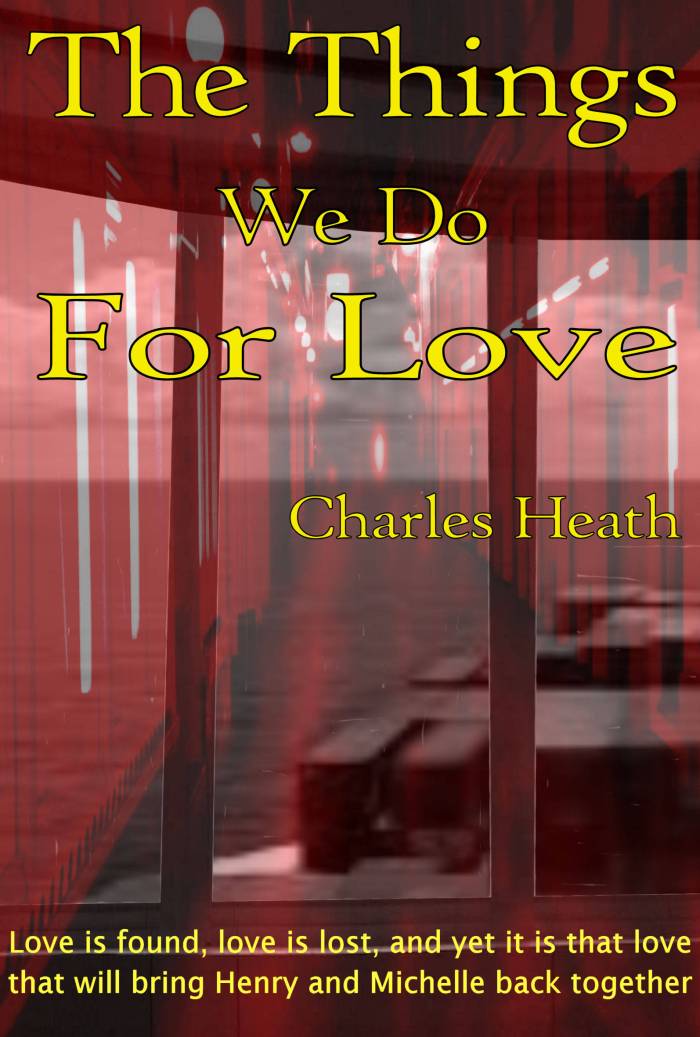
“The Things we do for Love”, the story behind the story

This story has been ongoing since I was seventeen, and just to let you know, I’m 72 this year.

Yes, it’s taken a long time to get it done.

Why, you might ask.

Well, I never gave it much interest because I started writing it after a small incident when I was 17, and working as a book packer for a book distributor in Melbourne

At the end of my first year, at Christmas, the employer had a Christmas party, and that year, it was at a venue in St Kilda.

I wasn’t going to go because at that age, I was an ordinary boy who was very introverted and basically scared of his own shadow and terrified by girls.

Back then, I would cross the street to avoid them

Also, other members of the staff in the shipping department were rough and ready types who were not backwards in telling me what happened, and being naive, perhaps they knew I’d be either shocked or intrigued.

I was both adamant I wasn’t coming and then got roped in on a dare.

Damn!

So, back then, in the early 70s, people looked the other way when it came to drinking, and of course, Dutch courage always takes away the concerns, especially when normally you wouldn’t do half the stuff you wouldn’t in a million years

I made it to the end, not as drunk and stupid as I thought I might be, and St Kilda being a salacious place if you knew where to look, my new friends decided to give me a surprise.

It didn’t take long to realise these men were ‘men about town’ as they kept saying, and we went on an odyssey.  Yes, those backstreet brothels where one could, I was told, have anything they could imagine.

Let me tell you, large quantities of alcohol and imagination were a very bad mix.

So, the odyssey in ‘The things we do’ was based on that, and then the encounter with Diana. Well, let’s just say I learned a great deal about girls that night.

Firstly, not all girls are nasty and spiteful, which seemed to be the case whenever I met one. There was a way to approach, greet, talk to, and behave.

It was also true that I could have had anything I wanted, but I decided what was in my imagination could stay there.  She was amused that all I wanted was to talk, but it was my money, and I could spend it how I liked.

And like any 17-year-old naive fool, I fell in love with her and had all these foolish notions.  Months later, I went back, but she had moved on, to where no one was saying or knew.

Needless to say, I was heartbroken and had to get over that first loss, which, like any 17-year-old, was like the end of the world.

But it was the best hour I’d ever spent in my life and would remain so until I met the woman I have been married to for the last 48 years.

As Henry, he was in part based on a rebel, the son of rich parents who despised them and their wealth, and he used to regale anyone who would listen about how they had messed up his life

If only I’d come from such a background!

And yes, I was only a run away from climbing up the stairs to get on board a ship, acting as a purser.

I worked for a shipping company and they gave their junior staff members an opportunity to spend a year at sea working as a purser on a cargo ship that sailed between Melbourne, Sydney and Hobart in Australia.

One of the other junior staff members’ turn came, and I would visit him on board when he would tell me stories about life on board, the officers, the crew, and other events. These stories, which sounded incredible to someone so impressionable, were a delight to hear.

Alas, by that time, I had tired of office work and moved on to be a tradesman at the place where my father worked.

It proved to be the right move, as that is where I met my wife.  Diana had been right; love would find me when I least expected it.

lovecoverfinal1

Writing a book in 365 days – 295

Day 295

A story can go in many different directions

The Story’s Fork in the Road: Navigating Multiple Paths (or How Many Roads Should You Pave?)

Ah, the delicious agony of the writer’s mind! You’re deep into a scene, a character’s decision point, or a pivotal plot twist, and suddenly—BAM!—five equally compelling, utterly captivating directions unfurl before you. Each one a glittering promise, a potential masterpiece.

Do you freeze, overwhelmed by the narrative labyrinth? Do you toss a coin? Or do you bravely (or foolishly) attempt to build five different narrative highways? This, my friends, is the quintessential writer’s dilemma, and one we’ve all grappled with.

Let’s break it down.

The Agony of Choice: Why It’s So Hard

First, let’s acknowledge why this is such a powerful struggle. It’s not a sign of weakness; it’s a testament to your boundless creativity. Each of those five paths represents a fully formed world, a different emotional journey, a distinct thematic exploration. Choosing one feels like abandoning four perfectly good children at the orphanage of your imagination. You fear:

  • Missing the “Best” Story: What if the path you don’t take was the one that would have won the Pulitzer?
  • Wasting Potential: All that rich imagery, those intriguing character possibilities… gone?
  • Regret: The lingering “what if” can haunt future drafts.

So, how do we navigate this creative crossroads?

Part 1: How Do We Know We’ve Chosen the “Right” One?

The short, honest answer? You don’t. Not with 100% certainty, at least not at first. But you can make the most informed, intentional choice for this particular story. Here’s how to approach it:

  1. Revisit Your Core Vision & Theme:
    • What is the absolute heart of your story? What are you really trying to say?
    • What is the central question or conflict you’re exploring?
    • Which of the five paths most profoundly serves this core message or theme? Which one amplifies it, complicates it, or brings it into sharper relief?
  2. Follow the Character’s Deepest Arc:
    • Where does your protagonist need to go to achieve their most meaningful growth or transformation?
    • Which path forces them to confront their greatest fears, make their hardest choices, or truly earn their redemption (or downfall)?
    • Sometimes, the “right” path isn’t the easiest or most obvious, but the one that most rigorously tests your characters.
  3. Consider the Emotional Impact:
    • Which path elicits the strongest emotional response in you?
    • Which one feels most compelling, most resonant, most likely to move a reader?
    • Don’t underestimate your gut feeling. Your intuition, honed by countless hours of reading and writing, often knows best.
  4. Outline Each Path (Briefly):
    • You don’t need to write five full drafts. Take an hour or two and jot down a very brief outline for each of the five directions.
    • Where does each path start? What are its key turning points? Where does it logically end?
    • Seeing them laid out, even in skeletal form, often reveals which one has the most inherent dramatic tension, sustained conflict, or satisfying resolution.
  5. Listen to the Story’s Whisper:
    • Sometimes, one path just feels alive. The dialogue sparkles, the imagery flows effortlessly, the next scene already plays out in your head. That’s often the story telling you which way it wants to go. Trust that energy.

Ultimately, the “right” path is often the one you commit to with confidence and conviction, knowing it serves your story’s deepest purpose.

Part 2: Should We Write Five Different Versions of the Same Story?

This is where the practicalities of writing meet the boundless nature of imagination.

The Temptation: “Wouldn’t it be amazing to see how each version played out? What if they could be a series? Or alternate universe novels?”

The Reality (for most): Writing five different versions of the same story simultaneously is a monumental undertaking that can lead to burnout, analysis paralysis, and ultimately, five unfinished manuscripts.

However, there’s a nuanced approach:

  1. The “What If” File:
    • Don’t discard those other brilliant ideas! Create a “What If” document or a story bible where you meticulously log these alternate paths.
    • Note down the potential plot points, character developments, thematic explorations, and even snippets of dialogue.
    • This frees up your current WIP while preserving those ideas for future projects. Many successful series or spin-offs are born from these discarded “what ifs.”
  2. Experiment in Short Bursts:
    • If you’re truly torn, write a single scene or a very short chapter (500-1000 words) for the top two or three contenders.
    • See which one “sings.” Which one feels most natural to write? This micro-experimentation can often clarify your choice without committing to full drafts.
  3. Future Projects, Not Current:
    • Recognize that those other four paths aren’t failures; they’re fertile ground for future stories.
    • Perhaps one becomes a standalone novel set in the same world, exploring a different character. Maybe another becomes a prequel or a sequel.
    • View them as seeds, not fully grown trees you have to nurture all at once.
  4. The Luxury of Revision:
    • Remember, you’re not carving your story in stone with your first draft. Write a version. See it through.
    • During revision, you might realize an earlier “what if” path actually does serve your story better, and you can pivot. But it’s much easier to pivot from a complete (even flawed) draft than from five fragments.

The “Right” Path is Often the One You Finish (and Polish)

Ultimately, the most important decision isn’t which path is objectively “best,” but which path you will commit to finishing, refining, and sharing with the world. A perfectly chosen, but incomplete, story has no impact. A story chosen with conviction, even one that had four other contenders, can move mountains.

So, trust your instincts, revisit your story’s core, outline your options, and then, pick a road. Pave it with your words, your sweat, and your heart. And know that those other roads? They’ll be there, waiting for another journey, another story, another day.


What’s your strategy when your story branches into multiple paths? Share your tips in the comments below!

An excerpt from “Sunday in New York”

Now available on Amazon at:  https://amzn.to/2H7ALs8

Williams’ Restaurant, East 65th Street, New York, Saturday, 8:00 p.m.

We met the Blaine’s at Williams’, a rather upmarket restaurant that the Blaine’s frequently visited, and had recommended.

Of course, during the taxi ride there, Alison reminded me that with my new job, we would be able to go to many more places like Williams’.  It was, at worst, more emotional blackmail, because as far as Alison was concerned, we were well on our way to posh restaurants, the Trump Tower Apartments, and the trappings of the ‘executive set’.

It would be a miracle if I didn’t strangle Elaine before the night was over.  It was she who had filled Alison’s head with all this stuff and nonsense.

Aside from the half frown half-smile, Alison was looking stunning.  It was months since she had last dressed up, and she was especially wearing the dress I’d bought her for our 5th anniversary that cost a month’s salary.  On her, it was worth it, and I would have paid more if I had to.  She had adored it, and me, for a week or so after.

For tonight, I think I was close to getting back on that pedestal.

She had the looks and figure to draw attention, the sort movie stars got on the red carpet, and when we walked into the restaurant, I swear there were at least five seconds silence, and many more gasps.

Even I had a sudden loss of breath earlier in the evening when she came out of the dressing room.  Once more I was reminded of how lucky I was that she had agreed to marry me.  Amid all those self-doubts, I couldn’t believe she had loved me when there were so many others ‘out there’ who were more appealing.

Elaine was out of her seat and came over just as the Head Waiter hovered into sight.  She personally escorted Alison to the table, allowing me to follow like the Queen’s consort, while she and Alison basked in the admiring glances of the other patrons.

More than once I heard the muted question, “Who is she?”

Jimmy stood, we shook hands, and then we sat together.  It was not the usual boy, girl, boy, girl seating arrangement.  Jimmy and I on one side and Elaine and Alison on the other.

The battle lines were drawn.

Jimmy was looking fashionable, with the permanent blade one beard, unkempt hair, and designer dinner suit that looked like he’d slept in it.  Alison insisted I wear a tuxedo, and I looked like the proverbial penguin or just a thinner version of Alfred Hitchcock.

The bow tie had been slightly crooked, but just before we stepped out she had straightened it.  And took the moment to look deeply into my soul.  It was one of those moments when words were not necessary.

Then it was gone.

I relived it briefly as I sat and she looked at me.  A penetrating look that told me to ‘behave’.

When we were settled, Elaine said, in that breathless, enthusiastic manner of hers when she was excited, “So, Harry, you are finally moving up.”  It was not a question, but a statement.

I was not sure what she meant by ‘finally’ but I accepted it with good grace.  Sometimes Elaine was prone to using figures of speech I didn’t understand.  I guessed she was talking about the new job.  “It was supposed to be a secret.”

She smiled widely.  “There are no secrets between Al and I, are there Al?”

I looked at ‘Al’ and saw a brief look of consternation.

I was not sure Alison liked the idea of being called Al.  I tried it once and was admonished.  But it was interesting her ‘best friend forever’ was allowed that distinction when I was not.  It was, perhaps, another indicator of how far I’d slipped in her estimation.

Perhaps, I thought, it was a necessary evil.  As I understood it, the Blaine’s were our mentors at the Trump Tower, because they didn’t just let ‘anyone’ in.  I didn’t ask if the Blaine’s thought we were just ‘anyone’ before I got the job offer.

And then there was that look between Alison and Elaine, quickly stolen before Alison realized I was looking at both of them.  I was out of my depth, in a place I didn’t belong, with people I didn’t understand.  And yet, apparently, Alison did.  I must have missed the memo.

“No,” Alison said softly, stealing a glance in my direction, “No secrets between friends.”

No secrets.  Her look conveyed something else entirely.

The waiter brought champagne, Krug, and poured glasses for each of us.  It was not the cheap stuff, and I was glad I brought a couple of thousand dollars with me.  We were going to need it.

Then, a toast.

To a new job and a new life.

“When did you decide?”  Elaine was effusive at the best of times, but with the champagne, it was worse.

Alison had a strange expression on her face.  It was obvious she had told Elaine it was a done deal, even before I’d made up my mind.  Perhaps she’d assumed I might be ‘refreshingly honest’ in front of Elaine, but it could also mean she didn’t really care what I might say or do.

Instead of consternation, she looked happy, and I realized it would be churlish, even silly if I made a scene.  I knew what I wanted to say.  I also knew that it would serve little purpose provoking Elaine, or upsetting Alison.  This was not the time or the place.  Alison had been looking forward to coming here, and I was not going to spoil it.

Instead, I said, smiling, “When I woke up this morning and found Alison missing.  If she had been there, I would not have noticed the water stain on the roof above our bed, and decide there and then how much I hated the place.” I used my reassuring smile, the one I used with the customers when all hell was breaking loose, and the forest fire was out of control.  “It’s the little things.  They all add up until one day …”  I shrugged.  “I guess that one day was today.”

I saw an incredulous look pass between Elaine and Alison, a non-verbal question; perhaps, is he for real?  Or; I told you he’d come around.

I had no idea the two were so close.

“How quaint,” Elaine said, which just about summed up her feelings towards me.  I think, at that moment, I lost some brownie points.  It was all I could come up with at short notice.

“Yes,” I added, with a little more emphasis than I wanted.  “Alison was off to get some study in with one of her friends.”

“Weren’t the two of you off to the Hamptons, a weekend with some friends?” Jimmy piped up, and immediately got the ‘shut up you fool’ look, that cut that line of conversation dead.  Someone forgot to feed Jimmy his lines.

It was followed by the condescending smile from Elaine, and “I need to powder my nose.  Care to join me, Al?”

A frown, then a forced smile for her new best friend.  “Yes.”

I watched them leave the table and head in the direction of the restroom, looking like they were in earnest conversation.  I thought ‘Al’ looked annoyed, but I could be wrong.

I had to say Jimmy looked more surprised than I did.

There was that odd moment of silence between us, Jimmy still smarting from his death stare, and for me, the Alison and Elaine show.  I was quite literally gob-smacked.

I drained my champagne glass gathering some courage and turned to him.  “By the way, we were going to have a weekend away, but this legal tutorial thing came up.  You know Alison is doing her law degree.”

He looked startled when he realized I had spoken.  He was looking intently at a woman several tables over from us, one who’d obviously forgotten some basic garments when getting dressed.  Or perhaps it was deliberate.  She’d definitely had some enhancements done.

He dragged his eyes back to me.  “Yes.  Elaine said something or other about it.  But I thought she said the tutor was out of town and it had been postponed until next week.  Perhaps I got it wrong.  I usually do.”

“Perhaps I’ve got it wrong.”  I shrugged, as the dark thoughts started swirling in my head again.  “This week or next, what does it matter?”

Of course, it mattered to me, and I digested what he said with a sinking heart.  It showed there was another problem between Alison and me; it was possible she was now telling me lies.  If what he said was true and I had no reason to doubt him, where was she going tomorrow morning, and had she really been with a friend studying today?

We poured some more champagne, had a drink, then he asked, “This promotion thing, what’s it worth?”

“Trouble, I suspect.  Definitely more money, but less time at home.”

“Oh,” raised eyebrows.  Obviously, the women had not talked about the job in front of him, or, at least, not all the details.  “You sure you want to do that?”

At last the voice of reason.  “Me?  No.”

“Yet you accepted the job.”

I sucked in a breath or two while I considered whether I could trust him.  Even if I couldn’t, I could see my ship was sinking, so it wouldn’t matter what I told him, or what Elaine might find out from him.  “Jimmy, between you and me I haven’t as yet decided one way or another.  To be honest, I won’t know until I go up to Barclay’s office and he asks me the question.”

“Barclay?”

“My boss.”

“Elaine’s doing a job for a Barclay that recently moved in the tower a block down from us.  I thought I recognized the name.”

“How did Elaine get the job?”

“Oh, Alison put him onto her.”

“When?”

“A couple of months ago.  Why?”

I shrugged and tried to keep a straight face, while my insides were churning up like the wake of a supertanker.  I felt sick, faint, and wanting to die all at the same moment.  “Perhaps she said something about it, but it didn’t connect at the time.  Too busy with work I expect.  I think I seriously need to get away for a while.”

I could hardly breathe, my throat was constricted and I knew I had to keep it together.  I could see Elaine and Alison coming back, so I had to calm down.  I sucked in some deep breaths, and put my ‘manage a complete and utter disaster’ look on my face.

And I had to change the subject, quickly, so I said, “Jimmy, Elaine told Alison, who told me, you were something of a guru of the cause and effects of the global economic meltdown.  Now, I have a couple of friends who have been expounding this theory …”

Like flicking a switch, I launched into the well-worn practice of ‘running a distraction’, like at work when we needed to keep the customer from discovering the truth.  It was one of the things I was good at, taking over a conversation and pushing it in a different direction.  It was salvaging a good result from an utter disaster, and if ever there was a time that it was required, it was right here, right now.

When Alison sat down and looked at me, she knew something had happened between Jimmy and I.  I might have looked pale or red-faced, or angry or disappointed, it didn’t matter.  If that didn’t seal the deal for her, the fact I took over the dining engagement did.  She knew well enough the only time I did that was when everything was about to go to hell in a handbasket.  She’d seen me in action before and had been suitably astonished.

But I got into gear, kept the champagne flowing and steered the conversation, as much as one could from a seasoned professional like Elaine, and, I think, in Jimmy’s eyes, he saw the battle lines and knew who took the crown on points.  Neither Elaine nor Jimmy suspected anything, and if the truth be told, I had improved my stocks with Elaine.  She was at times both surprised and interested, even willing to take a back seat.

Alison, on the other hand, tried poking around the edges, and, once when Elaine and Jimmy had got up to have a cigarette outside, questioned me directly.  I chose to ignore her, and pretend nothing had happened, instead of telling her how much I was enjoying the evening.

She had her ‘secrets’.  I had mine.

At the end of the evening, when I got up to go to the bathroom, I was physically sick from the pent up tension and the implications of what Jimmy had told me.  It took a while for me to pull myself together; so long, in fact, Jimmy came looking for me.  I told him I’d drunk too much champagne, and he seemed satisfied with that excuse.  When I returned, both Alison and Elaine noticed how pale I was but neither made any comment.

It was a sad way to end what was supposed to be a delightful evening, which to a large degree it was for the other three.  But I had achieved what I set out to do, and that was to play them at their own game, watching the deception, once I knew there was a deception, as warily as a cat watches its prey.

I had also discovered Jimmy’s real calling; a professor of economics at the same University Alison was doing her law degree.  It was no surprise in the end, on a night where surprises abounded, that the world could really be that small.

We parted in the early hours of the morning, a taxi whisking us back to the Lower East Side, another taking the Blaine’s back to the Upper West Side.  But, in our case, as Alison reminded me, it would not be for much longer.  She showed concern for my health, asked me what was wrong.  It took all the courage I could muster to tell her it was most likely something I ate and the champagne, and that I would be fine in the morning.

She could see quite plainly it was anything other than what I told her, but she didn’t pursue it.  Perhaps she just didn’t care what I was playing at.

And yet, after everything that had happened, once inside our ‘palace’, the events of the evening were discarded, like her clothing, and she again reminded me of what we had together in the early years before the problems had set in.

It left me confused and lost.

I couldn’t sleep because my mind had now gone down that irreversible path that told me I was losing her, that she had found someone else, and that our marriage was in its last death throes.

And now I knew it had something to do with Barclay.

© Charles Heath 2015-2020

Sunday In New York

Skeletons in the closet, and doppelgangers

A story called “Mistaken Identity”

How many of us have skeletons in the closet that we know nothing about? The skeletons we know about generally stay there, but those we do not, well, they have a habit of coming out of left field when we least expect it.

In this case, when you see your photo on a TV screen with the accompanying text that says you are wanted by every law enforcement agency in Europe, you’re in a state of shock, only to be compounded by those same police, armed and menacing, kicking the door down.

I’d been thinking about this premise for a while after I discovered my mother had a boyfriend before she married my father, a boyfriend who was, by all accounts, the man who was the love of her life.

Then, in terms of coming up with an idea for a story, what if she had a child by him that we didn’t know about, which might mean I had a half brother or sister I knew nothing about. It’s not an uncommon occurrence from what I’ve been researching.

There are many ways of putting a spin on this story.

Then, in the back of my mind, I remembered a story an acquaintance at work was once telling us over morning tea, that a friend of a friend had a mother who had a twin sister and that each of the sisters had a son by the same father, without each knowing of the father’s actions, both growing up without the other having any knowledge of their half brother, only to meet by accident on the other side of the world.

It was an encounter that in the scheme of things might never have happened, and each would have remained oblivious of the other.

For one sister, the relationship was over before she discovered she was pregnant, and therefore had not told the man he was a father. It was no surprise the relationship foundered when she discovered he was also having a relationship with her sister, a discovery that caused her to cut all ties with both of them and never speak to either from that day.

It’s a story with more twists and turns than a country lane!

And a great idea for a story.

That story is called ‘Mistaken Identity’.

NANOWRIMO – November 2025 – Day 7

The Third Son of a Duke

It was never my intention that my grandmother would become the main protagonist.  No, that is the boy who is the third son of a Duke, the title of the book.

He is being packed off the Australia to work on his uncle’s cattle station in outback Queensland.

So, off we go to the archives to dig into Queensland, in 1915, and where cattle stations might be, and how to get there from Brisbane once the ship arrives.  This turns up information on the port of Brisbane, with the dock being at Pinkenba, a tin shed on a wharf that was far shorter than the length of the ship.  Just beside the shed is a railway station, the way the passengers get into Brisbane itself.

Passengers arriving from overseas have to wonder where it was they were.

But before that, we have a long way to go.  The ship does not allow passengers to get off at Gibraltar, it just anchors in the harbour and takes passengers off, and new passengers aboard, and the main, and then leaves.  A few hours at best, time enough for the town folk to come alongside and sell their wares.

Next stop, Marseilles, then Toulon, where passengers will be allowed to go ashore for a few hours.

Toulon is a home port for the French Navy.  War is approaching; one can only imagine just how many warships there are.

2115 words, for a total of 11735 words.

Writing about writing a book – Day 21

I’m back to writing Bill’s backstory, and how he got mixed up in the war, and a few other details which will play out later on.

This will be some of it, in his own words:

I think I volunteered for active duty in Vietnam.

It was either that, or I had been volunteered by my prospective father-in-law.  I was serving under his command in an Army Camp for some time, and unbeknownst to me, I had been dating his daughter.

The daughter of a General.  It was like that adage, ‘marrying the boss’s daughter’.  Only this boss was the bastard of all bastards.  When he found out, my life became hell.  As a Corporal, he told me I was far beneath his expectations of the right man for his daughter.  He thought she would be better off with a Colonel.

Then I got my orders.  I was to join the latest batch of nashos on their way to the latest theatre of war.  But before that, Ellen, a woman with a mind of her own, and sometimes daring enough to defy her father, said we should get married, and I being the young fool I did, in a registry office, the day before I left for the war.

I promised to be faithful, as all newly married men did, and that I would come back to her.  We had all heard the stories coming out of Southeast Asia, where the war was not going so well, for us, or the Americans, and that this was a final effort.

When we landed, we were greeted by the men leaving.  They were glad to be going home.  And I chose not to believe some of the stories.  Nothing could be as bad as they painted it.

Could it?


I’d been trained for war.  I could handle a weapon, several actually, and or I could if I had to kill the enemy.  After all, it was my job.  I was defending Queen and country.

I was a regular soldier, not a nasho.  Not one of the mostly terrified boys who’d hardly reached anything approaching manhood, some all gung-ho, others frightened out of their minds.  As a regular soldier, this was where I was supposed to be.

But being sent to a war to fight, and having to fight, I soon discovered were two very different things.  On the training ground, even training with live ammunition, being shot at, mortared, and chased through the jungles of North Queensland, it was not the same, on the ground in Saigon.

It was relentlessly hot, steamy, raining, and fine.  Or dry and dusty.  But in any of the conditions, it was uncomfortable being hot all the time.  During the day, and during the night.

Then we were sent out to join various units.  Mine was north, where, I wasn’t quite sure, where the motley remains of the group were bolstered by us, new people.  Morale was not good, as we arrived in the torrential rain in an air transport that had seen better days, and notable for two events, the fact we were shot at several times and taking out the first casualty before we arrived, and the near-crash landing when we did.

I soon learned the value of the statement, ‘any landing you walk away from is a good one’.

 …

Yes, seems like a good start to a bad end.  More on this tomorrow while I’m in the mood.

© Charles Heath 2016-2024