Every time I close my eyes, I see something different.
I’d like to think the cinema of my dreams is playing a double feature but it’s a bit like a comedy cartoon night on Fox.
But these dreams are nothing to laugh about.
Once again there’s a new instalment of an old feature, and we’re back on the treasure hunt.
Was this going to be the very definition of dining with the devil?
Or was my curiosity going to be the death of me?
It was just one of a dozen questions I asked myself on that trip back to Nadia’s room. One reason I was going there was not in the expectation of a romantic interlude. No, this was something else. I kept reminding myself that Nadia was, first and foremost, a Cossatino, and the Cossatino’s were not people you wanted to be friends with.
When we arrived, she asked for a few minutes so she could change, so I stayed out on the balcony. It was a coolish night, a clear sky, and just a hint of salt in the air. We were not far from the ocean, and it reminded me of another lifetime, one where I was young enough not to have to worry about all that grown-up stuff.
I heard the door open behind me.
“Thanks for waiting.”
I turned, not sure what I was expecting. Certainly not a statuesque woman in training gear. She looked to me ready to go for a training run.
I walked past her into the room, faintly smelling of some perfume, and sat in one of the two chairs in the room. I watched her close the door, go over to the mini bar, get two bottles of beer out, and hand one to me.
It was an odd thought, being in a hotel room with Nadia, the last thing I’d ever be doing with her, let alone any other woman. My choices had always been limited, or so I had thought.
“I had this thought,” she said, leaning against the desk on the opposite side of the room, “that we should try and beat Vince at his own game.”
An interesting thought, was Nadia thinking of joining in Boggs’s treasure hunt, take it over, or was this a ruse, and had she been working with Vince all this time, and using us to get to the prize by another route. Or was it a rivalry with Vince that she wanted to win? Wasn’t it Boggs’s call who joined the expedition?
“We as in you and me, or we as in Boggs and you, or…”
“You’re overthinking it Smidge.”
“A word of advice, Nadia, if you’re trying to appeal to my good side, you might consider dropping the nickname. Only the people I hate use it, and I’m sure you don’t want me to add you to the list.”
Not necessarily warranted, and in my younger days I’d never dare to speak to her like that, but I felt I had the upper hand, at least for a short time.
“OK. Note to self, call Smidge Sam. Old habits are hard to break.”
In more ways than one, I thought.
“Well, overthinking it or not, it’s not my call to make. I’m assuming you want to join in on Boggs’s treasure hunt?”
“That was the idea.”
“You’re assuming that Boggs actually has the real map, or, in fact, there is such a thing. You have to remember that his father created all those maps, and it wouldn’t be hard to make one look more authentic than another, just to get a better price. Everything to do with the treasure seems to me like it’s one big hoax.”
“If that was the case, why do you think Vince is so wound up about it? My point is, Vince is simply all muscle and no brains. He always has been, so you have to assume that my grandfather has decided there’s something in the rumours. Granted he may have been working in league with Boogs senior, but don’t you think that in order to create forgeries, there had to be some sort of map to work from.”
An interesting premise.
“If it led to treasure on an island in the Wast Indies, I’d be more likely to believe in it, but here, a million miles from any of the pirate trading routes, and having a deep abiding disbelieve in hidden treasure still not recovered in this day and age, what do you think?”
“Does Boggs’s know about your scepticism?”
“I’ve told him enough times, but he has this bee in his bonnet, and I’m his best friend, probably his only friend. I humour him. And I doubt seriously if he’ll ever go through with it, because he’s never finished anything in his life. He gave me a copy of the map, but I suspect that was a copy of the one he gave Vince in the end.
“So, you think it’s not a worthwhile exercise?”
“What I think doesn’t matter. But I’ve got a question for you. Why have you come back here?”
“What if I told you it’s possible that the treasure is real.”
“I’d say you’ve been indulging in the drugs your family pedals.”
“What if I said I had proof?”
OK, where is this going? Did that mean she had proof, or that the Cossatino’s had proof, and was she about to open a can of worms?
“I’m listening.”
“That man that you found dead on Rico’s boat. His name was Jacob Stravinsky. He was an authority on pirates and their lost treasure, and had over the years, uncovered evidence that pirates had come here supposedly fleeing from the authorities, and that at least two of them could have hidden some of their treasure somewhere along this coastline. News of the discovery of several gold coins off the coast, not ten miles from here somehow caught Ales Benderby’s ear and he went to visit him.
“No one is sure what happened at that meeting, but I know Alex was there because that’s where I ran into him. And, the fool that he is, got drunk and told me, no bragged about how he was going to find the treasure and prove his worth to his father.”
“Then how did this Stravinsky end up dead on Rico’s boat.”
“Because Alex got what he wanted and made sure no one else found out.”
The Happy Ending Debate: Is It All About Where You Stop the Story?
We’ve all been there. Lost in a book, glued to a screen, investing our emotions in characters and their journeys. As the story nears its end, a quiet hope stirs within us: Please, let them be happy. We crave resolution, comfort, and the satisfaction of knowing that, in this fictional world at least, good triumphs and love prevails.
But should every story culminate in a neat, tidy, and unequivocally happy ending? And more profoundly, is the ‘happiness’ of an ending simply a matter of where the author chooses to draw the final curtain?
The Allure of the Sunny Conclusion
There’s no denying the power and appeal of a happy ending. They offer:
Escapism: Life is often messy and unpredictable. Stories with joyous resolutions provide a much-needed mental break, a reminder that things can turn out well.
Hope: They validate our belief in perseverance, the triumph of good over evil, and the idea that our own struggles might eventually lead to brighter days.
Satisfaction: A happy ending can feel like a reward for the emotional investment we’ve made, a pleasant closure to a captivating experience.
From classic fairy tales to blockbuster rom-coms, these endings serve a vital purpose, leaving us with a warm feeling and a sense that balance has been restored.
The Unflinching Gaze of Reality
However, limiting all narratives to happy conclusions would be a disservice to the vast spectrum of human experience. Sometimes, stories need to:
Reflect Reality: Life isn’t always fair, and not every conflict resolves harmoniously. Stories that acknowledge pain, loss, and unresolved tension can be incredibly powerful and resonant.
Provoke Thought: Tragic or ambiguous endings often linger longer in the mind, prompting deeper reflection on themes, choices, and consequences.
Offer Catharsis: Witnessing a character’s journey through suffering, even if it doesn’t end happily, can be a form of emotional release and understanding for the audience.
Teach and Warn: Some stories serve as cautionary tales or explorations of the darker sides of humanity, and a happy ending would undermine their core message.
Think of literary classics, historical dramas, or poignant independent films – their power often lies in their refusal to sugarcoat the human condition.
The Art of the Final Frame: Where Do You Stop?
This brings us to the most intriguing part of the debate: Is a happy ending simply a matter of narrative framing?
Consider this: Is a character’s failure truly the end, or is it merely the lowest point before a potential rise? Is a bittersweet goodbye truly sad, or is it a necessary step towards individual growth and new beginnings?
Life is Continuous: In reality, our stories don’t stop. A “happy ending” might just be a moment of respite before the next challenge, and a “tragic ending” could be the catalyst for profound change in others.
The Power of Hope: An ending doesn’t have to be happy to be hopeful. A character might face immense loss, but the final scene could show them finding a glimmer of purpose, taking a first step towards healing, or inspiring others to carry on. This isn’t happiness in the traditional sense, but it offers forward momentum.
The Reader’s Imagination: Sometimes, an author intentionally leaves an ending open, trusting the audience to imagine what comes next. What feels unresolved to one person might feel like an invitation for possibility to another. The “end” of the story is merely where the author stops narrating; the characters’ lives, in our minds, continue.
Satisfying vs. Happy: A story can have a satisfying ending without being strictly happy. It can be satisfying because it feels earned, logical, and true to the characters and themes, even if it’s painful or melancholic.
Crafting the Right Conclusion
Ultimately, whether a story should have a happy ending isn’t a universal rule, but a deliberate choice. It depends on:
The Genre: Rom-coms and fairytales thrive on happiness; noir and tragedies demand a different tone.
The Story’s Purpose: Is it meant to uplift, entertain, challenge, or reflect?
The Characters’ Journeys: Does a happy ending feel organic and earned, or forced and unrealistic, given what the characters have endured and become?
So, should every story have a happy ending? Probably not. But should every story offer some form of resolution, be it hopeful, cathartic, or thought-provoking? Absolutely.
The true magic lies in the storyteller’s ability to know precisely where to stop, leaving us not necessarily with boundless joy, but with a feeling that the journey was complete, meaningful, and true – even if the sun isn’t shining quite so brightly in that final frame.
What do you think? Do you prefer happy endings, or do you find more satisfaction in realistic or even tragic conclusions? Share your thoughts in the comments below!
The Art of the Landscape: What Thomas Hardy Taught Ursula K. Le Guin About “Showing, Not Telling”
Every writer has heard the golden rule: “Show, don’t tell.”
It is the advice that launches a thousand creative writing workshops, yet it remains one of the most misunderstood concepts in literature. Does it mean you can never state an emotion? Does it mean your prose must be purely cinematic?
To find the true essence of this rule, we can look to a master of the craft, Ursula K. Le Guin. In her legendary essays on writing, Le Guin often pointed to a specific, masterful example of environmental storytelling: the opening chapter of Thomas Hardy’s The Return of the Native.
Here is how Hardy uses the landscape of Egdon Heath to redefine what it meant to “show” an entire world before a single character ever speaks.
The Trap of “Telling”
When beginners are told to “show,” they often interpret it as a directive to describe every micro-movement—“She clenched her fist, her knuckles turning white, showing her anger.”
While this is “showing,” it is literal and often clunky. True “showing” is about atmosphere, mood, and implication. It is about placing the reader in a space where they can feel the truth of the situation without being lectured by the author.
The Lesson from Egdon Heath
In the first chapter of The Return of the Native, Thomas Hardy does something radical. He doesn’t introduce a hero, a villain, or a dialogue-driven incident. Instead, he introduces the heath itself.
As Ursula K. Le Guin noted in her workshops, Hardy treats Egdon Heath not as a backdrop, but as a living, breathing participant in the story. He writes:
“The place became full of a watchful intentness now; for when other things sank brooding to sleep the heath appeared slowly to awake and listen.”
Hardy is doing something extraordinary here. He is “showing” the reader the tone of the entire novel before the plot begins. He doesn’t tell us, “The setting is oppressive, ancient, and indifferent to human suffering.” Instead, he describes the heath as a creature that “awaits” and “listens.”
Why Le Guin Admired This Approach
Le Guin championed this passage because it teaches writers that environment is character.
By spending pages describing the soil, the colours of the heath, the shadows, and the way the light dies over the horizon, Hardy creates a sense of foreboding. He shows the reader that the human lives within this book will be small, fragile, and ultimately at the mercy of this vast, prehistoric landscape.
If Hardy had simply told us, “The story takes place in a lonely, haunting part of England where people struggle against nature,” the reader would have accepted it as a fact. But by showing it—by making the heath look, act, and “feel”—the reader experiences that loneliness in their own bones.
Three Ways to Apply the “Hardy-Le Guin” Method
If you want to move beyond the surface-level interpretation of “show, don’t tell,” try these three strategies:
1. Use the Setting to Establish Stakes
Don’t just have your characters walk through a room. Have the room reflect the state of the story. If a marriage is failing, show the dust on the mantle or the way the light doesn’t quite reach the chairs. Make your setting a reflection of your underlying themes.
2. Let the Landscape “Listen”
Hardy gave the heath a sense of “watchful intentness.” What is your setting doing? Is the city you are writing in hostile? Does the forest feel like it’s holding its breath? Giving your setting semi-sentient traits can anchor your reader in the mood of the piece instantly.
3. Trust the Reader’s Intelligence
Hardy didn’t need to summarise the history of Egdon Heath. He trusted the reader to pick up the vibe of the place through the sensory language he used. When you write, pull back on the adjectives and lean into the gestures of your environment.
The Takeaway
“Show, don’t tell” isn’t about avoiding exposition; it’s about making your exposition experiential.
As Ursula K. Le Guin taught, the best writers don’t just dump information on the reader. They build a world so tactile and evocative that the “meaning” of the story is felt long before it is understood. Take a page from Hardy: ignore the plot for a moment, look at the world you’ve built, and ask yourself—is my setting just a stage, or is it alive?
How many of us have skeletons in the closet that we know nothing about? The skeletons we know about generally stay there, but those we do not, well, they have a habit of coming out of left field when we least expect them.
In this case, when you see your photo on a TV screen with the accompanying text that says you are wanted by every law enforcement agency in Europe, you’re in a state of shock, only to be compounded by those same police, armed and menacing, kicking the door down.
I’d been thinking about this premise for a while after I discovered my mother had a boyfriend before she married my father, a boyfriend who was, by all accounts, the man who was the love of her life.
Then, in terms of coming up with an idea for a story, what if she had a child by him that we didn’t know about, which might mean I had a half-brother or sister I knew nothing about. It’s not an uncommon occurrence from what I’ve been researching.
There are many ways of putting a spin on this story.
Then, in the back of my mind, I remembered a story an acquaintance at work was once telling us over morning tea, that a friend of a friend had a mother who had a twin sister and that each of the sisters had a son by the same father, without each knowing of the father’s actions, both growing up without the other having any knowledge of their half brother, only to meet by accident on the other side of the world.
It was an encounter that in the scheme of things might never have happened, and each would have remained oblivious of the other.
For one sister, the relationship was over before she discovered she was pregnant, and therefore had not told the man he was a father. It was no surprise the relationship foundered when she discovered he was also having a relationship with her sister, a discovery that caused her to cut all ties with both of them and never speak to either from that day.
It’s a story with more twists and turns than a country lane!
The Art of the Landscape: What Thomas Hardy Taught Ursula K. Le Guin About “Showing, Not Telling”
Every writer has heard the golden rule: “Show, don’t tell.”
It is the advice that launches a thousand creative writing workshops, yet it remains one of the most misunderstood concepts in literature. Does it mean you can never state an emotion? Does it mean your prose must be purely cinematic?
To find the true essence of this rule, we can look to a master of the craft, Ursula K. Le Guin. In her legendary essays on writing, Le Guin often pointed to a specific, masterful example of environmental storytelling: the opening chapter of Thomas Hardy’s The Return of the Native.
Here is how Hardy uses the landscape of Egdon Heath to redefine what it meant to “show” an entire world before a single character ever speaks.
The Trap of “Telling”
When beginners are told to “show,” they often interpret it as a directive to describe every micro-movement—“She clenched her fist, her knuckles turning white, showing her anger.”
While this is “showing,” it is literal and often clunky. True “showing” is about atmosphere, mood, and implication. It is about placing the reader in a space where they can feel the truth of the situation without being lectured by the author.
The Lesson from Egdon Heath
In the first chapter of The Return of the Native, Thomas Hardy does something radical. He doesn’t introduce a hero, a villain, or a dialogue-driven incident. Instead, he introduces the heath itself.
As Ursula K. Le Guin noted in her workshops, Hardy treats Egdon Heath not as a backdrop, but as a living, breathing participant in the story. He writes:
“The place became full of a watchful intentness now; for when other things sank brooding to sleep the heath appeared slowly to awake and listen.”
Hardy is doing something extraordinary here. He is “showing” the reader the tone of the entire novel before the plot begins. He doesn’t tell us, “The setting is oppressive, ancient, and indifferent to human suffering.” Instead, he describes the heath as a creature that “awaits” and “listens.”
Why Le Guin Admired This Approach
Le Guin championed this passage because it teaches writers that environment is character.
By spending pages describing the soil, the colours of the heath, the shadows, and the way the light dies over the horizon, Hardy creates a sense of foreboding. He shows the reader that the human lives within this book will be small, fragile, and ultimately at the mercy of this vast, prehistoric landscape.
If Hardy had simply told us, “The story takes place in a lonely, haunting part of England where people struggle against nature,” the reader would have accepted it as a fact. But by showing it—by making the heath look, act, and “feel”—the reader experiences that loneliness in their own bones.
Three Ways to Apply the “Hardy-Le Guin” Method
If you want to move beyond the surface-level interpretation of “show, don’t tell,” try these three strategies:
1. Use the Setting to Establish Stakes
Don’t just have your characters walk through a room. Have the room reflect the state of the story. If a marriage is failing, show the dust on the mantle or the way the light doesn’t quite reach the chairs. Make your setting a reflection of your underlying themes.
2. Let the Landscape “Listen”
Hardy gave the heath a sense of “watchful intentness.” What is your setting doing? Is the city you are writing in hostile? Does the forest feel like it’s holding its breath? Giving your setting semi-sentient traits can anchor your reader in the mood of the piece instantly.
3. Trust the Reader’s Intelligence
Hardy didn’t need to summarise the history of Egdon Heath. He trusted the reader to pick up the vibe of the place through the sensory language he used. When you write, pull back on the adjectives and lean into the gestures of your environment.
The Takeaway
“Show, don’t tell” isn’t about avoiding exposition; it’s about making your exposition experiential.
As Ursula K. Le Guin taught, the best writers don’t just dump information on the reader. They build a world so tactile and evocative that the “meaning” of the story is felt long before it is understood. Take a page from Hardy: ignore the plot for a moment, look at the world you’ve built, and ask yourself—is my setting just a stage, or is it alive?
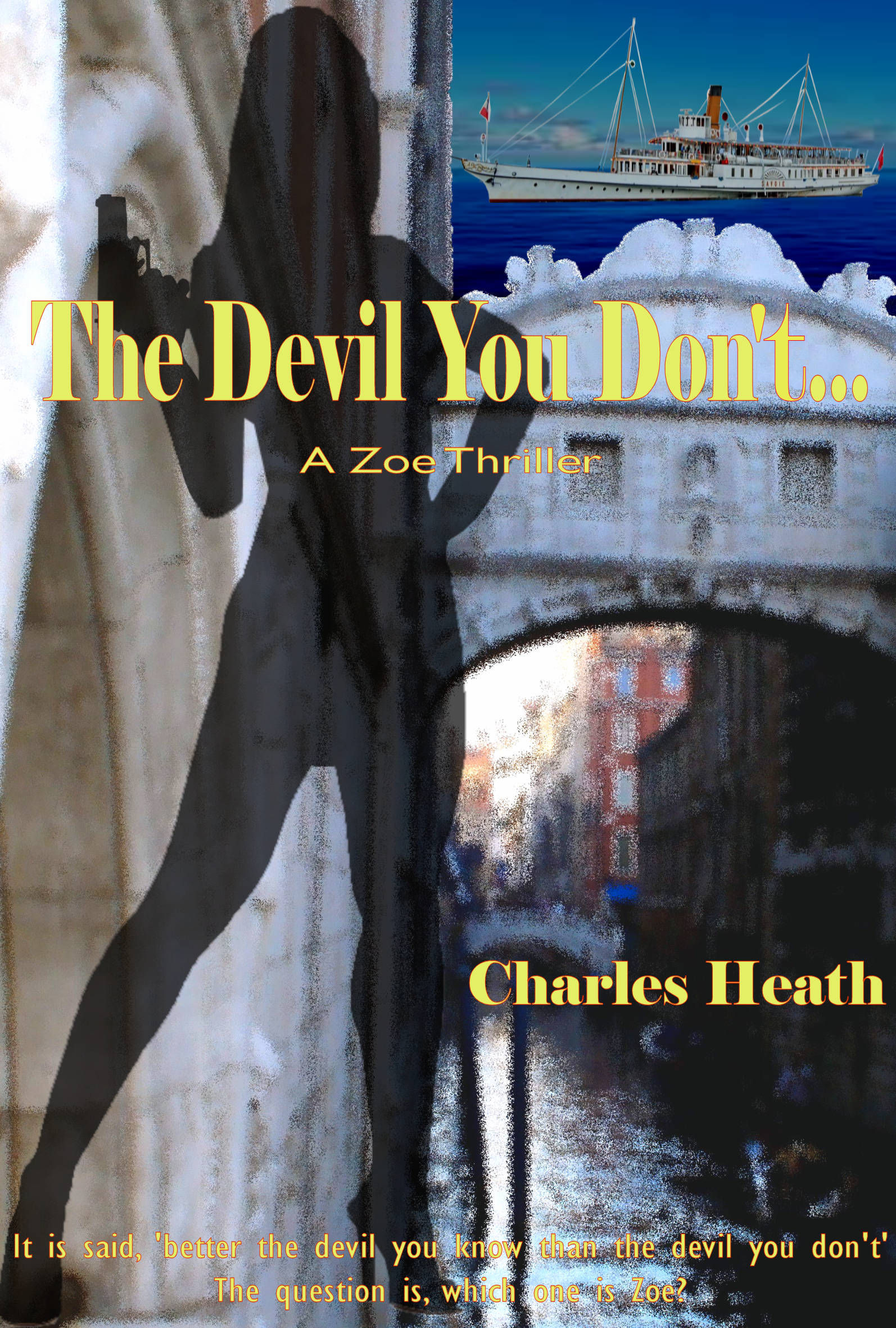
John Pennington’s life is in the doldrums. Looking for new opportunities and prevaricating about getting married, the only joy on the horizon was an upcoming visit to his grandmother in Sorrento, Italy.
Suddenly, he is left at the check-in counter with a message on his phone telling him the marriage is off, and the relationship is over.
If only he hadn’t promised a friend he would do a favour for him in Rome.
At the first stop, Geneva, he has a chance encounter with Zoe, an intriguing woman who captures his imagination from the moment she boards the Savoire, and his life ventures into uncharted territory in more ways than one.
That ‘favour’ for his friend suddenly becomes a life-changing event, and when Zoe, the woman who he knows is too good to be true, reappears, danger and death follow.
Shot at, lied to, seduced, and drawn into a world where nothing is what it seems, John is dragged into an adrenaline-charged undertaking, where he may have been wiser to stay with the ‘devil you know’ rather than opt for the ‘devil you don’t’.
For a story that was conceived during those long boring hours flying in a steel cocoon, striving to keep away the thoughts that the plane and everyone in it could just simply disappear as planes have in the past, it has come a long way.
Whilst I have always had a fascination with what happened during the second world war, not the battles or fighting, but in the more obscure events that took place, I decided to pen my own little sidebar to what was a long and bitter war.
And, so, it continues…
By the time they reached the outskirts of Munich, what the Standartenfuhrer considered their biggest hurdle, it was quite dark and almost impossible to see where they were going.
The whole city seemed to have disappeared so effectively was the blackout.
But there was one benefit, there was little or no traffic on the roads, which lessened the chance of running into another car or truck.
And it was time to refill the tank with two more petrol cans, leaving two remaining. Filling up now, the Standartenfuhrer said, would get them to Innsbruck.
He sounded confident, but Mayer got the distinct impression it was mostly that he was putting on a brave face. There had been one instance, the checkpoint before Munich where he nearly lost his nerve. For the first time, there had been SS guards at the checkpoint, and which had been entirely unexpected.
An SS officer of the same rank had been summoned and he had requested their written orders. They had paperwork, but Mayer wasn’t sure if it related to their current situation, further confirming his belief this had been a very carefully planned operation to get him out of Germany, and that there was a more pressing reason why. It definitely had something to do with the V2’s, but had their intelligence services found out about something else, something he didn’t know about?
Given the level of risk to the two men with him, and that at every turn there was a possibility of capture or death, given the level of planning and the run so far, one he would have never thought of trying on his own, he didn’t have a very high level of confidence that they would get away with it.
Those in the SS were not fools, trusted no one, believed nothing they were told, and disregarded anything written on paper. Check, double-check, then check again. Take nothing as read. The document he’d been given on what made a first-class SS officer in the eyes of the Reich, was fundamentally not him, nor most of the German population.
The officer at this checkpoint reminded him of the one who had shot the shooting in the hotel, and for at least ten tense minutes, during which time the other two had conferred quietly in English, one suggestion they cut and run.
That would have invited a hail of machine-gun fire that none of them would survive.
Both looked visibly relieved when he returned, having obviously called the name of the officer who had signed the order. The only explanation he had for this was that the level of discontent among officers Military of SS must be greater than he thought.
They managed to cross over into Austria without any problems, the route they had taken, a series of back roads and tracks which had been given to them. Once again, Mayer was surprised that so many people could be working against their own country, but, of what he’d seen, conditions were harsh no matter which part of Germany they were in.
The war was not going the way the German people were being told, and it was hard to see any resolution of the conflict any time soon.
Perhaps everyone in the high command was hoping the new V2 rockets were going to change the country’s fortunes in the war. If they were, they were going to be bitterly disappointed. What they needed was the jet-propelled fighters and bombers, something that remarkably had not been implemented years earlier, and would have given them air superiority.
He’d worked on those early jet engines and they were remarkable, and faster than anything the British or the Americans had. It was hard to comprehend why high command had not pushed forward the new jet-propelled planes that Belin had finally decided to implement.
And just when the trio had agreed that everything would work out about 100 kilometers from Innsbruck, on the road to the Italian border crossing, they took the wrong route. It was a mistake brought on by tiredness, and a momentary lapse in concentration.
It was the first time in almost a week that I made the short walk to the cafe alone. It was early, and the chill of the morning was still in the air. In summer, it was the best time of the day. When Susan came with me, it was usually much later, when the day was much warmer and less tolerable.
On the morning of the third day of her visit, Susan said she was missing the hustle and bustle of London, and by the end of the fourth she said, in not so many words, she was over being away from ‘civilisation’. This was a side of her I had not seen before, and it surprised me.
She hadn’t complained, but it was making her irritable. The Susan that morning was vastly different to the Susan on the first day. So much, I thought, for her wanting to ‘reconnect’, the word she had used as the reason for coming to Greve unannounced.
It was also the first morning I had time to reflect on her visit and what my feelings were towards her. It was the reason I’d come to Greve: to soak up the peace and quiet and think about what I was going to do with the rest of my life.
I sat in my usual corner. Maria, one of two waitresses, came out, stopped, and there was no mistaking the relief in her manner. There was an air of tension between Susan and Maria I didn’t understand, and it seemed to emanate from Susan rather than the other way around. I could understand her attitude if it was towards Alisha, but not Maria. All she did was serve coffee and cake.
When Maria recovered from the momentary surprise, she said, smiling, “You are by yourself?” She gave a quick glance in the direction of my villa, just to be sure.
“I am this morning. I’m afraid the heat, for one who is not used to it, can be quite debilitating. I’m also afraid it has had a bad effect on her manners, for which I apologise. I cannot explain why she has been so rude to you.”
“You do not have to apologise for her, David, but it is of no consequence to me. I have had a lot worse. I think she is simply jealous.”
It had crossed my mind, but there was no reason for her to be. “Why?”
“She is a woman, I am a woman, she thinks because you and I are friends, there is something between us.”
It made sense, even if it was not true. “Perhaps if I explained…”
Maria shook her head. “If there is a hole in the boat, you should not keep bailing but try to plug the hole. My grandfather had many expressions, David. If I may give you one piece of advice, as much as it is none of my business, you need to make your feelings known, and if they are not as they once were, and I think they are not, you need to tell her. Before she goes home.”
Interesting advice. Not only a purveyor of excellent coffee, but Maria was also a psychiatrist who had astutely worked out my dilemma. What was that expression, ‘not just a pretty face’?
“Is she leaving soon?” I asked, thinking Maria knew more about Susan’s movements than I did.
“You would disappoint me if you had not suspected as much. Susan was having coffee and talking to someone in her office on a cell phone. It was an intense conversation. I should not eavesdrop, but she said being here was like being stuck in hell. It is a pity she does not share your love for our little piece of paradise, is it not?”
“It is indeed. And you’re right. She said she didn’t have a phone, but I know she has one. She just doesn’t value the idea of getting away from the office. Perhaps her role doesn’t afford her that luxury.”
And perhaps Alisha was right about Maria, that I should be more careful. She had liked Maria the moment she saw her. We had sat at this very table, the first day I arrived. I would have travelled alone, but Prendergast, my old boss, liked to know where ex-employees of the Department were, and what they were doing.
She sighed. “I am glad I am just a waitress. Your usual coffee and cake?”
“Yes, please.”
Several months had passed since we had rescued Susan from her despotic father; she had recovered faster than we had thought, and settled into her role as the new Lady Featherington, though she preferred not to use that title, but go by the name of Lady Susan Cheney.
I didn’t get to be a Lord, or have any title, not that I was expecting one. What I had expected was that Susan, once she found her footing as head of what seemed to be a commercial empire, would not have time for details like husbands, particularly when our agreement made before the wedding gave either of us the right to end it.
There was a moment when I visited her recovering in the hospital, where I was going to give her the out, but I didn’t, and she had not invoked it. We were still married, just not living together.
This visit was one where she wanted to ‘reconnect’ as she called it, and invite me to come home with her. She saw no reason why we could not resume our relationship, conveniently forgetting she indirectly had me arrested for her murder, charges both her mother and Lucy vigorously pursued, and had the clone not returned to save me, I might still be in jail.
It was not something I would forgive or forget any time soon.
There were other reasons why I was reluctant to stay with her, like forgetting small details, an irregularity in her character I found odd. She looked the same, she sounded the same, she basically acted the same, but my mind was telling me something was not right. It was not the Susan I first met, even allowing for the ordeal she had been subjected to.
But, despite those misgivings, there was no question in my mind that I still loved her, and her clandestine arrival had brought back all those feelings. But as the days passed, I began to get the impression my feelings were one-sided and she was just going through the motions.
Which brought me to the last argument, earlier, where I said if I went with her, it would be business meetings, social obligations, and quite simply her ‘celebrity’ status that would keep us apart. I reminded her that I had said from the outset I didn’t like the idea of being in the spotlight, and when I reiterated it, she simply brushed it off as just part of the job, adding rather strangely that I always looked good in a suit. The flippancy of that comment was the last straw, and I left before I said something I would regret.
I knew I was not a priority. Maybe somewhere inside me, I had wanted to be a priority, and I was disappointed when I was not.
And finally, there was Alisha. Susan, at the height of the argument, had intimated she believed I had an affair with her, but that elephant was always in the room whenever Alisha was around. It was no surprise when I learned Susan had asked Prendergast to reassign her to other duties.
At least I knew what my feelings for Alisha were, and there were times when I had to remember she was persona non grata. Perhaps that was why Susan had her banished, but, again, a small detail; jealousy was not one of Susan’s traits when I first knew her.
Perhaps it was time to set Susan free.
When I swung around to look in the direction of the lane where my villa was, I saw Susan. She was formally dressed, not in her ‘tourist’ clothes, which she had bought from one of the local clothing stores. We had fun that day, shopping for clothes, a chore I’d always hated. It had been followed by a leisurely lunch, lots of wine and soul searching.
It was the reason why I sat in this corner; old habits die hard. I could see trouble coming from all directions, not that Susan was trouble or at least I hoped not, but it allowed me the time to watch her walking towards the cafe in what appeared to be short, angry steps; perhaps the culmination of the heat wave and our last argument.
She glared at me as she sat, dropping her bag beside her on the ground, where I could see the cell phone sitting on top. She followed my glance down, and then she looked unrepentant back at me.
Maria came back at the exact moment she was going to speak. I noticed Maria hesitate for a second when she saw Susan, then put her smile in place to deliver my coffee.
Neither spoke nor looked at each other. I said, “Susan will have what I’m having, thanks.”
Maria nodded and left.
“Now,” I said, leaning back in my seat, “I’m sure there’s a perfectly good explanation as to why you didn’t tell me about the phone, but that first time you disappeared, I’d guessed you needed to keep in touch with your business interests. I thought it somewhat unwisethat you should come out when the board of one of your companies was trying to remove you, because of what was it, an unexplained absence? All you had to do was tell me there were problems and you needed to remain at home to resolve them.”
My comment elicited a sideways look, with a touch of surprise.
“It was unfortunate timing on their behalf, and I didn’t want you to think everything else was more important than us. There were issues before I came, and I thought the people at home would be able to manage without me for at least a week, but I was wrong.”
“Why come at all. A phone call would have sufficed.”
“I had to see you, talk to you. At least we have had a chance to do that. I’m sorry about yesterday. I once told you I would not become my mother, but I’m afraid I sounded just like her. I misjudged just how much this role would affect me, and truly, I’m sorry.”
An apology was the last thing I expected.
“You have a lot of work to do catching up after being away, and of course, in replacing your mother and gaining the requisite respect as the new Lady Featherington. I think it would be for the best if I were not another distraction. We have plenty of time to reacquaint ourselves when you get past all these teething issues.”
“You’re not coming with me?” She sounded disappointed.
“I think it would be for the best if I didn’t.”
“Why?”
“It should come as no surprise to you that I’ve been keeping an eye on your progress. You are so much better doing your job without me. I told your mother once that when the time came I would not like the responsibilities of being your husband. Now that I have seen what it could possibly entail, I like it even less. You might also want to reconsider our arrangement, after all, we only had a marriage of convenience, and now that those obligations have been fulfilled, we both have the option of terminating it. I won’t make things difficult for you if that’s what you want.”
It was yet another anomaly, I thought; she should look distressed, and I would raise the matter of that arrangement. Perhaps she had forgotten the finer points. I, on the other hand, had always known we would not last forever. The perplexed expression, to me, was a sign she might have forgotten.
Then, her expression changed. “Is that what you want?”
“I wasn’t madly in love with you when we made that arrangement, so it was easy to agree to your terms, but inexplicably, since then, my feelings for you changed, and I would be sad if we parted ways. But the truth is, I can’t see how this is going to work.”
“In saying that, do you think I don’t care for you?”
That was exactly what I was thinking, but I wasn’t going to voice that opinion out loud. “You spent a lot of time finding new ways to make my life miserable, Susan. You and that wretched friend of yours, Lucy. While your attitude improved after we were married, that was because you were going to use me when you went to see your father, and then almost let me go to prison for your murder.”
“I had nothing to do with that, other than to leave, and I didn’t agree with Lucy that you should be made responsible for my disappearance. I cannot be held responsible for the actions of my mother. She hated you; Lucy didn’t understand you, and Millie told me I was stupid for not loving you in return, and she was right. Why do you think I gave you such a hard time? You made it impossible not to fall in love with you, and it nearly changed my mind about everything I’d been planning so meticulously. But perhaps there was a more subliminal reason why I did because after I left, I wanted to believe, if anything went wrong, you would come and find me.”
“How could you possibly know that I’d even consider doing something like that, given what you knew about me?”
“Prendergast made a passing comment when my mother asked him about you; he told us you were very good at finding people and even better at fixing problems.”
“And yet here we are, one argument away from ending it.”
I could see Maria hovering, waiting for the right moment to deliver her coffee, then go back and find Gianna, the café owner, instead. Gianna was more abrupt and, for that reason, was rarely seen serving the customers. Today, she was particularly cantankerous, banging the cake dish on the table and frowning at Susan before returning to her kitchen. Gianna didn’t like Susan either.
Behind me, I heard a car stop, and when she looked up, I knew it was for her. She had arrived with nothing, and she was leaving with nothing.
She stood. “Last chance.”
“Forever?”
She hesitated and then shook away the look of annoyance on her face. “Of course not. I wanted you to come back with me so we could continue working on our relationship. I agree there are problems, but it’s nothing we can’t resolve if we try.”
I had been trying. “It’s too soon for both of us, Susan. I need to be able to trust you, and given the circumstances, and all that water under the bridge, I’m not sure if I can yet.”
She frowned at me. “As you wish.” She took an envelope out of her bag and put it on the table. “When you are ready, it’s an open ticket home. Please make it sooner rather than later. Despite what you think of me, I have missed you, and I have no intention of ending it between us.”
That said, she glared at me for a minute, shook her head, then walked to the car. I watched her get in and the car drive slowly away.
Every time I close my eyes, I see something different.
I’d like to think the cinema of my dreams is playing a double feature but it’s a bit like a comedy cartoon night on Fox.
But these dreams are nothing to laugh about.
Once again there’s a new instalment of an old feature, and we’re back on the treasure hunt.
“Where is he?” I asked, hardly disguising the annoyance in my tone.
“In the toilet.”
A minor relief, but what the hell was she doing in his room?
“You do know Vince is responsible for Boggs being attacked, and me too, by the way. There was no mistaking that thug even if he was hiding behind a balaclava.
“You’re not telling me anything I didn’t know already. And it might be my fault. I told him, no, he all but beat it out of me, about the map and Boggs, and you, and Alex.”
“So, I can expect to see Alex in here sometime soon?”
“No. The Benderby’s have their own private hospital. No one will get to hear about it, except maybe when there is the retaliation. This who map and treasure thing is about to get a whole lot more problematical.”
Boggs chose to return from the bathroom and stopped dead in his tracks when he saw me. “How did you manage to get past the head of Gestapo, Nurse Jamieson?”
“I had an angel show me the way. How are you?”
“This is a hospital; how do you think I feel.”
The nurse was right, he looked worse than he was. The bruising was going to be very colourful in the coming days, before everything settled down.
“Vince?”
“Like I could tell who it was. Only Vince can sound like Vince even where he’s trying not to sound like Vince.”
“Did he get the map.”
“One of them, but not necessarily the right one, just a better one.”
Boggs got back onto the bed and lay back. I got the impression he was putting on a brave face for Nadia. But it didn’t explain why she was there.
“What are you doing here,” I asked, with just a shade less annoyance.
“I heard what Vince did and I cam to apologise. You were next,.” She said to me, “But, seriously guys, you were the masters of your own destinies with this map thing. You don’t even know if it’s real or just another of a host of hoaxes. Old man Cossatino reckons that Boggs’s dad created a lot of different variations, in the hope of selling them as the real thing. He was, after all, just a common con man, and not very good at it.”
The patriarch of the Cossatino’s the one she referred to as Old Man Cossatino, was Nadia’s grandfather, and although Nadia’s father was nominally in charge of the clan, everyone knew who the real leader was. And Old Man Cossatino was someone you didn’t cross, and that went for the Benderby’s too.
Boggs’s dad had worked for the Cossatino’s at one time, and it would not surprise me if it was Cossatino’s idea to create all the bogus maps, just to make money. I couldn’t see Boggs’s dad having the brains to mount a scheme such as Nadia described.
It surprised me that I had forgotten about that. Way back, when my father was still picking a side, he had said there’d been a rumour going around that a new map for the treasure had been found, and that both the Cossatino’s and the Benderby’s were in a bidding war for it, along with some other unsavoury characters.
And the rumour died as fast as it had risen, and not long after Boggs’s dad disappeared, later to turn up dead. One rumour, he had gone looking for the treasure, though no one proffered an answer as to how he might have come across the original map which he had, at one time, claimed, and another, Cossatino had him make it up, then killed him so he would never reveal the truth.
That original map had never seen the light of day, nor mentioned since.
It didn’t explain why Vince was on the warpath.
“What’s Vince up to? I thought you guys had the original map?”
She looked surprised. “First I’m hearing about it.”
I realised then she would have been as young as I was, and Boggs, which was about five or six. Precognitive memories. She might have been too young to remember. I only remembered it because my father had continually bagged Boggs’s father as a fool who should have got a real job and support his family, rather than let others do it for him, a veiled reference about the times Boggs stayed over and ate with us.
But it was not lost on Boggs.
“There’s any number of maps, yes. I found a lot of them in Dad’s stuff in the shed. I suspect those were the ones created for the Cossatino’s to sell privately, and I also think he double-crossed them and kept one particular map, the one he called ‘the map’ for himself, which may have been the original.”
That I was guessing, was the map Boggs had now. “And you’re telling me that’s the one you said you found, and…”
“I still have it. Vince has one of the half dozen that all seem to be slightly different, different enough from the original to keep him happy for a while.”
“What was the point of sending him to me?”
“I needed more time to figure out which variation to give him. I’m hoping now, if he thinks it’s the original, he’ll start looking for it. Save us a lot of time and effort if he does the groundwork. And I’m sorry about what happened to you. If it’s any consolation, I knew he wouldn’t hurt you.”
It seemed to me, judging from the expression on Nadia’s face, that discussing the fact Vince didn’t have the right may prompt her to tell him. She was a Cossatino first, after all, and had for years toed the family line.
Maybe she’d changed, but I wish Boggs was not so trusting.
“That’s nonsense Boggs,” Nadia said. “My brother doesn’t go easy on anyone.”
“How did you get in here?”
No mistaking that voice of authority. The head of the hospital Gestapo had arrived. She glared at me. “You’d better leave before I call both the hospital security staff and the police.” Then she looked at Nadia, who was getting out of the seat. “You should know better.” Much kinder voice for Nadia, suggesting they were acquainted.
She probably helped old man Cossatino with his interrogations.
“Had you told me how Boggs was, I would not be here.” I’m not sure why I decided to take a stand with her.
“Don’t be impertinent. You can see how he is, now leave while I’m in a good mood.”
I’d hate to see her when she was in a bad mood.
“Tomorrow,” Boggs said. “I’m sure they’ll let me have visitors by then.”
I waved and left. Nadia stayed back for a moment, then joined me in the passage.
“What were you really doing here,” I asked her. “It’s bot as if you had any reason to visit Boggs, other than to cause trouble.”
“I came to apologise. My brother can be a moron sometimes.”
“Does he know you’re here?”
“No. And I want to keep it that way.”
“It’s Vince we’re talking about, or has he gone soft. From what I witness during our encounter, it seems he’s got worse.”
“Which is why I don’t want to see him. You want to come back to the room and have a few drinks. Maybe we could talk about old times, you know, trash Alex?”
“Sounds good to me.”
A nightcap with Nadia. I would never have thought that possible, even in my wildest dreams. Had she changed, or was she up to something?
Unlocking the Night: Exploring the Mystical and the Mundane in Our Dreams
The moment our conscious minds drift into slumber, a new world unfurls. A world where gravity is optional, where the familiar can morph into the surreal, and where echoes of our waking lives mingle with the utterly bizarre. Dreams. They’ve captivated, puzzled, and inspired humanity for millennia, sparking endless debate about their true nature. Are they celestial messages whispered from beyond, or simply the chaotic rumblings of our own sleeping brains?
For many, dreams are indeed magical journeys. They offer an escape from the mundane, transporting us to fantastical landscapes, reuniting us with lost loved ones, or allowing us to fly through star-dusted skies. These are the dreams that linger, leaving us with a sense of wonder and a touch of longing for the ephemeral reality we briefly inhabited. They can feel profoundly significant, imbued with a wisdom or a warning that feels almost otherworldly. Think of the ancient interpretations, where dreams were seen as direct communications from deities or omens of the future. This perspective imbues our dreamscapes with a powerful, almost spiritual, aura.
On the other hand, the realm of psychology offers a compelling alternative: dreams as eruptions of the subconscious. Freud famously theorised that dreams are the “royal road to the unconscious,” a space where repressed desires, unresolved conflicts, and hidden anxieties can manifest in symbolic form. From this viewpoint, those fleeting images and nonsensical narratives are not random but are rather the deeply buried parts of ourselves fighting for attention. That recurring dream of being chased might not be a premonition of danger, but a symbolic representation of avoidance in our waking life. Understanding these subconscious eruptions can be a powerful tool for self-discovery and personal growth.
But how do we bridge these two seemingly disparate interpretations? And more importantly, how do we glean meaning from the often elusive tapestry of our dreams? For a growing number of individuals, the answer lies in a simple yet profound practice: keeping a dream journal.
The act of writing down your dreams, no matter how fragmented or strange they may seem, is an incredibly potent way to engage with your nocturnal adventures. It’s like catching fireflies in a jar – you’re capturing fleeting moments of light and then examining them more closely in the quiet of the morning.
Here’s why a dream journal can be so transformative:
Enhanced Recall: Dreams are notoriously fleeting. The moment you wake up, the images begin to fade. By immediately jotting down what you remember, you’re preserving these valuable fragments before they vanish into the ether. Even a few keywords or a fleeting image can trigger fuller memories later.
Pattern Recognition: Over time, you’ll start to notice recurring themes, symbols, and emotions in your dreams. This is where the real magic of a journal unfolds. Are you frequently encountering water? Are there specific people who keep appearing? These patterns can offer profound insights into your current emotional state, your subconscious concerns, and even your deepest aspirations.
Symbol Interpretation: While some dream symbols are universal, many are deeply personal. By seeing your symbols laid out in your journal, you can begin to decipher their unique meaning to you. What does that specific colour, that peculiar object, or that strange location represent in your personal lexicon?
Bridging the Gap: A dream journal can act as a bridge between the magical and the mundane. You can still appreciate the fantastical journeys while simultaneously seeking the underlying psychological messages. It allows for both wonder and introspection.
Boosting Creativity: Many artists, writers, and musicians draw inspiration directly from their dreams. A well-maintained dream journal can be a treasure trove of unique ideas, unexpected plot twists, and evocative imagery, fueling your creative endeavours.
Whether you view your dreams as whimsical escapades or as vital messages from your inner self, the practice of keeping a dream journal offers a tangible way to connect with this mysterious and often overlooked aspect of your existence. So, next time you wake with a phantom sensation or a lingering image, grab a notebook and pen. You might just be on the verge of unlocking a hidden world within yourself.
What are your thoughts on dreams? Do you keep a dream journal? Share your experiences in the comments below!