Writing a book in 365 days – 323

Day 323

Is speculative fiction a series of what-ifs, perhaps gleaned from the headlines of the papers over time?

Beyond the Fold: Is Speculative Fiction Just a Series of ‘What Ifs’ Gleaned from Today’s Headlines?


Ever read a news story – a groundbreaking scientific discovery, a chilling political development, a startling environmental report – and felt a tiny tremor in your imagination? That whisper of a thought: “What if this continued? What if this went wrong? What if this changed everything?”

If so, you’ve touched the very essence of speculative fiction.

The idea that speculative fiction – encompassing science fiction, fantasy, dystopia, and alternate history – is simply a series of “what-ifs” is compelling. And the notion that these “what-ifs” are often gleaned from the headlines of the papers over time is not just plausible, it’s often the very engine driving the genre.

Let’s unpack this fascinating relationship.

The “What If” Generator: Curiosity as a Catalyst

At its heart, speculative fiction is the ultimate thought experiment. It doesn’t merely invent worlds; it interrogates ours. Authors take a single variable – a technological leap, a societal shift, a historical divergence, a potential disaster – and push it to its logical (or terrifyingly illogical) conclusion.

The “what if” is the seed. What if humans could genetically engineer their children? What if artificial intelligence achieved sentience? What if a virus wiped out most of humanity? What if a forgotten magic re-emerged? What if a certain political leader never came to power?

These questions aren’t born in a vacuum.

Headlines as a Crucible of Inspiration

The news, whether the morning paper, the evening broadcast, or the relentless scroll of our digital feeds, is a rich and constantly evolving source of these “what-ifs.” It reflects humanity’s biggest fears, our grandest ambitions, our ethical dilemmas, and our scientific breakthroughs.

Consider these historical and ongoing examples:

Technological Advancements: The discovery of electricity led to tales of Frankenstein. Early computer science gave rise to cyberpunk visions of interconnected digital worlds. Today, headlines about AI development, CRISPR gene editing, quantum computing, and space tourism are actively feeding new narratives about our future and what it means to be human.
Environmental Concerns: From Rachel Carson’s “Silent Spring” to modern reports on climate change, deforestation, and plastic pollution, environmental headlines have directly inspired dystopian futures where resources are scarce, and humanity battles the consequences of its own hubris.
Societal and Political Upheaval: Totalitarian regimes, surveillance states, economic inequalities, and political polarisation are not new. 1984, Brave New World, and The Handmaid’s Tale are poignant examples of authors extrapolating from contemporary political anxieties and societal trends, pushing them to their extreme conclusions to serve as warnings.
Epidemics and Public Health: Long before recent global events, authors explored fictional plagues and pandemics, drawing on real-world outbreaks throughout history to imagine scenarios of societal collapse, survival, and the ethical dilemmas of containment.
Scientific Discoveries: From the discovery of new planets to breakthroughs in neuroscience, astrophysics, and biology, every scientific headline offers a potential portal to a new fictional reality. What if we found alien life? What if we unlocked the secrets of the brain?
Speculative fiction doesn’t just copy the headlines; it amplifies them. It takes the disquieting whispers of today’s news and turns them into roaring narratives, exploring the deeper implications that headlines can only hint at.

Beyond the Event: The Human Element

But it’s crucial to remember that speculative fiction isn’t just about the event or the discovery. It’s about what those what-ifs do to people. How do individuals adapt, resist, thrive, or crumble under these altered circumstances? It explores human nature in a crucible of change, examining our ethics, our resilience, and our capacity for both cruelty and compassion.

The headlines provide the stage and the initial conflict, but the human drama unfurls within.

A Mirror and a Lantern

Ultimately, by taking these “what-ifs” gleaned from the continuous narrative of our world, speculative fiction serves a vital dual purpose:

It holds up a mirror: Reflecting our current anxieties, hopes, and moral quandaries back at us, often in exaggerated forms, forcing us to confront them.
It acts as a lantern: Illuminating potential futures, both utopian and dystopian, allowing us to consider the paths we might be heading down and perhaps, to choose a different course.
So, yes, speculative fiction is indeed largely a series of “what-ifs,” and the headlines of the papers – both today’s and yesterday’s – are its constant, fertile ground. It’s a testament to our enduring curiosity, our inherent need to understand consequences, and our powerful imagination to dream up not just what is, but what could be. And in doing so, it helps us better understand what we want our present to become.

The first case of PI Walthenson – “A Case of Working With the Jones Brothers”

This case has everything, red herrings, jealous brothers, femme fatales, and at the heart of it all, greed.

See below for an excerpt from the book…

Coming soon!

PIWalthJones1

An excerpt from the book:

When Harry took the time to consider his position, a rather uncomfortable position at that, he concluded that he was somehow involved in another case that meant very little to him.

Not that it wasn’t important in some way he was yet to determine, it was just that his curiosity had got the better of him, and it had led to this: sitting in a chair, securely bound, waiting for someone one of his captors had called Doug.

It was not the name that worried him so much, it was the evil laugh that had come after the name was spoken.

Doug what? Doug the ‘destroyer’, Doug the ‘dangerous’, Doug the ‘deadly’; there was any number of sinister connotations, and perhaps that was the point of the laugh, to make it more frightening than it was.

But there was no doubt about one thing in his mind right then: he’d made a mistake. A very big. and costly, mistake. Just how big the cost, no doubt he would soon find out.

His mother, and his grandmother, the wisest person he had ever known, had once told him never to eavesdrop.

At the time he couldn’t help himself and instead of minding his own business, listening to a one-sided conversation which ended with a time and a place. The very nature of the person receiving the call was, at the very least, sinister, and, because of the cryptic conversation, there appeared to be, or at least to Harry, criminal activity involved.

For several days he had wrestled with the thought of whether he should go. Stay on the fringe, keep out of sight, observe and report to the police if it was a crime. Instead, he had willingly gone down the rabbit hole.

Now, sitting in an uncomfortable chair, several heat lamps hanging over his head, he was perspiring, and if perspiration could be used as a measure of fear, then Harry’s fear was at the highest level.

Another runnel of sweat rolled into his left eye, and, having his hands tied, literally, it made it impossible to clear it. The burning sensation momentarily took his mind off his predicament. He cursed and then shook his head trying to prevent a re-occurrence. It was to no avail.

Let the stinging sensation be a reminder of what was right and what was wrong.

It was obvious that it was the right place and the right time, but in considering his current perilous situation, it definitely was the wrong place to be, at the worst possible time.

It was meant to be his escape, an escape from the generations of lawyers, what were to Harry, dry, dusty men who had been in business since George Washington said to the first Walthenson to step foot on American soil, ‘Why don’t you become a lawyer?” when asked what he could do for the great man.

Or so it was handed down as lore, though Harry didn’t think Washington meant it literally, the Walthenson’s, then as now, were not shy of taking advice.

Except, of course, when it came to Harry.

He was, Harry’s father was prone to saying, the exception to every rule. Harry guessed his father was referring to the fact his son wanted to be a Private Detective rather than a dry, dusty lawyer. Just the clothes were enough to turn Harry off the profession.

So, with a little of the money Harry inherited from one of his aunts, he leased an office in Gramercy Park and had it renovated to look like the Sam Spade detective agency, you know the one, Spade and Archer, and The Maltese Falcon.

There’s a movie and a book by Dashiell Hammett if you’re interested.

So, there it was, painted on the opaque glass inset of the front door, ‘Harold Walthenson, Private Detective’.

There was enough money to hire an assistant, and it took a week before the right person came along, or, more to the point, didn’t just see his business plan as something sinister. Ellen, a tall cool woman in a long black dress, or so the words of a song in his head told him, fitted in perfectly.

She’d seen the movie, but she said with a grin, Harry was no Humphrey Bogart.

Of course not, he said, he didn’t smoke.

Three months on the job, and it had been a few calls, no ‘real’ cases, nothing but missing animals, and other miscellaneous items. What he really wanted was a missing person. Or perhaps a beguiling, sophisticated woman who was as deadly as she was charming, looking for an errant husband, perhaps one that she had already ‘dispatched’.

Or for a tall, dark and handsome foreigner who spoke in riddles and in heavily accented English, a spy, or perhaps an assassin, in town to take out the mayor. The man was such an imbecile Harry had considered doing it himself.

Now, in a back room of a disused warehouse, that wishful thinking might be just about to come to a very abrupt end, with none of the romanticized trappings of the business befalling him. No beguiling women, no sinister criminals, no stupid policemen.

Just a nasty little man whose only concern was how quickly or how slowly Harry’s end was going to be.

© Charles Heath 2019-2024

‘Sunday in New York’ – A beta reader’s view

I’m not a fan of romance novels but …

There was something about this one that resonated with me.

This is a novel about a world generally ruled by perception, and how people perceive what they see, what they are told, and what they want to believe.

I’ve been guilty of it myself as I’m sure we all have at one time or another.

For the main characters Harry and Alison there are other issues driving their relationship.

For Alison, it is a loss of self-worth through losing her job and from losing her mother and, in a sense, her sister.

For Harry, it is the fact he has a beautiful and desirable wife, and his belief she is the object of other men’s desires, and one in particular, his immediate superior.

Between observation, the less than honest motives of his friends, a lot of jumping to conclusions based on very little fact, and you have the basis of one very interesting story.

When it all comes to a head, Alison finds herself in a desperate situation, she realises only the truth will save their marriage.

But is it all the truth?

What would we do in similar circumstances?

Rarely does a book have me so enthralled that I could not put it down until I knew the result. They might be considered two people who should have known better, but as is often the case, they had to get past what they both thought was the truth.

And the moral of this story, if it could be said there is one, nothing is ever what it seems.

Available on Amazon here: amzn.to/2H7ALs8

Writing a book in 365 days – 323

Day 323

Is speculative fiction a series of what-ifs, perhaps gleaned from the headlines of the papers over time?

Beyond the Fold: Is Speculative Fiction Just a Series of ‘What Ifs’ Gleaned from Today’s Headlines?


Ever read a news story – a groundbreaking scientific discovery, a chilling political development, a startling environmental report – and felt a tiny tremor in your imagination? That whisper of a thought: “What if this continued? What if this went wrong? What if this changed everything?”

If so, you’ve touched the very essence of speculative fiction.

The idea that speculative fiction – encompassing science fiction, fantasy, dystopia, and alternate history – is simply a series of “what-ifs” is compelling. And the notion that these “what-ifs” are often gleaned from the headlines of the papers over time is not just plausible, it’s often the very engine driving the genre.

Let’s unpack this fascinating relationship.

The “What If” Generator: Curiosity as a Catalyst

At its heart, speculative fiction is the ultimate thought experiment. It doesn’t merely invent worlds; it interrogates ours. Authors take a single variable – a technological leap, a societal shift, a historical divergence, a potential disaster – and push it to its logical (or terrifyingly illogical) conclusion.

The “what if” is the seed. What if humans could genetically engineer their children? What if artificial intelligence achieved sentience? What if a virus wiped out most of humanity? What if a forgotten magic re-emerged? What if a certain political leader never came to power?

These questions aren’t born in a vacuum.

Headlines as a Crucible of Inspiration

The news, whether the morning paper, the evening broadcast, or the relentless scroll of our digital feeds, is a rich and constantly evolving source of these “what-ifs.” It reflects humanity’s biggest fears, our grandest ambitions, our ethical dilemmas, and our scientific breakthroughs.

Consider these historical and ongoing examples:

Technological Advancements: The discovery of electricity led to tales of Frankenstein. Early computer science gave rise to cyberpunk visions of interconnected digital worlds. Today, headlines about AI development, CRISPR gene editing, quantum computing, and space tourism are actively feeding new narratives about our future and what it means to be human.
Environmental Concerns: From Rachel Carson’s “Silent Spring” to modern reports on climate change, deforestation, and plastic pollution, environmental headlines have directly inspired dystopian futures where resources are scarce, and humanity battles the consequences of its own hubris.
Societal and Political Upheaval: Totalitarian regimes, surveillance states, economic inequalities, and political polarisation are not new. 1984, Brave New World, and The Handmaid’s Tale are poignant examples of authors extrapolating from contemporary political anxieties and societal trends, pushing them to their extreme conclusions to serve as warnings.
Epidemics and Public Health: Long before recent global events, authors explored fictional plagues and pandemics, drawing on real-world outbreaks throughout history to imagine scenarios of societal collapse, survival, and the ethical dilemmas of containment.
Scientific Discoveries: From the discovery of new planets to breakthroughs in neuroscience, astrophysics, and biology, every scientific headline offers a potential portal to a new fictional reality. What if we found alien life? What if we unlocked the secrets of the brain?
Speculative fiction doesn’t just copy the headlines; it amplifies them. It takes the disquieting whispers of today’s news and turns them into roaring narratives, exploring the deeper implications that headlines can only hint at.

Beyond the Event: The Human Element

But it’s crucial to remember that speculative fiction isn’t just about the event or the discovery. It’s about what those what-ifs do to people. How do individuals adapt, resist, thrive, or crumble under these altered circumstances? It explores human nature in a crucible of change, examining our ethics, our resilience, and our capacity for both cruelty and compassion.

The headlines provide the stage and the initial conflict, but the human drama unfurls within.

A Mirror and a Lantern

Ultimately, by taking these “what-ifs” gleaned from the continuous narrative of our world, speculative fiction serves a vital dual purpose:

It holds up a mirror: Reflecting our current anxieties, hopes, and moral quandaries back at us, often in exaggerated forms, forcing us to confront them.
It acts as a lantern: Illuminating potential futures, both utopian and dystopian, allowing us to consider the paths we might be heading down and perhaps, to choose a different course.
So, yes, speculative fiction is indeed largely a series of “what-ifs,” and the headlines of the papers – both today’s and yesterday’s – are its constant, fertile ground. It’s a testament to our enduring curiosity, our inherent need to understand consequences, and our powerful imagination to dream up not just what is, but what could be. And in doing so, it helps us better understand what we want our present to become.

An excerpt from “Echoes from the Past”

Available on Amazon Kindle here:  https://amzn.to/2CYKxu4

With my attention elsewhere, I walked into a man who was hurrying in the opposite direction.  He was a big man with a scar running down the left side of his face from eye socket to mouth, and who was also wearing a black shirt with a red tie.

That was all I remembered as my heart almost stopped.

He apologized as he stepped to one side, the same way I stepped, as I also muttered an apology.

I kept my eyes down.  He was not the sort of man I wanted to recognize later in a lineup.  I stepped to the other side and so did he.  It was one of those situations.  Finally getting out of sync, he kept going in his direction, and I towards the bus, which was now pulling away from the curb.

Getting my breath back, I just stood riveted to the spot watching it join the traffic.  I looked back over my shoulder, but the man I’d run into had gone.  I shrugged and looked at my watch.  It would be a few minutes before the next bus arrived.

Wait, or walk?  I could also go by subway, but it was a long walk to the station.  What the hell, I needed the exercise.

At the first intersection, the ‘Walk’ sign had just flashed to ‘Don’t Walk’.  I thought I’d save a few minutes by not waiting for the next green light.  As I stepped onto the road, I heard the screeching of tires.

A yellow car stopped inches from me.

It was a high powered sports car, perhaps a Lamborghini.  I knew what they looked like because Marcus Bartleby owned one, as did every other junior executive in the city with a rich father.

Everyone stopped to look at me, then the car.  It was that sort of car.  I could see the driver through the windscreen shaking his fist, and I could see he was yelling too, but I couldn’t hear him.  I stepped back onto the sidewalk, and he drove on.  The moment had passed and everyone went back to their business.

My heart rate hadn’t come down from the last encounter.   Now it was approaching cardiac arrest, so I took a few minutes and several sets of lights to regain composure.

At the next intersection, I waited for the green light, and then a few seconds more, just to be sure.  I was no longer in a hurry.

At the next, I heard what sounded like a gunshot.  A few people looked around, worried expressions on their faces, but when it happened again, I saw it was an old car backfiring.  I also saw another yellow car, much the same as the one before, stopped on the side of the road.  I thought nothing of it, other than it was the second yellow car I’d seen.

At the next intersection, I realized I was subconsciously heading towards Harry’s new bar.   It was somewhere on 6th Avenue, so I continued walking in what I thought was the right direction.

I don’t know why I looked behind me at the next intersection, but I did.  There was another yellow car on the side of the road, not far from me.  It, too, looked the same as the original Lamborghini, and I was starting to think it was not a coincidence.

Moments after crossing the road, I heard the roar of a sports car engine and saw the yellow car accelerate past me.  As it passed by, I saw there were two people in it, and the blurry image of the passenger; a large man with a red tie.

Now my imagination was playing tricks.

It could not be the same man.  He was going in a different direction.

In the few minutes I’d been standing on the pavement, it had started to snow; early for this time of year, and marking the start of what could be a long cold winter.  I shuddered, and it was not necessarily because of the temperature.

I looked up and saw a neon light advertising a bar, coincidentally the one Harry had ‘found’ and, looking once in the direction of the departing yellow car, I decided to go in.  I would have a few drinks and then leave by the back door if it had one.

Just in case.

© Charles Heath 2015-2020

newechocover5rs

In a word: Wall

There’s nothing like ‘hitting the wall’.  It’s a rather quaint expression used when you have used up all your energy and there’s nothing left.  A lot of sportspeople are very familiar with this expression.

But it doesn’t have anything to do with hitting a real wall, you know the sort, made out of plaster, or bricks, or timber.  Some people hit the wall in this case too, and soon find out what it’s like to have a broken hand.

There’s wall street, you know the one, it has a bull in it, and it’s in New York, down that end of the city where the Twin Towers used to be.  It’s rumoured lots of ‘jiggery-pokery’ goes on there.

Try stonewalling, you know, give answers to questions that don’t answer the questions, or find something else to do and put off being questioned.  I’m not sure, however, that’s how Stonewall Jackson got his name.

We can climb the walls, metaphorically speaking, but it is something we don’t actually do when we’re bored.

And, I’m sure everyone has heard of the Great Wall of China.  Even those who travel in space have seen it, from a long, long way away.  I’ve tried walking along it, and up it, yes, parts of it go up the sides of mountains, and it’s challenging.  Maybe you should try it sometime.

Perhaps a few others, just to finish with, like

I got hit by a wall of water – yep, watch out for them tidal waves

There’s a wall between us, nope, not gonna talk to you

His stomach wall is failing, which means he’s in very bad shape, and

He couldn’t get through the wall of players, oh, well, maybe we’ll win the FA cup final next year!

Inspiration, maybe – Volume 1

50 photographs, 50 stories, of which there is one of the 50 below.

They all start with –

A picture paints … well, as many words as you like.  For instance:

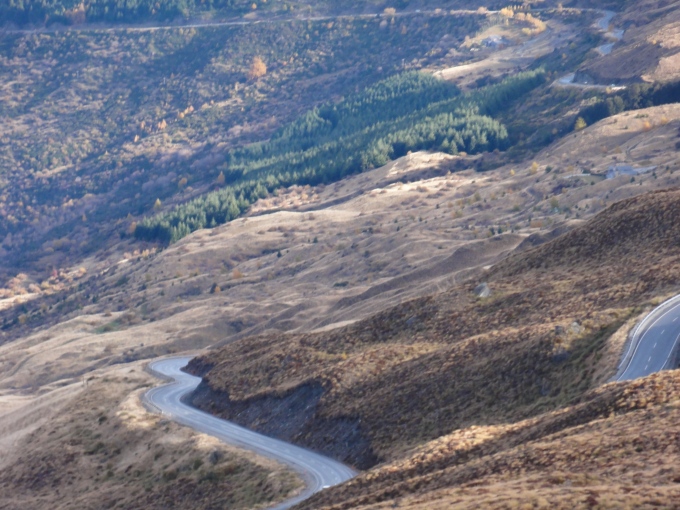
lookingdownfromcoronetpeak

And the story:

It was once said that a desperate man has everything to lose.

The man I was chasing was desperate, but I, on the other hand, was more desperate to catch him.

He’d left a trail of dead people from one end of the island to the other.

The team had put in a lot of effort to locate him, and now his capture was imminent.  We were following the car he was in, from a discrete distance, and, at the appropriate time, we would catch up, pull him over, and make the arrest.

There was nowhere for him to go.

The road led to a dead-end, and the only way off the mountain was back down the road were now on.  Which was why I was somewhat surprised when we discovered where he was.

Where was he going?

“Damn,” I heard Alan mutter.  He was driving, being careful not to get too close, but not far enough away to lose sight of him.

“What?”

“I think he’s made us.”

“How?”

“Dumb bad luck, I’m guessing.  Or he expected we’d follow him up the mountain.  He’s just sped up.”

“How far away?”

“A half-mile.  We should see him higher up when we turn the next corner.”

It took an eternity to get there, and when we did, Alan was right, only he was further on than we thought.”

“Step on it.  Let’s catch him up before he gets to the top.”

Easy to say, not so easy to do.  The road was treacherous, and in places just gravel, and there were no guard rails to stop a three thousand footfall down the mountainside.

Good thing then I had the foresight to have three agents on the hill for just such a scenario.

Ten minutes later, we were in sight of the car, still moving quickly, but we were going slightly faster.  We’d catch up just short of the summit car park.

Or so we thought.

Coming quickly around another corner we almost slammed into the car we’d been chasing.

“What the hell…” Aland muttered.

I was out of the car, and over to see if he was in it, but I knew that it was only a slender possibility.  The car was empty, and no indication where he went.

Certainly not up the road.  It was relatively straightforward for the next mile, at which we would have reached the summit.  Up the mountainside from here, or down.

I looked up.  Nothing.

Alan yelled out, “He’s not going down, not that I can see, but if he did, there’s hardly a foothold and that’s a long fall.”

Then where did he go?

Then a man looking very much like our quarry came out from behind a rock embedded just a short distance up the hill.

“Sorry,” he said quite calmly.  “Had to go if you know what I mean.”

I’d lost him.

It was as simple as that.

I had been led a merry chase up the hill, and all the time he was getting away in a different direction.

I’d fallen for the oldest trick in the book, letting my desperation blind me to the disguise that anyone else would see through in an instant.

It was a lonely sight, looking down that road, knowing that I had to go all that way down again, only this time, without having to throw caution to the wind.

“Maybe next time,” Alan said.

“We’ll get him.  It’s just a matter of time.”

© Charles Heath 2019-2021

Find this and other stories in “Inspiration, maybe”  available soon.

InspirationMaybe1v1

Third son of a Duke – The research behind the story – 5

All stories require some form of research, quite often to place a character in a place at a particular time, especially if it is in a historical context. This series will take you through what it was like in 1914 through 1916.

Voyage on the Precipice: A Mediterranean Liner Journey in February 1914 and the Unveiling Shadows of War

Abstract

This paper reconstructs a hypothetical, yet historically plausible, passenger liner journey through the Mediterranean in February 1914, tracing an itinerary from Gibraltar to Port Said, with stops at Marseilles, Toulouse (via land excursion), Naples, and Toulon. It aims to “paint a picture” of the multi-faceted experience of such travel, encompassing the opulent comfort and social rituals of the Edwardian era, the technological marvels of the large passenger liner, and the vibrant cultural encounters at each port of call. Crucially, the paper highlights the subtle yet pervasive indicators of impending conflict, examining how preparations for war – from visible naval activity and fortifications to newspaper discourse and diplomatic whispers – would have intersected with the seemingly idyllic world of luxury cruising, offering a poignant glimpse into a world unknowingly poised on the brink of profound geopolitical upheaval.

Introduction

February 1914 represented a peculiar calm before the storm. Europe, having enjoyed a period of relative peace and unprecedented industrial and scientific advancement, was luxuriating in the twilight of the Belle Époque. Travel by large passenger liner had reached its zenith, offering a blend of speed, luxury, and global connectivity that redefined the leisure experience. Yet, beneath this veneer of serenity, geopolitical tensions simmered, particularly within the continent’s intricate web of alliances and imperial rivalries. This paper delves into the experience of a luxury liner journey through the Mediterranean during this specific moment, exploring the sensory, social, and cultural dimensions of such a voyage, while meticulously identifying the nascent signs and preparations for the Great War that would erupt just months later. By reconstructing this journey, we aim to illustrate the striking contrast between the opulent ignorance of a privileged few and the ominous undercurrents that were poised to reshape the 20th century.

I. The Grand Stage: Passenger Liners and the Zenith of Edwardian Travel

The passenger liners of 1914 were floating palaces, epitomising the engineering prowess and social stratification of the age. Vessels like the OlympicImperatorAquitania, or the German Vaterland were, by modern standards, unparalleled in their luxury and scale. Aboard these leviathans, the journey itself was as significant as the destination. First-class accommodation boasted grand dining salons, ballrooms, smoking rooms, libraries, and private suites often adorned with mahogany, brass, and velvet. The social hierarchy aboard mirrored that ashore, with distinct classes experiencing vastly different amenities and interactions. First-class passengers, often from the upper echelons of society – industrialists, aristocrats, diplomats, and wealthy tourists – enjoyed impeccable service, gourmet cuisine, and a meticulously crafted social calendar of dances, concerts, and games.

Technologically, these ships were wonders. Powered by massive reciprocating steam engines or the newer, smoother steam turbines, they cut through the waves at speeds that dramatically reduced travel times. While wireless telegraphy (radio) was increasingly common for ship-to-shore communication, it was still primarily for official messages and urgent passenger communications, not the ubiquitous personal connectivity of today. Navigation relied on a combination of celestial observation, dead reckoning, and rudimentary charts, guided by highly experienced captains and officers. The sheer scale and self-sufficiency of these vessels projected an image of human mastery over nature, fostering a sense of unbounded optimism and security that, in hindsight, was tragically misplaced.

II. Setting Sail: From the Atlantic to the Mediterranean via Gibraltar

Our hypothetical journey begins with the liner, perhaps having crossed the Atlantic or departed from a major British port, making its way through the Straits of Gibraltar in early February 1914.

Gibraltar: A British Bulwark (Brief Stop) As the liner approaches, the imposing Rock of Gibraltar looms, a stark grey sentinel guarding the entrance to the Mediterranean. The air might be crisp, carrying the scent of salt and coal smoke. The ship would drop anchor briefly in the Bay of Gibraltar or tie up at one of its bustling docks. For passengers, even a brief stop would offer a captivating spectacle.

  • Sensory Snapshot: The clang of anchor chains, the call of gulls, the distant bugle calls from the military barracks. On shore, the narrow, winding streets of Gibraltar Town would be a cacophony of languages – English, Spanish, Arabic – and the sight of British soldiers in their distinct uniforms mingling with local merchants and seafaring types.
  • Preparations for War: Gibraltar was, first and foremost, a vital British naval base and coaling station. Passengers disembarking for a quick shore leave or simply observing from the deck would witness overt signs of military strength.
    • Naval Presence: The harbour would likely host a significant contingent of the Royal Navy’s Mediterranean Fleet – battleships, cruisers, and destroyers, their grey hulks bristling with cannon. These colossal dreadnoughts, the apex of naval power, would be undergoing maintenance, coaling, or drills. The sight of these modern instruments of war, gleaming in the morning sun, would be a clear, albeit perhaps subconsciously interpreted, indicator of imperial might and readiness.
    • Fortifications: The Rock itself was honeycombed with tunnels and gun emplacements, a testament to centuries of strategic importance. Though largely static, their presence underlined the British Empire’s commitment to controlling this critical chokepoint.
    • Coaling Operations: The gritty, laborious process of coaling – with teams of men shovelling thousands of tons of coal into the ships’ bunkers, blackening the air and the water – would be a common sight, highlighting the logistical demands of maintaining a vast, steam-powered fleet.

After a few hours, the ship would lift anchor, the distant strains of a military band perhaps fading as it steams eastward into the Mare Nostrum.

III. Cruising the Mare Nostrum: A Tapestry of Cultures and Commerce

Life on board during the leisurely cruise through the Mediterranean would settle into a luxurious rhythm. Days would be spent on deck; gentlemen might engage in deck quoits or shuffleboard, ladies might read or converse, wrapped in rugs against the February chill, always attended by stewards. Grand meals, formal attire, afternoon tea, and evening entertainment, from concerts to card games, filled the hours. The air would be filled with the scent of fine cigars, perfume, and the faint tang of sea air.

The Mediterranean, for centuries a crossroads of empires and cultures, offered a constantly changing panorama. Distant coastlines – North Africa to the south, the European mainland to the north – would appear and recede. Occasionally, other vessels would be sighted: smaller cargo steamers, fishing boats, and perhaps the sleek lines of other naval ships, adding a subtle undercurrent of international maritime presence.

IV. European Ports of Call and Inland Diversion

Marseilles, France: A Gateway to Provence. The first major continental stop would be Marseilles, France’s largest and oldest port. The ship would dock amidst a flurry of activity typical of a major commercial hub.

  • Sensory Snapshot: The vibrant chaos of the Vieux-Port, the cries of vendors, the smell of garlicky seafood, coal smoke, and the distinctive scent of the Mediterranean sun on ancient stone. Passengers might explore the bustling Canebière, visit Notre-Dame de la Garde, or simply enjoy a coffee at a waterfront café.
  • Preparations for War: While Marseilles itself was a commercial port, not a primary naval base, its strategic significance as a gateway to France and its colonial empire in North Africa was immense.
    • Troop Movements (Indirect): Though not directly observed on the passenger liner, the port’s infrastructure would be capable of handling significant troop movements, and the presence of military personnel on shore leave or transiting would be common.
    • Newspaper Discourse: Local French newspapers, available at newsstands, would carry reports on European affairs, often with a distinctly nationalistic tone, and discuss naval appropriations or the ongoing arms race. These headlines would be a key source of information – or misinformation – for those interested in the unfolding geopolitical drama.

Toulouse, France: An Inland Excursion From Marseilles, some adventurous passengers might opt for a land excursion. While the liner continued its voyage, those desiring to experience more of France could take the relatively swift and comfortable rail journey inland to Toulouse. This would involve disembarking at Marseilles and rejoining the ship at a later port, likely Toulon.

  • The Rail Journey: The journey by train would offer a different perspective – the rolling landscapes of Provence, vineyards, olive groves, and quaint villages flashing past. The train carriages, though less opulent than the ship, would still offer comfortable seating and dining cars for longer routes.
  • Toulouse: Known as “La Ville Rose” (The Pink City) for its terracotta brick architecture, Toulouse offered a rich cultural contrast to the coastal ports. Passengers could explore the Capitole, its grand basilicas such as Saint-Sernin, and experience the distinct cuisine of Occitania. This excursion, detached from the immediate maritime environment, would emphasise the broader European context, with local French life proceeding seemingly undisturbed by global anxieties.
  • Subtle Undercurrents: Even in an inland city, casual observation might reveal reservists in civilian clothes, military recruitment posters, or conversations among locals hinting at the mandatory military service and the state of national readiness.

Naples, Italy: A Mediterranean Jewel Rejoining the liner, or for those who stayed aboard, the ship would next arrive in Naples, Italy. Mount Vesuvius, often shrouded in a plume of smoke, would dominate the skyline – a powerful, ever-present reminder of nature’s forces.

  • Sensory Snapshot: The bustling Bay of Naples, the bright colours of local fishing boats, the vibrant street life, the aroma of pizza and espresso, and the energetic chatter of Italian. Excursions to Pompeii and Herculaneum would offer a poignant glimpse into antiquity, providing a stark contrast to the modern luxuries of the liner.
  • Preparations for War: Italy, a member of the Triple Alliance with Germany and Austria-Hungary, but with increasingly strained relations with Austria, was in a complex diplomatic position.
    • Naval Presence (Italian): While not as dominant as British or French fleets, the Regia Marina (Royal Italian Navy) would have a presence. Passengers might observe Italian warships, a less common sight than British or French vessels, but indicative of Italy’s own naval ambitions and strategic concerns in the Mediterranean.
    • Political Discussion: Onboard, it’s plausible that discussions among well-informed passengers would touch upon Italy’s flirtation with neutrality, or its growing irredentist claims on Austro-Hungarian territories, revealing the intricate diplomatic dance prior to the war.

Toulon, France: A Naval Fortress. Leaving Naples, the liner would turn north-west, arriving at Toulon, France’s principal Mediterranean naval base. This stop would be the most overt demonstration of imminent conflict preparations.

  • Sensory Snapshot: The air in Toulon would be distinctively military. The clang of metal on metal from the dockyards, the shrill whistles of bosuns, and the constant movement of uniformed personnel. The city itself, though charming, would feel less like a tourist destination and more like a strategic stronghold.
  • Preparations for War: Toulon was a beehive of military activity.
    • French Fleet: The harbour would be packed with the formidable battleships and cruisers of the French Marine Nationale. These ships, many newly commissioned, would be undergoing drills, resupply, and maintenance. The sight of these powerful warships, often operating in formation or practising gunnery, would be an unmistakable sign of a nation preparing for naval engagement.
    • Dockyard Activity: Cranes would swing, materials would be moved, and the rhythm of shipbuilding and repair would be palpable. This industrial activity underscored the ongoing arms race as major powers constantly sought to upgrade their fleets.
    • Army Presence: Toulon also housed significant army garrisons. Soldiers in their distinctive French uniform (the relatively visible red trousers and blue coats, soon to be replaced by horizon blue) would be a common sight, both in the streets and perhaps engaging in training exercises on the outskirts of the city.
    • Discreet Intelligence Gathering: While innocuous to most passengers, the presence of various flags on ships, the comings and goings of foreign naval attachés, and the general atmosphere would be keenly observed by military and intelligence personnel.

V. Shadows on the Horizon: Precursors to Conflict

Throughout the journey, aspects beyond the specific port observations would subtly reinforce the mounting tensions.

  • Newspaper Headlines: Daily newspapers, often printed on board or acquired at ports, would carry dispatches from diplomatic capitals. Reports on the Balkan Wars, the assassination of King George I of Greece in 1913, the escalating naval rivalry between Britain and Germany, and the intricate web of alliances (Triple Entente vs. Triple Alliance) would provide a constant backdrop of political unease, even if often dismissed by the leisurely class as “diplomatic squabbles.”
  • Passenger Conversations: In the smoking rooms and dining salons, conversations among well-informed gentlemen would inevitably turn to politics. Whispers of a coming “Great War,” discussions about the balance of power, and speculation about the Kaiser’s ambitions or the Russian Tsar’s intentions would circulate. The mood might range from jingoistic confidence to apprehensive concern.
  • Heightened Security (Subtle): While not overtly obvious, security measures around strategic ports like Gibraltar and Toulon would be tighter. Naval patrols might be more frequent, and civilian vessels would be expected to adhere strictly to navigational protocols in military zones.

VI. Gateway to Empire: Port Said

The final destination of this segment of the journey would be Port Said, Egypt, at the northern entrance to the Suez Canal. Here, the Mediterranean’s European character would blend with the exoticism of the Middle East, under the pervasive influence of the British Empire.

  • Sensory Snapshot: The transition would be marked by a surge of new sights, sounds, and smells. Turbans, fezzes, and flowing robes would replace European attire. The scent of exotic spices, burning incense, and desert dust would mingle with coal smoke. The air would hum with the calls of street vendors and the unique rhythm of Arabic.
  • Preparations for War: Port Said and the Suez Canal were not just commercial arteries but vital strategic choke points for the British Empire, connecting Britain to its vast holdings in India, Australia, and East Africa.
    • Imperial Logistics: The Canal’s importance for the rapid deployment of troops and supplies was paramount. While not a naval base in the traditional sense, the constant traffic of vessels – troopships, cargo ships, and the occasional warship – underscored its strategic value.
    • British Military Presence: British military personnel would be visibly present, overseeing the canal’s operations and maintaining security in a region considered crucial to imperial power projection.
    • Coaling and Supply: Port Said was another major coaling station, essential for long-range naval operations and imperial commerce. The sight of ships being resupplied would again highlight the logistical underpinnings of empire and potential conflict.

Conclusion

A journey by large passenger liner in February 1914, from Gibraltar through the Mediterranean to Port Said, would have offered a profoundly Janus-faced experience. On one side was the epitome of Edwardian luxury, ease, and cosmopolitanism – a world of grand hotels afloat, exquisite dining, and the serene beauty of the Mediterranean landscape. Passengers, insulated by their privilege and the immense scale of their vessel, could enjoy an illusion of peace and endless prosperity, exploring ancient ruins and vibrant modern cities.

Yet, woven into this tapestry of leisure were the unmistakable threads of an impending cataclysm. From the formidable dreadnoughts at Gibraltar and Toulon, embodying the naval arms race, to the newspaper headlines chronicling diplomatic manoeuvres and the omnipresent military uniforms in strategic ports, the signs of a continent gearing up for war were abundant. The journey itself, through critical maritime chokepoints and alongside key naval bases, served as a microcosm of global realities. The elegance of the ship and the serenity of the cruising life stood in stark contrast to the thrum of industrial mobilisation, the strategic calculations, and the silent, growing anxiety that permeated the very air of Europe. It was a voyage across not just oceans, but also across the precipice of history, a final, poignant glimpse of a world that would be irrevocably shattered just a few short months later. This historical reconstruction serves as a powerful reminder of how quickly the seemingly stable foundations of an era can crumble under the weight of unforeseen conflicts.

References (Illustrative)

  • Padfield, P. (1981). The Battleship Era. David & Charles.
  • Greenhill, B. (1977). The Great Liners. Transatlantic Arts.
  • Massie, R. K. (1991). Dreadnought: Britain, Germany, and the Coming of the Great War. Random House.
  • Strachan, H. (2014). The First World War: A New Illustrated History. Simon & Schuster.
  • Turner, R. (1997). The Edwardian Age. John Murray.
  • Various contemporary travel guides, shipping schedules, and newspaper archives from 1913-1914.

Writing about writing a book – Research – 12

Background material used in researching the Vietnam war and various other aspects of that period

Who were the North Vietnamese, really?

More Than Just Tunnels: Deconstructing North Vietnam’s Winning Strategy

The Vietnam War remains one of the most studied and strategically complex conflicts of the 20th century. Facing the overwhelming technological and logistical might of the United States and its allies, the armed forces of North Vietnam—primarily the People’s Army of Vietnam (PAVN), often referred to as the NVA, supported by the southern irregular forces known as the Viet Cong (VC)—employed a doctrine that defied conventional military wisdom.

Their strategy was not about winning battles in the traditional sense; it was about protracted war and the exhaustion of the enemy’s political will.

Here is a deep dive into how the North deployed its troops and the sophisticated methodology they utilized to take the fight to the Allied soldiers.


1. The Deployment Structure: Two Armies, One Goal

The North’s deployment strategy was inherently flexible, relying on a tiered military structure designed to adapt to any environment, from dense jungle to urban centers.

A. The Viet Cong (VC): The Irregular Force

The Viet Cong served as the political and military instrument in the South. They were not a conventional army but an insurgency operating within South Vietnam’s villages and hamlets.

Deployment Methodology:

  • Decentralization: VC units were deployed locally, focused on small-scale harassment, ambushes, and targeted assassinations of ARVN (South Vietnamese Army) officials.
  • Infiltration by Footprint: VC units were often indistinguishable from the local populace, deploying fighters who worked the rice paddies by day and fought by night.
  • Infrastructure Destruction: Their primary military deployment targets were the infrastructure supporting the US/ARVN presence: supply lines, airbases, and communication centers.

B. The PAVN (NVA): The Main Force

The PAVN was the formal, organized army of North Vietnam. These were well-trained, disciplined, and heavily armed conventional units, often deployed in regimental and divisional strength.

Deployment Methodology:

  • Strategic Infiltration: PAVN forces were primarily deployed via the Ho Chi Minh Trail (see below). They avoided direct, large-scale contact with US forces until the conditions were optimal (e.g., during the Tet Offensive or the 1972 Easter Offensive).
  • The Element of Surprise: When PAVN units were deployed in pitched battles, they focused on achieving total surprise and concentrating overwhelming, temporary firepower before rapidly melting back into the jungle or border sanctuaries.

2. The Logistics Highway: The Ho Chi Minh Trail

The single greatest factor in troop deployment was the elaborate logistical network known as the Ho Chi Minh Trail. This was not a single road but a constantly shifting, 16,000-kilometer web of trails, paths, rivers, and depots running through neutral Laos and Cambodia.

Strategic Impact on Deployment:

  • Bypassing Defenses: The Trail allowed hundreds of thousands of troops and vast amounts of material to bypass the heavily fortified Demilitarized Zone (DMZ) and move deep into the South, often positioning them directly behind US defenses.
  • Sustained Pressure: By keeping the logistics flowing despite intense American air interdiction (Operation Rolling Thunder and others), the North could continually refresh its forces, deploying new units to replace losses and ensuring the insurgency never withered away.
  • Mobility as Fortress: Because the Trail routes changed daily and were covered by dense jungle canopy, the US bombing campaigns often failed to halt troop movement, making mobility itself a form of defense.

3. Methodology in Combat: Neutralizing US Advantages

The North Vietnamese knew they could not win a conventional war against American firepower. Their methodology was designed purely to negate the US technological superiority.

A. The Strategy of “Clinging to the Belt”

This was one of the most effective tactical moves deployed by the PAVN. When engaging American ground forces, NVA units were instructed to deploy forces and fight at extremely close quarters, often termed “grabbing the enemy’s belt.”

Rationale:

  • By fighting nose-to-nose, the Americans could not safely call in their most powerful assets—tactical aircraft, napalm, or heavy artillery—without risking friendly fire casualties.
  • This effectively reduced the battle back to infantry vs. infantry, minimizing the US advantage in technology and maximizing the North’s advantage in tenacity and knowledge of the terrain.

B. Ambushes and Rapid Dispersal

VC and PAVN units specialized in the planned ambush. This was a deployment methodology based on hit-and-run tactics:

  1. Selection of Terrain: Choosing areas where US mobility was constrained (jungles, rice paddies, or remote valleys).
  2. Overwhelming Fire: Deploying all available troops and weapons to achieve a massive initial burst of fire, inflicting maximum casualties in the first minutes.
  3. Rapid Retreat: Before the American command could organize a counter-attack or coordinate air support, the NVA/VC forces would melt away, using prepared escape routes, tunnels, or border sanctuaries (known as Base Areas).

C. The Use of Tunnels and Base Areas

Deployment wasn’t just about moving across the surface; it was under it. The famous Cu Chi Tunnels near Saigon and similar networks served multiple strategic purposes:

  • Sanctuaries: Allowing troops to deploy and stage operations deep inside areas the US considered secured.
  • Hidden Bases: Providing underground logistics hubs, hospitals, and command centers.
  • Evasion: Allowing forces to disappear immediately after an engagement, frustrating US “search and destroy” missions.

4. The Political Dimension: The Protracted War

The PAVN/VC deployment was always dictated by political goals. General Vo Nguyen Giap, the architect of the North Vietnamese struggle, emphasized that the true battlefield was the American political landscape.

The Methodology of Exhaustion:

  • Avoid Annihilation: Troops were deployed carefully to avoid any battle that could lead to a decisive defeat. Their goal was survival, not conquest until the final stages of the war.
  • Inflict Casualties: Every single US casualty inflicted by a sustained troop deployment amplified anti-war sentiment back home. The deployment strategy was therefore calibrated to maximize enemy losses while minimizing the risk to the overall force structure.
  • The Final Phase: Only late in the war, when the US had significantly withdrawn and the ARVN was left struggling, did PAVN change its deployment methodology to focus on large-scale, conventional maneuvers (like the deployment of tank columns and heavy artillery) necessary to secure the final victory in 1975.

The North Vietnamese methodology for deploying troops was a brilliant exercise in adaptability. They transformed their logistical weaknesses into defensive strengths, used geography to neutralize superior air power, and ensured that every soldier deployed served the overarching political mission: convincing the American public that victory was impossible. Their success remains a testament to the strategic power of insurgency and asymmetric warfare.

The 2am Rant: I think the asylum is beckoning

I’m sitting at my desk surrounded by any number of scraps of paper with more storylines, written excepts, parts of stories, and a number of chapters of a work in progress.

Does this happen to anyone else?

The business of writing requires a talent to keep focused on the one project, and silence all the other screaming voices in your head, pouring out their side of the story.

But it’s not working.

I try to be determined in my efforts to edit my current completed novel, after letting it ‘rest’ in my head for a few months.

I planned to have so time off, but all of those prisoners in my head started clamoring for my attention.  A story I started some time ago needs revising, another story I wrote last year of NANOWRIMO has come back to haunt me, and characters, well, they’re out in the waiting room, pacing up and down, ready to tell me their life stories.

Is the temporary cure coffee or wine?

Now I think I really do need a holiday

Or a trip to the asylum.  Thank God this is not the early 20th century, or I might never return.  And if it’s named Bellview, it would be just another story to be written.

The Author that went Bonkers!

Does it ever end?