50 photographs, 50 stories, of which there is one of the 50 below.
They all start with –
A picture paints … well, as many words as you like. For instance:
And, the story:
Have you ever watched your hopes and dreams simply fly away?
Everything I thought I wanted and needed had just left in an aeroplane, and although I said I was not going to, I came to the airport to see the plane leave. Not the person on it, that would have been far too difficult and emotional, but perhaps it was symbolic, the end of one life and the start of another.
But no matter what I thought or felt, we had both come to the right decision. She needed the opportunity to spread her wings. It was probably not the best idea for her to apply for the job without telling me, but I understood her reasons.
She was in a rut. Though her job was a very good one, it was not as demanding as she had expected, particularly after the last promotion, but with it came resentment from others on her level that she, the youngest of the group, would get the position.
It was something that had been weighing her down for the last three months, and if she noticed it, the late nights, the moodiness, sometimes a flash of temper. I knew she had one; no one could have such red hair and not, but she had always kept it in check.
And then there was us, together, and after seven years, it felt like we were going nowhere. Perhaps that was down to my lack of ambition, and though she never said it, lack of sophistication. It hadn’t been an issue, well, not until her last promotion, and the fact that she had to entertain more, and frankly, I felt like an embarrassment to her.
So, there it was, three days ago, the beginning of the weekend, and we had planned to go away for a few days and take stock. We both acknowledged we needed to talk, but it never seemed the right time.
It was then that she said she had quit her job and found a new one. Starting the following Monday.
Ok, that took me by surprise, not so much that it was something I sort of guessed might happen, but that she would just blurt it out.
I think that right then, at that moment, I could feel her frustration with everything around her.
What surprised her was my reaction. None.
I simply asked who, where, and when.
A world-class newspaper in New York, and she had to be there in a week.
A week.
It was all the time I had left with her.
I remember just shrugging and asking if the planned weekend away was off.
She stood on the other side of the kitchen counter, hands around a cup of coffee she had just poured, and that one thing I remembered was the lone tear that ran down her cheek.
Is that all you want to know?
I did, yes, but we had lost the intimacy we used to have, where she would have told me what was happening, and we would have brainstormed solutions. I might be a cabinet maker, but I still had a brain, was what I overheard her tell a friend once.
There’s not much to ask, I said. You’ve been desperately unhappy and haven’t been able to hide it all that well, you have been under a lot of pressure trying to deal with a group of troglodytes, and you’ve been leaning on Bentley’s shoulder instead of mine, and I get it, he’s got more experience in that place, and the politics that go with it, and is still an ally.
Her immediate superior was instrumental in her getting the position, but unlike some men in his position, he had not taken advantage of the situation like some might. And even if she had made a move, which I doubted, that was not the sort of woman she was, he would have politely declined.
One of the very few happily married men in that organisation, so I heard.
So, she said, you’re not just a pretty face.
Par for the course for a cabinet maker whose university degree is in psychology. It doesn’t take rocket science to see what was happening to you. I just didn’t think it was my place to jump in unless you asked me, and when you didn’t, well, that told me everything I needed to know.
Yes, our relationship had a use-by date, and it was in the next few days.
I was thinking, she said, that you might come with me; you can make cabinets anywhere.
I could, but I think the real problem wasn’t just the job. It was everything around her and going with her that would just be a constant reminder of what had been holding her back. I didn’t want that for her and said so.
Then the only question left was, what do we do now?
Go shopping for suitcases. Bags to pack, and places to go.
Getting on the roller coaster is easy. At the beginning, it’s a slow, easy ride, followed by the slow climb to the top. It’s much like some relationships; they start out easy, they require a little work to get to the next level, followed by the adrenaline rush when it all comes together.
What most people forget is that what comes down must go back up, and life is pretty much a roller coaster with highs and lows.
Our roller coaster had just come out of the final turn, and we were braking so that it would stop at the station.
There was no question of going with her to New York. Yes, I promised I’d come over and visit her, but that was a promise with crossed fingers behind my back. After a few months in the new job, the last thing she’d want was a reminder of what she left behind. New friends, new life.
We packed her bags, threw out everything she didn’t want, a free trip to the op shop with stuff she knew others would like to have, and basically, by the time she was ready to go, there was nothing left of her in the apartment, or anywhere.
Her friends would be seeing her off at the airport, and that’s when I told her I was not coming; that moment, the taxi arrived to take her away forever. I remember standing there, watching the taxi go. It was going to be, and was, as hard as it was to watch the plane leave.
So, there I was, finally staring at the blank sky, around me a dozen other plane spotters, a rather motley crew of plane enthusiasts.
Already that morning, there had been 6 different types of planes departing, and I could hear another winding up its engines for take-off.
People coming, people going.
Maybe I would go to New York in a couple of months, not to see her, but just to see what the attraction was. Or maybe I would drop in, just to see how she was.
As one of my friends told me when I gave him the news, the future is never written in stone, and it’s about time you broadened your horizons.
The problem is, there are familiar faces and a question of who is a friend and who is foe made all the more difficult because of the enemy, if it was the enemy, simply because it didn’t look or sound or act like the enemy.
Now, it appears, his problems stem from another operation he participated in.
…
It didn’t take much effort to come to the only viable explanation of why a buried operation had been brought back to life.
Colonel Bamfield.
And it didn’t take much more effort to realise that operation had been one of his, not that any of us knew that at the time, but for whatever reason, it had gone badly and now he was looking for answers.
Answers to what though?
It was a simple extraction; two operatives had their cover blown and were in hiding. A seven-man team in two choppers, get in, collect them, and get out. Seven men were overkill, but they were important operatives with vital intelligence.
I was a last minute addition to the team, replacing one of the sergeants who had been injured in an accident. It was a tight-knit team and I was not made to feel welcome. It was the usual fate of outsiders and it didn’t bother me.
It was their leader that did. Lieutenant Treen. But that came later, all it was, at first, was a sense of unease with his informal manner of command, and somewhat edgy disposition.
When I landed at the airfield, I was met by the other Sergeant, Mason, and taken to the briefing, which had been delayed until my arrival. Treen was there, pacing up and down like a caged tiger. It was apparent there were still some details still being worked on. Being so close to wheels up, I was not surprised at the tension among the group.
A Captain, a man named Worsefell, conducted the briefing, and it was patchy. Not the worst I’d been to, but it appeared the situation on the ground had changed considerably in the last 12 hours, necessitating a change in plans.
The operative had managed to get cover in an old abandoned building. That was fine until a group of enemy soldiers arrived and set up camp in the field not 100 yards from their position. Now, it was not possible to leave without being seen, day or night.
We now had to either distract or remove the enemy soldiers, an enemy we had no numbers or how heavily armed they were because our source on the ground had gone quiet. To me, it was possible the source had been captured, and if that was the case, it was also possible the enemy knew we were coming. But according to the Captain, this particular source had gone quiet before, in similar circumstances, so my suggestion was ignored.
Instead, the consensus was to go in and make an assessment on the ground. It meant we had to land further away, and have a long journey by foot with all the problems that might involve, and then return. That was the plan. The Captain had left it in Treen’s hands.
And Treen was not one to back away from a fight, not even when it was clear to everyone in that room, with or without the necessary intelligence, that the odds were stacked against success.
I looked at Lallo who was waiting for an answer. “I guess the brass didn’t know what to do with me, sir.”
My use of the word sir was noted.
“Be that as it may, I have a few questions about that operation.”
“I’m afraid it’s classified, and I’m under oath not to speak about it.”
Lallo took out a piece of folded paper from the inside pocket of his uniform jacket unfolded it and passed it to me.
It could be said that of all the women one could meet, whether contrived or by sheer luck, what are the odds it would turn out to be the woman who was being paid a very large sum to kill you?
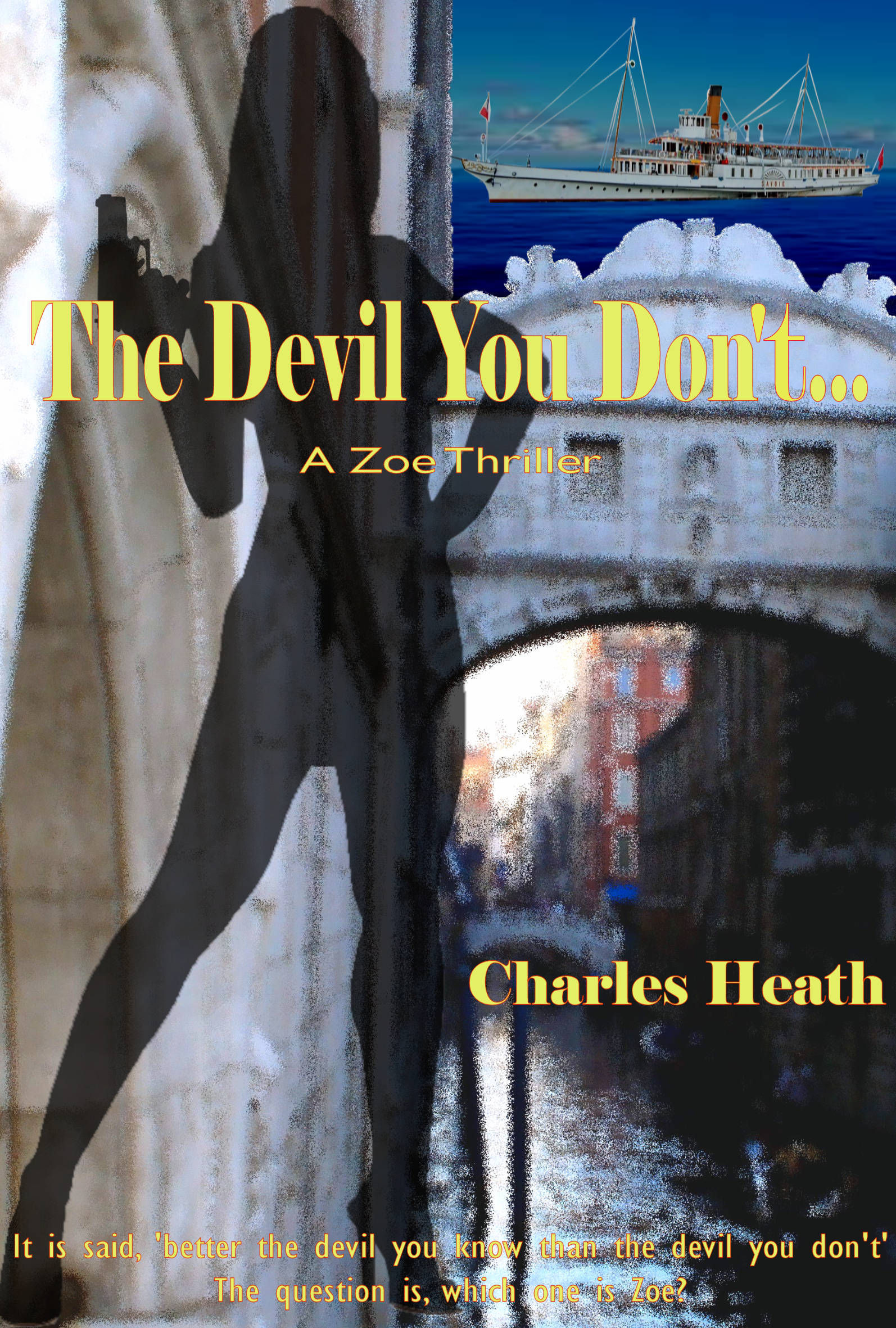
John Pennington is a man who may be lucky in business, but not so lucky in love. He has just broken up with Phillipa Sternhaven, the woman he thought was the one, but relatives and circumstances, and perhaps because she was a ‘princess’, may also have contributed to the end result.
So, what do you do when you are heartbroken?
That is a story that slowly unfolds, from the first meeting with his nemesis on Lake Geneva, all the way to a hotel room in Sorrento, where he learns the shattering truth.
What should have been solace after disappointment turns out to be something else entirely, and from that point, everything goes to hell in a handbasket.
He suddenly realises his so-called friend Sebastian has not exactly told him the truth about a small job he asked him to do, the woman he is falling in love with is not quite who she says she is, and he is caught in the middle of a war between two men who consider people becoming collateral damage as part of their business.
The story paints the characters, cleverly displaying all their flaws and weaknesses. The locations add to the story at times, taking me back down memory lane, especially to Venice, where, in those back streets, I confess it’s not all that hard to get lost.
All in all, a thoroughly entertaining story with, for once, a satisfying end.
After the three women left, I stretched out in one of the chairs and closed my eyes.
Cecelia had disappeared into one of the bedrooms, I suspect the one with the biggest bed and its own private bathroom, and I tried not to think about her. I tried not to think about Juliet either.
I heard Cecelia flop into the other chair opposite me a few minutes later. “They’re all lying in one way or another.”
I opened my eyes, hoping she hadn’t changed into something more ‘comfortable’, like in the movies.
“Welcome to the real world. I’m glad you played along. It was a bit of a limb we’re out on at the moment, and I’m sure Alfie, after bursting into the flat will be having kittens.”
“Can we trust any of those three?”
“You’d think the countess being a countess would be trustworthy.”
“But…”
“She does come from a class of people who are a law unto themselves. I don’t see her as a master criminal though, but she’s not telling the whole truth, just the parts she thinks we need to hear. It’s the same with everyone in this business. They try to anticipate our requirements.”
“I like the idea of being a bit player.”
“Never tell anyone who you really are. I find it helps to allay their fears and stops them from thinking you can save them from anything. First lesson I learned; I couldn’t save everyone.”
“Noted.”
“So, what do you think after hearing everything.”
“Anthony got some of it right, but his suppositions didn’t meet the facts on the ground.”
“Which is always the case. Sometimes a lot worse for us when we get there. We’re lucky this time we have a familiar face, Juliet. It buys us some credibility.”
“You think it’s the old woman or Alessandro trying to kill them, or someone else, or was that attack staged…”
It was a thought I had in passing too, as real as it appeared. If I thought too much about it, the fact was, just before the shooting started, we were both sitting ducks and he could have shot both of us dead.
A point to be noted and filed for later reference.
“Assuming it wasn’t, we have to get them over to Italy.”
“How?”
“How Larry got there. A small plane flying under the radar. If Rodby put you to work with me for a reason, it was probably to teach you all my tricks of the trade. You accumulate a lot of them as you progress, and don’t get killed. Moving secretly from place to place is a useful tool and you gather assets over time. I know a guy who knows a guy, and tomorrow, with the three women, you will go find him and take yourselves off to Italy. You will have two envelopes, the first the name of the pilot. The second, is an address of a safe house near Sorrento. Once they are safe, you will take up surveillance on the Sorrento Chateau, and the movements of the matriarch. After I’ve dealt with Rodby, I’ll be over to talk to her.”
“Don’t you think that’s dangerous, I mean, Rodby will be very angry.”
“Do you want to go see him?”
“No.”
“Then let me worry about him.”
“You sure he won’t lock you up and throw away the key?
OK. Then, writing can’t be a way of life; the important part of writing is living. OK. And lastly, you have to live in such a way that your writing emerges from it.
Wow!
How do you make sense of that?
…
Perhaps somebody else has worked out what this conundrum means.
I’ve been trawling the endless collection of Twitter descriptions provided by my fellow writers, noting that there used to be a restriction of 140 characters.
How do you sum yourself and/or your life in 140 characters, or even 280?
I started out with a few catchphrases, something that would draw followers. I’m thinking the word ‘aspiring’ will be my catchphrase. But how will my writing encapsulate that? It needs a little qualification or substance.
I’m aspiring to be a writer, or is that author? Is there a difference? Is there a guide to what I can call myself?
My life, quite simply put, but in more than 140 characters, is married happily, has two wonderful children, three amazing grandchildren, and a wealth of experience acquired over the years in parenting and surviving in a world that isn’t easy to live in.
To be honest, I don’t think anyone would be interested in any story based on those precepts. Actually, that sounds rather boring, doesn’t it?
Maybe it would be better if I were a retired policeman, or a retired lawyer, or a retired sheriff, or a retired private investigator, or a retired doctor, someone who had an occupation that was a rich mine of information from which to draw upon.
Retired computer programmers, supermarket shelf stackers, night cleaners, accounts clerks and general dogsbodies don’t quite cut the mustard. Should we try to embellish our personal history to make it more appealing?
It’s much the same as writing about daily life. No one wants to read about it; people want to be taken out of the humdrum of normalcy and be taken into a world where they can become the character in the book.
And there you have it, in a nutshell, why I write.
I want to escape the mundanity of everyday life and become something, someone else, and, with a little luck, you, the reader, will come along for the roller coaster ride with me.
Or come out of retirement, join a secret intelligence agency and go and save the world.
Then write about it.
Then I’ll be living in such a way that my writing will emerge from it.
Yet…
Death and mayhem sound so much better in my head than in reality.
The Myth of the Perfect Moment: Why You Should Stop Waiting to Write
“A writer who waits for ideal conditions under which to work will die without putting a work on paper.” — E.B. White
We’ve all been there. You have the laptop open, a fresh cup of coffee, and a quiet house. But then, the lighting isn’t quite right. Or you’re feeling a bit sluggish. Or perhaps you’re waiting for that “divine spark” of inspiration that feels like it’s perpetually stuck in traffic.
We tell ourselves that we are just preserving our creative energy for a moment where we can be our “best selves.” But as E.B. White famously pointed out, that elusive “ideal condition” is a trap. If you wait for the stars to align, you’ll be waiting forever.
The Perfectionism Paradox
The desire for the perfect environment is rarely about comfort; it’s about fear. Writing is an act of vulnerability. When we wait for the perfect conditions, we are engaging in a subtle form of procrastination. By convincing ourselves that we can’t write because the conditions aren’t right, we protect ourselves from the possibility of writing something bad.
But here is the truth that every professional writer discovers eventually: The work is not found in the perfect moment; it is found in the discipline of the messy, imperfect ones.
The Reality of the “Working” Writer
If you look at the history of literature, you’ll find that the greatest works were rarely written in ivory towers or secluded, idyllic retreats.
Maya Angelou famously rented cheap hotel rooms to force herself to focus, often stripping the rooms of any distractions to face the blank page.
Franz Kafka wrote late at night, exhausted after his day job at an insurance company.
Countless parents have written their masterpieces in fifteen-minute increments during nap times or at kitchen tables while dinner bubbled on the stove.
These writers didn’t wait for the world to stop spinning so they could write. They carved out space within a spinning world. They understood that writing is labour, not a luxury.
How to Kill the “Ideal Conditions” Habit
If you find yourself paralysed by the need for perfection, it’s time to break the cycle. Here are three ways to stop waiting and start creating:
1. Lower the Bar: Give yourself permission to write “badly.” The goal of a first draft isn’t to be brilliant; it’s to exist. You can’t edit a blank page, but you can always fix a draft that is already written.
2. Create Rituals, Not Requirements. Instead of needing total silence, perfect temperature, and a specific mood, build a “trigger” that tells your brain it’s time to work. It could be putting on a specific pair of noise-cancelling headphones or playing the same three songs on repeat. These rituals are portable; you can take them anywhere.
3. Embrace the “Micro-Session” Stop waiting for a four-hour block of uninterrupted time. If you have ten minutes before a meeting or while waiting for a laundry cycle to finish, write. Those small pockets of time add up to pages, and pages add up to a book.
The Bottom Line
E.B. White’s warning is a call to arms for every aspiring creator. Your life is not going to pause to accommodate your art. Silence will be broken by sirens; inspiration will be interrupted by laundry; your mood will fluctuate from high to low.
The “ideal conditions” you are waiting for are a ghost. Don’t let your legacy be a pile of unwritten ideas. Write now, write messy, and write anyway. The world doesn’t need your perfection; it needs your voice.
Oncoming headlights, a bright light flashed in our eyes or walking into a dark room and a halogen light suddenly snaps on.
You’re still seeing red flashes for hours afterwards.
Literally, blind means you’re not able to see anything, i.e. you are visually impaired. That’s the first meaning of the word people will think of.
But…
It’s another of those words with a few other meanings, such as,
A blind is a window covering; usually it goes up and down, and some you can see through slats. Very good for nosey parkers, and subplots in stories.
Being blind to the truth means that you refuse to accept it for specific reasons, generally brought on by a belief or a prejudice
It can be a hidden enclosure from which to observe or shoot animals
And for the more interesting uses
Blind drunk, I think a lot of people have been there
Flying blind, pilots do it at night, but some of us have figuratively done it a few times, but not in a plane
And lastly, a blind tasting, where you’re not sure what you’re going to get, but usually it’s for a wine tasting, to see if you can tell what’s good and what’s swill.
Sadly I can never tell the difference, which is why I usually stick to beer.
This story has been ongoing since I was seventeen, and just to let you know, I’m 72 this year.
Yes, it’s taken a long time to get it done.
Why, you might ask.
Well, I never gave it much interest because I started writing it after a small incident when I was 17, and working as a book packer for a book distributor in Melbourne
At the end of my first year, at Christmas, the employer had a Christmas party, and that year, it was at a venue in St Kilda.
I wasn’t going to go because at that age, I was an ordinary boy who was very introverted and basically scared of his own shadow and terrified by girls.
Back then, I would cross the street to avoid them
Also, other members of the staff in the shipping department were rough and ready types who were not backwards in telling me what happened, and being naive, perhaps they knew I’d be either shocked or intrigued.
I was both adamant I wasn’t coming and then got roped in on a dare.
Damn!
So, back then, in the early 70s, people looked the other way when it came to drinking, and of course, Dutch courage always takes away the concerns, especially when normally you wouldn’t do half the stuff you wouldn’t in a million years
I made it to the end, not as drunk and stupid as I thought I might be, and St Kilda being a salacious place if you knew where to look, my new friends decided to give me a surprise.
It didn’t take long to realise these men were ‘men about town’ as they kept saying, and we went on an odyssey. Yes, those backstreet brothels where one could, I was told, have anything they could imagine.
Let me tell you, large quantities of alcohol and imagination were a very bad mix.
So, the odyssey in ‘The things we do’ was based on that, and then the encounter with Diana. Well, let’s just say I learned a great deal about girls that night.
Firstly, not all girls are nasty and spiteful, which seemed to be the case whenever I met one. There was a way to approach, greet, talk to, and behave.
It was also true that I could have had anything I wanted, but I decided what was in my imagination could stay there. She was amused that all I wanted was to talk, but it was my money, and I could spend it how I liked.
And like any 17-year-old naive fool, I fell in love with her and had all these foolish notions. Months later, I went back, but she had moved on, to where no one was saying or knew.
Needless to say, I was heartbroken and had to get over that first loss, which, like any 17-year-old, was like the end of the world.
But it was the best hour I’d ever spent in my life and would remain so until I met the woman I have been married to for the last 48 years.
As Henry, he was in part based on a rebel, the son of rich parents who despised them and their wealth, and he used to regale anyone who would listen about how they had messed up his life
If only I’d come from such a background!
And yes, I was only a run away from climbing up the stairs to get on board a ship, acting as a purser.
I worked for a shipping company and they gave their junior staff members an opportunity to spend a year at sea working as a purser on a cargo ship that sailed between Melbourne, Sydney and Hobart in Australia.
One of the other junior staff members’ turn came, and I would visit him on board when he would tell me stories about life on board, the officers, the crew, and other events. These stories, which sounded incredible to someone so impressionable, were a delight to hear.
Alas, by that time, I had tired of office work and moved on to be a tradesman at the place where my father worked.
It proved to be the right move, as that is where I met my wife. Diana had been right; love would find me when I least expected it.
The Myth of the Perfect Moment: Why You Should Stop Waiting to Write
“A writer who waits for ideal conditions under which to work will die without putting a work on paper.” — E.B. White
We’ve all been there. You have the laptop open, a fresh cup of coffee, and a quiet house. But then, the lighting isn’t quite right. Or you’re feeling a bit sluggish. Or perhaps you’re waiting for that “divine spark” of inspiration that feels like it’s perpetually stuck in traffic.
We tell ourselves that we are just preserving our creative energy for a moment where we can be our “best selves.” But as E.B. White famously pointed out, that elusive “ideal condition” is a trap. If you wait for the stars to align, you’ll be waiting forever.
The Perfectionism Paradox
The desire for the perfect environment is rarely about comfort; it’s about fear. Writing is an act of vulnerability. When we wait for the perfect conditions, we are engaging in a subtle form of procrastination. By convincing ourselves that we can’t write because the conditions aren’t right, we protect ourselves from the possibility of writing something bad.
But here is the truth that every professional writer discovers eventually: The work is not found in the perfect moment; it is found in the discipline of the messy, imperfect ones.
The Reality of the “Working” Writer
If you look at the history of literature, you’ll find that the greatest works were rarely written in ivory towers or secluded, idyllic retreats.
Maya Angelou famously rented cheap hotel rooms to force herself to focus, often stripping the rooms of any distractions to face the blank page.
Franz Kafka wrote late at night, exhausted after his day job at an insurance company.
Countless parents have written their masterpieces in fifteen-minute increments during nap times or at kitchen tables while dinner bubbled on the stove.
These writers didn’t wait for the world to stop spinning so they could write. They carved out space within a spinning world. They understood that writing is labour, not a luxury.
How to Kill the “Ideal Conditions” Habit
If you find yourself paralysed by the need for perfection, it’s time to break the cycle. Here are three ways to stop waiting and start creating:
1. Lower the Bar: Give yourself permission to write “badly.” The goal of a first draft isn’t to be brilliant; it’s to exist. You can’t edit a blank page, but you can always fix a draft that is already written.
2. Create Rituals, Not Requirements. Instead of needing total silence, perfect temperature, and a specific mood, build a “trigger” that tells your brain it’s time to work. It could be putting on a specific pair of noise-cancelling headphones or playing the same three songs on repeat. These rituals are portable; you can take them anywhere.
3. Embrace the “Micro-Session” Stop waiting for a four-hour block of uninterrupted time. If you have ten minutes before a meeting or while waiting for a laundry cycle to finish, write. Those small pockets of time add up to pages, and pages add up to a book.
The Bottom Line
E.B. White’s warning is a call to arms for every aspiring creator. Your life is not going to pause to accommodate your art. Silence will be broken by sirens; inspiration will be interrupted by laundry; your mood will fluctuate from high to low.
The “ideal conditions” you are waiting for are a ghost. Don’t let your legacy be a pile of unwritten ideas. Write now, write messy, and write anyway. The world doesn’t need your perfection; it needs your voice.
Williams’ Restaurant, East 65th Street, New York, Saturday, 8:00 p.m.
We met the Blaines at Williams’, a rather upmarket restaurant that the Blaines frequently visited and had recommended.
Of course, during the taxi ride there, Alison reminded me that with my new job, we would be able to go to many more places like Williams’. It was, at worst, more emotional blackmail, because as far as Alison was concerned, we were well on our way to posh restaurants, the Trump Tower Apartments, and the trappings of the ‘executive set’.
It would be a miracle if I didn’t strangle Elaine before the night was over. It was she who had filled Alison’s head with all this stuff and nonsense.
Aside from the half-frown, half-smile, Alison was looking stunning. It had been months since she had last dressed up, and she was especially wearing the dress I’d bought her for our 5th anniversary that cost a month’s salary. On her, it was worth it, and I would have paid more if I had to. She had adored it and me, for a week or so after.
For tonight, I think I was close to getting back on that pedestal.
She had the looks and figure to draw attention, the sort movie stars get on the red carpet, and when we walked into the restaurant, I swear there were at least five seconds of silence, and many more gasps.
I even had a sudden loss of breath earlier in the evening when she came out of the dressing room. Once more, I was reminded of how lucky I was that she had agreed to marry me. Amid all those self-doubts, I couldn’t believe she had loved me when there were so many others out there who were more appealing.
Elaine was out of her seat and came over just as the Head Waiter hovered into sight. She personally escorted Alison to the table, allowing me to follow like the Queen’s consort, while she and Alison basked in the admiring glances of the other patrons.
More than once, I heard the muted question, “Who is she?”
Jimmy stood, we shook hands, and then we sat together. It was not the usual boy, girl, boy, girl seating arrangement. Jimmy and I on one side and Elaine and Alison on the other.
The battle lines were drawn.
Jimmy was looking fashionable, with a permanent blade one beard, unkempt hair, and a designer dinner suit that looked like he’d slept in it. Alison insisted I wear a tuxedo, and I looked like the proverbial penguin or just a thinner version of Alfred Hitchcock.
The bow tie had been slightly crooked, but just before we stepped out, she had straightened it. And took the moment to look deeply into my soul. It was one of those moments when words were not necessary.
Then it was gone.
I relived it briefly as I sat and she looked at me. A penetrating look that told me to ‘behave’.
When we were settled, Elaine said, in that breathless, enthusiastic manner of hers when she was excited, “So, Harry, you are finally moving up.” It was not a question, but a statement.
I was not sure what she meant by ‘finally’, but I accepted it with good grace. Sometimes, Elaine was prone to using figures of speech I didn’t understand. I guessed she was talking about the new job. “It was supposed to be a secret.”
She smiled widely. “There are no secrets between Al and me, are there, Al?”
I looked at ‘Al’ and saw a brief look of consternation.
I was not sure Alison liked the idea of being called Al. I tried it once and was admonished. But it was interesting that her ‘best friend forever’ was allowed that distinction when I was not. It was, perhaps, another indicator of how far I’d slipped in her estimation.
Perhaps, I thought, it was a necessary evil. As I understood it, the Blaines were our mentors at the Trump Tower, because they didn’t just let ‘anyone’ in. I didn’t ask if the Blaines thought we were just ‘anyone’ before I got the job offer.
And then there was that look between Alison and Elaine, quickly stolen before Alison realised I was looking at both of them. I was out of my depth, in a place I didn’t belong, with people I didn’t understand. And yet, apparently, Alison did. I must have missed the memo.
“No,” Alison said softly, stealing a glance in my direction, “No secrets between friends.”
No secrets. Her look conveyed something else entirely.
The waiter brought champagne, Krug, and poured glasses for each of us. It was not the cheap stuff, and I was glad I brought a couple of thousand dollars with me. We were going to need it.
Then, a toast.
To a new job and a new life.
“When did you decide?” Elaine was effusive at the best of times, but with the champagne, it was worse.
Alison had a strange expression on her face. It was obvious she had told Elaine it was a done deal, even before I’d made up my mind. Perhaps she’d assumed I might be ‘refreshingly honest’ in front of Elaine, but it could also mean she didn’t really care what I might say or do.
Instead of consternation, she looked happy, and I realised it would be churlish, even silly, if I made a scene. I knew what I wanted to say. I also knew that it would serve little purpose provoking Elaine or upsetting Alison. This was not the time or the place. Alison had been looking forward to coming here, and I was not going to spoil it.
Instead, I said, smiling, “When I woke up this morning and found Alison missing. If she had been there, I would not have noticed the water stain on the roof above our bed, and decided there and then how much I hated the place.” I used my reassuring smile, the one I used with the customers when all hell was breaking loose, and the forest fire was out of control. “It’s the little things. They all add up until one day …” I shrugged. “I guess that one day was today.”
I saw an incredulous look pass between Elaine and Alison, a non-verbal question; perhaps, is he for real? Or, I told you he’d come around.
I had no idea the two were so close.
“How quaint,” Elaine said, which just about summed up her feelings towards me. I think, at that moment, I lost some brownie points. It was all I could come up with at short notice.
“Yes,” I added, with a little more emphasis than I wanted. “Alison was off to get some studying in with one of her friends.”
“Weren’t the two of you off to the Hamptons, a weekend with some friends?” Jimmy piped up and immediately got the ‘shut up, you fool’ look that cut that line of conversation dead. Someone forgot to feed Jimmy his lines.
It was followed by the condescending smile from Elaine, and “I need to powder my nose. Care to join me, Al?”
A frown, then a forced smile for her new best friend. “Yes.”
I watched them leave the table and head in the direction of the restroom, looking like they were in earnest conversation. I thought ‘Al’ looked annoyed, but I could be wrong.
I had to say Jimmy looked more surprised than I did.
There was that odd moment of silence between us, Jimmy still smarting from his death stare, and for me, the Alison and Elaine show. I was quite literally gob-smacked.
I drained my champagne glass, gathering some courage and turned to him. “By the way, we were going to have a weekend away, but this legal tutorial thing came up. You know Alison is doing her law degree.”
He looked startled when he realised I had spoken. He was looking intently at a woman several tables over from us, one who’d obviously forgotten some basic garments when getting dressed. Or perhaps it was deliberate. She’d definitely had some enhancements done.
He dragged his eyes back to me. “Yes. Elaine said something or other about it. But I thought she said the tutor was out of town and it had been postponed until next week. Perhaps I got it wrong. I usually do.”
“Perhaps I’ve got it wrong.” I shrugged as the dark thoughts started swirling in my head again. “This week or next, what does it matter?”
Of course, it mattered to me, and I digested what he said with a sinking heart. It showed there was another problem between Alison and me; she might have been telling me lies. If what he said was true and I had no reason to doubt him, where was she going tomorrow morning, and had she really been with a friend studying today?
We poured some more champagne, had a drink, then he asked, “This promotion thing, what’s it worth?”
“Trouble, I suspect. Definitely more money, but less time at home.”
“Oh,” raised eyebrows. Obviously, the women had not talked about the job in front of him, or, at least, not all the details. “You sure you want to do that?”
At last, the voice of reason. “Me? No.”
“Yet you accepted the job.”
I sucked in a breath or two while I considered whether I could trust him. Even if I couldn’t, I could see my ship was sinking, so it wouldn’t matter what I told him, or what Elaine might find out from him. “Jimmy, between you and me, I haven’t as yet decided one way or another. To be honest, I won’t know until I go up to Barclay’s office and he asks me the question.”
“Barclay?”
“My boss.”
“Elaine’s doing a job for a Barclay who recently moved into the tower a block down from us. I thought I recognised the name.”
“How did Elaine get the job?”
“Oh, Alison put him onto her.”
“When?”
“A couple of months ago. Why?”
I shrugged and tried to keep a straight face, while my insides were churning up like the wake of a supertanker. I felt sick, faint, and wanted to die all at the same moment. “Perhaps she said something about it, but it didn’t connect at the time. Too busy with work, I expect. I think I seriously need to get away for a while.”
I could hardly breathe, my throat was constricted, and I knew I had to keep it together. I could see Elaine and Alison coming back, so I had to calm down. I sucked in some deep breaths and put my ‘manage a complete and utter disaster’ look on my face.
And I had to change the subject, quickly, so I said, “Jimmy, Elaine told Alison, who told me, you were something of a guru of the cause and effects of the global economic meltdown. Now, I have a couple of friends who have been expounding this theory …”
Like flicking a switch, I launched into the well-worn practice of ‘running a distraction’, like at work when we needed to keep the customer from discovering the truth. It was one of the things I was good at, taking over a conversation and pushing it in a different direction. It was salvaging a good result from an utter disaster, and if ever there was a time that it was required, it was right here, right now.
When Alison sat down and looked at me, she knew something had happened between Jimmy and me. I might have looked pale or red-faced, or angry or disappointed, but it didn’t matter. If that didn’t seal the deal for her, the fact that I took over the dining engagement did. She knew well enough that the only time I did that was when everything was about to go to hell in a handbasket. She’d seen me in action before and had been suitably astonished.
But I got into gear, kept the champagne flowing and steered the conversation, as much as one could from a seasoned professional like Elaine, and, I think, in Jimmy’s eyes, he saw the battle lines and knew who took the crown on points. Neither Elaine nor Jimmy suspected anything, and if the truth be told, I had improved my stocks with Elaine. She was at times both surprised and interested, even willing to take a back seat.
Alison, on the other hand, tried poking around the edges, and, once when Elaine and Jimmy had got up to have a cigarette outside, questioned me directly. I chose to ignore her and pretend nothing had happened, rather than tell her how much I was enjoying the evening.
She had her ‘secrets’. I had mine.
At the end of the evening, when I got up to go to the bathroom, I was physically sick from the pent-up tension and the implications of what Jimmy had told me. It took a while for me to pull myself together; so long, in fact, that Jimmy came looking for me. I told him I’d drunk too much champagne, and he seemed satisfied with that excuse. When I returned, both Alison and Elaine noticed how pale I was, but neither made any comment.
It was a sad way to end what was supposed to be a delightful evening, which, to a large degree, it was for the other three. But I had achieved what I set out to do: to play them at their own game, watching the deception once I knew there was one, as warily as a cat watches its prey.
I had also discovered Jimmy’s real calling; a professor of economics at the same University Alison was doing her law degree. It was no surprise in the end, on a night where surprises abounded, that the world could really be that small.
We parted in the early hours of the morning, a taxi whisking us back to the Lower East Side, another taking the Blaines back to the Upper West Side. But, in our case, as Alison reminded me, it would not be for much longer. She showed concern for my health and asked me what was wrong. It took all the courage I could muster to tell her it was most likely something I ate and the champagne, and that I would be fine in the morning.
She could see quite plainly it was anything other than what I told her, but she didn’t pursue it. Perhaps she just didn’t care what I was playing at.
And yet, after everything that had happened, once inside our ‘palace’, the events of the evening were discarded, like her clothing, and she again reminded me of what we had together in the early years before the problems had set in.
It left me confused and lost.
I couldn’t sleep because my mind had now gone down that irreversible path that told me I was losing her, that she had found someone else, and that our marriage was in its last death throes.
And now I knew it had something to do with Barclay.