An excerpt from “Sunday in New York”

Now available on Amazon at:  https://amzn.to/2H7ALs8

…

Williams’ Restaurant, East 65th Street, New York, Saturday, 8:00 p.m.

We met the Blaines at Williams’, a rather upmarket restaurant that the Blaines frequently visited and had recommended.

Of course, during the taxi ride there, Alison reminded me that with my new job, we would be able to go to many more places like Williams’.  It was, at worst, more emotional blackmail, because as far as Alison was concerned, we were well on our way to posh restaurants, the Trump Tower Apartments, and the trappings of the ‘executive set’.

It would be a miracle if I didn’t strangle Elaine before the night was over.  It was she who had filled Alison’s head with all this stuff and nonsense.

Aside from the half-frown, half-smile, Alison was looking stunning.  It had been months since she had last dressed up, and she was especially wearing the dress I’d bought her for our 5th anniversary that cost a month’s salary.  On her, it was worth it, and I would have paid more if I had to.  She had adored it and me, for a week or so after.

For tonight, I think I was close to getting back on that pedestal.

She had the looks and figure to draw attention, the sort movie stars get on the red carpet, and when we walked into the restaurant, I swear there were at least five seconds of silence, and many more gasps.

I even had a sudden loss of breath earlier in the evening when she came out of the dressing room.  Once more, I was reminded of how lucky I was that she had agreed to marry me.  Amid all those self-doubts, I couldn’t believe she had loved me when there were so many others out there who were more appealing.

Elaine was out of her seat and came over just as the Head Waiter hovered into sight.  She personally escorted Alison to the table, allowing me to follow like the Queen’s consort, while she and Alison basked in the admiring glances of the other patrons.

More than once, I heard the muted question, “Who is she?”

Jimmy stood, we shook hands, and then we sat together.  It was not the usual boy, girl, boy, girl seating arrangement.  Jimmy and I on one side and Elaine and Alison on the other.

The battle lines were drawn.

Jimmy was looking fashionable, with a permanent blade one beard, unkempt hair, and a designer dinner suit that looked like he’d slept in it.  Alison insisted I wear a tuxedo, and I looked like the proverbial penguin or just a thinner version of Alfred Hitchcock.

The bow tie had been slightly crooked, but just before we stepped out, she had straightened it.  And took the moment to look deeply into my soul.  It was one of those moments when words were not necessary.

Then it was gone.

I relived it briefly as I sat and she looked at me.  A penetrating look that told me to ‘behave’.

When we were settled, Elaine said, in that breathless, enthusiastic manner of hers when she was excited, “So, Harry, you are finally moving up.”  It was not a question, but a statement.

I was not sure what she meant by ‘finally’, but I accepted it with good grace.  Sometimes, Elaine was prone to using figures of speech I didn’t understand.  I guessed she was talking about the new job.  “It was supposed to be a secret.”

She smiled widely.  “There are no secrets between Al and me, are there, Al?”

I looked at ‘Al’ and saw a brief look of consternation.

I was not sure Alison liked the idea of being called Al.  I tried it once and was admonished.  But it was interesting that her ‘best friend forever’ was allowed that distinction when I was not.  It was, perhaps, another indicator of how far I’d slipped in her estimation.

Perhaps, I thought, it was a necessary evil.  As I understood it, the Blaines were our mentors at the Trump Tower, because they didn’t just let ‘anyone’ in.  I didn’t ask if the Blaines thought we were just ‘anyone’ before I got the job offer.

And then there was that look between Alison and Elaine, quickly stolen before Alison realised I was looking at both of them.  I was out of my depth, in a place I didn’t belong, with people I didn’t understand.  And yet, apparently, Alison did.  I must have missed the memo.

“No,” Alison said softly, stealing a glance in my direction, “No secrets between friends.”

No secrets.  Her look conveyed something else entirely.

The waiter brought champagne, Krug, and poured glasses for each of us.  It was not the cheap stuff, and I was glad I brought a couple of thousand dollars with me.  We were going to need it.

Then, a toast.

To a new job and a new life.

“When did you decide?”  Elaine was effusive at the best of times, but with the champagne, it was worse.

Alison had a strange expression on her face.  It was obvious she had told Elaine it was a done deal, even before I’d made up my mind.  Perhaps she’d assumed I might be ‘refreshingly honest’ in front of Elaine, but it could also mean she didn’t really care what I might say or do.

Instead of consternation, she looked happy, and I realised it would be churlish, even silly, if I made a scene.  I knew what I wanted to say.  I also knew that it would serve little purpose provoking Elaine or upsetting Alison.  This was not the time or the place.  Alison had been looking forward to coming here, and I was not going to spoil it.

Instead, I said, smiling, “When I woke up this morning and found Alison missing.  If she had been there, I would not have noticed the water stain on the roof above our bed, and decided there and then how much I hated the place.” I used my reassuring smile, the one I used with the customers when all hell was breaking loose, and the forest fire was out of control.  “It’s the little things.  They all add up until one day …”  I shrugged.  “I guess that one day was today.”

I saw an incredulous look pass between Elaine and Alison, a non-verbal question; perhaps, is he for real?  Or, I told you he’d come around.

I had no idea the two were so close.

“How quaint,” Elaine said, which just about summed up her feelings towards me.  I think, at that moment, I lost some brownie points.  It was all I could come up with at short notice.

“Yes,” I added, with a little more emphasis than I wanted.  “Alison was off to get some studying in with one of her friends.”

“Weren’t the two of you off to the Hamptons, a weekend with some friends?” Jimmy piped up and immediately got the ‘shut up, you fool’ look that cut that line of conversation dead.  Someone forgot to feed Jimmy his lines.

It was followed by the condescending smile from Elaine, and “I need to powder my nose.  Care to join me, Al?”

A frown, then a forced smile for her new best friend.  “Yes.”

I watched them leave the table and head in the direction of the restroom, looking like they were in earnest conversation.  I thought ‘Al’ looked annoyed, but I could be wrong.

I had to say Jimmy looked more surprised than I did.

There was that odd moment of silence between us, Jimmy still smarting from his death stare, and for me, the Alison and Elaine show.  I was quite literally gob-smacked.

I drained my champagne glass, gathering some courage and turned to him.  “By the way, we were going to have a weekend away, but this legal tutorial thing came up.  You know Alison is doing her law degree.”

He looked startled when he realised I had spoken.  He was looking intently at a woman several tables over from us, one who’d obviously forgotten some basic garments when getting dressed.  Or perhaps it was deliberate.  She’d definitely had some enhancements done.

He dragged his eyes back to me.  “Yes.  Elaine said something or other about it.  But I thought she said the tutor was out of town and it had been postponed until next week.  Perhaps I got it wrong.  I usually do.”

“Perhaps I’ve got it wrong.”  I shrugged as the dark thoughts started swirling in my head again.  “This week or next, what does it matter?”

Of course, it mattered to me, and I digested what he said with a sinking heart.  It showed there was another problem between Alison and me; she might have been telling me lies.  If what he said was true and I had no reason to doubt him, where was she going tomorrow morning, and had she really been with a friend studying today?

We poured some more champagne, had a drink, then he asked, “This promotion thing, what’s it worth?”

“Trouble, I suspect.  Definitely more money, but less time at home.”

“Oh,” raised eyebrows.  Obviously, the women had not talked about the job in front of him, or, at least, not all the details.  “You sure you want to do that?”

At last, the voice of reason.  “Me?  No.”

“Yet you accepted the job.”

I sucked in a breath or two while I considered whether I could trust him.  Even if I couldn’t, I could see my ship was sinking, so it wouldn’t matter what I told him, or what Elaine might find out from him.  “Jimmy, between you and me, I haven’t as yet decided one way or another.  To be honest, I won’t know until I go up to Barclay’s office and he asks me the question.”

“Barclay?”

“My boss.”

“Elaine’s doing a job for a Barclay who recently moved into the tower a block down from us.  I thought I recognised the name.”

“How did Elaine get the job?”

“Oh, Alison put him onto her.”

“When?”

“A couple of months ago.  Why?”

I shrugged and tried to keep a straight face, while my insides were churning up like the wake of a supertanker.  I felt sick, faint, and wanted to die all at the same moment.  “Perhaps she said something about it, but it didn’t connect at the time.  Too busy with work, I expect.  I think I seriously need to get away for a while.”

I could hardly breathe, my throat was constricted, and I knew I had to keep it together.  I could see Elaine and Alison coming back, so I had to calm down.  I sucked in some deep breaths and put my ‘manage a complete and utter disaster’ look on my face.

And I had to change the subject, quickly, so I said, “Jimmy, Elaine told Alison, who told me, you were something of a guru of the cause and effects of the global economic meltdown.  Now, I have a couple of friends who have been expounding this theory …”

Like flicking a switch, I launched into the well-worn practice of ‘running a distraction’, like at work when we needed to keep the customer from discovering the truth.  It was one of the things I was good at, taking over a conversation and pushing it in a different direction.  It was salvaging a good result from an utter disaster, and if ever there was a time that it was required, it was right here, right now.

When Alison sat down and looked at me, she knew something had happened between Jimmy and me.  I might have looked pale or red-faced, or angry or disappointed, but it didn’t matter.  If that didn’t seal the deal for her, the fact that I took over the dining engagement did.  She knew well enough that the only time I did that was when everything was about to go to hell in a handbasket.  She’d seen me in action before and had been suitably astonished.

But I got into gear, kept the champagne flowing and steered the conversation, as much as one could from a seasoned professional like Elaine, and, I think, in Jimmy’s eyes, he saw the battle lines and knew who took the crown on points.  Neither Elaine nor Jimmy suspected anything, and if the truth be told, I had improved my stocks with Elaine.  She was at times both surprised and interested, even willing to take a back seat.

Alison, on the other hand, tried poking around the edges, and, once when Elaine and Jimmy had got up to have a cigarette outside, questioned me directly.  I chose to ignore her and pretend nothing had happened, rather than tell her how much I was enjoying the evening.

She had her ‘secrets’.  I had mine.

At the end of the evening, when I got up to go to the bathroom, I was physically sick from the pent-up tension and the implications of what Jimmy had told me.  It took a while for me to pull myself together; so long, in fact, that Jimmy came looking for me.  I told him I’d drunk too much champagne, and he seemed satisfied with that excuse.  When I returned, both Alison and Elaine noticed how pale I was, but neither made any comment.

It was a sad way to end what was supposed to be a delightful evening, which, to a large degree, it was for the other three.  But I had achieved what I set out to do: to play them at their own game, watching the deception once I knew there was one, as warily as a cat watches its prey.

I had also discovered Jimmy’s real calling; a professor of economics at the same University Alison was doing her law degree.  It was no surprise in the end, on a night where surprises abounded, that the world could really be that small.

We parted in the early hours of the morning, a taxi whisking us back to the Lower East Side, another taking the Blaines back to the Upper West Side.  But, in our case, as Alison reminded me, it would not be for much longer.  She showed concern for my health and asked me what was wrong.  It took all the courage I could muster to tell her it was most likely something I ate and the champagne, and that I would be fine in the morning.

She could see quite plainly it was anything other than what I told her, but she didn’t pursue it.  Perhaps she just didn’t care what I was playing at.

And yet, after everything that had happened, once inside our ‘palace’, the events of the evening were discarded, like her clothing, and she again reminded me of what we had together in the early years before the problems had set in.

It left me confused and lost.

I couldn’t sleep because my mind had now gone down that irreversible path that told me I was losing her, that she had found someone else, and that our marriage was in its last death throes.

And now I knew it had something to do with Barclay.

…

© Charles Heath 2015-2026

Sunday In New York

The cinema of my dreams – I always wanted to write a war story – Episode 4

This is a story inspired by a visit to an old castle in Italy. It was, of course, written while travelling on a plane, though I’m not sure if it was from Calgary to Toronto, or New York to Vancouver.

But there’s more to come. Those were long flights…

And sadly, when I read what I’d written, off the plane and in the cold hard light of dawn, there were problems, which now, in the second draft, should provide the proper start.

…

Another fifty or so feet along, I stopped at an overhead grill.  The metal was showing on the tunnel side, but on the other side, I could see bushes.

I think I knew where we were.  This was where the road crossed a small bridge and headed towards the castle entrance.  It was on the northeastern side of the old battlements, and going straight under the road would take us to the eastern wall.

Whether we could get out of the castle there remained to be seen.

I took a step and saw Jack stop and turn around to look back the way we had come.  A moment later, a beam of light came from the break in the roof of the tunnel.  Perhaps the man had decided there might not be ghosts in the hole.

I heard the man’s voice travel up the tunnel.  “Looks like a cavern of something.”

That is something he might guess to be a tunnel.

We had to go.

I moved quickly in the opposite direction, into the dark, the sound of more rocks falling from the roof following us.


After another hundred feet or so, we reached a wall, a dead end to the tunnel.  It looked to me that it had been bricked in the recent past because it consisted of house bricks, not cobblestones.

The surface was wet, and there was the sound of dripping nearby.

Jack sat on the floor.  Nowhere to go, for him it was time to rest.

We couldn’t go back.

I pulled out a knife and poked it into the mortar, and the blade disappeared when I pushed it.  The mortar was soft.

I pushed hard on the wall midway up, and it moved.  I decided it might be wiser to kick at the wall, making it easier if it collapsed.

It created a hole about a foot around.  Further kicking made it bigger so that I could stoop down and climb through.  Jack went first, and I followed.

It came out into a clearing surrounded by trees.  Through the branches, I could see the forest on the other side of a paddock.

Jack once again stopped.

Voices.

Jackerby and one of his men.

“I’m sure there used to be a drainage tunnel somewhere here.  Those men got into the tunnel yet?”

“Working on making a hole so they can jump down.  Not long now.”

“Go back and help them.  I’ll keep an eye out here in case they find the exit.”

I heard the other man leave.

A minute passed, then two.  Then Jackerby said, “I know you’re there, Sam.  I’m alone out here, and I’m on your side.”

…

© Charles Heath 2022

Skeletons in the closet, and doppelgangers

A story called “Mistaken Identity”

…

How many of us have skeletons in the closet that we know nothing about? The skeletons we know about generally stay there, but those we do not, well, they have a habit of coming out of left field when we least expect them.

In this case, when you see your photo on a TV screen with the accompanying text that says you are wanted by every law enforcement agency in Europe, you’re in a state of shock, only to be compounded by those same police, armed and menacing, kicking the door down.

I’d been thinking about this premise for a while after I discovered my mother had a boyfriend before she married my father, a boyfriend who was, by all accounts, the man who was the love of her life.

Then, in terms of coming up with an idea for a story, what if she had a child by him that we didn’t know about, which might mean I had a half-brother or sister I knew nothing about. It’s not an uncommon occurrence from what I’ve been researching.

There are many ways of putting a spin on this story.

Then, in the back of my mind, I remembered a story an acquaintance at work was once telling us over morning tea, that a friend of a friend had a mother who had a twin sister and that each of the sisters had a son by the same father, without each knowing of the father’s actions, both growing up without the other having any knowledge of their half brother, only to meet by accident on the other side of the world.

It was an encounter that in the scheme of things might never have happened, and each would have remained oblivious of the other.

For one sister, the relationship was over before she discovered she was pregnant, and therefore had not told the man he was a father. It was no surprise the relationship foundered when she discovered he was also having a relationship with her sister, a discovery that caused her to cut all ties with both of them and never speak to either from that day.

It’s a story with more twists and turns than a country lane!

And a great idea for a story.

That story is called ‘Mistaken Identity’.

The cinema of my dreams – I always wanted to go on a treasure hunt – Episode 5

My mind will not rest.

Down here, it is summer, and the last few days have been rather hot; well, it is summer after all, but tonight it is particularly hot.

So, as I can’t sleep, I’m lying on the couch staring at the ceiling, otherwise known as the cinema of my dreams.

Where am I?

Well, the location is in keeping with the weather; hot, humid, and cold drinks are mandatory.

I’ve got one now!

…

A sleepless night did nothing to make the idea of going on a treasure hunt more palatable. I couldn’t say I didn’t see it coming, because Boggs had been hinting he’d found something of his father’s when poking through his old stuff.

I was hoping it was money.

And visiting the bar, I thought that he had found a lead in his quest to find some information about his parents, two people he realised now, he knew very little about.

In that quest, I was only too willing to help.

When he finally told me about the treasure, I didn’t think he was the sort to believe in fairy tales, because everyone knew it was little more than that.

I didn’t flat-out debunk the myth, but I could see I was going to have to carefully get him off this track.  Real or not, we were hardly equipped, mentally or physically, to deal with whatever this quest might throw up.

Yes, in my mind’s eye, I had a Raiders of the Lost Ark scenario running through my head, from large rolling stones, through to a snake pit.  I hated snakes, too.

In fact, with the addition of Boggs’ uncle Rico in the mix, it seemed to me we would be better off spending our time looking for work rather than using any excuse not to, but that was the problem with our neighbourhood, too many people looking for work and not enough jobs.  Prosperity seemed to be everywhere else.

“No lounging around in bed, Sam.”  My mother’s voice came from the kitchen, where she would be throwing food into a container for her lunch.

She was suffering from the lack of employment too, being a qualified accounts clerk, but for the time being, working check out at the local supermarket.

A job was a job, but it barely paid the bills.

I made it to the kitchen just as she was about to leave.

“You need to try harder,” she said.  “Walter said they’re looking for people in the warehouse again.  Promise me you’ll go see them.”

I could see the strain of the odd shifts she worked, the fact that she didn’t want to be there, but unlike my father, she accepted responsibility, no matter what it cost.

“I promise.”

A kiss on the forehead, and she was gone.

The jobs at the warehouse were little more than slave labour, minimum pay, very hard work, and ungrateful supervisors.  Most of those, like Boggs and I, lasted a week or less because that way they didn’t have to pay you for the few days you worked.

But it was a job, and it was time I stepped up.

The treasure hunt would have to wait.

…

© Charles Heath 2019-2026

What I learned about writing – Coffee, Crumbs, and Creativity: The Writer’s Fuel Dilemma

There’s a specific kind of alchemy that happens when you’re truly in the writing zone. Words flow, ideas connect, and the world outside the screen (or notebook) fades into a hazy, unimportant blur. It’s a magical, almost spiritual state where the story dictates the pace and you’re merely its conduit.

But let’s be honest, that magic often comes at a cost, doesn’t it?

The Sustenance Struggle

For many of us, the quest for sustained creative output inevitably clashes with the very human need for sustenance. The ubiquitous cup of coffee, the endless mug of tea – these become less a beverage and more a life support system. We sip, we type, we chase the next sentence, convinced that stopping for something as mundane as a meal will shatter the fragile spell.

The thought of breaking that momentum, of stepping away from a scene that’s finally unravelling just right, for a sandwich or a proper dinner, feels like artistic treason. We tell ourselves we don’t have time. We can’t interrupt the process. The words are right there.

The Inevitable Crash

This fierce dedication, while admirable in its intensity, is a double-edged sword. Our brains, despite their boundless capacity for imagination, are still physical organs. They run on glucose, not just caffeine and sheer willpower. Our bodies, too, require fuel and rest.

So, what happens? We push through. We ignore the growling stomach, the flickering headache, the creeping brain fog. We power through on adrenaline and the rapidly diminishing returns of our stimulant of choice. Until, of course, the well dries up.

The words blur. The plot holes yawn. The characters suddenly feel flat. That vibrant spring of inspiration suddenly looks suspiciously like a dry puddle. We drop from exhaustion, or are forced to stop because the mental engine has finally sputtered out. The creative fire is banked, not because the ideas are gone, but because the vessel carrying them is depleted.

Refuelling for the Long Haul

It’s in this forced pause that the deeper sustenance often arrives. Sleep isn’t just downtime; it’s vital processing time. It’s where your subconscious untangles plot knots, brews new ideas from disparate elements, and recharges the very batteries you’ve drained. Perhaps dreams, those wild, untamed narratives of our minds, become fertile ground for unexpected inspiration, offering a fresh perspective when you finally return to the page.

The lesson? Nurturing your body isn’t a distraction from your craft; it’s an integral part of it. Think of fueling yourself not as an interruption, but as an investment into longer, more productive, and ultimately more enjoyable writing sessions.

  • Pre-emptive Power: Before you dive deep, have a proper meal or at least a substantial snack. Think protein and complex carbs to avoid that precipitous sugar crash.
  • Hydrate Smarter: Water is your brain’s best friend. Keep a bottle within reach and sip regularly.
  • Strategic Breaks: A five-minute stretch, a quick walk to the kitchen for that piece of fruit, genuinely stepping away for a meal – these aren’t breaks from writing, they’re part of a sustainable writing practice. They allow your subconscious to work, your eyes to rest, and your body to refuel.
  • Listen to Your Body: Learn to recognise the early signs of fatigue and hunger. Don’t wait until you’re crashing to address them.

So, next time you feel that familiar pull into the writing vortex, pause for a moment. Ask yourself: Is my body fueled? Is my mind sustained? Because the most brilliant stories are often born not just from passion, but from the well-being that allows that passion to truly flourish.

How do you navigate the delicate dance between creative flow and basic needs? Share your tips for staying nourished and inspired in the comments below!

365 Days of writing, 2026 – 159

Day 159 – If you want to be a writer, write

…

The Writer’s Paradox: Why Consumption Isn’t Creation

We live in a culture that loves to romanticise the “writer’s life.” We imagine it involves a worn leather notebook, a steaming cup of artisan coffee, and someone hunched over a desk, reading the classics until the prose is so deeply ingrained in their psyche that they eventually exhale a masterpiece.

But there is a dangerous misconception hidden in that romantic ideal. It is the belief that if you read enough, if you consume enough “good” writing, you will eventually wake up one morning and find that the words have seeped into your marrow, ready to flow out of you onto the page.

Here is the cold, hard truth: If reading is your pleasure, then simply read. Enjoy the stories. Let them move you. But do not mistake the act of consumption for the act of creation.

The Illusion of Osmosis

Many aspiring writers fall into the trap of “productive procrastination.” They justify spending six hours a day reading literary journals, studying sentence structures, and analysing plot devices, telling themselves, “I’m doing research. I’m filling my well.”

While reading is vital fuel for any writer, it is not the engine. You can read every shelf in the library, but your shelves will never write a paragraph for you. There is no biological osmosis in writing. The words you consume do not undergo a mystical transformation inside your bones and emerge as your own voice.

Reading is a passive experience. It is a dialogue between you and the author. Writing, however, is a monologue—a messy, uncomfortable, and often lonely exertion of will.

The Anatomy of a Writer

If you want to be a writer, you must stop waiting for the inspiration of others to do the heavy lifting for you.

When you read, you are a spectator. When you write, you are an athlete. You can watch the Olympics every single day for ten years, but that won’t make you a runner. To run, you have to strap on the shoes and hit the pavement when your lungs are burning, and your legs are heavy.

To write, you have to:

  • Face the blank cursor: It is the most terrifying and honest thing in the world.
  • Write badly: You have to produce “bone marrow” that isn’t quite ready yet. You have to write the rough, ugly, incoherent drafts before you can ever arrive at the polished prose you admire in others.
  • Commit to the output: A writer is defined by what they produce, not what they consume.

Stop Waiting, Start Doing

If you love books, keep reading. Let them be your sanctuary, your education, and your joy. But if you call yourself a writer, you must accept that your primary job is to create.

The words won’t flow out of your marrow until you force them out. They come from the friction of your own thoughts, your own experiences, and the sheer discipline of showing up to the page—even when you have nothing to say.

Don’t wait for the osmosis. Don’t wait for the “right time” or for your brain to be “full enough.”

If reading is your pleasure, read. But if you want to be a writer, write.

…

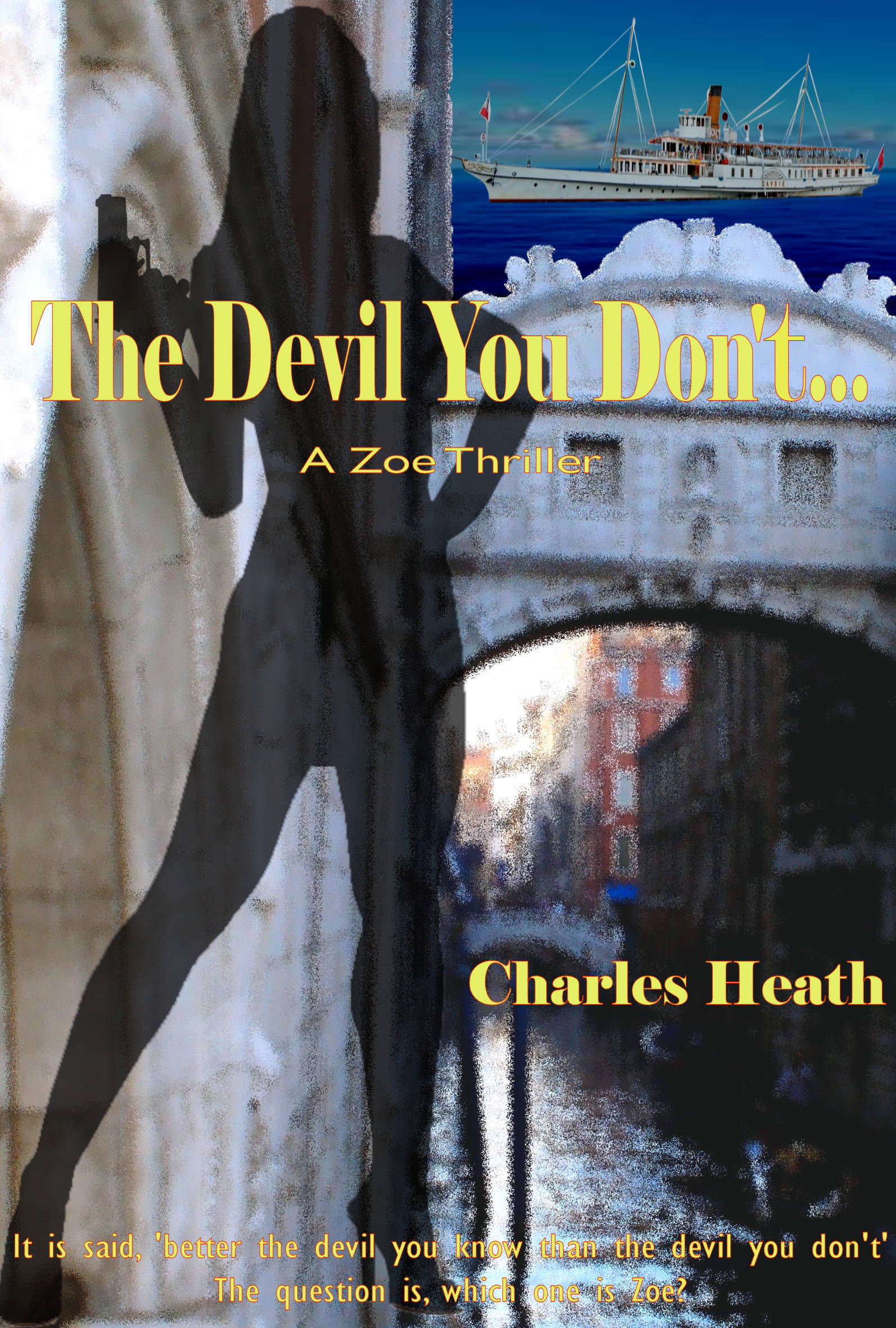
“The Devil You Don’t”, she was the girl you would not take home to your mother!

Now only $0.99 at https://amzn.to/2Xyh1ow

…

John Pennington’s life is in the doldrums. Looking for new opportunities and prevaricating about getting married, the only joy on the horizon was an upcoming visit to his grandmother in Sorrento, Italy.

Suddenly, he is left at the check-in counter with a message on his phone telling him the marriage is off, and the relationship is over.

If only he hadn’t promised a friend he would do a favour for him in Rome.

At the first stop, Geneva, he has a chance encounter with Zoe, an intriguing woman who captures his imagination from the moment she boards the Savoire, and his life ventures into uncharted territory in more ways than one.

That ‘favour’ for his friend suddenly becomes a life-changing event, and when Zoe, the woman who he knows is too good to be true, reappears, danger and death follow.

Shot at, lied to, seduced, and drawn into a world where nothing is what it seems, John is dragged into an adrenaline-charged undertaking, where he may have been wiser to stay with the ‘devil you know’ rather than opt for the ‘devil you don’t’.

newdevilcvr6

365 Days of writing, 2026 – 159

Day 159 – If you want to be a writer, write

…

The Writer’s Paradox: Why Consumption Isn’t Creation

We live in a culture that loves to romanticise the “writer’s life.” We imagine it involves a worn leather notebook, a steaming cup of artisan coffee, and someone hunched over a desk, reading the classics until the prose is so deeply ingrained in their psyche that they eventually exhale a masterpiece.

But there is a dangerous misconception hidden in that romantic ideal. It is the belief that if you read enough, if you consume enough “good” writing, you will eventually wake up one morning and find that the words have seeped into your marrow, ready to flow out of you onto the page.

Here is the cold, hard truth: If reading is your pleasure, then simply read. Enjoy the stories. Let them move you. But do not mistake the act of consumption for the act of creation.

The Illusion of Osmosis

Many aspiring writers fall into the trap of “productive procrastination.” They justify spending six hours a day reading literary journals, studying sentence structures, and analysing plot devices, telling themselves, “I’m doing research. I’m filling my well.”

While reading is vital fuel for any writer, it is not the engine. You can read every shelf in the library, but your shelves will never write a paragraph for you. There is no biological osmosis in writing. The words you consume do not undergo a mystical transformation inside your bones and emerge as your own voice.

Reading is a passive experience. It is a dialogue between you and the author. Writing, however, is a monologue—a messy, uncomfortable, and often lonely exertion of will.

The Anatomy of a Writer

If you want to be a writer, you must stop waiting for the inspiration of others to do the heavy lifting for you.

When you read, you are a spectator. When you write, you are an athlete. You can watch the Olympics every single day for ten years, but that won’t make you a runner. To run, you have to strap on the shoes and hit the pavement when your lungs are burning, and your legs are heavy.

To write, you have to:

  • Face the blank cursor: It is the most terrifying and honest thing in the world.
  • Write badly: You have to produce “bone marrow” that isn’t quite ready yet. You have to write the rough, ugly, incoherent drafts before you can ever arrive at the polished prose you admire in others.
  • Commit to the output: A writer is defined by what they produce, not what they consume.

Stop Waiting, Start Doing

If you love books, keep reading. Let them be your sanctuary, your education, and your joy. But if you call yourself a writer, you must accept that your primary job is to create.

The words won’t flow out of your marrow until you force them out. They come from the friction of your own thoughts, your own experiences, and the sheer discipline of showing up to the page—even when you have nothing to say.

Don’t wait for the osmosis. Don’t wait for the “right time” or for your brain to be “full enough.”

If reading is your pleasure, read. But if you want to be a writer, write.

…

Another excerpt from “Strangers We’ve Become” – A sequel to ‘What Sets Us Apart’

…

It was the first time in almost a week that I made the short walk to the cafe alone.  It was early, and the chill of the morning was still in the air.  In summer, it was the best time of the day.  When Susan came with me, it was usually much later, when the day was much warmer and less tolerable.

On the morning of the third day of her visit, Susan said she was missing the hustle and bustle of London, and by the end of the fourth she said, in not so many words, she was over being away from ‘civilisation’.  This was a side of her I had not seen before, and it surprised me.

She hadn’t complained, but it was making her irritable.  The Susan that morning was vastly different to the Susan on the first day.  So much, I thought, for her wanting to ‘reconnect’, the word she had used as the reason for coming to Greve unannounced.

It was also the first morning I had time to reflect on her visit and what my feelings were towards her.  It was the reason I’d come to Greve: to soak up the peace and quiet and think about what I was going to do with the rest of my life.

I sat in my usual corner.  Maria, one of two waitresses, came out, stopped, and there was no mistaking the relief in her manner.  There was an air of tension between Susan and Maria I didn’t understand, and it seemed to emanate from Susan rather than the other way around.  I could understand her attitude if it was towards Alisha, but not Maria.  All she did was serve coffee and cake.

When Maria recovered from the momentary surprise, she said, smiling, “You are by yourself?”  She gave a quick glance in the direction of my villa, just to be sure.

“I am this morning.  I’m afraid the heat, for one who is not used to it, can be quite debilitating.  I’m also afraid it has had a bad effect on her manners, for which I apologise.  I cannot explain why she has been so rude to you.”

“You do not have to apologise for her, David, but it is of no consequence to me.  I have had a lot worse.  I think she is simply jealous.”

It had crossed my mind, but there was no reason for her to be.  “Why?”

“She is a woman, I am a woman, she thinks because you and I are friends, there is something between us.”

It made sense, even if it was not true.  “Perhaps if I explained…”

Maria shook her head.  “If there is a hole in the boat, you should not keep bailing but try to plug the hole.  My grandfather had many expressions, David.  If I may give you one piece of advice, as much as it is none of my business, you need to make your feelings known, and if they are not as they once were, and I think they are not, you need to tell her.  Before she goes home.”

Interesting advice.  Not only a purveyor of excellent coffee, but Maria was also a psychiatrist who had astutely worked out my dilemma.  What was that expression, ‘not just a pretty face’?

“Is she leaving soon?” I asked, thinking Maria knew more about Susan’s movements than I did.

“You would disappoint me if you had not suspected as much.  Susan was having coffee and talking to someone in her office on a cell phone.  It was an intense conversation.  I should not eavesdrop, but she said being here was like being stuck in hell.  It is a pity she does not share your love for our little piece of paradise, is it not?”

“It is indeed.  And you’re right.  She said she didn’t have a phone, but I know she has one.  She just doesn’t value the idea of getting away from the office.  Perhaps her role doesn’t afford her that luxury.”

And perhaps Alisha was right about Maria, that I should be more careful.  She had liked Maria the moment she saw her.  We had sat at this very table, the first day I arrived.  I would have travelled alone, but Prendergast, my old boss, liked to know where ex-employees of the Department were, and what they were doing.

She sighed.  “I am glad I am just a waitress.  Your usual coffee and cake?”

“Yes, please.”

Several months had passed since we had rescued Susan from her despotic father; she had recovered faster than we had thought, and settled into her role as the new Lady Featherington, though she preferred not to use that title, but go by the name of Lady Susan Cheney.

I didn’t get to be a Lord, or have any title, not that I was expecting one.  What I had expected was that Susan, once she found her footing as head of what seemed to be a commercial empire, would not have time for details like husbands, particularly when our agreement made before the wedding gave either of us the right to end it.

There was a moment when I visited her recovering in the hospital, where I was going to give her the out, but I didn’t, and she had not invoked it.  We were still married, just not living together.

This visit was one where she wanted to ‘reconnect’ as she called it, and invite me to come home with her.  She saw no reason why we could not resume our relationship, conveniently forgetting she indirectly had me arrested for her murder, charges both her mother and Lucy vigorously pursued, and had the clone not returned to save me, I might still be in jail.

It was not something I would forgive or forget any time soon.

There were other reasons why I was reluctant to stay with her, like forgetting small details, an irregularity in her character I found odd.  She looked the same, she sounded the same, she basically acted the same, but my mind was telling me something was not right.  It was not the Susan I first met, even allowing for the ordeal she had been subjected to.

But, despite those misgivings, there was no question in my mind that I still loved her, and her clandestine arrival had brought back all those feelings.  But as the days passed, I began to get the impression my feelings were one-sided and she was just going through the motions.

Which brought me to the last argument, earlier, where I said if I went with her, it would be business meetings, social obligations, and quite simply her ‘celebrity’ status that would keep us apart.  I reminded her that I had said from the outset I didn’t like the idea of being in the spotlight, and when I reiterated it, she simply brushed it off as just part of the job, adding rather strangely that I always looked good in a suit.  The flippancy of that comment was the last straw, and I left before I said something I would regret.

I knew I was not a priority.  Maybe somewhere inside me, I had wanted to be a priority, and I was disappointed when I was not.

And finally, there was Alisha.  Susan, at the height of the argument, had intimated she believed I had an affair with her, but that elephant was always in the room whenever Alisha was around.  It was no surprise when I learned Susan had asked Prendergast to reassign her to other duties. 

At least I knew what my feelings for Alisha were, and there were times when I had to remember she was persona non grata.  Perhaps that was why Susan had her banished, but, again, a small detail; jealousy was not one of Susan’s traits when I first knew her.

Perhaps it was time to set Susan free.

When I swung around to look in the direction of the lane where my villa was, I saw Susan.  She was formally dressed, not in her ‘tourist’ clothes, which she had bought from one of the local clothing stores.  We had fun that day, shopping for clothes, a chore I’d always hated.  It had been followed by a leisurely lunch, lots of wine and soul searching.

It was the reason why I sat in this corner; old habits die hard.  I could see trouble coming from all directions, not that Susan was trouble or at least I hoped not, but it allowed me the time to watch her walking towards the cafe in what appeared to be short, angry steps; perhaps the culmination of the heat wave and our last argument.

She glared at me as she sat, dropping her bag beside her on the ground, where I could see the cell phone sitting on top.  She followed my glance down, and then she looked unrepentant back at me.

Maria came back at the exact moment she was going to speak.  I noticed Maria hesitate for a second when she saw Susan, then put her smile in place to deliver my coffee.

Neither spoke nor looked at each other.  I said, “Susan will have what I’m having, thanks.”

Maria nodded and left.

“Now,” I said, leaning back in my seat, “I’m sure there’s a perfectly good explanation as to why you didn’t tell me about the phone, but that first time you disappeared, I’d guessed you needed to keep in touch with your business interests.  I thought it somewhat unwisethat you should come out when the board of one of your companies was trying to remove you, because of what was it, an unexplained absence?  All you had to do was tell me there were problems and you needed to remain at home to resolve them.”

My comment elicited a sideways look, with a touch of surprise.

“It was unfortunate timing on their behalf, and I didn’t want you to think everything else was more important than us.  There were issues before I came, and I thought the people at home would be able to manage without me for at least a week, but I was wrong.”

“Why come at all.  A phone call would have sufficed.”

“I had to see you, talk to you.  At least we have had a chance to do that.  I’m sorry about yesterday.  I once told you I would not become my mother, but I’m afraid I sounded just like her.  I misjudged just how much this role would affect me, and truly, I’m sorry.”

An apology was the last thing I expected.

“You have a lot of work to do catching up after being away, and of course, in replacing your mother and gaining the requisite respect as the new Lady Featherington.  I think it would be for the best if I were not another distraction.  We have plenty of time to reacquaint ourselves when you get past all these teething issues.”

“You’re not coming with me?”  She sounded disappointed.

“I think it would be for the best if I didn’t.”

“Why?”

“It should come as no surprise to you that I’ve been keeping an eye on your progress.  You are so much better doing your job without me.  I told your mother once that when the time came I would not like the responsibilities of being your husband.  Now that I have seen what it could possibly entail, I like it even less.  You might also want to reconsider our arrangement, after all, we only had a marriage of convenience, and now that those obligations have been fulfilled, we both have the option of terminating it.  I won’t make things difficult for you if that’s what you want.”

It was yet another anomaly, I thought; she should look distressed, and I would raise the matter of that arrangement.  Perhaps she had forgotten the finer points.  I, on the other hand, had always known we would not last forever.  The perplexed expression, to me, was a sign she might have forgotten.

Then, her expression changed.  “Is that what you want?”

“I wasn’t madly in love with you when we made that arrangement, so it was easy to agree to your terms, but inexplicably, since then, my feelings for you changed, and I would be sad if we parted ways.  But the truth is, I can’t see how this is going to work.”

“In saying that, do you think I don’t care for you?”

That was exactly what I was thinking, but I wasn’t going to voice that opinion out loud.  “You spent a lot of time finding new ways to make my life miserable, Susan.  You and that wretched friend of yours, Lucy.  While your attitude improved after we were married, that was because you were going to use me when you went to see your father, and then almost let me go to prison for your murder.”

“I had nothing to do with that, other than to leave, and I didn’t agree with Lucy that you should be made responsible for my disappearance.  I cannot be held responsible for the actions of my mother.  She hated you; Lucy didn’t understand you, and Millie told me I was stupid for not loving you in return, and she was right.  Why do you think I gave you such a hard time?  You made it impossible not to fall in love with you, and it nearly changed my mind about everything I’d been planning so meticulously.  But perhaps there was a more subliminal reason why I did because after I left, I wanted to believe, if anything went wrong, you would come and find me.”

“How could you possibly know that I’d even consider doing something like that, given what you knew about me?”

“Prendergast made a passing comment when my mother asked him about you; he told us you were very good at finding people and even better at fixing problems.”

“And yet here we are, one argument away from ending it.”

I could see Maria hovering, waiting for the right moment to deliver her coffee, then go back and find Gianna, the café owner, instead.  Gianna was more abrupt and, for that reason, was rarely seen serving the customers.  Today, she was particularly cantankerous, banging the cake dish on the table and frowning at Susan before returning to her kitchen.  Gianna didn’t like Susan either.

Behind me, I heard a car stop, and when she looked up, I knew it was for her.  She had arrived with nothing, and she was leaving with nothing.

She stood.  “Last chance.”

“Forever?”

She hesitated and then shook away the look of annoyance on her face.  “Of course not.  I wanted you to come back with me so we could continue working on our relationship.  I agree there are problems, but it’s nothing we can’t resolve if we try.”

I had been trying.  “It’s too soon for both of us, Susan.  I need to be able to trust you, and given the circumstances, and all that water under the bridge, I’m not sure if I can yet.”

She frowned at me.  “As you wish.”  She took an envelope out of her bag and put it on the table.  “When you are ready, it’s an open ticket home.  Please make it sooner rather than later.  Despite what you think of me, I have missed you, and I have no intention of ending it between us.”

That said, she glared at me for a minute, shook her head, then walked to the car.  I watched her get in and the car drive slowly away.

No kiss, no touch, no looking back. 

…

© Charles Heath 2018-2025

strangerscover9

The cinema of my dreams – I always wanted to write a war story – Episode 3

This is a story inspired by a visit to an old castle in Italy. It was, of course, written while travelling on a plane, though I’m not sure if it was from Calgary to Toronto, or New York to Vancouver.

But there’s more to come. Those were long flights…

And sadly, when I read what I’d written, off the plane and in the cold hard light of dawn, there were problems, which now, in the second draft, should provide the proper start.

…

There were eleven stormtroopers and Wallace, eighteen in Johansson and Jackerby’s group. One of those would be in the communications centre, leaving, at worst, twenty-nine men out looking for me.

I also assumed that Jackerby would approach the search in much the same manner as I would, the men in pairs, as singly, he knew that I would have an advantage.

Eight pairs would be inside, doing a room-to-room search, from the top down.

Five pairs would be outside, one group in the centre, one group at each of the corners, all working the perimeter, all in constant communication with each other.

In normal circumstances, I would be caught.

These were not normal circumstances.

Jack padded his way just ahead of me, stopping every few yards and both sniffing and listening.  At a junction he would stop, wait, and then make a decision about which way to go.

I had to trust his instincts.

Just ahead of me there was a cracking sound followed by falling rocks and a shaft of light.

An opening in the roof where it was too close to the surface.

Jack went quite still.  Voices.

“Be careful.”  German.

Followed immediately by “Speak in English you fool.  You were saying,”

The man switched to careful English, “Be careful, or you’ll fall down that hole.  They should have told us the ground around here is on top of an old mineshaft.”

“Better, Corporal.  Remember. English at all times.”

“Could be where they buried the bodies hastily before they left.”

The man was referring to the story the previous custodians of the castle had killed about a hundred of the nearby villagers and buried them in a mass grave near the castle.  No one had been able to verify the account, nor had anyone found any skeletal evidence.

Yet.

“Let’s get out of here.  The last thing I want to see is a ghost.”

…

© Charles Heath 2019-2026