‘Sunday in New York’ – A beta reader’s view

I’m not a fan of romance novels but …

There was something about this one that resonated with me.

This is a novel about a world generally ruled by perception, and how people perceive what they see, what they are told, and what they want to believe.

I’ve been guilty of it myself as I’m sure we all have at one time or another.

For the main characters Harry and Alison there are other issues driving their relationship.

For Alison, it is a loss of self-worth through losing her job and from losing her mother and, in a sense, her sister.

For Harry, it is the fact he has a beautiful and desirable wife, and his belief she is the object of other men’s desires, and one in particular, his immediate superior.

Between observation, the less than honest motives of his friends, a lot of jumping to conclusions based on very little fact, and you have the basis of one very interesting story.

When it all comes to a head, Alison finds herself in a desperate situation, she realises only the truth will save their marriage.

But is it all the truth?

What would we do in similar circumstances?

Rarely does a book have me so enthralled that I could not put it down until I knew the result. They might be considered two people who should have known better, but as is often the case, they had to get past what they both thought was the truth.

And the moral of this story, if it could be said there is one, nothing is ever what it seems.

Available on Amazon here: amzn.to/2H7ALs8

Top 5 sights on the road less travelled – Venice

The Unbeaten Path: 5 Hidden Treasures in Venice (That Aren’t St. Mark’s)

Venice. The name alone conjures images of shimmering canals, graceful gondolas, and the architectural masterpiece that is the Doge’s Palace. It is, undeniably, one of the most beautiful cities on earth.

But let’s be honest: the magic can quickly evaporate when you’re battling a thousand other tourists just to get a photo of the Rialto Bridge.

The true, deep magic of Venice—the one that smells of salt-laced air and centuries of history—isn’t found on the main tourist arteries. It’s found in the quiet, echoing calle (streets) and the forgotten, sun-drenched squares of the districts that rarely make the postcard racks.

If you’re ready to trade the packed piazza for unique local discoveries, ditch the map of the standard tourist loop. Here are five essential, off-the-beaten-path things to do in Venice that will give you a taste of the city’s authentic heart.


1. Swap Grand Palaces for the Cemetery Island: Isola di San Michele

While most visitors focus on Murano or Burano, the island of San Michele offers a profound and beautiful experience few tourists seek out. This is the official cemetery island of Venice, and it offers a silence and solitude that is impossible to find on the main islands.

A short vaporetto ride (Line 4.1 or 4.2) across the lagoon transports you to a walled sanctuary where cypress trees stand sentinel over generations of Venetians, including famous residents like Igor Stravinsky and Ezra Pound.

Why it’s worth the detour: The stunning, stark beauty of the Renaissance Chiesa di San Michele in Isola, combined with the meticulously maintained gardens and marble tombs, offers a reflective pause in your itinerary. It truly feels like stepping into a different world—one without shops, crowds, or noise. It’s a poignant reminder of the ebb and flow of Venetian life.

2. Embrace the Bacaro Trail in Dorsoduro

If you want to eat and drink like a Venetian, you must embrace the bacaro culture. A bacaro is a traditional, often hole-in-the-wall Venetian bar specializing in cicchetti (small, tapas-style snacks) and ombra (a small glass of local wine).

While you can find bacari near the main spots, the Dorsoduro district, particularly near Ca’ Foscari University, is where the scene is truly vibrant and local. This area is filled with students and residents, not tour groups.

How to do it right: Forget sitting down for a lengthy, expensive dinner. Between 5 PM and 7 PM, join the locals and hop between a few chosen spots, ordering a couple of cicchetti (perhaps salted cod, polpetta, or marinated artichokes) and an ombra at each.

  • Try: Cantinone Già Schiavi (famous for its wine selection) or Al Squero (offering fantastic views across the canal to the boatyard where gondolas are repaired).

3. Seek Out the Hidden Staircase: Scala Contarini del Bovolo

In a city known for its bridges and canals, architecture often takes a supporting role. However, if you are drawn to hidden architectural gems, the Scala Contarini del Bovolo is a must-see.

Tucked away in a tiny, almost impossible-to-find courtyard near the Rialto, the Palazzo Contarini del Bovolo features an extraordinary exterior spiral staircase. Known as the “staircase of the snail” (bovolo), this Renaissance masterpiece combines Gothic and Byzantine elements, curling up five stories to an open loggia.

The payoff: Climbing the staircase is an adventure in itself, but the true reward is the panoramic view from the top. You get a unique, intimate perspective of Venice’s terracotta rooftops and bell towers without the claustrophobic crowds of St. Mark’s Campanile. Finding it is half the fun—put the address into your phone and be prepared to wander down several dead-end alleys.

4. Explore the Authentic Heart of Cannaregio and the Ghetto

To experience genuine Venetian daily life—the sight of laundry dangling over canals, residents chatting in dialect, and non-chain grocery stores—head north to the Cannaregio district.

This area, which stretches toward the Mestre train station, is largely residential and offers excellent, affordable dining options. More importantly, it is home to the Ghetto Nuovo, the world’s first Jewish Ghetto, established in 1516.

Why it’s special: The Ghetto Nuovo is a place of powerful history and resilient culture. Due to space constraints imposed by the Republic, the buildings here are some of the tallest in Venice, stacked upon medieval foundations. Walk through the quiet central square, observe the five historic synagogues (many offer guided tours), and soak up the unique atmosphere. It’s a perfect way to step back into a complex, vital layer of Venetian history often overlooked by visitors rushing to the main sites.

5. Capture the Pastel Hues of Burano (But Go Early)

Yes, Burano is often listed on the main island tours, but most visitors arrive mid-day when the ferry lines are long, and the narrow canals are choked with people attempting the perfect photograph. To truly experience the magic of the famous rainbow-colored island, you must commit to the early start.

The secret timing: Take one of the first vaporetti out to Burano (via Murano and Torcello). Arriving just as the golden morning light hits the facades allows you to wander the lanes in near solitude. The local fishermen and lace makers are just beginning their day, and the lack of crowds amplifies the whimsical, fairy-tale quality of the architecture.

Tip: Since the island is famous for lacemaking, skip the mass-produced trinkets and seek out a small workshop where you can see the intricate craft being actively practiced.


Don’t Just Visit Venice—Live It

To travel the road less travelled in Venice isn’t about ticking off lesser-known sights; it’s about slow travel. It’s about getting lost, turning down the alley that looks too narrow, and replacing the tourist map with genuine curiosity.

When you allow yourself to wander away from the golden routes, you stop being a hurried observer and start becoming a temporary resident. The Venice you discover in these quiet pockets is richer, deeper, and far more rewarding.

An excerpt from “Echoes from the Past”

Available on Amazon Kindle here:  https://amzn.to/2CYKxu4

With my attention elsewhere, I walked into a man who was hurrying in the opposite direction.  He was a big man with a scar running down the left side of his face from eye socket to mouth, and who was also wearing a black shirt with a red tie.

That was all I remembered as my heart almost stopped.

He apologized as he stepped to one side, the same way I stepped, as I also muttered an apology.

I kept my eyes down.  He was not the sort of man I wanted to recognize later in a lineup.  I stepped to the other side and so did he.  It was one of those situations.  Finally getting out of sync, he kept going in his direction, and I towards the bus, which was now pulling away from the curb.

Getting my breath back, I just stood riveted to the spot watching it join the traffic.  I looked back over my shoulder, but the man I’d run into had gone.  I shrugged and looked at my watch.  It would be a few minutes before the next bus arrived.

Wait, or walk?  I could also go by subway, but it was a long walk to the station.  What the hell, I needed the exercise.

At the first intersection, the ‘Walk’ sign had just flashed to ‘Don’t Walk’.  I thought I’d save a few minutes by not waiting for the next green light.  As I stepped onto the road, I heard the screeching of tires.

A yellow car stopped inches from me.

It was a high powered sports car, perhaps a Lamborghini.  I knew what they looked like because Marcus Bartleby owned one, as did every other junior executive in the city with a rich father.

Everyone stopped to look at me, then the car.  It was that sort of car.  I could see the driver through the windscreen shaking his fist, and I could see he was yelling too, but I couldn’t hear him.  I stepped back onto the sidewalk, and he drove on.  The moment had passed and everyone went back to their business.

My heart rate hadn’t come down from the last encounter.   Now it was approaching cardiac arrest, so I took a few minutes and several sets of lights to regain composure.

At the next intersection, I waited for the green light, and then a few seconds more, just to be sure.  I was no longer in a hurry.

At the next, I heard what sounded like a gunshot.  A few people looked around, worried expressions on their faces, but when it happened again, I saw it was an old car backfiring.  I also saw another yellow car, much the same as the one before, stopped on the side of the road.  I thought nothing of it, other than it was the second yellow car I’d seen.

At the next intersection, I realized I was subconsciously heading towards Harry’s new bar.   It was somewhere on 6th Avenue, so I continued walking in what I thought was the right direction.

I don’t know why I looked behind me at the next intersection, but I did.  There was another yellow car on the side of the road, not far from me.  It, too, looked the same as the original Lamborghini, and I was starting to think it was not a coincidence.

Moments after crossing the road, I heard the roar of a sports car engine and saw the yellow car accelerate past me.  As it passed by, I saw there were two people in it, and the blurry image of the passenger; a large man with a red tie.

Now my imagination was playing tricks.

It could not be the same man.  He was going in a different direction.

In the few minutes I’d been standing on the pavement, it had started to snow; early for this time of year, and marking the start of what could be a long cold winter.  I shuddered, and it was not necessarily because of the temperature.

I looked up and saw a neon light advertising a bar, coincidentally the one Harry had ‘found’ and, looking once in the direction of the departing yellow car, I decided to go in.  I would have a few drinks and then leave by the back door if it had one.

Just in case.

© Charles Heath 2015-2020

newechocover5rs

Writing a book in 365 days – My Story 45

More about my story – What about a sequel?

Beyond ‘The End’: When Your First Novel Whispers ‘Sequel!’

They say everyone has one novel in them. That singular, definitive story waiting to be told. And if you’re deep in the trenches of writing that very first book – or perhaps just emerging, blinking, from the final draft – you know the magnitude of that achievement. It’s a mountain climbed, a world birthed, a dream realised.

But what if, as you type those triumphant final words, your story doesn’t feel quite… finished? What if your characters still have unresolved arcs, your world still hums with unexplored corners, and a new conflict is already brewing on the distant horizon?

This is the siren call of the sequel, the whisper of a series, beckoning you beyond “The End.” And the question isn’t if it will happen, but how you decide when your definitive first novel should become the definitive first step in a much larger journey.

The Organic Unfurling: When Ideas Spark Early

Sometimes, the seed of a series is planted before you even write chapter one. You might be world-building, and realise your magic system is too complex for a single adventure. Or you create a cast of characters so rich, you know their individual journeys can’t possibly culminate in one book.

This is the beauty of organic discovery. As you plot, you might hit a snag and realise a subplot isn’t fitting, but it would make a fantastic central conflict for a future story. Or you leave a minor mystery unsolved, not out of oversight, but with the deliberate thought: “That’s for book two.”

Key signs it might be more than a standalone (even early on):

  • Vast World-Building: Your setting feels like a continent, not just a town. There are untouched cultures, unvisited lands, or deep historical layers begging exploration.
  • Complex Character Arcs: Your protagonist’s journey is profound, but you can see clear paths for growth beyond this initial conflict. Or a compelling secondary character deserves their own spotlight.
  • Lingering Questions/Plot Threads: You’ve wrapped up the central conflict of Book 1, but there are larger societal issues, ancient prophecies, or personal vendettas that naturally spill over.

The Post-Draft Revelation: When Your Story Demands More

Often, the realization hits after you’ve finished the first draft – or even after a round of revisions. You might be reading through, feeling proud, and suddenly a new idea sparks. “What if X happened next?” “How would Y react to Z now?”

This is a beautiful moment, because it means you’ve built something robust enough to inspire more. Your subconscious is telling you there’s still creative gold in that particular mine.

How to approach this post-draft revelation:

  1. Does Book 1 Stand Alone? This is crucial. A “definitive first novel” must feel complete in itself. The central conflict should be resolved, and the protagonist should have achieved a significant milestone. Don’t write a cliffhanger just because you might write a sequel. Future books should deepen the experience, not fix the first one.
  2. Brainstorm the Arc: Dedicate a session (or several) to mapping out potential sequels. What’s the new central conflict? How have your characters changed? What new challenges do they face? This isn’t about writing, just exploring.
  3. Check for Crossover Appeal: Does the core premise of your first novel have enough appeal to sustain multiple stories? Are there fresh angles to explore, or would you merely be repeating yourself?
  4. Listen to Your Gut: Does the thought of continuing fill you with excitement or dread? While writing is always hard work, the initial spark for a series should feel invigorating.

Why Stop at One? The Power of “More”

The adage “everyone has one novel in them” is true. But the idea that you should only write one is a self-imposed limitation. If your imagination is already conjuring new adventures in the same world, if your characters are clamouring for more development, why stifle that creative energy?

A series allows for:

  • Deeper World Exploration: To truly immerse readers in a rich, complex world.
  • Rich Character Development: To show growth, setbacks, and evolving relationships over a longer timeline.
  • Unfolding Grand Narratives: To tackle epic conflicts or explore complex themes that simply can’t be contained in a single volume.

So, as you nurture that definitive first novel, remember to keep an ear open. Does your story hum with untold tales? Do your characters beckon you towards new horizons? If so, embrace the possibility. Your definitive first novel might just be the definitive first step into a much larger, more thrilling literary journey. Why write one when you have a whole universe waiting to unfurl?

Inspiration, maybe – Volume 1

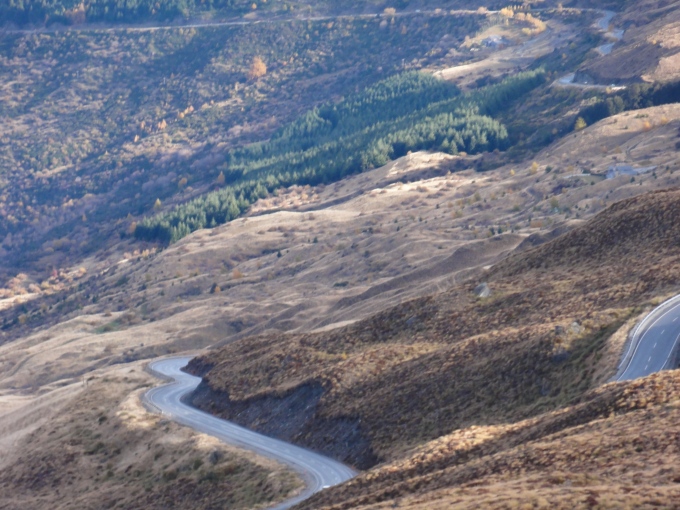
50 photographs, 50 stories, of which there is one of the 50 below.

They all start with –

A picture paints … well, as many words as you like.  For instance:

lookingdownfromcoronetpeak

And the story:

It was once said that a desperate man has everything to lose.

The man I was chasing was desperate, but I, on the other hand, was more desperate to catch him.

He’d left a trail of dead people from one end of the island to the other.

The team had put in a lot of effort to locate him, and now his capture was imminent.  We were following the car he was in, from a discrete distance, and, at the appropriate time, we would catch up, pull him over, and make the arrest.

There was nowhere for him to go.

The road led to a dead-end, and the only way off the mountain was back down the road were now on.  Which was why I was somewhat surprised when we discovered where he was.

Where was he going?

“Damn,” I heard Alan mutter.  He was driving, being careful not to get too close, but not far enough away to lose sight of him.

“What?”

“I think he’s made us.”

“How?”

“Dumb bad luck, I’m guessing.  Or he expected we’d follow him up the mountain.  He’s just sped up.”

“How far away?”

“A half-mile.  We should see him higher up when we turn the next corner.”

It took an eternity to get there, and when we did, Alan was right, only he was further on than we thought.”

“Step on it.  Let’s catch him up before he gets to the top.”

Easy to say, not so easy to do.  The road was treacherous, and in places just gravel, and there were no guard rails to stop a three thousand footfall down the mountainside.

Good thing then I had the foresight to have three agents on the hill for just such a scenario.

Ten minutes later, we were in sight of the car, still moving quickly, but we were going slightly faster.  We’d catch up just short of the summit car park.

Or so we thought.

Coming quickly around another corner we almost slammed into the car we’d been chasing.

“What the hell…” Aland muttered.

I was out of the car, and over to see if he was in it, but I knew that it was only a slender possibility.  The car was empty, and no indication where he went.

Certainly not up the road.  It was relatively straightforward for the next mile, at which we would have reached the summit.  Up the mountainside from here, or down.

I looked up.  Nothing.

Alan yelled out, “He’s not going down, not that I can see, but if he did, there’s hardly a foothold and that’s a long fall.”

Then where did he go?

Then a man looking very much like our quarry came out from behind a rock embedded just a short distance up the hill.

“Sorry,” he said quite calmly.  “Had to go if you know what I mean.”

I’d lost him.

It was as simple as that.

I had been led a merry chase up the hill, and all the time he was getting away in a different direction.

I’d fallen for the oldest trick in the book, letting my desperation blind me to the disguise that anyone else would see through in an instant.

It was a lonely sight, looking down that road, knowing that I had to go all that way down again, only this time, without having to throw caution to the wind.

“Maybe next time,” Alan said.

“We’ll get him.  It’s just a matter of time.”

© Charles Heath 2019-2021

Find this and other stories in “Inspiration, maybe”  available soon.

InspirationMaybe1v1

In a word: Fourth

When you realize you are the fourth child, you are really hoping that the split is two boys and three girls.  Woe betide you if you are a boy and you have three sisters.  It could also be as interesting, notice I didn’t say intolerable) if you are a girl with three brothers.

Hang on, I know someone who was in that exact same situation.  Fortunately, being a girl and the youngest, she could do no wrong in the eyes of her father.

But I digress (as usual)

The meaning of fourth is self-evident, just count to four and it’s the fourth number, perhaps better explained by the fact it is one after the third in a series

Then we use it with other words like,

Fourth-gear, usually reserved for the highway where one expects to geta clear run.  Of course, with more and more cars on the road, sometimes it’s difficult to get out of second.

The fourth estate, no, not what a rich person owns, along with a lot more one guesses, but another name for the press.

One fourth, your share of an estate, if of course, you have three other siblings.  And, in murder mysteries, usually those fourths seem to die mysteriously, and your fourth becomes a third, a half, and then you go to jail.

in fourth place, where it seems all the horse I back run

And,

This is not to be confused with the word forth, which sounds the same but means something entirely different, like

I’m sure we’ve all been told to go forth and be something or other, which means to go forward or come out of hiding

It is also a Scottish river, one notably called the Firth of Forth, and if it sounds odd, so do a lot things in Scotland

You could also place back and forth, much the same as you would in a hospital waiting for the birth of your first child.

First Dig Two Graves

A sequel to “The Devil You Don’t”

Revenge is a dish best served cold – or preferably so when everything goes right

Of course, it rarely does, as Alistair, Zoe’s handler, discovers to his peril. Enter a wildcard, John, and whatever Alistair’s plan for dealing with Zoe was dies with him.

It leaves Zoe in completely unfamiliar territory.

John’s idyllic romance with a woman who is utterly out of his comfort zone is on borrowed time. She is still trying to reconcile her ambivalence, after being so indifferent for so long.

They agree to take a break, during which she disappears. John, thinking she has left without saying goodbye, refuses to accept the inevitable, calls on an old friend for help in finding her.

After the mayhem and being briefly reunited, she recognises an inevitable truth: there is a price to pay for taking out Alistair; she must leave and find them first, and he would be wise to keep a low profile.

But keeping a low profile just isn’t possible, and enlisting another friend, a private detective and his sister, a deft computer hacker, they track her to the border between Austria and Hungary.

What John doesn’t realise is that another enemy is tracking him to find her too. It could have been a grand tour of Europe. Instead, it becomes a race against time before enemies old and new converge for what will be an inevitable showdown.

NANOWRIMO – November 2025 – Day 10

The Third Son of a Duke

Yesterday we were talking about the social mores of the day, and so I did a little research…

Setting Sail for Adventure: Decorum and Debauchery in Second Class, 1914

The modern cruise ship, with its all-you-can-eat buffets and poolside revelry, often conjures images of an exuberant, perhaps even uninhibited, youth. It’s easy to imagine young adults embracing a spirit of “live for the moment” on a contemporary voyage. But what about their ancestors, embarking on a similar, albeit far more arduous, journey a century ago? Specifically, what were the acceptable social norms for young people travelling in second class from England to Australia in 1914, and how might they have comported themselves, a world away from today’s cruise ship scene?

The very idea of “acceptable social norms” in 1914 is a stark contrast to our contemporary understanding. Society was far more rigid, with deeply ingrained expectations regarding behaviour, dress, and social interaction, especially for young, unmarried individuals. The journey from England to Australia, often a voyage lasting weeks and involving significant time in close quarters, would have been a microcosm of these societal standards.

Second Class in 1914: A Different Kind of Journey

First class, of course, was the domain of the wealthy and aristocratic, with its own set of gilded rules. But second class, while not as opulent, still offered a degree of comfort and privacy that distinguished it from steerage. Passengers in second class were generally of the middle and upper-middle classes – professionals, skilled tradespeople, and those with respectable means. The expectation was that they would carry themselves with a degree of decorum befitting their social standing.

For young women, the norms were particularly stringent:

  • Chaperonage: Unmarried young women were rarely expected to travel unaccompanied. If they were travelling alone, it was usually for a specific, respectable purpose, like joining family or taking up employment as a governess. Even then, they would have been expected to be discreet and avoid drawing undue attention. If travelling with friends of a similar age, a more senior female relative or acquaintance would ideally be present to offer guidance and supervision.
  • Dress: Modesty was paramount. Dresses would be long-sleeved and ankle-length, with high necklines. Even for leisure, elaborate hats and gloves might be worn for meals or time spent on deck. Casual wear as we know it simply didn’t exist.
  • Social Interaction: Interactions with young men would have been carefully managed. Polite conversation was acceptable, but prolonged or overly familiar interactions would have been frowned upon. Any hint of romantic entanglement would have been a serious matter, potentially impacting a young woman’s reputation and future prospects. Flirtation, if it occurred, would have been subtle and masked by propriety.
  • Activities: While there would have been opportunities for socializing on deck, activities would have been more sedate. Reading, embroidery, letter writing, and quiet conversation would have been common. Group card games or board games might have been played, but always with an air of polite engagement.

For young men, the expectations, while perhaps slightly less restrictive than for women, were still substantial:

  • Respect and Deference: Young men were expected to show respect to their elders and to ladies. Overt displays of bravado or boisterous behaviour would have been considered ill-mannered.
  • Dress: Formal attire was often the norm for dinner, even in second class. Suits, ties, and smart shoes would be expected.
  • Activities: While they might have engaged in more active pursuits on deck, such as deck quoits or walking, they would still have maintained a civil demeanour. Engaging in gambling or heavy drinking would have been seen as unsavoury.
  • Interactions with Women: As with young women, interactions would have been governed by politeness. Overtures towards unmarried women would have been inappropriate and could lead to social ostracisation for both parties.

A Hypothetical Voyage: England to Australia in 1914

So, if those same young people who might now be “perpetually drunk and promiscuous” on a modern cruise were instead on a 1914 voyage from England to Australia in second class, what would their experience likely have been?

Instead of loud music and raucous parties, imagine:

  • Quiet Evenings on Deck: Young women might be found seated with their companions, perhaps engaged in conversation or a quiet game of cards, while young men stroll nearby, exchanging polite greetings.
  • Respectful Pursuits: Reading novels, writing letters home detailing the voyage, or perhaps learning a new skill like sketching the passing scenery. Evenings might involve listening to a fellow passenger play the piano or attending a small, organised lecture.
  • Carefully Navigated Social Circles: Any developing friendships would be nurtured within the watchful gaze of chaperones or the implicit understanding of societal expectations. A stolen glance or a whispered conversation might be the extent of any budding romance.
  • A Sense of Purpose: This was not a holiday for most. Many were emigrating for a new life, seeking opportunities, or reuniting with family. The journey itself was a significant undertaking, often involving a considerable financial and emotional investment. This inherent seriousness would have tempered any inclination towards frivolous behaviour.

What about the “drunk and promiscuous” aspect?

While alcohol was certainly available and consumed, the levels of public intoxication seen on some modern cruises would have been highly scandalous. Drunkenness would have been seen as a sign of poor breeding and lack of self-control. Promiscuity would have been even more damaging, carrying severe social repercussions for all involved. The fear of gossip and the potential ruin of one’s reputation would have been a powerful deterrent.

In essence, the young passengers of 1914 second class were confined by a much stricter social contract. Their interactions would have been characterised by restraint, politeness, and a keen awareness of their social standing and future prospects. While a spark of youthful exuberance might have still flickered, it would have been expressed through more subtle means – perhaps a shared laugh during a formal dinner, a spirited debate on deck, or the shy exchange of a dance card at a rare shipboard social event. It was a world where decorum reigned, and the consequences of transgressing those norms were far more severe than a few disapproving glances on a modern cruise.

So our interactions might be a little less rigid, but it will be with a lot of the guidelines in place. My grandmother, being about 25, would have been more the chaperone type those those younger, and the ship’s staff would have ensured the men behaved.

Writing about writing a book – Day 22 continues

The main character, like all main characters, has a very interesting, deep, and very complicated background story, some of which will be played out later when the story develops.  Needless to say, at the start, we need to know as much as the story needs so that there are no real surprises.

So that’s why I’m still working on Bill’s backstory, and how he got mixed up in the war, and as a general background to his situation, and life before Davenport.

His story, of course, will be told told in the first person, over a series of flashbacks each necessarily preceding part of the action that requires a lead-in:


But whether we were stupid or naive, or completely mad, we were all eager to get into battle, filled with the sort of hate only Army propaganda films could fill you with.  They were our enemy, and they deserved to concede or die.

A fresh face in a hardened platoon, I was eager to get on with it.  They looked knowingly, having seen it all before.  No idea of the reality, and no time to tell us.  Have a few beers to celebrate, and then, the next morning, go out on patrol.  No problem.

There was camaraderie, but it was subdued.  We walked single file, the seasoned campaigners in front and at the rear, treading carefully, demanding quiet, and a general cautiousness.  In the middle of nowhere, where only the sound of rain, or the animals and birds for company, we were naive enough to think this was going to be a doddle.

Then it happened, six hours out, and just before we reached a small clearing.  I thought to myself it was odd there should be such a clear space with jungle all around it.  There must be a reason.

There was.

We had walked into an ambush, and everyone hit the ground.  I was bringing up the rear with another soldier, a veteran not much older than myself whose name was Scotty, a little farther back from the main group.  Bullets sprayed the undergrowth, pinging off trees and leaves.  I buried my face in the dirt, praying I would not die on my first patrol.

We became separated from the others, lying in a hollow, with no idea how far away help was.  He was muttering to himself.  “God, I hate this.  You can never see the bastards.  They’re out there, but you can never bloody well see them.”  Then he crawled up the embankment, gun first.

He let off a few rounds, causing a return of machine-gun fire, spattering the dirt at the top.  Next thing I knew he was sliding down the hill with half his face shot away.  Dead.  I threw up there and then.  What an initiation.

Then one of the enemy soldiers came over the hill to check on his ‘kill’.  I saw him at the same time he saw me and aimed my gun and shot.  It was instinct more than anything else, and I hadn’t stopped to think of the consequences.  He fell down, finishing up next to me, staring at me from black, lifeless eyes. 

Dead. 

I’ll never forget those lifeless eyes.  I just got up and ran, making it back to the rest of the group without getting hit.  No one could explain how I made it safely through the hail of gunfire, from our side and theirs.

Back in the camp later, the veterans remarked on how unlucky Scotty was and how lucky I was to shoot one of the enemies, and not be killed myself.  They all thought it was worth a celebration.

Before we went out the next day to do it all again.

I spent the night vomiting, unable to sleep, haunted look on his face, one I finally realized that reflected complete astonishment.


There will be more, as the story develops.


© Charles Heath 2016-2020

The cinema of my dreams – I never wanted to go to Africa – Episode 33

Our hero knows he’s in serious trouble.

The problem is, there are familiar faces and a question of who is a friend and who is foe made all the more difficult because of the enemy, if it was the enemy, simply because it didn’t look or sound or act like the enemy.

Now, it appears, his problems stem from another operation he participated in, and because of it, he has now been roped into what might be called a suicide mission.

Onboard the plane shortly after it took off, I watched Monroe go to each of the team and give them a folder with their role, and, no doubt, instructions on what they had to do, and to handle the equipment they were assigned.  The list I’d seen required a sound technician, a grip, a cameraman, his assistant, the director, the producer, which I took to be Monroe, and a few other production assistants.

None looked happy, and probably already knew what the cover story would be.  I didn’t see or hear any objections, each just took their folder and started on their homework.

She didn’t spend much time with Jacobi, just enough to tell him he was going to be the guide.  It was a role he was most suited to, and that of local liaison.  At least it would explain why he was with us.

After that, she came to see me.

“Was it your idea or Lallo’s?” I asked.  

“Lallo’s.  I’m as surprised as you, but you have to admit it’s a great cover story.”

“For a group who wouldn’t know one end of the camera from the other.”

“Plenty of time to learn.  You don’t have to worry.  All you have to do is be perennially bad-tempered and yell a lot.  I’m sure you can do that without having me tell you how to.”

“No. probably not.  Bamfield said it all the equipment worked.”

“When we take the C4, detonators, grenades, and a few other assorted armaments out it will.”

“You know where the other stuff is,” I said, hoping she understood that it was the diamonds I was talking about.

“Somewhere in one of the boxes.  It was best not to tell anyone, so if anything happens, we can’t give it away.  We can worry about that once we get past the border.  I suggest you get your head down.  At least one of us has to be sharp at the other end when we land.”

With that, she went back to her corner, ran her eye over the team now deep in their studies, then looked like she was going to get some sleep.

After a few hours, the enthusiasm to learn had died down, and each of the team members made themselves comfortable.  There would be more time to study on the other side of the fuel stop.  Everyone on board got what sleep they could, not that it was the best of places in the cargo hold of a C-130.  One destination we were all familiar with was that of Djibouti when we would set down to refuel at the airbase there.

It was a half-hour stop, and, as Monroe advised, we didn’t leave the plane.  It was best no one knew we were aboard or what we were doing, a feat I thought quite remarkable because if it was my airbase, I’d want to know.

But, as airbases went, it was the same as the rest.

Back in the air, we were heading for Uganda.  It was another 6 or 7 hours, so it was a good time to get some more rest before we landed.  I had no idea when the next time would be that there would be time for some shuteye.

I’d been keeping an eye on Monroe.  She appeared to be the liaison for everything, and had accompanied the pilot to the base tower, most likely to file the flight plan, one of several I imagine, and to report back to Bamfield.  It explained why the pilot returned without her, and she didn’t get back until 15 minutes before we were due to leave.

Should I be worried?  There wasn’t much point.

After an hour, I went up the back of the plane and sat next to Jacobi.  He had been ostracised by the rest of the team; an order given by Monroe for them to leave him alone.  He’d been escorted onto the plane by two burly military policemen, and his bag of equipment given to Monroe for safekeeping, so we were sure from the time he left the cell at the black site to getting on the plane he had communicated with anyone.

Even so, I was sure he had been in similar situations before, and he was still alive to tell about it.  If he had a plan, whatever that plan was, we would soon find out.

In the meantime, I thought he might have an interesting story to tell, and I had a few hours to kill.

He sullenly watched me come down the fuselage, and then sit next to him, loosely putting what passed as a seat belt on just in case we hit an air pocket.  The flight was not as smooth as it might be on a commercial airliner and was certainly a lot noisier.

“Have you spoken to the right people yet?” I almost had to yell in his ear.  

Lallo had said he was going to get Jacobi to call his friendly General in the Congo army to smooth the way, and it would be interesting to know under what circumstances Jacobi had explained our arrival at his border.  And another to tell the kidnappers we were on our way.  Monroe said he had made several supervised phone calls, but not exactly who to.

We had to pray that the General would be among those to also help us locate the targets and, once the exchange was made, assist us in our departure, for a small sum to compensate them for the inconvenience.

He knew why I’d come to see him.  “The captors know we are coming, and hopefully before the time limit has passed.  They will kill them this time if we don’t get there in time.”

“I’m sure they’d like us to think that, but you know as well as I do they need the ransom for their ongoing operations.  Let’s hope it doesn’t come down to plan f which is where they kill us, the hostages, and just take the ransom.  Either way, I hate to be the one who is only going to make things worse, but I don’t get to decide what’s right or wrong.”

“It’s how it works out there.  Everyone is available for a price.  If it wasn’t this lot, it’d be another or another.”

“Or the military, maybe, looking to cash in because the state doesn’t pay them enough.  That’s why we’re putting you at the head of the procession.  If we’re ambushed, you’ll be the first to go.”

“I admire your lack of faith in me.”

“You haven’t done anything to inspire faith, Jacobi.  But so long as you keep your word, and do everything right, I won’t have to shoot you.”

There was no horrified look.  He knew the score of being in the ‘Mr. In-Between’ business.  He would no doubt get a share of the diamonds for brokering the deal, on top of whatever Lallo offered him, and a cut of the General and his men’s fees for guaranteeing our safety.  I guess his business also had its hazards, wasn’t for the faint-hearted, and for those working all sides of the fence, a particularly exciting time.

Generals, soldiers, kidnappers, rebels, practically every man and his dog had an itchy trigger finger.

“It’s not me you have to worry about.”

“How so?”

“I didn’t betray them the last time, and that person was never identified.”

A good point.  “Then let’s hope no one else knows we’re coming, or what we’re bringing as ransom.”

He looked at me, a look that told me I thought he might just make a play for the diamonds himself and forget about the targets.  It was a very tempting ransom.

“You know how it is.  Spies are everywhere.”

“Just make sure you’re not one of them.”

I think I said it with just enough sincerity that he believed me.

“It’s not worth my while, I assure you.  Once you’re involved in a double-cross, you cease to be of worth to anyone.  I will not be the source of your problems if there are any.”

For a man who’d already been caught out in a raft of lies, there was nothing he could say that would make me trust him.  He was going to require an escort once we landed.

I had two perfect candidates for the job.  Williamson and Shurl.  From what I had observed on the ground before we boarded the plane, and in the plane, they stuck together.  I got the impression they knew each other.

After I left Jacobi, I told them what I wanted them to do.

It was the day for sullen responses.  They didn’t want to be babysitters.  Tough.

Next, I went and visited Mobley, sitting closer to the front of the plane, by himself.  Monroe had sat with him for an hour or so before we reached Djibouti, and it had raised a small flag.

I staggered towards him, the pilots deciding to take the rough path through the sky, and almost fell into the seat next to him.

He didn’t look at me the whole time, even when I’d sat down.  Was he pretending to ignore me, or had he decided he was above taking my orders?

“I’ve got a few hours to waste so if you think I’m going away forget it,” I said, loud enough to get his attention.

A slight flutter of an eyelid.  Not asleep.

“Monroe tells me you’re in charge of this motley crew,” he said, still not looking at me.

“Not because I want to be.  I’m not sure what your reason is to be here, and, frankly, I don’t care, but I really don’t want to be here.  I wasn’t given a choice.  I’m guessing you did from what I’ve been told.  We don’t have time to debate the issue.  What I want you to do is when we arrive at the base, is hang back, come up with whatever excuse will fly, and give us several hours head start.  You’ll be with one of Chiswick’s men.  What’s important is to check no one follows us.”

“You think someone might?”  A look of almost interest.

“I’m sure of it.  There’s no way we will get to the base in Uganda, no matter how far from civilization it is, and not be noticed, or worse, that someone already knows we’re coming.”

“What’s the ultimate rendezvous?”

“Over the border in the Congo.”  I passed him a hand-drawn map of the area, from the landing strip to the GPS co-ordinates of the exchange point in the Congo, but not the track that we would be taking, some of which I hoped might be by the river.  I think Monroe had given him as much detail of the job as she could, as she probably had all of them.

“Monroe in the loop?”

“She will be by the time we land.”

“Good.”

Eyes closed again; the conversation was over.

Time to have a talk to Monroe.

“Got some good news,” she said when I sat next to her.

“We’re turning around and going home?”

“Where is home?”

It was an interesting question.  I’d been bounced around so many airbases, I don’t think I’d had a permanent fixed address from the day I signed up.  Was it where I used to live?  No point going back, everyone I’d known back then had either moved on or died.  Technically I was now an orphan, and unlike others, I had no family of my own to go home to.

“No idea anymore, I’m afraid.  So, what’s this good news.”

“We have an exit strategy.  Bamfield told me to tell you everything is in place.  All we have to do is liberate a plane and we’re on our way home.  It’s the reason why Davies is on the mission, Bamfield says she can fly anything.”

“I’ve never heard of a plane called ‘anything’.”

“You know what I mean.”

“Any other details?”

“We’ll know exactly what the score is when we get there.  That’s all I know at the moment.”

“There’s more?”

“Hopefully through the pilot’s last contact with Bamfield.  Otherwise, it’s going to be just another boring day at the office.”

© Charles Heath 2019-2021