Writing about writing a book – Research

Day 24 – The perils of a patrol in the jungle

The Threshold of Contact: A Tactical and Psychological Reconstruction of the U.S. Infantry Patrol in the Vietnam War

This reconstructs the experience of a typical long-range reconnaissance patrol (LRP) undertaken by U.S. combat infantry during the Vietnam War (1965–1973). It moves sequentially through the mission profile: the logistical and psychological dynamics of insertion into the Area of Operations (AO); the gruelling physical and mental challenges posed by the triple-canopy jungle and climate; the sustained tension of anticipating contact with an invisible, adaptable enemy; and the immediate chaos and medical exigencies of the resultant firefight. Drawing on military doctrine, veteran testimony, and historical analysis, the paper argues that the patrol was the fundamental tactical unit defining the conflict, characterised by a unique fusion of high-technology logistical support (air mobility) and primitive small-unit jungle warfare, where the most significant adversary was often not the enemy’s firepower but the pervasive psychological burden of constant, indiscriminate danger.


1. Introduction: The Infantry’s War

The conflict in Southeast Asia was largely fought through small-unit operations, making the infantry patrol the definitive mechanism of engagement. Unlike previous wars defined by linear fronts, Vietnam was characterised by “search and destroy” missions and area denial, mandates that required soldiers to enter remote terrain and actively seek an elusive enemy—the Viet Cong (VC) or the North Vietnamese Army (NVA).

This paper focuses on the sensory, logistical, and traumatic reality of the patrol. It aims to transcend simple narrative by analysing how doctrine, technology, and environment intersect to create a unique combat psychology. The typical patrol was a multi-stage process, beginning with the transition from the relative safety of a Forward Operating Base (FOB) to the hostile solitude of the jungle, a journey that tested the limits of human endurance even before contact was made.

2. Threshold of Engagement: Insertion into the AO

The modern American soldier’s entry into battle was typically mediated by air mobility, primarily the Bell UH-1 Iroquois, or “Huey” helicopter. This stage of the operation, termed the Initial Insertion, was a critical psychological pivot point.

2.1 Logistics and Sensory Overload

The patrol—usually a squad (10–12 men) or platoon (30–40 men), depending on the mission profile—gathered at a designated staging point. Gear loads were immense, often exceeding 70 pounds: M-16s, bandoliers of ammunition, claymore mines, radios (PRC-25), medical supplies, and basic rations.

Insertion occurred via air assault, a rapid deployment designed to minimise exposure to enemy fire. The ride itself was an assault on the senses: the deafening whop-whop-whop of the rotors, the smell of aviation fuel, and the intense scrutiny of the LZ (Landing Zone) below.

Analysis: The helicopter insertion served two tactical purposes: speed and surprise. Psychologically, however, the insertion was a jarring transition. As the slick dipped down and the adrenaline-fueled dash out onto the hot LZ occurred, the pervasive noise suddenly vanished with the aircraft’s departure. The immediate, suffocating silence of the jungle replaced the mechanical roar, marking the psychological shift from external support to absolute self-reliance.

If the AO was coastal or riverine (e.g., the Mekong Delta or I Corps near the coast), insertion might occur via PBR (Patrol Boat, River). This method offered better stealth but was slower and exposed the unit to riverbank ambushes, requiring heavy pre-patrol suppression fire. Regardless of method, the objective was the same: move quickly away from the insertion point, as the enemy monitored all helicopter or boat traffic and would immediately begin converging on the unit’s known location.

3. The Slog: Doctrine, Terrain, and the Invisible Enemy

Once in the jungle, the patrol transitioned into its primary phase: movement through hostile terrain, guided by strict Standard Operating Procedures (SOPs) designed for survival.

3.1 Physical Deterioration and Environmental Adversity

The Vietnamese jungle was an environmental antagonist. Movement was agonizingly slow, often limited to less than 1,000 meters per hour. The terrain was characterised by triple-canopy jungle, creating perpetual gloom, or thick, razor-sharp elephant grass.

The relentless tropical climate (humidity often exceeding 90% and temperatures in the high 90s°F) rapidly induced heat exhaustion and dehydration. Soldiers were routinely soaked, either from sweat, torrential rain, or wading through marshes. This environment severely degraded both equipment and human performance, leading to endemic afflictions like trench foot, immersion syndrome, and severe psychological fatigue.

3.2 Tactical Movement and Psychological Burden

To mitigate the risk of ambush, patrols employed classic small-unit tactics: staggered columns, moving in fire team wedges, maintaining a minimum 10–20 meter separation between men to prevent mass casualties from a single explosion.

The most critical role was the Point Man, who walked 50–100 meters ahead of the main body. The point man was the unit’s eyes and ears, tasked with detecting tripwires, disturbed earth indicating booby traps, or subtle signs of enemy passage (broken branches, cigarette butts). This position carried the highest possibility of initiating contact, making it a role of intense psychological pressure and high casualty risk.

Doctrine meets Psychology: The very nature of the enemy—often unseen, rarely engaging in set-piece battles—forced an aggressive paranoia. The invisible enemy dictated that every step, regardless of noise or environment, carried the potential for lethal contact. This systemic ambiguity, where the soldier was always exposed but never sure when the attack would come, was arguably the most exhausting aspect of the patrol.

4. Anticipation and the Noise of Silence

As the patrol proceeded deeper into the AO, the tactical objective shifted from movement to reconnaissance and the active search for signs of enemy presence (e.g., trails, bunkers, rice caches). This pre-contact phase was defined by hypervigilance.

4.1 The Threat Matrix

The patrol was constantly navigating a complex threat matrix that included:

  1. Snipers: Single shots designed to induce panic and force the unit into a defensive posture.
  2. Booby Traps: Anti-personnel devices (like the Punji stake or buried artillery shells) that inflicted non-lethal but debilitating injuries, creating a requirement for medevac that often lured the patrol into a subsequent ambush.
  3. Ambush Sites: Pre-sited kill zones manned by VC or NVA units, typically placed along known trails or natural chokepoints.

4.2 The Peak of Tension

The hours leading up to contact were marked by sensory distortion. Exhaustion and fear amplified every natural jungle noise—a bird call, a shifting branch—until it registered as a potential threat. Squad leaders continuously communicated via hand signals, minimising radio use to deny the enemy signals intelligence.

The common expectation was that contact would begin with a sudden, overwhelming initiation by the enemy. The VC/NVA doctrine prioritised ambush and swift withdrawal, aiming to inflict maximum casualties in the first 30 seconds before the American unit could bring its superior firepower (artillery and air support) to bear.

5. Contact and the Casualty Toll

The moment of contact shattered the strained silence. It was typically instantaneous, violent, and disorienting.

5.1 The Initiation of Fire

On a typical patrol, contact was initiated by an enemy ambush team concealed along a flank. The trigger was often the point man stepping past a designated firing marker, leading to a sudden burst of automatic fire (AK-47s) and sometimes Rocket-Propelled Grenades (RPGs).

The initial burst was aimed at the front and rear of the column—the lead element (to disable command and radio) and the trailing element (to block withdrawal). This tactic, known as “hugging the belt,” pinned the patrol down.

5.2 The Crucible of the Firefight

The immediate response was dictated by rigorous training:

  1. Go Prone: Drop immediately and seek cover, returning fire to the point of muzzle flash.
  2. Establish a Base of Fire: The patrol’s designated machine gunner (M60) immediately suppressed the enemy position, even before visual confirmation.
  3. Flanking Maneuver: The squad or platoon leader, if not immediately disabled, attempted to coordinate troops to flank the enemy position, thereby escaping the pre-sighted kill zone.

The sensory reality of the firefight was overwhelming: the deafening crack of incoming rounds, the smell of cordite and burning foliage, and the frantic shouts for ammunition and corpsmen.

5.3 Casualties and the Medical Crisis

Within the first minute of contact, casualties inevitably occurred. The sudden transition from movement to medical triage under direct fire defined the immediate outcome of the engagement.

WIA (Wounded in Action): The Corpsman (medic) became the immediate focus of survival. Risking his own life, he assessed the wounded, applying pressure dressings, tourniquets, and administering morphine. The priority was stopping life-threatening hemorrhage and preparing the casualty for evacuation, often necessitating a dangerous move into the line of fire. KIA (Killed in Action): If a soldier was killed, securing his weapon and radio became imperative, secondary only to securing the living.

5.4 The Medevac Lifeline

The U.S. advantage lay in its casualty evacuation system. The patrol leader immediately called for a Dustoff (medevac helicopter) via the Forward Observer (FO) or Radioman. Retrieving the wounded required clearing an LZ nearby or hoisting the casualty through the jungle canopy—a process often undertaken while the firefight was still ongoing, protected by covering fire from the remaining patrol members and supporting air power (gunships). The psychological significance of the Dustoff arriving was immense; it represented the return of technology and support to the isolation of the jungle.

6. Conclusion: The Legacy of the Patrol

The infantry patrol in Vietnam was an ordeal defined by logistical precision, environmental hostility, and profound psychological stress. It was a contradiction: fighting a pre-industrial ambush war with the support of a highly mechanised military machine.

The experience detailed—from the deafening insertion to the silent anticipation, and finally, the violent, chaotic contact—underscores that the true nature of the war was personal and small-scale. Success was measured not in capturing territory, but in surviving the day, inflicting proportional losses, and ensuring the wounded were extracted.

The legacy of the patrol experience is foundational to modern military psychology and small-unit tactics. It highlights the sustained, debilitating toll of jungle warfare and the unique resilience required of soldiers charged with seeking out an invisible enemy in a theatre where every foot of ground was a potential death trap.

The cinema of my dreams – I never wanted to go to Africa – Episode 40

Our hero knows he’s in serious trouble.

The problem is, there are familiar faces and a question of who is a friend and who is foe made all the more difficult because of the enemy, if it was the enemy, simply because it didn’t look or sound or act like the enemy.

Now, it appears, his problems stem from another operation he participated in, and because of it, he has now been roped into what might be called a suicide mission.


I left the others out the front of the hut in Barnes charge, except for Williamson who stayed inside, feigning illness.  If everything went according to plan, a sketchy plan at best, Monroe would slip the diamonds to Williamson, and then melt back into the bush, heading back towards the fork in the road heading to the airstrip.  She would then report on what troops were between us and our objective.

I signaled for Davies to join me.

The commander and the man who’d reported to him earlier strode across the compound to a smaller building that might pass as a jail.  There was a guard out the front who jumped up and snapped to attention when the commander came up the steps.

“Open the door.”

The guard fumbled with a ring of keys, found the one for the door, and unlocked it.

The commander looked at me.  “You may speak to them for five minutes.”

“Alone.  You have my word we’ll not try anything.”

He nodded at the guard.  “Bottom of the steps.  Don’t let them out of your sight.”  To me, he pointed to another building about 50 yards away, “I’ll be there, don’t keep me waiting.”

We waited for him to come down the steps and start striding to his office, then went up the stairs, and I knocked on the door.  “My name is James, and I’m here with Davies to take you home.  We’re coming in.”

I opened the door slowly pulling it towards me, and the odor that came out of the room was that of people who had not been allowed to wash for several days, if not longer.  Once the door was fully open and the interior lit, I could see two stretchers and two men sitting up, struggling with the light in their eyes.

At least they were able to sit up.

Our information was they had been captive now for about seven months, and, looking at them, they didn’t seem to appear to badly off.  They showed signs of weight loss, and pallid skin, but not to the point of being maltreated or starved.

“Who did you say you were?”  The man on the left was about 50ish, grey thinning hair, and I suspect once a lot bulkier than he was now.  There was an air of brashness about him, but that would have been beaten out of him long ago.  Now he was just a shell of his former self.

“Sgt James, and Lieutenant Davies.  Part of the rescue team sent to bring you home.  A Colonel Bamfield sent us.”

“You took your time.”

Th either man spoke.  Younger, a military type, perhaps the other man’s bodyguard.  He had a few scars, so I expect he had offered some resistance and paid for it with the butt of a gun or two.

“We tried once, but it failed.  There were not the people who had been holding you at the time though, were they?”

“No.  If that was an attempt, they were the people who came to ‘rescue’ us, only it was a means for them to use us for ransom.  It’s taken them a while to find the right people.  Bamfield you say?  Who is he?”

“Runs the military’s operations that the military doesn’t want to acknowledge.  We’re here, but we’re not here if you know what I mean.”

The older man shook his head.  “It doesn’t matter.  What happens now?”

“I go and have another chat with the commander.  We exchange gifts, and we leave.”

“You do realize that’s not going to happen,” the military type said with a degree of despondency.

“How so?”

“There are about 50 men here, possibly more, all armed, and all waiting for you to arrive.  I expect they’ll take the ransom and then kill all of us.”

“Yes, I had thought that might be the case.  But, don’t worry.  We have a few tricks up our sleeve.  So, gather your belongings, if you have any, and wait for us to come back and get you.”

“Are you going to drive out of here?”  The military man spoke again.

“A short distance, yes.  There’s an airstrip not far from here, so all we have to do is get there, and we’re halfway home.”

“There’ll be government troops there.  It’s used for people coming in to visit the national park and they provide local security.  Boroko knows the Captain in charge there, and they have an arrangement.  He’ll know what your options are, and you’ll just be walking into a trap.”

That had always been a possibility, but Bamfield wouldn’t send us there unless there was a chance we could use it for our escape.  But, what the man was saying was just another wrinkle in a plan that had lots of wrinkles.

“Provided you get a mile from this place before being attacked.”

“All very interesting points,” I said.  “But, like I said, pack your stuff and let me worry about the details.  Feel free to take in some fresh air while we’re gone.  It won’t be long.”

“I’ll stay,” Davies said.

“OK.”

I took a last look at the two, both now struggling to their feet.  They might not be in as good a condition as the commander had said.  As long as they could cover about half a mile at best, everything would be fine.

I walked slowly back to the hut where Williamson had just emerged, and I went over to him.

He handed me a package that hardly made a dent in my pocket.  It was probably the reason why diamonds were used, small, and easily transportable.  Gold bars would have been a different, and far more difficult, proposition.

From there, I walked more briskly to the commander’s hut and as I approached he came out.

“Everything in order?”

“It is.”

I pulled the package out of my pocket and handed it to him.  “You can check the contents while I wait here.”

A smile, like a cat who swallowed the canary.  A nod to a soldier standing behind me, I could hear the weapon being trained on me.

“I guess this is where…”

A second later the soldier crumpled to the ground, a bloody mess where his head had just been.  A second raised his gun and suffered the same result.

“Call off your dogs’ commander.  I’m sure we both don’t want to see people die needlessly.”

Two hands for a signal to lower weapons.

“Your missing people.”

“Out there, strategically placed.  Excellent marksmen too.  At the moment they’re showing restraint.  It’s up to you how long that lasts.”

He motioned to the guard at the prisoner’s hut to take them to the cars, “Join them, Sargeant James, I’ll be along when I’ve checked the diamonds.”

By the time the two men had joined the rest of the team at the cars, the commander had come out of his office and was walking towards us.

“Three cars, we’ll keep the other.  I assume you’re heading towards the airstrip.”

“It’s one of our options.  I hear the government had a platoon of soldiers there under the command of a Captain.  You might want to warn him we’re coming.  You might also want to warn whoever you have in the field between here and there we’re coming.”

“I can’t guarantee your safety once you leave the compound.  If there is anyone out there, it will not be my men.  We have an agreement remember.”

“Good.”  

While we were talking the others had got themselves into the cars and started the engines.  Time was of the essence.

We walked down to the barrier, and once again he ordered his guards to remove it.

Once they had the cars drove past and then the last car stopped just the other side, waiting for me.

“I wish you good luck, Sargeant James.”

“Let’s hope the atmospherics don’t interfere with my call to my people.  I’d hate to see this place destroyed because of a misunderstanding.”

I hadn’t seen Jacobi since just after we arrived, and he had headed straight to the commander’s hut.  No doubt they had a lot to talk about.

I got in the car, and we drove off.

I was half expecting a hail of bullets, but all I could see was the two guards replacing the barrier and the commander standing behind it, arms crossed, still looking like the cat who swallowed the canary.


© Charles Heath 2020

Writing a book in 365 days – 304

Day 304

What is ‘style’

What Is Style, Anyway? A Deep Dive into Its Many Faces

You hear the word “style” thrown around everywhere. “Oh, she has great style!” “That’s not really my style.” “We need to adopt a new brand style.” But have you ever stopped to consider just how multifaceted and powerful this seemingly simple concept truly is?

From the clothes we wear to the way we craft a sentence, style is an invisible force shaping perception, conveying meaning, and defining identity. Let’s peel back the layers and explore the various aspects that make up the rich tapestry of “style.”

1. Your Signature: Personal Style

This is perhaps the most intimate and immediately recognizable form of style. Your personal style is your unique fingerprint on the world – the way you speak, dress, decorate your home, or even how you approach a problem.

In writing, your personal style is your distinctive voice. It’s the rhythm of your prose, your preferred vocabulary, your unique way of structuring sentences, and the characteristic tone you adopt. It’s what makes a reader say, “Ah, I can tell this is by [Your Name]!” early on in a piece. It’s developed over time, shaped by your experiences, personality, and influences, and it’s what makes your work authentically yours. Whether it’s a dry wit, a poignant lyricism, or a straightforward reportage, your personal style is your artistic DNA.

2. The Blueprint: Categorical & Aesthetic Styles

Beyond the individual, style often manifests in broader categories or aesthetic movements. These are frameworks that have evolved over time, often tied to specific historical periods, philosophies, or artistic intentions.

Think about architecture: you immediately picture different elements for Gothic (soaring arches, intricate details, dramatic light) versus Minimalist (clean lines, functional forms, understated elegance).

In literature, these categorical styles define genres and movements:

  • Minimalist Prose: Characterised by sparse language, short sentences, and a focus on showing rather than telling. It strips away excess to convey essential meaning.
  • Gothic Style: Evokes a sense of dread, mystery, and romanticism, often featuring dark settings, supernatural elements, and heightened emotions.
  • Free Verse: A poetic style that disregards traditional meter and rhyme schemes, allowing the poet to create their own rhythm and structure, often mimicking natural speech patterns.
  • Stream of Consciousness: A narrative style that attempts to depict the multitudinous thoughts and feelings that pass through the mind.

These styles provide a common language and a set of shared conventions that allow artists and audiences to connect within a recognised context. They are not rigid cages but rather rich traditions from which to draw inspiration or, indeed, to deliberately diverge.

3. The Adaptable Garment: Contextual & Required Style

Sometimes, style isn’t about personal expression or aesthetic preference; it’s about purpose and audience. This is where contextual and required style comes into play – the practical application of tailoring your approach to fit a specific need.

  • Publisher Guidelines: If you’re submitting a manuscript, adhering to publisher style guides (e.g., APA, MLA, Chicago, or an in-house guide) is non-negotiable. This dictates everything from formatting and citation methods to hyphenation rules and preferred spellings. It ensures consistency, clarity, and professionalism.
  • Audience-Specific Writing: A story written for a children’s magazine will have a vastly different style than an academic paper or a pulp fiction novel. The vocabulary, sentence structure, themes, and overall tone must be carefully calibrated to resonate with the intended readers. You wouldn’t use complex metaphors for toddlers, nor overly simplistic language for a literary journal.
  • Platform & Medium Specifics: Articles for a fast-paced online news site demand punchy headlines and concise paragraphs, while a feature in a glossy print magazine might allow for more expansive prose and evocative imagery. Each medium has its own stylistic conventions that best serve its purpose and audience.
  • Brand Voice: Businesses and organisations develop a “brand style” or “voice” to ensure all their communications are consistent and reflect their identity, whether it’s formal and authoritative or playful and approachable.

This aspect of style is less about artistic freedom and more about effective communication. It’s the mark of a skilled practitioner who understands how to adapt their craft to meet external demands without necessarily sacrificing their core personal style. It’s about being versatile enough to wear many hats.

The Art of Balancing Act

Ultimately, mastering style involves a fascinating dance between these three aspects. How do you maintain your unique personal voice while writing in a minimalist style for a publisher with strict guidelines aimed at a niche audience?

The answer lies in understanding that style is not monolithic but a dynamic interplay. Your personal style forms the foundation; categorical styles offer a palette of expressive tools; and contextual styles provide the framework for effective delivery.

Embrace the journey of discovering your own unique style, explore the vast landscapes of established aesthetics, and cultivate the wisdom to adapt your approach when the situation demands it. For understanding “style” in all its forms, you unlock a powerful key to self-expression, communication, and connection.

Top 5 sights on the road less travelled – Oslo

Oslo’s Quiet Gems: 5 Distinctive Attractions That Skip the Tourist Crowds

Oslo is a city defined by breathtaking fjords, modern architectural marvels, and world-class museums. While favourites like the Opera House and the bustling Vigeland Sculpture Park deserve their accolades, sometimes the best travel memories are forged in the quiet corners—those distinctive spots overlooked by the masses.

If you are seeking authenticity, tranquillity, and attractions that offer a truly unique Norwegian flavour without the elbow-to-elbow experience, put down the guidebook and follow our list.

Here are five distinctive Oslo attractions where you can slow down and savour the discovery.


1. Ekebergparken (Ekeberg Sculpture Park)

While Oslo has many incredible viewpoints, few combine panoramic vistas with world-class contemporary art quite like Ekebergparken. Located on the hillside southeast of the city centre, this park is less of a museum and more of an experience.

What Makes it Distinctive? The park features works by international greats like James Turrell, Marina Abramović, and Louise Bourgeois, cleverly integrated into the natural forest landscape. Beyond the art, the site itself is historically significant, featuring ancient rock carvings and WWII bunkers. Critically, these park trails offer one of the best and least crowded settings for capturing the iconic view immortalised in Edvard Munch’s “The Scream.”

Why It’s Uncrowded: It requires a short tram ride up the hill (Line 18 or 19 to Ekebergparken stop), which deters many tourists from sticking solely to the central harbour area.


2. The Emanuel Vigeland Mausoleum

Prepare yourself for a truly unique, slightly macabre, and deeply rewarding experience. While Gustav Vigeland’s towering statues draw millions, his highly eccentric brother Emanuel created a private, haunting masterpiece—his own mausoleum and final resting place.

What Makes it Distinctive? The entire interior of the small, unmarked structure is a dark, barrel-vaulted room adorned with frescoes collectively titled Vita (Life). The ceiling-to-floor artwork depicts dramatic, often heavy themes of human life, death, and sexuality. The atmosphere is deliberately intense: the lights are kept very low, and the acoustics are so sensitive that a caretaker politely requests silence to enhance the feeling of solemn isolation.

Why It’s Uncrowded: It has extremely limited opening hours (usually Sunday afternoons only), making it challenging to visit—which is exactly why it remains a hidden gem for dedicated travellers.


3. Hovedøya Island (The Main Island)

For an immediate escape from city life, hop on a short ferry ride (Boat B1, B2, B3, or B4) from Aker Brygge and head to Hovedøya, the largest and most historically rich island in the Oslo Fjord.

What Makes it Distinctive? Hovedøya offers a perfect blend of lush nature, bathing spots, and fascinating ruins. Within minutes of arriving, you can explore the preserved Cistercian monastery ruins dating back to 1147. Later, the island served as a military base, and you can still find remnants of old defensive structures. Wander the trails, enjoy a picnic by the water, or simply study the medieval stone walls, all while enjoying the crisp fjord air.

Why It’s Uncrowded: While popular with Oslo locals in the height of summer, international tourists often overlook the entire island system in favour of mainland attractions. The short boat journey feels like a genuine adventure but keeps the large tour groups away.


4. Damstredet and Telthusbakken

While Oslo is a modern capital, pockets of its wooden house past remain beautifully preserved. A short walk uphill from the central areas of the city brings you to the charming, picturesque streets of Damstredet and Telthusbakken.

What Makes it Distinctive? These two winding cobblestone streets feel like stepping into a storybook. Lined with perfectly maintained, brightly colored wooden houses from the 18th and 19th centuries, the whole atmosphere speaks of quiet history. Damstredet in particular offers splendid photo opportunities and a glimpse into how many Oslo residents lived before the major urban modernisation programs.

Why It’s Uncrowded: This attraction is purely residential and free. It requires no ticket and isn’t featured on organised group tours. It’s a perfect addition to a self-guided walking tour between the city centre and the tranquil Vår Frelser Cemetery (another quiet spot worth stopping at).


5. The Tøyen Botanical Garden (Botanisk Hage)

Located just outside the buzzing central districts in the Tøyen neighbourhood, Oslo’s Botanical Garden is a serene and scientifically significant outdoor museum that most tourists walk right past on their way to the newer attractions.

What Makes it Distinctive? Managed by the Natural History Museum, the garden is Norway’s oldest and most diverse living collection. Visitors can explore various climate zones within the beautiful Palm House and the Victoria House (home to massive water lilies). The highlight is often the peaceful Scent Garden, designed specifically for the visually impaired, and the historic Old Garden, showcasing plants used for food and medicine throughout Norwegian history.

Why It’s Uncrowded: Despite its beauty and central location near the Munch Museum, the garden offers ample space and shaded trails, meaning the large foot traffic in the area quickly dissipates once you enter the gates. It’s a perfect green lung for contemplation.


Seeking the Authentic Oslo

By prioritizing these five distinctive, yet uncrowded, locations, you gain a deeper understanding of Oslo’s rich history, its commitment to art integration, and the beautiful relationship Norwegians have with their surrounding nature.

Skip the queue, find your quiet corner, and enjoy the authentic pulse of this incredible Nordic capital.


Have you discovered a quiet spot in Oslo that you love? Share your hidden gem in the comments below!

What I learned about writing – Book covers are very important

And, of course, the description.

Probably one of the hardest things for a first-time author is not so much the writing but what is needed after the book is written.

You need a good description.  Short, sharp, incisive!

There’s a ream of advice out there, and I have read it all.

And, still, I got it wrong.

Then there is the cover.

I wanted simplistic, a short description to give the reader a taste of what’s in store, and let the story speak for itself.

No.

Apparently, a good cover will attract the reader to the book.

When I tendered my books on various sites to advertise them, sites such as Goodreads, and ThirdScribe, all was well with what I had done.

Then I submitted my books to a third site and they rejected the covers as too simplistic and the descriptions mundane, and wouldn’t post them.

Wow.

There’s a huge blow to the ego.  And just the sort of advice that would make a writer think twice about even bothering to continue.

But…

Perhaps the person who wrote that critique was being cruel to be kind.

At any rate, I am changing the covers, and rewording the descriptions.

Will it be a case of ‘what a difference a cover makes’?

Top 5 sights on the road less travelled – Dublin

Escape the Crowds: Dublin’s Top 5 Hidden Gem Attractions

Dublin is a city of undeniable charm, buzzing with energy, history, and a legendary pub scene. While iconic spots like the Guinness Storehouse, Trinity College, and Dublin Castle are must-sees, they often come with lengthy queues and shoulder-to-shoulder crowds.

But what if you long for a taste of authentic Dublin culture and history without the tourist rush?

Luckily, the Irish capital is brimming with distinctive features tucked away in quieter corners. We’ve compiled a list of the top five visitor attractions in Dublin that offer unique experiences, fascinating stories, and, best of all, a peaceful respite from the throngs.


1. The Chester Beatty Library

Nestled within the walls of Dublin Castle (but often overlooked by those rushing to the main courtyard), the Chester Beatty is a true global treasure. This museum and library holds the collected works of Sir Alfred Chester Beatty, one of the greatest collectors of the 20th century.

Why it’s distinctive: This isn’t just a collection of old books. You’ll find exquisite manuscripts, rare books, miniature paintings, and decorative arts from across Asia, the Middle East, North Africa, and Europe. It houses some of the world’s most important holdings of Islamic, East Asian, and Western printed materials.

The Quiet Factor: While the Dublin Castle grounds can be busy, the library itself offers a tranquil, dimly lit haven perfect for quiet reflection. Best of all? Admission is free. Don’t forget to visit the rooftop garden café for stunning views over the city.

2. The Dublin Writers Museum (Temporarily Closed – See Alternative Below)

Note: While the original Dublin Writers Museum building is currently closed for relocation, the spirit of literary Dublin is still alive and accessible in less-crowded formats.

The Alternative: The Museum of Literature Ireland (MoLI)

Located in UCD’s stately Newman House on St. Stephen’s Green, MoLI is a beautiful, modern museum dedicated to the rich tapestry of Irish writing, from James Joyce to contemporary voices.

Why it’s distinctive: Set in the beautiful historic home where literary giants like Gerard Manley Hopkins and James Joyce once studied, MoLI offers interactive displays, beautiful exhibitions (including the original ‘Copy No. 1’ of Joyce’s Ulysses), and stunning period rooms.

The Quiet Factor: While popular with writers and literature lovers, MoLI rarely reaches the peak capacity of the larger city museums. It offers spacious exhibition rooms and one of the finest cultural gift shops in the city. The tranquil, hidden courtyard garden is a perfect spot to enjoy a coffee and escape the city noise.

3. Richmond Barracks, Inchicore

Stepping slightly outside the immediate city centre opens up historical venues of immense importance. Richmond Barracks, located in the Inchicore area, offers a deep dive into pivotal moments of Irish history, particularly the 1916 Easter Rising.

Why it’s distinctive: This site served as the primary holding place for over 3,000 men arrested after the 1916 Rising. It was here that Pádraig Pearse and the other executed leaders were court-martialed. Today, it operates as a heritage centre and a community hub, offering moving and highly informative tours detailing the barracks’ role through the centuries, including its post-independence use as housing for local families.

The Quiet Factor: Because it requires a short tram ride (the Luas Red Line to Suir Road), it naturally filters out the casual tourist crowd. You’ll likely enjoy a small, intimate guided tour that allows for detailed questions and reflection.

4. The Marsh’s Library

For those who crave the smell of old paper and the feeling of stepping back in time, Marsh’s Library is an essential visit. Dating back to 1707, it is one of the oldest public libraries in Ireland.

Why it’s distinctive: This library remains virtually unchanged since it opened its doors in the early 18th century. It features beautiful dark oak bookcases, wire cages (used to prevent the theft of valuable texts), and over 25,000 rare and fascinating books. You can walk the very aisles where writers like Bram Stoker and James Joyce once studied.

The Quiet Factor: Tucked away behind St. Patrick’s Cathedral, Marsh’s charges a small entrance fee, which helps keep visitor numbers manageable. The atmosphere is hushed and reverential—it’s an ideal place to spend an hour truly absorbing Dublin’s intellectual history without jostling for space.

5. The Botanic Gardens (National Botanic Gardens of Ireland)

While not entirely undiscovered, Dublin’s National Botanic Gardens in Glasnevin offers such a vast, sprawling space that crowds simply melt away amongst the lush greenery.

Why it’s distinctive: Spread across nearly 50 acres, the gardens feature stunning Victorian glasshouses (including the curvilinear range designed by Richard Turner), extensive plant collections, a tranquil arboretum, and historically significant grounds. It’s an essential centre for conservation and research.

The Quiet Factor: Located a short bus ride north of the city centre (near the Glasnevin Cemetery, another excellent, quiet spot), the gardens provide endless walking paths, hidden benches, and quiet corners. You can easily spend an entire afternoon wandering the grounds and enjoying the peace, particularly once you move past the main entrance and glasshouses.


Trade the Noise for Narrative

Dublin’s biggest attractions tell a powerful story, but sometimes the best narratives are found off the beaten path. By seeking out these quieter, distinctive attractions, you can enjoy a more personal, profound, and peaceful encounter with the heart and history of the Irish capital. Happy Exploring!

Inspiration, Maybe – Volume 2

50 photographs, 50 stories, of which there is one of the 50 below.

They all start with –

A picture paints … well, as many words as you like.  For instance:

And, the story:

Have you ever watched your hopes and dreams simply just fly away?

Everything I thought I wanted and needed had just left in an aeroplane, and although I said I was not going to, i came to the airport to see the plane leave.  Not the person on it, that would have been far too difficult and emotional, but perhaps it was symbolic, the end of one life and the start of another.

But no matter what I thought or felt, we had both come to the right decision.  She needed the opportunity to spread her wings.  It was probably not the best idea for her to apply for the job without telling me, but I understood her reasons.

She was in a rut.  Though her job was a very good one, it was not as demanding as she had expected, particularly after the last promotion, but with it came resentment from others on her level, that she, the youngest of the group would get the position.

It was something that had been weighing down of her for the last three months, and if noticed it, the late nights, the moodiness, sometimes a flash of temper.  I knew she had one, no one could have such red hair and not, but she had always kept it in check.

And, then there was us, together, and after seven years, it felt like we were going nowhere.  Perhaps that was down to my lack of ambition, and though she never said it, lack of sophistication.  It hadn’t been an issue, well, not until her last promotion, and the fact she had to entertain more, and frankly I felt like an embarrassment to her.

So, there it was, three days ago, the beginning of the weekend, and we had planned to go away for a few days and take stock.  We both acknowledged we needed to talk, but it never seemed the right time.

It was then she said she had quit her job and found a new one.  Starting the following Monday.

Ok, that took me by surprise, not so much that it something I sort of guessed might happen, but that she would just blurt it out.

I think that right then, at that moment, I could feel her frustration with everything around her.

What surprised her was my reaction.  None.

I simply asked where who, and when.

A world-class newspaper, in New York, and she had to be there in a week.

A week.

It was all the time I had left with her.

I remember I just shrugged and asked if the planned weekend away was off.

She stood on the other side of the kitchen counter, hands around a cup of coffee she had just poured, and that one thing I remembered was the lone tear that ran down her cheek.

Is that all you want to know?

I did, yes, but we had lost that intimacy we used to have when she would have told me what was happening, and we would have brainstormed solutions. I might be a cabinet maker but I still had a brain, was what I overheard her tell a friend once.

There’s not much to ask, I said.  You’ve been desperately unhappy and haven’t been able to hide it all that well, you have been under a lot of pressure trying to deal with a group of troglodytes, and you’ve been leaning on Bentley’s shoulder instead of mine, and I get it, he’s got more experience in that place,  and the politics that go with it, and is still an ally.

Her immediate superior and instrumental in her getting the position, but unlike some men in his position he had not taken advantage of a situation like some men would.  And even if she had made a move, which I doubted, that was not the sort of woman she was, he would have politely declined.

One of the very few happily married men in that organisation, so I heard.

So, she said, you’re not just a pretty face.

Par for the course for a cabinet maker whose university degree is in psychology.  It doesn’t take rocket science to see what was happening to you.  I just didn’t think it was my place to jump in unless you asked me, and when you didn’t, well, that told me everything I needed to know.

Yes, our relationship had a use by date, and it was in the next few days.

I was thinking, she said, that you might come with me,  you can make cabinets anywhere.

I could, but I think the real problem wasn’t just the job.  It was everything around her and going with her, that would just be a constant reminder of what had been holding her back. I didn’t want that for her and said so.

Then the only question left was, what do we do now?

Go shopping for suitcases.  Bags to pack, and places to go.

Getting on the roller coaster is easy.  On the beginning, it’s a slow easy ride, followed by the slow climb to the top.  It’s much like some relationships, they start out easy, they require a little work to get to the next level, follows by the adrenaline rush when it all comes together.

What most people forget is that what comes down must go back up, and life is pretty much a roller coaster with highs and lows.

Our roller coaster had just come or of the final turn and we were braking so that it stops at the station.

There was no question of going with her to New York.  Yes, I promised I’d come over and visit her, but that was a promise with crossed fingers behind my back.  After a few months in t the new job the last thing shed want was a reminder of what she left behind.  New friends new life.

We packed her bags, three out everything she didn’t want, a free trips to the op shop with stiff she knew others would like to have, and basically, by the time she was ready to go, there was nothing left of her in the apartment, or anywhere.

Her friends would be seeing her off at the airport, and that’s when I told her I was not coming, that moment the taxi arrived to take her away forever.  I remember standing there, watching the taxi go.  It was going to be, and was, as hard as it was to watch the plane leave.

So, there I was, finally staring at the blank sky, around me a dozen other plane spotters, a rather motley crew of plane enthusiasts.

Already that morning there’s been 6 different types of plane depart, and I could hear another winding up its engines for take-off.

People coming, people going.

Maybe I would go to New York in a couple of months, not to see her, but just see what the attraction was.  Or maybe I would drop in, just to see how she was.

As one of my friends told me when I gave him the news, the future is never written in stone, and it’s about time you broadened your horizons.

Perhaps it was.


© Charles Heath 2020-2021

Coming soon.  Find the above story and 49 others like it in:

Writing a book in 365 days – 304

Day 304

What is ‘style’

What Is Style, Anyway? A Deep Dive into Its Many Faces

You hear the word “style” thrown around everywhere. “Oh, she has great style!” “That’s not really my style.” “We need to adopt a new brand style.” But have you ever stopped to consider just how multifaceted and powerful this seemingly simple concept truly is?

From the clothes we wear to the way we craft a sentence, style is an invisible force shaping perception, conveying meaning, and defining identity. Let’s peel back the layers and explore the various aspects that make up the rich tapestry of “style.”

1. Your Signature: Personal Style

This is perhaps the most intimate and immediately recognizable form of style. Your personal style is your unique fingerprint on the world – the way you speak, dress, decorate your home, or even how you approach a problem.

In writing, your personal style is your distinctive voice. It’s the rhythm of your prose, your preferred vocabulary, your unique way of structuring sentences, and the characteristic tone you adopt. It’s what makes a reader say, “Ah, I can tell this is by [Your Name]!” early on in a piece. It’s developed over time, shaped by your experiences, personality, and influences, and it’s what makes your work authentically yours. Whether it’s a dry wit, a poignant lyricism, or a straightforward reportage, your personal style is your artistic DNA.

2. The Blueprint: Categorical & Aesthetic Styles

Beyond the individual, style often manifests in broader categories or aesthetic movements. These are frameworks that have evolved over time, often tied to specific historical periods, philosophies, or artistic intentions.

Think about architecture: you immediately picture different elements for Gothic (soaring arches, intricate details, dramatic light) versus Minimalist (clean lines, functional forms, understated elegance).

In literature, these categorical styles define genres and movements:

  • Minimalist Prose: Characterised by sparse language, short sentences, and a focus on showing rather than telling. It strips away excess to convey essential meaning.
  • Gothic Style: Evokes a sense of dread, mystery, and romanticism, often featuring dark settings, supernatural elements, and heightened emotions.
  • Free Verse: A poetic style that disregards traditional meter and rhyme schemes, allowing the poet to create their own rhythm and structure, often mimicking natural speech patterns.
  • Stream of Consciousness: A narrative style that attempts to depict the multitudinous thoughts and feelings that pass through the mind.

These styles provide a common language and a set of shared conventions that allow artists and audiences to connect within a recognised context. They are not rigid cages but rather rich traditions from which to draw inspiration or, indeed, to deliberately diverge.

3. The Adaptable Garment: Contextual & Required Style

Sometimes, style isn’t about personal expression or aesthetic preference; it’s about purpose and audience. This is where contextual and required style comes into play – the practical application of tailoring your approach to fit a specific need.

  • Publisher Guidelines: If you’re submitting a manuscript, adhering to publisher style guides (e.g., APA, MLA, Chicago, or an in-house guide) is non-negotiable. This dictates everything from formatting and citation methods to hyphenation rules and preferred spellings. It ensures consistency, clarity, and professionalism.
  • Audience-Specific Writing: A story written for a children’s magazine will have a vastly different style than an academic paper or a pulp fiction novel. The vocabulary, sentence structure, themes, and overall tone must be carefully calibrated to resonate with the intended readers. You wouldn’t use complex metaphors for toddlers, nor overly simplistic language for a literary journal.
  • Platform & Medium Specifics: Articles for a fast-paced online news site demand punchy headlines and concise paragraphs, while a feature in a glossy print magazine might allow for more expansive prose and evocative imagery. Each medium has its own stylistic conventions that best serve its purpose and audience.
  • Brand Voice: Businesses and organisations develop a “brand style” or “voice” to ensure all their communications are consistent and reflect their identity, whether it’s formal and authoritative or playful and approachable.

This aspect of style is less about artistic freedom and more about effective communication. It’s the mark of a skilled practitioner who understands how to adapt their craft to meet external demands without necessarily sacrificing their core personal style. It’s about being versatile enough to wear many hats.

The Art of Balancing Act

Ultimately, mastering style involves a fascinating dance between these three aspects. How do you maintain your unique personal voice while writing in a minimalist style for a publisher with strict guidelines aimed at a niche audience?

The answer lies in understanding that style is not monolithic but a dynamic interplay. Your personal style forms the foundation; categorical styles offer a palette of expressive tools; and contextual styles provide the framework for effective delivery.

Embrace the journey of discovering your own unique style, explore the vast landscapes of established aesthetics, and cultivate the wisdom to adapt your approach when the situation demands it. For understanding “style” in all its forms, you unlock a powerful key to self-expression, communication, and connection.

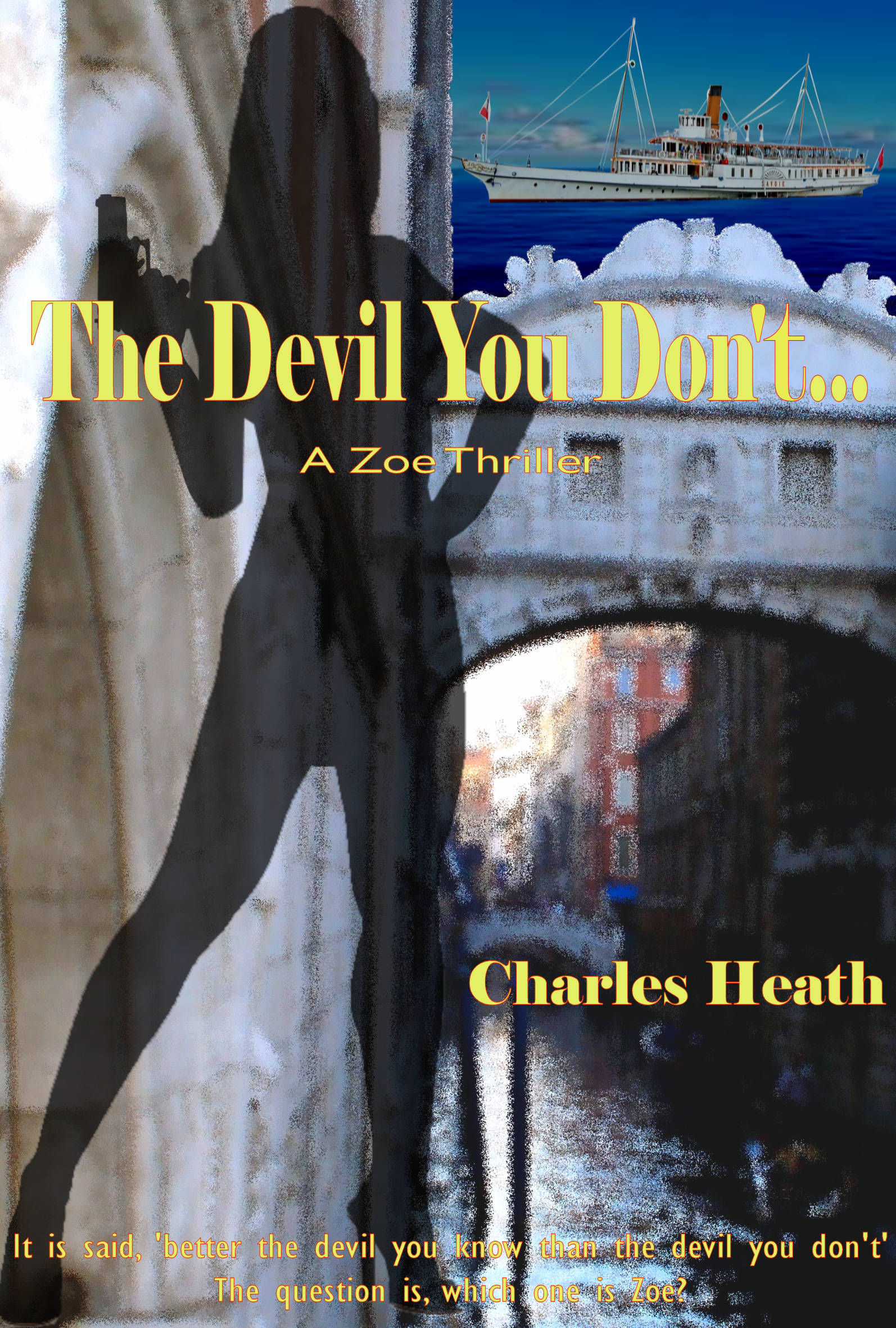
‘The Devil You Don’t’ – A beta reader’s view

It could be said that of all the women one could meet, whether contrived or by sheer luck, what are the odds it would turn out to be the woman who was being paid a very large sum to kill you.

John Pennington is a man who may be lucky in business, but not so lucky in love. He has just broken up with Phillipa Sternhaven, the woman he thought was the one, but relatives and circumstances, and perhaps because she was a ‘princess’, may also have contributed to the end result.

So, what do you do when you are heartbroken?

That is a story that slowly unfolds, from the first meeting with his nemesis on Lake Geneva, all the way to a hotel room in Sorrento, where he learns the shattering truth.

What should have been solace after disappointment, turns out to be something else entirely, and from that point, everything goes to hell in a handbasket.

He suddenly realizes his so-called friend Sebastian has not exactly told him the truth about a small job he asked him to do, the woman he is falling in love with is not quite who she says she is, and he is caught in the middle of a war between two men who consider people becoming collateral damage as part of their business.

The story paints the characters cleverly displaying all their flaws and weaknesses. The locations add to the story at times taking me back down memory lane, especially to Venice where, in those back streets I confess it’s not all that hard to get lost.

All in all a thoroughly entertaining story with, for once, a satisfying end.

Available on Amazon here: https://amzn.to/2Xyh1ow

In a word: Bore, or is that boar

I’ve had the ubiquitous pleasure of being called one, and that is, a bore.

Probably because I spend so much time telling people about the joys and woes of being a writer.

You can be a tedious bore, cooking could be a bore, and then you could bore someone to death, and then you will bore the responsibility of, yes, doing just that.

Would it be murder or manslaughter?

But, of course, there are other meanings of the word, such as, on my farm I have a bore.

No, we’re not talking about the farmhand, but where artesian water is brought to the surface, in what would otherwise be very arid land.

Or, could be the size of a drill hole, and in a specific instance the measurement of the circular space that piston goes up and down.  And if you increase the size of the bore, the more powerful the engine.

Or it could refer to the size of a gun barrel, for all of you who are crime fiction writers.

But, let’s not after all of that, confuse it with another interpretation of the word, boar, which is basically a male pig.

It could also just as easily describe certain men.

Then there is another interpretation, boor, which is an extremely rude person, or a peasant, a country bumpkin or a yokel.

I’ve only seen the latter in old American movies.

There is one more, rather obscure interpretation, and that is boer, which is a Dutch South African, who at the turn of the last century found themselves embroiled in a war with the British.