In a word: Loose

We’ve all heard of the expression, he’s playing it fast and loose, or more interestingly, he’s fast and loose with the truth.

I’ve never really got a proper definition of that expression, but it sounds good, and people have to use their imaginations and put their own interpretation to it.

And if this was the 1930s, and Clarke Gable was playing opposite Jean Harlow, it’s exactly how the posters would describe the blonde bombshell.

Loose, however, in a more literal sense means not tight, so a loose nut on a bolt might be the cause of a catastrophe.

And speaking of catastrophes, there’s a fox loose in the hen house.  Sadly it would be very difficult to catch and tie up.

Of course, in hot weather, you’d rather be wearing something loose, to keep cool.

Women, in particular, can wear their hair loose, as distinct from ‘up’, or in a ponytail or braids.

Some people make a loose interpretation, which inevitably creates grey areas, and loose lips, well, they’ve been known to sink ships.

This word can sometimes be confused with lose, which means something else entirely.

Like, lose a watch, lose your head, in more ways than one, lose your life, as if it was one of nine when it isn’t, and lose everything, perhaps, in the 1930’s stock market crash.

Quite literally, it means to be deprived of, or cease to gain or have.

You can lose weight, have a clock that loses time, or you can lose your temper.

Sometimes I lose the plot.

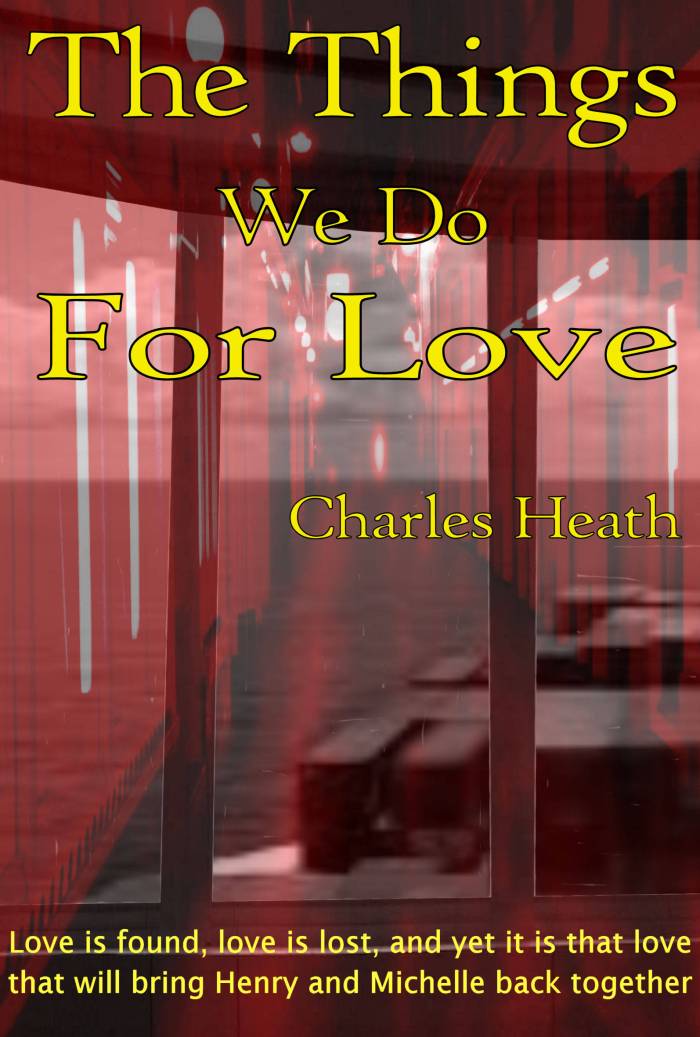
An excerpt from “The Things We Do for Love”; In love, Henry was all at sea!

In the distance, he could hear the dinner bell ringing and roused himself.  Feeling the dampness of the pillow, and fearing the ravages of pent-up emotion, he considered not going down but thought it best not to upset Mrs. Mac, especially after he said he would be dining.

In the event, he wished he had reneged, especially when he discovered he was not the only guest staying at the hotel.

Whilst he’d been reminiscing, another guest, a young lady, had arrived.  He’d heard her and Mrs. Mac coming up the stairs and then shown to a room on the same floor, perhaps at the other end of the passage.

Henry caught his first glimpse of her when she appeared at the door to the dining room, waiting for Mrs. Mac to show her to a table.

She was in her mid-twenties, slim, with long brown hair, and the grace and elegance of a woman associated with countless fashion magazines.  She was, he thought, stunningly beautiful with not a hair out of place, and make-up flawlessly applied.  Her clothes were black, simple, elegant, and expensive, the sort an heiress or wife of a millionaire might condescend to wear to a lesser occasion than dinner.

Then there was her expression; cold, forbidding, almost frightening in its intensity.  And her eyes, piercingly blue and yet laced with pain.  Dracula’s daughter was his immediate description of her.

All in all, he considered, the only thing they had in common was, like him, she seemed totally out of place.

Mrs. Mac came out of the kitchen, wiping her hands on her apron.  She was, she informed him earlier, chef, waitress, hotelier, barmaid, and cleaner all rolled into one.  Coming up to the new arrival she said, “Ah, Miss Andrews, I’m glad you decided to have dinner.  Would you like to sit with Mr. Henshaw, or would you like to have a table of your own?”

Henry could feel her icy stare as she sized up his appeal as a dining companion, making the hair on the back of his neck stand up.  He purposely didn’t look back.  In his estimation, his appeal rating was minus six.  Out of a thousand!

“If Mr. Henshaw doesn’t mind….”  She looked at him, leaving the query in mid-air.

He didn’t mind and said so.  Perhaps he’d underestimated his rating.

“Good.”  Mrs. Mac promptly ushered her over.  Henry stood, made sure she was seated properly and sat.

“Thank you.  You are most kind.”  The way she said it suggested snobbish overtones.

“I try to be when I can.”  It was supposed to nullify her sarcastic tone but made him sound a little silly, and when she gave him another of her icy glares, he regretted it.

Mrs. Mac quickly intervened, asking, “Would you care for the soup?”

They did, and, after writing the order on her pad, she gave them each a look, imperceptibly shook her head, and returned to the kitchen.

Before Michelle spoke to him again, she had another quick look at him, trying to fathom who and what he might be.  There was something about him.

His eyes, they mirrored the same sadness she felt, and, yes, there was something else, that it looked like he had been crying?  There was a tinge of redness.

Perhaps, she thought, he was here for the same reason she was.

No.  That wasn’t possible.

Then she said, without thinking, “Do you have any particular reason for coming here?”  Seconds later she realized she’d spoken it out loud, had hadn’t meant to actually ask, it just came out.

It took him by surprise, obviously not the first question he was expecting her to ask of him.

“No, other than it is as far from civilization, and home, as I could get.”

At least we agree on that, she thought.

It was obvious he was running away from something as well.

Given the isolation of the village and lack of geographic hospitality, it was, from her point of view, ideal.  All she had to do was avoid him, and that wouldn’t be difficult.

After getting through this evening first.

“Yes,” she agreed.  “It is that.”

A few seconds passed, and she thought she could feel his eyes on her and wasn’t going to look up.

Until he asked, “What’s your reason?”

Slightly abrupt in manner, perhaps, because of her question and how she asked it.

She looked up.  “Rest.  And have some time to myself.”

She hoped he would notice the emphasis she had placed on the word ‘herself’ and take due note.  No doubt, she thought, she had completely different ideas of what constituted a holiday than he, not that she had said she was here for a holiday.

Mrs. Mac arrived at a fortuitous moment to save them from further conversation.

Over the entree, she wondered if she had made a mistake coming to the hotel.  Of course, there had been no conceivable way she could know that anyone else might have booked the same hotel, but realized it was foolish to think she might end up in it by herself.

Was that what she was expecting?

Not a mistake then, but an unfortunate set of circumstances, which could be overcome by being sensible.

Yet, there he was, and it made her curious, not that he was a man, by himself, in the middle of nowhere, hiding like she was, but for quite varied reasons.

On discreet observance, whilst they ate, she gained the impression his air of light-heartedness was forced, and he had no sense of humour.

This feeling was engendered by his looks, unruly dark hair, and permanent frown.  And then there was his abysmal taste in clothes on a tall, lanky frame.  They were quality but totally unsuited to the wearer.

Rebellion was written all over him.

The only other thought crossing her mind, and incongruously, was he could do with a decent feed.  In that respect, she knew now from the mountain of food in front of her, he had come to the right place.

“Mr. Henshaw?”

He looked up.  “Henshaw is too formal.  Henry sounds much better,” he said, with a slight hint of gruffness.

“Then my name is Michelle.”

Mrs. Mac came in to take their order for the only main course, gather up the entree dishes, and then return to the kitchen.

“Staying long?” she asked.

“About three weeks.  Yourself?”

“About the same.”

The conversation dried up.

Neither looked at the other, rather at the walls, out the window, towards the kitchen, anywhere.  It was, she thought, unbearably awkward.

Mrs. Mac returned with a large tray with dishes on it, setting it down on the table next to theirs.

“Not as good as the usual cook,” she said, serving up the dinner expertly, “but it comes a good second, even if I do say so myself.  Care for some wine?”

Henry looked at Michelle.  “What do you think?”

“I’m used to my dining companions making the decision.”

You would, he thought.  He couldn’t help but notice the cutting edge of her tone.  Then, to Mrs. Mac, he named a particular White Burgundy he liked, and she bustled off.

“I hope you like it,” he said, acknowledging her previous comment with a smile that had nothing to do with humour.

“Yes, so do I.”

Both made a start on the main course, a concoction of chicken and vegetables that were delicious, Henry thought when compared to the bland food he received at home and sometimes aboard my ship.

It was five minutes before Mrs Mac returned with the bottle and two glasses.  After opening it and pouring the drinks, she left them alone again.

Henry resumed the conversation.  “How did you arrive?  I came by train.”

“By car.”

“Did you drive yourself?”

And he thought, a few seconds later, that was a silly question, otherwise she would not be alone, and certainly not sitting at this table. With him.

“After a fashion.”

He could see that she was formulating a retort in her mind, then changed it, instead, smiling for the first time, and it served to lighten the atmosphere.

And in doing so, it showed him she had another more pleasant side despite the fact she was trying not to look happy.

“My father reckons I’m just another of ‘those’ women drivers,” she added.

“Whatever for?”

“The first and only time he came with me I had an accident.  I ran up the back of another car.  Of course, it didn’t matter to him the other driver was driving like a startled rabbit.”

“It doesn’t help,” he agreed.

“Do you drive?”

“Mostly people up the wall.”  His attempt at humour failed.  “Actually,” he added quickly, “I’ve got a very old Morris that manages to get me where I’m going.”

The apple pie and cream for dessert came and went and the rapport between them improved as the wine disappeared and the coffee came.  Both had found, after getting to know each other better, their first impressions were not necessarily correct.

“Enjoy the food?” Mrs. Mac asked, suddenly reappearing.

“Beautifully cooked and delicious to eat,” Michelle said, and Henry endorsed her remarks.

“Ah, it does my heart good to hear such genuine compliments,” she said, smiling.  She collected the last of the dishes and disappeared yet again.

“What do you do for a living,” Michelle asked in an off-hand manner.

He had a feeling she was not particularly interested, and it was just making conversation.

“I’m a purser.”

“A what?”

“A purser.  I work on a ship doing the paperwork, that sort of thing.”

“I see.”

“And you?”

“I was a model.”

“Was?”

“Until I had an accident, a rather bad one.”

“Oh, I’m sorry.”

So that explained the odd feeling he had about her.

As the evening wore on, he began to think there might be something wrong, seriously wrong with her because she didn’t look too well.  Even the carefully applied makeup, from close, didn’t hide the very pale, and tired look, or the sunken, dark-ringed eyes.

“I try not to think about it, but it doesn’t necessarily work.  I’ve come here for peace and quiet, away from doctors and parents.”

“Then you will not have to worry about me annoying you.  I’m one of those fall-asleep-reading-a-book types.”

Perhaps it would be like ships passing in the night and then smiled to himself about the analogy.

Dinner over, they separated.

Henry went back to the lounge to read a few pages of his book before going to bed, and Michelle went up to her room to retire for the night.

But try as he might, he was unable to read, his mind dwelling on the unusual, yet compellingly mysterious person he would be sharing the hotel with.

Overlaying that original blurred image of her standing in the doorway was another of her haunting expressions that had, he finally conceded, taken his breath away, and a look that had sent more than one tingle down his spine.

She may not have thought much of him, but she had certainly made an impression on him.

© Charles Heath 2015-2024

lovecoverfinal1

NANOWRIMO – November 2025 – Day 29

The Third Son of a Duke

There will be an epilogue and a reunion of the original Oroma passengers, all back in England more by coincidence than by design.

That part of the story that involves my grandmother, she went back to England in 1954, the year after I was born.  I speculate who it might be that she visited. I suspect my brother, who went back to England many times to talk to those relatives of ours that we know about, and to the near relatives of my grandmother, who have some idea of who she talked to out in Australia.

My grandfather, who labelled himself a salesman on his record, both leaving Australia and returning, made me instantly think of him as one of those snake oil salesmen.  My grandmother put her profession as home duties.

She was much more than that, and I hope she rose above that mundanity, because she was once an adventuress. 

It is a fascinating meeting between them, after all those years.

Life for all of them has presented challenges, and it will highlight some of them.

At least when they returned home, women had finally been given the vote, but to a certain extent, nothing had really changed.  In the fifties, women were still expected to have children and run houses and look after husbands.  I suspect for a few, those husbands, if any, were in for a very bad shock.

..

2850 words, for a total of 50000 words.

Writing about writing a book – Day 33

So, it seems there’s going to be a few problems at work.  People are dying and no one really knows why.

Perhaps it has something to do with the computer systems and the network.  In the time this novel is set, networking personal computers was in its infancy and a veritable rabbit hole to go down.

We need to throw in a bit more background and involve others, but to what extent should these other people have influence over the storyline?

This is why there are puzzling aspects of Richardson’s death, and why is Aitchison so interested?

Says Aitchison…

“I knew the man better than most.  But even if he was going through a bad patch, and he was a little down, he would not have killed himself, not the way it was presented in his office.  The gun was in the wrong hand, his left hand.  He was ambidextrous to a certain point, left-handed in some cases, right-handed in others.  I knew for a fact he could only shoot with his right hand.  Same as golf.  But most people here would have seen him use only his left hand.”

I let his words sink in for a moment.  How could he possibly know what hand Richardson used for what purpose?  Perhaps golf because it was open to Company employees of any level, but shooting?

It came out of my mouth before I could stop it.  “How …”

“..do I know about his shooting hand?  I ran into him once at the range.  I used to shoot a few skeets back in the day.  Eyesight has gone to pot these days, so it’s been a while.”  The last part was related more for his own benefit.

Good enough answer.  I didn’t know Aitchison was a shooter.  The office grapevine wasn’t as extensively knowledgeable as it purported to be.

“Then is it possible someone here killed him?”

“Like the woman he was supposedly having an affair or her jealous husband?”  He laughed, and it wasn’t a particularly nice one.  “The mystery woman he was spending time with was his daughter.  He asked me to get her a job, but not to let on that he knew her.  Didn’t want her to think he was meddling in her affairs, and that anyone else would see it as favors from the executive to certain employees.”

Aitchison’s voice shook, and he poured another drink to try and steady his nerves.  He was agitated, I could see that.  And he had evidence that the police would need to help solve this crime.  Yet, by the way, he was talking; I don’t think he believed any of what he had just told me would be deemed as relevant.

And I was yet to see a reason why this would affect him so.

“Have you told the police this?

“Yes, but the detective they sent this morning wasn’t interested.”

Perhaps he was writing more into it than there was.  I didn’t know what to say and tried to look noncommittal.  Then he looked at me with a piercing stare, like the thought had just occurred to him.  “You two clashed, heatedly at times.  Did you do this?

Perhaps not quite the question I was expecting from him or anyone.

I was innocent, but I had one of those faces when someone puts a question to you rather abruptly, that reddened, either with embarrassment or guilt.  I had very little control over it.

But to be accused of murder?

I had an alibi; I was home alone in bed trying to sleep.  OK.  It was shaky but the truth.

“No.  Why would I?”

If I was going to kill anyone in this place, it would be Benton, or even Kowalski, another thorn in my side.  Richardson was not on the list, and never would be.  He was just old and pedantic, set in his ways.  He clashed with everyone at one time or another.  In my case, he was just cranky because I replaced his pen and paper accounting with a new application on that computer he refused to use.

He nodded to himself.  “I thought not, but I had to ask.”

He stood and went over to the window and looked out.  Taking time, I guessed, to collect his thoughts.  He remained there with his back to me for a few minutes.  It didn’t seem to be a long time.

Then he said, quietly, “It appears there’s something else going on, something that none of us in the Executive know anything about.”

I was not sure I liked the sound of that or the fact he was telling me.  This was not something I should be privy to.  But that still didn’t stop me from asking, “Like what for instance?”

“The existence of another network.”

“What do you mean?”  Another network?  There was only one.  I had seen it installed, and went through the teething process of getting it up and running, as every bit as hard as bringing a new baby into the world.

I would know if there was another network.  Wouldn’t I?

“Apparently there is supposedly another network of computers running in this office.  I have only the word of a policeman by the name of Chief Inspector Gator, a computer expert, and a consultant from Interpol.  How the hell did this information get to Interpol, of all people?”

I couldn’t tell him.  This was news to me.

“What evidence have they got that this ‘other network’ exists?”

“Intercepted telephone calls reporting a connection error to a network system by the name of Starburst.  There was a log entry on Richardson’s computer referring to it, about the time of a power failure last night.  The computer expert is down in the server room now looking for this other network.”

He swiveled around and looked down at me with a thunderous expression.  “You didn’t set anything up for Halligan, did you?”

“No.”

I was surprised he asked.  We had a discussion some months ago about the fact most of the AGM’s came directly to me to sort out their computer issues.  Halligan was the worst of all of them, using his position to browbeat me into doing work that could only be described as off-book.  Whilst strictly speaking, as AGM – Information Technology, Halligan was quite within his purview to make such requests; it was the security aspects that had to be signed off on before executing such requests.  It added a new level of pain to the approvals process and had made Halligan an enemy of both Aitchison and myself, even though I had nothing to do with it.

The problem was, like all members of the Executive, Halligan was his own worst enemy.  Each of their areas of responsibility was like fiefdoms, and none of them like the others to encroach on their territory.  Halligan’s was the only area that had a shared responsibility with security.  Soon after the new arrangements were put in place, and the fact I had been left off the list of people to be informed, Halligan had asked me to do some work, and not aware of any change in procedure, did it.

Then, playing the usual game of one-upmanship, Halligan told the Executive of the new initiative and left a smoldering Aitchison in his wake.  In the end, all it did was cause me trouble, a severe reprimand, and no apology for being left off the distribution list informing of the new arrangements.

It was still a raw nerve and he had touched it.

© Charles Heath 2015-2025

Writing a book in 365 days – 316

Day 316

The unexpected detour

The Unexpected Detour: Trading Familiar Fame for Fresh Inspiration

We are creatures of habit, especially when those habits have led to success. When we find our niche—that specific genre, that particular skill set, that familiar market where our reputation is solid—we settle in. We build our brand around it, we become known for it, and we reap the rewards of what I like to call “pout fame”—the reputation we tirelessly poured ourselves into earning.

But what happens when the GPS suddenly recalculates? What happens when a project falls through, a client demands a skill you rarely use, or a personal experience shoves you, politely or otherwise, onto an entirely different path?

The detour is mandatory. The question is: do you treat it as a road bump or a reconnaissance mission?


The Comfort (and Constraint) of the Known Road

For a professional writer, artist, or entrepreneur, the familiarity of the known path is powerful. If you are the established authority on historical fiction, stepping sideways to write a children’s book feels like a monumental risk or, worse, a waste of time. If you’re a renowned brand strategist, taking a temporary gig managing a local community centre seems completely off-brand.

We cling to our niche because it represents safety, predictability, and income. We fear that if we take our focus off the main product, the audience will forget us, or worse, perceive us as unfocused.

The irony is that this commitment to the familiar eventually becomes the most fertile ground for creative drought. When you do the same thing in the same way for too long, the machine might keep moving, but the spark fades. You are solving the same problems, using the same mental muscles, and drawing from the same well of inspiration.

This is precisely why the unintentional interlude is a gift.

The Power of the Accidental Assignment

The unexpected detour forces you to use different muscles. It is a creative palette cleanser.

Perhaps you, known for gritty memoirs, suddenly find yourself ghostwriting a guide on sustainable gardening. Perhaps your expertise in complex data architecture leads you to a temporary volunteer role organising a major arts festival. These interludes are not your core business, so the pressure is different, the stakes feel lower, and that pressure release is key to unlocking new thought patterns.

When you are led down another path, two crucial things happen:

1. You Gain New Data Sets

Every experience, especially those outside our comfort zone, feeds the creative core. The language you learn while writing about gardening might provide the perfect metaphor for a struggling relationship in your next memoir. The logistical problem-solving required for the arts festival might provide a brilliant structural framework for your next white paper.

The inspiration you gain from the detour is often fuel for your established genre—just in a subtler, richer form. It’s not about abandoning your genre; it’s about making your genre deeper.

2. You Break the Creative Feedback Loop

Our brains love efficient pathways. When we write in a genre (or work in a field) for years, we develop grooves. The unintentional interlude yanks the needle out of the groove. It forces you to think like a beginner again, look up new terminology, and engage with a world that doesn’t operate by your established rules. This struggle is where innovation resides.

The Crossroad: Take It or Take a Holiday?

The core question remains: When this unexpected inspiration strikes, do you embrace it completely, or is the detour simply a sign that you need a vacation?

Often, we frame creative exploration as a necessary rest. We believe that if we aren’t focusing on our ‘main thing,’ we must be taking a holiday. But this is a false dichotomy.

The Creative Detour is a Form of Necessary Rest.

If the unexpected path genuinely energises you, if it sparks ideas and makes you feel excited about the act of creating again—take it.

This is not a distraction; it is an investment in creative renewal. The mistake is equating productive time only with the activities that directly generated your “pout fame.” The new path might not lead to immediate income in your usual stream, but it will prevent the greater cost: burnout and creative stagnation.

If the detour feels like a chore, if it drains you, or if the new inspiration feels thin and forced—then you need a holiday. You need genuine downtime, silence, and recovery.

The differentiator is always energy. Does this unexpected road drain your reserves or replenish them?

Permission to Deviate

The most successful creators rarely stay tethered to a single, narrow output. They allow themselves to be influenced by the tangential, the accidental, and the unfamiliar. They treat their career not as a single railway line, but as a vast, interconnected landscape.

So, the next time life or work pushes you onto an unpaved road—whether you were led willingly or otherwise—don’t resist the scenery. Don’t immediately try to navigate back to the familiar highway just because it’s faster.

Look out the window. Collect the data. Listen to the new language.

The greatest inspiration for your next masterpiece might not be found in the genre you dominate, but in the unintentional interlude that showed you the world through brand new eyes. Take the inspiration. The holiday can wait until the tank is actually empty.

Top 5 sights on the road less travelled – Belfast

Beyond the Titanic: Five Unexpected Delights on Belfast’s Road Less Travelled

Belfast. The name often conjures images of the magnificent Titanic, its grand harbour, and perhaps a sprinkle of its complex history. And while these are undeniably essential stops, the real magic of Belfast, for those willing to venture off the beaten path, lies in its hidden gems and emerging experiences.

If you’ve “done” the Titanic and are looking for an authentic taste of this vibrant city, then strap in. We’re taking a detour down the roads less travelled to uncover the next five must-do’s and must-see’s in Belfast.

1. Dive into the Digital World at the Ulster Museum’s New Interactive Zones

While the Ulster Museum has always been a treasure trove of art, history, and natural sciences, it’s been quietly upping its game for the digital age. Forget dusty displays; venture into their newly developed interactive zones. These aren’t just for kids, though they’ll certainly love them! Imagine stepping into a virtual reality reconstruction of ancient Ulster, or engaging with cutting-edge exhibits on the science of sound and light through hands-on digital interfaces. It’s a dynamic and engaging way to connect with heritage and innovation, proving that learning can be as exciting as any adventure.

2. Explore the Artisanal Delights of the Cathedral Quarter’s Hidden Alleys

Beyond the buzzing pubs and restaurants of the Cathedral Quarter, lies a labyrinth of charming, often overlooked alleyways and courtyards. This is where Belfast’s creative pulse truly beats. Seek out independent galleries showcasing local artists, discover quirky vintage boutiques tucked away from the main drag, and stumble upon intimate coffee shops serving up exceptional brews. Keep an eye out for vibrant street art that adorns the brickwork, transforming these forgotten corners into open-air galleries. It’s an exploration that rewards patience and a keen eye for detail.

3. Get Your Hands Dirty at a Local Food Growing Project or Urban Farm

Belfast, like many modern cities, is embracing sustainability and local produce with open arms. The “road less travelled” here involves connecting with the city’s green initiatives. Look for opportunities to visit or even volunteer at a local food growing project or an urban farm. These spaces are more than just patches of land; they are community hubs fostering a deeper connection to where our food comes from. Learn about organic farming, taste freshly harvested produce, and engage with the passionate individuals who are nurturing these vital green spaces within the urban landscape. It’s a refreshing and grounding experience.

4. Uncover the Stories on the Outskirts: The Belfast Peace Walls and Community Art Tours

While the iconic Peace Walls are a significant part of Belfast’s history, venturing further afield offers a more nuanced and personal perspective. Instead of a standard tour, opt for a community-led tour focusing on the art and stories that have emerged from these areas. These tours are often run by people who have lived through the Troubles, offering raw, honest, and incredibly moving accounts. You’ll witness powerful murals that have become symbols of hope and resilience, and gain a profound understanding of the ongoing journey towards reconciliation. It’s a challenging but essential experience for anyone seeking to truly understand Belfast.

5. Experience the Buzz of a Local Gig in an Unconventional Venue

Belfast has a thriving music scene, but the real gems are often found outside the mainstream venues. Seek out local gigs in unconventional spaces. Think intimate pubs with a dedicated live music night, community centres hosting emerging bands, or even pop-up events in repurposed warehouses. This is where you’ll discover the authentic, raw talent that defines Belfast’s musical soul. The atmosphere is electric, the music is diverse, and the experience is infinitely more memorable than a crowded arena.

Belfast is a city that rewards curiosity. By stepping off the well-trodden tourist trails, you unlock a richer, more authentic, and deeply rewarding experience. So, next time you find yourself in this captivating city, dare to take the road less travelled. You might just discover your new favourite story, your most inspiring artwork, or your most unforgettable moment.

What are your favourite hidden gems in Belfast? Share them in the comments below!

What I learned about writing – Hollywood is sometimes a source of history

I’m not one for writing Westerns; I’ll leave the honours for that to Louis L’Amour, whose acquaintance I made when I saw How the West Was Won on the big screen and then read the book.

That led to reading a few more by Zane Grey, but the stories’ reading, not the visual splendour of the West depicted in these films, made the actors almost secondary.

But my interest in watching Westerns had been fuelled by the fact my parents watched them on TV, though back in those days, they were in black and white, and starred John Wayne, Gary Cooper, Alan Ladd and, later on, Clint Eastwood among a great many others.

But the mainstay of my interest in the archetypal Western centred on John Wayne, whose movies may have almost the same plot line, just a substitution of actors and locations.

Often, it was not so much that John Wayne was in it as the actors he surrounded himself with, like Dean Martin, Ricky Nelson, Walter Brennan, and Robert Mitchum, who made the experience all the better.

Films like The Sons of Katie Elder, True Grit, Rio Bravo, and El Dorado.

Who can forget the vast open spaces, the dry dusty streets lined with wooden buildings and the endless walkways that substituted for footpaths?  Bars in hotels, rooms overlooking the street, havens for sharpshooters, when bad guys outnumber the good guys, and typically the Sheriff who always faced insurmountable odds.

Or the attacks staged by Indians who were routinely killed, in fact, there was not one film I saw where they ended up winning any battle. Only in recent years did they get a more sympathetic role; one film that comes to mind is Soldier Blue, which may have painted them as savages, but a possible reason why they ended up so.

But for those without Indians, there were plenty of others whose intentions were anything but for the good of the settlers.

A lot of films ended in a classic gunfight.  High Noon, 3:10 to Yuma are two, where the story led to gunfights between good and bad in unlikely places like El Dorado or Rio Bravo.

There are countless others I could name, like Shane, or became to be called, the spaghetti Westerns with Clint Eastwood, or finally, The Magnificent Seven, or Once Upon a Time in the West.

All have contributed to a picture in my mind of how the American West was: fearsome men, beleaguered sheriffs, people with good intentions, and those driven by greed and power. All of this plays out in the harshest of conditions, where life and death could be determined by a wrong word or a stray bullet.

And let’s not forget the role of the guns, Colt, Winchester, and Remington.  And Smith and Wesson, and the gunslingers of the day. Some were good, but most, according to the film world, were bad.

So, against the lifelong interest of watching and reading about the archetypal view of the old West, shall I attempt to put pen to paper? Thank God it will be a work of fiction because I don’t think there are many who knew what it was really like.

“One Last Look”, nothing is what it seems

A single event can have enormous consequences.

A single event driven by fate, after Ben told his wife Charlotte he would be late home one night, he left early, and by chance discovers his wife having dinner in their favourite restaurant with another man.

A single event where it could be said Ben was in the wrong place at the wrong time.

Who was this man? Why was she having dinner with him?

A simple truth to explain the single event was all Ben required. Instead, Charlotte told him a lie.

A single event that forces Ben to question everything he thought he knew about his wife, and the people who are around her.

After a near-death experience and forced retirement into a world he is unfamiliar with, Ben finds himself once again drawn back into that life of lies, violence, and intrigue.

From London to a small village in Tuscany, little by little Ben discovers who the woman he married is, and the real reason why fate had brought them together.

It is available on Amazon here:  http://amzn.to/2CqUBcz

Top 5 sights on the road less travelled – Amsterdam

Beyond the Canals: Amsterdam’s Unbeaten Path – Top 5 Surprises Await!

Amsterdam. The very name conjures images of charming canals, tulip-filled fields, and the intoxicating allure of the Red Light District. And while these are undeniably iconic, this vibrant city offers so much more for the curious traveler willing to step off the well-trodden tourist highway. If you’re looking for an authentic Amsterdam experience, one that whispers secrets rather than shouts them, then buckle up. We’re venturing onto the road less traveled, and here are the top five hidden gems that are begging to be discovered:

1. Dive into the Depths of History at the Resistance Museum (Verzetsmuseum)

Forget the crowded Anne Frank House (though it remains a powerful experience). For a profoundly moving and comprehensive look at the Dutch spirit during World War II, the Resistance Museum is an absolute must. Housed in a grand building, this museum goes beyond personal stories to illustrate the ingenuity, bravery, and sheer determination of ordinary citizens who defied the Nazi occupation. Through immersive exhibits, personal artifacts, and compelling narratives, you’ll gain a deeper understanding of the complex realities of life under occupation. It’s a more nuanced and less overwhelming perspective that will leave a lasting impression.

2. Wander Through the Enchanting “Nine Streets” (De Negen Straatjes) – A Shopper’s Secret Sanctuary

While the Kalverstraat is synonymous with mainstream shopping, the Nine Streets offer a completely different, and infinitely more charming, retail therapy experience. Nestled between the main canals, these nine narrow, interconnected streets are a labyrinth of independent boutiques, vintage shops, quirky galleries, and cozy cafés. You’ll find unique fashion finds, handcrafted jewelry, vintage treasures, and artisanal delights that you won’t see anywhere else. It’s the perfect place to get lost, discover hidden gems, and soak in the authentic Amsterdam vibe, far from the selfie-stick wielding crowds.

3. Escape to the Green Oasis of Westerpark

Need a respite from the urban bustle? Look no further than Westerpark. This former industrial site has been transformed into a sprawling, vibrant park that’s a beloved local haunt. It’s not just about green spaces; Westerpark is a hub of creativity and culture. Explore the re-purposed factory buildings that now house art studios, performance spaces, and trendy restaurants and bars. During warmer months, it’s the perfect spot for a picnic, a bike ride, or to simply relax by the water. Keep an eye out for events, outdoor cinema screenings, and lively markets that often pop up here.

4. Savor the Flavors of Amsterdam Noord: A Transformative Waterfront

Across the IJ River, a whole new world of Amsterdam awaits in Amsterdam Noord. A short (and free!) ferry ride from behind Centraal Station will transport you to this rapidly developing district. Once an industrial wasteland, Noord is now a playground of innovation and creativity. Marvel at the striking architecture of the EYE Film Museum, ascend the A’DAM Lookout for breathtaking panoramic views (and a thrilling swing!), or explore the eclectic street art and independent eateries. This is where local life thrives, offering a glimpse into a more contemporary and edgy side of the city.

5. Uncover Artistic Treasures at the Hermitage Amsterdam

While the Rijksmuseum and Van Gogh Museum are world-renowned, the Hermitage Amsterdam often flies under the radar but consistently delivers exceptional exhibitions. This branch of the famed St. Petersburg museum showcases a diverse range of art and artifacts, often from its vast permanent collection or through collaborations with other international institutions. You might find anything from Dutch Masters to contemporary art, historical artifacts, or fascinating cultural displays. It’s an excellent opportunity to experience world-class art in a less crowded and more intimate setting, offering a refreshing artistic detour.

Amsterdam is a city that rewards the intrepid. By venturing slightly off the beaten path, you’ll discover a richer, more authentic experience that goes far beyond the postcards. So, next time you find yourself in this captivating Dutch capital, dare to explore the road less travelled. You might just be surprised by what treasures you uncover.

What are your favorite hidden gems in Amsterdam? Share them in the comments below!

Harry Walthenson, Private Detective – the second case – A case of finding the “Flying Dutchman”

What starts as a search for a missing husband soon develops into an unbelievable story of treachery, lies, and incredible riches.

It was meant to remain buried long enough for the dust to settle on what was once an unpalatable truth, when enough time had passed, and those who had been willing to wait could reap the rewards.

The problem was, no one knew where that treasure was hidden or the location of the logbook that held the secret.

At stake, billions of dollars’ worth of stolen Nazi loot brought to the United States in an anonymous tramp steamer and hidden in a specially constructed vault under a specifically owned plot of land on the once docklands of New York.

It may have remained hidden and unknown to only a few, if it had not been for a mere obscure detail being overheard …

… by our intrepid, newly minted private detective, Harry Walthenson …

… and it would have remained buried.

Now, through a series of unrelated events, or are they, that well-kept secret is out there, and Harry will not stop until the whole truth is uncovered.

Even if it almost costs him his life.  Again.