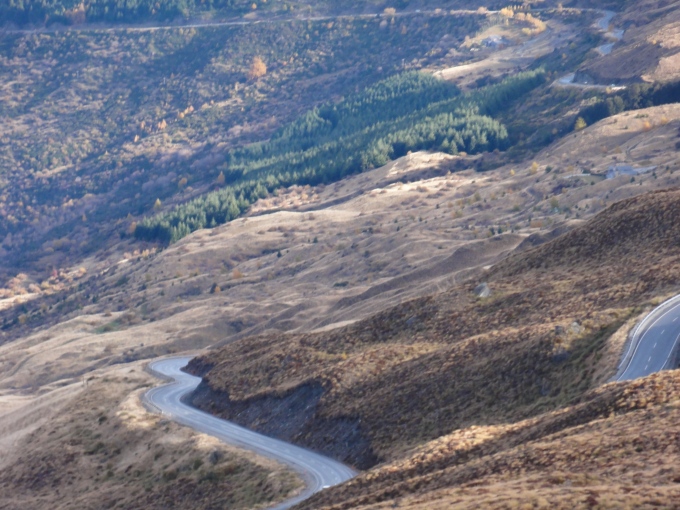
50 photographs, 50 stories, of which there is one of the 50 below.
They all start with –
A picture paints … well, as many words as you like. For instance:
And the story:
…
It was once said that a desperate man has everything to lose.
The man I was chasing was desperate, but I, on the other hand, was more desperate to catch him.
He’d left a trail of dead people from one end of the island to the other.
The team had put in a lot of effort to locate him, and now his capture was imminent. We were following the car he was in, from a discreet distance, and, at the appropriate time, we would catch up, pull him over, and make the arrest.
There was nowhere for him to go.
The road led to a dead-end, and the only way off the mountain was back down the road we were now on. Which was why I was somewhat surprised when we discovered where he was.
Where was he going?
“Damn,” I heard Alan mutter. He was driving, being careful not to get too close, but not far enough away to lose sight of him.
“What?”
“I think he’s made us.”
“How?”
“Dumb bad luck, I’m guessing. Or he expected we’d follow him up the mountain. He’s just sped up.”
“How far away?”
“A half-mile. We should see him higher up when we turn the next corner.”
It took an eternity to get there, and when we did, Alan was right, only he was further on than we thought.”
“Step on it. Let’s catch him up before he gets to the top.”
Easy to say, not so easy to do. The road was treacherous, and in places, just gravel, and there were no guard rails to stop a three-thousand-foot fall down the mountainside.
Good thing then, I had the foresight to have three agents on the hill for just such a scenario.
Ten minutes later, we were in sight of the car, still moving quickly, but we were going slightly faster. We’d catch up just short of the summit car park.
Or so we thought.
Coming quickly around another corner, we almost slammed into the car we’d been chasing.
“What the hell…” Aland muttered.
I was out of the car and over to see if he was in it, but I knew that it was only a slender possibility. The car was empty, and no indication of where he had gone.
Certainly not up the road. It was relatively straightforward for the next mile, at which we would have reached the summit. Up the mountainside from here, or down.
I looked up. Nothing.
Alan yelled out, “He’s not going down, not that I can see, but if he did, there’s hardly a foothold and that’s a long fall.”
Then where did he go?
Then a man looking very much like our quarry came out from behind a rock embedded just a short distance up the hill.
“Sorry,” he said quite calmly. “Had to go if you know what I mean.”
I’d lost him.
It was as simple as that.
I had been led a merry chase up the hill, and all the time he was getting away in a different direction.
I’d fallen for the oldest trick in the book, letting my desperation blind me to the disguise that anyone else would see through in an instant.
It was a lonely sight, looking down that road, knowing that I had to go all that way down again, only this time, without having to throw caution to the wind.
Every time I close my eyes, I see something different.
I’d like to think the cinema of my dreams is playing a double feature but it’s a bit like a comedy cartoon night on Fox.
But these dreams are nothing to laugh about.
Once again there’s a new installment of an old feature, and we’re back on the treasure hunt.
Whilst Boggs took the time to get over his assault, I went back to my job at Benderby’s because there was no reason not to. Benderby himself had checked several times on how I was, and I was beginning to think he called just to see my mother.
And the notion of those two together was not painting a pretty picture, knowing who he was. But we were being treated better than we had and that was a good thing, or so my mother said. She too was surprised at Benderby’s interest, but she was not writing anything into it. She had a different perception of him that most others had.
I was careful to avoid Alex, not that it was difficult because he was rarely in the warehouse office, or anywhere on the factory site most days, except for a few hours in the morning, and to close up at night. No one else seemed to miss his presence, but I was a little more suspicious as to what he was doing with the rest of his time, to the extent that once I went looking for him.
The only conclusion I’d come to, now that he had his own map, it had to have something to do with the treasure.
Getting a version of the treasure map to Alex via Nadia had been a logistical nightmare, and constantly fraught with the expectation that Alex might think he was being set up. The fact it was Nadia doing it was not lost on me and I realized later we had played right into her, and her family’s, hands in fitting the ongoing feud between the families. Nor was it lost on me the enthusiasm which she showed in carrying out the plan.
If it wasn’t for the fact both Boggs and I benefited from it, I would have had second thoughts about employing her. And Boggs was right, a girl like that could never like a boy like me. She would always be the province of the likes of Alex Benderby, and I told myself that it was going to be business only from now on.
She set up the meeting with Alex and arranged for me to be nearby to witness the transaction, though what her reason was for that I had no idea and I really didn’t want to be there. For some reason, I didn’t like the idea of Nadia getting close to Alex, but it was necessary, she decided, in order to sell the story.
She had cajoled him into believing firstly his map was the real map mainly because she had used her feminine wiles on Boogs, talking him into showing her the real map, and, then, while he was away for a few minutes, she had copied it.
Then it was a matter of keeping the map a secret because firstly it would ruin the rapport she supposedly had with Boggs should they need him again, and as far as she was aware, Vince thought he also had the real map and which Boggs said was not, and to mess with Vince would immediately make him suspicious about the authenticity of his map and that would be the last thing Alex would want.
It was a treat to see how manipulable Alex was when she was making offers she knew she’d never keep. Or at least not in front of me. I didn’t expect that I meant very much to her and watching her with Alex was much like how she handled me, so I guess we were all manipulable in her hands. She was a Cossatino, and in that regard, no end of trouble.
With Alex handled, she left him with so much promise and so little substance I was surprised he fell for it. But, there again, even in school, Alex wasn’t the sharpest tool in the box. I think the notion that he could pull off the treasure hunt might just get the monkey on his back his father had put there many years before.
Then there was Nadia.
Seeing her in action put her in a different light. Whilst those midnight rendezvous at the motel may have given me a sense of false bravado, seeing her with Alex, and playing her games, I had to wonder if my feelings were just an infatuation. Did I like Nadia all that much? I guess I must a little, to be feeling angry when Alex touched her.
I had to remind myself that I could never live in her world, that her first and last instinct would always be to lie and manipulate. She was, after all, a Cossatino, and leopards, as they say, never changed their spots. She might want to escape from her family, but saying it and doing it were two entirely different things,
I doubted her father, no matter how much he liked or hated her, should ever let her go, simply because as a beautiful woman, she could do so much for the family business.
Whether she wanted to or not.
I left once he agreed, and before she did anything with him. Clearly, Alex was expecting them to work as a team, but she had declined on account of her father, who was as mad as a hatter, and might just start killing Benderby’s if he found out she was working with him.
Best to leave well alone and appear to go their separate ways.
Until the treasure was found.
I didn’t hear from Boggs for a week. I’d decided that I was going to leave him alone until he called or sent a text. Boggs and idle time were a bad mix so I knew when I next heard from him, he would have formulated a half-baked grandiose plan for us to go on our treasure hunt.
And I was busy working out how I was going to tell him he had to take a step back and watch and wait till the Benderby’s and the Cossatino’s had launched their campaigns. It wouldn’t take long. Both sons of self-made men, Alex and Vince had a lot to prove to their fathers, and there was no doubt they were going to use the lost treasure as the means of getting back into favor.
That brought a problem to the table, not immediately, but down the road, when neither would be able to find it. Their first port of call would be Boggs, the one who had supplied them with ‘faulty’ maps. It would never be their fault, that they were too stupid to realize they were being played, or, even if it was the right map, still couldn’t follow the instructions.
But even I had that problem. I’d seen quite a few variations with notations, diagrams and cryptic messages. I was not sure how they were going to fare. Perhaps he had been thinking of just that because I received a text message, asking me to come over the next morning.
This is not a treatise, but a tongue-in-cheek discussion on how to write short stories. Suffice to say, this is not the definitive way of doing it, just mine. It works for me – it might not work for you.
…
There are two methods of writing, planning, sometimes meticulous planning, or flying by the seat of your pants, or being called a ‘pantser’.
The first has it all planned out before they start writing, from beginning to end, knowing what the end result will be. The second, well, we like to write and see where it takes us.
I like to think I fly by the seat of my pants, you know, like the reader who takes up the story and starts reading, not having a clue where it’s going to go. I prefer that blissful ignorance, of course, until I run out of ideas, roughly the equivalent of hitting a brick wall
Or that common enemy all writers have, the dreaded ‘writer’s block’.
I’ve tried both methods.
Each work, but in the case of the ‘planner’, you need to know where it’s going to start, what’s going to happen in the middle and have the end firmly planted in your mind.
Not much good if a rotten character is making you angry and you want to kill him off, and in the most excruciatingly painful manner.
Flying blind gives you a little more creativity and allows you to go around a corner and see what’s there. It also allows for those complete changes of direction you come up with in the shower, the place that is a fertile ground for new ideas, just when you’re running out of them.
But it can sometimes play havoc with word counts, and if you’re trying to fit into 2,000 words, 5,000 words, or a lot less, taking the story where it wants to go is not a good idea, and sadly, I tend to let stories run their course.
And sometimes I like the idea of writing three different endings, and then I can’t choose which one I like the best.
So, role model, I am not. I like writing, and when I’m in the ‘zone’ it’s like I’m in another world.
What Lessons Can Eric Ambler Teach a New Writer? Practical advice from the master of the modern thriller
When you think of the “golden age” of spy fiction, names like John le Carre, Ian Fleming, and Graham Greene instantly spring to mind. What most readers don’t realise is that a quieter, less‑celebrated author laid the groundwork for all of them: Eric Ambler (1909‑1998).
Ambler didn’t just write novels; he rewrote the rules of the genre. His work—The Man Who Never Was, Journey into Fear, The Mask of Dimitrios—is a study in how to turn ordinary people into compelling protagonists, how to let geopolitics drive plot without drowning the reader, and how to keep suspense razor‑sharp while still honouring the truth of human motivation.
For anyone standing at the blank‑page brink of a first novel, Ambler’s career offers a masterclass in three core areas:
Crafting believable, reluctant heroes
Using the world, not just the plot, as a character
Balancing suspense with moral nuance
Below, we unpack each lesson, illustrate it with concrete examples from Ambler’s bibliography, and translate it into actionable steps you can apply today.
1. The Reluctant Everyman – Make Your Hero Someone Readers Can Imagine Being
What Ambler Did
Most thriller protagonists of the 1930s and ‘40s were larger‑than‑life secret agents or aristocratic adventurers. Ambler flipped the script. His main characters are ordinary, often barely competent individuals thrust into a web of intrigue:
Arthur O’Neill in The Man Who Wasn’t There is a low‑level civil servant who unwittingly becomes a pawn in a Nazi plot.
Robert in Journey into Fear is a Canadian engineer on a train ride through the Balkans, suddenly the target of assassins.
G. M. K. Griffiths in The Mask of Dimitrios is a literary scholar investigating a notorious criminal—more curious than courageous.
These heroes are reluctant, morally ambiguous, and prone to fear—precisely the traits that make them feel like us.
Why It Works
Identification: Readers see themselves in someone who isn’t superhuman, which spikes emotional investment.
Tension: An inexperienced protagonist is more vulnerable, raising the stakes without needing an over‑the‑top villain.
Growth: A believable character arc (from clueless to competent) feels earned, not contrived.
How to Apply It
Step
Action
Example
Identify the “average” person
List traits that make the character relatable: job, family, anxieties.
A junior data analyst who loves coffee, hates small talk.
Introduce the “inciting incident” as an intrusion
Let something outside the protagonist’s control yank them into conflict.
They receive a mysterious encrypted email meant for a government operative.
Show genuine fear and doubt
Write internal monologue that admits uncertainty.
“I wasn’t cut out for this. My biggest risk was staying late on a spreadsheet.”
Plan a realistic skill‑acquisition curve
Sketch how the character learns, fails, and adapts.
They teach themselves basic cryptography through late‑night YouTube tutorials.
Pro Tip: If you’re stuck on “what does my hero do?”, imagine your own reaction to a high‑stakes scenario. Write it down, then amplify the stakes. The result is a prototype for a truly reluctant hero.
2. The World as a Character – Let Setting Drive Plot
What Ambler Did
Ambler was a geopolitical cartographer. The places his characters inhabit—pre‑WWII Vienna, post‑war Istanbul, a storm‑racked Greek island—are never just backdrops. They shape the narrative:
In The Mask of Dimitrios, the murky alleyways of Bucharest and the shifting alliances of Balkan politics make the chase feel inevitable, not contrived.
The Intercom Conspiracy (written under a pseudonym) places a British civil servant in a post‑war London where rationing and reconstruction fuel paranoia.
By integrating political tension, cultural nuance, and historic detail, Ambler makes the setting an active, almost antagonistic, force.
Why It Works
Authenticity: Readers sense that the story could really happen in that time/place.
Atmospheric tension: A rainy night in war‑torn Sarajevo feels more ominous than a generic dark alley.
Plot propulsion: Real‑world constraints (censorship, border controls) naturally create obstacles for the protagonist.
How to Apply It
Step
Action
Example
Pick a time & place you love (or can research quickly)
Choose a setting that offers built‑in conflict.
A small coastal town in California during the 2020 wildfires.
Identify three “local pressures”
List political, social, or environmental forces shaping daily life.
Evacuation orders, Media sensationalism, Neighboring landowners’ disputes over water rights.
Map those pressures onto your plot
Make each pressure a hurdle or clue for your hero.
The protagonist’s car is blocked by a burned‑out road, forcing a detour that leads to a hidden stash of evidence.
Weave sensory details
Use smell, sound, weather, and local slang to make the setting vivid.
“The acrid perfume of pine smoke clung to his shirt, while distant sirens sang a mournful lullaby.”
Pro Tip: When you feel tempted to “dump” historical exposition, turn it into dialogue or a small, meaningful action. A local shopkeeper mentioning curfew restrictions does more world‑building than an entire paragraph of narration.
3. Moral Ambiguity Over Moral Certainty – Keep the Reader Guessing
What Ambler Did
Unlike the clear‑cut good‑vs‑evil binaries of early adventure novels, Ambler’s antagonists are often crooked but charismatic, and his heroes sometimes make morally questionable choices:
In The Light of Day, the protagonist Levi, a Jewish refugee, must decide whether to betray a friend to stay alive.
The Intercom Conspiracy shows a British intelligence officer who manipulates evidence to protect a political agenda, blurring the line between patriotism and treason.
Ambler trusted his readers to sit with the discomfort, rather than resolve it neatly.
Why It Works
Depth: Nuanced characters feel more human, inviting readers to linger on their motivations.
Longevity: Stories that refuse a tidy resolution stay with readers, sparking discussion long after the last page.
Realism: In the modern world, ethical gray zones are the norm, not the exception.
How to Apply It
Step
Action
Example
Define a “conflict of values”
Identify two opposing principles that will tug at your protagonist.
Loyalty to family vs. duty to expose a corporate scandal.
Force a choice
Put the protagonist in a situation where both options have severe consequences.
Leak the documents and risk his sister’s job, or stay silent and become complicit.
Show the aftermath, not just the decision
Reveal how the choice haunts the character later.
He sleeps poorly, hearing his sister’s laughter in his dreams, wondering if he chose correctly.
Avoid “the moral of the story” voice
Let the reader infer, rather than tell.
End with a lingering question: “Was the truth worth the cost?” rather than a narrator’s “In the end, honesty prevails.”
Pro Tip: Write a “villain’s diary” entry for each antagonist. Understanding their rationale will help you avoid cartoonish evil and keep the moral palette rich.
Putting It All Together – A Mini‑Blueprint for Your First Thriller
Below is a step‑by‑step worksheet that melds Ambler’s three core lessons into a single, coherent outline.
Stage
What to Do (Ambler‑Inspired)
Quick Checklist
1. Character
Choose an ordinary protagonist with a hidden talent or curiosity.
☐ Occupation ☐ Fear ☐ Core skill (even if underused)
2. Inciting Event
Create an external intrusion that forces them into a larger conflict.
Pick a locale teeming with latent tension (political, environmental, social).
☐ Time period ☐ Three local pressures ☐ Sensory palette
4. Plot Beats
Map each pressure to a plot obstacle; let the world push the hero.
☐ Roadblock ☐ Betrayal from a local figure ☐ Natural disaster
5. Moral Dilemma
Insert a decision where every choice harms someone (or the hero).
☐ Two competing values ☐ Visible stakes ☐ Consequence echo
6. Growth
Show incremental skill acquisition (research, allies, improvisation).
☐ First failure ☐ Small win ☐ Final adaptation
7. Resolution
End with a lingering question rather than a tidy “all’s well.”
☐ Ambiguous outcome ☐ Hint of future danger ☐ Emotional after‑taste
Try It Now: Take five minutes to fill out the first two rows for a story you’ve been mulling over. You’ll instantly see an Ambler‑style outline emerge.
Frequently Asked Questions (FAQs)
Q: I love high‑octane action—does an “ordinary” hero limit excitement? A: Not at all. Ambler’s tension comes from the hero’s vulnerability. When a seemingly powerless character outwits a powerful foe, the payoff feels bigger because the odds are stacked against them.
Q: My story is set in a near‑future sci‑fi world. Can Ambler’s lessons still apply? A: Absolutely. Ambler’s trick isn’t the era; it’s using external forces (politics, environment, culture) as plot drivers. In a near‑future setting, think of climate treaties, AI regulation, or corporate surveillance as the “world pressures.”
Q: How much research is enough? I’m afraid of getting stuck in a research spiral. A: Aim for “functional authenticity.” Capture the broad strokes (e.g., a city’s transportation network, a country’s legal system) and sprinkle in a few vivid, specific details (a street name, a local dish). Your story will feel solid without turning into a dissertation.
Q: Ambler’s prose feels old‑fashioned. Should I mimic his style? A: No. Use his principles, not his sentence structures. Modern readers appreciate crisp dialogue, tight pacing, and contemporary slang—just keep the focus on character honesty and world integration, just as Ambler did.
Final Takeaway: Write Like Ambler, Not Like Ambler
The genius of Eric Ambler isn’t in a signature sentence or a penchant for exotic locations; it’s in the method he used to make the ordinary extraordinary. When you:
Plant a relatable, reluctant protagonist,
Let the setting act as a living, breathing force, and
Embrace moral ambiguity,
You’re not copying Ambler—you’re adopting a timeless storytelling framework that still feels fresh in 2026.
So the next time the blank page laughs back at you, remember: the best thrillers start with a regular person, a real world that pushes back, and a question you’re not allowed to answer too cleanly. Write that, and you’ll have taken your first solid step onto the path Ambler blazed over eight decades ago.
Happy writing—and may your conspiracies be as tantalising as Ambler’s.
The Ghost in the Machine: Why Your Brain Skips Words (and How to Catch Them)
“Proofread carefully to see if you any words out.” — William Safire
If you read that opening sentence at a glance, your brain likely auto-corrected it. You probably didn’t even notice that the word “leave” was missing.
That is the phenomenon that keeps professional writers, editors, and students up at night. Why does our brain—an incredibly sophisticated biological supercomputer—blindly skip over our own errors? And more importantly, why is meticulous proofreading the most critical step in communication?
The Psychology of the “Invisible” Error
When we write, we aren’t just putting symbols on a page; we are externalising a thought process. By the time you reach the end of a sentence, your brain has already “pre-processed” the meaning.
When you go back to proofread, your brain isn’t reading what is actually there. Instead, it is performing a shortcut, retrieving the intended meaning from your memory and projecting it onto the page. You aren’t reading the text; you are reading your own internal map of the text.
This is why, as William Safire famously pointed out, we often leave words out. Our brains are “predictive engines.” If you write, “The cat sat on the mat,” your brain knows the pattern of that sentence so well that it fills in the gaps even if you accidentally typed, “The cat sat mat.”
Why Precision is Your Only Currency
In a digital age where attention spans are measured in seconds, precision is more than just good grammar—it’s a trust signal. Here is why closely checking your writing is non-negotiable:
1. It Protects Your Credibility
Typos, omitted words, and grammatical slips act as “cognitive friction.” When a reader hits an error, they pause. That pause breaks their immersion. If enough errors occur, the reader stops focusing on what you are saying and starts focusing on your lack of attention to detail. Once you lose their focus, you lose their trust.
2. Clarity Prevents Chaos
Omitted words can change the entire intent of a sentence. In professional settings, a missing “not” or a misplaced decimal point isn’t just an embarrassment—it’s a liability. Rigorous proofreading ensures your message is received exactly as you intended, leaving zero room for interpretation.
3. It Respects Your Audience
When you publish unpolished work, you are essentially asking the reader to do the heavy lifting of editing your thoughts. Taking the time to proofread is a mark of respect; it shows that you value the reader’s time and have put in the effort to make your ideas as accessible as possible.
Pro-Tips for Catching the Ghost Words
If your brain is programmed to hide your mistakes, how do you trick it into revealing them? Use these professional tactics to bypass your own internal “auto-correct”:
Change the Medium: If you wrote the draft on a laptop, print it out. A physical page triggers a different visual response in the brain than a screen does.
The “Read-Aloud” Rule: When you read silently, your brain moves faster than your eyes. When you read aloud—physically sounding out every syllable—your brain is forced to process every singular word. You will hear the missing words immediately.
Read Backwards: It sounds tedious, but reading your sentences from the final word to the first forces your brain to analyse individual words rather than the “flow” of the sentence. It makes the text look foreign, which makes errors stand out like sore thumbs.
Step Away: This is the most important rule. You cannot proofread your own work immediately after writing it. You need to create “cognitive distance.” Give it an hour, or better yet, a full night. Returning with fresh eyes is the only way to see what is actually written, rather than what you intended to write.
Final Thoughts
William Safire’s quote serves as a humble reminder: we are all prone to the same cognitive blind spots. Excellence isn’t about being perfect; it’s about having a system that catches the humanity in your work.
The next time you hit “send” or “publish,” take a moment to read your work one last time—not as the author, but as a sceptical stranger. Your readers will thank you for it.
Struggling to polish your content? Remember: Writing is an act of creation, but editing is an act of refinement. Take your time, slow down, and don’t let your brain skip the details.
That is a fantastic shift! Santorini is world-famous for the caldera view, but if you venture away from the main settlements of Fira and Oia, you’ll find the authentic, Cycladic heart of the island.
Here are five next best places or activities to explore on the road less travelled in Santorini:
1. Pyrgos Kallistis Village
What it is: The highest village on Santorini, offering 360-degree views of the entire island. It was the former capital until 1800.
Why it’s less travelled: While tour buses stop here, they rarely spend the evening, meaning it’s wonderfully quiet outside of midday. Its labyrinthine, uphill streets were built to confuse pirates, and its architecture is a beautiful mix of Cycladic and Venetian styles, culminating in a Venetian castle (Kasteli) at the peak.
Activity: Wander the quiet alleyways in the late afternoon, climb to the top of the Kasteli, and have dinner at a traditional taverna as the sun sets, without the shoulder-to-shoulder crowds of Oia.
2. Akrotiri Lighthouse
What it is: Located on the southernmost tip of the island, this is one of the oldest lighthouses in Greece, built in 1892.
Why it’s less travelled: It requires a dedicated drive, and most tourists stop short at the famous Akrotiri archeological site or Red Beach. This spot offers a stunning, completely different perspective on the caldera and the Aegean Sea.
Activity: Pack a small picnic and head here for a truly quiet and spectacular sunset view. You’ll be watching the sun sink into the sea from a peaceful, historic spot, rather than looking at it over the main villages.
3. Vlychada Beach and its Volcanic Cliffs
What it is: A beach on the south side of the island famous for its towering, sculpted white cliffs composed of volcanic ash, which have been eroded by wind and sea into incredible, moon-like shapes.
Why it’s less travelled: It’s far from the main villages and has a wilder, more remote feel than the popular black sand beaches (Perissa/Perivolos).
Activity: Take a long walk along the unique shoreline, where the “moonscape” cliffs provide a naturally shaded, artistic backdrop. The beach itself is a mix of black sand and pebbles, offering a dramatic setting for relaxation and photography.
4. Hiking to Ancient Thera
What it is: The ruins of an ancient city built on the steep, rocky Mesa Vouno mountain, which separates the beaches of Perissa and Kamari.
Why it’s less travelled: It requires a rigorous 30-45 minute uphill hike (or a drive up a steep, winding road) to reach, which deters most casual tourists.
Activity: Climb up in the morning before the heat hits, and explore the remains of Hellenistic temples, Roman baths, and Byzantine walls. You’ll be rewarded with incredible panoramic views over the black sand beaches on one side and the eastern coast on the other.
5. Wine Tasting in Mesa Gonia (Ghost Village)
What it is: A collection of traditional wineries located in the inland vineyards, away from the caldera, in a village often referred to as a “ghost village” because many inhabitants left after the 1956 earthquake.
Why it’s less travelled: The island’s wine culture (using the unique kouloura basket-pruning technique) is often overlooked in favour of beach time. The village itself is authentic and unrenovated.
Activity: Visit a local winery like Gavalas or Koutsoyannopoulos Wine Museum (which is underground) to taste the local Assyrtiko, Nykteri, and Vinsanto wines. This gives you a true appreciation for the island’s unique volcanic soil and agricultural traditions.
When you realize you are the fourth child, you are really hoping that the split is two boys and three girls. Woe betide you if you are a boy and you have three sisters. It could also be as interesting, notice I didn’t say intolerable) if you are a girl with three brothers.
Hang on, I know someone who was in that exact same situation. Fortunately, being a girl and the youngest, she could do no wrong in the eyes of her father.
But I digress (as usual)
The meaning of fourth is self-evident, just count to four and it’s the fourth number, perhaps better explained by the fact it is one after the third in a series
Then we use it with other words like,
Fourth-gear, usually reserved for the highway where one expects to geta clear run. Of course, with more and more cars on the road, sometimes it’s difficult to get out of second.
The fourth estate, no, not what a rich person owns, along with a lot more one guesses, but another name for the press.
One fourth, your share of an estate, if of course, you have three other siblings. And, in murder mysteries, usually those fourths seem to die mysteriously, and your fourth becomes a third, a half, and then you go to jail.
in fourth place, where it seems all the horse I back run
And,
This is not to be confused with the word forth, which sounds the same but means something entirely different, like
I’m sure we’ve all been told to go forth and be something or other, which means to go forward or come out of hiding
It is also a Scottish river, one notably called the Firth of Forth, and if it sounds odd, so do a lot things in Scotland
You could also place back and forth, much the same as you would in a hospital waiting for the birth of your first child.
Revenge is a dish best served cold – or preferably so when everything goes right
Of course, it rarely does, as Alistair, Zoe’s handler, discovers to his peril. Enter a wildcard, John, and whatever Alistair’s plan for dealing with Zoe was dies with him.
It leaves Zoe in completely unfamiliar territory.
…
John’s idyllic romance with a woman who is utterly out of his comfort zone is on borrowed time. She is still trying to reconcile her ambivalence after being so indifferent for so long.
They agree to take a break, during which she disappears. John, thinking she has left without saying goodbye, refuses to accept the inevitable and calls on an old friend for help in finding her.
After the mayhem and being briefly reunited, she recognises an inevitable truth: there is a price to pay for taking out Alistair; she must leave and find them first, and he would be wise to keep a low profile.
But keeping a low profile just isn’t possible, and enlisting another friend, a private detective and his sister, a deft computer hacker, they track her to the border between Austria and Hungary.
What John doesn’t realise is that another enemy is tracking him to find her too. It could have been a grand tour of Europe. Instead, it becomes a race against time before enemies old and new converge for what will be an inevitable showdown.
That’s a great question! While Rhodes is famous for its Colossus and the Old Town, the island is large enough to hide numerous quieter corners.
Here are five places or activities to explore on a road less travelled in Rhodes:
1. The Medieval Fortress of Monolithos
What it is: A picturesque, ruined 15th-century castle built by the Knights of St. John, perched atop a massive, isolated rock overlooking the sea on the southwest coast.
Why it’s less travelled: It’s located far from the main resort towns and requires a dedicated drive. The destination itself is just the ruin and a small, functional chapel (Agios Panteleimonas), offering a quiet, reflective experience.
Activity: Climb the stone steps to the top for incredible panoramic views of the rugged coastline, the sea, and the nearby small island of Halki, especially beautiful at sunset.
2. Exploring the South Coast Beaches (e.g., Agathi or Prasonisi)
While the northern beaches are packed, the southern tip of the island offers wilder, quieter, and more remote stretches of sand.
Prasonisi: This is a small peninsula connected to Rhodes by a narrow strip of sand, creating two bays. It’s a spectacular natural spot.
Activity: It’s famous for windsurfing and kitesurfing due to the strong winds, offering an active alternative to sunbathing. One side is calm, and the other is wavy.
Agathi Beach (Golden Sand Beach): Though not completely unknown, it is significantly quieter than Faliraki or Tsambika, featuring fine golden sand and shallow, crystal-clear water.
3. The Seven Springs (Epta Piges) Tunnel Walk
Located inland, this is a cool, forested area offering a unique, slightly adventurous activity away from the beaches.
What it is: A lush oasis where seven natural springs converge to feed a river. The water is channelled through a dark, narrow, man-made tunnel built in 1931.
Activity: Walk the 186-meter-long tunnel! The water is shallow, but it’s pitch black, cold, and narrow, making it an adventurous and refreshing walk (if you prefer to stay dry, there is a path overground). It leads to a small lake where you can relax.
4. The Petaloudes Valley (Valley of the Butterflies)
While it attracts visitors, the Valley of the Butterflies offers a unique natural experience that takes you away from the coastal towns and focuses on nature conservation.
What it is: A unique habitat and one of the only places in Europe where the Panaxia Quadripunctaria (Jersey Tiger Moth) gathers in large numbers during the summer months (usually July and August).
Activity: Follow the gentle hiking path that winds through the cool, shaded valley, crossing small wooden bridges and waterfalls. It’s less about beach time and more about appreciating the island’s biodiversity and unique microclimate.
5. The Kamiros Ruins and Traditional Village of Embona
Kamiros and Embona offer a deep dive into the island’s history and local life, away from the bustling tourist centres.
Kamiros: Located on the west coast, this is one of the three ancient cities of Rhodes (alongside Lindos and Ialysos). It is a quieter, less-visited archaeological site.
Activity: Explore the well-preserved ruins of the Hellenistic city, which was abandoned centuries ago, giving you a sense of a genuine, unearthed ancient town without the crowds of a major landmark.
Embona: A traditional, mountainous village located on the slopes of Mount Attavyros (the island’s highest peak).
Activity: Embona is the centre of the island’s wine production. Visit a local winery, taste the indigenous varieties, and enjoy a traditional Greek lunch far from the tourist tavernas.
It was in darkness. I was sure I had left several lights on, especially over the door, so I could see to unlock it.
I looked up and saw that the globe was broken.
Instant alert.
I went to the first hiding spot for the gun, and it wasn’t there. I went to the backup, and it wasn’t there either. Someone had found my carefully hidden stash of weapons and removed them.
Who?
There were four hiding spots, and all were empty. Someone had removed the weapons. That could only mean one possibility.
I had a visitor, not necessarily here for a social call.
But, of course, being the well-trained agent I’d once been and not one to be caught unawares, I crossed over to my neighbour and relieved him of a weapon that, if found, would require a lot of explaining.
Suitably armed, it was time to return the surprise.
There were three entrances to the villa: the front door, the back door, and a rather strange escape hatch. One of the more interesting attractions of the villa I’d rented was its heritage. It was built in the late 1700s by a man who was, by all accounts, a thief. It had a hidden underground room, which had been in the past a vault but was now a wine cellar, and it had an escape hatch by which the man could come and go undetected, particularly if there was a mob outside the door baying for his blood.
It now gave me the means to enter the villa without my visitors being alerted, unless, of course, they were in the vicinity of the doorway inside the villa, but that possibility was unlikely. It was not where anyone could anticipate or expect a doorway to be.
The secret entrance was at the rear of the villa, behind a large copse, two camouflaged wooden doors built into the ground. I moved aside some of the branches that covered them and lifted one side. After I’d discovered the doors and rusty hinges, I’d oiled and cleaned them, and cleared the passageway of cobwebs and fallen rocks. It had a mildew smell, but nothing would get rid of that. I’d left torches at either end so I could see.
I closed the door after me and went quietly down the steps, enveloped in darkness till I switched on the torch. I traversed the short passage, which turned ninety degrees about halfway to the door at the other end. I carried the key to this door on the keyring, found it and opened the door. It too had been oiled and swung open soundlessly.
I stepped into the darkness and closed the door.
I was on the lower level under the kitchen, now the wine cellar, the ‘door’ doubling as a set of shelves which had very little on them, less to fall and alert anyone in the villa.
Silence, an eerie silence.
I took the steps up to the kitchen, stopping when my head was level with the floor, checking to see if anyone was waiting. There wasn’t. It seemed to me to be an unlikely spot for an ambush.
I’d already considered the possibility of someone coming after me, especially because it had been Bespalov I’d killed, and I was sure he had friends, all equally as mad as he was. Equally, I’d also considered it nigh on impossible for anyone to find out it was me who killed him because the only people who knew that were Prendergast, Alisha, a few others in the Department, and Susan.
That raised the question of who told them where I was.
If I were the man I used to be, my first suspect would be Susan. The departure this morning, and now this was too coincidental. But I was not that man.
Or was I?
I reached the start of the passageway that led from the kitchen to the front door and peered into the semi-darkness. My eyes had got used to the dark, and it was no longer an inky void. Fragments of light leaked in around the door from outside and through the edge of the window curtains where they didn’t fit properly. A bone of contention upstairs in the morning, when first light shone and invariably woke me up hours before I wanted to.
Still nothing.
I took a moment to consider how I would approach the visitor’s job. I would get a plan of the villa in my head, all entrances, where a target could be led to or attacked, and where there would be no escape.
Coming in the front door. If I were not expecting anything, I’d just open the door and walk in. One shot would be all that was required.
Contract complete.
I sidled quietly up the passage, staying close to the wall, edging closer to the front door. There was an alcove where the shooter could be waiting. It was an ideal spot to wait.
Crunch.
I stepped on some nutshells.
Not my nutshells.
I felt it before I heard it. The bullet with my name on it.
And how the shooter missed, from point-blank range, and hit me in the arm, I had no idea. I fired off two shots before a second shot from the shooter went wide and hit the door with a loud thwack.
I saw a red dot wavering as it honed in on me, and I fell to the floor, stretching out, looking up where the origin of the light was coming and pulled the trigger three times, evenly spaced, and a second later I heard the sound of a body falling down the stairs and stopping at the bottom, not very far from me.
Two assassins.
I’d not expected that.
The assassin by the door was dead, a lucky shot on my part. The second was still breathing.
I checked the body for any weapons and found a second gun and two knives. Armed to the teeth!
I pulled off the balaclava; a man, early thirties, definitely Italian. I was expecting a Russian.
I slapped his face, waking him up. Blood was leaking from several slashes on his face when his head had hit the stairs on the way down. The awkward angle of his arms and legs told me there were broken bones, probably a lot worse internally. He was not long for this earth.
“Who employed you?”
He looked at me with dead eyes, a pursed mouth, perhaps a smile. “Not today, my friend. You have made a very bad enemy.” He coughed, and blood poured out of his mouth. “There will be more …”
Friends of Bespalov, no doubt.
I would have to leave. Two unexplainable bodies, I’d have a hard time explaining my way out of this mess. I dragged the two bodies into the lounge, clearing the passageway just in case someone had heard anything.
Just in case anyone was outside at the time, I sat in the dark, at the foot of the stairs, and tried to breathe normally. I was trying not to connect the dots that led back to Susan, but the coincidence was worrying me.
A half-hour passed, and I hadn’t moved. Deep in thought, I’d forgotten about being shot, unaware that blood was running down my arm and dripping onto the floor.
Until I heard a knock on my front door.
Two thoughts: it was either the police, alerted by the neighbours, or it was the second wave, though why would they be knocking on the door?
I stood and immediately felt a stabbing pain in my arm. I took out a handkerchief and turned it into a makeshift tourniquet, then wrapped a kitchen towel around the wound.
If it were the police, this was going to be a difficult situation. Holding the gun behind my back, I opened the door a fraction and looked out.
No police, just Maria. I hoped she was not part of the next ‘wave’.
“You left your phone behind on the table. I thought you might be looking for it.” She held it out in front of her.
When I didn’t open the door any further, she looked at me quizzically and then asked, “Is anything wrong?”
I was going to thank her for returning the phone, but I heard her breathe in sharply and add, breathlessly, “You’re bleeding.”
I looked at my arm and realised it was visible through the door, and not only that, the towel was soaked in blood.
“You need to go away now.”
Should I tell her the truth? It was probably too late, and if she were any sort of law-abiding citizen, she would go straight to the police.
She showed no signs of leaving, just an unnerving curiosity. “What happened?”
I ran through several explanations, but none seemed plausible. I went with the truth. “My past caught up with me.”
“You need someone to fix that before you pass out from blood loss. It doesn’t look good.”
“I can fix it. You need to leave. It is not safe to be here with me.”
The pain in my arm was not getting any better, and the blood was starting to run down my arm again as the tourniquet loosened. She was right, I needed it fixed sooner rather than later.
I opened the door and let her in. It was a mistake, a huge mistake, and I would have to deal with the consequences. Once inside, she turned on the light and saw the pool of blood just inside the door and the trail leading to the lounge. She followed the trail and turned into the lounge, turned on the light, and no doubt saw the two dead men.
I expected her to scream. She didn’t.
She gave me a good, hard look, perhaps trying to see if I was dangerous. Killing people wasn’t something you looked the other way about. She would have to go to the police.
“What happened here?”
“I came home from the cafe and two men were waiting for me. I used to work for the Government, but no longer. I suspect these men were here to repay a debt. I was lucky.”
“Not so much, looking at your arm.”
She came closer and inspected it.
“Sit down.”
She found another towel and wrapped it around the wound, retightening the tourniquet to stem the bleeding.
“Do you have medical supplies?”
I nodded. “Upstairs.” I had a medical kit, and on the road, I usually made my own running repairs. Another old habit I hadn’t quite shaken off yet.
She went upstairs, rummaged, and then came back. I wondered briefly what she would think of the unmade bed, though I was not sure why it might interest her.
She helped me remove my shirt and then cleaned the wound. Fortunately, she didn’t have to remove a bullet. It was a clean wound but it would require stitches.
When she’d finished, she said, “Your friend said one day this might happen.”
No prizes for guessing who that friend was, and it didn’t please me that she had involved Maria.
“Alisha?”
“She didn’t tell me her name, but I think she cares a lot about you. She said trouble has a way of finding you, gave me a phone and said to call her if something like this happened.”
“That was wrong of her to do that.”
“Perhaps, perhaps not. Will you call her?”
“Yes. I can’t stay here now. You should go now. Hopefully, by the time I leave in the morning, no one will ever know what happened here, especially you.”