365 Days of writing, 2026 – 37

Day 37 – Do writers need to be interested in everything

Is the Accomplished Writer Someone Who Is Interested in Everything?


Introduction

When you flip through the pages of a novel that feels almost cinematic, or when a nonfiction essay makes you see the world in a new light, you’re often witnessing the work of a writer who seems to know everything. From the delicate anatomy of a hummingbird’s wing to the gritty economics of a 19th‑century railway boom, the writer’s knowledge appears boundless.

That impression fuels a common myth: “If you want to be an accomplished writer, you must be interested in everything.”

Is this hyper‑curiosity a prerequisite for literary greatness, or merely a romantic exaggeration? In this post, we’ll unpack the myth, explore the real relationship between curiosity and craft, and give you practical takeaways for your own writing journey.


1. The Appeal of the “Jack‑of‑All‑Trades” Writer

1.1. Breadth as a Narrative Engine

A wide knowledge base gives a writer an arsenal of storytelling tools. When you can weave together disparate subjects—say, a scientist’s obsession with quantum entanglement and a chef’s pursuit of umami—you create surprising juxtapositions that keep readers hooked.

  • Example: Don DeLillo’s novels are peppered with references to pop culture, physics, and corporate jargon, turning his prose into a kaleidoscope of modern life.
  • Result: Readers feel that the author “gets” the world, and they trust the narrative to transport them across it.

1.2. Credibility and Authority

When a writer can cite accurate details, it builds legitimacy. In nonfiction, especially, expertise (or the appearance of it) can be the difference between a bestseller and a footnote.

  • Example: Malcolm Gladwell isn’t a psychologist, sociologist, or historian, yet he commands authority because he consistently digests research from each field and reframes it in accessible stories.

2. Why “Everything” Is a Misleading Goal

2.1. The Curse of the “Polymath‑Trap”

Trying to master everything leads to shallow knowledge, which can manifest as:

  • Superficiality: Dropping jargon without context, leaving readers confused.
  • Inconsistent Voice: Switching tones every time you switch subjects erodes narrative cohesion.

“A writer who knows a little about many things is often less effective than a writer who knows a lot about one thing.” – Haruki Murakami (paraphrased)

2.2. Depth Trumps Breadth in Most Genres

  • Literary Fiction: The emotional truth of a character’s inner life often outweighs how many facts you can slip in.
  • Genre Writing (e.g., mystery, sci‑fi): World‑building thrives on focused expertise. A detective novel benefits more from a deep dive into police procedure than from an encyclopedic survey of kitchen appliances.

2.3. The Opportunity Cost of Over‑Curiosity

Every hour you spend chasing a new hobby is an hour you could be honing your prose, revising drafts, or reading the works that inspired you. The best writers allocate their curiosity strategically, not indiscriminately.


3. What Successful Writers Actually Do

WriterPrimary InterestsHow They Leverage Curiosity
Toni MorrisonAfrican‑American history, music, mythologyIntegrated cultural memory into layered narratives.
Neil GaimanFolklore, comics, filmCross‑medium storytelling, creating a mythic voice.
J.K. RowlingClassical mythology, alchemy, educationBuilt a richly detailed magical world anchored in real‑world concepts.
Rebecca SolnitGeography, politics, art historyCombines seemingly unrelated topics to reveal hidden connections.
George R.R. MartinMedieval history, anthropology, linguisticsConstructs a believable fantasy realm through meticulous research in specific fields.

Key Takeaway: Each writer has a core constellation of interests that they explore deeply, while allowing peripheral curiosities to spark fresh ideas.


4. The Science of Curiosity and Creativity

  • Neuroscience: Studies show that divergent thinking—the ability to generate many possible solutions—strengthens when the brain forms connections across unrelated concepts.
  • Psychology: The “Broaden‑and‑Build” theory (Barbara Fredrickson) posits that positive emotions, often triggered by curiosity, expand our mental repertoire, giving us more raw material for creative work.

In plain terms: Being curious does help you write better—but you don’t need to be curious about everything. You just need enough variety to keep the mental pathways open.


5. How to Cultivate a Productive Curiosity (Without Going Overboard)

  1. Identify Your “Anchor Interests.”
    • List 3–5 subjects you love (e.g., vintage photography, urban gardening, Renaissance art).
    • Make a habit of reading news, books, or podcasts in these areas weekly.
  2. Adopt a “Research‑First” Mindset for Projects.
    • Before you start a story, ask: What knowledge does the world need?
    • Set a research budget (e.g., 5 hours) and focus on depth, not breadth.
  3. Cross‑Pollinate Intentionally.
    • Pair two unrelated interests (e.g., marine biology + corporate law) and brainstorm story premises.
    • Use the “Random Prompt” method: Write a one‑sentence logline that forces you to combine the two.
  4. Limit Consumption, Amplify Production.
    • For every hour spent watching a documentary, write at least 300 words.
    • This “ratio rule” ensures curiosity fuels output rather than replaces it.
  5. Maintain a “Curiosity Journal.”
    • Jot down fleeting questions (“Why do some birds migrate at night?”).
    • Review monthly; pick one that resonates and research it thoroughly.

6. Frequently Asked Questions

QuestionShort Answer
Do I need a formal education in every field I write about?No. A disciplined research process and a willingness to ask experts can substitute for a degree.
Can I become a bestselling author by focusing on a single niche?Absolutely. Ernest Hemingway famously limited his subject matter to war, hunting, and love, yet his work is timeless.
Is it okay to write about topics I’m not an expert in?Yes, if you do thorough research, credit your sources, and avoid misrepresentation.
How do I avoid “information overload” when I’m curious?Set clear limits on research time per project, and prioritize depth over quantity.
Should I read only within my genre to stay “focused”?No. Reading outside your genre fuels innovation, but keep a balance so you don’t lose sight of genre conventions.

7. Bottom Line: Curiosity, Not Everything, Makes the Accomplished Writer

  • Curiosity is the engine. It drives you to ask questions, seek stories, and discover connections.
  • Depth is the fuel. Master a few subjects enough to write with authority and nuance.
  • Focus is the map. Align your curiosity with the story you’re telling, rather than letting it wander aimlessly.

An accomplished writer is not a person who knows everything, but a person who knows how to learn what they need, when they need it, and then transform that knowledge into compelling prose.


Action Plan: 3 Steps to Start Today

  1. Pick Your Anchor: Write down three topics you could talk about for hours.
  2. Schedule a Research Sprint: Allocate a 2‑hour block this week to dig deep into one of those topics—read a scholarly article, watch a documentary, or interview an expert.
  3. Write a Mini‑Story: Using the new knowledge, craft a 500‑word piece that integrates the information organically.

Repeat the cycle, and watch your writing evolve from “interesting” to illuminating.


Closing Thought

The next time you admire a writer who seems to have woven the universe into their pages, remember: they didn’t achieve that by trying to master everything. They mastered the art of selective curiosity—knowing what to explore, how deep to go, and, most importantly, how to turn that exploration into a story that matters.

If you adopt that mindset, you’ll be well on your way to joining the ranks of accomplished writers—without ever having to become a walking encyclopedia.

Happy writing!


If you found this post helpful, share it with fellow word‑smiths and subscribe for more insights on crafting great prose.
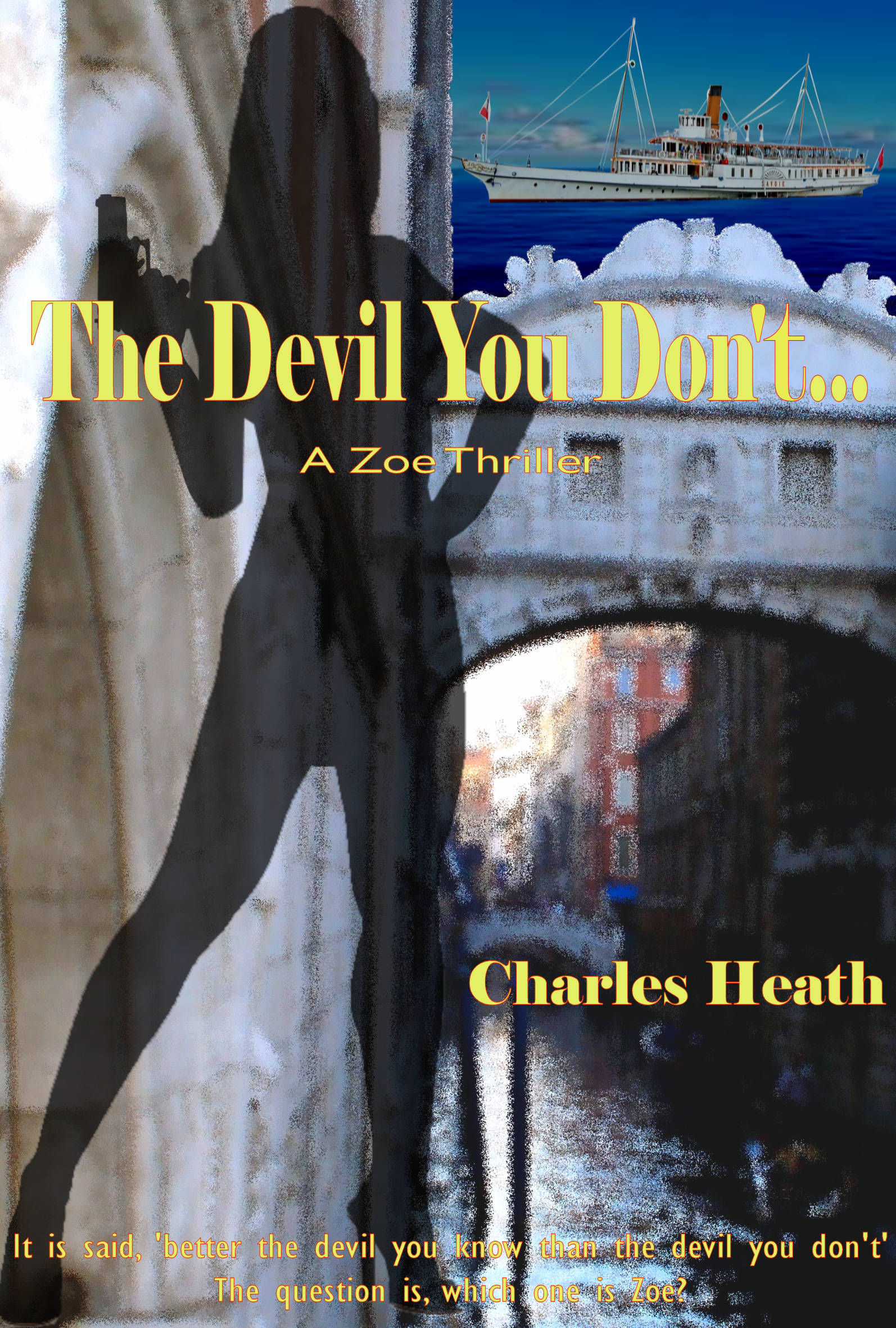
‘The Devil You Don’t’ – A beta reader’s view

It could be said that of all the women one could meet, whether contrived or by sheer luck, what are the odds it would turn out to be the woman who was being paid a very large sum to kill you.

John Pennington is a man who may be lucky in business, but not so lucky in love. He has just broken up with Phillipa Sternhaven, the woman he thought was the one, but relatives and circumstances, and perhaps because she was a ‘princess’, may also have contributed to the end result.

So, what do you do when you are heartbroken?

That is a story that slowly unfolds, from the first meeting with his nemesis on Lake Geneva, all the way to a hotel room in Sorrento, where he learns the shattering truth.

What should have been solace after disappointment, turns out to be something else entirely, and from that point, everything goes to hell in a handbasket.

He suddenly realizes his so-called friend Sebastian has not exactly told him the truth about a small job he asked him to do, the woman he is falling in love with is not quite who she says she is, and he is caught in the middle of a war between two men who consider people becoming collateral damage as part of their business.

The story paints the characters cleverly displaying all their flaws and weaknesses. The locations add to the story at times taking me back down memory lane, especially to Venice where, in those back streets I confess it’s not all that hard to get lost.

All in all a thoroughly entertaining story with, for once, a satisfying end.

Available on Amazon here: https://amzn.to/2Xyh1ow

In a word: Stern

It’s what I’d always expected of my teachers, having to stand up the front of the classroom and look like they were in control.

These days, not so much, but back in my day, teachers, and particularly the men, were to be feared, and stern expressions were the features of an effective teacher.

So, in this context, it means a hardness or severity of manner.

Whilst in a sense that was frightening to us kids, another form of the word also can be used to express a forbidding or gloomy appearance.

Grandfathers also have that stern look, but it’s more forbidding, more authoritarian, more severe, more austere, well, you get the picture.  A six-year-old would be trembling in his or her boots.

There again, in facing up to either possibility above, you could stand firm with a stern resolve not to buckle under the pressure.

Of course, not a good idea if you’re facing a tank (with a stern-looking tank master)

Then…

If you’re standing at the end of the boat, not the front, but the rear, you would be standing at the stern of the boat, or ship.

Oddly, when issuing instructions to go in reverse, not something you would say if you were on the bridge, you would instead say, or possibly yell, full speed astern, because you’re about to hit an iceberg.

Or some idiot in a jet ski who likes to think he or she can beat the bullet (or 65,000 tonnes of a ship that has very little mobility).

The cinema of my dreams – I always wanted to see the planets – Episode 4

After having to take another leap of faith…

And, getting out of the elevator, this time no erratic behaviour but still not filling me with confidence, I step onto the bridge.

The forward screen has changed.

It seems we are going to Neptune via the moon, or we were going to be passing by on our way to someplace else.

The Captain was on the bridge, obviously coming out of his day room on the news that the Chief Engineer had fixed everything.

“Ah, number one, we’ve hung around here long enough.”

He walked back to his chair and sat.

I decided to remain behind the navigator. I could see that the co-ordinates to our destination had been entered and it was Neptune, so the moon was not going to be a stop off.

The Chief engineer’s voice came over the speaker. “Ready when you are, Captain.”

I forgot, for a moment, that the Chief and the Captain had served before, and someone had mentioned the fact the captain had asked for him to be assigned to this ship.

“Mr Jacobs, take us out, slowly, and try not to bump into anything this time.”

Mr Jacobs was the second officer.

In a rather sheepish tone, Mr Jacobs said, “Taking the ship out carefully, sir.”

It was hard to tell if the ship was moving, but the tell tale sign was the movement of the objects on screen. And the fact I could see through the side windows as we moved forwards, leaving the dock superstructure behind.

Also, on the screen I could see the movements of other vessels, several freighters waiting to leave, and one coming in, but standing off until we departed.

Then, suddenly, we were in clear space.

Jacobs turned to the captain, expecting the next order.

“Let’s take it easy. Level one, when you’re ready.”

Jacobs was ready, even eager to get this ship under way. It had performed faultlessly in trials, now we were going to put it through it’s paces.

“Level one, as you wish.”

He pushed the button, there was a moment when nothing happened, then with just the slightest movement inside the bridge, we were under way.

Next stop, Neptune.

© Charles Heath 2021

A photograph from the inspirational bin – 23

20200217_130345

Whilst in reality these steps go down to a very narrow space of the beach, and scattered rocks in the shallow water, so much more could be inspired by this photograph.

20200217_130205

Further out that day, divers were out exploring about 100 yards offshore.

But, to me, it what you don’t see that gives it its fascination.

We could be anywhere along a 1,000-mile shoreline, one side a small village lazily gets through the day, on the other, a deserted and overgrown picnic spot that no one ever comes to anymore since the bypass road was built.

But it is not any of those.  it’s in Mornington, Victoria, Australia, the pier that is not far from a small park, and that day, very, very busy.

20200217_130235

It simply goes to show that sometimes a photograph can provide enough information to inspire a story.

The cinema of my dreams – Was it just another surveillance job – Episode 42

I’m back home and this story has been sitting on the back burner for a few months, waiting for some more to be written.

The trouble is, there are also other stories to write, and I’m not very good at prioritizing.

But, here we are, a few minutes opened up and it didn’t take long to get back into the groove.

Chasing leads, maybe

A second later the light came on and I was temporarily blinded.

The woman had to be on the other side of the door, and coming into the room, I must have passed her. Her voice sounded quite old, so it must be the mother.

“Turn around, slowly.

I did. By that time my eyes had readjusted, and I could see a woman, still dressed, with what looked to be an Enfield WW1 rifle. Just as dangerous now as it was then, particularly at this close range.

“Mrs Quigley, I presume,” I asked. Remain polite and conversational and keep her from getting nervous.

“Who are you?”

“Sam Jackson.”

“Is that your real name?”

“Why would you presume to think it wasn’t?”

“You’re breaking into my house which means you’re a criminal, and criminals by nature are also liars. Why would I think you any different to the rest?”

Good question. “I knew your son.”

“Which one?”

“Adam.”

“He’s not here. He hasn’t been around since he gallivanted off overseas a few years back.”

“I saw him only a few days ago, in London. Not gallivanting, by the way, but with feet firmly planted on the ground.”

“He’s not here.”

“Do you know where he is?”

She didn’t know he was dead, and I didn’t think it was my business to tell her. That was Dobbin’s job, and I was surprised he hadn’t. Or, I only had her word for it he hadn’t.

“Are you hard of hearing.” Get into the middle of the room.”

I moved slowly into the middle, watching her edge slowly towards the writing desk while keeping the gun aimed at me. If I tried to run for it, and if she was any sort of shot, I’d be dead before I got three, possibly four paces. If I could get a shred of surprise.

I hadn’t seen the phone on the desk, and watched her pick up the receiver, and, with the same hand, started dialing a number.

“Put it down.” Another voice, another woman, coming from the doorway.

Jennifer.

With a gun in hand, pointed at the woman.

“What if I shoot him, or you?”

“You’ll be dead before either scenario happens. Just put it down. I’m not here to shoot anyone if I can help it.”

Of course, this was just like one of those scenes out of a comedic spy film. Guns pointing in all directions.

And, true to form, a click, and a voice. “You put your weapon down.”

He appeared out of the shadows and had the gun pointed straight at Jennifer’s head at very short range.

Adam Quigley, aka O’Connell, and very much alive.

Jennifer dropped her gun, but Adam didn’t take his gun off her.

“Hello Sam. How did you find me?”

© Charles Heath 2020-2021

365 Days of writing, 2026 – 36

Day 36 – Obsessions become inspiration

Turning an Obsession Into Art: How Watching Soap Operas Can Fuel Your Next Story or Play


Introduction

What if the very thing you can’t stop binge‑watching—whether it’s a daily soap opera, a true‑crime documentary, or an endless stream of cooking shows—could become the secret weapon behind your next compelling narrative?

Obsessions are often dismissed as distractions, but for writers, they can be information goldmines. The key is learning how to harvest the patterns, emotions, and structures that keep you glued to the screen, and then re‑engineer them into something fresh, resonant, and uniquely yours.

In this post, we’ll explore:

  1. Why obsessions work – the psychological and creative science behind them.
  2. What soap operas teach us about drama, pacing, and character.
  3. A step‑by‑step framework for turning a viewing habit into a polished story or stage play.
  4. Real‑world examples of writers who turned their fixations into masterpieces.
  5. Practical tips & pitfalls to keep you on track.

Grab a notebook (or open a fresh Google Doc) and let’s turn that guilty pleasure into a creative engine.


1. The Power of Obsession: Why It’s a Writer’s Secret Weapon

A. Cognitive Magnetism

When you repeatedly expose yourself to a particular genre or medium, your brain builds schema—mental frameworks that help you predict what will happen next. This predictive ability frees up cognitive bandwidth for higher‑order thinking: spotting the gaps, subverting expectations, and layering new ideas onto familiar structures.

B. Emotional Hook

Obsessions aren’t just intellectual; they’re emotional. The excitement you feel when a cliff‑hanger resolves, the empathy you develop for a long‑running protagonist—these feelings stick in your memory. Emotional resonance is the lifeblood of any story, and an obsession supplies a ready‑made well of feeling to draw from.

C. Knowledge Accumulation

Every episode you watch deposits data: character arcs, dialogue cadence, set dressing, pacing cues, and even the “rules” that govern the fictional world. Over weeks or months, this repository becomes a research library that you can reference without ever opening a textbook.

Bottom line: An obsession turns you into a subject‑matter specialist while simultaneously priming you to think like a storyteller.


2. Soap Operas as a Masterclass in Drama

If you’re sceptical about using soap operas—a genre sometimes dismissed as “lowbrow”—look closer. The format is a compressed drama laboratory:

ElementWhat Soap Operas Do WellHow It Translates to Writing
Character DepthLong‑term arcs let characters evolve over years.Gives you a model for layered, believable growth.
Cliff‑HangersEvery episode ends on a hook that forces the next viewing.Teaches you how to structure tension and release.
Dialogue RhythmRapid, overlapping conversations mimic real speech.Shows you how to craft snappy, realistic dialogue.
Plot InterweavingMultiple storylines intersect, diverge, and reconverge.Provides a blueprint for complex, multi‑threaded plots.
Emotional CoreStakes are amplified (family secrets, betrayals, love).Demonstrates how to raise emotional stakes without melodrama.
Production ConstraintsLimited budgets force creative staging.Inspires resourceful world‑building on a modest scale.

Even the most cynical critic can acknowledge that soap operas are engineered for maximum emotional throughput—exactly what you want when you sit down to write a story that grabs readers from the first line.


3. From Viewing to Writing: A Practical Framework

Below is a six‑step workflow that turns any obsessive viewing habit into a solid narrative foundation. Feel free to adapt the timeline to fit your schedule (the steps can be compressed into a weekend or stretched over months).

Step 1: Log the Details

  • Create a “Soap‑Log” spreadsheet with columns for episode title, air date, key conflict, main characters, and standout line of dialogue.
  • Tag recurring motifs (e.g., “secret twins,” “return from the dead,” “corporate takeover”).
  • Note personal reactions: what made you laugh, cringe, or feel a pang of sympathy?

Why? The act of recording forces you to observe rather than consume passively, training you to spot narrative mechanics.

Step 2: Identify the Core Mechanics

  • Pattern‑hunt: Which plot devices appear most often? (e.g., “misunderstood love letters”).
  • Structure analysis: Break down a typical episode into beats (inciting incident → rising action → climax → resolution). Use Dan Harmon’s Story Circle or a three‑act template as a reference.

Result: A toolbox of building blocks you can mix, match, and remix.

Step 3: Extract Universal Themes

  • Even the most outlandish storylines tap into fundamental human concerns: power, love, betrayal, and redemption.
  • Write a list of theme statements, such as “the desire for belonging can drive people to deception.”

Why it matters: Themes give your work depth beyond plot mechanics, ensuring it resonates beyond the soap fan base.

Step 4: Subvert and Re-Contextualise

  • Choose one familiar soap trope (e.g., the “evil step‑mother”) and flip it: perhaps the step‑mother is the heroic caretaker in a dystopian future.
  • Change the setting dramatically: move the drama from a small town in Texas to a floating city on a gas giant.

Goal: Keep the emotional pull of the original while delivering something fresh.

Step 5: Draft a Mini‑Pilot

  • Write a 10‑page pilot (or a one‑act play) that incorporates at least three of the identified beats, one subverted trope, and a clear thematic thread.
  • Use the soap‑log as a cheat sheet for dialogue rhythm and cliff‑hanger placement.

Tip: Aim for a tight inciting incident in the first 5 pages—this is the hook that made you binge‑watch the soap in the first place.

Step 6: Iterate with Feedback

  • Share the draft with a mix of soap fans and non‑fans. Ask: “Did the stakes feel real?” and “Did any moment feel cliché?”
  • Revise based on the overlap—what resonates with both groups is the sweet spot where niche expertise meets universal appeal.

If I only had one day to stop over in – Stockholm – what would I do?

One Day in Stockholm: The One Place You Must Visit for an Unforgettable Day

Stockholm is a city of islands, innovation, and timeless beauty—but what if you only have one day? Whether you’re en route to another destination or squeezing in a whirlwind visit, a short stopover in Sweden’s capital can still be magical. With limited time, the key is to focus on one standout experience rather than rushing between sights.

So, if you have just one day in Stockholm, make it memorable by visiting:

Gamla Stan – The Beating Heart of Stockholm

Gamla Stan, Stockholm’s Old Town, isn’t just a historic district—it’s a living storybook. Founded in the 13th century, this island neighbourhood weaves together medieval charm, royal history, and vibrant culture in a way that captures the essence of Sweden.

Why Gamla Stan?

  • Timeless Atmosphere: Wander through narrow cobblestone lanes, past buildings in shades of gold and rust, under lantern-lit passages that feel frozen in time.
  • Compact & Walkable: Perfect for a day visit, you can explore key highlights on foot without feeling rushed.
  • History at Every Turn: From the Royal Palace to Stortorget square (home to the iconic colorful merchant houses), history isn’t behind glass here—it’s all around you.

Must-Do in Gamla Stan

  1. Stortorget Square – Snap a photo by the iconic row of old merchant houses, and soak in the atmosphere of the oldest square in Stockholm.
  2. The Royal Palace – Even if you don’t go inside, witnessing the daily Changing of the Guard (at 12:15 PM on weekdays, 1:15 PM on Sundays) is a spectacle of tradition.
  3. Mårten Trotzigs Gränd – Walk down Stockholm’s narrowest street (just 90 cm wide) and feel the medieval pulse of the city.
  4. Fika like a Local – Pop into a classic café like Chokladkoppen on the square for coffee and a cinnamon bun—fika is a ritual here.

Make It Memorable

  • Get Lost on Purpose: Put away the map for an hour. Discover hidden courtyards, antique shops, and artisan boutiques.
  • Listen to Stories: Join a short walking tour—many are free or tip-based—and hear tales of kings, legends, and Stockholm’s rise from the water.
  • Sunset Views: End your day by walking to the water’s edge for views of the surrounding islands. In summer, the golden light over Gamla Stan is pure magic.

Practical Tips for Your Stopover

  • Transport: From Arlanda Airport, take the Arlanda Express (20 minutes) to Central Station, then it’s just a short walk or metro ride to Gamla Stan.
  • Luggage: Use left-luggage services at the airport or Central Station to travel light.
  • Timing: Arrive early to beat crowds, especially in summer. Even with just 5–6 hours, you can experience Gamla Stan fully.

One day in Stockholm doesn’t have to be a checklist. By choosing Gamla Stan, you immerse yourself in the soul of the city—where every corner whispers a story, and a single afternoon can feel like a journey through centuries.

So, on your next stopover, step into the charm of the Old Town. Sometimes the most memorable travels aren’t about seeing everything—but about fully experiencing one perfect place.
Hej då and happy travels!

What I learned about writing – What will you do to finish that book?

Me? Well, I’m not that dedicated but…

An organised writer will set aside time for all the processes he or she needs to do in a day, in order to get the job done.

We’re talking time management, or a scale I couldn’t even begin to imagine. But if you want to write a book in a reasonable timeframe, then you have to plan.

To me, if I was going to go down that path, I would need to know the following:

Book genre, a working title, approximate length in words, break down the parts of the story into what will eventually become chapters, know most of the characters and their functions, and spoiler alert, what a possible ending might be.

For me, for instance, the book is a thriller, it is about 80,000 words, and it will have between 80 and 100 chapters. From there, if I plan to write 2,000 words a day, it would take 40 days, but more realistically, if I write 500 words a day, it would be 160 days or six months. Taking time out, the average time it would take to write would be about one year.

Then, there’s that little matter of what you are prepared to do to finish it.

Will you go at it, day after day, until the first draft is finished? Having a plan, setting out the plot lines and writing to them, perhaps.

If you write like I do, by the seat of my pants, then all that goes out the window.

I use the NANOWRIMO method, of writing 50,000 words in a month, with no breaks, and providing the ideas keep coming, which they generally do. My books often start as short stories, and then carry on. I have done this once a year for the last seven years.

The thing is, once you start, you have to finish. If you don’t, that germ of an idea that starts turning into words will stagnate, then become impossible. And if those around you cannot support you, I’m sure you can find an attic somewhere on the internet where you can lock yourself away until it is done.

“The Things we do for Love”, the story behind the story

This story has been ongoing since I was seventeen, and just to let you know, I’m 72 this year.

Yes, it’s taken a long time to get it done.

Why, you might ask.

Well, I never gave it much interest because I started writing it after a small incident when I was 17, and working as a book packer for a book distributor in Melbourne

At the end of my first year, at Christmas, the employer had a Christmas party, and that year, it was at a venue in St Kilda.

I wasn’t going to go because at that age, I was an ordinary boy who was very introverted and basically scared of his own shadow and terrified by girls.

Back then, I would cross the street to avoid them

Also, other members of the staff in the shipping department were rough and ready types who were not backwards in telling me what happened, and being naive, perhaps they knew I’d be either shocked or intrigued.

I was both adamant I wasn’t coming and then got roped in on a dare.

Damn!

So, back then, in the early 70s, people looked the other way when it came to drinking, and of course, Dutch courage always takes away the concerns, especially when normally you wouldn’t do half the stuff you wouldn’t in a million years

I made it to the end, not as drunk and stupid as I thought I might be, and St Kilda being a salacious place if you knew where to look, my new friends decided to give me a surprise.

It didn’t take long to realise these men were ‘men about town’ as they kept saying, and we went on an odyssey.  Yes, those backstreet brothels where one could, I was told, have anything they could imagine.

Let me tell you, large quantities of alcohol and imagination were a very bad mix.

So, the odyssey in ‘The things we do’ was based on that, and then the encounter with Diana. Well, let’s just say I learned a great deal about girls that night.

Firstly, not all girls are nasty and spiteful, which seemed to be the case whenever I met one. There was a way to approach, greet, talk to, and behave.

It was also true that I could have had anything I wanted, but I decided what was in my imagination could stay there.  She was amused that all I wanted was to talk, but it was my money, and I could spend it how I liked.

And like any 17-year-old naive fool, I fell in love with her and had all these foolish notions.  Months later, I went back, but she had moved on, to where no one was saying or knew.

Needless to say, I was heartbroken and had to get over that first loss, which, like any 17-year-old, was like the end of the world.

But it was the best hour I’d ever spent in my life and would remain so until I met the woman I have been married to for the last 48 years.

As Henry, he was in part based on a rebel, the son of rich parents who despised them and their wealth, and he used to regale anyone who would listen about how they had messed up his life

If only I’d come from such a background!

And yes, I was only a run away from climbing up the stairs to get on board a ship, acting as a purser.

I worked for a shipping company and they gave their junior staff members an opportunity to spend a year at sea working as a purser on a cargo ship that sailed between Melbourne, Sydney and Hobart in Australia.

One of the other junior staff members’ turn came, and I would visit him on board when he would tell me stories about life on board, the officers, the crew, and other events. These stories, which sounded incredible to someone so impressionable, were a delight to hear.

Alas, by that time, I had tired of office work and moved on to be a tradesman at the place where my father worked.

It proved to be the right move, as that is where I met my wife.  Diana had been right; love would find me when I least expected it.

lovecoverfinal1