In a word: Straight

Yes, that man is straight as an arrow.

Well, in my experience based on the fact many years ago I used to play Cowboys and Indians, and I was always an Indian, I used to make a bow, and arrows, from the limbs of a tree in our back yard, those arrows were never straight.

How they got them so back in the middle ages without a lathe is anybody’s guess.

We all know what straight means, level, even, true, not deviating.  It could be a board, a road, the edge of a piece of paper.

But, of course, there are other meanings like,

He was straight, meaning heterosexual, a question not 50 odd years ago anyone would ask you, and 100 years ago, you wouldn’t dare admit anything but.

In poker, a card game, it is a sequence of five cards, and the sort of straight I’d like to get is ace high.  Chances of that happening, zero per cent.

It can mean being honest, that is, you should be straight with her, though I’m not sure telling your wide you’re having an affair would be conducive to continuing good health.

It could mean immediately, as in, I’ve got a headache and going straight to bed, probably after hearing news of that affair that was best left unspoken.

Perhaps that would be the time to have a whiskey straight, that is without mixers or ice.  I’ve tried, but still, at the very least I need ice.

This is not to be confused with the word strait, which is a narrow waterway between to areas of land.

But, here’s where it gets murky because a company can be in dire straits after being in desperate straits, and a person can be strait-laced, and just to be certain, most lunatics finish up in a straitjacket.


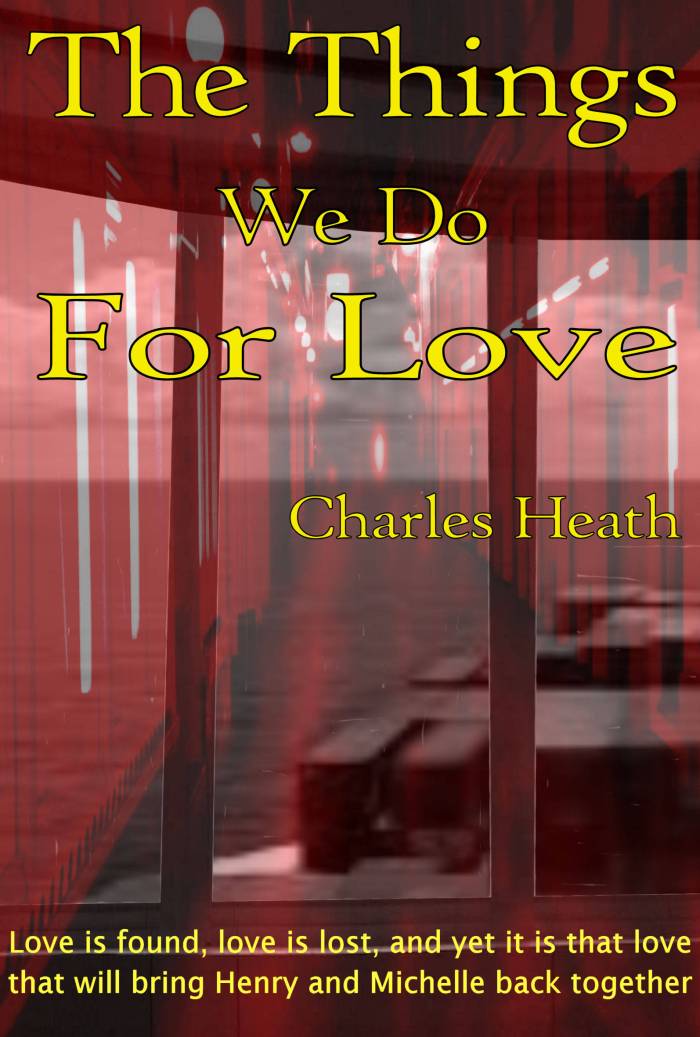
An excerpt from “The Things We Do for Love”; In love, Henry was all at sea!

In the distance, he could hear the dinner bell ringing and roused himself.  Feeling the dampness of the pillow and fearing the ravages of pent-up emotion, he considered not going down but thought it best not to upset Mrs Mac, especially after he said he would be dining.

In the event, he wished he had reneged, especially when he discovered he was not the only guest staying at the hotel.

Whilst he’d been reminiscing, another guest, a young lady, had arrived.  He’d heard her and Mrs Mac coming up the stairs and then shown to a room on the same floor, perhaps at the other end of the passage.

Henry caught his first glimpse of her when she appeared at the door to the dining room, waiting for Mrs Mac to show her to a table.

She was in her mid-twenties, slim, with long brown hair, and the grace and elegance of a woman associated with countless fashion magazines.  She was, he thought, stunningly beautiful with not a hair out of place, and make-up flawlessly applied.  Her clothes were black, simple, elegant, and expensive, the sort an heiress or wife of a millionaire might condescend to wear to a lesser occasion than dinner.

Then there was her expression; cold, forbidding, almost frightening in its intensity.  And her eyes, piercingly blue and yet laced with pain.  Dracula’s daughter was his immediate description of her.

All in all, he considered, the only thing they had in common was, like him, she seemed totally out of place.

Mrs Mac came out of the kitchen, wiping her hands on her apron.  She was, she informed him earlier, chef, waitress, hotelier, barmaid, and cleaner all rolled into one.  Coming up to the new arrival, she said, “Ah, Miss Andrews, I’m glad you decided to have dinner.  Would you like to sit with Mr Henshaw, or would you like to have a table of your own?”

Henry could feel her icy stare as she sized up his appeal as a dining companion, making the hair on the back of his neck stand up.  He purposely didn’t look back.  In his estimation, his appeal rating was minus six.  Out of a thousand!

“If Mr Henshaw doesn’t mind….”  She looked at him, leaving the query in mid-air.

He didn’t mind and said so.  Perhaps he’d underestimated his rating.

“Good.”  Mrs Mac promptly ushered her over.  Henry stood, made sure she was seated properly and sat.

“Thank you.  You are most kind.”  The way she said it suggested snobbish overtones.

“I try to be when I can.”  It was supposed to nullify her sarcastic tone, but it made him sound a little silly, and when she gave him another of her icy glares, he regretted it.

Mrs Mac quickly intervened, asking, “Would you care for the soup?”

They did, and, after writing the order on her pad, she gave them each a look, imperceptibly shook her head, and returned to the kitchen.

Before Michelle spoke to him again, she had another quick look at him, trying to fathom who and what he might be.  There was something about him.

His eyes mirrored the same sadness she felt, and, yes, there was something else, that it looked like he had been crying.  There was a tinge of redness.

Perhaps, she thought, he was here for the same reason she was.

No.  That wasn’t possible.

Then she said, without thinking, “Do you have any particular reason for coming here?”  Seconds later, she realised she’d spoken it out loud, hadn’t meant to actually ask, it just came out.

It took him by surprise, obviously not the first question he was expecting her to ask of him.

“No, other than it is as far from civilisation, and home as I could get.”

At least we agree on that, she thought.

It was obvious he was running away from something as well.

Given the isolation of the village and lack of geographic hospitality, it was, from her point of view, ideal.  All she had to do was avoid him, and that wouldn’t be difficult.

After getting through this evening first.

“Yes,” she agreed.  “It is that.”

A few seconds passed, and she thought she could feel his eyes on her and wasn’t going to look up.

Until he asked, “What’s your reason?”

Slightly abrupt in manner, perhaps, because of her question and how she asked it.

She looked up.  “Rest.  And have some time to myself.”

She hoped he would notice the emphasis she had placed on the word ‘herself’ and take due note.  No doubt, she thought, she had completely different ideas of what constituted a holiday than he, not that she had said she was here for a holiday.

Mrs Mac arrived at a fortuitous moment to save them from further conversation.

Over the entree, she wondered if she had made a mistake coming to the hotel.  Of course, there had been no conceivable way she could know that anyone else might have booked the same hotel, but she realised it was foolish to think she might end up in it by herself.

Was that what she was expecting?

Not a mistake then, but an unfortunate set of circumstances, which could be overcome by being sensible.

Yet, there he was, and it made her curious, not that he was a man, by himself, in the middle of nowhere, hiding like she was, but for quite varied reasons.

On discreet observation, whilst they ate, she gained the impression his air of light-heartedness was forced, and he had no sense of humour.

This feeling was engendered by his looks, unruly dark hair, and permanent frown.  And then there was his abysmal taste in clothes on a tall, lanky frame.  They were quality but totally unsuited to the wearer.

Rebellion was written all over him.

The only other thought crossing her mind, and incongruously, was that he could do with a decent feed.  In that respect, she knew now from the mountain of food in front of her, he had come to the right place.

“Mr Henshaw?”

He looked up.  “Henshaw is too formal.  Henry sounds much better,” he said, with a slight hint of gruffness.

“Then my name is Michelle.”

Mrs Mac came in to take their order for the only main course, gather up the entree dishes, and then return to the kitchen.

“Staying long?” she asked.

“About three weeks.  Yourself?”

“About the same.”

The conversation dried up.

Neither looked at the other, but rather at the walls, out the window, towards the kitchen, anywhere.  It was, she thought, unbearably awkward.

Mrs Mac returned with a large tray with dishes on it, setting it down on the table next to theirs.

“Not as good as the usual cook,” she said, serving up the dinner expertly, “but it comes a good second, even if I do say so myself.  Care for some wine?”

Henry looked at Michelle.  “What do you think?”

“I’m used to my dining companions making the decision.”

You would, he thought.  He couldn’t help but notice the cutting edge of her tone.  Then, to Mrs Mac, he named a particular White Burgundy he liked, and she bustled off.

“I hope you like it,” he said, acknowledging her previous comment with a smile that had nothing to do with humour.

“Yes, so do I.”

Both made a start on the main course, a concoction of chicken and vegetables that were delicious, Henry thought when compared to the bland food he received at home and sometimes aboard my ship.

It was five minutes before Mrs Mac returned with the bottle and two glasses.  After opening it and pouring the drinks, she left them alone again.

Henry resumed the conversation.  “How did you arrive?  I came by train.”

“By car.”

“Did you drive yourself?”

And he thought, a few seconds later, that was a silly question; otherwise, she would not be alone, and certainly not sitting at this table. With him.

“After a fashion.”

He could see that she was formulating a retort in her mind, then changed it, instead, smiling for the first time, and it served to lighten the atmosphere.

And in doing so, it showed him she had another, more pleasant side despite the fact she was trying not to look happy.

“My father reckons I’m just another of ‘those’ women drivers,” she added.

“Whatever for?”

“The first and only time he came with me, I had an accident.  I ran up the back of another car.  Of course, it didn’t matter to him that the other driver was driving like a startled rabbit.”

“It doesn’t help,” he agreed.

“Do you drive?”

“Mostly people up the wall.”  His attempt at humour failed.  “Actually,” he added quickly, “I’ve got a very old Morris that manages to get me where I’m going.”

The apple pie and cream for dessert came and went, and the rapport between them improved as the wine disappeared and the coffee came.  Both had found, after getting to know each other better, that their first impressions were not necessarily correct.

“Enjoy the food?” Mrs Mac asked, suddenly reappearing.

“Beautifully cooked and delicious to eat,” Michelle said, and Henry endorsed her remarks.

“Ah, it does my heart good to hear such genuine compliments,” she said, smiling.  She collected the last of the dishes and disappeared yet again.

“What do you do for a living?” Michelle asked in an offhand manner.

He had a feeling she was not particularly interested, and it was just making conversation.

“I’m a purser.”

“A what?”

“A purser.  I work on a ship doing the paperwork, that sort of thing.”

“I see.”

“And you?”

“I was a model.”

“Was?”

“Until I had an accident, a rather bad one.”

“Oh, I’m sorry.”

So that explained the odd feeling he had about her.

As the evening wore on, he began to think there might be something wrong, seriously wrong with her because she didn’t look too well.  Even the carefully applied makeup, from close, didn’t hide the very pale, tired look, or the sunken, dark-ringed eyes.

“I try not to think about it, but it doesn’t necessarily work.  I’ve come here for peace and quiet, away from doctors and parents.”

“Then you will not have to worry about me annoying you.  I’m one of those fall-asleep-reading-a-book types.”

Perhaps it would be like ships passing in the night, and then he smiled to himself about the analogy.

Dinner over, they separated.

Henry went back to the lounge to read a few pages of his book before going to bed, and Michelle went up to her room to retire for the night.

But try as he might, he was unable to read, his mind dwelling on the unusual, yet compellingly mysterious person he would be sharing the hotel with.

Overlaying that original blurred image of her standing in the doorway was another of her haunting expressions that had, he finally conceded, taken his breath away, and a look that had sent more than one tingle down his spine.

She may not have thought much of him, but she had certainly made an impression on him.

© Charles Heath 2015-2024

lovecoverfinal1

The cinema of my dreams – I always wanted to see the planets – Episode 17

In the old days it would be ‘Houston, we have a problem’

I thought about staying in the day room, not hiding, but on the pretext of getting that report ready for the Admiral, but it was only a fleeting thought.

I had been the captain of a cargo vessel, how much hard could this be?

I stepped onto the bridge, and it all felt different.

The second officer had been waiting by the door, and said, ‘We’ve picked up several alien vessels on the long range scanner, like nothing we’ve seen before.”

“Not like the vessel that you just saw? It can’t be our lucky day to find two new species within hours of each other, though I guess it’s not impossible.”

And considering we humans had been in space, and nearly to the edge of our galaxy for nearly ten years, why wait until now to make themselves known?

We arrived at the navigators console and he had the alien vessels displayed.

On screen, they were quite small, and trying to increase magnification turned them into blurs. I hadn’t seen the other ship. “Tell me we have a photograph of the alien vessel.”

“We have.”

The navigator displayed the alien vessel beside the two new ships, and at first glance they didn’t appear to be similar. We’d have to wait until we were closer.

And see if they were hostile, or not.

“How soon before we make contact?” I asked the navigator.

“About seven hours, sir.”

“Good. Keep on the trail of that vessel. Our orders are to retrieve the captain and Myers. Oh, and you’ve been promoted to Acting Number One,” I said quietly to the second officer.

“They’re not sending a replacement?” Clearly he wasn’t expecting it, and judging by his expression, not exactly happy about it.

“That is still to be decided. You have the bridge. I’ll be down in Engineering if you need me.”

Another trip in a suspect elevator that had a few creaks and groans before it delivered me safely to the engine room.

It was more a large open space that was very quiet, with banks of consoles and people in specially coloured uniforms to designate their department. Bridge crew were designated dark Green, Engineering navy blue.

I knew others were not exactly enamoured with their uniforms, but someone, or some group, had put a lot of thought into them. As for the design, well, that was a hot topic at any time among the crew.

The chief engineer, Scottish of course, had an office to himself, and had the accoutrements of his achievements scattered about, along with more interesting photographs of himself with many of the more famous people back on earth.

I had no such keepsakes.

He saw me coming and stood as I entered the office. It took a few seconds for it to register that it was a mark of respect to the captain, even though he was older, wiser, and far more experienced.

“Congratulations.”

He held out his hand and I shook it.

“I wish it was in better circumstances.”

“What exactly happened?”

“We were boarded. How they knew the captain was in his day room is anyone’s guess, but the alien beamed aboard, like we transport supplies.”

“We have yet to prove its not harmful, so these aliens must be different.”

“Except they take the same form, and speak our language.”

“No doubt using a translator. And if they can do that, then this is not the first time they have seen us.”

“But it’s the first time we’ve seen them?”

“Well, that’s a little more tricky because I think we have encountered them before. Your Admiral just uploaded a few files, and it seems we have encountered them before, though not quite so up close and personal.”

I didn’t like the way he referred to the Admiral as my Admiral, or perhaps I was not across his vernacular.

“He omitted to tell me that when I spoke to him.”

“It was in the middle of the night, and we were to get a briefing once we reached the edge of our galaxy. Van was across it, and was going to tell the crew in a few days, but this Venus thing popped up.

You know how it is, never a dull day in space.”

© Charles Heath 2021

A photograph from the Inspirational bin – 36

This is an inlet near Port Macquarie in northern New South Wales. It is adjacent to a caravan and camping park, close to the ocean and parklands.

But, for our purposes, this scene is going to have a few more interesting connotations than just a few campers going for a jog along the beach, fishing in the estuary, or further out to sea on the other side of the wall in the background.

Firstly, to my favorite kind of story, a spy story…

It’s basically the evil billionaire’s backyard to his island hideaway, and our hero intends to come ashore at night and do battle with the guards, break into the underground holding cells and save the girl.

As always, saving the world comes second!

Or, it’s a place like Fantasy Island, without the landing strip on the beach, where people come to have their fantasies fulfilled. OK, to start there are no robots that are going to go berserk, that’s so ten years ago.

And, no, the hosts won’t be dressed in white safari suits. They went out in the 70s.

Then, I suppose, a story that I like, about people who have secrets, people who are broken, people who just want to get away from everyone else, come to this island where they can live in anonymity, without having to interact with anyone unless they want to.

Two such people accidentally meet.

What happens after that, that’s up to them!

The cinema of my dreams – Was it just another surveillance job – Episode 55

This story is now on the list to be finished so over the new few weeks, expect a new episode every few days.

The reason why new episodes have been sporadic, there are also other stories to write, and I’m not very good at prioritizing.

But, here we are, a few minutes opened up and it didn’t take long to get back into the groove.

Things are about to get complicated…


We took the underground to Lancaster Gate and parted company before crossing the road and going into Hyde Park.  Severin had designated the meeting place as the rotunda, as he called it, in the Italian Gardens.

It was dark, although there was adequate lighting, which made it a good cover for anyone else skulking nearby.  And making it easier for Jennifer, who sensibly dressed in black, to scout.

It took my time heading slowly towards the stone building.  I was deliberately early so he might not be there yet.  In the intervening time I could hear the odd comment from Jennifer, as she looked over the various suspects who were also taking in the aesthetic beauty of the gardens, which would look so much better in daylight.

Oddly enough in all the times I’d been to Hyde Park, these gardens had never been a point of visiting, such was the allure of the pedal boats on the Serpentine.

I did a slow circuit of the building and saw three people seated inside.  Two women, together, and a man on one side.  It could be him.

“I think he’s already here, just going to check.”

“Nothing stirring out here, so far.”

“Keep alert.”

It was odd hearing a voice almost in my head as if she was next to me.

I came up to the seat in full view of the person sitting on one end of the bench, so as not to alarm them.  I could feel their eyes on me as I sat down.  If it was him, he would talk to me.  I was not going to talk to him.

Something else I noted, there was no direct line of fire from anywhere hidden, so if there was an assassin out there, he would have to do it in the open.  Severin had scouted the place earlier.

“You alone?”  The man spoke after about three, or four minutes.  I’d seen him look around, checking for himself I was not followed.

“As far as I’m aware.”

I moved a little closer.  He was talking very softly.

“What happened to Maury?”

“Tortured and murdered by Dobbin I believe.  If he knew where the device was, he didn’t give up its location.”

“He wouldn’t.   Dobbin you say?”

“As far as I can tell.  He was running O’Connell, but you knew that already.”  To save time dancing around the truth, and lessen the time being a target I added, “Everyone believes O’Connell is still alive.  He didn’t have the device when I searched him.  Who shot him?”

“Not us.  If he is alive Dobbin must have usurped our cleaners, and spirited him away, which means it’s likely Dobbin has the device.”

“He doesn’t.  He co-opted me into his section.  O’Connell appears to have done a runner from him too.  Did you know O’Connell was on mission to pick up the device from an intermediary?”

“Yes.”

“Did you know that Anna Jacovich was there too?”

“Then you know what’s on the device?”

“I wish I didn’t.  Or that you two were security guards at the Laboratory where Erich stole the data.  What took so long for him to decide to sell it?

“When he was fired by the company after they lost the military contract.   He had no intention of selling it, just getting it into the hands of the public so they would be forced to stop.”

“Except he was killed, and Anna decided she needed an escape plan.”

“Which O’Connell provided by wire transfer.  The money’s gone, and the data didn’t arrive.  It’s still out there.”

“Who was you boss in all this?  Monica?”

“Who.  No.  It’s….”

I heard the phutt sound of a bullet passing through a silencer, and just caught the edge of the barrel retracting from behind one of the pillars.  No need to check him, he was dead, still sitting upright as if nothing had happened.

I got out of the seat and moved towards where the gun had been, trying not to alert the other two sitting on the other side, facing the other way, fortunately.

When I reached the outside, there was no one.  A quick scan in the darkness, my eyesight hampered by going from light to dark making images blurry at best.

Then I heard a thunk, and a triumphant “Gotcha.”

I hoped that was Jennifer with the shooter.

© Charles Heath 2020-2023

365 Days of writing, 2026 – 49

Day 49 – Writing in unlikely places

Does Where You Are Determine What and How Much You Write?


Introduction: The Unseen Hand of Place

You sit down at your desk, coffee steaming, notebook open, and… nothing happens. The cursor blinks like a taunting lighthouse. You hear the house settle, the dishwasher start, a notification ping from a social‑media app you don’t need to check. The very space you’ve cultivated for creativity feels more like a trap than a sanctuary.

Flip the scene. You’re on a cramped airport bench, a train rattles past, or you’re lying on an exam table, waiting for the surgeon’s lights to turn on. The world around you is noisy, uncomfortable, and utterly unpredictable—yet suddenly the words flow.

Is it the environment that makes us write—or the lack of it?

In this post, I’ll explore how location shapes both what we write and how much we manage to produce, why the “bad” places often become the most fertile, and what practical tricks you can use to turn any setting—home, office, or waiting room—into a writing ally.


1. The Myth of the “Ideal” Writing Space

1.1 The Comfort‑Trap

When we think of the “perfect” writing nook, we picture a quiet corner, a comfy chair, ambient lighting, maybe a plant or two. The problem? Comfort breeds complacency.

  • Distractions multiply – The very things you set up to keep you cozy—TV, music playlists, the fridge within arm’s reach—are also the easiest pathways to procrastination.
  • Decision fatigue – Choosing the right pen, the perfect mug, the exact temperature of the room consumes cognitive bandwidth that could otherwise go toward drafting sentences.

1.2 The “Creative Crisis” of Home

Home is a paradox. It’s where you choose to be, yet it’s also where the countless responsibilities, family members, and chores compete for your attention. Even with a meticulously organised desk, the mental clutter of “Did I leave the stove on?” or “I need to reply to that email” can block the flow of ideas.

Research note: A 2019 study published in Psychology of Aesthetics, Creativity, and the Arts found that participants reported higher creative output in “moderately distracting” environments (e.g., a coffee shop) compared to completely quiet or extremely noisy settings. A touch of ambient stimulus appears to “prime” the brain for associative thinking.


2. The Unexpected Power of “Bad” Places

2.1 Waiting as a Creative Engine

I first noticed the phenomenon while waiting for a 2‑hour pre‑surgery appointment. The fluorescent lights hummed, the nurse called my name in a monotone, and the sterile smell hung heavy. Instead of scrolling through my phone, I pulled out a notebook and let the anxiety of the impending operation funnel into a short story about a surgeon who could hear the thoughts of his patients.

Why did it work?

  • Time becomes owned – In a waiting room you have no real agenda; the minutes are yours by default. The brain, desperate to escape monotony, seeks a task.
  • Heightened emotional state – Stress, anticipation, or even boredom raise cortisol levels, which can sharpen focus temporarily—much like the “fight or flight” effect that hones attention on a single objective.
  • Physical constraints force mental clarity – Limited space, fixed seating, and the inability to move freely eliminate the temptation to “just get up and do something else.”

2.2 Other “Uncomfortable” Hotspots

LocationWhat Usually Pops UpWhy It Helps
Public transport (bus/train)Observational snippets, dialogue, micro‑fictionConstant flow of strangers gives instant character material.
Coffee shop (moderate buzz)Blog outlines, brainstorming listsAmbient chatter creates a low‑level “white noise” that blocks internal monologue distractions.
Gym locker room (post‑workout)Reflective essays, personal narrativesEndorphin surge + sweat = mental clarity + emotional honesty.
Long line at the DMVPoetry, haikus, rapid‑fire ideasLimited time forces concise thinking; the line’s rhythm can act like a metronome.

3. How Place Influences What You Write

  1. Sensory Input → Subject Matter
    • Smell of rain → Nostalgic memories, melancholic tone.
    • Industrial clang → Gritty, fast‑paced action scenes.
  2. Emotional Atmosphere → Tone
    • Calm home → Analytical essays, research‑heavy pieces.
    • High‑stress environment → Raw, confessional voice.
  3. Physical Constraints → Form
    • Tight space → Short forms (poems, flash fiction).
    • Ample time (e.g., a weekend retreat) → Long‑form novels or deep‑dive investigative pieces.

Understanding this relationship allows you to leverage a location rather than fight it. If you know you’ll be in a noisy airport, plan to write a list of story beats rather than a full draft. If you’re in a quiet home office, schedule deep‑work sessions for complex research.


4. Strategies to Turn Any Environment Into a Writing Ally

4.1 The “Mini‑Commitment” Method

  • What it is: Instead of promising yourself an hour of writing, commit to five focused minutes.
  • Why it works: Short bursts reduce the psychological barrier and are easier to fit into any setting—whether you’re on a train or standing in line.

Implementation tip: Keep a small notebook or a note‑taking app on your phone. When you spot a waiting period, open it and set a timer for 5 minutes. Write whatever comes to mind—no editing, just capture.

4.2 “Portable Writing Kit”

ItemReason
Moleskine or pocket notebookNo batteries, instant start.
Pen with comfortable gripReduces friction, encourages flow.
Noise‑cancelling earbuds or a “focus playlist”Helps mute external chatter without isolating you completely.
Offline writing app (e.g., iA Writer, Ulysses)No internet needed, lightning‑fast launch.
A small “prompt card”Pre‑written prompts or story seeds you can pull out on the spot.

Having these items in your bag means you can start right away when the perfect (or imperfect) moment appears.

4.3 “Environmental Anchors”

Assign a type of writing to a specific place.

  • Coffee shop → Brainstorming & outlining
  • Bedroom → Personal journaling
  • Commute (standing) → Sentence‑level micro‑writing

When you walk into that space, your brain already knows the mode you’ll adopt, reducing decision fatigue.

4.4 “Time‑Boxed Distraction Buffer”

If you’re at home and the distractions are relentless, schedule a distraction buffer: a 10‑minute period where you intentionally check emails, make a snack, or scroll social media before you sit down to write. Once the buffer ends, you’ve already satisfied the urge to wander, making it easier to stay focused on the task.

4.5 “The ‘Waiting‑Room Narrative’ Exercise”

  1. Observe: Look around—people, sounds, smells. Jot down three concrete details.
  2. Imagine: Assign each detail a character, a conflict, or a memory.
  3. Write: In 10 minutes, craft a short scene that weaves those three elements together.

This exercise turns idle observation into a storytelling engine and can be repeated wherever you wait.


5. Real‑World Example: From Surgery Waiting Room to Published Short Story

Two hours before my knee‑replacement surgery, I was hunched on a plastic chair, the fluorescent lights buzzing above. My mind raced with “what‑ifs,” and the sterile scent of antiseptic filled the air.

I pulled out an empty notebook and wrote:

“The surgeon walked in, a quiet man with hands that trembled like the leaves outside the window…”

That snippet grew into a 2,500‑word short story titled “The Quiet Hands”, which later won a local flash‑fiction contest. The waiting room’s pressure gave the narrative urgency; the physical constraints forced me into concise, vivid prose; the ambient sounds became the rhythm of my sentences.

Takeaway: You don’t need a quiet home office to create award‑winning work—you just need to recognize the creative potential of every circumstance.


6. Final Thoughts: Embrace the Unpredictable

The answer to the headline question isn’t a simple “yes” or “no.” The place you’re in does influence what you write and how much you produce, but not in a deterministic way. It acts as a catalyst, a set of constraints, and a source of sensory fuel.

  • If you love the quiet of home, schedule deep‑work blocks and protect them fiercely.
  • If you thrive on the hustle of public spaces, use them for brainstorming, outlines, or short‑form writing.
  • If you’re stuck in a waiting room, treat that time as a gift—a forced pause that can sharpen focus and spark authenticity.

The ultimate skill isn’t to “find the perfect spot,” but to adapt—to read the environment, to decide what kind of writing it invites, and to have a toolbox ready for any scenario. When you can turn a sterile surgery waiting room into a launchpad for your best story, you’ve mastered that art.


Action Checklist

  • ☐ Pack a portable writing kit (notebook, pen, earbuds).
  • ☐ Create environment anchors (e.g., coffee shop = outline).
  • ☐ Set a daily mini‑commitment timer (5‑minute bursts).
  • ☐ Practice the Waiting‑Room Narrative exercise once this week.
  • ☐ Schedule a distraction buffer before your next home‑writing session.

Give yourself permission to write wherever you are. You may be surprised at the quality and quantity that emerges when you stop hunting for the “perfect” space and start harvesting the creativity that’s already hiding in the moments you thought were just downtime. Happy writing!

If I only had one day to stop over in – Boston – what would I do?

One‑Day Stopover in Boston? Make It Unforgettable With a Walk the Freedom Trail

You’ve just landed in Boston, and the clock is already ticking. Maybe you’re on a lay‑over between two major cities, or perhaps your itinerary squeezes a quick “Boston bite” into a longer East‑Coast tour. With only 24 hours (or less) on the clock, the challenge is simple: what’s the one place that will give you a genuine taste of Boston’s soul without feeling rushed?

The answer is the Freedom Trail—a 2.5‑mile (4 km) red‑brick pathway that stitches together the city’s most iconic historic sites, stunning architecture, and vibrant neighbourhoods. In a single, leisurely stroll you’ll travel from the Boston Common to the waterfront, passing 16 landmarks that tell the story of America’s birth.

Below is a compact, insider‑level guide to turning a brief stopover into a memorable, “I‑was‑there‑and‑I‑loved‑it” experience.


Why the Freedom Trail Beats All Other Single‑Spot Options

FactorFreedom TrailOther Popular Picks (e.g., Fenway, Museum of Fine Arts, Harvard)
Historical depthCovers the entire Revolutionary narrative, from the 1630s Puritan settlement to the 19th‑century abolitionist movement.Usually focus on a single era or theme.
Geographic efficiencyStarts at the oldest public park (Boston Common) and ends at the bustling Harbor, all within walking distance.Many attractions require separate transit legs.
Free & flexibleNo ticket required; you control the pace. Guided tours are optional and inexpensive.Museums and stadiums often have admission fees and timed‑entry constraints.
Photo‑ops galoreIconic backdrops: Granary Burying Ground, Paul Revere’s House, Old State House, USS Constitution.Good spots but fewer in a single walk.
Local vibePasses bustling neighborhoods (Beacon Hill, North End) where you can grab a quick bite of authentic clam chowder or cannoli.Usually isolated to a single district.

In short, the Freedom Trail is a micro‑tour of Boston—the perfect “one‑place” answer for a short stopover.


The Perfect One‑Day Itinerary: Freedom Trail Edition

TimeActivityPractical Tips
08:30 – ArrivalDrop off luggage at a Luggage Storage service near South Station or the Back Bay (many hotels offer it free for guests).Use the Boston’s “Stow It” app to find nearby lockers.
09:00 – Boston CommonStart at the Boston Common—America’s oldest public park. Grab a coffee from a vendor on the Park Plaza side and soak in the early‑morning calm.Look for the “Start of the Freedom Trail” brass plaque near the Park Street Station entrance.
09:30 – Massachusetts State HouseA quick detour to admire the gold‑dome (photo ops on the lawn).Free exterior view; interior tours run hourly but need a reservation.
10:00 – Granary Burying GroundWalk past the graves of Paul Revere, Samuel Adams, and John Hancock.Listen to a short audio guide via the “Freedom Trail Walk” app (free).
10:30 – Old South Meeting HouseThe rally point for the Boston Tea Party.Quick 5‑minute interior peek; guided tours are 15 min, usually starting on the hour.
11:00 – Old State House & Boston Massacre SiteWitness the birthplace of the first American public school and the infamous 1770 incident.Check for a “Free History Talk” at the State House—often given at 11 am.
11:30 – Faneuil Hall MarketplaceGrab a quick lunch: lobster roll at Boston Chowda Co., or a classic New England clam chowder from Union Oyster House (America’s oldest continuously operating restaurant).Keep your ticket stub from the “Freedom Trail” map—there’s a small discount at some stalls.
12:30 – Paul Revere House (North End)Walk the cobblestone streets of the historic North End. Peek into the modest home of the midnight rider.If you’re craving sweets, pop into Mike’s Pastry for the famous cannoli (a perfect post‑tour treat).
13:30 – Old North ChurchThe “One if by land, two if by sea” lantern‑signal site.A brief 10‑minute interior visit; the bell tower is open for a small fee (great panoramic view of the harbor).
14:30 – USS Constitution (“Old Ironsides”)Head down to the Charlestown Navy Yard (short subway ride: Orange Line → Community College → walk). Marvel at the oldest commissioned warship afloat.Free entry; the Constitution Museum is optional but worth a quick glance.
15:30 – Bunker Hill MonumentClimb the 294 steps for sweeping views of Boston’s skyline and the harbor.Take a 10‑minute break at the Bunker Hill Monument Museum café—brew a fresh cup and soak the panorama.
16:30 – Return to South StationHop on the Silver Line back to the airport or your next destination. If time allows, stroll through the nearby Harborwalk for a final seaside breeze.Use the MBTA “CharlieCard” or the “mTicket” app for easy fare payment.
17:30 – DepartureYou’ve just turned a one‑day lay‑over into a living history lesson!Keep your Freedom Trail map as a souvenir—or snap that final photo at the Boston Skyline from the waterfront.

Total walking distance: ~2.5 miles (plus short subway hops).
Time required: ~8 hours (including meals and brief rests).


Pro Tips for Making the Most of Your Freedom Trail Stopover

  1. Download a Free Audio Guide
    • The official “Freedom Trail Walk” app (iOS/Android) offers narrated stories for each landmark—perfect for pacing yourself without a guide.
  2. Wear Comfortable Shoes
    • Boston’s streets are a mix of brick, cobblestone, and modern pavement. A pair of well‑broken‑in sneakers will keep you moving.
  3. Layer Up
    • Early spring and fall mornings can be chilly, while midday sunshine can turn the harbour area warm. A light, packable jacket solves both.
  4. Time Your Lunch
    • Faneuil Hall gets crowded around noon. Arriving at 11:30 am gives you a short window to “beat the rush” and still enjoy the bustling market vibe.
  5. Skip the Wait at Old North Church
    • The church opens at 9 am but the interior tour starts on the hour. Arriving 15 minutes early saves you from queuing behind school groups.
  6. Use the “One‑Stop” Luggage Storage
    • Carrying a suitcase will slow you down. Boston’s “LuggageHero” partners with local shops for secure short‑term storage at under $6 per day.
  7. Map Your Route Ahead of Time
    • The Freedom Trail is marked by a continuous red‑brick line. If you’re prone to “tourist drift,” print a simple map (available at the Boston Common visitor centre).
  8. Consider a Guided Mini‑Tour
    • If you love storytelling, a 10‑minute “Revolutionary Minute” at the Old State House (often free) adds depth without eating up time.

The Takeaway: One Spot, Endless Stories

When you have only a day in Boston, the Freedom Trail turns a tight schedule into a living museum. It packs the essence of the city—colonial roots, revolutionary fervour, maritime heritage, and today’s vibrant culinary scene—into a walk that’s as manageable as it is unforgettable.

Whether you’re a history buff, a casual traveller, or someone who just wants a “real Boston” Instagram story, the Freedom Trail offers:

  • A narrative arc from the city’s birth to its modern port.
  • Photo‑worthy landmarks every few minutes.
  • Sampling opportunities for Boston’s famed food (clam chowder, lobster roll, cannoli).
  • Flexibility—you can speed up, linger, or detour into nearby neighbourhoods without missing the core experience.

So the next time your flight itinerary gifts you a lay‑over in Massachusetts, skip the theme park and head straight to the red bricks. One day, one trail, a lifetime of memories.


Ready to Walk the Trail?

  • Download the “Freedom Trail Walk” app now.
  • Grab a quick coffee at a South Station café and head to Boston Common.
  • Let the red bricks lead the way—Boston’s story is waiting for you.

Safe travels, and enjoy the ride through America’s first capital!

What I learned about writing – The story is never about you

Well, sometimes it is.

Why?

In the beginning, we tend to write ourselves into the stories we write, and also, the various other characters are a collection of traits of people we have known in the past and present.

The trick is with those other people not to make them too much like their real-life counterparts, or you may spend the rest of your life in litigation.

I know there are parts of me in my characters because people I know who have read my stories tell me how much they are like me. The problem with that is I didn’t realise I was doing it.

But, to emphasise, the story is not about you.

Unless it is an autobiography.

I have thought about writing the story of my life, but it’s so boring; the best use of my book would be to read it just before going to bed.

What is probably more interesting would be the story of my family, traced back to the mid-1700s, and they are a very interesting bunch. To me, it seems that people who lived a hundred years ago had far more interesting lives than we do these days.

“One Last Look”, nothing is what it seems

A single event can have enormous consequences.

A single event driven by fate, after Ben told his wife Charlotte he would be late home one night, he left early, and by chance discovered his wife having dinner in their favourite restaurant with another man.

A single event where it could be said Ben was in the wrong place at the wrong time.

Who was this man? Why was she having dinner with him?

A simple truth to explain the single event was all Ben required. Instead, Charlotte told him a lie.

A single event that forces Ben to question everything he thought he knew about his wife and the people who are around her.

After a near-death experience and forced retirement into a world he is unfamiliar with, Ben finds himself once again drawn back into that life of lies, violence, and intrigue.

From London to a small village in Tuscany, little by little, Ben discovers who the woman he married is, and the real reason why fate had brought them together.

It is available on Amazon here:  http://amzn.to/2CqUBcz

If I only had one day to stop over in – Washington – what would I do?

One Day, One Stopover, One Iconic Spot:
Why the National Mall (and Its Monumental Heart) Is the Only Place You Need to Visit in Washington, D.C.

You’ve just landed at Reagan National (or Dulles) with a 12‑hour layover. The clock is ticking, the luggage is on the carousel, and you’ve got just one day to soak up the capital before you’re back on a plane. Do you try to cram a museum, a neighbourhood, a restaurant tour…?

No. There’s a single, unforgettable destination that will give you a cinematic snapshot of what makes Washington, D.C. the “city of monuments.” It’s the National Mall – the 2‑mile green artery that stitches together the country’s most recognisable memorials, museums, and views of the Capitol dome. In a single, well‑planned stroll, you’ll feel the pulse of American history, snap photos worthy of Instagram’s “Explore” page, and still have time to grab a bite that feels authentically D.C.

Below is a step‑by‑step guide that turns a tight layover into a memorable, low‑stress adventure, complete with transport tips, timing hacks, and a few insider nuggets that most tourists miss.


1. Why the Mall Beats All Other Options

What the Mall OffersWhy It Beats the Alternatives
All‑in‑one historic timeline – From the 1790‑era Capitol to the 1963 Lincoln Memorial.No need to hop between neighborhoods; you get a full story in a single walk.
Free and open 24/7 – No ticket lines, no reservation headaches.Perfect for unpredictable layover times and sudden gate changes.
Iconic photo backdrops – The Washington Monument framed by cherry blossoms (spring) or the Reflecting Pool at sunset.Guarantees you’ll leave with an Instagram‑ready image.
Proximity to transit – Metro, Circulator, and bike‑share stations within a 10‑minute ride from any airport.Saves precious minutes and reduces the stress of traffic.
Quick bite options – Food trucks, cafés, and the historic “Kennedy Center Café.”No need to hunt for a restaurant far away.

In short, the Mall condenses the “must‑see” of the nation’s capital into an easily navigable, free‑of‑cost experience that works with any schedule.


2. From Airport to Mall – The Fastest, Most Reliable Routes

FromBest Transit OptionEstimated Travel TimeCost (2024)
Reagan National (DCA)Metro – Yellow Line to Mt. Vernon Square → walk 10 min20–25 min (including security exit)$2.50 (S‑Tap)
Washington Dulles (IAD)Metro – Silver Line to L’Enfant Plaza → walk 5 min45–55 min (including shuttle to Metro)$5.00 (S‑Tap)
Baltimore/Washington Intl (BWI)Amtrak/Marriott Shuttle to Union Station → Metro Red Line to Smithsonian**55–65 min$9.00 (Amtrak) or $6.00 (MTA)

Pro tip: Grab a SmarTrip card (or use contactless payment) before you land – the vending machines at the airport terminals are open 24 h and you’ll avoid the “no‑change” queues. If your layover is under 6 hours, the Metro is the most reliable way to dodge traffic snarls during rush hour.


3. The Perfect Mall Itinerary – 6 Hours, Zero Stress

Goal: Hit the three most iconic sites, snap the best photos, and still have time for a local bite and a quick restroom break.

Time (approx.)LocationWhat to DoWhy It Matters
0:00 – 0:30Arrival at MetroExit the station, follow signs to the National Mall (southbound direction).Gives you a familiar “first‑look” orientation.
0:30 – 1:30U.S. Capitol & Capitol Visitor CenterStand under the dome, peek into the Visitor Center (free exhibit on the building’s art & history).The Capitol’s dome is the visual anchor of the city—great for a “welcome to D.C.” photo.
1:30 – 2:30Washington Monument & Jefferson Memorial (quick walk)Walk east along the Mall; stop at the base of the Washington Monument for a photo with the towering obelisk. If time permits, sprint across the Reflecting Pool to the Jefferson Memorial (about 5 min each way).The Monument is the perfect backdrop for “one‑day‑in‑DC” shots; Jefferson adds a quieter, reflective moment.
2:30 – 3:30Lincoln Memorial & World War II MemorialClimb the steps to the Lincoln Memorial, read the inscription, then wander to the WWII Memorial.The view of the Reflecting Pool framed by the Washington Monument is a classic postcard scene.
3:30 – 4:15Lunch Break – Food Trucks & Museum CafésHead to the Food Truck Pavilion at 12th St. & Constitution Ave. (try the half‑smoked “Half‑Smoked” DC specialty or a falafel wrap). If you crave a sit‑down, the Smithsonian Castle Café offers salads and coffee.Eating on the Mall lets you stay in the flow; the half‑smoked is a local legend.
4:15 – 5:15Smithsonian “Quick‑Hit” Museum – Choose ONE**Option A: National Museum of American History – see the Star‑Spangled Banner & the First Ladies’ Inaugural Gowns. Option B: National Air and Space Museum – iconic aircraft, the Apollo 11 command module.Choose based on personal interest; both are free and have concise “highlights” tours.
5:15 – 5:45Reflect & Photo Session at the MallWalk back westward, stop at the Tidal Basin (if it’s cherry‑blossom season) or the Martha Washington Library gardens for a calm final snapshot.The final walk lets you absorb the space and capture a leisurely “good‑byes” picture.
5:45 – 6:00Return to MetroRetrace steps to the nearest station, board the train back to the airport.Gives a buffer for security lines and boarding.

Total Time: ~6 hours (including transit). Adjust the museum stop to fit your exact layover length – you can even skip it entirely if you’re cutting it close.


4. Insider Tips to Turn an Ordinary Walk Into a Memorable Experience

  1. Time Your Visit for Light – The best natural light for photos is early morning (7‑9 am) or golden hour (around 5:30‑6 pm). If your layover lands in this window, you’ll get soft shadows on the monuments and a more tranquil crowd.
  2. Use the “Free Audio Guides” – The National Park Service offers a free downloadable audio tour (search “NPS National Mall audio tour”). It adds context without needing a museum guide.
  3. Capture the “Reflection” – Position yourself at the Washington Monument looking north toward the Capitol; the line of trees on the Mall creates a natural frame.
  4. Stay Hydrated – There are water fountains along the Mall (most are filtered), but bring a reusable bottle; the city’s climate can be unexpectedly humid in summer.
  5. Watch the Flag‑Changing Ceremony – Every hour on the hour at the Lincoln Memorial (except during special events) a small group of NPS staff changes the flags. It’s a quick, solemn ritual that adds a genuine touch of reverence.
  6. Avoid the “Tourist Traps” – Skip the souvenir stand on Pennsylvania Ave. Instead, grab a locally roasted coffee from Compass Coffee – they have a kiosk at 10th St. near the Mall.
  7. Cash‑less Payments – All food trucks accept contactless cards. If you’re a frequent traveller, load your credit card onto Apple/Google Pay for even faster transactions.

5. What to Pack (or Not Pack) for a One‑Day Mall Sprint

Must‑HaveWhy
SmarTrip cardSeamless Metro access.
Lightweight backpack (≤ 7 lb)Holds water, snack, a compact umbrella (weather‑dependent).
Portable chargerYou’ll likely snap dozens of photos.
Comfortable walking shoesThe Mall’s brick pathways are uneven in spots.
Travel‑size sunscreenEven on overcast days UV can be strong.
A small notebook (optional)Jot down quick observations for a post‑trip blog.

Leave behind: Heavy luggage (store it in the airport’s Luggage Storage at DCA – $8 per day) and bulky camera gear (a good smartphone lens kit works perfectly).


6. The Takeaway: One Spot, Infinite Impressions

If you have just one day and one place to make your Washington stopover unforgettable, the National Mall delivers everything a visitor could crave:

  • Historical gravitas: Walk where presidents were inaugurated and presidents were honored.
  • Visual drama: Monumental architecture set against open sky and reflective water.
  • Cultural diversity: From world‑class museums to street‑food vendors, all within a few blocks.
  • Ease of access: A quick Metro ride, free entry, and a well‑marked path.

In a city built on symbolism, the Mall is the ultimate shorthand for “America.” Even if you’re only there for a few hours, the experience feels like a condensed, living history lesson—one you’ll remember long after the plane lands.

So next time your itinerary shows a brief layover in D.C., set your watch, grab a SmarTrip, and head straight to the Mall. The monuments are waiting, and the story they’ll tell you in just a few walking miles is worth every second of your stopover. Safe travels, and happy snapping!