‘Sunday in New York’ – A beta reader’s view

I’m not a fan of romance novels but …

There was something about this one that resonated with me.

This is a novel about a world generally ruled by perception, and how people perceive what they see, what they are told, and what they want to believe.

I’ve been guilty of it myself as I’m sure we all have at one time or another.

For the main characters Harry and Alison there are other issues driving their relationship.

For Alison, it is a loss of self-worth through losing her job and from losing her mother and, in a sense, her sister.

For Harry, it is the fact he has a beautiful and desirable wife, and his belief she is the object of other men’s desires, and one in particular, his immediate superior.

Between observation, the less than honest motives of his friends, a lot of jumping to conclusions based on very little fact, and you have the basis of one very interesting story.

When it all comes to a head, Alison finds herself in a desperate situation, she realises only the truth will save their marriage.

But is it all the truth?

What would we do in similar circumstances?

Rarely does a book have me so enthralled that I could not put it down until I knew the result. They might be considered two people who should have known better, but as is often the case, they had to get past what they both thought was the truth.

And the moral of this story, if it could be said there is one, nothing is ever what it seems.

Available on Amazon here: amzn.to/2H7ALs8

Top 5 sights on the road less travelled – Rhodes

That’s a great question! While Rhodes is famous for its Colossus and the Old Town, the island is large enough to hide numerous quieter corners.

Here are five places or activities to explore on a road less travelled in Rhodes:

1. The Medieval Fortress of Monolithos

  • What it is: A picturesque, ruined 15th-century castle built by the Knights of St. John, perched atop a massive, isolated rock overlooking the sea on the southwest coast.
  • Why it’s less travelled: It’s located far from the main resort towns and requires a dedicated drive. The destination itself is just the ruin and a small, functional chapel (Agios Panteleimonas), offering a quiet, reflective experience.
  • Activity: Climb the stone steps to the top for incredible panoramic views of the rugged coastline, the sea, and the nearby small island of Halki, especially beautiful at sunset.

2. Exploring the South Coast Beaches (e.g., Agathi or Prasonisi)

While the northern beaches are packed, the southern tip of the island offers wilder, quieter, and more remote stretches of sand.

  • Prasonisi: This is a small peninsula connected to Rhodes by a narrow strip of sand, creating two bays. It’s a spectacular natural spot.
    • Activity: It’s famous for windsurfing and kitesurfing due to the strong winds, offering an active alternative to sunbathing. One side is calm, and the other is wavy.
  • Agathi Beach (Golden Sand Beach): Though not completely unknown, it is significantly quieter than Faliraki or Tsambika, featuring fine golden sand and shallow, crystal-clear water.

3. The Seven Springs (Epta Piges) Tunnel Walk

Located inland, this is a cool, forested area offering a unique, slightly adventurous activity away from the beaches.

  • What it is: A lush oasis where seven natural springs converge to feed a river. The water is channelled through a dark, narrow, man-made tunnel built in 1931.
  • Activity: Walk the 186-meter-long tunnel! The water is shallow, but it’s pitch black, cold, and narrow, making it an adventurous and refreshing walk (if you prefer to stay dry, there is a path overground). It leads to a small lake where you can relax.

4. The Petaloudes Valley (Valley of the Butterflies)

While it attracts visitors, the Valley of the Butterflies offers a unique natural experience that takes you away from the coastal towns and focuses on nature conservation.

  • What it is: A unique habitat and one of the only places in Europe where the Panaxia Quadripunctaria (Jersey Tiger Moth) gathers in large numbers during the summer months (usually July and August).
  • Activity: Follow the gentle hiking path that winds through the cool, shaded valley, crossing small wooden bridges and waterfalls. It’s less about beach time and more about appreciating the island’s biodiversity and unique microclimate.

5. The Kamiros Ruins and Traditional Village of Embona

Kamiros and Embona offer a deep dive into the island’s history and local life, away from the bustling tourist centres.

  • Kamiros: Located on the west coast, this is one of the three ancient cities of Rhodes (alongside Lindos and Ialysos). It is a quieter, less-visited archaeological site.
    • Activity: Explore the well-preserved ruins of the Hellenistic city, which was abandoned centuries ago, giving you a sense of a genuine, unearthed ancient town without the crowds of a major landmark.
  • Embona: A traditional, mountainous village located on the slopes of Mount Attavyros (the island’s highest peak).
    • Activity: Embona is the centre of the island’s wine production. Visit a local winery, taste the indigenous varieties, and enjoy a traditional Greek lunch far from the tourist tavernas.

An excerpt from “Echoes from the Past”

Available on Amazon Kindle here:  https://amzn.to/2CYKxu4

With my attention elsewhere, I walked into a man who was hurrying in the opposite direction.  He was a big man with a scar running down the left side of his face from eye socket to mouth, and who was also wearing a black shirt with a red tie.

That was all I remembered as my heart almost stopped.

He apologized as he stepped to one side, the same way I stepped, as I also muttered an apology.

I kept my eyes down.  He was not the sort of man I wanted to recognize later in a lineup.  I stepped to the other side and so did he.  It was one of those situations.  Finally getting out of sync, he kept going in his direction, and I towards the bus, which was now pulling away from the curb.

Getting my breath back, I just stood riveted to the spot watching it join the traffic.  I looked back over my shoulder, but the man I’d run into had gone.  I shrugged and looked at my watch.  It would be a few minutes before the next bus arrived.

Wait, or walk?  I could also go by subway, but it was a long walk to the station.  What the hell, I needed the exercise.

At the first intersection, the ‘Walk’ sign had just flashed to ‘Don’t Walk’.  I thought I’d save a few minutes by not waiting for the next green light.  As I stepped onto the road, I heard the screeching of tires.

A yellow car stopped inches from me.

It was a high powered sports car, perhaps a Lamborghini.  I knew what they looked like because Marcus Bartleby owned one, as did every other junior executive in the city with a rich father.

Everyone stopped to look at me, then the car.  It was that sort of car.  I could see the driver through the windscreen shaking his fist, and I could see he was yelling too, but I couldn’t hear him.  I stepped back onto the sidewalk, and he drove on.  The moment had passed and everyone went back to their business.

My heart rate hadn’t come down from the last encounter.   Now it was approaching cardiac arrest, so I took a few minutes and several sets of lights to regain composure.

At the next intersection, I waited for the green light, and then a few seconds more, just to be sure.  I was no longer in a hurry.

At the next, I heard what sounded like a gunshot.  A few people looked around, worried expressions on their faces, but when it happened again, I saw it was an old car backfiring.  I also saw another yellow car, much the same as the one before, stopped on the side of the road.  I thought nothing of it, other than it was the second yellow car I’d seen.

At the next intersection, I realized I was subconsciously heading towards Harry’s new bar.   It was somewhere on 6th Avenue, so I continued walking in what I thought was the right direction.

I don’t know why I looked behind me at the next intersection, but I did.  There was another yellow car on the side of the road, not far from me.  It, too, looked the same as the original Lamborghini, and I was starting to think it was not a coincidence.

Moments after crossing the road, I heard the roar of a sports car engine and saw the yellow car accelerate past me.  As it passed by, I saw there were two people in it, and the blurry image of the passenger; a large man with a red tie.

Now my imagination was playing tricks.

It could not be the same man.  He was going in a different direction.

In the few minutes I’d been standing on the pavement, it had started to snow; early for this time of year, and marking the start of what could be a long cold winter.  I shuddered, and it was not necessarily because of the temperature.

I looked up and saw a neon light advertising a bar, coincidentally the one Harry had ‘found’ and, looking once in the direction of the departing yellow car, I decided to go in.  I would have a few drinks and then leave by the back door if it had one.

Just in case.

© Charles Heath 2015-2020

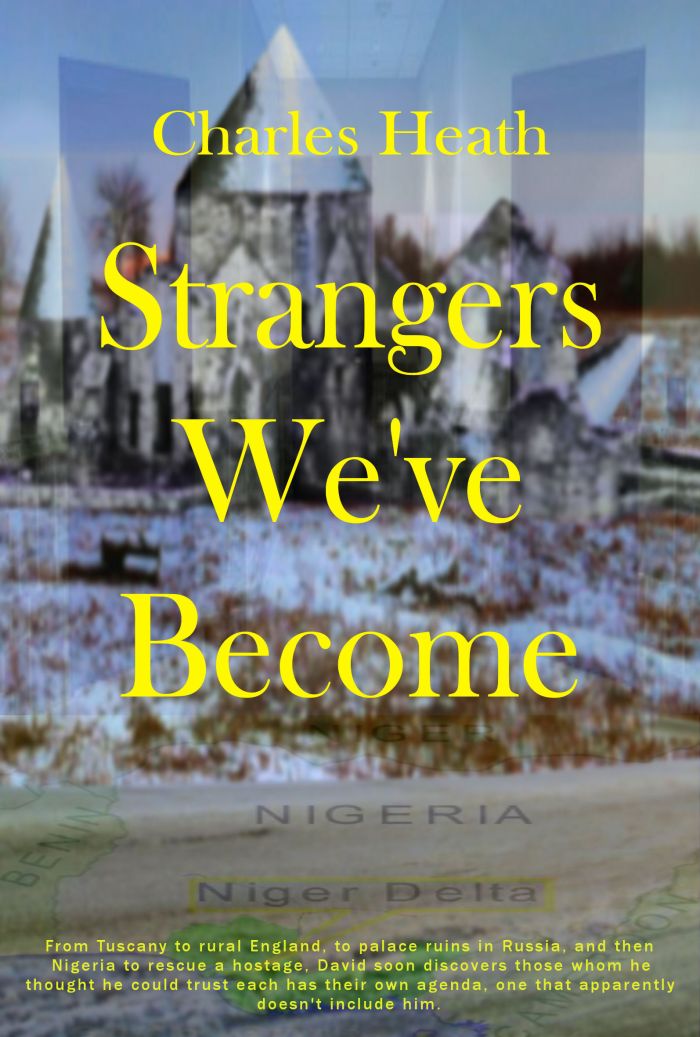
newechocover5rs

Writing a book in 365 days – 331

Day 331

With Only Six Minutes to Live – What Would Your Story Look Like?

“If you could see the end of your life, would you want to?”
A question that feels like a scene ripped straight from a thriller, yet it lives in the quiet corners of our minds every time we glance at a ticking clock. Imagine the timer on your life’s narrative dropping to six minutes. No more coffee breaks, no “later, I’ll finish that project,” and no chance to scroll through one more meme. What would your story look like in that final, frantic, beautiful sprint?


1. The Flash‑Forward: A Rapid‑Fire Montage

When we think of dying, movies often give us a slow‐motion, tear‑stained goodbye. In six minutes, there’s no room for a soundtrack that swells over a long farewell. Instead, your brain would likely fast‑forward through the most vivid moments — a rapid montage that feels both cinematic and intimate.

MinuteWhat Pops UpWhy It Matters
0–1The first time you felt truly alive – maybe standing on a mountaintop, your first kiss, or that “aha!” moment at work.A reminder that life is made of peaks, not just the plateau.
1–2The faces of people who shaped you – a parent’s smile, a mentor’s steady hand, a friend’s reckless laugh.They’re the anchors that kept you tethered to humanity.
2–3The mistakes you regretted – a broken promise, a missed chance, a harsh word.In the end, we’re rarely defined by perfection; we’re defined by how we learned from the cracks.
3–4Small joys you rarely mentioned – the smell of rain, a favorite song, the feel of a dog’s head on your lap.These are the sensory stitches that quilt our daily comfort.
4–5Your “why” – the purpose that pulled you through the mundane: a child’s hopeful eyes, a cause you championed, a dream you pursued.Purpose gives the story its spine, the reason we keep turning pages.
5–6A single, final image: a blank page waiting for the next writer, or perhaps a sunrise you’ll never see.The ending is both a conclusion and a promise that stories never truly stop.

2. The Tone of a Six‑Minute Story

If a novel can be a slow burn, a six‑minute story is a sprint. The tone shifts from reflective to urgent, from lingering nostalgia to a fierce gratitude. Think of it as a haiku rather than an epic: every word must count, every image must hit.

“In six breaths, I’m whole.” – a line you might whisper to yourself as the seconds slip away.

This rapid cadence forces us to strip away fluff and get to the marrow. It’s less about the how and more about the what that matters most.


3. What We Usually Forget in the Rush

When the clock is ticking, we often overlook the small, uncelebrated moments that actually define a life.

  • The Quiet Acts: Holding a door, sharing a joke, listening without judgment.
  • The Unfinished Projects: Not the grand visions, but the half‑drawn doodles, the recipes you never perfected.
  • The “Almost” Stories: The road not taken, the love that could’ve been.

These are the hidden threads that, when pulled quickly, reveal the texture of who we really are.


4. A Mini‑Exercise: Write Your Six‑Minute Story

Grab a pen, your phone, or whatever medium feels natural. Set a timer for six minutes. Then answer these three prompts as fast as you can:

  1. Who made you feel seen?
  2. What moment made you feel truly alive?
  3. What simple pleasure would you share with the world right now?

Don’t edit. Don’t overthink. Let the words flow like a sprint through a hallway you’ve run down a thousand times.

Example (under 60 seconds):
“My mother’s laugh, the smell of pine after a winter storm, and the way my cat curls around my ankle when I’m reading.”

You’ll notice that, even in a frantic rush, the core of your narrative shines through.


5. Why This Thought Experiment Matters

a. It Re-Prioritises

By confronting the imminent end, we’re forced to reorder our priorities. The next time you’re stuck in a meeting that could be an email, ask yourself: “Will this be part of my six‑minute montage?”

b. It Sparks Empathy

If we all imagined our own six‑minute finale, we might speak softer, listen harder, and love deeper. Empathy becomes the default setting, not an afterthought.

c. It Fuels Action

A vivid, finite timeline can be a catalyst. You might finally call that friend you’ve been meaning to, start that side project, or simply put your phone down and look at the sky.


6. The Gift of a Blank Page

Six minutes may sound like a cruel limit, but it’s also a gift: the chance to see your story stripped down to its essential narrative arc. It asks you to:

  • Celebrate the peaks.
  • Own the valleys.
  • Embrace the in‑betweens.

And when the timer finally hits zero, the story doesn’t end; it passes – like a baton handed to the next generation, a memory whispered to a child, or an idea that sparks a future conversation.


Closing Thought: The Six‑Minute Challenge

I challenge you: live each day as if you only had six minutes left. Not in a morbid, anxiety‑inducing way, but as a reminder that time is precious, finite, and spectacularly yours.

When you next scroll past a notification, pause. When you hear a stranger’s laugh, linger. When you feel the weight of a deadline, ask: “Will this matter in my six‑minute story?”

Because in the end, the measure of a life isn’t the number of seconds it occupies, but the quality of moments we choose to fill them with.

What would your six‑minute story look like? Share in the comments – I’m eager to read the flash‑forwards that make us all feel a little more alive.


If you had only six minutes left, your story would be a rapid montage of peaks, people, regrets, tiny joys, purpose, and a final image of continuation. This thought experiment helps us re-prioritise, build empathy, and act with intention. Try the six‑minute writing exercise and see what truly matters to you.

Inspiration, maybe – Volume 1

50 photographs, 50 stories, of which there is one of the 50 below.

They all start with –

A picture paints … well, as many words as you like.  For instance:

lookingdownfromcoronetpeak

And the story:

It was once said that a desperate man has everything to lose.

The man I was chasing was desperate, but I, on the other hand, was more desperate to catch him.

He’d left a trail of dead people from one end of the island to the other.

The team had put in a lot of effort to locate him, and now his capture was imminent.  We were following the car he was in, from a discrete distance, and, at the appropriate time, we would catch up, pull him over, and make the arrest.

There was nowhere for him to go.

The road led to a dead-end, and the only way off the mountain was back down the road were now on.  Which was why I was somewhat surprised when we discovered where he was.

Where was he going?

“Damn,” I heard Alan mutter.  He was driving, being careful not to get too close, but not far enough away to lose sight of him.

“What?”

“I think he’s made us.”

“How?”

“Dumb bad luck, I’m guessing.  Or he expected we’d follow him up the mountain.  He’s just sped up.”

“How far away?”

“A half-mile.  We should see him higher up when we turn the next corner.”

It took an eternity to get there, and when we did, Alan was right, only he was further on than we thought.”

“Step on it.  Let’s catch him up before he gets to the top.”

Easy to say, not so easy to do.  The road was treacherous, and in places just gravel, and there were no guard rails to stop a three thousand footfall down the mountainside.

Good thing then I had the foresight to have three agents on the hill for just such a scenario.

Ten minutes later, we were in sight of the car, still moving quickly, but we were going slightly faster.  We’d catch up just short of the summit car park.

Or so we thought.

Coming quickly around another corner we almost slammed into the car we’d been chasing.

“What the hell…” Aland muttered.

I was out of the car, and over to see if he was in it, but I knew that it was only a slender possibility.  The car was empty, and no indication where he went.

Certainly not up the road.  It was relatively straightforward for the next mile, at which we would have reached the summit.  Up the mountainside from here, or down.

I looked up.  Nothing.

Alan yelled out, “He’s not going down, not that I can see, but if he did, there’s hardly a foothold and that’s a long fall.”

Then where did he go?

Then a man looking very much like our quarry came out from behind a rock embedded just a short distance up the hill.

“Sorry,” he said quite calmly.  “Had to go if you know what I mean.”

I’d lost him.

It was as simple as that.

I had been led a merry chase up the hill, and all the time he was getting away in a different direction.

I’d fallen for the oldest trick in the book, letting my desperation blind me to the disguise that anyone else would see through in an instant.

It was a lonely sight, looking down that road, knowing that I had to go all that way down again, only this time, without having to throw caution to the wind.

“Maybe next time,” Alan said.

“We’ll get him.  It’s just a matter of time.”

© Charles Heath 2019-2021

Find this and other stories in “Inspiration, maybe”  available soon.

InspirationMaybe1v1

In a word: Air

Yep, another of those interesting little words that mean more than it appears.

Aside from the fact it is the air that we breathe, it can also be used to describe music.

It can be a breath of fresh air, though it’s hard to say where in this ever increasingly polluted atmosphere than we could literally draw one, except on a mountain top, where conversely it would be hard to breathe at all.

Have the air sucked out of us, well, that literally isn’t possible unless some madman comes up with a weird sort of vacuum cleaner, but that might be an episode for the X-Files.

He had an air about him, or her, as the case might be, which might refer to a sort of deference or manner.   There again that air might be one of boredom, which is what a lot of students seem to have in class.

Sorry, been a teacher, and know well the expressions on their faces.  Had one myself once, and finished up on the end of a chalkboard eraser.  Yep, in the good old day’s teachers used to chuck stuff at us recalcitrant students to get our attention, and not undergo a storm of protest from irate parents.

These days those same parents would most likely air their grievance, opinion, or view to the headmaster.

I’m guessing that same headmaster would be wishing those same parents to vanish into thin air, though I’m not sure how that would be possible.

And lastly, television stations air shows.

Weird, eh, how such a simple word can be used in so many contexts.

First Dig Two Graves

A sequel to “The Devil You Don’t”

Revenge is a dish best served cold – or preferably so when everything goes right

Of course, it rarely does, as Alistair, Zoe’s handler, discovers to his peril. Enter a wildcard, John, and whatever Alistair’s plan for dealing with Zoe was dies with him.

It leaves Zoe in completely unfamiliar territory.

John’s idyllic romance with a woman who is utterly out of his comfort zone is on borrowed time. She is still trying to reconcile her ambivalence, after being so indifferent for so long.

They agree to take a break, during which she disappears. John, thinking she has left without saying goodbye, refuses to accept the inevitable, calls on an old friend for help in finding her.

After the mayhem and being briefly reunited, she recognises an inevitable truth: there is a price to pay for taking out Alistair; she must leave and find them first, and he would be wise to keep a low profile.

But keeping a low profile just isn’t possible, and enlisting another friend, a private detective and his sister, a deft computer hacker, they track her to the border between Austria and Hungary.

What John doesn’t realise is that another enemy is tracking him to find her too. It could have been a grand tour of Europe. Instead, it becomes a race against time before enemies old and new converge for what will be an inevitable showdown.

Third son of a Duke – The research behind the story – 13

All stories require some form of research, quite often to place a character in a place at a particular time, especially if it is in a historical context. This series will take you through what it was like in 1914 through 1916.

Logistical Analysis of Imperial Volunteer Mobilisation: Brisbane to the Force in Egypt, March 1915

I. Strategic Context: Navigating Administrative Jurisdiction in Australia (March 1915)

The mobilisation of a British subject from Queensland, Australia, for direct Imperial Army service in Egypt during March 1915 presents a unique logistical problem defined by the necessity of bypassing the highly organised and centrally administered Australian Imperial Force (AIF). While the Australian Government had pledged substantial forces to Britain and recruitment for the AIF was proceeding robustly across the Dominion 1, the individual mandate to report for enlistment specifically to an overseas Imperial camp compels a fundamentally different administrative and financial pathway.

A. The Mandate: Imperial Service vs. Dominion Enlistment

In August 1914, recruitment offices for the AIF were swiftly established across Australia, rapidly processing thousands of volunteers willing to support the British Empire.2 By early 1915, AIF recruitment was centralised in major cities and towns, often relying on massive urban depots like those in Sydney and Melbourne.3 Volunteers for the AIF benefited significantly from this national mobilisation structure. New AIF recruits received a free railway ticket to the nearest city where basic military training was established, indicating that the Commonwealth absorbed all initial domestic travel costs.2 Furthermore, troops were transported overseas on requisitioned vessels designated as HMATs (His Majesty’s Australian Transports).4

The user’s explicit requirement to avoid AIF enlistment means forgoing this entire subsidised logistical chain. Since UK conscription was not enacted until January 1916 6, the individual is proceeding as a volunteer, potentially a reservist, reporting directly to the War Office authority overseas. This administrative difference means the entire journey must be treated as a self-funded civilian mobilisation, requiring specific clearance.

B. Administrative Requirement: Securing Imperial Clearance and Financial Liability

The first administrative step, after determining the intention to serve the Imperial forces directly, is securing documentation. Given the AIF’s effective monopoly on local military recruitment 7, the individual must locate the nearest representative of the Imperial military authority, likely a British naval attaché or consular office in Brisbane or, more probably, Sydney. This official would need to register the subject’s status and issue necessary travel documentation (such as a warrant or passport endorsement) confirming the destination in Egypt. This documentation is critical for legitimate disembarkation in the highly controlled military zone around the Suez Canal.

The avoidance of the AIF structure carries a substantial financial implication. Where AIF troops were transported free of charge, the independent Imperial subject must acquire commercial passage. An analysis of commercial fares advertised around 1914 and early 1915 confirms this significant expenditure. Saloon (First Class) tickets from Australia to London (which passed through the Suez Canal) were priced around £40, while the economically necessary Third Class (Steerage) fares ranged from £16 16/ to £18 18/.8 This outlay, borne entirely by the individual, contrasts sharply with the zero cost for AIF volunteers and represents a fundamental logistical burden imposed by the choice of Imperial service.

II. The Queensland Dilemma: Securing Commercial Maritime Passage

The location of the individual in Brisbane, Queensland, necessitates an initial phase of internal travel to secure a suitable vessel for the long-haul transit to the Suez Canal zone, as Brisbane was not the primary wartime hub for major Imperial sailings.

A. Brisbane’s Role in Wartime Logistics

In March 1915, the overwhelming majority of Australian contingent movements—both the initial First Convoy (November 1914) and the Second Convoy (December 1914)—departed from southern and western ports, specifically Albany, Melbourne, or Sydney.9 Brisbane was primarily integrated into the inter-state coastal steamer network.10 To secure a booking on a commercial passenger liner operating the Imperial route via Suez—vessels belonging to lines such as P. & O. Branch Service, White Star, or Aberdeen Lines 8—the individual must transit from Brisbane to a larger, federally important embarkation point, such as Sydney or Melbourne. This domestic travel segment must be self-funded, compounding the initial financial burden.

B. Commercial Shipping Availability and Viable Vessels

Despite the requisitioning of numerous vessels for military service (HMATs), key British passenger lines maintained irregular commercial services to the United Kingdom via the Suez Canal route.5 The operational environment in March 1915 was characterised by rapid military requirements leading to the constant conversion of ships, such as the Wandilla, which was converted to a troopship in March 1915.12

Crucially, the historical record confirms that individual transports, or ships carrying reinforcements, were sailing to Egypt in this precise timeframe. Documentation shows that a soldier identified as “Arthur” embarked on 13 March 1915, sailing directly to Alexandria, Egypt.13 This confirms the existence of vessels cleared for passage that month. The individual, having obtained Imperial clearance, would need to secure a berth on one of these commercial liners or, if permitted by Imperial authorities, a space aboard an official reinforcement transport sailing to the Middle East, which was the established training area before the Gallipoli campaign began the following month.14 Regardless of the specific vessel, the booking would require adherence to stringent naval control measures implemented for wartime security.

The divergent requirements for the individual, compared to the majority of men enlisting, are summarised below:

Commercial Passage Feasibility (Brisbane to Suez, March 1915)

CriterionAIF Route (Rejected)Imperial Subject (Required Route)
Local EnlistmentAIF Depot (Sydney/Melbourne) 3British Consular/Naval Authority (Self-report)
Initial Travel (Qld to Port)Free Railway Pass 2Self-funded Rail or Coastal Steamer to Sydney/Melbourne 10
Vessel TypeHMAT (Requisitioned Transport) 4Commercial Liner or Reinforcement Transport 11
Passage Cost (Australia to Suez)Free (Covered by AIF)£16 16/ to £40 (Third Class/Saloon) 8
DocumentationAIF Paybook/Identity DiscImperial travel permit and proof of personal funds

III. The Voyage: Conditions and Duration (Australia to Port Said)

The maritime journey from the Australian eastern seaboard to the Suez Canal zone constituted the longest and most physically demanding segment of the mobilisation process, typically lasting over one month and exposing the traveller to inherent wartime dangers.

A. Estimated Duration and Route

The voyage length depended heavily on the number of port calls and the speed of the vessel, which, in wartime, was often dictated by naval requirements rather than commercial schedules. Historical accounts from mid-1915 voyages indicate that the transit from a major departure port (such as Sydney/Melbourne) to the Suez Canal area (Suez port) averaged approximately 31 days.15

Accounting for the necessary internal transit from Brisbane to the southern departure port, the total time commitment from Queensland to disembarkation in Egypt would likely range between five and seven weeks. The established Imperial route proceeded across the Indian Ocean, typically involving a significant refuelling and provisioning stop at Colombo, before proceeding via Aden and into the Red Sea.4

B. Wartime Conditions and Naval Security

As an independent paying civilian, the individual’s journey would be defined by the security protocols governing merchant shipping. While the largest Australian troop contingents were often grouped into convoys for naval protection 4, many transport vessels in 1915 were dispatched alone, sometimes without naval escort, underlining the inherent risks of trans-oceanic travel in a global conflict.5

The physical environment during the final approach to Egypt was notoriously difficult. Upon entering the Red Sea, the heat became “terrific”.15 This extreme climate, combined with the inevitable crowding and potentially inadequate sanitation common to vessels repurposed for wartime use or carrying large numbers of steerage passengers, represented a significant test of endurance before active service even began.

C. Transit Through the Suez Zone

The journey culminated in transit through the Suez Canal area, a vital strategic waterway fiercely protected by British and Indian forces against Ottoman threats.17 Disembarkation points for troops included Alexandria, Suez, and Port Said.19 Troops arriving at the southern end of the Canal (Suez) often anchored for up to two days before disembarking.15 For the purpose of reaching the camps near Cairo, Port Said (at the northern terminus) or Suez (at the southern terminus) were the most likely points of entry for onward military travel.

IV. Arrival in Egypt: Port Said, Rail Transit, and Entry into the Force in Egypt

Upon arrival in the Suez Canal zone, the British subject transitioned instantly from self-funded civilian traveller to an inducted military asset under the direct control of the British Army’s command structure in Egypt.

A. Disembarkation Protocol and Military Control

Egypt served as a British Protectorate and a massive logistical staging ground for campaigns against the Ottoman Empire.21 The arrival port (Port Said or Suez) was a high-security military zone, vital for unloading not only manpower but also animals, guns, and supplies.19

Immediately upon disembarkation, the individual would fall under the strict military jurisdiction of the local garrison command, which was responsible for managing the massive influx of personnel. Administrative priorities focused heavily on sanitation and discipline. Newly arrived troops were subject to mandatory lectures on personal hygiene and venereal disease (VD) prevention.9 Specific areas of port cities and Cairo, known for vice, were designated “out of bounds” by military orders to mitigate health and discipline issues that were rampant among the high number of foreign troops.9

The Force in Egypt, commanded by General John Maxwell, was the established formation responsible for garrisoning the armed forces and defending the Suez Canal in 1915.17 The independent Imperial subject would be channelled directly into this British administrative structure, effectively segregating their processing from the vast, concurrent mobilisation of the ANZAC forces.

B. Rail Transit to the Cairo Camp Complex

The final movement from the port to the capital region relied upon the military-controlled Egyptian railway system, a critical logistical artery running along the Suez Canal.18 Travel by train from Suez overland to Cairo was documented as taking approximately seven hours.15

The destination for the independent British subject would be a British-controlled military establishment in the Cairo area, as opposed to the primary Australian hub. While Australian troops were famously concentrated at Mena Camp, a vast training facility near the Giza pyramids approximately 16 kilometres from Cairo 9, the British forces utilised other established bases. The Imperial recruit would likely be routed to one of several key British camps or barracks:

  1. Zeitoun Camp: A significant British base in the Cairo area.19
  2. Kasr el-Nil barracks: A key British presence located directly in Cairo’s Ismailiya district, near the administrative headquarters in Azbakiyya Square.19
  3. Tel el Kebir: A major training centre located roughly halfway between Port Said and Cairo, used for reinforcement training.19

The individual would be reporting to the Force in Egypt headquarters, which was centred in Cairo (e.g., the Cosmopolitan Hotel served as the military headquarters).21

The summary of the final logistical stage is as follows:

In-Theatre Transit (Port Said/Suez to Cairo, March 1915)

StageStart PointEnd PointMode of TransportEstimated DurationAdministrative Context
DisembarkationCanal Zone TransportSuez or Port Said Quay 19Port/Naval Transfer1–2 daysImmediate imposition of military rule; health protocols initiated 9
Camp TransitPort Said/SuezCairo Area (British Bases) 19Military Railway 18~7 hoursMovement into the core staging and training areas of the Force in Egypt 17
InductionBritish Camp (Zeitoun/Kasr el-Nil) 19Training BarracksFoot/Internal Transport1–3 daysMedical examination, documentation processing, and kit issue 22

V. Reception and Integration: Induction into the Imperial Force in Egypt (1915)

The final administrative step involved the induction process into the existing British military establishment in Egypt, which, in 1915, was primarily focused on canal defence and preparing troops for potential deployment elsewhere.

A. Induction Process and Logistical Shortages

Upon arrival at the assigned British camp near Cairo, the recruit would undergo formal administrative processing under the authority of the Force in Egypt.17 Given the immense volunteer rush experienced globally by the British Army in the initial phase of the war, the processing system was often strained and characterised by haste.22

The initial medical examination was designed to quickly vet the volunteer’s fitness for service.22 Historical evidence suggests that early in the war, the pressure to acquire manpower often led recruiting sergeants and medical officers to relax physical standards, resulting in men with existing medical conditions being accepted.23 The individual should expect a rapid, possibly perfunctory, medical inspection before formal attestation.

Following acceptance, the new soldier would be issued equipment and a uniform.24 However, the logistical infrastructure in 1914–1915 struggled to keep pace with the huge volume of incoming volunteers. As a result, conditions in training camps were often basic, and supplies of necessary equipment were limited.22 The issued uniform might be ill-fitting or incomplete, a common complaint among new recruits during this period.24

B. Training Environment and Camp Life

The newly inducted soldier would be assigned to a unit or a general reinforcement depot, likely at Zeitoun or possibly Tel el Kebir, joining the stream of Territorial Force or New Army reinforcements funnelling through Egypt.19

Training was immediate and intensive, typically involving six days of activity per week.9 While the physical environment was novel, camp life was highly disciplined. The proximity of the military camps to Cairo meant that the new troops were introduced immediately to an exotic, yet volatile, urban environment. Soldiers were allowed to explore Cairo city, renowned for its bazaars, cafés, and vice districts.9 This interaction frequently led to tension and physical confrontations with local residents, who were sometimes viewed with mistrust by the soldiers, particularly the well-paid Dominion troops.9 The infamous “Battles of the Wazzer” (May/June 1915) were violent clashes involving troops and local business owners in Cairo’s entertainment district, a direct consequence of the strain placed on the city by the large military presence.21

To combat disciplinary problems and prevent the spread of disease, the military established strict controls, including declaring certain city areas off-limits and even setting up medically controlled brothels overseen by the Medical Corps.9 The new recruit, therefore, entered a training environment defined not only by drill and fitness but also by strict adherence to military regulations aimed at minimising cultural friction and preserving public health within the crucial Egyptian staging ground.

Conclusions

The administrative requirement for a British subject in Queensland to report directly for Imperial enlistment in Egypt in March 1915 critically defined their logistical experience. By avoiding the AIF’s streamlined and subsidised mobilisation, the individual assumed full financial responsibility for travel, requiring an outlay of between £16 and £40 for commercial passage via the Suez Canal route.8

The journey required a mandatory, self-funded internal transit from Brisbane to a major southern port (Sydney or Melbourne) to secure passage on an irregular commercial liner or reinforcement transport sailing to the Middle East. The long voyage, lasting approximately 31 days across the Indian Ocean and through the intensely hot Red Sea, culminated in disembarkation at a military port like Suez or Port Said.

The final leg of the journey involved transfer by military railway (approximately seven hours) to a British training establishment in the Cairo area, such as Zeitoun Camp or Kasr el-Nil barracks, distinct from the large Australian training area at Mena. Induction would be swift, marked by potentially rushed medical inspection and the issuance of basic, possibly incomplete, kit. The soldier was immediately integrated into the volatile military ecosystem of the Force in Egypt, characterised by intense training, stringent discipline, and high cultural tension with the local population.

“Going once, going twice…” – a short story

It was the small town that we had visited once, some years ago, that had enticed me back.

Those had been happier times, times when the stench of money hadn’t overtaken sensibility, and who we really were.

Not that I had changed all that much, except for the Upper West Side apartment, and posh car to go with it, but what had disappointed me was the change in Liz, the woman I thought once was the love of my life.

Without the trappings of wealth, she was the kindest, most thoughtful, and generous person I knew, but that changed when I became the recipient of an inheritance that beggared belief.  We both made a promise from the outset that it would not change us, but unfortunately, it did.

And that was probably the main reason I was standing outside an old fixer-upper house on several acres overlooking the ocean.

I’d asked Liz to come, but she was having a weekend away in Las Vegas with her new friends, or as one of the ladies rather salaciously said, ‘what happens in Vegas stays in Vegas’ kind of weekend.

Charmaine had told me about the house, one that she had admired for a long time, but didn’t have the means to buy it.

Charmaine was a painter, a rather good one, and both Liz and I had met her on a weekend away upstate, and I’d bought one of her landscapes to hang in our new apartment.  Liz hated it, but I think that had more to do with the painter than the painting, and that was because Charmaine had flirted with me, and that, I had observed over time, was how she was with everyone.

She called it her sales technique.  After all, it had worked on me.

I listened to the auctioneer go through the rules of the auction and then move on to a physical description of the property.  I’d attended several viewings and gained an idea of what was needed if I were to buy it.  It had good foundations and had only suffered from a lack of TLC.  It was how the auctioneer summed it up.

When he called for the first bid, I felt a hand slip into mine, and a glance sideways showed it to be Charmaine.  I had asked her along for support, but she had something else to do; it appeared now that she hadn’t.

“So,” she whispered next to my ear, “you were serious about this place?”

I had been dithering, not being able to make up my mind, but Liz, in the end, made the decision for me.  I’d overheard a snippet of conversation with one of her new friends, and to be honest, I’d been surprised.

“Perhaps it was time to find a hideaway.”

“Things that bad?”

I shrugged.  “Maybe I’m writing too much into it.  At any rate, I needed an excuse to get out of town, and being here was as good as any.”

The first bid came in at 450,000.   I knew the reserve was about 700,000, and I was prepared for 850,000.  I was hoping to spend less than that, as the renovations would be another 250,000.

“We could go and have a picnic.  It’ll certainly cost less than buying this place.”

“I’m here now.”

Holding hands was just one of Charmaine’s ‘things’, and I had never written anything into what might have been called a relationship of sorts.  We were not lovers, and the conversation had never been steered in that direction, but I did find myself gravitating towards her when Liz was off doing her thing with her friends.  To be honest, I simply liked the idea of a picnic and watching Charmaine paint her landscapes.

I raised the bid to 500,000.  Another from the previous bidder, 550,000.  Another at 600,000.  It seems there were three bidders for the property.  The other sixteen people attending were observers, undoubtedly locals interested in how this would help their property value.

I went 625,000 when the auctioneer changed the increment after a lack of bidding.  It was countered, and the next bid was 650,000.  Another at 657,500, and then the first bidder went to 700,000, the reserve.

“You do realise the other bidders are friends of the owner and are there to push the price up?” Charmaine whispered in my ear.

I’d heard of it happening, but I’d not suspected it until she mentioned it.

“Going once, going twice at 700,000.”  The auctioneer looked at me.  “I’ll accept 10,000 increments.”

I nodded.  710,000.  It quickly moved to 800,000, after I bid 790,000.

The auctioneer looked at me expectantly.  “810,000, sir?”

That was more than I wanted to spend, though an elbow in the ribs was the clincher, and when I declined, there was an air of disappointment.

“Going once, going twice, all done at 800,000?”  A look around the crowd confirmed we were all done, and the gavel came down.

“Looks like we’re going on a picnic,” she said.  “I’d expect a call in an hour or so.”

Two things happened that weekend, both of which surprised me.  The first, Charmaine was right, I did get a call, and finished up with a hideaway in the country, overlooking the ocean.  The second, Liz didn’t come back from Las Vegas.  She had apparently found someone new, someone more exciting, or so she said.

I was disappointed but not overly concerned.  She had changed, and I had not, and if the truth be told, we were drifting apart.  We parted amicably, sold the apartment, and moved on in different directions.

I had a new residence and renovations to take my mind off the break-up, and when I told Charmaine, she said she thought we were not a perfect match, in her opinion.  And in light of my new status, I could now ask her to come and stay in the spare bedroom, a lot better, I said, than the one-person tent she had been using, an offer she readily accepted.

Until, a year later, it became something more than that.

© Charles Heath 2025

The 2am Rant: Is there something wrong?

I asked myself that question when about 1000 odd words into a current short story, one that I continue to go back to, but found an initial reluctance to write, and now seems to be difficult to continue.

Is the reason because I don’t feel like writing, that I’ve written myself into a corner, the story isn’t flowing, or there’s something else I’d rather be doing…

Like, scouring the internet…

Working on writing some blog posts, like this one…

Checking my email…

Checking my other blogs to see how many people have viewed my recent posts,

Or just puddle with anything other than what I should be doing.

The thing is, I know where most of the stories are going, it’s just a matter of sitting down, picking up the threads, and writing. Certainly, I could be working on one or another right now.

But, something is nagging at me.

I thought it was that I wanted to write another Being Inspired piece, having the photo I wanted to use for inspiration in my head. I sat down this morning and started it, and got seven or eight paragraphs done, and then it was time to go down to breakfast.

Attention diverted.

I could have written more after breakfast, but that seemed to segue into a chat over coffee that ran into lunch. It’s odd how it seems there is so much to talk about.

Then it’s been one excuse after another that has kept me from picking up that story and running with it. I could do it now, but that reluctance remains.

Perhaps tomorrow.

For now, I’m going to work on some crosswords and see if that doesn’t inspire me, and if it doesn’t I could always have an early night.

It’s the same every time we go away, on the run all day doing touristy stuff, making notes for later on, on the run, and then getting back to the room exhausted. After all, there is so much to see and do.

Maybe I’ll just reflect on today and worry about it tomorrow, except…

We have an equally hectic day planned.

Maybe I’ll get that holiday from writing after all.