“The Document” – a thirty-day revision – Day 1

This book has been written for some time and the manuscript was sitting in a box with half a dozen others gathering dust and not quite as complete, so this month it is going to get the makeover, a first draft for the editor.

And so it begins…

…

I thought I had this under control.

After all, for the first time, I had a title, a plan, and a synopsis, and was ready to go. I’ve never tried to write a novel this way before.

Of course, it was originally a NANOWRIMO project, and to write 50,000 words in a month you need a plan. Ad-hoc writing just doesn’t get it done.

Even though for the previous two years, it has.

So, I start writing.

Then, damn it, I get another idea, and off I go on that tangent.

The plan’s now looking like it needs an update.

Didn’t plan for that, did I?

Oh, well, day 1 down, 29 more to go, perhaps tomorrow will be better.

An excerpt from “If Only” – a work in progress

Investigation of crimes doesn’t always go according to plan, nor does the perpetrator get either found or punished.

That was particularly true in my case.  The murderer was incredibly careful in not leaving any evidence behind, to the extent that the police could not rule out whether it was a male or a female.

At one stage the police thought I had murdered my own wife though how I could be on a train at the time of the murder was beyond me.  I had witnesses and a cast-iron alibi.

The officer in charge was Detective First Grade Gabrielle Walters.  She came to me on the day after the murder seeking answers to the usual questions like, when was the last time you saw your wife, did you argue, the neighbors reckon there were heated discussions the day before.

Routine was the word she used.

Her fellow detective was a surly piece of work whose intention was to get answers or, more likely, a confession by any or all means possible.  I could sense the raging violence within him.  Fortunately, common sense prevailed.

Over the course of the next few weeks, once I’d been cleared of committing the crime, Gabrielle made a point of keeping me informed of the progress.

After three months the updates were more sporadic, and when, for lack of progress, it became a cold case, communication ceased.

But it was not the last I saw of Gabrielle.

The shock of finding Vanessa was more devastating than the fact she was now gone, and those images lived on in the same nightmare that came to visit me every night when I closed my eyes.

For months I was barely functioning, to the extent I had all but lost my job, and quite a few friends, particularly those who were more attached to Vanessa rather than me.

They didn’t understand how it could affect me so much, and since it had not happened to them, my tart replies of ‘you wouldn’t understand’ were met with equally short retorts.  Some questioned my sanity, even, for a time, so did I.

No one, it seemed, could understand what it was like, no one except Gabrielle.

She was by her own admission, damaged goods, having been the victim of a similar incident, a boyfriend who turned out to be an awfully bad boy.  Her story varied only in she had been made to witness his execution.  Her nightmare, in reliving that moment in time, was how she was still alive and, to this day, had no idea why she’d been spared.

It was a story she told me one night, some months after the investigation had been scaled down.  I was still looking for the bottom of a bottle and an emotional mess.  Perhaps it struck a resonance with her; she’d been there and managed to come out the other side.

What happened become our secret, a once-only night together that meant a great deal to me, and by mutual agreement, it was not spoken of again.  It was as if she knew exactly what was required to set me on the path to recovery.

And it had.

Since then, we saw each about once a month in a cafe.   I had been surprised to hear from her again shortly after that eventful night when she called to set it up, ostensibly for her to provide me with any updates on the case, but perhaps we had, after that unspoken night, formed a closer bond than either of us wanted to admit.

We generally talked for hours over wine, then dinner and coffee.  It took a while for me to realize that all she had was her work, personal relationships were nigh on impossible in a job that left little or no spare time for anything else.

She’d always said that if I had any questions or problems about the case, or if there was anything that might come to me that might be relevant, even after all this time, all I had to do was call her.

I wondered if this text message was in that category.  I was certain it would interest the police and I had no doubt they could trace the message’s origin, but there was that tiny degree of doubt, about whether or not I could trust her to tell me what the message meant.

I reached for the phone then put it back down again.  I’d think about it and decide tomorrow.

© Charles Heath 2018-2020

In a word: Cell

For those who break the law, they will be very familiar with the meaning of the word cell.  It’s a room a jail, not very big, with an uncomfortable bed, and no sharp edges.

And I’m sure the prisoners are not supplied with knives so they can dig through the mortar and remove bricks on their way to the great escape.  That, I’m sure only happens at the movies.

A cell can also be a building block in the creation of humans, animals, fish, and plants.  No doubt there are a million other things that require cells.

Perhaps the most interesting aspect of this cellular activity is whether or not there is life, and therefore cells, on Mars.  I’m guessing we’ll have to wait a little longer to find out.

We can have a cell phone, which in some parts of the world is also the name of a mobile phone.

Don’t get me started on what I think of cell phones, or how intrusive they are on our everyday lives, the number of people who seem to be continually glued to the screen, or how many near misses there are in the street and crossing the road.

On the other hand cell phones in the hands of a writer are very useful because when we get flashes of story or plotlines in one of those once awkward moments, we can now jot it down on a cell phone scribbling pad.

A cell can also be used to describe a smaller unit within a larger organisation, or, if you are a thriller writer who dabbles in espionage, you will be very familiar with the concept of a sleeper cell.

Who knows, in reality, there might be some living next door to us and we would never know.  Oops, been watching too much television again.

Digging deeper into the more obscure definitions of the word cell, we come up with a single transparent sheet that has a single drawing on it, one of many that make up an animated film, or film.  If a film runs at 32 frames per second, that means there are 32 cells.

There are fuel cells

There are dry cell batteries

And as a general warning, don’t go too near cell towers or you will be a victim of radiation that might be extremely harmful to your health.

Writing about writing a book – Day 7 continues

Will it ever end?

I’m late.

I’m not usually late.  One thing I always pride myself on is being on time.  If other people have the courtesy to turn up on time, I should too.  It’s one of those old-fashioned traits that was hammered into me when I was young.

I apologize.

It is the first time I have seen Marilyn for over a year, though we have exchanged a few phone calls.  It was much easier to talk to her from a distance, and over something as impersonal as a telephone.

Sitting opposite her was an entirely different proposition.

Like a giddy schoolboy on a first date, I was nervous.  It took me back about 40 years when I did go out with her, but it wasn’t a date.  She wanted to ask me about Hal, the man she eventually married, and the man who was once my best friend.

I was nervous then, but for different reasons, and then I was disappointed.  I guess I had a lot to learn then about life, and women.  I’m not so sure with the passing of time I had learned much at all.

I look at her now, forty years on, and I still see the same woman in front of me that was sitting practically in the same place.  It was the same café, she had selected the venue.  I thought it had burned down long ago and been replaced by a residential tower.

That was next door.

There was something to be said for nostalgia.  I think the furnishings and the building itself was the same as it was back then.

“I’ve been meaning to tell you, Hal and I got a divorce.  It seems your initial assessment of his character all those years ago was correct.”

It had been a passing comment.   He told me monogamy was for idiots, and there was a world of women out there just waiting for the right man.  Him apparently.  All I had said to her was that I didn’t think he was ready to settle down.

“I’m sorry to hear that.  I hope it wasn’t too painful.”

I had nothing to start with so my divorce was painless.  She took everything, not that it amounted to very much.

“The lawyers won, I guess they always win.”

Someone had an eloquent saying about lawyers, but I couldn’t remember who.  I’d have to remember not to quote literature to Marilyn.  She was not a ‘book’ person.

“How come you didn’t tell me?  I’m very good at holding hands.”

She smiles, perhaps remembering the one time we went for a stroll through a park near the university, a day she had come to tell me her problems with Hal.  I was a sympathetic listener, but I longed for more, for what I couldn’t have.

I could still feel the tugs at my heartstrings.

“You had your own problems to deal with.  Besides, I finally had to stand up for myself, after living in the shadows for so long.  You know how it is.”

Yes, I did.  Sacrifice, and not necessarily by the right partner in a marriage.  My ex-wife had told me enough times until I finally agreed with her.

“So now you’re free.”

“As a bird, as they say.  You hungry?” she asks.

“Not really.”

“Neither am I.”


© Charles Heath 2016-2019

Memories blur over time

I was reading an article about the bible the other day, and what I gathered to be the writers intent was that the end result was an accumulation of many time retold and translated stories.

It sort of relates to another story I read years ago and reenacted with a few friends to check its veracity. What happens is the first person is given the correct story, then having memorised it, relates it to the second and then so on along a chain of ten people.

The end story related by the tenth person, when compared to the original, had only part’s of the original story and for some reason new elements that somehow were misinterpretations of original story elements.

This perhaps could be put down to the individuals upbringing and background, which always gets used in the interpretation of what they are told. We all use different methods to remember things and this will always impact how we interpret and relate information.

It’s also the same when three different eyewitnesses to an accident will rarely agree on the details. Certain elements will be the same, but others will not.

When family’s recall events involving all of them, each will remember seminal events differently, and usually from their perspective it will revolve around where they perceive they fit in the family hierarchy. A stronger brother of sister will always see it differently from a weaker one.

My childhood memories are basically different to my brothers, and I suspect those events that he fails to recall are deliberately cast away because either they didn’t affect him, or there were so horrible, he deliberately cast them out.

We all tend to do that. Some members ok tries he has of the so called old days I have no recollection of.

Memories are a choice. We choose to remember the good ones and cast out the bad. Was that the case of when it came to put the biblical story down on paper (or stone as the case may be).

However we look at it, remember it, or relate it, the old days, the days of yesteryear, will always be different. For me, the 60’s and 70’s were horrible, for everyone else, well that’s another story.

The cinema of my dreams – I always wanted to write a war story – Episode 38

For a story that was conceived during those long boring hours flying in a steel cocoon, striving to keep away the thoughts that the plane and everyone in it could just simply disappear as planes have in the past, it has come a long way.

Whilst I have always had a fascination with what happened during the second world war, not the battles or fighting, but in the more obscure events that took place, I decided to pen my own little sidebar to what was a long and bitter war.

And, so, it continues…

…

It didn’t surprise Johannesen there were about twenty prisoners down in the dungeons, though he was surprised to find that the dungeon area was quite large, and in several sections. The fact they smelled of wine told him that once, the cells were used at storage areas for bottles of wine.

Several of the cells that were furthest from the downstairs entrance, and recently boarded over caused several overzealous resistance fighters of Leonardo’s to start smashing walls looking for it.

Johannsen tried not to think about Leonardo. He was the very worst of men, a pig even by German standards.

Martina had been put in a cell not far from Leonardo’s wine cache. There was purpose in that, he could get drunk and then take it out of the woman who had made him look stupid. Come to think of it, he thought, it wouldn’t be too hard for a ten-year-old to do that.

The cell door was locked, but Johannsen had a key. He had meticulously gone through all the keyrings and loose keys that had been found and those that didn’t have an immediate use had been stored in the dungeon guardroom.

Matching keys to locks had been one of his secret tasks, under the disguise of being given the job by Wallace to match keys to locks for them. There were a few short in the end, keys to rooms, and cells that seem to serve no purpose. One had become Johannessen’s hideaway.

It was part of a plan he had been formulating, one where he could take prisoners and hide them. Of course, it wouldn’t work for the moment because the prisoners had to be moved on as soon as possible, and staying in the castle, even if the others didn’t know where they were, would invite a microscopic search. It would need Atherton’s knowledge of the castle, and whether there was another escape route they could use.

It was another of his works in progress, one that was highly likely to fail.

He stood back from the door and looked at the crumpled heap on the floor that was once the leader of the resistance. Leonardo had interrogated her before bringing her back, half-dead, to the castle, and in doing so had made it impossible for anyone to interrogate her further. Had that been the reason why Leonardo had bashed her senseless?

He saw a hand move by her side, and a low groan.

He spoke quietly, in English, “Are you able to come closer to the door?” He knelt down, trying to get a better look at her injuries. Abrasions, and bruising. Swollen eyes, possible broken nose, blood spatter everywhere on her clothing which remarkably was relatively intact. He had suspected Leonardo of doing a lot worse and may still have.

She lifted her head slightly, “Who are you?”

“I could be a friend.”

She laughed, then coughed, and blood came out of her mouth. Broken ribs possibly, and a punctured lung. She might be too injured to move.

“There are no friends in this place, just Tedeschi.” She lowered her head and closed her eyes. Her breathing was irregular and shallow. Definitely broken ribs, he thought. And not likely to survive another interrogation. Not if Jackerby was going to conduct it.

“I’d like to help you if I can.”

“Everyone in here, we’re beyond help. You know that because you’re one of them.”

“Some of us care what happens to people.”

She pushed hard to move around slightly to face him, laying her head on the side to face him. “Which one are you?”

“Johannsen.”

“Yes, Johannesen. Atherton mentioned you. As untrustworthy as the rest. But for me, I’m all but dead, but I’ll humor you. Get me out of here and away from that bastardo Leonardo, and I might believe you.”

Atherton. This might be an opportunity to find out how he could get in contact with him, knowing of course, she wasn’t going to tell him where Atherton was.

“If you want to get away from here, we need Atherton. He’s the only one who knows this place inside out.”

He could see her shaking her head, as painful as that might be.

“He’s not.”

“Then is there anyone who does?”

“There is.”

“Who?”

Again she laughed and it sounded like the death rattle of her last breath. “You think I’m that far gone that I would tell you anything?”

“If you want to escape, I can only get you so far.”

“There is no escape. Believe me. If there was, I would be gone. Save your trickery and lies for someone who might be gullible enough to believe you. I’m quite prepared to die, the fact I’ve lived this long is what some would call a miracle.”

With that she turned away, coughed, and went silent. She wasn’t dead, but death wasn’t far away.

When Johannesen reluctantly left the cell, he only made it to the turn towards the steps up when he ran into Jackerby.

Had Jackerby been somewhere near and overheard their conversation.

“You have a rather interesting interrogation technique,” Jackerby said.

Johannesen groaned inwardly. He had heard.

“Sometimes it’s better to try and infuse hope in the subject rather than resignation. I was trying to get her to tell me where Atherton is.”

“And did she?”

“What do you think. After what Leonardo did, she’s not likely to tell us anything. I’m sure if we had taken a different approach…”

“Yes, softly softly. Doesn’t work. Just leave the heavy lifting to us, and don’t bother coming down to revisit the prisoners. Otherwise, I might believe you really are trying to help them escape.”

…

© Charles Heath 2020-2021

“The Document” – a thirty-day revision – Day 1

This book has been written for some time and the manuscript was sitting in a box with half a dozen others gathering dust and not quite as complete, so this month it is going to get the makeover, a first draft for the editor.

And so it begins…

…

I thought I had this under control.

After all, for the first time, I had a title, a plan, and a synopsis, and was ready to go. I’ve never tried to write a novel this way before.

Of course, it was originally a NANOWRIMO project, and to write 50,000 words in a month you need a plan. Ad-hoc writing just doesn’t get it done.

Even though for the previous two years, it has.

So, I start writing.

Then, damn it, I get another idea, and off I go on that tangent.

The plan’s now looking like it needs an update.

Didn’t plan for that, did I?

Oh, well, day 1 down, 29 more to go, perhaps tomorrow will be better.

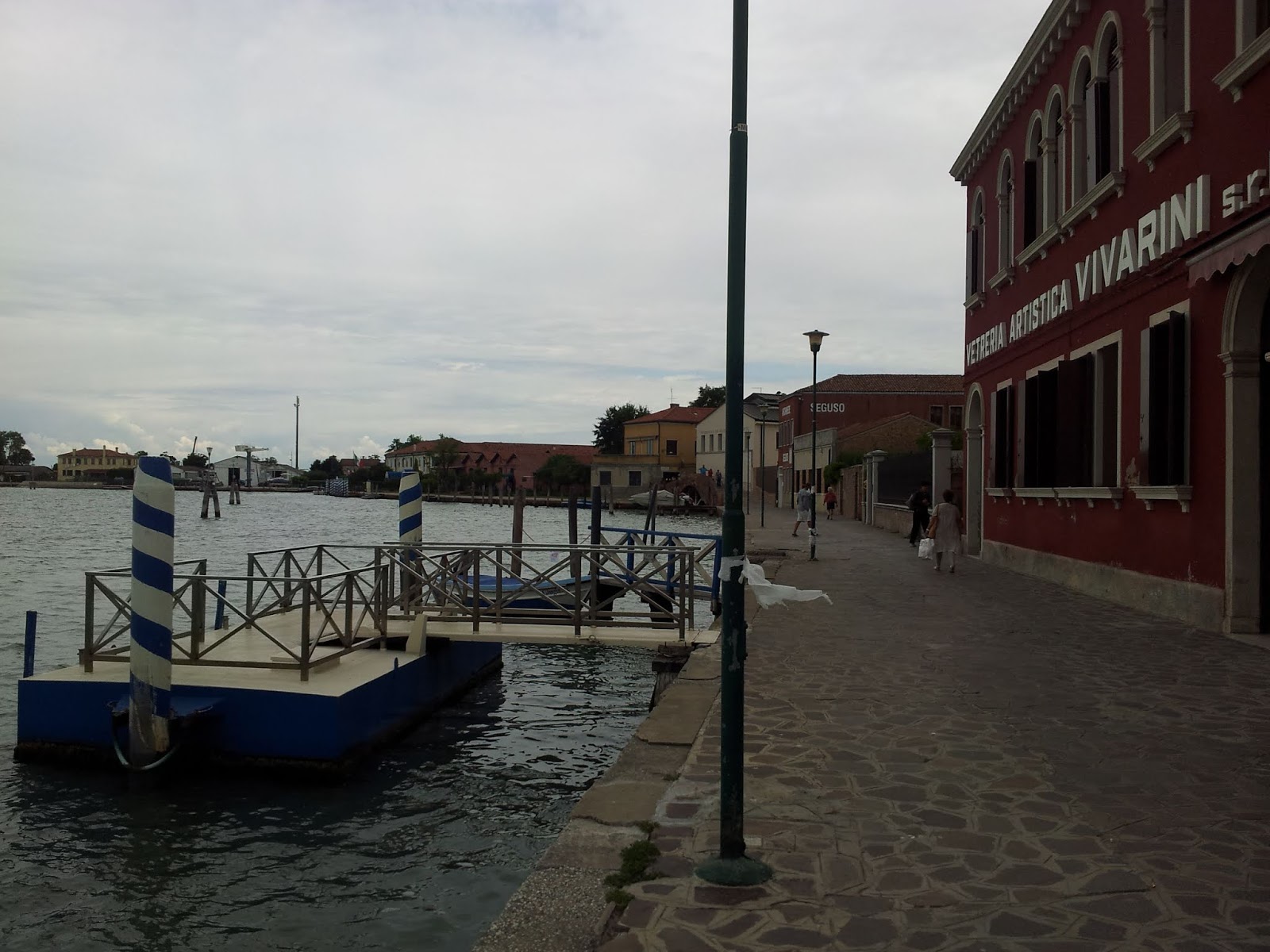
Searching for locations: Murano, Italy

The first time we visited Venice, there was not enough time left to visit the glass-blowing factories on Murano.  We saved this for the next visit, and now more comfortable with taking the Vaporetto, boarded at San Marco for the short journey.

The view looking towards the cemetery:

The view looking down what I think was the equivalent to the main street, or where several of the glass-blowing factories and display shops were located:

Looking towards a workshop, this one costs us each a Euro to go in and observe a demonstration of glass blowing, and it still surprises me that some people would not pay

The oven where the glass is heated

And the finished product, the retail version of the horse that the glassblower created during the demonstration:

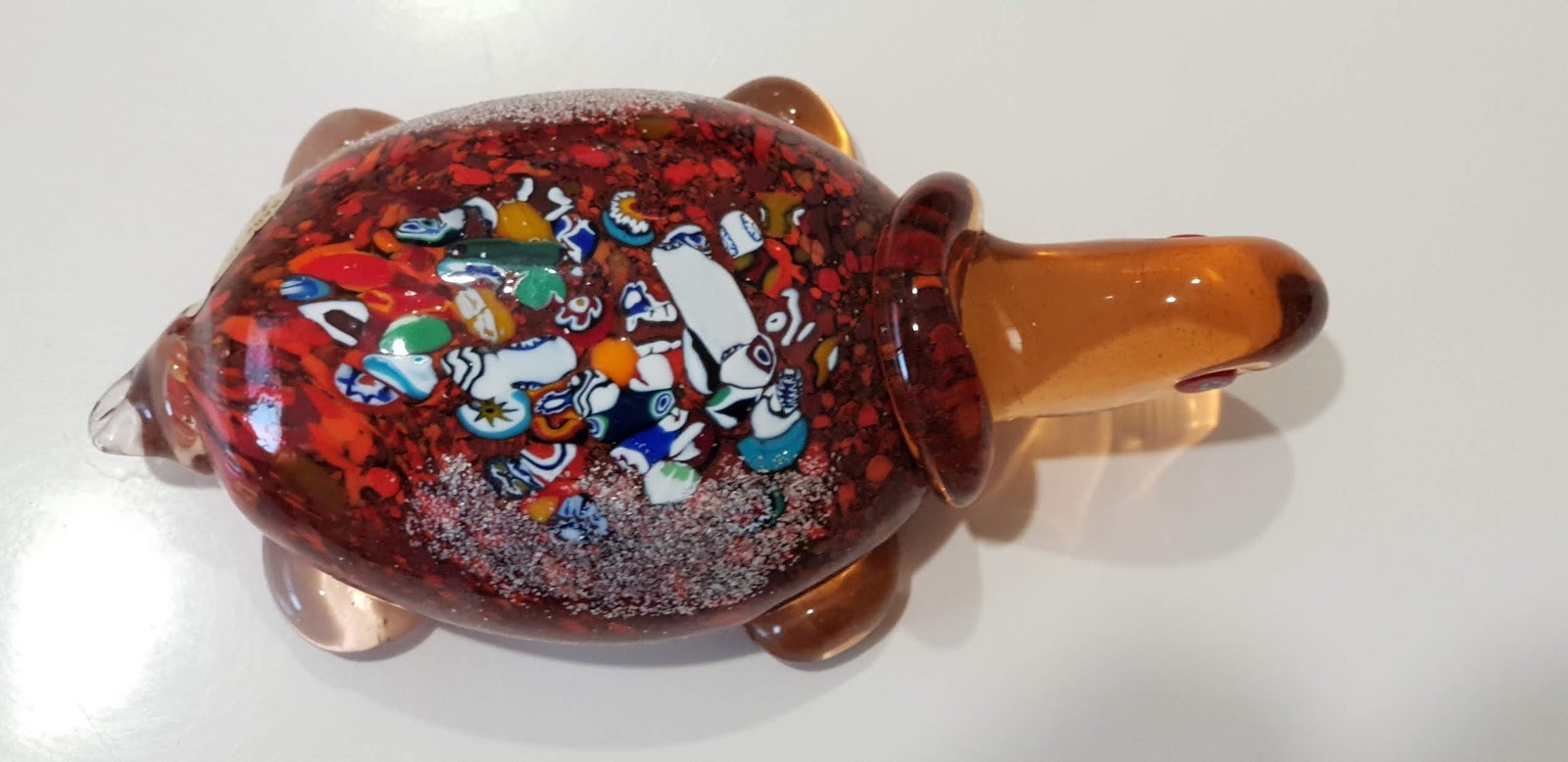
Then we bought some other glassware from the retail storefront, a candle holder

and a turtle.

Why don’t we sit down and talk about it?

An invitation that sounds so innocuous, doesn’t it?

As accomplished as we can be at putting words on paper, what is it that makes it so difficult to sit in a chair with a camera on you, and saying words rather than writing them?

Er and um seem to crop up a lot in verbal speech.

OK, it was a simple question; “What motivates you to write?”

Damn.

My brain just turned to mush, and the words come out sounding like a drunken sailor after a night out on the town.

The written answer to the question is simple; “The idea that someone will read what I have written, and quite possibly enjoy it; that is motivation enough.”

It highlights the difficulties of the novice author.

Not only are there the constant demands of creating a ‘brand’ and building a ‘following’, but there is also the need to market oneself, and the interview is one of the more effective ways of doing this.

If only I can settle the nerves.

I mean, really, it is only my granddaughter who is conducting the interview, and the questions are relatively simple.

The trouble is, I’ve never had to do it before, well, perhaps in an interview for a job, but that is less daunting.  Those usually stick to a predefined format.

Here the narrative can go in any direction.  There are set questions, but the interviewer, in her inimitable manner, can sometimes slide a question in out of left field.

For instance, “Your character Zoe the assassin, is she based on someone you know, or an amalgam of other characters you’ve read about or seen in movies?”

That was an interesting question, and one that has several answers, but the one most relevant was; “It was the secret alter ego of one of the women I used to work with.  I asked her one day if she wasn’t doing what she was, what she would like to do.  And, surprisingly, I thought she would have made an excellent assassin, the last person you would expect.”

Of course, the next question was about what I wanted to be in an alter ego.

Maybe I’ll tell you next time.

The cinema of my dreams – Was it just another surveillance job – Episode 17

As we all know, writing by the seat of your pants is almost the same as flying by the seat of your pants, a hazardous occupation.

As it happens, I like writing this way because like the reader, I don’t know what to expect next.

And equally, at times, you can write your self into a corner, much like painting, and then have to go back, make a few changes and//or repairs and then move forward.

It’s part of the writing process, only in this case, the changes occur before you’ve finished the novel, if you finish.  Quite often a lot of writers get only so far, then the manuscript hits the bottom drawer, to be brought out on a distant rainy day.

Or your cat has mocked your writing ability one too many times.

Therefore, we’re winding back to Episode 16, and moving forward once again, from there.

Why didn’t it surprise me that Nobbin was playing all ends against the middle if that was the expression?  What really bothered was that he wasn’t prepared to tell me the truth or trust me to help find the missing information.  But he had known I might become interested and do some investigating of my own.

Perhaps Nobbin feared Severin might track me down, as he had, and if I had found the USB, run the list of losing it to his foe.

Nor was it a surprise that someone else, namely Severin, was after the information, and he would have access to everything Nobbin did, and he was equally disadvantaged.  It was either Severin or one of his agents, that was caught in O’Connell’s flat and found ‘Josephine’ there.

I didn’t believe her name was Josephine, or that she lived in the flat next door.  And I didn’t think Severin had found anything going by the way the flat had been turned over, and the fact it looked like no one had lived there.

Having now dealt with both men, I was still on the fence about who was on the right side and who was on the wrong side, or whether they were both of questionable character.  What made it difficult to understand was how Severin could run an operation inside the organisation.  Surely someone knew about it, or from a high level, sanctioned it?

Knowing I would not be interrupted this time, I went back up to the third floor, and into O’Connell’s flat, a simple job since the front door was still unlocked.  The girl had assumed it was no value to them which told me she had already searched the place before being attacked.

Just in case anyone was likely to return, or there was another party interested in O’Connell, I locked the door from the inside.  At least no one had yet crashed through the door, smashing the lock and timber.

I stood in the middle of the main room, and did a slow 360-degree turn, looking at everything intently.  The thing with searches like this, it was more likely the object of any search was hidden in plain sight.  The usual places, such as the freezer, sections of fridges, stashed in bottles or packets in the pantry, under beds, inside mattresses, pillows, or under blankets, or with a form of glue on the inside of televisions or computers would prove fruitless.

We were taught to hide things such as USB sticks where they would be least expected to be found, such as a toy on a keyring, tossed in a bowl of pens, pins, clips, or other small insignificant items that all looked uninteresting.

My first thought was in the pocket of a coat in the closet, but all his clothes were strewn over the floor in the bedroom showing signs of being turned out.  Perhaps the searcher or searchers had thought like me.

There was no keyring in the kitchen or the bedroom, no was there any sort of stand inside the door, a place to put mail, and other items such as keys.  If there were any, they would have been on him when Severin had him killed.  I had not found, not felt, any in his pockets, not unusual for an agent in the field.  If you were captured or killed, you wanted nothing on you that could identify you or what you were doing.

Next I thought, a hidden compartment.  I was not going to predict he had a safe in the flat, but just in case, I did search thoroughly where one might be located.  The cheap watercolour on the wall hid nothing but some discoloured wallpaper.

I checked all the skirting boards, and inside walls of the robes, but there was nothing.  I also checked the robes thoroughly for false backs, or sides, or compartments hidden in the roof.  The floor was made from wood, so I checked to see if there were any loose boards, but in the end, considered that was a ruse used only in the movies and on television.

An hour later, I was no wiser as to where it could be, if at all, in the flat, but, looking around, it was certainly now a little more organised because in checking everything in case the previous searchers had missed anything, I’d put everything neatly in stacks.

And, no, there was nothing under the bed.  The previous searchers had thought of that too.

But, in one corner of the main room, there was a desk that had been completely turned out, papers were strewn everywhere.  There had been a computer, now missing, because there was a cable running from the printer, and a power cable in the wall, both running into thin air.

The papers yielded nothing of interest, other than he was researching a holiday to Russia and Poland. 

For two.

A break.  There was a significant other.  I made a more serious search of the papers that I’d gathered up off the floor and found a shred of a quickly torn up piece of paper, of which only this piece remained.  A name:  Jan, scribbled on it, with half another word ‘ord’.

Did this Jan also live in this block?  Did she work at the same place?  There were a hundred variations of that theme, but it was a start.  He might have trusted the USB to her safekeeping without telling her what it was, and it was possible she didn’t know he was dead.

I’d noticed that O’Connell’s death had been reported as a John Doe on the wrong end of an alleged mugging, the small dismissive paragraph on page seven reported the body was missing when police went to investigate a pool of blood in an alley, along with several other crimes of which police were seeking further information.  That alley hadn’t any CCTV cameras, so Severin knew he could easily shoot O’Connell without anyone knowing it was him.

There was nothing else of interest in the documents, other than the holiday, if it was a holiday, was to be in a month’s time.

My work was done.  I had a lead.  It was time to leave.

Except for one small problem.  Someone was knocking on the door.

© Charles Heath 2019-2022