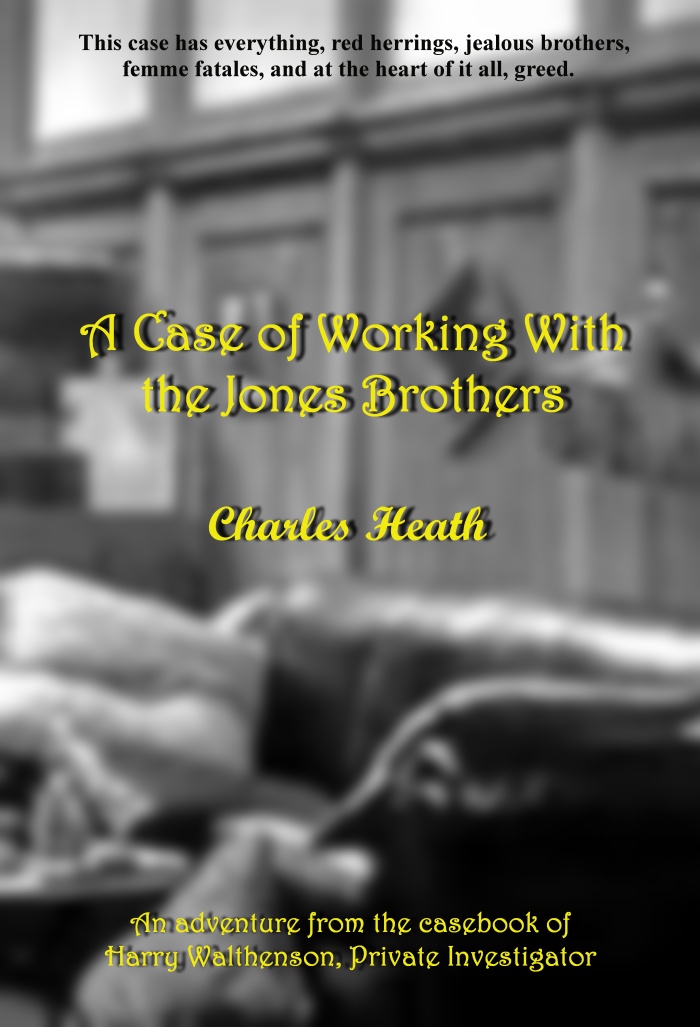
The first case of PI Walthenson – “A Case of Working With the Jones Brothers”

This case has everything, red herrings, jealous brothers, femme fatales, and at the heart of it all, greed.

See below for an excerpt from the book…

Coming soon!

PIWalthJones1

An excerpt from the book:

When Harry took the time to consider his position, a rather uncomfortable position at that, he concluded that he was somehow involved in another case that meant very little to him.

Not that it wasn’t important in some way he was yet to determine, it was just that his curiosity had got the better of him, and it had led to this: sitting in a chair, securely bound, waiting for someone one of his captors had called Doug.

It was not the name that worried him so much, it was the evil laugh that had come after the name was spoken.

Doug what? Doug the ‘destroyer’, Doug the ‘dangerous’, Doug the ‘deadly’; there was any number of sinister connotations, and perhaps that was the point of the laugh, to make it more frightening than it was.

But there was no doubt about one thing in his mind right then: he’d made a mistake. A very big. and costly, mistake. Just how big the cost, no doubt he would soon find out.

His mother, and his grandmother, the wisest person he had ever known, had once told him never to eavesdrop.

At the time he couldn’t help himself and instead of minding his own business, listening to a one-sided conversation which ended with a time and a place. The very nature of the person receiving the call was, at the very least, sinister, and, because of the cryptic conversation, there appeared to be, or at least to Harry, criminal activity involved.

For several days he had wrestled with the thought of whether he should go. Stay on the fringe, keep out of sight, observe and report to the police if it was a crime. Instead, he had willingly gone down the rabbit hole.

Now, sitting in an uncomfortable chair, several heat lamps hanging over his head, he was perspiring, and if perspiration could be used as a measure of fear, then Harry’s fear was at the highest level.

Another runnel of sweat rolled into his left eye, and, having his hands tied, literally, it made it impossible to clear it. The burning sensation momentarily took his mind off his predicament. He cursed and then shook his head trying to prevent a re-occurrence. It was to no avail.

Let the stinging sensation be a reminder of what was right and what was wrong.

It was obvious that it was the right place and the right time, but in considering his current perilous situation, it definitely was the wrong place to be, at the worst possible time.

It was meant to be his escape, an escape from the generations of lawyers, what were to Harry, dry, dusty men who had been in business since George Washington said to the first Walthenson to step foot on American soil, ‘Why don’t you become a lawyer?” when asked what he could do for the great man.

Or so it was handed down as lore, though Harry didn’t think Washington meant it literally, the Walthenson’s, then as now, were not shy of taking advice.

Except, of course, when it came to Harry.

He was, Harry’s father was prone to saying, the exception to every rule. Harry guessed his father was referring to the fact his son wanted to be a Private Detective rather than a dry, dusty lawyer. Just the clothes were enough to turn Harry off the profession.

So, with a little of the money Harry inherited from one of his aunts, he leased an office in Gramercy Park and had it renovated to look like the Sam Spade detective agency, you know the one, Spade and Archer, and The Maltese Falcon.

There’s a movie and a book by Dashiell Hammett if you’re interested.

So, there it was, painted on the opaque glass inset of the front door, ‘Harold Walthenson, Private Detective’.

There was enough money to hire an assistant, and it took a week before the right person came along, or, more to the point, didn’t just see his business plan as something sinister. Ellen, a tall cool woman in a long black dress, or so the words of a song in his head told him, fitted in perfectly.

She’d seen the movie, but she said with a grin, Harry was no Humphrey Bogart.

Of course not, he said, he didn’t smoke.

Three months on the job, and it had been a few calls, no ‘real’ cases, nothing but missing animals, and other miscellaneous items. What he really wanted was a missing person. Or perhaps a beguiling, sophisticated woman who was as deadly as she was charming, looking for an errant husband, perhaps one that she had already ‘dispatched’.

Or for a tall, dark and handsome foreigner who spoke in riddles and in heavily accented English, a spy, or perhaps an assassin, in town to take out the mayor. The man was such an imbecile Harry had considered doing it himself.

Now, in a back room of a disused warehouse, that wishful thinking might be just about to come to a very abrupt end, with none of the romanticized trappings of the business befalling him. No beguiling women, no sinister criminals, no stupid policemen.

Just a nasty little man whose only concern was how quickly or how slowly Harry’s end was going to be.

© Charles Heath 2019

In a word: Joe

Aside from being the short form of the name Joseph, ie a man’s name, there is also a derivative for women, Jo.

The name Joe is said to be used from the mid-1800s.

My favourite Joe name is Joe Bloggs, and he features in some of my stories.

It’s anonymous enough for someone to use as a cover when booking into a sleazy motel and is a little more refined than Smith or Jones, names that more than likely already feature in the register.

Jo could be a short form for Josephine, a name I’m sure some women would prefer not to be called.

But…

Did you know it’s also a name given to a cup of coffee?

Well, that didn’t make much of a splash.  I don’t think anyone these days refers to coffee as Joe because there are so many different variations with names I couldn’t pronounce let alone spell, I think it’s been lost in the mists of time because there was only one type of coffee.

It was called coffee.  Funny about that.

However…

There is another definition, and that is for the ‘average Joe’, an ordinary fellow who works for a living.

Odd, because I thought that was what most of us did, but perhaps it refers to tradespeople, or blue collar workers, not the white collar brigade.

Hang on, isn’t there a GI Joe, a universal description of the average soldier?

‘Sunday in New York’ – A beta reader’s view

I’m not a fan of romance novels but …

There was something about this one that resonated with me.

This is a novel about a world generally ruled by perception, and how people perceive what they see, what they are told, and what they want to believe.

I’ve been guilty of it myself as I’m sure we all have at one time or another.

For the main characters Harry and Alison there are other issues driving their relationship.

For Alison, it is a loss of self-worth through losing her job and from losing her mother and, in a sense, her sister.

For Harry, it is the fact he has a beautiful and desirable wife, and his belief she is the object of other men’s desires, and one in particular, his immediate superior.

Between observation, the less than honest motives of his friends, a lot of jumping to conclusions based on very little fact, and you have the basis of one very interesting story.

When it all comes to a head, Alison finds herself in a desperate situation, she realises only the truth will save their marriage.

But is it all the truth?

What would we do in similar circumstances?

Rarely does a book have me so enthralled that I could not put it down until I knew the result. They might be considered two people who should have known better, but as is often the case, they had to get past what they both thought was the truth.

And the moral of this story, if it could be said there is one, nothing is ever what it seems.

…

Available on Amazon here: amzn.to/2H7ALs8

…

A photograph from the inspirational bin – 20

20191216_175251

Suburbia, yes, reddish sky at night, yes, but what else might it be?

For just a moment, close your eyes, toss away everything you might accept as normal, and then, after a minute, open them again, and look at the photo with a new perspective.

Imagine…


It took two days for the dust to settle, figuratively and literally.

We heard screaming jet fighters overhead, followed by multiple explosions, then nothing but smoke and ash.  We assumed one of the jets had crashed.

Two days the media was saying it was an unfortunate accident.

On the third day, we discovered it was the result of multiple missile strikes on our power stations and oil refineries.  The jets had arrived too late to stop the attack.

And we only found out because an Army officer who lived in our street came home to collect his family and told us to leave, go anywhere but stay in the city.

The ash in the air was going to get worse, the sun was going to disappear altogether, and, well, he didn’t stay long enough to tell us the rest, but already the air was almost unbreathable.

But the leaving was easy, just take what we could in the car.  The problem was, everyone had the same idea, and by the time we reached the highway, it was a virtual carpark.

By then, it was day four.

That’s when the bombs started to fall.


It might not be an exact match for the photo, but that was the idea that came from it.

I’m sure there could be a far simpler and more pleasant story to be told.


The cinema of my dreams – I never wanted to go to Africa – Episode 37

Our hero knows he’s in serious trouble.

The problem is, there are familiar faces and a question of who is a friend and who is foe made all the more difficult because of the enemy, if it was the enemy, simply because it didn’t look or sound or act like the enemy.

Now, it appears, his problems stem from another operation he participated in, and because of it, he has now been roped into what might be called a suicide mission.


An hour later we were stopped by the side of the road, at a point where another road, or, rather, a track headed to the left into the forest.

A short distance before that I noticed a sign, battered and faded, advertising an airport, a sign I thought had been put there as a joke.

Of course, when I remembered the conversation I had with Monroe back on the plane and the fact we had a specialist pilot in our group, it all began to make sense.

Our exit strategy.

I only wished I had internet coverage so I could check the presence of an airport in what looked to be the middle of nowhere.

Only Davies seemed unperturbed.

I had to ask.  “Did you know there was an airport here?”

“Of one, used by fly-ins for the Garamba National Park.  Not much of an airstrip though, and we don’t exactly have up to the minute details on its surface, but as recently as a week ago a small plane had landed there.”

“Thanks for telling me.”

“All you had to do was ask the right question.”

It seems I didn’t know what the right questions were, what might be called an occupational hazard on a job like this.

Everyone had got out of their cars to stretch their legs and prepare for the next phase of the operation, which was to meet with the kidnappers.  I expected Jacobi would be on the sat phone talking to their leader, advising we had arrived.

I went back to Mobley, standing with the Ugandan soldier that had been assigned as his driver, smoking a cigarette.  I was surprised he hadn’t joined the others who had gathered ahead of the lead vehicle.

“Nice shooting back there,” I said.  It was for a man under pressure to make the shots, and give the rest of us a chance to take care of the others.  That no one else got shot was a miracle.

“Just another day at the office.”

“Well, it hasn’t ended yet.  I want you to go to the airstrip and get it under surveillance.  There is supposed to be an aircraft there, whether for our use or just there so we can steal it I’m not quite sure.  But if there’s a plane there, I want you to make sure it doesn’t leave, but as quietly as possible.  We should be along later with the packages.  I’m going up to tell the Colonel he’ll be joining you.  He might not want to, but he’s done enough for us.  I don’t want him to make enemies unnecessarily.”

“As you wish.  I’ll be along shortly.”

“Good.  Make sure your radio is working and on.  I need to know if anything goes sideways.”

“It won’t.”

I wish I had his confidence.

A minute later I reached the front of the convoy and saw why there seemed little animation among the group.  Monroe had Jacobi on his knees and a gun on the back of his neck.

“This is an interesting development Lieutenant.  Is there a problem I should know about?”

“I reckon the weasel sold us out back there.  Maybe even called them in to shake us down for one reason or another.  Didn’t try too hard to negotiate with the commander.”

No, he hadn’t.  And the thought had crossed my mind too.  A bit of cash on the side, split with the commander.  There didn’t seem to be any intent of the commander’s part to shoot us, so it was a pity we had to kill them all.  If they were part of the kidnapper’s operations, things might get a little dangerous.

“Before you kill him,” I said, “Did he tell you how the call to the kidnappers went?”

“Didn’t ask.”

“Perhaps you should.”

Mobley picked that moment to drive up alongside Jacobi and the Lieutenant.

“Problem?” he asked through the window.

“No.  We’re practicing our run at the kidnappers.”

He shrugged.  I looked over at the Colonel.  “Time for you to be moving on.  You don’t need to be in on the next part, for plausible deniability.  I suspect if the leader of this group sees you, and makes any connection back to the Ugandans, it could cause trouble.”

“Nothing I couldn’t handle.”

“Better if you didn’t have to.  My man needs help at the airstrip and a man of your authority might just smooth over problems if he needs it.”

“You’re having a plane sent in?”

“I’d like to think so, might even get you home in time for a late supper.”  I glared at Jacobi.  “How does he get to the airstrip?”

“Normally, through the town, but there’s a track about 200 yards up the road.  Go left, follow the road, then turn right at the first fork.”

He stood staring at the ground for a minute, hopefully considering doing as I asked.  I was not sure what I was going to do if he didn’t.  It was preferable he didn’t come with us.

“OK.  You have a point.  No need stirring up my Congo friends any more than I already have.”

He went over to Mobley’s car and got in, replacing the Ugandan soldier as a driver.

“See you when we see you,” Mobley said, and the Colonel drove off after a wave.

Back to my other problem.

“You’ve had time to think about your answer, Jacobi, so tell us.”

“An eight-mile drive along the next track, then instead of taking the fork to the airstrip, go left, and drive to you reach the checkpoint.”

“The meeting is on.”

“They’re waiting for us.”

“In more ways than one, I’d say,” Monroe muttered.  “He’s outlived his usefulness in my book.”

Ordinarily, I would agree with her, but we still needed him.  There might have been an initial negotiation, but it was far from what the end deal would be, and he had to be there to complete it.  And if he was leading us into a trap, well, we’d just have to wait and see.

“We still need him, so ease up on the aggression.  If he has double-crossed us, you can shoot him.  Until then, play nice.  But, just as a precaution, you and Stark can bring up the rear, stop about a mile short, and do some recon between there and the checkpoint.  If anyone is thinking of sneaking up behind us, I want to know about it.”

Monroe shook her head, then eased the gun away from him.  A nod to me.

“He can go with you in the lead car.  Davies can come with me and keep driving the car.  They’ll be expecting four vehicles.”

“Fair enough.”  I turned to Baines, the first time I’d addressed him since getting on the plane at the black site.  “You wouldn’t happen to know if there’s a portable rocket launcher among that film equipment, would you?”

“And half a dozen shells.  Don’t know how they managed it, but it’s there.”

“Easy to get at?”

“If need be.”

“Good.”  I looked around at the rest of the team.  “Everyone had time to calm their nerves.”

I’d watched Jacobi drag himself to his feet and try to brush the dust of his clothes.  It didn’t help restore what was once quite clean and crisp linen.  No one helped him, in fact, if I gave the order to shoot, all of them would.  Monroe’s accusation struck a chord with the others.

“We’d better get going,” she said, heading for the last vehicle after being joined by Davies.  Out of earshot, she said something to her, and I heard them laughing.

I was not sure what it was about, but as long as it eased the tension in her.  She had discovered which car was carrying the diamonds, co-incidentally the car I’d been driving, so we needed a situation so that we could remove the diamonds from the equation when we arrived at the checkpoint.  There was no way the kidnappers were going to let us retrieve the package once we got there, and I had no doubt we would be separated from the cars, and the equipment, so that, if possible, the kidnappers could gain the upper hand.

Or that was how I suspected it would go down.  It was only a matter of time before I was proved right or wrong.

Everyone else got back into the cars, and with Jacobi sitting in the front with me, I started moving forward.

I wasn’t prepared, not mentally anyway.  I never was when going into battle.


© Charles Heath 2019-2020

“The Enemy Within” – the editor’s second draft – Day 15

This book has finally come back from the Editor, so this month it is going to get a second revision, a second draft for the editor, and beta readers.

And so it begins…

…

Characters can take on a life of their own

…

The basic premise of the story is evolving faster than I can write the later chapters and it’s hard to keep up.

The post-it notes are getting used at an alarming rate, and the wall is beginning to look like a major crime investigation.

It wouldn’t be like this if I had planned it better the first time.

But, then, that’s the joy of writing, watching a basic premise turn into something far more sophisticated than you first imagined.

And that is down to charters taking on lives of their own

Like ordinary people, there is more than meets the eye, layers that we might never get to see unless the right buttons are pushed.

And I’m going to push those buttons and see what happens.

Searching for locations: Murano, Italy

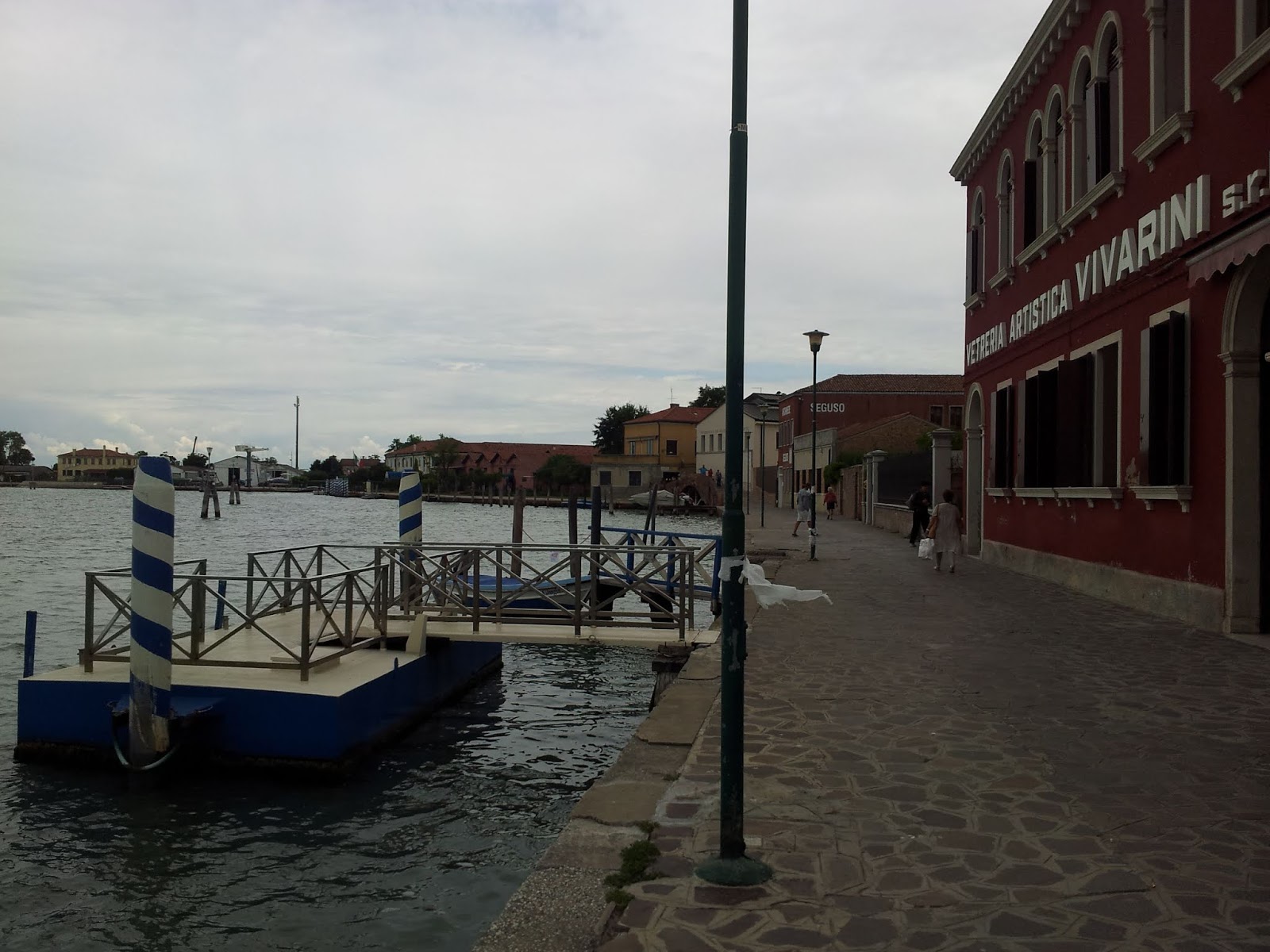
The first time we visited Venice, there was not enough time left to visit the glass-blowing factories on Murano.  We saved this for the next visit, and now more comfortable with taking the Vaporetto, boarded at San Marco for the short journey.

The view looking towards the cemetery:

The view looking down what I think was the equivalent to the main street, or where several of the glass-blowing factories and display shops were located:

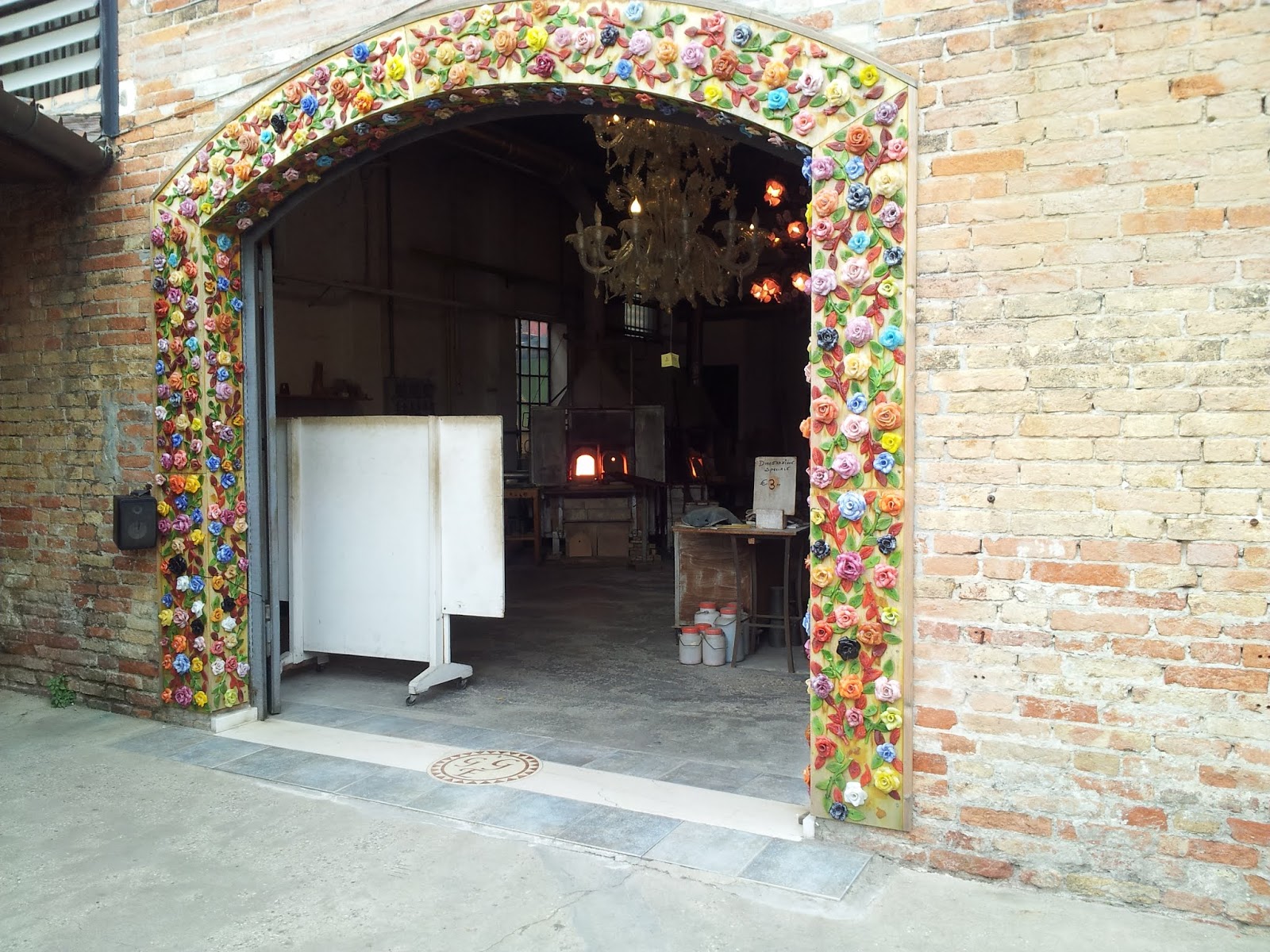
Looking towards a workshop, this one costs us each a Euro to go in and observe a demonstration of glass blowing, and it still surprises me that some people would not pay

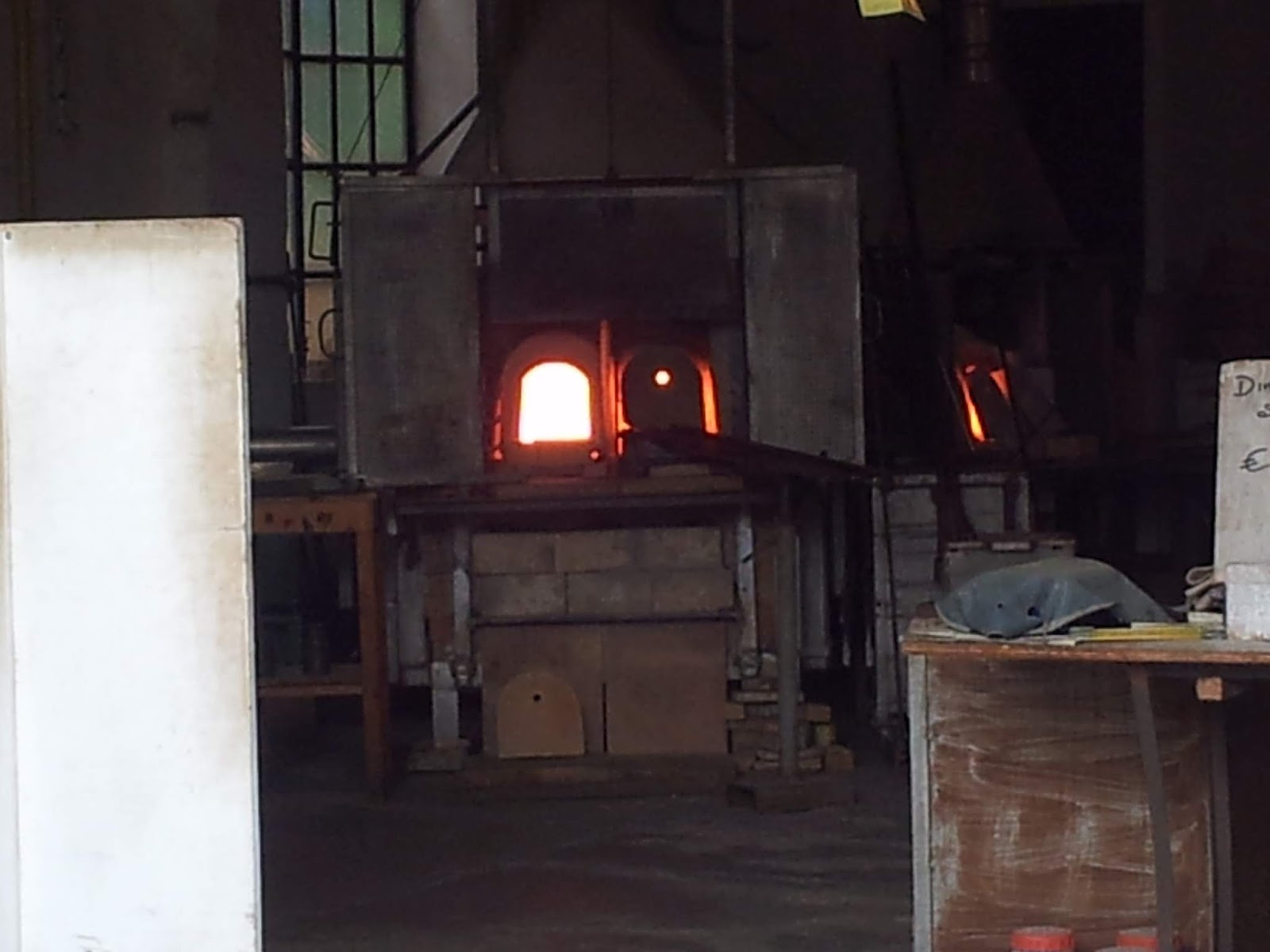
The oven where the glass is heated

And the finished product, the retail version of the horse that the glassblower created during the demonstration:

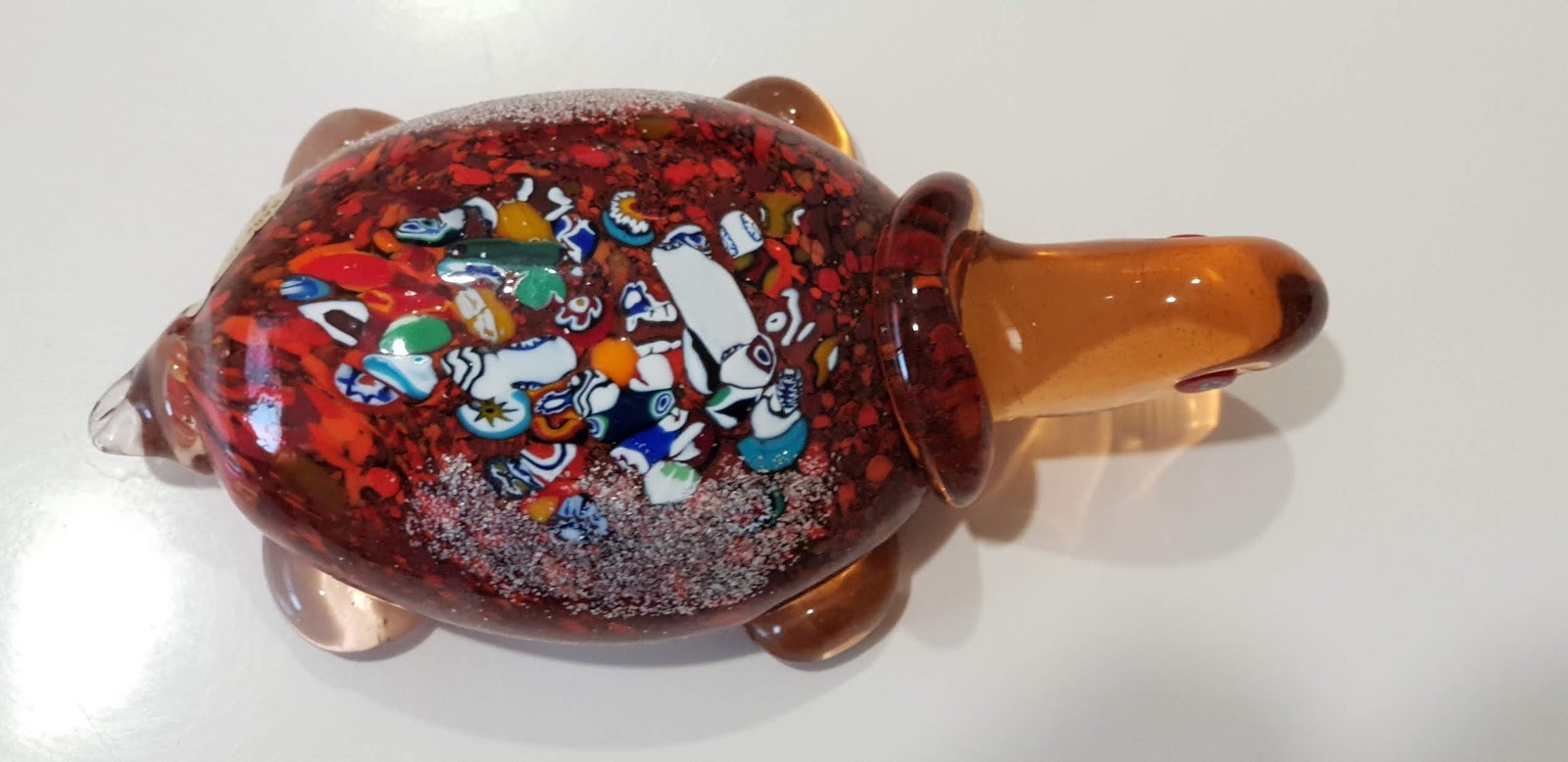
Then we bought some other glassware from the retail storefront, a candle holder

and a turtle.

There’s more time for TV

Being confined to home because despite the conquering of COVID, it’s still out there and we have to live with it – something in my condition I can’t take too many risks with – not only gives me, and a lot of others more time to write, it also enables us to explore a few more leisure options to fill in the time.

After all, we can hardly just keep writing endlessly.

Well, perhaps some of us could.

At first, I decided I would do some virtual travelling, you know, go to places I would never go in person, like South Africa, Kenya, Egypt, South America, you know the sort of places I mean, the ones where you can’t get travel insurance cover, or not without mortgaging your home.

That lasted about a day. Seeing the pyramids online was not the same as being there, getting the sand blown in your face, or the tour bus being hijacked, and you spend the next three months in a dark, hot, hell hole while the kidnappers negotiate with governments that refuse to negotiate with terrorists.

So far, I’m not filling in my time very well.

There are weeds to be pulled, lawns to be cut, shrubs and trees to be pruned, painting to be done, you know, all of those chores that you put off until tomorrow, knowing tomorrow will never come.

Don’t ask me to explain that.

So, we’re left with television.

Firstly there was a series called Yellowstone, a western in a modern setting, three series worth. Yes, we watched all of them, no, didn’t like the swearing, or Beth Dutton, Rip was channelling the Duke (John Wayne), and Kevin Costner, well, his stint in Dances with Wolves stood him in good stead.

Geez though, how much trouble can one ranch attract? Indians, speculators, developers, and an international airport? To be honest, at times it spiralled out of control, but for sheer entertainment value, it was slightly better than I thought it might be. As for Jamie, how could one person be so complicated?

Then there was another series, Away. OK, this was about as far-fetched as a premise could get, and the characters, as diverse, and sometimes as obtuse as any I’ve seen thrown together for over eight months. Thank god we didn’t have to suffer eight months of it.

It was good, I guess, with people being the way they are, and I’d expected in the confines of that small space for so long, they might have killed each other off one at a time, like in Lord of the Flies, but no such luck.

My favourite? The Russian. He might have been blind but he was interesting. Just would have liked a few subtitles for us non-Ghana, Chinese, Russian, and Indian people.

As for White House Farm, I’m still trying to work out who killed them all, because it definitely wasn’t the daughter. It had to be the indifferent son, or at his behest. Full marks to the dogged detective, who, the last time I saw him, he was a rather improbable Hercules. Funny how your impression of a performance goes back to one you’ve seen him before.

Which is another of our viewing interests, watching a show and trying to work out where we’ve seen the actors before. Some are familiar and seem to be in everything, others rarely seen, or remembered. I hope this is not a sign of their acting talent, or more to the point, lack of it.

At the moment we are in the middle of Young Wallender. Those who may have seen Branagh in the Wallender series would remember this as being the most stultifying of series, filmed bleakly in a bleak country with bleak characters, and bleak crimes.

Fortunately, the Young Wallender series is not as bleak, but it has dark undertones. Some might call this gritty. There are four more to go so it can only get better.

Like jumping off a ten-storey building, it’s so far so good…

Searching for locations: Venice, Italy (Again)

We have visited Venice twice, in 2006 and not so long ago.

Not much had changed from visit to visit.

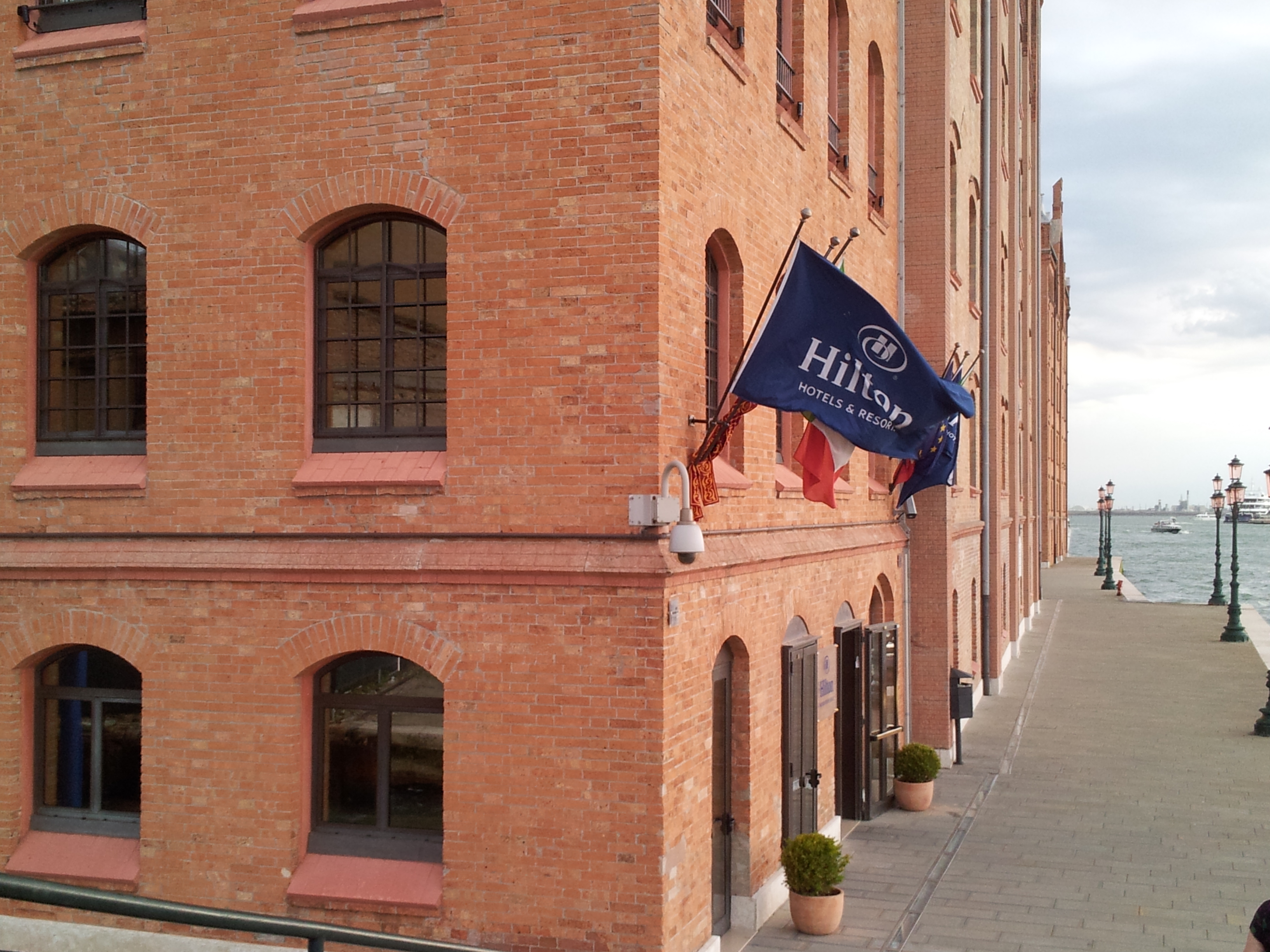
Instead of staying in a hotel selected by a travel agent, the Savoia and Jolanda on the waterfront of Riva Degli Schiavoni, because I’m a Hilton Honors member, more recently we stayed at the Hilton Molino Stucky.  It was located on an island, Giudecca, and had its own transport from the hotel to St Mark’s Square for a very reasonable one-off charge for the stay.

hiltonmolinostuckey2

On our first visit, we traveled from Florence to Venice.  We were advised to take a water taxi to the hotel, not only the most direct route but to see some of Venice from the water.  The only drawback, you have to negotiate a price with the driver.

We were not very good negotiators, and it cost 60 Euros.

But, despite the cost, it was worth every Euro because the taxi driver took us by the scenic route, directly from the Station to the doorstep of our hotel.  For a first time in Venice, and you want to see it from the water, a water taxi is the best option.

2013-06-25 17.09.16

The first time we stayed at the Savoia and Jolanda Hotel, which was at the time quite old, and the room we had, on the ground floor, was comfortable enough, but being November, they had just stopped using the air conditioning, it was still quite warm and at times uncomfortable.

There were better rooms, but this was beyond the knowledge of the travel agent, and one of the reasons we stopped using agents to book hotels.

The most recent visit we had driven down from Salzburg to Venice airport where we had to return the hire car.  From there we were intending to take a private water taxi from the airport to the hotel, for an estimated 120 Euros.

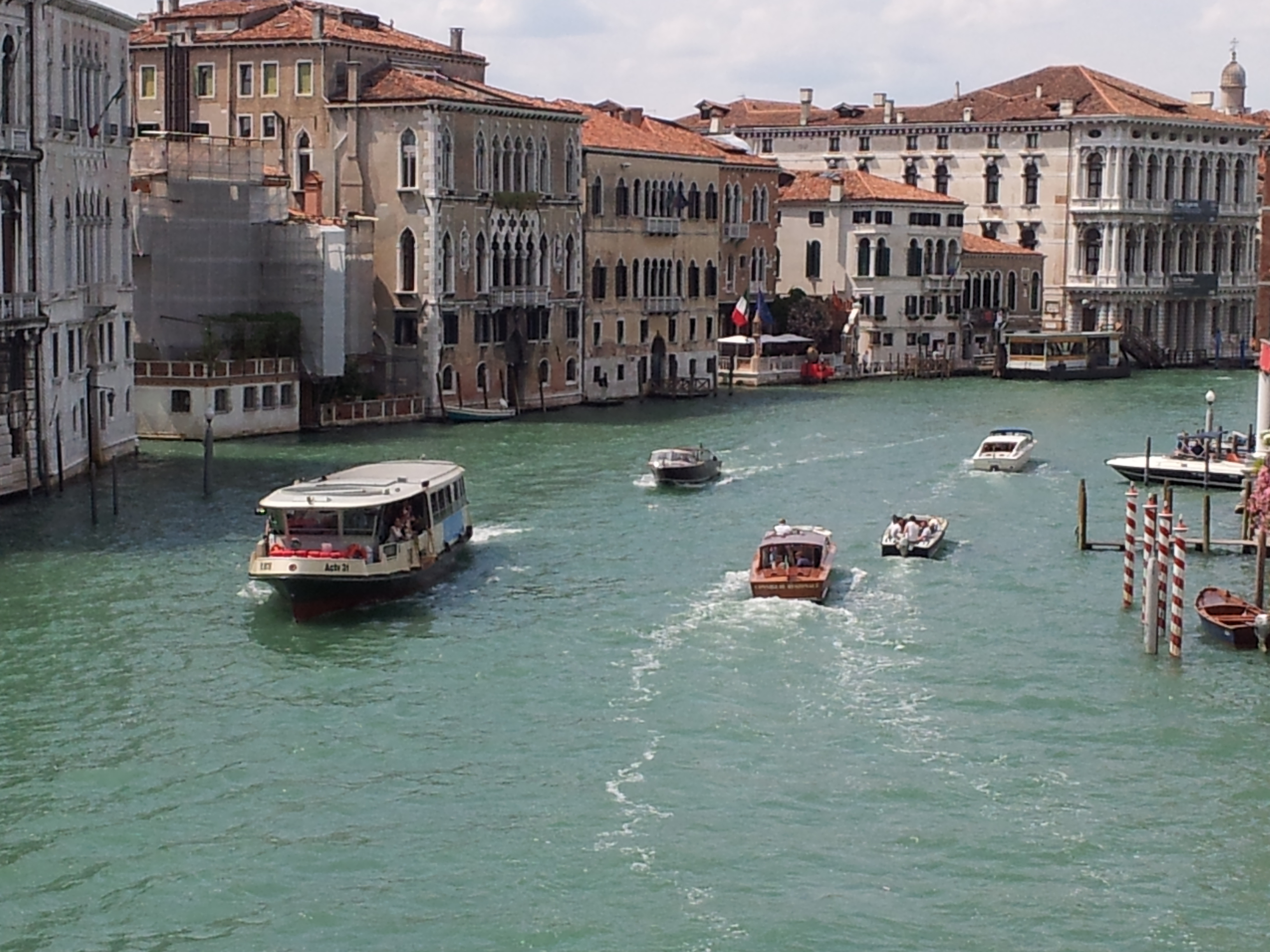
We saved our money and took the ACTV public waterbus, from the airport to the hotel, with one stop.  It took a little over an hour and was equally as scenic.

venicecanals1

Our room in the Hilton was on one of the upper levels, floor four, and had a view of the canal, the large passenger ships coming and going, as well as a remarkable view of Venice itself as far up the canal to St Marks Square in one direction, and the port for the passenger ships in the other.

20130627_081601

We got to see three or four very large passenger ships come and go, along with a lot of other craft.  I hadn’t realized how busy the waterways, and the Grand Canal, were.

20130627_174408

Each evening after a day’s exploring we would end up in the Executive Lounge, and then one of the many restaurants, usually Il Molino for breakfast, and the Rialto Lobby Bar and Lounge for dinner.  After that, it was a stroll down the waterfront taking in the night air, and perhaps to walk off the delicious dinner.

An excerpt from “The Things We Do For Love”; In love, Henry was all at sea!

In the distance he could hear the dinner bell ringing and roused himself.  Feeling the dampness of the pillow, and fearing the ravages of pent up emotion, he considered not going down but thought it best not to upset Mrs. Mac, especially after he said he would be dining.

In the event, he wished he had reneged, especially when he discovered he was not the only guest staying at the hotel.

Whilst he’d been reminiscing, another guest, a young lady, had arrived.  He’d heard her and Mrs. Mac coming up the stairs, and then shown to a room on the same floor, perhaps at the other end of the passage.

Henry caught his first glimpse of her when she appeared at the door to the dining room, waiting for Mrs. Mac to show her to a table.

She was about mid-twenties, slim, long brown hair, and the grace and elegance of a woman associated with countless fashion magazines.  She was, he thought, stunningly beautiful with not a hair out of place, and make-up flawlessly applied.  Her clothes were black, simple, elegant, and expensive, the sort an heiress or wife of a millionaire might condescend to wear to a lesser occasion than dinner.

Then there was her expression; cold, forbidding, almost frightening in its intensity.  And her eyes, piercingly blue and yet laced with pain.  Dracula’s daughter was his immediate description of her.

All in all, he considered, the only thing they had in common was, like him, she seemed totally out of place.

Mrs. Mac came out of the kitchen, wiping her hands on her apron.  She was, she informed him earlier, chef, waitress, hotelier, barmaid, and cleaner all rolled into one.  Coming up to the new arrival she said, “Ah, Miss Andrews, I’m glad you decided to have dinner.  Would you like to sit with Mr. Henshaw, or would you like to have a table of your own?”

Henry could feel her icy stare as she sized up his appeal as a dining companion, making the hair on the back on his neck stand up.  He purposely didn’t look back.  In his estimation, his appeal rating was minus six.  Out of a thousand!

“If Mr. Henshaw doesn’t mind….”  She looked at him, leaving the query in mid-air.

He didn’t mind and said so.  Perhaps he’d underestimated his rating.

“Good.”  Mrs. Mac promptly ushered her over.  Henry stood, made sure she was seated properly and sat.

“Thank you.  You are most kind.”  The way she said it suggested snobbish overtones.

“I try to be when I can.”  It was supposed to nullify her sarcastic tone but made him sound a little silly, and when she gave him another of her icy glares, he regretted it.

Mrs. Mac quickly intervened, asking, “Would you care for the soup?”

They did, and, after writing the order on her pad, she gave them each a look, imperceptibly shook her head, and returned to the kitchen.

Before Michelle spoke to him again, she had another quick look at him, trying to fathom who and what he might be.  There was something about him.

His eyes, they mirrored the same sadness she felt, and, yes, there was something else, that it looked like he had been crying?  There was a tinge of redness.

Perhaps, she thought, he was here for the same reason she was.

No.  That wasn’t possible.

Then she said, without thinking, “Do you have any particular reason for coming here?”  Seconds later she realized she’s spoken it out loud, had hadn’t meant to actually ask, it just came out.

It took him by surprise, obviously not the first question he was expecting her to ask of him.

“No, other than it is as far from civilization, and home, as I could get.”

At least we agree on that, she thought.

It was obvious he was running away from something as well.

Given the isolation of the village and lack of geographic hospitality, it was, from her point of view, ideal.  All she had to do was avoid him, and that wouldn’t be difficult.

After getting through this evening first.

“Yes,” she agreed.  “It is that.”

A few seconds passed, and she thought she could feel his eyes on her and wasn’t going to look up.

Until he asked, “What’s your reason?”

Slight abrupt in manner, perhaps as a result of her question, and the manner in which she asked it.

She looked up.  “Rest.  And have some time to myself.”

She hoped he would notice the emphasis she had placed on the word ‘herself’ and take due note.  No doubt, she thought,  she had completely different ideas of what constituted a holiday than he, not that she had actually said she was here for a holiday.

Mrs. Mac arrived at a fortuitous moment to save them from further conversation.

Over the entree, she wondered if she had made a mistake coming to the hotel.  Of course, there had been no possible way she could know than anyone else might have booked the same hotel, but realized it was foolish to think she might end up in it by herself.

Was that what she was expecting?

Not a mistake then, but an unfortunate set of circumstances, which could be overcome by being sensible.

Yet, there he was, and it made her curious, not that he was a man, by himself, in the middle of nowhere, hiding like she was, but for very different reasons.

On discreet observance whilst they ate, she gained the impression his air of light-heartedness was forced and he had no sense of humor.

This feeling was engendered by his looks, unruly dark hair, and permanent frown.  And then there was his abysmal taste in clothes on a tall, lanky frame.  They were quality but totally unsuited to the wearer.

Rebellion was written all over him.

The only other thought crossing her mind, and rather incongruously, was he could do with a decent feed.  In that respect, she knew now from the mountain of food in front of her, he had come to the right place.

“Mr. Henshaw?”

He looked up.  “Henshaw is too formal.  Henry sounds much better,” he said, with a slight hint of gruffness.

“Then my name is Michelle.”

Mrs. Mac came in to take their order for the only main course, gather up the entree dishes, then return to the kitchen.

“Staying long?” she asked.

“About three weeks.  Yourself?”

“About the same.”

The conversation dried up.

Neither looked at the other, rather at the walls, out the window, towards the kitchen, anywhere.  It was, she thought, almost unbearably awkward.

Mrs. Mac returned with a large tray with dishes on it, setting it down on the table next to theirs.

“Not as good as the usual cook,” she said, serving up the dinner expertly, “but it comes a good second, even if I do say so myself.  Care for some wine?”

Henry looked at Michelle.  “What do you think?”

“I’m used to my dining companions making the decision.”

You would, he thought.  He couldn’t help but notice the cutting edge of her tone.  Then, to Mrs. Mac, he named a particular White Burgundy he liked and she bustled off.

“I hope you like it,” he said, acknowledging her previous comment with a smile that had nothing to do with humor.

“Yes, so do I.”

Both made a start on the main course, a concoction of chicken and vegetables that were delicious, Henry thought, when compared to the bland food he received at home and sometimes aboard my ship.

It was five minutes before Mrs. Mac returned with the bottle and two glasses.  After opening it and pouring the drinks, she left them alone again.

Henry resumed the conversation.  “How did you arrive?  I came by train.”

“By car.”

“Did you drive yourself?”

And he thought, a few seconds later, that was a silly question, otherwise she would not be alone, and certainly not sitting at this table. With him.

“After a fashion.”

He could see that she was formulating a retort in her mind, then changed it, instead, smiling for the first time, and it served to lighten the atmosphere.

And in doing so, it showed him she had another more pleasant side despite the fact she was trying not to look happy.

“My father reckons I’m just another of ‘those’ women drivers,” she added.

“Whatever for?”

“The first and only time he came with me I had an accident.  I ran up the back of another car.  Of course, it didn’t matter to him the other driver was driving like a startled rabbit.”

“It doesn’t help,” he agreed.

“Do you drive?”

“Mostly people up the wall.”  His attempt at humor failed.  “Actually,” he added quickly, “I’ve got a very old Morris that manages to get me where I’m going.”

The apple pie and cream for dessert came and went and the rapport between them improved as the wine disappeared and the coffee came.  Both had found, after getting to know each other better, their first impressions were not necessarily correct.

“Enjoy the food?” Mrs. Mac asked, suddenly reappearing.

“Beautifully cooked and delicious to eat,” Michelle said, and Henry endorsed her remarks.

“Ah, it does my heart good to hear such genuine compliments,” she said, smiling.  She collected the last of the dishes and disappeared yet again.

“What do you do for a living,” Michelle asked in an off-hand manner.

He had a feeling she was not particularly interested and it was just making conversation.

“I’m a purser.”

“A what?”

“A purser.  I work on a ship doing the paperwork, that sort of thing.”

“I see.”

“And you?”

“I was a model.”

“Was?”

“Until I had an accident, a rather bad one.”

“Oh, I’m sorry.”

So that explained the odd feeling he had about her.

As the evening had worn on, he began to think there might be something wrong, seriously wrong with her because she didn’t look too well.  Even the carefully applied makeup, from close up, didn’t hide the very pale, and tired look, or the sunken, dark ringed eyes.

“I try not to think about it, but it doesn’t necessarily work.  I’ve come here for peace and quiet, away from doctors and parents.”

“Then you will not have to worry about me annoying you.  I’m one of those fall-asleep-reading-a-book types.”

Perhaps it would be like ships passing in the night and then smiled to himself about the analogy.

Dinner now over, they separated.

Henry went back to the lounge to read a few pages of his book before going to bed, and Michelle went up to her room to retire for the night.

But try as he might, he was unable to read, his mind dwelling on the unusual, yet the compellingly mysterious person he would be sharing the hotel with.

Overlaying that original blurred image of her standing in the doorway was another of her haunting expressions that had, he finally conceded, taken his breath away, and a look that had sent more than one tingle down his spine.

She may not have thought much of him, but she had certainly made an impression on him.

© Charles Heath 2015-2020

lovecoverfinal1