In a word: Might

We might have to use some might to beat the mite.  Confused?

Might is force, so expending might be much the same as what Thor does with his hammer.

We might expend some force; this might be a maybe.  You’re never quite sure when someone uses the word might, whether or not they will actually do it.

I might do a lot of things, but somehow, I never seem to get around to actually doing them,

Of and just for the record, it’s the past tense of the word may.  You know, you may do something, or you might not.

You might also use the word might when being polite, which seems to be a rarity these days because everyone is terse, tense, and in a hurry.

So might I go to the movie will always get a resounding no if it means you get home late at night.   And you’re only 10 years old.

I might be interested, but I don’t think so.  Let me think about it.  Which also means no.

Of course, if you’re slack in doing homework, you might want to try a little harder next time.

What might have been if only you tried harder?

Then there’s that little pest called a mite, though it goes by a lot of other names, one of which is everywhere, a termite.

Or a dust mite.

It also could be used slangily for a child in distress, that is, look at that poor little mite, he looks so tired.

Or another word for slightly, for example, the girl seemed a mite embarrassed.

“One Last Look”, nothing is what it seems

A single event can have enormous consequences.

A single event driven by fate, after Ben told his wife Charlotte he would be late home one night, he left early, and by chance discovers his wife having dinner in their favourite restaurant with another man.

A single event where it could be said Ben was in the wrong place at the wrong time.

Who was this man? Why was she having dinner with him?

A simple truth to explain the single event was all Ben required. Instead, Charlotte told him a lie.

A single event that forces Ben to question everything he thought he knew about his wife, and the people who are around her.

After a near-death experience and forced retirement into a world he is unfamiliar with, Ben finds himself once again drawn back into that life of lies, violence, and intrigue.

From London to a small village in Tuscany, little by little Ben discovers who the woman he married is, and the real reason why fate had brought them together.

It is available on Amazon here:  http://amzn.to/2CqUBcz

The cinema of my dreams – I always wanted to go on a treasure hunt – Episode 35

Here’s the thing…

Every time I close my eyes, I see something different.

I’d like to think the cinema of my dreams is playing a double feature but it’s a bit like a comedy cartoon night on Fox.

But these dreams are nothing to laugh about.

Once again there’s a new installment of an old feature, and we’re back on the treasure hunt.

It was an understatement to say I was dreading going to Boggs’ place.

In fact, in the hour it took to get through the morning chores I had time to consider how and why I was in this position.  Boggs was a friend.  We were friends at school and as best we could we had each other’s back when the bullies came out to play.

At times that didn’t amount to much because as everyone knows, bullies hunt in packs.  Six against two wasn’t much of an equation.  And it those days, the teachers spent more time hiding from the students than being in front of them.

It was simply a case of what doesn’t kill you makes you stronger.

It didn’t feel like that, not for a very long time.

But, in the end, misfortune can make strange bedfellows, and in a town that depended on a single industry, it soon became apparent that there were more people against the Benderby’s and the Cossatino’s than for, and in small-town politics, that was more than an evening up.  Out of school and separated from their acolytes, both Alex and Vince found that whatever influence they had once, was now gone, and all that was left was a grunt, and we were basically left alone.

Boggs was the dreamer.

He had idolized his father and when he went missing it broke him.

This map thing was the first signs of Boggs finally coming back to life, but the problem was, it was all pinned on false hopes.  The Sherriff was right.  Boggs was in over his head, playing with the two most vicious families from around here, and it was bad enough that his father had fallen foul of them, the Sherriff was not about to see his son go the same way.  I was going to try and talk Boggs out of it.

Yet, on the other hand, it was people like us who needed a win, just to show there was still hope in this place.  With threats every day that the factory might have to close, there were dark clouds hanging over everyone’s head.

If the factory closed, there was going to be a very large hole in the local economy and a lot of people in financial trouble.  I’m not sure how finding the treasure might solve all of that, but I suspect Boggs’ had something up his sleeve.

I knocked on the door and his mother answered.  She looked harried.  She was a nurse and looked as though she just got home from the night shift at the hospital.  

“Boggs is in his room.”

“How are you this morning?”

“Tired.  And an afternoon shift, which I might not get to if I don’t get some sleep.  You know where he is.  Try not to make any noise.”

“Will do.”

I came in and closed the door, watching her dash off down the passage to the other end of the house.

She could not work endless double shifts for much longer, but like all of us, it was not out of desire but necessity.  She had implored Boggs to get a job and help, but he seemed oblivious to the problem.  I’d tried to speak to him, but he had that insufferable way of just not listening.

Boggs was in his room, sitting on the bed and staring at the ceiling.

I looed up too, but there was nothing there.

“Don’t tell me,” I said, “but you’ve suddenly discovered you’ve got X-Ray vision.”

“If only.  I could use it right now to find something that’s missing>”

“Your cell phone?”  Boggs was always misplacing something, of forgetting it.  I’d lost count how many times he’d misplaced his phone.

“No.  An underground river.”

OK.  That was out of left field.  I had no idea any rivers were missing, or, in fact, they could actually go missing.

Apparently, they could.

“There’s two,” he said.  300 years ago five or take this part of the coastline had several rivers that ran down from the mountain range.  What we now call the hills on the edge of the coastal plain.  There was also a lake, not very large, but it used to have several streams flow into it all year round and had an aqua flow that came out along the coastline.”

“And you figured all of this out from what?  A copy of the treasure map.”

The moment he started quoting rivers, streams, and lakes, I remembered each of those geographical features appeared on several of the map versions.  I had suggested, rather comically, that it would be funny if the treasure was buried in the lake.

It wasn’t all that funny.  It was also possible.

“Imagine this.  Drop anchor out to sea, in other words on the other side of the natural sandbar that formed at the seaward side of the river, get in the longboats and row inshore to the lake, across the lake, up another river to the base of the hills.  Then do a little exploring, north or south, and find a cave.  I reckon the treasure was buried in a cave.  We know there are caves up there, not many, but I think there used to be more.”

“Someone already did a survey with some rather fancy electronic equipment with the same idea in mind.  He found three, not very long, and certainly without treasure.  Two had substantial falls inside, which is why they were buried.”

“There’s more.”

He jumped up off the bed and went over to the robe and opened the door.  Tacked on the back was a copy of an ordnance survey map of this part of the coastline, and a tracing of the treasure map, to the same scale on top.

“As you can see, I think ‘I’ve found the correlation between the real, and what was real 300 years ago.”

Except there’s no rivers and no lake.  And no sand bar as I recall.  There was a small marina in what might have been where the river met the sea, but that’s gone.  They filled it in and build a shopping mall on it.  A huge, now half empty, shopping mall.  A modern wonder 40 years ago that was supposed to bring business and shoppers to the town.  For a few years it did, until another town 50 miles away got the same idea, sold the land for half the price, and made the rents a quarter of what they were here.

They called it progress.

We called it piracy.

“Then we can hardly row our boat inshore and up the stream, if it’s not there.”

I hated to state the obvious.

“But,” he said, looking like the cat who’d swallowed the canary.  “What if it is still there, but we just can’t see it?”

© Charles Heath 2020

The cinema of my dreams – I always wanted to write a war story – Episode 12

For a story that was conceived during those long boring hours flying in a steel cocoon, striving to keep away the thoughts that the plane and everyone in it could just simply disappear as planes have in the past, it has come a long way.

Whilst I have always had a fascination in what happened during the second worlds war, not the battles or fighting, but in the more obscure events that took place, I decided to pen my own little sidebar to what was a long and bitter war.

And, so, it continues…


I had walked quite fast in my attempt to distance myself from our pursuers if they were, in fact, chasing me.  In doing so I had tried to make my escape as quiet as possible.

Now, between Jack and I, hiding in the undergrowth, the only noise I could hear was our laboured breathing, and mine in particular.  I hadn’t been expecting to be doing this sort of exercise when I signed on for the job.

Now, I think, exercise was going to become a priority.

If I made it back alive.

A crack and I saw Jack go very still, ears cocked, and looking in what was the direction of the sound.  He’d know, better than me, where the noise came from.

Another minute before I could hear muffled voices, then as if they had stepped into a room, I could hear them.

“So, you’re telling me you let him hit you?”

“I had to, for the sake of making it look good.  I was told he was no fool.” 

The voice of the man who had orchestrated my departure.  I shook my head, very disappointed in myself for not seeing through what could have been a very cunning plan.  It also explained why they hadn’t summarily shot me.  I could see Jackerby gloating over the cleverness of his plan.

So perhaps for a few moments there, I was a fool.  Not anymore.

“What do we do if we find him?”

“We’re not supposed to find him, remember.  You were at the same meeting, or was that your ghost I saw with me?”

“Observe and report back.”

“Exactly.”

The voices were very close, and I could hear their boots of the rocky path until they stopped.

“Which way?”

The voice sounded very close, in fact, I thought they were just on the other side of the undergrowth, but that couldn’t be right, I could see through it in places, and no one was standing on the other side.

Sound must travel very good in this part of the forest.

“Follow the main river.  He won’t be looking to deviate from his objective, which by now would be to find the other members of the resistance and organise his departure.”

“And leave alone what he saw?”

“There isn’t much he could do about it.  By the time he’s reported back to London, we will have found the underground members and eliminated any threat.”

“Aha, so he’s leading us to the resistance?”

“That’s the plan.”

“And it was your idea?”

“I do have my moments, thank you.  Now, let’s get on, or he’ll get too much of a start on us, and I don’t want to be the one to explain how we lost him to Jackerby in particular.”

A minute passed, then two before I heard the sound of boots receding.  Johansson, or maybe Jackerby, had correctly guessed I might know where the other resistance members were, and, after escaping, go straight to them.

Pity, I was going to disappoint them.


© Charles Heath 2019

A photograph from the inspirational bin – 24

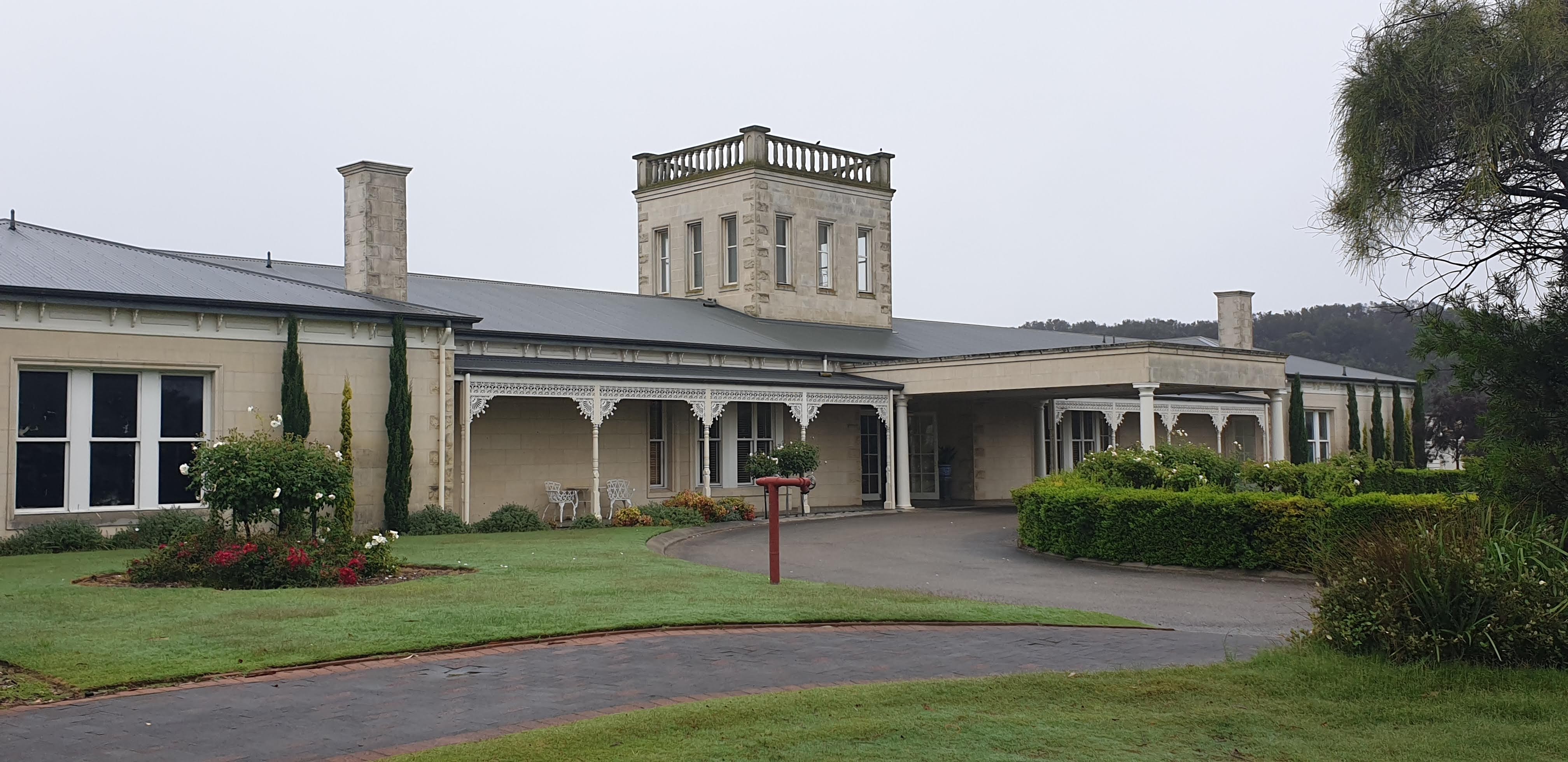
When I first saw it I thought it was an old country estate, converted and expanded into a golf clubhouse.

It wasn’t.  It is a purpose-built clubhouse and function center for corporate seminars and wedding receptions, as well as catering to the golfer, and golf tournaments.

20200215_100153

It also has a very good outlook over the golf course.

But, in my writer’s mind, this will provide inspiration for a story that could be set in a large country house,  with the central tower and lookout featuring in what might be a grisly death, and a group of guests who have gathered together to enact a mock murder that turns out to be very real.

Yes, the idea has been done to death over many many years, but I have a few new twists in mind.

Stay tuned.

“The Enemy Within” – the editor’s third draft – Day 27

This book has been sitting in the ‘to-be-done’ tray, so this month it is going to get the final revision.

And so it begins…

…

Do people care if spies have ethics?

…

A spy story is supposed to be larger than life.

We only have to watch one of the more recent James Bond films to know that if the fate of the whole world is not at stake, it’s not a spy story.

That, and the fact that the fate of the whole world rests in the hands of one man, or one woman, or a pair, both of whom profess they prefer to work alone, and begrudgingly accept the other’s help.

The bad guys are larger than life, and we just love to see them blown up in the most spectacular of manners. Sudden and quick death is not an option.

I wanted to go down this road, I really did…

But, nagging away in the back of my mind, there is a little spy story widget in my ear, saying, what if it’s not really like that?

What if the bad people are really masquerading as good people and normal people can’t see through the façade. What if the people who matter can’t see them either?

What if doing the job is being made impossible by the very people who told you to find and eliminate them? Only, you don’t know that’s what they’re doing.

To say it’s doing my head in, considering the possibilities, is an understatement.

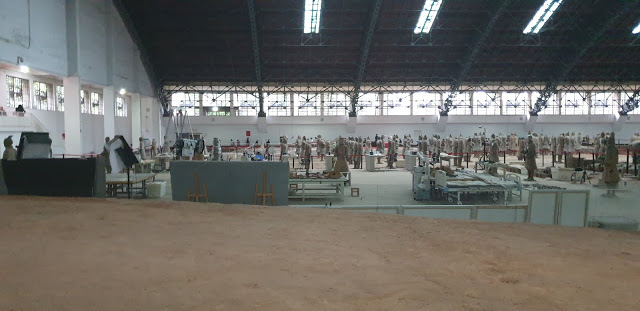
Searching for locations: Terracotta Warriors and Horses Museum, X’ian, China

Terracotta Warriors and Horses Museum

A little history, and anecdotal advice first:

In 1974 a 26-year-old farmer, Yang Jide, was drilling a well and found fragments of the terracotta soldiers and bronze weapons.

What was discovered later was one of the biggest attended burial pits of China’s first feudal Emperor, Qin Shi Huang.  In the following years remains had been found in 3 pits, yielding at least 8,000 soldiers and horses, and over 100 chariots.  The soldiers were infantry, cavalry, and others.

Emperor Qin was born in 259 BC and died in 210 BC.  He began building a mausoleum for himself at the foot of Mount Li when he was 13.  Construction took 38 years, from 247 BC to 208 BC.  It was divided into 3 stages and involved 720,000 conscripts.

The pits of pottery figures are 1.5 km east of Emperor Qin’s mausoleum.  Pit 1 has about 6,000 terracotta armored warriors and horses and 40 wooden chariots.  Pit 2 is estimated to have over 900 terracotta warriors and 350 terracotta horses with about 90 wooden chariots.  Pit 3 had so far yielded only 66 pottery figures and one chariot drawn by four horses.

Official records say it was discovered later that it was likely Xiang Yu, a rebel, intentionally damaged the Mausoleum and the soldiers in the pits, by setting fire to the wooden roof rafters, and these fell on and broke the warriors into pieces.

However, we were told that after the terracotta warriors were completed, the Emperor ordered the builders to be killed so that they would not tell anyone about the warriors, and then of those that remained alive deliberately smashed all of the artifacts.

The thing is, all of the terracotta figures that have been found are in pieces, and they need computers to piece them back together again.

The visit:
The first impression is the size of the car park and the number of buses parked in the lot, and a hell of a lot more outside up the road an off on side streets.  Obviously, it costs money to park in the parking lot.

The other first impressions; the numbers waiting to get in were not as many as yesterday outside the forbidden city, in fact, a lot less.

Be warned there’s a long walk from the entrance gate where your bags are scanned and a body scan as well, before admittance.  This walk is through a landscaped area which it is expect might sometime in the future reveal more soldiers, or other artifacts.

At the end of the walk that takes about ten minutes, you can get a one-way ride to the second checkpoint, but we opted not to as no one else in our group did.

That walk is the warm-up exercise to an organized viewing of the exhibits after going through a second ticket checkpoint.  On the other side, we had to hand our tickets back to the tour guide which was disappointing not to end up with a memento of actually having been there.

So, on the other side in the courtyard, the guide told us the most important parts of the exhibition, that we should spend most of the time looking at pit 1, and then spent a little time in 2 which is only there in the first stages of excavation.  Then move onto the museum if only to see the replica chariots.

We do.

The chariots were small but interesting

The horses were better and intricately detailed

These are soldiers, perhaps complete examples of those types found in the end pit.

This is one of the archers.  You can tell by the way he wears his hair.

Pit 2

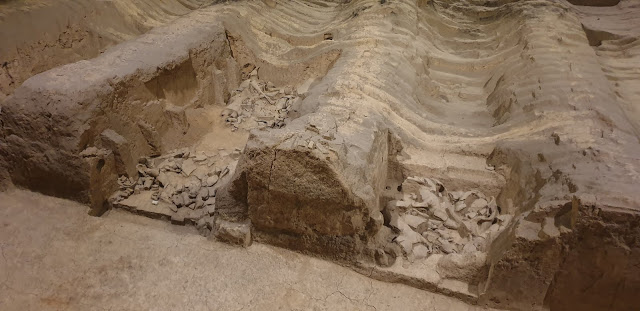
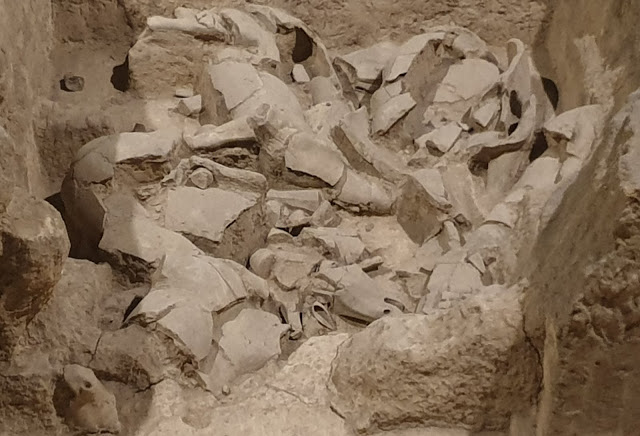
The excavation of this pit has only just begun, so it is possible to see where they have carefully removed the top cover, and you can see the broken parts of the warriors lying in a heap.

Some parts of the warriors are more discernible closer up

These parts are carefully extracted and taken to the ‘hospital’ where they are digitised and the computer will match each part with the warrior it belongs to.

Pit 1

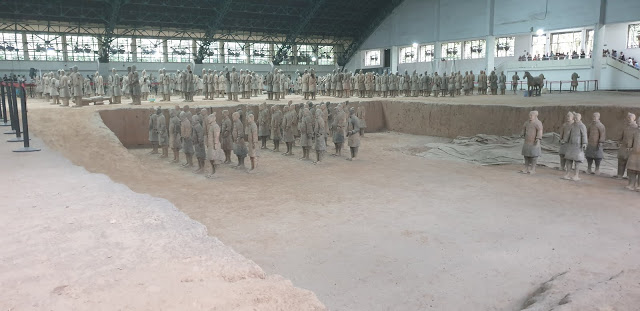
This has quite a number of standing soldiers that have been glued back together, but not necessarily complete and I notice a number if the statues were incomplete. And if they cannot find the missing pieces, then they are not added to or filled in.

The scale of the pit is enormous, and they have hardly scratched the surface in the restoration process.

What is there is a number of horses as well.

That’s at the front of the pit, a long line of statues, and what is clear is the location of the well where the first fragments were found by a farmer.

There are about eight lines of soldiers, and some lining the sides.

Midway down there is a large area currently under excavation

At the back is the hospital where the soldiers are reassembled.  There’s nearly a hundred in the various stages of rebuilding.  These days the soldiers are rebuilt using computer imaging.

The hospital area is where they are put back together

And these are some of the statues in various stages of reconstruction

Another two views of the size and scale of the reconstruction project

The coffee shop is also a sales centre, but there are too many people waiting for coffee and too few places to sit down.

What did it mean, “Being ‘undead’ isn’t being alive”

I remember one day many, many years ago seeing a piece of graffiti in a railway tunnel:  “Being undead isn’t being alive”.

It was the ’70s right after a turbulent ’60s when everything changed, where only the young, as I was at the time, didn’t recognise what had changed.

Of course, this is the problem down through the generations, where the older generation witnesses the changes, too fast, too sudden, and too radical, and the young, they adopt them without thinking.

And that piece of graffiti was more than likely a cry for help that would never come.

After all, the older generation never knew what had happened, and there was no means of coping.  Words were not enough, and it was the beginning of a breakdown in discipline and a lot more that didn’t manifest itself for a generation.

But that sign lived on, through the ’80s and the ’90s.  I first saw it as a child, it was still there when I was going to and from work on the train.  It made me wonder often during those years what the graffitist was trying to tell the world.

Being undead?  What sort of expression is that?

I think he or she was alluding to the fact that being alive was more than just drawing breath, eating and sleeping.

Those early years of youthful emancipation brought on all sorts of maladies and drugs.  We were never warned about them, not like they are now in schools, and it seemed everyone knew someone who knew where to get them.

I never tried them.  Not for the usual reasons, it was just I never found myself in a situation where I could get them, or try them to see what all the fuss was about.

Perhaps I should be glad it worked out that way.

Of course, I would never find out what the graffitist meant, but I suspect it could have been one of those moments of rare clarity, in a drug-induced haze, or the depths of despair from not having had the next ‘fix’.

Or was it something simple, like he or she had just broken up with a long-term partner, that painful time when one or other calls it quits? Or that time after an argument with one of your parents, or a best friend, and it seemed there was no path back?  Or is it like that feeling of being betrayed, that awful feeling when you discover your partner is cheating on you, and inevitably everyone else knows, but you’re the last to find out?

No, the message wasn’t that simple, especially because of the psychedelic manner in which it was presented on that wall, I doubt the perpetrator had an artistic talent they wanted to show off.  That artistic bent was fuelled by something else, perhaps a dream or a vision.

Or, instead, there was no real reason, and it was the culmination of having the freedom you always wanted, and yet being left with an emptiness that cannot be filled no matter how many drugs you take.  Was that why so many people back then died from an overdose?

I’ll never know who it was that put that sign on the wall, whether they lived or died, or whether they found what they were looking for.  Nor will I ever know what it was like to be in their shoes.

Perhaps I was one of the lucky people, who knows?

“The Things We Do For Love”

Would you give up everything to be with the one you love?

…

Is love the metaphorical equivalent to ‘walking the plank’; a dive into uncharted waters?

For Henry, the only romance he was interested in was a life at sea, and when away from it, he strived to find sanctuary from his family and perhaps life itself.  It takes him to a small village by the sea, a place he never expected to find another just like him, Michelle, whom he soon discovers is as mysterious as she is beautiful.

Henry had long since given up the notion of finding romance, and Michelle couldn’t get involved for reasons she could never explain, but in the end, both acknowledge that something happened the moment they first met.  

Plans were made, plans were revised, and hopes were shattered.

A chance encounter causes Michelle’s past to catch up with her, and whatever hope she had of having a normal life with Henry, or anyone else, is gone.  To keep him alive she has to destroy her blossoming relationship, an act that breaks her heart and shatters his.

But can love conquer all?

It takes a few words of encouragement from an unlikely source to send Henry and his friend Radly on an odyssey into the darkest corners of the red-light district in a race against time to find and rescue the woman he finally realizes is the love of his life.

The cover, at the moment, looks like this:

lovecoverfinal1

Is love the metaphorical equivalent to ‘walking the plank’; a dive into uncharted waters?

For Henry the only romance he was interested in was a life at sea, and when away from it, he strived to find sanctuary from his family and perhaps life itself.  It takes him to a small village by the sea, s place he never expected to find another just like him, Michelle, whom he soon discovers is as mysterious as she is beautiful.

Henry had long since given up the notion of finding romance, and Michelle couldn’t get involved for reasons she could never explain, but in the end both acknowledge that something happened the moment they first met.  

Plans were made, plans were revised, and hopes were shattered.

A chance encounter causes Michelle’s past to catch up with her, and whatever hope she had of having a normal life with Henry, or anyone else, is gone.  To keep him alive she has to destroy her blossoming relationship, an act that breaks her heart and shatters his.

But can love conquer all?

It takes a few words of encouragement from an unlikely source to send Henry and his friend Radly on an odyssey into the darkest corners of the red light district in a race against time to find and rescue the woman he finally realizes is the love of his life.

The cover, at the moment, looks like this:

lovecoverfinal1

Searching for locations: From Beijing to X’ian by bullet train

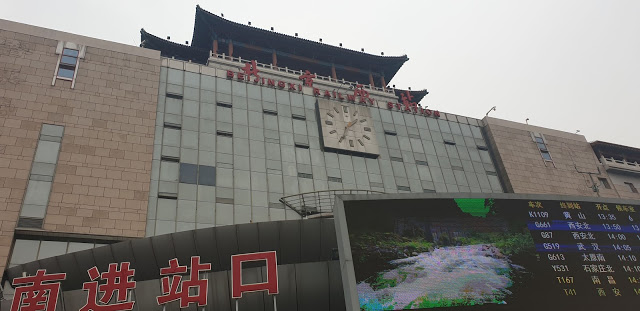
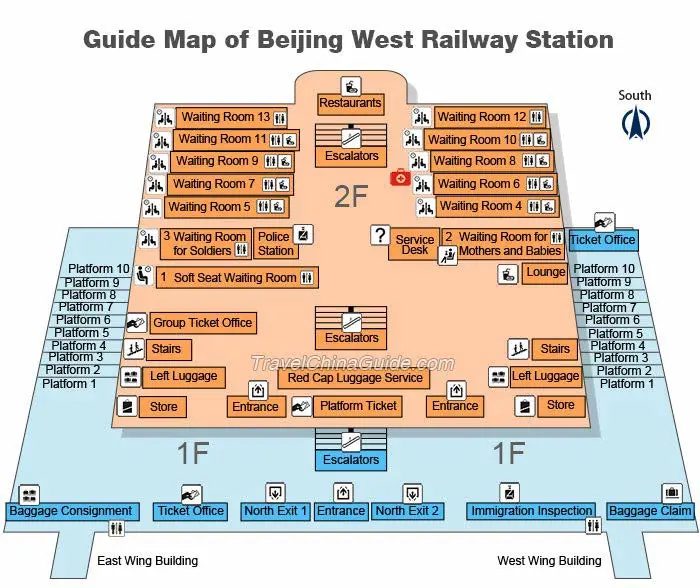
Beijing West train station.

Beijing west railway station is about eight kilometers from the Forbidden City, located at East Lianhuachi Road, Fengtai District.  Most trains traveling between south central, southwest, northwest, and south China are boarded here.

This place is huge and there are so many people here, perhaps the other half of Beijing’s population that wasn’t in the forbidden city.

Getting into the station looked like it was going to be fraught with danger but the tour guide got us into the right queue and then arranged for a separate scanner for the group to help keep us all together

Then we decided to take the VIP service and got to waiting room no 13, the VIP service waiting room which was full to overflowing.  Everyone today was a VIP.  We got the red hat guy to lead us to a special area away from the crowd.

Actually, it was on the other side of the gate, away from the hoards sitting or standing patiently in the waiting room.  It gave us a chance to get something to eat before the long train ride.

The departure is at 4 pm, the train number was G655, and we were told the trains leave on time.  As it is a high-speed train, stops are far and few between, but we’re lucky, this time, in that we don’t have to count stations to know where to get off.

We’re going to the end of the line.

However, it was interesting to note the stops which, in each case, were brief, and you had to be ready to get off in a hurry.

These stops were Shijiazhuang, Zhengzhou East, Luoyang Longmen, Huashan North, and Weinan North.  At night, you could see the lights of these cities from a distance and were like oases in the middle of a desert.  During the day, the most prominent features were high rise apartment blocks and power stations.

A train ride with a difference

G Trains at Wuhan Railway Station

China’s high-speed trains, also known as bullet or fast trains, can reach a top speed of 350 km/h (217 mph).

Over 2,800 pairs of bullet trains numbered by G, D or C run daily connecting over 550 cities in China and covering 33 of the country’s 34 provinces. Beijing-Shanghai high-speed train link the two megacities 1,318 km (819 mi) away in just 4.5 hours.

By 2019, China keeps the world’s largest high-speed rail (HSR) network with a length totaling over 35,000 km (21,750 mi).

To make the five and a half hours go quicker we keep an eye on the speed which hovers between 290 and 305 kph, and sitting there with our camera waiting for the speed to hit 305 which is a rare occurrence, and then, for 306 and then for 307, which happened when we all took a stroll up to the restaurant car to find there had nothing to eat.

I got a strange flavored drink for 20 yuan.

There was a lady manning a trolley that had some food, and fresh, maybe, fruit on it, and she had a sense of humor if not much English.

We didn’t but anything but the barrel of caramel popcorn looked good.

The good thing was, after hovering around 298, and 299 kph, it finally hit 300.

We get to the end of the line, and there is an announcement in Chinese that we don’t understand and attempts to find out if it is the last station fall on deaf ears, probably more to do with the language barrier than anything else.

Then, suddenly the train conductor, the lady with the red hat, comes and tells us it is, and we have fifteen minutes, so we’re now hurrying to get off.

As the group was are scattered up and down the platform, we all come together and we go down the escalator, and, at the bottom, we see the trip-a-deal flags.

X’ian,and the Xi’an North Railway Station

Xi’an North Railway Station is one of the most important transportation hubs of the Chinese high-speed rail network. It is about 8.7 miles (14 km) from Bell Tower (city center) and is located at the intersection of the Weiyang Road and Wenjing Road in Weiyang District.

This time we have a male guide, Sam, who meets us at the end of the platform after we have disembarked.  We have a few hiccups before we head to the bus.  Some of our travelers are not on his list, but with the other group.  Apparently a trip-a-deal mix-up or miscommunication perhaps.

Then it’s another long walk with bags to the bus.  Good thing its a nicely air-conditioned newish bus, and there’s water, and beer for 10 yuan.  How could you pass up a tsing tao for that price?

Xi’an is a very brightly lit up city at night with wide roads.  It is very welcoming, and a surprise for a city of 10 million out in the middle of China.

As with all hotels, it’s about a 50-minute drive from the railway station and we are all tired by the time we get there.

Tomorrow’s program will be up at 6, on the bus 8.40 and off to the soldiers, 2.00 late lunch, then train station to catch the 4.00 train, that will arrive 2 hours later at the next stop.  A not so late night this time.

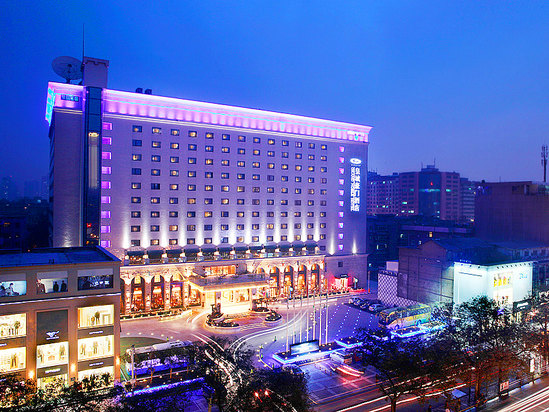
The Grand Noble Hotel

Outdoor scene

Grand Noble Hotel Xi’an is located in the most prosperous business district within the ancient city wall in the center of Xi’an.

The Grand Noble Hotel, like the Friendship Hotel, had a very flash foyer with tons of polished marble.  It sent out warning signals, but when we got to our room, we found it to be absolutely stunning.  More room, a large bathroom, air conditioning the works.

Only one small problem, as in Beijing the lighting is inadequate.  Other than that it’s what I would call a five-star hotel.  This one is definitely better than the Friendship Hotel.

In the center of the city, very close to the bell tower, one of the few ancient buildings left in Xi’an.  It is also in the middle of a larger roundabout and had a guard with a machine gun.

Sadly there was no time for city center sightseeing.