Searching for locations: Vancouver, Canada – 2

This morning we wake up to rain.  Or so we thought.  Taking a closer look out the window of our room on the 16th floor, we notice the rain is speckled with snowflakes.  As the morning progressed the snow got harder until there were flurries.

 Later we discover this is called wet snow by the local Vancouverians, and whilst they winge a lot over the endless rain, to them rain is infinitely better than snow.

To us, by the afternoon, it was almost blizzard conditions, with lots of snow.  Then the only thing is that it does not accumulate on most of the ground so there are no drifts to play in.

Because the weather is so dismal we decided not to go into Vancouver to do some sightseeing because the clouds were down to the ground and then the snow set in.

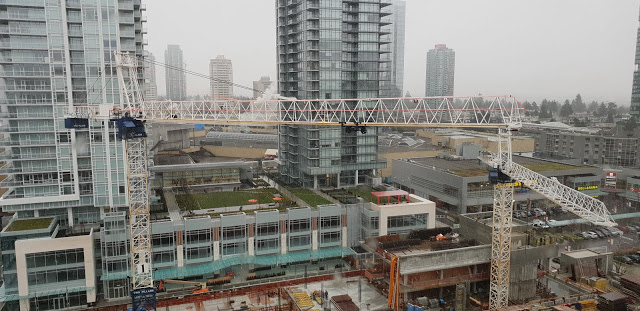
Another interesting fact is that construction workers do not go off the job if it’s raining, or worse when it is snowing.  Our room overlooks a new apartment complex under construction and the workers battled on through what seemed like appalling conditions.

At four in the afternoon, the Maple Leafs are playing the Ohio Blue Jackets, in Ohio.  It is a game we expect they will win.  Sparks is the goalkeeper, not Anderson, they’re playing back to back games and Anderson’s starting tomorrow.

They win, four goals to two.  

Just before darkness falls, about four thirty, the snow stops and there is a little rain, which melts the snow.

Time to go up to the executive lounge to get some snacks and coffee, then sleep because the next day we’re taking on the Trans Canada highway from Vancouver to Kamloops.

The forecast is for snow, more snow, and just for a change, more snow.

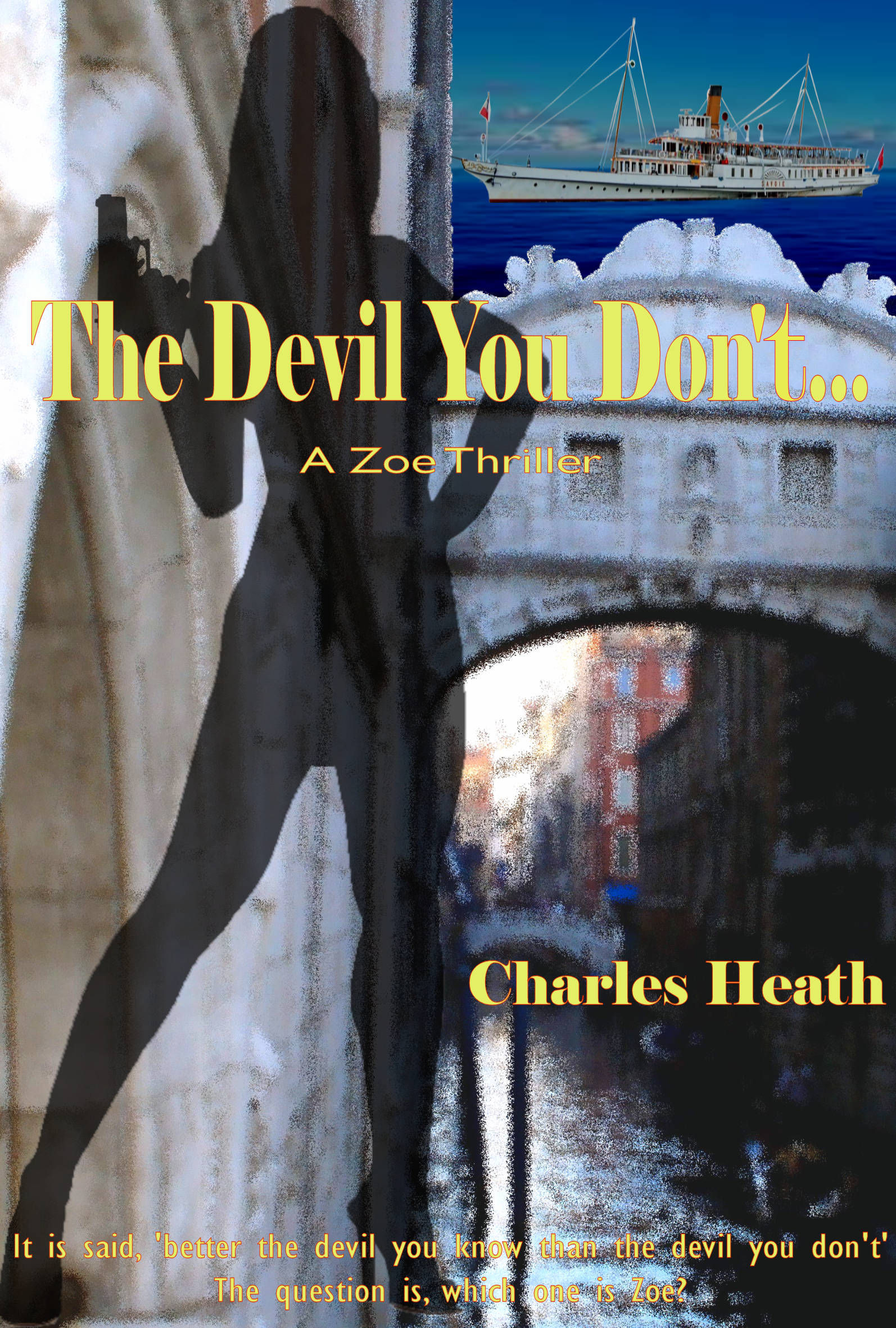
An excerpt from “The Devil You Don’t”

Available on Amazon Kindle here:  https://amzn.to/2Xyh1ow

…

By the time I returned to the Savoie, the rain had finally stopped, and there was a streak of blue sky to offer some hope the day would improve.

The ship was not crowded, the possibility of bad weather perhaps holding back potential passengers.  Of those I saw, a number of them would be aboard for the lunch by Phillippe Chevrier.  I thought about it, but the Concierge had told me about several restaurants in Yvoire and had given me a hand-drawn map of the village.  I think he came from the area because he spoke with the pride and knowledge of a resident.

I was looking down from the upper deck observing the last of the boarding passengers when I saw a woman, notable for her red coat and matching shoes, making a last-minute dash to get on board just before the gangway was removed.  In fact, her ungainly manner of boarding had also captured a few of the other passenger’s attention.  Now they would have something else to talk about, other than the possibility of further rain.

I saw her smile at the deckhand, but he did not smile back.  He was not impressed with her bravado, perhaps because of possible injury.  He looked at her ticket then nodded dismissively, and went back to his duties in getting the ship underway.  I was going to check the departure time, but I, like the other passengers, had my attention diverted to the woman in red.

From what I could see there was something about her.  It struck me when the light caught her as she turned to look down the deck, giving me a perfect profile.  I was going to say she looked foreign, but here, as in almost anywhere in Europe, that described just about everyone.  Perhaps I was just comparing her to Phillipa, so definitively British, whereas this woman was very definitely not.

She was perhaps in her 30’s, slim or perhaps the word I’d use was lissom, and had the look and manner of a model.  I say that because Phillipa had dragged me to most of the showings, whether in Milan, Rome, New York, London, or Paris.  The clothes were familiar, and in the back of my mind, I had a feeling I’d seen her before.

Or perhaps, to me, all models looked the same.

She looked up in my direction, and before I could divert my eyes, she locked on.  I could feel her gaze boring into me, and then it was gone as if she had been looking straight through me.  I remained out on deck as the ship got underway, watching her disappear inside the cabin.  My curiosity was piqued, so I decided to keep an eye out for her.

I could feel the coolness of the air as the ship picked up speed, not that it was going to be very fast.  With stops, the trip would take nearly two hours to get to my destination.  It would turn back almost immediately, but I was going to stay until the evening when it returned at about half eight.  It would give me enough time to sample the local fare, and take a tour of the medieval village.

Few other passengers ventured out on the deck, most staying inside or going to lunch.  After a short time, I came back down to the main deck and headed forward.  I wanted to clear my head by concentrating on the movement of the vessel through the water, breathing in the crisp, clean air, and let the peacefulness of the surroundings envelope me.

It didn’t work.

I knew it wouldn’t be long before I started thinking about why things hadn’t worked, and what part I played in it.  And the usual question that came to mind when something didn’t work out.  What was wrong with me?

I usually blamed it on my upbringing.

I had one of those so-called privileged lives, a nanny till I was old enough to go to boarding school, then sent to the best schools in the land.  There I learned everything I needed to be the son of a Duke, or, as my father called it in one of his lighter moments, nobility in waiting.

Had this been five or six hundred years ago, I would need to have sword and jousting skills, or if it had been a few hundred years later a keen military mind.  If nothing else I could ride a horse, and go on hunts, or did until they became not the thing to do.

I learned six languages, and everything I needed to become a diplomat in the far-flung British Empire, except the Empire had become the Commonwealth, and then, when no-one was looking, Britain’s influence in the world finally disappeared.  I was a man without a cause, without a vocation, and no place to go.

Computers were the new vogue and I had an aptitude for programming.  I guess that went hand in hand with mathematics, which although I hated the subject, I excelled in.  Both I and another noble outcast used to toss ideas around in school, but when it came to the end of our education, he chose to enter the public service, and I took a few of those ideas we had mulled over and turned them into a company.

About a year ago, I was made an offer I couldn’t refuse.  There were so many zeroes on the end of it I just said yes, put the money into a very grateful bank, and was still trying to come to terms with it.

Sadly, I still had no idea what I was going to do with the rest of my life.  My parents had asked me to come back home and help manage the estate, and I did for a few weeks.  It was as long as it took for my parents to drive me insane.

Back in the city, I spent a few months looking for a mundane job, but there were very few that suited the qualifications I had, and the rest, I think I intimidated the interviewer simply because of who I was.  In that time I’d also featured on the cover of the Economist, and through my well-meaning accountant, started involving myself with various charities, earning the title ‘philanthropist’.

And despite all of this exposure, even making one of those ubiquitous ‘eligible bachelor’ lists, I still could not find ‘the one’, the woman I wanted to spend the rest of my life with.  Phillipa seemed to fit the bill, but in time she proved to be a troubled soul with ‘Daddy’ issues.  I knew that in building a relationship compromise was necessary, but with her, in the end, everything was a compromise and what had happened was always going to be the end result.

It was perhaps a by-product of the whole nobility thing.  There was a certain expectation I had to fulfill, to my peers, contemporaries, parents and family, and those who either liked or hated what it represented.  The problem was, I didn’t feel like I belonged.  Not like my friend from schooldays, and now obscure acquaintance, Sebastian.  He had been elevated to his Dukedom early when his father died when he was in his twenties.  He had managed to fade from the limelight and was rarely mentioned either in the papers or the gossip columns.  He was one of the lucky ones.

I had managed to keep a similarly low profile until I met Phillipa.  From that moment, my obscurity disappeared.  It was, I could see now, part of a plan put in place by Phillipa’s father, a man who hogged the limelight with his daughter, to raise the profile of the family name and through it their businesses.  He was nothing if not the consummate self-advertisement.

Perhaps I was supposed to be the last piece of the puzzle, the attachment to the establishment, that link with a class of people he would not normally get in the front door.  There was nothing refined about him or his family, and more than once I’d noticed my contemporaries cringe at the mention of his name, or any reference of my association with him.

Yet could I truthfully say I really wanted to go back to the obscurity I had before Phillipa?  For all her faults, there were times when she had been fun to be with, particularly when I first met her when she had a certain air of unpredictability.  That had slowly disappeared as she became part of her father’s plan for the future.  She just failed to see how much he was using her.

Or perhaps, over time, I had become cynical.

I thought about calling her.  It was one of those moments of weakness when I felt alone, more alone than usual.

I diverted my attention back to my surroundings and the shoreline.  Out of the corner of my eye, I could see the woman in the red coat, making a move.  The red coat was like a beacon, a sort of fire engine red.  It was not the sort of coat most of the women I knew would wear, but on her, it looked terrific.  In fact, her sublime beauty was the one other attribute that was distinctly noticeable, along with the fact her hair was short, rather than long, and jet black.

I had to wrench my attention away from her.

A few minutes later several other passengers came out of the cabin for a walk around the deck, perhaps to get some exercise, perhaps checking up on me, or perhaps I was being paranoid.  I waited till they passed on their way forward, and I turned and headed aft.

I watched the wake sluicing out from under the stern for a few minutes, before retracing my steps to the front of the ship and there I stood against the railing, watching the bow carve its way through the water.  It was almost mesmerizing.  There, I emptied my mind of thoughts about Phillipa, and thoughts about the woman in the red coat.

Until a female voice behind me said, “Having a bad day?”

I started, caught by surprise, and slowly turned.  The woman in the red coat had somehow got very close me without my realizing it.  How did she do that?  I was so surprised I couldn’t answer immediately.

“I do hope you are not contemplating jumping.  I hear the water is very cold.”

Closer up, I could see what I’d missed when I saw her on the main deck.  There was a slight hint of Chinese, or Oriental, in her particularly around the eyes, and of her hair which was jet black.  An ancestor twice or more removed had left their mark, not in a dominant way, but more subtle, and easily missed except from a very short distance away, like now.

Other than that, she was quite possibly Eastern European, perhaps Russian, though that covered a lot of territory.  The incongruity of it was that she spoke with an American accent, and fluent enough for me to believe English was her first language.

Usually, I could ‘read’ people, but she was a clean slate.  Her expression was one of amusement, but with cold eyes.  My first thought, then, was to be careful.

“No.  Not yet.”  I coughed to clear my throat because I could hardly speak.  And blushed, because that was what I did when confronted by a woman, beautiful or otherwise.

The amusement gave way to a hint of a smile that brightened her demeanor as a little warmth reached her eyes.  “So that’s a maybe.  Should I change into my lifesaving gear, just in case?”

It conjured up a rather interesting image in my mind until I reluctantly dismissed it.

“Perhaps I should move away from the edge,” I said, moving sideways until I was back on the main deck, a few feet further away.  Her eyes had followed me, and when I stopped she turned to face me again.  She did not move closer.

I realized then she had removed her beret and it was in her left side coat pocket.  “Thanks for your concern …?”

“Zoe.”

“Thanks for your concern, Zoe.  By the way, my name is John.”

She smiled again, perhaps in an attempt to put me at ease.  “I saw you earlier, you looked so sad, I thought …”

“I might throw myself overboard?”

“An idiotic notion I admit, but it is better to be safe than sorry.”

Then she tilted her head to one side then the other, looking intently at me.  “You seem to be familiar.  Do I know you?”

I tried to think of where I may have seen her before, but all I could remember was what I’d thought earlier when I first saw her; she was a model and had been at one of the showings.  If she was, it would be more likely she would remember Phillipa, not me.  Phillipa always had to sit in the front row.

“Probably not.”  I also didn’t mention the fact she may have seen my picture in the society pages of several tabloid newspapers because she didn’t look the sort of woman who needed a daily dose of the comings and goings, and, more often than not, scandal associated with so-called celebrities.

She gave me a look, one that told me she had just realized who I was.  “Yes, I remember now.  You made the front cover of the Economist.  You sold your company for a small fortune.”

Of course.  She was not the first who had recognized me from that cover.  It had raised my profile considerably, but not the Sternhaven’s.  That article had not mentioned Phillipa or her family.  I suspect Grandmother had something to do with that, and it was, now I thought about it, another nail in the coffin that was my relationship with Phillipa.

“I wouldn’t say it was a fortune, small or otherwise, just fortunate.”  Each time, I found myself playing down the wealth aspect of the business deal.

“Perhaps then, as the journalist wrote, you were lucky.  It is not, I think, a good time for internet-based companies.”

The latter statement was an interesting fact, one she read in the Financial Times which had made that exact comment recently.

“But I am boring you.”  She smiled again.  “I should be minding my own business and leaving you to your thoughts.  I am sorry.”

She turned to leave and took a few steps towards the main cabin.

“You’re not boring me,” I said, thinking I was letting my paranoia get the better of me.  It had been Sebastian on learning of my good fortune, who had warned me against ‘a certain element here and abroad’ whose sole aim would be to separate me from my money.  He was not very subtle when he described their methods.

But I knew he was right.  I should have let her walk away.

She stopped and turned around.  “You seem nothing like the man I read about in the Economist.”

A sudden and awful thought popped into my head.  Those words were part of a very familiar opening gambit.  “Are you a reporter?”

I was not sure if she looked surprised, or amused.  “Do I look like one?”

I silently cursed myself for speaking before thinking, and then immediately ignored my own admonishment.  “People rarely look like what they are.”

I saw the subtle shake of the head and expected her to take her leave.  Instead she astonished me.

“I fear we have got off on the wrong foot.  To be honest, I’m not usually this forward, but you seemed like you needed cheering up when probably the opposite is true.  Aside from the fact this excursion was probably a bad idea.  And,” she added with a little shrug, “perhaps I talk too much.”

I was not sure what I thought of her after that extraordinary admission. It was not something I would do, but it was an interesting way to approach someone and have them ignoring their natural instinct.  I would let Sebastian whisper in my ear for a little longer and see where this was going.

“Oddly enough, I was thinking the same thing.  I was supposed to be traveling with my prospective bride.  I think you can imagine how that turned out.”

“She’s not here?”

“No.”

“She’s in the cabin?”  Her eyes strayed in that direction for a moment then came back to me.  She seemed surprised I might be traveling with someone.

“No.  She is back in England, and the wedding is off.  So is the relationship.  She dumped me by text.”

OK, why was I sharing this humiliating piece of information with her?  I still couldn’t be sure she was not a reporter.

She motioned to an empty seat, back from the edge.  No walking the plank today.  She moved towards it and sat down.  She showed no signs of being cold, nor interested in the breeze upsetting her hair.  Phillipa would be having a tantrum about now, being kept outside, and freaking out over what the breeze might be doing to her appearance.

I wondered, if only for a few seconds if she used this approach with anyone else.  I guess I was a little different, a seemingly rich businessman alone on a ferry on Lake Geneva, contemplating the way his life had gone so completely off track.

She watched as I sat at the other end of the bench, leaving about a yard between us.  After I leaned back and made myself as comfortable as I could, she said, “I have also experienced something similar, though not by text message.  It is difficult, the first few days.”

“I saw it coming.”

“I did not.”  She frowned, a sort of lifeless expression taking over, perhaps brought on by the memory of what had happened to her.  “But it is done, and I moved on.  Was she the love of your life?”

OK, that was unexpected.

When I didn’t answer, she said, “I am sorry.  Sometimes I ask personal questions without realizing what I’m doing.  It is none of my business.”  She shivered.  “Perhaps we should go back inside.”

She stood, and held out her hand.  Should I take it and be drawn into her web?  I thought of Sebastian.  What would he do in this situation?

I took her hand in mine and let her pull me gently to my feet.  “Wise choice,” she said, looking up at the sky.

It just started to rain.

…

© Charles Heath 2015-2023
newdevilcvr6

Writing a book in 365 days – 60/61

Days 60 and 61

Research to make your writing authentic

Whenever I’m writing about a place or about something I’m not familiar with, Google steps in as my aid of choice.

Google to search for the vague stuff.

Google Maps to check out the locations.

Google Street View to get a close look at the locations.

Via Michelin to calculate travel times between cities and what there is to be seen along the way.

Any number of airline sites for travel between cities and countries.

That’s what I can do after visiting the actual places. Yes, my vacations often are to places overseas where I keep a journal noting everything I see, and take lots of photos so that I am across any location I use in my stories.

These typically live in either London and surrounds, or New York and surrounds, because I have been to both many times. Just as frequent are the cities of Paris, Rome, Florence, Venice, and a large part of Tuscany.

That includes riding on trains, the London Underground, the New York Subway, and the Chicago ELL and familiarising myself with buses, cabs, and other modes of transport.

Then there’s the subject matter, and several I’m working on currently,

An interest in space, the planets, and what it’s like to travel into outer space.

Kings and Queens, medieval times, and the people that lived during that time. Ordinary people, feasting and banquets, dancing, and social structures.

Amateur Astronomy, and just plain stargazing.

The various stages of schooling in England and America. I have an interest in their proms, and reunions.

The police and detective rank in the police forces in England and America, including the sheriffs.

I always wanted to fly a plane – and can, in my story.

I’m sure you will have a million other things you would like to know about, and the internet is always on hand.

“What Sets Us Apart”, a mystery with a twist

David is a man troubled by a past he is trying to forget.

Susan is rebelling against a life of privilege and an exasperated mother who holds a secret that will determine her daughter’s destiny.

They are two people brought together by chance. Or was it?

When Susan discovers her mother’s secret, she goes in search of the truth that has been hidden from her since the day she was born.

When David realizes her absence is more than the usual cooling off after another heated argument, he finds himself being slowly drawn back into his former world of deceit and lies.

Then, back with his former employers, David quickly discovers nothing is what it seems as he embarks on a dangerous mission to find Susan before he loses her forever.

Find the kindle version on Amazon here:  http://amzn.to/2Eryfth

whatsetscover

In a word: play

I’m going to play a game. 

Is that a video game on the computer, or I’d that a board game with friends?

In reality, I didn’t play games with friends because I’m a poor loser.  Especially monopoly.

But to play a game often means you take on a persona or a role, as one, or one of many.

Personally, I like role-playing games like dungeons and dragons.

I’m going to a play

This is a stage production of a scripted story with various people in roles.

A play can have a star, a lead actor in a pivotal role to draw in the viewers

I’ve been to good plays and bad ones with great actors and some not-so-great ones.

A play can be hard to understand, it can be a musical with singing and dancing, or it can be rollicking good fun where the audience dances in their seats.

The worst play I ever saw was Dr Zhivago, it never seemed to end.

The best play, The Pyjama Game, with John Inman from Are You Being Served, a British comedy TV show.

I’m going to play the game

There’s a slight difference between this and the first example because it means instead of doing something your own way, you’re going to do eat everyone else does, prompting the analogy, you’re going to fight fire with fire.

Yep, even the explanations can be confusing.  You have to love the English language for being that.

I’m going to play a role

So many connotations to this one.  For instance, I’m going to be someone I’m not.  If I’m a kind person, then I’m going to pretend I’m mean.

I’m going to join a group of like-minded people and help further their cause, that is to say, together we changed the course of history, and I had a role in that.

Let’s hope it was for the betterment of mankind and not a leap towards infamy.

And of course, if you play a part in a play, it means you are pretending to be someone else.  I like the idea of playing God, but that’s usually the lead actor, I’m usually the janitor, servant, or just plain dogsbody.

“The Things We Do For Love”

Would you give up everything to be with the one you love?

…

Is love the metaphorical equivalent to ‘walking the plank’; a dive into uncharted waters?

For Henry, the only romance he was interested in was a life at sea, and when away from it, he strived to find sanctuary from his family and perhaps life itself.  It takes him to a small village by the sea, a place he never expected to find another just like him, Michelle, whom he soon discovers is as mysterious as she is beautiful.

Henry had long since given up the notion of finding romance, and Michelle couldn’t get involved for reasons she could never explain, but in the end, both acknowledge that something happened the moment they first met.  

Plans were made, plans were revised, and hopes were shattered.

A chance encounter causes Michelle’s past to catch up with her, and whatever hope she had of having a normal life with Henry, or anyone else, is gone.  To keep him alive she has to destroy her blossoming relationship, an act that breaks her heart and shatters his.

But can love conquer all?

It takes a few words of encouragement from an unlikely source to send Henry and his friend Radly on an odyssey into the darkest corners of the red-light district in a race against time to find and rescue the woman he finally realizes is the love of his life.

The cover, at the moment, looks like this:

lovecoverfinal1

Is love the metaphorical equivalent to ‘walking the plank’; a dive into uncharted waters?

For Henry, the only romance he was interested in was a life at sea, and when away from it, he strived to find sanctuary from his family and perhaps life itself.  It takes him to a small village by the sea, s place he never expected to find another just like him, Michelle, whom he soon discovers is as mysterious as she is beautiful.

Henry had long since given up the notion of finding romance, and Michelle couldn’t get involved for reasons she could never explain, but in the end, both acknowledge that something happened the moment they first met.  

Plans were made, plans were revised, and hopes were shattered.

A chance encounter causes Michelle’s past to catch up with her, and whatever hope she had of having a normal life with Henry, or anyone else, is gone.  To keep him alive she has to destroy her blossoming relationship, an act that breaks her heart and shatters his.

But can love conquer all?

It takes a few words of encouragement from an unlikely source to send Henry and his friend Radly on an odyssey into the darkest corners of the red-light district in a race against time to find and rescue the woman he finally realizes is the love of his life.

The cover, at the moment, looks like this:

lovecoverfinal1

The cinema of my dreams – I never wanted to go to Africa – Episode 8

…

Was that a battle of wits?

…

I think I won the battle of wits, or whatever it was.

A few moments later he sat on the other side, pushing the chair back from the table, and me, as a deliberate act.

Distancing.

Besides adopting the speak when spoken to route, I was also adopting that age old modus operandi of not volunteering anything. If they knew anything they would have to tell me what they knew.

So, to begin with, another round of silence.

Then, after a few more minutes, s thin knowing smile, as if he knew everything I’d do before I did. Perhaps he was a psychology professor.

“What we you doing in a no fly zone?”

Well that answered at least two questions right there. We were where we were not supposed to be, and, as a stab in the dark, knowing how good the pilot was, we had deliberately strayed there.

On orders, or curiosity. No, orders.

Reason, suspected enemy or other activity in a designated area being used as cover. Had the Commander known about this and ordered a discreet incursion.

It felt more like a routine operation.

“I was not the pilot. You’d have to ask him, although that might be difficult now he’s dead.”

“The nature of you pre op briefing, then?”

“There wasn’t one, or if there was, I wasn’t included.”

“That would be a violation of regulations would it not?”

“You’d have to ask the military lawyers. I just make up the numbers, and do as I’m told.” I could add more but don’t volunteer information. Let them dig for it.

“Then why were you on board?”

He asked that question as if it was a surprise to him or someone else.

I think at that moment I realised there might be bigger fish that might get fried from this interview. There was an arrangement in place that if the pilot wanted to go up for extra hours, he had to take someone like me along, for situations like that which had happened.

This had been sanctioned by the Commander, but I don’t think it included heading out to hot spots. If this man was from our side, he might be on a witch hunt.

I looked at him in a new light.

This man was trouble of a different sort.

…

© Charles Heath 2019-2021

The cinema of my dreams – I always wanted to write a war story – Episode 8

This is a story inspired by a visit to an old castle in Italy. It was, of course, written while travelling on a plane, though I’m not sure if it was from Calgary to Toronto, or New York to Vancouver.

But, there’s more to come. Those were long flights…

And sadly when I read what I’d written, off the plane and in the cold hard light of dawn, there were problems, which now in the second draft, should provide the proper start.

A voice with a German accent, a male, middle-aged.  A scientist?  He sounded very frightened.

“Apparently I’m on the wrong side.”

“Englander?”  The voice sounded very close, perhaps the cell next to mine.

“Yes.  Seems the men upstairs are not, even though they look like my fellow soldiers, so you can imagine my surprise when I discovered they were German.  Did you come here looking for a better life away from the Reich?”

“I heard rumours of such a place in Italy where if you had certain information, they, the British and Americans would help you escape.  I thought it was another SS ruse, but a friend told me he believed it was true, and we came together.”

“Is he still here?”

“No.  He was granted safe passage with another group who left a week ago, or so I was told.”

“And why are you still here?”

“Waiting to be sent in the next group.”

I arrived a week ago, probably just after the last group had been dispatched, more than likely to their deaths, or back to the Reich.  No more had been processed since I’d arrived.  No one had come or gone.

“How did you specifically get here?”

“The Resistance.  We had a name to contact in the town not far from here.  He then arranged for us to be brought here.”

Not the resistance that may have originally been involved, but a collaborator.  I’d been having problems communicating with the resistance cells in this area, and now I think I knew why.  They’d been informed on by one of their own.  Because of the problems, we’d decided not to use the normal channels to get, and because they didn’t know I was coming it was the reason why there ‘d been the last minute botched attempt on my life in transit.

The problem was far worse than any of us had imagined.

And there was a lot less hope for a rescue by the local resistance.

“How many others are here?”

“Three.  There have been no new arrivals for several days.  And I think there are a few prisoners who are being tortured by the sound of it.”

And if Jackerby gets his way, I might be added to the list of suspects to be questioned.  I’m sure it wouldn’t be long before they realised I had usable information, especially about the resistance cells.  It certainly gave credence as to why Jackerby hadn’t been so rough with me.

It looked like it wasn’t going to be long before being asked a few sticky questions.

© Charles Heath 2019

“Going out of my mind…” – a short story


Accidents can happen.

Sometimes they’re your fault, sometimes they’re not.

The accident I was in was not. Late at night driving home from work, a car came speeding out of a side street and T-boned my car.

It could have been worse, though the person who said it had a quite different definition of the word worse than I did.

To start with, I lost three months of my life in a coma, and even when I surfaced, it took another month to realize what had happened. Then came two months of working out my recovery plan.

If that wasn’t trial enough, what someone else might describe as the ‘last straw that broke the camel’s back’, my wife of 22 years decided to send me a text that morning, what was six months in hospital, to the day.

“I’m sorry, Joe, but enough is enough. I cannot visit you anymore, and for the sake of both our sanity, I think it’s time to draw a line in the sand. I know what happened isn’t your fault but given the prognosis, I don’t think I can cope with the situation. I need time to think about what will happen next and to do so, I’ll be going home to spend some time with family. Once again, I’m so sorry not to be doing this in person. I’ll let you know what I decide in due course. In the meantime, you have my best wishes for your recovery.”

In other words, goodbye. Her family lived in England, about 12,000 miles away in another hemisphere, and the likelihood of her returning was remote. We had meant to visit them, and had, in fact, booked the tickets shortly before the accident. I guess she couldn’t wait any longer.

My usual nurse came in for the first visit on this shift. She had become the familiar face on my journey, the one who made it worth waking up every morning.

“You look a little down in the dumps this morning. What’s up?”

She knew it couldn’t be for medical reasons because the doctor just yesterday had remarked how remarkable my recovery had been in the last week or so. Even I had been surprised given all the previous negative reports.

“Ever broken up by text?”

“What do you mean?”

“Frances has decided she no longer wants to be involved. I can’t say I blame her, she has put her whole life on hold because of this.”

“That’s surprising. She’s never shown any disappointment.”

“Six months have been a long time for everyone. We were supposed to be going home so she could see her family. Maybe that’s what it’s all about.”

I gave her the phone and she read the message.

Then she handed it back. “That’s goodbye, Tom. I’m sorry. And no, I’ve never had a breakup by text, but I guess there could always be a first time.”

She spent the next ten minutes going through the morning ritual, then said, “I’ve heard there’s a new doctor coming to visit you. Whatever has happened in the last few days had tongues wagging, and you might just become the next modern miracle. Fame and fortune await.”

“Just being able to walk again will be miracle enough.”

That had been the worst of it. The prognosis that it was likely I’d never be able to walk again, or work, and the changes to our lives that would cause. I knew Frances was bitterly disappointed that she might become the spouse who had to spend the rest of her life looking after me, and though she had said it didn’t matter, that she would be there for me, deep down I knew a commitment like that took more internal fortitude than she had.

She ran her own business, managed three children into adulthood, and had a life other than what we had together. When I was fit and able, and nothing got in the way, it had worked. Stopping everything to cater to my problems had severely curtailed her life. Something had to give, and it had.

But, as I said, I didn’t blame her. She had tried, putting in a brave face day after day but once the daily visits slipped to every other day, to once a week, I knew then the ship was heading towards the rocks.

This morning it foundered.

I pondered the situation for an hour before I sent a reply. “I believe you have made the right decision. It’s time to call it, go home and take some time to consider what to do next is right. In normal circumstances, we would not be considering any of this, but these are not normal circumstances. But, just in case you are worried about the effect of all of this on me, don’t. I will get over it, whatever the result is, and what you need to do first and foremost is to concentrate on what is best for you. If that means drawing a line on this relationship, so be it. All I want for you is for you to be happy, and clearly, having to contend with this, and everything else on your plate, is not helping. I am glad we had what time we had together and will cherish the memories forever, and I will always love you, no matter what you decide.”

It was heartfelt, and I meant it. But life was not going to be the same without her.

…

I’d dozed off after sending the message, and only woke again when my usual doctor came into the room on his morning rounds, the usual entourage of doctors and interns in tow. I’d been a great case for sparking endless debate on the best route for my recovery among those fresh out of medical school. Some ideas were radical, others pie in the sky, but one that seemed implausible had got a hearing, and then the go-ahead, mainly because there was little else that apparently could be done.

That doctor, and now another I hadn’t seen before was standing in the front row, rather than at the back.

The doctor in charge went through the basics of the case, as he did every day, mainly because the entourage changed daily. Then, he deferred to the radical doctor as I decided to call her.

She went through the details of a discovery she had made, and the recommendation she’d made as a possible road to recovery, one which involved several radical operations which had been undertaken by the elderly man standing beside her. When I first met him, I thought he was an escaped patient from the psychiatric ward, not the pre-eminent back surgeon reputed to be the miracle worker himself.

It seemed, based on the latest x-rays, that a miracle had occurred, but whether it was or not would not be known for another week. Then, if all went well, I would be able to get out of bed, and, at the very least, be able to stand on my own. In the meantime, I had endless sessions of physio in the lead-up to the big event. Six months in bed had taken its toll on everything, and the week’s work was going to correct some of that.

It meant there was hope, and despite what I said and thought, hope was what I needed.

There had been ups and downs before this, fuelled by a morning when I woke up and found I could wriggle my toes. It was after the second operation, and I thought, given the number of painkillers, it had been my imagination.

When I mentioned it, there was some initial excitement, and, yes, it was true, I wasn’t going out of my mind, it was real. The downside was, that I couldn’t move anything else, and other than an encouraging sign, as the days passed, and nothing more happened, the faces got longer.

Then, the physiotherapist moved in and started working on the areas that should be coming back to life. I felt little, maybe the painkillers again, until the next, and perhaps the last operation. I managed to lift my left leg a fraction of an inch.

But we’d been here before, and I wasn’t going to hold my breath.

…

Annabel, the daughter who lived on the other side of the country, finally arrived to visit me. I had thought, not being so far away she might have come earlier, but a few phone calls had sorted out her absence. Firstly, there was not much use visiting a coma patient, second, she was in a delicate stage of her professional career and a break might be the end of it, and thirdly, she accepted that I didn’t want to see her until I was much better.

She was not very happy about it, but it was a costly venture for her, in terms of time, being away from a young family, and just getting there.

Now, the time had come. She had a conference to attend, and I was happy to play second fiddle.

After the hugs and a few tears, she settled in the uncomfortable bedside chair.

“You don’t look very different than the last time I saw you,” she said.

“Hospitals have perfected the art of hiding the worst of it, but it’s true. The swelling had receded, the physios have revived the muscles, and I have a little movement again.”

“The injuries are not permanent?”

“Oh, they’re permanent but not as bad as first thought.”

“Pity my mother isn’t here.”

“She was day after day, through the darkest period. I wouldn’t wish that on anyone. But your mother is an independent woman, and she has always been free to do what she wants, and I would not have had it any other way.”

“But deserting you in the middle of all this…”

“It’s been very debilitating on her. I can understand her reasons, and so should you. She will still be your mother no matter what happens to us.”

There had been a number of phone calls, from each of the children, decrying her actions after she had sent a text message to each of them telling them what she was doing. She had not told them she was leaving, in so many words, but leaving the door ajar, perhaps to allay their fears she was deserting them too. Annabel had been furious. The other two, not so much.

“And this latest development?”

I had also told her about the miracle worker, and the possibilities, without trying to get hopes up.

“On a scale of one to ten, it’s a three. We’ve been here before, so I’m going to save the excitement for when it happens, if it happens.”

“And if it doesn’t?”

It was a question I’d asked myself a number of times, one that I didn’t want an answer to. Hope was staving it off, each day a new day of discovery, and a day closer to the idea I might walk again. I had to believe it would happen, if not the next day, the next week, month, year, that it would eventually happen.

For now, all I had to do was stand on my own two feet.

It was ironic, in a way, that simple statement. ‘Stand on your own two feet’. Right then, it seemed so near, and yet, at the same time, so far away.

I didn’t answer that question, but did what I usually did with visitors, run a distraction and talk about everything else. This visit was no exception. I had a lot of catching up to do.

…

It’s odd how some call the day of momentous events D-Day because to me nothing would be more momentous than the invasion of France during the Second World War.

Others were not quite of the same opinion. It was going to be a momentous day.

It started the same as any other.

The morning routine was when the duty nurse came to do the checks. Then the physio, now a permanent fixture mid-morning, just after the tea lady arrived. Deliberate, I thought, to deprive me of my tea break, and some unbelievably delicious coconut cookies.

Then the routine changed, and the escort arrived to take me down to the room where the physio had set up an obstacle course. It looked like one, and I’d told him so when I first saw it, and he had said by the time he was finished with me, I’d be able to go from start to finish without breaking a sweat.

In my mind perhaps, but not with this broken body. I didn’t say that because I was meant to be positive.

An entourage arrived for the main event. I would have been happier to fail in front of the doctor, the miracle worker, and the physio, but it seemed everyone wanted a front-row seat. If it worked, the physio confided in me, there was fame and fortune being mentioned in Lancet, which was a prestigious medical journal.

Expectations were running high.

The physio had gone through the program at least a hundred times, and the previous day we had got to the point where I was sitting on the side of the bed. We’d tried this ordinary maneuver several times, previously without success under my own steam but this morning, for some reason it was different.

I was able to sit up, and then, with a struggle move my legs part of the way, and with a little help for the rest.

What was encouraging, was being able to swing my legs a short distance. It was those simple things that everyone could do without thinking, that had seemed impossible not a month before, that got people excited. I didn’t know how I felt other than I missed those simple things.

Then the moment had arrived. Hushed silence.

There was a structure in place. All I had to do was pull myself across, at the same time sliding off the bed and into a standing position. There was a safety harness attached so that if my grip slipped it would prevent me from falling.

It was probably not the time to tell them the pain in my lower back was getting worse.

So, like I’d been instructed, and going one step further than the day before, I reached out, grabbed the bars, and pulled myself up and over, at the same time, sliding off the side of the bed. I could feel the tug of the safety harness which told me I had left the safety of the bed, and was in mid-motion.

I could feel my legs straightening, and then a very softly landing on the floor, the safety harness letting my body drop down slowly.

The pain increased exponentially as the weight came down onto my legs, but my body had stopped moving. I could not feel the tightness of the harness, but a rather odd sensation in my legs.

All that time I had been concentrating so hard that I had heard nothing, not even the encouraging words from the physio.

Until I realized, from the noise around me, that it had worked. I was standing on my own two feet, albeit a little shakily.

And I heard the physio say, in his inimitable way, “Today you just landed on the moon. Tomorrow, it’s going to be one small step for mankind. Well done.”

…

© Charles Heath 2021

Writing a book in 365 days – My Story 7

More about my story

…

Now that we’ve established where we are, it’s time to get out and about.

When you arrive in a new city and are supposed to be a tourist, the first thing you do is go out and take a look. Aside from spending a little time reading up on the main sightseeing tours/sites, it’s the time when you find out whether the hype is correct.

The places to eat, the places to get coffee, the places where there might be problems near and by the convention centre where the conference is going to be held.

Of course, whilst our protagonist is not a tourist, he needs an adequate cover story to tell the authorities if, no, when they ask why he’s there.  Of course, it is such a country that the chief of police will already know he’s there, where he’s staying, and why.

His cover?  Journalist.  Covering the conference.  A legitimate reason to be wandering around checking out the sights, and the conference centre.  The point here is that a good agent always has a rock-solid cover story, and our protagonist does.  He is actually a journalist, and well enough known by a number of others who are attending the conference. It’s possible they will all have a get-together, most likely in the hotel he’s staying.

It’s the sort of three-and-a-half-star hotel their papers will book for them

So, just to get the ball rolling, he is going to meet the chief of police, and we’re not going to make him a monster, just a dedicated policeman in a place where police are known to be less polite when handling the public, and even less so handling suspects.

Best to tread lightly.