With my attention elsewhere, I walked into a man who was hurrying in the opposite direction. He was a big man with a scar running down the left side of his face from the eye socket to the mouth, and he was wearing a black shirt with a red tie.
That was all I remembered as my heart almost stopped.
He apologised as he stepped to one side, the same way I stepped, as I also muttered an apology.
I kept my eyes down. He was not the sort of man I wanted to recognise later in a lineup. I stepped to the other side, and so did he. It was one of those situations. Finally getting out of sync, he kept going in his direction, and I went towards the bus, which was now pulling away from the curb.
Getting my breath back, I just stood riveted to the spot watching it join the traffic. I looked back over my shoulder, but the man I’d run into had gone. I shrugged and looked at my watch. It would be a few minutes before the next bus arrived.
Wait, or walk? I could also go by subway, but it was a long walk to the station. What the hell, I needed the exercise.
At the first intersection, the ‘Walk’ sign had just flashed to ‘Don’t Walk’. I thought I’d save a few minutes by not waiting for the next green light. As I stepped onto the road, I heard the screeching of tyres.
A yellow car stopped inches from me.
It was a high-powered sports car, perhaps a Lamborghini. I knew what they looked like because Marcus Bartleby owned one, as did every other junior executive in the city with a rich father.
Everyone stopped to look at me, then the car. It was that sort of car. I could see the driver through the windscreen shaking his fist, and I could see he was yelling too, but I couldn’t hear him. I stepped back onto the sidewalk, and he drove on. The moment had passed, and everyone went back to their business.
My heart rate hadn’t come down from the last encounter. Now it was approaching cardiac arrest, so I took a few minutes and several sets of lights to regain composure.
At the next intersection, I waited for the green light, and then a few seconds more, just to be sure. I was no longer in a hurry.
Next, I heard what sounded like a gunshot. A few people looked around, worried expressions on their faces, but when it happened again, I saw it was an old car backfiring. I also saw another yellow car, much the same as the one before, stopped on the side of the road. I thought nothing of it, other than it was the second yellow car I’d seen.
At the next intersection, I realised I was subconsciously heading towards Harry’s new bar. It was somewhere on 6th Avenue, so I continued walking in what I thought was the right direction.
I don’t know why I looked behind me at the next intersection, but I did. There was another yellow car on the side of the road, not far from me. It, too, looked the same as the original Lamborghini, and I was starting to think it was not a coincidence.
Moments after crossing the road, I heard the roar of a sports car engine and saw the yellow car accelerate past me. As it passed by, I saw there were two people in it, and the blurry image of the passenger was a large man with a red tie.
Now my imagination was playing tricks.
It could not be the same man. He was going in a different direction.
In the few minutes I’d been standing on the pavement, it had started to snow; early for this time of year, and marking the start of what could be a long, cold winter. I shuddered, and it was not necessarily because of the temperature.
I looked up and saw a neon light advertising a bar, coincidentally the one Harry had ‘found’ and, looking once in the direction of the departing yellow car, I decided to go in. I would have a few drinks and then leave through the back door if there were one.
And I don’t know how I got here. I have a sneaking suspicion that I stepped through a portal, only I didn’t recognise it as one until I reached this side.
I say this side because the world I’m in now is not the world I remember from a while back, well, perhaps a year or so. Time passes very slowly here.
Before everything made sense, China didn’t hate us, and we had just finished touring some of the most remarkable sights of that very country.
There was no coronavirus, and I didn’t fear for my life, and the fact that I had a compromised immune system didn’t matter a hoot, except for the constant pain in my lower back and hands, the result of psoriatic arthritis going berserk as I get older.
My grandchildren were in school, alternately loving and hating it. Every Friday I would get one from school, and she would tell me her world was hell, and I had no idea what it was like.
Another would start all her sentences with ‘basically’, and the other would end hers with ‘like’.
I would lament the fact that our schools no longer teach proper English, and we could sit around and talk about the YA novel I was writing for them, and that they were the characters in this mythical kingdom. And, yes, they are princesses, if not crotchety one day, and all smiles and goodness the next.
And, in an instant, that whole world was blown away.
Am I angry? I was. A year is too long to be mad at everyone and everything.
Do I have a different outlook on life? Yes, I live every day as if it were my last, because the truth is, it just might be.
Can I travel anywhere? No. There’s too much risk in a world where few people under the age of 65 care about consequences.
Is there a reason to live? You may well ask.
I have thought about this often, lying awake in bed every morning, asking myself why I would bother getting up. I can’t go anywhere, I can’t do very much.
But…
We have here an almost remarkable record in keeping the coronavirus at bay, so we have some freedom. We can’t leave the country, and every other month a state or two closes its borders, so travelling outside the state is too risky. The schools are back, and I resumed pick-up duties last Friday, and, yes, the sweetness of the complaints about school life is like music to my ears.
Do I have a reason to live? Yes. There are three girls and grandchildren: one 16, one 19, and one 22. The 16-year-old is in Year 11 of secondary school; the 19-year-old is in the second year of university, has a car, a steady boyfriend, and a life plan; and the 22-year-old is settled into her degree at another university, one closer to home. She can also drive herself, a shred of independence that has changed her outlook, going from a child to someone more mature.
I hadn’t realised how much their lives were in such a constant state of change. Nor had I realised how much they prefer to tell me about it rather than their parents.
So, the answer to that deep and meaningful question is: is there a reason to live?
Yes. We can have so many things we think are essential to living our lives taken away, but in the end, they are all but superficial. You can lose a car, some of your mobility, a house, or any sort of chattel, but they are insignificant. What matters most, and always will, is family. I’m lucky, and indeed, extremely grateful, to have mine so near.
Now I suppose I should be getting to bed. Tomorrow, I have just been informed that I’m rostered on in what is known as ‘Poppy’s Taxi ‘.
And ready to hear the next enthralling episode of school life these days.
In every office, neighbourhood, classroom, and family, there exists a quiet force—a person whose actions speak louder than words. These are the unsung heroes: the colleague who picks up the slack without a word, the parent who works two jobs behind closed doors, the volunteer who shows up week after week, rain or shine. They rarely seek the spotlight, and that’s exactly why their stories deserve to be amplified.
But how do we take someone whose humility is their hallmark and transform them into a memorable character—one that inspires and resonates with others? The answer lies not in grand exaggeration, but in thoughtful storytelling that honours authenticity, reveals depth, and celebrates quiet strength.
Here’s how to turn the unsung hero into a character others can truly celebrate.
1. Discover the Quiet Moment That Speaks Volumes
Memorable characters are born not from dramatic acts, but from meaningful details. Instead of focusing on monumental achievements, look for the small, everyday choices that reveal character.
Maybe it’s the teacher who stayed late three days in a row to help a struggling student. Or the janitor who remembers every student’s name and greets them with a smile—even on the toughest days. These moments may go unnoticed, but they form the emotional core of a powerful story.
Tip: Ask, “What would this person do when no one is watching?” The answer often holds the essence of their character.
2. Humanise Through Vulnerability
Audiences connect not with perfection, but with authenticity. Even the most selfless individuals have fears, doubts, and dreams. Sharing a moment of vulnerability doesn’t diminish a hero—it humanises them.
Perhaps your unsung hero once failed spectacularly before finding their stride. Or maybe they help others because they once needed help themselves. These layers of complexity make their journey relatable, and their perseverance even more inspiring.
Tip: Include a moment of doubt or personal struggle. It makes the triumph—however quiet—feel earned.
3. Show, Don’t Just Tell
There’s a difference between saying “she’s kind” and showing her quietly slipping a care package under a coworker’s door after hearing about their illness. Great storytelling doesn’t announce virtues—it reveals them through action.
Use scenes, dialogue, and sensory details. Let readers see the calloused hands of the farmer who rises before dawn. Hear the voice of the mentor who patiently explains the same concept over and over. Feel the tension in the room when someone steps in to defuse a conflict with empathy.
Tip: Write as if you’re filming a movie—what would the camera capture?
4. Anchor Their Story in Purpose
Unsung heroes often act not for recognition, but because they believe in something bigger. What drives them? Is it a personal value? A painful memory? A vision for a better community?
When you reveal their why, you transform them from a background figure into a person with conviction. Purpose gives their actions weight and direction. It’s what makes their consistency remarkable.
Tip: Ask, “What would this person fight for, even if they lost?” That’s the heart of their story.
5. Invite Others to Celebrate
A memorable character doesn’t just exist in isolation—they impact others. Show how their actions create ripples. Maybe a student finally believed in themselves because of a mentor’s quiet encouragement. Maybe a community rallied because someone took the first step.
When others reflect on what the hero has done, it validates their impact. Testimonials, memories, and small acknowledgments from people they’ve helped turn individual actions into a legacy.
Tip: End with a moment of recognition—not for fame, but for appreciation. Let someone say, “I wouldn’t be here without you.”
6. Respect Their Humility
Celebrating an unsung hero doesn’t mean turning them into a caricature of selflessness. Avoid melodrama or exaggeration. Honour their quiet nature by keeping the tone grounded and respectful.
Sometimes the most powerful tribute is understated—a simple portrait, a heartfelt letter, a candid photo essay. Let their actions speak for themselves.
Tip: When in doubt, ask: “Would this person feel seen, not exposed?”
The Power of Recognition
We don’t need more superheroes in capes—we need more stories that illuminate the extraordinary within ordinary lives. When we elevate the quiet, compassionate, consistent people among us, we do more than celebrate individuals. We redefine what it means to be a hero.
By turning unsung heroes into memorable characters, we give others permission to see the value in service, in patience, in showing up—even when no one’s watching.
And perhaps, in doing so, we inspire the next generation of quiet heroes to rise.
Who’s your unsung hero? Share their story—not for applause, but for impact.
The Dark Side of Narrative: Why Certain Story Elements Fail (And How to Fix Them)
Every great story is built on a foundation of classic elements: compelling characters, gripping conflict, and immersive world-building. But what happens when these trusty narrative tools are pushed too far?
Even the most celebrated storytelling tropes can become a writer’s worst enemy if mishandled. When relied upon as crutches, certain story elements can instantly pull readers out of the narrative, destroy suspense, and leave an audience feeling cheated.
As writers, understanding the disadvantages of these common tropes is essential for crafting fresh, engaging fiction. Today, we’re breaking down four major story elements to avoid—complete with examples—so you can elevate your storytelling and keep your readers turning pages.
1. The Exposition Dump (The “As You Know, Bob” Trap)
The Problem
Exposition is necessary for world-building, but an exposition dump (or info-dump) occurs when a writer forces massive amounts of back-story, historical context, or technical data into the narrative all at once.
The biggest disadvantage of the exposition dump is that it grinds the pacing to a complete halt. Instead of showing us the world through action and reaction, the author pauses the story to lecture the reader. Worse yet is the infamous “As you know, Bob” dialogue, where two characters explain things to each other that they both already know purely for the benefit of the audience.
An Example to Avoid
“As you know, Captain, ever since the Great AI Wars of 2142—which decimated 80% of Earth’s population and led to the ban of all sentient technology—our spaceship’s hyperdrive has been powered by your rare crystal bloodline.”
How to Fix It
Weave information through action and conflict. Reveal world-building details only when they become immediately relevant to the character’s survival or goals. Let the reader piece the puzzle together organically rather than handing them a textbook.
2. Concluding with a Shootout (The Lazy Climax)
The Problem
Action is thrilling, but treating a shootout or massive physical brawl as the default climax for every story is a major narrative pitfall.
The disadvantage of relying on a shootout to wrap things up is that it often feels unearned. If the central conflict of your story is emotional, psychological, or interpersonal, resolving it with flying bullets or laser blasts is a cop-out. It swaps genuine emotional resonance for cheap spectacle, rendering the character arcs completely irrelevant.
An Example to Avoid
After a poignant, slow-burn psychological drama about a grieving father fighting for custody of his daughter, the climax abruptly features a thirty-minute warehouse shootout with a random drug cartel. (Bonus points if the cartel had nothing to do with the actual emotional core of the story.)
How to Fix It
Match your climax to your core conflict. If your story is about forgiveness, the climax should be an emotional confrontation, not a physical one. If you must have action, ensure the stakes of the battle directly mirror the internal stakes of the characters.
3. Mistaken Identities (The Forced Misunderstanding)
The Problem
Mistaken identity tropes can work wonderfully in Shakespearean comedies, but in modern drama and thrillers, they often feel manipulative and frustrating.
The primary disadvantage of mistaken identities is that they rely on manufactured conflict. When major plot developments happen simply because characters refuse to ask basic clarifying questions or because someone is wearing a slightly different hat, readers feel insulted. It creates “idiot plot syndrome”—a story that only moves forward because everyone involved is acting completely irrationally.
An Example to Avoid
The romantic leads spend 300 pages hating each other and avoiding romance because one of them overheard a heavily edited half-sentence out of context, completely ignoring years of established trust and chemistry.
How to Fix It
Raise the emotional intelligence of your characters. If characters are going to misunderstand each other, make the deception complex, systemic, or psychological—not just a contrived accident that could be resolved with a five-second conversation.
4. “And Everyone Was Dead” (The Nihilistic Ending)
The Problem
Nothing deflates a reader’s investment quite like the “and everyone was dead” ending—often accompanied by the revelation that the entire story was just a dream, or that every character perished in a meaningless twist of fate.
While gritty, tragic, and ambiguous endings can work brilliantly (think Hamlet), killing off your entire cast for shock value carries a massive disadvantage: it renders the entire journey pointless. If every character the reader cared about dies without achieving anything, the audience is left wondering why they invested their time in the first place.
An Example to Avoid
After a harrowing 400-page fantasy epic where the heroes cross continents, make ultimate sacrifices, and defeat the dark lord, a stray meteor suddenly strikes the castle during the victory celebration, instantly wiping out every single named character.
How to Fix It
Honour the reader’s emotional investment. If you want a bittersweet or tragic ending, ensure that the sacrifices made by the characters actually meant something. Even in death, characters should achieve a thematic victory or leave the world fundamentally changed for the better.
Write with Intention
Tropes and story elements aren’t inherently evil; they are tools in a writer’s toolbox. However, relying on exposition dumps, lazy shootouts, frustrating mistaken identities, or nihilistic “everyone dies” endings can quickly alienate your audience.
By recognizing the disadvantages of these tropes, you can subvert expectations, sharpen your pacing, and deliver a deeply satisfying payoff that keeps readers hooked from the first page to the last.
What’s your least favorite storytelling trope to encounter in the wild? Let us know in the comments below
There’s nothing like ‘hitting the wall’. It’s a rather quaint expression used when you have used up all your energy and there’s nothing left. A lot of sportspeople are very familiar with this expression.
But it doesn’t have anything to do with hitting a real wall, you know the sort, made out of plaster, or bricks, or timber. Some people hit the wall in this case too, and soon find out what it’s like to have a broken hand.
There’s wall street, you know the one, it has a bull in it, and it’s in New York, down that end of the city where the Twin Towers used to be. It’s rumoured lots of ‘jiggery-pokery’ goes on there.
Try stonewalling, you know, give answers to questions that don’t answer the questions, or find something else to do and put off being questioned. I’m not sure, however, that’s how Stonewall Jackson got his name.
We can climb the walls, metaphorically speaking, but it is something we don’t actually do when we’re bored.
And, I’m sure everyone has heard of the Great Wall of China. Even those who travel in space have seen it, from a long, long way away. I’ve tried walking along it, and up it, yes, parts of it go up the sides of mountains, and it’s challenging. Maybe you should try it sometime.
Perhaps a few others, just to finish with, like
I got hit by a wall of water – yep, watch out for them tidal waves
There’s a wall between us, nope, not gonna talk to you
His stomach wall is failing, which means he’s in very bad shape, and
He couldn’t get through the wall of players, oh, well, maybe we’ll win the FA cup final next year!
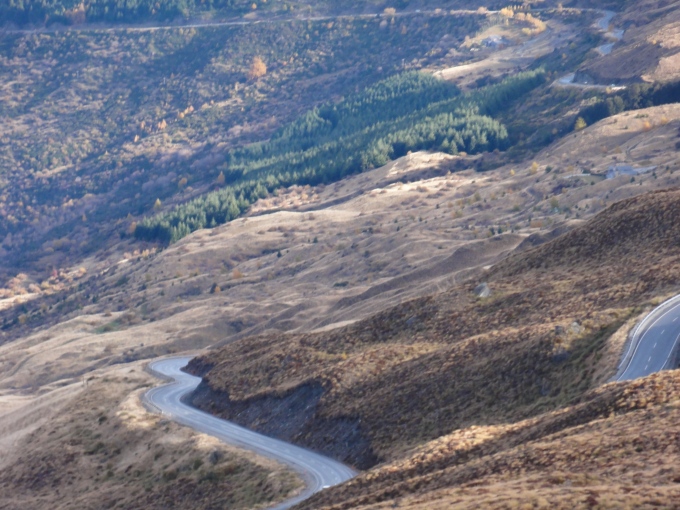
50 photographs, 50 stories, of which there is one of the 50 below.
They all start with –
A picture paints … well, as many words as you like. For instance:
And the story:
…
It was once said that a desperate man has everything to lose.
The man I was chasing was desperate, but I, on the other hand, was more desperate to catch him.
He’d left a trail of dead people from one end of the island to the other.
The team had put in a lot of effort to locate him, and now his capture was imminent. We were following the car he was in, from a discreet distance, and, at the appropriate time, we would catch up, pull him over, and make the arrest.
There was nowhere for him to go.
The road led to a dead-end, and the only way off the mountain was back down the road we were now on. Which was why I was somewhat surprised when we discovered where he was.
Where was he going?
“Damn,” I heard Alan mutter. He was driving, being careful not to get too close, but not far enough away to lose sight of him.
“What?”
“I think he’s made us.”
“How?”
“Dumb bad luck, I’m guessing. Or he expected we’d follow him up the mountain. He’s just sped up.”
“How far away?”
“A half-mile. We should see him higher up when we turn the next corner.”
It took an eternity to get there, and when we did, Alan was right, only he was further on than we thought.”
“Step on it. Let’s catch him up before he gets to the top.”
Easy to say, not so easy to do. The road was treacherous, and in places, just gravel, and there were no guard rails to stop a three-thousand-foot fall down the mountainside.
Good thing then, I had the foresight to have three agents on the hill for just such a scenario.
Ten minutes later, we were in sight of the car, still moving quickly, but we were going slightly faster. We’d catch up just short of the summit car park.
Or so we thought.
Coming quickly around another corner, we almost slammed into the car we’d been chasing.
“What the hell…” Aland muttered.
I was out of the car and over to see if he was in it, but I knew that it was only a slender possibility. The car was empty, and no indication of where he had gone.
Certainly not up the road. It was relatively straightforward for the next mile, at which we would have reached the summit. Up the mountainside from here, or down.
I looked up. Nothing.
Alan yelled out, “He’s not going down, not that I can see, but if he did, there’s hardly a foothold and that’s a long fall.”
Then where did he go?
Then a man looking very much like our quarry came out from behind a rock embedded just a short distance up the hill.
“Sorry,” he said quite calmly. “Had to go if you know what I mean.”
I’d lost him.
It was as simple as that.
I had been led a merry chase up the hill, and all the time he was getting away in a different direction.
I’d fallen for the oldest trick in the book, letting my desperation blind me to the disguise that anyone else would see through in an instant.
It was a lonely sight, looking down that road, knowing that I had to go all that way down again, only this time, without having to throw caution to the wind.
Revenge is a dish best served cold – or preferably so when everything goes right
Of course, it rarely does, as Alistair, Zoe’s handler, discovers to his peril. Enter a wildcard, John, and whatever Alistair’s plan for dealing with Zoe was dies with him.
It leaves Zoe in completely unfamiliar territory.
…
John’s idyllic romance with a woman who is utterly out of his comfort zone is on borrowed time. She is still trying to reconcile her ambivalence after being so indifferent for so long.
They agree to take a break, during which she disappears. John, thinking she has left without saying goodbye, refuses to accept the inevitable and calls on an old friend for help in finding her.
After the mayhem and being briefly reunited, she recognises an inevitable truth: there is a price to pay for taking out Alistair; she must leave and find them first, and he would be wise to keep a low profile.
But keeping a low profile just isn’t possible, and enlisting another friend, a private detective and his sister, a deft computer hacker, they track her to the border between Austria and Hungary.
What John doesn’t realise is that another enemy is tracking him to find her too. It could have been a grand tour of Europe. Instead, it becomes a race against time before enemies old and new converge for what will be an inevitable showdown.
The Dark Side of Narrative: Why Certain Story Elements Fail (And How to Fix Them)
Every great story is built on a foundation of classic elements: compelling characters, gripping conflict, and immersive world-building. But what happens when these trusty narrative tools are pushed too far?
Even the most celebrated storytelling tropes can become a writer’s worst enemy if mishandled. When relied upon as crutches, certain story elements can instantly pull readers out of the narrative, destroy suspense, and leave an audience feeling cheated.
As writers, understanding the disadvantages of these common tropes is essential for crafting fresh, engaging fiction. Today, we’re breaking down four major story elements to avoid—complete with examples—so you can elevate your storytelling and keep your readers turning pages.
1. The Exposition Dump (The “As You Know, Bob” Trap)
The Problem
Exposition is necessary for world-building, but an exposition dump (or info-dump) occurs when a writer forces massive amounts of back-story, historical context, or technical data into the narrative all at once.
The biggest disadvantage of the exposition dump is that it grinds the pacing to a complete halt. Instead of showing us the world through action and reaction, the author pauses the story to lecture the reader. Worse yet is the infamous “As you know, Bob” dialogue, where two characters explain things to each other that they both already know purely for the benefit of the audience.
An Example to Avoid
“As you know, Captain, ever since the Great AI Wars of 2142—which decimated 80% of Earth’s population and led to the ban of all sentient technology—our spaceship’s hyperdrive has been powered by your rare crystal bloodline.”
How to Fix It
Weave information through action and conflict. Reveal world-building details only when they become immediately relevant to the character’s survival or goals. Let the reader piece the puzzle together organically rather than handing them a textbook.
2. Concluding with a Shootout (The Lazy Climax)
The Problem
Action is thrilling, but treating a shootout or massive physical brawl as the default climax for every story is a major narrative pitfall.
The disadvantage of relying on a shootout to wrap things up is that it often feels unearned. If the central conflict of your story is emotional, psychological, or interpersonal, resolving it with flying bullets or laser blasts is a cop-out. It swaps genuine emotional resonance for cheap spectacle, rendering the character arcs completely irrelevant.
An Example to Avoid
After a poignant, slow-burn psychological drama about a grieving father fighting for custody of his daughter, the climax abruptly features a thirty-minute warehouse shootout with a random drug cartel. (Bonus points if the cartel had nothing to do with the actual emotional core of the story.)
How to Fix It
Match your climax to your core conflict. If your story is about forgiveness, the climax should be an emotional confrontation, not a physical one. If you must have action, ensure the stakes of the battle directly mirror the internal stakes of the characters.
3. Mistaken Identities (The Forced Misunderstanding)
The Problem
Mistaken identity tropes can work wonderfully in Shakespearean comedies, but in modern drama and thrillers, they often feel manipulative and frustrating.
The primary disadvantage of mistaken identities is that they rely on manufactured conflict. When major plot developments happen simply because characters refuse to ask basic clarifying questions or because someone is wearing a slightly different hat, readers feel insulted. It creates “idiot plot syndrome”—a story that only moves forward because everyone involved is acting completely irrationally.
An Example to Avoid
The romantic leads spend 300 pages hating each other and avoiding romance because one of them overheard a heavily edited half-sentence out of context, completely ignoring years of established trust and chemistry.
How to Fix It
Raise the emotional intelligence of your characters. If characters are going to misunderstand each other, make the deception complex, systemic, or psychological—not just a contrived accident that could be resolved with a five-second conversation.
4. “And Everyone Was Dead” (The Nihilistic Ending)
The Problem
Nothing deflates a reader’s investment quite like the “and everyone was dead” ending—often accompanied by the revelation that the entire story was just a dream, or that every character perished in a meaningless twist of fate.
While gritty, tragic, and ambiguous endings can work brilliantly (think Hamlet), killing off your entire cast for shock value carries a massive disadvantage: it renders the entire journey pointless. If every character the reader cared about dies without achieving anything, the audience is left wondering why they invested their time in the first place.
An Example to Avoid
After a harrowing 400-page fantasy epic where the heroes cross continents, make ultimate sacrifices, and defeat the dark lord, a stray meteor suddenly strikes the castle during the victory celebration, instantly wiping out every single named character.
How to Fix It
Honour the reader’s emotional investment. If you want a bittersweet or tragic ending, ensure that the sacrifices made by the characters actually meant something. Even in death, characters should achieve a thematic victory or leave the world fundamentally changed for the better.
Write with Intention
Tropes and story elements aren’t inherently evil; they are tools in a writer’s toolbox. However, relying on exposition dumps, lazy shootouts, frustrating mistaken identities, or nihilistic “everyone dies” endings can quickly alienate your audience.
By recognizing the disadvantages of these tropes, you can subvert expectations, sharpen your pacing, and deliver a deeply satisfying payoff that keeps readers hooked from the first page to the last.
What’s your least favorite storytelling trope to encounter in the wild? Let us know in the comments below
It was in darkness. I was sure I had left several lights on, especially over the door, so I could see to unlock it.
I looked up and saw that the globe was broken.
Instant alert.
I went to the first hiding spot for the gun, and it wasn’t there. I went to the backup, and it wasn’t there either. Someone had found my carefully hidden stash of weapons and removed them.
Who?
There were four hiding spots, and all were empty. Someone had removed the weapons. That could only mean one possibility.
I had a visitor, not necessarily here for a social call.
But, of course, being the well-trained agent I’d once been and not one to be caught unawares, I crossed over to my neighbour and relieved him of a weapon that, if found, would require a lot of explaining.
Suitably armed, it was time to return the surprise.
There were three entrances to the villa: the front door, the back door, and a rather strange escape hatch. One of the more interesting attractions of the villa I’d rented was its heritage. It was built in the late 1700s by a man who was, by all accounts, a thief. It had a hidden underground room, which had been in the past a vault but was now a wine cellar, and it had an escape hatch by which the man could come and go undetected, particularly if there was a mob outside the door baying for his blood.
It now gave me the means to enter the villa without my visitors being alerted, unless, of course, they were in the vicinity of the doorway inside the villa, but that possibility was unlikely. It was not where anyone could anticipate or expect a doorway to be.
The secret entrance was at the rear of the villa, behind a large copse, two camouflaged wooden doors built into the ground. I moved aside some of the branches that covered them and lifted one side. After I’d discovered the doors and rusty hinges, I’d oiled and cleaned them, and cleared the passageway of cobwebs and fallen rocks. It had a mildew smell, but nothing would get rid of that. I’d left torches at either end so I could see.
I closed the door after me and went quietly down the steps, enveloped in darkness till I switched on the torch. I traversed the short passage, which turned ninety degrees about halfway to the door at the other end. I carried the key to this door on the keyring, found it and opened the door. It too had been oiled and swung open soundlessly.
I stepped into the darkness and closed the door.
I was on the lower level under the kitchen, now the wine cellar, the ‘door’ doubling as a set of shelves which had very little on them, less to fall and alert anyone in the villa.
Silence, an eerie silence.
I took the steps up to the kitchen, stopping when my head was level with the floor, checking to see if anyone was waiting. There wasn’t. It seemed to me to be an unlikely spot for an ambush.
I’d already considered the possibility of someone coming after me, especially because it had been Bespalov I’d killed, and I was sure he had friends, all equally as mad as he was. Equally, I’d also considered it nigh on impossible for anyone to find out it was me who killed him because the only people who knew that were Prendergast, Alisha, a few others in the Department, and Susan.
That raised the question of who told them where I was.
If I were the man I used to be, my first suspect would be Susan. The departure this morning, and now this was too coincidental. But I was not that man.
Or was I?
I reached the start of the passageway that led from the kitchen to the front door and peered into the semi-darkness. My eyes had got used to the dark, and it was no longer an inky void. Fragments of light leaked in around the door from outside and through the edge of the window curtains where they didn’t fit properly. A bone of contention upstairs in the morning, when first light shone and invariably woke me up hours before I wanted to.
Still nothing.
I took a moment to consider how I would approach the visitor’s job. I would get a plan of the villa in my head, all entrances, where a target could be led to or attacked, and where there would be no escape.
Coming in the front door. If I were not expecting anything, I’d just open the door and walk in. One shot would be all that was required.
Contract complete.
I sidled quietly up the passage, staying close to the wall, edging closer to the front door. There was an alcove where the shooter could be waiting. It was an ideal spot to wait.
Crunch.
I stepped on some nutshells.
Not my nutshells.
I felt it before I heard it. The bullet with my name on it.
And how the shooter missed, from point-blank range, and hit me in the arm, I had no idea. I fired off two shots before a second shot from the shooter went wide and hit the door with a loud thwack.
I saw a red dot wavering as it honed in on me, and I fell to the floor, stretching out, looking up where the origin of the light was coming and pulled the trigger three times, evenly spaced, and a second later I heard the sound of a body falling down the stairs and stopping at the bottom, not very far from me.
Two assassins.
I’d not expected that.
The assassin by the door was dead, a lucky shot on my part. The second was still breathing.
I checked the body for any weapons and found a second gun and two knives. Armed to the teeth!
I pulled off the balaclava; a man, early thirties, definitely Italian. I was expecting a Russian.
I slapped his face, waking him up. Blood was leaking from several slashes on his face when his head had hit the stairs on the way down. The awkward angle of his arms and legs told me there were broken bones, probably a lot worse internally. He was not long for this earth.
“Who employed you?”
He looked at me with dead eyes, a pursed mouth, perhaps a smile. “Not today, my friend. You have made a very bad enemy.” He coughed, and blood poured out of his mouth. “There will be more …”
Friends of Bespalov, no doubt.
I would have to leave. Two unexplainable bodies, I’d have a hard time explaining my way out of this mess. I dragged the two bodies into the lounge, clearing the passageway just in case someone had heard anything.
Just in case anyone was outside at the time, I sat in the dark, at the foot of the stairs, and tried to breathe normally. I was trying not to connect the dots that led back to Susan, but the coincidence was worrying me.
A half-hour passed, and I hadn’t moved. Deep in thought, I’d forgotten about being shot, unaware that blood was running down my arm and dripping onto the floor.
Until I heard a knock on my front door.
Two thoughts: it was either the police, alerted by the neighbours, or it was the second wave, though why would they be knocking on the door?
I stood and immediately felt a stabbing pain in my arm. I took out a handkerchief and turned it into a makeshift tourniquet, then wrapped a kitchen towel around the wound.
If it were the police, this was going to be a difficult situation. Holding the gun behind my back, I opened the door a fraction and looked out.
No police, just Maria. I hoped she was not part of the next ‘wave’.
“You left your phone behind on the table. I thought you might be looking for it.” She held it out in front of her.
When I didn’t open the door any further, she looked at me quizzically and then asked, “Is anything wrong?”
I was going to thank her for returning the phone, but I heard her breathe in sharply and add, breathlessly, “You’re bleeding.”
I looked at my arm and realised it was visible through the door, and not only that, the towel was soaked in blood.
“You need to go away now.”
Should I tell her the truth? It was probably too late, and if she were any sort of law-abiding citizen, she would go straight to the police.
She showed no signs of leaving, just an unnerving curiosity. “What happened?”
I ran through several explanations, but none seemed plausible. I went with the truth. “My past caught up with me.”
“You need someone to fix that before you pass out from blood loss. It doesn’t look good.”
“I can fix it. You need to leave. It is not safe to be here with me.”
The pain in my arm was not getting any better, and the blood was starting to run down my arm again as the tourniquet loosened. She was right, I needed it fixed sooner rather than later.
I opened the door and let her in. It was a mistake, a huge mistake, and I would have to deal with the consequences. Once inside, she turned on the light and saw the pool of blood just inside the door and the trail leading to the lounge. She followed the trail and turned into the lounge, turned on the light, and no doubt saw the two dead men.
I expected her to scream. She didn’t.
She gave me a good, hard look, perhaps trying to see if I was dangerous. Killing people wasn’t something you looked the other way about. She would have to go to the police.
“What happened here?”
“I came home from the cafe and two men were waiting for me. I used to work for the Government, but no longer. I suspect these men were here to repay a debt. I was lucky.”
“Not so much, looking at your arm.”
She came closer and inspected it.
“Sit down.”
She found another towel and wrapped it around the wound, retightening the tourniquet to stem the bleeding.
“Do you have medical supplies?”
I nodded. “Upstairs.” I had a medical kit, and on the road, I usually made my own running repairs. Another old habit I hadn’t quite shaken off yet.
She went upstairs, rummaged, and then came back. I wondered briefly what she would think of the unmade bed, though I was not sure why it might interest her.
She helped me remove my shirt and then cleaned the wound. Fortunately, she didn’t have to remove a bullet. It was a clean wound but it would require stitches.
When she’d finished, she said, “Your friend said one day this might happen.”
No prizes for guessing who that friend was, and it didn’t please me that she had involved Maria.
“Alisha?”
“She didn’t tell me her name, but I think she cares a lot about you. She said trouble has a way of finding you, gave me a phone and said to call her if something like this happened.”
“That was wrong of her to do that.”
“Perhaps, perhaps not. Will you call her?”
“Yes. I can’t stay here now. You should go now. Hopefully, by the time I leave in the morning, no one will ever know what happened here, especially you.”
I was walking past a fast food outlet, minding my own business when an explosion behind me first threw me about 20 feet along the sidewalk and then dumped a whole lot of building rubbish on me.
So much for minding my own business.
Dazed, half deaf, and bleeding from several shrapnel wounds, I slowly got to my feet and looked back in the direction of where I thought the explosion happened.
Wrong. It was in the other direction. No surprise with the disorientation.
Not far from me, I could see several others on the ground through the settling cloud of dust, bodies lying on the pathway, not moving. A number of cars that had been driving past had got caught almost directly by the blast and had been severely damaged. Other cars behind had crashed into them.
The storefront I had just passed was now just a pile of rubble, much like photos of houses during the blitz and anyone caught in it would not have survived.
Still slightly disorientated, I could hear sirens in the distance, and then, above that, as my hearing slightly improved, screams from people who had taken the full brunt of the explosion.
I headed towards the nearest of the injured when I was knocked abruptly to the ground by two men running away from the scene. It took a few moments to realize these men must have had something to do with the explosion and were fleeing.
I scrambled to my feet and started running after them. They were some distance in front of me as was an oncoming police car, and I thought they could take up the chase, and stopped.
Instead, it drove straight past the two men and stopped opposite me, and before knew what was happening, I was on the ground with four weapons trained on my head, and three of them yelling that if I moved they would shoot me.
I tried telling them about the two fleeing men I’d been chasing but no one was listening.
I had a knee in my back and a gun to my head. This wasn’t going to end well for someone.