“Quickly, quickly…” – a short story


It was odd having a voice in your head, well, not really in your head as such, but in your ear, and sounding like it was in your head.

You could truthfully say you were hearing voices.

It was the next step after going through some very intensive training, having someone else as your eyes and ears when breaching a secure compound, and avoiding the enemy.

I’d signed on for this extra training thinking one day it would land me in the thick of the action. Some of the others thought I was mad, but someone had to do it, and the fact it was quite dangerous added just that extra bit to it.

But as they say, what you learn in training, and practise in a non-hostile environment, is nothing like being in that same situation in reality.

Now on was on my first assignment, part of an elite team, packed and taken to what was to everyone else, an unspecified location, but to us, it was the point of incursion.

The mission?

To rescue a government official (that was how he was described to us) who had been illegally detained in a foreign prison.

Our job?

To break him out and get out without the knowledge of the prison staff, or anyone representing that government. Yes, what we were doing was highly illegal, and yes, if we were caught it was more likely than not we would be executed as spies.

…

We were under cover in an abandoned farmhouse about three miles from the prison. We had been brought in under cover of darkness, and had only a few hours to set up, and then wait it out until the following night.

It was now or never, the weather people predicting that there would be sufficient cloud cover to make us invisible. Two of us were going in, and two remaining strategically placed outside to monitor the inside of the prison through a system of infrared scanners. We also had a floor plan of the building in which the prisoner was being held, and intelligence supplied, supposedly, by one of the prison guards who had been paid a lot of money for information on guard movements.

To me, it was a gigantic leap of faith to trust him, but I kept those thoughts to myself.

We had been over the plan a dozen times, and I’d gone through the passageways, rooms, and doors so many times I’d memorised where they were and would be able to traverse the building as if I had worked there for a lifetime. Having people outside, talking me through it was just an added benefit, along with alerts on how near the guards were to our position.

I was sure the other person going with me, a more seasoned professional who had a number of successful missions under his belt, was going through the same motions I was. After all, it was he who had devised and conducted the training.

There was a free period of several hours before departure, time to listen to some music, empty the head of unwanted thoughts, and get into the right mindset. It was no place to get tangled up in what-ifs, if anything went wrong, it was a simple matter of adapting.

Our training had reinforced the necessity to instantly gauge a situation and make changes on the fly. There would literally be no time to think.

I listened to the nuances of Chopin’s piano concertos, pretending to play the piano myself, having translated every note onto a piano key, and observing it in my mind’s eye.

My opposite number played games of chess in his head. We all had a different method of relaxing.

Until it was 22:00 hours, and time to go.

…

“Go left, no, hang on, go right.” The voice on my ear sounded confused and it was possible to get lefts and rights mixed up, if you were not careful.

It didn’t faze me, I knew from my study of the plans that once inside the perimeter fence, I had to go right, and head towards a concrete building the roof of which was barely above the ground.

It was once used as a helipad, and underneath, before the site became a prison, the space was used to make munitions. And it was an exceptionally large space that practically ran under the whole of the prison, built above ground.

All that had happened was the lower levels were sealed, covered over and the new structures built on top. Our access was going to be from under the ground.

Quite literally, they would not see, or hear, us coming.

The meteorological people had got it right, there was cloud cover, the moon hidden from view, and the whole perimeter was in inky darkness. Dressed in black from head to foot, the hope was we would be invisible.

There were two of us heading to the same spot, stairs that led down to a door that was once one of the entrances to the underground bunker. We were going separate ways in case one of the other was intercepted in an unforeseen event.

But, that part of the plan worked seamlessly, and we both arrived at the same place nearly at the same time.

Without the planning, we might easily have missed it because I didn’t think it would be discernable even in daylight.

I followed the Sergeant downstairs, keeping a watchful eye behind us. I stopped at the point where I could see down, and across the area we had just traversed.

Nothing else was stirring.

As expected, the door was seamless and without an apparent handle. It may have had one once, but not anymore, so anyone who stumbled across it, couldn’t get in.

Except us. We had special explosives designed to break the lock, and once set, they did not make a lot of noise. Sixty seconds later, we were inside, and the door closed so no one would know we’d broken in.

I was carrying a beacon so that the voice in my head could follow my progress. The sergeant had one too, and he led.

“Straight ahead, 200 yards, then another door. It shouldn’t be locked, but it might be closed.”

In other words, we had no way of knowing. Our informant had said no one had been down in the dungeons, as he called them, since the munition factory closed, and had been sealed up soon after the prison building had been handed over for use.

We were using night goggles, and there was a lot of rubbish strewn over the floor area so we had to carefully pick our way through which took time we really didn’t have. It looked as though our informant was right, no one had been down there for a long time. We were leaving bootprints in the dust.

We reached the door ten minutes later than estimated. Losing time would have a flow-on effect, and this operation was on a very tight time constraint.

“Once you are through the door, there’s a passage. Turn left and go about 50 paces. There should be another passage to your right.”

“Anyone down here?”

“No, but there is a half dozen prison officers above you. Standard patrol, from guardhouse to guardhouse. Unless they can hear you through five feet of solid concrete, you’re safe.”

My instincts told me five feet of concrete were not enough, but I’ll let it ride for the moment.

The door was slightly ajar and it took the two of us to pull it open so that we could get past. Behind it was the passage, going left and right. Trusting my invisible guide was not getting mixed up again, I motioned right, and we headed down the passage.

Despite the fact we should be alone, both of us were careful not to make any noise and trod carefully.

At 50 or so paces, the passage came into sight. The sergeant went ahead. I stayed back and kept an eye in both directions. The passage before us was the one that would take us under the cell of the captive we were sent to retrieve.

There would be no blasting our way in. The floor to the cell had a grate, and when removed, a person could drop down into the ‘dungeon’. Currently, the grate was immovable, but we had the tools to fix that.

The sergeant would verify the grate was where it was supposed to be, then come back to get me.

Five minutes passed, then ten. It was not that far away.

I was about to go search when the voice in my head returned but with panic. “We’ve been compromised. Get the hell out of there, now. Quickly…”

Then I heard what sounded like gunshots, then nothing.

A minute later there was a new voice. “I don’t know who you are, but I’d strongly advise you to give yourself up to the guards. Failure to do so within one hour, I’ll execute the two men I now have in custody.”

Ahead of me, there was a sudden explosion, followed by a cloud of dust and fine debris.

A hand grenade, or mine, it didn’t matter. The sergeant wouldn’t be coming back.

I sighed.

Plan B it was.

…

© Charles Heath 2021

Writing a book in 365 days – 74/75

Days 74 and 75

Write about a character through dress, expressions, gait, and mannerisms and what makes them memorable. Then, who do they love or fear, where are they going, and do they have a secret?

…

If there was one definable item about Jacqueline Bennet, it would be that she could not disappear in a crowd.

I know, I was sent by head office to collect her from the railway station, with the only identification, the fact she was wearing a red coat.

If only…

…

For the last six months it had been my assignment to collect people. From the airport, from the bus station, from the train station. The least favourite was the train station.

I had to try and find the new interns in the throngs of people who all got off the train and swelled up into a swirling mass of bodies so thick sometimes all I could see was heads.

Today was no exception, except…

Jacqueline was wearing a hat, purple, almost the shape of a peacock, and as large. I saw the hat before the red coat. That, itself, was so bright it hurt my eyes.

It took three attempts to introduce myself and convince her I was not trying to kidnap her and have her sent to some harem in Arabia. I said there was no such place as Arabia, and it elicited one of seven expressions which by the time I got her to the office I’d worked out to be, incredulous, surprised, dismayed, disappointed, happy, sad, and angry. These expressions were accompanied by little mannerisms, a tic in her left eye, blinking excessively, pursing her lips and sighing. There was a nervous giggle, but I was not sure where that fitted.

She was mostly disappointed, mainly because Mr Brightman, the CEO, had not come to greet her, and instead it was some minion.

I knew this much about her before we got out the main entrance to Grand Central Station, and it was more than I cared to know.

…

Outside the station, we caught a cab to the office and then spent the next thirty-five minutes in traffic. For some reason, it was unusually bad because the normal time it took was between ten and fifteen minutes.

The first five minutes were rather tense, so I thought I would lighten the atmosphere by asking, “Where did you come from?”

At first, I thought she was going to ignore me, but then, after a sideways glance that suggested she didn’t tell minions such personal things about herself, she said, “Bridgewater, Ohio.”

When I asked if it was big or small, she said it was a place no one had heard of because it wasn’t a real town. It was a hell hole that everyone wanted to escape. I can’t imagine any place, especially your hometown, as being somewhere you would want to leave willingly, but apparently, the highway that passed through and kept all the businesses going had its route changed and had now bypassed the town. It was the reason for her move, the cafe she worked at had closed, as did just about everything else.

Then there was the toxic relationship with her high school sweetheart, which had been affected by everything else and forced her to make the decision to get away. New city, new start. Our employment agency was recommended by one of her friends who had also made the decision to leave, and had found a happy situation in Florida. Jacqueline was hoping for California.

I had lived in New York all my life and had never suffered the problems that seem to plague the Midwest. Jacqueline was not the first or the last person who had fled their previous existence, but the story seemed to the the same.

But listening to her story tumble out in short, breathless sentences, I felt there was something more behind her move. It was that one statement, thrown in there among the others, that if you were not listening, you would have missed it. “Big cities, they provide an anonymity that can give you that ability to reinvent yourself.”

They could. But equally, a person could simply disappear and never be found again. It had happened to several of the people who had come to us for employment, and this girl, who was under all of that bravado and camouflage, people who had come from abusive homes or relationships, the production of bad education, wasted opportunities, and economic downturn. Anything had to be better than what they had.

“Don’t do it,” I said. We were about five minutes away from the office.

“Don’t do what?”

“Walk in the door, go and see Mr Brightman, accept the job he has picked out for you. Don’t.”

She picked up on the urgency in my tone. I knew what was going to happen, as much as I told myself over and over, it wouldn’t.

“Why? Why on earth would you say such a thing?”

“Because I think you were right when you said you’d finish up in a harem in one of those Arab states. Girls come and girls go, but when I try to find out where they’ve gone, they either never arrived or left soon after they started.”

She looked at me like she thought I was an axe murderer, not a messenger.

“How come you’re telling me this?”

“I don’t know. He’s going to kill me when he finds out, but I don’t like this job any more, and talking to you, hearing what it is he is using to lure people like you, that idea that ‘it’s too good to be true’ just reverberates in my head. I was like you three years ago. Small town boy with big aspirations, running away from an abusive father and a town full of bullies. I’m still that boy, big town, small town, the fears are the same, only here, it can swallow you up.”

I’d walked out of the boarding house that morning with nothing but the money I had saved and the notion that I could get on a train to anywhere, that I would not meet the girl, and hope that she would think she had been abandoned and do something else. Then, at the station, like the times before, I lost my nerve.

I pulled out the money and divided it into two. “Take this, find somewhere to stay, and don’t go to Mr Brightman. You can’t trust him. I’m not going back.”

“Now you’re scaring me.”

“You should be. Stop the cab. We’ll get out here.”

“But…”

“If you make one right decision in your life, let it be this one. Take the money. Please.”

The cab stopped, and I paid the fare. I got out and held the door. In that moment, I could see all of the fears that I had myself the first day I arrived, and the girl that Mr Bightman had sent to fetch me. If I’d known then what I know now…”

“Please.”

Finally, she stepped out of the cab. We both watched it drive off.

“Now what?”

“Take the money, and believe that it is the first day of the rest of your life.”

The sun chose that moment to finally come out from behind the clouds and transform that cold, wintry morning into a world filled with possibilities. She looked at me and smiled, the look of a woman who had made a decision.

“Did you have a plan when you left home this morning?”

“Other than I was not going to work for Mr Brightman any more, no. I was going to the station, but I was going to get on a train to anywhere but here.”

She shrugged. “I always wanted to go to California, but I didn’t want to go there alone. Fancy joining me? I mean, I still don’t trust you completely, but I can tell if you are telling me the truth or not.”

“Are you sure?”

“No. But what’s the alternative if your suspicions are right?”

…

Decisions are made, rightly or wrongly, based sometimes on reality, but often on a hunch.

We went back to the station on foot, taking the opportunity to talk. I think it was her idea that if I was an axe murderer, I would lose patience and simply move on or show my true colours. That I
was willing to talk, tell her all my hopes and aspirations, and how I’d settled for three years in a rut that felt safe.

We had lunch and spent the afternoon getting ourselves from Grand Central to Penn station, and then the next three days sewing the seeds of a friendship that lasted the rest of our lives.

It was interesting to read a small article in the paper about three weeks later, as I settled into a new job working for a large distribution centre as dispatch clerk, the arrest of Mr Brightman, aka Chuck Sentry, aka Walter Winsome, aka Jonathon Bentley on charges relating to the disappearance of at least fourteen people.

They were all the names I could remember, and I wrote them down in a letter and sent it anonymously to the NYPD.

…

©  Charles Heath  2025

Searching for locations: Tiananmen Square, Beijing, China

Some interesting facts before we get out of the bus…

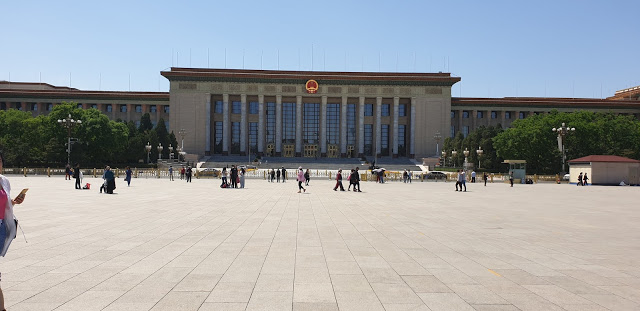
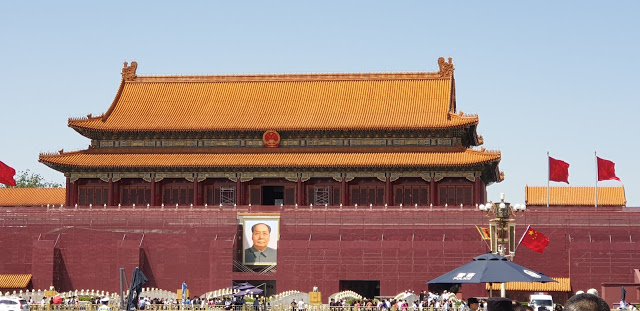
Tiananmen Square or Tian’anmen Square is in the centre of Beijing name after the Gate of Heavenly Peace, a gate that one separated the square from the Forbidden City.

The Square contains,

   the Monument to the People’s Heroes
   the Great Hall of the People
   the National Museum of China
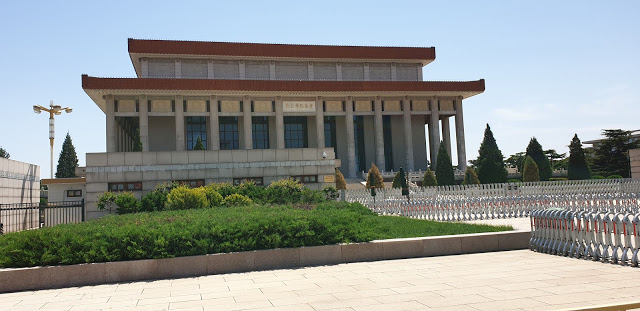
   the Mausoleum of Mao Zedong.

The square is about 109 acres and was designed and built in 1651, and since then been enlarged four times since, the most recent upgrade in the 1950s.

The Monument to the People’s Heroes

This is a ten-story obelisk built to commemorate the matters of the revolutions.  It was built between August 1952 and May 1958.  On the pedestal are reliefs depicting the eight major revolutionary episodes.

The Great Hall of the People

This was opened in September 1959, and covers 171809 square meters.  The Great Hall is the largest auditorium in China and can seat up to 10,000 people.  The State Banquet Hall can seat up to 5,000 diners.

The National Museum of China

This is one of the largest museums in the world and the second most visited museum in the world after the Louvre in Paris.   It was completed in 1959, and sits on 65 hectares, and rises four floors.  It has a permanent collection of over 1,000,000 items.

The Mauseloum of Mao Zedong

This was built shortly after his death, and completed on May 24th, 1977.  The embalmed body of the Chairman is preserved and on display in the center hall.

My own observations
This is huge; one of the largest public squares in the world, and if you’re going to walk it, like we did, make sure you’ve been exercising before you go.  It covers 44 hectares, borders on the Forbidden City, and has a memorial to Chairman Mao in the center of it.  But you cannot go near it, it’s fenced off, and it is guarded.

That’s both the statue and the square as there are random guards marching in random directions all the while watching us to see that we don’t misbehave.No one wants to find out what would happen if you jumped the fence around the statue, but I’m guessing you’ll have a few years to contemplate the stupidity of your actions with some very unhappy government officials.

Around the edges of the square are huge buildings, on one side is the museum 

and on the other is the Chinese equivalent of parliament.

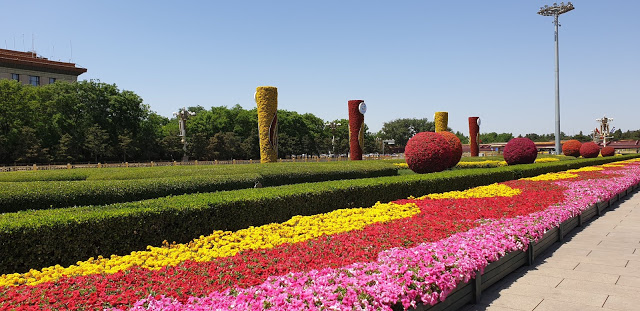
Around the sides are also large gardens

At one end, where the Forbidden City borders on the square, there’s a huge flag pole flying the Chinese flag, and this too like the monument is fenced off, and guarded by members of all of their armed services.  No tanks rolled out during our visit much to our disappointment.  There is no entrance to the Forbidden City from the square

At the other end is the Mausoleum of Mao Zedong, which was closed the day we were there, as was the museum. 

There are four sculptural groups installed outside the mausoleum.

Other than that, it’s just another square, albeit probably one of the largest in the world.  It can, we were told, hold about a million people.

NANOWRIMO – April 2025 – Day 1

…

The Fourth Son

…

It is sometimes quite strange where the ideas for a story come from.

This one started with a man on the roof of an apartment block with a telescope, a place where he can seek refuge from work and people.

Being in New York, of course, made it all the more impossible to get a clear night and a clearer sky, but perhaps it was more about the solitude.

Then I read about the planets lining up, which doesn’t happen very often, and you know the saying, when the planets line up, maybe. .

So, I had my protagonist.

Now, I needed someone to interrupt the solitude and then focus him on the notion that when one door closes, another opens.

Of course the protagonist who is hiding something out of the ordinary, someone with a secret, and someone who has feelings for another who in the greater schene of things in his life, is someone who would not be ‘the right choice’.

Except his position allows him the freedom to choose whom he wants.

A scare finds him beginning to realise that he can not remain behind that veil of anonymity for much longer, and one way or another, it is going to be exposed.

But, by the time he decides to make his feelings known, his secret is no longer a secret.

An excerpt from “If Only” – a work in progress

Investigation of crimes doesn’t always go according to plan, nor does the perpetrator get either found or punished.

That was particularly true in my case.  The murderer was incredibly careful in not leaving any evidence behind, to the extent that the police could not rule out whether it was a male or a female.

At one stage the police thought I had murdered my own wife though how I could be on a train at the time of the murder was beyond me.  I had witnesses and a cast-iron alibi.

The officer in charge was Detective First Grade Gabrielle Walters.  She came to me on the day after the murder seeking answers to the usual questions like, when was the last time you saw your wife, did you argue, the neighbors reckon there were heated discussions the day before.

Routine was the word she used.

Her fellow detective was a surly piece of work whose intention was to get answers or, more likely, a confession by any or all means possible.  I could sense the raging violence within him.  Fortunately, common sense prevailed.

Over the course of the next few weeks, once I’d been cleared of committing the crime, Gabrielle made a point of keeping me informed of the progress.

After three months the updates were more sporadic, and when, for lack of progress, it became a cold case, communication ceased.

But it was not the last I saw of Gabrielle.

The shock of finding Vanessa was more devastating than the fact she was now gone, and those images lived on in the same nightmare that came to visit me every night when I closed my eyes.

For months I was barely functioning, to the extent I had all but lost my job, and quite a few friends, particularly those who were more attached to Vanessa rather than me.

They didn’t understand how it could affect me so much, and since it had not happened to them, my tart replies of ‘you wouldn’t understand’ were met with equally short retorts.  Some questioned my sanity, even, for a time, so did I.

No one, it seemed, could understand what it was like, no one except Gabrielle.

She was by her own admission, damaged goods, having been the victim of a similar incident, a boyfriend who turned out to be an awfully bad boy.  Her story varied only in she had been made to witness his execution.  Her nightmare, in reliving that moment in time, was how she was still alive and, to this day, had no idea why she’d been spared.

It was a story she told me one night, some months after the investigation had been scaled down.  I was still looking for the bottom of a bottle and an emotional mess.  Perhaps it struck a resonance with her; she’d been there and managed to come out the other side.

What happened become our secret, a once-only night together that meant a great deal to me, and by mutual agreement, it was not spoken of again.  It was as if she knew exactly what was required to set me on the path to recovery.

And it had.

Since then, we saw each about once a month in a cafe.   I had been surprised to hear from her again shortly after that eventful night when she called to set it up, ostensibly for her to provide me with any updates on the case, but perhaps we had, after that unspoken night, formed a closer bond than either of us wanted to admit.

We generally talked for hours over wine, then dinner and coffee.  It took a while for me to realize that all she had was her work, personal relationships were nigh on impossible in a job that left little or no spare time for anything else.

She’d always said that if I had any questions or problems about the case, or if there was anything that might come to me that might be relevant, even after all this time, all I had to do was call her.

I wondered if this text message was in that category.  I was certain it would interest the police and I had no doubt they could trace the message’s origin, but there was that tiny degree of doubt, about whether or not I could trust her to tell me what the message meant.

I reached for the phone then put it back down again.  I’d think about it and decide tomorrow.

© Charles Heath 2018-2020

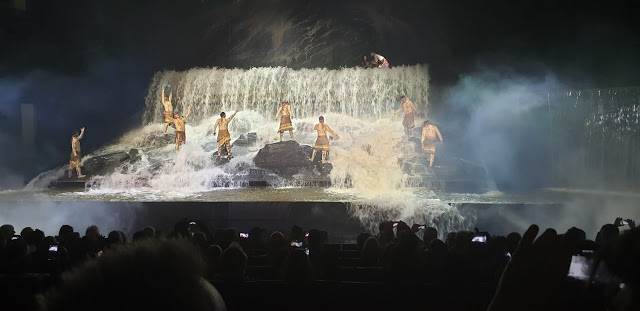
Searching for locations: The Golden Mask Dynasty Show, Beijing, China

The Golden Mask Dynasty Show was located at the OCT Theatre in Beijing’s Happy Valley. 

The theatre was quite full and the seats we had were directly behind the VIP area; as our guide told us, we had the best seats in the house. 

The play has 20 different dance scenes that depict war, royal banquets, and romance.  There are eight chapters and over 200 actors, and throughout the performance we were entertained by dancers, acrobats, costumes, lighting, and acoustics.

The story:

It is of romantic legend and historical memories, the Golden Mask Queen leads her army in defeating the invading Blue Mask King’s army, and afterwards the lands return to a leisurely pastoral life until the Queen forges a ‘mysterious tree’.  When the tree has grown, the Queen has a grand celebration, and releases the captured Blue soldiers, much to the admiration of the Blue Mask King.
This is followed by monstrous floods, and to save her people, and on the advice from the ‘mysterious tree’, the Queen sacrifices herself to save her people.  The Queen then turns into a golden sunbird flying in the sky blessing the people and that of the dynasty.

Billed as the best live show in China, described as a large scale dramatic musical, “The Golden Mask Dynasty” it lived up to its reputation and was thoroughly enjoyed by all.

It was not just singing dancing and acrobatics, it had a story and it was told so that language and cultural issues aside, it worked.  There was a narration of the story running beside the stage, but it was hard to divide attention between what was happening, and what was being related.

Then came the peacock dance, with live peacocks

And this was followed by a waterfall, well, I don’t think anyone in that audience could believe what they were seeing.

I know I was both astonished and in awe of the performance.

What a way to finish off our first day in Beijing.

Oh, sorry, that high was dented slightly when we had to go back to our room.

‘What Sets Us Apart’ – A beta readers view

There’s something to be said for a story that starts like a James Bond movie, throwing you straight in the deep end, a perfect way of getting to know the main character, David, or is that Alistair?

A retired spy, well not so much a spy as a retired errand boy, David’s rather wry description of his talents, and a woman that most men would give their left arm for, not exactly the ideal couple, but there is a spark in a meeting that may or may not have been a setup.

But as the story progressed, the question I kept asking myself was why he’d bother.

And, page after unrelenting page, you find out.

Susan is exactly the sort of woman to pique his interest.  Then, inexplicably, she disappears.  That might have been the end to it, but Prendergast, that shadowy enigma, David’s ex-boss who loves playing games with real people, gives him an ultimatum, find her or come back to work.

Nothing like an offer that’s a double-edged sword!

A dragon for a mother, a sister he didn’t know about, Susan’s BFF who is not what she seems or a friend indeed, and Susan’s father who, up till David meets her, couldn’t be less interested, his nemesis proves to be the impossible dream, and he’s always just that one step behind.

When the rollercoaster finally came to a halt, and I could start breathing again, it was an ending that was completely unexpected.

I’ve been told there’s a sequel in the works.

Bring it on!

…

The book can be purchased here:  http://amzn.to/2Eryfth

…

Writing a book in 365 days – 74/75

Days 74 and 75

Write about a character through dress, expressions, gait, and mannerisms and what makes them memorable. Then, who do they love or fear, where are they going, and do they have a secret?

…

If there was one definable item about Jacqueline Bennet, it would be that she could not disappear in a crowd.

I know, I was sent by head office to collect her from the railway station, with the only identification, the fact she was wearing a red coat.

If only…

…

For the last six months it had been my assignment to collect people. From the airport, from the bus station, from the train station. The least favourite was the train station.

I had to try and find the new interns in the throngs of people who all got off the train and swelled up into a swirling mass of bodies so thick sometimes all I could see was heads.

Today was no exception, except…

Jacqueline was wearing a hat, purple, almost the shape of a peacock, and as large. I saw the hat before the red coat. That, itself, was so bright it hurt my eyes.

It took three attempts to introduce myself and convince her I was not trying to kidnap her and have her sent to some harem in Arabia. I said there was no such place as Arabia, and it elicited one of seven expressions which by the time I got her to the office I’d worked out to be, incredulous, surprised, dismayed, disappointed, happy, sad, and angry. These expressions were accompanied by little mannerisms, a tic in her left eye, blinking excessively, pursing her lips and sighing. There was a nervous giggle, but I was not sure where that fitted.

She was mostly disappointed, mainly because Mr Brightman, the CEO, had not come to greet her, and instead it was some minion.

I knew this much about her before we got out the main entrance to Grand Central Station, and it was more than I cared to know.

…

Outside the station, we caught a cab to the office and then spent the next thirty-five minutes in traffic. For some reason, it was unusually bad because the normal time it took was between ten and fifteen minutes.

The first five minutes were rather tense, so I thought I would lighten the atmosphere by asking, “Where did you come from?”

At first, I thought she was going to ignore me, but then, after a sideways glance that suggested she didn’t tell minions such personal things about herself, she said, “Bridgewater, Ohio.”

When I asked if it was big or small, she said it was a place no one had heard of because it wasn’t a real town. It was a hell hole that everyone wanted to escape. I can’t imagine any place, especially your hometown, as being somewhere you would want to leave willingly, but apparently, the highway that passed through and kept all the businesses going had its route changed and had now bypassed the town. It was the reason for her move, the cafe she worked at had closed, as did just about everything else.

Then there was the toxic relationship with her high school sweetheart, which had been affected by everything else and forced her to make the decision to get away. New city, new start. Our employment agency was recommended by one of her friends who had also made the decision to leave, and had found a happy situation in Florida. Jacqueline was hoping for California.

I had lived in New York all my life and had never suffered the problems that seem to plague the Midwest. Jacqueline was not the first or the last person who had fled their previous existence, but the story seemed to the the same.

But listening to her story tumble out in short, breathless sentences, I felt there was something more behind her move. It was that one statement, thrown in there among the others, that if you were not listening, you would have missed it. “Big cities, they provide an anonymity that can give you that ability to reinvent yourself.”

They could. But equally, a person could simply disappear and never be found again. It had happened to several of the people who had come to us for employment, and this girl, who was under all of that bravado and camouflage, people who had come from abusive homes or relationships, the production of bad education, wasted opportunities, and economic downturn. Anything had to be better than what they had.

“Don’t do it,” I said. We were about five minutes away from the office.

“Don’t do what?”

“Walk in the door, go and see Mr Brightman, accept the job he has picked out for you. Don’t.”

She picked up on the urgency in my tone. I knew what was going to happen, as much as I told myself over and over, it wouldn’t.

“Why? Why on earth would you say such a thing?”

“Because I think you were right when you said you’d finish up in a harem in one of those Arab states. Girls come and girls go, but when I try to find out where they’ve gone, they either never arrived or left soon after they started.”

She looked at me like she thought I was an axe murderer, not a messenger.

“How come you’re telling me this?”

“I don’t know. He’s going to kill me when he finds out, but I don’t like this job any more, and talking to you, hearing what it is he is using to lure people like you, that idea that ‘it’s too good to be true’ just reverberates in my head. I was like you three years ago. Small town boy with big aspirations, running away from an abusive father and a town full of bullies. I’m still that boy, big town, small town, the fears are the same, only here, it can swallow you up.”

I’d walked out of the boarding house that morning with nothing but the money I had saved and the notion that I could get on a train to anywhere, that I would not meet the girl, and hope that she would think she had been abandoned and do something else. Then, at the station, like the times before, I lost my nerve.

I pulled out the money and divided it into two. “Take this, find somewhere to stay, and don’t go to Mr Brightman. You can’t trust him. I’m not going back.”

“Now you’re scaring me.”

“You should be. Stop the cab. We’ll get out here.”

“But…”

“If you make one right decision in your life, let it be this one. Take the money. Please.”

The cab stopped, and I paid the fare. I got out and held the door. In that moment, I could see all of the fears that I had myself the first day I arrived, and the girl that Mr Bightman had sent to fetch me. If I’d known then what I know now…”

“Please.”

Finally, she stepped out of the cab. We both watched it drive off.

“Now what?”

“Take the money, and believe that it is the first day of the rest of your life.”

The sun chose that moment to finally come out from behind the clouds and transform that cold, wintry morning into a world filled with possibilities. She looked at me and smiled, the look of a woman who had made a decision.

“Did you have a plan when you left home this morning?”

“Other than I was not going to work for Mr Brightman any more, no. I was going to the station, but I was going to get on a train to anywhere but here.”

She shrugged. “I always wanted to go to California, but I didn’t want to go there alone. Fancy joining me? I mean, I still don’t trust you completely, but I can tell if you are telling me the truth or not.”

“Are you sure?”

“No. But what’s the alternative if your suspicions are right?”

…

Decisions are made, rightly or wrongly, based sometimes on reality, but often on a hunch.

We went back to the station on foot, taking the opportunity to talk. I think it was her idea that if I was an axe murderer, I would lose patience and simply move on or show my true colours. That I
was willing to talk, tell her all my hopes and aspirations, and how I’d settled for three years in a rut that felt safe.

We had lunch and spent the afternoon getting ourselves from Grand Central to Penn station, and then the next three days sewing the seeds of a friendship that lasted the rest of our lives.

It was interesting to read a small article in the paper about three weeks later, as I settled into a new job working for a large distribution centre as dispatch clerk, the arrest of Mr Brightman, aka Chuck Sentry, aka Walter Winsome, aka Jonathon Bentley on charges relating to the disappearance of at least fourteen people.

They were all the names I could remember, and I wrote them down in a letter and sent it anonymously to the NYPD.

…

©  Charles Heath  2025

The story behind the story: A Case of Working With the Jones Brothers

To write a private detective serial has always been one of the items at the top of my to-do list, though trying to write novels and a serial, as well as a blog, and maintain a social media presence, well, you get the idea.

But I made it happen, from a bunch of episodes I wrote a long, long time ago, used these to start it, and then continue on, then as now, never having much of an idea where it was going to end up, or how long it would take to tell the story.

That, I think is the joy of ad hoc writing, even you, as the author, have as much idea of where it’s going as the reader does.

It’s basically been in the mill since 1990, and although I finished it last year, it looks like the beginning to end will have taken exactly 30 years.  Had you asked me 30 years ago if I’d ever get it finished, the answer would be maybe?

My private detective, Harry Walthenson

I’d like to say he’s from that great literary mold of Sam Spade, or Mickey Spillane, or Phillip Marlow, but he’s not.

But, I’ve watched Humphrey Bogart play Sam Spade with much interest, and modelled Harry and his office on it.  Similarly, I’ve watched Robert Micham play Phillip Marlow with great panache, if not detachment, and added a bit of him to the mix.

Other characters come into play, and all of them, no matter what period they’re from, always seem larger than life.  I’m not above stealing a little of Mary Astor, Peter Lorre or Sidney Greenstreet, to breathe life into beguiling women and dangerous men alike.

Then there’s the title, like

The Case of the Unintentional Mummy – this has so many meanings in so many contexts, though I imagine that back in Hollywood in the ’30s and ’40s, this would be excellent fodder for Abbott and Costello

The Case of the Three-Legged Dog – Yes, I suspect there may be a few real-life dogs with three legs, but this plot would involve something more sinister.  And if made out of plaster, yes, they’re always something else inside.

But for mine, to begin with, it was “The Case of the …”, because I had no idea what the case was going to be about, well, I did, but not specifically.

Then I liked the idea of calling it “The Case of the Brother’s Revenge” because I began to have a notion there was a brother no one knew about, but that’s stuff for other stories, not mine, so then went the way of the others.

Now it’s called ‘A Case of Working With the Jones Brothers’, finished the first three drafts, and at the editor for the last.

I have high hopes of publishing it in early 2021.  It even has a cover.

PIWalthJones1

In a word: Arm

Like leg, arm is a word that is mostly associated with a body part.

Like being legless, another description for being drunk, being rendered ‘armless’ means you are no threat, in a rather awful but funny way by saying it.

I guess we all have a dash of ‘sick’ humour in all of us.

However, arm can also be used to describe a part of a structure too.

It could also describe the arm of an ‘armchair’.

But…

Arm also means to give people weapons like guns, usually from an armoury.

I’m guessing that a whole lot of people with arms is an army!

You can also say that taking those weapons away would be to disarm them.

It might take the long arm of the law to do it, too.

And to disarm someone doesn’t necessarily mean to take away their arms, but to ‘charm’ them with your wit and humour.

An arm can also be a river or streams tributary, so I could say instead of staying on the main river, I’ll take the ‘named’ arm, but just remember, sometimes this can be dangerous, getting off the main route.

On a boat, there is a yardarm, and this was once used to hang seamen who committed serious crimes such as mutiny.

A call to arms was to declare war,

And lastly, an arm of the defence services could be any one of Army, Navy, Marines or Airforce.

Just steer clear of the Navy for the aforementioned reasons.