What happens when your past finally catches up with you?
…
Christmas is just around the corner, a time to be with family. For Will Mason, an orphan since he was fourteen, it is a time for reflection on what his life could have been, and what it could be.
Until a chance encounter brings back to life the reasons for his twenty years of self-imposed exile from a life only normal people could have. From that moment Will’s life slowly starts to unravel and it’s obvious to him it’s time to move on.
This time, however, there is more at stake.
Will has broken his number one rule, don’t get involved.
With his nemesis, Eddie Jamieson, suddenly within reach, and a blossoming relationship with an office colleague, Maria, about to change everything, Will has to make a choice. Quietly leave, or finally, make a stand.
But as Will soon discovers, when other people are involved there is going to be terrible consequences no matter what choice he makes.
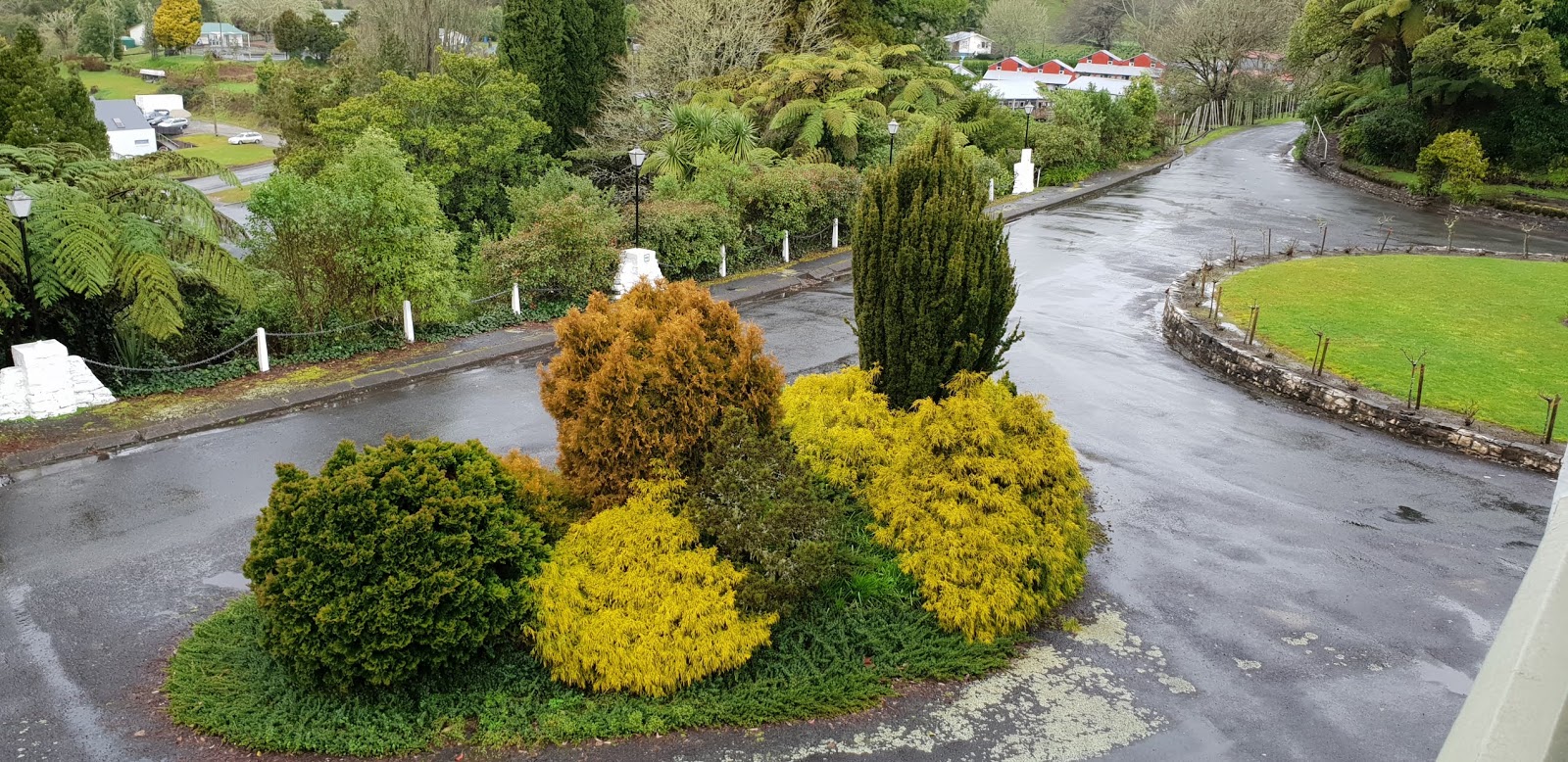
A relatively unassuming lane leads to what could be described as a grand hotel, called Waitomo Caves Hotel.
The original hotel was built in 1908, and it was later extended in 1928. Part of it is ‘Victorian’, based on an eastern Europe mountain chalet, and part of it is ‘Art Deco’, the concrete wing, and a feature, if it could be called that, is none of the four corners are the same.
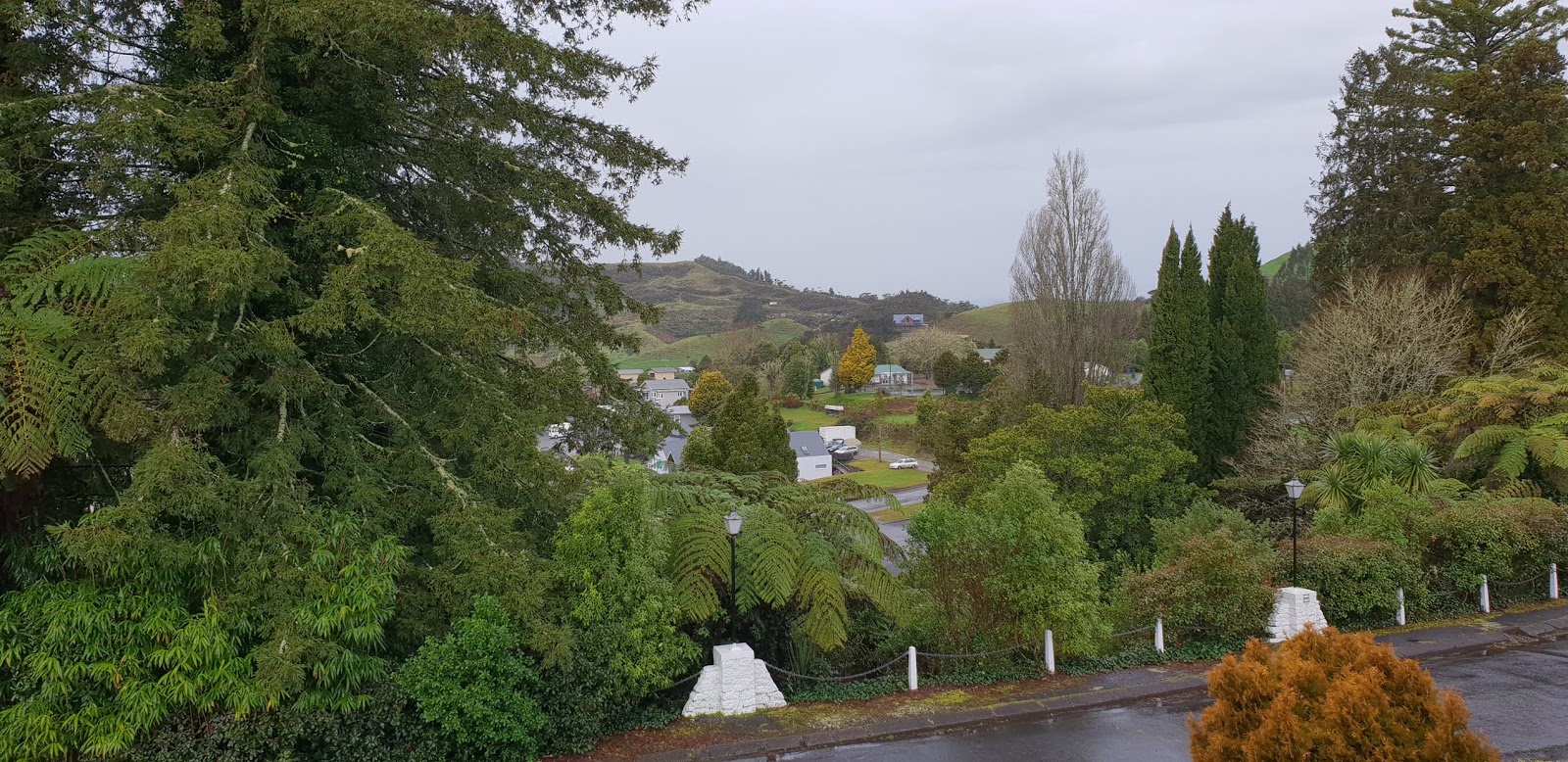
Views from the balcony show part of the surrounding gardens
and the town of Waitomo in the distance.
In gloomy weather, it does look rather spooky, and I suspect there may be a ghost or two lurking somewhere in the buildings.
But…
This a a very interesting, and the words of one of my younger grand daughters, a very creepy place. It would make an excellent base for paranormal activity, and there could very well be ghosts walking the corridors of this hotel.
It has the long darkish passageways that lead in all directions and to almost hidden rooms, a creepy nighttime aspect, and the creaky woodwork.
I know when we were exploring, it was easy to lose your bearings, if not get lost, trying to find certain places, and once found, hard to find your way back.
All in all, it was one of the best stays in a very old place going through the throes of modernisation.
And looking at it from the outside at night, I’ll leave you with that thought…
McCallister was old school, a man who would most likely fit in perfectly campaigning on the battlefields of Europe during the Second World War. He’d been like a fish out of water in the army, post-Falklands, and while he retired a hero, he still felt he’d more to give.
He’d applied and was accepted as head of a SWAT team, and, watching him now as he and his men disembarked from the truck in almost military precision, a look passed between Annette, the police liaison officer, and I that said she’d seen it all before. I know I had.
There was a one in four chance his team would be selected for this operation, and she had been hoping it would be one of the other three. While waiting for them to arrive she filled me in on the various teams. His was the least co-operative, and the more likely to make ad-hoc decisions rather than adhere to the plan, or any orders that may come from the officer in charge.
This, she said quite bluntly, was going to end badly.
I still had no idea why Prendergast instructed me to attend the scene of what looked to be a normal domestic operation, but as the nominated expert in the field in these types of situations, it was fairly clear he wasn’t taking any chances. It was always a matter of opinion between us, and generally I lost.
In this case, it was an anonymous report identifying what the authorities believed were explosives in one of the dockside sheds where explosives were not supposed to be.
The only reason why the report was given any credence was the man, while not identifying himself by name, said he’d been an explosive expert once and recognized the boxes. That could mean anything, but the Chief Constable was a cautious man.
With his men settled and preparing their weapons, McCallister came over to the command post, not much more than the SUV my liaison and I arrived in, with weapons, bulletproof vests, and rolls of tape to cordon off the area afterward. We both had coffee, steaming in the cold early morning air. Dawn was slowly approaching and although rain had been forecast it had yet to arrive.
A man by the name of Benson was in charge. He too had groaned when he saw McCallister.
“A fine morning for it.” McCallister was the only enthusiastic one here.
He didn’t say what ‘it’ was, but I thought it might eventually be mayhem.
“Let’s hope the rain stays away. It’s going to be difficult enough without it,” Benson said, rubbing his hands together. We had been waiting for the SWAT team to arrive, and another team to take up their position under the wharf, and who was in the final stages of securing their position.
While we were waiting we drew up the plan. I’d go in first to check on what we were dealing with, and what type of explosives. The SWAT team, in the meantime, were to ensure all the exits to the shed were covered. When I gave the signal, they were to enter and secure the building. We were not expecting anyone inside or out, and no movement had been detected in the last hour since our arrival and deployment.
“What’s the current situation?”
“I’ve got eyes on the building, and a team coming in from the waterside, underneath. Its slow progress, but they’re nearly there. Once they’re in place, we’re sending McKenzie in.”
He looked in my direction.
“With due respect sir, shouldn’t it be one of us?” McCallister glared at me with the contempt that only a decorated military officer could.
“No. I have orders from above, much higher than I care to argue with, so, McCallister, no gung-ho heroics for the moment. Just be ready to move on my command, and make sure you have three teams at the exit points, ready to secure the building.”
McCallister opened his mouth, no doubt to question those orders, but instead closed it again. “Yes sir,” he muttered and turned away heading back to his men.
“You’re not going to have much time before he storms the battlements,” Benson quietly said to me, a hint of exasperation in his tone. “I’m dreading the paperwork.”
It was exactly what my liaison officer said when she saw McCallister arriving.
The water team sent their ‘in position’ signal, and we were ready to go.
In the hour or so we’d been on site nothing had stirred, no arrivals, no departures, and no sign anyone was inside, but that didn’t mean we were alone. Nor did it mean I was going to walk in and see immediately what was going on. If it was a cache of explosives then it was possible the building was booby-trapped in any number of ways, there could be sentries or guards, and they had eyes on us, or it might be a false alarm.
I was hoping for the latter.
I put on the bulletproof vest, thinking it was a poor substitute for full battle armor against an exploding bomb, but we were still treating this as a ‘suspected’ case. I noticed my liaison officer was pulling on her bulletproof vest too.
“You don’t have to go. This is my party, not yours,” I said.
“The Chief Constable told me to stick to you like glue, sir.”
I looked at Benson. “Talk some sense into her please, this is not a kindergarten outing.”
He shrugged. Seeing McCallister had taken all the fight out of him. “Orders are orders. If that’s what the Chief Constable requested …”
Madness. I glared at her, and she gave me a wan smile. “Stay behind me then, and don’t do anything stupid.”
“Believe me, I won’t be.” She pulled out and checked her weapon, chambering the first round. It made a reassuring sound.
Suited up, weapons readied, a last sip of the coffee in a stomach that was already churning from nerves and tension, I looked at the target, one hundred yards distant and thought it was going to be the longest hundred yards I’d ever traversed. At least for this week.
A swirling mist rolled in and caused a slight change in plans.
Because the front of the buildings was constantly illuminated by large overhead arc lamps, my intention had been to approach the building from the rear where there was less light and more cover. Despite the lack of movement, if there were explosives in that building, there’d be ‘enemy’ surveillance somewhere, and, after making that assumption, I believed it was going to be easier and less noticeable to use the darkness as a cover.
It was a result of the consultation, and studying the plans of the warehouse, plans that showed three entrances, the main front hangar type doors, a side entrance for truck entry and exit and a small door in the rear, at the end of an internal passage leading to several offices. I also assumed it was the exit used when smokers needed a break. Our entry would be by the rear door or failing that, the side entrance where a door was built into the larger sliding doors. In both cases, the locks would not present a problem.
The change in the weather made the approach shorter, and given the density of the mist now turning into a fog, we were able to approach by the front, hugging the walls, and moving quickly while there was cover. I could feel the dampness of the mist and shivered more than once.
It was nerves more than the cold.
I could also feel rather than see the presence of Annette behind me, and once felt her breath on my neck when we stopped for a quick reconnaissance.
It was the same for McCallister’s men. I could feel them following us, quickly and quietly, and expected, if I turned around, to see him breathing down my neck too.
It added to the tension.
My plan was still to enter by the back door.
We slipped up the alley between the two sheds to the rear corner and stopped. I heard a noise coming from the rear of the building, and the light tap on the shoulder told me Annette had heard it too. I put my hand up to signal her to wait, and as a swirl of mist rolled in, I slipped around the corner heading towards where I’d last seen the glow of a cigarette.
The mist cleared, and we saw each other at the same time. He was a bearded man in battle fatigues, not the average dockside security guard.
He was quick, but my slight element of surprise was his undoing, and he was down and unconscious in less than a few seconds with barely a sound beyond the body hitting the ground. Zip ties secured his hands and legs, and tape his mouth. Annette joined me a minute after securing him.
A glance at the body then me, “I can see why they, whoever they are, sent you.”
She’d asked who I worked for, and I didn’t answer. It was best she didn’t know.
“Stay behind me,” I said, more urgency in my tone. If there was one, there’d be another.
Luck was with us so far. A man outside smoking meant no booby traps on the back door, and quite possibly there’d be none inside. But it indicated there were more men inside, and if so, it appeared they were very well trained. If that were the case, they would be formidable opponents.
The fear factor increased exponentially.
I slowly opened the door and looked in. A pale light shone from within the warehouse itself, one that was not bright enough to be detected from outside. None of the offices had lights on, so it was possible they were vacant. I realized then they had blacked out the windows. Why hadn’t someone checked this?
Once inside, the door closed behind us, progress was slow and careful. She remained directly behind me, gun ready to shoot anything that moved. I had a momentary thought for McCallister and his men, securing the perimeter.
At the end of the corridor, the extent of the warehouse stretched before us. The pale lighting made it seem like a vast empty cavern, except for a long trestle table along one side, and, behind it, stacks of wooden crates, some opened. It looked like a production line.
To get to the table from where we were was a ten-yard walk in the open. There was no cover. If we stuck to the walls, there was equally no cover and a longer walk.
We needed a distraction.
As if on cue, the two main entrances disintegrated into flying shrapnel accompanied by a deafening explosion that momentarily disoriented both Annette and I. Through the smoke and dust kicked up I saw three men appear from behind the wooden crates, each with what looked like machine guns, spraying bullets in the direction of the incoming SWAT members.
They never had a chance, cut down before they made ten steps into the building.
By the time I’d recovered, my head heavy, eyes watering and ears still ringing, I took several steps towards them, managing to take down two of the gunmen but not the third.
I heard a voice, Annette’s I think, yell out, “Oh, God, he’s got a trigger,” just before another explosion, though all I remember in that split second was a bright flash, the intense heat, something very heavy smashing into my chest knocking the wind out of me, and then the sensation of flying, just before I hit the wall.
I spent four weeks in an induced coma, three months being stitched back together and another six learning to do all those basic actions everyone took for granted. It was twelve months almost to the day when I was released from the hospital, physically, except for a few alterations required after being hit by shrapnel, looking the same as I always had.
But mentally? The document I’d signed on release said it all, ‘not fit for active duty; discharged’.
It was in the name of David Cheney. For all intents and purposes, Alistair McKenzie was killed in that warehouse, and for the first time ever, an agent left the Department, the first to retire alive.
I was not sure I liked the idea of making history.
Writing exercise with the starting line – “What are you doing?” he asked, while the water rose.
…
“What are you doing?” he asked, while the water rose.
“Considering all the ways I’m going to kill you when we get out of this mess.”
“It’s not my fault. It had to be someone you’ve annoyed. I don’t have an enemy in the world.”
That might have been the case the last time I saw or spoke to him fifteen years ago, but I was not so sure that was the case now.
“Are you sure about that?”
He didn’t answer. He didn’t have to. He had come to the airport to pick me up and take me back to the far, a place I had tried to get as far away from as possible, but luck, as it tends to do, ran out and ended my term in Washington. I’d backed the wrong horse.
I thought after so long away, the place would have changed, but it hadn’t.
Archie McKenzie was there, and made it quite plain that the bad blood between him and my brother was still running hot, had been for the past fifteen years, and now it extended to his ‘failure of a brother’.
We were lucky to get out of the terminal without a fight. That was not the worst of it, Archie had followed his father into the police, and he was now a Deputy, a Deputy driven by revenge, with a gun and a badge.
“And what would you call Archie McKenzie?”
“Misguided.”
“All these years, and he’s still mad at you.”
“I didn’t steal her away from him. She walked away, and he couldn’t take it.”
There were four different stories to that one incident, and not one of them explained his pathological hatred of my brother, and by proxy, my family.
“And now we’re here. We don’t get out of here, you know what that means.”
“How do you know he put us here?”
There were three reasons. First, he was hopeless at disguising his voice. Second, he still used the same aftershave, like he bathed in it, and third, one of his mates, Lou, said the same stupid stuff he did back when we went to school.
Archie was one of the three musketeers, or that was what they called themselves. When school was over, it took three months before I enlisted in the National Guard, and spent the next few years in places I’d rather forget. On the last tour, I sustained a few injuries and was discharged. Another guy caught in the same IED explosion asked me to come work for him in Washington as an advocate for soldiers’ care. He got elected to Congress, and I stayed on as his Chief of Staff until he lost the last election.
I thought I’d go home and work out what I was going to do next. Dying wasn’t supposed to be one of those options.
“Does it matter? We have to get out of here.”
I was working on the knots that held my hands together behind my back. Whoever tied them wasn’t very good at knots.
“What are you doing?” he asked again.
“Getting free.”
“That’s impossible.”
“Nothing is truly impossible. There’s just varying degrees of impossible.”
I managed to loosen the rope just enough to get one hand out and then untie the other. It was only a matter of a minute or so to get my feet free.
I stood up. The water had reached my ankles.
“Did you…”
“Yes.” I undid his bindings and dragged him to his feet.
I had a smaller phone tucked in the bottom of my trouser leg in a special pouch and pulled it out. It had a light and I switched it on. I would have to use it sparingly.
“Aren’t you full of surprises?”
I didn’t answer that. Instead, I looked at the floor, and the water coming in from what looked like a garden hose dangling down the side of the well, not far from us. It came from above, where there was a cover over the well. It was about ten feet wide, too wide, too smooth to climb up, but that hose presented a possibility.
To top was about twenty feet up. Putting myself in Archie’s boots, he obviously thought we would not escape the bindings and, thinking the sedative would keep us under long enough for us to drown before we realised what happened, it was a fait accompli.
Archie had never been one to consider the consequences of his actions. He always had a small-town sheriff for a father to get him out of trouble. We were not going to be able to simply go back to town. He had wanted us to disappear.
For a moment, I wondered how many other victims he had disposed of were in here?
“I assume we’re going now?”
“Not yet. I think we need to be closer to the top. I don’t think that hose will be anchored enough, and if we pull it down now, we might never get out. It will at least give us something to hold onto as we go up, so we don’t have to try too hard to tread water.
“It’s going to be cold and wet, and a long time at this rate.”
He wasn’t wrong. We’d been in the well for about half an hour, and it was only six inches deep. It was going to take about twenty hours.
“If you’ve got a better idea, please tell me.”
His silence told me that it was going to be a long wait.
…
Two hours and a foot deep, we heard a truck coming. Was Archie coming back to check on his handiwork? I tried hard to listen and see if it made the same engine noise as the one that had brought us to our watery grave.
Too hard to tell. It was a little after eleven at night. It was dark by the time we were taken off the truck and put down the well. They had removed the blindfolds, but they had their faces covered, so it was not possible to recognise them. Nor had they spoken unless it was necessary.
As for the surroundings, the night was overcast and no moon, so everything was cloaked in darkness. I thought I had seen a farmhouse or a shack, but I couldn’t be sure. I had thought it might be one of the disused farms. Several had folded after a drought struck twenty years ago, the latest disaster to befall the county and the straw that broke most of the farmers.
“You hear that?”
“It might be the people who own the place.”
“This is Dead Man’s Folly. I’m sure of it.”
I knew of it. Six farms in a small group, all suffering from the drought. This well, if it was Dead Man’s Folly, had been dry for years. The farmer spent the last of his savings digging the well, only for it to come up dry. Shot the well digger, his men, his family and then himself.
Where were the ghosts?
We hear the scrunching of tires on the gravel, a skid to a stop, then the engine running for a minute and then silence. A door opened and then closed.
There were no footsteps, or none that I could hear.
A few minutes later, the hose moved as if someone was pulling on it. Then it went limp. Someone had turned off the water flow.
Five or perhaps six minutes after that, there was a crashing sound of a sledgehammer on wood. It was the wooden cover, suddenly splintering and shards raining down on us. A dozen or so more blows and there was a hole, big enough to see the moon-lit sky.
And then the outline of a person.
“That you, Sam, down there?” A girl’s voice.
“Who are you?”
“Beth McKenzie.”
I just barely heard Jack mutter, “Jesus Christ, we’re dead.”
50 photographs, 50 stories, of which there is one of the 50 below.
They all start with –
A picture paints … well, as many words as you like. For instance:
And, the story:
Have you ever watched your hopes and dreams simply just fly away?
Everything I thought I wanted and needed had just left in an aeroplane, and although I said I was not going to, i came to the airport to see the plane leave. Not the person on it, that would have been far too difficult and emotional, but perhaps it was symbolic, the end of one life and the start of another.
But no matter what I thought or felt, we had both come to the right decision. She needed the opportunity to spread her wings. It was probably not the best idea for her to apply for the job without telling me, but I understood her reasons.
She was in a rut. Though her job was a very good one, it was not as demanding as she had expected, particularly after the last promotion, but with it came resentment from others on her level, that she, the youngest of the group would get the position.
It was something that had been weighing down of her for the last three months, and if noticed it, the late nights, the moodiness, sometimes a flash of temper. I knew she had one, no one could have such red hair and not, but she had always kept it in check.
And, then there was us, together, and after seven years, it felt like we were going nowhere. Perhaps that was down to my lack of ambition, and though she never said it, lack of sophistication. It hadn’t been an issue, well, not until her last promotion, and the fact she had to entertain more, and frankly I felt like an embarrassment to her.
So, there it was, three days ago, the beginning of the weekend, and we had planned to go away for a few days and take stock. We both acknowledged we needed to talk, but it never seemed the right time.
It was then she said she had quit her job and found a new one. Starting the following Monday.
Ok, that took me by surprise, not so much that it something I sort of guessed might happen, but that she would just blurt it out.
I think that right then, at that moment, I could feel her frustration with everything around her.
What surprised her was my reaction. None.
I simply asked where who, and when.
A world-class newspaper, in New York, and she had to be there in a week.
A week.
It was all the time I had left with her.
I remember I just shrugged and asked if the planned weekend away was off.
She stood on the other side of the kitchen counter, hands around a cup of coffee she had just poured, and that one thing I remembered was the lone tear that ran down her cheek.
Is that all you want to know?
I did, yes, but we had lost that intimacy we used to have when she would have told me what was happening, and we would have brainstormed solutions. I might be a cabinet maker but I still had a brain, was what I overheard her tell a friend once.
There’s not much to ask, I said. You’ve been desperately unhappy and haven’t been able to hide it all that well, you have been under a lot of pressure trying to deal with a group of troglodytes, and you’ve been leaning on Bentley’s shoulder instead of mine, and I get it, he’s got more experience in that place, and the politics that go with it, and is still an ally.
Her immediate superior and instrumental in her getting the position, but unlike some men in his position he had not taken advantage of a situation like some men would. And even if she had made a move, which I doubted, that was not the sort of woman she was, he would have politely declined.
One of the very few happily married men in that organisation, so I heard.
So, she said, you’re not just a pretty face.
Par for the course for a cabinet maker whose university degree is in psychology. It doesn’t take rocket science to see what was happening to you. I just didn’t think it was my place to jump in unless you asked me, and when you didn’t, well, that told me everything I needed to know.
Yes, our relationship had a use by date, and it was in the next few days.
I was thinking, she said, that you might come with me, you can make cabinets anywhere.
I could, but I think the real problem wasn’t just the job. It was everything around her and going with her, that would just be a constant reminder of what had been holding her back. I didn’t want that for her and said so.
Then the only question left was, what do we do now?
Go shopping for suitcases. Bags to pack, and places to go.
Getting on the roller coaster is easy. On the beginning, it’s a slow easy ride, followed by the slow climb to the top. It’s much like some relationships, they start out easy, they require a little work to get to the next level, follows by the adrenaline rush when it all comes together.
What most people forget is that what comes down must go back up, and life is pretty much a roller coaster with highs and lows.
Our roller coaster had just come or of the final turn and we were braking so that it stops at the station.
There was no question of going with her to New York. Yes, I promised I’d come over and visit her, but that was a promise with crossed fingers behind my back. After a few months in t the new job the last thing shed want was a reminder of what she left behind. New friends new life.
We packed her bags, three out everything she didn’t want, a free trips to the op shop with stiff she knew others would like to have, and basically, by the time she was ready to go, there was nothing left of her in the apartment, or anywhere.
Her friends would be seeing her off at the airport, and that’s when I told her I was not coming, that moment the taxi arrived to take her away forever. I remember standing there, watching the taxi go. It was going to be, and was, as hard as it was to watch the plane leave.
So, there I was, finally staring at the blank sky, around me a dozen other plane spotters, a rather motley crew of plane enthusiasts.
Already that morning there’s been 6 different types of plane depart, and I could hear another winding up its engines for take-off.
People coming, people going.
Maybe I would go to New York in a couple of months, not to see her, but just see what the attraction was. Or maybe I would drop in, just to see how she was.
As one of my friends told me when I gave him the news, the future is never written in stone, and it’s about time you broadened your horizons.
Simply because I want you to wait here while I go down the shops.
How long will that be?
I don’t know. A while. Anything from half an hour to a lifetime.
Then there’s another way of using the word: While I do this can you do that.
This is more definite but still ambiguous. How long will that be?
As long as it takes. Anything from half an hour to a lifetime.
it is by definition, a period of time.
Then it gets more ambiguous, in that the arrangements say in place while he is alive.
Being a murder mystery writer and reader, it becomes a sufficient reason to kill a wealthy relative to get their inheritance. But, if murder is not in mind, then it can be anything from a half-hour to a lifetime!
Less of an enigma is this use of the word: I’m going the while away the time playing computer games.
At least you know how long that’s going to be, i.e. till you get bored.
This is not to be confused with the word wile, which means to use a cunning or devious means to get someone to do your bidding.
We’ve all heard of feminine wiles. Granddaughters are experts in using them, I can personally attest to that.
There are other meanings but these are no longer used in modern English.
It could be said that of all the women one could meet, whether contrived or by sheer luck, what are the odds it would turn out to be the woman who was being paid a very large sum to kill you.
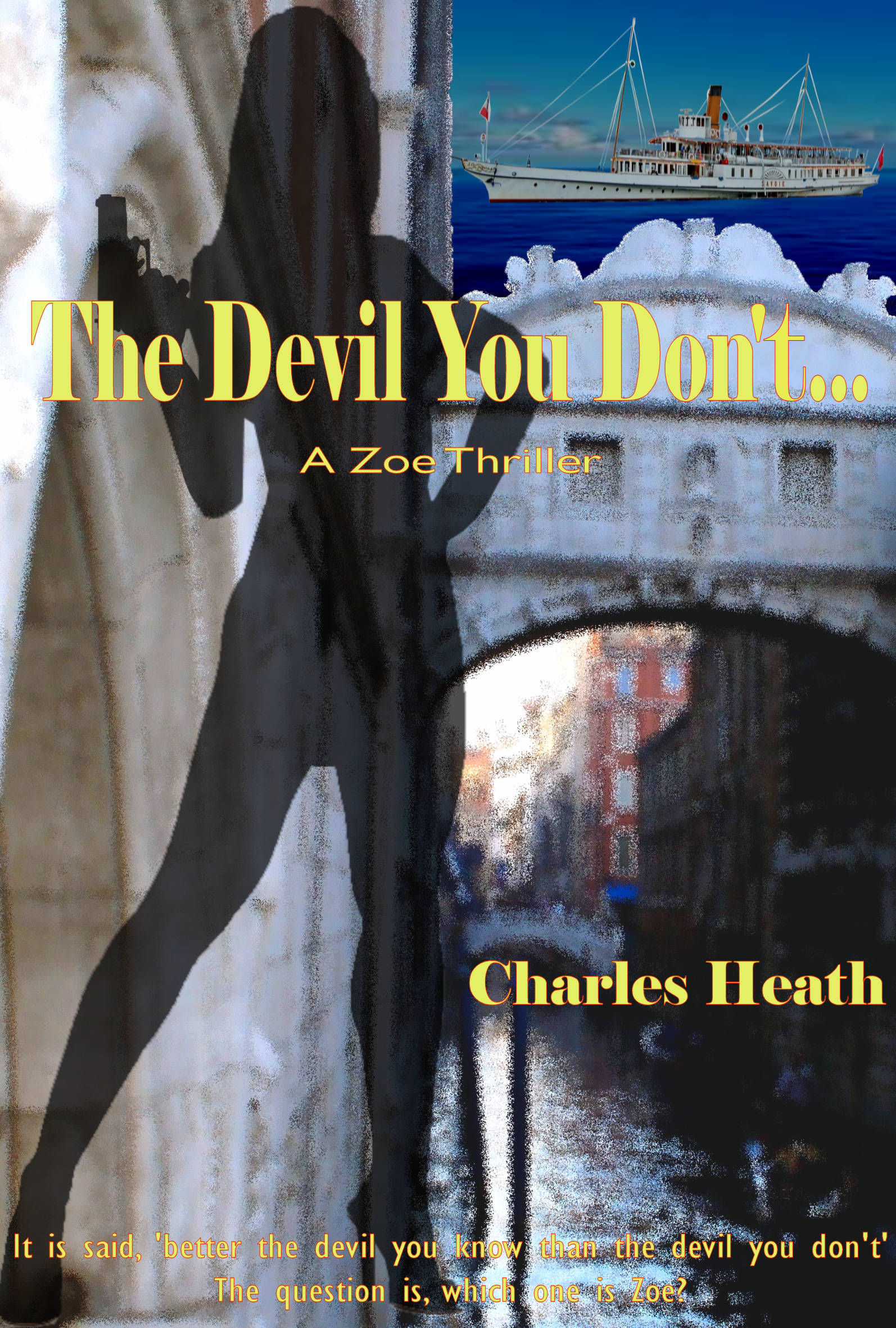
John Pennington is a man who may be lucky in business, but not so lucky in love. He has just broken up with Phillipa Sternhaven, the woman he thought was the one, but relatives and circumstances, and perhaps because she was a ‘princess’, may also have contributed to the end result.
So, what do you do when you are heartbroken?
That is a story that slowly unfolds, from the first meeting with his nemesis on Lake Geneva, all the way to a hotel room in Sorrento, where he learns the shattering truth.
What should have been solace after disappointment, turns out to be something else entirely, and from that point, everything goes to hell in a handbasket.
He suddenly realizes his so-called friend Sebastian has not exactly told him the truth about a small job he asked him to do, the woman he is falling in love with is not quite who she says she is, and he is caught in the middle of a war between two men who consider people becoming collateral damage as part of their business.
The story paints the characters cleverly displaying all their flaws and weaknesses. The locations add to the story at times taking me back down memory lane, especially to Venice where, in those back streets I confess it’s not all that hard to get lost.
All in all a thoroughly entertaining story with, for once, a satisfying end.
The problem is, there are familiar faces and a question of who is a friend and who is foe made all the more difficult because of the enemy, if it was the enemy, simply because it didn’t look or sound or act like the enemy.
Now, it appears, his problems stem from another operation he participated in, and because of it, he has now been roped into what might be called a suicide mission.
We flew north at low altitude, crossing the border into the Sudan, then ran along the border, heading back to the landing field we’d arrived on in Uganda.
It was basically a two-hour flight that in the end was eventless. After everything that had happened over the past 24 hours, it wasn’t hard to doze off, leaving Davies to get us back.
I was woken suddenly by a thump on my arm.
“Need your help landing this crate,” a squeaky voice in my ear said.
I could feel the plane losing altitude, and the engines not making the same noise as they had just before I’d dropped off to sleep. It seemed like it was only a few minutes ago we were taking off.
She leveled the plane at 1000 feet, and flew over the airfield, the landing lights on, and I could see the strip from start to end. It looked a lot longer than the one we’d taken off from.
Turning sharply, I could hear the landing gear being activated and saw green lights come on one the dashboard. Down and locked I assumed.
She then went through a series of landing checks and told me what she wanted me to do to assists, and then everything seemingly OK, we came in to land.
This landing was a lot bumpier than that in the C130 earlier, but she got us there, throttled back, and slowed the speed before heading for the terminal buildings.
Once there, she let the engines run for about a minute or so before switching them off.
Once the propellers stopped turning, the silence in the cockpit was strange. At the rear, the door was opened, and everyone was getting off, the Colonel first to make sure none of his men shot anyone by mistake, and then the rest of the team.
Davies and I were the last to leave. I got the impression she would have stayed, just a little longer, and it was telling that she patted the dashboard in what I would call a loving manner, thanking the aircraft for its service.
“I can see you like flying these old planes,” I said, still seated and taking in the moment.
“There’s something about them. You have to fly them, they don’t fly you, not like the F15’s or any of those other jets that have autopilots. No, this comes from the days of real flying.”
“You said your Dad has one?”
“Yep.”
“Then the art of flying is not lost on you. Perhaps one day when I get lost, somewhere where this plane lives, you can take me up.”
“Any time.”
She dragged herself out of the left seat and headed towards the rear of the plane. I took a moment longer, then followed her.
Maybe she could teach me how to fly.
Or maybe not.
I keep forgetting I hate flying in planes.
As I stepped off the plane onto terra firma again, I could see just inside the range of my peripheral vision, some activity by the terminal building.
Suddenly, a man was running towards us. He was also yelling out, words to the effect, ‘they’re coming’.
Who?
The Colonel looked up just as the man, almost hunched over out of breath, reached him.
“They’re coming. A helicopter, heading towards us.” Several more huge breaths, then, “An hour at best.” He looked at me. “You have to go.”
Then he handed the Colonel a sheet of paper, and he quickly scanned it.
Then he said, “Your friendly militia decided the ransom wasn’t enough and they’re coming to take them back.”
“How is that possible? Can they just cross borders like that?”
“This is Africa. Anything can happen. By the time their mission is done, it’ll be too late for us to scramble anything to attack them. You need to go.”
Davies had come back, assuming it had something to do with the plane, and after taking in what the Colonel had to say, said, “We need more fuel. Not much, but it’ll take time.”
The fuel truck had already come out and begun the refueling.
“Go tell the driver how much you need. You’ve probably got a half-hour, a little more before you take off and go before, they get here.”
She headed towards the fuel truck, muttering under her breath.
I yelled out to Monroe, “Round up everyone and get them back on the plane. Wheels up in half an hour.”
I could see her mouth the word why.
“Seems we’re about to get a visit from some very unfriendly people.”
For a story that was conceived during those long boring hours flying in a steel cocoon, striving to keep away the thoughts that the plane and everyone in it could just simply disappear as planes have in the past, it has come a long way.
Whilst I have always had a fascination with what happened during the second world war, not the battles or fighting, but in the more obscure events that took place, I decided to pen my own little sidebar to what was a long and bitter war.
And, so, it continues…
——
A second report from Blinky’s surveillance of the castle had Leonardo on the move, and a second shadowy person following them.
It had to be Jackerby, Atherton thought. Jackerby would be the only one who didn’t trust anyone, or, perhaps, he had more murderous intentions. Maybe he had worked out that Leonardo was rapidly becoming a liability.
Or he had some other agenda.
“How many of resistance are waiting at the barn?” Atherton asked the soldier.
“Four. The fifth went to find them.”
“OK. Carlo, take some of the soldiers and stop them.”
He grinned. At last.
“I’ll deal with the other man.” I whistled and Jack came over. “We have a job to do, Jack.” He had no idea what I was saying, but his enthusiasm was obvious.
“Taking any prisoners,” Blinky asked.
“If the situation warrants it, but if the fire on us, we fire back.”
“And, once that’s done?”
“We retake the castle.”
“Sounds a bit like a story out of a Boys Own annual.”
“It does. It’ll certainly make a good story to tell your grandchildren one day.”
“If we make it back.”
“We will. If we’re careful and don’t take unnecessary risks. I won’t be bringing a prisoner back. If it’s Jackerby, I have a score to settle with him.”
“Don’t let revenge cloud your judgment.”
“I won’t. See you soon.”
When we reached the woods, on the opposite side of the castle, I planned to come at Jackaby from an angle he would not be expecting anyone.
From the moment we entered the woods, Jack went into what I would call stealth mode as if he was hunting. In a sense he was, and perhaps he knew instinctively what we were looking for.
It took about a half-hourof carefully moving through the woods to get to a point where I could just see Jackerby, sitting beside a tree, watching the barn. I moved a little closer, and the change of angle brought Leonardo and two other men of the resistance, sitting behind the barn, and one of sentry duty, waiting for the fifth to return.
I turned back to see where Jack was, but he had gone off. A rabbit perhaps, or something else.
I moved closer; Jackerby’s attention was fully on the resistance members, so he would not hear me coming.
What was he doing? He was taking an enormous risk coming out of the castle alone or did he think that if I was clever enough to have the castle under surveillance, he could assume I might be stupid enough to follow him.
It was an interesting thought, broken by the sudden rustling through the undergrowth, and then a yelp, as Jack launched himself at Jackerby, taking him completely by surprise, then, when Jackeby tried to get a gun in hand, Jack attacked that hand.
Long enough for me to get there, gun in hand. “Stop resisting, or I’m sure Jack will do some serious damage to that hand.”
It looked serious enough to me.
“So, this is where you’re hiding?”
“Enough, Jack.”
Curiously, the dog stopped, but remained menacingly close, growling.
“I should have shot that dog when I had the chance.”
Jack moved forward and growled in his face, baring his teeth, and Jackerby shrank back.
“Don’t upset him. He obviously doesn’t like you.”
Our attention was interrupted by gunfire, and a glance over to the barn saw two men with their hands up against the wall, and the two on the ground, including Leonardo. Carlo was in the process of ‘interrogating’ the other two.
“Carlo is not a happy man, Jackerby. And I promised him five minutes alone with you.”
Another glance over at the barn, Carlo was kicking one of the men who had fallen on the ground, with enthusiasm. I didn’t rate the man’s chances of surviving. “You really shouldn’t have let Leonardo mistreat Chiara or Martina, wherever you’ve got her.”
“She is still alive. We can do a deal here, Atherton.”
“The trouble I have with anything you say is that I can’t believe you. I’m sure you’d say or do anything to stay alive and renege the moment you got back to the castle.”
“I give you my word as an officer. We are, like you, men of honor.”
I shook my head. “You’re Gestapo, or worse, Jackerby. And they, as far as I’m concerned, are the lowest of the low, little more than murderous thugs. No.”
I aimed the gun and pulled the trigger.
The only way Jackerby was leaving the woods was as dead weight.
T is for — This is not what I ordered. There’s a reason for everything
…
I knew the moment I opened my eyes that this day was going to be different.
My life had begun to sink into a rut where everyone, everything, was the same. In fact, it was so predictable that I could recite every word spoken to me and in response for the first half hour.
So monotonous, I didn’t want to go to work today, any day, any more, ever. Except I had to pay the rent, I had to pay the bills, I had to eat.
How would life have been so much easier if I were a robot?
Except…
When I turned over, ready to close my eyes and forget the alarm had gone off, I saw the one thing that changed my mind in an instant.
Beth, short for Elizabeth, not Liz or Lizzy or Bethany.
The girl I had seen at work asked about, told she was unavailable or looking for friends like me, and gave up any hope of even saying hello.
Until last night when I was holding open the door as the masses exited, and she was last in the queue. She thanked me, the only one, and I blushed. Yes, the introvert got tongue-tied.
She asked me if I was going her way, which I was, and we walked.
And talked, and talked, then went for a drink, had dinner, and no, I had no idea how she finished up next to me.
She, it appeared, was in the same group I was in, the assistant to the assistant, the gopher, doing odd jobs and worse for people who didn’t appreciate us, a stepping stone to something better, the bottom rung of the ladder to a career.
We had a lot in common.
We both had ambitions, and these were slowly being eroded by unhelpful, demeaning, and unappreciative superiors.
Now, in the cold, hard light of day, all those plans, everything we said we would do, all those strategies to put our superiors in their place, seemed a million miles away.
Except she was still there.
And I will be honest, I had no idea how or why she was. We did have a little too much to drink, something I never did on a work day, and something she said she didn’t do ever.
And I hoped nothing happened, anything that would ruin a fledgling relationship that had possibilities.
When I tried to edge myself out of the bed, she woke, surprised, but with a smile.
“Sorry.”
“For what?”
“Anything I might have said or done that I can’t remember.”
“Good thing then that I do. Did I forget to tell you that alcohol doesn’t really affect me, other than in the moment, but it doesn’t affect my judgment. You were silly, not stupid, and I thought it wise to tuck you in and make sure you were OK. Now, come back and rest for a few more minutes. I gave you my mother’s hangover cure last night, so you will be fine.”
I slid back under the covers.
“Thank you. Normally, after that much wine, I would be a mess.” I had to admit I felt almost normal except for a slight ache behind my eyes, perhaps from not enough sleep.
“You’re welcome. It was interesting to discover you hate the management group as much as I do.”
“Not so much hate as to wonder how they actually made the group. They certainly have no people skills, but at least they treat everyone the same.”
“Which is wrong?”
“Well, at the orientation, they did tell us what to expect.” Not quite, we were told that we needed to learn quickly during the internship, and that sometimes, in high-pressure situations, we might find ourselves in trouble, especially if we had the training and forgot the lessons.
That was the sticking point. Most of those in management failed to complete our training, usually because of time constraints or simply their lack of interest in ‘molly coddling’ as one called it.
“But there are ways of doing it, and ways of not doing it. Perhaps we need to remind them. Subtly.”
“Is there such a thing?”
“You said there was last night. You have so many ideas, and equally no idea how to make them happen. I’ve been thinking about it, and I have a plan.”
That morning transcended any I’d had in a lifetime and taught me one very valuable lesson. I needed to be sober and aware at all times if I wanted to impress any woman.
I knew she was just being kind to me, even though I felt like she might like me as more than just a colleague, but I would have to impress her if I wanted any sort of a chance.
It was odd that I hadn’t thought about her or any of the others in that way; such was the necessity to keep your mind on the job and keep ahead of the game. There were a dozen of us, and we were all competing for three positions, and it was coming to the end of the trial period.
No one had an edge. Trying to grovel didn’t work, trying to be better than the others didn’t work, and they let you make mistakes without telling you, which in front of the group wasn’t exactly the best way of getting any of us to stay.
Perhaps they didn’t. Perhaps those they didn’t harass out of the job were the sort of lackeys they wanted.
And apparently, I had told her that I’d been spending a lot of my spare time studying the whole financial structure of the organisation and found that our managers had been taking the wrong path
Both of us had been working on the background papers that were to be presented to the board members, and because of that, we would be allowed to sit in.
She had a plan, and when she stepped through it, I agreed with her that it might work. It just depended on one particular board member, the lone woman, Sylvia. Beth had worked with her for a week when she requested an intern from HR, one of the girls.
Unlike management, Sylvia was interested in helping the interns and taught them some valuable lessons, and this, along with the corporate knowledge we had, was either going to win us some points or get us fired. Either way, we both agreed it was better than keeping the status quo and would be worth it, one way or the other.
As usual, the two managers we worked for, each in different departments, were charged with conducting the presentation.
But, this morning my manager hadn’t arrived in time for the meeting, and it was handed to Beth. He was annoyed and those last few minutes before it was due, Beth arrived with the morning coffee run, scribbled on a piece of paper, while I distributed the papers, including those I had written that showed the true started of the business and the recommendations to put the company on a more profitable trajectory.
My speciality at uni was rescuing poor-performing companies using alternate strategies, and I had tried to get this across to the current management group, but they had consistently ignored it. It was no secret that the current strategy was not working, and the meeting with the board was to tell them how to overcome this.
What did an intern know?
Before it started, Beth handed out the morning coffee and cakes, which the presenters hoped would put the board members in a better frame of mind.
It did not.
He had got the orders wrong, yet another example of not listening properly, and the unthinkable happened. He told Beth to go and sort the mess out.
Sylvia put her hand up and asked who was responsible for writing down the orders, stating plainly that what she had was not what she ordered, and that the order, and had been taken by the manager.
Therefore, she said the manager should sort it out.
And since he had a perfectly adequate team of interns whom the presenters no doubt had gone through the presentation with as was required as part of the training standards of the organisation, the two interns could make the presentation in his place.
She then told him to leave.
The door closed, Beth made a precise of the manager’s presentation and then said that there was an alternative strategy available, one that was hot off the press and would be delivered by the person she described as a top-of-the-class strategist in reviving poorly performing companies.
She then handed the floor to me, and I went through the basics and then the specifics, closing just as the manager returned.
Over coffee, four board members grilled him over the merits of the two strategies, one of course he knew about and had discounted and now had to admit was the more successful path.
If looks could kill, there would have been two dead interns.
Meeting over, we were dismissed. The manager was kept in the room while the more senior members of management were summoned to explain how interns could possibly come up with a better strategy and why the current management team was still pursuing outdated and frankly incomprehensible methodologies.
Or at least that’s what we were told later. Both Beth and I had decided that we would pack up and leave. Even if we were right about our strategy, it was still the wrong way to go about it. Board members come and go, so currying favour with them was not a successful way to get a position in the company because they couldn’t trust you to do what you were asked to do.
We both knew that. Getting a job was on merit, but when the company’s hiring staff were not appraised, well, perhaps the company was not worth working for.
That inevitable call came from HR. It was from the same man who had conducted our interviews, the same man who basically told us we were worthless until we were forty.
It was a novel way of engendering loyalty and selling the company as a place worth working it. But that year was a difficult one, and jobs were hard to find, especially in one as prestigious to make a splash on our resumes.
We were both in the breakout area because we didn’t have a permanent office. That would have come if we were selected to stay.
I put my phone on speaker.
“You two do realise that what you did, how you did it, was not the right way. There are procedures and a hierarchy, and it should be followed.”
Beth was more blunt than I was, especially in dealing with her manager and purported mentor. She said, “A hierarchy may work in a proper environment, but this isn’t where there is one. The ideas we presented were communicated several times to the appropriate people, and they were ignored.”
“That is regrettable, but our procedures are there for a reason.”
“So the current muddle management can steal the interns’ ideas and pass them off as their own. How are you supposed to get a position here if they deliberately stifle you?”
Good point. I think most of us just accepted that was the way it is in the corporate jungle.
“I will agree that presenting something different can be delicate. But there is always a better way, and the two of you failed. Regrettably, your internships are cancelled, and you will be escorted from the building by security.”
Conversation over.
Beth shrugged. “No surprises there. No surprise either when we read about the company seeking a Chapter 17 bailout in a few weeks.”
That comment coincided with the arrival of two security guards. One would have been sufficient.
Of the two, one was the genial old man who took the time each morning to greet each of the employees by name, a remarkable feature given how many worked there.
What was more remarkable was the disdain and plain rudeness most of the staff treated him. He shook his head.
“If I were to make a bet on you two, it would be that you would be the first to show initiative and then the first to be shown the door.”
He was not wrong in our case. “You could have cleaned up.”
“I did, but not in the manner you would expect.” He didn’t tell us why, but there was a wry grin and an interesting expression on Beth’s face. Perhaps she knew. I’d ask later.”
On the ground floor, we gave back our pass keys. We had to sign an NDA, which was normal. Then, after the formalities were done, I could see Sylvia come out of the elevator lobby and head over towards us.
Beth put her hand on my arm, a sign we should wait.
She saw the old man take off his cap and smiled, “It’s been a while, Miss Sylvia.”
“Too long, Archie. Everyone fine?”
“Fine enough. Yours?”
“Spread all over the country. Can’t tie them down anymore.”
“No. Kids always seem to have a sense of adventure these days. You take care, Archie.”
She turned her attention to us. “You two should know better, but then if you did, you wouldn’t have been here. But, on the other hand, I’m glad you were. As you may or may not know, I am an investor, mostly silent, and sometimes the holdings in shares get me a seat on the board. Until this morning, I was going to sell those shares. That presentation changed my mind. And I heard what happened to both of you. It’s not surprising this company is completely off the rails. Are you two looking for a job? Of course you are. Come and work for me. Both of you. I know a team when I see one. Your first job, clean out the baggage and get this place back on track. When I see my shares for ten times what they’re worth now, you two will get a very handsome bonus. Do you need time to think about it?”
Beth looked at me, and I nodded.
“No. We’re in. When do we start?”
“Now.” Sylvia handed her a card. “That’s the office I keep. Annabel knows you’re coming. The paperwork will be there for your employment and your first assignment. Welcome aboard.”
A handshake each, and she was gone.
I was shocked at how quickly your life could change. My mother always said that in troubled times, when one door closes, another one opens.
How true.
Then I saw Beth’s look of anguish. “You do want to work with me, don’t you?”
I smiled. “Of course, I have never been more certain of anything.” I held out my hand, and she took it in hers. “That, and whatever may follow.”