There are two, possibly more, but two fundamental questions you have to ask yourself when you are reading through your work, and perhaps for the first time after finishing writing that first draft.
What am I saying?
What happens next for the characters?
Here’s the thing…
What you’re saying is what the reader wants to know, what sets the tone, what sets up the story. I like to throw readers in the deep right from the start, to give the reader a sense of who they’re going on the journey with.
In my opinion, a book is a journey and the more compelling you can make it, the more invested the reader will be.
Your ultimate aim: that the reader cannot put the book down. They just have to read a bit more to see what happens.
It is always going to be what happens next, whether our protagonist is hanging out of a helicopter trying to avoid being killed, or chasing a lead (or person), chasing a suspect or a person of interest, or just a red herring or entanglement.
And there is always that trope, the cliffhanger at the end of every chapter.
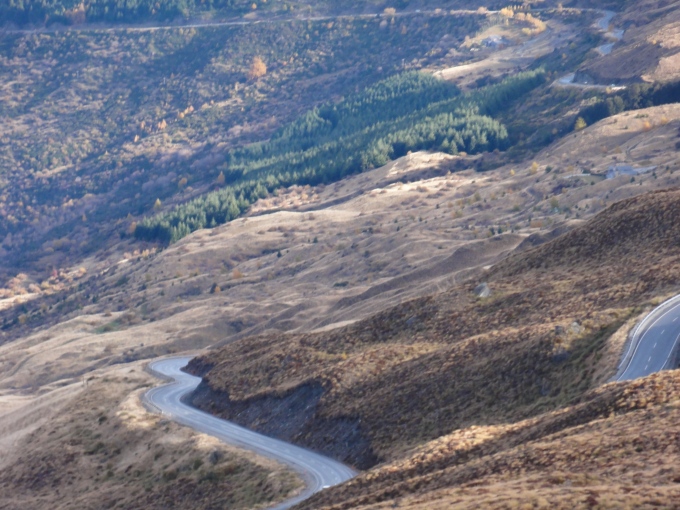
50 photographs, 50 stories, of which there is one of the 50 below.
They all start with –
A picture paints … well, as many words as you like. For instance:
And, the story:
Have you ever watched your hopes and dreams simply just fly away?
Everything I thought I wanted and needed had just left in an aeroplane, and although I said I was not going to, i came to the airport to see the plane leave. Not the person on it, that would have been far too difficult and emotional, but perhaps it was symbolic, the end of one life and the start of another.
But no matter what I thought or felt, we had both come to the right decision. She needed the opportunity to spread her wings. It was probably not the best idea for her to apply for the job without telling me, but I understood her reasons.
She was in a rut. Though her job was a very good one, it was not as demanding as she had expected, particularly after the last promotion, but with it came resentment from others on her level, that she, the youngest of the group would get the position.
It was something that had been weighing down of her for the last three months, and if noticed it, the late nights, the moodiness, sometimes a flash of temper. I knew she had one, no one could have such red hair and not, but she had always kept it in check.
And, then there was us, together, and after seven years, it felt like we were going nowhere. Perhaps that was down to my lack of ambition, and though she never said it, lack of sophistication. It hadn’t been an issue, well, not until her last promotion, and the fact she had to entertain more, and frankly I felt like an embarrassment to her.
So, there it was, three days ago, the beginning of the weekend, and we had planned to go away for a few days and take stock. We both acknowledged we needed to talk, but it never seemed the right time.
It was then she said she had quit her job and found a new one. Starting the following Monday.
Ok, that took me by surprise, not so much that it something I sort of guessed might happen, but that she would just blurt it out.
I think that right then, at that moment, I could feel her frustration with everything around her.
What surprised her was my reaction. None.
I simply asked where who, and when.
A world-class newspaper, in New York, and she had to be there in a week.
A week.
It was all the time I had left with her.
I remember I just shrugged and asked if the planned weekend away was off.
She stood on the other side of the kitchen counter, hands around a cup of coffee she had just poured, and that one thing I remembered was the lone tear that ran down her cheek.
Is that all you want to know?
I did, yes, but we had lost that intimacy we used to have when she would have told me what was happening, and we would have brainstormed solutions. I might be a cabinet maker but I still had a brain, was what I overheard her tell a friend once.
There’s not much to ask, I said. You’ve been desperately unhappy and haven’t been able to hide it all that well, you have been under a lot of pressure trying to deal with a group of troglodytes, and you’ve been leaning on Bentley’s shoulder instead of mine, and I get it, he’s got more experience in that place, and the politics that go with it, and is still an ally.
Her immediate superior and instrumental in her getting the position, but unlike some men in his position he had not taken advantage of a situation like some men would. And even if she had made a move, which I doubted, that was not the sort of woman she was, he would have politely declined.
One of the very few happily married men in that organisation, so I heard.
So, she said, you’re not just a pretty face.
Par for the course for a cabinet maker whose university degree is in psychology. It doesn’t take rocket science to see what was happening to you. I just didn’t think it was my place to jump in unless you asked me, and when you didn’t, well, that told me everything I needed to know.
Yes, our relationship had a use by date, and it was in the next few days.
I was thinking, she said, that you might come with me, you can make cabinets anywhere.
I could, but I think the real problem wasn’t just the job. It was everything around her and going with her, that would just be a constant reminder of what had been holding her back. I didn’t want that for her and said so.
Then the only question left was, what do we do now?
Go shopping for suitcases. Bags to pack, and places to go.
Getting on the roller coaster is easy. On the beginning, it’s a slow easy ride, followed by the slow climb to the top. It’s much like some relationships, they start out easy, they require a little work to get to the next level, follows by the adrenaline rush when it all comes together.
What most people forget is that what comes down must go back up, and life is pretty much a roller coaster with highs and lows.
Our roller coaster had just come or of the final turn and we were braking so that it stops at the station.
There was no question of going with her to New York. Yes, I promised I’d come over and visit her, but that was a promise with crossed fingers behind my back. After a few months in t the new job the last thing shed want was a reminder of what she left behind. New friends new life.
We packed her bags, three out everything she didn’t want, a free trips to the op shop with stiff she knew others would like to have, and basically, by the time she was ready to go, there was nothing left of her in the apartment, or anywhere.
Her friends would be seeing her off at the airport, and that’s when I told her I was not coming, that moment the taxi arrived to take her away forever. I remember standing there, watching the taxi go. It was going to be, and was, as hard as it was to watch the plane leave.
So, there I was, finally staring at the blank sky, around me a dozen other plane spotters, a rather motley crew of plane enthusiasts.
Already that morning there’s been 6 different types of plane depart, and I could hear another winding up its engines for take-off.
People coming, people going.
Maybe I would go to New York in a couple of months, not to see her, but just see what the attraction was. Or maybe I would drop in, just to see how she was.
As one of my friends told me when I gave him the news, the future is never written in stone, and it’s about time you broadened your horizons.
It could be said that of all the women one could meet, whether contrived or by sheer luck, what are the odds it would turn out to be the woman who was being paid a very large sum to kill you.
John Pennington is a man who may be lucky in business, but not so lucky in love. He has just broken up with Phillipa Sternhaven, the woman he thought was the one, but relatives and circumstances, and perhaps because she was a ‘princess’, may also have contributed to the end result.
So, what do you do when you are heartbroken?
That is a story that slowly unfolds, from the first meeting with his nemesis on Lake Geneva, all the way to a hotel room in Sorrento, where he learns the shattering truth.
What should have been solace after disappointment, turns out to be something else entirely, and from that point, everything goes to hell in a handbasket.
He suddenly realizes his so-called friend Sebastian has not exactly told him the truth about a small job he asked him to do, the woman he is falling in love with is not quite who she says she is, and he is caught in the middle of a war between two men who consider people becoming collateral damage as part of their business.
The story paints the characters cleverly displaying all their flaws and weaknesses. The locations add to the story at times taking me back down memory lane, especially to Venice where, in those back streets I confess it’s not all that hard to get lost.
All in all a thoroughly entertaining story with, for once, a satisfying end.
John’s search for Zoe was at an impasse because it was her job to disappear and reappear at will, and he knew he was no match for her in that regard.
So, having gone to her residence in Paris, not finding her there, which was predictable, the place looked like it had not been visited in months, he concluded a short stay might help to clear his head.
Until he gets a phone call.
Kidnappers, other than the Russians, have captured Zoe, and they’re ringing him for a ransom.
Odd, because he was not the one who placed the kidnap order on her, so why would they be ringing him?
This was initiated by Zoe, no doubt playing the kidnapper by sending him to a bigger payday.
If that’s the case, then John has to deduce she has faith in him to come and get her.
Which he’s going to do, but not on his own.
It’s time to call Sebastian, someone John knew would know what to do.
Or at least hope he does!
Talk about rescue missions gone wrong.
John is not very good at this, though; who’s to say Sebastian isn’t as good as he thinks he is?
So, tossed in a basement awaiting his fate, who should he discover: Zoe
Mission accomplished.
Of course, no good deed goes unpunished as she tears strips off him for being a fool, firstly, to come after her, and secondly, for trusting Sebastian.
But they’ve been in tighter scrapes before, and the fun is just about to begin.
After a few minutes of catching up!
And, no doubt, Sebastian is somewhere near plotting his own operation to fix up the first operation.
This story has been ongoing since I was seventeen, and just to let you know, I’m 72 this year.
Yes, it’s taken a long time to get it done.
Why, you might ask.
Well, I never gave it much interest because I started writing it after a small incident when I was 17, and working as a book packer for a book distributor in Melbourne
At the end of my first year, at Christmas, the employer had a Christmas party, and that year, it was at a venue in St Kilda.
I wasn’t going to go because at that age, I was an ordinary boy who was very introverted and basically scared of his own shadow and terrified by girls.
Back then, I would cross the street to avoid them
Also, other members of the staff in the shipping department were rough and ready types who were not backwards in telling me what happened, and being naive, perhaps they knew I’d be either shocked or intrigued.
I was both adamant I wasn’t coming and then got roped in on a dare.
Damn!
So, back then, in the early 70s, people looked the other way when it came to drinking, and of course, Dutch courage always takes away the concerns, especially when normally you wouldn’t do half the stuff you wouldn’t in a million years
I made it to the end, not as drunk and stupid as I thought I might be, and St Kilda being a salacious place if you knew where to look, my new friends decided to give me a surprise.
It didn’t take long to realise these men were ‘men about town’ as they kept saying, and we went on an odyssey. Yes, those backstreet brothels where one could, I was told, have anything they could imagine.
Let me tell you, large quantities of alcohol and imagination were a very bad mix.
So, the odyssey in ‘The things we do’ was based on that, and then the encounter with Diana. Well, let’s just say I learned a great deal about girls that night.
Firstly, not all girls are nasty and spiteful, which seemed to be the case whenever I met one. There was a way to approach, greet, talk to, and behave.
It was also true that I could have had anything I wanted, but I decided what was in my imagination could stay there. She was amused that all I wanted was to talk, but it was my money, and I could spend it how I liked.
And like any 17-year-old naive fool, I fell in love with her and had all these foolish notions. Months later, I went back, but she had moved on, to where no one was saying or knew.
Needless to say, I was heartbroken and had to get over that first loss, which, like any 17-year-old, was like the end of the world.
But it was the best hour I’d ever spent in my life and would remain so until I met the woman I have been married to for the last 48 years.
As Henry, he was in part based on a rebel, the son of rich parents who despised them and their wealth, and he used to regale anyone who would listen about how they had messed up his life
If only I’d come from such a background!
And yes, I was only a run away from climbing up the stairs to get on board a ship, acting as a purser.
I worked for a shipping company and they gave their junior staff members an opportunity to spend a year at sea working as a purser on a cargo ship that sailed between Melbourne, Sydney and Hobart in Australia.
One of the other junior staff members’ turn came, and I would visit him on board when he would tell me stories about life on board, the officers, the crew, and other events. These stories, which sounded incredible to someone so impressionable, were a delight to hear.
Alas, by that time, I had tired of office work and moved on to be a tradesman at the place where my father worked.
It proved to be the right move, as that is where I met my wife. Diana had been right; love would find me when I least expected it.
One minute I was looking at three people holding two of the freighter crew hostage, then next I was watching the three disintegrate into a matter stream, and disappear.
It was not possible, and yet I saw it with my own eyes.
I pressed the transmit button on my communicator and said, “What the hell was what?”
“A ship, twice the size of this vessel, came out of nowhere, appeared on screen for about a minute and then disappeared.”
“Along with our friends over here. They just dematerialised. It seems they can transport people whereas we can only transfer matter. On a good day.”
Another voice came over the freighter’s internal communications system, “Cargo supervisor to captain, it seems we have just lost a container of plutonium fuel rods, sir.”
“Did you hear that, sir?” I said.
“Those would be the rods needed on Venus we were sent to pick up. Without them, they’re about to go offline. Get back here now, we now have a humanitarian rescue mission. Out.”
I looked over at Myrtle. “We have to leave, I’ll be along in a minute.”
I walked over to Jacko who was looking far more relieved now he didn’t had a space gun being held to his head. “How did you get to be hauling Plutonium?”
“Only ship available, I guess. Freighters are stretched thin with this new building program on the outer planets. Can you call up head office and tell them we need repairs.”
“No comms?”
“No anything at the moment, except life support, and that’s likely to become a problem if they take their time. You know how it is.”
I did. Repairs never seemed to be a priority, not considering how much a ship cost.
“I’ll get the captain to get space command to put a rocket up them. Any idea who those people were?”
“Not any of us I reckon. I think we’ve just made first contact with a new species. And if they know what they can do with the plutonium, things might get a little interesting out here.”
This is rugged bushland not far from suburbia, though you wouldn’t know exactly where it is just by looking at the photograph
But, for the writer, this is an excellent setting.
For instance, once again we are out wandering in the bush, lost. It’s not hard to get lost, and stay lost if there are no recognizable landmarks, and given we all walk with a bias to one side or the other, and we have to avoid objects like trees, ravines, animals, and rocks, keeping a straight line is impossible.
But the question is, how did you get into the bush in the first place?
It’s not as if you would deliberately go there, just to if you can get lost.
No, my idea is that you have been kidnapped and drugged, then taken to a location either in the book of a car or just in the back seat with a hood, then dropped off and left to die
The criminals in this story are more efficient in getting rid of pesky witnesses.
Or maybe it’s something less sinister, like going out and counting the koalas in the bush, well, what’s left of the bush as the suburban spray takes more and more of the koala’s habitat.
And it could also be like the planet of the apes, the koalas start fighting back.
I’m back home and this story has been sitting on the back burner for a few months, waiting for some more to be written.
The trouble is, there are also other stories to write, and I’m not very good at prioritizing.
But, here we are, a few minutes opened up and it didn’t take long to get back into the groove.
Chasing leads, maybe
Just because you have a security card with your name on it doesn’t mean you are cleared. Yesterday, maybe, but today? Anything can happen in 24 hours, much like the political landscape.
When I walked in the front entrance and up to the scanning gate, I was just another employee coming into work. I ran my card through the scanning device, and the light turned red.
It failed.
In the time it took for me to scan it a second time, a security guard had arrived from the front desk, and a soldier, armed and ready was standing behind me.
I didn’t doubt for one minute he would shoot me if I tried to run.
“What seems to be the problem?” The security guard was polite but firm.
“My card that scanned the last time and worked, doesn’t seem to work now.”
I could read his expression, ‘you just got fired, and are trying to get back in.”
“Let me try.”
I gave him the card, he looked at it, no doubt to see if there was any damage, then tried it.”
“Have you any other means of identification?”
Now, here’s the thing. This was the office full of spies and support staff all of whom could be using assumed names, different guises, or just plain secretive with their private information. Luckily I had a driver’s license with the name on the card, but not much else.
I thought about telling him about the place he was guarding, but I doubted he would listen.
He looked at both, then handed back the license.
“Come with me over to the counter and we’ll see if we can sort this out.”
It was not a request, nor was I unaccompanied. I now had a soldier permanently attached to me.
When we all arrived at the desk, he joined another guard behind.
“Who is your immediate superior?”
It was a toss-up between Dobbin and Monica. Since Dobbin spent a lot of time in his car or appeared to, I said it was Monica.
I watched him search slowly through the phone list until he found her number, then called her.
He had his back to me when they spoke, but it wasn’t for long; after a minute, perhaps two, he replaced the receiver and turned back.
“Ms. Shrive will be down in about five minutes.” He pointed to a row of chairs against the wall, remnants from the last world war. “If you would like to wait over there, sir.”
He didn’t hand back my card.
The wait was more like a half-hour, but I had become engrossed in an old copy of Country Life, and an article that made me consider retiring to the country in an old thatch cottage beside a babbling brook somewhere in the Cotswolds.
Until I read the price.
The arrival of Monica came at a fortuitous moment. Coming to the desk.
“Nnn, I was hoping you would drop by sooner rather than later.”
“My card doesn’t work.”
“Oh, that’s because we revoked it.” She held out another in her hand. “We’ve replaced it with one with better access, or as we say jokingly, you’ve moved up in the pay grade scale.”
I took the card and went to put it in my pocket.
“You need to register your presence, so I’m afraid you’ll have to go out and come back in again.”
I did as she asked, this time greeted by the friendly green light. The soldier seemed disappointed that I was not free of his attention. The security guard on the desk had alt=ready forgotten I existed.
“Come.”
I followed Monica to the antiquated elevator, we stepped in, closed the door and she pressed a button for the third and fourth floors. It seemed creakier than usual this time.
“I’m assuming you have come in to use the computer resources?”
“Yes.”
“Good thing then we upgraded your access level.”
“And is there someone who manages access to CCTV footage?”
“Yes. Same floor, four. Her name is Amelia Enders. Tell her what you need, and she’ll find it. I assume it will have something to do with the surveillance exercise of yours.”
How could she guess, or had she been already investigating?”
“Come and see me when you’re finished. I live on the third floor. Literally.”
The elevator stopped on the third floor with a creak and a thump.
A smile and she headed off down the passage.
If I wasn’t mistaken, she had that cat who ate the canary look, and it worried me.
The Art of the Un‑Expected: How to Keep Logic in Play While Giving Your Story a Believable Twist
1. Why “Logical” Storytelling Still Rules the Roost
When readers sit down with a book, a screenplay, or even a short blog post, the first thing they look for is coherence.
Cause‑and‑effect: “If X happens, then Y should follow.”
Internal consistency: The world you’ve built follows its own rules, no matter how fantastical they are.
Predictable stakes: The protagonist’s goals, obstacles, and motivations are clear.
A story that respects these principles feels safe. It’s the literary equivalent of a well‑built bridge—you trust it won’t collapse under you.
But trust can become complacency. After a while, readers start anticipating the next move: “Oh, here comes the climax!” or “We’re about to get the happy ending.” That’s where the magic of a twist comes in.
2. The Twist: A Controlled Violation of Expectation
A twist isn’t just a surprise; it’s a deliberate breach of the logical path you’ve laid out—but it must still feel like it could have happened. Think of it as a creative detour on a well‑paved road:
Element
Standard Logic
Twist Version
Setup
Hero discovers a map to treasure.
Hero discovers a map, but the “X” marks the spot of a forgotten laboratory.
Expectation
Treasure = gold, jewels, riches.
Treasure = a dormant AI that can rewrite reality.
Outcome
Wealth changes the hero’s life.
The AI offers a choice: wealth or a chance to rewrite a past mistake.
The key is that the twist answers a question the story has already asked—it doesn’t introduce an unrelated, out‑of‑the‑blue element. It’s still a logical extension; it’s just a branch you didn’t see coming.
3. How to Build a Twist That Feels Believable
A. Plant Foreshadowing Nuggets Early
Even the most shocking twist works when the reader can, in hindsight, point to tiny clues that hinted at it.
Example: In a thriller, a character’s recurring habit of checking the kitchen clock could later reveal that the “mysterious ticking” was actually a timer for a bomb.
Tip: Use one‑sentence hints, a visual motif, or a subtle dialogue line. Don’t over‑explain; just give the attentive reader something to latch onto later.
B. Keep Motivation Consistent
If a character suddenly does something wildly out of character, the twist collapses.
Do: Show a lingering doubt or secret desire earlier in the narrative.
Don’t: Have the hero snap into villainy without any prior strain.
C. Leverage World‑Building Rules
Your story’s internal logic should already contain the possibility for the twist.
Science‑fiction: If you’ve established that quantum entanglement can be harnessed for communication, a twist where a message arrives from an alternate timeline feels plausible.
Fantasy: If magic has a cost (e.g., it ages the caster), a twist where a character trades years of life for a single wish fits the rulebook.
D. Use Contrast, Not Contradiction
A twist should amplify tension, not erase it. Contrast the expected outcome with the unexpected one, but never outright contradict the premises you’ve set.
Good: “She thought the interview was over, but the hiring manager handed her a secret dossier—her next mission.”
Bad: “She was interviewing for a coffee shop job, and suddenly she’s a secret agent—no previous hints about espionage.”
E. Test the Twist with Beta Readers
Ask a few trusted readers to outline the story after the first draft. If they can’t predict the twist but still feel it makes sense once revealed, you’ve hit the sweet spot.
4. Common Pitfalls & How to Avoid Them
Pitfall
Why It Fails
Fix
“Twist for the sake of twist”
Feels gimmicky; undermines credibility.
Make every twist serve the character arc or theme.
Insufficient Foreshadowing
The twist feels like deus ex machina.
Insert at least two subtle clues early on.
Breaking Core World Rules
Readers lose trust; suspension of disbelief shatters.
Add the twist within the established rule set, even if it stretches the limits.
Over‑Explaining the Reveal
Diminishes the “aha!” moment.
Show the consequences; let readers piece together the logic themselves.
Twist That Undermines Protagonist Agency
The hero becomes a puppet of the plot.
Ensure the twist still leaves the protagonist making a meaningful choice.
5. A Mini‑Exercise to Warm Up Your Twist Muscles
Write a 200‑word scene that ends with a clear, logical expectation (e.g., “The detective opens the safe, expecting cash.”).
Identify three objects, lines of dialogue, or environmental details you can repurpose as foreshadowing.
Rewrite the ending so the expectation is subverted, but each foreshadowing element now makes sense in hindsight.
Read it aloud—does the twist feel like a natural, albeit surprising, outcome?
Do this exercise a few times with different genres. You’ll start to see how “logic‑bending” is really just logic‑re‑routing.
6. Closing Thoughts: The Balance Between Predictability and Awe
Stories are maps. The logic you lay down is the road that guides readers. The twist is the scenic overlook—they pause, gasp, and see the world from a fresh angle before continuing their journey.
When you strip away a little of the expected logic—but do it with intention, foreshadowing, and respect for your world—you give readers a thrilling, believable surprise that feels earned, not forced.
So the next time you sit down to write, ask yourself:
“What does my reader think is coming next? How can I honour that expectation while still taking them somewhere they didn’t see coming?”
If the answer is a twist that feels like a natural branch on the path you’ve built, you’ve just turned a good story into a great one.
Happy writing—and may your twists always be both unexpected and inevitable.
If you found this post helpful, subscribe for more storytelling tactics, and feel free to share your own twist‑building experiences in the comments below!