Plots ripped from newspaper headlines

Truth is stranger than fiction

…

I’ve been reading about an anomaly in Google Maps where people are looking at maps that display weird objects in places where they shouldn’t be,

For instance, one of the recent occurrences of this places a plane, either an Airbus A320 or a Boeing 737, is on the ground, in the middle of a clearing of a dense forest with trees all around it.

No one is missing a plane so where did it come from, and how could it possibly get there?

Another occurrence was a car at the bottom of a lake, though there has been more than one occurrence of this. 

But, sometimes those objects actually are there, like, for instance, one of those cars where the body of a man who had been missing for 20-odd years was discovered.

There is a rational reason why people are seeing what are objects that cannot be explained.  It is an instance where two images have been taken, and one is a ‘ghost’, and in the case of the aeroplane, it could have been flying very low over the area in question when the photo was taken.

So.

What if …

Someone was using the map program to look at various places, places that did not get the usual public scrutiny, or perhaps not at all.

After all, what does one do with the leisure hours when there’s nothing else to do?

Mick was a tramper, one of those people who liked to trail blaze, find new paths through forests and make odd discoveries, one of which, several years before, had uncovered a lost village of some archaeological value.

He sees what seems to be wreckage dispersed in the forest, notes the date of the photograph, nearly a year before, and checks newspapers and media sources for any news of missing small lanes, but discovers none.

But just in case his mind is playing tricks, he asks a friend to come and verify the discovery, and, lo and behold, it is no longer there.

Perhaps it was his imagination, wanting to find something.

Until he checked the date of the photograph and notes it’s been updated to another, a year later.

With nothing else to do, perhaps it was time for another walking holiday, and to see what was there.

The cinema of my dreams – I always wanted to write a war story – Episode 18

For a story that was conceived during those long boring hours flying in a steel cocoon, striving to keep away the thoughts that the plane and everyone in it could just simply disappear as planes have in the past, it has come a long way.

Whilst I have always had a fascination in what happened during the second world war, not the battles or fighting, but in the more obscure events that took place, I decided to pen my own little sidebar to what was a long and bitter war.

And, so, it continues…


It was clear, however, that Marina was familiar with the man and very annoyed with the woman.

When I took a longer look at the man, I realised he was not a man at all, but a boy in his teens, blessed by the fact he looked older than he was.  My guess, about 16.  I was surprised he had not been conscripted into the war, there seemed very few young men in the area.

Marina went straight over to him and snatched the elderly rifle he was holding away from him, the glared at Chiara

“Are you stark staring mad.  Enrico is not supposed to be out in the open, hell, it’s been a battle to keep him hidden away.  What will his parents think when they discover he’s here?”

“Pleased,” Enrico said.  “My father said it’s about time I did something to rid of the Germans, of the English too for that matter.  None of you has any right to be here.”

Fervently spoken, and to the wrong person, it would earn him a bullet to the back of the head.  But I agreed with him.

“All well and good,” Marina said to him, “but now there’s no easy way of doing that.  We must be careful, and you must stay put with your parents.  What we’re doing isn’t a game, you are neither trained or equipped to take anyone on, except perhaps rabbits.”

Back at Chiara.  “Take him home, and never bring him back here.  You don’t want to be the one who has to tell his mother if he gets killed.  Now, both of you go now, before I shoot both of you myself.”

“This is not the end of the matter,” Enrico said.

“And when you’ve taken him back, come back here.  We need to talk.”

Chiara said nothing, just nodded sullenly.  I think she believed the less said the better and did as she was asked, nodding her head in his direction, and adding a few choice phrases in Italian to him that I couldn’t understand.  It also just occurred to me that she had not asked Chiara the questions about the two men from the castle.  I guess that would have to wait until the safety of Enrico was settled, and she returned.

“Make sure they’re safe,” she said to Carlo, and he disappeared, leaving us alone.

“I thought all of the young men had been taken away by the Italian Army.”

“Not all.  We managed to hide a few away, but as you can see, despite our best efforts, they don’t seem to appreciate the trouble they could get into.  We used to have about a hundred young men from 14 through to 20 at the start of the war.  Two have found their way back, casualties of war, the rest, we may never see them again.  Enrico just doesn’t see the trouble he could get into.”

“It’s called youthful enthusiasm.  In the first world war, joining up, or going to war, was a lark.  It was a little less so this time because most of the parents knew from firsthand experience what it was like and tried to shield them.  And if you didn’t join up, questions were asked, and quite often jail, except for some who landed cushy jobs away from the fighting.”

“You were not so lucky?”

“No, I was one of those mad buggers who thought joining up to fight would be an adventure.  That quickly faded when the enemy started shooting at me.”

“And now you’re here, and a spy to boot.  That’s what they’ll hang on you if you get caught.”

“Then I shall try very hard not to get caught.  Again.”


Chiara came back about an hour later.  It seemed to me it was a lot safer to move around at night with the blackout, and I doubted Thompson would spare any men from the castle to check up on the local farmers.

And while I was at the castle, I didn’t hear anything raised about the local resistance, which I thought odd at the time, but now I knew why.  Most of them had joined him.  Better that than be hunted down and killed.

Chiara still looked sullen.  A closer look showed she was not very old herself, barely out of her twenties, and surprising that the Italian army, or Thomson for that matter, had not rounded her up for ‘duties’ at the castle.

There were a number of the local women working up at the castle, but they were mostly staff, or more likely forced labour, though I had thought we, when I believed it to be a British outpost, would be fairer to the locals than either the Germans or their own Italian military.  It’s odd how you tend to look at certain situations because of who you are, and the fact you would not do similar things at home.  The Germans, however, we would always treat differently, because they were the enemy, and because we expected the worst from them.  At that moment, though, wouldn’t the Germans think the same of us if the positions were reversed?

Best not to think about that.  My view of the war and the people in it was clouded enough.

Chiara, however, clearly thought the worst of me, and of those in the castle, and certainly didn’t think I was as neutral as I appeared.  A gun always in hand, I was sure she would shoot me again with the least provocation.

We sat, both Chiara and Marina with their weapons on the table in front of them.  I wasn’t trusted enough to be given a weapon.

Marina’s first question was directed at Chiara, “I’m told there were two men from the castle following Sam, and that he told you about them.”

“He did.  We did not see them.  We didn’t take the path, because, as you know, it’s not safe.”

It was a reasonable answer.  If the men at the castle were unfamiliar with the area, as I’m sure they would be, because they hadn’t been there for very long, and I doubt Thompson would want to advertise the nationality of those at the castle unless he had to, they would stick to the clearly-marked roads and paths.

I had on my way to the castle, from a different direction.  It didn’t explain why I had not been met by the leader of the resistance as arranged, but that was now explained, both by the former leader trying to kill me in a roadside explosion, and then what I learned at the castle in the last few days.

“Even so, there’s not that much distance between the two, and it is possible to shadow them.”

“I keep well away from them.  Perhaps Leonardo saw them.  He doesn’t have to worry about what they might do because they use him to supply food.  Maybe he knows more.”

“Perhaps I shall ask him next time I see him.  We need to know who from the castle is about and when so that we don’t get caught.”

“I’ll remember next time.  Is that all?”

“Yes.”

Chiara picked up her gun, gave me an extra-long sullen stare.  “I don’t trust this one, Marina.  You 

need to be careful.”

“I will.”

We waited a few minutes until after she had departed, and then Marina said, “We should be going too.  This place is a little eerie at night.  There are far too many ghosts for my liking.”

I shuddered, then followed her out.


© Charles Heath 2019

Mistaken Identity – The Editor’s Draft – Day 11

I have been working on the story, the editor is asking for a second draft after making suggested changes – and I’m now working on it

…

So now the truth, or a version of it, is out there, Jack now needs to find out who this Jacob is.

Well, he thinks he knows who it is, but he needs some confirmation from his mother about what she apparently has been hiding from him all his life.

Of course, as expected, his mother is being elusive.

In the meantime, I’ve been playing around with the backstory, which, sometimes never finds its way into the book. It serves me to get a better understanding of a character, of several, in what some might call a background paper.

I also wonder if this type of scenario plays out in other families, and if they were, or are, referred to as the skeletons in the closet.

We didn’t have any in our family, well, none that I knew about, anyway. I’m sure there were, we just never got to hear about them.

I guess that’s why often members of a family will go searching the genealogical records, and find out if they are related to someone famous. My wife reckons that she is somehow related to Harriet Beecher Stowe, the writer of Uncle Tom’s Cabin. On our side, we had a Luddite (who wasn’t really a Luddite – long story) transported to Van Diemen’s Land from England.

I know who won that forebear contest!

Today’s effort amounts to 2,438 words, for a total, so far, of 27,923.

More tomorrow.

Searching for locations: Smith Street, Fitzroy (Once part of what was known as Marvellous Melbourne)

Of course, it could easily be Collingwood depending on who you barrack for in the local football competition, as it is Fitzroy, but the map and my GPS tells me the street is, for all intents and purposes, in Fitzroy.

Not that there is a football team for Fitzroy any more, that moved north to Queensland a long, long time ago.

But…

Going for a wander up and down the street shows two or three very different sides to inner suburban living, and the effect that comes from a diverse range of cultures, the city has acquired over the past few decades.

Once viewed as almost the slums of Melbourne, these inner suburban areas have moved upscale to become havens for the more wealthy middle classes and a home for many diverse outlets, not the least of which are eateries.

And. In just this small section of Smith Street, there are a lot of eating establishments, from the Old Kingdom Peking duck restaurant to a small place selling Falafel, and then everything in between. It says a lot about how Australian eating habits have changed in a single generation, where back in those infamous old days you would be lucky to have a fish and chips/ hamburger shop and one or two Chinese restaurants.

Now, intermingled with gourmet bakeries and cozy coffee shops, there are a plethora of other eating establishments that cater to any cuisine you can imagine.  In fact, it’s possible to dine out on a different cuisine every night for a fortnight and only traverse about half a kilometre up and down the street.  It could be ideal if you lived in one of the small fronted houses just off the main carriageway in a leafy narrow side street or laneway.

And, as you would expect in an inner-city suburb,  the streets are narrow and made more hazardous for traffic because of the trams, a familiar sight in many of the streets in this area, and a much-used form of transport for workers making the short trip into the city.  It’s almost possible to take the extra half hour, and walk.

The street is lined with old buildings, some dating back to about 1868, there’s around the turn of the century, but most are not inhabited except for the street level where there is an eclectic mixture of furniture, haberdashery, and clothing stores catering to a particular group of people, what some call yuppies or upwardly mobile men and women who are between 25-35, with high paying jobs, and preferably no children.

Then there a subgroup walking there streets, homosexual men, some wheeling adopted children in pushers, others walking hand in hand out for a Saturday afternoon stroll where they can feel safe among many others.  It’s very different from other places I’ve been, but one can imagine there are places like this in every city all over the world.

But as a backdrop to the appearance of wealth, the shopfronts that cater to those upwardly mobile upper middle classes, there’s that exact opposite in full view, the homeless, and beggars, sitting on the ground outside the more run down shops soliciting alms, asking for a spare dollar, and even one asking for a cigarette.

Everyone walks past them, imagining no doubt there are not there, or that if they ignore them, they will go away.  I think not.  And, I suspect, more will come out of their daytime hiding places and take up residence in Smith Street itself.

The only surprise is that the local council has not asked the police to move them on. It’s an interesting juxtaposition of inhabitants in an area that no doubt can only attract the upper middle classes, as anything and everything is relatively expensive, particularly real estate, and permit driven parking spaces.

Would I live here?  No.

Would I come here to wine and dine?

Maybe, if I could get parking, which there appear to be very few spots or any other form of parking such as under the local supermarket which can be very expensive.  And if you are lucky enough to find a spot, who has the time or the memory if continually feeding a parking meter every two hours, particularly if you’re having a good time.

Equally, it’s a place I would not feel comfortable, even if it was once a safe haven, which up to a few years ago, I’d probably think it not.  In fact, at times I was not sure what to make of some of the people on the street, but I guess if I lived here, it would no doubt be the norm.

Would I recommend people to come here?

Of course.  One of the more interesting places in Melbourne to experience grassroots cuisine that is incredibly diverse in it range and price, and even from a place with tables and chairs that may have seen better days, but you haven’t come to see the furniture.

And to my mind, the dining is definitely better, here than perhaps Carlton, which in itself is Mecca to a plethora of university types, both teachers and students alike, and the coffee culture that pervade that area of Melbourne.

I have no doubt you will come and leave with a very good opinion of the place.

As for me, I came here for an engagement party held at the Hotelito de Jesus, a Mexican restaurant, serving a variety of Mexican dishes.  As I’m no expert of that particular cuisine, everything was going to be new.

It was.  It’s spicy but not too spicy, the pork belly excellent, the canapés delicious, and both the mushroom-based and shredded beef based mini tacos were equally scrumptious.

All of this was washed down with two particular Mexican beers, two of several available in bottles, cans, or by the glass.

Oh, and you can get sangria by the jug too if you like.  I would have, but my passion for trying different beers won out.

I’m trying to write a period piece

Televison is a great recorder of the past, and most channels, and especially cable tv have great libraries of films that go back more than a hundred years.

And, whilst it’s possible that modern day films and television series can try to recapture the past, the English as an exception being very good at it, often it is impossible to capture it correctly.

But, if you have a film shot in the moment, then you have a visual record of what life, and what was once part of our world before you in all it’s dated glory. The pity of it is that, then, we never appreciated it.

After all, in those particular times, who had the time to figuratively stop and smell the roses. Back then as life was going on, we were all tied up with just trying to get through each day.

Years later, often on reflection, we try to remember the old days, and, maybe, remember some of what it was like, but the chances are that change came far too rapidly, and often too radical, that it erases what we thought we knew existed before.

My grandmothers house is a case in point. In it’s place is a multi lane super highway, and there’s nothing left to remind us, or anyone of it, just some old sepia photographs.

I was reminded of how volatile history really is when watching an old documentary, in black and white, and how the city I grew up in used to look.

Then, even though it seemed large to me then, it was a smaller city, with suburbs that stretched about ten or so miles in every direction, and the outer suburbs were where people moved to get a larger block, and countrified atmosphere.

Now, those outer suburbs are no longer spacious properties, the acreage subdivided and the old owners now much richer for a decision made with profit not being the motivator, and the current suburban sprawl is now out to forty or fifty miles.

The reason for the distance is no longer the thought of open spaces and cleaner air, the reason for moving now is that land further out is cheaper, and can make buying that first house more affordable.

This is where I tip my hat to the writers of historical fiction. I myself am writing a story based in the 1970s, and its difficult to find what is and isn’t time specific.

If only I had a dollar for every time I went to write the character pulling out his or her mobile phone.

What I’ve found is the necessity to research, and this has amounted to finding old films, documentaries of the day, and a more fascinating source of information, the newspapers of the day.

The latter especially has provoked a lot of memories and a lot of stuff I thought I’d forgotten, some of it by choice, but others that were poignant.

Yes, and don’t get me started on the distractions.

If only I’d started this project earlier…

The cinema of my dreams – I never wanted to go to Africa – Episode 44

Our hero knows he’s in serious trouble.

The problem is, there are familiar faces and a question of who is a friend and who is foe made all the more difficult because of the enemy, if it was the enemy, simply because it didn’t look or sound or act like the enemy.

Now, it appears, his problems stem from another operation he participated in, and because of it, he has now been roped into what might be called a suicide mission.


I spent another hour trading stories of Army life, none of mine bearing any resemblance to the truth, before the party started.

I said to him, several times, that in my estimation, a part would start at a particular time. He seemed intrigued by how that could be possible when all my men were locked up and guarded.

The Captain, it seemed, was a man of limited intellect.

Or just plain overconfident that he had quelled the incursion and attempt to take the prisoners home.

I was under house arrest, just not in the house with the rest of the men. The Captain decided, being the ranking officer of our group, that I should be accorded facilities befitting my rank. It didn’t change my opinion of the Captain, but it did raise the respect level slightly.

As an officer and a gentleman, as he described himself, he was also a student of Army procedures and practices, not only of his own army but that of others. I admired his hobby out of working hours.

We were just discussing aspects of the first World War, and the part Africa played in it, when both of us suddenly heard gunshots. So did the guard and picked his gun and carefully went out the front door.

The Captain pulled his pistol from out of the top drawer and made sure the magazine had bullets in it. Just in case he needed to use it. All the men, suddenly increased to six, armed and dangerous, in that room had a gun, similar to the Captain. They were commanded by another soldier dressed in fatigues, perhaps a Colonel or higher.

I’d notice some Africa countries had a higher proportion of Generals, to say Lieutenants, and deduced from that, field promotions were a regular thing. That was not my experience here. So far.

I heard another gunshot, this time closer to the hut. Was it my people, mounting their attack? Or was it the Commander, back to retake what was his.

There would be no love lost between the Captain and the commander, and if was a betting man, in a fight, my money would be on the commander.

The sounds of gunfire continued for about ten minutes, then it became sporadic, then none at all. There were footsteps on the boards at the front of the hut, and then a cautious entry, gun barrel first, then, “if you have a gun pointed at the door, I suggest you put it down.” Monroe.

Having caught the Captain’s attention from the front, the Colonel came in the rear, and had his gun barrel pointing to the small of the Captain’s back. “Drop it now.”

The Captain did as he was told.

“You had more men on the perimeter?” he said with a sigh.

“Yes. I thought it prudent to have more than one sniper, a fact that the Militia commander hadn’t given a thought to.” I looked over at Monroe. “Have we secured the airfield?”

“Yes. 10 surviving soldiers, some of them in a bad way, are in the second barracks. They won’t be mounting a counterattack.”

I heard an engine; a large plane engine being started.

“That will be Davies playing with her new toy. Someone is on the runway lights; the rest are heading for the plane. Where are the hostages?” She glared at the Captain.

He shrugged.

Shurl burst in the door. “Out, back through that door,” I said. “Be careful there isn’t a guard waiting for you.”

Monroe looked at me. “Can I shoot the insubordinate bastard?”

A look of surprise, not terror, crossed the Captain’s face.

“Just take him back to the cells and lock him up.”

Shurl came out with the two hostages, just as the second plane engine fired. Monroe took the Captain back to the cells and returned a minute or so later. Shurl had taken the hostages to the plane. Baines would be waiting to switch on the lights at the last minute, and hopefully, the rest were on board.

They would be waiting for Monroe and me.

The both engines were running smoothly, and Davies was testing the rudder and flaps. Suddenly the runway lights came on, and Baines came running towards the plane. Monroe and I jumped aboard, then Baines followed, pulling the door shut behind him.

I heard the engine noise increase, and then we were moving.

I headed up to the cockpit and joined Davies. She was now in her element, her fact a picture of concentration. We were slowly moving to the end of the runway, and I could see her working her way through the preflight checklist.

I tried to speak to her, but she couldn’t hear. She had headphones on. There was a pair near the co-pilot’s seat. I sat down and put them on.

“Everything OK?”

“Nearly. Be quiet for a minute.”

We were at the end of the strip and she turned the plane. She would have checked the wind, not that I’d felt any, and adjusted the take-off direction accordingly.

Then, after what looked like a deep breath and slow exhale, she pushed the engine controls to maximum, and we started moving, slowly gathering speed. The runway surface wasn’t exactly flat, but it was enough not to impede forward motion. Not long after the rear of the plane rose, then in what seemed effortless, we were in the air.

Odd then, when we passed through 2,000 feet, I wondered who this plane belonged to.


© Charles Heath 2020

“What Sets Us Apart”, a mystery with a twist

David is a man troubled by a past he is trying to forget.

Susan is rebelling against a life of privilege and an exasperated mother who holds a secret that will determine her daughter’s destiny.

They are two people brought together by chance. Or was it?

When Susan discovers her mother’s secret, she goes in search of the truth that has been hidden from her since the day she was born.

When David realizes her absence is more than the usual cooling off after another heated argument, he finds himself being slowly drawn back into his former world of deceit and lies.

Then, back with his former employers, David quickly discovers nothing is what it seems as he embarks on a dangerous mission to find Susan before he loses her forever.

Find the kindle version on Amazon here:  http://amzn.to/2Eryfth

whatsetscover

Searching for locations: Toowoomba Flower Festival, Toowoomba, Queensland, Australia

The Toowoomba Carnival of Flowers is held in September, and generally runs for ten days at the end of the month.

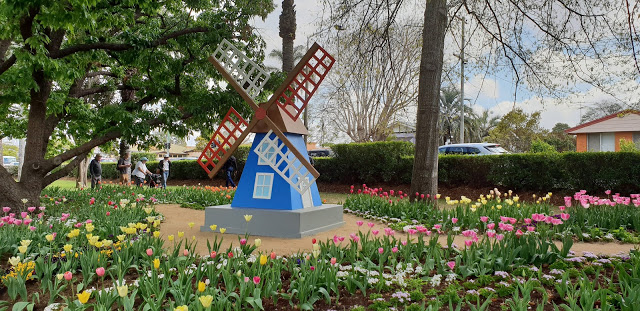
We visited the Laurel Bank Park, where there are beds of many colorful flowers,

open spaces,

statues,

an area set aside for not only tulips but a model windmill

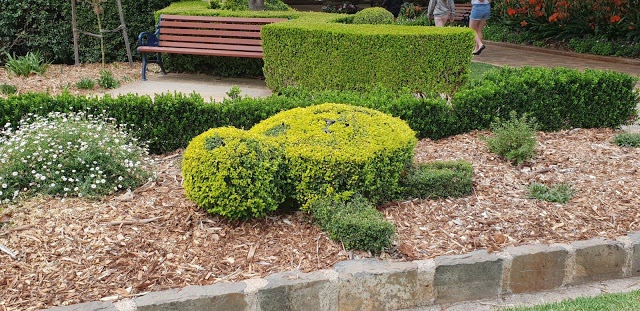
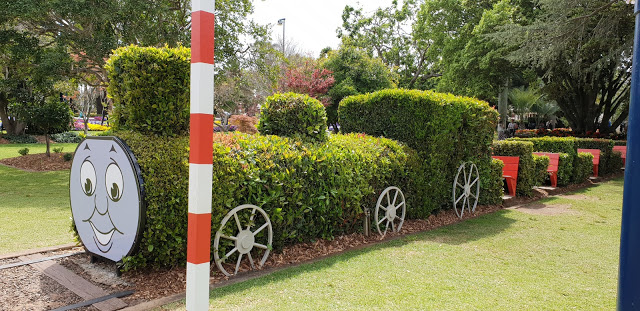
and quite a number of hedge sculptures

There was also the opportunity to go on a morning or afternoon garden tour which visited a number of private gardens of residences in Toowoomba.

The story behind the story: A Case of Working With the Jones Brothers

To write a private detective serial has always been one of the items at the top of my to-do list, though trying to write novels and a serial, as well as a blog, and maintain a social media presence, well, you get the idea.

But I made it happen, from a bunch of episodes I wrote a long, long time ago, used these to start it, and then continue on, then as now, never having much of an idea where it was going to end up, or how long it would take to tell the story.

That, I think is the joy of ad hoc writing, even you, as the author, have as much idea of where it’s going as the reader does.

It’s basically been in the mill since 1990, and although I finished it last year, it looks like the beginning to end will have taken exactly 30 years.  Had you asked me 30 years ago if I’d ever get it finished, the answer would be maybe?

My private detective, Harry Walthenson

I’d like to say he’s from that great literary mold of Sam Spade, or Mickey Spillane, or Phillip Marlow, but he’s not.

But, I’ve watched Humphrey Bogart play Sam Spade with much interest, and modelled Harry and his office on it.  Similarly, I’ve watched Robert Micham play Phillip Marlow with great panache, if not detachment, and added a bit of him to the mix.

Other characters come into play, and all of them, no matter what period they’re from, always seem larger than life.  I’m not above stealing a little of Mary Astor, Peter Lorre or Sidney Greenstreet, to breathe life into beguiling women and dangerous men alike.

Then there’s the title, like

The Case of the Unintentional Mummy – this has so many meanings in so many contexts, though I imagine that back in Hollywood in the ’30s and ’40s, this would be excellent fodder for Abbott and Costello

The Case of the Three-Legged Dog – Yes, I suspect there may be a few real-life dogs with three legs, but this plot would involve something more sinister.  And if made out of plaster, yes, they’re always something else inside.

But for mine, to begin with, it was “The Case of the …”, because I had no idea what the case was going to be about, well, I did, but not specifically.

Then I liked the idea of calling it “The Case of the Brother’s Revenge” because I began to have a notion there was a brother no one knew about, but that’s stuff for other stories, not mine, so then went the way of the others.

Now it’s called ‘A Case of Working With the Jones Brothers’, finished the first three drafts, and at the editor for the last.

I have high hopes of publishing it in early 2021.  It even has a cover.

PIWalthJones1

Mistaken Identity – The Editor’s Draft – Day 10

I have been working on the story, the editor is asking for a second draft after making suggested changes – and I’m now working on it

…

One third of the month is gone and this writing job is not getting any easier.

The notion that we can sit down and over a period of 30 days, we can write a 50,000 word novel would be, to some, a preposterous notion.

For me, it is not. I have done it for three years in a row, and even without having a plan.

This one has a plan, but that plan only sometimes stretches to a day or two ahead, depending on how I’m going.

Today, it had been hard going because I set time aside to just sit down and write it, but you all know how fickle that can be. Devote time, and the words don’t come, have no time and try scratching in between a lot of other jobs, and the words are flowing.

It is annoying to say the least.

Bit, for today, Jack has discovered he does, indeed, have a doppelganger, and that he is related, which explains the uncanny likeness. Of course, he has been followed to the island, and run to ground in a park where the two meet face to face. Oh, and the doppelganger has a name, Jacob.

It could have got ugly, but Maryanne is there, though Jack is still not sure why, and her presence averts what could have been an ugly showdown,

Instead, some words of advice. Jack must ask his mother for the answers.

A fine time for Jack to discover that his mother has been lying to him for his whole life.

But, of course, any attempt to get her on the phone is proving difficult.

And it might mean the end of his holiday.

Our Jack is not a happy man.

Today’s effort amounts to 2,873 words, for a total, so far, of 25,485.

Yes, word wise we have reached the half way mark, but story wise, it appears it make take a little longer.

More tomorrow.