“Possibilities” – a short story


How many choices could one person have?

Usually, from a very early age, you have some idea of what you intend to do with your life.

Those early choices of fireman, policeman, doctor, fighter pilot, slowly disappear from the list as the education requirements become clearer, and their degree of impossibility.

Then you have to factor in academic achievement or failure, hone situation, what blows life has dealt you, and your financial ability to fund any it all of your hopes and dreams, especially for that all-important university education, and even then, it has to be the right one.

Then there are the family aspirations where parents really want you to follow in their footsteps, as a doctor or a lawyer or in the military.

And if you get past all that, and everything has fallen into place, and you’re ready to head out on that highway of life, you should be fully imbibed with the knowledge and the drive to make everything happen.

…

Now I was lying in a hospital bed staring at the ceiling wondering at what point it all went wrong.

Right on the starting line where everything I had worked for was about to come to fruition, it had all come to an abrupt halt.

My memory got as far as driving home from a work party where we had been celebrating the company’s most recent success, and my progression to the next level of management, when a car failed to stop at a stop sign and T-boned me.

The car was a write-off. I was still not sure what happened to me, but I had heard someone say, in that murky twilight of pain medication, that if I was a horse, they would have to shoot me. It was the only thing I remembered between the car hitting mine and waking up in the hospital bed.

But that was not all the story, and I had plenty of time to mull over everything that had happened in that last week. There was a certain symmetry to it all, as if one event led to the next, and then the next, and it was the last straw, on the last day, that broke the proverbial camel’s back.

…

And here’s the thing.

I would not have been in that accident had I not taken the car. I wasn’t going to, I had intended to take the train to a friend’s place and stay there for a few days, what the boss had told me would be a well-earned rest.

Even then, I might have not taken the car, except for a cryptic text message I received from my sister, about needing to be ‘rescued’ from a bad date.

Nothing unusual for her, she was currently on a dating site binge, and after half a dozen bad experiences, I thought she had given up.

That was the thought that ran through my head as I watched her curled up in the chair next to the bed, half asleep.

Her first words, on arrival, and when she was allowed to see me, was to apologize, believing it had been her fault. She knew I hated driving in the city, so coming to get her, as I always did, had been preying on her mind, and I could see the tangible effects of it in the worried expression, and unkempt manner which was so totally unlike her.

“It was simply an accident, and could have happened to anyone,” I told her.

“You were going to Jeremy’s, I should have sorted my own problem out for once. IT’s not as if I couldn’t just call up an Uber, and now look what’s happened. I’m so sorry.”

She wouldn’t accept that it was not her fault, nor would she leave until she knew I would be OK. I didn’t understand what she meant by that because in the three discussions I had with the head doctor, I was going to make a full recovery.

He had used the work lucky more than once, and seemingly the sequence of events, and other factors like the car safety features, the angle the car had struck, and where, the fact the other driver had to dodge a pedestrian, all of it played a part.

Had they not, quite simply I would be dead.

My sister and her dating was only one aspect of how my life was being driven.

Another memory returned, from that week, that of another text message, from a girl I used to know back at University.

Erica.

She was what some might have called a free soul. She didn’t conform to what I would have called normal. Her clothes sense was somewhat odd, she always looked as though her hair needed combing, and she never had any money.

And, for a while, she lived with me, in a small, cramped room ideal for single University students on a budge, but not for two. Yet, for some strange reason, she never seemed to get in the way, or mind the closeness of our existence.

In that short period, she became my first real love, but she had said that while we were together, it was fine, but she was not seeking anything permanent. Nor, she said, did she believe in monogamy. Until she left, studies completed, I wanted to believe she would stay, but a last lingering kiss goodbye and she was gone.

Now, the message said, she wondered if I was still free, and like to meet. Of course, ten years of water had passed under that bridge, so I was not sure where it would go. I hadn’t replied, and the message was still sitting on my phone.

That invitation, however, had been n my mind moments before the crash, and I had to wonder, thinking of her, contributed to it.

Then, on top of all that, there were my parents. Married for 40 years, and the epitome of the perfect marriage.

Or so I thought.

That morning, before I went to work, I had called in to see them after my mother had called the day before saying she wanted to talk to me about something.

Before I knocked on the door, I could hear yelling from behind the door, and it seemed the perfect marriage had hit a rocky stretch.

Or simply that my father had chosen to have an affair, and had been caught out by the simplest of means, my mother answered his phone when he was out of the room thinking it was important work matters, only to discover it was his ‘floozie’.

No guessing then why my mother had called me. After hearing all I wanted to, and not wanting to face an angry couple I just headed on to work.

My mother had yet to come to the hospital to see me. My father had been, but he made no mention of her, or anything else, except to tell me if there was anything I wanted, all I had to do was ask. Then he left, and hadn’t come back.

Then, last but not least, were the rumors.

The owner of the company I worked for was getting older and didn’t have an heir. One thing or another had managed to foil his succession plans, and in the end, he did not have a son or a daughter to pass the reins to.

With the latest success, the company was about to have a bigger profile which meant more work, and plans to open branches in other cities. It was too much for one man, now in his 70s, and looking to wind down.

A rumor had started about a week before the accident that he was looking to sell, and there were at least half a dozen suitors. There was supposed to be an announcement, but it hadn’t happened while I was at work, but, considering how long I’d been in hospital, and the two weeks in an induced coma, anything could have happened.

Louisa stretched and changed positions.

“You look better,” she said.

“Relative to what, or when?”

“Half an hour ago.”

I shook my head. Sometimes Louisa was prone to saying the oddest stuff. “What’s the deal between our parents. Dad was here for all of five minutes. Where’s our mother?”

“She left.”

OK. Blunt, but plausible. “Why?”

“Dad was being an ass.”

“Does she know I was in an accident?”

“I told her.”

“So, you’re seeing her?”

“She calls. I don’t know where she is. I think she might have gone to stay with one of our aunt’s.”

I sighed. Louise had an awfully bad memory, and I was sure one day she was going to forget who I was.

There were four sisters, mother the youngest. She had a love-hate relationship with the middle two, so the best bet would be the eldest sister, Jane. Jane was also the crankiest because she hated children, never got married, and was set in her ways.

Then, there was something else lurking in the back of my mind. Another item I’d overheard when I suspect I was not meant to be listening.

I might not have a job to go back to if the company had been sold, I might not have a home to go back to if my parents had split up, and I might not be able to do anything for a long, long time. Recovery might be complete, but it wasn’t going to happen overnight.

I had a sister who blamed herself for my accident, and an old girlfriend who wanted to see me, though I suspect not like this, broken and useless. What else could there be?

Oh, yes. Another snipped from the shouting match behind the door. And an explanation why my father had all but abandoned me. My mother had also had an affair, and his son, well he was not his son.

No surprise then I had a father who didn’t want to know me.

What else could go wrong?

There was movement outside the room, and raised voices, one of which was saying that whoever was out there couldn’t go into the room. It didn’t have any effect as seconds later, a man and a police officer came in. The officer stood by the door.

Louisa looked surprised, but didn’t move.

The man, obviously a detective, came over. “Your name Oliver Watkins?”

It was, and hopefully still is. “Yes.”

“I need you to answer some questions.”

“About the accident?”

He looked puzzled for a moment, then realized what I was referring to. “No. Not the accident. About the embezzlement of 50 million dollars from the company you work for. It seems you didn’t cover your tracks very well.” He turned around to look at Louisa, “You need to leave now, miss.”

“I’ll stay.”

He nodded to the officer, “You leave now, or he will remove you.”

She looked at me, a different expression, “You didn’t tell me you were a crook, Olly.”

“Because I’m not.”

The officer escorted her from the room and shut the door.

The detective sat in the recently vacated chair. “Now, Mr Watkins. It seems there is such a thing as karma.”

…

© Charles Heath 2021
All I wanted was a cup of coffee

How can something so simple become so complicated and complex?

In New York, it seemed impossible to get exactly what you would like.  The coffee there is driven by what the machine interprets you want, aside from the language constraints due to the fact that English (or American) comes in a zillion different flavours.

So, what do I like (you notice I don’t say ‘want’)

A double shot Latte with two sugars and half a shot of vanilla.  That’s in a large cup.

As we all know coffee can come in a regular, large, or extra-large cup, but, hang on, these cup sizes sometimes have names, and you need to know what these names are.

My efforts of pointing to the cup size in New York often had horrendous consequences, when the cup piles were close together.  Sometimes it was a double shot in a regular, and a single shot in an extra-large cup.

One even had the name benti, or bento, or something like that.

Being old and decrepit, my memory for cup sizes isn’t all that great, so using a name in one shop that doesn’t have that size, well, you get it.

It seems not only coffee makers in New York have a problem producing consistent coffee.

Perhaps, then that’s half the charm of drinking it, the fact that no cup is ever the same.

And, when an outlet gets it right, finally, they go and change the coffee bean supplier, and all of a sudden, it’s bitter, or it’s lighter, as coffee shops try to reduce their costs and maximise profits.

Six dollars is a lot of money for a cup of coffee unless of course, you have to feed that addiction in which case, you’ll have a cup at whatever the cost.

I need coffee right now, so its off te the cupboard to see what’s available.

Maccona instant, which is not bad

A Nespresso long black – ok, don’t get me started with Nespresso because they have numbers from 1 to 12, possibly more, recognising strengths, and I usually have a double shot using a 10 and a 12.

And, yes, they fool around with the type of beans they use because there seem to be inconsistencies in potency from time to time.

Then there’s coffee bags, much the same as tea bags, which produces and interestingly flavoured brew which I’m still trying to figure out.  It tastes like coffee, but there’s something else there, like … paper?

I opt for an instant.

Yes, I needed a coffee after writing this.

The cinema of my dreams – I always wanted to see the planets – Episode 30

Sometimes not knowing can be an advantage

…

“They’re hailing us,” the communications officer said, then turned expecting an order to open a channel.

“What’s the speakers tone?”

I got a blank look in return.

“Does he sound agitated, angry, arrogant…?

“Like a person of authority.”

Not much help in gauging their mood.

“OK, put him on the viewer.” I had one of the crew bring up the data we had on the vessel class.

It was once a personnel transport, one of a dozen that had been taken to the edge of space and dumped, if that was a word that could be used to describe what happened. They should have been destroyed, but another contractor took the cheap option, and abandoned them off Neptune.

The spokesman was dressed in the same suit as those I’d seen before, on the cargo ship, and in the Captains day room. Clearly he didn’t want to be identified.

“What can I do for you,” I asked, after waiting a minute or so after realising he was waiting for me to speak.

“Surrender your ship.”

Of course. They had three ships, we had one. A junior officer came over and gave me a sheet of paper. The names of the ship’s, how many life signs on each, and scans indicating possible weaponry.

Weapons needed power, and if they were anything like ours, they would need auxiliary power sources. No indication yet they intended to use any.

Life signs was interesting, six on each of the smaller ships, roughly half the crew when the ships were commercially used, and 34 for the larger vessel, including the nuclear scientist.

“Why would I do that?”

Number one’s expression was one of surprise, the Lt Colonel not so much.

“We have superior fire power, and will disable the ship if you don’t. That means taking out the life support. You can save your crew an ignominious death.”

No alien would use the word ‘ignominious’.

The two smaller ships were the closest, acting as guards for the bigger ship. I suspect they had the weapons, being smaller and more manoeuvrable.

I’d spoken to the Lt Colonel and the gunnery sergeant when he arrived on the bridge, and we agreed that the best action would be to target the bridges of the enemy vessels. After we retrieved the scientist.

“You do realise you’re targeting a research vessel, not a man of war.”

“Is that what they told you?”

“Define ‘they’.”

“Space command, that bunch on nincompoops who think the rest of the planets believes their lies.”

Well, that was the statement that proved they were not aliens, but working for one of the other countries no so happy with the deal that had been struck over space exploration. The Admiral could work out which one in his own time.

For the operation of removing our crew member, I had a direct line to the cargo bay where ? was setting up the parameters for the transport. All I had to do was keep the ship as steady as possible.

“Ready when you are,” his voice was in my ear.

“Now.”

Ten seconds later, “she’s aboard, safe.”

From the side, “There’s activity…”

“Gunnery sergeant, now,” I said.

The viewer cleared of my counterpart, and showed two explosions, where I would have said were the command centres of the two ships, and then the sudden movement of the larger ship, moving away, and at speed, to a point where it disappeared.

“Can we track that escaping ship?”

“We have sufficient information about it to send it back to HQ and let them deal with it. We achieved what we set out to do.”

The Lt Colonel was right, but it would be good to know where our enemy was.

A crew member said, “we can track it if you like, but it just jumped to high speed and out of scanner range.”

“Life signs?” I asked, looking at the two ships adrift, if that was possible. I didn’t like the idea of using force, and it was going to create a mountain of paperwork, and an investigation, but they were going to attack

“Eleven remaining on board, all deceased “

“Eleven?”

“One transported to the larger ship just before we attacked.”

Number one appeared beside me. “Do you think we should go over to the other ships and verify that the dead crew were the escaped prisoners.”

“For your report? Yes. Take a medical team, and the military.” The Lt Colonel looked over at the mention of the military. “You can arrange a squad,” I asked him.

“Yes sir.”

The third officer, Jacobs, like myself, crossing over from captaining cargo vessels, recently promoted to Second had been at his station for the duration, instead of resting, a man who wanted more experience. And spent as much time as he could on the bridge.

“Jacobs?”

“Sir.” He jumped up out of his seat, whether from fright or enthusiasm I wasn’t sure.

“You have the bridge. Try not to run into those ships out there.”

“Yes sir, I mean, no sir, no crashing sir.”

“I’ll be in medical if there’s any problems.”

…

© Charles Heath 2021

“The Enemy Within” – a thirty-day revision – Day 17

This book has also been written for some time, like The Document, and the manuscript was also sitting in a box with half a dozen others gathering dust and not quite as complete, so this month it is going to get the makeover, a first draft for the editor.

And so it begins…

…

Jack is in the deep end!

…

While Jack is juggling avoiding surveillance, visiting his mentor’s flat and trying to figure out his next move, the rewrite of Evelyn’s interrogation is taking shape.

She never expects it will get to the sub-basement where the real interrogations take place.

The place where the only furniture is a plastic chair over a drain and four seasons in one day happen alarmingly more often than not.

She reasons that it is conditioning.

She also has the memory of Jack having gone through an interrogation session that lasted two days and was as agonisingly painful as she was suffering.

She knows the end result is no matter what she tells them they will not believe her and it will only get worse.

Time then to start conditioning the mind to play with them.

This is from a researcher, they have no real idea why it’s going the way it is, which is nowhere, until certain drugs are employed, and she becomes a gibbering idiot.

If this is an unsanctioned interrogation, then the proverbial is about to hit the fan.

And then there’s that one other thing, what was sustaining her: the fact she was going to kill each and every one of them very, very horribly.

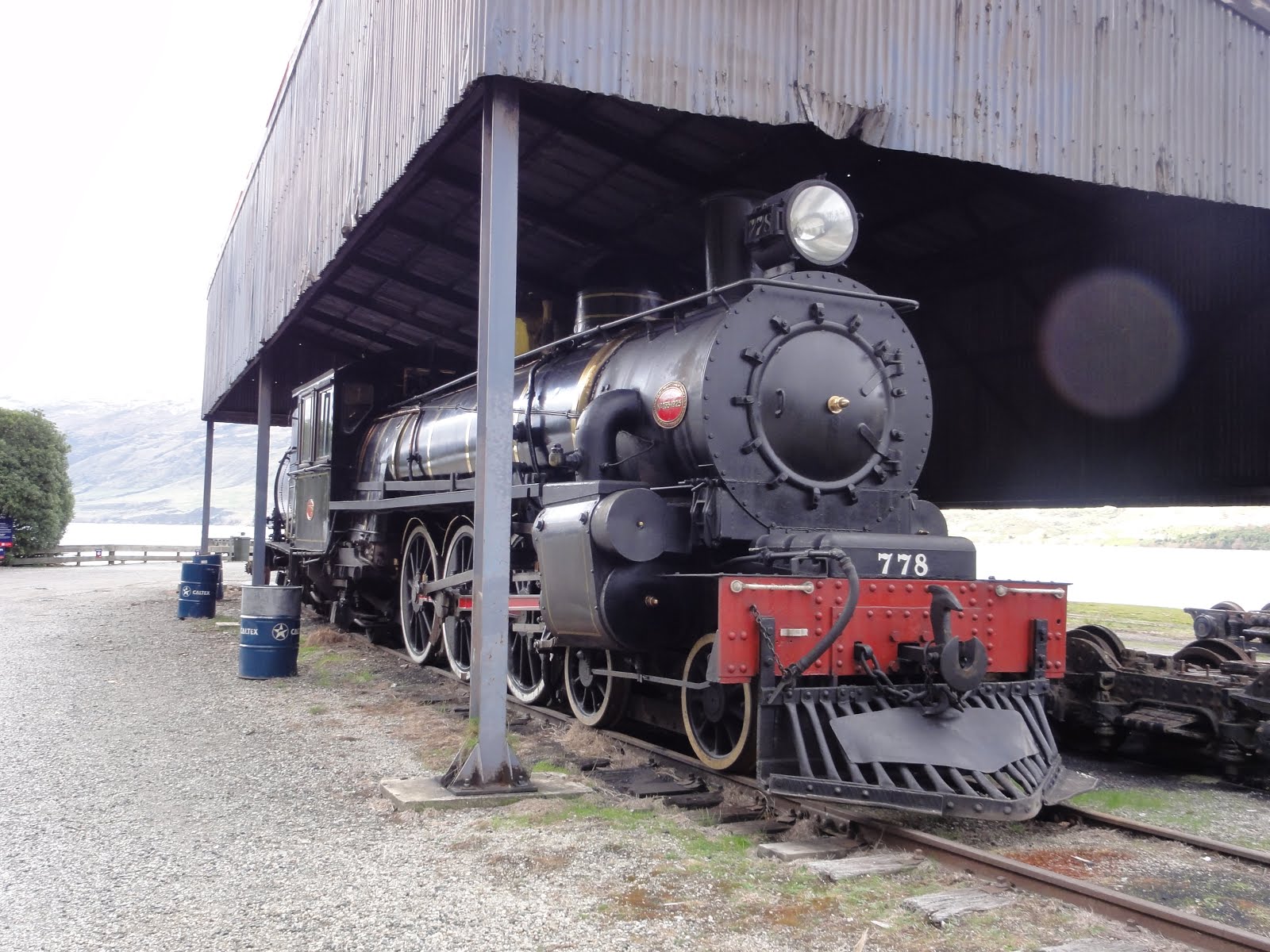
Searching for locations: The Kingston Flyer, Kingston, New Zealand

The Kingston Flyer was a vintage train that ran about 14km to Fairlight from Kingston, at the southern end of Lake Wakatipu, and back.

This tourist service was suspended in December 2012 because of locomotive issues.

However, before that, we managed to go on one of the tours, and it was a memorable trip.  Trying to drink a cup of tea from the restaurant car was very difficult, given how much the carriages moved around on the tracks.

The original Kingston Flyer ran between Kingston, Gore, Invercargill, and sometimes Dunedin, from the 1890s through to 1957.

There are two steam locomotives used for the Kingston Flyer service, the AB778 starting service in 1925, and the AB795 which started service in 1927.

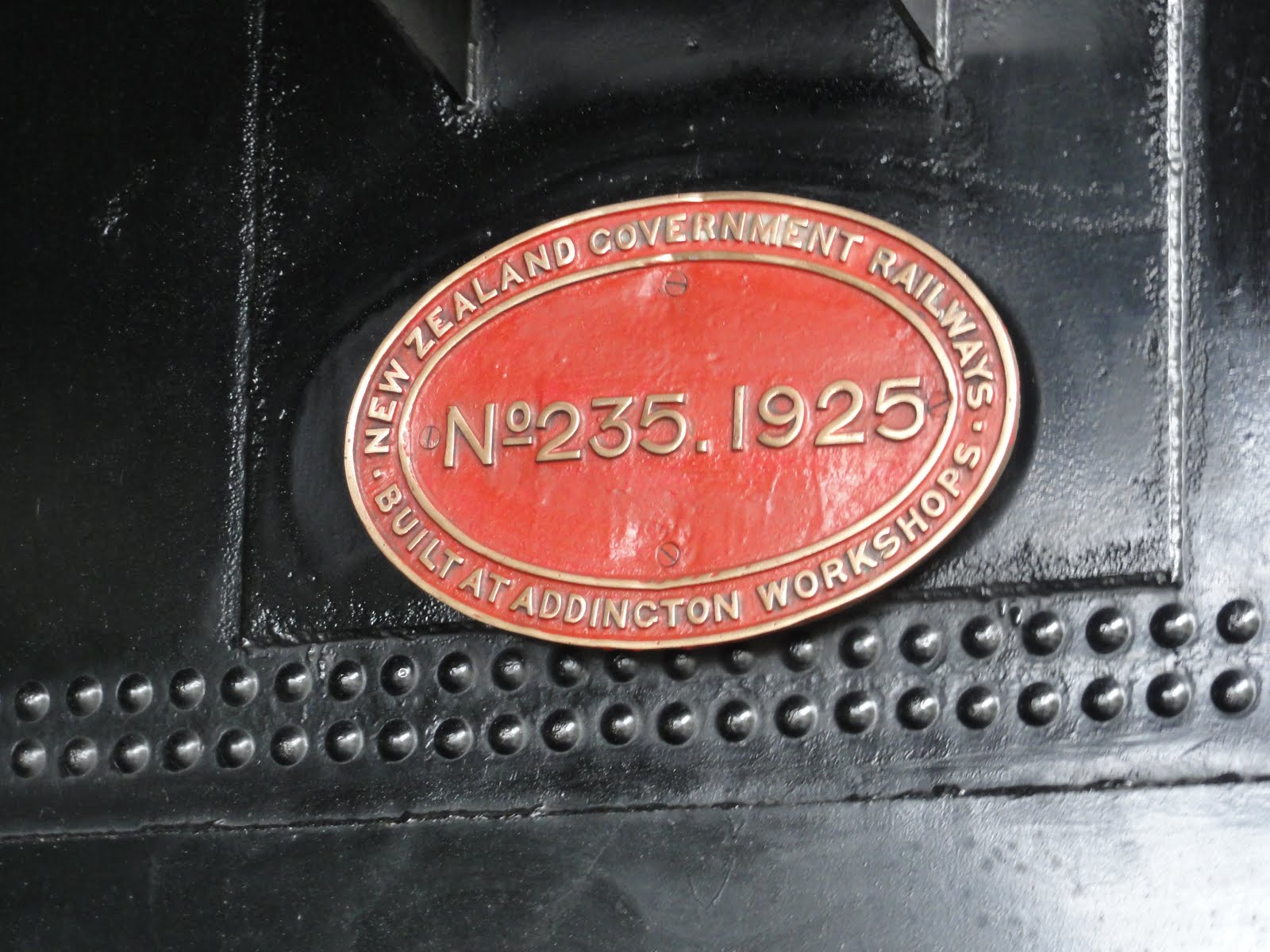
The AB class locomotive was a 4-6-2 Pacific steam locomotive with a Vanderbilt tender, of which 141 were built between 1915 and 1927 some of which by New Zealand Railways Addington Workshops.

No 235 is the builder’s number for the AB778

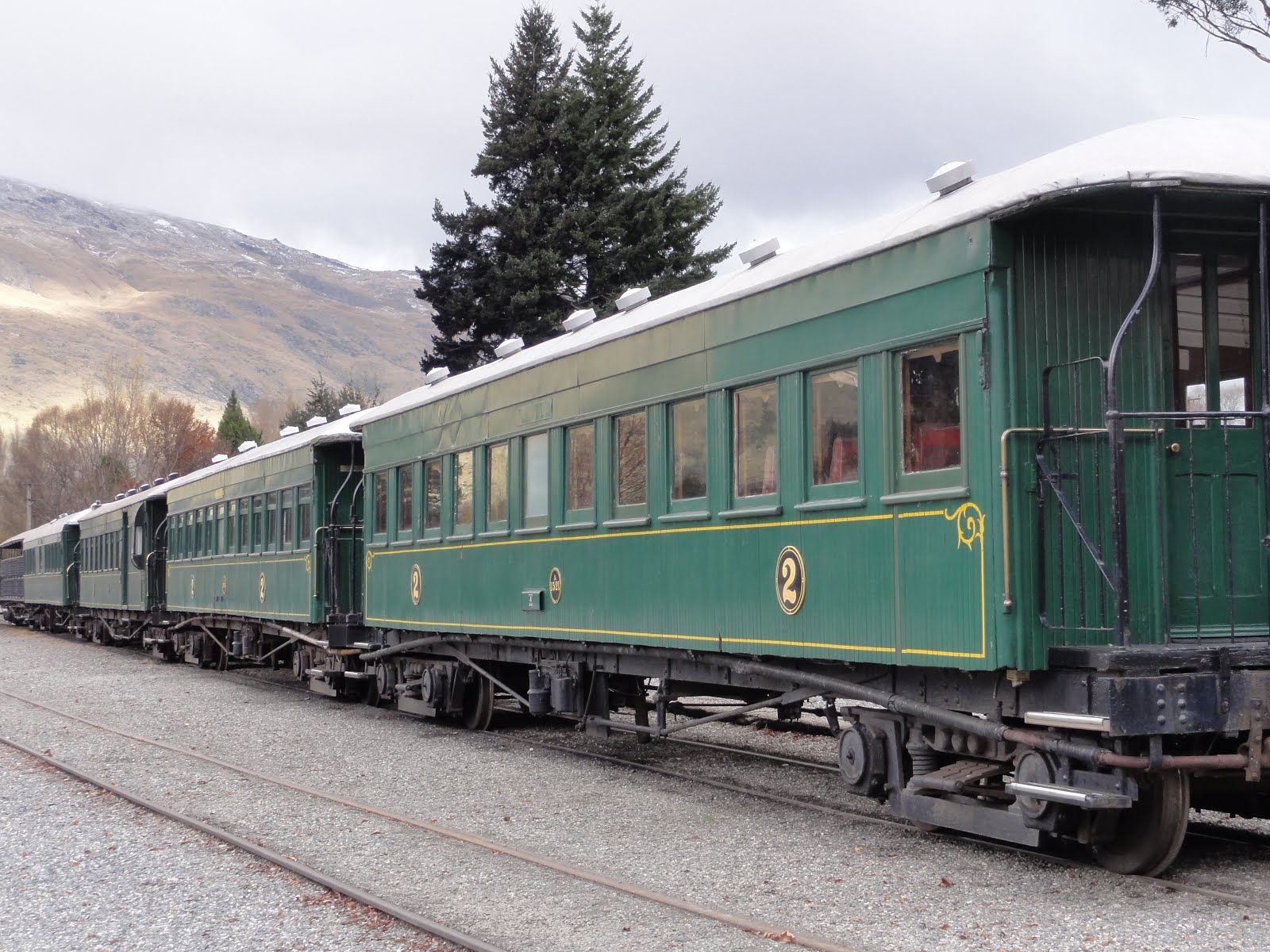
There were seven wooden bodied passenger carriages, three passenger coaches, one passenger/refreshments carriage and two car/vans.  The is also a Birdcage gallery coach.  Each of the rolling stock was built between 1900 and 1923.  They were built at either of Addington, Petone, or Hillside.

I suspect the 2 on the side means second class

The passenger coach we traveled in was very comfortable.

This is one of the guard’s vans, and for transporting cargo.

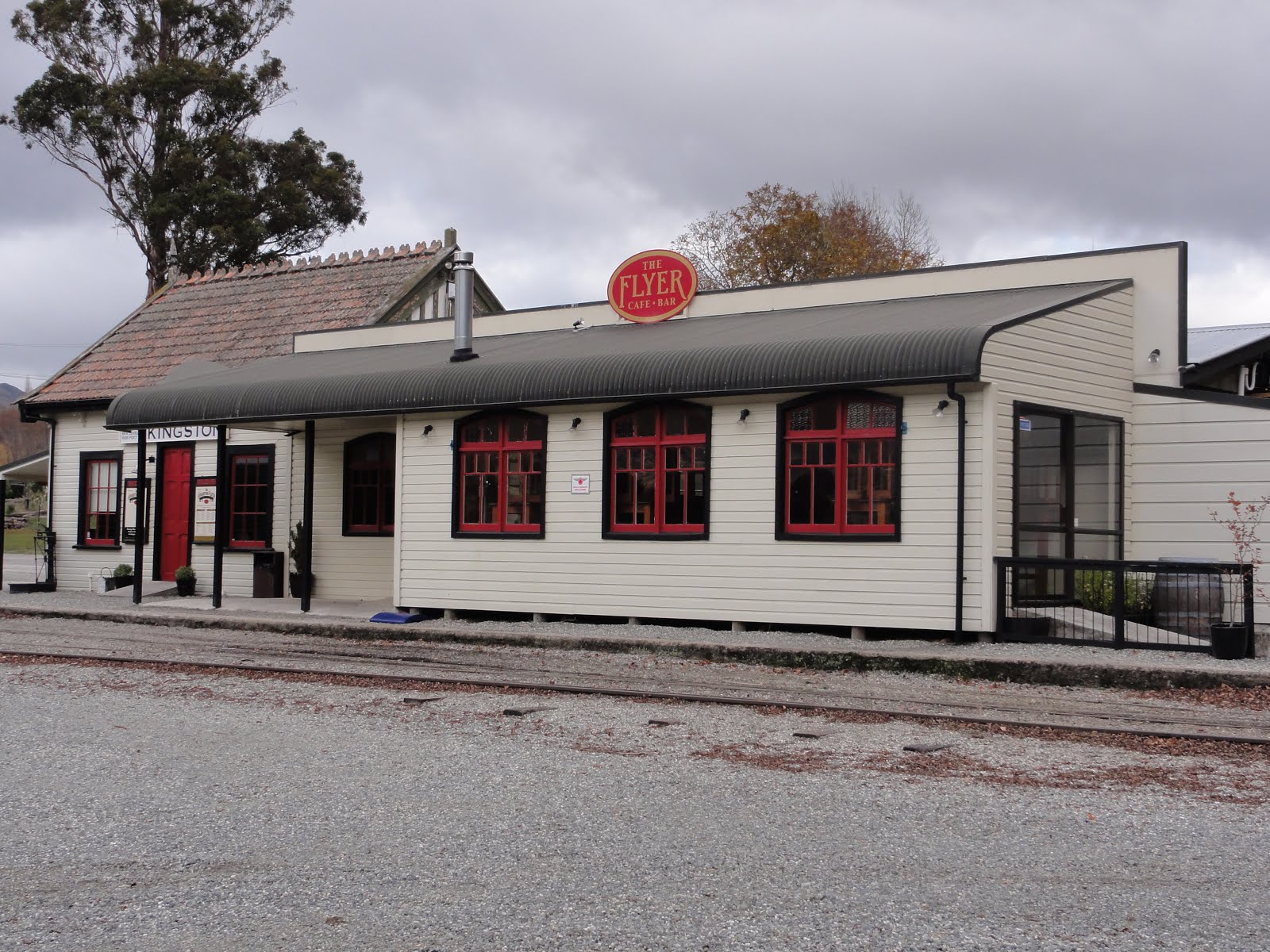
The Kingston Railway Station

and cafe.

A poster sign advertising the Kingston Flyer

The running times for the tourist services, when it was running.

I like to think I know where I’m going, but…

I’ve been on roller coasters, and they actually scare the hell out of me.  It might have something to do with watching the news and hearing about a breakdown.  High up and usually hanging on for dear life upside down.

My fear is it’s going to come off the rails, or that I’ll lose my grip!

A bit like my life really.

I’m in an abyss and free falling.  The first thousand yards is exhilarating.  I’m not sure if everyone has done skydiving, but it’s like that time before you pull the ripcord.

Absolute adrenaline rush.

Followed by a single thought.  Will the parachute open?  I’ve seen too many TV shows where ripcords don’t work, and strangely I have actually seen a skydiver whose parachute didn’t open, and it’s one of those moments when your heart is literally in your mouth.

Ok, I get it, if you don’t like the heat in the kitchen …

But, it’s hard to get that thought, that the metaphorical parachute won’t open, and I’m at a point where I’m starting to think about the landing.

You dash headlong into a job, thinking yep, you’ve got it covered, but, what if you haven’t.  What if there are variables you never thought of, what if the people around you, so happy to cheer you on at the start, are now starting to change their tune.

It’s like jumping into an abyss; starting a new job, or the first day after a promotion, your choice of vocation, the sort of lifestyle you want to have, whether you are following a dream that could quite easily become a nightmare, it seems there’s very little difference conceptually.

I think about writing, and it’s an individual thing.

Are we writing for ourselves first, or are we writing simply to make money?  If it’s the latter, it ain’t going to work, at least not until you’re established.  If ever.

But, here’s the thing.  It’s where I feel the most comfortable.

Now, I’d better get back to work.


The cinema of my dreams – Was it just another surveillance job – Episode 65

This story is now on the list to be finished so over the new few weeks, expect a new episode every few days.

The reason why new episodes have been sporadic, there are also other stories to write, and I’m not very good at prioritizing.

But, here we are, a few minutes opened up and it didn’t take long to get back into the groove.

Things are about to get complicated…


I had no idea how long I had before Monica or someone else turned up to take charge, so it was time for questions.

To Anna, “Were you having an affair with Severin back at the lab, before you hatched this plan, or was it Severin’s idea?”

“Are we playing truth or dare now?”  She was trying to be detached, but the pain must be excruciating by now.

“We’re playing how to save your life.  You can live or you can die, it’s your choice, but my patience is very thing at the moment.”

“I liked Severin.  At the time I thought he was just a security guard.  And yes, after a few months, he did suggest, in a kidding sort of way, that money could be made by stealing the formulas.  A lot of money.”

To Dobbin, “Either you or someone else had sent Severin and Maury to the lab after a mock discharge from the service and given them glowing resumes to get jobs there.  It was an odd choice given Severin had a rather interesting career, particularly in his handling of women operatives.  Was that you?”

“I don’t have to answer your questions.”

“I don’t have to shoot you in various painful places when you test my patience, but I will if I have to.”

“Do you know who you’re talking to?”

“Yes.  An inveterate liar who had been leading me down the garden path for far too long.  I will ask once more, was that you.  Don’t make me count to three.”

He glared at me, the sort of glare that mean there was going to be hell to pay eventually.

“No.  I did not.  But I was interested in the fact they were sent to Arche Laboratories.  It wasn’t until the data came up for sale on the dark web did I put two and two together.”

“That’s when you got O’Connell to handle the purchase and delivery of the data?”

“Yes.”

“Why the six-month delay between negotiation and delivery?”

“Anna’s husband in his infinite wisdom must have guessed he was going to be double-crossed and put a security protocol in place.  We made arrangements to keep her safe until the exchange.  At the appropriate time when the six months had lapsed, O’Connell was tasked to go to a specified meeting place, pay the money and collect the USB.”

“In the meantime, you arranged for Severin and Maury to put a surveillance team together.  I assume Severin came clean about what had happened, and you gave him a chance to redeem himself.”

“Yes.”

“At what point did you realize the operation was compromised?  My guess, is when O’Connell was running late, and the bomb went off on time, but before the exchange could take place.  Surely you knew O’Connell couldn’t have the USB.”

“True, so we arranged for an extraction and led him to the alley where you cornered him.  Total unexpected.  As was the sniper, who I believe had tapped into our communications with O’Connell.  I’m not sure why Severin and Maury were there, but once they saw O’Connell get shot they left.  They, for some reason, believed O’Connell had the USB and passed it to you before they got there, hence the visit you had from Severin.  Their usefulness ended at the alley.”

“Who was the sniper working for?”

“No idea.  Another interested party perhaps, that Anna forgot to tell us about.  It would be no surprise to know she had other buyers waiting.”

“I didn’t.  O’Connell was the only one as per our agreement.  You don’t think I was going to screw up a five-million-pound payday.”  Anna sounded indignant.

To Anna, “When did you and O’Connell get together, after the explosion.  Or did you think he set you up?”

“I waited a few days then called him and asked what we should do.  He said he got the impression he’d been set up, that we were both in danger and to individually go into hiding until he could find out who was after us.  He said he couldn’t trust his boss after what had happened, both at the café and then in the alley.  He mentioned that I should find you and insinuate myself into your investigation because he knew you’d find out eventually.  He was right, by the way,:” she said to no one in particular.

Back to Dobbin, “Why did O’Connell suddenly no longer trust you and for all intents and purposes disappear?”

“He didn’t say, but I suspect nearly getting killed may have pushed him in that direction.  I did not sanction that bomb, by the way.”

“What was the purpose of the surveillance team?”

“To find out where the exchange point was because it was always agreed that they should be the only two to preserve their safety.  He was not supposed to find out about the surveillance.  It’s the reason why we were not responsible for the bomb in the café because we didn’t know where the exchange was taking place.”

“If he didn’t know, and then discovered people following him, I’m not surprised he killed most of them.  That’s on you, Dobbin.”

“It was a calculated risk, but the stakes were very high, and the operation was justified.  It also afforded us the opportunity to discover a new and very accomplished agent, namely you.”

“Flattery will not stop me from shooting you if I have to.”

His look of disdain went to utter disdain.

“I’ve answered your questions, now what?”

“Anna will now give me the USBs, the real USBs with the data on them.  I will destroy them, and then we can all go about our business.”

“You…”

“If you say anything other than, Sam, here they are, you will die.  They are in this room, and I will find them, whether you are dead or alive.  Personally, if I were you I’d want to live, but then, you might have a death wish you want fulfilled.  I’ll be happy to count to three if you like?”

She thought about it, but not for too long.  She reached into a pocket and pulled out another plastic bag.

I went over and took it from her. 

Two more USBs.

“I’ll take those, thank you.”  Jennifer.  “Don’t make me do something I don’t want to.”

…

© Charles Heath 2020-2023

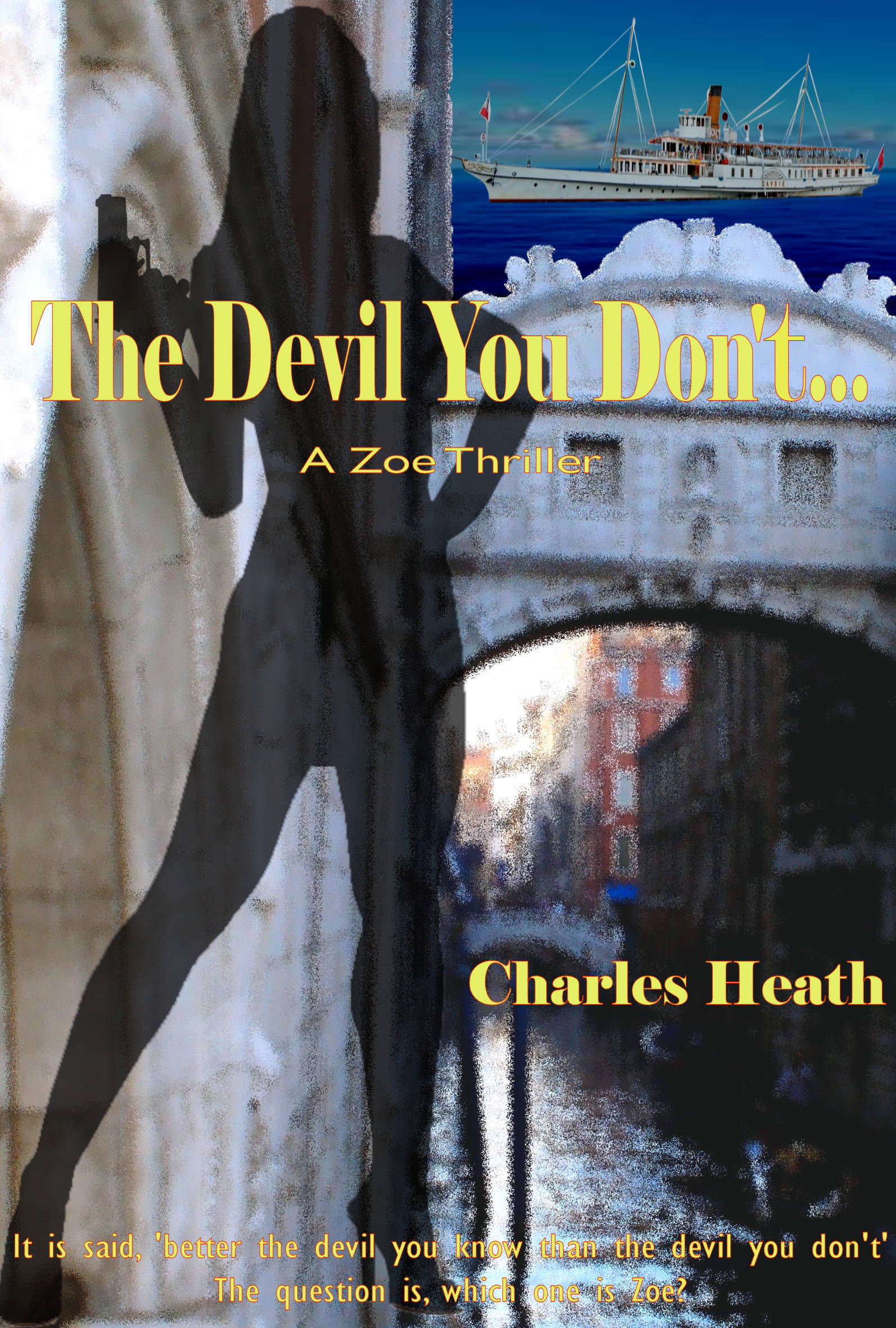
An excerpt from “The Devil You Don’t”

Available on Amazon Kindle here:  https://amzn.to/2Xyh1ow

…

By the time I returned to the Savoie, the rain had finally stopped, and there was a streak of blue sky to offer some hope the day would improve.

The ship was not crowded, the possibility of bad weather perhaps holding back potential passengers.  Of those I saw, a number of them would be aboard for the lunch by Phillippe Chevrier.  I thought about it, but the Concierge had told me about several restaurants in Yvoire and had given me a hand-drawn map of the village.  I think he came from the area because he spoke with the pride and knowledge of a resident.

I was looking down from the upper deck observing the last of the boarding passengers when I saw a woman, notable for her red coat and matching shoes, making a last-minute dash to get on board just before the gangway was removed.  In fact, her ungainly manner of boarding had also captured a few of the other passenger’s attention.  Now they would have something else to talk about, other than the possibility of further rain.

I saw her smile at the deckhand, but he did not smile back.  He was not impressed with her bravado, perhaps because of possible injury.  He looked at her ticket then nodded dismissively, and went back to his duties in getting the ship underway.  I was going to check the departure time, but I, like the other passengers, had my attention diverted to the woman in red.

From what I could see there was something about her.  It struck me when the light caught her as she turned to look down the deck, giving me a perfect profile.  I was going to say she looked foreign, but here, as in almost anywhere in Europe, that described just about everyone.  Perhaps I was just comparing her to Phillipa, so definitively British, whereas this woman was very definitely not.

She was perhaps in her 30’s, slim or perhaps the word I’d use was lissom, and had the look and manner of a model.  I say that because Phillipa had dragged me to most of the showings, whether in Milan, Rome, New York, London, or Paris.  The clothes were familiar, and in the back of my mind, I had a feeling I’d seen her before.

Or perhaps, to me, all models looked the same.

She looked up in my direction, and before I could divert my eyes, she locked on.  I could feel her gaze boring into me, and then it was gone as if she had been looking straight through me.  I remained out on deck as the ship got underway, watching her disappear inside the cabin.  My curiosity was piqued, so I decided to keep an eye out for her.

I could feel the coolness of the air as the ship picked up speed, not that it was going to be very fast.  With stops, the trip would take nearly two hours to get to my destination.  It would turn back almost immediately, but I was going to stay until the evening when it returned at about half eight.  It would give me enough time to sample the local fare, and take a tour of the medieval village.

Few other passengers ventured out on the deck, most staying inside or going to lunch.  After a short time, I came back down to the main deck and headed forward.  I wanted to clear my head by concentrating on the movement of the vessel through the water, breathing in the crisp, clean air, and let the peacefulness of the surroundings envelope me.

It didn’t work.

I knew it wouldn’t be long before I started thinking about why things hadn’t worked, and what part I played in it.  And the usual question that came to mind when something didn’t work out.  What was wrong with me?

I usually blamed it on my upbringing.

I had one of those so-called privileged lives, a nanny till I was old enough to go to boarding school, then sent to the best schools in the land.  There I learned everything I needed to be the son of a Duke, or, as my father called it in one of his lighter moments, nobility in waiting.

Had this been five or six hundred years ago, I would need to have sword and jousting skills, or if it had been a few hundred years later a keen military mind.  If nothing else I could ride a horse, and go on hunts, or did until they became not the thing to do.

I learned six languages, and everything I needed to become a diplomat in the far-flung British Empire, except the Empire had become the Commonwealth, and then, when no-one was looking, Britain’s influence in the world finally disappeared.  I was a man without a cause, without a vocation, and no place to go.

Computers were the new vogue and I had an aptitude for programming.  I guess that went hand in hand with mathematics, which although I hated the subject, I excelled in.  Both I and another noble outcast used to toss ideas around in school, but when it came to the end of our education, he chose to enter the public service, and I took a few of those ideas we had mulled over and turned them into a company.

About a year ago, I was made an offer I couldn’t refuse.  There were so many zeroes on the end of it I just said yes, put the money into a very grateful bank, and was still trying to come to terms with it.

Sadly, I still had no idea what I was going to do with the rest of my life.  My parents had asked me to come back home and help manage the estate, and I did for a few weeks.  It was as long as it took for my parents to drive me insane.

Back in the city, I spent a few months looking for a mundane job, but there were very few that suited the qualifications I had, and the rest, I think I intimidated the interviewer simply because of who I was.  In that time I’d also featured on the cover of the Economist, and through my well-meaning accountant, started involving myself with various charities, earning the title ‘philanthropist’.

And despite all of this exposure, even making one of those ubiquitous ‘eligible bachelor’ lists, I still could not find ‘the one’, the woman I wanted to spend the rest of my life with.  Phillipa seemed to fit the bill, but in time she proved to be a troubled soul with ‘Daddy’ issues.  I knew that in building a relationship compromise was necessary, but with her, in the end, everything was a compromise and what had happened was always going to be the end result.

It was perhaps a by-product of the whole nobility thing.  There was a certain expectation I had to fulfill, to my peers, contemporaries, parents and family, and those who either liked or hated what it represented.  The problem was, I didn’t feel like I belonged.  Not like my friend from schooldays, and now obscure acquaintance, Sebastian.  He had been elevated to his Dukedom early when his father died when he was in his twenties.  He had managed to fade from the limelight and was rarely mentioned either in the papers or the gossip columns.  He was one of the lucky ones.

I had managed to keep a similarly low profile until I met Phillipa.  From that moment, my obscurity disappeared.  It was, I could see now, part of a plan put in place by Phillipa’s father, a man who hogged the limelight with his daughter, to raise the profile of the family name and through it their businesses.  He was nothing if not the consummate self-advertisement.

Perhaps I was supposed to be the last piece of the puzzle, the attachment to the establishment, that link with a class of people he would not normally get in the front door.  There was nothing refined about him or his family, and more than once I’d noticed my contemporaries cringe at the mention of his name, or any reference of my association with him.

Yet could I truthfully say I really wanted to go back to the obscurity I had before Phillipa?  For all her faults, there were times when she had been fun to be with, particularly when I first met her when she had a certain air of unpredictability.  That had slowly disappeared as she became part of her father’s plan for the future.  She just failed to see how much he was using her.

Or perhaps, over time, I had become cynical.

I thought about calling her.  It was one of those moments of weakness when I felt alone, more alone than usual.

I diverted my attention back to my surroundings and the shoreline.  Out of the corner of my eye, I could see the woman in the red coat, making a move.  The red coat was like a beacon, a sort of fire engine red.  It was not the sort of coat most of the women I knew would wear, but on her, it looked terrific.  In fact, her sublime beauty was the one other attribute that was distinctly noticeable, along with the fact her hair was short, rather than long, and jet black.

I had to wrench my attention away from her.

A few minutes later several other passengers came out of the cabin for a walk around the deck, perhaps to get some exercise, perhaps checking up on me, or perhaps I was being paranoid.  I waited till they passed on their way forward, and I turned and headed aft.

I watched the wake sluicing out from under the stern for a few minutes, before retracing my steps to the front of the ship and there I stood against the railing, watching the bow carve its way through the water.  It was almost mesmerizing.  There, I emptied my mind of thoughts about Phillipa, and thoughts about the woman in the red coat.

Until a female voice behind me said, “Having a bad day?”

I started, caught by surprise, and slowly turned.  The woman in the red coat had somehow got very close me without my realizing it.  How did she do that?  I was so surprised I couldn’t answer immediately.

“I do hope you are not contemplating jumping.  I hear the water is very cold.”

Closer up, I could see what I’d missed when I saw her on the main deck.  There was a slight hint of Chinese, or Oriental, in her particularly around the eyes, and of her hair which was jet black.  An ancestor twice or more removed had left their mark, not in a dominant way, but more subtle, and easily missed except from a very short distance away, like now.

Other than that, she was quite possibly Eastern European, perhaps Russian, though that covered a lot of territory.  The incongruity of it was that she spoke with an American accent, and fluent enough for me to believe English was her first language.

Usually, I could ‘read’ people, but she was a clean slate.  Her expression was one of amusement, but with cold eyes.  My first thought, then, was to be careful.

“No.  Not yet.”  I coughed to clear my throat because I could hardly speak.  And blushed, because that was what I did when confronted by a woman, beautiful or otherwise.

The amusement gave way to a hint of a smile that brightened her demeanor as a little warmth reached her eyes.  “So that’s a maybe.  Should I change into my lifesaving gear, just in case?”

It conjured up a rather interesting image in my mind until I reluctantly dismissed it.

“Perhaps I should move away from the edge,” I said, moving sideways until I was back on the main deck, a few feet further away.  Her eyes had followed me, and when I stopped she turned to face me again.  She did not move closer.

I realized then she had removed her beret and it was in her left side coat pocket.  “Thanks for your concern …?”

“Zoe.”

“Thanks for your concern, Zoe.  By the way, my name is John.”

She smiled again, perhaps in an attempt to put me at ease.  “I saw you earlier, you looked so sad, I thought …”

“I might throw myself overboard?”

“An idiotic notion I admit, but it is better to be safe than sorry.”

Then she tilted her head to one side then the other, looking intently at me.  “You seem to be familiar.  Do I know you?”

I tried to think of where I may have seen her before, but all I could remember was what I’d thought earlier when I first saw her; she was a model and had been at one of the showings.  If she was, it would be more likely she would remember Phillipa, not me.  Phillipa always had to sit in the front row.

“Probably not.”  I also didn’t mention the fact she may have seen my picture in the society pages of several tabloid newspapers because she didn’t look the sort of woman who needed a daily dose of the comings and goings, and, more often than not, scandal associated with so-called celebrities.

She gave me a look, one that told me she had just realized who I was.  “Yes, I remember now.  You made the front cover of the Economist.  You sold your company for a small fortune.”

Of course.  She was not the first who had recognized me from that cover.  It had raised my profile considerably, but not the Sternhaven’s.  That article had not mentioned Phillipa or her family.  I suspect Grandmother had something to do with that, and it was, now I thought about it, another nail in the coffin that was my relationship with Phillipa.

“I wouldn’t say it was a fortune, small or otherwise, just fortunate.”  Each time, I found myself playing down the wealth aspect of the business deal.

“Perhaps then, as the journalist wrote, you were lucky.  It is not, I think, a good time for internet-based companies.”

The latter statement was an interesting fact, one she read in the Financial Times which had made that exact comment recently.

“But I am boring you.”  She smiled again.  “I should be minding my own business and leaving you to your thoughts.  I am sorry.”

She turned to leave and took a few steps towards the main cabin.

“You’re not boring me,” I said, thinking I was letting my paranoia get the better of me.  It had been Sebastian on learning of my good fortune, who had warned me against ‘a certain element here and abroad’ whose sole aim would be to separate me from my money.  He was not very subtle when he described their methods.

But I knew he was right.  I should have let her walk away.

She stopped and turned around.  “You seem nothing like the man I read about in the Economist.”

A sudden and awful thought popped into my head.  Those words were part of a very familiar opening gambit.  “Are you a reporter?”

I was not sure if she looked surprised, or amused.  “Do I look like one?”

I silently cursed myself for speaking before thinking, and then immediately ignored my own admonishment.  “People rarely look like what they are.”

I saw the subtle shake of the head and expected her to take her leave.  Instead she astonished me.

“I fear we have got off on the wrong foot.  To be honest, I’m not usually this forward, but you seemed like you needed cheering up when probably the opposite is true.  Aside from the fact this excursion was probably a bad idea.  And,” she added with a little shrug, “perhaps I talk too much.”

I was not sure what I thought of her after that extraordinary admission. It was not something I would do, but it was an interesting way to approach someone and have them ignoring their natural instinct.  I would let Sebastian whisper in my ear for a little longer and see where this was going.

“Oddly enough, I was thinking the same thing.  I was supposed to be traveling with my prospective bride.  I think you can imagine how that turned out.”

“She’s not here?”

“No.”

“She’s in the cabin?”  Her eyes strayed in that direction for a moment then came back to me.  She seemed surprised I might be traveling with someone.

“No.  She is back in England, and the wedding is off.  So is the relationship.  She dumped me by text.”

OK, why was I sharing this humiliating piece of information with her?  I still couldn’t be sure she was not a reporter.

She motioned to an empty seat, back from the edge.  No walking the plank today.  She moved towards it and sat down.  She showed no signs of being cold, nor interested in the breeze upsetting her hair.  Phillipa would be having a tantrum about now, being kept outside, and freaking out over what the breeze might be doing to her appearance.

I wondered, if only for a few seconds if she used this approach with anyone else.  I guess I was a little different, a seemingly rich businessman alone on a ferry on Lake Geneva, contemplating the way his life had gone so completely off track.

She watched as I sat at the other end of the bench, leaving about a yard between us.  After I leaned back and made myself as comfortable as I could, she said, “I have also experienced something similar, though not by text message.  It is difficult, the first few days.”

“I saw it coming.”

“I did not.”  She frowned, a sort of lifeless expression taking over, perhaps brought on by the memory of what had happened to her.  “But it is done, and I moved on.  Was she the love of your life?”

OK, that was unexpected.

When I didn’t answer, she said, “I am sorry.  Sometimes I ask personal questions without realizing what I’m doing.  It is none of my business.”  She shivered.  “Perhaps we should go back inside.”

She stood, and held out her hand.  Should I take it and be drawn into her web?  I thought of Sebastian.  What would he do in this situation?

I took her hand in mine and let her pull me gently to my feet.  “Wise choice,” she said, looking up at the sky.

It just started to rain.

…

© Charles Heath 2015-2023

newdevilcvr6

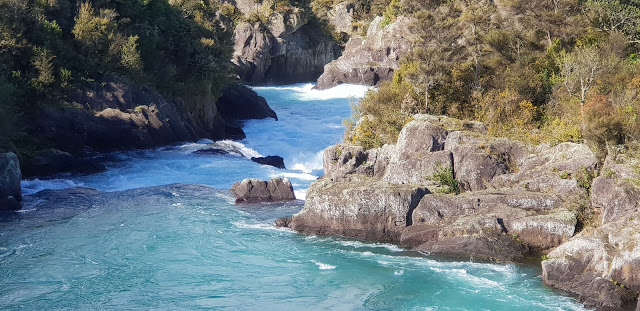
Searching for locations: Aratiatia Dam, Taupo, New Zealand

Aratiatia Dam water release, Taupo

The Aratiatia Dam, rapids, and hydroelectric power station are located on the Waikato River, New Zealand’s longest river.  It is about 16km from Taupo, and 6km from Huka falls, and there is a walking track, for the fit, of course, between the two water attractions.

This happens three or four times every day, depending on the season, and lasts about 15 minutes.  Water is released at the rate of about 80,000 liters a second, so it is quite a lot of water being sent through the rapids.

There are a number of viewing points, the most popular being from the bridge, where I took these photos, and 5 minutes down the walking track to the ridgeline where you can get an overview of the river.

This is looking towards the rapids, as the catchment leading to the rapids starts to fill

The pool is almost full and the excess is starting its journey towards the rapids

Now full, the rapids are at capacity as up to 80,000 liters a second are heading down a 28-meter drop heading towards the hydroelectric power station.

And once full at the bottom, there is a jet boat ride available for a closer view of the water, and a few thrills to go with it.

An excerpt from “What Sets Us Apart”, a mystery with a twist

See the excerpt from the story below, just a taste of what’s in store…

http://amzn.to/2Eryfth

whatsetscover

McCallister was old school, a man who would most likely fit in perfectly campaigning on the battlefields of Europe during the Second World War. He’d been like a fish out of water in the army, post-Falklands, and while he retired a hero, he still felt he’d more to give.

He’d applied and was accepted as head of a SWAT team, and, watching him now as he and his men disembarked from the truck in almost military precision, a look passed between Annette, the police liaison officer, and I that said she’d seen it all before. I know I had.

There was a one in four chance his team would be selected for this operation, and she had been hoping it would be one of the other three. While waiting for them to arrive she filled me in on the various teams. His was the least co-operative, and the more likely to make ad-hoc decisions rather than adhere to the plan, or any orders that may come from the officer in charge.

This, she said quite bluntly, was going to end badly.

I still had no idea why Prendergast instructed me to attend the scene of what looked to be a normal domestic operation, but as the nominated expert in the field in these types of situations, it was fairly clear he wasn’t taking any chances. It was always a matter of opinion between us, and generally I lost.

In this case, it was an anonymous report identifying what the authorities believed were explosives in one of the dockside sheds where explosives were not supposed to be.

The only reason why the report was given any credence was the man, while not identifying himself by name, said he’d been an explosive expert once and recognized the boxes. That could mean anything, but the Chief Constable was a cautious man.

With his men settled and preparing their weapons, McCallister came over to the command post, not much more than the SUV my liaison and I arrived in, with weapons, bulletproof vests, and rolls of tape to cordon off the area afterward. We both had coffee, steaming in the cold early morning air. Dawn was slowly approaching and although rain had been forecast it had yet to arrive.

A man by the name of Benson was in charge. He too had groaned when he saw McCallister.

“A fine morning for it.” McCallister was the only enthusiastic one here.

He didn’t say what ‘it’ was, but I thought it might eventually be mayhem.

“Let’s hope the rain stays away. It’s going to be difficult enough without it,” Benson said, rubbing his hands together. We had been waiting for the SWAT team to arrive, and another team to take up their position under the wharf, and who was in the final stages of securing their position.

While we were waiting we drew up the plan. I’d go in first to check on what we were dealing with, and what type of explosives. The SWAT team, in the meantime, were to ensure all the exits to the shed were covered. When I gave the signal, they were to enter and secure the building. We were not expecting anyone inside or out, and no movement had been detected in the last hour since our arrival and deployment.

“What’s the current situation?”

“I’ve got eyes on the building, and a team coming in from the waterside, underneath. Its slow progress, but they’re nearly there. Once they’re in place, we’re sending McKenzie in.”

He looked in my direction.

“With due respect sir, shouldn’t it be one of us?” McCallister glared at me with the contempt that only a decorated military officer could.

“No. I have orders from above, much higher than I care to argue with, so, McCallister, no gung-ho heroics for the moment. Just be ready to move on my command, and make sure you have three teams at the exit points, ready to secure the building.”

McCallister opened his mouth, no doubt to question those orders, but instead closed it again. “Yes sir,” he muttered and turned away heading back to his men.

“You’re not going to have much time before he storms the battlements,” Benson quietly said to me, a hint of exasperation in his tone. “I’m dreading the paperwork.”

It was exactly what my liaison officer said when she saw McCallister arriving.

The water team sent their ‘in position’ signal, and we were ready to go.

In the hour or so we’d been on site nothing had stirred, no arrivals, no departures, and no sign anyone was inside, but that didn’t mean we were alone. Nor did it mean I was going to walk in and see immediately what was going on. If it was a cache of explosives then it was possible the building was booby-trapped in any number of ways, there could be sentries or guards, and they had eyes on us, or it might be a false alarm.

I was hoping for the latter.

I put on the bulletproof vest, thinking it was a poor substitute for full battle armor against an exploding bomb, but we were still treating this as a ‘suspected’ case. I noticed my liaison officer was pulling on her bulletproof vest too.

“You don’t have to go. This is my party, not yours,” I said.

“The Chief Constable told me to stick to you like glue, sir.”

I looked at Benson. “Talk some sense into her please, this is not a kindergarten outing.”

He shrugged. Seeing McCallister had taken all the fight out of him. “Orders are orders. If that’s what the Chief Constable requested …”

Madness. I glared at her, and she gave me a wan smile. “Stay behind me then, and don’t do anything stupid.”

“Believe me, I won’t be.” She pulled out and checked her weapon, chambering the first round. It made a reassuring sound.

Suited up, weapons readied, a last sip of the coffee in a stomach that was already churning from nerves and tension, I looked at the target, one hundred yards distant and thought it was going to be the longest hundred yards I’d ever traversed. At least for this week.

A swirling mist rolled in and caused a slight change in plans.

Because the front of the buildings was constantly illuminated by large overhead arc lamps, my intention had been to approach the building from the rear where there was less light and more cover. Despite the lack of movement, if there were explosives in that building, there’d be ‘enemy’ surveillance somewhere, and, after making that assumption, I believed it was going to be easier and less noticeable to use the darkness as a cover.

It was a result of the consultation, and studying the plans of the warehouse, plans that showed three entrances, the main front hangar type doors, a side entrance for truck entry and exit and a small door in the rear, at the end of an internal passage leading to several offices. I also assumed it was the exit used when smokers needed a break. Our entry would be by the rear door or failing that, the side entrance where a door was built into the larger sliding doors. In both cases, the locks would not present a problem.

The change in the weather made the approach shorter, and given the density of the mist now turning into a fog, we were able to approach by the front, hugging the walls, and moving quickly while there was cover. I could feel the dampness of the mist and shivered more than once.

It was nerves more than the cold.

I could also feel rather than see the presence of Annette behind me, and once felt her breath on my neck when we stopped for a quick reconnaissance.

It was the same for McCallister’s men. I could feel them following us, quickly and quietly, and expected, if I turned around, to see him breathing down my neck too.

It added to the tension.

My plan was still to enter by the back door.

We slipped up the alley between the two sheds to the rear corner and stopped. I heard a noise coming from the rear of the building, and the light tap on the shoulder told me Annette had heard it too. I put my hand up to signal her to wait, and as a swirl of mist rolled in, I slipped around the corner heading towards where I’d last seen the glow of a cigarette.

The mist cleared, and we saw each other at the same time. He was a bearded man in battle fatigues, not the average dockside security guard.

He was quick, but my slight element of surprise was his undoing, and he was down and unconscious in less than a few seconds with barely a sound beyond the body hitting the ground. Zip ties secured his hands and legs, and tape his mouth. Annette joined me a minute after securing him.

A glance at the body then me, “I can see why they, whoever they are, sent you.”

She’d asked who I worked for, and I didn’t answer. It was best she didn’t know.

“Stay behind me,” I said, more urgency in my tone. If there was one, there’d be another.

Luck was with us so far. A man outside smoking meant no booby traps on the back door, and quite possibly there’d be none inside. But it indicated there were more men inside, and if so, it appeared they were very well trained. If that were the case, they would be formidable opponents.

The fear factor increased exponentially.

I slowly opened the door and looked in. A pale light shone from within the warehouse itself, one that was not bright enough to be detected from outside. None of the offices had lights on, so it was possible they were vacant. I realized then they had blacked out the windows. Why hadn’t someone checked this?

Once inside, the door closed behind us, progress was slow and careful. She remained directly behind me, gun ready to shoot anything that moved. I had a momentary thought for McCallister and his men, securing the perimeter.

At the end of the corridor, the extent of the warehouse stretched before us. The pale lighting made it seem like a vast empty cavern, except for a long trestle table along one side, and, behind it, stacks of wooden crates, some opened. It looked like a production line.

To get to the table from where we were was a ten-yard walk in the open. There was no cover. If we stuck to the walls, there was equally no cover and a longer walk.

We needed a distraction.

As if on cue, the two main entrances disintegrated into flying shrapnel accompanied by a deafening explosion that momentarily disoriented both Annette and I. Through the smoke and dust kicked up I saw three men appear from behind the wooden crates, each with what looked like machine guns, spraying bullets in the direction of the incoming SWAT members.

They never had a chance, cut down before they made ten steps into the building.

By the time I’d recovered, my head heavy, eyes watering and ears still ringing, I took several steps towards them, managing to take down two of the gunmen but not the third.

I heard a voice, Annette’s I think, yell out, “Oh, God, he’s got a trigger,” just before another explosion, though all I remember in that split second was a bright flash, the intense heat, something very heavy smashing into my chest knocking the wind out of me, and then the sensation of flying, just before I hit the wall.

I spent four weeks in an induced coma, three months being stitched back together and another six learning to do all those basic actions everyone took for granted. It was twelve months almost to the day when I was released from the hospital, physically, except for a few alterations required after being hit by shrapnel, looking the same as I always had.

But mentally? The document I’d signed on release said it all, ‘not fit for active duty; discharged’.

It was in the name of David Cheney. For all intents and purposes, Alistair McKenzie was killed in that warehouse, and for the first time ever, an agent left the Department, the first to retire alive.

I was not sure I liked the idea of making history.

© Charles Heath 2016-2020