“The Enemy Within” – a thirty-day revision -Day 27

This book has also been written for some time, like The Document, and the manuscript was also sitting in a box with half a dozen others gathering dust and not quite as complete, so this month it is going to get the makeover, a first draft for the editor.

And so it begins…

…

Do people care if spies have ethics?

…

A spy story is supposed to be larger than life.

We only have to watch one of the more recent James Bond films to know that if the fate of the whole world is not at stake, it’s not a spy story.

That, and the fact that the fate of the whole world rests in the hands of one man, or one woman, or a pair, both of whom profess they prefer to work alone, and begrudgingly accept the other’s help.

The bad guys are larger than life, and we just love to see them blown up in the most spectacular of manners. Sudden and quick death is not an option.

I wanted to go down this road, I really did…

But, nagging away in the back of my mind, there is a little spy story widget in my ear, saying, what if it’s not really like that?

What if the bad people are really masquerading as good people and normal people can’t see through the façade. What if the people who matter cant-‘t see them either?

What if doing the job is being made impossible by the very people who told you to find and eliminate them? Only, you don’t know that’s what they’re doing.

To say it’s doing my head in, considering the possibilities, is an understatement.

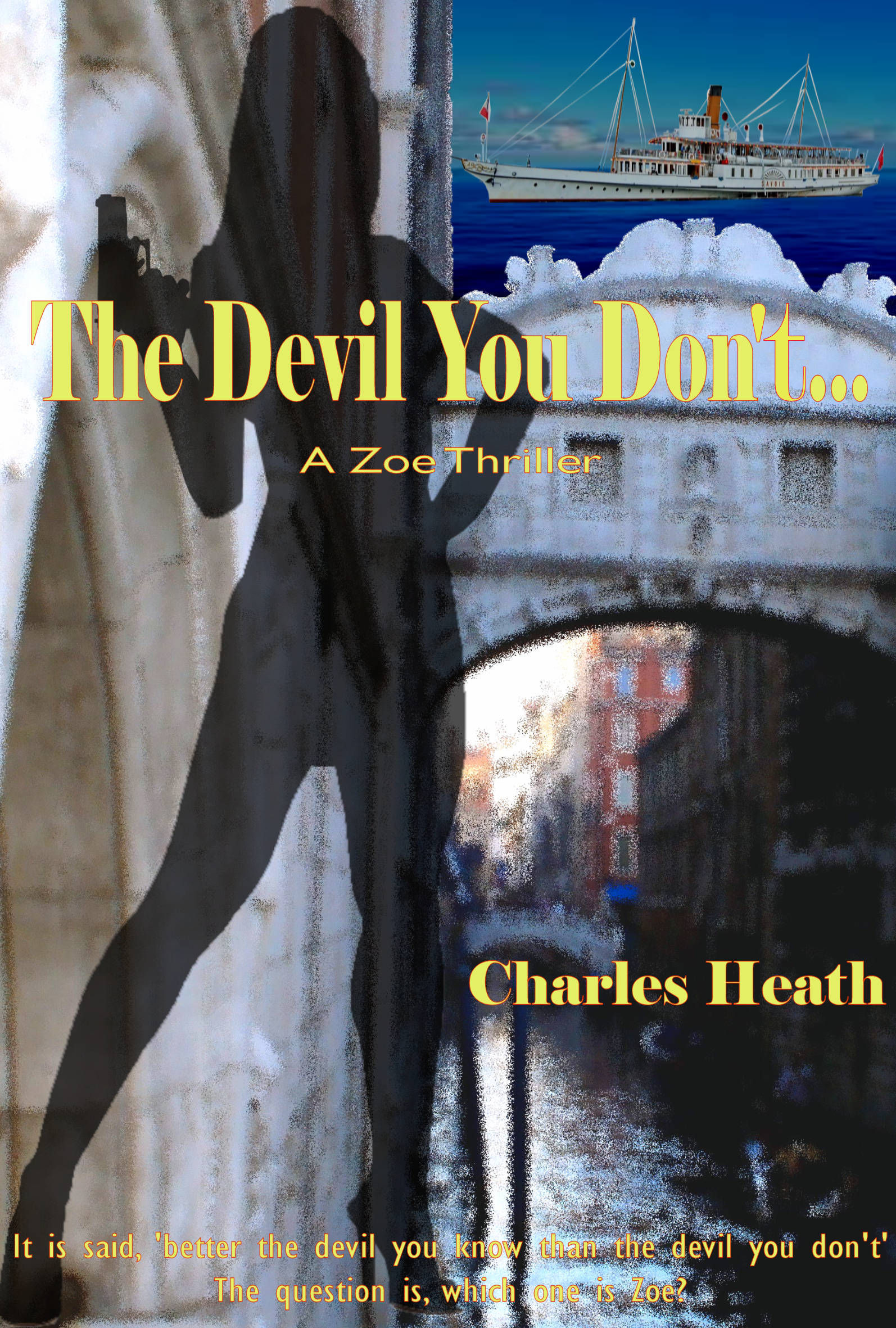
‘The Devil You Don’t’ – A beta reader’s view

It could be said that of all the women one could meet, whether contrived or by sheer luck, what are the odds it would turn out to be the woman who was being paid a very large sum to kill you.

John Pennington is a man who may be lucky in business, but not so lucky in love. He has just broken up with Phillipa Sternhaven, the woman he thought was the one, but relatives and circumstances, and perhaps because she was a ‘princess’, may also have contributed to the end result.

So, what do you do when you are heartbroken?

That is a story that slowly unfolds, from the first meeting with his nemesis on Lake Geneva, all the way to a hotel room in Sorrento, where he learns the shattering truth.

What should have been solace after disappointment, turns out to be something else entirely, and from that point, everything goes to hell in a handbasket.

He suddenly realizes his so-called friend Sebastian has not exactly told him the truth about a small job he asked him to do, the woman he is falling in love with is not quite who she says she is, and he is caught in the middle of a war between two men who consider people becoming collateral damage as part of their business.

The story paints the characters cleverly displaying all their flaws and weaknesses. The locations add to the story at times taking me back down memory lane, especially to Venice where, in those back streets I confess it’s not all that hard to get lost.

All in all a thoroughly entertaining story with, for once, a satisfying end.

…

Available on Amazon here: https://amzn.to/2Xyh1ow

…

In a word: Key

So, as we all know, a key is used to lock or unlock a door, gate, or something else.  It’s either made of shiny metal, brass, or rusty iron, it can be small, or very, very big, as is the key to a dungeon.

We can have one key or we can have many or even a master key that unlocks everything, very handy if you have a house full of locked rooms.

People always seem to want to steal them, especially in crime shows.

There is also an item called a key card.  Not the metal thing, but a plastic thing, that opens doors.  Odd that it’s called keyless entry!

Then there’s what is known as the key to something, i.e. you might have the key to his or her heart, metaphorically speaking.

And in that metaphorical sense, it opens up pandora’s box with a plethora of different meanings.

He had the key to the puzzle.

I wish sometimes I had the key to be able to write better, that that one particular key eludes me.

There are keys on a keyboard, the ones you use on computers and calculators.  They were originally on typewriters.  You can also find keys on a piano, or an accordion, and some other musical instruments.

A key can also be a master index field, or unique identifier, in a database, particularly those kept on computers.

And,

there’s a host of other uses for the word key, such as

roughening a surface

describing the shooting area on a basketball court

a group, or one, of small coral islets

matching words to pictures

or, you’re just too keyed up to sleep.


An excerpt from “Betrayal” – a work in progress

It could have been anywhere in the world, she thought, but it wasn’t.  It was in a city where if anything were to go wrong…

She sighed and came away from the window and looked around the room.  It was quite large and expensively furnished.  It was one of several she had been visiting in the last three months.

Quite elegant too, as the hotel had its origins dating back to before the revolution in 1917.  At least, currently, there would not be a team of KGB agents somewhere in the basement monitoring everything that happened in the room.

There was no such thing as the KGB anymore, though there was an FSB, but such organisations were of no interest to her.

She was here to meet with Vladimir.

She smiled to herself when she thought of him, such an interesting man whose command of English was as good as her command of Russian, though she had not told him of that ability.

All he knew of her was that she was American, worked in the Embassy as a clerk, nothing important, whose life both at work and at home was boring.  Not that she had blurted that out the first they met, or even the second.

That first time, at a function in the Embassy, was a chance meeting, a catching of his eye as he looked around the room, looking, as he had told her later, for someone who might not be as boring as the function itself.

It was a celebration, honouring one of the Embassy officials on his service in Moscow, and the fact he was returning home after 10 years.  She had been there once, and still hadn’t met all the staff.

They had talked, Vladimir knew a great deal about England, having been stationed there for a year or two, and had politely asked questions about where she lived, her family, and of course what her role was, all questions she fended off with an air of disinterested interest.

It fascinated him, as she knew it would, a sort of mental sparring as one would do with swords if this was a fencing match.

They had said they might or might not meet again when the party was over, but she suspected there would be another opportunity.  She knew the signs of a man who was interested in her, and Vladimir was interested.

The second time came in the form of an invitation to an art gallery, and a viewing of the works of a prominent Russian artist, an invitation she politely declined.  After all, invitations issued to Embassy staff held all sorts of connotations, or so she was told by the Security officer when she told him.

Then, it went quiet for a month.  There was a party at the American embassy and along with several other staff members, she was invited.  She had not expected to meet Vladimir, but it was a pleasant surprise when she saw him, on the other side of the room, talking to several military men.

A pleasant afternoon ensued.

And it was no surprise that they kept running into each other at the various events on the diplomatic schedule.

By the fifth meeting, they were like old friends.  She had broached the subject of being involved in a plutonic relationship with him with the head of security at the embassy.  Normally for a member of her rank, it would not be allowed, but in this instance it was.

She did not work in any sensitive areas, and, as the security officer had said, she might just happen upon something that might be useful.  In that regard, she was to keep her eyes and ears open and file a report each time she met him.

After that discussion, she got the impression her superiors considered Vladimir more than just a casual visitor on the diplomatic circuit.  She also formed the impression that he might consider her an ‘asset’, a word that had been used at the meeting with security and the ambassador.

It was where the word ‘spy’ popped into her head and sent a tingle down her spine.  She was not a spy, but the thought of it, well, it would be fascinating to see what happened.

A Russian friend.  That’s what she would call him.

And over time, that relationship blossomed, until, after a visit to the ballet, late and snowing, he invited her to his apartment not far from the ballet venue.  It was like treading on thin ice, but after champagne and an introduction to caviar, she felt like a giddy schoolgirl.

Even so, she had made him promise that he remain on his best behaviour.  It could have been very easy to fall under the spell of a perfect evening, but he promised, showed her to a separate bedroom, and after a brief kiss, their first, she did not see him until the next morning.

So, it began.

It was an interesting report she filed after that encounter, one where she had expected to be reprimanded.

She wasn’t.

It wasn’t until six weeks had passed when he asked her if she would like to take a trip to the country.  It would involve staying in a hotel, that they would have separate rooms.  When she reported the invitation, no objection was raised, only a caution; keep her wits about her.

Perhaps, she had thought, they were looking forward to a more extensive report.  After all, her reports on the places, and the people, and the conversations she overheard, were no doubt entertaining reading for some.

But this visit was where the nature of the relationship changed, and it was one that she did not immediately report.  She had realised at some point before the weekend away, that she had feelings for him, and it was not that he was pushing her in that direction or manipulating her in any way.

It was just one of those moments where, after a grand dinner, a lot of champagne, and delightful company, things happen.  Standing at the door to her room, a lingering kiss, not intentional on her part, and it just happened.

And for not one moment did she believe she had been compromised, but for some reason she had not reported that subtle change in the relationship to the powers that be, and so far, no one had any inkling.

She took off her coat and placed it carefully of the back of one of the ornate chairs in the room.  She stopped for a moment to look at a framed photograph on the wall, one representing Red Square.

Then, after a minute or two, she went to the mini bar and took out the bottle of champagne that had been left there for them, a treat arranged by Vladimir for each encounter.

There were two champagne flutes set aside on the bar, next to a bowl of fruit.  She picked up the apple and thought how Eve must have felt in the garden of Eden, and the temptation.

Later perhaps, after…

She smiled at the thought and put the apple back.

A glance at her watch told her it was time for his arrival.  It was if anything, the one trait she didn’t like, and that was his punctuality.  A glance at the clock on the room wall was a minute slow.

The doorbell to the room rang, right on the appointed time.

She put the bottle down and walked over to the door.

A smile on her face, she opened the door.

It was not Vladimir.  It was her worst nightmare.

…

© Charles Heath 2020
Lost and Found, a short story

I had once said that Grand Central Station, in New York, was large enough you could get lost in it. Especially if you were from out of town.

I know, I was from out of town, and though I didn’t quite get lost, back then I had to ask directions to go where I needed to.

It was also an awe-inspiring place, and whenever I had a spare moment, usually at lunchtime, I would go there and just soak in the atmosphere. It was large enough to make a list of places to visit, or find, or get a photograph from some of the more obscure places.

Today, I was just there to work off a temper. Things had gone badly at work, and even though I hadn’t done anything wrong, I still felt bad about it.

I came in the 42nd street entrance and went up to the balcony that overlooked the main concourse. A steady stream of people was coming and going, most purposefully, a few were loitering, and several police officers were attempting to move on a vagrant. It was not the first time.

But one person caught my eye, a young woman who had made a circuit of the hall, looked at nearly every destination board, and appeared to be confused. It was the same as I had felt when I first arrived.

Perhaps I could help.

The problem was, a man approaching a woman from out of left field would have a very creepy vibe to it, so it was probably best left alone.

Another half-hour of watching the world go by, I had finally got past the bad mood and headed back to work. I did a wide sweep of the main concourse, perhaps more for the exercise than anything else, and had reached the clock in the centre of the concourse when someone turned suddenly, and I crashed into them.

Not badly, like ending up on the floor, but enough for a minor jolt. Of course, it was my fault because I was in another world at that particular moment.

“Oh, I am sorry.” A woman’s voice, very apologetic.

I was momentarily annoyed, then, when I saw who it was, it passed. It was the lost woman I’d seen earlier.

“No. Not your fault, but mine entirely. I have a habit of wandering around with my mind elsewhere.”

Was it fate that we should meet like this?

I noticed she was looking around, much the same as she had before.

“Can I help you?”

“Perhaps you can. There’s supposed to be a bar that dates back to the prohibition era here somewhere. Campbell’s Apartment, or something like that. I was going to ask…”

“Sure. It’s not that hard to find if you know where it is. I’ll take you.”

It made for a good story, especially when I related it to the grandchildren, because the punch line was, “and that’s how I met your grandmother.”


© Charles Heath 2020

I’ve got words on paper, but

They’re not exactly Nobel prize-winning prose.

Well, not yet.

I guess the point is that I have at least crystallised my thoughts on paper so that I can do something with them.  After all, anything is better than nothing, isn’t it?

Sometimes I wonder.  I look back on a lot of the stuff I wrote forty or fifty years ago and it looks bad.  The thing is, then, I thought it was great, and that I was destined to do great things with the written word.

Pity, all this time later, I’ve turned into a self-critical monster, where it seems nothing I write is any good.

So, does that mean we need to be less critical of our work?  After all, through the years, when I’ve shared novels and short stories with others, they have all universally said they’re quite good.

So…

It’s time to go back to the previous day’s work and rework it.  Yes, the idea that I wanted to write about is where I wanted the story to go, it’s just the execution.

The problem is, since then a few other ideas have been running around in the back of my head, and these could be added or used to further the current plotline.

The other problem is, it is one of the six stories that I’m writing by the seat of my pants, you know, the way some pilots like to fly a plane, without all that computer backup.  Similarly, this is the way I sometimes like to write.

It’s as much a surprise to me is it is to the reader.

There’s good arguments for having planned the story from start to finish, but with these, I like to write it and see where it takes me.  They’re episodic, so sometimes I get to write three of four episodes at a time, and these would most likely in a book become a chapter.

Last night I wrote two episodes, but it seems that it might need pointers back in previous episodes, because we all like to leave a trail of crumbs for the reader so when they get to the denouement, they remember, ah yes, back in chapter two such and such happened, but why am I only remembering it now?

Ok, enough convincing myself I’m a good writer, it’s time to get back to work…

The cinema of my dreams – I always wanted to see the planets – Episode 41

Nothing is ever what it seems

…

I didn’t have the luxury of taking a moment to consider what I was going to do, other than to draw the inevitable conclusion that whatever I did, there would be consequences.

One thought did cross my mind, in relation to the alien ship and her Captain, why hadn’t they exercised their superior capability, stopped the Russian ship, and taken the offenders away themselves.  And, given the captain was prepared to destroy my ship, why had he let the Russians go?

“The Russian ship is hailing us, sir.”

“Very good, I’ll be there in a moment.”

They had waited a long time before asking our intentions, so what had they been waiting for?  The fact they appeared to be immobilized was, to me, a little too convenient.  Also, they had to know the alien ship was nearby, but even that raised the question of why they were standing off, and not alongside us.

Something was not right about this whole scenario.

I came on to the bridge, Number One standing in front of the Captain’s chair, the bridge crew waiting expectantly.

“Get the Russian ship’s Captain on screen.”

A moment later he appeared, with a depleted bridge crew, different from the last time we spoke.

“What can I do for you?”

“Why is the alien vessel here?”

“I think you know the answer to that question.”

“What did he tell you?”

“How about you tell me why you think he’s here?”

Why was his concern more about the alien vessel than the state of their propulsion unit?  Unless there was nothing wrong with it.

Silence.

I motioned to the comms officer to cut our side of the conversation.

“General?”

He had taken up a position behind the defense team.

“Sir?”

“If they try to move or power weapons, stop them.”

“Yes, sir.”

“Russian ship powering up propulsion, sir.”

“General?”

“Just say the word.”

“Comms.”

A gesture told me the artesian ship was back online.

“Do not try to leave or we will disable your ship.”

A tense few seconds before the navigator said, “powering down.”

“Good choice.  Now, prepare to be boarded.  Any resistance will be met with force.  Am I understood, Captain?”

A measured reluctance in his tone when he said, “Yes.”

“Number one, boarding team assembled?”

“Yes, sir.”

“Good.  Any resistance is to be dealt with severely.  If the Captain or a representative of the ship wants to come with their crew members, let them.   Bring those on the list back here.”

“Understood.  Sir.”

The Russian captain was still on the screen.

“You have no right or jurisdiction to do what you are doing, and I will be recording this as an act of piracy.”

“Will that be with the international space agency?”

“My superiors, we have already alerted them to the situation.”

“As far as I am aware, your superiors did not register your flight plan as per the treaty that they are signatories to.  Also, you are on a ship that no one knows about.  All of that could be forgiven though, but you had to cause what can I call it, an Intergalactic incident which may yet setback relations with an alien race for a long time.  You would be well advised to tell me now what the hell happened so I can at least try and save you from very severe consequences.”

On a secondary channel that number one had switched to after arriving at the Russian vessel, I heard, “what do you mean you cannot dock?”

The pilot replied, “They haven’t initiated the docking sequence.”

“Is it an incompatible system?”

“No, it’s exactly the same as ours.  It’s like they’ve ripped everything off.  They’re stalling.”

To the captain of the Russian ship, I said, “I get it.  No Captain likes to have his ship boarded.  But this is not the time.”  To the General, “Target their propulsion unit.  On my mark…”

“You are making a mistake,” the Russian captain said.

“Docking initiated.  It is exactly like our system, right down to the override authorization code.”  Number one had the same thought that just come to mind.  Then, “Lieutenant, don’t hesitate to use force if you have to. We have to assume anyone on the other side of the door is a potential hostile.  Counting down, three, two, one…”

I heard the whoosh of the door, and then utter silence, broken only by Number One, “What the hell…”

…

© Charles Heath 2021-2022

“The Enemy Within” – a thirty-day revision – Day 28

This book has also been written for some time, like The Document, and the manuscript was also sitting in a box with half a dozen others gathering dust and not quite as complete, so this month it is going to get the makeover, a first draft for the editor.

And so it begins…

…

How do we tell who’s good and who’s bad?

…

Everybody has an agenda; it’s just we don’t necessarily know what it is. It’s where this story is headed, and I’m just spitballing at the moment…

Perhaps having worked in an office where there is a hierarchy of bosses, each actively working on getting up that next rung on the ladder, using whatever and whomever at their disposal to achieve such a result, it is sometimes not so easy to see whether we are being used as pawns in their insidious games. They know you are malleable because you’re the new kid on the block, and you want to make your mark.

I’ve certainly worked in offices where my work had been used and passed off by them as their own and basically promised if I did well (and supported them) I would also succeed, only to find once they move on you’ve been dumped. Or you’ve been asked to do a job that you know is going to have an adverse effect on someone else.

You only find out what’s really going on when you jump the chain of command, or you use initiative.

While offices are not usually hotbeds of insidious activity, another name for office politics, the premise is basically the same. People are being used by other people to further their own agenda, whether to curry favour with people of influence or get a promotion. Or they just want to get rid of someone that’s in the way.

And if you are the new kid on the block, would you really know what was going on, until it all explodes in your face.

This story, at long last, is getting more interesting by the minute.

Searching for locations: Washington DC, USA

Washington is a city with bright shiny buildings and endless monuments, each separated by a long walk or a taxi ride if you can find one.

We might have picked the wrong day, shortly after New Year’s Day when the crowds were missing along with everything else.  Or, conversely, it was probably the right time to go, when we didn’t have to battle the crowds.

Sunny but very cold, the walking warmed us up.

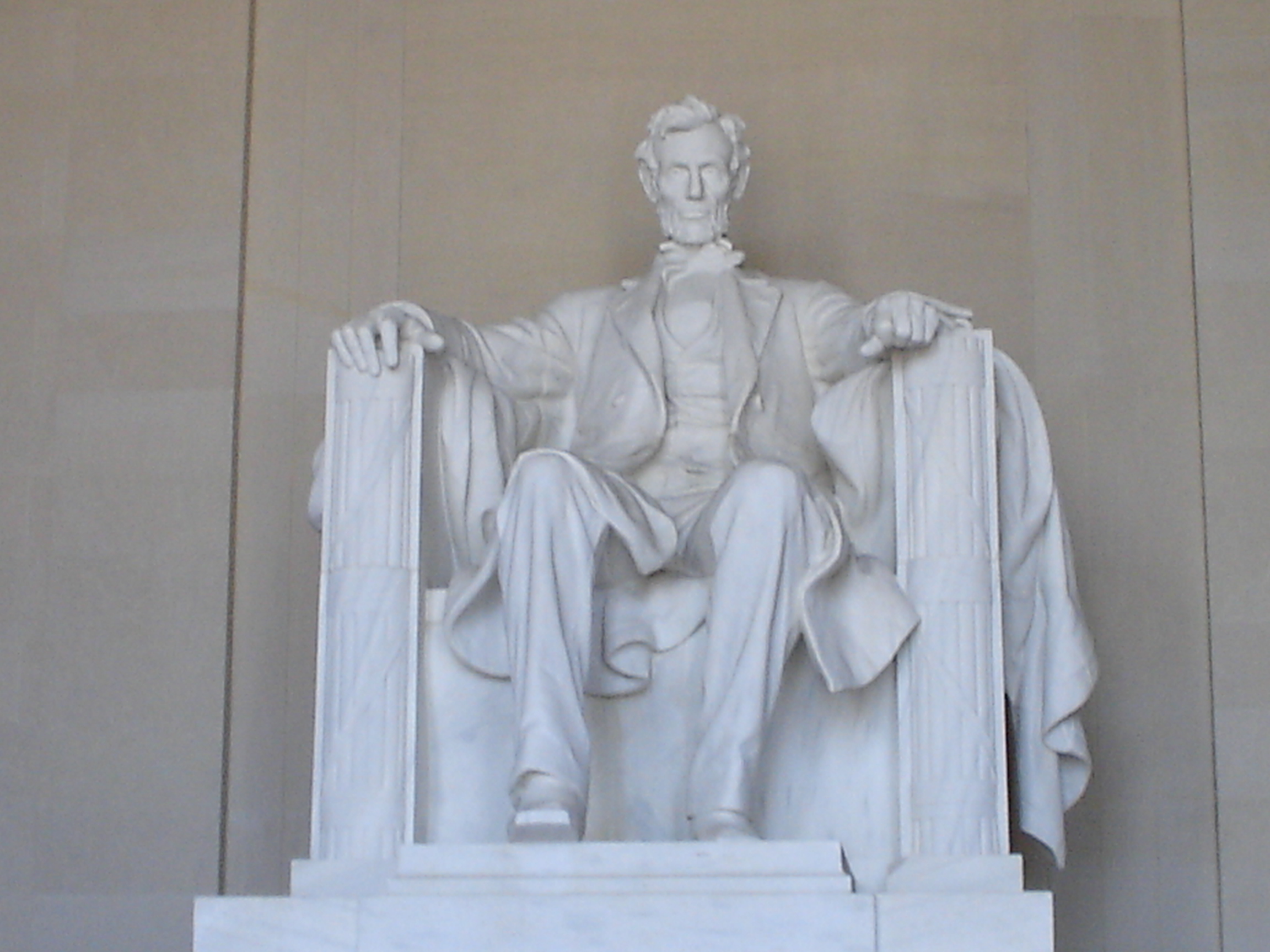
First stop was the Lincoln Memorial

DSC00833

It was built to honor the 16th President of the United States, Abraham Lincoln.

It is located on the western end of the National Mall in Washington, D.C., across from the Washington Monument.

DSC00834

The building is in the form of a Greek Doric temple and contains a large seated sculpture of Abraham Lincoln and inscriptions of two well-known speeches by Lincoln.

The next stop was the Washington Monument

DSC00840

The Washington Monument is an obelisk on the National Mall in Washington, D.C., built to commemorate George Washington. Construction of the monument began in 1848 and not completed until 1888.  It was officially opened October 9, 1888.


We then took a taxi ride to the Jefferson Memorial

DSC00851

This monument is dedicated to Thomas Jefferson (1743–1826), one of the most important of the American Founding Fathers as the main drafter and writer of the Declaration of Independence.

Construction of the building began in 1939 and was completed in 1943.

The bronze statue of Jefferson was added in 1947.

I’d like to write a political thriller


But, I don’t understand politics.

The question is, do you really have to?

I mean all you have to do is read the papers and read between the lines. It doesn’t take much imagination to find something worth writing about

For instance,

How could it possibly happen that a leader of a very powerful country become a spy for another?

It doesn’t seem plausible, but is it possible?

It depends I’m guessing, on power and wealth, well, perhaps not so much the power, but it is true that money and wealth are great motivators.

How could it happen when the leader is in the public eye nearly all of the time? And even if that leader has closed-door conversations, which is doubtful he would be on his own, the red not really be an opportunity to sell out to the other side.

Even an exchange of gifts, like apartments or a dacha, wouldn’t be enough of an incentive, well, not for me anyway. But a clear path to investment in a rival country, maybe.

Perhaps then rather than becoming a spy, the leader could adopt a policy of appeasement.

We have history to tell us how well that works, and the fact giving concessions to another county only emboldens it to take advantage of apparent weakness, and then, hey presto, we have another war.

So…

What do we really have?

A lot of speculation and conjecture. It’s easy to construe what might be the truth from a set of circumstances and behavioral patterns of the individuals involved.

It could be likened to two cats circling each other in a cage before the fight begins.

The waters can be muddied by a constant stream of incendiary tweets which fire the readers’ imagination, all intended as a smoke screen, or feelers to see which was the wind is blowing.

Is that leader masterful and clever or is he a naive fool?

My political thriller might have a working title of,

‘Which Way Does The Wind Blow’

I don’t usually have a title for any of the books until after the first draft, or sometimes something might spring out as it’s being written.

But, for now, let’s sit back and see which way the wind is blowing.