In a word: Order

I gave the order to my assistant to order the supplies we needed in order to maintain stock levels.

Oh, yes, the word order is one of my favourites, because it can confuse the hell out of many people in its simplicity and yet complexity.

I gave the order, it’s what happens in the armed forces, and a lot of other places, but mostly we would associate it with organisations that have hierarchical authority.

The military, for one, cut orders, the means of sending one of its minions to another place, or to do a specific job.

Order supplies, well, just about anyone can order something from somewhere, usually on the internet, and sometimes require or are given an order number so it can be tracked.

In order to maintain, in order to get what I want, in order to get elected, this is just another way of using the word, with the aim of achieving something, though I’m sure there’s probably a better way of expressing these sentiments.

Law and order, well, doesn’t everyone want this, and doesn’t it always turn up in an election campaign, and seems to be the first thing sacrificed after the election.  The thing is, no one can guarantee law and order.

There is the law and there is administering it.  There is no order that comes with it, we just hope that order is maintained, and deplore the situation when it isn’t.

Perhaps in order to maintain law and order, we might need more police.

Then, of course, there is alphabetical order, and numerical order, where things can be designated from A to Z, like this challenge, or from 1 to 10, or more.  We can sort words alphabetically, numbers numerically and data items by keys or an index.

This is naturally called a sort order.

Then there is my car, or bike, or washing machine, or mixmaster.  They are currently in good working order, though that might not last.

And lastly, in deference to all those out there who are thinking of becoming dictators, it’s always possible, one day, there will be a new world order.  They might actually be in their own particular order, whose intellect might be (?) of the highest order.

Surely that is one order too many.

“One Last Look”, nothing is what it seems

A single event can have enormous consequences.

A single event driven by fate, after Ben told his wife Charlotte he would be late home one night, he left early, and by chance discovers his wife having dinner in their favourite restaurant with another man.

A single event where it could be said Ben was in the wrong place at the wrong time.

Who was this man? Why was she having dinner with him?

A simple truth to explain the single event was all Ben required. Instead, Charlotte told him a lie.

A single event that forces Ben to question everything he thought he knew about his wife, and the people who are around her.

After a near-death experience and forced retirement into a world he is unfamiliar with, Ben finds himself once again drawn back into that life of lies, violence, and intrigue.

From London to a small village in Tuscany, little by little Ben discovers who the woman he married is, and the real reason why fate had brought them together.

It is available on Amazon here:  http://amzn.to/2CqUBcz

“Trouble in Store” – Short stories my way:  More on the policewoman

I’ve been looking at the role of the policewoman, and her interaction with the shop’s participants.

I’m still working on whether she needs more or less of an introduction, but, for the time being, this is what I’m going with:

…

It had been another long day at the office for Officer Margaret O’Donnell, or, out in the streets, coping with people who either didn’t know or didn’t care about the law.

People who couldn’t cross the road where there were crossings and lights to protect them, silly girls shoplifting on a dare, and boys who thought they were men and could walk on water.

The one they scraped of the road would never get to grow up, and his mother, well, she was not doing another call on a family to give them the bad news.

That was her day.

So far.

At the end of the day, she was glad to be getting home, putting her feet up, and forgetting about everything until the next morning when it would start all over again.

Coming around that last corner, the home stretch she called it, she was directly opposite the corner shop, usually closed at this hour of the night.  It was not.  The lights were still on.

She looked at her watch and saw it was ten minutes to midnight, and long past closing time.  She looked through the window, but from the other side of the road, she could only see three heads and little else.

Damn, she thought, I’m going to have to check it out. 

She was aware of the rumors, from her co-residents and also her colleagues down at the station, rumors she hoped were not true.

© Charles Heath 2016-2020

The cinema of my dreams – I always wanted to go on a treasure hunt – Episode 56

Here’s the thing…

Every time I close my eyes, I see something different.

I’d like to think the cinema of my dreams is playing a double feature but it’s a bit like a comedy cartoon night on Fox.

But these dreams are nothing to laugh about.

Once again there’s a new installment of an old feature, and we’re back on the treasure hunt.

…

Our local area had six churches.  We really only needed two, the catholic church, a big, imposing stone structure that was almost a mini cathedral, showing the wealth and influence of the church, commanding the best location.

The other, a protestant church, a very old, simple wooden structure that had been on its less salubrious site, once belonging to the missionaries who inhabited the land with the first settlers, before the Pope saw an opportunity, and moved in.

Nadia and her family were catholic.  So were the Benderby’s.

My family was protestant, well, not really churchgoers at all, which was a contradictory standpoint because nearly everyone else in the area were devout worshippers.  I remembered my father’s comments, when he was alive, watching all the sheep going to be fleeced every Sunday at the big church on the hill.

To me, the devoutness of the Benderby’s and Cossatino’s seemed at odds with their profession, as most of their activities were sins against God, and proving my father’s point.  I never saw the point of it, but nevertheless, my mother dragged me to church, in my younger days, every other Sunday just in case my soul needed saving.

Now, standing in the graveyard beside the imposing but badly in need of repairs catholic citadel, I felt a shiver go through me.  Mid-morning, there was a cool breeze at odds with the warmth of the sun beating down from a cloudless sky.

“You feel that?” I asked Nadia.

She was in a very summery dress and sun hat, looking at a group of gravestones belonging to the Archer family, going back over a hundred years.

“Ghosts, perhaps?  I hadn’t realized Mrs. Archer had died.”

“You’ve been away.  A lot has happened in the last year or so.”

“I liked her.  She used to look after Vince and me when we were kids.  He used to terrorize her.”

Somehow that didn’t surprise me.  It was rumored Vince was given a gun when he was five years old and his father taught him how to use it.  Once, he was caught bringing it to school.  Now, given the number of school shootings, it hardly registered back then other than a rebuke from the headmaster.

A half-hour later, after surveying a graveyard that had a lot of the areas most prominent people buried there, I came across an almost disintegrated stone that marked the final resting place of Friedrich Ormiston, the son of Heinrich who died in 1976, the same year as Friedrich which was an odd coincidence.

A little further investigation showed there was another Heinrich who died in 1899, and another Friedrich, who died in 1924. It showed there had been Ormiston’s around these parts for over 150 years.  A little further away there were two more gravestones, more recent, belonging to Wendy and Alan, both of whom died within a year of each other 5 years ago.

I took notes on each of the Ormiston’s, their birth dates and death dates, so I could possibly look them up in the parish records, and the local newspaper office, The Jefferson Leader, a publication that was still produced to this day, and it’s current editor, once an old friend from school who had expansive aspirations in the world of journalism and ended up back home tending to the paper his great, great grandfather started.

It seemed a lot of us from that generation couldn’t escape the clutches of our town or families.

“You’d think there’d be a mausoleum or something.”  Nadia had come up from behind and startled me.

“Perhaps the treasure quests took all the money.  Besides, after you’re dead, you don’t really care where you finish up.”

“You’ve seen the monument our family has.  I’m not looking forward to finishing up there.”

I’d seen it, on the other side of the graveyard, along with a dozen others, all in a row, like a row of houses in the more affluent part of the town.  The Cossatino’s were larger than life in death too.

“I hope the bed is comfortable, you’re going to be there a long time.”

She gave me one of her ‘if looks could kill’, the smiled, perhaps deciding it was my feeble attempt at humor.

“I take it we’re finished.  I think I’m beginning to believe there really are ghosts here.” 

I saw her shiver, and then I felt it, a cold rush of air, and what might have been a hand on my shoulder.

“I think it’s time to leave.”  I shut the notebook, put it in my pocket.

She did not need to be asked twice.  Curiously, as we made our way towards the gate, I thought I saw the priest looking at us from the front doorway of the church, but when I looked back there was no one there.

…

© Charles Heath 2020-2022

The Things We Do For Love – The final editor’s draft – Day 2

…

Some people are not who they appear to be.

Henry, for instance, had suffered the tragic loss of what he believed to be his one true love.  That, in essence, had led him to that life at sea, away from everything and everyone, because all it did was remind him of what he had lost.

And, yes, he was not going to fall in love again, it was far too painful.

Trying to get over the overwhelming grief, still raw a year later, he hears the arrival of another guest, and curious discovers it is a woman about his age, one who is quite at odds with what he would expect as a guest, at this hotel, at this time of year.

It raises that inevitable question, why would someone like her be there?

This leads to an awkward dinner where, with only two guests in the hotel, would it not be better if they sat together?  Neither thought so, but it seems impolite not to.

From there, of course, the conversation could only get worse, with each emphasising, in their thoughts, just how much they didn’t want to be there.

It is here we discover how these two are going to get along, or not, as the days proceed, not having realised that meeting others was a possibility, but meeting someone else who might be a match, never.  Both know they’re at that hotel to stay away from everyone else, but, in the coming days, that wasn’t going to be possible.

Plans must be made.

…

Travelling after a pandemic: Destination Hobart – 2

Hobart in June – Winter – Day 2 – Sunday

…

It is not raining when we woke, but it had been most of the night.  After a cold start, the weather, seems to have improved, if only for the time being.

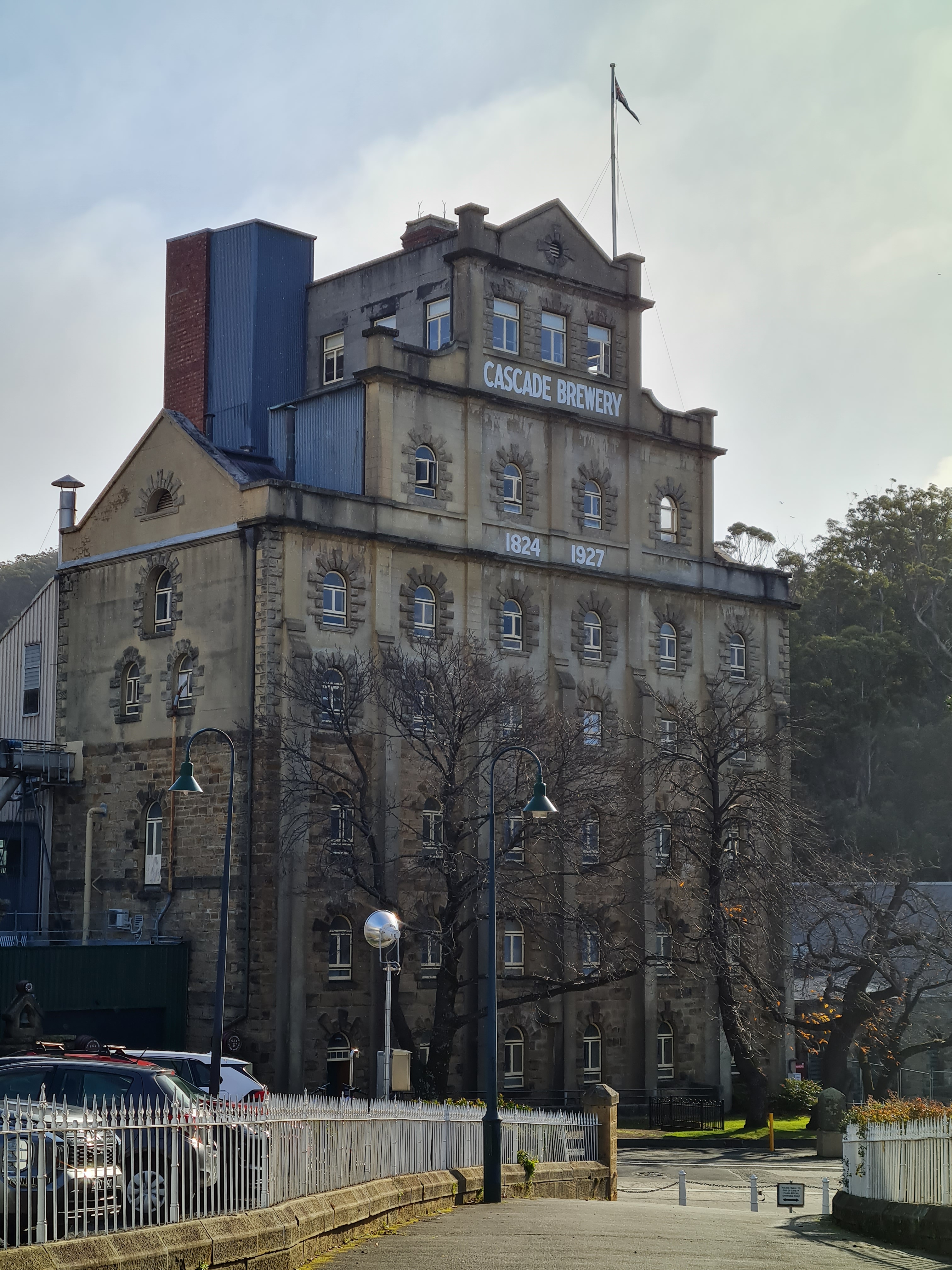
Today’s expedition is the Cascade Brewery, which doesn’t have tours at the moment because of staff issues with Covid, but does have a bar and restaurant.  There is also a historic site, an old women’s prison, and botanical gardens.  I’m not sure how far we’ll get in the gardens, but the bar and restaurant is looking good.

We get there and decide on lunch first then a visit to the women’s prison.

Fail.  The bar and restaurant are packed and there are no tables left.  Time for a photograph of the old brewery, and move on.

Instead of going to the prison, just down the road, we go off in a different direction, to Mt Wellington, thinking it might give excellent views of Hobart.

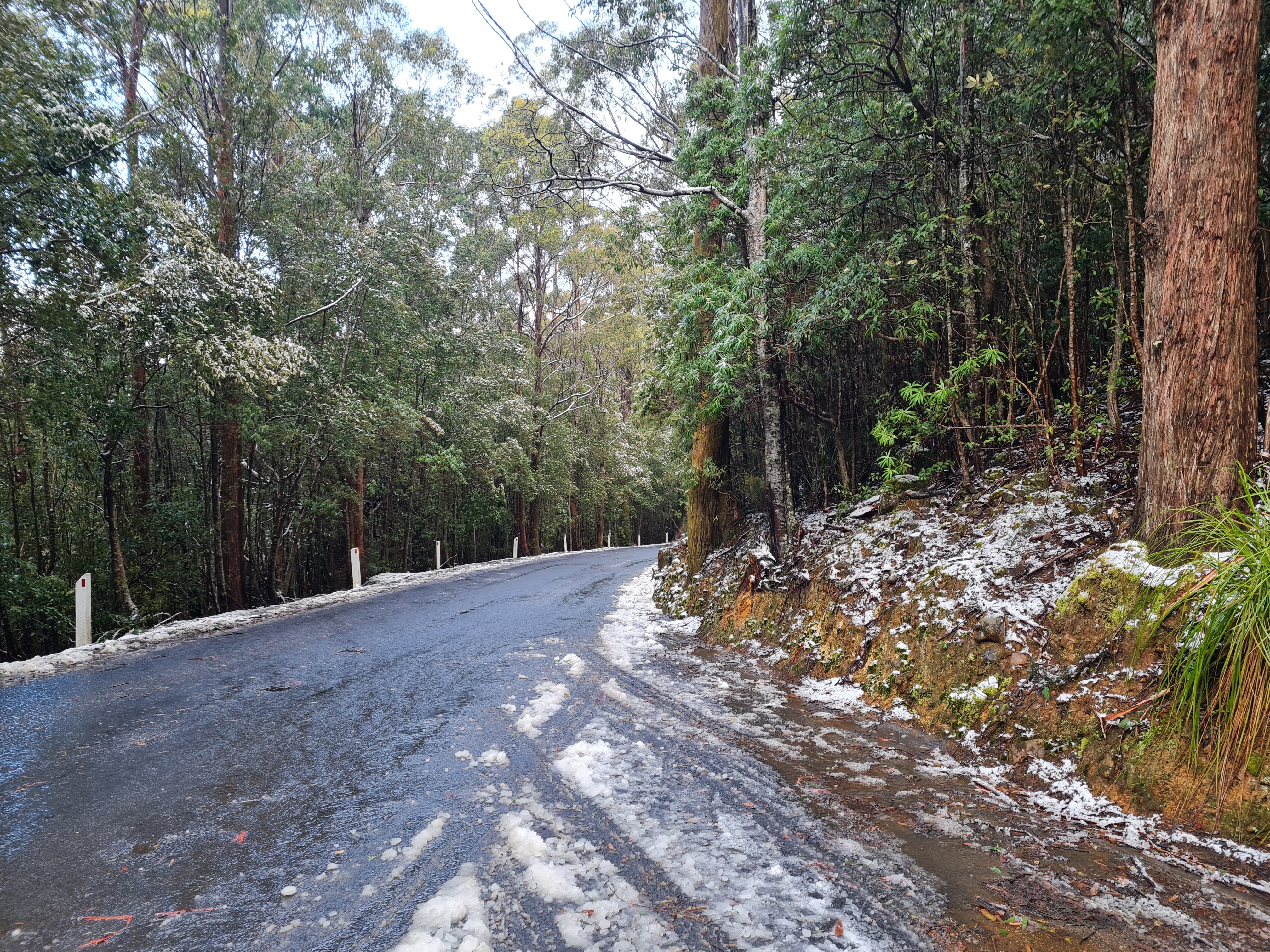
Only a sign says the road is supposed to be closed, but it is not, so we and a dozen others are venturing up the road towards the summit.

The road was probably opened temporarily, but it is getting more treacherous as the snow appears and the road is wet.  We make it about 2km before deciding it’s unsafe.

The adventure continues because at the bottom of the hill we decided to go to Huonville, hoping to chance upon the apple orchards and all things apple.

It was an immense letdown.  There was nothing, except for one innocuous building with a sign out front saying it was open, but for all intents and purposes looked like it was completely empty.

Until you drove around the back to the carpark where there were hundreds of cars, and inside, totally packed.

It’s where everyone in Huonville had gone.

And not where we were going to get a distinctly Tasmanian meal.

We had to settle for another pie from Banjo’s in Sandy Bay.

Sayings: Beyond the pale

I’ve often said, when espying an injustice that was so outrageously displayed that no one could miss it, as being beyond the pale.

The pale within a fence became an area of land within a boundary such as a county, and then to areas within Ireland that were held by the British. As these became smaller, those areas were deemed to be uncivilized.

This, in modern parlance, beyond the pale refers to someone’s behavior being outside the accepted norm.

There’s also…

In a word: Pale

Which is the color of the face of a person who is usually desperately unwell?

As distinct from a pale face, a white man is described by the American Indians. This, sadly, was learned from American westerns, motion pictures that told a rather interesting version of events between the Indians and the new settlers.

Paleface was in one movie, in particular, Bob Hope.

A pale can also be a single upright piece of wood in a fence.

Something could pale into significance, or be a pale imitation of a better quality article.

Not to be confused with a pail, which is a bucket, wooden or otherwise, that holds liquids.

The most famous of which is that which Jack and Jill went up a hill to fetch a pail of water, and, well, you know how that ended.

A moment to slip back into the past

Television is a great recorder of the past, and most channels, and especially cable tv have great libraries of films that go back more than a hundred years.

And, whilst it’s possible that modern-day films and television series can try to recapture the past, the English as an exception being very good at it, often it is impossible to capture it correctly.

But, if you have a film shot in the moment, then you have a visual record of what life, and what was once part of our world before you in all its dated glory. The pity of it is that, then, we never appreciated it.

After all, in those particular times, who had the time to figuratively stop and smell the roses. Back then as life was going on, we were all tied up with just trying to get through each day.

Years later, often on reflection, we try to remember the old days, and, maybe, remember some of what it was like, but the chances are that change came far too rapidly, and often too radical, that it erases what we thought we knew existed before.

My grandmother’s house is a case in point. In its place is a multi-lane superhighway, and there’s nothing left to remind us, or anyone of it, just some old sepia photographs.

I was reminded of how volatile history really is when watching an old documentary, in black and white, and how the city I grew up in used to look.

Then, even though it seemed large to me then, it was a smaller city, with suburbs that stretched about ten or so miles in every direction, and the outer suburbs were where people moved to get a larger block, and countrified atmosphere.

Now, those outer suburbs are no longer spacious properties, the acreage subdivided and the old owners now much richer for a decision made with profit not being the motivator, and the current suburban sprawl is now out to forty or fifty miles.

The reason for the distance is no longer the thought of open spaces and cleaner air, the reason for moving now is that land further out is cheaper, and can make buying that first house more affordable.

This is where I tip my hat to the writers of historical fiction. I myself am writing a story based in the 1970s, and it’s difficult to find what is and isn’t time-specific.

If only I had a dollar for every time I went to write the character pulling out his or her mobile phone.

What I’ve found is the necessity to research, and this has amounted to finding old films, documentaries of the day, and a more fascinating source of information, the newspapers of the day.

The latter especially has provoked a lot of memories and a lot of stuff I thought I’d forgotten, some of it by choice, but others that were poignant.

Yes, and don’t get me started on the distractions.

If only I’d started this project earlier…

“The Things We Do For Love”

Would you give up everything to be with the one you love?

…

Is love the metaphorical equivalent to ‘walking the plank’; a dive into uncharted waters?

For Henry, the only romance he was interested in was a life at sea, and when away from it, he strived to find sanctuary from his family and perhaps life itself.  It takes him to a small village by the sea, a place he never expected to find another just like him, Michelle, whom he soon discovers is as mysterious as she is beautiful.

Henry had long since given up the notion of finding romance, and Michelle couldn’t get involved for reasons she could never explain, but in the end, both acknowledge that something happened the moment they first met.  

Plans were made, plans were revised, and hopes were shattered.

A chance encounter causes Michelle’s past to catch up with her, and whatever hope she had of having a normal life with Henry, or anyone else, is gone.  To keep him alive she has to destroy her blossoming relationship, an act that breaks her heart and shatters his.

But can love conquer all?

It takes a few words of encouragement from an unlikely source to send Henry and his friend Radly on an odyssey into the darkest corners of the red-light district in a race against time to find and rescue the woman he finally realizes is the love of his life.

The cover, at the moment, looks like this:

lovecoverfinal1

Is love the metaphorical equivalent to ‘walking the plank’; a dive into uncharted waters?

For Henry the only romance he was interested in was a life at sea, and when away from it, he strived to find sanctuary from his family and perhaps life itself.  It takes him to a small village by the sea, s place he never expected to find another just like him, Michelle, whom he soon discovers is as mysterious as she is beautiful.

Henry had long since given up the notion of finding romance, and Michelle couldn’t get involved for reasons she could never explain, but in the end both acknowledge that something happened the moment they first met.  

Plans were made, plans were revised, and hopes were shattered.

A chance encounter causes Michelle’s past to catch up with her, and whatever hope she had of having a normal life with Henry, or anyone else, is gone.  To keep him alive she has to destroy her blossoming relationship, an act that breaks her heart and shatters his.

But can love conquer all?

It takes a few words of encouragement from an unlikely source to send Henry and his friend Radly on an odyssey into the darkest corners of the red light district in a race against time to find and rescue the woman he finally realizes is the love of his life.

The cover, at the moment, looks like this:

lovecoverfinal1

Travelling after a pandemic: Destination Hobart – 1

Hobart in June – Winter – Day 1 – Saturday

…

Overnight the rain began and hasn’t stopped.  It is cold, and the heater in the room is not quite adequate for the space it has to heat up.  Fortunately, the bed has electric blankets, and it was warm, lying wake listening to the raindrops.  That warmth makes it difficult to get out of bed, but this is a holiday, and we have to get motivated.

We have a balcony, and from there the bleakness of the early morning is stark, but at least the rain is light if not a fine mist.

Worse, it alternates between this fine mist and a short downpour, which means the umbrella goes up and down until you give up.  Later, the rain is not heavy, and just tolerable.

We head off to the Salamanca markets, happening only on Saturday morning.  Unable to walk long distances, we drive, about four minutes from our apartment, but miss a turn, it takes 10, then and 5 to assess the parking situation which, in the end, was the easiest part of this expedition.

The hardest part, walking among the very large crowd of people defying the rain and cold.  I can tolerate large crowds but today, they seem to want to stop suddenly, and just stand and talk in the middle of the walkways making it difficult to impossible to maintain any sort of continuity.

There were hundreds of stalls, the most predominant, micro distillers for some odd reason, selling expensive spirits for about $90 a 700ml bottle, which I regard as overly expensive.  My son has made Bourbon some years ago and it cost him about $10 for 4.5 liters, so it must be a lucrative sideline, even after you’ve added the excise.

There were a great many food stands, and choices, one of which was a curly potato skewer, which was interesting to say the least.  On a meat pie quest, we found a stand that sold pies, but they were warming a new batch, and the waiting line was about 50 or 60 people long.

I went back a half-hour later and they had sold out.  They must be one of the highlights of the market to be so in demand, and that people would stand in the cold and rain just to get one.

Having been defeated by aches and pains, the cold and rain, as well as the large crowd, and the absence of anything we wanted, it was fortunate that time had expired on our parking space.

We had contemplated finding a restaurant to have lunch, deciding it was time to have a proper meal rather than a snack, there didn’t seem to be any places open, and the cafes were packed.

This sparked off an odyssey to find a decent restaurant.

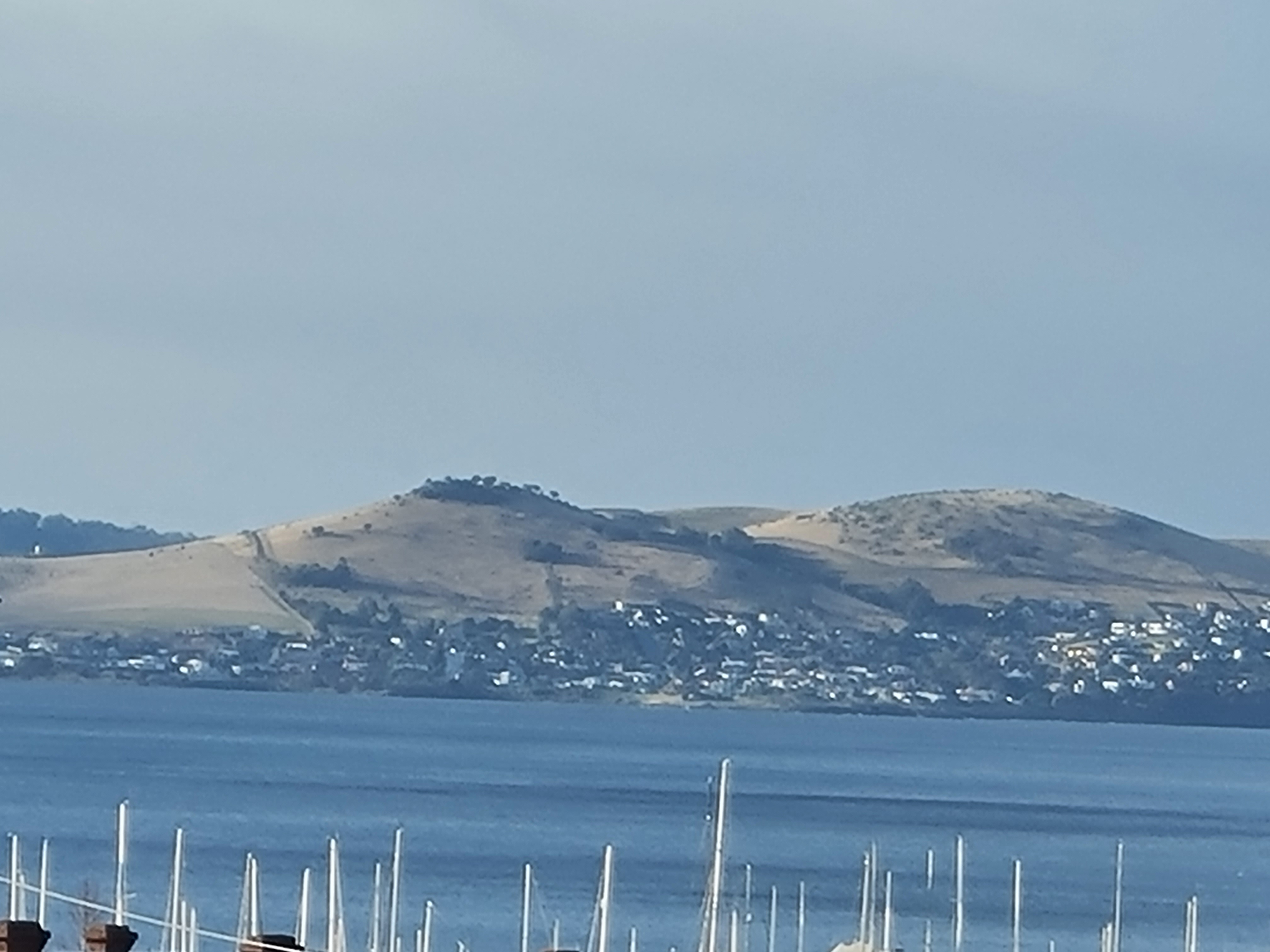
After leaving the markets, we find a road that follows the coastline.  Aside from houses either side, and at one point a marina and the Wrest Point casino, which was not a place we intended to visit, the further we went, the less chance it seemed of finding what we were looking for.

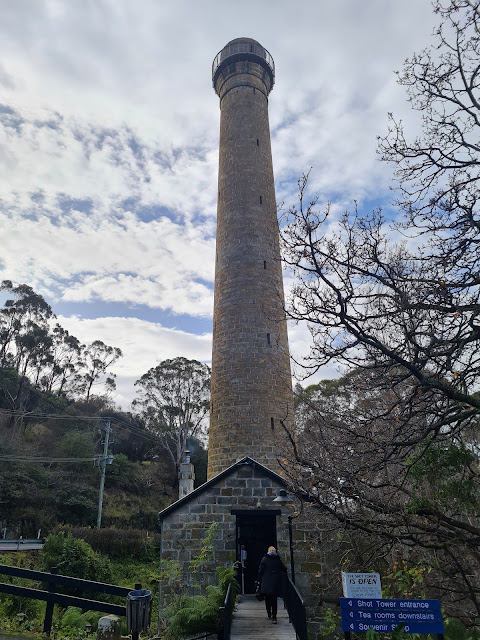
But we did find a tourist attraction, a shot tower, and a museum.

And a tea room that had afternoon tea.  Not exactly what we were looking for.  That said, and feeling like going any further would not fix the search parameters, I go to Google maps and search for restaurants near us.

There’s a Vietnamese restaurant, 6.1 km back the way we came, and being the best choice out of five or six others, we go.

And here’s the thing, it’s just around the corner from where we’re staying.  Go figure.

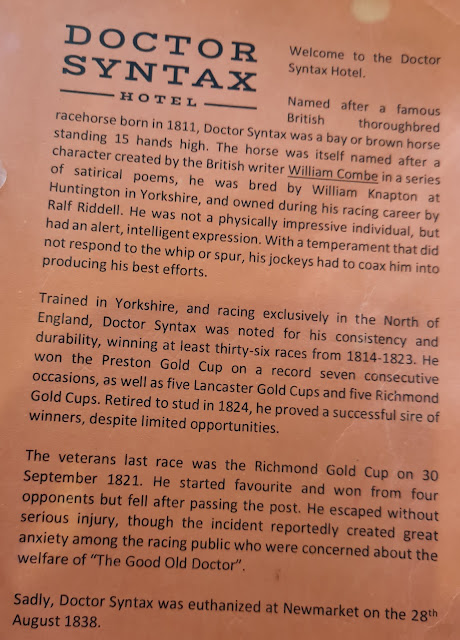
 But, there is a twist, we drive past one of the hotels that were recommended to us back at the apartments, so we go there, the Hotel Doctor Syntax.  We figure we’re more likely to get the vegetable component there than the other place.

It turns out to be a master stroke, getting steak, pork belly, roast potatoes, gravy, asparagus, and seafood on the side.  All having generous servings as one would expect from a hotel bistro.

The food must be great because they were full and had to turn people away.  We were very lucky to get the last table but one, and that one didn’t last very long.

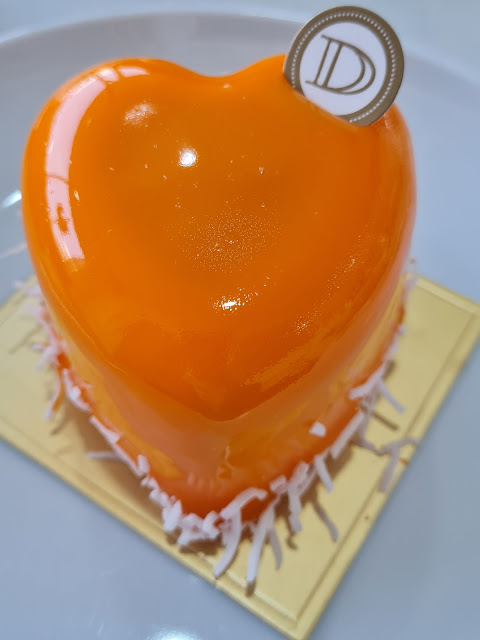
After a long, leisurely lunch surrounded by warmth and atmosphere, we had one more stop.  Coffee and cake at Daci and Daci, a café recommended to us.

It was worth the experience, although it took some fortitude to fit it in after such a large lunch.  I suspect before we go back for a second visit, yes, it was that good, we will make sure we are less full of lunch first.  The cake I had was delicious but very filling.  The coffee?  Excellent.