In a word: will

Now that I’ve hit the age of 65, I now have to give some consideration to creating a will.

You know, that document that specifies which child gets what, or if you think any or all of them don’t deserve what’s left of the hard-earned millions, which cat or dog will inherit a fortune.

A will is both a reason for siblings or beneficiaries to kill to get a reward or the fact you have to make one so that the state doesn’t inherit your fortune.

This is only one use of the word.

Another might be that it’s possible to have something like the will to carry on.

Carry on what?

Life, a marriage, a business relationship.

Does it require will power, or is it a matter of where there’s a will there’s a way?

I will come over. I will turn up tomorrow.

In this sense, it is promoting futility.

Of course, seeing is believing.

And as a bit of self-serving advertising, I’m going to promote a new story, actually titled, The Will.

Inheritance can resolve monetary problems, and not only that, set one of the siblings up financially for life. All they have to do is wrest the family home from the dying fingers of a mother who had seen it all.

Into the mix comes the grandson, a man who sometimes is a son but mostly a grandson, someone who doesn’t fit in, who doesn’t want to follow family tradition, and who prefers to go to his grandmothers rather than going home to his family.

He is constantly appalled at his mother’s lack of respect for her mother and suddenly finds himself in the middle of a battle between his grandmother and her daughter, his mother, over the family estate.

Who will win?

That’s a question that will be answered when you read the book.

“The Devil You Don’t”, she was the girl you would not take home to your mother!

Now only $0.99 at https://amzn.to/2Xyh1ow

…

John Pennington’s life is in the doldrums. Looking for new opportunities, and prevaricating about getting married, the only joy on the horizon was an upcoming visit to his grandmother in Sorrento, Italy.

Suddenly he is left at the check-in counter with a message on his phone telling him the marriage is off, and the relationship is over.

If only he hadn’t promised a friend he would do a favour for him in Rome.

At the first stop, Geneva, he has a chance encounter with Zoe, an intriguing woman who captures his imagination from the moment she boards the Savoire, and his life ventures into uncharted territory in more ways than one.

That ‘favour’ for his friend suddenly becomes a life-changing event, and when Zoe, the woman who he knows is too good to be true, reappears, danger and death follow.

Shot at, lied to, seduced, and drawn into a world where nothing is what it seems, John is dragged into an adrenaline-charged undertaking, where he may have been wiser to stay with the ‘devil you know’ rather than opt for the ‘devil you don’t’.

newdevilcvr6

Writing about writing a book – Day 2

Hang about.  Didn’t I read somewhere you need to plan your novel, create an outline setting the plot points, and flesh out the characters?

I’m sure it didn’t say, sit down and start writing!

Time to find a writing pad, and put my thinking cap on.

I make a list, what’s the story going to be about? Who’s going to be in it, at least at the start?

Like a newspaper story, I need a who, what, when, where, and how.

Right now.


I pick up the pen.


Character number one:

Computer nerd, ok, that’s a little close to the bone, a computer manager who is trying to be everything at once, and failing.  Still me, but with a twist.  Now, add a little mystery to him, and give him a secret, one that will only be revealed after a specific set of circumstance.  Yes, I like that.

We’ll call him Bill, ex-regular army, a badly injured and repatriated soldier who was sent to fight a war in Vietnam, the result of which had made him, at times, unfit to live with.

He had a wife, which brings us to,

Character number two:

Ellen, Bill’s ex-wife, an army brat and a General’s daughter, and the result of one of those romances that met disapproval for so many reasons.  It worked until Bill came back from the war, and from there it slowly disintegrated.  There are two daughters, both by the time the novel begins, old enough to understand the ramifications of a divorce.

Character number three:

The man who is Bill’s immediate superior, the Services Department manager, a rather officious man who blindly follows orders, a man who takes pleasure in making others feel small and insignificant, and worst of all, takes the credit where none is due.

Oops, too much, that is my old boss.  He’ll know immediately I’m parodying him.  Tone it down, just a little, but more or less that’s him.  Last name Benton.  He will play a small role in the story.

Character number four:

Jennifer, the IT Department’s assistant manager, a woman who arrives in a shroud of mystery, and then, in time, to provide Bill with a shoulder to cry on when he and Ellen finally split, and perhaps something else later on.

More on her later as the story unfolds.

So far so good.

What’s the plot?

Huge corporation plotting to take over the world using computers?  No, that’s been done to death.

Huge corporation, OK, let’s stop blaming the corporate world for everything wrong in the world.  Corporations are not bad people, people are the bad people.  That’s a rip off cliché, from guns don’t kill people, people kill people!  There will be guns, and there will be dead people.

There will be people hiding behind a huge corporation, using a part of their computer network to move billions of illegally gained money around.  That’s better.

Now, having got that, our ‘hero’ has to ‘discover’ this network, and the people behind it.

All we need now is to set the ball rolling, a single event that ‘throws a cat among the pigeons’.

Yes, Bill is on holidays, a welcome relief from the problems of work.  He dreams of what he’s going to do for the next two weeks.  The phone rings.  Benton calling, the world is coming to an end, the network is down.  He’s needed.  A few terse words, but he relents.

Pen in hand I begin to write.


© Charles Heath 2016-2019

Mistaken Identity – The Third Editor’s Draft – Day 7

I have been working on the story, the editor is asking for a second draft after making suggested changes – and I’m now working on it

…

What’s the best way to recover from being shot by the police? Go on an all-expenses paid holiday.

Within reason, of course.

Of course, he was on holiday, not quite all expenses paid, but for the duration of the conference. Getting shot and having a prolonged stay in hospital put paid to that, but there is an upside.

The police, in exchange for silence and an indemnity, are happy to send our intrepid conference goer on a tour of Italy. There are benefits on either side, the police don’t get a lawsuit, and he gets to spend a few days touring.

Of course, Maryanne decided to tag along. She had been filling in for him at the conference, unbeknownst to him, and lined up a couple of free venues. In exchange for favourable reviews.

But what is the real reason Maryanne is along for the ride, or she might put it, ‘carry the bags’?

That saying ‘if it’s too good to be true, it probably is’ sticks in the back of his mind, but he doesn’t discourage her from coming with him.

Is he lucky, or is he cursed?

More tomorrow.

The cinema of my dreams – I always wanted to go on a treasure hunt – Episode 65

Here’s the thing…

Every time I close my eyes, I see something different.

I’d like to think the cinema of my dreams is playing a double feature but it’s a bit like a comedy cartoon night on Fox.

But these dreams are nothing to laugh about.

Once again there’s a new installment of an old feature, and we’re back on the treasure hunt.

…

The Ormiston’s from the papers

…

It was a question of what was I looking for.  It would be easy to say I wanted a piece of paper that definitively said where the treasure was or finding a map that led straight to it.

Instead, there was, in one box, a dozen journals filled with the ramblings of a madman.

Searching for treasure had sent Ormiston senior mad.  For an hour, perhaps longer, I tried to decipher the spidery writing, and then gave up when it switched to German.

I assembled the journals in order of his expeditions and found the first easy to follow because it was a time of excitement and expectation, that he would find the treasure.  There were pages on exactly what he thought the treasure was worth, the sort of pieces they would find, and what he would do with the proceeds.

There were drawings of items off the map and his interpretation of what they represented.  It was a rather good description of the coastline and its anomalies as they related to map landmarks.  They were, almost all, the same as the Boggs interpretations.

When the discovery didn’t happen, when the first euphoria wore off and the search became bogged down in acrimony and arguments, and the realization the map they were using was not as clear as first believed, that was where it all began to fall apart.

Reading the words, feeling the disappointment seeping off the page, it must have been quite a blow.

The second expedition didn’t start off with the same fanfare, but almost as if they were expected to fail.  Too little time had been spent analyzing what went wrong and reidentifying the coastal landmarks.

And, when it did fail, the last comment in the diary was fairly succinct.  “What if there is no treasure?”

In another, scrawled heavily on several pages at the back, “look for the big A” was repeated several times, and much underlined.

There were five other boxes with papers, charts, notebooks, and books that belonged on a shelf but instead were neatly stacked.  They’d been in the boxes for some time, and had that aroma books got when left in the damp too long, and, in fact, when I tried to open some, the pages had stuck together.

A lot of the books were about pirates, reference texts, and fiction.  Part of one box was set aside for our particular pirate, and, reading through what could be read, a lot of the information was contradictory.  One book postulated that the said pirate wasn’t a pirate at all, casting doubt on whether he ever existed at all.

The maps were a different story, and, yes, they were all similar except for small details an observation I had made before.  None had what I would have called ‘new’ features, just a rehash of all the others.  Some were old, but most had the appearance of being made to look old.

Then, at the bottom of a box of books, were copies of newspaper articles, aged, stained, and some in various stages of disintegration.  The Bahama Argus, The Barbadian, The Antigua Herald and Gazette, The Bermuda Colonist, and the Dominica Chronicle.  All had references to Captain Johannsson, and his vessel, the Sea Serpent.

There was such a Captain, and there was such a ship, and there were reports of a vessel roving the seas, looking for prey.  And those reports covered a great deal of plunder, definitely the sort that would find its way into a number of sea chests.

But, was this the treasure that Ormiston believed was hidden somewhere in The Grove?

Something caught my attention on the first diary, the way it sat and the light reflected off it, and picking it up and looking at it showed no anomaly in the surface, not until it sat on a certain angle and in the sunlight.

A slight ripple down one edge of the spine, and with careful probing, there was a split in the material of the cover pasted back down, but in the time since it had been glued back, the glue had dissolved and the simple act of picking the book up and parted the split.

Lifting it gently, I could see a piece of paper tucked in and gently coaxed it out.

It was very thin and fragile, but the writing was clear.  Entries from what might have been a logbook.  I knew this only because I had been out of a sailing boat once when at school, and had seen the boat’s logbook, noting where the boat had been.

This page had only a few entries, the location of its departure, in latitude and longitude, a number of the daily distances traveled, and conditions, and the last, another latitude and longitude.

When I put the first coordinates into my GPS, it was near the island of Antigua, and then the destination, just up the coast near the old mall.  The name of the vessel, in almost illegible writing, the Sea Serpent.

So, there was a logbook, although it might not exist now, it did at some point in the past, and Ormiston had either found it or seen it.  The writing on the piece of paper was his. It proved, if it was authentic, there was a ship, and it did come to this coast.

I carefully folded it and hid it in my wallet, then replaced everything where I found it.  Enough research for today.  I tried not to look guilty when I left.

…

© Charles Heath 2020-2022

The Things We Do For Love – The final editor’s draft – Day 11

…

Absence is supposed to make the heart grow stronger.

But…

This is no ordinary romance.  There’s a great big ocean between them, in more ways than one.  Getting off that ocean, getting to the port, and getting to the girl is proving a very hard task indeed.

Ships have a mind of their own.

Then the planets align…

This date starts out badly.  Henry is running behind time, and, the meeting place is, well, far from being private.  It’s like he’s in the middle of a spy novel, finding himself surveilling the crowded public square …. For what?

She’s there but hardly acknowledging his presence.

Then he feels the presence of another, hiding in plain sight.

Something is amiss.  Michelle is on edge, and from the, the date goes downhill.

They get some time ‘alone’, and words are spoken, but they’re not anywhere near what he had hoped to hear.  There’s fallout from the last date, and we learn a little more about who and what Michelle is, and why she is acting this way.

In a desperate attempt to win her over, Henry proposes marriage.

It doesn’t work.

They part, but not before that old adage ‘eavesdroppers never hear anything good about themselves’ which sends him into a deeper spiral of despair.

…

Searching for locations: Kaikoura, New Zealand, and, of course, the whales

I’m sure a lot of people have considered the prospect of whale watching.  I’m not sure how the subject came up on one of our visits to New Zealand, but I suspect it was one of those tourist activity leaflets you find in the foyer of motels, hotels, and guesthouses.

Needless to say, it was only a short detour to go to Kaikoura and check out the prospect.

Yes, the ocean at the time seemed manageable.  My wife has a bad time with sea sickness, but she was prepared to make the trip, after some necessary preparations.  Seasickness tablets and special bands to wear on her wrist were recommended and used.

The boat was large and had two decks, and mostly enclosed.  There were a lot of people on board, and we sat inside for the beginning of the voyage.  The sea wasn’t rough, but there was about a meter and a half swell, easily managed by the boat while it was moving.

It took about a half hour or so to reach the spot where the boat stopped and a member of the crew used a listening device to see if there were any whales.

That led to the first wave of sickness.

We stopped for about ten minutes, and the boat moved up and down on the waves.  It was enough to start the queasy stomachs of a number of passengers.  Myself, it was a matter of going out on deck and taking in the sea air.  Fortunately, I don’t get seasick.

Another longish journey to the next prospective site settled a number of the queasy stomachs, but when we stopped again, the swell had increased, along with the boat’s motion.  Seasick bags were made available for the few that had succumbed.

By the time we reached the site where there was a whale, over half the passengers had been sick, and I was hoping they had enough seasick bags, and then enough bin space for them.

The whale, of course, put on a show for us, and those that could went out on deck to get their photos.

DSCN1026.JPG
DSCN1028.JPG
DSCN1029.JPG

By the end of the voyage, nearly everyone on board was sick, and I was helping to hand out seasick bags.

Despite the anti sickness preparations, my wife had also succumbed.  When we returned and she was asked if the device had worked, she said no.

But perhaps it had because within half an hour we were at a cafe eating lunch, fish and chips of course.

This activity has been crossed off the bucket list, and there’s no more whale watching in our traveling future.  Nor, it seems, will we be going of ocean liners.

Perhaps a cruise down the Rhine might be on the cards.  I don’t think that river, wide as it is in places, will ever have any sort of swell.

Once Upon a Time… – A short story

Everyone knows someone who has a child that will not go to sleep.

You can set the bedtime at whatever early hour you like, but by the time they actually fall asleep, there have been two or three hours of up and down, in and out of bed, and at least one episode of a scary monster lurking under the bed, or, worse, outside the window.

After exhausting every method of achieving a result and failing, I thought I’d try reading.

The first book I picked up was, yes, you guessed it, about monsters. In fact, nearly every book for kids was about monsters, witches, ogres, dragons, and vampires.

I put them back and sighed. I would have to come up with a story of my own.

It started with, “Once upon a time…”

“But that,” Mary said, “only applies to fairy tales.”

“Well, this is going to be a fairy tale of sorts. Minus the fire-breathing dragons, and nasty trolls under drawbridges.”

“It’s not going to be much of a story, then. In fairy tales, there’s always a knight who slays the dragon and rides off with the princess.”

This was going to be a tough ask. I thought of going back to the book pile, but then, I could do this.

“So,” I began again, “Once upon a time there was a princess, who lived in a castle with her father, the king, her mother, the queen, and her brother, the steadfast and trusty knight in shining armour.”

“Why is their armour always shining?”

I was going to tell her to save the questions until after the story, by which time I had hoped I’d bored her enough to choose sleep over criticism. I was wrong.

“Because a knight always has to have shiny armour, otherwise the king would be disappointed.”

“Does the knight spend all night shining his armour?”

“No. He has an apprentice called a squire who cleans the armour and attends to anything else the knight needs.”

“And then he becomes a knight?”

“In good time. The apprentice is usually a boy of about 11 or 12 years old. First, he learns what it means to be a knight, then he has to do years of training until he comes of age.” I saw the question coming, and got in first, “When he is about 21 years old.”

She looked at me, and that meant I had to continue the story.

“The princess was very lucky and lived a very different life than her subjects, except she wished she had their freedom to play, and do ordinary things like cooking or collecting food from the markets. Because she was a princess, she had to stay in the castle and spend most of her time learning how to be a princess, and one day a queen, because when it was time, she would marry a prince who would become a king.”

“Doesn’t sound too lucky to me, being stuck at home. I like the idea of getting somebody to do everything for me though. She does have maids, doesn’t she?”

“Yes. And you’re right, she has everything done for her, including getting dressed. A maid to clean, a maid to dress her, a maid to bring her snacks. And it was these maids she envied.”

Maybe I should not make the story too interesting, or she’ll never go to sleep.

“Well, one day, she decided to change places with one of her maids. They were almost identical and when they exchanged clothes, the other maids could not tell they had changed places. At the end of the day, when the maids went home, the princess headed to the house where the maid she had taken the place of lived.

It was very different from the castle, and the room she usually had. The mother was at home, cooking the food for the evening meal, and it was nothing like what she usually had. A sort of soup with scraps of meat in it. There was a loaf of bread on the table. The father came home after working all day in the fields, very tired. They ate and then went to bed. Her bed was straw and a piece of cloth that hardly covered her. At least, by the fire, it was warm. It didn’t do anything for the pangs of hunger because there had barely been enough for all of them.

The next morning, she returned to the castle and changed places back again. When the maid she changed places with asked about her experience of what it was like in their life, the princess said she was surprised. She had never been told about how the people who served the king lived, and she had assumed that they were well looked after. Now she had experienced what it was like to be a subject, she was going to investigate it further.

After all, she told the maid, I must have all the facts if I’m going to approach the king.

And she thought to herself, a lot more courage than she had.

But, instead of lessons today, she was going to demand to be taken on a tour outside the castle and to see the people.

“This sounds like it’s not going to have a happy ending.”

No, I thought. Maybe I’ll get the dragon that her brother failed to slay to eat her.

“It will. Patience. But that’s enough for tonight. If you want to know what happens, you’ll have to go to sleep and then, tomorrow night, the story continues.”

I tucked her in, turned down the night light so it was only a glow, just enough to see where I was going, and left.

If I was lucky, she would go to sleep. The only problem was, I had to come up with more of the story.

Outside the door, her mother, Christine, was smiling. “Since when did you become an expert on Princesses?”

“When I married one.”

—-

© Charles Heath 2020-2023

An excerpt from “What Sets Us Apart”, a mystery with a twist

See the excerpt from the story below, just a taste of what’s in store…

http://amzn.to/2Eryfth

whatsetscover

McCallister was old school, a man who would most likely fit in perfectly campaigning on the battlefields of Europe during the Second World War. He’d been like a fish out of water in the army, post-Falklands, and while he retired a hero, he still felt he’d more to give.

He’d applied and was accepted as head of a SWAT team, and, watching him now as he and his men disembarked from the truck in almost military precision, a look passed between Annette, the police liaison officer, and I that said she’d seen it all before. I know I had.

There was a one in four chance his team would be selected for this operation, and she had been hoping it would be one of the other three. While waiting for them to arrive she filled me in on the various teams. His was the least co-operative, and the more likely to make ad-hoc decisions rather than adhere to the plan, or any orders that may come from the officer in charge.

This, she said quite bluntly, was going to end badly.

I still had no idea why Prendergast instructed me to attend the scene of what looked to be a normal domestic operation, but as the nominated expert in the field in these types of situations, it was fairly clear he wasn’t taking any chances. It was always a matter of opinion between us, and generally I lost.

In this case, it was an anonymous report identifying what the authorities believed were explosives in one of the dockside sheds where explosives were not supposed to be.

The only reason why the report was given any credence was the man, while not identifying himself by name, said he’d been an explosive expert once and recognized the boxes. That could mean anything, but the Chief Constable was a cautious man.

With his men settled and preparing their weapons, McCallister came over to the command post, not much more than the SUV my liaison and I arrived in, with weapons, bulletproof vests, and rolls of tape to cordon off the area afterward. We both had coffee, steaming in the cold early morning air. Dawn was slowly approaching and although rain had been forecast it had yet to arrive.

A man by the name of Benson was in charge. He too had groaned when he saw McCallister.

“A fine morning for it.” McCallister was the only enthusiastic one here.

He didn’t say what ‘it’ was, but I thought it might eventually be mayhem.

“Let’s hope the rain stays away. It’s going to be difficult enough without it,” Benson said, rubbing his hands together. We had been waiting for the SWAT team to arrive, and another team to take up their position under the wharf, and who was in the final stages of securing their position.

While we were waiting we drew up the plan. I’d go in first to check on what we were dealing with, and what type of explosives. The SWAT team, in the meantime, were to ensure all the exits to the shed were covered. When I gave the signal, they were to enter and secure the building. We were not expecting anyone inside or out, and no movement had been detected in the last hour since our arrival and deployment.

“What’s the current situation?”

“I’ve got eyes on the building, and a team coming in from the waterside, underneath. Its slow progress, but they’re nearly there. Once they’re in place, we’re sending McKenzie in.”

He looked in my direction.

“With due respect sir, shouldn’t it be one of us?” McCallister glared at me with the contempt that only a decorated military officer could.

“No. I have orders from above, much higher than I care to argue with, so, McCallister, no gung-ho heroics for the moment. Just be ready to move on my command, and make sure you have three teams at the exit points, ready to secure the building.”

McCallister opened his mouth, no doubt to question those orders, but instead closed it again. “Yes sir,” he muttered and turned away heading back to his men.

“You’re not going to have much time before he storms the battlements,” Benson quietly said to me, a hint of exasperation in his tone. “I’m dreading the paperwork.”

It was exactly what my liaison officer said when she saw McCallister arriving.

The water team sent their ‘in position’ signal, and we were ready to go.

In the hour or so we’d been on site nothing had stirred, no arrivals, no departures, and no sign anyone was inside, but that didn’t mean we were alone. Nor did it mean I was going to walk in and see immediately what was going on. If it was a cache of explosives then it was possible the building was booby-trapped in any number of ways, there could be sentries or guards, and they had eyes on us, or it might be a false alarm.

I was hoping for the latter.

I put on the bulletproof vest, thinking it was a poor substitute for full battle armor against an exploding bomb, but we were still treating this as a ‘suspected’ case. I noticed my liaison officer was pulling on her bulletproof vest too.

“You don’t have to go. This is my party, not yours,” I said.

“The Chief Constable told me to stick to you like glue, sir.”

I looked at Benson. “Talk some sense into her please, this is not a kindergarten outing.”

He shrugged. Seeing McCallister had taken all the fight out of him. “Orders are orders. If that’s what the Chief Constable requested …”

Madness. I glared at her, and she gave me a wan smile. “Stay behind me then, and don’t do anything stupid.”

“Believe me, I won’t be.” She pulled out and checked her weapon, chambering the first round. It made a reassuring sound.

Suited up, weapons readied, a last sip of the coffee in a stomach that was already churning from nerves and tension, I looked at the target, one hundred yards distant and thought it was going to be the longest hundred yards I’d ever traversed. At least for this week.

A swirling mist rolled in and caused a slight change in plans.

Because the front of the buildings was constantly illuminated by large overhead arc lamps, my intention had been to approach the building from the rear where there was less light and more cover. Despite the lack of movement, if there were explosives in that building, there’d be ‘enemy’ surveillance somewhere, and, after making that assumption, I believed it was going to be easier and less noticeable to use the darkness as a cover.

It was a result of the consultation, and studying the plans of the warehouse, plans that showed three entrances, the main front hangar type doors, a side entrance for truck entry and exit and a small door in the rear, at the end of an internal passage leading to several offices. I also assumed it was the exit used when smokers needed a break. Our entry would be by the rear door or failing that, the side entrance where a door was built into the larger sliding doors. In both cases, the locks would not present a problem.

The change in the weather made the approach shorter, and given the density of the mist now turning into a fog, we were able to approach by the front, hugging the walls, and moving quickly while there was cover. I could feel the dampness of the mist and shivered more than once.

It was nerves more than the cold.

I could also feel rather than see the presence of Annette behind me, and once felt her breath on my neck when we stopped for a quick reconnaissance.

It was the same for McCallister’s men. I could feel them following us, quickly and quietly, and expected, if I turned around, to see him breathing down my neck too.

It added to the tension.

My plan was still to enter by the back door.

We slipped up the alley between the two sheds to the rear corner and stopped. I heard a noise coming from the rear of the building, and the light tap on the shoulder told me Annette had heard it too. I put my hand up to signal her to wait, and as a swirl of mist rolled in, I slipped around the corner heading towards where I’d last seen the glow of a cigarette.

The mist cleared, and we saw each other at the same time. He was a bearded man in battle fatigues, not the average dockside security guard.

He was quick, but my slight element of surprise was his undoing, and he was down and unconscious in less than a few seconds with barely a sound beyond the body hitting the ground. Zip ties secured his hands and legs, and tape his mouth. Annette joined me a minute after securing him.

A glance at the body then me, “I can see why they, whoever they are, sent you.”

She’d asked who I worked for, and I didn’t answer. It was best she didn’t know.

“Stay behind me,” I said, more urgency in my tone. If there was one, there’d be another.

Luck was with us so far. A man outside smoking meant no booby traps on the back door, and quite possibly there’d be none inside. But it indicated there were more men inside, and if so, it appeared they were very well trained. If that were the case, they would be formidable opponents.

The fear factor increased exponentially.

I slowly opened the door and looked in. A pale light shone from within the warehouse itself, one that was not bright enough to be detected from outside. None of the offices had lights on, so it was possible they were vacant. I realized then they had blacked out the windows. Why hadn’t someone checked this?

Once inside, the door closed behind us, progress was slow and careful. She remained directly behind me, gun ready to shoot anything that moved. I had a momentary thought for McCallister and his men, securing the perimeter.

At the end of the corridor, the extent of the warehouse stretched before us. The pale lighting made it seem like a vast empty cavern, except for a long trestle table along one side, and, behind it, stacks of wooden crates, some opened. It looked like a production line.

To get to the table from where we were was a ten-yard walk in the open. There was no cover. If we stuck to the walls, there was equally no cover and a longer walk.

We needed a distraction.

As if on cue, the two main entrances disintegrated into flying shrapnel accompanied by a deafening explosion that momentarily disoriented both Annette and I. Through the smoke and dust kicked up I saw three men appear from behind the wooden crates, each with what looked like machine guns, spraying bullets in the direction of the incoming SWAT members.

They never had a chance, cut down before they made ten steps into the building.

By the time I’d recovered, my head heavy, eyes watering and ears still ringing, I took several steps towards them, managing to take down two of the gunmen but not the third.

I heard a voice, Annette’s I think, yell out, “Oh, God, he’s got a trigger,” just before another explosion, though all I remember in that split second was a bright flash, the intense heat, something very heavy smashing into my chest knocking the wind out of me, and then the sensation of flying, just before I hit the wall.

I spent four weeks in an induced coma, three months being stitched back together and another six learning to do all those basic actions everyone took for granted. It was twelve months almost to the day when I was released from the hospital, physically, except for a few alterations required after being hit by shrapnel, looking the same as I always had.

But mentally? The document I’d signed on release said it all, ‘not fit for active duty; discharged’.

It was in the name of David Cheney. For all intents and purposes, Alistair McKenzie was killed in that warehouse, and for the first time ever, an agent left the Department, the first to retire alive.

I was not sure I liked the idea of making history.

© Charles Heath 2016-2020

Searching for Locations: Waitomo caves house, North Island, New Zealand

A relatively unassuming lane leads to what could be described as a grand hotel, called Waitomo Caves Hotel.

The original hotel was built in 1908, and it was later extended in 1928.  Part of it is ‘Victorian’, based on an eastern Europe mountain chalet, and part of it is ‘Art Deco’, the concrete wing, and a feature, if it could be called that, is none of the four corners are the same.

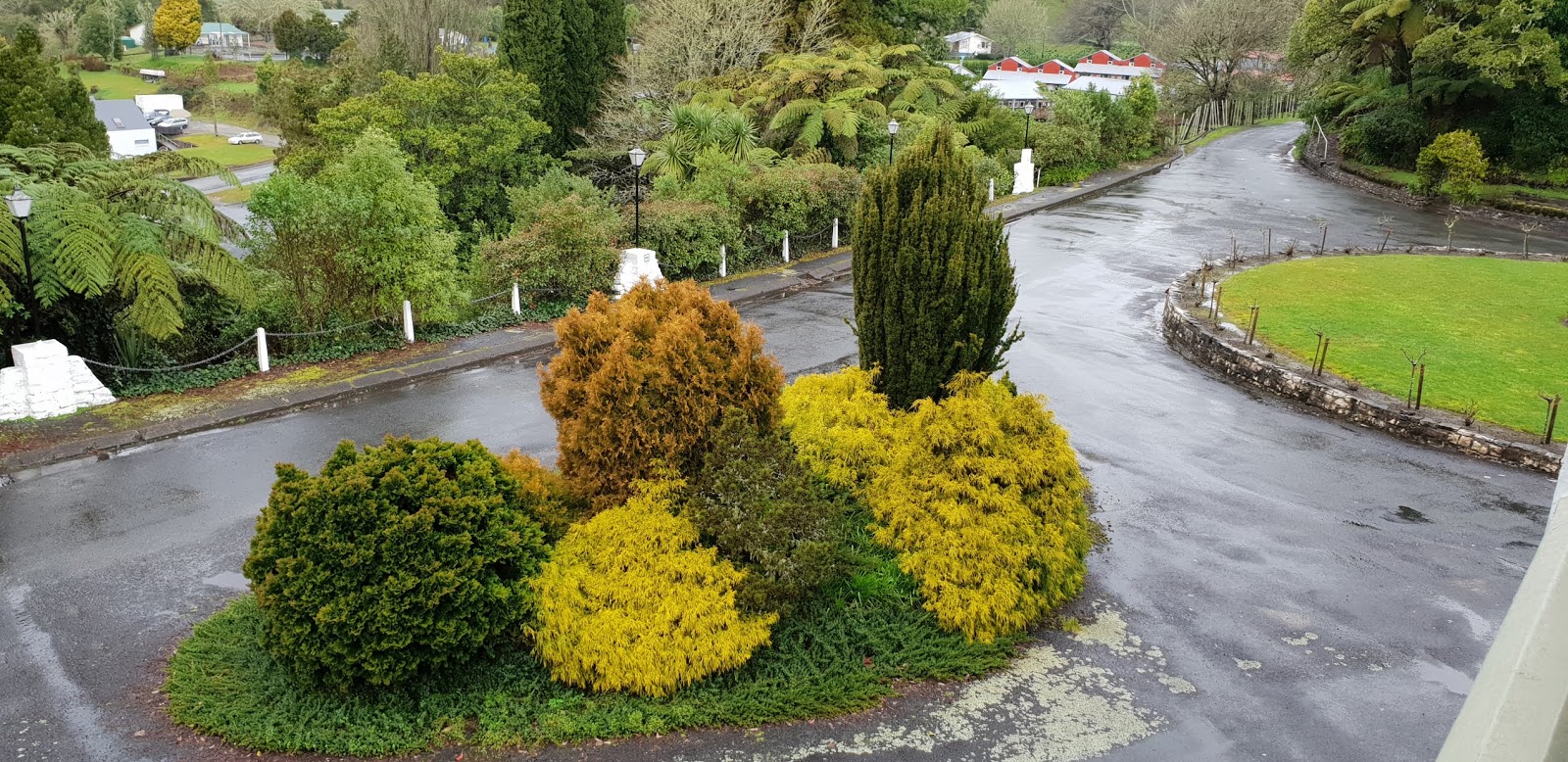
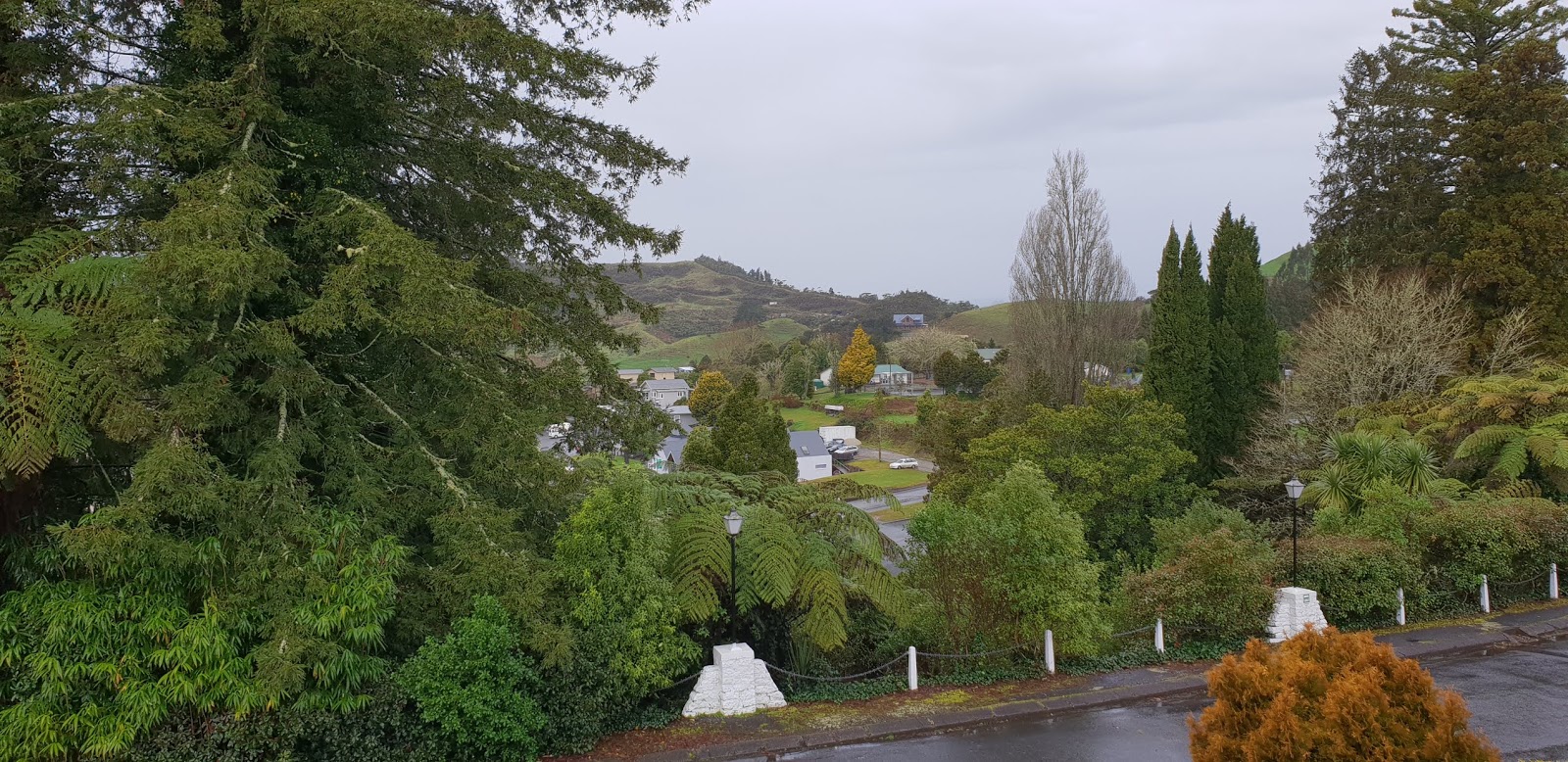
Views from the balcony show part of the surrounding gardens
 

and the town of Waitomo in the distance.
 

In gloomy weather, it does look rather spooky, and I suspect there may be a ghost or two lurking somewhere in the buildings.


But…
 

This a a very interesting, and the words of one of my younger grand daughters, a very creepy place. It would make an excellent base for paranormal activity, and there could very well be ghosts walking the corridors of this hotel.

It has the long darkish passageways that lead in all directions and to almost hidden rooms, a creepy nighttime aspect, and the creaky woodwork.

I know when we were exploring, it was easy to lose your bearings, if not get lost, trying to find certain places, and once found, hard to find your way back.

All in all, it was one of the best stays in a very old place going through the throes of modernisation.

And looking at it from the outside at night, I’ll leave you with that thought…