Would you give up everything to be with the one you love?
…
Is love the metaphorical equivalent to ‘walking the plank’; a dive into uncharted waters?
For Henry, the only romance he was interested in was a life at sea, and when away from it, he strived to find sanctuary from his family and perhaps life itself. It takes him to a small village by the sea, a place he never expected to find another just like him, Michelle, whom he soon discovers is as mysterious as she is beautiful.
Henry had long since given up the notion of finding romance, and Michelle couldn’t get involved for reasons she could never explain, but in the end, both acknowledge that something happened the moment they first met.
Plans were made, plans were revised, and hopes were shattered.
A chance encounter causes Michelle’s past to catch up with her, and whatever hope she had of having a normal life with Henry, or anyone else, is gone. To keep him alive she has to destroy her blossoming relationship, an act that breaks her heart and shatters his.
But can love conquer all?
It takes a few words of encouragement from an unlikely source to send Henry and his friend Radly on an odyssey into the darkest corners of the red-light district in a race against time to find and rescue the woman he finally realizes is the love of his life.
The cover, at the moment, looks like this:
Is love the metaphorical equivalent to ‘walking the plank’; a dive into uncharted waters?
For Henry the only romance he was interested in was a life at sea, and when away from it, he strived to find sanctuary from his family and perhaps life itself. It takes him to a small village by the sea, s place he never expected to find another just like him, Michelle, whom he soon discovers is as mysterious as she is beautiful.
Henry had long since given up the notion of finding romance, and Michelle couldn’t get involved for reasons she could never explain, but in the end both acknowledge that something happened the moment they first met.
Plans were made, plans were revised, and hopes were shattered.
A chance encounter causes Michelle’s past to catch up with her, and whatever hope she had of having a normal life with Henry, or anyone else, is gone. To keep him alive she has to destroy her blossoming relationship, an act that breaks her heart and shatters his.
But can love conquer all?
It takes a few words of encouragement from an unlikely source to send Henry and his friend Radly on an odyssey into the darkest corners of the red light district in a race against time to find and rescue the woman he finally realizes is the love of his life.
This book has finally come back from the Editor, so this month it is going to get a second revision, a second draft for the editor, and beta readers.
…
It’s the final battle.
Never trust anyone else to do the job you should have done yourself in the first place.
It’s an interesting premise, but somehow encapsulates the ethos of this story.
Who is Romanov? Zoe, Irina, whatever you want to call her, he’s her father.
But…
The notion that anonymously putting out a finder’s fee on his daughter’s head, coupled with the ire of Olga over the death of her son, sent everyone from the Minister in the Kremlin down into a tailspin.
The first effort, had the kidnappers just followed the rules, would have got an enormous payday, and everything would have been resolved there and then, in Marseilles.
No, people got greedy.
So did all the others, getting wind of what was at stake, enough to retire, or continue to retire in style.
Dominica, Yuri, and even Olga had she been smart.
She was not.
People didn’t have to die. Zoe could have been spared a killing spree, and John some maybe quality time with Olga. It’s a mistake Olga won’t make again.
And John, now with a father-in-law, well it’s just another surprise in a long list of surprises.
Investigation of crimes doesn’t always go according to plan, nor does the perpetrator get either found or punished.
That was particularly true in my case. The murderer was incredibly careful in not leaving any evidence behind, to the extent that the police could not rule out whether it was a male or a female.
At one stage the police thought I had murdered my own wife though how I could be on a train at the time of the murder was beyond me. I had witnesses and a cast-iron alibi.
The officer in charge was Detective First Grade Gabrielle Walters. She came to me on the day after the murder seeking answers to the usual questions like, when was the last time you saw your wife, did you argue, the neighbors reckon there were heated discussions the day before.
Routine was the word she used.
Her fellow detective was a surly piece of work whose intention was to get answers or, more likely, a confession by any or all means possible. I could sense the raging violence within him. Fortunately, common sense prevailed.
Over the course of the next few weeks, once I’d been cleared of committing the crime, Gabrielle made a point of keeping me informed of the progress.
After three months the updates were more sporadic, and when, for lack of progress, it became a cold case, communication ceased.
But it was not the last I saw of Gabrielle.
The shock of finding Vanessa was more devastating than the fact she was now gone, and those images lived on in the same nightmare that came to visit me every night when I closed my eyes.
For months I was barely functioning, to the extent I had all but lost my job, and quite a few friends, particularly those who were more attached to Vanessa rather than me.
They didn’t understand how it could affect me so much, and since it had not happened to them, my tart replies of ‘you wouldn’t understand’ were met with equally short retorts. Some questioned my sanity, even, for a time, so did I.
No one, it seemed, could understand what it was like, no one except Gabrielle.
She was by her own admission, damaged goods, having been the victim of a similar incident, a boyfriend who turned out to be an awfully bad boy. Her story varied only in she had been made to witness his execution. Her nightmare, in reliving that moment in time, was how she was still alive and, to this day, had no idea why she’d been spared.
It was a story she told me one night, some months after the investigation had been scaled down. I was still looking for the bottom of a bottle and an emotional mess. Perhaps it struck a resonance with her; she’d been there and managed to come out the other side.
What happened become our secret, a once-only night together that meant a great deal to me, and by mutual agreement, it was not spoken of again. It was as if she knew exactly what was required to set me on the path to recovery.
And it had.
Since then, we saw each about once a month in a cafe. I had been surprised to hear from her again shortly after that eventful night when she called to set it up, ostensibly for her to provide me with any updates on the case, but perhaps we had, after that unspoken night, formed a closer bond than either of us wanted to admit.
We generally talked for hours over wine, then dinner and coffee. It took a while for me to realize that all she had was her work, personal relationships were nigh on impossible in a job that left little or no spare time for anything else.
She’d always said that if I had any questions or problems about the case, or if there was anything that might come to me that might be relevant, even after all this time, all I had to do was call her.
I wondered if this text message was in that category. I was certain it would interest the police and I had no doubt they could trace the message’s origin, but there was that tiny degree of doubt, about whether or not I could trust her to tell me what the message meant.
I reached for the phone then put it back down again. I’d think about it and decide tomorrow.
There’s something to be said for a story that starts like a James Bond movie, throwing you straight in the deep end, a perfect way of getting to know the main character, David, or is that Alistair?
A retired spy, well not so much a spy as a retired errand boy, David’s rather wry description of his talents, and a woman that most men would give their left arm for, not exactly the ideal couple, but there is a spark in a meeting that may or may not have been a setup.
But as the story progressed, the question I kept asking myself was why he’d bother.
And, page after unrelenting page, you find out.
Susan is exactly the sort of woman to pique his interest. Then, inexplicably, she disappears. That might have been the end to it, but Prendergast, that shadowy enigma, David’s ex-boss who loves playing games with real people, gives him an ultimatum, find her or come back to work.
Nothing like an offer that’s a double-edged sword!
A dragon for a mother, a sister he didn’t know about, Susan’s BFF who is not what she seems or a friend indeed, and Susan’s father who, up till David meets her, couldn’t be less interested, his nemesis proves to be the impossible dream, and he’s always just that one step behind.
When the rollercoaster finally came to a halt, and I could start breathing again, it was an ending that was completely unexpected.
It was the mantra my mother used all the time to lament our bad luck; that it was always someone else’s fault.
Like the family cutting her off when she married my father, like when my father left when my brother and I were very young, like my mother’s choice of partners after he left.
Like when our mother died, we were sent to the orphanage. Like when I was allotted to a family and my brother was kept in the orphanage because of his so-called bad behaviour.
I was probably too young to understand because he had been his normal self to me, except perhaps when he was protecting me from other children, and some of the supervisors, but that was what big brothers did. I wanted to stay with him, but he told me to go, to get away as far as I could, and never look back.
He promised he could come and find me sooner rather than later, and I trusted him.
But for some reason, I did not hear from him again. He did not answer my letters, and twice I tried to go back to the orphanage, only to be taken home again. My foster parents, as nice as they were, refused to take me there, but in the end, they agreed to send someone to investigate.
Many months later, they showed me a letter from the head of the orphanage advising that Jake, my brother, had found a suitable situation with a family on the other side of the country. No other details were forthcoming, just that he was no longer there.
It didn’t seem right, but as a twelve-year-old there was little I could do, and although my foster parents were sympathetic and said they would do what they could to find out more, they hired a private detective to see what he could find; and after a year, the report had very little detail, he had simply disappeared. He said, as time passed, the trail, as they called it, had gone cold.
A dozen more years passed and although I hadn’t forgotten Jake, I told myself he had been as lucky as I was, in a home where he was loved and treated with kindness, something that had been lacking in the orphanage.
But in that time, memories of what happened during that time I was there came back, memories that I was too young at the time to process, memories that pointed to what could only be described as a house of horrors.
When the psychiatrist I’d been seeing had worked out exactly what had happened to me, he had alerted the police to what was happening there. It wasn’t a revelation that I was not the only child that had been put through hell.
But by the time everyone realised what that place was, it was too late.
I did my time at school, followed in the footsteps of my adoptive parents by studying law, and came out the other end with offers from some very prestigious law firms.
I spoke to the one I wanted to accept, advising them there would be one condition that I wanted to find my brother. They set a limit of three months, and I believed, at that time, it would take less.
That was until I arrived in the town where the orphanage was located and discovered it was now a city, and worse still, where there was once a church, orphanage and farm, it was now the site of a half-finished shopping mall, and there was nothing left behind.
One of the foremen saw me standing near the gate and came over.
“Can I help you?”
“There used to be an orphanage and church here?”
“They pulled it down a year ago. Property developers snapped it up, and we’re building a shopping mall and a thousand houses, give or take.”
“Where did the records go?”
He shrugged. “I just build stuff. What happens before I get here is someone else’s problem. I did hear a rumour bad stuff went on here, and the state shut it down a few years back. Perhaps you should go to the county records office and talk to them. They’d know more.”
“Thanks.”
When I didn’t move and stood there with glistening eyes reliving a bad moment, he asked, “What’s your interest in this place? Are you a reporter? There’s been a few over the last month or so.”
I shook off the memory and looked at him, “My brother and I were sent here. They found us homes to go to but not the same one. I’m trying to find him.”
He didn’t answer, and I got the feeling he knew more about what happened here but was reluctant to talk about it. He walked off, and I got out of the way of a cement truck, one of three that had passed through the gates while I’d been there.
I spent a few minutes staring at where the main orphanage building had been, and the memories that had laid dormant for many years suddenly came flooding back. I shuddered. This place was cursed.
He’d mentioned reporters, and they only came when there was news. My first stop should be the newspaper office. They’d know the story of what happened.
The sign across the top of the large window said, ‘The Sentinel’, and I got the feeling something was missing. The city name, perhaps. A shopfront could not be the home of such a newspaper, but perhaps in the internet age, papers had lost their dominance.
I know I read my news from my cell phone.
I had also considered running a search on the orphanage but when it came back with several billion hits, I thought it better to see if I could find someone with first-hand knowledge.
Then, finally, in the place where I could get some answers, there was something about the truth I didn’t think I wanted to know. It was what was stopping me from going through that door because deep down, I knew whatever I learned, it was not going to be good.
For a while now, after I discovered some of the stuff that went on in that place, I think deep down I knew that Jake didn’t survive, that Jake being Jake, he would have put himself in harm’s way to save someone who was not able to help themselves as he had done for me.
And I was here, now, because of him.
Again, someone noticed I was hanging around outside, and instead of calling the police, they came out to ask if I had a problem.
I didn’t but I said I wanted some information.
Inside, it looked nothing like what I imagined a newspaper office would look like, just a half dozen people sitting at desks, and one of three offices with a man in shirt sleeves and a harassed look.
The person who came out was Naomi. She was the events reporter. She took me to a desk that had the name Robert Rand. He was, she said, the investigative reporter and worked on the orphanage story. He was just out doing the coffee run. Five minutes later he came back. It was a face that seemed familiar. He was not much older than I was,
He stood in front of me for a minute, then said, “You’re Jake’s little brother, aren’t you?”
And then I saw a tear in his eyes.
“Are you alright?”
“No. But I will be. Look, give me a minute to sort out the work, and we can talk in the meeting room. I won’t be long.”
He pointed to the room and I walked over and sat down. I was in two minds whether I wanted to know the truth, and in the end, I decided to let him tell me what he wanted.
He was more composed when he finally joined me. “He was our hero, nnn. I was so glad he got you out of there. He saved at least fifty of us and if you like, I can put you in touch with all of them. They would be so grateful to meet you. It’s sort of like a survivor’s club.”
“I would like that, yes. These people knew my brother?”
“We did. He knew what those people were doing, and he fought them, at great cost to himself. One by one, he got us out of there, and when we eventually convinced the authorities about the bad things that were happening, he was gone. We were told he had been sent away in a placement, but we believed he was killed, the fate of quite a few others who fought back, and buried somewhere on that plot. No one is quite sure what happened, it was so hectic in the last few months, certainly, once the police started investigating, all of the children, some two hundred and thirty were transferred out and the place shut down.”
“Does anyone have the records?”
“They tried to burn everything, but we managed to rescue a lot of the paperwork. Enough to find out that at least four thousand children went through that place, nearly a thousand simply disappeared, another thousand placed, and the rest were molested, some quite horrifically. And it wasn’t just the priests who were the perpetrators, some of the staff, the townspeople who worked there, were just as bad, people you would not expect. This place will never be the same. Not for us, anyway. How did you go after you left?”
“I had the two best foster parents a child could get. I was lucky. I wanted to know what happened to Jake, they tried to find out, but they couldn’t. Not even a private detective had any luck.”
“No one could. They had everyone on their side, either paying them off or admitting them to their inner circle. At first, no one would believe us, you know, who would believe a child over a grown responsible adult? It was how they got away with it. Then as more and more children came forward, they had to believe us.”
I came back to the part of the conversation where he said he believed Jake might be buried there. “Who would know?”
“The head priest, Father Wollmer. He was the worst of them all. He knows where the bodies are buried, but he’ll never tell.”
“Is he still alive?”
“Yes. In the county jail, maximum security. And away from the other prisoners. They would kill him if they saw him. Even the other prisons, no matter how bad they are, do not like people like him.”
“Do you think I would be able to see him?”
“You don’t want to. He is evil personified, nnnn. The devil incarnate, the prosecutor said. He had an excuse and a reason for everything he did. The Lord’s work was his excuse, over and over, and he honestly believed he did nothing wrong.”
“Just the same, I would like to see him.”
“I’ll see what I can do, but don’t get your hopes up. I doubt they’ll let one of his victims in to see him.”
Three weeks later, after several court appearances, and many hurdles crossed, not the least of which were put up by the priest himself, I found myself sitting in a room with a lawyer on one side and Rober Rand on the other.
This was going to be an interesting follow-up story, though it had the potential of being very distressing all over again for both of us.
I wasn’t sure how I would feel, or react to seeing that monster again, and continually told myself it was all about Jake, that my feelings or hatred or disgust was not to get in the way of finding out where he was.
We waited a half hour and then following several thunks of locks being opened and the squeaking of an opening door, the man I had come to dread came into the room.
He was no longer the figure in my nightmares; he was just this dishevelled old man who was nothing like the man he once pretended to be. No cassock, just ill-fitting prison clothes, battered and bruised. He looked like he’d been hit by a bus.
He was basically dragged to the chair and shoved into it. Both guards stood on either side of him.
His head was bowed, not looking at me. Nor had he, other than a brief glance, to see who it was.
“You can continue to ignore me, but I’m not going anywhere until you tell me where my brother is.”
A mousy little voice returned, “I have no idea who you are talking about.”
“Look at me,” I said with a calmness that belied what I was feeling.
I could feel the anger building in me, and I knew I had to quell it. I wanted to get out of my chair, go over to him, and just keep hitting him over and over and over.
He didn’t lift his head, so one of the guards grabbed him by the hair and jerked his head up. “Look at him, or there will be consequences.”
The so-called priest opened his eyes and looked at me.
“You know exactly who I am. I know who you are and what you did to me and others until Jake stopped you. What did you do to him?”
“I sent him away.”
“You did not,” Robert spoke. “I was there too. A dozen of us know you punished him when he tried to help us, that you held him up as an example of what we should not be doing, but you never sent him away.”
“He was a troublemaker. He needed to be punished.”
“Where is he?” I asked again.
He just stared at me with a look of defiance. He knew exactly what I was asking. He knew where the bodies were buried.
I looked at one of the guards. “I know that look. I spent enough time with this animal to know everything there is to know. He trusted me with his secrets.”
His head shot up and glared at me. “You know nothing.”
Bad dreams or nightmares of not only the awful things he did to me and others, but there were also times when he fell asleep before sending us back to our dormitories.
I got as far away as I could, hiding in a corner where I couldn’t see him. But it came to be not so much about seeing him, about what he did to us. It was having his voice in our heads, hearing him talk in his sleep.
It was where, over time, I and others learned about a tormented childhood, the hold his mother had over him, and what she put him through. It was exactly what he did to us. It was not an excuse, it was not a reason for that behaviour, it was like it was ingrained into his soul and done without thought of consequences.
Because I was too young at the time, a lot of it made no sense at the time, but when I grew up and the nightmares returned, so did the whole story. Everything he had done he had done for his mother, and she was out there enjoying her life of luxury off the backs of us children.
“I know everything. And I’m going to give you one chance to tell me where Jake is. Otherwise, I will go to the authorities and tell them the whole story, and particularly that of Isobel Mackenzie. It’s the one name that never came up in the investigation. You can’t protect her.”
It got the reaction I wanted. He tried very hard to get out of that chair and get me, with such ferocity and screaming the foulest language about what he’d do to me when he clothes his hands on me, the guards had to virtually beat him back down on the chair.
It scared the hell out of me and Robert.
I waited until he was quiet and then asked, “Where is Jake?””
After a minute, he lifted his head and looked at me. He was deranged, there was no question about it, and to me, it looked like the demon had taken over his body and mind.
“He’s in a place where you will never find him. He’s with Mary Magdalene now, who has forgiven his sins, and he is now and will forever be resting in peace. As for anything else you think you might know, you don’t, and it’s not a path you want to take. Your brother gave up his freedom and his life to save you, Nnnn, don’t throw away that gift. No go, and never come back. I will answer no more of your questions, now or ever.”
And that was basically it. He didn’t answer any more questions. He didn’t do much of anything after that final speech because the exertion of trying to get to me had caused him to have a stroke, and three days later, he died.
It didn’t give me closure when I was told of his passing. There was no absolution, there was no forgiveness, and my only thought was that he should now be in a special kind of hell for all eternity.
It didn’t get me any further in my quest, and having hit a brick wall, it was time to go back home, get myself together, and concentrate on living the rest of my life.
The psychiatrist had continually emphasised that I had to concentrate on moving on from the past and not let that define who I was. It was now all about the future. What made it hard was not knowing what happened to Jake or where he was now.
Woolmer had said he was dead. I had to believe him. I had to believe he was in a better place, and I would put in a prayer for him every night.
Bags packed. I had one last stop before getting on the bus. I wanted to say goodbye to Robert and thank him for all of his help. He was going to give me the names of other victims so we could talk because, for him and a lot of other victims, it was part of the healing process.
He was at his desk when I arrived, looking at photographs of the orphanage grounds. I was standing behind him as he slowly scrolled through them, a historical montage of hell on earth.
Some would argue that it would be better if they were destroyed so that they could not remind people of the terrible events that had taken place there. I would argue that the world needed to be reminded that this was only the tip of the iceberg.
Whatever it was, for a few minutes, it took me back, and for once, it did not reduce me to a quivering emotional mess. I was stronger now, a survivor, and one of the lucky people. There were a lot who got past the horror.
Then I noticed the hedge. We all thought that hedge was part of the wall that surrounded the property, with a single gate, one we had thought might be the route to freedom.
No one had gotten it open, and no one had ever seen it open. No one knew what was on the other side. Once we went into the orphanage, we never left unless we were placed in a foster home.
“Did anyone find out what was on the other side?” I asked.
“As a matter of fact, yes. A garden. It had a fountain with a statue in the middle, and going out in concentric circles, rose and flower beds, and lawn pathways. It was quite large.”
He showed the next three photographs of the garden that had fallen into disrepair s lot of the roses overgrown and the lawns just tall weeds.
The fountain was broken and slimy and the statue covered over with ivy. The next two were after someone had cleared away the overgrowth and it showed the statue to be that of a woman.
Then Robert simply said, “Fuck,” which seemed to me to be an entirely inappropriate response. “You know who that is, that statue. They were always banging in about the mother of Jesus. Mary Magdalene. That’s a statue of Mary Magdalene.”
And in that exact moment, we both know the significance of what Woolmer had said, believing that the development company would have bulldozed everything and therefore erased it from memory. It was probably one of the conditions of sale.
“The rose bushes were markers. Buried under the careful watch of Mary Magdalene.”
I did not make a friend with the construction supervisor because the moment Robert spoke to the sheriff, all work stopped on the site.
The garden was now a carpark, one of the first parts of the site to be completed, where the site officers were located, and the workers parked their cars.
The garden site was painstakingly measured our and then the concrete was removed. Then, the forensic archaeologists moved in, and over the next six months, the bones of 146 children and 45 adults were found, one of whom was identified as Jake through a DNA match. He had been dead for at least five years.
A year after that, he was given a proper burial after a service that was attended by nearly 400 of the victims all of whom knew him or knew of him, a lot thankful that he had sacrificed so much that they may live.
I was reminded at the end that bad things happened to good people, but the memory of their deeds will live on forever.
In contrast, bad things also happened to bad people, and in their case, no one cared what happened to them. Woolmer disappeared, no one knew where the body was buried, and no one cared.
As some may be aware, but many not, Chester, my faithful writing assistant, mice catcher, and general pain in the neck, passed away some years ago.
Recently I was running a series based on his adventures, under the title of Past Conversations with my cat.
For those who have not had the chance to read about all of his exploits I will run the series again from Episode 1
These are the memories of our time together…
This is Chester. He is looking out the door at the rain.
After a long spell of heat and humidity that was practically unbearable, we now have rain and cold.
I’m standing at the back door watching the near torrential downpour, and both of us are watching the river of water flowing from the back yard down the side of the house.
Chester looks at me. Is that the look that’s asking me to let him outside.,
I’m toying with the idea.
He turns his head and looks up at me. Is that an imploring look to stay in or go out.
The hell with it, I open the door. If he wants to go out in the rain, that’s his business.
He stands up and turns his head to look at me.
OK, I get it. When you know I can’t go out, you let me out. That’s just not right.
What’s stopping you?
You know exactly what the problem is. Water. You know I hate water.
That’s every other cat. A while back you convinced you were not like the other cats. Fearless, you said, able to take on any challenge.
Open door, it’s an invitation to paradise.
He takes two tentative steps towards freedom. The rain comes down harder as if someone up there is playing a mean joke on him.
Another step, just about through the door.
The wind blows and we both catch a spray of water.
He jumps and scuttles back inside so fast, and I’m left alone at the door. I close it again.
We will be discussing invincibility sometime soon, I yell out. But, he’s gone.
I shrug and go back inside. I will savor this victory for the next few minutes.
I’m back home and this story has been sitting on a back burner for a few months, waiting for some more to be written.
The trouble is, there are also other stories to write, and I’m not very good at prioritizing.
But, here we are, a few minutes opened up and it didn’t take long to get back into the groove.
Chasing leads, maybe
Monica, from the last interrogation, had brought a file. It looked the same as the last one she brought with her, the one with my name on it.
This time it was thicker.
Intelligence gathering at its finest. There’d be stuff in there that even I didn’t know about me.
She didn’t open it, just looked at me.
“What have you been doing?”
“Working?”
“For whom?”
“Nobbin, of course. I am now assigned to his section. Did you do that?”
“He did. He tells me you’re working on the O’Connell investigation.”
“Is that what it’s called. He never told me that. And I had to find out where I’d been assigned by logging onto a computer. An email or letter would have made my life a little easier.”
“You’re just lucky you’re still working here. Now, tell me more about this Severin character.”
“I told you everything I knew the last time you spoke to me. Apparently, you seemed to know who it was. Perhaps you might tell me, too.”
“It’s…”
“And,” I interrupted, “don’t tell me it’s above my pay grade. I was potentially working for traitors and could have finished up in jail for treason.”
“You might still get there.”
Then why hadn’t she had me arrested and thrown in a dungeon the last time we met? There was an easy answer to that question. She needed me out in the field. Nobbin needed me in the field. They presumably needed me to remain available to Severin for whatever reason.
“What do you want?”
She opened the file, turned a few pages, and stopped at a yellow sheet of paper. I wasn’t able to read it upside down, but it had very small spidery writing on it.
Then she looked at me again.
“Some secret documents appear to have gone missing. We believe that is to say Director Dobbin thinks these may have been on a USB drive that was in the possession of O’Connell at the time of his death. You were there at the time of his death. You can see where this is going…”
No matter which answers I gave it was the wrong one, which led to do not pass go and do not collect two hundred dollars, or pounds as the case may be.
“I haven’t got it, and he didn’t tell me where it was, and I saw him die.”
“If you say so.” She went back to the file and turned some more pagers.
“What do you mean?”
She looked up. “So far, there’s no body been recovered, or any evidence there was a shooting where you said it was.”
“Are you trying to tell me he’s alive, because if you are, then I must be a very poor judge of people who have no pulse. He was not about to get up and walk away.”
“Did you see the body removed?”
Now there’s an interesting point. I had done as I was told and left when told to. I assumed Severin would sort the problem out, in fact, hadn’t he called in the cleaners? I saw a white van.
Actually, when I thought about it, I had no idea what happened after I left. And, now that I remember, I didn’t see anyone get out of the white van.
This book has finally come back from the Editor, so this month it is going to get a second revision, a second draft for the editor, and beta readers.
…
So, what happened really happened to Worthington?
Did John get reunited with his mother in the hospital?
What of Rupert and Isobel? Did she get to meet the elusive and enigmatic Tsar?
These are all questions that will be answered in due course.
There is also the matter of what happens when John and Zoe/Irina finally meet up after he learns that she regarded him as expendable, and knowing her as he did, didn’t doubt for a minute she meant it.
Is it the folly of falling in love with an assassin?
Once again we end up at the grandmother’s residence in Sorrento, languishing sans Zoe, contemplating the future, a future that might not have Zoe in it.
His idea of setting up an investigation bureau is alive and well, run by Rupert, staffed by people who have the skills but not the confidence of others who had employed them. Rupert is the master of picking lame ducks and turning them into swans.
Isobel, on the other hand, does not improve with age or being in a somewhat iffy, long-range, possible romance, thing.
Does Zoe return, does she call, can she drag herself away from her recently rediscovered father?
Again, you’ll have to read the book.
…
There’s no word count at the moment because everything is in outline awaiting writing. That will happen, I hope, tomorrow.
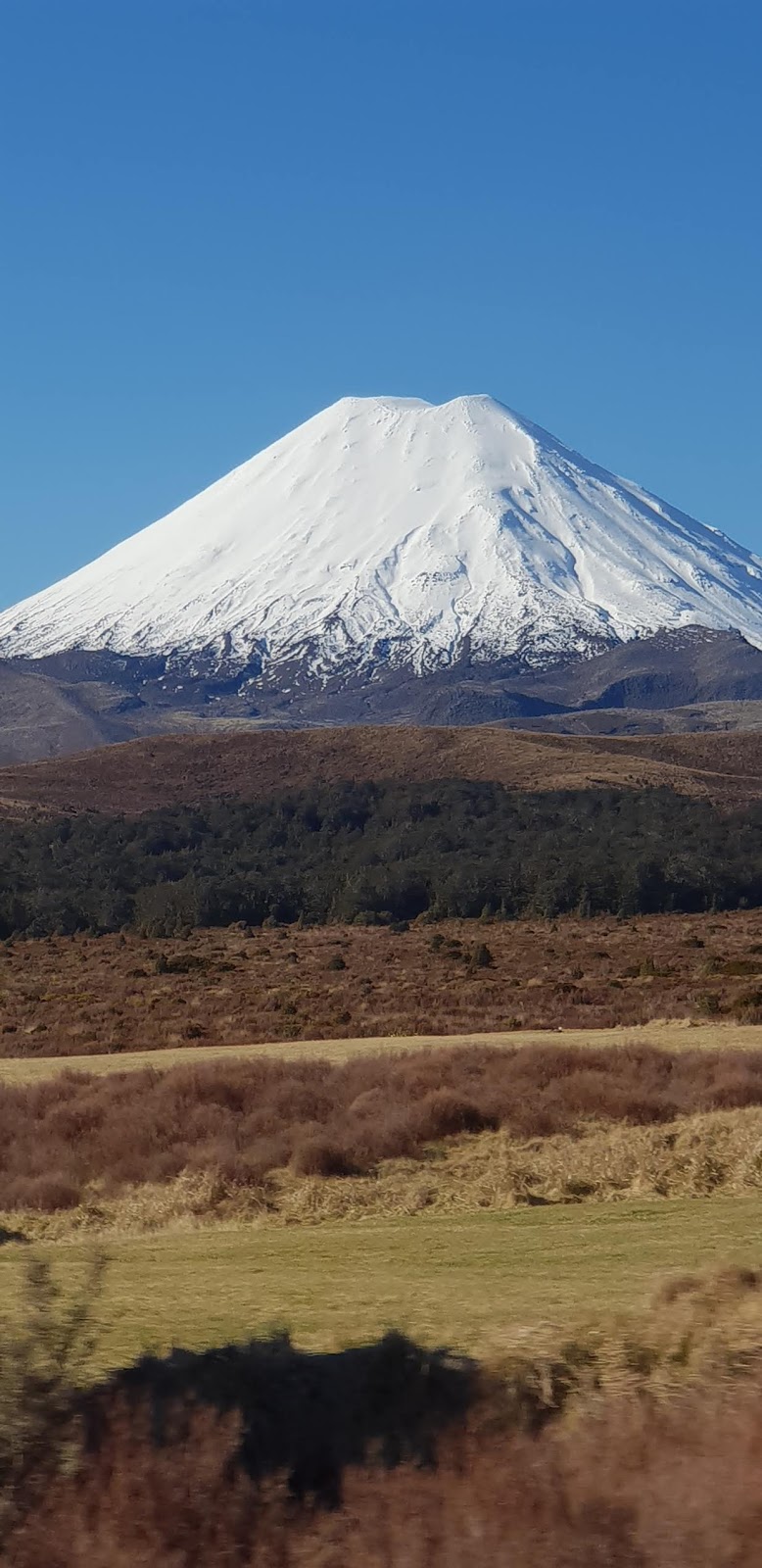
Mount Ngauruhoe is apparently still an active volcano, has been for 2,500 years or so, and last erupted on 19th February 1975, and reportedly has erupted around 70 times since 1839.
The mountain is usually climbed from the western side, from the Mangatepopo track.
This photo was taken in summer from the Chateau Tongariro carpark.
In late autumn, on one of our many visits to the area, the mountain was covered with a light sprinkling of snow and ice.
On our most recent visit, this year, in winter, it was fully covered in snow.